Chapter 17 - Dissenters
from Philosophical Frameworks
Published online by Cambridge University Press: 16 January 2020

Summary
Joining the parade of childish wives, tyrannical husbands, and frivolous dog-moms, the character that concludes Mary Wollstonecraft’s A Vindication of the Rights of Woman (1792) seems strangely out of place; “were not Dissenters,” she ponders, “like women, fond of deliberating together, and asking advice of each other, till by a complication of little contrivances, some little end was brought about?” We are not accustomed to thinking of Dissenters – those, like John Milton and John Bunyan, who refused to conform to the Anglican Church – as small-minded. Wollstonecraft, however, argues that just as women had been made “cunning” by the “tyranny of man,” Dissenters were stamped with a “prim littleness” by the tyranny of the state.1 Wollstonecraft owed much, both personally and intellectually, to Dissenters, but the parallel with Nonconformity is more flattering and generative than it might appear; in denouncing what Dissenters had once been (in the age of Samuel Butler’s Puritan-bashing Hudibras [1663–78]), Wollstonecraft presents the implicit “progress” of Nonconformity, above all its renunciation of insular sectarianism, as a model for the transformation of female character.
Information
- Type
- Chapter
- Information
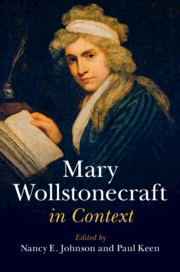
- Mary Wollstonecraft in Context , pp. 146 - 154Publisher: Cambridge University PressPrint publication year: 2020
Accessibility standard: Unknown
Why this information is here
This section outlines the accessibility features of this content - including support for screen readers, full keyboard navigation and high-contrast display options. This may not be relevant for you.Accessibility Information
Accessibility compliance for the HTML of this chapter is currently unknown and may be updated in the future.