Book contents
- Frontmatter
- Contents
- Contributors
- Foreword by Geoffrey A. Harrison
- Part IGeneral principles
- Part IIMeasuring stress responses
- 2Cultural dimensions of the stress process: measurement issues in fieldwork
- 3Measuring emotional and behavioral response
- 4Measuring hormonal variation in the sympathetic nervous system: catecholamines
- 5Measuring hormonal variation in the hypothalamic pituitary adrenal (HPA) axis: cortisol
- 6Measuring physiological changes in the cardiovascular system: ambulatory blood pressure
- 7Measuring immune function: markers of cell-mediated immunity and inflammation in dried blood spots
- Part IIIPractical issues in studying stress
- Index
- References
4 - Measuring hormonal variation in the sympathetic nervous system: catecholamines
Published online by Cambridge University Press: 11 September 2009

Book contents
- Frontmatter
- Contents
- Contributors
- Foreword by Geoffrey A. Harrison
- Part IGeneral principles
- Part IIMeasuring stress responses
- 2Cultural dimensions of the stress process: measurement issues in fieldwork
- 3Measuring emotional and behavioral response
- 4Measuring hormonal variation in the sympathetic nervous system: catecholamines
- 5Measuring hormonal variation in the hypothalamic pituitary adrenal (HPA) axis: cortisol
- 6Measuring physiological changes in the cardiovascular system: ambulatory blood pressure
- 7Measuring immune function: markers of cell-mediated immunity and inflammation in dried blood spots
- Part IIIPractical issues in studying stress
- Index
- References
Summary
It is commonplace for people to conceptualize the body's response to stress as an “adrenaline rush,” with the symptoms of this response, as described by Cannon (1915), characterizing the “fight or flight” response. This common understanding of the stress response encompasses one major component of biological stress: activation of the sympathetic adrenal medullary system (SAMS). The other main arm of the stress response, the hypothalamic pituitary adrenal cortex (HPA) axis, will be discussed in the next chapter. Activation of the SAMS has widespread effects in the body. These effects are seen as being allostatic in nature; that is, they help maintain homeostasis through the initiation of physiological change. Measures of stress have been used that identify the indirect effects of SAMS activation such as increased pulse and blood pressure. Other measures, to be examined here, focus on more direct evidence for SAMS activation.
Stress has taken on great importance for humans in the modern world. The most common ailments that threaten us, such as cardiovascular disease, diabetes, and even some cancers, apparently are influenced by chronically high stress levels. The response that has allowed our ancestors to adapt to the stressors that were part of their world now appears too often to be an inappropriate one for the kinds of stressors, from traffic to deadlines, that confront us today (Sapolsky, 1994).
The stress response represents adaptation to actual or perceived challenges from the environment, with this process termed “allostasis” (McEwen, 1998).
Information
- Type
- Chapter
- Information
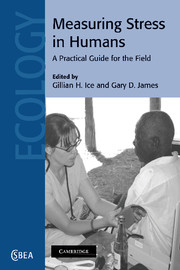
- Measuring Stress in HumansA Practical Guide for the Field, pp. 94 - 121Publisher: Cambridge University PressPrint publication year: 2006
References
, , et al. (1983). Comparisons of urinary and plasma catecholamine responses to mental stress. Acta Physiologica Scandinavica, 117, 19–26.CrossRefGoogle Scholar
and (1974). Role of the amygdaloid complexes in the stress-induced release of ACTH in the rat. Neuroendocrinology, 15, 220–30.CrossRefGoogle ScholarPubMed
, , and (1981). Stress and age effects on catecholamines in normal subjects. Journal of Psychosomatic Research, 25, 33–41.CrossRefGoogle ScholarPubMed
and (1984). Stress hormones: their interaction and regulation. Science, 224, 452–9.CrossRefGoogle ScholarPubMed
(2003). Stress hormones in the research on cardiovascular effects of noise. Noise Health, 5, 1–11.Google ScholarPubMed
, , and (2001). Increased catecholamine levels in urine in subjects exposed to road traffic noise: the role of stress hormones in noise research. Environmental International, 26, 475–81.CrossRefGoogle ScholarPubMed
, , and (1982). The effects of age on the plasma catecholamine response to mental stress in man. Journal of Clinical and Endocrinology and Metabolism, 54, 64–9.CrossRefGoogle ScholarPubMed
and (1982). Release and clearance rates of epinephrine in man: importance of arterial measurements. Journal of Clinical Endocrinological Metabolism, 55, 263–8.CrossRefGoogle ScholarPubMed
, , et al. (1999). Adrenomedullary response to caffeine in prepubertal and pubertal obese subjects. International Journal of Obesity and Related Metabolic Disorders, 23, 992–6.CrossRefGoogle ScholarPubMed
, , , and (1993). Optimal collection and storage conditions for catecholamine measurements in human plasma and urine. Clinical Chemistry, 39, 2503–8.Google ScholarPubMed
(1981). General stress in anthropological fieldwork. American Anthropologist, 83, 74–92.CrossRefGoogle Scholar
(1982). Physiological stress and culture change in a group of Filipino-Americans: a preliminary investigation. Annals of Human Biology, 9, 553–63.CrossRefGoogle Scholar
and (2000). Physiological stress responses in Filipino-American immigrant nurses: the effects of residence time, life-style, and job strain. Psychosomatic Medicine, 62, 394–400.CrossRefGoogle ScholarPubMed
and (1988). Medullary basal sympathetic tone. Annual Review of Physiology, 50, 511–24.CrossRefGoogle ScholarPubMed
Callingham, B. A. (1975). Catecholamines in blood. In Handbook of Physiology: Section 7. Endocrinology. Volume VI. Adrenal Gland, ed. and . Washington, DC: American Physiological Society, pp. 427–45.Google Scholar
, , and (1988). Catecholamine effects upon rat hypothalamic corticotropin-releasing hormone secretion in vitro. Journal of Clinical Investigation, 82, 839–46.CrossRefGoogle ScholarPubMed
(1915) Bodily Changes in Pain, Hunger, Fear and Rage: An Account of Recent Researches into the Functions of Emotional Excitement. New York: Appleton.CrossRefGoogle Scholar
Carruthers, M. (1976). Biochemical responses to environmental stress. In Man in Urban Environments, ed. and . Oxford: Oxford University Press, pp. 247–73.Google Scholar
, , ., and (1970). Validity of plasma catecholamine estimation. Lancet, 2, 62–7.CrossRefGoogle Scholar
, , and (2003). Pediatric stress: hormonal mediators and human development. Hormone Research, 59, 161–79.CrossRefGoogle ScholarPubMed
and (1992). The concepts of stress and stress system disorders: overview of physical and behavioral homeostasis. Journal of the American Medical Association, 267, 1244–52.CrossRefGoogle ScholarPubMed
and (1978). Stress responses in male and female engineering students. Journal of Human Stress, 4, 43–8.CrossRefGoogle ScholarPubMed
, and (1981). Effect of eating bananas on plasma free and sulfate-conjugated catecholamines. Life Science, 29, 1773–8.CrossRefGoogle Scholar
and (1984). Regulation of beta-adrenergic receptors by steroid hormones. Annual Review of Physiology, 46, 119–30.CrossRefGoogle ScholarPubMed
, and (1996). Diurnal variation in resting levels of corticosterone is not mediated by variation in adrenal responsiveness to adrenocorticotrophin but involves splanchnic nerve integrity. Endocrinology, 137, 540–7.CrossRefGoogle Scholar
and (1991). What do plasma and urinary measures of catecholamines tell us about human response to stressors?Circulation, 83 (Supplement II), II-36–42.Google ScholarPubMed
, , , and (1983). The effect of ascorbic acid on plasma sulfate conjugated catecholamines after eating bananas. Life Science, 33, 1511–17.CrossRefGoogle ScholarPubMed
, , , and (1998). Intraadrenal interactions in the regulation of adrenocortical steroidogenesis. Endocrine Reviews, 19, 101–43.CrossRefGoogle ScholarPubMed
, , et al. (1979). Raised cerebrospinal fluid norepinephrine in some patients with primary hypertension. Hypertension, 1, 255–60.CrossRefGoogle ScholarPubMed
, , , and (2003). Interactions between leptin and the human sympathetic nervous system. Hypertension, 41, 1072–9.CrossRefGoogle ScholarPubMed
(1993). Clinical application of noradrenaline spillover methodology: delineation of regional human sympathetic nervous responses. Pharmacological Toxicology, 73, 243–53.CrossRefGoogle ScholarPubMed
(1995). The sympathetic nervous system and catecholamine release and plasma clearance in normal blood pressure control, in aging, and in hypertension. In Hypertension: Pathophysiology, Diagnosis, and Management, 2nd edn, ed. and . New York: Raven Press, pp. 755–73.Google Scholar
, , et al. (1988). Assessment of human sympathetic nervous system activity from measurements of norepinephrine turnover. Hypertension, 11, 3–20.CrossRefGoogle ScholarPubMed
, , . et al. (1990). Overflow of catecholamine neurotransmitters to the circulation: source, fate and functions. Physiological Reviews, 70, 963–85.CrossRefGoogle ScholarPubMed
, , , and (2003). Sympathetic nerve activity and neurotransmitter release in humans: translation from pathophysiology into clinical practice. Acta Physiologica Scandinavica, 177, 275–84.CrossRefGoogle ScholarPubMed
Euler, U. S. von (1967). Adrenal medullary secretion and its neural control. In Neuroendocrinology, ed. and . New York: Academic Press, pp. 283–333.Google Scholar
and (1954). Effect of flying on the epinephrine excretion in air force personnel. Journal of Applied Physiology, 6, 551–5.CrossRefGoogle Scholar
and (1991). Traffic congestion, perceived control, and psychophysiological stress among urban bus drivers. Journal of Applied Psychology, 76, 658–63.CrossRefGoogle ScholarPubMed
, , et al. (1979). Interindividual variation in kinetics of infused epinephrine. Clinical Pharmacology & Therapeutics, 26, 669–75.CrossRefGoogle ScholarPubMed
, and (1983). Nucleus locus coeruleus: new evidence of anatomical and physiological specificity. Physiological Reviews, 63, 844–914.CrossRefGoogle ScholarPubMed
Frankenhaeuser, M. (1973). Experimental approaches to the study of human behavior as related to neuroendocrine functions. In Society, Stress and Disease, ed. . New York: Oxford University Press, pp. 22–35.Google Scholar
(1975). Sympathetic-adrenomedullary activity, behavior and the psychosocial environment. In Research in Psychophysiology, ed. and . New York: John Wiley, pp. 71–94.Google Scholar
(1983). The sympathetic-adrenal and pituitary-adrenal response to challenge, comparisons between the sexes. In Biobehavioral Bases of Coronary Heart Disease, ed. , and . Basel: Karger, pp. 91–105.Google Scholar
and (1976). Underload and overload in working life. A multidisciplinary approach. Journal of Human Stress, 2, 35–46.CrossRefGoogle ScholarPubMed
and (1970) Effects of punishment on catecholamine release and efficiency of performance. Psychopharmacologia, 17, 378–90.CrossRefGoogle Scholar
Frishman, W. H. and Lazar, E. J. (1990). Reduction of mortality, sudden death and non-fatal reinfarction with β-adrenergic blockers in survivors of acute myocardial infarction: a new hypothesis regarding the cardioprotective action of β-adrenergic blockade. American Journal of Cardiology, 66, 66–70G.CrossRef
Froberg, J., Karlsson, C., Levi, L. and Lidberg, L. (1971). Physiological and biochemical stress reactions induced by psychosocial stimuli. In Society, Stress and Disease. Volume I: The Psychosocial Environment and Psychosomatic Diseases, ed. . London: Oxford University Press, pp. 280–95.Google Scholar
(1972). Predictable vs. unpredictable shock: preference behavior and stomach ulceration. Physiology & Behavior, 9, 693–8.CrossRefGoogle ScholarPubMed
(1987). Stress-induced activation of the sympathetic nervous system. Baillière's Clinical Endocrinology and Metabolism, 1, 253–78.CrossRefGoogle ScholarPubMed
, , et al. (1983). Age-dependence of hypertensive-normotensive differences in plasma norepinephrine. Hypertension, 5, 100–104.CrossRefGoogle ScholarPubMed
Gross, E. (1970) Work, organization, and stress. In Social Stress, ed. and . Chicago: Aldine Publishing Company, pp. 54–110.Google Scholar
, , et al. (1992). Regulation of adrenal steroidogenesis by adrenaline: expression of cytochrome P450 genes. Journal of Endocrinology, 135, 229–37.CrossRefGoogle ScholarPubMed
(1971). Textbook of Medical Physiology, 4th edn. Philadelphia: W. B. Saunders Company.Google Scholar
, , and (2003). Alpha-1 adrenergic receptor subtypes: non-identical triplets with differing dancing partners?Life Sciences, 74, 411–18.CrossRefGoogle Scholar
Hanna, J. M., James, G. D. and Martz, J. (1986). Hormonal measures of stress. In The Changing Samoans: Behavior and Health in Transition, ed. , and . Oxford: Oxford University Press, pp. 203–21.Google Scholar
, , and (1981). Association between rates of urinary catecholamine excretion and aspects of lifestyle among adult women in some Oxfordshire villages. Human Biology, 53, 617–33.Google Scholar
, , et al. (2003). Erythrocyte G protein-coupled receptor signaling in malarial infection. Science, 301, 1734–6.CrossRefGoogle ScholarPubMed
and (1984). Sex differences in cardiovascular stress responses: modulation as a function of menstrual cycle phases. Journal of Psychosomatic Research, 28, 475–83.CrossRefGoogle ScholarPubMed
(1984). Inter-laboratory comparison of plasma catecholamine determinations using several different assays. Acta Physiologica Scandanavica, 527 (Supplement), 43–54.Google ScholarPubMed
, , , and (1976). Urinary catecholamine excretion on acute exposure to high altitude (3,658 m). Journal of Applied Physiology, 41, 631–3.CrossRefGoogle Scholar
(1996). Adrenergic receptors – evolving concepts and clinical implications. New England Journal of Medicine, 334, 580–5.CrossRefGoogle ScholarPubMed
and (1997). The biological stress response and lifestyle: catecholamines and blood pressure. Annual Review of Anthropology, 26, 313–35.CrossRefGoogle Scholar
, , and (1987). Variation in lifestyle characteristics and catecholamine excretion rates among young Western Samoan men. Social Science and Medicine, 25, 981–6.CrossRefGoogle ScholarPubMed
James, G. D., Crews, D. E. and Pearson, J. (1989). Catecholamines and stress. In Human Population Biology: A Transdisciplinary Science, ed. and . Oxford: Oxford University Press, pp. 280–95.Google Scholar
, , and (1985). Differences in catecholamine excretion rates, blood pressure and lifestyle among young Western Samoan men. Human Biology, 57, 635–47.Google ScholarPubMed
, and (1993). The association between daily blood pressure and catecholamine variability in normotensive working women. Psychosomatic Medicine, 55, 55–60.CrossRefGoogle ScholarPubMed
, , et al. (1988). A longitudinal study of urinary creatinine and creatinine clearance in normal subjects. American Journal of Hypertension, 1, 124–31.CrossRefGoogle ScholarPubMed
, , , and (1979). The effect of mental stress on catecholamines, their metabolites and plasma renin activity in patients with essential hypertension and in healthy subjects. Clinical Science, 57, 229S–31S.CrossRefGoogle ScholarPubMed
, , et al. (1987). Inter-population comparisons of catecholamine excretion. Annals of Human Biology, 14, 1–9.CrossRefGoogle ScholarPubMed
Jenner, D. A., Reynolds, V. and Harrison, G. A. (1979). Population field studies of catecholamines. In Response to Stress: Occupational Aspects, ed. and . London: IPC Science and Technology Press, pp. 112–19.Google Scholar
, , (1980). Catecholamine excretion rates and occupation. Ergonomics, 23, 237–46.CrossRefGoogle ScholarPubMed
, and (1986). The effects of acute and chronic ingestion of ethanol on the autonomic nervous system. Drug and Alcohol Dependence, 18, 319–28.CrossRefGoogle ScholarPubMed
, , et al. (1996). Gender does not influence sympathetic neural reactivity to stress in healthy humans. American Journal of Physiology, 270, H350–7.Google ScholarPubMed
, , et al. (2000) Effect of three caffeine doses on plasma catecholamines and alertness during prolonged wakefulness. European Journal of Clinical Pharmacology, 56, 537–44.CrossRefGoogle ScholarPubMed
, , and (2001). Amygdala is critical for stress-induced modulation of hippocampal long-term potentiation and learning. Journal of Neuroscience, 21, 5222–8.CrossRefGoogle Scholar
and (1994). Differential glucocorticoid effects on catecholamine responses to stress. American Journal of Physiology, 266, E118–23.Google ScholarPubMed
, , et al. (1993). Endogenous glucocorticoids restrain catecholamine synthesis and release at rest and during immobilization stress in rats. Endocrinology, 133, 1411–19.CrossRefGoogle ScholarPubMed
and (1993). Fat cell adrenergic receptors and the control of white and brown fat cell function. Journal of Lipid Research, 34, 1057–91.Google Scholar
, and (1991). Metabolic and hemodynamic responses to endogenous and exogenous catecholamines in formerly obese subjects. American Journal of Physiology, 260, R785–91.Google ScholarPubMed
(1964) The stress of everyday work as reflected in productiveness, subjective feelings, and urinary output of adrenaline and noradrenaline under salaried and piece-work conditions. Journal of Psychosomatic Research, 8, 199–202.CrossRefGoogle ScholarPubMed
Lewis, G. P. (1975). Physiological mechanisms controlling secretory activity of adrenal medulla. In Handbook of Physiology: Section 7. Endocrinology. Volume VI. Adrenal Gland, ed. and . Washington, DC: American Physiological Society, pp. 309–489.Google Scholar
, and (1996). Distinct mechanisms underlie activation of hypothalamic neurosecretory neurons and their medullary catecholaminergic afferents in categorically different stress paradigms. Proceedings of the National Academy of Sciences, 93, 2359–64.CrossRefGoogle ScholarPubMed
, , et al. (1996). Cardiovascular regulation in mice lacking α2-adrenergic receptor subtypes b and c. Science, 273, 803–5.CrossRefGoogle ScholarPubMed
(1976). Urban commuting: crowdedness and catecholamine excretion. Journal of Human Stress, 2, 26–32.CrossRefGoogle ScholarPubMed
, , , and (1996). Central hypotensive effects of the α2A-adrenergic receptor subtype. Science, 273, 801–3.CrossRefGoogle ScholarPubMed
, , et al. (1998). Effect of ethanol drinking, hangover, and exercise on adrenergic activity and heart rate variability in patients with a history of alcohol-induced atrial fibrillation. American Journal of Cardiology, 82, 317–22.CrossRefGoogle ScholarPubMed
, and (1984). Stress in daily life. Evidence from Samoa. American Journal of Physical Anthropology, 63, 191–2.Google Scholar
, , and (1988). Elevation of urinary norepinephrine/cortisol ratio in posttraumatic stress disorder. Journal of Nervous and Mental Disease, 176, 498–502.CrossRefGoogle ScholarPubMed
, , , and (1986) Urinary free cortisol levels in post-traumatic stress disorder patients. Journal of Nervous and Mental Disease, 174, 145–9.CrossRefGoogle Scholar
(1998). Stress, adaptation and disease. Annals of the New York Academy of Science, 840, 33–44.CrossRefGoogle ScholarPubMed
(2003). Interacting mediators of allostasis and allostatic load: towards an understanding of resilience in aging. Metabolism, 52 (Supplement 2), 10–16.CrossRefGoogle Scholar
and (1993). Stress and the individual: mechanisms leading to disease. Archives of Internal Medicine, 153, 2093–101.CrossRefGoogle ScholarPubMed
and (1998). Effect of urine pH, storage time, and temperature on stability of catecholamines, cortisol, and creatinine. Clinical Chemistry, 44, 1759–62.Google ScholarPubMed
, , , and (1994). Cell-specific down-regulation of the β3-adrenergic receptor. Journal of Biological Chemistry, 269, 13148–55.Google Scholar
, , and (1994). Sympathetic neural reactivity to stress does not increase with age in healthy humans. American Journal of Physiology, 267, H344–53.Google Scholar
, and (1973). Nonuniformity of sympathetic nerve activity to the skin and kidney. American Journal of Physiology, 224, 256–64.Google ScholarPubMed
, , and (1990). Modernization and catecholamine excretion of young Samoan adults. Social Science and Medicine, 31, 729–36.CrossRefGoogle ScholarPubMed
, and (1993). Stress and changing lifestyles in the Pacific: physiological stress responses of Samoans in urban and rural settings. American Journal of Human Biology, 5, 49–60.CrossRefGoogle Scholar
and (2000). Exercise and the immune system: regulation, integration, and adaptation. Physiological Reviews, 80, 1055–81.CrossRefGoogle Scholar
and (2001). α1-adrenergic receptors: new insights and directions. Journal of Pharmacology and Experimental Therapeutics, 298, 403–10.Google ScholarPubMed
Polefrone, J. M. and Manuck, S. B. (1987). Gender differences in cardiovascular and neuroendocrine response to stressors. In Gender and Stress, ed. , and . New York: Free Press, pp. 13–38.Google Scholar
, , et al. (1997). Health outcomes associated with antihypertensive therapies used as first-line agents. A systematic review and meta-analysis. Journal of the American Medical Association, 277, 739–45.CrossRefGoogle ScholarPubMed
, , and (1981). Catecholamine excretion rates in relation to life-styles in the male population of Oxmoor, Oxfordshire. Annals of Human Biology, 8, 197–209.CrossRefGoogle ScholarPubMed
(1994). Why Zebras Don't Get Ulcers: A Guide to Stress, Stress-Related Diseases, and Coping. New York: W. H. Freeman and Company.Google Scholar
, and (2000). How do glucocorticoids influence stress responses? Integrating permissive, suppressive, stimulatory, and preparative actions. Endocrine Reviews, 21, 55–89.Google ScholarPubMed
, and (2000). Circuits and mechanisms governing hypothalamic responses to stress: a tale of two paradigms. Progress in Brain Research, 122, 61–78.CrossRefGoogle ScholarPubMed
, and (1998). Variation in epinephrine and cortisol excretion rates associated with behavior in an Australian aboriginal community. American Journal of Physical Anthropology, 106, 249–53.3.0.CO;2-0>CrossRefGoogle Scholar
, , , and (1995). Patterns of cortisol and adrenaline variation in Australian aboriginal communities of the Kimberley region. Journal of Biosocial Science, 27, 107–16.CrossRefGoogle ScholarPubMed
, and (2003). Dissociation between reactivity of the hypothalamus-pituitary-adrenal axis and the sympathetic-adrenal medullary system to repeated psychosocial stress. Psychosomatic Medicine, 65, 450–60.CrossRefGoogle ScholarPubMed
, , and (1978). Norepinephrine: hormone and neurotransmitter in man. American Journal of Physiology, 234, E252–6.Google ScholarPubMed
, , et al. (1982). Role of the sympathetic nervous system in blood pressure maintenance in obesity. Journal of Clinical Endocrinology and Metabolism, 54, 1181–6.CrossRefGoogle ScholarPubMed
, , and (1988). Role of central epinephrine on the regulation of corticotrophin releasing factor and adrenocorticotrophin secretion. Endocrinology, 122, 1977–83.CrossRefGoogle Scholar
, , and (1997). A low sympathoadrenal activity is associated with body weight gain and development of central adiposity in Pima Indian men. Obesity Research, 5, 341–7.CrossRefGoogle Scholar
, and (1995). Effect of development of habituation to restraint stress on hypothalamic noradrenaline release and adrenocorticotrophin secretion. Journal of Neurochemistry, 65, 263–7.CrossRefGoogle Scholar
, and (1991). Cardiovascular responses to psychological and physiological stressors during the menstrual cycle. Psychosomatic Medicine, 53, 185–7.CrossRefGoogle ScholarPubMed
, , , and (1987). Effects of the cold pressor test on muscle sympathetic nerve activity in humans. Hypertension, 9, 429–36.CrossRefGoogle ScholarPubMed
, , et al. (1999). The effect of smoking on energy expenditure and plasma catecholamine and nicotine levels during light physical activity. Nicotine Tobacco Research, 1, 365–70.CrossRefGoogle ScholarPubMed
, , et al. (1981). Plasma noradrenaline correlates to sympathetic muscle nerve activity in normotensive man. Acta Physiologica Scandinavica, 111, 69–73.CrossRefGoogle ScholarPubMed
Ward, M. and Mefford, I. N. (1985). Methodology of studying the catecholamine response to stress. In Clinical and Methodological Issues in Cardiovascular Psychophysiology, ed. , and . Berlin: Springer-Verlag, pp. 131–43.CrossRefGoogle Scholar
Wasilewska, E., Kobus, E. and Bargiel, Z. (1980). Urinary catecholamine excretion and plasma dopamine-beta-hydroxylase activity in mental work performed in two periods of menstrual cycle in women. In Catecholamines and Stress: Recent Advances, ed. , and . New York: Elsevier, pp. 549–54.Google Scholar
, , and (1999). Freedom from drug interference in new immunoassays for urinary catecholamines and metanephrines. Clinical Chemistry, 45, 2216–23.Google ScholarPubMed
, , et al. (1998). Sympathetic activity in patients with panic disorder at rest, under laboratory mental stress, and during panic attacks. Archives General Psychiatry, 55, 511–20.CrossRefGoogle ScholarPubMed
, , , and (1992). Urinary catecholamine excretion and severity of PTSD symptoms in Vietnam combat veterans. Journal of Nervous and Mental Disease, 180, 321–5.CrossRefGoogle ScholarPubMed
, and (1989). Rat renal epinephrine synthesis. Journal of Clinical Investigation, 84, 1130–3.CrossRefGoogle ScholarPubMed
, and (1976). Plasma noradrenaline increases with age. Nature, 261, 333–5.CrossRefGoogle ScholarPubMed
Accessibility standard: Unknown
Why this information is here
This section outlines the accessibility features of this content - including support for screen readers, full keyboard navigation and high-contrast display options. This may not be relevant for you.Accessibility Information
Accessibility compliance for the PDF of this chapter is currently unknown and may be updated in the future.