Book contents
- Onomatopoeia
- Onomatopoeia
- Copyright page
- Dedication
- Contents
- Figures
- Tables
- Acknowledgments
- Abbreviations
- 1Introduction
- 2Defining Onomatopoeia
- 3Onomatopoeias as Linguistic Signs
- 4Prototypical Features of Onomatopoeia
- 5Onomatopoeia and Sound Symbolism
- 6Cross-Linguistic Onomatopoeic Patterns
- 7Richness of Languages in Onomatopoeias by Sound Type and Source
- 8Onomatopoeias versus Ideophones
- 9Conclusion
- Book part
- References
- Author Index
- Language Index
- Subject Index
8 - Onomatopoeias versus Ideophones
Published online by Cambridge University Press: 18 December 2025

Book contents
- Onomatopoeia
- Onomatopoeia
- Copyright page
- Dedication
- Contents
- Figures
- Tables
- Acknowledgments
- Abbreviations
- 1Introduction
- 2Defining Onomatopoeia
- 3Onomatopoeias as Linguistic Signs
- 4Prototypical Features of Onomatopoeia
- 5Onomatopoeia and Sound Symbolism
- 6Cross-Linguistic Onomatopoeic Patterns
- 7Richness of Languages in Onomatopoeias by Sound Type and Source
- 8Onomatopoeias versus Ideophones
- 9Conclusion
- Book part
- References
- Author Index
- Language Index
- Subject Index
Summary
For languages that recognize ideophones, it is quite common to discuss onomatopoeia under the umbrella of ideophones, that is, words based on our sensory perception: hearing, seeing, touching, smelling, tasting, and psychological feeling. This chapter examines the similarities and differences between onomatopoeia conceived as causally determined direct sound imitations and cross-modal ideophones to evaluate whether the ‘all-sensory’ approach is justified or whether onomatopoeia represents – from a cross-linguistic point of view – a class of words of their own. While similarities and shared features exist between onomatopoeias and other sensory signs, the available literature offers numerous indications of a different status of ideophones and onomatopoeia. Some of the reasons are of universal nature, and others are language specific. This chapter starts with an overview of the characteristic features of ideophones. Its structure maps the individual points of onomatopoeia description presented in Chapter 3 (semiotic characteristics), Chapter 4 (phonological, morphological, syntactic, semantic, word-formation, and sociopragmatic characteristics), and Chapter 6 (cross-linguistic similarities), as well as the word-class and open-class criteria. This is followed by a comparison of ideophones as cross-modal sensory words with onomatopoeia as monomodal sensory words. The final sections look at their universal and language-specific similarities and differences.
Information
- Type
- Chapter
- Information
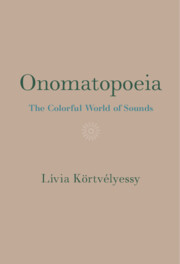
- OnomatopoeiaThe Colorful World of Sounds, pp. 311 - 340Publisher: Cambridge University PressPrint publication year: 2025
Accessibility standard: Unknown
Why this information is here
This section outlines the accessibility features of this content - including support for screen readers, full keyboard navigation and high-contrast display options. This may not be relevant for you.Accessibility Information
Accessibility compliance for the HTML of this chapter is currently unknown and may be updated in the future.