
Skip to main content Accessibility help
×
  • Cited by 4
    • Show more authors
    • You may already have access via personal or institutional login
    • Select format
    • Publisher:
      Cambridge University Press
      Publication date:
      04 August 2010
      27 May 2010
      ISBN:
      9780511776878
      9780521106658
      Dimensions:
      Weight & Pages:
      Dimensions:
      (234 x 156 mm)
      Weight & Pages:
      0.5kg, 290 Pages
    You may already have access via personal or institutional login
  • Selected: Digital
    Add to cart View cart Buy from Cambridge.org

    Book description

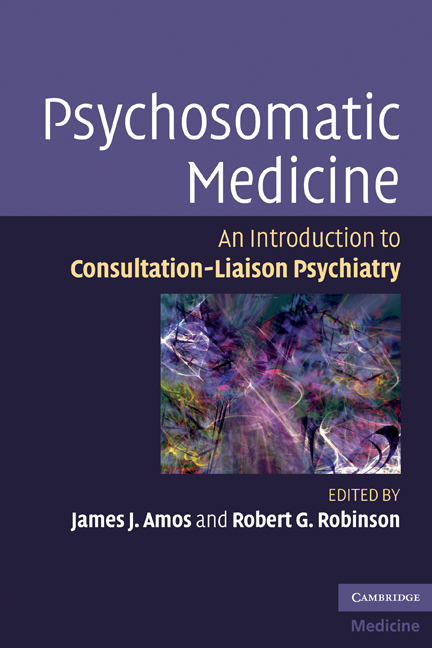
    Psychosomatic medicine or consultation-liaison psychiatry is the branch of psychiatry that focuses on the mental health issues which accompany, or develop as a result of, other medical disorders. This subdiscipline forms an important part of training in psychiatry. This book provides an ideal first exposure to the inseparable nature of physical and psychological health and illness, and a comprehensive introduction to the broad range of disorders seen on the psychiatric consult service. Organized into a series of bitesized chapters, each focusing on a typical consult question, this handbook provides a practical and portable reference which should set both strategy and tactics for the next generation of consulting psychiatrists. Essential reading for medical students, psychiatry residents and psychosomatic fellows, this manual will provide immediate, in-the-field guidance on the evaluation and management of common consultation requests.

    Reviews

    '… an excellent entry-level text for students, postgraduate trainees and many other professionals.'

    Source: The British Journal of Psychiatry

    '… accomplishes the goal of presenting and explaining noteworthy topics in caring for medically and psychiatrically ill patients. … would benefit clinicians in all specialities.'

    Source: Doody's

    Refine List

    Actions for selected content:

    Select all | Deselect all
    • View selected items
    • Export citations
    • Download PDF (zip)
    • Save to Kindle
    • Save to Dropbox
    • Save to Google Drive

    Save Search

    You can save your searches here and later view and run them again in "My saved searches".

    Please provide a title, maximum of 40 characters.
    ×

    Contents


    Page 2 of 2


    • Chapter 23 - Psychiatric aspects of organ transplantation
      pp 210-215
    • View abstract

      Summary

      The term distress has been used in screening and triage of patients with psychosocial concerns in a variety of care settings in the past decade and is becoming the screening term of choice in many cancer centers and clinics. Although a distress scale represents a one-dimensional assessment of the patient, the causes of distress in cancer are multi-dimensional. Antidepressant medication therapy is considered appropriate treatment for depressive disorders co-occurrent with cancer, although only a small number of trials are sufficiently rigorous, given high dropout rates and limited information about adverse drug reactions. Psychotherapy is helpful for cancer patients with depression and distress. Screening caregivers for depression and distress can be a very important psychosocial intervention, both for the caregiver and for the cancer patient. In patients with a history of cancer, the consultation psychiatrist must be mindful of personal trauma and medical consequences associated with that experience.
    • Chapter 24 - Preoperative psychiatric evaluation for bariatric surgery
      pp 216-225
    • View abstract

      Summary

      Patients with hepatitis C viral infection (HCV) have higher rates of baseline psychiatric disorders. Screening for HCV must be considered for patients in psychiatric practice, particularly when risk factors exist, and in older, less educated males with substance use histories. Close collaboration with a psychiatrist is recommended for patients with co-morbid psychiatric history. Many clinicians advocate prophylactic antidepressants for patients with a history of severe depression or previous depression with interferon (IFN) therapy. The primary treatment for IFN-induced depression is traditional antidepressant therapy; however, a number of adjuvant medications have been utilized to assist with symptomatic relief. Mania may emerge with IFN therapy, during discontinuation of IFN, and with the addition of antidepressants during the treatment course. Once the causes of IFN-induced depression and neuropsychiatric symptoms are better elucidated, a cocktail of adjuvant medications may be developed to minimize side effects.
    • Chapter 25 - Psychiatric care at the end of life: hospice and palliative medicine
      pp 226-234
    • View abstract

      Summary

      Persons with access to medical care and combination antiretroviral medication (CART) are no longer dying of AIDS but are dying of other multimorbid and severe medical illnesses, as are comparable populations with HIV infection. AIDS psychiatry has become a subspecialty of psychosomatic medicine, similar to psychonephrology, psychooncology, and transplant psychiatry. Clinical decision-making in persons living with HIV and AIDS takes into account not only the multimorbid medical and psychiatric illnesses but also the need for prevention of HIV transmission and alleviation of the distress and suffering of persons infected and affected by the illness. This chapter discusses psychopharmacology and addictive disorders, and psychopharmacology and other psychiatric disorders. Psychosomatic medicine psychiatrists, AIDS psychiatrists, geriatric psychiatrists, child psychiatrists, other psychiatrists, and mental health clinicians can play a vital role in the prevention of HIV transmission and the care of persons with HIV.
    • Chapter 26 - Demoralization in the medical setting
      pp 235-241
    • View abstract

      Summary

      It is well recognized that depression represents a significant co-morbidity for patients already confronted with chronic medical conditions. Individuals with kidney disease are not an exception to this observation. Many potential psychological, social, and biological contributions to the high rate of depression in patients with end-stage renal disease (ESRD) have been identified. Patients with ESRD on dialysis often suffer the loss of work status and time, health, and independence. Approximately one in four patients with ESRD chooses to voluntarily discontinue dialysis treatment. Many different classes of antidepressants have been used in this complex patient population. The medications most often utilized include the selective serotonin reuptake inhibitors (SSRIs) and the serotonin-norepinephrine reuptake inhibitors (SNRIs). The administration of tricyclic antidepressants (TCAs) in patients with renal disease is rife with potential complications. Electroconvulsive therapy has been used in patients with ESRD, and it appears well tolerated and effective in this patient population.
    • Chapter 27 - Psychotherapy for the hospitalized medically ill patient
      pp 242-248
    • View abstract

      Summary

      The behavioral effects of endocrinopathies suggest many different psychiatric illnesses, and the neuropsychiatric effects can be among the first manifestations of endocrine disease. This chapter lists out the endocrine diseases that include: hypothyroidism, hyperthyroidism, hyperparathyroidism, hypoparathyroidism, adrenal disorders, hypocortisolism, diabetes mellitus and hyperprolactinemia. Hypothyroidism is treated by thyroid replacement. Acute Hashimoto's encephalopathy can be treated with glucocorticoids. Antidepressants can be combined with thyroid hormone for depression that does not respond to thyroid replacement alone. In most cases, psychiatric symptoms are resolved when hyperparathyroidism is treated and serum calcium levels return to normal. Primary hyperparathyroidism is treated by surgical resection of the adenoma or parathyroidectomy. Suitable replacement antipsychotics can be found for patients at higher risk with schizophrenia and bipolar disorder with propensity to weight gain and metabolic syndrome. Cognitive behavioral therapy is also effective for depression and improves hemoglobin A1c levels.
    • Chapter 28 - Children’s reactions and consequences of illness and hospitalization and transition of care from pediatric to adult settings
      pp 249-258
    • View abstract

      Summary

      Evaluation of suspected alcohol withdrawal should start by obtaining a complete alcohol use history. Symptom-triggered treatment of alcohol withdrawal using assessment scales such as the Clinical Institute Withdrawal Assessment for Alcohol, Revised (CIWA-Ar) is the preferred method. A score of less than ten indicates the need for continued monitoring of the patient. A score of 10 to 15 indicates mild withdrawal, 16 to 20 moderate withdrawal, and greater than 20 severe withdrawal. Sedative/hypnotic (benzodiazepine, barbiturate, and related drug) withdrawal is managed by the same principles used to treat alcohol withdrawal. The consultant may be called upon to assist in managing opioid withdrawal related to illicit use, problems with prescription analgesics, or ongoing opioid agonist therapy (OAT) for addiction. Federally accredited opioid treatment programs (OTPs) can administer methadone or buprenorphine for detoxification or maintenance as part of a comprehensive treatment program.

    Page 2 of 2


    Metrics

    Altmetric attention score

    Full text views

    Total number of HTML views: 0
    Total number of PDF views: 0 *
    Loading metrics...

    Book summary page views

    Total views: 0 *
    Loading metrics...

    * Views captured on Cambridge Core between #date#. This data will be updated every 24 hours.

    Usage data cannot currently be displayed.

    Accessibility standard: Unknown

    Why this information is here

    This section outlines the accessibility features of this content - including support for screen readers, full keyboard navigation and high-contrast display options. This may not be relevant for you.

    Accessibility Information

    Accessibility compliance for the HTML of this book is currently unknown and may be updated in the future.
