


Some 400 years ago, in 1615, a wealthy Peruvian merchant, Juan de la Cueva, established a bank in the city of Lima, the capital of a viceroyalty that was already the source of more than half of the silver coin circulating throughout the world at the time. Indeed, silver was the most common international currency of the age, and for this reason it is illuminating to follow the trajectories of the great trading houses of Peru as key actors in early financial and monetary globalization. The histories of such firms shed light on the trajectories of credit and merchant banking within Spanish America during the long colonial era, as well as important links to international trade across the Pacific and the Atlantic oceans. The Juan de la Cueva bank had its headquarters in Lima between 1615 and 1635, opened branches throughout the Andean highlands in Cuzco and Huancavelica, but also reached as far as the legendary silver mining city of Potosí. At the same time, this commercial and financial house extended its networks by sending agents out along the extensive Pacific coast of the Americas to open branches in the ports of Valparaíso, Callao and Panama as well as in Acapulco and Mexico City.Footnote 1 Both the home office and its correspondents handled a great number of commercial operations, received deposits from clients, made payments and transfers, collected debts and lent money, much as did merchant banks in contemporary Amsterdam, London, Seville or Lisbon. Despite the resounding bankruptcy of the powerful Peruvian firm in 1635, which violently shook the financial market of Lima, known at the time as the City of Kings, other merchant banking firms continued similar business for decades.
Throughout the seventeenth century Peruvian merchant lenders financed a flourishing and extensive traffic, straddling the Pacific coasts of South America but also connecting with the Caribbean, as traders on ships from Peru reached Panama, and then drove their mule trains across the Isthmus. They carried hundreds of sacks of silver to the great port of Cartagena, where in early spring there would arrive a number of Spanish galleons that were to carry the rich cargoes on their annual voyages back across the Atlantic. The merchant adventurers from South America also traveled further north along the Pacific coast, stopping at several ports of colonial Mexico. They became regular visitors to the great trade fair that took place at Acapulco every year, attracting Mexican and Peruvian merchants who anxiously awaited the arrival of the famed Manila Galleons. These great ships brought valuable merchandise to Spanish America from the Philippines, from India and, above all, from China, including silks of many varieties and colors, cotton fabrics, delicate ceramics, tea and lacquered furniture.Footnote 2 The financing of this trade depended in part on cash payments in the form of silver and gold coin, although the use of credit instruments such as bills of exchange also became increasingly frequent in the early transpacific trades.
Subsequently, during the eighteenth century, major changes took place in colonial Spanish America, as Mexico became the most prosperous viceroyalty due to a prolonged silver mining boom that stimulated trade, agriculture, ranching and urban artisanal manufacture. Such prosperity contributed to the amassing of colossal fortunes by the wealthiest miners, merchants and silver bankers of New Spain (Mexico). In fact, Mexican plutocrats soon ranked as some of the richest individuals in the entire Atlantic world. For example, by 1790, the Count of Regla, owner of the Real del Monte mines, located in the town of Pachuca, north of Mexico City, had accumulated an enormous fortune worth an estimated 15 million silver pesos (one peso was then equal to one dollar). Such a sum represented a capital greater than that held individually by the wealthiest merchants or bankers of Europe at that time, and was certainly far superior to the assets of the most prosperous entrepreneurs in the newly independent United States, among whom there were as yet no millionaires. Something similar could be said of the Obregón family, owners of the great Valenciana silver mine in Guanajuato. They were great millionaires at the end of the eighteenth century, employing some 3,000 workers, an enormous number for any company in that era. The mining boom also stimulated the emergence of a class of merchant bankers in the cities of Mexico, Puebla, Guadalajara and Veracruz and, at the same time, facilitated the launching of several experiments with relatively modern financial instruments, including the Banco de Avío de la Minería, an early investment bank established at Mexico City by the Mining Tribunal of New Spain in 1784.
The stories of these early banks and bankers of colonial Spanish America are not well known, but can help broaden comparative financial history. They speak to the question of how precapitalist regimes gradually began to incorporate credit instruments into what were emerging financial markets. More specifically, these stories prove essential to an understanding of the credit regimes that contributed to the functioning of the Spanish American economies during three centuries. Nonetheless, it should also be noted that for a long time historians questioned the existence of truly complex credit systems in the colonial era, whether in Spanish America or in Brazil. This interpretation no longer holds, for thanks to a wide range of research published in the last three decades there has emerged a radically different vision that emphasizes the importance, diversity and long duration of loan transactions among all social sectors throughout the vast geography of the New World, from the sixteenth to the eighteenth centuries.Footnote 3
As early as the mid sixteenth century, a great many practices and institutions of commercial credit began to be transposed from Spain to Spanish America and from Portugal to Brazil. Soon merchant guilds, as well as their tribunals, were established in Mexico and Peru to regulate mercantile transactions, disputes and bankruptcies, common enough in all the colonial economies. Credit was used extensively both in the transatlantic trades as well as in local commerce across all regions of the vast hemisphere. At the same time, the financing of silver and gold mines developed in original forms, as Spanish America became the greatest producer of silver in the world from the mid sixteenth century onwards, while a century later Brazil became the principal supplier of gold in the preindustrial world. In the late eighteenth century several mining investment banks were established in Mexico, Peru, Bolivia and Chile, signaling organizational innovations that broadened the sphere of credit in the Americas. But there also existed other financial transactions that reached into rural society. For 300 years, long-term credit was provided by the diverse bodies and institutes of the Catholic Church in the New World. Ecclesiastical entities in almost all parts of Spanish and Portuguese America managed to accumulate a large amount of land and urban real estate but also a great amount of capital, which was used to extend loans for a remarkable variety of purposes, an inheritance of the credit practices that were typical in all Catholic societies of the ancien régime in Europe.
This chapter emphasizes the diversity of lending activities by ecclesiastical, commercial and mining actors, as well as some forms of consumer credit in Spanish America and Brazil. Our information is derived from recent and extensive historical research that has opened new windows on neglected aspects of the functioning of colonial economies, societies and polities from the sixteenth to the late eighteenth centuries. This historical literature raises questions of relevance for comparisons with studies on early modern Europe that have brought to light the role of credit as an essential component of preindustrial economies. For example, by delving into the complex history of local finance in France during the seventeenth and eighteenth centuries, three leading scholars have argued that their studies of notarial credit evoke important features of the “historical genesis of capitalism.”Footnote 4 Numerous parallels can be also be drawn by looking at the literature on the credit history of other Catholic societies, such as those of Spain and Portugal as well as their great offshoots in Spanish America and Brazil, where there developed quite similar credit systems and markets.Footnote 5
Credit and Money in the Colonial Economies of Spanish America and Brazil
It is important to keep in mind that the complex credit regimes that emerged and evolved in the New World economies from the sixteenth to the end of the eighteenth centuries operated within institutional frameworks that tended to be highly segmented. The colonial economies and societies were characterized by the coexistence of different kinds of social relations, diverse property regimes and various types of economic exploitation, which included quasi-feudal or servile forms of work relations on haciendas, collective production in many peasant towns, as well as extensive slavery on plantations. In rural areas of Spanish America, where the bulk of the population lived, there persisted varied forms of property ownership, including Church lands that could not be sold and great landed estates that were indivisible and passed on through many generations of a given aristocratic family. But there were also communal properties of thousands of Indian towns and villages, as well as the rural properties of individual owners, whether peasants, farmers or ranchers. Simultaneously, in the cities diversity in trade and production were also characteristic. In the larger towns artisanal guilds operated with strict rules, as well as corporate monopolies headed by wealthy merchants that dominated commerce and finance, while an incredibly diverse number of entities of the Catholic Church accumulated capital, provided credit and participated in a vast number of real estate transactions. All these socioeconomic entities coexisted, but operated on the basis of distinct juridical frameworks, a fact essential to the understanding of their credit systems and to comprehension of their trajectories in subsequent financial development.
Credit transactions in the colonial world were expressed and liquidated in terms of metallic money consisting of silver and gold coin in diverse denominations, from small to large, although many commercial transactions also involved promissory notes and bills of exchange. Precisely for this reason, an analysis of credit systems in the ancien régime requires paying special attention to the type of currencies in which loans and debts were denominated and settled. It is indispensable, therefore, to begin with a brief description of the long-lived monetary regimes of Spanish America and Brazil, crucial suppliers of the bulk of gold and silver that provided the monetary stocks of virtually all countries in the world during early globalization.
For three centuries, all economies of Spanish America were characterized by a common metallic monetary system, while in Portuguese Brazil there existed a parallel regime, but both relied essentially on the circulation of silver or gold coins. The value of the coins was based on the legal norms established by the monarchies of the respective metropolises of Spain and Portugal from the early sixteenth century onwards. Within the Spanish Empire the most universal currency was the silver peso composed of eight reales, while in the Portuguese Empire the real and its multiple, the mil réis (a thousand reales), were dominant.
During the entire span of the colonial era, the silver pesos minted in Spanish America became the most widespread money used within the hemisphere but also circulated widely throughout Europe and Asia. These coins were known as pesos fuertes or patacones in Spain and Spanish America, while in the English-speaking lands they were baptized as pieces of eight, as piastres in France and as stukken van achten in Holland, among diverse denominations.Footnote 6 Precisely because of the world demand for silver coin, the mines of the great silver mountain of Potosí in Upper Peru gained extraordinary fame from the middle of the sixteenth century onwards, as did the rich mines of Guanajuato, Zacatecas and Real del Monte in colonial Mexico during subsequent decades. On the other hand, in the case of Brazil, it was not until the late seventeenth century that gold mining production took off in the region of Minas Gerais, unleashing a formidable gold boom that lasted almost a hundred years.
One of the most important signs of the sovereignty and power of both the Spanish and Portuguese monarchies was the monopoly over the minting of coins within their extensive empires. In the case of the Spanish Habsburgs, the Crown only allowed the establishment of a few mints in the Americas: permanent ones were founded in Mexico (1535), Santo Domingo (1536), Lima (1565), Potosí (1572), Bogotá (1620), Guatemala (1731) and Santiago de Chile (1743) (see Map 1.1). From the early eighteenth century, the Casa de Moneda in Mexico City became the largest mint in the world, with the technical capacity to produce an impressive 30 million high-grade silver pesos per year, being supervised by a corps of qualified technicians, which probably explains why the quality of the coinage remained at high levels for decades.Footnote 7 At the same time, in Brazil most gold was processed into bars by foundries in the richest mining region, Minas Gerais, while coins were also cast there, although official coinage actually began at the mint of Salvador (1694) and later by the mint established at Rio de Janeiro (1702).
Royal mints in Spanish America and colonial Brazil.

Map 1.1 Long Description
The map of Latin America and the Caribbean shows the locations of colonial mints established by the Spanish and Portuguese empires, marked with symbols indicating whether each mint was permanent (triangle) or of short duration (square). Labelled locations include: Mexico (1535), Guatemala (1731), Havana (1741), Santo Domingo (1536), Cartagena (1620), Bogotá (1620), Popayán (1749), Lima (1565 first mint, 1683 second mint), Potosí (1572), Santiago de Chile (1743), San Salvador de Bahía (1694), Rio de Janeiro (1703), and Minas Gerais (1724 to 1735). A compass arrow pointing north appears in the upper right corner.
As is well-known, from the time of the first voyages of Columbus to the New World, the search for silver and gold was among the most important drivers of Spanish exploration as well as of conquest and subjugation of the diverse states and native societies throughout the American hemisphere. The discovery of precious metals and their subsequent export to the Old World was a powerful attraction for the Habsburg emperor Charles V, who was desperate to obtain valuable financial resources, but also for the most important European bankers, who funded the monarchs and princes of that age. It is of special interest to note that after the conquest of Mexico in 1521, the first action taken by Hernán Cortes was the remittance to Charles V of a part of the gold and silver taken from the Aztec emperor, Moctezuma.
The Habsburg emperor was anxious to obtain precious metals to pay back the great debts he had contracted with German bankers from Augsburg, in particular the wealthy Fugger and Wesler families. Jacob Fugger had decisively supported the young Charles (then nineteen years old), grandson of Maximilian, in the electoral campaign of the Diet, the conclave of German princes and archbishops that decided who would occupy the position of head of the Habsburg Empire. The total expenses of the election that took place in Frankfurt on June 28, 1519 amounted to 800,000 guilders. The greater part was provided by Jacob Fugger by means of a huge loan that he extended on the basis of future promises of payment in precious metals. Repayment took some time, but by late 1524, Carlos V ceded to the German banker a significant portion of the gold and silver he had recently received from Mexico, as well as a series of important fiscal and land rents in Castille. The Fuggers used half of the Mexican remittances to cover the still outstanding electoral debt, but this was only part of an extraordinarily generous agreement that also transferred the administration of the monopoly of the important Almadén mines in southern Spain to the German bankers for over a century.Footnote 8 The result was that the bulk of mercury (quicksilver) from Almadén – sent to facilitate production of silver in the refineries of the great Mexican and Peruvian mines – was long controlled by the Augsburg merchant financiers, who became for a time the wealthiest entrepreneurs of Europe.
Without the flow of precious metals from the Americas it is impossible to conceive that the Habsburgs could have obtained sufficient means for the extraordinary financing required by the ambitious imperial projects of the successive monarchs Charles V, Philip II, Philip III and Philip IV, at a time when the Spanish monarchy was the preeminent geopolitical power in Europe, but almost constantly at war. Tens of millions of Mexican and Peruvian silver pesos financed the Spanish armies that campaigned throughout Northern and Central Europe for decades while, at the same time, these flows contributed significantly to the local circulation of silver and gold currency, fueling mercantile transactions across the continent.Footnote 9 During the reign of Philip III (1598–1621), control over most of the international transactions of the Crown passed from the hands of German bankers to a select and powerful group of Genoese financiers who were specialists in the exchange markets of silver and gold. A number of these banking firms of Genoa received control of loan and tax contracts of the Habsburg Crown known as asientos, allowing them to manage a great portion of the metallic treasures shipped to Seville from Peru and Mexico.
Later, during the reign of Philip IV (1621–1665), the Italian bankers suffered severe losses as a result of various suspensions of payments – defaults – by the Spanish monarchs, notably when several silver galleons were seized by Dutch privateers and warships, as occurred in the years of 1627 and 1647, leading to great bankruptcies. As a result, another group of financiers, made up of Portuguese bankers of Jewish origin (conversos), entered the scene and were able to gain control of a substantial part of the loan business of the Habsburg imperial treasury, accumulating large fortunes.Footnote 10 Such transactions, however, were always quite risky and could lead to abrupt collapse, as occurred when the treasure fleets of New Spain (Mexico) and Tierra Firme (South America) did not reach their final destination at the Spanish ports, or when the Crown was incapable of covering army debts incurred in the battlefields in Flanders, Italy and Germany, especially after 1640, when Spain lost ground in the multiple conflicts that took place during the Thirty Years’ War (1618–1648).
Despite heated and scholarly debates among historians as to the total values of silver and gold extracted from the mines in colonial Spanish America and Brazil, discrepancies remain. Similarly, there is no definitive agreement on the exact volume of international exports of the precious metals, a fact that can be attributed in part to the difficulties in calculating widespread smuggling throughout the Gulf of Mexico, the Caribbean and Brazil, as well as along the coasts of the Atlantic and Pacific.Footnote 11 In a monumental work on the flows of silver and gold from the Americas to Europe between the seventeenth and eighteenth centuries, the French historian Michel Morineau questioned the estimates of the classic works of Earl Hamilton, which had been the main guide on these subjects for decades. Morineau argued that the data recorded in the contemporary Dutch mercantile gazettes demonstrated that the flows of precious metals coming to Europe from Spanish America and Brazil were greater than had been suspected and that they rose progressively until the outbreak of the wars of independence in 1810.Footnote 12 More recently, the reconstruction of the vast series of American silver and gold coinage, compiled by historians John TePaske and Kendall Brown, has documented more completely the main cycles and trends of production over the long termFootnote 13 (see Figure 1.1). Establishing the precise amounts is of great importance because these precious metals provided the most widespread means of payment in coin in many economies around the world during the long phase of “proto-globalization,” as historian C. R. Bayly has labeled the period between 1500 and 1800.Footnote 14
Estimates of gold and silver produced in Spanish America and Brazil, 1600–1800 (accumulated values per decade in millions of silver pesos).

Figure 1.1 Long Description
The regions shown are: Mexico (solid line with circles), Peru (dashed line with crosses), Others (dotted line), which includes the Captaincy General of Chile and that of Guatemala, the Audiencia of Quito and the viceroyalties of Rio de la Plata and Nueva Granada (thin solid line), and Brazil. The vertical axis measures production levels (0 to 200), and the horizontal axis lists decades from 1600 to 1800. Mexico begins around 50, dips slightly mid-century, then rises sharply after 1700, surpassing 200 by 1800. Peru starts near 70, fluctuates throughout the period, and ends slightly below 80. Brazil shows almost no production before 1700, then rises steeply to a peak around 1740 before declining toward 1800. The Others category remains low throughout, gradually increasing from near 0 to around 40 by 1800.
In the case of Portugal the commercial interests that initially drove the voyages of exploration from the late fifteenth century onwards were spurred by the opening of the route to India around the Cape of Good Hope, destined to facilitate the lucrative spice trades with southern Asia. But the “discovery” of Brazil in 1500 also encouraged the Portuguese Crown to search for precious metals in the New World. Early investors and financiers who participated in the trade routes to Asia and to Brazil included Italian bankers (Florentines, Genoese and Cremonese), as well as Germans and a mixed group of Portuguese merchants. During his reign, King Manuel I of Portugal (1495–1521) ceded privileges for the future discovery and exploitation of copper and silver mines in overseas lands to diverse German bankers. These included the Weslers, Fuggers and Hoechstetters of Augsburg, as well as the Imhoff and Hirschvogel merchant banking families of Nuremberg.Footnote 15 However, no mines were found at this time in Brazil. In fact, the most valuable export turned out to be a species of timber, brazilwood (pau brasil), that became the source of a valuable dye in great demand by textile manufacturers in numerous European cloth-producing centers.Footnote 16
Due to the lack of metallic currency in Brazil during most of the sixteenth century, mercantile circulation there functioned largely on the basis of barter and local commodity currencies: for example, brazilwood and sugar were used in many transactions. In contrast, from 1580 onwards, with the incorporation of Portugal and its possessions into the Spanish Empire under the reign of Philip II, trade with Buenos Aires and the Rio de la Plata region facilitated the circulation of silver coins within Brazil. Later, the situation changed at the end of the seventeenth century, as a result of the discovery and exploitation of a large number of gold mines in the territory of Minas Gerais, leading to greatly increased circulation of gold coin within Brazil as well as to abundant exports to Europe of this precious metal. As a result, the Portuguese king, Don Pedro II, authorized the creation of a royal mint at the city of Salvador de Bahia in 1694, followed by the establishment in 1703 of a similar entity at Rio de Janeiro that would become the most important of the Portuguese Empire in America.
For a century (between 1680 and 1780), Brazil remained the most important source of gold in the world.Footnote 17 As can be seen in Figure 1.1, gold exports almost reached in value the Spanish American silver shipments during the first half of the eighteenth century. The bulk of the gold was exported from Brazil to Portugal, whence it tended to flow to Great Britain, a major trading partner. These flows were based on complex transatlantic trade networks that included the export of gold, diamonds and sugar to Lisbon in exchange for imports to Brazil of Portuguese products as well as English fabrics and manufactured goods. This vast triangular trade led to a large influx of gold that arrived year after year to Great Britain. This powerful trend may have influenced the fact that gold eventually became the most important reserve currency of the Bank of England (founded in 1694), although this is a hypothesis regarding the importance of the Brazilian trade that has yet to be explored by historians. As is well known, Britain was eventually the first country to adopt the gold standard (1821), while Spain and France remained on the bimetallic standard during much of the nineteenth century.
The secular, bimetallic monetary systems of both the Spanish and Portuguese monarchies were surprisingly stable, in good measure because the value as well as the price ratios between the two precious metals remained relatively stable in the Atlantic world during most of the colonial period.Footnote 18 In practice, gold and silver coins were interchangeable based on prices in different markets, implying multiple equivalences between the metallic mediums of exchange. Nonetheless, the prices of the precious metals in local currencies were not always the same in European countries as in other parts of the world. Hence, one of the most lucrative business activities of contemporary merchant bankers was international “exchange,” with the greatest profits being obtained (via arbitrage operations) through trade with Asia, where silver was valued more highly in relation to gold than in the rest of the world.Footnote 19
In any case, the stability of the monetary system in the Spanish and Portuguese Empires was due not only to the intrinsic value of the metallic coins but also to the continuity of mercantilist principles and monopolistic privileges that reflected the intertwining of the monarchies with powerful social corporations that were headed by private commercial and financial actors in key positions. For example, in Spanish America the control of the circulating currency was handled by groups of wealthy merchants who bought silver from the miners and then took it to the mints to be coined, after payment of a tax. Select merchants/financiers in New Spain, Peru and Upper Peru leased most of the mints and thus were able to accumulate much capital, allowing them to establish a series of “silver banks,” closely linked to the institutions where the precious metals were coined.Footnote 20 The bills of exchange (libranzas) that they issued enjoyed a strong backing, almost as if convertible paper money, and that is precisely why they were widely accepted in the respective viceroyalties and captaincies general where they circulated.
Apart from the silver merchants, both state and Church also sought to accumulate a substantial part of the precious metals in circulation and did so by ensuring that the bulk of their regular income was paid in coin. State officials pressed for payment of all taxes in metallic currency, while in the case of the Church this was accomplished through collection of tithes in cash. The functioning of both colonial economy and polity explain the skewed tendency of concentration of large stocks of silver and gold, with detrimental effects for local producers, traders and consumers. Indeed, between the sixteenth and eighteenth centuries, the regions that were the main exporters of precious metals tended to suffer marked shortages of coin in local circulation during certain months, especially when large quantities of silver and gold were loaded onto the famous fleets of ships returning to the Iberian Peninsula.
The relative scarcity of fractional currency meant that for a long time premonetary instruments continued to be used in local markets, such as cocoa beans and cotton cloth in Mexico, cotton and wool in Peru, coca leaves in Upper Peru, yerba mate, tobacco and leather in the Río de la Plata. These instruments were complemented by other types of private currency issued by the owners of local stores: for example, in Mexico most fractional monetary instruments were called tlacos, while similar means of payment (with diverse names) were used throughout the rest of Spanish America. Such payment mechanisms corresponded to what may be called the unofficial monetary economy that used both official coin and informal instruments created by private agents. In other words, trade and monetary circulation were not watertight compartments.
Historian Gisela von Wobeser has pointed out that the scarcity of fractional currency and temporary shortages of silver coin in New Spain led to a widespread reliance on credit. She writes: “Most purchases were made in installments, from the small inputs required for daily life, such as clothing and food, to expensive items such as a horse or a carriage and, of course, credit was also used to purchase real estate.”Footnote 21 In turn, the paucity of small silver coins induced the owners or managers of haciendas or mines to create alternative methods of payment that avoided having to disburse cash: for this reason they frequently advanced merchandise to laborers in lieu of salaries, thus forcing the agricultural peons or mineworkers into debt, a practice dating back to the mid sixteenth century that could also facilitate extortion as well as obligations to fulfill additional work.Footnote 22 In the case of colonial Brazil the great mass of the population were slaves, marginalized from the monetary economy, although they occasionally received advances of merchandise for their labor and sometimes were able to obtain small loans. In sum, the hierarchical nature of the monetary and credit systems remained characteristic during the entire colonial period: the pyramids of small debts facilitated the subjection of large sectors of the working population and reflected the obstacles faced by popular sectors to save even small amounts of money.
Mercantile Credit and Commercial Oligopolies
While the exports of precious metals from Spanish America and Brazil were the mainstays of Atlantic and Pacific trades between the sixteenth and eighteenth centuries, soon enough they were complemented by a growing volume of additional export commodities: sugar, tobacco, cocoa, hides, precious woods, natural dyes, emeralds, pearls, among others. Less well known are the ways in which this varied traffic was financed. The credit operations that greased the wheels of the maritime trades linking the merchants/bankers of Spain and Portugal with their colonies were varied and reflected a long tradition in commercial credit, maritime insurance and investments that harked back to medieval practice, having originated first in the Italian city-states and later spreading throughout Europe.Footnote 23 Among the early instruments used by merchants on both sides of the Atlantic from the 1520s were letters of exchange and double-entry bookkeeping, indicative of the early transfer of these mercantile and banking techniques to the New World.Footnote 24
From the sixteenth century, business networks began to be built up between the most important merchant houses of Seville and Lisbon and their most trusted relatives or correspondents across the ocean. Although these networks changed with the rise and fall of different generations of traders, their dynamics were essential to the intense economic exchange carried out throughout the Atlantic and the Pacific during the three centuries, as well as in the domestic colonial markets of cities, mining centers and rural areas within Spanish America and Brazil.Footnote 25 The sophistication and volume of the financial transactions offer a picture that differs notably from the traditional image of a semifeudal economy in the colonial era, something that has been amply demonstrated by the research carried out by numerous historians in recent decades.Footnote 26
An illuminating example of how the earliest overseas expeditions were financed is provided by the extraordinary story of the Spanish merchant family the Espinosas, who financed the expeditions of the conqueror of Peru, Francisco Pizarro, in the 1530s.Footnote 27 At this early date, and operating from the Spanish cities of Medina de Rioseco and Seville, the Espinosa family sent out family members to the Caribbean, especially to Santo Domingo, Cartagena and Panama, who took charge of shipping the necessary supplies – food, cloth, arms, powder, horses and mules – required by the conquistador and his troops that travelled south and eventually defeated the armies of the great Inca Empire in Peru. In return, the Espinosa merchant bankers, who were, in all likelihood, Jewish converts, obtained considerable amounts of silver and gold treasure from South America.
To finance the transatlantic trade, known as the Carrera de Indias, two types of credit vehicles were most frequent, the préstamos a riesgo (loans at risk) and cambios marítimos (maritime exchanges). These were used in Spain and Portugal by investors who participated in the voyages to and from the Americas.Footnote 28 The monumental archival research carried out by the historian Antonio Bernal on such instruments shows that the departure of each merchant ship from Andalusia was preceded by the signing of dozens of loan and investment contracts in order to finance the varied and valuable cargoes that were sent for sale overseas. In the early years after the conquest of America, the loans granted in Seville carried very high annual interest rates, ranging from 45 to 85 percent, depending on the availability of capital.Footnote 29
These rates were not publicized for fear of incurring censure or punishment from the Church, and hence were carefully disguised in mercantile accounts. To avoid being condemned as usurious, each contract recorded only the sum of the principal and the premium, without mentioning the interest rate. But the study by Bernal of thousands of the Seville loan contracts shows that, in practice, during the sixteenth century an annual interest rate of 50 percent was charged on credits linked to trade with Spanish America. This was more than double the rates on commercial transactions in maritime trade between Spain and other European countries at that time. During the seventeenth century, the Consulado de Sevilla, a guild of great merchants, maintained its control over these operations. But from the beginning of the eighteenth century, this organization was obliged to cede preeminence to the merchants of the port of Cadiz who had built up extensive and cosmopolitan networks with the main mercantile and financial centers of Europe, all interested in the transatlantic exchange and in receiving a portion of profits on arrival of the precious metals from the Indies. However, it is also true that Spanish capitalists from Seville and Cadiz did not have sufficient funds to sustain all the operations required to finance the growing transatlantic trade. So it was essential to attract significant investments not only from the Andalusian nobility and clergy, but also from investors throughout Catholic Europe who provided the fabric of mercantile credit and finance that underlay the prodigious flow of ships, goods and metals that linked the Old and New World during the sixteenth and seventeenth centuries.Footnote 30
Control of the circulation of silver was one of the most powerful economic instruments used by the great merchants of the cities in the mining viceroyalties of New Spain and Peru.Footnote 31 This was so not only because of the intrinsic value of the precious metals but also because they served as metallic reserves to back credit instruments throughout vast areas of the Spanish Empire. As the main buyers of silver, the large merchants were often able to dominate the miners, since the latter depended on them not only for the commercialization of the silver they extracted from their mines, but also to obtain the credit they needed to obtain indispensable inputs for their productive units. Among these commodities were salt, mercury, gunpowder, tools, mules and horses, as well as food and drink for the workers, and consumer luxury goods for the extended families of the owners and managers of the mines and nearby haciendas.
By accumulating great sums of silver bars and coin, the large merchants were able to dominate local trade as well as the buoyant import trade from Europe. This was especially evident on arrival of the annual fleets (flotas) from Spain, carrying an extensive variety of European merchandise sold at the famous fairs of Veracruz, Cartagena, Porto Belo and Acapulco, as well as smaller quantities sold in the ports of Havana, Caracas and Buenos Aires. Nevertheless, the concentration of large amounts of wealth was almost always followed by an acute shortage of metallic circulation. As a result, the massive export of precious metals in short periods influenced the markedly cyclical character of both local economies and their monetary and credit systems.Footnote 32
From the perspective of global history, it is important to highlight the way in which the flows of American treasure linked many of the world’s markets, including the largest of all, China. Important quantities of American silver were sent annually to the Philippines in the famous Manila Galleons, which could carry 900 tons of merchandise and was therefore the largest ship in the world for almost three centuries. The galleons annually crossed the Pacific Ocean directly from Acapulco to the Philippines, transporting an average of 2 to 3 million Mexican and Peruvian silver pesos per cargo from the late sixteenth century until the beginning of the nineteenth century. Much of the metal came from the mines of New Spain (Mexico), but another portion came from South America, where there was a strong demand for Asian products that were supplied through a complex Peruvian–Mexican exchange network on the Pacific coast, linking West and East from the end of the sixteenth century onwards.Footnote 33
According to a classic work on the history of the Canton trade, it can be estimated that in the course of the eighteenth century nearly 500 million pesos of silver arrived to China by way of two major international routes: some 200 million pesos were sent directly from Spanish America to Manila, and from there to Canton, while more than 300 million pesos passed from Europe to China through various shipping and commercial routes. In fact, at this time more than a third of Mexico’s total coin production (the world’s great silver producer at the time) actually ended up in Chinese markets.Footnote 34
But the silver trade was not limited to Asia or Europe. Throughout the American hemisphere silver coin was fundamental for commercial and credit activities in countless regional fairs and markets. This was the case, for example, in the case of the daily activity in the great Parian market in Mexico City, in the markets of Lima, or in those of fabulously rich Potosí.Footnote 35 Silver currency was also essential for rural markets, including the famous cattle fairs of San Juan de los Lagos in New Galicia, the mule fairs of Tucumán and Salta, and so many others of renown during colonial times. No less significant were the slave and sugar markets of Salvador de Bahia, Recife and Rio de Janeiro, where payments were made mostly in gold, while the imports of slaves to ports such as Cartagena and Lima were paid for in silver, being largely controlled by networks of Sephardic Jews during the seventeenth century.Footnote 36
A series of meticulous studies by several generations of economic historians have made it possible to reconstruct the complex and close relationships between rural, mining and urban economies. They describe in detail the internal mercantile flows within the Spanish American economies, including the trade in livestock (horses, sheep, cattle), food and beverages (meat, flour, brandies, sugar), as well as fabrics manufactured locally. Often the importance of trade in local merchandise (“products of the land”) surpassed the value of imported products (“products of Castile”).Footnote 37 In the case of Potosí, contemporary documents provide evidence of the large volume of daily transactions in cloth, leather, sugar, coca leaves, potatoes, vegetables and hierba mate, as well as mules, sheep and llamas. In addition, there arrived a great variety of European manufactures, including luxury textiles, tools, mercury from Almaden, as well as books, paintings and stamped paper, making this mining city one of the most dynamic mercantile hubs in the hemisphere for more than two centuries.Footnote 38
All this commercial activity depended to a greater or lesser degree on credit, although this is undoubtedly the most difficult variable to study, especially for the sixteenth and seventeenth centuries. In general, merchants had access to loans and sources of money through interpersonal networks, articulated through kinship and business alliances.Footnote 39 Detailed historical studies of mercantile transactions in the main markets of Lima, Potosí, Buenos Aires, Caracas, Havana, Veracruz and Mexico throughout the colonial period have made it possible to identify and describe the principal instruments of mercantile credit. From the mid sixteenth century, for example, bills of exchange (often called libranzas) were used by merchants throughout much of the Americas. Their use has been explained by historian Pedro Pérez Herrero, who described in great detail the notable expansion in the use of libranzas during the eighteenth century.Footnote 40 These instruments were crucial to markets since they simultaneously acted as instruments of exchange, as means of payment and as vehicles of credit.Footnote 41
Progressively, the regulation of such mercantile/financial instruments became more complex, as is illustrated by the commercial and legal manuals of the time. In the Spanish American territories a first text of mercantile law was published in Lima in 1603, being known as the Curia Philippica, although later on the mercantile rules of the Consulado of Bilbao were adopted as the fundamental juridical texts regulating trade in the viceroyalties of Peru and Mexico.Footnote 42 This led to the establishment of mercantile courts of law where commercial and financial disputes were resolved. European antecedents were key. As is well known, the institution of the earliest merchant guilds emerged originally in Venice, Pisa and Genoa in the twelfth century. The Aragonese Crown translated this institution to Valencia, where a Consolat emerged in the thirteenth century (1283). The Castillian Crown ratified a Consulado in Burgos (1494) and then in Seville (1543), which provided the models for the Spanish American entities. The multiplication of groups of merchants in guild organizations in Mexico and Peru, known as Consulados, allowed the larger traders to control the mercantile courts on the basis of a complex set of norms dealing with all credit instruments.Footnote 43 But the mercantile tribunals also provided for bankruptcy procedures when members broke fundamental rules and lost the confidence of their associates. Meanwhile, in the case of Brazil, a similar set of institutions began to be adopted during the sixteenth century on the basis of the Ordenações Manuelinas of Portugal.
From the beginning of the colonial period, most local merchants began their activities as commission agents of Seville trading houses or, in the case of Brazil, as correspondents of important firms from Lisbon and Oporto. This dependence would progressively lessen as merchants in cities such as Mexico, Lima, Potosí, Cartagena, Salvador da Bahia, Rio de Janeiro, Recife and, later, Buenos Aires, Santiago de Chile, Caracas and Havana, acquired increasing autonomy and wealth on the basis of extensive networks of their trading and lending business. But gradually, the oligarchies of large merchants were rivaled by local traders who built up subregional credit networks.Footnote 44 For example, in the Mexican region of Oaxaca local traders broadened their trading connections to control the valuable dyestuff trade in cochineal (grana cochinilla), the most expensive dye in the world for centuries. In Veracruz local merchants competed with the great merchant houses of Mexico City in the business of European imports, and built up alternative commercial networks that eventually led to the creation of their own merchant guild (1796).Footnote 45 In Guadalajara, a wide range of local houses dominated most of the regional trade while their correspondents covered the territories of Jalisco, Michoacán and Zacatecas. At the same time, a select number of wealthy merchants of Mexico City not only operated within the viceroyalty but also abroad, in transactions with other Spanish colonies, especially in trade throughout the Spanish Caribbean, particularly with Venezuela and Cuba. Meanwhile, on the Pacific coasts, trade intensified between Mexico and the ports of Peru and Guayaquil, as well as with the Philippines and China. In fact, virtually all the great mercantile houses of Manila in the seventeenth and eighteenth centuries maintained extremely close relationships with the wealthiest Mexican merchants.Footnote 46
The leading merchants of Lima also created an extended radius of action that included participation in an important number of regional mercantile networks throughout the Peruvian highlands and in Upper Peru (modern-day Bolivia), where much of the activity revolved around the great mining center and city of Potosí. Historian Margarita Suárez has shown how the merchants and bankers of Lima responded from the early seventeenth century to the slow pace of ecclesiastical credit, by creating new and more efficient instruments in order to finance merchants, miners, farmers, cattle ranchers and, in some instances, the colonial administration.Footnote 47 The extraordinary history of the previously mentioned Peruvian bank of Juan de la Cueva and the breadth of its correspondents offer an example of a business model that evokes many similarities with the private banking houses in Europe of the same period, or of predecessors, such as the famous Medici bank of Florence, that already in the fifteenth century combined long-distance trade with a multitude of loans to wealthy clients in a vast and varied geographic space.Footnote 48
The use of credit depended not only on broad circles of contacts and correspondents but even more on the degree of trust generated by the agents involved in different transactions. Gradually there developed legal instruments that gave a more impersonal support to mercantile and credit operations, in particular the documents drafted by notaries, a professional sector that has recently begun to be studied in colonial Spanish America.Footnote 49 Historical studies on notarial archives can prove very rewarding, as has been demonstrated in the case of Europe to explain the dynamics of credit markets in the ancien régime in France. Particularly relevant are the works of a group of leading economic historians who have deciphered the functioning of credit markets in Paris, from the late seventeenth to the mid-nineteenth centuries, and demonstrated that loans (and investments) were largely distributed by notaries on the basis of detailed information on clients. We quote from their work: “The institutions thus generated were so different from those that are typical in ‘modern’ markets that many researchers have been unable to recognize them as essential mechanisms in the organization of capital transactions and have omitted them from the genealogy of the (early) development of capitalism.”Footnote 50 Such observations are also applicable to our subject and suggest the potential richness to be found in the notarial archives throughout Spanish America and Brazil, which have already given rise to some remarkable studies that reveal the great variety of businesses that constituted the lifeblood of the colonial economies.Footnote 51 Nonetheless, there exist many unresolved questions with regards to interest rates. The extremely diverse business operations registered by notaries in all countries provide rich materials for research, although it should be noted that, similar to France, the interest rate recorded in Mexico in notarial documents was almost invariably close to 5 percent, evidently a fiction used to avoid condemnation by the Catholic Church. In this sense, the parallels in the institutional framework of credit on both sides of the Atlantic suggest the possibility of comparing very different cases based on similar methodologies and sources.
As is well known, the dynamism of credit depends markedly not only on the volume of circulating money (cash and credit instruments) but also on velocity, a particularly important factor in mercantile transactions. The velocity of monetary circulation was quite slow in colonial economies, a circumstance that reflected the very unequal and concentrated distribution of the “stocks” of precious metals and the availability of credit. At the same time, in regimes dominated by mercantile oligarchies, the cost of money was high, a factor surely linked to the slowness of transport and protracted commercial transactions. Interest rates varied substantially in mercantile exchange, as shown in the detailed studies of Javier Torres on credit in eighteenth-century Nueva Granada (modern-day Colombia), which illustrate the fact that ecclesiastical restrictions were not always applicable. Until 1763, commercial credits were lent at up to 10 percent interest per year, but afterwards a royal tribunal ordered their reduction to 5 percent.Footnote 52 In Mexico, a report written at the end of the colonial period by the cosmopolitan merchant Tomás Murphy indicates that there took place a substantial decrease in rates on transatlantic commerce during the eighteenth century: Murphy affirmed that at the beginning of that century merchants lent in Veracruz at rates of 12 percent for a one-way trip to Spain and 24 percent for a round trip, but that later these rates were reduced to levels that fluctuated at between 4 percent and 14 percent as a result of the ratification of free trade in 1789, which stimulated a notable increase of ships navigating the Atlantic.Footnote 53
The preceding observations on the functioning of credit and commercial markets are clearly incomplete and, therefore, open a wide range of questions that should attract future researchers interested in comparing the functioning of different monetary and financial markets, ancient and modern, European and American. One might ask, for example, to what extent the high rates charged on loans that were recorded in the Atlantic trades between Spain and America could be a consequence of the high degree of economic protectionism of the Spanish Empire? Undoubtedly, relatively closed circuits of trade were encouraged by the secular practices of oligopolistic groups, in particular the wealthiest merchant associations, insofar as these provided them with high profits. At the same time, such practices were reinforced by the exclusivist policies of the Spanish Crown that placed them on the margins of the European credit circuits that enjoyed much lower interest rates.
Contemporary European credit networks have been analyzed by a group of financial historians led by Marc Flandreau, demonstrating that from the end of the seventeenth century onwards, merchant bankers and their correspondents in Europe relied on a dense network of credit transactions governed by low interest rates.Footnote 54 This system of cheap credit to finance long-distance trade at an early stage was also due to the increase in the number of merchants engaged in lending activities. However, it is not clear whether such a system came to have any influence in Spanish America, where the mercantile oligopolies – protected by the Crown – maintained a strict segmentation of markets that ensured higher prices and favored the concentration of capital by privileged actors – both in Cadiz and in the main Spanish American cities – at least until the ratification of the so-called free trade reforms in the last quarter of the eighteenth century.
Significant differences in the case of commercial and financial relations between Brazil and Portugal have been the subject of research by a number of historians.Footnote 55 The first credit instruments used in Brazil were those introduced by the large merchant houses of Lisbon that financed their factors (or correspondent agents) in Brazilian ports, as can be seen in classic studies on trade between Brazil and Portugal during the seventeenth century.Footnote 56 However, alongside the most substantial merchants, a large number of small traders and ship owners were also active in transporting timber, hides and sugar from northeastern Brazil to various Portuguese ports, from where they were redistributed to European markets. On the other hand, it is worth noting that the regulation of Portuguese trade was less strict than in the Spanish case. From 1521 to 1603, the laws known as the Ordenações Manuelinas and, later, during the seventeenth and eighteenth centuries, the Ordenações Filipinas allowed a much freer trade and navigation with Brazil than the famous Spanish fleets in their trade with America. While it is true that the guild organizations of the Portuguese and Brazilian merchants were more lax than the Spanish ones, they had to stick to the regulations of the naval convoys from Lisbon that specialized in certain types of merchandise, being known as the sugar fleets (frotas do açúcar) and the gold fleets (frotas do ouro), lasting until 1765.Footnote 57
A special element that contributed to the internationalization of commerce between Portugal and Brazil as well as to connections to Northern Europe was the dynamic role played by the merchant communities of Jewish origin that operated from the late sixteenth century in the transatlantic trades. Many had emigrated from Lisbon to Antwerp as a result of persecution by the Portuguese Inquisition, but from the 1590s they moved again to Amsterdam, where commerce was booming. At the same time, dozens of Sephardi merchants set up shop in northeastern Brazil and successfully engaged in the sugar trade. Their links with Jewish merchant communities in Amsterdam provided them with access to extensive credit networks that were essential to the finance of sugar cane harvests in Bahia and Pernambuco, as well as to facilitate funds for hiring ships and contracting insurance for the transport of large quantities of sugar to European markets. However, their business was not limited to the sugar trade but also included the export of brazilwood, much in demand by dyeworks in Europe, as well the finance of the rapidly growing traffic in slaves from Africa.Footnote 58
It is fortunate that historians have been able to unearth considerable information on the operations of credit in the early sugar plantations established in northeastern Brazil, both during the brief Dutch interregnum in the 1620s and 1630s, and later, when Portuguese rule was reestablished. The sugar mills and estates required much finance, not least because of the high cost of the slaves that were forcibly transported from Africa by the tens of thousands each year. In his classic work on plantations in Bahía, historian Stuart Schwartz emphasized the wide diffusion of credit from an early date, which he attributed both to the needs of sugar production and to the scarcity of metallic currency in Brazil, especially in the sixteenth and seventeenth centuries.Footnote 59 Plantations were capital-intensive because they required heavy initial investments for the purchase of slaves and the acquisition of facilities, tools and machinery for the mills, all of which absorbed an abundance of medium-term credit. But it was also common for planters to take out short-term loans to finance the annual planting and harvesting operations of the sugar cane as well as the processes that allowed for the production of refined sugar, rum and brandy (aguardente).
The high profitability of the sugar business led a diverse cast of rich merchants and rentiers to offer short-term advances to the small producers of sugar cane (lavradores de caña), but also loans on longer terms to the wealthy owners of sugar mills (senhores de engenho). Nonetheless, such circumstances also led to constant tensions between merchants and planters as a result of fluctuations in the annual crop yield, due to variations in climate and fluctuations in prices. A disappointing harvest made it difficult to repay loans, and in those cases creditors often tried to appropriate holdings of refined sugar or, in more extreme cases, a certain number of slaves or even portions of mortgaged land. In response to the constant threats from merchants/creditors, the politically influential landowners in northeastern Brazil regularly requested support from the Portuguese Crown and the royal tribunal in Bahia to obtain moratoriums on the payment of their debts and to prevent evictions throughout the colonial era.
Research on lending in Bahia in the seventeenth and eighteenth centuries has been based on the review of thousands of records in notarial archives, demonstrating that the cast of actors in local credit markets was quite varied.Footnote 60 A wide range of lawyers, civil servants and urban proprietors participated as lenders in Bahia, although religious institutions and big merchants tended to be dominant. Loan amounts varied, on average between $400 and $800 (reais), but they could reach up to $4,000 (reais). A good part of these loans were channeled to the sugar mill owners who constituted the local landowning aristocracy, while some also went to the sugarcane growers, many of whom were independent farmers, while others were tenants. Nevertheless, the truth is that the distribution of credit tended to be highly concentrated. For example, in the decade 1740–1750, more than half of the value of credits in Bahia went to only 10 percent of the debtors, mostly sugar mill owners. Due to Church restrictions, the maximum interest rate that could be charged was 6.25 percent, at least until 1757, although it was later reduced to 5 percent in response to planters’ demands for cheaper money.
Between 1698 and 1714, ecclesiastical institutions provided about 45 percent of the total credit registered in the notarial offices in Bahia, where the Benedictine and Franciscan orders, as well as the Convent of Santa Clara de Carmelitas Descalzas, stood out. But the institute that granted the greatest number of loans was the Confraternity of Mercy, the most important in the province, although, not surprisingly, the members of this secular body were themselves beneficiaries of a large part of the credits. Later, as the century progressed, the participation of large merchants increased as providers of funds.Footnote 61 The stories of the fortunes (and also of the misfortunes) of the planters and merchants of Brazil were widely disseminated in Europe, as can be seen in the story of Robinson Crusoe, famous literary character of Daniel Defoe’s novel, who had come to Bahia in his youth to become a plantation owner: he had prospered in the sugar and slave trade in good measure due to his abilities in the management of credit.
From the second third of the eighteenth century, the city of Rio de Janeiro already surpassed Salvador de Bahia as the most important mercantile center in Brazil. This was due in part to the sugar business, but even more so to the role of merchants of Rio in the export of gold and diamonds from Minas Gerais, as well as in the slave trade (transported in subhuman conditions from Africa), and also in the commerce of food, cattle and hides that came from the territories (captaincies) of southern Brazil and the River Plate. The inventories of the great merchants of the Brazilian capital at the end of the eighteenth century provide a detailed picture of their operations and highlight the important role of credit.Footnote 62 Various studies suggest that the leading merchants of Rio exercised a role similar to that of their peers in Mexico City or Lima, and that they used the loans granted to their correspondents in different points of Brazil to weave extensive and complex business networks. The geography of mercantile credit was truly remarkable, as is shown by specific cases: for example, when the great merchant Francisco Xavier Pires died at the beginning of the nineteenth century, his will stated that he had invested large sums in loans for traders in places as far away as Malabar, Bengal and Mozambique, although most of his wealth was committed to credits in different areas of Brazil, including São Paulo, Campos, Rio Pardo and Cuiabá.Footnote 63
Although the port of Rio de Janeiro was headquarters to the wealthiest merchants/bankers in Brazil, there were other important commercial groups in various regions that managed to build up their own credit networks. A clear example was the case of the Companhia Geral de Comércio de Pernambuco e Paraíba, which began its activities in 1760 to finance the sugar, cocoa and slave trade. This transatlantic mercantile and financial enterprise was owned by a variety of shareholders: only 10 percent of the original capital belonged to Pernambuco merchants, while 17 percent belonged to shareholders from the city of Porto and almost 70 percent from Lisbon, with a meager but significant 3 percent from Portuguese slave merchants based in Angola. The activities of this powerful firm reveal a notable complexity in the management of its financial operations. After the closure of the company in 1780, its commercial activity was inherited by some ninety mercantile firms that maintained an intense trade between Pernambuco and Portugal.Footnote 64
Mining Credit in Colonial Times
While leading merchants in much of Spanish America as well as Brazil found it possible to make large profits by controlling the circulation of silver and gold, it is also important to focus attention on how the production of precious metals was financed during the three centuries of colonial rule. An abundant historiography has chronicled the efforts of mining entrepreneurs, technicians and thousands of workers of diverse ethnic origins to extract precious metals from the silver-rich Andes of Upper Peru (Bolivia), the sierras of Peru and New Spain, as well as gold from the rivers, streams and mountains in New Granada and Brazil throughout the colonial era. In turn, these studies have explained fundamental aspects of the refinement of metals in the various mining sites, the forms of work organization, tools and techniques, transportation, supply, trade and, naturally, the organization of the mining companies, some of which became among the largest and most complex enterprises in the eighteenth-century world.Footnote 65
Notwithstanding the wealth of historical literature on colonial mining, the subject of credit is surprisingly one of the least studied, although references are scattered throughout the historiography. In his classic study of mining in Bourbon Mexico, historian David Brading stressed the importance of a series of silver banks in the first half of the eighteenth century that provided credit to miners. This expression, nonetheless, may lend itself to some confusion, since in practice these banks were actually based on the merchant houses of very wealthy individuals who exercised a formidable control over the silver trade and, at the same time, over coinage. After extraction of the previous metals from the mines, the bars of silver and gold were taken long distances to the colonial mint offices to be taxed and transformed into coins of different denominations. Many of these establishments were leased to private individuals by the monarchy, similar to the famous contracts by which the royal treasury ceded to merchants the collection of a large number of taxes in Spain and the Americas.
The fact that there was generally only one mint in each viceroyalty or captaincy general allowed the silver bankers who leased them to enjoy positions of extraordinary monopoly power and to accumulate colossal fortunes. However, in 1733, some of the influence of the silver bankers in Mexico was abruptly curtailed by the Crown, when the viceroyalty assumed direct control of the local mint (Casa de Moneda) in the Mexican capital.Footnote 66 Important technical advances were introduced, in particular new minting machinery, which allowed for an increase in the quality and quantity of the production of silver and gold coins, with favorable results for the royal treasury. Even so, throughout the Bourbon era, a wide range of large merchants continued to specialize in the purchase/sale of silver and its transportation. The system operated on the basis of networks of small and medium-sized local businessmen who were correspondents of the powerful merchant houses in Mexico City that bought and concentrated the precious metals and controlled the bulk of the export/import business with both Europe and Asia. The most powerful circle of merchants and investors in silver mining has been described as a true Mexican aristocracy by historian Doris Ladd. The families of the Fagoaga clan, the Bordas, the Obregons (Counts of Valenciana), the Ireaetas and the Marquis of Jaral del Berrio accumulated fortunes of millions of silver pesos that made them richer than any private banker in Europe in the mid and late eighteenth century.Footnote 67
In Upper Peru, another great mining zone in Spanish America, there also emerged an elite that managed the silver trade and the mints during the seventeenth and eighteenth centuries. An outstanding example was the case of Juan de Lizarazu, grandson of a high-level functionary in an influential tribunal, the Audiencia de Charcas, and son of the treasurer of the local mint. Juan inherited the lease of the mint at Potosí and became the largest silver merchant in the region by the mid eighteenth century, but even when state officials took over control of the mint, his fortune did not diminish since he owned several cattle ranches, four mills for processing silver ore, as well as numerous real estate properties and warehouses in Potosí and Charcas.Footnote 68
During the second half of the eighteenth century many conflicts took place between the owners of the mines and mills (metal refineries) in the Potosí area and the azogueros who leased them.Footnote 69 The former were often residents of Lima or Charcas, and received a fixed annual rent from the mines and the right to the mita, an institution established shortly after the Spanish Conquest that allowed mine owners the use of forced labor from the indigenous communities. On the other hand, the azogueros often found themselves at a disadvantage since they had to face the double payment of rents plus purchase of substantial supplies, including the quicksilver required for the amalgamation of the silver. In order to obtain loans they requested funds from the stewards of chaplaincies and pious works or, alternatively, from state officials who administered funds in the local branches of the royal treasury. Even so, many miners were forced into debt with silver merchants or, later in the century, with the bancos de rescate, new entities that provided short-term finance.
In the second half of the eighteenth century, the sources of credit for mining in New Spain and Peru began to change. Historical studies have underlined the close links between merchants and miners in Bourbon Mexico. The larger merchant houses supplied a wide variety of provisions on credit for the mines, so that they frequently became financiers and partial owners of the mining companies.Footnote 70 In some cases the miners financed their enterprises directly by selling shares, known as barras, it being common for a given enterprise to sell twelve or, alternatively, twenty-four shares that could be acquired by wealthy people of various origins, merchants, rentiers or professionals. At the same time, loans were fundamental for the miners’ livelihood, being provided by a multitude of agents, among them owners of cattle ranches, merchants and property owners in different towns. In a guide to the official mining regulations (Ordenanzas de Minería), published in 1761, the enlightened official Franciso Xavier de Gamboa emphasized the variety of investors in Mexico and Peru, whether “financiers, silver merchants, bankers, investors or companies.”Footnote 71 In turn, Gamboa speculated on possible plans to create a general company in Mexico to finance mining production, adding that the new enterprise was to be “under the patronage of Our Lady of Guadalupe,” who would apparently ensure its smooth operation.Footnote 72 Despite these invocations, it was not frequent for religious institutions to participate as investors in mines or lenders to American miners.
The boom in silver mining in New Spain during the second half of the eighteenth century favored a series of early experiments with more modern financial instruments, including the Banco de Avío de la Minería, a financial institution established in Mexico City in 1784 by the Mining Tribunal of New Spain (see Figure 1.2). From its beginnings, the objective of this authentic investment bank was not simply to lend money at interest but above all to advance working capital and to finance the purchase of key inputs – especially mercury, iron, tools and gunpowder – required for the operation of the mining companies. In exchange, the bank received a portion of the silver produced.Footnote 73 As in the case of a modern bank, the clients had to comply with various requirements for a loan: these included proving ownership of the mine, authorizing an appraisal of the value of the property, conducting and presenting a study of the state of the exploitation, and accepting the supervision of the Mining Tribunal. In order to guarantee the operations of the Banco de Avío, a mining endowment fund was created, capitalized with a percentage of the profits obtained from the minting of silver coin.

Figure 1.2 Long Description
The diagram shows the different sources of credit available to miners, such as silver bankers, merchants, rescatadores, the state mercury monopoly, and local officials. The diagram then highlights two specific periods: 1784 to 1792 and after 1791. For 1784 to 1792, it shows the role of the Banco de Avío Minero, which provided coins, supplies, and credit using mining funds and mint taxes. After 1791, local silver banks - bancos de rescate de plata - appear, supplying credit based on taxes collected by local fiscal officers. Throughout the chart, arrows indicate the movement of silver, coins, supplies, bills of exchange, and credit between mine owners, refineries, and financial institutions. Overall, the diagram outlines how credit sources and mining finance evolved over time.
The distribution of the loans made by the Banco de Avío Minero reached a considerable number of large and small miners, but its account books show that the credits were granted preferentially to those clients who had close relations with the directors of the mining tribunal and the bank, a kind of “insider lending,” to use a modern expression. This led to a series of embezzlements that weakened the fledgling banking entity, although even more serious was the diversion of much of its capital to meet the demands for loans by the Spanish Crown in order to finance international wars. In 1790, the director of the mining academy (Colegio de Minería), Fausto de Elhúyar, highlighted the financial failure of the precocious investment bank, arguing that its income had served more as a resource for the government than as a fund for the benefit of the miners. Thus, after a short period of effective operation during the period 1784–1787, this pioneering bank was forced to close and to suspend its credit operations for Mexican miners.Footnote 74
In Upper Peru, important financial innovations were also introduced at the same time, the most important being the creation of the Banco de San Carlos de Potosí in 1779, which worked uninterruptedly for forty-five years until the independence of Bolivia in 1824. According to historian Guillermo Mira, the bank’s meticulous records register all the operations of this financial entity, which favored a local elite composed of officials, mine owners and the azogueros who leased and operated the local mint, mines and mills.Footnote 75 The miners were obliged to sell their silver production to the bank, which in turn provided them with mercury, tools and money on credit. The loans offered numerous opportunities for good business by bank managers, royal officials and mine owners or operators who could obtain mercury at cheap prices to resell to small producers in Potosí or other mining areas. However, around the middle of 1802, a serious crisis began to affect both silver extraction in Potosí and the agricultural estates that supplied the workers of the mining industry. Droughts spurred agrarian crises, and epidemics multiplied, with resulting high labor mortality. The acute shortage of mercury supply, due in part to the naval wars between Spain and Great Britain, also contributed to the mining crisis. These circumstances would mark the beginning of a prolonged decline in Upper Peruvian silver mining that would worsen two decades later, during the wars of independence.
The Captaincy General of Chile was the last territory in Spanish America to create a bank for mining loans, during the 1790s, as a result of an initiative of the royal administration. The new entity was similar to its peers in Peru and Mexico, providing loans in order to facilitate the acquisition of indispensable inputs by Chilean miners, who produced more gold than silver. In its first decade of operations, this bank granted 56,300 silver pesos to some thirty mine owners. After 1802, however, the Fondo de Minería (a supervisory body) reduced credits sharply, largely because of the difficulty in obtaining repayment on its earlier loans.Footnote 76
In colonial Brazil the characteristics and institutional framework of mining exploitation were quite different from Spanish America. From the mid seventeenth century, considerable effort was directed to the extraction of gold both in rivers and alluvial zones, but also to the exploitation of gold veins in the sierras and mountains of the Minas Gerais region. The use of credit for production and trade in the latter region has been studied in detail by a team coordinated by historian Angelo Alves Carrara, and summarized in a series of monographs on the regional economy in the eighteenth century.Footnote 77 A detailed study of the businesses of several dozen warehouses and hundreds of small stores in different towns of Minas Gerais reveals that most of the merchants used credit instruments (billetes, recibos e letras de crédito) to operate with their customers, large and small. Analysis of the account books of the main merchants indicates that they diversified their investments and loans. They dedicated part of their funds to the business of buying/selling slaves and another part to acquiring urban and rural real estate, while sustaining a truly remarkable amount of diversified commercial business. In many cases, their credit networks were their own and, therefore, autonomous from the powerful merchant bankers of Rio de Janeiro, something that may be explained by their control of the extraordinary productivity of the gold deposits in the Minas Gerais region that contributed to the formation of regional propertied classes that became rich precisely in mines and trade.Footnote 78
Ecclesiastical Credit: The Privileges of the Powerful
Most of the credit operations in trade and mining in the colonial economies of Spanish America and Brazil were short- or medium-term. In contrast, during three centuries most long-term credit was provided by an institution with a universal presence, the Catholic Church. Ecclesiastical credit transactions were generally associated with urban or rural real estate, being the principal form of fixed capital in the colonial regimes. Such properties served as collateral for the monies lent by diverse religious entities, but the characteristics of the loan contracts were quite complex and have given rise to controversy among historians about the role of these types of credit.
The pioneering studies of historian Pilar Martínez López-Cano have shed light on the genesis of credit systems in New Spain (Mexico) during the sixteenth century and illustrate the fact that the Church was not a monolithic institution but rather a multifaceted one, as there were many different religious entities that provided loans in all the Spanish American viceroyalties.Footnote 79 In practice, this credit system was based on a great circle: the Church received donations from landowners and wealthy urban families and accumulated capital, but then part of these funds were lent in the form of mortgage loans to large and medium-sized owners of urban or rural real estate.Footnote 80 Over time, ecclesiastical institutions in almost all parts of Spanish and Portuguese America managed to accumulate a large amount of land and urban real estate as a result of credit operations that had some similarities to mortgage credit. Nonetheless, in the colonial era the juridical framework was different from that of the liberal regime in the nineteenth century.
Among the most important of long-term credit instruments during the sixteenth and seventeenth centuries were the censos consignativos. These were instruments subject to civil law that allowed for payment of interest since they were defined as a sales contract and were therefore not subject to usury. Typically, the contracts of such instruments indicated the conditions of the capital delivered by the lender to the taker of the credit, who permanently incorporated it into his assets, but promised to pay a perpetual or indefinite lien (censo) on his or her property. These credit operations illustrate the close ties between landowning classes and ecclesiastical institutions or other major lenders: the latter received a large number of donations (of money or property) from wealthy individuals and families, allowing in turn for the ecclesiastical entities to accumulate considerable funds that could be used to extend loans on which interest rates were charged with remarkable regularity over decades and even centuries.Footnote 81
The increase in the supply of credits by the Church and other lenders influenced changes in the regulation of interest rates, which increasingly were determined by civil law. In the case of the censo consignativos, they had a ceiling of 10 percent until 1563 and subsequently fell to 7 percent per year (until 1608), but afterwards the annual rate was fixed at 5 percent, a regulation in force for the whole of Spanish America, remaining unchanged until the end of the eighteenth century.Footnote 82 Additional downward trends in other types of credit instrument have also been recorded by historians: for example, in 1756, the Audiencia of Quito reduced the rates for certain kinds of mercantile credits from 5 to 3 percent, while in New Spain, toward the end of the century, they were reduced to 4.5 percent, and in Peru in some years to 3 percent.Footnote 83 While the “market” may have influenced the reduction of interest rates, there was no substantial change in the maximum rates charged on most loans, since both Church and state continued to exercise their influence on the norms that governed legitimate lending and usury, based on the determination of “morally” acceptable interest rates.
In Europe these kinds of restrictive rules on interest rates on loans was characteristic of all Catholic societies, but they were also quite common in Protestant lands. Adam Smith pointed out in The Wealth of Nations in 1776 that: “In those countries where interest is legally allowed, it is generally fixed at the maximum amount which may be exacted.”Footnote 84 The Scottish economist was referring to the fact that during the eighteenth century in most European societies it was still common to fix a maximum of 5 or 6 percent annual interest for loans, since a higher figure could be qualified as usury and subject to severe punishments.Footnote 85 In fact, such regulations nominally remained in force until the mid-nineteenth century in Great Britain, as demonstrated in a penetrating study by the economist and monetary historian Hugh Rockoff, who has also pointed to the persistence of anti-usury laws in the United States, in force from the late seventeenth century until 1870.Footnote 86 Similarly, in Latin America, the traditional regulation of usury did not end with independence since some facets remained current for a few more decades, depending on the country.
While several authors suggest that the ecclesiastical credit institutions in Spanish America and Brazil acted as mortgage banks during the colonial era, others argue that this approach is misleading and anachronistic. Much of the credit activity administered by the Church had religious objectives since portions of the capital at the disposal of ecclesiastical institutions were destined for spiritual functions such as the celebration of masses, ceremonies and processions, construction, or maintenance and decoration of churches and convents. Other functions included the provision of asylums for the elderly and for orphans as well as the support of schools and hospitals, essential social functions in demand by local populations during the ancien régime. In this sense, the Church was a key institution for encouraging the wealthier members of society to cooperate in the financing of spiritual but also social goals.
Conversely, if one looks at the distribution of loans granted by the Church entities, it is clear that they were channeled mainly to privileged clients, and almost always with the guarantee of a mortgaged property. Inevitably, this meant that a large number of haciendas became burdened with growing mortgage debts that were virtually perpetual since no fixed period of amortization or repayment was necessarily stipulated. On the other hand, during the eighteenth century innovations in short-term loans were introduced, based on what were known as depósitos irregulares, more modern financial instruments that were regulated by civil law.Footnote 87 At that time, rules on credit and on interest rates became more flexible and allowed many ecclesiastical entities to become the source of an increasing volume of short-term loans, although these were mostly granted to urban and rural landowners who could guarantee their debts with the profits from their real estate (see Figure 1.3).

Figure 1.3 Long Description
The diagram illustrates the system of ecclesiastical credit. At the top, Clients of ecclesiastical credit are divided into two groups. The Productive sectors include merchants, landowners, and miners, while Other clients include urban proprietors, women, and professionals such as lawyers and doctors. Both groups obtain credit through mortgages and personal guarantors. A note states that loans were granted as deposito irregulars at 5 percent interest or as long-term mortgages. At the bottom, Institutional Church lenders are listed: convents, pious works and chaplaincies, confraternities, the Inquisition, seminars, hospitals, cathedrals, churchmen, and nuns. Arrows around the diagram indicate the flow of credit between clients and Church institutions.
In the case of Mexico, a series of ecclesiastical organizations known as the Juzgados de Obras Pías y Capellanías (to which virtually all wealthy individuals bequeathed funds) soon became among the most important sources of credit toward the end of the eighteenth century. The great Mexican intellectual and politician Lucas Alamán underlined the importance of ecclesiastical loans at the end of the colony in his famous work Historia de México (1846):
The wealth of the clergy (in New Spain) did not consist so much in the estates that they owned, although these were many, especially in the main cities such as Mexico, Puebla and others, but rather in the capital extended in loans at interest to individuals, and the business derived from redemption of these funds which made each Juzgado … a kind of bank.Footnote 88
Alamán’s statement, however, should be qualified since a part of the funds granted by individuals was actually spent for religious purposes such as the maintenance of charitable institutions, religious schools and hospitals, or for the fulfillment of certain offices, the most common being chaplaincies dedicated to prayers and masses for the deceased. But it is also true that the administrators of the Juzgados lent surplus funds to merchants, property owners and miners, receiving in exchange an interest rate of 4 or 5 percent per annum. The precise totals of all these loans is not yet known, although well-informed contemporaries estimated in 1805 that they could have reached the enormous sum of 40 to 50 million pesos in what was still the Viceroyalty of New Spain.Footnote 89
The great weight of ecclesiastical institutions as providers of credit was also evident in the Viceroyalty of Peru from the sixteenth century down to the beginning of the nineteenth century. Historian Alfonso Quiroz demonstrated that by 1750 about half of the total registered mortgage loans (censos) in Peru were managed by religious institutions that obtained a large part of their annual income from this source.Footnote 90 In the city of Lima, the richest convents, such as those of Santa Rosa, Encarnación, Concepción and Nazarenas, received rents from the liens on haciendas in the areas surrounding the capital. The same practices were current in the highland city and region of Cuzco, where the convents of Santa Catalina, Santa Clara and San Agustín were the largest creditors, as was also the case in the city of Arequipa, where the convent of Santa Catalina and the order of Mercedarios stood out as lenders to local property owners from as far back as the sixteenth century. In 1767, when the Jesuit order was expelled from Peru, it held more than half a million pesos in loans granted to fifteen haciendas, including five sugar plantations. In turn, by the end of the colonial period, it is known that the treasury of the Inquisition of Lima had accumulated 1.5 million pesos in urban and rural censos, which produced about 70,000 pesos in annual income.
During the last stages of the colonial regime in Peru, historian Quiroz conservatively calculated the total value of credit instruments in the viceroyalty to be worth approximately 15 million pesos (around 1806), of which almost half belonged to ecclesiastical institutions.Footnote 91 But, in addition, the same author noted the important role of the loans granted by the local treasuries of several hundred Indian peasant villages (Cajas de Comunidad) of Peru, being monies that were channeled to landowners or to high officers of the colonial government, a perverse example of humble people financing the richest.Footnote 92
In the case of other territories of Spanish America, several studies on ecclesiastical credit have been published that reveal a pattern similar to that characteristic of the major viceroyalties of New Spain and Peru. In the case of Cuba, it has been established that the emergence of the modern sugar industry that took place from the 1780s was linked to the investment of funds of ecclesiastical origin, in particular loans and mortgage credits provided by the Temporalidades, an entity that administered old Jesuit properties. These monies were channeled in part to the sugar plantations, although in lesser amounts of credit were supplied by the rich merchants of the city of Havana and by the Real Compañía de Comercio de La Habana (Royal Company of Commerce of Havana).Footnote 93
Crown Loans and the Financial Collapse of the Colonial Regime
Although most of the credit operations within Spanish America took place between private individuals and/or with the Church, the Spanish Crown also participated. In times of international wars the monarchy focused attention on its overseas colonies with the aim of obtaining a stream of loans from corporations and wealthy individuals. From the beginning of the seventeenth century, the Madrid treasury regularly requested loans from its subjects in the Americas, especially as a result of the exorbitant expenses caused by the Thirty Years’ War (1618–1648). The imperial requests for financial support from the Americas were repeated in subsequent military conflicts.
During the seventeenth and eighteenth centuries the financial authorities of the Spanish Crown pressured wealthy merchants, landowners and ecclesiastical institutes in the viceroyalties of New Spain and Peru to provide large sums of money to finance not only wars but also port works, the construction of fortresses and warships. In some cases the loans were issued at interest, while in other cases they did not pay interest since they were denominated “gracious” loans, being granted by colonial subjects without charge to the Crown. In any case, lenders were not naive: collaboration in loans constituted an opportunity to secure mercantile privileges or to obtain lucrative administrative posts in government. Furthermore, in some cases lenders could obtain titles of nobility when the contributions were really large.
Especially voluminous were the financial demands that came with the war against Great Britain (1779–1783), the military confrontation against the revolutionary French Convention (1793–1795), followed by the first and second naval wars of Spain against Great Britain (1796–1802 and 1805–1808). From the early 1780s, the largest number of loans and donations collected in Spanish America came from Mexico. In just two decades, in Mexico four universal donations and three interest-free loans were decreed, as well as nine loans at interest to be managed by the Consulado de Comercio and the Tribunal de Mineria.Footnote 94 Nonetheless, it is necessary to recognize that these contributions were not the only ones granted to the metropolis. Simultaneously, short and long-term loans were raised in Cuba, Guatemala, New Granada, Peru, Chile and other Spanish American territories, most of them to cover war expenses.Footnote 95
The interest-bearing loans taken by the Spanish Crown from the colonies tend to reveal some original facets that indicate a process of modernization in the management of finance at this time. The new debt policy was more complex than previous operations not only because of the greater diversity of lenders, but also because of the conditions established after 1782 in regard to guarantees for the loans and their repayment. The great colonial merchants and silver miners lent much money to the Spanish Crown, as demonstrated by the fact that in 1798, for example, the Mexican merchant guild registered contributions made by ninety-four creditors. The largest included those of the Marquis of Apartado, a wealthy miner, who placed 200,000 pesos in this loan; several Guadalajara chaplaincies provided 344,000 pesos; the merchant Antonio Bassoco advanced 160,000 pesos, and the Countess of San Mateo Valparaíso 113,000 pesos. These sums were truly considerable for the time and speak of colossal fortunes, of extraordinary liquidity.Footnote 96
At the same time, it is important to underline the role of the Church since it collaborated with the monarchy in the collection of these war loans as well as in a series of forced donations (donativos) that were extracted from all social ranks in the colonies.Footnote 97 The parish priests proved to be excellent and rigorous agents for fundraising in peasant villages and in parishes in towns and cities throughout Spanish America. In the case of Bourbon Mexico, detailed studies have been made of the successive and loans and donations granted to the Crown in times of international wars. In toto, the various ecclesiastical, mercantile and mining institutions of New Spain provided the treasury at Madrid with more than twenty loans (with a value of more than 35 million pesos) and five donations between 1780 and 1810.Footnote 98 This sum was equivalent to 35 million dollars of 1800, a huge sum for any state or monarchy in the contemporary Atlantic world.
The close financial collaboration between the ecclesiastical authorities and the imperial government reminds us that the state in Spanish America (and in Spain itself) was not simply an instance of civil power but also a two-headed entity since it was based on the secular alliance between the Crown and the Church. Moreover, the links between the Church and the civil power in the fiscal and financial sphere make it possible to speak – as historian William Callahan does – of a royal Church, which provided financial resources and essential services to the monarchy.Footnote 99 But the participation of ecclesiastical institutions in loan after loan to the Crown cannot be explained solely in terms of their loyalty to the monarch: equally important was the fact that the managers of the Church’s financial funds considered it a good investment to place funds in government securities that paid 5 percent interest per year until the outbreak of the wars of independence in 1810.
The urgency of obtaining funds was accentuated in October 1803 when the Spanish monarch, Charles IV, signed a treaty accepting Napoleon’s demands that Spain pay a huge financial subsidy to France.Footnote 100 Since the Spanish Crown did not have sufficient liquidity in the Iberian Peninsula to cover these expenses, a measure was put in place throughout Spanish America to extract funds from the Church and private individuals, a policy known as known as the Consolidación de vales reales. Protests began immediately, led by hundreds of large landowners and property owners who were regular clients of the credits supplied by the ecclesiastical institutes.Footnote 101 In Mexico, for example, the millionaire cattle rancher the Marquis of Aguayo was forced to return the enormous sum of 462,000 pesos that he had obtained in loans from various ecclesiastical institutions, and the money was promptly transferred to the royal treasury. Simultaneously, Gabriel de Yermo, owner of numerous sugar haciendas, received peremptory instructions from the viceroy to deliver 184,700 pesos of silver, while the count of Santiago Calimaya, owner of a whole town and large hacienda in the Toluca Valley, was ordered to remit 51,300 pesos that he had taken on credit, which now was to be transferred in cash to the royal treasury. Not surprisingly, a large group of large landowners in New Spain, led by the Marquis of Aguayo, drafted a protest petition that infuriated the viceroy.Footnote 102 So did the aldermen of the City Council of Mexico City. Their protests accused the royal authorities of bankrupting the local economy, as can be seen in the 1805 document presented to the viceroy that read:
The pillars of this portentous Monarchy are the branches of agriculture, mining and commerce … They depend upon the money of this kingdom derived from the credit of the Pious Works (managed by the Church). These are the blood, which circulating through the arteries in the political body of the kingdom, preserve its existence. The extraction from it, by any conduit, will lead to inevitable ruin.
In spite of these protests, the monarchy remained determined to appropriate a growing volume of funds from overseas in a strategy that can be described as pure financial colonialism. The bulk of funds extracted from Mexico were sent to Europe to meet the commitments of the monarchy of Charles IV during the Napoleonic wars. Such measures implied the loss of a very important volume of domestic financial capital with profoundly negative consequences for the local credit system as well as burgeoning capital markets. The total sums lent by individuals, the Church and diverse corporations of colonial Mexico to the Spanish Crown between 1780 and 1810 surpassed 35 million pesos (See Table 1.1). This sum – exactly equivalent to 35 million dollars – represented half of the total United States public debt at the time.Footnote 104

Table 1.1 Long description
Years range from 1782 to 1810. Each row shows a managing institution - such as the Consulado de Comerciantes, Tribunal de Minería, or Real Hacienda - followed by the amount supplied by the Church, the amount supplied by Others, and the combined total. Examples include: in 1782, the Consulado contributed 353,000 from the Church and 647,000 from others for a total of 1,000,000; in 1793–1802, the Tribunal de Minería and Consulado together received 3,526,000 from the Church and 5,746,264 from others for a total of 9,272,264; and in 1805–1808, the Real Hacienda contributed 9,571,800 from the Church and 750,000 from others for a total of 10,321,800. The table summarises variations in credit sources over time.
* This financial operation was known as Consolidación de vales reales.
The financial crisis caused by the wars of the Spanish monarchy against Great Britain and France intensified as a result of the invasion in 1808 of the Iberian Peninsula by the Napoleonic army that occupied Spain and Portugal until 1814. Simultaneously, the wars of independence (1810–1824) began in Spanish America, leading to the gradual collapse of the vast Spanish imperial state. After the outbreak of these conflicts, the royal treasuries no longer repaid the loans advanced by its American subjects and by the Catholic Church. At the same time, the increase in military expenditures led everywhere to a reduction in debt service payments from the royal treasuries to investors due to a lack of tax resources. The suspension of payments on royal debts reduced the funds of the great merchants and miners and led to the weakening of preexisting credit networks throughout Spanish America. In addition, since the wealthiest sectors feared losing their properties and capital after the outbreak of the wars of independence, they soon engaged in a huge flight of capital to Europe. At the same time, the Catholic Church in the American colonies experienced a dramatic financial weakening, a situation that was to contribute decisively to the decline of the traditional credit and financial markets of the old regime. In short, both the imperial wars of the Spanish Crown between 1780 and 1810 and the wars of independence between 1810 and 1825 contributed to the progressive decline and, in some cases, the destruction of many of the institutions and credit mechanisms in Spanish America by the early nineteenth century.
In contrast, the fiscal and financial situation in Brazil proved to be strikingly different from that of Spanish America. After the Napoleonic invasion of the Iberian Peninsula at the end of 1807, King João VI, accompanied by the entire Court of Portugal, abandoned Lisbon. The royal family and the government sailed for Brazil, in a fleet of fifteen ships, escorted by warships of the British Navy. The transfer of the monarchy to its new seat in Rio de Janeiro implied the reorganization of the administration in the colony, which now became the capital of the Portuguese kingdom and empire. As a result, the royal treasury in Río was provided with new metallic resources, some of which helped to back up the creation of the Banco do Brasil 1808, being the first bank in the country, as we will see in the following pages. All this meant that Brazil’s finances at this time suffered less than those of the new nations of Spanish America, which continued to be involved in prolonged conflicts with the old, colonial metropolis.
Conclusions
A review of the functioning of colonial financial markets illustrates the fact that they were more important and dynamic than has generally been assumed. This casts doubt on a number of common assumptions about a supposed institutional backwardness of finance during the colonial period in Spanish America and Brazil. In fact, for three centuries complex credit systems operated throughout these vast territories in ways that were quite similar to those of Catholic Europe, something that should not cause surprise, considering that the colonial societies were subject to the imperial monarchies of Spain and Portugal, whose economic institutions were replicated on a transatlantic scale with numerous local adaptations.
For modern economists interested in the functioning of credit in traditional economies, a key question is probably to assess whether flexible and substantial “financial markets” came to function in the last century of colonial rule. The marked segmentation of colonial credit markets – including the regimes of mercantile, mining and ecclesiastical credit – suggests that they might be classified as precapitalist. Nonetheless, it is clear that throughout the colonial period, credit was extended by multiple entities that promoted broad circuits of loans and debts. Numerous credit transactions were carried out daily in every city and region from the late sixteenth century onwards and registered by notaries with care. A varied set of Church institutions provided numerous long-term loans to landowners, while merchants provided short-term loans to many traders; at the same time, a variety of investors and lenders granted funds at interest to miners, while a mosaic of social organizations provided small credits to a broad universe of clients, mainly for consumption.
The colonial credit systems reflected the stratified and hierarchical nature of their societies, contributing to a concentrated income structure that benefitted elites. Nonetheless, there were also numerous instances of credit transactions involving popular sectors who required short-term advances for a great variety of economic purposes. A good number of the financial instruments developed were characteristic of early forms of capitalist regimes. However, the weakening of the economies from the beginning of the nineteenth century had profound consequences that require further study in order to understand the legacy of colonial credit, which can only be described as complex and contradictory. In this regard, and despite the impact of the wars and the collapse of the Spanish and Portuguese Empires in the Americas, it is important to identify elements of continuities that survived after the wars of independence, a subject addressed in the next chapter of this book.
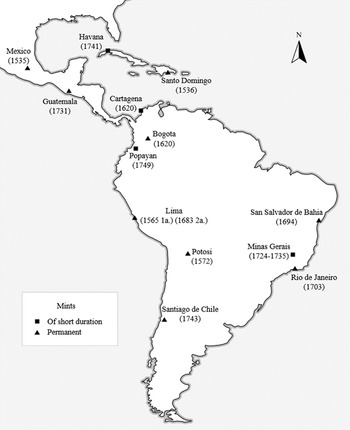
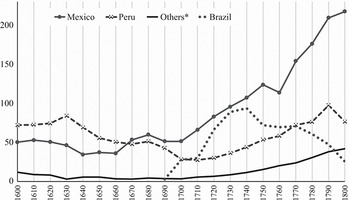
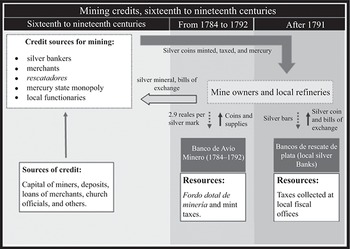
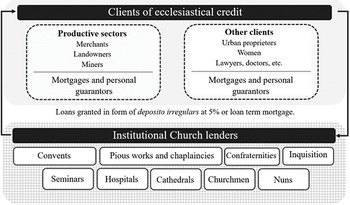


 Open access