


The formation of almost 100 joint-stock banks between 1850 and 1873 marked a turning point in the financial history of Latin America, with a greater impact in some nations than in others. The takeoff of commercial banking was the result of the conjunction of a new set of factors, including a forceful expansion of trade, led by agricultural and mining exports, an initial burst of foreign direct investments, as well as more favorable political and institutional dynamics. Capitalism began to gain traction throughout significant portions of the region, in contrast with the economic stagnation that most countries had experienced in the postcolonial era.
The largest number of banks were established in Brazil and Cuba (approximately twenty in each case), both countries with dynamic export economies, albeit heavily based on slavery. In Argentina, twelve joint-stock banks began business between 1854 and 1873, while in neighboring Uruguay, six banks received concessions during the 1860s. In Chile, five merchant banks and nine joint-stock and private banks initiated operations between 1854 and 1877. In Peru, more than a dozen banks were created between 1860 and 1873, and shortly thereafter in Colombia, at least ten local banks opened offices, almost all in the 1870s. The great majority of these new enterprises were financed by domestic capital, although it should be noted that five British overseas banks also opened branches in various ports and cities.Footnote 1 A very few commercial banks also emerged at this time in Mexico, Ecuador, Bolivia, Paraguay and Costa Rica, but it would not be until the 1880s that the latter countries experienced a substantial banking expansion (see Table 3.1).

Table 3.1 Long description
Argentina has 12; Brazil 20; Chile 14; Colombia 10; Cuba 20; Peru 12; Uruguay 7; Bolivia 1; Costa Rica 2; Ecuador 2; Mexico 1; and Venezuela 1.
* Exact estimates are difficult to make of total banks and their branches since a few entities disappeared after a short time or changed names. All were banks established with domestic capital, except for five British overseas banks that opened several offices in several countries, and one small Belgian/German bank.
The number of banking companies in Latin America founded between 1850 and 1873 was clearly more modest than that experienced in contemporary Europe or the United States. There, many authors speak of the unleashing of a banking revolution that had begun before the middle of the nineteenth century.Footnote 2 The champion was undoubtedly the United States, where more than 1,500 local banks were operating in 1860. Great Britain, for its part, had almost 100 joint-stock banks with 576 offices by 1850, while in France there were about 200 banks as of 1870, including both joint-stock enterprises and private partnerships.Footnote 3 In parallel, several dozen banks were established in Austria and Spain during the years 1850–1875, while at the same time some 200 commercial banks and savings firms began operating in Italian cities and towns, albeit most of them quite small and local.Footnote 4
The emergence of commercial and mortgage banks created after midcentury in Latin America can be situated – broadly speaking – within the second wave of banking revolutions of the nineteenth century.Footnote 5 The fact that, by the early 1870s, a considerable number of banking enterprises – large and small – were operating in a good many Latin American cities reflected the expansion of their economies and bespoke the genesis of financial capitalism in the region. Nonetheless, it appears paradoxical to find that banking took off most rapidly in two territories where the bulk of agrarian production was still carried out under a regime of coercive labor: more specifically, in the slave economies of Brazil and Cuba, both countries that led the region in exports (especially of sugar, coffee and tobacco), during the first seven decades of the nineteenth century. In this regard it is evident that capitalism and slavery were two sides of the same coin during this period, precisely as occurred in the southern United States before the Civil War (1861–1865), where the multiplication of cotton, tobacco, rice and sugar plantations, based on slave labor, was accompanied by the proliferation of banks and railroads.Footnote 6
The birth of banks in Latin America after 1850 was impelled by a long wave of expanding international trade. This is logical if one considers that the business of the early commercial banking enterprises was mainly focused on the finance of imports and exports, as well as a complementary expansion of credit for domestic commerce. From midcentury, and for more than two decades, half a dozen Latin American economies benefitted from an export boom that led to a notable acceleration of their growth and a business renewal in many fields. Therefore, it is not unreasonable to believe that there should have been a relatively strong connection between the expansion of trade in Latin American economies and an increasing demand for formal credit institutions. Furthermore, the expansion of exports in agricultural, ranching and mineral products generated backward linkages, leading to internal transformations and the growth of domestic markets that stimulated the creation of new financial entities.
The broadening of trade generated demand for new loan instruments and stimulated technical changes in financial markets. Bills of exchange had been the bread and butter of local merchant bankers since colonial times, but from the mid-nineteenth century it became apparent that the pronounced increase in their volume and circulation could be handled more efficiently by joint-stock companies than by individual merchant houses. The new banks had the capacity to carry out a much larger scale of transactions than individual private houses. In addition, the banks could open deposits accounts for customers and could grant a broader range of personal and mortgage loans as well as provide services of currency exchange. Moreover, the establishment of the first banks of issue allowed for a sharp increase in loans with banknotes, the latter being guaranteed by the reserves and the capital of a given institution.
The early commercial banks in Latin America provided short-term loans to many clients, discounting the commercial paper of merchant firms, advancing money to ranchers and landowners in the countryside, and providing loans to a large number of professionals and proprietors in towns and cities. At the same time, the early banks opened accounts for the first joint-stock companies from the 1850s and 1860s, including what were still relatively small railroads as well as firms engaged in urban construction, ports and mining. Also important was the establishment of a set of financial enterprises in various countries that specialized in providing longer-term loans that were guaranteed by real estate, fostering the incipient development of modern mortgage markets. In parallel, several of the new and leading banks in the southern hemisphere negotiated close business relationships with governments after midcentury, at the same time as fiscal income increased and public debt policies gradually stabilized. So we are dealing here not only with economic but also political history.
The emergence of early banking systems in Latin America in the 1850s and 1860s cannot be understood without describing the interface between the growth of markets and of states. An illuminating window for the analysis of this dynamic is provided by examining the relationships in given countries between a given government and one or two leading banks that occupied an influential place within the local banking system.Footnote 7 The preeminent role of these enterprises, some of which eventually became national banks, was largely the result of the privileges granted to them by the respective government regarding the issue of banknotes and the handling of fiscal and public debt accounts. However, these banks were not merely instruments of the state: they were also enterprises that played an important role in the introduction of new banking practices in mercantile arenas, as well as in facilitating financial policies and practice that could help public administrations to be more efficient.
In sum, the introduction of banks represented one of the main organizational and technological innovations in both the process of capitalist development as well as of political and state modernization. All of this required reforms of a liberal character that gained strength during the middle decades of the century, including laws and norms that could stimulate the expansion of banks and credit markets. Institutional economics help explain the logic behind such reforms by pointing out that innovation in regulatory and legal frameworks in finance occurs because economic actors tend to seek ways to reduce transaction costs. In short, as Douglas North has argued, economic actors seek to obtain benefits from economic interaction with the lowest possible expense. These benefits can be divided broadly into three categories: (1) those that increase the mobility of capital; (2) those that reduce information costs; and (3) those that spread risk.Footnote 8 These categories are important for the analysis of several historical cases reviewed in our text, but it should be stressed that there was considerable variety in the specific banking and financial norms and regulations established in such a vast and diverse region as that of Latin America, composed of more than twenty nation-states and their economies. In this regard, historian Luis Zegarra has convincingly argued that the institutional frameworks ratified in different countries during the second half of the nineteenth century were by no means uniform, nor did they necessarily have similar impacts on the formation of banks or on their operating models.Footnote 9
The economic, social and political conditions that gave rise to the banking boom varied considerably from country to country in Latin America, but there were some similarities. In the first place, new legislation and commercial codes were ratified in the middle decades of the century, allowing for incorporation of joint-stock enterprises (see Figure 3.2). This was a significant novelty in the tradition-bound mercantile world of practically all countries of the region. In the second place, governments supported the creation of commercial banking enterprises that could serve as anchors to public finance. In the third place, it is possible to identify certain dynamic groups within the propertied classes of each nation that displayed interest in the promotion of both banking enterprises and financial reforms.
Among the domestic promoters of most banks there could be frequently found a number of the leading merchant/capitalists of each country. In some cases foreign merchants and/or investors also collaborated in raising capital for the new financial firms, including the first insurance companies as well. In short, it is clear that the majority of traders and entrepreneurs demanded access to expanded sources of credit and hoped that the establishment of banks would help reduce transaction costs in their respective business. Among these were groups of exporters and importers in each port as well as the consignees of local products, who soon perceived the usefulness of the new financial enterprises for their own activities because they facilitated the discounting of commercial bills of exchange, leaving the tasks of collection, often at distant places, in the hands of the bankers. In parallel, the owners of urban real estate and rural landowners also sought new sources of finance to expand their investments in order to escape the harmful aspects of the traditional speculation that had undermined so many productive enterprises.
Accompanying those circles of entrepreneurs who promoted banking companies were politicians and high officials who hoped to benefit from the credit that the new entities could offer by providing funds for many purposes, especially military expenditures and public works, as well as loans for the private business of these elites. In addition, the formation of banks also provided the means to facilitate debt conversions and the broadening of domestic financial markets. Especially interested in such reforms were hundreds of government creditors in many nations who had accumulated large quantities of notes and bonds issued by past administrations that were illiquid, being difficult to resell as a result of the chronic fiscal difficulties that had were prompted by wars and civil strife.Footnote 10 The domestic creditors hoped to convert old paper into new securities through financial reforms, including the sale of a vast range of Church properties as well as communal Indian lands, a process known as disentailment, ratified in many countries of Latin America during the 1850s and 1860s and contributing to the expansion of real estate markets.
Geography and Typology of Early Banks: a Midcentury Financial Revolution?
The new banking geography in Latin America was more intensive than extensive. Banks appeared mainly in the capital cities and in the most important ports, while the secondary towns in rural and mining areas experienced less striking changes in the functioning of local credit, except for a few exceptional cases. For this reason, it is necessary to focus special attention on the transformations experienced by the dynamic economies of Rio de Janeiro, Buenos Aires, Montevideo and Havana, as well as the closely connected cities and ports of Santiago/Valparaíso, Lima/Callao and Mexico City/Veracruz, which can be seen as the most vigorous axes of emerging capitalist development across the subcontinent.
In fact, the economic and business topography of Latin America at midcentury indicates that expansion of banking took place basically in a series of city-states and their respective hinterlands. This was so because, in fact, most countries had not yet achieved full political and economic integration at a national level.Footnote 11 The great difficulties encountered in the process of consolidation of nation-states can be attributed to the enduring strength of federalism after independence as well as to the persistence of civil and military conflicts, interspersed with several international wars, all of which hindered the formation of integrated state structures. As a result, Latin American economies continued to exhibit strong regional imprints and, precisely for this reason, most of the first banks initially emerged as small and medium-sized companies that sprang up in the most dynamic urban centers and ports, but without yet being able to establish more extensive branch networks of offices.
The role of banks was especially important in expanding monetary circulation through the discount of commercial paper, the opening of deposit accounts and the creation of new payment instruments, especially the issue of banknotes, all of which had a considerable impact in galvanizing domestic markets. But it was not only the private sphere of the economies that demanded a greater volume of monetary and credit instruments, since the financing requirements of many governments in the region also increased from midcentury, both due to the increase in military expenditures and to the implementation of early public works programs. It was therefore common for leading banks to begin receiving deposits from the respective state treasuries and, at the same time, to provide loans to national administrations, both made possible by the gestation of more modern financial policies of several Latin American states. Improvements in finances were mainly due to the increase in customs revenues as a result of expanding foreign trade, helping to close the long-standing fiscal crisis that had lasted since independence in much of the region. Furthermore, in quite a number of nations, the rise in tax income allowed ministers of finance to reach settlements with external creditors of governments in default.Footnote 12 At the same time, the new fiscal policies attracted domestic investors interested in converting or buying public bonds. In some cases, most notably Brazil, these developments even allowed for the institutionalization of formal public debt markets in cities like Rio de Janeiro.Footnote 13
In the theoretical literature on economic development it is often pointed out that the role of banks in financial modernization is due to several factors. As is well known, they contribute to diversifying risk by serving as institutional intermediaries between lenders and borrowers, collecting deposits and redistributing them into credit operations. All this helps to explain how the expansion of bank bills and loans can stimulate the economy, in general, and enterprise, in particular. In short, banks with the power to issue can significantly increase monetary circulation through the spread of banknotes, broadening the availability of paper money and, implicitly, of credit. But, at the same time, it is clear that any bank that proceeds to open deposit accounts also contributes to expanding monetary circulation and the growth of credit.
The variety of financial functions multiplied from the moment the first banking establishments were created, but some of them were not unknown practices in the region. In fact, much of the business of the first banks in Latin America was based on what local merchants had already been doing for centuries, although the new financial entities offered important advantages because of their size, structure and relationships. The banks provided much greater security for deposits and speed in the discounting of commercial documents that were essential to carry out trade. They also promoted the use of diverse financial instruments: bills of exchange, acceptances, letters of credit and promissory notes. In a word, the business capacity of a given commercial firm could increase significantly by obtaining access to a bank that agreed to receive these documents and, if necessary, collect the credits locally or internationally. In addition, banks were able to free merchants, businessmen and landowners from prevailing usurious practices by bringing about a general decline in interest rates. As noted previously, interest rates charged by merchant-lenders in Latin America’s postcolonial economies varied widely, generally fluctuating between 12 and 24 percent per year. In contrast, from the 1860s the cost of money tended to fall in selected cities in the region, with some early commercial banks charging interest rates that fluctuated between 6 and 10 percent per annum.Footnote 14
A second group of banks created at the same time were the mortgage banks, establishing a business model that was initially modest in size but proved to be quite successful in the long run. They contributed to the expansion of capitalist agriculture and ranching as well as more modern real estate markets that would eventually flourish with the broadening of rural frontiers and the buildup of cities. In some cases, the primitive mortgage banks laid the foundations for entities that have survived down to the present day, albeit generally with different structures or under new names. The pioneering mortgage institutions of the time were established in Chile, Peru, Brazil, Cuba, Argentina and Uruguay. The first was the Caja de Crédito Hipotecario de Chile (1855), created by Chilean landowners who made much money by exporting wheat to California during the Gold Rush.Footnote 15 There followed the Banco de Crédito Hipotecario del Perú (1866), and, almost simultaneously, the mortgage department of the Banco do Brasil, which expanded notably after 1867. In Argentina, of special importance was the establishment of the Banco Hipotecario de la Provincia de Buenos Aires (1872) and the Banco Hipotecario Nacional de Argentina (1886), both of which proved enormously successful as prices of rural and urban real estate surged during decades.Footnote 16
Despite the surge of formal banking firms, it is important to emphasize that the bulk of rural credit transactions and mortgage business in most countries of this vast region was not yet handled by banks, but rather still carried on between private creditors and debtors with the key intermediation of notaries. Almost everywhere this type of private credit transaction remained important for decades, a subject that needs more research because there are still few studies on the historical evolution of mortgage lending in Latin America. Nonetheless, some pioneering works have already been published that exploit notarial and judicial archives for this purpose.Footnote 17 A remarkable and innovative study of early mortgage credit in Peru allows comparison of personal credit recorded by notaries extended by two mortgage banks in Lima between 1867 and 1873.Footnote 18 The cost of long-term mortgage loans in the Peruvian capital declined in quite a number of cases, with interest rates ranging between 6 and 12 percent per year, depending on the market and the terms of contracts.Footnote 19
It should be clear by now that while the founding of banks and the incipient expansion of credit and capital markets tended to spur financial modernization in some dynamic economies, we should not forget that much of Latin America continued to move at a much slower pace. For instance, historian Leite Marcondes has argued that in many regions of Brazil the modernization of financial markets was limited for decades by significant imperfections, high transaction costs and information asymmetries, especially in rural districts, far from the main commercial centers.Footnote 20 There, more personalized credit markets continued to dominate. The credit extended by private individuals in rural zones tended to rely on family and social networks as well as notaries, in order to ensure reliable monitoring of the evolution of local businesses and the solvency of clients.
The fledgling banking institutions – constituted as joint-stock companies – were usually concentrated in major capitals and ports and, not surprisingly, the owners of the leading private merchant houses and exchange firms often turned out to be the main promoters of the banks that sprang up (whether foreign or native), since they were keenly aware of the business opportunities to be derived from the management of the new financial institutions. A strong stimulus for participation in the creation of banking companies consisted not only in the possibility of managing a growing volume of financial transactions, but also in being able to obtain cross-borrowing from other banks to favor the enterprises and/or companies in which they had an interest. This recalls the pioneering and classic work by historian Naomi Lamoureaux on the practice known as insider lending, characteristic of the history of early banking in New England during its blossoming industrial economy between 1820 and 1860, a study that offers a suggestive counterpoint to what happened in many Latin American cities in the second half of the nineteenth century. Lamoureaux argues:
It is important to recognize that the early nineteenth-century banks were not really commercial banks so much as investors’ clubs … Groups of like-minded businessmen came together to capture savings through the new financial institutions that allowed them to have access to credit and capital resources for their own investment strategies.Footnote 21
Such practices were common at the time in various Latin American regions and are illustrated in detail in studies by economic historians.Footnote 22 In any case, the varied factors that stimulated the emergence of banks also depended on macroeconomic trends, especially the expansion of export economies, whether based on the expansion of agricultural, livestock or mineral production.
The Globalization of Trade Since Midcentury and Financial Impacts
The new trends that stimulated financial innovation were directly linked to the forces that spurred international commerce as globalization of exchange gained momentum from the 1850s in a golden age of free trade impelled initially by the signing of the Cobden–Chevalier Treaty between Great Britain and France in 1860.Footnote 23 Other bilateral treaties soon followed and contributed to the dynamism of exports and imports, boosted by the transport and communications revolution, as Jeffrey Willamson and Kevin O’Rourke have forcefully argued.Footnote 24 The construction of railroads throughout major zones of Western Europe and across the vast spaces of North America drove growing economic integration and, at the same time, the multiplication of merchant navies and the introduction of steamships expanded the commercial and financial flows between nations. Particularly important in this international trade boom were the almost simultaneous discoveries of large gold deposits in California and Australia, leading to a marked increase in shipping traffic across the Pacific that also connected with the more voluminous mercantile business that crisscrossed the Atlantic.
These changes had a direct impact on certain Latin American countries that experienced an unprecedented boom in foreign trade from the middle decades of the century, above all Argentina, Brazil, Chile, Colombia, Cuba and Peru. Along with the expansion of exports, there took place a simultaneous increase in imports from Europe and the United States. Both export and import flows required a considerable expansion of existing credit instruments and, as a result, the activities of both foreign and domestic merchant bankers in the Latin American ports and cities multiplied as they extended loans to a wide range of local mercantile firms. Fundamental in all this commercial activity were business alliances with the core of the most powerful merchant banks in London that had already taken a prominent lead in the financing of international commerce from the early nineteenth century, as they extended their networks around the world.
The dynamism of trade also drove the gradual transformation of Latin America’s domestic financial markets. This process of expansion was subject to strong fluctuations provoked by some banking panics, and especially by the global financial crisis of 1873, but despite the volatility, the growth in volume of commercial and credit transactions was impressive.Footnote 25 Complete historical statistics on the foreign trade of each of the Latin American countries with all their trading partners in this period are not yet available, but the British series are illustrative of general trends.Footnote 26 During much of the nineteenth century, Great Britain was the most important trading partner of most of the nations of the subcontinent, although from the middle of the century France and the United States also became strong competitors, and later on, Germany, Belgium, Spain and Italy. As can be seen in Figure 3.1, from 1850 onwards, Latin American exports to Britain increased by almost 300 percent. At the same time, imports of British-manufactured goods multiplied by almost 400 percent. In both cases, there was a strong cyclical imprint, with inflections that reflected the transmission of major international crises, such as those of 1857, 1866 and 1873.

Figure 3.1 Long Description
The total begins around 12 million in 1854, rises sharply after 1860, peaks near 28 million in 1865, dips, rises again to over 30 million around 1872, and declines steadily afterwards. Brazil’s borrowing gradually increases through the 1860s and early 1870s; Peru’s borrowing fluctuates between 2 and 6 million; Chile’s borrowing remains low, generally between 1 and 5 million. Three vertical grey bars mark major international financial crises in 1857, 1866, and 1873.
The export boom was driven fundamentally by the expansion of international demand for agricultural/livestock and mineral goods. In some cases, products that had been remitted since colonial times remained dominant. For example, silver continued to be of great importance in the traditional mining countries, an extreme case of continuity being that of Mexico, where silver constituted more than 80 percent of its exports until as late as 1890. Silver was also significant as a major component of exports from Bolivia, Peru and Chile for at least the first two-thirds of the century. But, at the same time, an increasing diversity of commodities was generated as world demand for a wider and more voluminous range of agricultural and mineral products gained strength.Footnote 27 Chilean copper as well as Peruvian guano and nitrates stood out among the new exports that gained in importance, and in fact, Chile and Peru became the world’s most important exporters of these mineral commodities until the mid 1870s. Over three decades, the Peruvian government benefitted from an extraordinary fiscal income that was the result of the guano boom, soon complemented by exports of cotton, sugar, alpaca wool and nitrates. In Chile, the boom in silver and copper production was accompanied by a parallel surge in the volume of wheat exports that were shipped to markets in Great Britain, although Chilean wheat flour also was sent on many ships to California and Australia during the 1850s and 1860s, at the height of their simultaneous gold rushes.
In the cases of Argentina and Uruguay, shipments of hides and salted meats continued to be important during the decades 1850–1880, but above all, this was a period marked by a boom in wool exports. In the River Plate region, the wool cycle gave rise to the multiplication of thousands of sheep ranches, just as in Australia and New Zealand. In these cases the wool boom was accompanied by a proliferation of new commercial enterprises and the establishment of a series of local banks.
In Colombia, the diversity of exports also was considerable, including gold, tobacco and cinchona, complemented by the initial stages of the coffee trade. In fact, between 1850 and 1870, the Colombian economy experienced its greatest export boom of the entire century, as the value of external trade tripled in barely twenty years.Footnote 28 In Brazil the exports of sugar, cotton and cocoa from the northeast remained important, although they were soon surpassed in value by the coffee that was cultivated on thousands of new rural estates in Rio de Janeiro, São Paulo and Minas Gerais. Brazil rapidly reached world predominance in the production and commercialization of coffee, in rising demand on both sides of the Atlantic.Footnote 29 For its part, Cuba stood out as the largest exporter of cane sugar on an international scale during most of the nineteenth century.
The commercial booms of the 1850s and 1860s prompted a notable increase in the use of bills of exchange and an expansion of the issue and trade in vouchers and promissory notes by domestic trading houses. It is possible to argue that these instruments served as a kind of paper money, at least in commercial circles.Footnote 30 Bills of exchange were typically backed up by documents such as the bill of lading that listed the commodities remitted and assured future payment of the transaction, following an old practice that had been common since colonial times. Once the bill of exchange was accepted and discounted by a merchant or banker, the transaction could proceed. In this way, the farmer, factor or broker was not obliged to wait until the final sale, and could collect his money in advance and reduce marketing costs. But before the bill of exchange could become a widely used financial instrument it was necessary to develop methods of repatriating funds.
Bills of exchange were collected and paid in distant locations and therefore, once the exported good was sold, a network of merchant and financial contacts was required to collect the bill and remit the funds. These functions had traditionally been performed by local and foreign merchant bankers through their correspondents, but the growing volume and circulation of commercial paper made it increasingly evident that it was desirable to rely on domestic, joint-stock banks that could operate with greater scale and efficiency in their acceptance and discounting at local and international levels.Footnote 31 In this respect, we believe that future theoretical and quantitative research could explore the possibility of constructing mathematical models that would explain precisely at what point it becomes profitable and efficient to create a commercial joint-stock bank, for example, as a function of the increase in volume of discount of commercial paper and/or the speed of its circulation in a given market.
The expanded commercial activity also spurred the rise of the commercial press. From the 1840s there was an important rise in the circulation of newspapers throughout Latin America. Among the commercial periodicals in Brazil reference must be made to the Jornal do Commercio founded in 1828 and the Almanak Laemmert, Administrativo. Mercantil e Industrial do Río de Janeiro, published from 1844 and into the twentieth century. In Chile the leading newspapers with commercial news were El Mercurio de Valparaíso (1828) and El Ferrocarril (1855), while in Peru the main journal was El Comercio (1839). In Montevideo, the leading commercial newspaper was El Telégrafo Marítimo (1848), while in Buenos Aires, mention should be made of El Nacional (1852) and The Standard and River Plate News (1862). Commercial bulletins and letters also came from abroad on fast paquebots and ships that carried mail with news on market trends in Europe and North America. In addition, by the early 1870s, the first underwater telegraph cables connected South America and the Caribbean to Europe, making possible almost instantaneous transmission of commercial and financial news. All of these innovations in communications were essential for merchant firms but also for the early banks since they relied on regular information regarding the price trends of a great variety of commodities and of interest rates in overseas markets.Footnote 32
Liberal Reforms and New Institutional Frameworks for Public and Private Finance
In his brilliant survey of the evolution of banking history in the industrial nations of Western Europe and the United States, Richard Grossman poses the question: why did incorporated commercial banking emerge in the nineteenth century? He answers that the demand for expanded credit resources was a very prominent driver, but that legal reforms also played a key role.Footnote 33 Similarly in the case of Latin America, the emergence of early public and private banks was determined by growing economic dynamism and the accumulation of capital by mercantile and propertied elites, yet also impelled by important political and legal changes, including the gradual adoption of more modern legal frameworks that facilitated a greater number and variety of transactions in the still-weak financial markets of the region.
During the 1850s and 1860s, liberal reforms were implemented throughout Latin America, including the ratification of new constitutions in many nations, being accompanied by a series of laws that led to the relaxation of traditional rules regarding the ownership of real estate, thereby replacing a substantial part of the colonial regulations, still in force with regards to property, trade and finance.Footnote 34 For this reason, the period has been baptized as the era of “Liberal Reforms.” The establishment of new regulatory and legal frameworks, more in line with emerging capitalism, included the ratification of civil and commercial codes, as well as the granting of numerous banking contracts, and even the approval of some regulations for the establishment of primitive stock exchanges and/or formal capital markets.Footnote 35 Civil and commercial codes were necessary legal instruments to provide unity and coherence to the novel legislation, which until then had been dispersed, and to eradicate colonial norms that were rigid and outdated (see Figure 3.2). Above all, they provided clearer rules for the administration of justice, the resolution of conflicts in all economic activities, as well as to give greater support to the new laws and norms approved by governments.Footnote 36

Figure 3.2 Long Description
The horizontal scatter plot shows the first nineteenth-century commercial codes in Latin America, from the first in Haiti to the last in Paraguay. Each country is marked with a diamond, located between 1815 and 1905 on the vertical axis representing the year of enactment.
In most cases, the founding of joint-stock companies depended on a concession authorized by the national or regional government, and precisely for this reason the legal contracts are an essential source of information for understanding the origins and degrees of autonomy of banking firms in cities, ports and provinces. This point is emphasized by Calomiris and Haber in their provocative work Fragile by Design, which compares the negotiations of banking charters in Great Britain, Canada, the United States, Brazil and Mexico in the nineteenth century, underlining the importance of negotiations between political and business elites that defined the terms of the privileges or, alternatively, the limitations embodied in bank charters.Footnote 37 The intertwining of economic and political elites inevitably brings us back to the subject of institutional economics theories that argue that economic actors always seek to reduce transaction costs in order to increase their economic opportunities and benefits.Footnote 38
Undoubtedly, the ratification of a new wave of liberal reforms from the mid-nineteenth century contributed to improving property rights, and generated the possibility of incurring less risk in the formation of joint-stock companies and the adoption of new financial instruments that could favor the performance of the emerging banks, insurance companies and primitive capital markets in the region. These initiatives spoke to the rise of modern forms of mercantile and financial capitalism in various city-states and their surrounding regions. Nonetheless, implementation depended on a varied chronology, country by country, and in many rural regions progress was extremely slow.
The first formal stock exchange of Latin America was that of Rio de Janeiro, which began operations in the 1850s and gave rise to a surge of early joint-stock companies, including several banks, insurance companies, shipping companies, railroads and manufacturing companies in Brazil.Footnote 39 This phenomenon had relatively dynamic replicas in the 1860s with the expansion of capital markets in the cities of Santiago de Chile, Valparaíso and Lima, as well as Havana, and, to a lesser degree, Buenos Aires, Montevideo and Mexico City.Footnote 40 In the local press, stock exchange quotations began to complement commercial information on the rise or fall of commodity prices locally and abroad. Much essential news was also published in the early commercial newspapers that recorded incoming and outgoing ships, the opening of new commercial houses and offices of insurance companies, as well as reports on auctions and bankruptcies.Footnote 41 In short, information on trade and finance became increasingly accessible, something of great importance for the directors of early banks.
The improvements in the management of public finance also provided incentives for the earliest of the larger banks that became engaged in the supply of credit to the governments of the more prosperous city-states. During times of regional wars – which were particularly intense during the 1860s – the collaboration of local banks with state treasuries was not necessarily voluntary but rather made obligatory due to unavoidable political pressures. In fact, the largest banking entities had practically no choice but to lend very considerable sums to states that needed to finance military conflicts. In some cases governments took away the privilege of money issue from a given bank and transferred it to the respective state treasury in order to cover war deficits with paper money and promissory notes. As a result, the relations between early banks and states in times of war were tense and complex, as shown by the experience of Argentina, Uruguay and Brazil during the Paraguayan War (1865–1870), that of Cuba during the Ten Years’ War (1868–1878), and the earliest bank in Mexico during the French intervention in 1862–1867. A focus on these five country cases allows for an analysis of the close links between war, politics and banking enterprise. We begin our review with Brazil at midcentury, since it was the first country in Latin America to have already developed a small but significant banking system.
Brazil: The Creation of Banks between 1850 and 1870
The takeoff of banking in Brazil was directly linked to the remarkable expansion in the commercial activity of the ports of Rio de Janeiro, Bahia, Recife and Santos from 1850 onwards. Trade boosted regional economies and bolstered customs revenues, directly improving Brazil’s government finances, reputed in Europe to be the soundest in Latin America. Nevertheless, it should be remembered that until then, the local financial markets were frankly underdeveloped. It is true that there was already an incipient banking system, composed of the Banco Comercial do Rio de Janeiro, which had been operating since 1838, and three small banks in the northeastern area that were established in the years 1845–1847.Footnote 42 Nonetheless, the Brazilian banking expert of this era, Bernardo de Sousa Franco, remarked in a pioneering book, published in 1848, that he found it surprising that “with a population of almost 200,000 inhabitants, the city of Rio de Janeiro today has only one (banking) establishment with a capital of two thousand contos de reis,” while “the city of New York, with 312,710 inhabitants, according to the 1840 census, has 24 banks, with a capital equivalent to more than 50 thousand contos de reis, which is complemented by a large issue of banknotes.”Footnote 43 The author added that at this time the rural areas of the province of Rio de Janeiro lacked banks, while in 1844 the still highly rural State of New York already possessed 150 banking establishments. Sousa Franco considered the existence of such financial enterprises an important factor in ensuring the dynamism of commerce and of economic activities as a whole, and for this reason he called for urgent financial reforms in his country.
A sustained upsurge of banking in Brazil only began during the 1850s, when a series of new financial enterprises of varying sizes were established, including the new Banco do Brasil, an institution that served as the government’s banker, although it was privately owned. This company was initially promoted by Irineu Evangelista de Sousa (the future Baron of Mauá), one of the most dynamic and imaginative Latin American capitalists of the midcentury.Footnote 44 Approved by decree on July 2, 1851, the Banco do Brasil began operating in September as a commercial bank with a paid-in capital of 2 million milreis, rising the following year to 5 million and then to 8 million milreis. It had legal rights to discount bills of exchange, to open current accounts and offer time deposits for clients, as well as to supply loans to the imperial government. This bank also soon enjoyed the privilege of issuing banknotes, convertible at sight, to be admitted in all public offices, although in principle such issues had to be backed by a cash reserve that could not exceed twice the realized capital of the bank.
In 1853, Viscount Itaboraí, minister of finance, a strong advocate of the gold standard, decided to resolve a complicated financial situation by proposing the merger of the two main banks at Rio, the Banco Comercial and the Banco do Brasil, in order to favor greater unity in the circulating medium of the Empire, reduce the circulation of inconvertible paper money and strengthen gold reserves.Footnote 45 The new policies were linked to a sudden increase in volatility within the financial market of Rio de Janeiro. Interest rates for discounting commercial bills from solid houses had fallen sharply in 1851 and 1852 to an average of 5 percent interest per year, but at the beginning of 1853, the local market suffered a brief panic due to the considerable increase in vouchers and banknotes in circulation, provoking a sudden increase of interest rates that reached 10 percent in June of that year.Footnote 46 The government decided to intervene and rescinded the concession held by Mauá (the largest shareholder), and followed up by authorizing the merger of Banco do Brasil with its great rival, the Banco Comercial do Rio de Janeiro.Footnote 47 This gave birth to a colossus that would long operate as a government bank but also as a private commercial bank.Footnote 48 On July 5, 1853, the “third” Banco do Brasil was born, with total assets of 35 million milreis, a very respectable sum for the time.Footnote 49
The symbiosis between the political and financial elite in the management of the Banco do Brasil reflected the consensus that linked the most powerful fractions of the slave-owning classes with the import-export merchants of Rio de Janeiro and São Paulo. Historian Thiago Gambi has demonstrated how this powerful bank became the financial vehicle of the Conservative Party and, in particular, of the regional political network known as the saquarema during the 1850s and 1860s.Footnote 50 The priorities of the bank directors and their allies were to ensure a strong currency in order to guarantee several things at once: first, to reduce exchange rate volatility; second, to encourage the availability of credit to finance international trade; and, third, to facilitate government repayment of foreign debt at reasonably low rates. These aims could be sustained by a conservative and centralist policy, very much in line with the ideological interests of the emperor and his ministers, who wished to support a government bank that should be a powerful but prudent institution, with high cash reserves and a virtual monopoly on the issue of paper money.Footnote 51
The power of the Banco do Brasil soon also became visible outside the capital as it established branches in the cities of Salvador in the State of Bahia, Recife in Pernambuco, San Luiz in Maranhão, the city of Belem in Pará, the mining city of Ouro Preto and across the region of Minas Gerais. The bank also opened offices in the State of São Paulo and in the southern province of Rio Grande do Sul. This process of regional expansion meant that the Banco do Brasil came to compete with local banking houses in several cities that were not able to offer much resistance to the powerful entity since it enjoyed the support of the imperial government. Not surprisingly, most regional banks were soon absorbed into the larger firm.
The Banco do Brasil appeared precisely when the coffee economy was gaining great strength, a fact that explains why the main merchants and the largest coffee plantation owners of Rio de Janeiro had an important participation in this and related financial companies. The increase in exports was truly spectacular: in 1830 only 28 million kilos of coffee had been exported, but by 1855 the figure of 180 million kilos per year was reached. Brazil quickly became the largest supplier of coffee to the world market at a critical moment when the industrial revolution and urbanization were accelerating in Europe as well as in the United States.Footnote 52 The demand for coffee was closely linked to the new and rapid rhythm of urban life as well as to the multiplication of meeting places that have been known since then as cafés. In all European and American cities the consumption of this beverage spread quickly, as is portrayed in the abundant literature of the time that describes daily life and consumption in London and Liverpool, Paris and Marseilles, Madrid and Barcelona, Hamburg and Berlin, Turin, Rome and Milan, New York and Chicago.Footnote 53 The international demand for coffee was reflected in the great increase in annual traffic of foreign ships that arrived to the port of Rio, surpassing 2,700 vessels by 1856.Footnote 54
The expansive cycle of the coffee boom led to the multiplication of coffee plantations, particularly in the Paraíba Valley in the State of Rio de Janeiro, but also, and increasingly so, in the States of São Paulo and Minas Gerais. As Herbert Klein and Francisco Luna have demonstrated in a splendid synthesis on the history of Brazilian slavery, by 1854 there were already 2,600 coffee plantations in São Paulo, where 55,000 slaves worked long daily shifts.Footnote 55 At the same time, the coffee boom spurred the multiplication of commercial enterprises in many cities. The more cosmopolitan firms demanded a sharp increase in financial transactions with the European markets and this is confirmed in the data on the growing volume of bills of exchange registered by the early transatlantic steamship lines at midcentury. Between 1848 and 1854, the value of bills of exchange drawn from Rio de Janeiro on London doubled, while bills on Paris tripled and those on Hamburg quadrupled.Footnote 56 But beyond an increase in international credit operations, merchants also required a modernization of domestic financial markets, including a regulatory regime that could facilitate the creation of banks and other modern enterprises.
Brazil took the lead in Latin America in ratifying a new institutional framework for monetary and financial systems. In an important research work, economist/historian Andrés Villela has been able to verify that between 1846 and 1868 fifty laws and decrees were ratified concerning monetary regulations, issue of paper money and concessions of bank charters.Footnote 57 The year 1850 was of special importance as a result of the approval of a series of major legal reforms that would stimulate the advance of capitalism in Brazil, in particular, the launching of new firms, including four types of enterprises: limited liability companies, limited partnerships, joint-stock companies and corporations. The ratification of the Commercial Code in June 1850 represented a significant advance over the old colonial regulations that had been in force until then, but it was also complemented by the creation of new commercial courts throughout the vast territory of the Brazilian Empire that were to handle lawsuits in accordance with the new legal regime. In turn, the commercial code legally recognized the profession of banker and regulated the organization of banks and of financial contracts, including those secured by mortgages.
The cessation of the imports of slaves from Africa also proved of great importance after approval of a law on September 4, 1850 that affected both large slave traders and landowners. To compensate them, the government approved legislation known as the Lei de Terrras, ratified just two weeks later, which promoted the sale of a considerable amount of public lands in lots of 300 hectares without incurring taxes for the buyers.Footnote 58 The new reform favored the concentration of property in the hands of large landowners in central and southern Brazil, who were able to benefit from the acquisition of additional rural properties at very low costs. For their part, the slave traffickers reoriented part of their business as they channeled capital into expanding financial markets but also in restructuring the domestic slave trade, which continued for decades; they now bought slaves in the depressed northeast of Brazil and transferred them in large numbers to the dynamic coffee economy of the center/south of the country, selling them to the owners of the coffee plantations that were experiencing a strong demand for additional laborers.
The implementation of these institutional reforms gave impetus to a wave of investments derived from the accumulation of profits derived from the export boom, since many merchant trading houses reinvested their wealth in other sectors.Footnote 59 Between 1851 and 1860, ten banks (with domestic capital) were created as joint-stock companies in Rio de Janeiro and then another five between 1861 and 1865, two of which were British.Footnote 60 At the same time in the northeast, in the port of Bahia, an old but still dynamic center of sugar exports, the passion for creating banks and other new firms, including insurance and shipping companies, also gained strength. The new banking entities there included the Banco Comercial da Bahia, founded in 1845, as well as a series of financial firms established between 1854 and 1858: the Sociedade do Comercio da Bahia (with mortgage functions), the Caixa Commercial da Bahia, the Banco Hypotechario de Bahia, two new savings banks, and the Banco da BahiaFootnote 61 (see Figure 3.3). The same innovative financial fever also began to be felt in other cities such as Recife, Belo Horizonte, São Paulo and Santos, although the imperial government did not look too favorably on these provincial financial initiatives.

Figure 3.3 Long Description
The timeline diagram shows the lifespan of several nineteenth-century commercial banks in Rio de Janeiro from 1849 to 1866. Horizontal lines represent each institution’s operating years, including Banco Comercial de Río de Janeiro, Banco de Brasil de Mauá, Banco Rural e Hipotecario de Río de Janeiro, Sociedad Bancaria Mauá, Mac-Gregor and Cía., Banco Comercial y Agrícola de Río de Janeiro, London and Brazilian Bank, and English Bank of Río de Janeiro. Lines vary in style - solid, dashed, and dotted - to distinguish banks, with markers indicating start and end points.
In terms of control and management structure, the Banco do Brasil followed the organizational model of the Banque de France in some respects, since it was an official bank (with privileges of money issue), but without being state-owned.Footnote 62 The Banco do Brasil opened accounts for the government and remained a fundamental axis of finance for decades. At the same time, like its French counterpart, the Banco do Brasil became a key player in financial and political circles, since its shareholders included politicians, coffee aristocrats, wealthy merchants and financiers of Rio, all of whom had a vested interest in making sure that the bank provided high dividends, but without offering credit for risky ventures. The total number of shareholders reached 1,479 in the year 1864, according to the annual report of the Banco do Brasil.Footnote 63 Most of the shareholders were residents in the city of Rio de Janeiro and were members of the wealthiest sectors of the nation’s capital, seat of the imperial administration.
Conservative financial policies lost steam in the years of 1857/1858 during a brief juncture when the liberal politician and minister Bernardo Sousa Franco decreed that a plurality of banks could issue banknotes. Thus, a fleeting experiment with “free banking” took place in Brazil.Footnote 64 In August of 1857, the Ministry of Finance authorized the establishment of six banks with the privilege of issuing their own banknotes, thus breaking the monopoly of the Banco do Brasil. The new banknotes would, in principle, be convertible to gold or treasury bills, and would be backed by the reserves of each bank, composed of either gold or government bonds (ápolices), but which could also be backed up by shares of companies that had the financial backing of the government. The executive decree led almost immediately to the transformation of several commercial banks into institutions with the right to issue their own notes: these included the Banco Comercial e Agrícola de Rio de Janeiro, the Banco Comercial do Rio Grande do Sul, the Banco de Pernambuco in Recife, the Banco do Maranhão in São Luís and, in 1858, two additional entities joined this club, namely the Banco da Bahia in Salvador and the Banco Rural e Hipotecário in Rio de Janeiro.Footnote 65
Not surprisingly, the Banco do Brasil protested that its monopoly of issue had been violated, and several legal suits soon followed. The success of the liberal experiment was transitory, partly due to political struggles among the banks, but also as a consequence of the outbreak of the international financial crisis at the end of 1857, which undermined finance and trade in Brazil. In these circumstances, the Conservative Party demanded the revision of the liberal decree, arguing that the ratification of the plurality of issue and the permission to reform the banking and monetary system had not been approved by the parliament but were simply the results of executive measures. Heated legislative debates soon followed and eventually led to the repeal of the liberal decree in early 1860.
On the basis of the somewhat rudimentary banking statistics of the time, it can be seen that by 1860 the Banco do Brasil dominated the banking system in the city of Rio de Janeiro and its province (see Figure 3.4). This preeminence was linked to a conservative law, known as the Lei dos Entraves, passed on August 22, 1860, which limited the possibility of any enterprise issuing banknotes without a strong gold backing. Furthermore, the new law made it very complicated for any group of investors or entrepreneurs to obtain a concession for a bank as a joint-stock company, since such a decision depended upon direct approval by the emperor and his government cabinet.Footnote 66 For this reason, the power of Banco do Brasil increased on two levels, the private and the public. The contemporary writer Sebastião Ferreira Soares, author of an early and lucid treatise on commercial and banking statistics (1865), argued that Banco do Brasil effectively became the “banker of banks,” discounting the commercial paper negotiated by the commisarios (coffee traders) with a score of banking houses that had been founded between 1850 and 1860.Footnote 67 On the other hand, the Banco do Brasil fulfilled several of the functions of an incipient central bank since it exercised a formal monopoly of the issue of banknotes between 1853 and 1857, also serving for some time as treasurer of the imperial government, and participant in management of domestic public debt.
Participation by Banco do Brasil in total deposits and loans of the banking system of Rio de Janeiro, 1854–1888 (percentages).

Figure 3.4 Long Description
The solid line represents loans, fluctuating between roughly 40 and 70 units, peaking in the late 1850s and again around the mid-1860s, then declining gradually after the 1870s. The dotted line represents deposits, starting near 30 units, dropping sharply in the mid-1850s, rising again around 1858 to 1862, then falling to low levels in the late 1860s. Deposits rise steeply after 1874, reaching their highest values in the late 1870s before slightly declining in the 1880s. Years are labelled along the horizontal axis.
Despite its dominant role within the financial system, the Banco do Brasil was not able to become a true central bank. After a decade of operations, Ferreira Soares argued that: “the Banco do Brasil has not been able to fulfill satisfactorily the duties imposed on it by the law (original charter) of its organization to regulate the circulating medium of the Empire.”Footnote 68 An additional factor that contributed to undermine the predominance of the Banco do Brasil and its allies was the fact that from 1862, two British banks began to operate in the Rio de Janeiro market, taking clients away from its domestic competitors: these were the Brazilian and Portuguese Bank and the London and Brazilian Bank. Then in 1864, the financial situation in Rio de Janeiro was greatly complicated by the outbreak of a major banking panic caused by the failure of the largest private bank, Souto and Co., which dominated the commercial paper market. The Banco do Brasil was seriously hit because it was Souto’s largest creditor, but survived thanks to its size and to the confidence of clients inspired by the bank’s close ties with the imperial government. Dozens of commercial houses and private bankers collapsed at this juncture, although it should be noted that the English banks weathered the crisis of 1864 better than most domestic firms.
The overall situation of the Banco do Brasil became even more worrisome after the outbreak of the Paraguayan War in 1865, as the government needed to cover military expenses that increased exponentially when the army and naval forces began their campaign and moved into Paraguay. It soon became evident that the costs of the war would be immense and, therefore, an external loan was contracted in London with Rothschilds in 1865 for more than 6 million pounds sterling. But even more resources were required to cover military expenses of almost 100,000 men who marched to Paraguay. It was no longer feasible to resort to the Banco do Brasil, as this great firm had been weakened by the financial crisis that had exploded in Rio de Janeiro in 1864. Consequently, a coalition of conservative and liberal political leaders agreed to cover the government’s deficits with requests for loans from other banking establishments, but this could only be done on the basis of an exponential increase in the issue of banknotes in circulation that would probably not have adequate backing in gold, leading to a deterioration of the exchange rates of the Brazilian currency. In these pressing circumstances, both the defenders of monetary orthodoxy, led by Minister Itaboraí, as well as their ideological enemies and advocates of free banking, such as the liberal Sousa Franco, joined forces to pass a law on September 12, 1866 that allowed the imperial government treasury to issue paper money on its own, and at will, in order to guarantee coverage of the military expenditures.Footnote 69
The Banco do Brasil was soon forced to hand over most metallic reserves to the state treasury, while its privileges of money issue were withdrawn. From then on, and for more than a decade, its functions were concentrated on serving as a private commercial bank, receiving deposits from clients and providing short-term loans to merchants, as well as increasing mortgages for landowners. A review of the trends in Figure 3.5 shows that the bubble in the issue of Banco do Brasil banknotes caused by the crisis of 1864 was quickly deflated by the new law of 1866. In these circumstances, the imperial treasury became the major financial support for the military expenses incurred by the invasion and occupation of Paraguay, issuing more than 100 million contos in treasury notes for this purposeFootnote 70 (see Figure 3.5). The war would end up lasting five years and costing the lives of almost 100,000 Brazilian soldiers.

Figure 3.5 Long Description
State issues rise gradually before surging sharply around 1865 to 1870 during the War of Paraguay, reaching over 180 million milréis by the late 1870s. Bank issues fluctuate, peaking near 1864 to 1866 before declining steadily afterward. The exchange rate (plotted on a right-hand scale in milréis per 10 pounds sterling) moves between roughly 75 and 140, with a sharp spike around 1867 followed by stabilization and moderate fluctuations through the 1870s. A label beneath the graph marks the War of Paraguay (1865 to 1870), highlighting the period during which major financial changes and sharp movements in all three series occur.
During the war, the other joint-stock banks and private banking houses in Rio and other Brazilian cities continued to dedicate themselves preferentially to the financing of the export/import trade, which allowed them to obtain good yields. However, there developed an important bottleneck in the coffee sector since rural landowners suffered a marked shortage of medium- and long-term credit, essential to help expand coffee production, the backbone of the Brazilian economy’s exports. Landowners depended on short-term loans provided by the sugar and coffee merchants (commisários), who obtained cash advances from banks in Rio, which they then lent at substantially higher rates to their rural clients. The commisários discounted their commercial bills with the Rio banks at rates that fluctuated between 6 and 9 percent during most of the 1850s; then, with the cash they received from the banks, they lent these funds to the owners of the coffee plantations, but at rates of 12 percent or more, which – not infrequently – led to the bankruptcy of some coffee plantation owners.Footnote 71
While the commercial and mortgage banks played a dominant role in local financial markets, it is also important to note the existence of early savings banks that catered to a more diverse public in the cities of Rio de Janeiro, Bahia, São Paulo and Campos. A review of their statutes reveals that their functions consisted in attracting deposits from the urban population as a whole, including urban workers and even slaves who were artisans, leading to the accumulation of considerable sums on deposits in these entities. Particularly striking was the success achieved by the Caixa Econômica do Rio de Janeiro, operating since the 1830s and managing voluminous resources, mostly invested in public debt. This savings bank, however, began to experience deficits from the 1840s, as it was unable to withstand competition from the new commercial banks in the capital, leading to closure in 1859.Footnote 72 However, Emperor Pedro II resolved to recover and expand the functions of this type of entity and encouraged the foundation of a Caixa de la Corte in 1861, which was to have a long life, as evidenced by the fact that today, its successor is the largest public bank in Brazil and Latin America.Footnote 73
Finally, it is important to mention a unique private banking institution in Brazil, the Banco Mauá, which promoted medium-term investments in industries as well as railroads, shipping companies and foundries at this time. Its owner, Irineu Evangelista de Sousa (named Baron Mauá by the emperor), was an innovative businessman who had begun his mercantile career in the 1840s, dedicating himself to the financing of Anglo-Brazilian trade through close alliances with the English merchant firm Carruthers, for whom he had worked since he was a young man.Footnote 74 Mauá was so successful in trade finance that he accumulated a large fortune in a short period of time.
Mauá fostered the development of a number of Brazil’s largest joint-stock companies of the 1850s and 1860s, including foundries and shipyards, the São Paulo Railway, the first gas company in Rio de Janeiro and the largest steamship company on the Amazon. His extensive contacts in England enabled him to obtain investment capital for these purposes, supplemented by contributions from Brazilian capitalists who trusted the banker. Some authors have suggested that the operating model of this unique private bank had some similarities to the Société Générale de Belgique, the prototype of industrial banks in Europe at the time, although it has also been suggested that its organization was influenced by the business model of the Crédit Mobilier of France, the largest investment bank in Europe in the 1850s and centerpiece of a financial empire in France, Spain, Italy and Austria, headed by the flamboyant Pereire brothers of Paris, who have often been described as Saintsimonian.Footnote 75 Notwithstanding the possible influence of Belgian or French models, Brazilian historian Carlos Guimarães has argued that the banking house headed by Mauá was constituted simply as a private Anglo-Brazilian merchant bank, which had numerous interests in industrial and railway investments.Footnote 76
In short, in Mauá we find embodied certain characteristics of the traditional merchant-lender in combination with some of the features of a modern banker, although it can also be suggested that he was the most daring financial entrepreneur in South America before the bankruptcy of his banking house in 1875.Footnote 77 In any case, it is of exceptional interest to explore his activities, since he was not only an innovative banker in Brazil, but was also the first to operate simultaneously in several South American countries from an early date.
Banks in Uruguay at Midcentury
In the 1850s, Baron Mauá extended his financial empire southward, and established independent branches in River Plate, notably in the port of Montevideo, an important event since it marked the emergence of modern commercial banking in Uruguay. Mauá’s expansive strategies were not only the result of his enormous ambitions as an entrepreneur, but also a reflection of the aggressive policies of the Brazilian imperial government, which was determined to increase its influence in the small neighboring state on its southern border and throughout the Southern Cone in general. Since the 1820s, military and political authorities in Rio de Janeiro had launched successive campaigns to take control of the Banda Oriental (Uruguay), but their failure during the war with Argentina in 1826–1829 left the government at Montevideo with some autonomy, albeit subject to numerous external interventions and civil wars that lasted for decades. Nevertheless, trade relations between Brazil and its southern neighbor intensified, mainly due to the strong demand for salt beef to feed the hundreds of thousands of slaves on the sugar and coffee plantations in Rio de Janeiro and the northeast. From the 1840s, the merchant banker Mauá controlled an important part of the shipments of salt beef from Montevideo (as well as those sent from his homeland of Rio Grande do Sul), which involved the hiring of several hundred ships annually. Based on these interests, Mauá was to become a great pioneer in establishing commercial banks throughout the River Plate zone.
In 1852, Mauá began to operate at the port of Rosario, serving as banker to General José de Urquiza, who was the head of the government of the Argentine Confederation (1853–1862), a political and military alliance that included most of the Argentine provinces that were opposed to Juan Manuel de Rosas, governor of Buenos Aires. When Rosas was defeated, Mauá quickly moved to expand his regional business and established banks in the most dynamic ports in the zone, Montevideo, Buenos Aires and Rosario. On the other hand, the Brazilian financier did not support the creation of the ephemeral Banco Nacional de la Confederación (1854), sponsored by General Urquiza, apparently because of doubts about its solvency. This early official bank, headquartered in Rosario, was given the right to issue paper money, but after six months it collapsed due to the lack of a reserve fund, a fact which made merchants and potential customers distrust its bills.
Mauá became closely involved in the finances of the Uruguayan government, spurred on by the marked political, military and commercial interests of the Brazilian imperial government.Footnote 78 The activities of the Brazilian banker were initially based on his alliances with the capitalist and speculator José Buschental (of French Brazilian origin), who opened a prosperous financial house in Montevideo and became a promoter of urban real estate development projects as well as owner of large cattle ranches. Mauá opened a banking house in Montevideo at the end of 1853 and soon began to buy urban and rural real estate, while investing heavily in Montevideo’s first gas company and port works. Shortly thereafter, he took an active part in the local debates held in 1856 regarding the advisability of creating a national bank.
The Banco Mauá in Montevideo was active in financing the Uruguayan government, to which it made short-term advances and a series of longer-term loans. Furthermore, Mauá managed to place Uruguayan bonds on the capital market of Rio de Janeiro. In his prolific correspondence with his friend Andrés Lamas, a Uruguayan diplomat and politician who was minister plenipotentiary at Rio de Janeiro, Mauá emphasized the desirability of establishing a government bank in Uruguay as early as 1854, although he explicitly recommended that it should not copy the Bank of France but rather the Banco do Brasil.Footnote 79 In any case, in 1857 Mauá obtained a concession from the Uruguayan government to open and operate a commercial bank in Montevideo, with the right to issue banknotes. This firm soon became an important source of financial support for the government but its loans were very large and quite risky due to political instability and the rapid changes in the monetary regimes of the different political administrations, which shifted from convertibility to inconvertibility with surprising frequency, generating several local financial panics.Footnote 80
Mauá’s feverish activity and his numerous transactions with the government aroused the suspicions of the traditional circle of conservative merchant bankers of Montevideo. The extension of his banking business was already remarkable since he not only established offices in the capital, but also opened branches in the two most important provincial cities, Salto and Paysandú: the former was the hub of a rich cattle-raising area and enjoyed an active river trade; on its part, Paysandú was a prosperous sheep-breeding area. However, what most annoyed his rivals were the privileges to issue banknotes that the Brazilian banker obtained from the Uruguayan government.
The merchant banker elite of Montevideo opposed inconvertible money issues (which benefited Mauá) and fought for the adoption of a gold standard. Their main point of support was the Banco Comercial, founded in 1857 by several of the largest capitalists of Uruguay, including Pablo Duplessis, Pedro Saenz de Zumarán, Juan Ciblis, Tomás Tomkinson and Samuel Lafone. They advocated limiting the issuance of banknotes by rivals, but were unsuccessful since the government authorized various new banks from the mid 1860s. Among these were the Banco Italiano and the Banco de Montevideo, both of which issued banknotes that reached a wide circulation. On January 13, 1863, the Bank of London and the River Plate opened a branch in Montevideo, with premises in Cerrito Street, located precisely between the offices of Banco Mauá and the Banco Comercial. Furthermore, in March 1865 the British bank was granted the right to issue its own banknotes and soon prospered by financing trade and the flourishing cattle business.Footnote 81
Despite the emergence of competitors, Mauá continued to be a financial power in Montevideo, although he soon suffered numerous mishaps due to his excessive commitments to the public treasury. From the year 1859, he had been put in charge of the registration and servicing of the multiple loans contracted by the government.Footnote 82 But the truth is that the issuing privileges of the Banco Mauá turned out to be simultaneously its main strength and its Achilles’ heel. In his classic study, historian Pivel Devoto pointed out: “The issue of banknotes by the Banco Mauá was superior to that of all the other banks, a fact that aroused reservations and jealousy. In fact … the scope of its tasks had made it a (virtual) National Bank.”Footnote 83 Subsequently, and as a result of the Uruguayan participation in the Paraguayan War, the government continued to pressure Mauá to provide new advances, although this required an increase in issue of its banknotes, thereby undermining the solvency of the firm. (See Table 3.2). In late 1867 and early 1868 a new crisis broke out in the Montevideo financial market. Mauá abruptly reduced operations in the Uruguayan capital and soon closed the doors of his establishment, as did the Banco Montevideano and the Banco Italiano. However, such was the commotion in the market that the government was forced to intervene and decreed the inconvertibility of banknotes, but accepted them for tax payments. This allowed the firms that had suspended to resume their operations, although, undoubtedly, they were strongly affected.

Table 3.2 Long description
The banks listed are Banco Italiano, Banco Mauá and Cia, Banco Montevideo, Banco Navia and Cia, Banco Comercial, Banco de Londres, and Banco Oriental. The table shows substantial increases in issuance by most banks, with percentage changes ranging from 12.7 percent to 150 percent. The total number of banknotes issued increased from 6,942,124 to 11,522,903, out of an authorised total of 17,096,850.
* The information is in current pesos of the years registered.
As a result of brief but intense civil wars between 1870 and 1872, all the banks in Montevideo suffered, but the two most affected were precisely those most closely linked to government finances, the firm of Lezica, Lamos y Flynn and the Banco Mauá, both of which soon succumbed in notorious bankruptcies at the time. In the case of Baron Mauá, he was involved in litigation in Montevideo for years, until the definitive closing of his firm in 1876. On the other hand, his principal rivals, the directors of the Banco Comercial and the Bank of London and the River Plate, both with strong gold reserves, weathered the crises and wars (internal and external) quite successfully and continued to operate for decades.Footnote 84
Banks in Buenos Aires: Between the Market and the State
As in the case of Brazil and of Uruguay, the earliest commercial banks of Argentina were established in the capital, Buenos Aires, principal port of the most prosperous region of the nation at midcentury. Most significant was the creation of the Banco de la Provincia de Buenos Aires (BPBA) in 1854, built on the transformation of the local mint (casa de moneda) into a financial enterprise. The new bank attracted a wide range of clients, including not only large merchants and ranchers but also lawyers and members of urban professions. Also important were several promoters of small industries and the directors of the first provincial railroad. The person commissioned by the government of Buenos Aires to draft the bylaws of the new bank was Dalmacio Vélez Sarsfield, an experienced lawyer from the city of Córdoba. He had received excellent training in commercial and financial matters, and from a very young age held the chair of political economy at the law school in Buenos Aires. His talents as a jurist and legislator were highly reputed, as demonstrated by the fact that in 1858 the government of the Province of Buenos Aires also entrusted him with the task of drafting the first commercial code, a text that would later be approved as Argentina’s national commercial code in 1862.Footnote 85 These documents established a more modern regulatory framework in the fields of commerce and finance and encouraged the formation of a growing number of joint-stock companies.
Vélez Sarsfield decided to adopt a French model for the formation of the provincial bank. This was undoubtedly due to his affinity for French economic writers, with whom he had become familiar through his reading of the Journal des Economistes, a magazine published since 1841, which he received regularly. French banking models clearly influenced the organizational structure of the new bank, as a review of the early annual reports of the BPBA makes clear. One of the main models for its operation was the Crédit Foncier de France, founded in 1852. But, in turn, the Buenos Aires bank also incorporated some of the characteristics of the well-known Crédit Mobilier de Paris, which pioneered long-term investments. Following operating lines of these financial institutions, the Banco de la Provincia provided short-, medium- and long-term credits at low interest rates to a very wide circle of clients in town and country, providing an enormous impulse to regional economic expansion.
Beginning in 1863, the BPBA was transformed into a company with mixed capital, including substantial participation by the provincial government. The bank quickly opened branches throughout the vast province, which was undergoing an economic boom based on the expansion of sheep and cattle ranching, agriculture and commerce, with annual growth rates that were unparalleled in the rest of Latin America. Soon, the provincial bank was dubbed the “enabler” of livestock production since it granted loans at reasonable interest rates to several thousand medium and large landowners, including both cattle and sheep ranchers.Footnote 86 But it was also a special kind of government bank, with a monopoly over the issue of paper money and the management of most of the public financial accounts and state debts. Within a decade the BPBA had become one of the largest banks in Latin America in terms of total deposits and loans, a situation it was to retain until the end of the 1880s.
The introduction of savings and checking accounts that paid a premium on deposits constituted the greatest success of the new Argentine financial entity: the rates of interest paid fluctuated between 5 and 10 percent per year in the late 1850s and early 1860s.Footnote 87 Depositors flocked to the bank like bees to honey.Footnote 88 In 1854, the Banco de la Provincia had only 14.7 million pesos in paper deposits, but in seven years this figure had climbed to more than 270 million paper pesos; at the same time, cash deposits rose from 100,000 silver pesos to more than 2 million silver pesos (silver pesos were almost identical in value to silver dollars). The first historian of the bank, Octavio Garrigós, affirmed in 1874: “The use of deposits penetrated even to the lowest strata of the population [of Buenos Aires], who saw in the establishment a solid savings bank with the double quality of a commercial bank, since their capital was not sterilized.”Footnote 89
The originality of its operations was also reflected in the management of its profits, which were systematically capitalized. In 1886, the diplomat and historian Andrés Lamas argued: “without this capitalization of profits, the Bank would not have succeeded in instilling all the confidence that was captured in the Republic, generating the great volume of savings and capital that have flowed into its coffers.”Footnote 90 As far as credits were concerned, an original element was that a large part of this institution’s loans actually fostered long-term investments, providing its clients with an important source of medium-term capital because the ninety-day credits it issued could be renewed with relative ease. Even more advantageous was the fact that the official bank granted loans at interest rates that varied between 9 and 12 percent per year (between 1854 and 1864), substantially lower than customary rates in the financial market. This became evident during the legislative debates on financial reforms in 1863, when the minister of finance, Vélez Sarsfield, pointed out that current interest rates on commercial credit fluctuated widely: in Rosario, for example, he stated that current rates on commercial credit reached 24 percent per year, while in Buenos Aires they averaged around 12 percent.Footnote 91
On the other hand, a singularity of the BPBA was that its loans were not limited to the mercantile or the ranching sectors, as was usual with most of the commercial banks of Buenos Aires and Rosario, but also went to owners of flour mills, candle factories, tanneries and distilleries, as well as to some new companies, among them the Ferrocarril Oeste de la Provincia de Buenos Aires, the first railroad in the country, launched in 1854.Footnote 92 Also noteworthy in this process was the establishment of the primitive Buenos Aires Stock Exchange, established by some 120 merchants and businessmen in the same year of 1854, stimulating both monetary and mercantile transactions and the formation of some joint-stock companies, especially in the 1860s.
One of the clearest examples of the strategic link of the provincial bank with the state occurred after the outbreak of the Paraguayan War (1865–1870), an event that dragged all the nations of the River Plate Basin into a bloody and prolonged conflict.Footnote 93 At the beginning of the war, the Argentine government faced the need to seek credits in the local market, but these were quite expensive, with interests that reached up to 18 percent per annum, as in the case of loans granted in April 1865 by the London Bank of the River Plate and by the Buenos Aires agency of the Banco Mauá.Footnote 94 In order to obtain a larger volume of medium- and long-term funds at lower costs for the government, there were two possible solutions: the first consisted in trying to sell bonds in the local markets, and the second in requesting a series of revolving credits from the largest financial institution in the country, the Banco de la Provincia de Buenos Aires. The sale of the first domestic national bonds had begun in 1863, followed by half a dozen transactions during the course of the war, but most of these funds were simply exchanged for the payment of outstanding, old debts. These transactions provided some resources to the government but were insufficient to cover the expenses of the Paraguayan War.
Much more important were the contributions of the Banco de la Provincia to help finance the war. The loans it granted to the national government implied reasonable financial costs since the interest rates charged by the bank did not usually exceed 9 percent per annum. In total, the provincial bank granted some six loans to the national Ministry of Finance between 1865 and 1870, totaling 15 million pesos fuertes, sufficient to cover approximately 50 percent of the military expenses of the Argentine government during the Paraguayan War.Footnote 95 The bank’s collaboration proved indispensable, but did not imply that the financial entity was weakened by these operations. On the contrary, it consolidated its position as the main supplier of commercial credit in Buenos Aires and as preeminent controller of the economy’s monetary policy.
As can be observed in Figure 3.6, during the years of the Paraguayan War the issue of banknotes by the BPBA increased notably. Confidence in its banknotes and in their convertibility to silver or gold (formally established in 1867) was reflected in the stable exchange rate of Argentine pesos throughout the military conflict. Fluctuations in the provincial bank’s metallic reserves tended to be frequent and abrupt, but each fall was followed by a sharp recovery, largely attributable to the boom in wool exports at the time.
Banco de la Provincia de Buenos Aires: balance sheet data, 1861–1882.

Figure 3.6 Long Description
The money base (black line with triangles) begins near 250 million, climbs gradually, peaks sharply around 1873, close to 950 million, then declines and stabilises near 800 million by the early 1880s. Bank deposits (medium grey line) start slightly above 250 million, dip around 1865, rise steadily after 1867, then accelerate after 1875 to approach 950 million by 1882. The total money supply (light grey line with circles) is the highest throughout, starting around 700 million, rising consistently with large increases around 1868 to 1873 and again after 1877, reaching above 2,000 million by 1882. Vertical guidelines mark each year along the x-axis.
An original innovation that was promoted by the Banco de la Provincia was the creation of a large mortgage department that soon became one of the most profitable and secure in the country, stimulating the rise of an important market for mortgage bonds and ensuring the subsequent increase in the values of rural and urban land. This initiative was consolidated by separating mortgage operations from commercial operations, when the Banco Hipotecario de la Provincia de Buenos Aires (Mortgage Bank of Buenos Aires) was constituted in February 1872.Footnote 96 Again, the confluence of several banking models can be observed in its bylaws and operating rules. As its director, Francisco Balbín, pointed out in the first annual report (Memoria) of this institution, published at the end of 1872, the mortgage laws and regulations of several countries were taken into account, such as those of Germany, where it was customary for institutions to grant mortgages, but always for less than half the value of the real estate. Balbín added that the new Argentine mortgage bank had also considered other examples, adding: “as in France, Belgium and Chile, we have followed the lessons of the experience of the century.”Footnote 97
The Banco Hipotecario exhibited many similarities with the Credit Foncier de France, and it soon assumed a dominant position in the local mortgage market. But even more influential in the operation of the Argentine mortgage bank was the German model of the Landschaften (rural landowners’ associations), which developed the sale of mortgage bonds known in Germany and Europe as Pfandbrief, on a large scale, being placed in both domestic and foreign markets. In the cases of Argentina, Uruguay and Chile, similar financial instruments – known as cédulas hipotecarias – became extraordinarily popular in local mortgage markets during the last quarter of the nineteenth century and were key to the expansion of investment in agricultural properties and even more so in the financing of urban real estate in those countries.
Such was the success of the Banco de la Provincia de Buenos Aires that it provoked the envy of numerous influential politicians, particularly the governors of other provinces. Financial alternatives to counteract the power of the Buenos Aires bank soon bore fruit. During the presidency of Domingo Faustino Sarmiento (1868–1874), proposals for the creation of a new entity, to be called the Banco Nacional, gained strength. Constituted by law on November 5, 1872, the new bank received the right to discount of bills of exchange, open current account deposits and time deposits, as well as to provide loans to the national and provincial governments. It enjoyed the privilege of issuing bearer bills, convertible at sight and admitted in all public offices for payment of taxes and fees. The Banco Nacional eventually opened more than twenty branches throughout the country, most of them in the capitals of the different provinces.Footnote 98 It was an institution with a mixed capital: the national government owned approximately 10 percent of the original capital (20 million pesos in national currency), and had the right to appoint three of its twelve directors. Nonetheless, the bank’s development in its early years was limited by the economic crises of the years 1873–1876. On the other hand, after 1880, it would become a powerful rival of the Banco de la Provincia de Buenos Aires, when it gained control of both the accounts of the federal government and of a large number of private accounts throughout the country.
In contrast to the state banks, which fulfilled functions of “universal banking,” there were also a number of private banking firms in Buenos Aires that were engaged in the financing of the import and export trades. For example, the Bank of London and the River Plate, established in 1863 by a coalition of Anglo-Argentine merchants and London investors, specialized in discounting the bills of those merchants who were involved in the import of industrial products or in the export of primary products destined for England and a variety of European ports. But there were also numerous local banks that also dealt in foreign trade and exchange. The variety of joint-stock banks can be verified in Table 3.3.

Table 3.3 Long description
Entries include: Banco de la Provincia de Buenos Aires (1854); Banco Mauá with agencies in Rosario and Buenos Aires (1857 and 1862); Bank of London and Río de la Plata (1863); Banco Argentino in Rosario (1867); Otero and Cia in Córdoba (1867); Banco de Cuyo in Mendoza (1871); Banco Mercantil de Río de la Plata (1872); Banco de Italia y Río de la Plata (1872); Banco Nacional (1872); Banco Hipotecario de la Provincia de Buenos Aires (1872); Deutsche-Belgische La Plata Bank (1872); Ernesto Tornquist and Cia (1872); Banco Provincial de Santa Fé in Rosario (1872); and Banco Provincial de Córdoba in Córdoba (1873).
Apart from the commercial banks that operated as joint-stock companies, there were also a select number of private banking houses in Buenos Aires that handled a large volume of trade and became prominent financial intermediaries, dealing with European merchant bankers, during the last third of the nineteenth century.Footnote 99 For example, the firms of Tornquist, Bunge & Born and Bracht were very active in different branches of trade with Europe and especially the dynamic Belgian–Argentine commerce.Footnote 100 In turn, the cosmopolitan houses of Portalis and Bemberg dominated a good part of the French–Argentine mercantile axis, while the company of Antonio Devoto was the most important enterprise engaged in transactions between Italy and Buenos Aires. The latter company accumulated such a large fortune that its owner was able to found the Banco de Italia y Río de la Plata in 1872 with a capital of 1.5 million pesos fuertes.
At the same time as new banks and private financial firms opened for business in Buenos Aires, a smaller credit infrastructure was emerging in several provinces of Argentina. One of the first provincial banking institutions was the Banco de Rosario, later known as the Banco Argentino, established in 1865, promoted by a circle of long-established regional merchant bankers, who had strong links with ranchers in the province of Entre Ríos and with the governor, Urquiza, former president of the Argentine Confederation (1853–1861), who was at one time the main shareholder of the firm. Another early regional bank was the Banco Provincial de Córdoba, founded in September 1873 with a capital of 1 million strong pesos, most of it being contributed by the owners of the private bank Otero y Cía. Finally, it is relevant to mention the small Banco de Cuyo, founded in the western city of Mendoza in 1871, with an original capital of 80,000 Bolivian silver pesos, still the most widely circulating currency in this Andean region of Argentina.
Early Commercial Banks in Cuba, 1856–1873
Cuba remained a Spanish colony until 1898, in contrast with the Latin American countries that had achieved independence in the 1820s. Nevertheless, there were considerable similarities in terms of the slow development of credit markets, the genesis of the first banks and even the institutional and legal framework that regulated activities in mercantile and financial spheres. In Havana, from the last quarter of the eighteenth century, a group of Cuban and Spanish merchants (predominantly Catalans and some Basques) controlled much of the local financing of sugar and tobacco production, in addition to the lucrative slave trade. They extended loans to plantation and sugar mill owners, especially for the purchase of slaves, and, in return, accepted payments in sugar at harvest time. The merchants also took charge of exports to Europe (and increasingly to the United States), usually on a commission basis, which explains why they did not usually require advance payments. However, the sugar boom in the first half of the nineteenth century greatly increased the demand for overseas credit, leading to close relations with London merchant bankers, in particular the well-known firms of J. L. Schröder, Baring Brothers, Rothschilds and Kleinwort, as well as important New York trading houses.Footnote 101
Due to the extraordinary increase in sugar shipments, Cuban merchants and wealthy landowners began to promote the creation of local credit associations from the 1840s in order to facilitate the financing of sugar production, transportation and storage. Prominent examples were the creation of the large commercial cooperatives called Almacenes de depósito that owned warehouses in the port of Havana. These entities were not banks, but they fulfilled some financial functions and provided loans to their members. In the case of the Compañía de Almacenes de Depósito de Regla, the shareholders soon took steps to transform it into a bank.
The dynamism of the Cuban economy also spurred the use of savings institutions that began to appear in Havana. For example, it is worth mentioning the creation of the Caja de Ahorros, Descuentos y Depósitos de La Habana, which operated as a small bank after 1840, serving middle- and low-income clients and even some urban slaves who managed to accumulate a few silver pesos and opened savings accounts. Founded with capital supplied by a group of Cuban plantation owners and merchants, the offices of this saving bank were initially established in the mercantile house of Carlos del Castillo, head of one of the most influential commercial families on the island.Footnote 102
During the 1850s and 1860s, world demand for sugar continued to boom, impelled by the rise in international sugar prices during the Crimean War (1853–1856), spurring a huge increase in sugarcane production in Cuba that led to the modernization of mills and refineries. Cuba became the international leader in the sugarcane trade, controlling just over 37 percent of world production by 1860. Despite competition with other sugar-producing countries, the island maintained its lead and increased shipments particularly to the United States. From 1866 to 1890, Cuban sugarcane exports averaged 500,000 tons (short tons) per year to the United States, which represented almost half of total consumption there.Footnote 103
The abundance of capital derived from the mercantile prosperity led to the creation of numerous commercial, transport and financial enterprises in Cuba. In 1859, 180 commission merchant houses, 24 exchange firms, 8 bonded warehouses for sugar and coffee, several railroad and steamship enterprises, and 15 insurance companies were already active in Havana.Footnote 104 Furthermore, a notable feature of the Cuban entrepreneurial expansion was the establishment of at least a dozen commercial banks between late 1856 and 1858, a brief juncture that can be qualified as the most dynamic of the island’s economy during the second half of the century.
The first major banks established in Cuba were the Banco de Comercio (formerly Almacenes de Regla) and the Banco Español de la Habana, both established in 1856, which were soon followed by the Banco de Crédito Industrial, the Crédito Inmobiliario, the Fomento Cubano and the Banco de Garantía y Crédito, all founded in 1857. The launching of these joint-stock companies was made possible by a new institutional framework that favored the creation of banks, especially after the approval of banking laws in Spain that were ratified as of 1856 and encouraged the establishment of commercial banks with issuing rights.Footnote 105 Most of the new Cuban banks were controlled by wealthy Havana merchants, who used them to obtain funds that they could relend to the owners of the sugar mills at higher rates, allowing traders to reap large profits with considerable ease.
The emergence of banking institutions was also closely related to the construction of railroads that experienced a golden age in Cuba during the sugar boom in the 1850s. Several of the first railroad companies were financed by groups of landowners and merchants in each particular region, but the owners of the new financial entities also took advantage of cross-borrowing to promote the railroad companies in which they had shares.Footnote 106 In other cases, a series of financial firms entered into infrastructure projects promoted by the government of the island or by the municipality of Havana. Such was the case of the Sociedad General del Crédito Mobiliario y Fomento Cubano, which, in addition to financing large sugar plantations and refineries, helped build warehouses, docks, foundries and public works, including the renovation of Havana’s great city wall.
The early flourishing of the banking companies, however, was undermined by the outbreak of the international crisis of 1857, which strongly impacted the Cuban economy and especially its exports, due to the abrupt fall in the prices of tropical products and the cessation of trade credits from the London and New York markets. Fortunately, the new Cuban banks were still relatively small and well capitalized and, therefore, most of them were able to weather the mercantile and financial storm, but all of them had to reduce the scale of their operations (see Table 3.4).
1856Footnote *
Banco Español de La Habana
Banco de Comercio y Compañía de Almacenes de depósito de Regla
1857Footnote *
Sociedad de Crédito y Fomento y Seguro de Cuba
Sociedad de Crédito Industrial y Fomento de Sagua la Grande
Sociedad de Crédito Mercantil y Industrial de Cárdenas
Banco Agrícola
Banco de Cienfuegos
Sociedad de Crédito Mercantil y Industrial de Pinar del Río
Banco de Güines
Banco de Hacendados
Banco Industrial Pecuario
Banco de Garantía y Crédito
Banco de Guanajuay Agricola y de Fomento
Banco Mercantil de la Habana
Banco Mecánico Artístico e Industrial
Banco Mercantil de Santiago de Cuba
Banco de Pinar del Río
Banco de Propietarios de Fincas Urbanas
Banco de Santiago de Cuba
Banco de Seguros Marítimos
1858Footnote *
Banco y Almacenes de Santa Catalina
Banco de San Carlos
Sociedad de Crédito Mobiliario y Fomento Cubano
Sociedad de Crédito Hipotecario
1861Footnote *
Banco Central de Liquidación
Banco de San Carlos de Matanzas
Banco Industrial de la Habana
Crédito Agrícola Mercantil Cubano (Merged with Alianza)
Sociedad de Crédito Industrial
1863Footnote *
Sociedad de Crédito Mercantil y Industrial de Cárdenas
1864Footnote *
Banco Mercantil Agrícola de Santiago de Cuba
* Corresponds to the date of foundation of banks in Cuba.
The largest commercial bank in Cuba was the Banco Español de La Habana, founded in 1856, a private enterprise that developed a close relationship with the colonial administration. The original charter gave it a monopoly right to issue banknotes, a notable advantage over the other banks that were being established on the island. As a commercial bank it could “discount, draft, keep current accounts, execute collections, receive deposits, lend and make advances with guarantee of deposits of trade goods, and deal in precious metals or transferable securities.”Footnote 107 The Banco Español initially paid a premium on deposits and clients rushed to open accounts, providing the bank with the resources to offer a large number of loans to private customers, but it also handled remittances to Europe and traded in shares.
The dual functions of the institution, as a commercial bank and a government bank, were reflected in its organizational structure, which was divided into two departments, one for issuing banknotes and the other in charge of discounts and loans, “following the model of the Peel Act for the Bank of England.”Footnote 108 In order to reinforce the security and solvency of the Banco Español de La Habana, a strict rule was applied that obliged the institution to keep gold or silver reserves worth a third of the banknotes issued, a practice maintained until 1868. The objective was to limit the possibility that the bank managers could issue notes without adequate backing. At the same time, the bank’s substantial business in the discount of commercial bills (often used for payment of customs taxes) and its ability to issue banknotes clearly represented significant opportunities for profitable business, and helped to attract shareholders.
In order to raise a sufficient amount of the capital necessary for the creation of the new enterprise, 6,000 shares were put up for sale in 1856: half were acquired by some seventy of Havana’s wealthiest merchants, while the other half were placed among small merchants and professionals.Footnote 109 Among the most important directors and shareholders were a good number of the most influential merchants and bankers in Havana: several had been slave traders, some were owners of sugar mills, others had interests in shipping companies, and others were contractors for public works and supplies for the army. In practice, the financial firm was controlled basically by twenty important capitalists, most of them well connected to the Spanish administration and the captain general, who was head of the colonial administration of the island.Footnote 110
The relationship with the Banco Español was very beneficial for the colonial administration since interest rates charged by the bank for loans and advances were much lower than the credits that had been proffered by private lenders before 1855. The colonial authorities transferred a number of functions to the bank, including the collection of a substantial part of customs revenues and the management of the payroll of civil and military officials. In exchange for these profitable contracts, the banking institution was obliged by the Spanish administration to purchase short-term bonds and to advance funds for the treasury in the form of banknotes. Nevertheless, until at least 1867, the bank managers were relatively prudent in issuing paper money as well as in maintaining their reserves in gold, supplemented by a large amount of cash on hand, a characteristic feature of the first decade of its commercial operations.
The business of the Banco Español de La Habana was profitable, paying annual dividends that averaged more than 15 percent of the subscribed capital per year between 1856 and 1876. Nevertheless, the entity suffered much volatility as a result of the financial and commercial crises of 1857 and 1866. Furthermore, the nature of the bank changed markedly after the outbreak of the Ten Years’ War in Cuba, a civil war that spanned the decade of 1868 to 1878 and was fraught with profound revolutionary undertones. During the conflict, the Spanish government dramatically increased the size of its military forces to combat the thousands of rebels in arms in the eastern part of the island, and consequently, the army’s supply business also grew considerably. The big Havana bank was directly called upon to support the colonial regime against the insurgents and financed several military campaigns by issuing a huge volume of paper money, which soon ceased to be convertible. At the same time, the Banco Español agreed to acquire important volumes of public debt to defray military expenses. Between 1868 and 1873, its profits were among the highest ever recorded, but eventually, the inconvertibility of paper money, together with inflation, produced disastrous effects.
In practice, a growing proportion of the issue of banknotes by the Banco Español during the war was carried out specifically on behalf of the Cuban Treasury and, therefore, was not considered exclusive responsibility of the bank. But the expansion of the money supply advanced increased so rapidly that after 1872 the government and the bank had to abandon convertibility as a result of outflows of gold from Cuba to Europe (see Figure 3.7). From 1873 onwards, the bank’s directors suspended new issues of banknotes and proposed a plan for the reduction of paper money in circulation in exchange for receiving monthly payments from the customs office with the purpose of facilitating the retirement of its notes in a more or less orderly manner.

Figure 3.7 Long Description
The bank-issues line starts around 3,000 pesos, rises slowly through the early 1860s, then increases sharply from 1867 to a peak above 24,000 in 1869, drops in 1870, rises again to around 16,000–17,000 during 1873 to 1877, and declines steeply after 1878. The war-issues line begins in 1869 at roughly 22,000 pesos, climbs rapidly through the early 1870s to a peak above 55,000 in 1873, then gradually declines over the decade, stabilising near 45,000 before descending to about 40,000 by 1884.
Military expenditures, however, required new issues in the year following and until mid 1874. The damage was done and the exchange rate skyrocketed and did not come down again. The Banco Español de la Havana survived the war, but on much less favorable terms than in the heyday of the sugar boom during the 1850s and early 1860s.Footnote 111
The impact of the Ten Years’ War on Cuba not only caused great devastation in the eastern part of the island but also created a growing monetary and financial imbalance that was to severely damage the performance of the largest Cuban bank. At the same time, the local economy suffered from huge capital flight to Europe. Monetary remittances reached their peak in 1872, one of the most critical years of the conflict, when a well-informed observer declared that the extraction of capital in gold had reached the figure of 46 million pesos, a gigantic sum for the time.Footnote 112 Part of it consisted of the transfers abroad by wealthy sugar plantation owners and other members of the Cuban high bourgeoisie, who for decades had been placing a good part of their annual profits in English, French and Spanish debt bonds, as well as in European railroad shares and real estate. But a growing portion now also consisted of remittances from a large mass of small landowners and traders who wished to secure their wealth by placing their savings in Spain.Footnote 113 This inevitably contributed to the weakening of the Cuban banking system and especially of local capital markets, a phenomenon that limited the margins for the growth and diversification of the Cuban economy during the last third of the nineteenth century.
The Late Emergence of Commercial Banking in Mexico
The history of banking in Mexico is substantially different from that of other Latin American countries because it took longer to take off. Some of the reasons that hindered the development of credit institutions and capital markets in Mexico during the first decades following independence have already been discussed in Chapter 2 of this book. That the financial market was underdeveloped is confirmed by the fact that as of the early 1850s there were only a few pawnshops and three primitive savings banks in the Mexican capital, a fact that reveals a virtually nonexistent degree of bancarization.Footnote 114 But diverse proposals and projects for the creation of banks soon began to multiply. An early proposal to establish a “national bank” was presented by the wealthy businessman Manuel Escandón to General Santa Anna in 1853, after the latter took power in one of his classic coups d’état that restored a centralist regime. Escandón was possibly the richest man in Mexico, well known for being owner of haciendas and textile factories as well as a promoter of an early railroad. In a long pamphlet he pointed out the possibility of copying the models of official European banks, such as the Banco de San Fernando in Spain or the Banque de France. He argued that although the institution he had in mind would operate as a commercial bank, its fundamental mission would be to support the Mexican government by opening a current account for it: “with a mutual interest of 6% per annum [and administering] the maritime customs, the tobacco monopoly, excise duties, silver taxes and direct contributions, products that would serve as collateral and mortgage for the balances on the government accounts.”Footnote 115 That the Mexican government rejected Escandón’s plan is not surprising, considering the exorbitant privileges he desired to obtain.
After the French invasion and occupation of Mexico between 1862 and 1867, new proposals for the formation of banks multiplied. The new head of state was the Austrian Archduke Maximilian, who headed the peculiar “Mexican Empire,” backed up by 30,000 troops sent by Napoleon III to occupy the country with great violence. The French-led army managed to dominate most of the center and south of Mexico, yet patriotic military forces in the north, under the leadership of President Benito Juárez, waged a war of attrition for five long years that eventually concluded with the expulsion of the French invaders.
Despite the explicitly colonial character of Maximilian’s regime, his ministers implemented a series of reforms that encouraged a process of capitalist modernization in Mexico. For example, in 1865 they ratified a civil and commercial code that facilitated the establishment of joint-stock companies. The first of several proposals to create banks in Mexico included one broached by members of the haute banque of Paris, including the firms of Hottinguer, Mallet, Seillière, Macuard and Heine, although they did not succeed.Footnote 116 At the same time, another plan to form a joint-stock bank was advanced by Nathan Davidson, financial agent of the Rothschilds in Mexico, who partnered with the wealthy entrepreneurs Eustaquio Barrón, Juan Antonio Beístegui, Manuel Escandón and Pio Bermejillo, making promises to subscribe more than 2 million silver pesos, but the consortium did not succeed in convincing Emperor Maximilian and his cabinet of the merits of their proposal.Footnote 117
Finally, a British group of investors won the day. The establishment of the first commercial bank in Mexico was confirmed by the opening of an office of the Bank of London and Mexico in the country’s capital in 1864.Footnote 118 The English shareholders and managers received the approval of their charter from Maximilian and soon opened small, representative offices in five cities. They took advantage of an extensive mercantile network that had been the basis of the once-powerful firm of merchant bankers Manning and Mackintosh, which had collapsed after a quarter of a century of doing business in Mexico. This firm had served originally as correspondent of the influential Baring Brothers merchant bank of London and had played an important role in the several renegotiations of the Mexican foreign debt. It also had obtained lucrative leases of the highly productive mints in Mexico City and Guanajuato, and was active in the introduction of quicksilver into the country as well as the export of silver. This explains why the Bank of London and Mexico – as heir to this network – was well placed to control several of the most profitable spheres of business activity in the country. The official history of the firm noted: “A month before the inauguration of its offices, the Bank had established relations with the important trading houses in the interior of the country, many of which were widely known in Europe, especially those operating in mining centers such as Zacatecas and Guanajuato and those in the ports of Veracruz and Tampico.”Footnote 119 The available data on the portfolio of the bank reveals initial preferences of the managers in financing Anglo-Mexican foreign trade, which tripled between 1860 and 1866.Footnote 120 The firm also provided credits and advances to cotton producers and exporters in the northeast of Mexico who prospered as a result of the civil war in the United States and the blockade of the southern ports. But the most profitable business came from the handling of silver exports, which increased spectacularly after the establishment of Maximilian’s government, benefitting the Bank of London and Mexico and its circle of clients.
Conservative Mexican elites, allied with the archduke’s regime, took advantage of these years to move a significant part of their fortunes abroad and place them in European stock markets. They also transferred funds in the form of public debt bonds that could be traded in the international financial markets. The official history of the Bank of London and Mexico stated that in 1865 the bank transferred securities to London, worth 2.25 million silver pesos, owned by twenty of Mexico’s richest investors, merchants and landowners.Footnote 121 The heads of the wealthy families of Beístegui, Agüero, Escandón and other members of the Mexican elite opened accounts with private banks in Paris and London, and invested their money in French, English and Spanish bonds, in railroads and other European companies, a practice of capital flight that was to be long-lasting and continues down to the present day.Footnote 122
The handling of all these transfers – which may be described as a massive outflow of capital – provided formidable profits to the Bank of London and Mexico. At the same time, this banking entity participated in other flows of funds from Mexico related to the servicing of the substantial foreign loans contracted by the imperial government. According to the official history of the Bank of London and Mexico:
The export of Mexican silver pesos to China, France and England was carried out on a large scale during the French intervention in the country. In the month of August 1864 alone, a shipment of 5 million pesos was made to England and France, where there was a great demand for them … The Bank acquired several consignments of fifty and one hundred thousand pesos for shipment to London, via Panama, and to China via San Francisco.Footnote 123
After the restoration of the Mexican republic in 1867, the Bank of London and Mexico experienced difficulties in continuing operations, which was not surprising due to its previous closeness to Maximilian and, therefore, its bad relations with the new president, Benito Juárez. Nevertheless, the bank survived and had no real competitors until the 1880s. Economic conditions in Mexico were not conducive to the establishment of new banking institutions or other joint-stock companies for years.Footnote 124 Local credit markets were subject to strong limitations and high risks, as there was no uniformity in interest rates, which were subject to quite varied conditions.
On the other hand, an exceptional regional case of dynamism was the evolution of credit markets in northeastern Mexico. In a series of in-depth studies, historian Mario Cerutti has identified their role in the economic expansion of the sparsely populated but dynamic northern state of Nuevo León, which had traditionally depended on cattle production and trade with Texas.Footnote 125 Its economy began to take off in the years 1858–1862, when Governor Santiago Vidaurri consolidated the provincial administration and thereby contributed to a striking expansion of regional mercantile transactions. A large part of the new flow of capital and credit was destined to finance the regional army of 5,000 men that Vidaurri had recruited and which served as the basis of his power. These loans were provided by a small nucleus of Monterrey merchants who quickly accumulated a considerable monetary mass of capital by charging rates ranging from 11 to 50 percent per annum on loans to the government of Nuevo León.Footnote 126 Such rates were indicative of considerable risk, but they were also highly profitable.
In contrast, the cost of money for private commercial transactions based on international commerce in this region was lower than government borrowing. This was related to the extraordinary boom in trade between northern Mexico and the southern Confederacy during the Civil War. Much of the cotton produced by the plantations of Louisiana, Mississippi and Texas was channeled through northeastern Mexico to the port of Matamoros and from there shipped to the textile mills of France and England. This trade was financed with abundant bills of exchange drawn on Europe at low rates.Footnote 127
Despite the experience with the boom in the cotton trade, businessmen from Nuevo León continued to charge high interest rates to their local clients. In the 1870s, for example, interest rates on loans granted by Monterrey merchant bankers to cotton producers in the La Laguna region averaged between 12 and 18 percent per annum.Footnote 128 Given the relative scarcity of credit, these levels might seem reasonable, but borrowing contracts included numerous clauses that, in practice, made borrowing costs much more onerous. Lending money was a very profitable business, so much so that by the turn of the century, most of Monterrey’s most successful industrial entrepreneurs could trace part of their success to this lucrative financial and commercial business of previous decades. In addition, this accumulation of capital allowed them to drive the creation of a series of regional banks in the 1880s.
In sum, it would be wrong to argue that there were no dynamic money and credit markets in the north of the country, although we still do not know much about the fluidity of credit transactions between the diverse regions of Mexico before 1880 and, therefore, about the degree of market integration. On the other hand, it is clear that formal capital markets did not yet exist at the regional level, which explains why efforts to raise capital for new investments relied on informal markets, fed by alliances between relatively wealthy merchant families, miners and hacienda owners. It is also worth remembering that at this time the most important financial market of the republic – that of Mexico City – still had numerous limitations and peculiarities that reflected its heavy commitments to the unstable finances of the federal government.Footnote 129 But as soon as the Mexican economy began to experience a phase of sustained expansion beginning in the 1880s, pressures for fiscal and financial reforms gained momentum and the creation of a modern banking system began to materialize. By the end of the century Mexico had some twenty regional commercial banks and two large banks at the capital with numerous branches throughout the country.
Conclusions
After 1850, there was a surge in the creation of commercial and mortgage banks as well as a broadening of credit markets and even the emergence of small stock exchanges in several of the most important nations of Latin America. In other words, financial underdevelopment was not a permanent condition. The expansion of trade, agriculture and mining, as well as the gradual development of railways, ports and urban expansion, opened up major opportunities for future growth. Such trends stood in stark contrast to the situation prevailing in the immediate postcolonial era, which had been characterized by limited financial markets and the coexistence of inherited colonial institutions that persisted despite a series of experiments with liberal reforms in trade and public finance. Indeed, before midcentury, most institutional frameworks related to mercantile, fiscal and financial affairs had often remained rather anachronistic, creating numerous distortions, uncertainty and high transaction costs, fomenting inefficient state administrations and speculative, opportunistic behavior by many private financial agents.
Slow economic growth delayed the transformation of financial markets during the first half of the nineteenth century, but after midcentury political reforms led to legislative agreements on new rules needed to create incentives for a horizontal playing field and greater security for the majority of economic actors. More specifically, ratification and enforcement of laws and regulations regarding the operation of capital and credit markets were essential conditions for the rise and survival of bank enterprises. Also fundamental was the expansion of export economies between 1850 and 1873 that impelled demands for new forms of credit and greater facilities for investments and financial transactions.
While the bulk of the approximately 100 new banks established after midcentury in Latin America were centered on private business transactions, a few large entities came to play a major public role in states such as Argentina, Brazil, Uruguay, as well as in the Spanish colony of Cuba. The latter banks had privileges in issue of banknotes and all had close relations to government finance, taking charge of many fiscal operations and participating in public debt transactions. Each, however, had different organizational structures that should merit more detailed analysis in future studies on comparative financial history. In sum, the history of the emergence of Latin American banks speaks to the complexity of the genesis of financial capitalism in the region, a subject that requires much additional research to clarify the complex nature of both economic and state development in that turbulent but fascinating era.
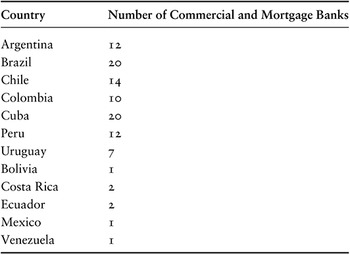
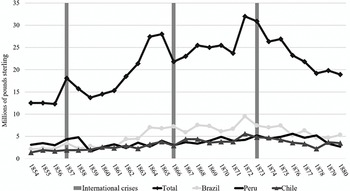
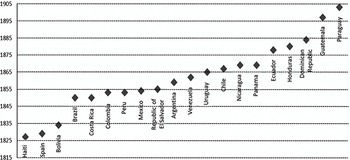
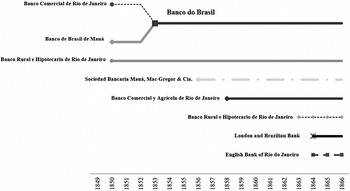
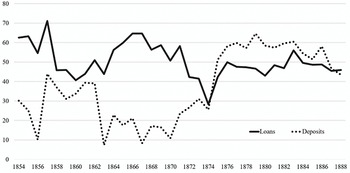
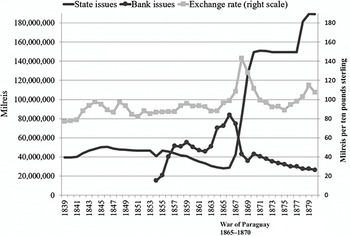
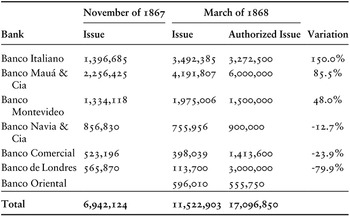
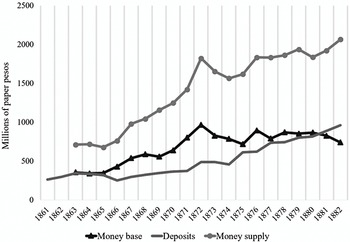
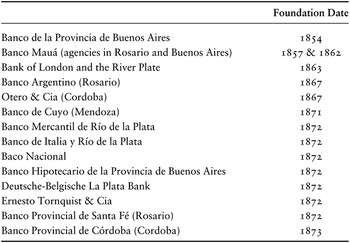

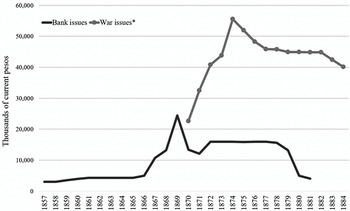

 Open access