5 - Discrimination
Published online by Cambridge University Press: 28 November 2020

Summary
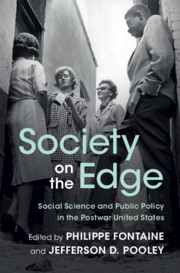
Chapter 5 recounts how social scientists, during and after the war, tended to treat discrimination as a system-one with interlocking legal, political, and economic dimensions. By the 1950s systemic frameworks had receded in favor of more individualistic explanations for the “race problem.” The study of discrimination remained strikingly cross-disciplinary, but the lens of prejudice-individual attitudes in the aggregate-was newly prominent, supported by philanthropy and Cold War discretion. Gary Becker brought microeconomics to discrimination in this period, too, in an approach that, like the psychology of prejudice, stressed the causal priority of dispositions. The announcement of formal equality in the civil rights legislation of the mid-1960s complicated the study of race for the balance of the century. Systemic accounts were partially revived, and evidence for persisting racial inequality was widely documented. But causal factors proved harder to identify. In the wake of de jure segregation, even radical critics of “institutional racism” and “internal colonialism” conceded that discrimination's effects were easier to describe than its causal dynamics. Quantitative sociologists and economists deployed a cascade of measures that demonstrated disparate outcomes, though again without clear explanatory accounts rooted in discrimination.
Keywords
Information
- Type
- Chapter
- Information
- Society on the EdgeSocial Science and Public Policy in the Postwar United States, pp. 173 - 223Publisher: Cambridge University PressPrint publication year: 2020
References
Adorno, Theodor, Frenkel-Brunswik, Else, Levinson, Daniel, and Nevitt Sanford, R.. The Authoritarian Personality. New York: Harper & Row, 1950.Google Scholar
Alexander, Michelle. The New Jim Crow: Mass Incarceration in the Age of Colorblindness. New York: New Press, 2010.Google Scholar
Alpers, Benjamin. Dictators, Democracy, and American Public Culture: Envisioning the Totalitarian Enemy, 1920s–1950s. Chapel Hill: University of North Carolina Press, 2003.Google Scholar
Aptheker, Herbert. “The Negro People in America: A Critique of Gunnar Myrdal's ‘An American Dilemma’.” In Herbert Aptheker on Race and Democracy: A Reader, edited by Foner, Eric and Marable, Manning, 184–97. Urbana: University of Illinois Press, 2006.Google Scholar
Arrow, Kenneth. “Models of Job Discrimination.” In Racial Discrimination in Economic Life, edited by Pascal, A. H., 83–102. Lexington: D. C. Heath, 1972.Google Scholar
Arrow, Kenneth. “What Has Economics to Say about Racial Discrimination?” Journal of Economic Perspectives 12, no. 2 (1998): 91–100.Google Scholar
Backhouse, Roger E. “The Transformation of U.S. Economics, 1920–1960, Viewed Through a Survey of Journal Articles.” In From Interwar Pluralism to Postwar Neoclassicism, edited by Morgan, Mary S. and Rutherford, Malcolm, 85–107. Durham: Duke University Press, 1998.Google Scholar
Backhouse, Roger E. “Economics.” In The History of the Social Sciences since 1945, edited by Backhouse, Roger E. and Fontaine, Philippe, 38–70. Cambridge: Cambridge University Press, 2010.Google Scholar
Baker, Lee D. From Savage to Negro: Anthropology and the Construction of Race, 1896–1954. Berkeley: University of California Press, 1998.Google Scholar
Becker, Gary. The Economics of Discrimination. Chicago: University of Chicago Press, 1957.Google Scholar
Bernstein, Michael A. A Perilous Progress: Economists and Public Purpose in Twentieth-Century America. Princeton: Princeton University Press, 2001.Google Scholar
Bettelheim, Bruno, and Janowitz, Morris. Dynamics of Prejudice. New York: Harper, 1950.Google Scholar
Blau, Peter M., and Duncan, Otis Dudley. The American Occupational Structure. New York: John Wiley & Sons, 1967.Google Scholar
Bogardus, Emory S. “Measuring Social Distance.” Journal of Applied Sociology 9 (1925): 299–308.Google Scholar
Bonilla-Silva, Eduardo. Racism without Racists: Color-Blind Racism and the Persistence of Racial Inequality in the United States. Lanham: Rowman & Littlefield, 2010.Google Scholar
Bradbury, William C. Jr. “Racial Discrimination in Federal Employment.” Unpublished manuscript for PhD diss., Department of Sociology, Columbia University, n.d.Google Scholar
Brick, Howard. Transcending Capitalism: Visions of a New Society in Modern American Thought. Ithaca: Cornell University Press, 2006.Google Scholar
Bulmer, Martin. The Chicago School of Sociology: Institutionalization, Diversity, and the Rise of Sociological Research. Chicago: University of Chicago Press, 1984.Google Scholar
Chen, Anthony S. The Fifth Freedom: Jobs, Politics, and Civil Rights in the United States, 1941–1972. Princeton: Princeton University Press, 2009.Google Scholar
Chicago Commission on Race Relations. The Negro in Chicago: A Study of Race Relations and a Race Riot. Chicago: University of Chicago Press, 1922.Google Scholar
Ciepley, David. Liberalism in the Shadow of Totalitarianism. Cambridge: Harvard University Press, 2006.Google Scholar
Clark, Kenneth. “Introduction: The Dilemma of Power.” In The Negro American, edited by Parsons, Talcott and Clark, Kenneth B., xi–xviii. Boston: Beacon Press, 1966.Google Scholar
Cohen-Cole, Jamie. “Thinking about Thinking in Cold War America.” PhD diss., Princeton University, 2003.Google Scholar
Cohen-Cole, Jamie. “Instituting the Science of Mind: Intellectual Economies and Disciplinary Exchange at Harvard's Center for Cognitive Studies.” British Journal for the History of Science 40, no. 4 (2007): 567–97.Google Scholar
Coleman, James S., Campbell, Ernest Q., Hobson, Carol J., et al. Equality of Educational Opportunity. Washington, DC: US Department of Health, Education, and Welfare, 1966.Google Scholar
“Conference on Research in Human Relations.” Harriman, NY, 28 February–1 March 1953, folder 100, box 11, series 910, Record Group 3.1, RF, Rockefeller Foundation Archives, Rockefeller Archive Center.Google Scholar
Converse, Jean M. Survey Research in the United States: Roots and Emergence, 1890–1960. Berkeley: University of California Press, 1987.Google Scholar
Cox, Oliver Cromwell. “An American Dilemma: A Mystical Approach to the Study of Race Relations.” Journal of Negro Education 14, no. 2 (1945): 132–48.Google Scholar
Cox, Oliver Cromwell. Caste, Class, and Race. New York: Monthly Review Press, 1971. First published 1948 by Doubleday (New York).Google Scholar
Crenshaw, Kimberlé Williams. Critical Race Theory: The Key Writings That Formed the Movement. New York: New Press, 1995.Google Scholar
Crenshaw, Kimberlé Williams. “Color Blindness, History, and the Law.” In The House That Race Built: Black Americans, U.S. Terrain, edited by Lubiano, Wahneema H., 280–88. New York: Pantheon Books, 1997.Google Scholar
Darity, William A. Jr., and Mason, Patrick L.. “Evidence on Discrimination in Employment: Codes of Color, Codes of Gender.” Journal of Economic Perspectives 12, no. 2 (1998): 63–90.Google Scholar
Dobbin, Frank. Inventing Equal Opportunity. Princeton: Princeton University Press, 2009.Google Scholar
Drake, St. Clair. “The Social and Economic Status of the Negro in the United States.” In The Negro American, edited by Parsons, Talcott and Clark, Kenneth B., 3–46. Boston: Beacon Press, 1966.Google Scholar
Drake, St. Clair, and Cayton, Horace. Black Metropolis: A Study of Negro Life in a Northern City. New York: Harper & Row, 1962. First published 1945 by Harcourt Brace (New York).Google Scholar
Du Bois, W. E. B. The Souls of Black Folk. New York: Bantam Books, 1989. First published 1903 by A. C. McClurg & Co. (Chicago).Google Scholar
Dudziak, Mary. Cold War Civil Rights: Race and the Image of American Democracy. Princeton: Princeton University Press, 2000.Google Scholar
Duncan, Otis Dudley. “Patterns of Occupational Mobility Among Negro Men.” In Racial Discrimination in the United States, edited by Pettigrew, Thomas F., 167–86. New York: Harper & Row, 1975.Google Scholar
Erickson, Ansley T. Making the Unequal Metropolis: School Desegregation and Its Limits. Chicago: University of Chicago Press, 2016.Google Scholar
Fein, Rashi. “An Economic and Social Profile of the Negro American.” In The Negro American, edited by Parsons, Talcott and Clark, Kenneth B., 102–33. Boston: Beacon Press, 1966.Google Scholar
Fields, Barbara J., and Karen, Fields. Racecraft: The Soul of Inequality in American Life. London: Verso, 2012.Google Scholar
Fix, Michael, Galster, George, and Struyk, Raymond, Clear and Convincing Evidence: Measurement of Discrimination in America. Washington, DC: The Urban Institute, 1993.Google Scholar
Gaither, H. Rowan, Jr. Report of the Study for the Ford Foundation on Policy and Program. Detroit: The Ford Foundation, 1949.Google Scholar
Geary, Daniel. “Racial Liberalism, the Moynihan Report & the Dædalus Project on ‘The Negro American’.” Daedalus 141, no. 1 (Winter 2011): 53–66.Google Scholar
Geary, Daniel. Beyond Civil Rights: The Moynihan Report and Its Legacy. Philadelphia: University of Pennsylvania Press, 2015.Google Scholar
Gerstle, Gary. “The Protean Character of American Liberalism.” American Historical Review 99, no. 4 (1994): 1043–73.Google Scholar
Gilman, Nils. Mandarins of the Future: Modernization Theory in Cold War America. Baltimore: Johns Hopkins University Press, 2003.Google Scholar
Gilmore, Glenda. Defying Dixie: The Radical Roots of Civil Rights, 1900–1950. New York: W. W. Norton and Co., 2008.Google Scholar
Gordon, Leah N. From Power to Prejudice: The Rise of Racial Individualism in Midcentury America. Chicago: University of Chicago Press, 2015.Google Scholar
Greenwood, John D. The Disappearance of the Social in American Social Psychology. Cambridge: Cambridge University Press, 2004.Google Scholar
Guinier, Lani. “From Racial Liberalism to Racial Literacy: Brown v. Board of Education and the Interest-Divergence Dilemma.” Journal of American History 91, no. 1 (2004): 92–118.Google Scholar
Hall, Jacquelyn Dowd. “The Long Civil Rights Movement and the Political Uses of the Past.” Journal of American History 91, no. 4 (2005): 1233–63.Google Scholar
Hauser, Philip M. “Demographic Factors in the Integration of the Negro.” In The Negro American, edited by Parsons, Talcott and Clark, Kenneth B., 71–101. Boston: Beacon Press, 1966.Google Scholar
Herman, Ellen. The Romance of American Psychology: Political Culture in the Age of Experts. Berkeley: University of California Press, 1995.Google Scholar
Hinton, Elizabeth. “Creating Crime: The Rise and Impact of National Juvenile Delinquency Programs in Black Urban Neighborhoods.” Journal of Urban History 41, no. 5 (2015): 808–24.Google Scholar
Hinton, Elizabeth. “‘A War within Our Own Boundaries’: Lyndon Johnson's Great Society and the Rise of the Carceral State.” Journal of American History 102, no. 1 (2015): 100–12.Google Scholar
Holloway, Jonathan Scott. Confronting the Veil: Abram Harris Jr., E. Franklin Frazier, and Ralph Bunche, 1919–1941. Chapel Hill: University of North Carolina Press, 2002.Google Scholar
Holloway, Jonathan Scott, and Keppel, Benjamin, eds. Black Scholars on the Line: Race, Social Science, and American Thought in the Twentieth Century. Notre Dame: University of Notre Dame Press, 2007.Google Scholar
Horowitz, Eugene L. “‘Race’ Attitudes.” In Characteristics of the American Negro, edited by Klineberg, Otto, 139–247. New York: Harper & Row, 1944.Google Scholar
Horowitz, Eugene L., and Horowitz, Ruth. “Development of Social Attitudes in Children.” Sociometry 1 (1938): 301–38.Google Scholar
Igo, Sarah E. The Averaged America: Surveys, Citizens, and the Making of a Mass Public. Cambridge: Harvard University Press, 2007.Google Scholar
Isaac, Joel. “The Human Sciences in Cold War America.” Historical Journal 50, no. 3 (2007): 725–46.Google Scholar
Jackson, John P. Jr. Social Scientists for Social Justice: Making the Case against Segregation. New York: New York University Press, 2001.Google Scholar
Jackson, Thomas F. From Civil Rights to Human Rights: Martin Luther King Jr. and the Struggle for Economic Justice. Philadelphia: University of Pennsylvania Press, 2007.Google Scholar
Jackson, Walter A. Gunnar Myrdal and America's Conscience: Social Engineering and Racial Liberalism, 1938–1987. Chapel Hill: University of North Carolina Press, 1990.Google Scholar
Jencks, Christopher, Smith, Marshall, Acland, Henry, et al. Inequality: A Reassessment of the Effect of Family and Schooling in America. New York: Harper & Row, 1972.Google Scholar
Jencks, Christopher, Smith, Marshall, Acland, Henry, et al. Who Gets Ahead? The Determinants of Economic Success in America. New York: Basic Books, 1977.Google Scholar
Jewett, Andrew. Science, Democracy, and the American University: From the Civil War to the Cold War. Cambridge: Cambridge University Press, 2012.Google Scholar
Johnson, Charles S. The Negro in American Civilization: A Study of Negro Life and Race Relations in the Light of Social Research. New York: Henry Holt & Co., 1930.Google Scholar
Johnson, Charles S. “Race Relations and Social Change.” In Race Relations and the Race Problem: A Definition and an Analysis, edited by Thompson, Edgar T., 271–305. Durham: Duke University Press, 1939.Google Scholar
Kantor, Harvey, and Brenzel, Barbara. “Urban Education and the ‘Truly Disadvantaged’: The Historical Roots of the Contemporary Crisis, 1945–1990.” In The Underclass Debate: Views from History, edited by Katz, Michael B., 365–402. Princeton: Princeton University Press, 1993.Google Scholar
Katz, Irwin, and Gurin, Patricia, eds. Race and the Social Sciences. New York: Basic Books, 1969.Google Scholar
Katz, Michael B., ed. The Underclass Debate: Views from History. Princeton: Princeton University Press, 1993.Google Scholar
Katz, Michael B. The Price of Citizenship: Redefining the American Welfare State. New York: Metropolitan Books, 2001.Google Scholar
Katz, Michael B. The Undeserving Poor: America's Enduring Confrontation with Poverty. 2nd ed. New York: Oxford University Press, 2013.Google Scholar
Katznelson, Ira. “Was the Great Society a Lost Opportunity?” In The Rise and Fall of the New Deal Order, 1930–1980, edited by Fraser, Steve and Gerstle, Gary, 185–211. Princeton: Princeton University Press, 1989.Google Scholar
Kelley, Robin D. G. Hammer and Hoe: Alabama Communists during the Great Depression. Chapel Hill: University of North Carolina Press, 1990.Google Scholar
Kelley, Robin D. G. “But a Local Phase of a World Problem: Black History's Global Vision.” Journal of American History 86, no. 3 (1999): 1045–77.Google Scholar
Kelley, Robin D. G. Freedom Dreams: The Black Radical Imagination. Boston: Beacon Press, 2002.Google Scholar
Killingsworth, Charles C. “Jobs and Income for Negroes.” In Race and the Social Sciences, edited by Katz, Irwin and Gurin, Patricia, 194–273. New York: Basic Books, 1969.Google Scholar
Klarman, Michael. From Jim Crow to Civil Rights: The Supreme Court and the Struggle for Racial Equality. New York: Oxford University Press, 2004.Google Scholar
Konvitz, Milton R. “Discrimination and the Law.” In Discrimination and National Welfare: A Series of Addresses and Discussions, edited by MacIver, Robert M., 49–64. New York: Harper and Brothers, 1949.Google Scholar
Lagemann, Ellen Condliffe. The Politics of Knowledge: The Carnegie Corporation, Philanthropy, and Public Policy. Chicago: University of Chicago Press, 1989.Google Scholar
Lieberson, Stanley. A Piece of the Pie: Blacks and White Immigrants since 1880. Berkeley: University of California Press, 1980.Google Scholar
Lieberson, Stanley, and Fuguitt, Glenn V.. “Negro-White Occupational Differences in the Absence of Discrimination.” In Racial Discrimination in the United States, edited by Pettigrew, Thomas F., 187–205. New York: Harper & Row, 1975.Google Scholar
Lipsitz, George. The Possessive Investment in Whiteness: How White People Profit from Identity Politics. Philadelphia: Temple University Press, 1998.Google Scholar
Lohman, Joseph D., and Reitzes, Dietrich C.. “Notes on Race Relations in Mass Society.” American Journal of Sociology 58, no. 3 (1952): 240–46.Google Scholar
MacIver, Robert. The More Perfect Union: A Program for the Control of Inter-group Discrimination in the United States. New York: Macmillan, 1948.Google Scholar
MacIver, Robert, ed. Discrimination and the National Welfare: A Series of Addresses and Discussions. New York: Harper & Bros., 1949.Google Scholar
Massey, Douglas, and Denton, Nancy. American Apartheid: Segregation and the Making of the Underclass. Cambridge: Harvard University Press, 1993.Google Scholar
Masuoka, Jitsuichi, and Valien, Preston, eds. Race Relations: Problems and Theory, Essays in Honor of Robert E. Park. Chapel Hill: University of North Carolina Press, 1961.Google Scholar
Matthews, Fred H. Quest for an American Sociology: Robert E. Park and the Chicago School. Montreal: McGill-Queen's University Press, 1977.Google Scholar
Mayor's Commission on Conditions in Harlem. The Complete Report of Mayor LaGuardia's Commission on the Harlem Riot of March 19, 1935. New York: Arno Press, 1969.Google Scholar
McAuley, Christopher A. The Mind of Oliver C. Cox. Notre Dame: University of Notre Dame Press, 2004.Google Scholar
McKee, James B. Sociology and the Race Problem: The Failure of a Perspective. Urbana: University of Illinois Press, 1993.Google Scholar
Medema, Steven G. “Wandering the Road from Pluralism to Posner: The Transformation of Law and Economics in the Twentieth Century.” In From Interwar Pluralism to Postwar Neoclassicism, edited by Morgan, Mary S. and Rutherford, Malcolm, 202–24. Durham: Duke University Press, 1998.Google Scholar
Merton, Robert K. “Discrimination and the American Creed.” In Discrimination and the National Welfare: A Series of Addresses and Discussions, edited by MacIver, Robert, 99–126. New York: Harper & Bros., 1949.Google Scholar
Minow, Martha. In Brown's Wake: Legacies of America's Educational Landmark. Oxford: Oxford University Press, 2010.Google Scholar
Moynihan, Daniel Patrick. The Negro Family: The Case for National Action. Washington, DC: Office of Policy Planning and Research, March 1965. Reprinted in The Moynihan Report and the Politics of Controversy, edited by Rainwater, Lee and Yancey, William L.. Cambridge: Massachusetts Institute of Technology Press, 1967.Google Scholar
Moynihan, Daniel Patrick. “Employment, Income, and the Ordeal of the Negro Family.” In The Negro American, edited by Parsons, Talcott and Clark, Kenneth B., 134–59. Boston: Beacon Press, 1966.Google Scholar
Murphy, Kevin M. “How Gary Becker Saw the Scourge of Discrimination.” Chicago Booth Review, June 15, 2015. http://review.chicagobooth.edu/magazine/winter-2014/how-gary-becker-saw-the-scourge-of-discriminationGoogle Scholar
Murray, Charles. Losing Ground: American Social Policy 1950–1980. New York: Basic Books, 1984.Google Scholar
Myrdal, Gunnar. An American Dilemma: The Negro Problem and Modern Democracy. New York: Harper & Bros., 1944.Google Scholar
Nicholson, Ian. Inventing Personality: Gordon Allport and the Science of Selfhood. Washington, DC: American Psychological Association, 2003.Google Scholar
O'Connor, Alice. Poverty Knowledge: Social Science, Social Policy, and the Poor in Twentieth-Century U.S. History. Princeton: Princeton University Press, 2001.Google Scholar
O'Connor, Alice. Social Science for What? Philanthropy and the Social Question in a World Turned Rightside Up. New York: Russell Sage Foundation, 2007.Google Scholar
Oh, Sun Jung, and Yinger, John. “What Have We Learned from Paired Testing in Housing Markets?” Cityscape 17, no. 3 (2015): 15–60.Google Scholar
Orfield, Gary, Eaton, Susan, and the Harvard Project on School Desegregation. Dismantling Desegregation: The Quiet Reversal of Brown v. Board of Education. New York: New Press, 1996.Google Scholar
Park, Robert E. “Our Racial Frontier on the Pacific.” Survey Graphic 9 (May 1926): 192–96. Reprinted in Race and Culture: Essays in the Sociology of Contemporary Man, edited by Park, Robert E., 138–51. Glencoe: Free Press, 1950.Google Scholar
Parsons, Talcott. “Introduction: Why ‘Freedom Now,’ Not Yesterday?” In The Negro American, edited by Parsons, Talcott and Clark, Kenneth B., xix–xxiii. Boston: Beacon Press, 1966.Google Scholar
Parsons, Talcott. “Full Citizenship for the Negro American? A Sociological Problem.” In The Negro American, edited by Parsons, Talcott and B. Clark, Kenneth, 709–54. Boston: Houghton, Mifflin, 1966.Google Scholar
Parsons, Talcott, and Kenneth, B. Clark, eds. The Negro American. Boston: Beacon Press, 1966.Google Scholar
Patterson, James T. Freedom Is Not Enough: The Moynihan Report and America's Struggle over Black Family Life – From LBJ to Obama. New York: Basic Books, 2010.Google Scholar
Pettigrew, Thomas. “Complexity and Change in American Racial Patterns: A Social Psychological View.” In The Negro American, edited by Parsons, Talcott and Clark, Kenneth B., 352–62. Boston: Beacon Press, 1966.Google Scholar
Pettigrew, Thomas, ed. Racial Discrimination in the United States. New York: Harper & Row, 1975.Google Scholar
Pettigrew, Thomas, ed. The Sociology of Race Relations: Reflection and Reform. New York: Free Press, 1980.Google Scholar
Phelps, Edmund S. “The Statistical Theory of Racism and Sexism.” American Economic Review 62, no. 4 (1972): 659–61.Google Scholar
Platt, Jennifer. A History of Sociological Research Methods in America, 1920–1960. Cambridge: Cambridge University Press, 1996.Google Scholar
Polenberg, Richard. War and Society: The United States 1941–1945. New York: Lippincott, 1972.Google Scholar
Pooley, Jefferson, and Solovey, Mark. “Marginal to the Revolution: The Curious Relationship between Economics and the Behavioral Sciences Movement in Mid-Twentieth-Century America.” In The Unsocial Social Science? Economics and Neighboring Disciplines since 1945, edited by Backhouse, Roger E. and Fontaine, Philippe, 199–233. Durham: Duke University Press, 2010.Google Scholar
Posner, Richard A. “Gary Becker's Contributions to Law and Economics.” Journal of Legal Studies 22, no. 2 (1993): 211–15.Google Scholar
Price, Richard, and Mills, Edwin. “Race and Residence in Earnings Determination.” Journal of Urban Economics 17, no. 1 (1985): 1–18.Google Scholar
Pritchett, Wendell E. Robert Clifton Weaver and the American City: The Life and Times of an Urban Reformer. Chicago: University of Chicago Press, 2008.Google Scholar
Reardon, Sean F. “The Widening Academic Achievement Gap between the Rich and the Poor: New Evidence and Possible Explanations.” In Whither Opportunity: Rising Inequality, Schools, and Children's Life Chances, edited by Duncan, Greg and Murnane, Richard, 91–116. New York: Russell Sage Foundation, 2011.Google Scholar
Reed, Adolph L. Jr. Stirrings in the Jug: Black Politics in the Post-Segregation Era. Minneapolis: University of Minnesota Press, 1999.Google Scholar
Reid, Ira de A. “What Segregated Areas Mean.” In Discrimination and the National Welfare: A Series of Addresses and Discussions, edited by MacIver, Robert, 7–14. New York: Harper & Bros., 1949.Google Scholar
Reitzes, Dietrich C. “Collective Factors in Race Relations.” PhD diss., University of Chicago, 1950.Google Scholar
Rodgers, Daniel T. Age of Fracture. Cambridge: Belknap Press of Harvard University Press, 2011.Google Scholar
Rose, Arnold M. Studies in the Reduction of Prejudice: A Memorandum Summarizing Research on Modification of Attitudes. Chicago: American Council on Race Relations, 1947.Google Scholar
Ross, Dorothy. The Origins of American Social Science. Cambridge: Cambridge University Press, 1991.Google Scholar
Savage, Barbara D. Broadcasting Freedom: Radio, War, and the Politics of Race, 1939–1948. Chapel Hill: University of North Carolina Press, 1999.Google Scholar
Schrecker, Ellen W. No Ivory Tower: McCarthyism and the Universities. New York: Oxford University Press, 1986.Google Scholar
Scott, Daryl Michael. Contempt and Pity: Social Policy and the Image of the Damaged Black Psyche, 1880–1996. Chapel Hill: University of North Carolina Press, 1997.Google Scholar
Scott, Daryl Michael. “Postwar Pluralism, Brown v. Board of Education, and the Origins of Multicultural Education.” Journal of American History 91, no. 1 (2004): 69–82.Google Scholar
Selig, Diana. Americans All: The Cultural Gifts Movement. Cambridge: Harvard University Press, 2008.Google Scholar
Sheatsley, Paul B. “White Attitudes Toward the Negro.” In The Negro American, edited by Parsons, Talcott and Clark, Kenneth B., 303–24. Boston: Beacon Press, 1966.Google Scholar
Simpson, George E., and Yinger, J. Milton. Racial and Cultural Minorities: An Analysis of Prejudice and Discrimination. New York: Plenum Press, 1985. First published 1959 by Harper & Bros. (New York).Google Scholar
Singh, Nikhil Pal. Black Is a Country: Race and the Unfinished Struggle for Democracy. Cambridge: Harvard University Press, 2004.Google Scholar
Skrentny, John D. The Ironies of Affirmative Action: Politics, Culture, and Justice in America. Chicago: University of Chicago Press, 1996.Google Scholar
Skrentny, John D. “Introduction.” In Color Lines: Affirmative Action, Immigration, and Civil Rights Options for America, edited by John D., Skrentny, 1–28. Chicago: University of Chicago Press, 2001.Google Scholar
Solovey, Mark. “Riding Natural Scientists’ Coattails onto the Endless Frontier: The SSRC and the Quest for Scientific Legitimacy.” Journal of the History of the Behavioral Sciences 40, no. 4 (2004): 393–422.Google Scholar
Solovey, Mark. Shaky Foundations: The Politics-Patronage-Social Science Nexus in Cold War America. New Brunswick: Rutgers University Press, 2013.Google Scholar
Southern, David. Gunnar Myrdal and Black-White Relations: The Use and Abuse of An American Dilemma, 1944–1969. Baton Rouge: Louisiana State University Press, 1987.Google Scholar
Staats, Cheryl, Capatosto, Kelly, Wright, Robin A., and Jackson, Victoria W.. State of the Science: Implicit Bias Review. Columbus: Kirwan Institute for the Study of Race and Society, 2016. http://kirwaninstitute.osu.edu/my-product/2016-state-of-the-science-implicit-bias-reviewGoogle Scholar
Stanfield, John H. Philanthropy and Jim Crow in American Social Science. Westport: Greenwood Press, 1985.Google Scholar
Steinberg, Stephen. Race Relations: A Critique. Stanford: Stanford University Press, 2007.Google Scholar
Stouffer, Samuel, et al. The American Soldier. 2 vols. Princeton: Princeton University Press, 1949.Google Scholar
Sugrue, Thomas J. Origins of the Urban Crisis: Race and Inequality in Postwar Detroit. Princeton: Princeton University Press, 1996.Google Scholar
Sugrue, Thomas J. Sweet Land of Liberty: The Forgotten Struggle for Civil Rights in the North. New York: Random House, 2008.Google Scholar
Thompson, Edgar T., ed. “Introduction.” In Race Relations and the Race Problem: A Definition and an Analysis, 3–45. Durham: Duke University Press, 1939.Google Scholar
Tilly, Charles. Identities, Boundaries, and Social Ties. Boulder: Paradigm Publishers, 2005.Google Scholar
Carmichael, Stokely, and Hamilton, Charles V.. Black Power: The Politics of Liberation in America. New York: Vintage Books, 1967.Google Scholar
US Bureau of the Census. “Lifetime Occupational Mobility of Adult Males, March, 1962.” Current Population Reports, ser. P-23, no. 11 (May 1964).Google Scholar
US National Advisory Commission on Civil Disorders. Report of the National Advisory Commission on Civil Disorders. New York: Bantam Books, 1968.Google Scholar
Van DeBurg, William. A New Day in Babylon: The Black Power Movement and American Culture, 1965–1975. Chicago: University of Chicago Press, 1992.Google Scholar
Von Eschen, Penny. Race Against Empire: Black Americans and Anticolonialism, 1937–1957. Ithaca: Cornell University Press, 1997.Google Scholar
Weaver, Robert. “A Needed Program of Research in Race Relations and Associated Problems.” Journal of Negro Education 16, no. 2 (1947): 130–35.Google Scholar
Weaver, Robert. “Effect on Housing.” In Discrimination and the National Welfare: A Series of Addresses and Discussions, ed. MacIver, Robert, 25–35. New York: Harper & Bros., 1949.Google Scholar
Wienk, Ronald E., Reid, Clifford E., Simonson, John C., and Eggers, Frederick J.. Measuring Racial Discrimination in American Housing Markets: The Housing Market Practices Survey. Washington, DC: Department of Housing and Urban Development, Division of Evaluation, 1979.Google Scholar
Williams, Robin M. Jr. “Review and Assessment of Research on Race and Culture Conflict,” Paper V, Conference on Research in Human Relations, February 1953, box 11, folder 99, box 11, series 910, RG 3.1, Rockefeller Foundation Archives, 3.Google Scholar
Williams, Robin M. Jr. Strangers Next Door: Ethnic Relations in American Communities. Englewood Cliffs: Prentice-Hall, 1964.Google Scholar
Williams, Robin M. Jr. The Reduction of Intergroup Tensions: A Survey of Research on Problems of Ethnic, Racial, and Religious Group Relations. New York: Social Science Research Council, 1947.Google Scholar
Wilson, William Julius. The Declining Significance of Race: Blacks and Changing American Institutions. Chicago: University of Chicago Press, 1978.Google Scholar
Wilson, William Julius. The Truly Disadvantaged: The Inner City, the Underclass, and Public Policy. Chicago: University of Chicago Press, 1987.Google Scholar
Winant, Howard. “The Dark Side of the Force: One Hundred Years of the Sociology of Race.” In Sociology in America: A History, edited by Calhoun, Craig, 535–71. Chicago: University of Chicago Press, 2007.Google Scholar
Yu, Henry. Thinking Orientals: Migration, Contact, and Exoticism in Modern America. Oxford: Oxford University Press, 2001.Google Scholar
Zuberi, Tukufu. Thicker Than Blood: How Racial Statistics Lie. Minneapolis: University of Minnesota Press, 2001.Google Scholar
Zuberi, Tukufu. “Deracializing Social Statistics: Problems in the Quantification of Race.” In White Logic, White Methods: Racism and Methodology, edited by Zuberi, Tukufu and Bonilla-Silva, Eduardo, 127–36. Lanham: Rowman & Littlefield, 2008.Google Scholar
Accessibility standard: Unknown
Why this information is here
This section outlines the accessibility features of this content - including support for screen readers, full keyboard navigation and high-contrast display options. This may not be relevant for you.Accessibility Information
Accessibility compliance for the HTML of this chapter is currently unknown and may be updated in the future.