To save content items to your account,
please confirm that you agree to abide by our usage policies.
If this is the first time you use this feature, you will be asked to authorise Cambridge Core to connect with your account.
Find out more about saving content to .
To save content items to your Kindle, first ensure no-reply@cambridge.org
is added to your Approved Personal Document E-mail List under your Personal Document Settings
on the Manage Your Content and Devices page of your Amazon account. Then enter the ‘name’ part
of your Kindle email address below.
Find out more about saving to your Kindle.
Note you can select to save to either the @free.kindle.com or @kindle.com variations.
‘@free.kindle.com’ emails are free but can only be saved to your device when it is connected to wi-fi.
‘@kindle.com’ emails can be delivered even when you are not connected to wi-fi, but note that service fees apply.
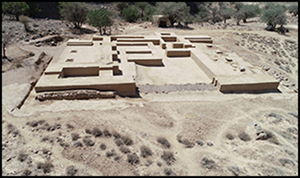
Climate change threatens archaeological sites and cultural landscapes globally. While to date, awareness and action around cultural heritage and climate change adaptation planning has focused on Europe and North America, in this article, the authors address adaptation policy and measures for heritage sites in low- and middle-income countries. Using a review of national adaptation plans, expert survey and five case studies, results show the varied climate change adaptation responses across four continents, their strengths and weaknesses, and the barriers to be addressed to ensure better integration of cultural heritage in climate change adaptation planning.
Climate adaptation planning in pursuit of resilient and sustainable societies has become a focal point in urban policy. Climate adaptation planning is generally regarded as separate from traditional urban planning practices. Globally and in Europe, however, cities are increasingly integrating climate adaptation planning into their traditional urban planning instruments and processes. Recent research indicates that the scope of such integration is at varying stages. The City of Rotterdam (Netherlands) and the City of Antwerp (Belgium) have been identified as two European cities that face similar climate impacts and risks given their proximity to a large river delta. Both cities aim to integrate climate adaptation into their respective urban planning policies, but the scope of their integration differs. This paper critically analyses the urban planning policies of these two cities to distil key lessons learnt that cities with similar climate impacts and approaches to urban planning may potentially face in integrating climate adaptation planning into urban planning policies. The paper finds that identifying and evaluating the synergies, co-benefits or trade-offs of adaptation measures is a key challenge to integrating climate adaptation into urban planning policy. It is a potential stumbling block for long-term sustainable development and climate resilience.
Traditional communicators known as kanyeleng have increasingly taken on roles in climate change adaptation in The Gambia. Drawing on ethnographic research conducted from 2018 to 2019, McConnell and Jallow show that kanyeleng performers contribute to disseminating information about climate change adaptation while also creating the social conditions necessary for citizens to hear and respond effectively to that information. Understandings of climate change in The Gambia intersect with broader concerns about loss of traditional and religious values. Through their performances, kanyeleng work as mediators to resolve tensions associated with climate change adaptation and integrate Indigenous environmental knowledge and climate science.
Climate change and weather shocks have multi-faceted impacts on food systems with important implications for economic policy. Combining a longitudinal household survey with high-resolution climate data, we demonstrate that both climate and weather shocks increase food insecurity; cash assistance and participation in Ethiopia’s Productive Safety Net Programme have reduced food insecurity; but food assistance has been ineffective. Importantly, households with savings, and those that stored their harvest to sell at higher prices rather than for home use, suffered less from food insecurity, yet both strategies are harder for the poorest and most food insecure households to adopt. Our paper provides micro-founded evidence needed to design policies that both improve agricultural yields in the context of a changing climate and target households’ abilities to cope with shocks that put upwards pressure on food prices.
We used choice experiment data collected from 542 farmers in Nigeria to assess smallholders’ preferences for shifting to Climate-Smart Agriculture (CSA). Results suggest that the higher the size of the incentive, the more the likelihood of farmers’ willingness to invest in CSA schemes. Similarly, the farmers were in favor of community development associations and non-governmental organizations-managed schemes over other project managements and also prefer government-based institutions as opposed to the private sector. Willingness to accept results suggest that an average farmer is willing to accept $540/ha/year and $386/ha/year to embrace good agricultural practices (GAPs) with and without manure application.
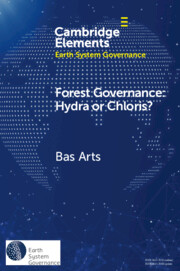
Many forest-related problems are considered relevant today. One might think of deforestation, illegal logging and biodiversity loss. Yet, many governance initiatives have been initiated to work on their solutions. This Element takes stock of these issues and initiatives by analysing different forest governance modes, shifts and norms, and by studying five cases (forest sector governance, forest legality, forest certification, forest conservation, participatory forest management). Special focus is on performance: are the many forest governance initiatives able to change established practices of forest decline (Chloris worldview) or are they doomed to fail (Hydra worldview)? The answer will be both, depending on geographies and local conditions. The analyses are guided by discursive institutionalism and philosophical pragmatism. This title is also available as Open Access on Cambridge Core.
Some 10,000 years ago, agriculture arose independently in several areas across the world. The causes of the agricultural transition are still debated, but it is likely that the unprecedented warmth and stability of the Holocene climate made agriculture possible and that the climate instability of the Pleistocene made it impossible. As the weather became more predictable, people began to more intensively manage wild plants and began to store the grain they collected. Because of the unpredictability of harvests, people cultivated more crops than they thought they would need, and in most years, there was a surplus of food, leading to larger and more concentrated populations. By 5,000 years ago, small-scale agriculture had led to large-scale state-managed economies and total dependence on agriculture. Competition between city-states gave us full-blown ultrasocial economies and hierarchical, repressive states. Other consequences of agriculture for individuals include a marked decline in physical health, a reduction in brain size, and a loss of individual autonomy.
Protecting tropical forests from deforestation is important for mitigating both biodiversity loss and anthropogenic climate change. In Amazonia, a common approach to protected area (PA) impact studies has been to investigate differences among broad PA categories, such as strictly protected, sustainable use and indigenous areas, yet these may be insufficient for the management of PAs at local scales. We used a matching method to compare impacts and carbon emissions avoided during 2011–2016 of individual PAs in the state of Acre (Brazil). Although most PAs had a positive impact and effectively prevented forest loss, we observed substantial variation among them in terms of impacts, pressures and emissions during our study period. The impacts varied from 3.6% avoided to 15.6% induced forest loss compared to expected levels of deforestation estimated for each PA using the matching method. All but a few PAs helped avoid substantial amounts of emissions. Our results emphasize the need for more PA impact studies that compare multiple PAs at the individual level in Amazonia and beyond.
This study examined energy, greenhouse gas emission and ecological footprint analysis (EFA) of chickpea and lentil cultivation with different mechanization production systems. In lentil production, except for tillage operations, other operations are performed manually and the remaining straw is burned in the field; while in chickpea production, most of the agricultural operations are mechanized and residues are collected, baled and transferred to the warehouse for animal feed. In this paper, for the first time, some of the sustainability indicators are investigated and compared in two different legume production systems. Energy productivity and net energy for chickpea and lentil production were calculated at 0.036, 0.161 and 2373 and 5900 MJ per hectare, respectively. The CO2 emission and ecological carbon footprint were 173 kg CO2−eq and 0.15 global hectare for lentil and 484 and 0.87 for chickpea production. Totally, due to excessive consumption of diesel fuel and lack of proper management, the social cost of emission from straw baling in chickpea production (27.65 dollars per hectare) was higher than burning straw in lentil production (8.77). Multi-objective genetic algorithm results showed the potential of minimizing diesel fuel and fertilizer consumption and no chemical for chickpea production. Overall audition results of two different production systems revealed that traditional lentil production is more sustainable. Therefore, implementations of modern agricultural practices alone are not enough to achieve sustainability in agricultural production systems.
This chapter is concerned with how a claim to global authority over land and resources in the Global South has been invoked and the shape or form it has been given. It shows how the designation of both climate change and tropical deforestation as matters of ‘common concern’ has operated to authorise global authority over activities within national states that contribute to these processes. It interrogates how climate change has come to be understood in specific ways as an ‘object’ or ‘problem’ for law, and how this has given a distinctive shape to the climate regime. Finally, although forests have historically been subject to competing claims of international, national and local ownership, it shows how the focus on the capacity of forests to sequester carbon and function as carbon sinks has made it possible for the issue of deforestation, and thus also forest management, to be understood as a matter of global, rather than simply local or national, concern.
Recent estimates of global salt marsh area sit at 5.5 million hectares (Mcowen et al. 2017). Conservatively, this translates to $1 trillion of ecosystem services per annum, potentially as much as $5 trillion (De Groot et al. 2012, Mehvar et al. 2018), equivalent to the entire US federal budget for 2019. There can be little debate as to the value of salt marshes, both in terms of the ecosystem services they provide and the key part they play in helping us understand past climate and sea level trends. This chapter summarizes the preceding work and draws together some key observations and notable knowledge gaps highlighted in the previous chapters. We provide a focus on the expected response of salt marshes to the stresses created by a changing climate.
Crop production is at the core of a ‘perfect storm’ encompassing the grand challenges of achieving food and nutrition security for all, in the face of climate change, while avoiding further conversion of natural habitats for agriculture and loss of biodiversity. Here, we explore current trends in crop modelling related to these grand challenges by reflecting on research presented at the Second International Crop Modelling Symposium (iCropM2020). A keyword search in the book of abstracts of the symposium revealed a strong focus on ‘climate change’, ‘adaptation’ and ‘impact assessment’ and much less on ‘food security’ or ‘policy’. Most research focused on field-level investigations and far fewer on farm(ing) systems levels – the levels at which management decisions are made by farmers. Experimentation is key to development and testing of crop models, yet the term ‘simulation’ outweighed by far the terms ‘experiments’ and ‘trials’, and few contributions dealt with model improvement. Cereals are intensively researched, whereas roots, tubers and tropical perennials are under-researched. Little attention is paid to nutrient limitations apart from nitrogen or to pests and diseases. The aforementioned aspects represent opportunities for future research where crop models can help in devising hypotheses and driving new experimentation. We must also ensure that crop models are fit for their intended purposes, especially if they are to provide advice to policymakers. The latter, together with cross-scale and interdisciplinary efforts with direct engagement of stakeholders are needed to address the grand challenges faced by food and agricultural systems in the next century.
2020 was to be a landmark year for setting targets to stop biodiversity loss and prevent dangerous climate change. However, COVID-19 has caused delays to the 15th Conference of the Parties (COP) of the UN Convention on Biological Diversity and the 26th COP of the UN Framework Convention on Climate Change. Negotiations on the Global Biodiversity Framework and the second submission of Nationally Determined Contributions under the Paris Agreement were due to take place at these COPs. There is uncertainty as to how the COVID-19 disruption will affect the negotiations, whether parties will pursue more ambitious actions or take a weaker stance on issues. Our policy analysis shows there are broad opportunities for climate and biodiversity frameworks to better respond to COVID-19, by viewing future pandemics, biodiversity loss, and climate change as interconnected problems. Importantly, there needs to be greater focus on agriculture and food systems in discussions, establishing safeguards for carbon markets, and implementing nature-based solutions in meeting the Paris Agreement goals. We can no longer delay action to address the biodiversity and climate emergencies, and accelerating sustainable recovery plans through virtual spaces may help keep discussions and momentum before the resumption of in-person negotiations.
Non-technical summary:
High ambition needed at UN biodiversity and climate conferences to address pandemics, biodiversity, climate change, and health.
In this paper, we focus on the disruption that the current pandemic has created within the US industrial food system. We suggest that the pandemic has provided an opening for small producers. Attending to small-scale responses to the pandemic can guide policy and public investments towards a more just and sustainable future for food.
Technical Summary
Building on the IPES-Food Communique of April 2020, we examine the many ways in which the US industrial food system faltered during the ongoing COVID-19 pandemic. Using Regime Theory as a guide, we suggest that such a catastrophic crisis may create significant opportunities for an emergent food regime. Drawing from our research and participant observation in the US Midwest, we examine changes in the food system occasioned by the pandemic that foreshadow a new food regime. We suggest several blockages and risks to this new regime and suggest policies that would make transition smoother to a more just and sustainable food system.
Social Media Summary (120 characters)
What will food be like after the pandemic? This new study outlines an alternative food system emerging in the American Midwest.
Recent calls advocate that a huge reduction in the consumption of animal products (including dairy) is essential to mitigate climate change and stabilise global warming below the 1.5 and 2°C targets. The Paris Agreement states that to stabilise temperatures we must reach a balance between anthropogenic emissions by sources and removals by sinks of greenhouse gases (GHG) in the second half of this century. Consequently, many countries have adopted overall GHG reduction targets (e.g. EU, at least 40% by 2030 compared to 1990). However, using conventional metric-equivalent emissions (CO2-e GWP100) as the basis to account for emissions does not result in capturing the effect on atmospheric warming of changing emission rates from short-lived GHG (e.g. methane: CH4), which are the main source of GHG emissions by small ruminants. This shortcoming could be solved by using warming-equivalent emissions (CO2-we, GWP*), which can accurately link annual GHG emission rates to its warming effect in the atmosphere. In our study, using this GWP* methodology and different modelling approaches, we first examined the historical (1990–2018) contribution of European dairy small ruminant systems to additional atmosphere warming levels and then studied different emission target scenarios for 2100. These scenarios allow us to envision the necessary reduction of GHG emissions from Europe's dairy small ruminants to achieve a stable impact on global temperatures, i.e. to be climatically neutral. Our analysis showed that, using this type of approach, the whole European sheep and goat dairy sector seems not to have contributed to additional warming in the period 1990–2018. Considering each subsector separately, increases in dairy goat production has led to some level of additional warming into the atmosphere, but these have been compensated by larger emission reductions in the dairy sheep sector. The estimations of warming for future scenarios suggest that to achieve climate neutrality, understood as not adding additional warming to the atmosphere, modest GHG reductions of sheep and goat GHG would be required (e.g. via feed additives). This reduction would be even lower if potential soil organic carbon (SOC) from associated pastures is considered.
One of the major challenges in agriculture is how climate change influences crop production, for different environmental (soil type, topography, groundwater depth, etc.) and agronomic management conditions. Through systems modelling, this study aims to quantify the impact of future climate on yield risk of winter wheat for two common soil types of Eastern Denmark. The agro-ecosystem model DAISY was used to simulate arable, conventional cropping systems (CSs) and the study focused on the three main management factors: cropping sequence, usage of catch crops and cereal straw management. For the case region of Eastern Denmark, the future yield risk of wheat does not necessarily increase under climate change mainly due to lower water stress in the projections; rather, it depends on appropriate management and each CS design. Major management factors affecting the yield risk of wheat were N supply and the amount of organic material added during rotations. If a CS is characterized by straw removal and no catch crop within the rotation, an increased wheat yield risk must be expected in the future. In contrast, more favourable CSs, including catch crops and straw incorporation, maintain their capacity and result in a decreasing yield risk over time. Higher soil organic matter content, higher net nitrogen mineralization rate and higher soil organic nitrogen content were the main underlying causes for these positive effects. Furthermore, the simulation results showed better N recycling and reduced nitrate leaching for the more favourable CSs, which provide benefits for environment-friendly and sustainable crop production.
The monsoon has changed significantly over the past century. In particular, Northwest India and Pakistan have dried in the latter part of the twentieth century along with northern China. The Indian Peninsula and South China have however become wetter. Some of the aridification is the result of increased aerosol concentrations due to industrialization as well as the southward migration of the Westerly Jet in northern China. The Indus basin is particularly susceptible to drying. Changes in atmosphere circulation have pushed typhoons away from the South China Sea and towards eastern China, although rainfall in South China has strengthened due to locally sourced storms. Dry years in South Asia resulted in significant reductions in the food production. Increased agriculture linked to deforestation has reduced soil moisture and has a negative impact on the climate, especially in Northwest India. Times of drought and poor food production push up prices and have resulted in civil disturbances exacerbated by policies introduced during the Green Revolution. Reduction in biodiversity on farms has reduced resilience to future climate change and caused more harm than changes in the environment over the recent past.
The present paper aims to contribute to the contentious debate regarding the role of meat as part of a sustainable diet. It uses secondary data to examine the patterns of meat consumption across the globe, and drawing on academic and grey literature, it outlines some of the policy, market and social trends and issues influencing demand and supply of meat. It also presents an overview of the scientific evidence base regarding the pros and cons of meat consumption. The results show that consumption patterns are not homogeneous globally, nor across meat types, with overall meat consumption increasing strongly in developing countries but stagnating in developed countries, and demand for poultry increasing in most regions in contrast to beef. They also illustrate the evolving impact of factors such as income on consumption and the increasing impact of non-economic factors, such as social and policy influences relating to health and the environment, on food choice behaviours, to the extent that such behaviours are increasingly entering a moral space. Given the solid scientific evidence that simultaneously substantiates arguments to increase and decrease meat consumption, it is clear that dietary recommendations need to be context-specific. An important part of the context is the strategies being pursued by researchers and supply chain actors, from farmers through to processors, retailers and food service operators, to improve the sustainability credentials of livestock production. As new evidence emerges from such initiatives, the context will change which means that dietary guidelines will require continuous review.
Conserving tropical forests has many benefits, from protecting biodiversity, sustaining indigenous and local communities, and safeguarding climate. To achieve the ambitious climate goals of the Paris Agreement, forest protection is essential. Yet deforestation continues to diminish the world's forests. Halting this trend is the objective of the international framework for Reducing Emissions from Deforestation and forest Degradation (REDD+). While previous studies have demonstrated the contribution of tropical forests to mitigate climate change, here we show that tropical forest protection can ‘flatten the curve’ of the costs of transition to climate stability, estimating tens of trillions of dollars in policy cost savings.
Using the panel data of 89 economies from 1995–2012, this study examines the major drivers of agricultural emissions while considering affluence, energy intensity, agriculture value added and economic integration. We find long-run cointegration among the variables. Furthermore, our empirical results based on a dynamic fixed effects autoregressive distributed lag model show that the increases in income and economic integration – proxied by trade and foreign direct investment (FDI) – are the major contributors to higher greenhouse gas (GHG) emissions from agriculture in the short run. Additionally, the increases in income, agriculture value added and energy consumption are the major drivers of agricultural emissions in the long run. Notably, trade openness and FDI inflows have significantly negative effects on GHG emissions from agriculture in the long run. These results apply to methane and nitrous oxide emissions. The empirical findings vary across three subsamples of countries at different development stages.