To save content items to your account,
please confirm that you agree to abide by our usage policies.
If this is the first time you use this feature, you will be asked to authorise Cambridge Core to connect with your account.
Find out more about saving content to .
To save content items to your Kindle, first ensure no-reply@cambridge.org
is added to your Approved Personal Document E-mail List under your Personal Document Settings
on the Manage Your Content and Devices page of your Amazon account. Then enter the ‘name’ part
of your Kindle email address below.
Find out more about saving to your Kindle.
Note you can select to save to either the @free.kindle.com or @kindle.com variations.
‘@free.kindle.com’ emails are free but can only be saved to your device when it is connected to wi-fi.
‘@kindle.com’ emails can be delivered even when you are not connected to wi-fi, but note that service fees apply.
To investigate food insecurity (FI) prevalence in two favelas in Brazil in the early weeks of the social distancing policy, from 27 March 2020 to 1 June 2020.
Design:
A cross-sectional study using an online questionnaire to elicit information on socio-economic and demographic characteristics, the types of stores visited to buy food, and FI screening. The FI experience was evaluated according to the Brazilian Food Insecurity Scale. Factors associated with moderate or severe FI were investigated using the logistic regression model.
Setting:
São Paulo city, Brazil.
Participants:
Totally, 909 householders.
Results:
Eighty-eight per cent of the households included young women working as cleaners or kitchen assistants and in sales services. One-fifth of the participants were involved in the federal cash transfer programme, called Bolsa Família. There were 92 % households with children. The most frequent experience reported was uncertainty about food acquisition or receiving more (89 %), eating less than one should (64 %), not being able to eat healthy and nutritious food (46 %), and skipping a meal (39 %). Forty-seven per cent of the participants experienced moderate or severe FI. Factors associated with moderate and severe FI were low income, being a Bolsa Família recipient, having a low level of education and living in a household without children.
Conclusions:
Half of the participants experienced moderate or severe FI, and almost 10 % experienced hunger. Our data suggest that families with children were at a lower risk of moderate to severe FI. It is possible that nationally established social programmes such as Bolsa Família were protecting those families.
Although testing is widely regarded as critical to fighting the COVID-19 pandemic, what measure and level of testing best reflects successful infection control remains unresolved. Our aim was to compare the sensitivity of two testing metrics – population testing number and testing coverage – to population mortality outcomes and identify a benchmark for testing adequacy. We aggregated publicly available data through 12 April on testing and outcomes related to COVID-19 across 36 OECD (Organization for Economic Development) countries and Taiwan. Spearman correlation coefficients were calculated between the aforementioned metrics and following outcome measures: deaths per 1 million people, case fatality rate and case proportion of critical illness. Fractional polynomials were used to generate scatter plots to model the relationship between the testing metrics and outcomes. We found that testing coverage, but not population testing number, was highly correlated with population mortality (rs = −0.79, P = 5.975 × 10⁻⁹vs. rs = −0.3, P = 0.05) and case fatality rate (rs = −0.67, P = 9.067 × 10⁻⁶vs. rs = −0.21, P = 0.20). A testing coverage threshold of 15–45 signified adequate testing: below 15, testing coverage was associated with exponentially increasing population mortality; above 45, increased testing did not yield significant incremental mortality benefit. Taken together, testing coverage was better than population testing number in explaining country performance and can serve as an early and sensitive indicator of testing adequacy and disease burden.
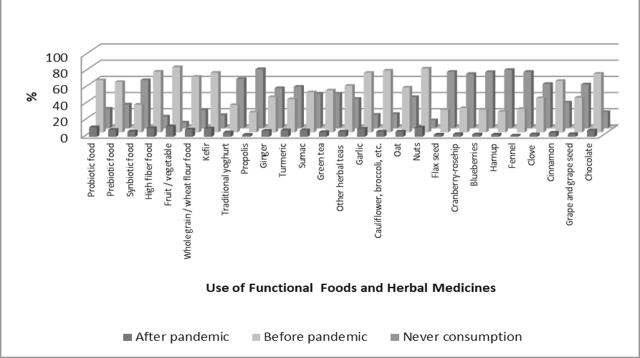
The current study was conducted to evaluate the dietary habits of the dietitians who had a leading role in this regard during the pandemic and their use of dietary supplements, functional food and herbal medicines.
Design:
A cross-sectional study. An online questionnaire was used as a data collection tool to identify the participants’ socio-demographic characteristics, health statuses and dietary habits and their use of dietary supplements, functional foods and herbal medicines.
Setting:
Turkey.
Participants:
The study population was 550 dietitians.
Results:
In the current study, the participants’ average age was 30·6 ± 9·1 years, and most of them (88·2 %) were women. More than half of the participants (88·9 %) thought that adequate and balanced nutrition would positively affect the course of COVID-19. To avoid COVID-19, 94·5 % of the dietitians used dietary supplements, 46·1 % herbal medicines and 34·9 % functional foods during the pandemic. The most commonly used dietary supplement was fish oil (81·9 %), functional food was vegetables and fruits (80·5 %) and the herbal medicine was cinnamon (63·5 %). Women’s consumption of functional foods was approximately twice higher compared with men (95 % Cl: 1·048, 4·165; P < 0·05). The findings showed that the longer the dietitians were in their careers, the more functional foods and herbal medicines they used.
Conclusion:
During the pandemic, dietitians’ use of foods with protective effects against diseases increased depending on their academic knowledge and experience in nutrition. The findings obtained in the current study suggest that an expert’s opinion should be obtained before using dietary supplements and herbal medicines.
Amplifying the testing capacity and making better use of testing resources is a crucial measure when fighting any pandemic. A pooled testing strategy for SARS-CoV-2 has theoretically been shown to increase the testing capacity of a country, especially when applied in low prevalence settings. Experimental studies have shown that the sensitivity of reverse transcription-polymerase chain reaction is not affected when implemented in small groups. Previous models estimated the optimum group size as a function of the historical prevalence; however, this implies a homogeneous distribution of the disease within the population. This study aimed to explore whether separating individuals by age groups when pooling samples results in any further savings on test kits or affects the optimum group size estimation compared to Dorfman's pooling, based on historical prevalence. For this evaluation, age groups of interest were defined as 0–19 years, 20–59 years and over 60 years old. Generalisation of Dorfman's pooling was performed by adding statistical weight to the age groups based on the number of confirmed cases and tests performed in the segment. The findings showed that when the pooling samples are based on age groups, there is a decrease in the number of tests per subject needed to diagnose one subject. Although this decrease is minuscule, it might account for considerable savings when applied on a large scale. In addition, the savings are considerably higher in settings where there is a high standard deviation among the positivity rate of the age segments of the general population.
As an emerging discipline, disaster nursing is very important in disaster emergency management, but there are few mature practice models and theoretical discussions. In particular, the contribution of nursing staff in disaster emergency has not yet received widespread attention and recognition. After more than 10 y of rapid development, China’s disaster nursing has gradually formed a Chinese model and Chinese experience. During the global fight against coronavirus disease 2019 (COVID-19), this article takes the nursing work in disaster emergency rescue as the perspective and briefly describes the development process of disaster nursing in China to introduce the practice and theoretical development of disaster nursing in China to nursing workers around the world. Analyzing the role of Chinese nurses in national disaster emergency response provides a reference for global disaster nursing talent capacity building. By sharing the Nightingale spirit of Chinese nurses in disaster emergency, we will show people all over the world the professional value of disaster nursing practitioners and pay tribute to the nursing staff engaged in disaster emergency work.
This article investigates how a Chinese local government responded to the ongoing coronavirus disease 2019 (COVID-19) outbreak, and the lessons can be valuable for the ongoing response efforts worldwide.
Methods:
This case study used primarily participant observations and interviews with stakeholders.
Results:
We find that nonpharmaceutical interventions, especially the physical distancing measures, are the primary tools used to contain the spread of the virus, and these actions keep changing to adapt to the situation of the local cases and the directions from the central government. Medical countermeasures, maintenance of essential public services, and effective public communications tactics are important allies of the strict physical distancing measures, which can enforce the public’s compliance.
Conclusions:
Local governments are the frontlines of emergency response. Both regulated policies (eg, physical distancing) and supportive services (eg, medical and essential living support) are necessary to the success of public health emergency response.
The COVID-19 pandemic has required many clinical and translational scientists and staff to work remotely to prevent the spread of the virus. To understand the impact on research programs, we assessed barriers to remote work and strategies implemented to support virtual engagement and productivity. A mixed-methods RedCap survey querying the remote work experience was emailed to Colorado Clinical and Translational Sciences Institute (CCTSI) scientists and staff in April 2020. Descriptive analyses, Fisher’s Exact tests, and content analysis were conducted. Respondents (n = 322) were primarily female (n = 240; 75%), 21–73 years old (mean = 42 years) with a PhD (n = 139; 44%) or MD (n = 56; 55%). Prior to COVID-19, 77% (n = 246) never or rarely (0–1 day a week) worked remotely. Remote work somewhat or greatly interfered with 76% (n = 244) of researchers’ programs and 71% (n = 231) reported slowing or stopping their research. Common barriers included missing interactions with colleagues (n = 198; 62%) and the absence of routines (n = 137; 43%). Strategies included videoconferencing (n = 283; 88%), altering timelines and expectations (n = 180; 56%). Scientists and staff experienced interference with their research when they shifted to remote work, causing many to slow or stop research programs. Methods to enhance communication and relationships, support productivity, and collectively cope during remote work are available.
Recent European Society of Parenteral and Enteral Nutrition guidelines highlighted the interest of prevention, diagnosis and treatment of malnutrition in the management of coronavirus disease 19 (COVID-19) patients. The aim of our study was to evaluate the prevalence of malnutrition in patients hospitalised for COVID-19. In a prospective observational cohort study malnutrition was diagnosed according to the Global Leadership Initiative on Malnutrition (GLIM) two-step approach. Patients were divided into two groups according to the diagnosis of malnutrition. Covariate selection for the multivariate analysis was based on P <0·2 in univariate analysis, with a logistic regression model and a backward elimination procedure. A partitioning of the population was realised. Eighty patients were prospectively enrolled. Thirty patients (37·5 %) had criteria for malnutrition. The need for intensive care unit admission (n 46, 57·5 %) was similar in the two groups. Three patients who died (3·75 %) were malnourished. Multivariate analysis exhibited that low BMI (OR 0·83, 95 % CI 0·73, 0·96, P = 0·0083), dyslipidaemia (OR 29·45, 95 % CI 3·12, 277·73, P = 0·0031), oral intake reduction <50 % (OR 3·169, 95 % CI 1·04, 9·64, P = 0·0422) and glomerular filtration rate (Chronic Kidney Disease Epidemiology Collaboration; CKD-EPI) at admission (OR 0·979, 95 % CI 0·96, 0·998, P = 0·0297) were associated with the occurrence of malnutrition. We demonstrate the existence of a high prevalence of malnutrition in a general cohort of COVID-19 inpatients according to GLIM criteria. Nutritional support in COVID-19 care seems an essential element.
In spite of its immense global impact, Republicans and Democrats disagree on how serious a problem the coronavirus pandemic is. One likely reason is the political elites to whom partisans listen. As a means of shoring up support, President Trump largely downplayed but at times hyped the severity of the virus. Do these messages influence the perceived seriousness of the virus’s death toll, how the president is evaluated as well as support for and compliance with social distancing guidelines? Results suggest that Republican identifiers had by early June crystallized their views on the virus’s seriousness, the president’s performance, and social distancing policies and behaviors. Unexpectedly, information critical of President Trump’s policy decisions produced a backlash causing people to show less concern about the virus’s death toll and rate the president’s performance even more highly.
To explore the impact of COVID-19 public health restrictions on the lives of older adults living in Uganda.
Design:
Qualitative semi-structured interview study.
Setting:
Participants’ homes.
Participants:
Older adults living in Uganda (aged 60+).
Measurements:
Older adults in Uganda were interviewed over the phone and asked about their lives before and since COVID-19, and how public health restrictions have affected their lives. Semi-structured interviews were audio-recorded, transcribed and translated into English. Transcripts were thematically analyzed and themes generated in discussion.
Results:
In total, 30 older adults participated in the study. Five themes were identified: (1) economic impacts; (2) lack of access to basic necessities; (3) impact on healthcare utilization; (4) social impacts and (5) violent reinforcement of public health restrictions. COVID-19 public health restrictions had severe impacts on their lives, with many people having not enough food to eat due to lack of income, and being unable to pay their grandchildren’s school fees. Steep rises in public transport fares and an overall avoidance of transport also resulted in a lack of access to healthcare services and difficulty in getting food. Restrictions were violently reinforced by security guards.
Conclusions:
Public health restrictions have a severe impact not only on older adults but also on the whole family in Uganda. Governmental strategies to contain the virus need to provide more support to enable people to get basic necessities and live as normal a life as possible.
Healthcare workers exposed to coronavirus 2019 (COVID-19) patients could be psychologically distressed. This study aims to assess the magnitude of psychological distress and associated factors among hospital staff during the COVID-19 pandemic in a large tertiary hospital located in north-east Italy.
Methods
All healthcare and administrative staff working in the Verona University Hospital (Veneto, Italy) during the COVID-19 pandemic were asked to complete a web-based survey from 21 April to 6 May 2020. Symptoms of post-traumatic distress, anxiety and depression were assessed, respectively, using the Impact of Event Scale (IES-R), the Self-rating Anxiety Scale (SAS) and the Patient Health Questionnaire (PHQ-9). Personal socio-demographic information and job characteristics were also collected, including gender, age, living condition, having pre-existing psychological problems, occupation, length of working experience, hospital unit (ICUs and sub-intensive COVID-19 units vs. non-COVID-19 units). A multivariable logistic regression analysis was performed to identify factors associated with each of the three mental health outcomes.
Results
A total of 2195 healthcare workers (36.9% of the overall hospital staff) participated in the study. Of the participants, 35.7% were nurses, 24.3% other healthcare staff, 16.4% residents, 13.9% physicians and 9.7% administrative staff. Nine per cent of healthcare staff worked in ICUs, 8% in sub-intensive COVID-19 units and 7.6% in other front-line services, while the remaining staff worked in hospital units not directly engaged with COVID-19 patients. Overall, 63.2% of participants reported COVID-related traumatic experiences at work and 53.8% (95% CI 51.0%–56.6%) showed symptoms of post-traumatic distress; moreover, 50.1% (95% CI 47.9%–52.3%) showed symptoms of clinically relevant anxiety and 26.6% (95% CI 24.7%–28.5%) symptoms of at least moderate depression. Multivariable logistic regressions showed that women, nurses, healthcare workers directly engaged with COVID-19 patients and those with pre-existing psychological problems were at increased risk of psychopathological consequences of the pandemic.
Conclusions
The psychological impact of the COVID-19 pandemic on healthcare staff working in a highly burdened geographical of north-east Italy is relevant and to some extent greater than that reported in China. The study provides solid grounds to elaborate and implement interventions pertaining to psychology and occupational health.
Loneliness and physical activity are important targets for research into the impact of COVID-19 because they have established links with mental health, could be exacerbated by social distancing policies, and are potentially modifiable. In this study, we aimed to identify whether loneliness and physical activity were associated with worse mental health during a period of mandatory social distancing in the UK.
Design:
Population-based observational cohort study.
Setting:
Mental health data collected online during COVID-19 from an existing sample of adults aged 50 and over taking part in a longitudinal study of aging. All had comparable annual data collected between 2015 and 2019.
Participants:
Three-thousand two-hundred and eighty-one participants aged 50 and over.
Measurements:
Trajectories of depression (measured by PHQ-9) and anxiety (measured by GAD-7) between 2015 and 2020 were analyzed with respect to loneliness, physical activity levels, and a number of socioeconomic and demographic characteristics using zero-inflated negative binomial regression.
Results:
In 2020, PHQ-9 score for loneliness, adjusted for covariates, was 3.23 (95% CI: 3.01–3.44), an increase of around 1 point on all previous years in this group and 2 points higher than people not rated lonely, whose score did not change in 2020 (1.22, 95% CI: 1.12–1.32). PHQ-9 was 2.60 (95% CI: 2.43–2.78) in people with decreased physical activity, an increase of .5 on previous years. In contrast, PHQ-9 in 2020 for people whose physical activity had not decreased was 1.66, 95% CI: 1.56−1.75, similar to previous years. A similar relationship was observed for GAD-7 though the absolute burden of symptoms lower.
Conclusion:
After accounting for pre-COVID-19 trends, we show that experiencing loneliness and decreased physical activity are risk factors for worsening mental health during the pandemic. Our findings highlight the need to examine policies which target these potentially modifiable risk factors.
We report a case of two-month old with a functionally univentricular heart and parallel circulation who presented to the emergency department with Covid-19 and subsequently developed acute respiratory distress syndrome. The course of illness, clinical values, and laboratory markers are characterized in this report.
Evidence-based infection control strategies are needed for healthcare workers (HCWs) following high-risk exposure to severe acute respiratory coronavirus virus 2 (SARS-CoV-2). In this study, we evaluated the negative predictive value (NPV) of a home-based 7-day infection control strategy.
Methods:
HCWs advised by their infection control or occupational health officer to self-isolate due to a high-risk SARS-CoV-2 exposure were enrolled between May and October 2020. The strategy consisted of symptom-triggered nasopharyngeal SARS-CoV-2 RNA testing from day 0 to day 7 after exposure and standardized home-based nasopharyngeal swab and saliva testing on day 7. The NPV of this strategy was calculated for (1) clinical coronavirus disease 2019 (COVID-19) diagnosis from day 8–14 after exposure, and for (2) asymptomatic SARS-CoV-2 detected by standardized nasopharyngeal swab and saliva specimens collected at days 9, 10, and 14 after exposure. Interim results are reported in the context of a second wave threatening this essential workforce.
Results:
Among 30 HCWs enrolled, the mean age was 31 years (SD, ±9), and 24 (80%) were female. Moreover, 3 were diagnosed with COVID-19 by day 14 after exposure (secondary attack rate, 10.0%), and all cases were detected using the 7-day infection control strategy: the NPV for subsequent clinical COVID-19 or asymptomatic SARS-CoV-2 detection by day 14 was 100.0% (95% CI, 93.1%–100.0%).
Conclusions:
Among HCWs with high-risk exposure to SARS-CoV-2, a home-based 7-day infection control strategy may have a high NPV for subsequent COVID-19 and asymptomatic SARS-CoV-2 detection. Ongoing data collection and data sharing are needed to improve the precision of the estimated NPV, and here we report interim results to inform infection control strategies in light of a second wave threatening this essential workforce.
An N95 respirator ultraviolet germicidal irradiation and reuse program was rapidly implemented at an academic health system in the United States during the coronavirus disease 2019 pandemic. This process continues to be a safe and effective way to slow the consumption rate of N95 respirators.