To save content items to your account,
please confirm that you agree to abide by our usage policies.
If this is the first time you use this feature, you will be asked to authorise Cambridge Core to connect with your account.
Find out more about saving content to .
To save content items to your Kindle, first ensure no-reply@cambridge.org
is added to your Approved Personal Document E-mail List under your Personal Document Settings
on the Manage Your Content and Devices page of your Amazon account. Then enter the ‘name’ part
of your Kindle email address below.
Find out more about saving to your Kindle.
Note you can select to save to either the @free.kindle.com or @kindle.com variations.
‘@free.kindle.com’ emails are free but can only be saved to your device when it is connected to wi-fi.
‘@kindle.com’ emails can be delivered even when you are not connected to wi-fi, but note that service fees apply.
Interdisciplinary public health solutions are vital for an effective coronavirus disease 2019 (COVID-19) response and recovery. However, there is often a lack of awareness and understanding of the environmental health workforce connections and capabilities. In the United States, this is a foundational function of health departments and is the second largest public health workforce. The primary role is to protect the public from exposures to environmental hazards, disasters, and disease outbreaks. More specifically, this includes addressing risks relating to sanitation, drinking water, food safety, vector control, and mass gatherings. This profession is also recognized in the Pandemic and All-Hazards Preparedness and Advancing Innovation Act of 2019. Despite this, the profession is often not considered an essential service. Rapid integration into COVID-19 activities can easily occur as most are government employees and experienced working in complex and stressful situations. This role, for example, could include working with leaders, businesses, workplaces, and churches to safely reopen, and inspections to inform, educate, and empower employers, employees, and the public on safe actions. There is now the legislative support, evidence and a window of opportunity to truly enable interdisciplinary public health solutions by mobilizing the environmental health workforce to support COVID-19 response, recovery, and resilience activities.
The co-occurrence of the 2020 Atlantic hurricane season and the ongoing coronavirus disease 2019 (COVID-19) pandemic creates complex dilemmas for protecting populations from these intersecting threats. Climate change is likely contributing to stronger, wetter, slower-moving, and more dangerous hurricanes. Climate-driven hazards underscore the imperative for timely warning, evacuation, and sheltering of storm-threatened populations – proven life-saving protective measures that gather evacuees together inside durable, enclosed spaces when a hurricane approaches. Meanwhile, the rapid acquisition of scientific knowledge regarding how COVID-19 spreads has guided mass anti-contagion strategies, including lockdowns, sheltering at home, physical distancing, donning personal protective equipment, conscientious handwashing, and hygiene practices. These life-saving strategies, credited with preventing millions of COVID-19 cases, separate and move people apart. Enforcement coupled with fear of contracting COVID-19 have motivated high levels of adherence to these stringent regulations. How will populations react when warned to shelter from an oncoming Atlantic hurricane while COVID-19 is actively circulating in the community? Emergency managers, health care providers, and public health preparedness professionals must create viable solutions to confront these potential scenarios: elevated rates of hurricane-related injury and mortality among persons who refuse to evacuate due to fear of COVID-19, and the resurgence of COVID-19 cases among hurricane evacuees who shelter together.
There is limited information concerning the viral load of severe acute respiratory syndrome coronavirus 2 (SARS-CoV-2) in aerosols deposited on environmental surfaces and the effectiveness of infection prevention and control procedures on eliminating SARS-CoV-2 contamination in hospital settings. We examined the concentration of SARS-CoV-2 in aerosol samples and on environmental surfaces in a hospital designated for treating severe COVID-19 patients. Aerosol samples were collected by a microbial air sampler, and environmental surfaces were sampled using sterile premoistened swabs at multiple sites. Ninety surface swabs and 135 aerosol samples were collected. Only two swabs, sampled from the inside of a patient's mask, were positive for SARS-CoV-2 RNA. All other swabs and aerosol samples were negative for the virus. Our study indicated that strict implementation of infection prevention and control procedures was highly effective in eliminating aerosol and environmental borne SARS-CoV-2 RNA thereby reducing the risk of cross-infection in hospitals.
The coronavirus disease (COVID-19) pandemic overwhelmed health services in France during March 2020 and, to cope, service delivery was reduced in most disciplines. However, as this was impossible for Obstetrics, the COVID-19 infection had to be added to existing clinical care pathways at the children’s hospital, Hôpital Necker–Enfants Malades. This was further complicated by an increasing number of pregnancies affected by infection, in addition to scientific uncertainty about the virus. Procedures based on scientific recommendations from French and international authorities were adapted to maternity care and regularly updated as the situation progressed. Weekly medical manager team meetings covered the evolving clinical situation, and an initial evaluation revealed that our procedures worked well. However, it was necessary to adapt the policy as the epidemic progressed rapidly. Shortly after March 16, traffic control bundling was implemented in anticipation of a dramatic increase in pregnant women affected by infection and to better protect the staff. By April 18, with the peak of the COVID-19 epidemic receding, protocols were again readjusted to meet new service delivery requirements. Although a full debrief is yet to occur, from an operational level perspective, staff response was more than satisfactory. While preventing another epidemic may be impossible, this experience will improve our resilience in the future.
Coronavirus disease 2019 has demanded enormous adjustments to National Health Service provisions. Non-urgent out-patient work was initially postponed or performed virtually, but is now being re-established. In ENT surgery, aerosol-generating procedures pose a particular challenge in out-patient settings.
Objective
A rapid restructuring of ENT out-patient services is required, to safely accommodate aerosol-generating procedures and increase in-person attendances, whilst coronavirus disease 2019 persists.
Methods
Data were collected prospectively over four consecutive cycles. Two surveys were conducted. Results were analysed and disseminated, with recommendations for service restructuring implemented at cycle end-points.
Results
Out-patient activity increased four-fold, associated with a significant rise in aerosol-generating procedures during the study period. Mean aerosol-generating procedure duration dropped weekly, implying a learning curve. Service restructuring occurred at cycle end-points.
Conclusion
Iterative data gathering, results analysis and outcome dissemination enabled a swift, data-driven approach to the restructuring of ENT out-patient services. Patient and staff safety was ensured, whilst out-patient capacity was optimised.
While many nations are struggling to slow the transmission rate of the coronavirus disease 2019 (COVID-19), Vietnam has seen no new locally acquired cases since April 16. After implementing 22 d of nationwide social distancing, on April 23, the government of Vietnam announced the easing of social distancing measures. This allows the country to restart its socio-economic activities in a gradual, prudent manner. Domestic tourism and exports of agricultural and anti-COVID-19 medical products take priority over the other sectors in this postpandemic economic recovery. Importantly, the country needs to stay vigilant on the fight against the disease to prevent a possibility of another outbreak.
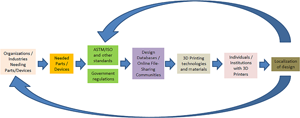
The current COVID-19 pandemic has caused the shortage of personal protective equipment (PPE) where improvised manufacturing in particular 3D printing has addressed many needs. This prospective discusses the current global crisis, then follows the wide interest in addressing the shortage of medical devices and PPEs used for treatment and protection against pathogens. An overview of the 3D printing process with polymer materials is given followed by the different 3D printing projects of PPEs and medical devices that emerged for the pandemic (including validation/testing). The potential for rapid prototyping with different polymer materials and eventual high-throughput production is emphasized.
The world is currently changing due to coronavirus disease 2019 (COVID-19), and the field of dentistry is no stranger to this. The care of patients in the dental office involves very strict biosafety protocols, and patients must be aware of the protection barriers implemented to allow satisfactory, safe dental care. The purpose of this study was to synthesize and analyze the management of the current biosafety standards for dental patients since the arrival of the COVID-19 pandemic. A bibliographic search of the main sources of information including MEDLINE (by means of PubMed), Scopus, Science Direct, SCIELO, and Google Scholar was carried out. Articles published without language restriction, systematic reviews, literature reviews, and observational studies were included. We identified the biosafety measures that must be taken before, during, and after dental practice following the arrival of COVID-19. The main measures include telephone triage, temperature taking on arrival at the office, the organization of the waiting room, washing hands before entering the office, knowing the auxiliary radiographic exams of choice and what type of treatment can be performed, albeit with restrictions. In conclusion, dental patients must comply with all the biosafety measures established by international protection standards and implemented by dentists before, during, and after dental practice to reduce the possibility of COVID-19 infection.
The coronavirus disease 2019 (COVID-19) has greatly impacted health-care systems worldwide, leading to an unprecedented rise in demand for health-care resources. In anticipation of an acute strain on established medical facilities in Dallas, Texas, federal officials worked in conjunction with local medical personnel to convert a convention center into a Federal Medical Station capable of caring for patients affected by COVID-19. A 200,000 square foot event space was designated as a direct patient care area, with surrounding spaces repurposed to house ancillary services. Given the highly transmissible nature of the novel coronavirus, the donning and doffing of personal protective equipment (PPE) was of particular importance for personnel staffing the facility. Furthermore, nationwide shortages in the availability of PPE necessitated the reuse of certain protective materials. This article seeks to delineate the procedures implemented regarding PPE in the setting of a COVID-19 disaster response shelter, including workspace flow, donning and doffing procedures, PPE conservation, and exposure event protocols.
Coronavirus disease 2019 (COVID-19), first documented in December 2019, was declared a public health emergency by the World Health Organization (WHO) on January 30, 2020 (https://www.who.int/westernpacific/emergencies/covid-19). The disease, caused by the severe acute respiratory syndrome coronavirus 2 (SARS-CoV-2) virus, has affected more than 9 million people and contributed to at least 490,000 deaths globally as of June 2020, with numbers on the rise (https://www.worldometers.info/coronavirus/#countries).
Increased numbers of patients seeking medical attention during disease outbreaks can overwhelm healthcare facilities, hence requiring an equivalent response from healthcare services. Surge capacity is a concept that has not only been defined as the “ability to respond to a sudden increase in patient care demands” (Hick et al., Disaster Med Public Health Prep. 2008;2:S51-S57) but also to “effectively and rapidly expand capacity” (Watson et al., Milbank Q. 2013;91(1):78-122).
This narrative review discusses how Singapore’s largest tertiary hospital has encapsulated the elements of surge capability and transformed a peacetime multi-story carpark into a flu screening area in response to the COVID-19 disease outbreak.
Even before the novel coronavirus, COVID-19, was declared a pandemic, prominent women mayors in the United States enacted proactive and innovative policies to prevent local outbreaks and soften the social and economic repercussions. Several Black women mayors, in particular, have led the way in local pandemic response efforts. This article identifies four major features of these and other women mayors’ early responses. First, women mayors demonstrated proactive leadership even when faced with pushback. Second, these mayors advocated for transparent and evidence-based decision-making at all levels of government. Third, they enacted measures to protect vulnerable communities and reduce disparities. Fourth, they actively shared advice on best practices and lessons learned, and provided examples for other local leaders to follow. The article concludes by situating these responses in the larger research on gender and leadership and asks whether these women's actions are unique or part of a systematic trend of gendered responses to the pandemic.
During an influenza or coronavirus disease 2019 (COVID-19) pandemic that results in acute respiratory distress, the number of available ventilators will not meet demand. In 2007, the New York State Task Force on Life and the Law and Department of Health released draft Guidelines for ethical allocation of ventilators for adults. In 2015, updated guidelines were released to ensure that: (1) revisions reflect the public’s values and (2) the triage protocol is substantiated by evidence-based clinical data. We summarize the development and content of the 2015 Guidelines compared with the 2007 version, emphasizing new/revised aspects of the ethical considerations and clinical protocol.
Methods:
We compared the 2007 and 2015 guidelines, with particular emphasis on the ethical issues and clinical protocols.
Results:
The 2015 Guidelines retained much of the ethical and clinical framework of the 2007 draft. The triage protocol was revised using evidence-based clinical data. Patients with the highest likelihood of short-term survival with ventilator therapy have priority access. Protocol consists of exclusion criteria, the sequential organ failure assessment (SOFA) score, and periodic clinical assessments. Guidance is provided on secondary triage criteria. Other forms of medical intervention/palliative care and review of triage decisions are discussed.
Conclusions:
The 2015 Guidelines reflect advances in medicine and societal values and provide an evidenced-based framework to save the most lives. The framework could be adapted in other emergencies, such as the COVID-19 pandemic, that require ventilators.
The outbreak of novel coronavirus (COVID-19) provided an opportunity to undertake an online survey to study the relationships between body weight changes with changes in physical activity and lifestyle during an unusual event of forced isolation, or quarantine.
Methods:
We distributed an electronic questionnaire using the popular social application WeChat to adults from any province of China except Hubei Province, the epicenter of the outbreak. The questionnaire asked for demographic information, body weight, physical activity, and lifestyle factors before and during the quarantine.
Results:
Of 376 questionnaires returned, 339 were valid (90.2%). During the period of semi-lockdown, both females and males with BMI <24 gained weight, males with BMI ≥24 lost weight, and females with BMI ≥24 gained weight. The average steps per day and the average moderate or vigorous-intensity exercise declined significantly for both males and females during the semi-lockdown. Changes in body weight inversely correlated with changes in steps per day and moderate or vigorous-intensity exercise during the quarantine.
Conclusions:
Normal weight individuals, who are not normally troubled by overweight or obesity, had less awareness of weight gain than people with a BMI ≥ 24. Under the conditions of the semi-lockdown, they tended to gain weight.
Mass gatherings and high-density activities, such as sporting events, conventions, and theme parks, are consistently included among highest-risk activities given the increased potential for widespread coronavirus disease 2019 (COVID-19) transmission. A more balanced risk management approach is required because absolute suppression of risk is unrealistic in all facets of life. Contact tracing remains a limiting factor in achieving such a balance. The use of Bluetooth or pairing devices is proposed to address this challenge. This simple approach, when applied in a manner that satisfies privacy and trust concerns, would allow high-risk encounters to be quickly identified, namely those where participants have spent 15 minutes or more within 6 ft of each other per current guidelines. If an attendee later tests positive for COVID-19 and tracing is required, the event organizer can provide a limited list of potential close contacts rather than an exhaustive list of all attendees. Contact tracers can, therefore, limit efforts to this concise group rather than needing to contact thousands of people or conduct mass media communications. Such a system, if institutionalized, supports risk assurance and safety measures for businesses by demonstrating a commitment to staff, customer protection, and ensuring high-risk encounters are logged, reinforcing longer-term societal pandemic resilience.
Different coronavirus disease (COVID-19) testing approaches have been implemented among Italian regions, reflected in heterogeneous testing rates. We analyzed the number of COVID-19-related deaths in relation to the number of tests performed among the most affected Italian regions. We showed that regions with the highest number of tests performed (Veneto and Toscana) had the lowest 30-day crude mortality rate per 100 000 inhabitants. In addition, an inverse association between crude mortality rates and tests performed (mortality rate ratio for a unit increase in tests per 1000 inhabitants: 0.92; 95% CI: 0.89–0.94) was observed. Early identification and isolation of active cases (including asymptomatic or mildly symptomatic subjects) could have had an important effect in lowering COVID-19 mortality.
People with obsessive compulsive disorder (OCD) are likely to be more susceptible to the mental health impact of COVID-19. This paper shares the perspectives of expert clinicians working with OCD considering how to identify OCD in the context of COVID-19, changes in the presentation, and importantly what to consider when undertaking cognitive behaviour therapy (CBT) for OCD in the current climate. The expert consensus is that although the presentation of OCD and treatment may have become more difficult, CBT should still continue remotely unless there are specific reasons for it not to, e.g. increase in risk, no access to computer, or exposure tasks or behavioural experiments cannot be undertaken. The authors highlight some of the considerations to take in CBT in light of our current understanding of COVID-19, including therapists and clients taking calculated risks when developing behavioural experiments and exposure tasks, considering viral loading and vulnerability factors. Special considerations for young people and perinatal women are discussed, as well as foreseeing what life may be like for those with OCD after the pandemic is over.
Key learning aims
(1) To learn how to identify OCD in the context of COVID-19 and consider the differences between following government guidelines and OCD.
(2) To consider the presentation of OCD in context of COVID-19, with regard to cognitive and behavioural processes.
(3) Review factors to be considered when embarking on CBT for OCD during the pandemic.
(4) Considerations in CBT for OCD, including weighing up costs and benefits of behavioural experiments or exposure tasks in light of our current understanding of the risks associated with COVID-19.