We partner with a secure submission system to handle manuscript submissions.
Please note:
You will need an account for the submission system, which is separate to your Cambridge Core account. For login and submission support, please visit the
submission and support pages.
Please review this journal's author instructions, particularly the
preparing your materials
page, before submitting your manuscript.
Click Proceed to submission system to continue to our partner's website.
To save this undefined to your undefined account, please select one or more formats and confirm that you agree to abide by our usage policies. If this is the first time you used this feature, you will be asked to authorise Cambridge Core to connect with your undefined account.
Find out more about saving content to .
To send this article to your Kindle, first ensure no-reply@cambridge.org is added to your Approved Personal Document E-mail List under your Personal Document Settings on the Manage Your Content and Devices page of your Amazon account. Then enter the ‘name’ part of your Kindle email address below. Find out more about sending to your Kindle.
Find out more about saving to your Kindle.
Note you can select to save to either the @free.kindle.com or @kindle.com variations. ‘@free.kindle.com’ emails are free but can only be saved to your device when it is connected to wi-fi. ‘@kindle.com’ emails can be delivered even when you are not connected to wi-fi, but note that service fees apply.
Until recent decades, the monastery of Lios Mòr (Lismore) in Argyll, Scotland, established by Saint Mo Luóc in the sixth century, was attested only via historical references and local traditions. Community-led investigations have now revealed an early medieval cemetery, sophisticated craftworking of international importance and early structures around the island’s parish church. These discoveries underscore the site’s status as a high-ranking ecclesiastical centre of the Insular north-west and elucidate its significance and integral role within the early Christian networks of Dál Riata, offering insights into the material traces of early medieval monasticism in northern Britain in the first millennium AD.
Before Catholicism was officially adopted in AD 1387, the Lithuanian city of Vilnius was assumed to be largely pagan. Identification of Christian burials within a large medieval cemetery (late thirteenth–fourteenth centuries) in the city was therefore unexpected. Here, the authors employ multiproxy isotopic analyses of bone collagen, dentine and enamel to examine the origins of 15 individuals from the cemetery. Based on the results, the authors argue that males were more socially mobile than females, with one male possibly having immigrated from south-eastern Europe, supporting historical accounts of a multiethnic founder community including immigrant Orthodox Christians and local converts.
While absolute dating has become the archaeological gold standard, typology can provide context beyond time frames. Here, the authors demonstrate this with the chronological assessment of iron helmets from the underwater site of Piedras de la Barbada, near Benicarló (eastern Spain). Marine concretions helped preserve fabric linings in several helmets, permitting direct radiocarbon dating of the assemblage to the late fourteenth or early fifteenth centuries AD. Typological and iconographic comparisons agree, identifying the helmets as regionally produced, light-infantry equipment that pre-dates the fifteenth-century standardisation of European plate armour systems, corresponding with a period of maritime insecurity along the Valencian coast.
The large mound of Herlaugshaugen, on the island of Leka off the coast of Norway, has long been associated with the legendary storeroom (and burial place) of Herlaug, a pre-Viking king of the region Namdalen. Excavations at the site in 2023 recovered iron clinker nails and wooden fragments, identifying one of the earliest ship burials in Scandinavia. Here, the authors detail these findings and explore the significance of Herlaugshaugen in expanding our understanding of the region and its maritime connections in the seventh and eighth centuries AD, arguing that Leka may have been a node in a much wider network.
The analysis of stable carbon and nitrogen isotopes in bone collagen can reveal aspects of diet and how this may change between periods and places. Here, the authors apply a ‘whole-town’ approach to isotopic analysis, to characterise and explore variation in diet within medieval Cambridge and its hinterland. By adopting this approach, and a robust isotopic baseline, the authors argue that the number of confounding variables that typically plague archaeometric research are reduced, allowing for more nuanced interpretation of data. For medieval Cambridge, this nuance comes in the form of inter-site comparisons in the lived experience of social differentiation.
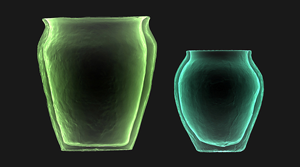
Diet and material culture are interlinked, and examination of organic residues in ceramic vessels permits the simultaneous study of both; exemplified here in the analysis of early-medieval pottery from England and Denmark for biomarkers indicative of fish processing, a possible dietary indicator of Scandinavian migration during the Viking Age (c. AD 793–1066). While almost a quarter of sampled Danish pots were used to cook fish, diagnostic aquatic markers were securely identified in only 13 of 298 English vessels. Geographic homogeneity and temporal persistence in processing terrestrial animal fats instead suggest that Scandinavian settlers pragmatically conformed to Anglo-Saxon culinary traditions.
In Viking archaeology, the study of miniature figurines cast in silver and bronze provides a platform for debates on ritual and mythology, yet much of this discourse focuses on their appearance. Here, the authors use microwear and Reflective Transformation Imaging to survey the physical evidence of complex relational dynamics between 10 anthropomorphic artefacts from Viking Age Sweden and the human bodies they connected with. Through such analyses, and the abandonment of a priori assumptions regarding their purpose and symbolism, these figures can be seen as more than just components of an imposed category, and their varied, transmutable engagements with the world can be explored more freely.
Archaeogenetics, the study of ancient DNA, can reveal powerful insights into kinship and the movement of individuals in (pre)history. Here, the authors report on the identification of two individuals with genetic profiles consistent with recent sub-Saharan African ancestry, both of whom were buried in early-medieval cemeteries in southern Britain. Focusing primarily on a sub-adult female from Updown in Kent, the authors explore the societal and cultural contexts in which these individuals lived and died, and the widening geographic links indicated by their presence, pointing back to the Byzantine reconquest of North Africa in AD 533–534.
From the perspective of the present, the economic development of preceding periods can seem linear and inevitable, guided into being by those who benefitted most from increasing commercialisation. Yet this majoritarian narrative belies the importance of the individual and the everyday, of adaptation and creativity. Here, the author explores the potential of a minoritarian approach to entrepreneurship, in understanding medieval economic development. In tracing pottery-exchange networks as a representation of commercial development, they argue that the entrepreneurial actions of institutions and potters generate insights into economic development that challenge linear narratives, framing it as a patchwork of sociomaterial relations.
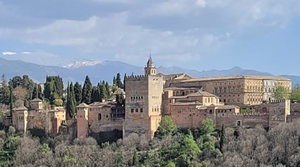
The Nasrid emirate of southern Iberia emanated power through architecture; this project aims to better understand how this was made possible, via an interdisciplinary exploration of the Alhambra monument and other Al-Andalus constructions. Initial results of archaeological campaigns, structure chronologies and communication plans undertaken in 2021 and 2022 are presented.
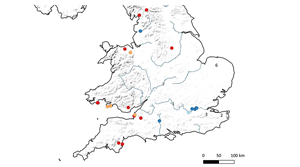
Substantial debate surrounds the relative lack of formal burials in Britain during the fifth century AD, which was a key period of social and economic transition following the withdrawal of the Roman army. Here, the authors argue that the ‘missing fifth century’ may be explained, in part, by the continuation of archaeologically invisible mortuary treatments practised in the preceding Iron Age and Roman period. Compilation of published radiocarbon dates from human remains found in cave and riverine contexts demonstrates that a variety of methods for the disposal of the dead—outside of formal cemeteries—existed in the first millennium AD.
In the ninth century AD, Moravia (now in Czechia) was the heartland of the first Slavic state-like formation in Central Europe. Traditionally, the archaeology of the region has been interpreted via historical records only; the FORMOR project aims to broaden this view by using archaeometry, archaeogenetics, bioarchaeology and introducing new theoretical approaches.
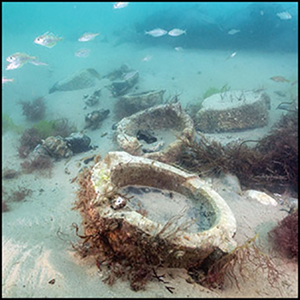
Throughout the medieval period, thousands of ships plied their trade around England's coasts. History documents numerous lost ships, and more would have sunk without record, yet very few wrecks dating between the tenth and fifteenth centuries AD have previously been discovered in English waters. The author reports on one of the first of such finds—the wreck of a clinker-built sailing vessel, dated to c. AD 1250, that was carrying a cargo of Purbeck stone. Examination of the ship and its cargo reveals new insights into shipping and the Purbeck stone trade in the thirteenth century.
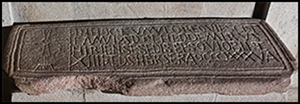
After St James the Apostle, Bishop Teodomiro of Iria-Flavia is the most important figure associated with the pilgrimage to Santiago de Compostela. He supposedly discovered the apostolic tomb after a divine revelation between AD 820 and 830 yet, until the discovery, in 1955, of a tombstone inscribed with his name, his very existence was a matter of some debate. Here, the authors employ a multi-stranded analytical approach, combining osteoarchaeology, radiocarbon dating, stable isotope and ancient DNA analyses to demonstrate that human bones associated with the tombstone, in all likelihood, represent the earthly remains of Bishop Teodomiro.
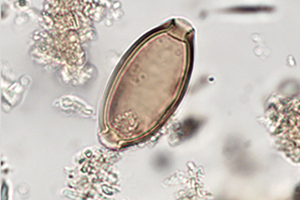
In the absence of written records, disease and parasite loads are often used as indicators of sanitation in past populations. Here, the authors adopt the novel approach of integrating the bioarchaeological analysis of cesspits in an area of medieval Leiden (the Netherlands) with historical property records to explore living conditions. Using light microscopy and enzyme-linked immunosorbent assays (ELISA) they identify evidence of parasites associated with ineffective sanitation (whipworm, roundworm and the protozoan Giardia duodenalis)—at residences of all social levels—and the consumption of infected livestock and freshwater fish (Diphyllobothriidae, cf. Echinostoma sp., cf. Fasciola hepatica and Dicrocoelium sp.).