We partner with a secure submission system to handle manuscript submissions.
Please note:
You will need an account for the submission system, which is separate to your Cambridge Core account. For login and submission support, please visit the
submission and support pages.
Please review this journal's author instructions, particularly the
preparing your materials
page, before submitting your manuscript.
Click Proceed to submission system to continue to our partner's website.
To save this undefined to your undefined account, please select one or more formats and confirm that you agree to abide by our usage policies. If this is the first time you used this feature, you will be asked to authorise Cambridge Core to connect with your undefined account.
Find out more about saving content to .
To send this article to your Kindle, first ensure no-reply@cambridge.org is added to your Approved Personal Document E-mail List under your Personal Document Settings on the Manage Your Content and Devices page of your Amazon account. Then enter the ‘name’ part of your Kindle email address below. Find out more about sending to your Kindle.
Find out more about saving to your Kindle.
Note you can select to save to either the @free.kindle.com or @kindle.com variations. ‘@free.kindle.com’ emails are free but can only be saved to your device when it is connected to wi-fi. ‘@kindle.com’ emails can be delivered even when you are not connected to wi-fi, but note that service fees apply.
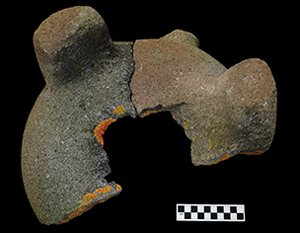
Survey around Porto Rafti Bay in Greece reveals evidence of a prosperous community that exploited near-shore islets for habitation and craft production following the Late Bronze Age collapse. Surface assemblages provide insights into the strategies undertaken by this mercantile maritime group aptly navigating a dynamic socioeconomic environment.
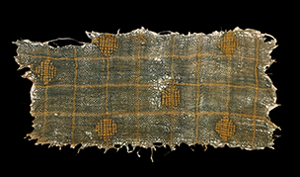
Excavations at Nahal Omer, an Early Islamic way station in the Negev Desert (sixth to ninth centuries AD), have yielded exotic textiles such as silks and cottons. Through a new study of these textiles, this project investigates the trade networks and global connectivity along this little-known artery of the Silk Road.
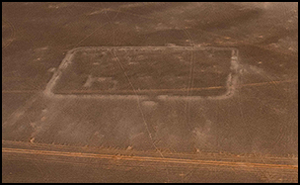
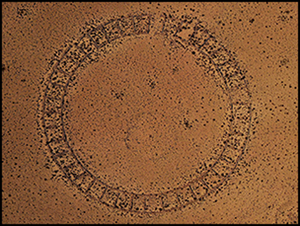
Remote sensing survey in southern Jordan has identified at least three Roman temporary camps that indicate a probable undocumented military campaign into what is today Saudi Arabia, and which we conjecture is linked to the Roman annexation of the Nabataean kingdom in AD 106.
This new project studies the diversity of socioecological niches across the agropastoral transition in the Andes, utilising a multi-isotope approach to track human territories and allocate subsistence tasks. During the agropastoral period, we discriminate different diachronic niches with varying extents of maize farming and altitudinal mobility.
Detailed photogrammetry and 3D laser scanning of rock art, geophysics research and sondage excavations conducted at the Painted Hand Petroglyph Panel, a large rock art site in south-western Colorado, USA, has revealed new information about the cultural situation in the pre-Columbian and historic North American Southwest.
Research carried out in the Carangas region of highland Bolivia has identified a surprising concentration of pre-Hispanic religious sites, which are linked both to ancient Andean cults of wak'a (sacred mountains, tutelary hills and mummified ancestors) and to the Incan settlement of the region. Of these sites, one ceremonial centre stands out for its unprecedented characteristics for the Andes.