We partner with a secure submission system to handle manuscript submissions.
Please note:
You will need an account for the submission system, which is separate to your Cambridge Core account. For login and submission support, please visit the
submission and support pages.
Please review this journal's author instructions, particularly the
preparing your materials
page, before submitting your manuscript.
Click Proceed to submission system to continue to our partner's website.
To save this undefined to your undefined account, please select one or more formats and confirm that you agree to abide by our usage policies. If this is the first time you used this feature, you will be asked to authorise Cambridge Core to connect with your undefined account.
Find out more about saving content to .
To send this article to your Kindle, first ensure no-reply@cambridge.org is added to your Approved Personal Document E-mail List under your Personal Document Settings on the Manage Your Content and Devices page of your Amazon account. Then enter the ‘name’ part of your Kindle email address below. Find out more about sending to your Kindle.
Find out more about saving to your Kindle.
Note you can select to save to either the @free.kindle.com or @kindle.com variations. ‘@free.kindle.com’ emails are free but can only be saved to your device when it is connected to wi-fi. ‘@kindle.com’ emails can be delivered even when you are not connected to wi-fi, but note that service fees apply.
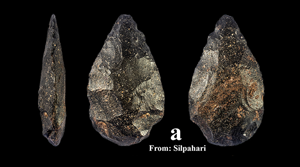
Eight Acheulean sites are located in an under-researched ecological setting within the hilly terrain of the Upper Son Valley, India. A total of 1348 Acheulean artefacts have been identified across these sites, primarily preserved in high-energy depositional contexts, providing insights into the Pleistocene environment of hominin occupation and available lithic technology.
The Sidi Zin Archaeological Project aims to bridge understanding of the Acheulean–Middle Stone Age transition in northern Tunisia, a relatively understudied region in the context of hominin evolution. The Sidi Zin locality will provide chronological, palaeoenvironmental, geomorphological and cultural insights into Acheulean and Middle Stone Age occupations in Tunisia.
Searching for the Neolithic along the Vardar-Morava River corridor revealed several new sites in a previously underexplored region. Multidisciplinary investigations at Svinjarička Čuka identified Neolithic and Bronze Age occupation. Highlights presented here demonstrate the potential of this new key site for enriching our understanding of the prehistory of the Balkans.
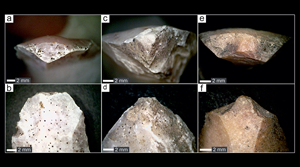
Two new sites, identified during a survey of the Tajuña River Valley, central Iberia, show evidence of both flint extraction and working, specifically for the production of long blades. These are an important addition to the limited number of such sites known in Eurasia.
Analysis of use-wear and chemical composition of five early Bronze Age halberds from Muszkowo reveals that they were crafted over several casting events and meticulously finished, then subjected to use before their final deposition.
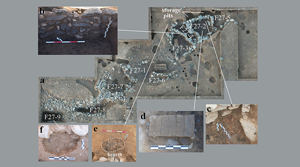
Xiangranggounan is an intensively occupied settlement associated with the Kayue culture on the north-eastern Qinghai-Tibet Plateau. Excavations in 2022 and 2023 revealed five house types with clear stratigraphic relationships that help to expand current understanding of the evolution of prehistoric settlement patterns in harsh plateau environments.
Somló Hill (Veszprém County, Hungary) is a prominent Late Bronze Age and Early Iron Age hilltop settlement. Six new hoards present the unparalleled opportunity to study hoarding traditions and depositional practices, and to evaluate the changing roles and functions of the hilltop site.
Analysis of the particulate and chemical composition of a red pigment discovered in grave 155 (burial 2) at Chervony Mayak in the Kherson Region of Ukraine identified the substance as cinnabar. This is the first definitive identification of this mineral in a Late Scythian context.
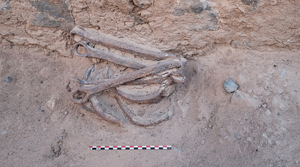
Since 1994, the French Archaeological Mission at the Eastern Desert has excavated more than 20 sites in Egypt, focusing on Roman forts and Ptolemaic mining sites. Rich in natural resources, the region was heavily exploited in the Hellenistic Period (332–30 BC). Recent excavations at Ghozza reveal the harsh reality of mining.
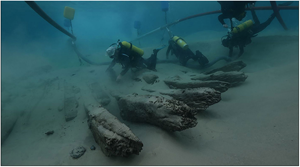
The North Caesarea 1 shipwreck, briefly explored in the 1980s, is one of the few hulls of the Hellenistic and early Imperial periods excavated in the Eastern Mediterranean. This investigation relies on the meticulous re-examination of primary excavation data to help answer some questions regarding this hull that probably belonged to a large vessel.
A total of 2848 denarii from the Nietulisko Małe Hoard, one of the largest hoards of Roman coins found in Poland, were digitised and documented using reflectance transformation imaging, highlighting the potential for this technology in numismatic research.
Emerging from a shift in the relationship between archaeology and museums, the ‘Making the Museum’ project investigates the makers of the archaeological and ethnographic collections of the Pitt Rivers Museum in Oxford, positioning archaeological theory and method as essential tools for uncovering the ‘hidden histories’ of these makers.