We partner with a secure submission system to handle manuscript submissions.
Please note:
You will need an account for the submission system, which is separate to your Cambridge Core account. For login and submission support, please visit the
submission and support pages.
Please review this journal's author instructions, particularly the
preparing your materials
page, before submitting your manuscript.
Click Proceed to submission system to continue to our partner's website.
To save this undefined to your undefined account, please select one or more formats and confirm that you agree to abide by our usage policies. If this is the first time you used this feature, you will be asked to authorise Cambridge Core to connect with your undefined account.
Find out more about saving content to .
To send this article to your Kindle, first ensure no-reply@cambridge.org is added to your Approved Personal Document E-mail List under your Personal Document Settings on the Manage Your Content and Devices page of your Amazon account. Then enter the ‘name’ part of your Kindle email address below. Find out more about sending to your Kindle.
Find out more about saving to your Kindle.
Note you can select to save to either the @free.kindle.com or @kindle.com variations. ‘@free.kindle.com’ emails are free but can only be saved to your device when it is connected to wi-fi. ‘@kindle.com’ emails can be delivered even when you are not connected to wi-fi, but note that service fees apply.
During the excavation of Tol-e Sangi in southern Iran, tokens and a sealing were discovered in Pre-Pottery Neolithic (PPN, c. 7050–6900 BC) layers. As the oldest sealing found in Iran, this artefact suggests that storage and sealing practices were used during the PPN period in South-west Asia.
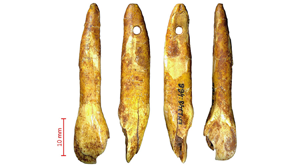
A re-examination of animal tooth pendants from Mesolithic (c. 9000–5000 BC in Lithuania) graves at Donkalnis (western Lithuania) revealed one engraved specimen. Among the hundreds of pendants reported for this period in the eastern Baltic, engravings are rare. The discovery offers new insights into the human-animal relationships reflected in northern forager burial traditions.
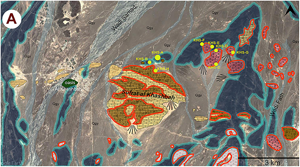
A newly discovered Neolithic site at Al-Khashbah KHS-A (Oman) reveals local adaptations to climate change in the Holocene. Results from radiocarbon dating show repeated occupations over 1000 years and key artefacts indicate coastal connections. KHS-A served as a short-term camp, enhancing our understanding of Neolithic lifeways in Arabia.
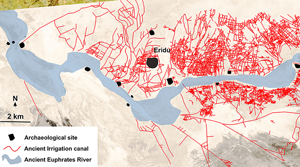
The Eridu region in southern Mesopotamia was occupied from the sixth until the early first millennium BC, and its archaeological landscape remains well preserved. The present study has identified and mapped a vast, intensive, well-developed network of artificial irrigation canals in this region.
Although the site was supposedly founded in the Hellenistic period (332–31 BC), excavations at Kom el-Nugus/Plinthine have revealed a large town from the seventh century BC. The recent discovery of a major New Kingdom (c. 1550–1069 BC) settlement at the site is contributing to re-evaluation of the ancient history of northern Egypt.
Extraordinary finds from the Store Frigård cremation cemetery on the Danish island of Bornholm suggest that the society that used the site played a key role in supra-regional contacts and in the distribution of goods and people across the Baltic Sea between the Continent and Southern Scandinavia during the Iron Age.
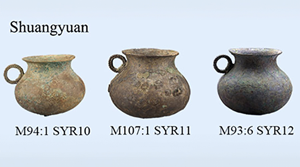
Bronze mou vessels appear in Shu tombs in south-west China during the Eastern Zhou period (c. 771–256 BC). Examination of these vessels reveals major changes in the supply of metal and alloying technology in the Shu State, throwing new light on the social impact of the Qin conquest and later unification of China.
The capacocha was one of the most important types of Inca sacrifices. Road stations (tambos) were built for the pilgrims who travelled to mountain peaks with the sacrifices. Spatial analysis of two tambos on the slopes of the Pichu Pichu and Chachani volcanoes in Peru reveals segregation in the sacred landscape.
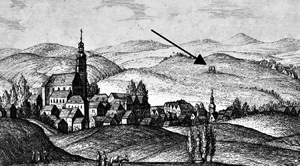
Historic sites of lawful execution are now largely consigned to archival records, including hand-drawn maps. Using these records to identify potential locations, this project deploys non-invasive geophysical surveys and targeted excavation to uncover execution sites and historic gallows in Silesia.
Digital technology facilitates remote access to archaeological collections and offers an accessible platform for knowledge sharing and innovative storytelling. Here, the authors present a newly developed online museum resource co-curated by archaeologists and the descendant community in Quinhagak, Alaska.