Contents
Research Article
Embeddings of L-Groups
-
- Published online by Cambridge University Press:
- 20 November 2018, pp. 513-558
-
- Article
-
- You have access
- Export citation
On Explicit Bounds in Landau's Theorem. II
-
- Published online by Cambridge University Press:
- 20 November 2018, pp. 559-562
-
- Article
-
- You have access
- Export citation
-
Quite some years ago a number of mathematicians were interested in obtaining explicit expressions for the bounds in Schottky's and Landau's theorems, specifically numerically évaluable bounds of a particular form. The best bounds of this type in Schottky's theorem were given by the author [3]. For Landau's theorem the chosen form is as follows. Let F(Z) be regular in |Z| < 1, omit the values 0 and 1 and have Taylor expansion about Z = 0

Then

Using the same method employed for Schottky's theorem the author showed that one can take K = 5.94. By a slight modification of the author's method Lai [6] gave the further value K = 4.76.
On a Conjecture of Erdös, Faber, and Lovász about n-Colorings
-
- Published online by Cambridge University Press:
- 20 November 2018, pp. 563-570
-
- Article
-
- You have access
- Export citation
-
Let
 be a finite family of finite sets with the property that |A ∩ B| ≦ 1 whenever A and B are distinct members of
 . It is a conjecture of Erdös, Faber, and Lovász ([1] a 50 pound problem and [2] a 100 dollar problem) that there is an n-coloring of (i.e., a function
 such that A ∩ B = ∅ whenever A and B are distinct members of with f(A) = f(B). They actually state the conjecture in a different form. They actually state the conjecture in a different form. Namely, if n is a positive integer and
 is a family of n sets satisfying (1) |Bp | = n for each p and (2) |Bp ∩ Bq | ≦ 1 when p ≠ q, then there is an n-coloring of the elements of
 so that each set Bp gets all n colors. The equivalence of the two forms is easily seen by interchanging the roles of elements and sets.
 be a finite family of finite sets with the property that |A ∩ B| ≦ 1 whenever A and B are distinct members of
 . It is a conjecture of Erdös, Faber, and Lovász ([
 such that A ∩ B = ∅ whenever A and B are distinct members of
 is a family of n sets satisfying (1) |B
 so that each set B
Locally Bounded Topologies on the Ring of Integers of a Global Field
-
- Published online by Cambridge University Press:
- 20 November 2018, pp. 571-584
-
- Article
-
- You have access
- Export citation
-
A subset A of a topological ring R is bounded if given any neighborhood U of zero, there exists a neighborhood V of 0 such that AV ⊆ U and VA ⊆ U. The topology on R is locally bounded if there exists a bounded neighborhood of 0.
We recall that a seminorm ‖··‖ on a ring R is a function from R into the non-negative real numbers satisfying ‖x‖ = 0 if x = 0, ‖–x‖ = ‖x‖, ‖x + y‖ ≦ ‖x‖ + ‖y‖ and ‖xy‖ ≦ ‖x‖ ‖y‖ for all x, y in R. A seminorm ‖··‖ on R is a norm on R if ‖x‖ = 0 implies x = 0. We note that a seminorm ‖··‖ on R defines a locally bounded topology
 on R, and a norm on R defines a Hausdorff, locally bounded topology on R. Two norms on R are said to be equivalent if they define the same topology on R.
 on R, and a norm on R defines a Hausdorff, locally bounded topology on R. Two norms on R are said to be equivalent if they define the same topology on R.
Maximal Quotient Rings of Endomorphism Rings of E(RR)-Torsionfree Generators
-
- Published online by Cambridge University Press:
- 20 November 2018, pp. 585-605
-
- Article
-
- You have access
- Export citation
Some Properties of Generalized Euler Numbers
-
- Published online by Cambridge University Press:
- 20 November 2018, pp. 606-617
-
- Article
-
- You have access
- Export citation
-
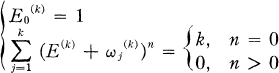
We define infinitely many sequences of integers
 one sequence for each positive integer k ≦ 2 by
(1.1)
where
 are the k-th roots of unity and (E(k))n is replaced by En(k) after multiplying out. An immediate consequence of (1.1) is
(1.2)

Therefore, we are interested in numbers of the form Esk (k) (s = 0, 1, 2, …; k = 2, 3, …).
Some special cases have been considered in the literature. For k = 2, we obtain the Euler numbers (see e.g. [8]). The case k = 3 is considered briefly by D. H. Lehmer [7], and the case k = 4 by Leeming [6] and Carlitz ([1]and [2]).
 one sequence for each positive integer k ≦ 2 by
 are the k-th roots of unity and (E
Diameters of Random Graphs
-
- Published online by Cambridge University Press:
- 20 November 2018, pp. 618-640
-
- Article
-
- You have access
- Export citation
-
For two nodes x and y of a graph G, the distance δG(x,y) is the smallest integer k such that k edges form a path from x to y; δG(x, x) = 0, and δG(x,y) = ∞ when x ≠ y and there is no path from x to y. The diameter δG is the maximum of δG (x, y) as x and y range over the nodes of G. When G is connected, δ(G) is the smallest integer k such that any two nodes of G can be joined by a path formed from at most k edges. When G is not connected, δ(G) = ∞ and there is interest in δc(G), the maximum of δ(G) over the components C of G.
For 2 ≧ n < ∞ and 0 ≧ E ≧ n(n − l)/2, let
 denote the set of all loopless undirected graphs with the node-set {1, …, n} and exactly E edges.
 denote the set of all loopless undirected graphs with the node-set {1, …, n} and exactly E edges.
Developability and Some New Regularity Axioms
-
- Published online by Cambridge University Press:
- 20 November 2018, pp. 641-663
-
- Article
-
- You have access
- Export citation
Power-Rich and Power-Deficient LCA Groups
-
- Published online by Cambridge University Press:
- 20 November 2018, pp. 664-670
-
- Article
-
- You have access
- Export citation
-
In [4], Edwin Hewitt denned a-rich LCA (i.e., locally compact abelian) groups and classified them by their algebraic structure. In this paper, we study LCA groups with some properties related to a-richness. We define an LCA group G to be power-rich if for every open neighbourhood V of the identity in G and for every integer n > 1, λ(nV) > 0, where nV = {nx ∈ G : x ∈ V} and λ is a Haar measure on G. G is power-meagre if for every integer n > 1, there is an open neighbourhood V of the identity, possibly depending on n, such that λ(nV) = 0. G is power-deficient if for every integer n > 1 and for every open neighbourhood V of the identity such that
 is compact,
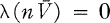 . G is dual power-rich if both G and Ĝ are power-rich. We define dual power-meagre and dual power-deficient groups similarly.
 is compact,
 . G is dual power-rich if both G and Ĝ are power-rich. We define dual power-meagre and dual power-deficient groups similarly.
Infinitely Determined Mapgerms
-
- Published online by Cambridge University Press:
- 20 November 2018, pp. 671-684
-
- Article
-
- You have access
- Export citation
Compact Perturbations of Reflexive Algebras
-
- Published online by Cambridge University Press:
- 20 November 2018, pp. 685-700
-
- Article
-
- You have access
- Export citation
-
In this paper we study lattice properties of operator algebras which are invariant under compact perturbations. It is easy to see that if
 and
 are two operator algebras with contained in , then the reverse inclusion holds for their lattices of invariant subspaces. We will show that in certain cases, the assumption thats is contained in
 , where
 is the ideal of compact operators, implies that the lattice of is “approximately” contained in the lattice of . In particular, supposed and are reflexive and have commutative subspace lattices containing “enough” finite dimensional elements. We show (Corollary 2.8) that if is unitarily equivalent to a subalgebra of , then there is a unitary operator which carries all “sufficiently large” subspaces in lat into lat .
 and
 are two operator algebras with
 , where
 is the ideal of compact operators, implies that the lattice of
On a Problem of Turán about Polynomials II
-
- Published online by Cambridge University Press:
- 20 November 2018, pp. 701-733
-
- Article
-
- You have access
- Export citation
-
1. It was proved by A. A. Markov [3] that if
 is a polynomial of degree at most n and |pn (x)| ≦ 1 in the interval –1 ≦ x ≦ 1, then in the same interval
(1)

The problem was proposed by the chemist Mendeleev who knew the answer for polynomials of degree 2. For a historical background of the problem see [1].
A. A. Markov's younger brother W. A. Markov considered the problem of determining exact bounds for the j–th derivative of pn (x) at a given point X 0 in [ – 1, 1]. His results appeared in a Russian journal in the year 1892; a German version of his remarkable paper was later published in [4]. Amongst other things he proved the following two theorems.
 is a polynomial of degree at most n and |p

The Quotient Problem for Noetherian Rings
-
- Published online by Cambridge University Press:
- 20 November 2018, pp. 734-748
-
- Article
-
- You have access
- Export citation
Differentiation of n-Dimensional Additive Processes
-
- Published online by Cambridge University Press:
- 20 November 2018, pp. 749-768
-
- Article
-
- You have access
- Export citation
-
Let n ≧ 1 be an integer and let R n be the usual n-dimensional real vector space, considered together with all its usual structure. The usual n-dimensional Lebesgue measure on R n is denoted by λ n . The positive cone of R n is R n + and the interior of R n + is Pn . Hence Pn is the set of vectors with strictly positive coordinates. A subset of R n is called an interval if it is the cartesian product of one dimensional bounded intervals. If a, b ∊ R n then [a, b] denotes the interval {u|a ≦ u ≦ b|. The closure of any interval I is of the form [a, b]; the initial point of I will be defined as the vector a. The class of all intervals contained in R n + is denoted by
 . Also, for each u ∊ P n , let
 be the set of all intervals that are contained in the interval [0, u] and that have non-empty interiors. Finally let en ∊ P n be the vector with all coordinates equal to 1.
 . Also, for each u ∊
 be the set of all intervals that are contained in the interval [0, u] and that have non-empty interiors. Finally let e