Contents
Research Article
A Class Of Algebras Without Unity Element
-
- Published online by Cambridge University Press:
- 20 November 2018, pp. 382-390
-
- Article
-
- You have access
- Export citation
On the Modular Representation of the Symmetric Group
-
- Published online by Cambridge University Press:
- 20 November 2018, pp. 391-400
-
- Article
-
- You have access
- Export citation
Pseudo-Regularity
-
- Published online by Cambridge University Press:
- 20 November 2018, pp. 401-410
-
- Article
-
- You have access
- Export citation
Two Remarks On The Commutativity Of Rings
-
- Published online by Cambridge University Press:
- 20 November 2018, pp. 411-412
-
- Article
-
- You have access
- Export citation
Ovals In a Finite Projective Plane
-
- Published online by Cambridge University Press:
- 20 November 2018, pp. 414-416
-
- Article
-
- You have access
- Export citation
-
1. Let
 be a finite projective plane (8, §17), i.e. a projective space of dimension 2 over a Galois field γ. We suppose that γ has characteristic p ≠ 2, hence order q = pn , where p is an odd prime and h is a positive integer. It is well known that every straight line and every non-singular conic of then contains q + 1 points exactly.
 be a finite projective plane (8, §17), i.e. a projective space of dimension 2 over a Galois field γ. We suppose that γ has characteristic p ≠ 2, hence order q = p
Ovals, Dualities, and Desargues's Theorem
-
- Published online by Cambridge University Press:
- 20 November 2018, pp. 417-431
-
- Article
-
- You have access
- Export citation
-
Consider a projective plane with n + 1 points on each line, An oval
 is a set of n + 1 points, no three of which are collinear.
DEFINITION. (1) A line which contains two points of
will be called asecant of .(2) A line which contains exactly one point of
will be called a tangent of or an absolute line.
 is a set of n + 1 points, no three of which are collinear.
On The Coordinatization Theorem Of J. Von Neumann
-
- Published online by Cambridge University Press:
- 20 November 2018, pp. 432-444
-
- Article
-
- You have access
- Export citation
-
A classical theorem of n-dimensional projective geometry asserts: if Desargues' theorem holds (in particular, if n ≥ 3) then the points of the geometry can be assigned homogeneous coordinates (α1, … , αn+l) with αi not all zero in a suitable division ring
 (2, p. 104; 3, Theorems 10, 11, ex. 19, p. 204).
 (2, p. 104; 3, Theorems 10, 11, ex. 19, p. 204).
Subspaces Of Riemannian Spaces
-
- Published online by Cambridge University Press:
- 20 November 2018, pp. 445-452
-
- Article
-
- You have access
- Export citation
On Fourier-Stieltjes Transforms
-
- Published online by Cambridge University Press:
- 20 November 2018, pp. 453-461
-
- Article
-
- You have access
- Export citation
-
Let
 be the class of bounded non-decreasing functions defined on the real line which are normalized by the conditions ϕ(− ∞) = 0 , ϕ(t + 0) = ϕ(t).
Let
 be the class of Fourier-Stieltjes transforms of elements of i.e. the elements of and are connected by the relation

where ϕ ∊
and Φ ∊ .It is well known, and easy to verify that this mapping from to is one to one (1, p. 67, Satz 18).
 be the class of bounded non-decreasing functions defined on the real line which are normalized by the conditions ϕ(− ∞) = 0 , ϕ(t + 0) = ϕ(t).
 be the class of Fourier-Stieltjes transforms of elements of

Weighted Quadratic Norms and Legendre Polynomials
-
- Published online by Cambridge University Press:
- 20 November 2018, pp. 462-482
-
- Article
-
- You have access
- Export citation
-
1. Introduction. Let
 , n = 0, 1, … , be the normalized Legendre polynomials. If
 and if
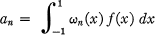
then we write
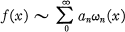 .

Metamathematical Considerations On The Relative Irreducibility Of Polynomials
-
- Published online by Cambridge University Press:
- 20 November 2018, pp. 483-489
-
- Article
-
- You have access
- Export citation
Induced and Produced Modules
-
- Published online by Cambridge University Press:
- 20 November 2018, pp. 490-508
-
- Article
-
- You have access
- Export citation
On Orders In Separable Algebras
-
- Published online by Cambridge University Press:
- 20 November 2018, pp. 509-515
-
- Article
-
- You have access
- Export citation
On The Equivalence Of Representations Of Finite Groups By Groups Of Automorphisms Of Modules Over Dedekind Rings
-
- Published online by Cambridge University Press:
- 20 November 2018, pp. 516-526
-
- Article
-
- You have access
- Export citation
-
Let t be a Dedekind ring whose quotient field we denote by K. If
 is a prime ideal of t, let o denote the ring of all -regular elements of K. If
 is a torsion free i-module, let K denote the smallest K-module into which can be embedded and let o denote the o-submodule of K generated by .
 is a prime ideal of t, let o denote the ring of all
 is a torsion free i-module, let K
Note On a Matrix Theorem Of A. Brauer and its Extension
-
- Published online by Cambridge University Press:
- 20 November 2018, pp. 527-530
-
- Article
-
- You have access
- Export citation
Some Results On The Asymptotic Behavior Of Linear Systems
-
- Published online by Cambridge University Press:
- 20 November 2018, pp. 531-538
-
- Article
-
- You have access
- Export citation
-
1. Introduction. We consider first in §2 the asymptotic behavior as t → ∞ of the solutions of the vector-matrix differential equation
(1.1)
 ,
where A is a constant n-square complex matrix, B{t) a continuous complexvalued n-square matrix defined on [0, ∞ ), and x a complex n-vector.

On Partial Differential Equations in a Field of Prime Characteristic
-
- Published online by Cambridge University Press:
- 20 November 2018, pp. 539-542
-
- Article
-
- You have access
- Export citation
Countable Paracompactness and Souslin's Problem
-
- Published online by Cambridge University Press:
- 20 November 2018, pp. 543-547
-
- Article
-
- You have access
- Export citation
A Note On The Separability Of An Ordered Space
-
- Published online by Cambridge University Press:
- 20 November 2018, pp. 548-551
-
- Article
-
- You have access
- Export citation
-
An open interval of a simply ordered set S is a subset I of S such that either
(1) for some
 ,
(2) for some
 , or
(3) for some
 .
A simply ordered set with its interval topology (i.e., the topology in which “neighborhood of x” means “open interval containing x”) will be called an ordered space.


Une Caracterisation Vectorielle-Metrique Des Espaces L 1
-
- Published online by Cambridge University Press:
- 20 November 2018, pp. 552-561
-
- Article
-
- You have access
- Export citation