





No CrossRef data available.
Article contents
Variational principles for symplectic eigenvalues
Published online by Cambridge University Press: 20 August 2020
Abstract
Core share and HTML view are not available for this content. However, as you have access to this content, a full PDF is available via the 'Save PDF' action button.
If A is a real 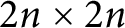 $2n \times 2n$ positive definite matrix, then there exists a symplectic matrix M such that
 $M^TAM=\text {diag}(D, D),$ where D is a positive diagonal matrix with diagonal entries
 $d_1(A)\leqslant \cdots \leqslant d_n(A).$ We prove a maxmin principle for
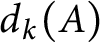 $d_k(A)$ akin to the classical Courant–Fisher–Weyl principle for Hermitian eigenvalues and use it to derive an analogue of the Weyl inequality
 $d_{i+j-1}(A+B)\geqslant d_i(A)+d_j(B).$
Information
- Type
- Article
- Information
- Copyright
- © Canadian Mathematical Society 2020
Footnotes
The work of RB is supported by a Bhatnagar Fellowship of the CSIR. TJ acknowledges financial support from SERB MATRICS grant number MTR/2018/000554.
References
Dutta, Arvind, B., Mukunda, N., and Simon, R.,
The real symplectic groups in quantum mechanics and optics
. Pramana 45(1995), 471–495.Google Scholar
Bhatia, R., Matrix analysis
. Graduate Texts in Mathematics, 169, Springer-Verlag,
New York, 1997. http://dx.doi.org/10.1007/978-1-4612-0653-8
CrossRefGoogle Scholar
Bhatia, R.,
Linear algebra to quantum cohomology: The story of Alfred Horn’s inequalities
. Amer. Math. Monthly 108(2001), 289–318. http://dx.doi.org/10.2307/2695237
CrossRefGoogle Scholar
Bhatia, R.,
Some inequalities for eigenvalues and symplectic eigenvalues of positive definite matrices
. Int. J. Math. 30(2019), 1950055. http://dx.doi.org/10.1142/s0129167x19500551
CrossRefGoogle Scholar
Bhatia, R. and Jain, T.,
On symplectic eigenvalues of positive definite matrices
. J. Math. Phys. 56(2015), 112201. http://dx.doi.org/10.1063/1.493582
CrossRefGoogle Scholar
Bhatia, R. and Jain, T.,
A Schur-Horn theorem for symplectic eigenvalues
. Linear Algebra Appl. 599(2020), 133–139. http://dx.doi.org/10.1016/j.laa.2020.04.005
CrossRefGoogle Scholar
de Gosson, M., Symplectic geometry and quantum mechanics
. Operator Theory: Advances and Applications, 166, Advances in Partial Differential Equations (Basel), Birkhäuser, Verlag,
Basel, 2006. http://dx.doi.org/10.1007/3-7643-7575-2
CrossRefGoogle Scholar
Hiroshima, T.,
Additivity and multiplicativity properties of some Gaussian channels for Gaussian inputs
. Phys. Rev. A 73(2006), 012330.CrossRefGoogle Scholar
Hofer, H. and Zehnder, E., Symplectic invariants and Hamiltonian dynamics
. Modern Birkhäuser Classics, Birkhäuser Verlag,
Basel, 2011. http://dx.doi.org/10.1007/978-3-0348-0104-1
CrossRefGoogle Scholar
Eisert, J., Tyc, T., Rudolph, T., Sanders, B. C.,
Gaussian quantum marginal problem
. Comm. Math. Phys. 280(2008), 263–280. http://dx.doi.org/10.1007/s00220-008-0442-4
CrossRefGoogle Scholar
Jain, T. and Mishra, H. K., Derivatives of symplectic eigenvalues and a Lidskii type theorem. Preprint, 2020. arXiv:2004.11024
CrossRefGoogle Scholar
Krbek, M., Tyc, T., and Vlach, J.,
Inequalities for quantum marginal problems with continuous variables
. J. Math. Phys. 55(2014), 062201–7. http://dx.doi.org/10.1063/1.4880198
CrossRefGoogle Scholar
 You have Access
- 11
- Cited by