We partner with a secure submission system to handle manuscript submissions.
Please note:
You will need an account for the submission system, which is separate to your Cambridge Core account. For login and submission support, please visit the
submission and support pages.
Please review this journal's author instructions, particularly the
preparing your materials
page, before submitting your manuscript.
Click Proceed to submission system to continue to our partner's website.
To save this undefined to your undefined account, please select one or more formats and confirm that you agree to abide by our usage policies. If this is the first time you used this feature, you will be asked to authorise Cambridge Core to connect with your undefined account.
Find out more about saving content to .
To send this article to your Kindle, first ensure no-reply@cambridge.org is added to your Approved Personal Document E-mail List under your Personal Document Settings on the Manage Your Content and Devices page of your Amazon account. Then enter the ‘name’ part of your Kindle email address below. Find out more about sending to your Kindle.
Find out more about saving to your Kindle.
Note you can select to save to either the @free.kindle.com or @kindle.com variations. ‘@free.kindle.com’ emails are free but can only be saved to your device when it is connected to wi-fi. ‘@kindle.com’ emails can be delivered even when you are not connected to wi-fi, but note that service fees apply.
Elevation of prolactin level is a known adverse effect of antipsychotics. Long-standing hyperprolactinaemia may inhibit reproductive function by impairing gonadal steroidogenesis and is associated with a number of adverse effects such as galactorrhoea, amenorrhoea, gynecomastia, impotence and decreased bone mineral density. Lurasidone is a recently approved atypical antipsychotic agent for the treatment of schizophrenia.
Aims/Objectives
To compare the incidence of treatment-emergent adverse events (TEAEs) related to hyperprolactinaemia in patients treated with lurasidone or active comparators.
Methods
Pooled data from two 52-week studies that evaluated the long-term safety and efficacy of lurasidone compared with quetiapine XR or risperidone in patients with schizophrenia were reviewed post-hoc for prolactin levels and TEAEs considered to be related to hyperprolactinaemia.
Results
Prolactin levels decreased marginally in the lurasidone group (median -8.00 pmol/L, N=624) and quetiapine XR group (median -17.39 pmol/L, N=85), and increased in the risperidone group (median 385.00 pmol/L, N=199) (LOCF). The incidence of markedly abnormally high prolactin values (≥5× upper limit of normal) was 2.0%, 1.4% and 4.0% in the three groups, respectively. The hyperprolactinaemia-related TEAEs breast mass, gynecomastia, breast enlargement, breast tenderness, hypogonadism, infertility, pituitary tumors and mammary gland tumors were absent from all groups. Low rates (≤2.5%) of galactorrhoea, amenorrhoea and erectile dysfunction were seen in the lurasidone and risperidone groups, while no TEAEs were recorded in the quetiapine XR group.
Conclusions
This post-hoc review shows that long-term treatment with lurasidone was not associated with a clinically significant increase in prolactin levels and the incidence of associated TEAEs was low.
Beta-thalassemia is a monogenic disease caused by mutations in the beta chain of the haemoglobin molecule. It is widespread in many areas of the world and has a large prevalence among Mediterranean populations[1-2]. Furthermore, many studies recently suggested that a gene situated on chromosome 11, proximal to the genes involved in beta-thalassemia, could induce psychosis in predisposed individuals [3]. Several studies have revealed, through the sequencing of chromosome 11, that a possible genetic susceptibility for schizophrenia could be located on the short arm of this chromosome near the gene involved in beta-thalassemia [4-5-6].
Aims
In our case report, we describe a late onset of psychosis disorder in a man suffering from beta-thalassemia.
Methods
Mr. A. is a 35 years old man with a history of major beta-thalassemia treated with transfusion therapy, he is HCV positive. No family history of psychiatric disorders. He has never suffered from any psychiatric disorder until January 2014, when he revealed a psychotic episode characterized by persecution delusions, religious hallucinations, remarkable aggressiveness and absent insight. He was so administrered with Paliperidone Palmitate 100 mg 1 fl 1.m./month, obtaining clinical remission after 5 months.
Conclusion
Several studies have assessed the prevalence of depression and axiety in patients with beta thalassemia. Rather few studies have been conducted to assess the comorbidity of psychosis among beta-thalassemia. We have described one rare case in literature that highlights this possible genetic link between these two pathologies. Further studies are needed to better clarify this association.
An under-recognized life-threatening adverse effect of clozapine is the gastrointestinal hypomotility. It represents a serious problem. Clozapine is an atypical antipsychotic which commonly produces ileus. The risk is higher when we associate clozapine to drugs, such us anticholinergic and tricyclic. Ileus can produce the death in our patients, therefore we will check constipation in our daily clinical practice as a measure to avoid these side effectS.
Methods
We looked through Medline for articles published since 2005 regarding Clozapine and Ileus. We will present the case of a patient who developed Ileus as the side effect of clozapine.
Results
Constipation is very common in patients with schizophrenia (until 50%). Risk factors developing ileus in psychotic patients are: women, age, anticholinergic drugs, first generation of antipsychotics, clozapine, opioids and tricyclic antidepressants. Taking into account that this side effect can be mortal some recommendations that can reduce gastrointestinal hipomotility in this population are: a high fiber diet, exercise and the use of a softening laxative. In the case a patient treated with clozapine suffers from ileus we should shift the clozapine to aripiprazole or Amisulpride treatment. Moreover, we can use prokinetic drugs and surgery in the most complicated cases. Then, clozapine can be introduced after the ileus problem has been solved.
Conclusion
1 Gastrointestinal hypomotility has a high prevalence in psychotic treatments. 2 Avoiding the use of other drugs that produce constipation. 3 Offer advice to avoid the constipation. 4 If ileus is present, stop the clozapine treatment and shift it to aripiprazole or Amisulpride.
Despite the major developments in the last decades in the treatment of psychotic disorders, schizophrenia is still associated with poor clinical and social outcome. Some studies suggested that duration of untreated psychosis (DUP) is associated with poorer outcome in the long and especially short term evolution.
Objectives
Studying correlations between longer DUP and social and clinical outcome in schizophrenia
Methods
Eligible participants are those, who had a first hospitalization in the period from January 2011 to December 2012
Inclusion criteria were: stabilized patients with diagnosis of schizophrenia according to DSM IV criteria,
Exclusion criteria: Mental retardation or other neurological or severe medical diseases affecting outcome, neuroleptic medication before hospitalization.
DUP is defined as the time separating the first psychotic symptom and first medication contact.
The sample was divided into short and long DUP, using a median split.
Social functioning was assessed by global assessment of functioning (GAF), working status, number of rehospitalization during the two years after admission and quality of life by responding to SF-36 scale in its Arabic version.
Results
28 patients were included (20 men and 8 women) aged from 22 to 50 years old. Median DUP was 39,5 weeks (mean DUP was 65, 86). Even if we noticed that mental and physical scores for the SF-36 were higher in the group with shorter DUP, the score for GAF was comparable for both groups and so was the working status
Conclusion
The impact of DUP is considerable, future challenge is to short this period as possible.
Delusional misidentification syndromes are divided into Capgras Syndrome, Fregoli Syndrome, Double Subjective Syndrome and Intermetamorphosis Syndrome. The main feature is an error in the identification of self and / or others. These entities are relatively rare and etiologically heterogeneous, occurring mainly in the setting of schizophrenic disorder, affective disorders and organic diseases.
Objectives
About a clinical case of paranoid schizophrenia as a base, the authors revise and discuss the etiology and psychopathology of delusional misidentification syndromes presented by the patient.
Methods
Clinical interview with the patient during psychiatric hospitalization. Psychological assessment (test of intellectual performance, neurocognitive rating). Revision of selected literature about delusional misidentification syndromes and paranoid schizophrenia.
Results
The neurobiological research on these syndromes indicates lesions both frontal lobes and / or right hemispheres.
The coexistence of three of the four existing Delusional misidentification syndromes is very rare. Based on the available literature, it appears that the described case is the only reported about the coexistence presented by same patient of Capgras Syndrome, Fregoli Syndrome, Double Subjective Syndrome and Intermetamorphosis Syndrome. Furthermore, the presentation is not typical due to the absence of previous psychiatric disorders, substance use or organic diseases.
Conclusions
The delusional misidentification syndromes seems to be under-diagnosed entities and poorly understood. Active research may allow a better understanding of clinical conditions like stated on the previous clinical case.
Cases of isoniazid-related psychiatric disordersreported in the literature include psychosis, obsessive–compulsive neurosisand mania. Tuberculosis is an endemic issue in our area; so much people receiveprophylactic treatment for tuberculosis. Pyridoxine deficiency may play a rolein the pathogenesis of isoniazid-induced psychosis. Such deficiency states maybe detected indirectly by measuring urinary metabolites of tryptophan.
Methods
We performeda retrospective analysis of those patients in the literature and we report acase of isoniazid-induced psychosis in a 42-year-old man with schizophrenia andalcohol dependence. He was abstinent during the last six months.
Results
A 42-year-old man with schizophrenia, in full remission for the last twoyears, presented psychotic symptoms (delusions and hallucinations) suspected tobe related to prophylactic treatment with isoniazid after his brother testedpositive to a tuberculin test. The psychotic symptoms resolved completely afterisoniazid was discontinued. We didn´t change his treatment during the episode(Clopixol 200mg/21 days).
Conclusions
Clinicians should be aware of this adverseeffect of isoniazid and that it may present with a broad clinical picture. As aresult of our findings we coordinated a clinical session with others HospitalDepartments.
1Isoniazid-Induced Psychosis Ann Pharmacother September 1998 32: 889-891.
2 Vallejo Ruiloba J, Leal Cercos C. Tratado de Psiquiatría. 20. ed. Barcelona: Ars Medica; 2010
Osteoporosis and frequent fractures are reported in schizophrenic patients, Hyperprolactinemia can be contributing to bone demineralization. Since antipsychotics are themselves the commonest iatrogenic etiology to hyperprolactinemia, long term antipsychotic use may be contributing to osteopenia
Subjects and Methods
30 schizophrenic patients with chronic course receiving antipsychotic for 2-10 years compared to 20 drug naïf schizophrenic patients. Patients on cortisol therapy, debilitating chronic illness or suffering from rheumatic disorders were excluded. Bone density evaluated by Dual energy X ray absorbtiometry and serum level; of prolactine measured
Results
Among schizophrenic patients on medication, 40% were on respiridone, 10% on clozapine, 33.3% on haloperidol and 16.7% on olanzapine.significant difference showed up between schizophrenic patient on medication and drug naïf as regards bone miniral density T score (X2 = 3.25; p< 0.05)
Conclusion
Osteopenia is common among schizophrenic patients receiving prolactine raising antipsychotics, raising the urge to screen for bone density among those with long term use of psychotropes
Literature suggest that antipsychotic medications may decrease cortisol level, an effect that seems to be more present with second generation antipsychotic. Our study aims at assessing effect of long term use of antipsychotics on cortisol level
Subjects and Methods
30 chronic schizophrenic patients on antipsychotics compared to 20 drug naïf schizophrenic patients as regards serum cortisol level
Results
Cortisol level was significantly lower in chronic schizophrenic patients receiving antipsychotics compared to drug naïf patients (P=0.002 <0.05)
Conclusion
Antipsychotic medications seem to have the potential to decrease cortisol level in blood. Among hypothesis proposed in literature is the good control of pseudo stress due to psychotic features
Lack of insight is often present in patients with schizophrenia. Considering the insight, clinical symptoms and their severity may be important Objective: To establish a level of insight in subjects with schizophrenia and compare it with positive, and negative symptoms of schizophrenia with regard of duration of illness. Methods: A prospective study was conducted on 60 consecutive outpatients with schizophrenia. Two groups were formed regarding the duration of illness (≤2 years, and >3 years). Positive symptoms of SCH were established with 4 item positive symptom ranking scale – PSRS, and negative symptoms with Brief negative symptoms assesment – BNSA. The level of insight was established with Self appraisal of illness questionnaire – SAIQ. Results: There was not significant difference in PSRS score regarding the duration of illnes p=0.197, t-1.30, and small effect size was found. Average score of negative symptoms in the group with shorter duration of illness was 8.37±2.94, and in the group with longer duration 10.73±2.86. Independent Samples Test was significant p=0.003, t-2.367, and therefore difference of scores on BNSA whitin groups was significant. Moderate size effect was found (d 0.69). Total insight score on SAIQ was insignificantly correlated with positve and negative symptoms, regardles of the duration of illness. Conclusion: Longer duration of ilness has moderate effect on negative symptoms severity. Insight level is insignificantly correlated with positive and negative symptoms regardless of illness duration. Symptoms severity has minor impact on insight in patients with schizophrenia.
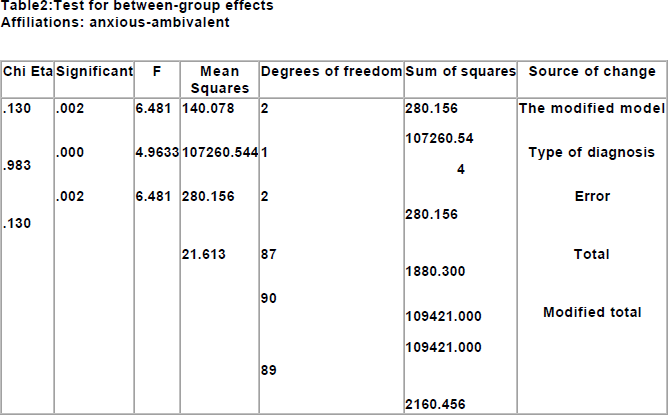
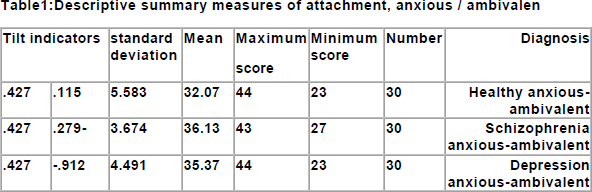
Maternal psychopathology may adversely affect the growth of children is attachment according to Bowlby, the infant's attachment relationship when there is a warm, intimate and continuous relationship with his mother is causing the fulfillment of both parties.
Aim
The aim of this study was to compare the attachment styles of children of mothers with schizophrenia and normal.
Method
The method of research is of causation-comparing and In present study, using adult attachment questioner (AAQ), attachment style of children whose mothers suffer from schizophrenic disorders (N=30) and
Compared to Children whom belong to mothers with no formal clinical diagnosis (N=30).
Result
The results show that among offspring of mothers with schizophrenia and normal offspring, there was no significant difference.
Dissection
Study shows attachment of offspring psychopathology compared to children of mothers with an insecure is normal.
The aim of this study was to evaluate theprevalence of night eating syndrome (NES) and its correlates in schizophrenicoutpatients.
Methods
The 14 items of self-reported night eatingquestionnaire (NEQ) was administered to 201 schizophrenic patients in psychiatricoutpatient clinic. We examined demographic and clinical characteristics, bodymass index (BMI), subjective measures of mood, sleep, binge eating, andweight-related quality of life using Beck's Depression Inventory (BDI),Pittsburgh Sleep Quality Index (PSQI), Binge Eating Scale (BES) and Koreanversion of Obesity-Related Quality of Life Scale (KOQoL), respectively.
Results
The prevalence of night eaters in schizophrenicoutpatients was 10.4% (21 of 201). Comparisons between NES group and non-NES grouprevealed no significant differences in sociodemographic characteristics, clinical status and BMI. Compared to non-NES, patients with NES reportedsignificantly greater depressed mood and sleep disturbance, more binge eatingpattern, and decreased weight-related quality of life. While 'morning anorexia'and 'delayed morning meal' (2 of 5 NES core components in NEQ) were notdiffered between groups, 'nocturnal ingestions', 'evening hyperphagia', and'mood/sleep' were more impaired in NES group.
Conclusion
These findings are the first to describe theprevalence and its correlates of night eaters in schizophrenic outpatients. These results suggest that NES has negative mental health implications, although it was not associated with obesity. Further study to generalize theseresults is required.
Schizophrenia is a major mental disorder without a clearly identified pathophysiology. The association between this disease and the antiphospholipid syndrome (APLS) has been recently reported.
Objective
The objective of this study was to determine the frequency of anti-cardiolipin antibodies (aCL) and / or anti-β2 glycoprotein I antibodies (aβ2GPI) in sera of patients with schizophrenia.
Materials and methods
Our retrospective study was performed on 80 patients with schizophrenia newly admitted in closed wards of the department of Psychiatry. Eighty healthy blood donors with no history of autoimmune or mental diseases served as controls. Search for aCL and aβ2GPI antibodies were detected by ELISA.
Results
The aCL antibodies are significantly more frequent in schizophrenic patients than in controls (21.25% vs 3.75%, p<10-3) and it is the aCL-IgM isotype witch is therefore most detected with a frequency of 16.25%. The seroprevalence of aβ2GPI was also significantly higher in patients than in controls (27.5% vs 1.25%; p=<0,005) and it is the aβ2GPI-IgA isotype witch is the most common (22.5% of schizophrenic patients). The prevalence of aCL antibodies was 21.25% vs 27.5% for aβ2GPI antibodies. The frequency of aCL and / or aβ2GPI antibodies is 31.25%. Among this seropositive group, 3.75% had only aCL antibodies and 10% had only aβ2GPI antibodies.
Conclusion
Our study supports the hypothesis of the high prevalence of aCL antibodies and especially of the aCL-IgM isotype in schizophrenia patients. In this study we have shown a high seroprevalence of aβ2GPI antibodies which are specific ma
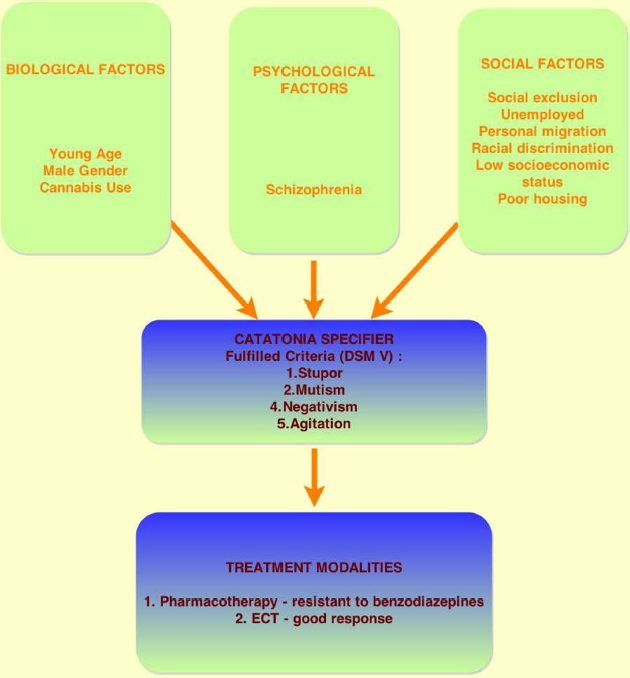
The development of catatonia in a 38 year old Nigerian man suffering from schizophrenia was analyzed in terms of its bio-psycho-social model of disease.
Objectives
1. To highlight the presentation of catatonia specifier
2. To investigate the etiology of catatonia specifier
Aims
1. To utilize the bio-psycho-social model of disease in order to investigate the etiology of catatonia specifier
2. To highlight the treatment modalities of catatonia specifier
Methods
1. Interviewing the patient
2. Analysing all investigations and documentation made during multiple admissions to both psychiatric and medical hospitals.
3. Evaluating the response to various treatment modalities.
4. Carrying out literature reviews.
Results
Conclusions
Although the aetiology of catatonia specifier remain somewhat unclear even after many years of study, the bio-psycho-social model is nevertheless useful in understanding the development of this condition. The possible treatment modalities were also identified.
Medication adherence is a matter of relevance for early treatment of psychotic disorder.
Objectives
To understand pattern of medication adherence in this population and factors influencing.
Aims
To understand the antipsychotic adherence pattern in early stages of psychotic disorder and to identify factors that influence.
Methods
Natural observation study of 136 patients of first-episode psychosis presenting to Early intervention service in multicultural South London. Data derived from case notes and interviews using standard rating scales for first 18 months.
Results
Only 39% of patients (n=50) were 100% time adherent with antipsychotic medication in the first month (rest were 83%). Patients using illicit substances were less likely 100% adherent (Pearson χ2= 13.1, df=1,p=0.001). Caucasian patients were more likely to be fully adherent in the first month than Ethnic minority patients (Pearson χ2= 7.5, df=1, p=0.009). During the follow-up period about 57% patients had weeks of not taking antipsychotic, mostly after recovery from first episode. Ethnicity (Pearson χ2=4.5, df=1, p=0.05) and experience of extrapyramidal side-effect (Pearson χ2= 5.6, df=1, p=0.02) were associated with this gap. Involvement of a carer in treatment was associated with better (100%) adherence during follow-up (Pearson χ2= 4.9, df=1,p=0.03).
Conclusions
Interventions in early stages of psychosis should focus on therapies involving carers/ families and giving attention to illicit substances use and delivered in way relevant to the local ethnic population. Also antipsychotics chosen carefully, using a lower dose and actively looking for emergence of side-effects.
Schizophrenia has a multidimensional symptomatology that includes affective, aggressive, disorganized, positive and negative clinical manifestations. We selected the affective symptoms as a target for our study because they could have significant impact over the prognosis and quality of patient’s life.
Objective
To assess the presence of mood symptoms, depressive type and the impact of atypical antipsychotics over these clinical manifestations.
Methods
This prospective, open label, randomized trial included 36 inpatients, 22 male and 14 female, medium age 25.4 years, diagnosed with schizophrenia according to DSM IV TR criteria that were admitted for acute psychotic de-compensations. During this 12 months trial patients were evaluated using PANSS, CGI-S and CDSS (Calgary Depression Scale for Schizophrenia) every 4 weeks. There were formed 4 equally groups of patients and each group received a different antipsychotic: olanzapine mean daily dose (mdd) 12.7 mg/day, risperidone mdd 5.8 mg/day, aripiprazole mdd 15 mg/day or quetiapine mdd 650mg/day.
Results
Patients with depressive symptoms at admission had a poorer prognosis over 12 months (PANSS improvements -22.5+/-4.3 in significant CDSS group defined as score over 6 vs. -29.3+/-2.2 in low CDSS score group, p<0.05). No significant differences in efficacy over depressive symptoms between antipsychotics were recorded at end-point. A number of 3 subjects were discontinued due to lack of compliance and 2 were lost of follow-up.
Conclusions
Depressive symptoms are negative prognosis factor and need to be actively addressed and monitored. The four antipsychotics evaluated in this trial were equipotent in decreasing the depressive symptoms severity.
The heritability of the brain’s structure and function in schizophrenia remains elusive
Objectives/Aims
To assess the influence of genetic and environmental factors on executive function in schizophrenia.
Method
A twin-sibling study of 206 subjects; 163 twins, varying in their zygosity and concordance for schizophrenia, and 43 singletons from sibling clusters varying in their concordance for schizophrenia. We assessed performance and regional brain activation using functional magnetic resonance imaging, during a phonological verbal fluency task.
Results
Patients and their unaffected relatives developed greater activation in the left inferior frontal gyrus, and greater deactivation in the middle temporal gyri bilaterally. These features were maximally evident in subjects with schizophrenia. When the analysis was restricted to the unaffected relatives and healthy controls, a similar pattern was evident. Heritability was greatest in the left hippocampus and the right middle temporal gyrus. Genetic modelling indicated a phenotypic correlation between schizophrenia and increased activity in the inferior frontal gyrus and reduced activity in the left middle temporal gyrus and left hippocampus, which appeared principally due to shared genetic effects.
Conclusions
Both schizophrenia and its familial vulnerability were associated with altered frontal, parahippocampal and temporal activation during verbal fluency. The altered left inferior frontal activity was particularly associated with schizophrenia, while altered left medial temporal and right middle temporal activity were more heritable. The latter was more intimately linked to the genetic risk for schizophrenia, and thus the better candidate intermediate phenotype.
Working memory refers to a restrictedsystem for the temporary maintenanceand information processing capacity. His exploration inpatients with schizophrenia hasbeen the subject of numerousstudies on different types ofpeople and using a wide range of cognitive tests
Objectives
Explore workingmemory in patients during thedifferent phases of schizophrenia
Materials and Methods
We enrolled 15 patients hospitalized for a firstepisode of schizophrenia and 15 hospitalized for schizophrenia according toDSM-IV. The control group consisted of 15 healthy participants matched group ofpatients by sex, age and educational level. Clinical evaluation was performedby the Positive and Negative Syndrome Scale. Working memory was assessed by theboard Corsi for visuo-spatial span.
Results
For first episode patients: The average age was 26.8years. The average number of years of education is 10.13 years. The score on thegeneral psychopathology scale of the PANSSwas 38.5. The score at the Direct Spanis 4.13. The scoreSpan Indirect is3.2.
For multi-episodes patients: The average age was 38.1years. The average years ofeducation is 8.53 years. The score on the overallscale of the PANSS psychopathology is 43.13. The score at the DirectSpan is 3.2. The scorein Indirect Spanis 2.06.
Conclusion
In recent years, thecognitive dimension in schizophrenia has been increasing interest. Cognitive deficits observed in patientswith schizophrenia are better recognized, tracked and taken into account in the pharmacologicaland psychosocial treatment of the disease
Schizophrenia is a chronic mental disorder that can lead to poor social and professional performances.
Objectives and Aims
To assess the study's subjects' social and professional functioning and compare the results to those reported in the literature in order to have an idea about the efficiency of the rehabilitation methods available to the patients affected by schizophrenia in Tunisia.
Methods
We have evaluated the social and the professional functioning of 30 patients (20 females and males) whom have been seen in the aftercare unit between February and June 2014 using indirect indicators(marital status and employment) and the Social and Occupational Functioning Assessment Scale (SOFAS).
Results
The mean age of patients was 37.5 years. The majority of the subjects were single (80%). Three patients divorced after their first hospitalization. The majority of the patients (86%) were employed before they have been diagnosed with schizophrenia. Two thirds of these subjects lost their jobs after the first hospitalization and were still unemployed when the study has been conducted. The average SOFAS score is 46 which is indicates the existence of a significant impairment in the social or the professional functioning.
Conclusions
Measures of rehabilitation are still insufficient. This could be explained by several factors which are related to the patients, their families, the society and the healthcare system.
Patients with schizophrenia in particular are reported to engage in violent acts that are more frequent and more severe compared with other psychiatric illnesses. The aim of this study was to identify the risk factors associated with violence among schizophrenic patients.
Methods
A convenience sample of 140 inpatient schizophrenic patients were recruited in this study. Schizophrenia was diagnosed using the structured clinical interview for DSM-IV axis l? disorders, clinical version (SCID-I-CV). Positive and Negative Syndrome Scale (PANSS) was applied to the patients. Presence of violence was assessed using the Modified Overt Aggression Scale (MOAS)and perceived family criticism was assessed using the Family Emotional Involvement and Criticism Scale (FEICS)
Results
of the 140 schizophrenic patients, 66 (47.1%) reported a presence of violence as a cause for their admission. Presence of positive symptoms and excitement, Male gender, non-compliance with treatment, presence of previous hospitalizations due to violence, and higher levels of perceived family criticism were found to be significantly associated with violence among schizophrenic patients. (OR= 2.1, 1.16, 1.27, 1.14, 1.34, 1.20 respectively).
Conclusion
Positive symptoms of schizophrenia, male gender, non-compliance with treatment, a history of violence and perceived family criticism were found to be associated with violence among schizophrenic patients in the current study. All these factors should be considered in the treatment regimen of schizophrenia to decrease violence among those patients.
This study aimed to explore thedifference in emotional recognition of musical auditory stimulation and artfulvisual stimulation between helathy people and patients with schizophrenia.
Method
20 songs and 20 paintings thatcontained sad or cheerful emotions were presented to 123 patients withschizophrenia and 224 healthy people as control group. The subjects were askedto tell about their emotions that they had felt from each musical auditorystimulation and artful visual stimulation. To measure such emotions, the Emotional Empathy Scale was used. The level of psychopathology in patientsgroup were evaluated with the Positive and Negative Syndrome Scale and the Formal Thought Disorder Rating Scale.
Result
The correct answer rate to musical auditoryand artful visual stimulation of the patient group was significantly lower than that of thecontrol group. Thepatient group showed lower emotional empathic ability compared to the controlgroup. In the patient group, the correct answer rate to musical and artfulstimulation showed a negative correlation with score with Formal ThoughtDisorder Rating Scale.
Conclusion
Patients with schizophrenia have difficulties inprecise emotional recognition to auditory and visual stimulations, and this isassociated with lowered empathic ability and thinking disorder of patients withschizophrenia. If an psychosocial rehabilitation program or psychotherapy isimplemented to patients with schizophrenia, it is deemed to be necessary to make a mediation to improve the emotional recognition and expression ability of patients with schizophrenia.