We partner with a secure submission system to handle manuscript submissions.
Please note:
You will need an account for the submission system, which is separate to your Cambridge Core account. For login and submission support, please visit the
submission and support pages.
Please review this journal's author instructions, particularly the
preparing your materials
page, before submitting your manuscript.
Click Proceed to submission system to continue to our partner's website.
To save this undefined to your undefined account, please select one or more formats and confirm that you agree to abide by our usage policies. If this is the first time you used this feature, you will be asked to authorise Cambridge Core to connect with your undefined account.
Find out more about saving content to .
To send this article to your Kindle, first ensure no-reply@cambridge.org is added to your Approved Personal Document E-mail List under your Personal Document Settings on the Manage Your Content and Devices page of your Amazon account. Then enter the ‘name’ part of your Kindle email address below. Find out more about sending to your Kindle.
Find out more about saving to your Kindle.
Note you can select to save to either the @free.kindle.com or @kindle.com variations. ‘@free.kindle.com’ emails are free but can only be saved to your device when it is connected to wi-fi. ‘@kindle.com’ emails can be delivered even when you are not connected to wi-fi, but note that service fees apply.
The medical profession is associated with high requirements and responsibilities, and high rates of burnout have been reported in the medical literature.
Objectives
The aim of this study was to provide a detailed systematic review, focused on the impact of occupational burnout syndrome among medical students. A detailed perspective of existing instruments which are the psychometric properties and a meta-analysis of the average values of those three subscales of the most commonly applied tool - Maslach Burnout Inventory (MBI-HSS).
Methods
The meta-analysis was performed based on the available data on burnout rates in medical students measured by the Maslach Burnout Inventory (MBI-HSS) method. In order to define the eligibility criteria for finding the relevant literature, the PICO method - the “population-intervention-comparison-result” approach was used.
Results
The sample sizes included ranged from n = 73 to 4050 students. Mean values (M) ranged from 12.94 to 28.26 for emotional exhaustion and from 7.30 to 13.43 for depersonalization. M for personal achievement ranged from 31.3 to 38.07. Weighted averages and standard deviations were M = 22.93 (SD = 10.25) for emotional exhaustion, M = 8.88 (SD = 5.64) for depersonalization, and M = 35.11 (SD = 8.03) for self-accomplishment. The included studies reported different prevalence rates with burnout rates ranging from 7.0% to 75.2%. The prevalence rate of burnout measured by MBI-HSS varied between 10.0% and 63.4%.
Conclusions
The meta-analytical aggregation of eligible studies showed high values of “emotional exhaustion”, “depersonalization” and “self-accomplishment”.
Domestic violence is a critical global and social phenomenon.
Objectives
- To describe the socio-demographic and clinical characteristics related to the abuser in the context of domestic violence. - To study risk factors for acting out in the abuser.
Methods
We conducted a descriptive cross-sectional study related to male abusers of their wives who consulted the Forensic Medicine Department of Taher Sfar Hospital in Mahdia between January 2020 and October 2020 for a forensic examination.
Results
We collected 67 cases of domestic violence out of a total of 688 female consultants. The age of the abuser exceeded 35 years in 84% of cases. The average age of the abusers was 33.8 years. Almost half of the abusers had a primary school education. In 43% of the cases, the abuser was unemployed or had a job with a salary below the minimum wage. We found an association between domestic violence and the unfavorable professional status of the spouse. Only in 6% of the cases did the abuser have a psychiatric disorder. He had a history of chronic alcoholism in 35% of the cases and the use of illicit substances (cannabis) in 9% of the cases. Approximately one out of every two abusers (48%) was under the influence of alcohol at the time of the violent act. Alcoholism was associated with all forms of domestic violence. He had a criminal history in 30% of cases.
Conclusions
Our results provide real areas for reflection regarding the adoption of specific therapeutic strategies with domestic violence abusers.
Gender dysphoria is characterized by a mismatch between the biological sex and gender identity of a person, frequently associated to distress or discomfort. Many transgender people will seek professional help to obtain a congruence between the gender identity and the body.
Objectives
Brief review of the literature in the field of mental health and gender dysphoria.
Methods
Review of the literature, through research in the PubMed database, using the following keywords: “gender dysphoria”, “mental health”, “psychiatric disorders”.
Results
Although the true prevalence of gender dysphoria (GD) is unknown, several studies indicated that the prevalence of psychiatric disorders in this population is elevated. In comparison with the general population, persons with GD have higher rates of depressive symptoms (64.5%), suicidality (42.9%), substance use disorders (40.2%), general distress (33.8%), anxiety (25.9%), discrimination, and stigma, that contribute to mental health problems. Even though, we cannot reach firm conclusions due to the lack of controlled studies exploring psychiatric disorders on GD people versus controls. An interdisciplinary approach to the health and well-being of this population is highly recommended. Social support, community connectedness, and effective coping strategies appear beneficial.
Conclusions
Individuals with GD have higher rates of psychiatric disorders and social stressors. Healthcare professionals should have a basic understanding on GD. Management should be individualized and may involve a multidisciplinary team. It would be important to have access to more controlled studies in order to achieve a better characterization of the prevalence of mental health disorders in this population.
The relationship between behavioral changes and the menstrual cycle in women at a reproductive age has been investigated in several studies; women during every menstrual cycle experience noticeable changes in levels of sex hormones which are consequently reflected on their mood and behavior. The relationship between the menstrual cycle and the emotion recognition processing has been also studied.
Objectives
The aim of this study was to examine if differences exist between women with Premenstrual Dysphonic Disorder (PMDD) and women without PMDD in Emotion recognition processing across menstrual cycle.
Methods
We examined 26 women with a PMDD and 30 women without PMDD, who have both visited the Mental Health Centre (aged 18-35 y.o., right handed, educational level >9 y., regular cycle duration). Women were clinically interviewed (DSM-V); also the Emotion Recognition Task (ERT) was administered in the luteal and the follicular phase.
Results
Women with PMDD showed significant differences in emotion recognition depending on the the luteal and the follicular phase (according to estradiol and progesterone level) whereas women without PMDD did not present significantly different responses to the emotional stimuli.
Conclusions
Our findings suggest that there is an effect of PMDD on emotional facial recognition across the two phases of the menstrual cycle. Thus, the importance of incorporating ERT in the formal clinical examination of PMDD is highlighted.
Gender is a factor influencing characteristics of substance use disorders. The Covid-19 pandemic has had a great impact in all areas of society, meaning a context of exceptionality in this population. Usually the male population represents a greater number of patients in general samples, so the descriptive characteristics of a global sample may not be representative in the case of women.
Objectives
- Identify if there are changes in the main substance of psychoactive substance use during the Covid-19 pandemic. - Identify possible divergences in characteristics of the general sample with respect to the sample made up of women.
Methods
It will be used data collected in the database of patients in follow-up with the addiction consultation service in two periods of 6 months, one prior to the pandemic situation due to Covid-19 and another corresponding to same period in 2020. A descriptive analysis is carried out by applying chi-square statistic, performing the analysis by subgroups according to gender.
Results
84.8% of total sample are men. Results show that there are no statistically significant differences between periods in main substance of consumption. Despite this, differential trends can be observed in the sample that correspond to women with respect to the global sample and that of men.
Conclusions
Taking into account the low number of women that make up the sample, the fact that differential trends are observed could indicate possible differences, which in case of increasing the sample size could acquire statistical significance and that this it would be specific to women subgroup.
Family caregiving role of children with epilepsy involves managing the daily lives of these children with disabilities. This can lead to impaired physical and psychological health of the caregiver.
Objectives
To assess the level of burden among caregivers of children with epilepsy and to determine the factors associated with it.
Methods
It was a descriptive and analytical survey. It involved the caregivers of children with epilepsy who were admitted to the pediatric neurology department at the Hedi Chaker University Hospital in Sfax during the period from July to October 2020. We used the 12-item Zarit (ZBI-12), the State-Trait-Anxiety Inventory (STAI), and the “BECK” Depression Inventory (BDI-13) to assess caregiver burden, anxiety and depression respectively.
Results
Forty-four caregivers participated in the survey. Their average age was 36 years and their relationship with patient was mother in 93.2% of cases. Among 44 children with epilepsy, 56.8% were boys and 34.1% were schooled. They had psychiatric comorbidity in 15.9% of cases. According to the ZBI scale, the level of burden was high in 45.5% of cases. The total ZBI score was significantly higher among caregivers with primary school level (p=0.05) and those with somatic disease (p=0.004). It was not correlated with the presence of child’s dependence on the others (p=0.20). High levels of depression, anxiety-state, and anxiety-trait among caregivers were correlated with the level of burden (p 0.000; 0.000 and 0.001, respectively).
Conclusions
Being a caregiver of a child with epilepsy is a burdensome circumstance. Hence the importance of offering psychological assistance for these caregivers.
We present the case of a 23-year old woman with a history of two hospitalizations in the psychiatric ward of our hospital in the last 8 months. Prior to this age our patient had not required assistance from mental health professionals. The wide variety of symptoms shown by the patient included auditive hallucinations and persecution delusions that led to behavioral alteration and depressive symptoms.
Objectives
To present a case report of a puerperal psychosis and to review the different kind of psyquiatric disorders that may arise in the puerperium.
Methods
Literature review of scientific papers over the last years and classic textbooks on the issue. We included references in English and Spanish languages.
Results
During pregnancy and the puerperium there are biochemical, hormonal, psychological and social changes that cause a vulnerability in women for the appearance of mental disorders. The differential diagnosis of puerperal psychoses must first be made with organic diseases. Once this has been discarded, several studies indicate that there is a high probability that after the onset of puerperal psychosis a cyclical mood disorder is found.
Conclusions
- One of the main characteristics of puerperal psychoses is the great variety of its symptomatic manifestations. They can present characteristics of both mood disorders and schizophreniform disorders. - Deep confusion and delusions are often the most prominent symptoms of psychosis in the puerperal period.
Multiple authors have criticized the lack of attention that classical theoretical models have paid to motherhood as a milestone of great influence on the psychic structure of women. However other models have developed theories that take into account factors such as: motherhood implies “dying as a daughter” or the oscillations between the “desire of the mother” and the “desire of the woman”.
Objectives
This case report aims to describe a case of severe difficulties achieving maternal function.
Methods
Case report and literature review.
Results
A 27 years old woman, born in Ethiopia. The patient reported history of childhood trauma (intrafamiliar sexual abuse, child neglect). Depressed mood and pasive autolytic ideation since childhood. The patient was adopted when she was 11 years old and moved to Spain. The pacient had difficulties with bonding with her adoptive family. At the age of 24, she got pregnant “to have my own family and not being alone.” During pregnancy, she begins to present poorly structured paranoid ideation. After birth, the patient began to present autolytic ideation, dissociative symptoms and suicide attempts.
Conclusions
For the patient, her desire to be a mother, marked from the beginning by the phantom of appropriation, later led to rejecting it. Various factors could affect: her motherhood resignified the relationship with her family of origin, as well as having imagined that her daughter would complete her lack: the birth could have underlined her traumatic history, marking the bond with her daughter by indifference and the lack of libidinal investiture.
Many women during the different phases of the menstrual cycle experience significant emotional and cognitive changes; for some, these changes can affect their everyday living. Premenstrual Dysphonic Disorder (PMDD) is a health problem that affects up to 5% of women of childbearing age. The exact cause is unknown; still, hormonal changes throughout the menstrual cycle may play a role. Women with a family history of Postpartum Depression (PPD) may be at increased risk.
Objectives
The purpose was to examine if Emotion recognition processing across menstrual cycle and a history of PPD are potential risk factors for PMDD.
Methods
We identified 34 women with a history of PPD and contacted their daughters to explain the purpose of our study. Of those meeting the criteria to participate, 38 volunteered (aged 18-30 y.o., right handed, educational level >9 y., regular cycle duration). The Emotion Recognition Task (ERT) was administered in the luteal and the follicular phase. Women found to present significant differences in emotion recognition depending on the estradiol and progesterone levels were clinically interviewed (DSM-V).
Results
Of the 16 women who have showed significant differences across the two phases of the menstrual cycle, 7 were diagnosed with PMDD (43,7%). Among the ones who have not presented differences (22), only 2 received a diagnosis of PMDD (9%).
Conclusions
This study shows that Emotion recognition processing across menstrual cycle and a history of PPD may predict which women could be at risk for PMDD, playing, therefore a key role in PMDD early diagnosis.
Treatment of mental problems is based on classification categories. Yet most patients display far more complex problems than discribed in those categories. In child psychiatry boys are overrepresented whereas in adults women are in the majority when it comes to mental health problems. This raises the question whether gender and diversity shouldn’t be taken more into account in order to come to better classifications and understanding of developemental psychopathology
Objectives
To look into the influences of gender, genetics, stress, child rearing and social determinants on the development of psychopathology
Methods
A literature search was performed with genetics, gender, stress and social determinants as keywords was in order to question the specificity and validity of current categories of psychopathology.
Results
The search yielded 26 articles. Interestingly this supports the hypothesis that the focus on phenotypical classifications is misleading and that gender plays an important role in the expression of endophenotypes (psychophysiological and neuropsychological). Moreover in many cases gender is not taken in to account enough in studies and that gender biased conclusions (when the reseach has included more men than women for different reasons) are extrapolated to easily to the other sexe, assumoing that the outcomes are universal
Conclusions
The categoral approach to psychopathology has stimulated research in a very productive fashion. Yet now we should think beyond categories in mental health and have the courage to adapt our clincial practice to endophenotypes taking into account the permanent interaction between individual and enviironment. Which implies a more gender specific approach to (psycho)pathology
Bipolar disorder can be a severe psychiatric disorder. The combined prevalence of bipolar I, bipolar II, and unspecified bipolar disorders according to DSM-IV is 1.8%. Mean age at first affective episode has been estimated to 20 years among out-patients in the United States (2).
Objectives
We present the case of a 40-year-old patient, diagnosed with type I bipolar disorder. In her story, multiple admissions are recorded for both manic and depressive episodes. The patient showed a desire to be a mother and multiple therapeutic interventions were performed, de-escalation of stabilizers until she was withdrawn, which triggered generally manic episodes that required hospital admission.
Methods
Given the controversy in the decision to maintain or not drug treatment during pregnancy and the lack of clear criteria, in this case it was decided to try to gradually withdraw the treatment, which triggered several serious relapses. It was then decided to maintain the treatment at lower doses than usual or complete withdrawal, which in all cases precipitated relapses. Finally the patient reconsidered her wishes and abandoned the possibility of pregnancy.
Results
Bipolar I Disorder
Conclusions
Although most studies have found similar lifetime prevalence rates of bipolar disorder between men and women, gender differences may be evident in the impact of reproductive life events on affected women. In addition to the controversy regarding the decision to maintain or not treatment during pregnancy, there is also the certainty that childbirth can be the specific trigger for a manic or hypomanic episode.
Denial of pregnancy is a condition that the pregnant woman is not aware that she is pregnant. It appears in one in every five hundred pregnancies, approximately. Women who present denial of pregnancy do not usually present comorbidity with another psychiatric pathology, although dependent personality traits, low self-esteem, loneliness and poor communication with the partner have been described as features among patients.
Objectives
The objective of this work is to present the current information on the denial of pregnancy.
Methods
A review about denial of pregnancy.
Results
Denial of pregnancy can be classified as psychotic denial (the woman may misinterpret the symptoms and physical changes of pregnancy, usually in strange ways. These people do not hide their pregnancy and those around them are often aware of the situation) or non-psychotic (the patient has the judgment of reality preserved). Non-psychotic denial can be affective: (the woman intellectually recognizes that she is pregnant but does not experience the emotional or behavioral changes that usually occur. This type of denial is related to feelings of detachment from the baby) or generalized (occurs when the The woman not only does not suffer the emotional changes of pregnancy, but also does not know the existence of pregnancy itself. Weight gain, amenorrhea and other changes inherent to this state may not be present or be misinterpreted. It may be that neither the family nor the environment realizes the pregnancy and then there is a collective denial of the pregnancy.)
Conclusions
Research and prevention of perinatal pathology should be a priority.
Postpartum Psychosis is an underdiagnosticated psychiatric condition that may be suffered by mothers within a year since delivery. It is a severe syndrome in which symptoms such as delusions, hallucinations and disorganized thinking may appear. The traditional approach of admitting the mothers separated from their children has shown harmful consequences. This has led to the creation of Mother-Baby Units (MBU), psychiatric admission units dedicated to full-time housing mothers and their babies.
Objectives
To evaluate the evidence available regarding the potential benefits of MBU not only for the mothers, the babies, but for the mother-baby bond. To analyse postpartum psychosis risk factors and prognosis.
Methods
A thorough review of scientific literature and databases regarding postpartum psychosis and MBU has been carried out. Additionally, international mental health care guidelines for perinatal mental disorders were analysed.
Results
A wide range of related aspects were studied for the present work, including characteristics of the patients, differences in the self- assessment scales of depression, anxiety, postpartum attachment of the mother to the baby at admission and at discharge and the work and social adaptation. Other studies analysed the percentage of mother-baby separation at discharge, as well as the most frequent delusions, and the potential effect of childhood trauma on these patients.
Conclusions
The available evidence suggest that MBU may be helpful for the improvement of the mental health in women suffering perinatal mental disorders and for the building of a secure attachment style in the baby. The results of the interventions included in MBU programs also show promotion of a positive mother-baby relationship.
Community Perinatal Mental Health Services (CPMHS) have been established in the UK, however, there is limited research around their real-world effectiveness. Post-Partum Psychosis (PPP), a severe episode of affective psychosis usually occurring soon after birth, has known risk factors. CPMHS offer assessment and interventions for women with risk factors for PPP, with a view to reducing the risk of its occurrence, as well as, where necessary, to proactively manage the illness to minimise the impact on the mother-infant dyad, as well as associated risks to self and/or others.
Objectives
To review the rate of PPP in women with established risk factors, who were referred and managed by our CPMHS between September 2019-September 2021. This rate will be compared with the known rates of PPP reported in the literature. Rates of non-psychotic relapse, acute hospitalisation, children social care supervision and mother-infant separation as a result of postnatal relapse will be (amongst others) secondary outcomes. Perinatal interventions offered to reduce the risk of PPP and contingency planning will also be reviewed.
Methods
This will be a retrospective case review study involving women referred and cared for by our CPMHS from October 2019 to October 2021, with known risk factors for PPP. Women identified as high risk for PPP receive consultant led-care in our service, therefore cases will be identified via the individual caseloads. Subsequently, electronic case notes will be reviewed to determine the primary and secondary outcomes, as well as the perinatal interventions that were offered.
Partner violence is a serious public health problem.International studies have well-explored the psychological aspects of domestic violence, but few explored the clinical profile of women victims of violence
Objectives
To define the clinical and psychopathological profile of women victims of domestic violence
Methods
We contacted 75 women who consulted at the psychiatric emergency of ‘HediChaker hospital’Sfax -Tunisia whowhere consulting in the context of medical expertise for domestic violence, on the period between May until October 2021 An anonymous survey was asked to these ladies
Results
The age oscillates between 18 and 64 years 86.7% of the participants were married for the first time, and 24% had at least one child. In 48% of the cases, the victims and their partners had an average socio-economic level. 66.7% don’t have a job. 6.7 % had toxic habits: 5.3% were smoking 22.7% had psychiatric follow: 14.3% for depressive disorder, 7% for bipolar disorder and 1.4% for anxiety Following a physical assault by the spouse, 37.3% of women consulted medical emergency and 21.3% consulted psychiatric emergency. The prevalence of potentially traumatic life events was 29.3%:16% were victim of parental violence and 13.3% suffered from sexual abuse.
Conclusions
This study shows that the prevalenceof domestic violence is higher among young working women. This work underlines also the necessity of a systematic screening of different aspects of violence in emergency medical or psychiatric servicesin order to provide for these ladies the necessary psychological support
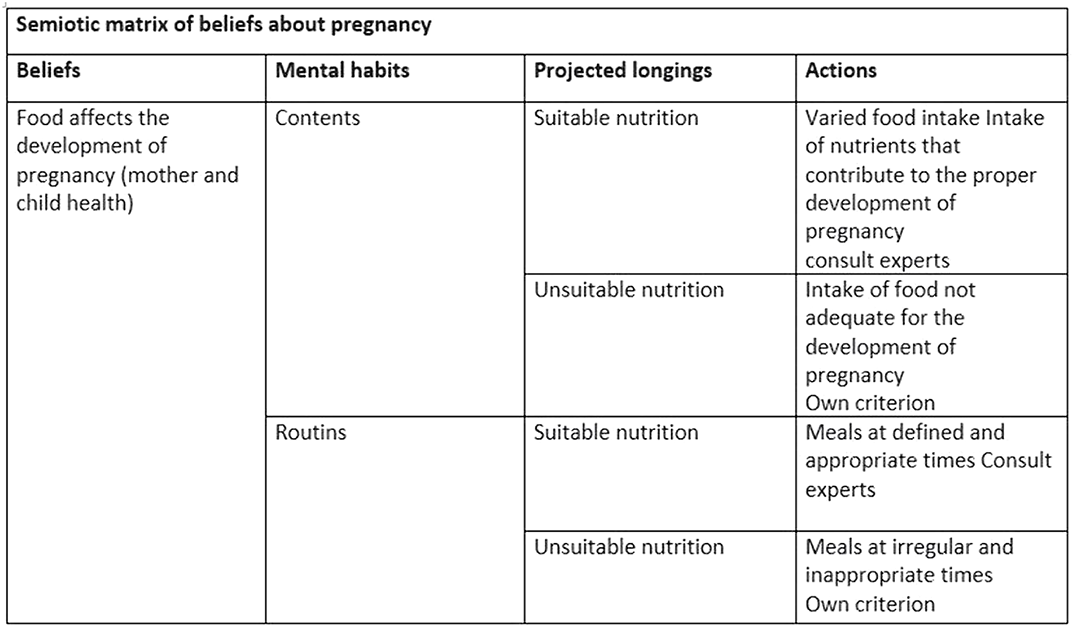
Pregnancy has sociocultural implications that lead to conceiving it depending on the cultural context (Noguera & Rodríguez, 2008). Self-care is a cultural practice associated with the well-being of mother and child during pregnancy (Carmona, Hurtado and Marín 2007). Being relative to culture, self-care varies according to current beliefs. Beliefs are the concretion of a way of thinking about the environment that surrounds us (Peirce, 1903).
Objectives
Analyze the beliefs of women from a population group in Montería, about pregnancy and its implications regarding self-care in eating.
Methods
Qualitative approach. Sources: primary. Sample: due to saturation, 15 pregnant women assigned to the Mocarí neighborhood hospital in Montería. Instrument: semi-structured open interview. The information was processed through AtlasTi, implementing content analysis. Emerging categories: contents, routines in food.
Results
Main belief: food affects the well-being of mother and child. It is adequate or inappropriate depending on categories such as content and routines. The former refer to the food consumed, the latter indicate the times of consumption.
Conclusions
Beliefs about pregnancy operate as generators of mental habits, projected wishes and concrete actions. Therefore, they are an important starting point for the implementation of self-care practices at the institutional level.
The problems of the attitude to success and failure are relevant at the present time.
Objectives
study allows to describe and compare the indicators of emotional intelligence and the types of attitudes toward success and failure of a peer in adolescence and youth
Methods
110 students and 90 teenagers were studied. T.V. Beskova’s methods “Attitude to the success and/or failure of a peer” in adolescence and adolescence (adapted technique by T.V. Beskova), N. Hall’s method of evaluating “emotional intelligence” (EQ questionnaire).
Results
The “Relationship to Peer Success and Failure” methodology showed differences between adolescence and adolescence in scales: “peer joy” U = 0.016 (p≤0,05), “desire to achieve the same” U = 0.008 (p≤0,01), U = 0.027 “envy” (p≤0,05) and “passive” U = 0.006 (p≤0,01). The EQ questionnaire showed statistically significant differences in scales as “managing one’s emotions” U = 0.007 (p≤0,01), “self-motivation” U = 0.006 (p≤0,01). There are age differences in the types of attitudes to peer success and failure and the specifics of emotional intelligence in older adolescence and adolescence. Spearman rank correlation coefficient (r = 0.48) there is a relationship between the type of relationship to peer success and failure and emotional intelligence in adolescence and adolescence
Conclusions
Thus, the study showed the features of personal factors in relation to the success and failure of a peer in adolescence and adolescence.
Epidemiological studies suggested that antidepressant usage amongst pregnant women increased by 3- to 7-fold in the past 2 decades and that up to 13% of fetuses are exposed to antidepressants. There are concerns regarding the impact of prenatal antidepressant use on the offspring.
Objectives
We aim to review more recent evidence of antidepressant use during pregnancy and the risk of autism spectrum disorder (ASD) in the offspring.
Methods
Non-systematic review based on the PubMed® database.
Results
A recent meta-analyses suggested children of mothers who used antidepressants during their pregnancy may be at a higher risk of ASD, compared to mothers who do not use these medications. Other suggested that the use of any antidepressants in the first 2 trimesters was related to significantly risk of developing ASD. Despite higher risks with the use of antidepressants, the absolute risk appears to be low. In addition, confounding factors should be considered while interpreting the results. Studies concluded that the comparator group selection strongly influences the observed antidepressant-ASD relationship. Associations derived from general population studies might have been mediated by unmeasured maternal psychiatric burden or transdiagnostic genetic liability. The observed increase in risk may also be associated with depression, not its treatment.
Conclusions
The findings of these studies have important implications, and often result in drug discontinuation with a significant impact on maternal and infant health. Future research should include investigation of the severity of depression in this association, assessment of antidepressant dose and use of antidepressants in pregnant women with other pathologies.
Intimate partner violence (IPV) and psychological distress are major public health concerns among emerging adult women.
Objectives
To study the self-esteem of women victims of domestic violence and to determine its associated factors .
Methods
This was a cross-sectional descriptive study carried out at the National Health Fund of Sfax among women who consulted during the months of October and November 2019. The sociodemographic and clinical characteristics of the consultants were collected using a pre-established form. Women’s Experience with Battering Scale” (WEBS) was used to screen (IPV). The Rosenberg Self-Esteem Scale (RSE), was used for evaluating individual self-esteem. It uses a scale of 0–4 where a score less than 25 may indicate a problematic very low self esteem.
Results
The sample comprised 110 women. More than half (66.7%) of women had a primary school level and 69% had a median socioeconomic level. (IPV) was estimated at 57.3% in our population. The mean (WEBS) score was 30.92(SD=9.8) and the mean (RSE) score was 31.26 (SD=3.5) among abused women self-esteem was very low in15.5% and low in 42.7% Abused women were more likely to have a low self-esteem (r= -0.528 ;p=0.012) The score of self-esteem decreased with age (r=-0.685 p=0.0001) and previous history of violence(p=0.04).
Conclusions
The findings suggests that Women who experienced (IPV) were more likely to have a low self-esteem. Therefore, the role of the physician is essential not only in the care of the victims but also in the detection of psychological repercussions.
Pregnancy loss (PL) – by induced or spontaneous termination of pregnancy – is common, although its consequences on women’s mental health are often neglected in clinical practice.
Objectives
To understand the existence of psychiatric morbidity in women, associated with PL, as well as related risk factors.
Methods
Non-systematic review of literature through search on PubMed/MEDLINE for publications up to 2021, following the terms ‘pregnancy loss’, ‘psychiatry disorder’, ‘depression’ and ‘anxiety’.
Results
After a PL, anxiety is the most frequent symptomatology in 41% of women. Depression occurs in 22-36% of women in the first two weeks after PL, declining over time. Symptoms compatible with Post Traumatic Stress Disorder (PTSD) are found in 25% of women with PL in the first month. Women who meet criteria for PTSD are more likely to present criteria for Depressive Episode. Substance Use Disorder and Prolonged Grief Disorder are also reported, the latter having, as predictors, previous relational difficulties, poor social support and absence of descendants. Risk factors associated with significant psychopathology within PL are, for example, nulliparity, infertility, previous PL, longer gestation time, lower marital satisfaction, previous psychiatric illness, and history of abuse.
Conclusions
In clinical practice, the risk of psychopathology in women with PL should be considered. This population should be actively questioned about the presence of symptoms, as well as their persistence and impact, requiring timely and appropriate pharmacological and psychotherapeutic intervention. Perinatal Mental Health interventions show important gains in the overall health of women and their offspring.