We partner with a secure submission system to handle manuscript submissions.
Please note:
You will need an account for the submission system, which is separate to your Cambridge Core account. For login and submission support, please visit the
submission and support pages.
Please review this journal's author instructions, particularly the
preparing your materials
page, before submitting your manuscript.
Click Proceed to submission system to continue to our partner's website.
To save this undefined to your undefined account, please select one or more formats and confirm that you agree to abide by our usage policies. If this is the first time you used this feature, you will be asked to authorise Cambridge Core to connect with your undefined account.
Find out more about saving content to .
To send this article to your Kindle, first ensure no-reply@cambridge.org is added to your Approved Personal Document E-mail List under your Personal Document Settings on the Manage Your Content and Devices page of your Amazon account. Then enter the ‘name’ part of your Kindle email address below. Find out more about sending to your Kindle.
Find out more about saving to your Kindle.
Note you can select to save to either the @free.kindle.com or @kindle.com variations. ‘@free.kindle.com’ emails are free but can only be saved to your device when it is connected to wi-fi. ‘@kindle.com’ emails can be delivered even when you are not connected to wi-fi, but note that service fees apply.
Since the onset of the pandemic, nurses have been repeatedly exposed to their patients’ COVID-19-related traumatic experiences. Therefore, they are at high risk for Secondary Traumatic Stress (STS), the stress syndrome resulting from helping others who are suffering. Positive psychological outcomes following this vicarious exposure are also likely. Vicarious posttraumatic growth (VPTG) refers to the positive changes from working with patients who themselves have coped with traumatic experiences.
Objectives
This study aims to examine STS and VPTG among 429 nurses during three lockdowns of the COVID-19 pandemic in Greece.
Methods
A repeated cross-sectional survey with a convenience and snowball sampling procedure was conducted. The Secondary Traumatic Stress Scale (STSS), the Post-Traumatic Growth Inventory (PTGI), the Brief Resilience Scale, and the Brief Cope (BC) were used to measure STS, VPTG, resilience, and coping strategies, respectively.
Results
Nurses in Greece demonstrated high levels of STS at the first lockdown, significantly lower in the second one, which raised again -but not significantly- in the third lockdown. Resilience significantly decreased, whereas VPTG significantly increased across the three lockdowns. Following the escalation of the pandemic nurses in general used significantly more adaptive and less maladaptive coping strategies to deal with the crisis.
Conclusions
Further research is needed to clarify the longitudinal course of the negative and positive psychological effects of the pandemic on healthcare staff. Conclusions can guide the development of interventions to safeguard nurses from the deleterious impacts of the COVID-19 and support them in their process of growth.
A primary disruption of the bodily self is considered a core feature of schizophrenia patients (SCZ). The “disembodied” self would be underpinned by an inefficient body-related multisensory integration mechanism occurring in the Peripersonal Space (PPS). PPS is a plastic sector of space surrounding our body, whose extent is altered in SCZ. Although PPS represents a malleable interface marking the perceptual border between self and others, no study has investigated the potential alteration of its plasticity in SCZ.
Objectives
We investigated the PPS extension and its plasticity in SCZ and their potential correlations with the clinical scales.
Methods
Thirty SCZ and thirty healthy controls (HC) underwent a multisensory task to estimate PPS boundary before and after a motor training. Patients were also administered the Positive And Negative Syndrome Scale (PANSS) and the Examination of Anomalous Self-Experience (EASE).
Results
Data confirm a narrower PPS extent in SCZ than in HC, whereas no differences in PPS expansion was found in the two groups after the motor training (Figure 1). Positive symptoms were associated directly with PPS extent and inversely with PPS plasticity. No associations were found between PPS and EASE domains. Figure1: Graphical representation of PPS expansion in SCZ and HC. Both panels show individual normalized sigmoid fits
Conclusions
The present study suggests a narrower PPS extent and a preserved PPS plasticity in SCZ with respect to HC. Both PPS extent and plasticity are related to the severity of positive symptoms. These results highlight the potential role of rehabilitation interventions in order to improve patients’ weakened body boundary.
There are life events that may increase the possibilities of suffering some kind of Psychopathology. The most validated model for understanding the aetiology of psychosis is based on genetic and environmental risk factors and their interaction, likely involving epigenetic mechanisms. It is necessary to consider those events as risk factors for Mental Health.
Objectives
Study of risk and prognostic factors in psychosis.
Methods
Review of scientific literature based on a relevant clinical case.
Results
We present the case of a 28-year-old male patient from Peru, currently living in Germany. History of sexual abuse in childhood. He started taking drugs at the age of 8. In the emergency department, he reports that since the beginning of the pandemic, after listening to a speech by the Pope, he begins to interpret signals about situations occurring around him. He begins to read about mystical-religious subjects, changes the style of music he listens to and recognises changes in his personality. He says for months he has been feeling watched, persecuted and expresed someone wants to kill him. He says hears voices and that they communicate with him through bodily sensations.
Conclusions
Childhood trauma, immigration and cannabis use are significantly associated with an increased risk of functional psychosis. A neurotic personality also independently contributes to this risk. The accumulation of these factors increases vulnerability to mental disorders and leads to a worse prognosis and evolution of these pathologies. These findings could help to improve the prevention of psychosis and the development of specific treatment strategies in this particular population.
People presenting first-episode psychosis (FEP) benefit from early intervention programmes, although they are scarce in low- and middle-income countries (LMICs). In Brazil, there are just a few of them unequally distributed across the country.
Objectives
We aimed to describe the workings of the Ribeirão Preto Early Intervention for Psychosis Programme (Ribeirão Preto-EIP) – an outpatient service for first-episode psychosis patients residents in the Ribeirão Preto catchment area in Southeastern Brazil.
Methods
A retrospective cohort of all patients attended throughout four years (2015-2018) was analysed. We excluded patients who attended only the first consultation and those with an initial diagnosis other than a psychotic disorder. Data was obtained through retrospective analysis of medical records.
Results
Our service had 358 new referrals during the four-year period, and 237 patients were followed on average (median) by 14 months. Most of the patients were male (64.1%), single (84.8%), with a median age of 23.5 years (age ranged from 9 to 86 years). Schizophrenia was the main diagnosis (43.4%), followed by substance-induced (25.7%) and affective psychosis (18.6%). Taking follow-up diagnoses as gold-standard, initial diagnoses of bipolar disorder and schizophrenia spectrum disorders had the highest positive predictive values, 83% and 81% respectively. Most referrals to our programme were made by tertiary care (63.7%), followed by secondary (28.5%) and primary care (7.8%).
Conclusions
Here we presented a large sample of FEP patients in a representation as trustworthy to the reality of our programme as possible. Our analysis suggest that Early Intervention Programmes can be successfully implemented in LMICs.
The world literature presents ambiguous results regarding the conjugation of negative and depressive syndromes, due to an incomplete understanding of the main symptoms of depression in schizophrenia.
Objectives
To analyze the variants of the conjugation of depressive and negative symptoms at different stages of schizophrenia.
Methods
We used the data of our own observations (238 patients with a diagnosis of schizophrenia and no more than 5 years of experience of the disease) and compared them with the previously published results of studies. As a hypothesis, we analyze the variants of the conjugacy of affect and the negative domain within the framework of a single discrete field of schizophrenia.
Results
The analysis shows that with the apparent heterogeneity of the psychopathological structure, some depressive features, such as apathy, anhedonia and social autism (characteristic of negative symptoms), tend to the abulia factor, whereas low mood, suicidal thoughts, pessimism, show affinity for the cluster of impoverishment of expression, that is, they represent an attenuated type of negative symptoms tending to the affective spectrum.
Conclusions
The conjugacy of depressive and negative disorders in schizophrenia, taking into account their phenomenological similarity, allows us to formulate a hypothesis about their existence within the framework of a single continuum model. The proposed continuum model can be used to understand the processes underlying pathogenesis and formulate the principles of personalized treatment and can be used as a starting point for research on the underlying biological processes and personalized treatment.
As a part of Horizon 2020 program, RECOVER-E project activities were initiated in Montenegro in 2018. The initial step involved a thorough situation analysis of the setting and circumstances of treatment of users with severe mental health illnesses, followed by the establishment of the community mental health team (CMHT) within the Special Psychiatric Hospital Kotor. The CMHT became responsible for the treatment of a group of clients with severe mental health illnesses, based on the principles of „Flexible Assertive Community Treatment (FACT – A Dutch model).
Objectives
The main objective of this research was to establish whether there were substantial differences regarding the hospital readmissions in the group of patients treated by the CMHT, compared to usual mental health care in Montenegro.
Methods
Within the RECOVER-E project, a sample of 202 patients, users of mental health services, were recruited in Montenegro. Patients were randomized into two similar-sized groups - intervention group, whose treatment was managed by the multidisciplinary CMHT, and control group where treatment as usual was continued. To estimate and follow-up the frequency of hospital readmissions, medical documentation was used.
Results
Patients in the intervention group had less hospital days during the 18 months follow-up period. However, the differences between two groups regarding number of readmissions, and total length of hospital days were not statistically significant measured by independent T test.
Conclusions
This study showed that CMHT care could reduce the total length of hospital days during the treatment of psychotic disorders even dough during the COVID 19 pandemic and lock down measures
Alteration of GABergic neurotransmission is accused to be sharing in the cognitive impairment in schizophrenia. Exploring the relation between the neuronal expression of GABergic genes and cognitive impairment in living patients through modeling of schizophrenia is an important step to know more about the core of the pathophysiology of this disorder
Objectives
Altered genetic expression of GAD 67 may have an important role in the pathophysiology of cognitive impairment in schizophrenia
Methods
. Reprogramming of human fibroblasts into human induced pluripotent stem cells (hIPSc) then neuronal differentiation was performed in 20 patients presenting with schizophrenia and 20 matched controls. Real time Polymerase chain reaction was done for measurement of genetic expression of GAD 65, GAD 67 and GABA beta 2. The Digit Symbol task, block design, block design task and similarities tasks from the Wechsler Adult Intelligence Scale., Trail A and Trail B making tests in addition to Rey-Osterrieth Complex Figure Test (ROCF) were applied to measure cognitive functions .
Results
There were lower means of GAD65, GAD67 and GABA beta2genetic expression in the patients group with significant statistical difference between the 2 groups. The down regulation of GAD 67 in patients presenting with schizophrenia is positively correlated with impairment in executive functions.
Conclusions
GAD 67 gene expression had the most significant correlations with the cognitive assessment in both patients and controls. The presence of those statistically significant correlations in both groups points to the possible role of GAD 67 gene functioning in the pathophysiology of cognitive impairment in schizophrenia
Analysis of the first-episode psychosis remission, including post-psychotic affective and primary negative symptoms as well as personality changes, is necessary to personalize therapy and rehabilitation.
Objectives
We aimed to identify different trajectories of psychosis remission in young adults.
Methods
First-episode psychosis patients (n=56, mean age 19.8±2.5 years, all males) underwent psychopathological assessment at the stage of remission.
Results
Three trajectories of remission were identified. The thymopathic trajectory (33.93%, 19 patients) was characterized by the gradual increase of subclinical affective symptoms and resulted with a high-quality remission. In 63.61% cases in this group persistent depressed mood was present after a psychotic episode. Some patients (36.84%) became prone to depressive reactions. The pathocharacterological trajectory (39.28%, 22 patients) was characterised by personality changes with increase of existing traits or the development of traits previously not present. Types with an increase of schizoid (14.29%), histrionic (19.64%), and anxiety-hypochondriacal (5.36%) traits were identified. Patients in this group had high- as well as low-quality remission. The destructive trajectory (26.79%, 15 patients) was characterised by residual positive or single negative symptoms. Patients in this subgroup had low-quality remission with poor functioning and signs of treatment resistance.
Conclusions
Analysis of trajectories of the first-episode psychosis remission allowed us to choose the most effective strategy for personalized supportive treatment.
Direct gaze is the most important mediator of social interaction and communication. Existing studies have evaluated eye movements of patients with schizophrenia by presenting stimuli using photographs or pre-recorded videos, but few directly investigated gaze avoidance in real-world situations.
Objectives
To investigate the correlation between gaze avoidance and psychopathology in patients with schizophrenia through eye movement measurements in real-life interpersonal situations.
Methods
We enrolled 52 clinically stable patients with schizophrenia. Psychopathology was evaluated using the Positive and Negative Syndrome Scale (PANSS), Hamilton Depression Rating Scale, and Hamilton Anxiety Rating Scale. After presenting a visual stimulus, eye movements were measured with Tobii Pro Wearable Glasses 2, and deep learning-based emotional recognition using the residual masking network was used for neutral stimulus verification. Statistical analyses were performed using Pearson’s correlation and regression analyses.
Results
Data of 45 participants with verified stimulus neutrality by deep learning image recognition were used for analysis. The first dwelling time was negatively correlated with the PANSS positive syndrome subscale (p=0.028), general psychopathology subscale (p=0.008), total score (p=0.008), 5-factor positive symptoms (p=0.035), and 5-factor depression/anxiety symptoms (p=0.008). The baseline-area of interest (AOI) pupil diameter change was positively correlated with PANSS 5-factor positive symptom scores (p=0.039). After adjusting for additional variables, the same items had a significant effect on the first dwelling time and baseline-AOI pupil diameter change.
Conclusions
Psychopathology, particularly positive symptoms, was associated with gaze avoidance and pupil diameter in patients with schizophrenia. Evaluating the characteristics of eye movements in patients with schizophrenia will enable better understanding of their symptoms.
An impairment of anticipation processes is considered as a common deficiency in schizophrenia (Kveraga et al., 2007), however its neural mechanisms remain poorly understood.
Objectives
The aim of the study was to analyze CNV-like slow negative waves during the pre-target stimuli waiting period in patients with the first episode of the disease.
Methods
32-channels EEGs during “Go / No go delay” saccadic paradigm have been recorded in 16 young male patients with illness duration less than 2 years and 18 age and sex matched healthy subjects. The delay period between fixation and target (“Go” or “No go”) visual stimulus was 2800-3000 ms. The early and late components of CNV - like slow negative waves (PMN1 and 2) have been studied in 1 sec pre-stimulus interval of delay period.
Results
As compared to norm, the patients showed significantly increased latencies of saccades to correctly discriminated stimuli and higher percent of “errors saccades”. The amplitudes of No go-PMN1 and Go-PMN2 waves were also increased in patients. The amplitude foci of these waves were diffusely distributed in patients and mostly localized in frontal leads in norm.
Conclusions
The findings assume some violation of anticipation for action (motor or inhibitory response) processes as well as an increase of presumably cortical activation during stimulus anticipation in the “Go/No go delay” saccadic paradigm in the early stage of schizophrenia.
Psychosis onset typically occurs during adolescence or early adulthood, coinciding with the latest stage of brain maturation. Alterations in brain functional connectivity (FC) accompany the emergence of psychiatric symptoms and cognitive impairments. Thus, age-related FC changes may be informative regarding psychosis onset.
Objectives
We defined neurotypical age-related FC trajectories and hypothesized that FC of individuals at familial and clinical high risk (HR) for psychosis deviates from FC of neurotypical controls (NC).
Methods
We analyzed two independent cohorts, of (a) 356 early adult NC (yNC; age=22±2y, m:f=149:207), and 127 mature adult NC (aNC; age=38±7y, m:f=79:48), and (b) 92 yNC (age=22±2y, m:f=34:58), 33 aNC (age=36±6y, m:f=21:12), 38 early HR adults (age=20±3y, m:f=18:20). We acquired fMRI data from multiple scans (resting-state, working memory, episodic memory, and implicit emotion processing). FC was obtained by computing Pearson’s correlations between time-courses of every independent component (IC) defined by an Independent Component Analysis approach (NeuroMark). Age-varying components of interest (yNC/aNC differences on FC based on linear mixed effect regressions) were tested for differences between HR and yNC through the Wilcoxon rank-sum test.
Results
showed age-related FC differences (yNC/aNC) in a set of 17 IC pairs (pFDR<0.05). HR showed increased FC within a network including dorsolateral and medial prefrontal cortices, and sensorimotor cortex, while decreased FC between cerebellum and the parietal and visual cortices, compared with yNC (pFDR<0.05). HR showed no significant difference compared with aNC (pFDR>0.05).
Conclusions
This study tested FC alterations associated with the risk for psychosis and highlighted the relationship between psychosis and potentially altered brain functional processes.
Avoidable disability associated with depression, anxiety, and impaired cognition among older adults is pervasive. Incentives for the detection of mental disorders in late life include increased reimbursement, reduced cost, and less burden for patients and families.
Objectives
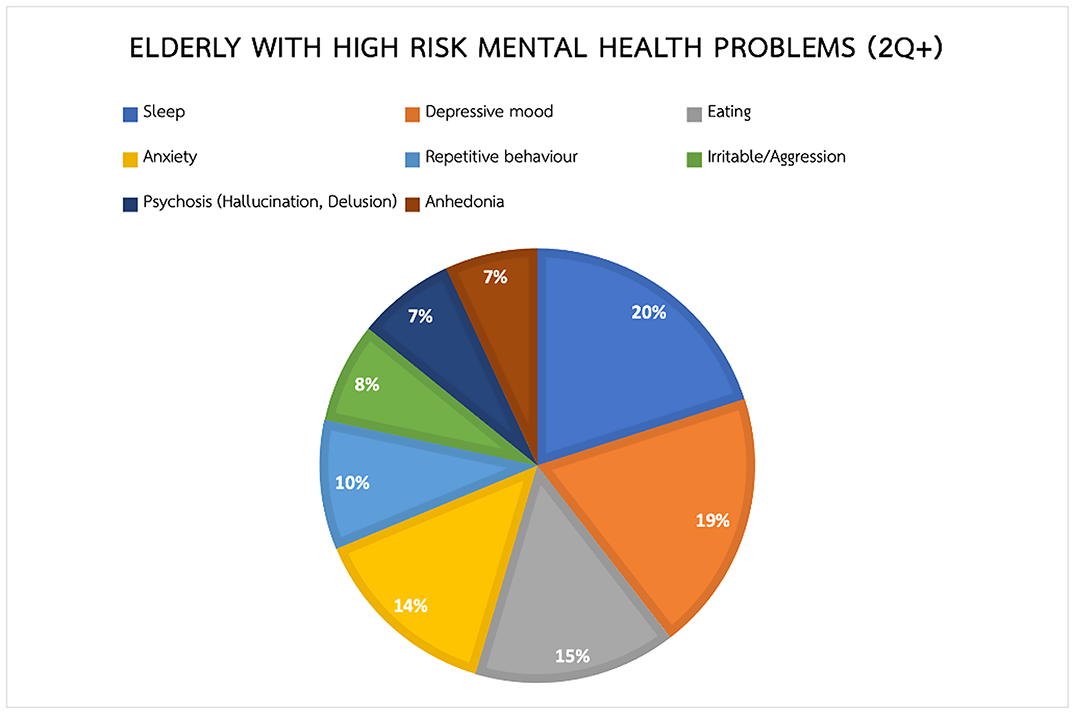
Mental health problems in the elderly are major public health issues around the world. Thai older adults who experience mental illness rarely seek care from mental health specialists; rather, they tend to seek help from a general physician. Primary health care is, therefore, an important setting for the detection of mental health symptoms and subsequent treatment. We describe the design and implementation of a mental health care model in the Thai primary care system. Initial results of screening for behavioral and emotional problems are reported.
Methods
This work is intended to explore mental health conditions in Thai elderly people to provide of identifying and non-pharmacological treating psychiatric conditions in the Primary care unit. The instruments used in the survey, which consists of twelve symptoms found in the elderly, developed into an online program to suit pandemic conditions.
Results
In an effort to document mental health problems in the primary care system, 4,854 veterans (mean age 68) from 46 provinces across Thailand were screened for multiple mental health symptoms. The sample divided into 1,701 males (35%) and 3,153 females (65%).
Conclusions
While screening for depressed mood is now common in primary care, we found it useful to screen for specific symptoms of depression in older persons (including insomnia, change in eating habits, facial expression, and anxiety) in a primary setting.
Stress-related disorders are common and associated withsuffering and a large sociatal burden. While treatment appears to be able to reduce symptoms, evidence of interventions to improve work outcomes is inconsistent. Lack of integration different service domains has been suspected to be a barrier in return-to-work (RTW) processes.
Objectives
We aimed to test the effectiveness of intergrating vocational rehabilitation and mental health care.
Methods
We randomized participants on sick leave to I) service as usual (SAU), I) improved mental health care (MHC) or III) integrated interventions (INT). Primary outcome was RTW-rates measured at 12 months. Secondary outcome were proportion in work at 12 months, RTW-rates measured at 6 months, and symptom levels at 6 months.
Results
We randomized 666 participants. Regarding primary outcome, the SAU group was superior to both MHC and INT. Furthermore, SAU was also superior to INT and MHC on almost all other work-related outcomes. INT and MHC did not show differences on any work-related outcome. On several symptom scales, MHC was observed with lower scores than SAU, whilst INT did not differ from the two other groups.
Conclusions
Both the integrated intervention (INT) and the (non-integrated) mental health care (MHC) intervention lowered return-to-work rates compared with service as usual (SAU), and thereby yielded worse outcomes. However, the MHC group intervention showed a tendency towards having lower symptom levels compared with those in the SAU group; accordingly, the SAU group is not unequivocally superior. INT and MHC showed no general differences.
There is no consensus about whether late-onset schizophrenia(LOS) is a type of schizophrenia or a secondary psychotic disorder. One of the theories of the occurrence of late-onset psychoses is neurodegeneration caused by the imbalance of proteostasis.
Objectives
To study the concentration and expression of alpha-synuclein in patients with LOS compared with controls.
Methods
The study involved 42 patients with the ICD-10 criteria of schizophrenia with the onset of the disease after 45 years and 104 controls with no dementia and severe somatic pathology, comparable in age and gender. The alpha-synuclein level was estimated in a lymphocytic cell fraction from patients with LOS N=42 and controls N=104 using the Human alpha-synuclein ELISA kit. The expression of the SNCA gene was studied in 22 LOS patients and 22 controls and determined by PCR using the SYBR Green Supermix kit and the CFX96 instrument in comparison with the referent genes using previously developed primers. LOS group underwent psychopathological examination including scales. Statistics: SPSS 12.0; the Mann–Whitney test; exponential regression analysis; data is given as median (min–max). The level of significance was set at p<0.05.
Results
The alpha-synuclein level is higher in patients with LOS (9.21 (0.78-29.52)) compared to control (6,355 (0.46-35.44)), p=0.024. The mRNA level of the SNCA gene is higher in the LOS group (0.533 (0.089-1.406)) compared to controls (0.087 (0.016-0.266) , p<0.001.
Conclusions
Our study shows the relationship of alpha-synuclein with the manifestations of LOS. Obtained novel data can open up new targets for therapy and bring it closer to understanding the phenomenon.
Among psychosocial interventions, recent studies have highlighted that sport-based interventions can positively impact on the long-term outcomes of patients with severe mental disorders, in terms of improving their quality of life and promoting social inclusion. Although sport-based interventions should be considered an effective strategy for promoting patients’ recovery, few data are available on their dissemination in the clinical routine care in Europe.
Objectives
to evaluate the availability of sport-based psychosocial interventions in European countries.
Methods
In the framework of the EU-Erasmus+, the European Alliance for Sport and Mental Health (EASMH) project has been funded. In order to evaluate the availability of sport-based interventions, an ad-hoc online survey, sent to national mental health centres, has been developed.
Results
103 responses were obtained (49 from Italy, 31 from UK, 17 from Finland and 12 from Romania). The respondents were mainly psychiatrists working in community mental health centers. Sport-based interventions were frequently provided by mental health services, in particular in Italy, UK and Finland. While in UK and Finland sport-based interventions are commonly offered to all patients, in the other countries these are provided only by patient’s request. The most frequent types of sport practised were: running, football, volleyball, tennis and table tennis and basketball. Almost all respondents reported to not use a dedicated monitoring tool for evaluating the efficacy of those interventions.
Conclusions
Sport-based interventions are not frequently provided in the routine clinical settings, although no monitoring tools are routinely adopted. The EASMHaims to fill this gap by disseminating good clinical practice related to sport-based interventions.
Violence against women is now widely recognized as an important public health problem with substantial consequences on mental health, that is why health professionals should be identifying, preventing, and responding to violence against women more effectively.
Objectives
To study the prevalence and predictors of anxiety and depression among women victim of domestic violence
Methods
Our study was descriptive and analytical cross-sectional, carried out with women examined in the context of medical expertise, from May until October 2021. An anonymous survey was asked to these ladies. The HADS was used to screen for anxiety and depression
Results
75 responses was collected The age group of 26-35 years represents the highest percentage 44%. 98.7%were victim of verbal violence,94.7% of physical violence, 97.3% of psychological violence and 54.7 % of sexual violence According to the HAD, anxiety was retained in 72% and depression in 56%. Women who filed for divorce developed more depression (p=0.01). Women with a history of infertility were more anxious than others (p=0.025). Anxiety and depression were significately correlated with : the husband alcohol (p=0.01) and cannabis consumption(p=0.015). The ladies victims of sexual violence such as an unusual type of relationship developed more anxiety (p=0.045). An history of aggression during pregnancy was a risk factor of anxiety (p=0.035)
Conclusions
Our work has shown the association between violence against women and anxiety-depressive symptoms. The results of our work inspire us to reflect on and develop actions on the scourge of violence against women in a conjugal environment and its psychological repercussions.
Intimate partner Violence (IPV) against women includes all actions that violate one’s sense of self, physical body and sense of trust and involves episodes of violence of physical, psychological (emotional), or sexual nature, perpetrated by a current or former intimate partner.
Objectives
We estimated the prevalence of and risk factors for intimate partner violence (IPV) in the Himalayan mountain villages of Gilgit Baltistan in Pakistan.
Methods
We employed a cross-sectional study to randomly select ever married women (n=789) aged 18-49, in Pakistan. We used an adapted World Health Organization screening instrument to assess women’s experience of IPV in the previous 12 months. We used an indigenous validated instrument assess self-reported symptoms of major depression according to the DSM IV. Multivariable logistic regression analysis was used to identify significant predictors of IPV using adjusted odds ratio (AOR) with 95% confidence intervals (CI).
Results
The overall prevalence of IPV was 22.8% (95% CI: 20.0-25.9). Women exposed to IPV were less likely to have husbands educated at a college or a higher (AOR: 0.40; 95%CI: 0.22-0.70), household income in the middle or the highest tertile (AOR: 0.44; 95%CI: 0.29-0.68), and were more likely to have poor or very poor relationship with their mother in law (AOR=2.85; 95% CI: 1.90-4.28), to have a poor quality of health (AOR= 2.74; 95% CI: 1.92-3.92) poor quality of life (AOR= 3.54; 95%CI: 1.90-6.58), and higher odds of experiencing depressive symptoms (AOR=1.97; 95%CI:1.39-2.77).
Conclusions
IPV is a substantial public health burden in Himalayan mountain villages and merits serious attention.
We have recently validated the Portuguese shortest version of the Perinatal Depression Screening Scale-PDSS-7 (items selected from the PDSS-21; each one representing a dimension evaluated by the PDSS-35), for the assessment of depression severity in pregnancy, both in Portugal and Brazil.
Objectives
To analyze the validity and reliability of the PDSS-7 Portuguese version to evaluate postpartum women both from Portugal and Brazil.
Methods
The Portuguese sample was composed of 304 women between the 2nd-6th postpartum months (Mean=20.09±7.21 weeks postpartum). These participants were not the same who participated in the psychometric study that led to the selection of the seven items. The Brazilian sample was composed of 121 women (Mean=10.51±4.53 weeks postpartum). All the participants completed the European/Brazilian Portuguese versions of PDSS-21, which was composed of the same items and included the seven items of PDSS-7. Participants also filled in the validated versions of Perinatal Anxiety Screening Scale and Profile of Mood States.
Results
Confirmatory Factor Analysis revealed that the unidimensional model of PDSS-7 presented acceptable/good fit indexes in both samples (Portuguese/Brazilian: χ2/d.f.=2.6598/1.7897; RMSEA=.0740/.0807, CFI=.8289/.7934, TLI=.7901/.8434, GFI=.9298/.9496; p<.001). The PDSS-7 Cronbach’s alphas were of .841/.856 and all the items contributed to the internal consistency. Pearson correlations with postpartum anxiety (.646/.763) and negative affect (.666/.676) were significantly (p<.01) high. PDSS-7 mean scores were higher in the Brazilian sample (16.06±7.39 versus 11.37±4.37, p<.01).
Conclusions
PDSS-7 presented validity (construct and convergent), reliability and utility in clinical and research settings, including in transcultural studies, in Portugal and Brazil, namely in the postpartum.
Clinical practice in psychiatry is shifting toward personalized approach. In other words, clinicians aim to help patients based on their individual characteristics. It’s known that testosterone play a crucial role in the regulation of the emotions specially in men. The problems of hypogonadism and its possible role as an etiological factor in the development of depression in men are available in detail. But there is no solid date about the features of depression in men with testosteron defficency and theraputic approach including testosterone replacement therapy and antidepressants.
Objectives
Аssessment of efficiency of different pharmacological approaches in the treatment of depression in men with testosterone deficiency
Methods
The main group included 37 men with a depressive episode that arose against the background of a decrease in testosterone levels (≤12.1 nmol / L). A depressive episode was diagnosed based on the ICD-10 criteria for a depressive episode (F32). Patients were randomized into 3 treatment groups, depending on the received treatment: 1) sertraline; 2) testosterone gel; 3) sertraline + testosterone gel. The control group consisted of men (n = 40) aged 18 to 65 years, suffering from depression in accordance with the ICD-10 criteria with normal testosterone levels
Results
An insufficient effectiveness of antidepressant monotherapy in relation to sexual dysfunction was found in main group, while testosterone monotherapy did not give statistically significant improvements in depression indicators.
Conclusions
Combination therapy was most effective for the main symptoms and can be regarded as the most appropriate algorithm for the treatment of depression in men with low testosterone levels
Access to adequate healthcare is the best means we have for detecting and preventing complications during pregnancy and childbirth. Identifying and preventing factors that can interfere with this access become essential (Gulliford et al., 2002). Mother dual pathology during pregnancy is a condition with severe consequences (Cosp & Ontano, 2009). However there is scarce literature regarding barriers to obstetric care among women at risk for dual pathology.
Objectives
The main objective was to explore healthcare access barriers among pregnant women at risk for dual pathology.
Methods
Framed in a broader research (The WOMAP project) 2014 adult pregnant women less than 26 weeks of pregnancy were screened in five hospitals in Madrid (Spain) between 2016-2019. If the screening test (AC-Ok scale) identified the presence of dual pathology during the last month, women were included in the clinical trial and assessed with a more extensive battery (compound by PHQ-9; GAD-7; PCL-5; AUDIT; DAST; and Fagerström Test) and a semi-structured interview.
Results
163 women at risk for dual pathology were assessed. Of them, 152 (93,2%) referred to having attended all scheduled appointments. Socioeconomic level (0.184, p=0.024), depression (-0.174, p=0.034), post-traumatic stress symptoms (-0.214, p=0.011) and alcohol reporting (-0.259, p=0.045) were significantly correlated with attendance level.
Conclusions
Women with more severe symptoms of dual pathology are at higher risk for misatending obstetrical appointments. Social criticism, even subtle or unintentional, related to dual pathology during pregnancy could be restraining these women to attend properly. Thus, care providers should pay attention to women’s mental health and alcohol abuse to prevent miss-attention.