We partner with a secure submission system to handle manuscript submissions.
Please note:
You will need an account for the submission system, which is separate to your Cambridge Core account. For login and submission support, please visit the
submission and support pages.
Please review this journal's author instructions, particularly the
preparing your materials
page, before submitting your manuscript.
Click Proceed to submission system to continue to our partner's website.
To save this undefined to your undefined account, please select one or more formats and confirm that you agree to abide by our usage policies. If this is the first time you used this feature, you will be asked to authorise Cambridge Core to connect with your undefined account.
Find out more about saving content to .
To send this article to your Kindle, first ensure no-reply@cambridge.org is added to your Approved Personal Document E-mail List under your Personal Document Settings on the Manage Your Content and Devices page of your Amazon account. Then enter the ‘name’ part of your Kindle email address below. Find out more about sending to your Kindle.
Find out more about saving to your Kindle.
Note you can select to save to either the @free.kindle.com or @kindle.com variations. ‘@free.kindle.com’ emails are free but can only be saved to your device when it is connected to wi-fi. ‘@kindle.com’ emails can be delivered even when you are not connected to wi-fi, but note that service fees apply.
The complexity of the feeling of satisfaction makes its measurement complex, in this context our work aims to develop a simple and practical measurement tool to identify problems within the processes of psychiatric care in order to provide corrective interventions.
Objectives
to validate the psychometric properties of a scale designed for us to assess patients’ satisfaction with the quality of psychiatric care received.
Methods
This is a validation study conducted on a sample of 200 patients followed at RAZI Hospital in Tunisia, outside any period of hospitalization. The questionnaire consisted of 28 items and was structured around eight dimensions (the patient’s perception of his or her own mental disorder, the quality of the doctor-patient relationship, the quality of the nursing team-patient relationship, the organisational aspect and conditions of the hospital ward, the therapeutic discharge planning, the respect of human rights, and the quality of the patient’s health, The organisational aspect and conditions of the hospital ward, Therapeutic discharge planning, Respect for patients’ human rights, Satisfaction with overall care and Loyalty.
Results
Both face validity and content validity were satisfactory. Internal consistency was sufficient with a Cronbach’s alpha of 0.913. The inter-dimensional correlation reflected statistically significant and logical correlations within our scale. Temporal stability was satisfactory. An exploratory factor analysis revealed seven factors with a Kaiser-Meyer-Olkin score of 0.852.
Conclusions
Our scale has demonstrated good psychometric properties. It can be reliably used as a measure of the satisfaction of Tunisian patients with the psychiatric care received.
From clinical experience, majority of patients in adult forensic services who have childhood diagnosis of ADHD self-report onset of substance misuse around the age of 12.
Objectives
Aim of the study was to explore if routine screening of childhood substance use is considered by ADHD diagnostic services.
Methods
PsycINFO and Embase databases were searched with the keywords: Attention Deficit Hyperactivity Disorder, ADHD, primary care/general practice, family physicians ,paediatrics, and children/adolescents, child and adolescent psychiatry, diagnostic assessments, substance / drug use, prescription drugs and drug screening.
Results
24 articles were retrieved for age groups 12 to 17 years. Studies identified substance misuse as highly comorbid with ADHD but more so in conduct disorder. Studies identified diversion risk in adolescents.
Conclusions
Both ADHD and amphetamine misuse disorders are Axis 1 disorders (Baldwin 2009). Literature links substance misuse in ADHD to conduct disorder. There needs to be research into the diagnostic overlap between conduct disorder and ADHD and how this fits into the trauma model of adult offender treatment pathways. Treatment pathways for ADHD or conduct disorder and childhood onset substance misuse disorder are not clear both in primary or secondary care. Literature appears to put emphasis on early diagnosis and prescription stimulant treatment outside the social and psychological context and cites outcomes of the short term studies as reason for continued prescriptions in adolescence and beyond. There is need for studies exploring perspectives and trajectories of amphetamine use in adults who were diagnosed with ADHD in childhood, adolescence and as adults.
There is paucity of epidemiological studies from the Arab world and most of the focus of available international data is on the early months of the pandemic.
Objectives
We conducted the first cross-sectional national phone survey of adults in Qatar during the end of the first wave of the pandemic (December 2020 -January 2021) to estimate the prevalence and determinants of depression and/or anxiety.
Methods
We used the Physician Health Questionnaire-9 and Generalized Anxiety Disorder-7 with cut-off scores of ≥10; the revised UCLA loneliness scale; and questions related to COVID-19 status, death of family or friend, quarantine, health and changes in living arrangements. Bivariate and logistic regression models estimated associations between thirteen variables and combined depression-anxiety (score of 20 or higher).
Results
The two-week prevalence of depression was 6.5% (95%CI: 5.1-8.4), of anxiety 5.1% (95%CI: 3.8-6.9), but only 2.5% sought mental health professional help since the pandemic started. When including loneliness (OR=1.57, p (<0.001) in the model, the following variables were statistically significantly associated with depression-anxiety: female gender (OR=1.90, p=0.037), Qatari nationality (OR=2.37, p=0.018), Arab ethnicity (OR=3.14, p=0.007), and COVID-19 death of family or friend (OR=3.06, p=0.003). Without adjusting for loneliness, younger age (18-29 versus 40+ years of age: OR=2.9, p=0.004) and chronic health conditions (OR=2.0, p=0.029) were significantly associated with depression-anxiety.
Conclusions
Prevalence of depression and/or anxiety during the end of the first wave of COVID-19 pandemic in Qatar was similar to pre-pandemic estimates. Mental health service should focus on young adults, women, the bereaved, lonely and those with chronic health problems.
The Chornobyl catastrophe (ChC) has impacted on depopulation and mental health of the survivors, however, the rate of demographic aging and mental health survey remain at issue.
Objectives
To determine the rate of demographic aging of ChC survivors and to analyze the state of their mental health survey.
Methods
Information from the Ministry of Health and the State Statistics Service of Ukraine, Clinical and Epidemiological Register, the State Register of ChC survivors, and clinical neuropsychiatric data were analyzed.
Results
In 2018, compared to 1995, the number of the ChC survivors decreased by 987 thousand with high level of aging: ChC clean-up workers – 59.0%; evacuees – 25.0%, and residents of radioactively contaminated territories (RCT) – 30.7%. There are negative tendencies in age parameters of survival of the RCT population. Long-term mental health disorders and neuropsychiatric effects in the ChC survivors have been identified, which may indicate an accelerated aging. Neurophysiological and molecular-biological atypia of aging processes under an exposure to low doses of and low dose rate of ionizing radiation have been found. Existing statistical and registry data underestimate the level of mental disorders in the population of Ukraine, including the ChC survivors by an order of magnitude.
Conclusions
The negative tendencies in age parameters of survival indicate the need to continue research to identify the factors “responsible” for such changes. Mental health disorders and neuropsychiatric effects in the ChC survivors are underestimated. It is necessary to create a national psychiatric registry of Ukraine and long-term (lifelong) monitoring of survivors.
The current period is marked by several negative aspects of the COVID 19 pandemic, which have led to a series of emotional and cognitive changes that affect our functioning. The ability to “read” the minds of others is the key aspect of social behavior, helping us understand our context.
Objectives
To identify the level of emotion recognition in Medicine students during the Covid 19 pandemic.
Methods
Throughout 2021, we evaluated 649 Romanian General Medicine students in years 4, 5 and 6, by using a Google Play application (android and iOS). We analyzed socio-demographic parameters and the affective component of Theory of Mind (The Reading the Mind in the Eyes Test). The mean scores between groups were compared with the Student’s t and the ANOVA tests.
Results
The mean score was 25.83 ± 3.36 (min 11, max 33) out of a possible maximum of 36. We noted that women have a higher capacity for recognizing emotions than men (26.04 ± 3.22 vs. 25.01 ± 3.78, P = 0.0016) without differences in terms of the study year. Also, women showed a greater ability to recognize negative emotions compared to men (16.57 ± 2.44 vs. 15.49 ± 2.75, P <0.001). No statistically significant differences were found between the two genders in terms of positive emotions’ recognition.
Conclusions
The ability to recognize emotions seems to be more developed in women, especially when it entails recognizing negative emotions. Theory of Mind abilities are important for empathy and the therapeutic relationship required in Medicine.
The Burnout syndrome occurs preferentially in individuals subjected to intense stress conditions. The nursing staff in Obstetrics Gynecology is an example of this.
Objectives
To assess the prevalence of Burnout and its determinants in the obstetrics gynecology service - Mahdia.
Methods
We conducted an analytical cross-sectional study carried out with the medical and paramedical staff of the gynecology-obstetrics department of the Taher Sfar Mahdia hospital during a period of 3 months.We used a pre-established self-questionnaire containing 2 parts: a part exploring the socio-demographic data of the population and a psychometric part evaluating Burnt out using the “Maslach Burnout” scale inventory ”.
Results
Our sample consisted of 122 medical and paramedical personnel.The sex ratio was 4.3 (99/23), the mean age was 30.5 with values ranging from 25 to 55 years.Of the participants, 59 (48.3%) were single .Nine (7.4%) of the participants were smokers and 2 (1.6%) consumed alcohol.The majority of the population (96.7%) did not have a psychiatric history, 88 (80.3%) reported an organ history.A high level of burnout was noted in 64.8% of our population with 14.8% severe burnout. The presence of burnout was significantly associated with the consumption of psychoactive substances (p = 0.05) and professional rank (p = 0.04) .Nurses, residents and senior doctors werethose most at risk of developing burnout. It was also significantly related to the absence of other professional activities such as research (p = 0.05) and training continuing medical care (p = 0.05).
Conclusions
Psychological intervention strategies with these suffering health promoters would be desirable.
It has been suggested that liberal values such as lack of autonomy and burden discourses shape the public’s relation toward people with health problems. However, previous research on the role of such values on one’s recovery and well-being is scarce.
Objectives
We investigated whether perceived autonomy mediates the impact of stigma and negative social experiences on life satisfaction and recovery.
Methods
Our sample, drawn from a subsample of the Swiss Household Panel survey, consisted of 326 individuals reporting a mental health problem (50.3% women, Mage = 50.7, SD = 13) and 354 individuals reporting a physical health issue (49.7% women, Mage = 53.6, SD = 14.7). We tested a model where perceived autonomy, measured with four items drawn from the Acceptance of Illness Scale (AIS), mediates the impact of experienced stigma and negative social experiences on health satisfaction and self-reported recovery.
Results
Our analysis of direct and indirect paths confirmed our hypothesis. Our model showed a good fit to the data for persons with a mental health problem (CFI = .984; RMSEA = .038) and an adequate fit for persons with a physical health problem (CFI = .92; RMSEA = .080).
Conclusions
Our results provide empirical evidence for the potentially self-stigmatizing role of the autonomy ideal for people with health problems and invite for the development of further research and practice regarding this role.
Non-suicidal self-injury (NSSI) is associated with emotional distress and mental disorders. In clinical samples NSSI is reported by 21% to 60% of all psychiatric patients. Developed NSSI instruments are not suitable for clinical settings because they are too time-consuming or lack validation across psychiatric diagnoses.
The Transdiagnostic Self-Injury Interview (TSI) is semi-structured interview that accesses onset, frequency, methods, and severity of NSSI. It is transdiagnostic and developed for clinical settings.
Objectives
The purpose of the study is to evaluate the feasibility of a TSI validation study. The study will also provide preliminary validation of the instrument.
Methods
The feasibility study will recruit participants at in- and outpatient units from a university hospital. Participants can be included in the study if they are 18 years old and admitted to a psychiatric in- or outpatient unit.
Instruments: The Deliberate Self-Harm Inventory will be used to test concurrent validity. Convergent validity will be tested with the Columbia Suicidality Severity Rating Scale, the Personal and Social Performance scale, the Affective Lability Scale-short, and the Brief Trauma Questionnaire. Interrater reliability will be evaluated in groups of medical doctors, psychologist, and other clinical professionals.
Feasibility are measured by inclusion of participants per week, the time each participant takes to complete the study instruments, and number of dropouts.
Results
Recruitment of participants will start in the fall of 2021. We aim to recruit 50 participants.
Conclusions
When TSI has been validated, it can be used to assess prevalence and severity of NSSI and clarify the need for treatment and supervision.
The field of psychiatry is in a crisis. Developments in pharmacology and psychotherapy, reforms in services, increased spending and reduced treatment-gap have not substantially improved prognosis for patients in psychiatry. Mental disorder remains lethal short-term and disabling long term. In comparison, prognosis has improved dramatically in oncology and cardiology. Controversies in psychiatry are causing variation in clinical practice between hospitals, even within single-provider health systems. There is, for example, variation in rates of ADHD, use of coercive measures, and medication (type of drugs, dose and duration of medication). Current empirical methods are incapable of solving the major controversies in psychiatry. Epidemiology struggles with residual confounding, bias and reverse causality. Randomized controlled trials are expensive and time-consuming. Ethics may also be a barrier for clinical studies investigating variation in clinical practice. From a health management point of view, variation in clinical services within a single-provider system is usually indicative of variation in quality. However, the variability in service delivery caused by these controversies creates a lottery-like situation for the individual patient, who is generally unaware of the crisis in psychiatry, and blinded to the ongoing lottery.
Objectives
We will present a third empirical approach beyond randomized controlled trials and epidemiology which may help solve the crisis.
Methods
A systematic review of preference-based instrument variable analyses.
Results
We identified relevant high quality 185 studies, though almost none in mental health.
Conclusions
Causal modelling in observational data has potential as a third paradigm beyond RCTs and epidemiology, and may help solve the crisis in psychiatry.
Schizophrenia is a chronic and severe mental health disorder, affecting 20 million people worldwide. Diet is a social determinant of health and is among one of the modifiable prognostic factors for schizophrenics. Previous research in nutritional psychiatry has shown that a balanced and healthy diet in this patient population has the potential to improve cognition, decrease positive and negative symptoms of the disease, and improve the overall metabolic profile.1,3
Objectives
To understand the evidence on the role that nutritional supplements play in improving quality of life in Schizophrenia by improving cognitive symptoms and decrease mortality by decreasing chances of metabolic syndrome and CVD. Demonstrate how certain supplements can improve cognitive symptoms, and decrease positive and negative symptoms in schizophrenics
Methods
PubMed was used to search for articles within the past 10 years
Results
A total of 29 articles were initially generated, of which only 5 fit the search criteria. Each specific search produced more articles, and after carefully reading each, a total of 14 articles was determined to fit the criteria. All, but two articles included PANSS score assessment. The studies on vitamin D, cycloserine and omega 3’s produced conflicting
Conclusions
Supplementation of vitamin D, Konjac powder, D-cycloserine, sarcosine, and omega 3’s have the potential to improve symptomatology and enhance the quality of life of schizophrenics. D-serine and sodium benzoate have not been shown to be effective adjunctive treatments in schizophrenia. Due to a limited number of studies for each, more research is indicated to truly determine the public health significance.
Preconceptional genetic diagnosis help couples of genetic disorders carrier risk making an informed reproductive decision. The risk is considerably higher for consanguineous couples. Premarital screening can also offers a crucial health assessment of soon-to-be married couples with genetic risk factors based on specific family history. However, such approach is not usually easy to manage in conservative societies, particularly when the affected family refuse to deliver the necessary information about the genetic condition considered as a taboo.
Objectives
Here, we addressed the psychological benefits of preconceptional and premarital genetic diagnosis through a retrospective study about the preconceptional diagnosis inquiries in our genetic counselling.
Methods
In order to assess requests for autosomal recessive disorders during ten years of our genetic counselling activity at the medical university of Sfax, we reviewed 2500 medical files.
Results
Three couples were recorded for genetic preconceptional diagnosis. Another couple was documented for seeking a premarital screening for an unknown neuropathy before wedding engagement decision. This single case was referred to us because of a familial history of a severe neuropathy that was noted in the offspring of a shared cousin. The couple was unable to bring us more information about the genetic condition because of the familial repugnance.
Conclusions
Although our study is limited at the genetic level, it could be socially interesting because it showed the negative attitudes of the general population towards the genetic conditions and the familial responsiveness, as well as the reticence of physicians towards genetic preconceptional and premarital carrier diagnosis.
The Internet increasingly influences the lives of people in pandemic times. Although there are many positives, there are also risks related to excessive use and addiction. Internet addiction subject has been explored worldwide.
Objectives
The aim of this pilot study was to analyze the relationships between social connectedenss, connectedness to nature and the occurrence of Internet addiction.
Methods
The data were collected from a group of 200 young adults. A cross-sectional observational study using an online questionnaire was conducted via social media. The semi-structured online questionnaire covered the following areas: (1) general sociodemografic data; (2) Internet usage, measured by Generalized and Problematic Internet Use Scale (GPIUS2) (Caplan, 2002), Internet Gaming Disorder Scale–Short-Form (IGDS-SF9) (Pontes & Griffiths, 2015), the Bergen Facebook Addiction Scale (BFAS) (Andreassen et al., 2012); (3) nature conectedness, measured by the Connectedness to Nature Scale (CNS) (Mayer, Frantz, 2004); (4) social connectedness, measured by the Social Connectedness Scale Revised (SCS) (Lee et al., 2001); (4) psychological impact and mental health, measured by Depression, Anxiety, Stress Scale (DASS-21) and (5) psychological features, such as coping strategies (Mini-COPE, Carver et al.,1989) and personality traits (TIPI -Gosling, Rentfrow, Swann Jr., 2003)
Results
The detailed results and key findings will be presented during the congress.
Conclusions
As the research of the desribed area is insufficient so far, this pilot study may provide a significant contribution to the knowledge on new aspects of internet addictions’ mechanisms. Moreover, it is predicted that our result may have scientific influence on both research in connectedness and eco-psychology.
Half of all mental disorders (MD) begin by age 14, however, the majority of disorders remain untreated well into adulthood due to inadequate service provision. Prevalence studies of MD among young people (YP) are needed to elucidate the current epidemiology and better service development to prevent and help YP with MD in the Maltese islands. This abstract describes the first phase of a 3-phase national study.
Objectives
1. To screen for MD among a sample of 5–16-year-olds. 2. To determine the presence or absence of a range of protective and risk factors among YP with and without a MD.
Methods
A multi-stage random sample of 800 YP aged 5-16 years were recruited from 39 schools across the Maltese Islands. Participants were screened for MD using the SDQ, SCARED, AQ10, SCOFF and AUDIT, and asked questions on life experiences.
Results
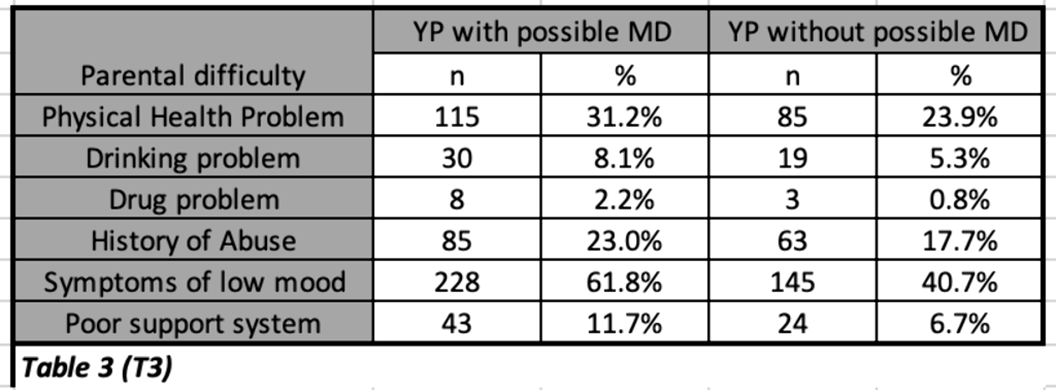
25.2% of YP were identified as being at risk of suffering from a MD (T1). Only 10% of these were referred to MHS. A greater proportion of YP identified as having a possible MD (compared to those without), were found to have a physical impairment (19%), problematic family dynamics (12%), adverse life events (T2) and parents with a history of health/social problems (T3).
Conclusions
The K-SADS will be conducted on YP identified as having a possible MD to ascertain a categorical diagnosis and establish prevalence rates for MDs as defined by DSM-5 criteria. Recommendations to improve and develop new mental health services to meet the needs for these YP will be disseminated amongst commissioners.
Body image dissatisfaction entails an activity, which is nothing else but an attempt for deliberate regulation of their body. It has different kinds and manifestations. Most researchers focus on such body regulation practices as weight control, muscles build-up, or cosmetic surgery.
Objectives
Our goal is to work out a psychological hierarchical model of body regulation practices aimed at abating a person’s dissatisfaction with their body image.
Methods
Using a method of agglomerative hierarchical clustering, we carried out a multivariate classification of 122 respondents’ answers to the Body Regulation Practices Survey (E. Nikolaev), which allows establishing the frequency of the respondents’ use of each of the 11 variants of body regulation practices offered in the survey.
Results
Based on the results of 11 variables of a dendrogram, we established two data arrays, combining correspondingly 4 and 7 versions of body regulation practices. The first array comprises two pairs of clusters – physiological practices and weight control, as well as practices of personality and spiritual development. We identified it as “developmental body regulation practices”. The second array includes two paired clusters – aesthetic medicine and body modifications; image making and hetero-aggressive practices. Merging with the four practices mentioned above on a higher level of the hierarchy are auto-aggressive and inertial practices. We identified this array as “compensatory – non-adaptive body regulation practices”.
Conclusions
The devised model can become the basis for further advanced research in the area of body regulation in cases of dissatisfaction with body image.
There is a widely known stereotype about medical majors repeated by generations of medical practitioners called ,,medical student disease”. It’s based on a belief that unexperienced students are prone to develop pathological fear of medical conditions they are studying about.
Objectives
The aim of the study was to examine two populations of students - medical and non-medical ones in order to compare their level of hypochondriacal behavior and health-related anxiety. Moreover we looked for other factors which might have had an influence on hypochondria and nosophobia among them.
Methods
The proprietary questionnaire was completed by 606 students (303 medical students of the Medical University of Silesia in Katowice and 293 students of the 3 largest non-medical universities in Katowice).
Results
The results show that medical students receive same scores on a nosophobia scale as students of non-medical universities (p=0,5). The analysis of hypochondriacal behavior showed significantly higher results in non-medical students group (p=0,02) .The higher medical students were at the stages of academic education, the higher the results of nosophobia they obtained. In the entire study group female received higher score in relation to the fear of illness (p = 0.001). People with mental disorders achieve significantly higher results of nosophobia (p <0.001 in the entire group) and of hypochondria (p <0.001 for the entire cohort).
Conclusions
Our study challenges the widespread belief that medical students, compared to their peers, are overly anxious about their own health. Gender and having a mental illness are predictors of hypochondria and nosophobia.
Few studies have explored ethnic inequalities in physical and mental health in women at preconception.
Objectives
Explore inequalities in multimorbidity in women of reproductive age.
Methods
Data from Lambeth DataNet, anonymized primary care records of this ethnically diverse London borough, linked to anonymized electronic mental health records (“CRIS secondary care database”) were extracted on preconception risk factors including BMI, smoking, alcohol, substance misuse, micronutrient deficiencies and physical health diagnoses for women aged 15-40 with an episode of secondary mental health care (January 2008-December 2018) and no pregnancy codes (n=3,633) and a 4:1 age-matched comparison cohort (n=14,532) .
Results
Women in contact with mental health services (whether with or without SMI diagnoses) had a higher prevalence of all risk factors and physical health diagnoses studied after adjustment for deprivation and ethnicity. Women from minority ethnic groups [79.5% of total sample] were less likely to be diagnosed with depression in primary care compared to White British women [adj OR 0.66 (0.55- 0.79) p<0.001] and Black women were more likely to have a severe mental illness [adj OR 3.41(2.63-4.43), p<0.001]. Black and Asian women were less likely to smoke or misuse substances and more likely to be vitaminD deficient. Black women were also significantly more likely to be overweight [adj OR 4.56(3.96-5.24 p <0.001] and have two or more physical health conditions [adj OR 2.98(2.19-4.07) p<0.001] than White British women after adjustment for deprivation and SMI diagnoses.
Conclusions
Our results highlight a need for culturally centered integrative models of care across primary and secondary mental health services.
Disclosure
Closing the Gap is funded by UK Research and Innovation and their support is gratefully acknowledged (Grant reference: ES/S004459/1). Any views expressed here are those of the project investigators and do not necessarily represent the views of the Closing
Bilateral cingulotomy and anterior capsulotomy are two neurosurgical procedures which are reserved as a last resort for cases of severe OCD in Spain; these procedures are not approved in cases of AN.
Objectives
We present the case of a 29-year-old female patient who was diagnosed with anorexia nervosa (AN) when she was 15 (2006). Due to the severity of the case the patient needed to be hospitalized for many months due to excessive weight loss. She was also treated in an out-patient department and started several intensive psychotherapeutic procedures. In 2015 the patient’s family took her to a private clinic where she was diagnosed with Obsessive-compulsive disorder (OCD) and had a bilateral cingulotomy and anterior capsulotomy.
Methods
A case report where the ethical implications of the case are weighed alongside a review of the relevant literature regarding neurosurgical treatments of AN.
Results
There were no significant short or long term improvements in terms of Body Mass Index or reduction of symptoms, the patient’s cognitive functions showed a decline in neuropsychological tests. Contrary to that the patient has needed hospitalizations for at least 9 months per year since the surgery and has needed admission in the Intensive Care Unit at least 3 times because of extreme malnutrition. Due to her need for chronic hospitalization was institutionalized in a long-stay psychiatric hospital.
Conclusions
Psychosurgery is a controversial therapy which has limited evidence in cases of AN. Our case shows the way in which neurosurgical procedures can do more harm than good and worsen the prognosis of patients.
Since last year there has been a lively ethical discussion in Poland about the influence of religion and new cultural currents on medical ethics. There are many ways to work towards increasing ethical sensitivity in education of mental health care professionals.
All texts dealing with issues described were collected and divided into three groups: promoting new currents of thought, faithful to tradition, others. Presented views were analyzed basing on Polish Code of Medical Ethics (nil.org.pl/uploaded_images/1574857770_kodeks-etyki-lekarskiej.pdf) and compared with dominating philosophical schools.
Results
A total of 33 articles were published: 20 presenting new approach to medical ethics, supported by the Editorial Board (72% of the total), 7 embedded in traditional values (22%), 6 without a clear stand or denying the discourse on ethical issues (6%). Articles presented philosophical views (personalism, virtue ethics, utilitarianism, constructionism), discussed ethical standards, actions contrary to the dignity of medical profession, value of human life, compliance of arguments with medical knowledge, principles of dealing with patients in terminal states, the duty of care for the pregnant woman and her child.
Conclusions
All texts show dilemmas in our environment, reflect views in Polish society and in ethical discourse around the world. Thanks to them, readers familiarize themselves with the contemporary ethical debate and form their own opinions; also they are encouraged to reach for the indicated sources and their own research.
Hospitalization in psychiatry is marked by the use of care without consent.
We therefore proposed to study from this perspective the feelings and opinions of patients on such an experience.
Objectives
The objective of this work is to explore the experiences of patients and their perception of the effects of this hospitalization, through 3 fundamental ethical principles: Autonomy, beneficence and non-maleficence.
Methods
This study will be conducted at Arrazi Psychitaric Hospital, in patients at the end of their stay, via a questionnaire.
Results
A total of 122 patients attended the study. A very large proportion of patients were satisfied with the premises, space planning, and had knowledge of a structured planning of the organization of care. A senior doctor was identified by 95% of them. Eighty five per cent were free to move around in the hospital.
The information on the care offered was perceived by 83.7%. The rates are lower with respect to clear explanations received on the disease, the effects of drugs and the type of hospitalization.
Regarding the feelings experienced during the stay, 83% of people who spoke mentioned a painful experience. The feelings that prevailed were a feeling of helplessness, fear, worthlessness. On the other hand, a majority of patients expressed that the hospitalization had protective effects towards themselves and towards others, but that it wasn’t justified.
Conclusions
These results suggest that autonomy and beneficence are respected. Therefore, an attention should be paid to various information given during the stay.
The era of the paternalisation of the patient is over, gradually giving way to new models, in particular that of “shared medical decision making”, with the aim of responding to the growing desires of the patient and giving priority to his autonomy.
Objectives
to establish the influence of the new active position of the patient in the therapeutic process on the satisfaction of the psychiatric patient.
Methods
This is a descriptive cross-sectional study that took place over a period of 5 months from April 2019 to August 2019 in two university hospital psychiatry departments of Razi Hospital in Tunisia . The questionnaire was administered outside any period of hospitalisation, in order to increase the reliability of responses. We used a pre-established form including socio-demographic data, clinical data concerning the patient’s mental disorder followed by a patient satisfaction questionnaire regarding the quality of care received in a psychiatric setting.
Results
The patients interviewed in our study reported a good level of satisfaction (67.5%) with their involvement in the therapeutic process. However, 45.5% of the patients expressed dissatisfaction with the information provided to them by their doctor about their mental health status. The majority of the subjects surveyed expressed satisfaction with the quality of the interviews conducted during hospitalisation (71%) and with the time spent with the doctor (67%).
Conclusions
Despite the fact that providing information to patients with mental health problems is a key element of patient satisfaction, not enough doctors actually include it in their daily practice.