We partner with a secure submission system to handle manuscript submissions.
Please note:
You will need an account for the submission system, which is separate to your Cambridge Core account. For login and submission support, please visit the
submission and support pages.
Please review this journal's author instructions, particularly the
preparing your materials
page, before submitting your manuscript.
Click Proceed to submission system to continue to our partner's website.
To save this undefined to your undefined account, please select one or more formats and confirm that you agree to abide by our usage policies. If this is the first time you used this feature, you will be asked to authorise Cambridge Core to connect with your undefined account.
Find out more about saving content to .
To send this article to your Kindle, first ensure no-reply@cambridge.org is added to your Approved Personal Document E-mail List under your Personal Document Settings on the Manage Your Content and Devices page of your Amazon account. Then enter the ‘name’ part of your Kindle email address below. Find out more about sending to your Kindle.
Find out more about saving to your Kindle.
Note you can select to save to either the @free.kindle.com or @kindle.com variations. ‘@free.kindle.com’ emails are free but can only be saved to your device when it is connected to wi-fi. ‘@kindle.com’ emails can be delivered even when you are not connected to wi-fi, but note that service fees apply.
Trichotillomania (TTM), also known as hair pulling disorder, is an obsessive- compulsive disorder characterized by the recurrent, overwhelming urge to repeatedly pull out one’s hair. Hair pulling can occur anywhere on the body but is most common on the scalp, eyebrows, and eyelashes and subsequently results in bald patches. While TTM is a very prevalent, debilitating disorder, there is still no FDA approved treatment that exists.
Objectives
The main objective of this study is to explore the various forms of available psychotherapy available for the treatment of trichotillomania.
Methods
Two independent reviewers conducted title, abstract, full-text searching and data extraction among the PubMed, PsycINFO, and ResearchGate data bases. Of the 79 articles screened, five were included in this review
Results
Habit reversal therapy (HRT) is a form of cognitive behavioral therapy that is considered the first line treatment for management of TTM. Other psychotherapeutic techniques include acceptance and commitment therapy, progressive muscle relaxation, and mindfulness therapy.
Conclusions
This study supports the current data which states that HRT is the first line treatment and there is yet to be a pharmacological treatment of choice for TTM. It is also very important to note that TTM is still underdiagnosed and can be mistaken for a dermatological disorder like alopecia aerata. Furthermore, many people with trichilemmoma have underlying mental health disorders such as anxiety and depression that must first be addressed before treating the hair pulling itself.
Background: Obsessive-compulsive disorder (OCD) is a condition that includes distressing obsessions and repetitive compulsions. Usually presents with a wide range of symptons normally grouped into different clusters or dimensions. clinical impression and some empirical data suggest that certain groups of symptoms or clusters are more responsive to treatment than others, thus it can help clinicians to better guide initial treatment choices and management of individual patients
Objectives
Objetictive: to describe the symptom dimensions in a clinical database that includes patients accompannied in an obssessive conpulsive disorder consultation in a tertiary hospital in Portugal and to point out some differences in treatment outcomes.
Methods
We searched Pubmed and Cochrane Library database for english language articles.
Results
To date it appears that pharmacotherapy and CBT are an effective treatment for the various OCD dimensions, although not all dimensions have been adequately studied or respond well to treatment. Knowing a specific symptom profile may have implications in treatment components that clinicians should be aware of.
Conclusions
More research will be needed to determine the best tailor treatments to each patient’s profile and Modifications to treatment may be needed. Clinical implications and directions for future research are discussed.
Obsessive-compulsive disorder is a disorder in which recurring, intrusive, unwanted thoughts, ideas or sensations cause them to feel driven to do something repetitively. The repetitive behaviors can significantly interfere with a person’s daily activities and social interactions. Not performing the behaviors commonly causes great distress.
Objectives
Clinical trials are required for proper assessment and management of this group of patients.
Methods
Mrs. X, a 28 year old female coming for psychiatric consultation with the complaints of self talking, irritability and aggression, insomnia.She fantasizes a man publicly, whom she loves but he has no existence in reality. She tries to solve all kinds of problems by talking to that fantasy man. If anyone interrupts her, she becomes irritable, shouts and breaks things. But for the last 3 months she realized that its a problem. Because, she can’t eat, sleep and concentrate on her household chores for this fantasy. Even she can’t take care of her child and feeling low sexual affection for her husband. On personal history, she said that she had poor attachment with her parents.
Results
After thorough assessment, her consultant Psychiatrist told that she was sufering from unhealthy fantasy obsession or Obsessive Compulsive Disorder.
Conclusions
It is very important and urgent to assess and manage this group of patients, because this has a devastating impact on relationships, specially on the conjugal life. Psychoeducation about the ilness and Psychotherapy along with pharmacotherapy should be the mode of treatment.
Obsessive-Compulsive Disorder (OCD) is characterized by the presence of intrusive thought (obsessions) and ritualistic behaviour (compulsions). First-choice psychopharmacological treatment is based on serotonin reuptake inhibitors (SRIs). However, about half of OCD do not or partially respond to SRIs (TR-OCD) and need an augmentation strategy with second-generation antipsychotics (SGAs).
Objectives
We report a case of severe OCD with comorbid anorexia nervosa, restrictive type (AN-r) treated with fluoxetine (up to 40 mg daily) and lurasidone (37 mg daily bedtime) augmentation.
Methods
At baseline and monthly 4-months-follow-up were administered Y-BOCS-II (Yale-Brown Obsessive Compulsive Scale), CGI-S (Clinical Global Impression-Severity), SCL-90 (Symptom Checklist-90 items) and EDI-3 (Eating Disorder Inventory-3).
Results
Compared to the baseline, a clinically significant clinical response was observed on OC at Y-BOCS-II (≥35% Y-BOCS reduction) and eating symptomatology at EDI-3 after 1 month of augmentation treatment, while a full remission after 3 months (Y-BOCS scoring ≤ 14)(p<0.01). We also noticed, throughout clinical follow up interviews, improvement in patient’s social skills and life satisfaction.
Conclusions
Further longitudinal and real-world effectiveness studies are needed to confirm these preliminary findings and investigate the potential of lurasidone augmentation strategy in attenuating OC symptomatology in TR-OCD and whereas a comorbid AN-r is present.
Obsessive Compulsive Disorder (OCD) is a psychiatric disorder associated with suffering and disability. The serotoninergic system is implicated in the neurobiological processes of OCD and serotonin reuptake inhibitors (SRIs) are the first-line treatment. However, clinical improvement after starting SRIs can take long and patients may not fully recover. Meanwhile, recent data suggests that activation of 5-HT receptors may exert a therapeutic action in obsessional symptoms. Some psychedelics are strong 5-HT2 receptor agonists and there is a growing research interest as they can be a promising therapeutic approach to OCD.
Objectives
We aim to provide an overview on the current evidence on the therapeutic potential of serotoninergic psychoactive substances in the treatment of OCD.
Methods
Non-systematic review. Literature search in the PubMed database using the terms psychedelics and obsessive-compulsive disorder.
Results
Although research is currently limited to a few small studies, the ones conducted so far showed clinically meaningful acute reduction of OCD symptoms after treatment with serotoninergic psychoactive drugs, as well as possible longer-lasting benefits, particularly with psilocybin and lysergic acid diethylamide (LSD). Furthermore, substance-assisted psychotherapy with psychedelics has been showing promising results, being suitable for OCD treatment. It is important to add that, to date, studies have indicated relatively good tolerability to these drugs.
Conclusions
These promising early findings highlight the role of psychedelics in OCD treatment and the need for further research into efficacy, therapeutic mechanisms and safety, in order to determine whether these drugs may be worthy options for OCD treatment in the future.
Obsessive-Compulsive Disorder (OCD) was recently (in 2015) associated with suicidal risk, regardless of depression or other mental disorders, but it is a disorder with great heterogeneity, and the subtypes involved in this risk have not yet been clarified.
Objectives
To verify which patterns of OCD symptoms are more associated with suicidal risk, other possible risk factors and better treatment options evidenced in the literature.
Methods
Literature review with predefined search criteria and keywords in electronic databases (Pubmed, Virtual Health Library and Cochrane) between 2015 and 2020. Identification, analysis, calculation and synthesis of the results were carried out in a descriptive and qualitative manner.
Results
Twenty five articles were included. Obsessions of unacceptable thoughts pattern, perfectionism traits and alexithymia are important predictors of suicidal risk. Compulsions were not associated with suicide. Depression is the comorbidity with the greatest impact on suicidal ideation. Better socioeconomic status, education, and female gender are protective factors for mortality. The method chosen for attempts is preferably non-violent (drug intoxication). Treatments derived from cognitive behavioral therapy are currently being investigated further, and in addition to the evidence for the use of selective serotonin reuptake inhibitors, antipsychotics have been used as an adjuvant.
Conclusions
Unacceptable thoughts play an important role in suicide resulting from OCD, and the absence of compulsive behavior may be correlated to suicide risk. Treatment directed at cognitions seems relevant. Further studies are needed to clarify the appropriate approach in this subtype of the disease.
54-year-old female patient who came to hospital due to psychopathological decompensation of her Obsessive-Compulsive Disorder (OCD), after 35 years under follow-up. Parkinson´s disease. Psychopharmacological treatment: sertraline 100 mg (1-0-0); lorazepam 2 mg (1-1-1); Levodopa/carbidopa 100/25 mg (1-1-1). Distressed at first examination. She described increase in rituals, important intake restriction, weight impact and difficulties in home management with functional repercussions. Psychopathological exploration: conscious, oriented, and approachable. Circumstantial speech with no obsessive ideas. Increased frequency of repetitive behaviours led to a functional deterioration, becoming dependent for activities of daily living. Elevated anxiety. No major mood disorder. No psychotic symptoms. Bradykinesia. Hypophagia without anorexia. Admission is carried out. Good evolution: improvement in motor symptoms and intake restoration. No changes in repetitive behaviours.
Objectives
To discuss the differential diagnosis between OCD and Frontotemporal Dementia.
Methods
Repetitive behaviours were initially understood as rituals typical of OCD. However, the absence of both a fixed pattern of behaviour and a structured obsessive ideation, made us consider the possibility of frontal perseveration behaviours. For this reason, a neuropsychological evaluation and a functional neuroimaging test were performed: Test Mo-CA: 9/30 with striking failures in executive functions. SPECT: mild uptake defect in the left frontotemporal region.
Results
Finally, in view of the impairment in executive functions and the frontal defects in neuroimaging, we change the initial diagnosis of OCD towards a Neurocognitive Disorder of probable frontotemporal origin.
Conclusions
The presented case evidenced the importance of differentiating obsessive compulsions from frontal perseverance to guide the differential diagnosis, given the implications for therapeutic management and prognosis.
Sexual well-being (SWB) of the older population can be significantly influenced by age (1) and sexual difficulties (2).
Objectives
Through qualitative research, this study focused on sexual themes that affect the SWB addressed by the older people in person-centered therapy.
Methods
Twenty-five older adults, aged between 65 and 82 years and residents on the community participated in this study.
Results
The results revealed eight main themes for these participants: Absence of a partner, family interference, dissatisfaction with the body, cleanliness and body care, problems in sexual function, physical violence, problems in sexual communication and fear of contracting sexually transmitted diseases. The most discussed themes were the absence of a partner, problems with sexual function and dissatisfaction with the body.
Conclusions
This study highlights the importance of exploring the sexual difficulties that the older population feels in relation to their SWB. 1.von Humboldt S et al. Sexual expression in old age: How older adults from different cultures express sexually? Sex Res Social Policy. 2020;1-15. 2.von Humboldt S et al. Are older adults satisfied with their sexuality? Outcomes from a cross-cultural study. Educ Gerontol. 2020;46:284-293.
Depression is one of the most frequent mental health problems in older populations.1 To the best of our knowledge, the prevalence of depressive symptomatology (DS) among centenarians in Switzerland is unknown. Furthermore, the COVID-19 pandemic may have had a negative impact. As part of the study SWISS1002, we intend to provide key information on centenarians’ levels of DS.
Objectives
To describe the DS of Switzerland’s centenarians during the COVID-19 pandemic.
Methods
Randomly selected centenarians from across Switzerland and their proxy relatives were invited to participate. Data are collected via telephone. The questionnaire includes the assessment of DS via the Geriatric Depression Scale (GDS)– 5 items.3 Preliminary data were analysed using descriptive statistics.
Results
Telephone interviews were completed with 51 centenarians, and for 19 of them, proxy relatives also answered. The MAge of the centenarians was 101.41 (1.47) years, 34 (66.67%) were female and 27 (52.94%) lived at home. The mean score of the GDS–5 was 1.32 (SD=1.49). Considering a cut-off ≥2, 18 (36%) centenarians were screened positive for possible depression. Descriptive statistics indicated effects of gender (men: M=1.41, SD=1.46; women: M=1.27, SD=1.53) and living situation (private: M=1.07, SD=1.36; institution: M=1.61, SD=1.62). Centenarians’ and proxy reports were significantly related (ρ=0.56; p<.05).
Conclusions
Clinically relevant DS are highly prevalent among centenarians during the COVID-19 pandemic (36%), which is consistent with a recent study4 reporting a prevalence of 32% in a sample of younger older adults (MAge: 77.6, SD=6.9). To conclude, DS in centenarians should be screened systematically, especially in this time of unprecedented health crisis.
Frontotemporal dementia (FTD) is common in presenile population. The overlapping symptoms with other psychiatric disorders can lead to wrong/late diagnosis which cause delays/difficulties regarding case-management. Especially, long-standing and/or late-onset depression can descriptively envelop bvFTD (behavioral-variant) and leads to unnecessary treatments and increased distress. It’s important to implement a descriptive diagnostic algorithm which will help clinicians to distinguish the phenomenology of these disorders.
Objectives
This presentation aims to call attention of the clinicians/researchers to an elaborated effort concerning differential diagnosis of two common disorders with overlapping features through a case-study of a 59-year-old male patient.
Methods
One case from an inpatient unit of a psychiatric clinic in Lower Saxony, Germany will be reported.
Results
Case: The patient was referred to our acute-psychiatric-ward from the day-clinic-unit because of treatment-resistant, severe and long-lasting depressive symptoms. He was depressed, desperate, hopeless, listless and had suicidal thoughts. During the first days of treatment, symptoms like apathy, bad hygiene, weird eating-behavior, urinary incontinence, lack of empathy, language disorders and other behavioral symptoms were evident. Brain-MRI yielded frontotemporal lobar atrophy. Trail-Making-Test and Frontal-Assessment-Battery showed pronounced impairment of executive functions. Mini mental state examination and DemTect yielded light to moderate memory dysfunction. Diagnostic Criteria for Probable bvFTD (International-Consensus-Criteria) were fulfilled.
Conclusions
The diagnosis of bvFTD enabled a rapid assignment of a legal representative and relieved the long-lasting discomfort of the patient and his family that was caused by multiple unsuccessful treatment trials against depression. The differential diagnostic frame between bvFTD and depression will be discussed in view of the current literature.
Among non-communicable diseases, depression is a leading cause of morbidity in elderly people with varying magnitude across countries. No systematic review and meta-analysis has yet examined the pooled prevalence of depression among elderly in Africa.
Objectives
The current systematic review and meta-analysis aimed to estimate the pooled prevalence of depression among elderly people in Africa.
Methods
We have searched CINAHL, PubMed, SCOPUS and Psych-iNFO databases to identify observational studies which reported the prevalence of depression among the elderly. We used a random-effects model due to reported heterogeneity among the studies. The publication bias was examined by using egger’s test, visual inspection of the symmetry in funnel plots and adjusted using Trim and Fill analysis. We used Cochran’s Q and the I2-tests to measure heterogeneity across the studies.
Results
A total of 23 studies conducted in Africa were included in the current systematic review and meta-analysis, representing a total of 14, 350 elderly population. The pooled prevalence of depression among elderly people in Africa was estimated to be 26.3% (95% Ci; 22.2, 30.4%). The estimated pooled prevalence of depression among the elderly in Africa was much higher (43.1%) in studies that used a screening tool to measure depression when compared to studies that used a diagnostic tool (24.2%). Also, the prevalence of depression among female elderly participant (43.10%) was higher than that of male elderly participant (30.90%).
Conclusions
One in five elderly population in Africa were depressed. Timely and targeted screening of depression among the elderly and evidence-based interventions were highly recommended.
Autism spectrum disorder (ASD) is a neurodevelopmental disorder characterized with ritualized behavior, difficulties in communication/ social interaction, restricted interests, and sensitivity to external stimuli. The ASD has gained attention in recent years, however it’s still difficult in geropsychiatric setting to identify high-functioning ASD, especially when patients’ coping mechanisms are successful. Not to determine high-functioning ASD structure in older age can lead to wrong diagnosis and inappropriate treatment trials.
Objectives
The aim of this presentation is to emphasize the importance of the evaluation of ASD-structure in old-age-psychiatry through the case study of a 65-years-old man.
Methods
One case report from the inpatient unit of a psychiatric clinic in Lower Saxony, Germany will be presented.
Results
Case: The patient was referred to our acute-psychiatric-ward due to delusional thoughts, depressive symptoms and lorazepam dependency. Delusional disorder was diagnosed in the outpatient-setting since he had interpreted some external stimuli in an eccentric way. During the therapeutic process, some features of high-functioning ASD such as social difficulties, dislike of change and repetitive/restrictive habits were prominent. Developmental history of the patient and the Autism-Spectrum-Quotient-50 also supported the clinical diagnosis of the ASD. Delusional disorder was excluded, and the therapy organized according to the structure characteristics of the high-functioning ASD which yielded to significant amelioration of depressive symptoms and increased perceived life quality of the patient.
Conclusions
Although coping mechanisms of the patients can be successful, identifying high-functioning ASD-structure even in an old-age can be quite helpful in diagnostic/therapeutic processes. An elaborate discussion of the subject through contemporary literature will be presented.
The large proportion of patients with late-onset schizophrenia (LoS) has cognitive impairment. We hypothesized that this group of patients could have more risk factors associated with neurodegeneration.
Objectives
The aimed to compare various clinical and risk factors in LoS patients with low and relatively preserved cognitive status.
Methods
28 LoS patients (ICD-11) with duration of disease less than 10 years from a cohort of patients with late onset psychosis underwent clinical assessment (PANSS, HDRS-17), cognitive examination (MMSE, MoCA, FAB, verbal and symbolic memory, trail making test (part A, B)), structured interviewing on risk factors and CT. Hierarchical cluster analysis of cognitive test results was applied. Nonparametric statistic was used to compare control group (24 subjects with signs of psychosis or depression, age 58,1±10,8, 50% females) and patient`s groups.
Results
Patients were divided on two clusters: Cluster 1 with lower cognitive functions (n=20, age 62,2, 94% of females) and Cluster 2 with preserved cognitive functions (n=8, age 56,8, 100% of females). Patients of Cluster 1 were older, had more negative symptoms, higher atrophy scores, higher rate of leukoaraiosis on CT and more history of mild brain injury than patients of Cluster 2 and controls. There was no group differences in age of manifestation, other PANSS scores, rates of social phobia and number of habitual anxiety reactions between clinical groups.
Conclusions
LoS patients with cognitive deficiency had more factors associated with neurodegeneration, in particular history of mild brain injury.
Sexuality, which is an essential part of human life, is an instinct with the potential to cause or be caused by health problems. Although qualitative and quantitative characteristics of sexual life evolves over time, it may continue until the age of eighties.
Objectives
This descriptive-correlational study aimed to analyze the relationship between general health status, quality of life and sexual life among senior people.
Methods
Study was conducted with the participation of 323 (169 female and 154 male) older people at the age of 65+. The participants were clients of the inpatient and outpatient services in a general hospital in Istanbul. General Health Questionnaire, Arizona Sexual Experiences Scale and Quality of Life Scale in Older People were used to collect data via online survey.
Results
The quality of life was better and sexual problems were lower for the participants who had a partner, higher education level, lower age, a regular job, sufficient income, no chronic disease, who defined their relationship as sufficient, frequently engaged in sexual activity and who considered themselves as attractive.
Conclusions
Sexuality in older people changes over time and continues to hold its importance. Researchers should consider the importance of the quality of life on sexual satisfaction in older people.
Patients with high fraility indices experience poor mental health due to multiple co morbidity and social isolation.
Objectives
This was a retrospective observational analysis that studied the correlation of Electronic frailty indices and GAD scores with Depression scores in a rural population.
Methods
An annual frailty assessment is offered to elderly patients and we screen routinely for anxiety and depression using the PHQ-9 score and GAD score. This was an observational study examining the correlation of the Electronic Frailty Indices (EFI) depression and anxiety scores.
Results
Of the 118 patients ranging from mild to severe frailty we found a positive correlation of the EFI with the Depression and anxiety scores. Within the data set, the correlation coefficient of EFI scores and PHQ 9 scores was found to be 0.819. Similarly within the same data set we found a correlation coefficient of EFI and GDS scores of 0.651. The higher the EFI the greater was the scale of dependency and comorbidity and this correlation was consistent across the data set with depression and anxiety. We believe physical impairment, loss of independence and social isolation cognitive decline contribute to loss of self-esteem.
Conclusions
Our study found a positive correlation between frailty severity based on EFI scores and depression and anxiety severity. Early detection in deterioration of mental health will enable supportive measures and targeted treatment strategies. Our study shows the strong correlation of EFI severity scores with worse mental health.
Mild cognitive impairment is one of the commonly reported disorders nowadays in old age individuals,it might represent the prodroma of definite dementia.There is a novel Arabic tool now which could help in the evaluation of cognitive functions in these patients.
Objectives
1-To study the cognitive functions in mild cognitive impairment by a novel Thinc-it tool (Arabic version) 2-To compare between Mini Mental Status Examination ( Standard test) and the novel Thinc-it battery ( Arabic version ) in detection of cognitive dysfunctions in these patients.
Methods
1-The Mini Mental State Examination (MMSE) is a tool that can be used to systematically and thoroughly assess mental status. It is an 11-question measure that tests five areas of cognitive function: orientation, registration, attention and calculation, recall, and language. The maximum score is 30. A score of 23 or lower is indicative of cognitive impairment. The MMSE takes only 5-10 minutes to administer and is therefore practical to use repeatedly and routinely 2-Thinc-it THINC-it® is a screening tool designed to measure cognition and provides important data for an overall evaluation of whether cognitive functioning is impaired,it includes the folloowing tests:
1. PDQ-5D Subjective Questionnaire
2. “Spotter” – CRT game
3. “Symbol Check” – Nback game
4. “CodeBreaker” – DSST game
5. Trails – TMT game
Results
The results of Thinc-it (Arabic version) is statistically correlated to the mean score of Mini Mental state Examination,this means this Arabic version is a valid novel tool for assessment of Cognitive dysfunctions .
Conclusions
Arabic version of Thinc-it can be used in cognitive evaluation
Iatrogenic factors, such as polypharmacy and prescription cascade, are some of the main causes of delirium in the elderly. We present a case of delirium of months of evolution that improved after applying a pharmacological de-prescription strategy.
Objectives
To report a case and review the available literature on the concepts of prescription cascade and de-prescription in delirium in the elderly.
Methods
A 92-year-old woman with a history of cerebrovascular accidents and no psychiatric history or dementia was admitted to a psychogeriatric clinic due to disorientation, delusions of harm and gait apraxia. Several months earlier she had required admission to the general hospital for agitation. In view of the suspicion of delirium, an exhaustive examination and complementary tests were performed, including a neuropsychological assessment and a brain scan (Image 1).
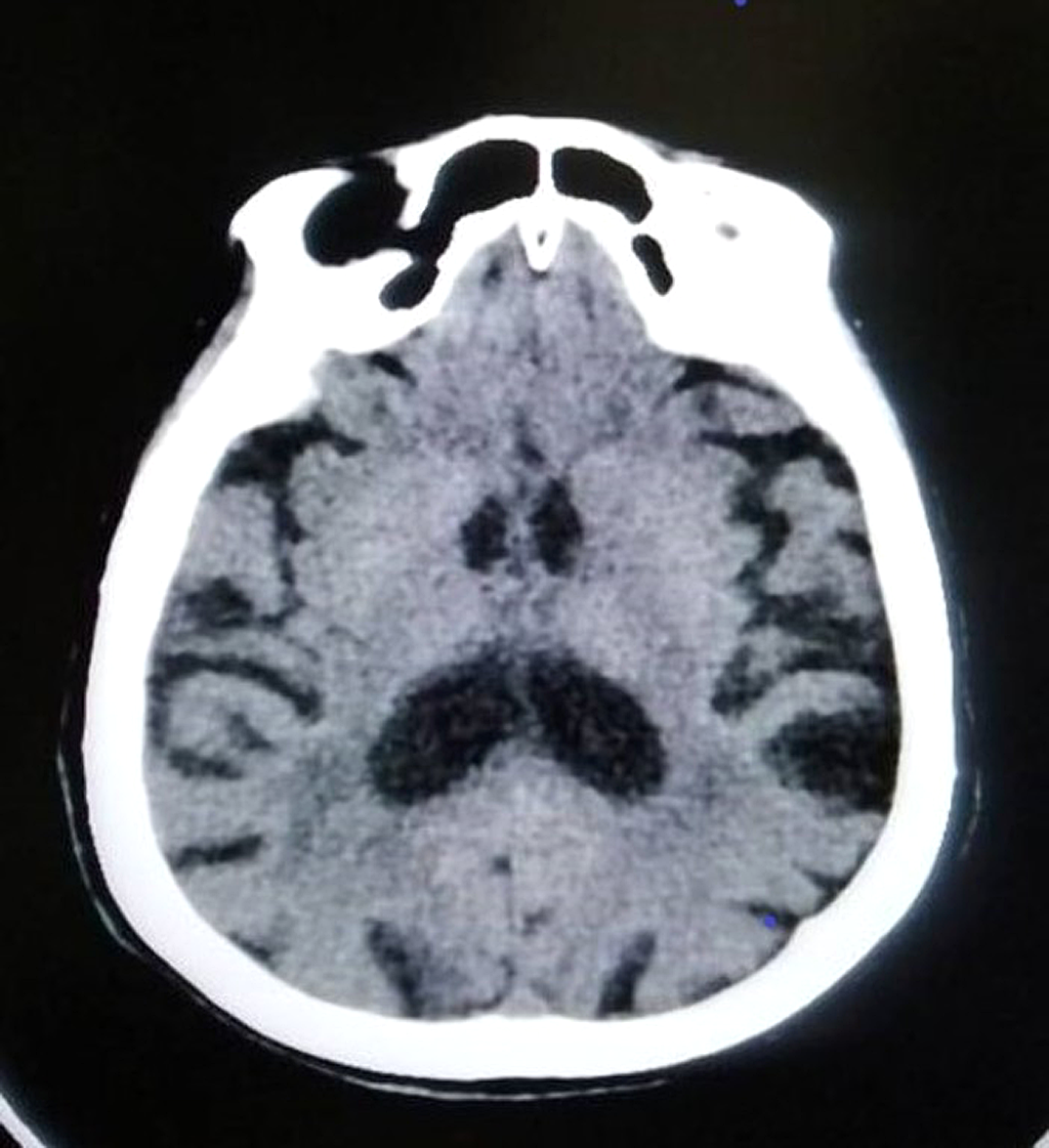
Results
The patient had previously received multiple high-dose psychotropic drugs (Gabapentin, trazodone, Zolpidem, Quetiapine), which had reduced the agitation but had not resolved the problem. Organic causes were treated in a multidisciplinary team (pressure ulcers), together with a gradual tapering of medication. Although underlying vascular dementia was diagnosed, the patient’s gait and cognitive status improved, with a significant impact on her autonomy and quality of life.
Conclusions
Despite an extensive literature on the subject, delirium in the elderly remains an under-diagnosed medical condition, especially the hypoactive subtype, just as cascade prescribing remains common. It is important to raise awareness among specialists in training to prevent and diagnose it.
The presentation considers the peculiarities of late adulthood, different views on the periodization of older ages (World health organization, I. Burnside, H.S. Pryazhnikov).
Objectives
The research is aimed at studying the peculiarities of late adulthood.
Methods
The method of work is a bibliographic analysis.
Results
Reveals the structure of psychological age (concept by L.S.Vygotsky), the specificity of the development in late adulthood and features of the social situation of development. Reveals modern ideas of ageing as a process not only of involution and loss, but also a process of continued development. The greatest attention is paid to the peculiarities of development tasks at older ages and the difficulties faced by older people trying to cope with them. There are the brief overview of the positions of C.G.Jung, A.Adler, E.Erikson, R.Peck, G.M.Bryugman, A.G.Liders, N.S.Pryazhnikov, E.E.Sapogova, I.V.Shapovalenko, V.I.Slobodchikov, G.A.Zuckerman, etc. regarding the development tasks in late adulthood. The comparison of the development tasks of early and late age periods by G.M. Bryugman, which shows that the tasks of aging worse defined, at least sequentially ordered, and the results of solution of development tasks is less predictable than in earlier ages.
Conclusions
We can say that in old age is important not only the task of adjusting to different changes of pace of life, quality of life, social circle, etc., and overcome the negative aspects of aging but also issues of self-development. As the primary development task in late adulthood is considered an achievement of his own integrity and finding the meaning of life.
Alzheimer’s disease (AD) is a neurodegenerative pathology that develops mainly in elderly and senile people. Disruption of BDNF transport or suppression of its production appears to be typical for people of old age. Objective: To investigate the influence of Alzheimer’s disease on the secretion of brain factors and correlate with neuropsychological profiles.
Objectives
12 men (2) and women (10) with Alzheimer’s disease were examined. The average age of the subjects was 76.25 + 4.89. Methods: MMSE, ADAS-COG, laboratory - BDNF was performed using the G7611 BDNF Emax (R) ImmunoAssaySystem 5 x 96 wells, BDNF Emax® Immunological test.
Methods
2 patients have mild dementia, 8 patients have moderate dementia, 2 patients have severe dementia. The average age of patients with mild dementia was 72.0 + 1.0. The average MMSE score is 16.7 + 3.4.
Results
Correlation analysis showed a close relationship between a pronounced decrease in memory in memory tests (ADAS-COG) and a pronounced decrease in blood BDNF content (r = 0.676). A close statistically significant relationship was found between a low result of the recognition test and a low blood BDNF content (r = 0.598).
Conclusions
We assume that blood BDNF is a marker of pathologically accelerated aging of the central nervous system, since low test results for mnestic function are an indicator of severe degeneration in Alzheimer’s disease.
Catatonia is a neuropsychiatric disorder characterized by motor, behavioral and autonomic changes. It is associated with several psychiatric disorders, including dementia. Catatonia is an underdiagnosed syndrome, so it is important to draw attention to it. Here, we review a case of a patient admitted to our psychiatric department with a clinical presentation compatible with catatonia. After proper treatment, further assessment revealed dementia.
Objectives
This work aims to describe a case of catatonia in a patient with dementia.
Methods
Bibliographic research using Pubmed®. Clinical file consultation and patient interviews.
Results
Catatonia is a disorder that was already been described as part of several types of dementia. We present a 69-year-old female patient, admitted to our psychiatric department with clinical presentation compatible with catatonia. To admission, she presented some typical complications resulting from long immobility such as pressure ulcers and nutritional deficiencies. During the hospitalization, she developed a urinary infection and there was the need to tube feeding. She was treated with benzodiazepines and improved. Further assessment revealed dementia.
Conclusions
Catatonia in dementia is not uncommon, although it is an underdiagnosed syndrome, and when treated early and properly it has a good prognosis.