We partner with a secure submission system to handle manuscript submissions.
Please note:
You will need an account for the submission system, which is separate to your Cambridge Core account. For login and submission support, please visit the
submission and support pages.
Please review this journal's author instructions, particularly the
preparing your materials
page, before submitting your manuscript.
Click Proceed to submission system to continue to our partner's website.
To save this undefined to your undefined account, please select one or more formats and confirm that you agree to abide by our usage policies. If this is the first time you used this feature, you will be asked to authorise Cambridge Core to connect with your undefined account.
Find out more about saving content to .
To send this article to your Kindle, first ensure no-reply@cambridge.org is added to your Approved Personal Document E-mail List under your Personal Document Settings on the Manage Your Content and Devices page of your Amazon account. Then enter the ‘name’ part of your Kindle email address below. Find out more about sending to your Kindle.
Find out more about saving to your Kindle.
Note you can select to save to either the @free.kindle.com or @kindle.com variations. ‘@free.kindle.com’ emails are free but can only be saved to your device when it is connected to wi-fi. ‘@kindle.com’ emails can be delivered even when you are not connected to wi-fi, but note that service fees apply.
Disorganized attachment has been described as an important risk factor for developing serious mental disorders in childhood, adolescence and adulthood, such as borderline personality disorder, psychoses, afective disorders, and a higher suicide risk, for instance. Bonding disorders (BD) in parents are related to insecure and disorganized attachment in children. BD can be early diagnosed at 4 to 6 weeks after birth.
Objectives
Determine if there is a significant difference between the results of the prevalence of affective disorders, disorganized attachment, and suicidal risk five years after the birth of the offspring of parents with and without attachment disorders detected in the first year postpartum during the covid-19 pandemic.
Methods
Describe a pilot project of an analytical prospective study following a cohort of parents from the cohort SAMPECO/PEMHSCO (Perinatal Mental Health in Spain during the Covid-19 pandemic). The cohort is planned to be divided into two groups: with bonding disorders an without bonding disorders, which was established using the Postpartum Bonding Questionnaire (Brockington, 2006). Follow the offspring of both groups for 5 years and compare the results of disorganized attachment, affective disorders and suicide risk.
Results
The cohort SAMPECO/PEMHSCO was recruited between March 2021 and June 2022. There was measured postpartum depression in mothers and fathers using the EPDS and bonding disorders in parents using the PBQ validated to the Spaniard population. More than 1500 families were involved at the beginning and around 450 families finished the follow-up six months after birth. Around 500 families were lost because of non-right contact information.
Conclusions
The covid-19 pandemic has seriously affected the mental health of the general population. Consequently, there is a higher demand for mental health assistance by public and private sanity sectors. Currently, the youth population is suffering very much from the consequences of isolation and other social factors, and many families who had babies in this period haven’t had enough support to breed and look after both their babies and themselves. Some papers suggest that the prevalence of perinatal mental disorders in parents has increased since the covid-19 pandemic because of several factors. Paradoxically, despite the high preventive potential of early intervention in the perinatal period, there are not yet exist well-equipped perinatal mental health units to solve this problem. It is urgent to boost the development of Perinatal Mental Health Services to prevent a major worsening of the situation and to prevent the increasing rate of severe mental disorders in children, adolescents and adults.
Attempts at suicide and suicidal tendencies have been the most frequent and common reasons for adolescent inpatient treatments since the last Covid-19 pandemic. Indeed, the WHO has reported that the second most frequent cause of mortality in adolescents is related to suicidal acts.
Objectives
The Sun Project, which is a pilot research program aimed at finding a comprehensive set of steps for treatment, has been developed at the Versailles Medical Center in France and provides multidisciplinary tools to tackle this phenomenon.
Methods
This retrospective observational research with a cohort of fifty people between pre-teen and adolescence has taken advantage of different elements of specific psychotherapeutical approaches such as Acceptance and Commitment Therapy, Interpersonal Psychotherapy, Compassion, Narrative, Dialectical and Cognitive Behavioural Therapies in relation to Family-Based Therapy and employs elements of Emotional Freedom Techniques as well as the CESAR program (Cognitive, Emotional and psycho-Social Avatar Reinforcement program).
Results
The results have been very positive and this is attributed to the transdisciplinary network around each patient, family inclusion and the multi-pronged psychotherapeutic approach based on functional analysis of every patient’s situation.
Conclusions
In short, The Sun Project has shown that these approaches and interventions give excellent and rapid outcomes in pre-teens and adolescents suffering from suicide related thoughts and acts.
Autism spectrum disorder is a heterogeneous group of disorders that affects virtually every population, regardless of their ethnic or socioeconomic origin. The pathogenesis of ASD is probably multifactorial, based on interactions between genetic and environmental factors. Their key elements are disorders in the field of social communication, establishing and maintaining relationships and the so-called stereotypical and repetitive patterns of interests and activities. However, of the above- mentioned symptoms, the most important are communication disorders, which are the basis for many of the functional difficulties observed in these patients.
Objectives
The aim of the presented study was to analyze the clinical picture of social cognition deficits in males with autism spectrum disorders, and to link its elements with the frequency of alleles of selected polymorphisms within the OXTR and AVPR1A genes.
Methods
The study included 132 people, 77.5% of whom were male (n = 100). 113 participants (85.6%) were diagnosed with autism spectrum disorders confirmed by the ADOS-2 test conducted by a certified diagnostician. In this group, men constituted 76.1% of the population (n = 77). The remaining 28 people did not have a diagnosis of autism spectrum disorders, and in the ADOS-2 study they obtained the result below the cut-off level. The mean age in the whole group was 14.4 years (95% CI: 13.92-14.93).
Results
A higher frequency of the rs53576 A allele and the rs10877969 C allele could be observed than expected on the basis of the European / world population. In the case of the rs7294536 and rs2254298 polymorphisms, no differences in the distribution of alleles in relation to the expected values were observed. In the network analysis reference allele (T) of SNPs rs10877969 was linked to the higher outcome of the “social affect” domain of ADOS-2 and through it influenced ADOS-2 outcome. All other SNPs did not significantly affect neither domain of ADOS-2. Reference allele (A) of rs53576 was linked with higher odds ratio of clinical diagnosis of ASD in logistic regression. Similarly the rs10877969 polymorphism within the AVPR1a gene significantly shaped the risk of autism spectrum disorders, while in the combined analysis with rs7294536 within the haplotype, the observed effect was significantly stronger.
Conclusions
The studied polymorphisms may constitute an element of larger haplotypes which, depending on the number of mutated alleles, may determine the severity of autism spectrum traits, from the neurotypical population, through people with a broad autism phenotype, to people diagnosed with ASD. Further research is required on the potential clinical application of genotype analysis of the studied polymorphisms and on the exact mechanism of their impact on the risk of ASD and the development of social cognition disorders.
Anorexia nervosa (AN) is a widespread, metabo-psychiatric disorder with high relapse rates, comorbidity, and mortality. Many regulatory proteins and neurohormones studied to date play essential roles in the etiopathogenesis of eating disorders and the maintenance of psychopathological symptoms. Nevertheless, the regulatory and pathophysiological mechanisms of AN are still poorly understood.
Objectives
The present study aimed to investigate the plasma levels of asprosin (ASP) and apelin-13 (APE-13) in malnourished (AN1) and partially cured (AN2) adolescent patients with AN. Correlations between protein levels and several dimensions of AN symptomatology, such as eating disorder, depressive, and obsessive compulsive symptoms, were investigated.
Methods
Sixty-four patients aged 11–18 years admitted to the Department of Child and Adolescent Psychiatry in the acute phase of AN participated in the study. Between the 1st and 3rd days of admission, patients with AN (AN1) underwent psychometric evaluation, height and weight assessment, and 15 mL of blood was drawn. The same procedures were repeated at a second time point about 11.2 ± 2.3 weeks later, after partial normalization of body weight on the day of discharge (AN2). The control group (CG) normal-weight girls with no history of psychiatric disorders, recruited from among the students of a local school. The Eating Attitudes Test (EAT-26), Beck Depression Inventory (BDI) Hamilton Depression Scale (HAMD) and Yale–Brown Obsessive Compulsive Scale (CYBOCS), were used to assess eating disorder symptoms, depression, obsessions and compulsions. Patients were included in a nutritional rehabilitation program. Daily caloric intake was 2000–2500 kcal and was gradually increased to 3500–4000 kcal depending on weight gain (1.0–1.5 kg per week).
Results
APE-13 levels were higher in the AN1 group than in the post-realimentation and the CG group. APE-13 levels were independent of insulin and glucose levels. Plasma ASP levels increased with increasing body weight in patients with AN, correlating with the severity of eating disorder symptoms in emaciation.
Image:
Image 2:
Image 3:
Conclusions
The presented data suggest that APE-13 and ASP may be AN’s biomarkers-regulation of eating behavior by APE-13 and ASP, the close relationship between them and emotional behavior, and changes in neurohormone levels in patients with eating and affective disorders seem to support these hypotheses. Moreover, their plasma levels seem to be related to the severity of psychopathological symptoms of eating disorders.
Anorexia nervosa (AN) is a complex psychiatric disorder characterized by a persistant decrease in food intake leading to dramatic weight loss and energy deficit. The ghrelin system is a key regulator of appetite and food intake across species. LEAP-2, a recently discovered ghrelin antagonist, appears to be up-regulated in obesity and opposes to the orexigenic drive of ghrelin. The evolution of LEAP-2 levels could be an interesting insight to reflect the regulation of appetite in eating disorders such as anorexia nervosa (AN).
Objectives
We tested this hypothesis and here provide the first study exploring the ghrelin and LEAP-2 regulation in long-term food restriction followed by refeeding in both mice and patients suffering from AN.
Methods
Using a translational strategy, we compared the regulation of ghrelin and LEAP-2 concentrations in blood during food restriction and after refeeding i/ in female mice exposed to a 14 days protocol combining quantitative food restriction and running wheel activity followed by 10 days of progressive refeeding; ii/ in an ongoing longitudinal study of patients with AN evaluated before and after refeeding (n=30) as well as 6 months after hospital discharge to evaluate if the weight gain was stable (n=7) or unstable (n=10). Plasma concentrations of ghrelin and LEAP-2 were measured with selective immunoassays.
Results
Long-term food restriction in mice was associated with increased ghrelin (p<0.001) and decreased LEAP-2 concentrations (p=0.006) compared to ad libitum fed controls. Refeeding led to a decrease in ghrelin (p<0.01) and increase in LEAP-2 concentrations (p<0.01). Patients with AN displayed increased ghrelin levels (p<0.01) but also higher LEAP-2 concentrations on admission than after refeeding (p=0.04). LEAP-2 decreased with refeeding. On 17 patients re-evaluated 6 months after discharge, patients with unstable weight gain exhibited a greater decrease of LEAP-2 concentrations during refeeding compared to patient with stable weight gain (p=0.02). Decreasing LEAP-2 concentrations was able to predict a negative outcome (i.e. unstable weight gain) in 80% of the cases.
Conclusions
We provide evidence that the ghrelin/LEAP-2 system is not regulated according to the nutritional status in AN as it is in the case of a physiological adaptation to food restriction. Results from an ongoing longitudinal study exploring remission in AN suggest that the evolution of LEAP-2 concentrations during refeeding is opposed to data from preclinical model and could give new insights on the outcome of weight gain in AN.
Accelerated biological ageing might contribute to the higher prevalence of age-related diseases and excess mortality amongst individuals with mental disorders. Recent advances in machine learning and the collection of high-dimensional molecular “omics” data allow for the quantification of biological age.
Objectives
The aim of this study was to use machine learning methods to predict biological age from nuclear magnetic resonance spectroscopy metabolomics data and to identify psychiatric traits associated with accelerated biological ageing.
Methods
The UK Biobank is a multicentre community-based observational study that recruited >500,000 middle-aged and older adults. 168 metabolomic measures were quantified using the Nightingale Health platform. Phase 1 release of these data included a random subset of 118,462 UK Biobank participants. Metabolomic age delta (MetaboAgeΔ) was defined as the difference between predicted biological age and observed chronological age. We estimated group differences in MetaboAgeΔ between individuals with and without mental disorders and examined whether polygenic scores for mental disorders predicted MetaboAgeΔ.
Results
Up to 110,780 participants with complete data on all metabolomic measures were included in the analysis. Individuals with a history of mental disorders had higher MetaboAgeΔ values than people without a mental illness. For example, MetaboAgeΔ suggested that the difference between predicted biological age and observed chronological age was about two-years greater amongst individuals with bipolar disorder than amongst people without mental illness. Polygenic scores for mental disorders were positively correlated with MetaboAgeΔ.
Conclusions
These findings suggest that individuals with a history of mental disorders or with higher polygenic scores for mental disorders were biologically older than their chronological age.
Psychiatric disorders are more prevalent in children with mild (MID) to borderline intellectual functioning (BIF). Rare pathogenic variants in neurodevelopmental genes increase the risk for psychiatric disorders and may explain the comorbidity. Despite these patients represent up to 35% of those attended at mental health services, genetic diagnosis is usually not offered. The identification of mentioned variants could lead to improved clinical care.
Objectives
To identify pathogenic variants responsible of the psychiatric disorders in mild and borderline intellectual functioning.
To correlate phenotypic and genetic profiles to personalize diagnostic, clinical care and support to clinicians and families.
Methods
Whole exome sequencing (WES) was performed on 99 enrolled children/adolescent (6-18 yo) affected by a psychiatric condition diagnosed following DSM-5 criteria, and either MID (IQ 55-69) or BIF (IQ 70-85). Severity and interference of IQ and psychiatric comorbidity was evaluated using several psychometric tests (Conners, CDI, STAIC, CAARMS, CBCL and hONOSCA). Inheritance pattern was assessed through Sanger sequencing. ACMG/AMP guidelines were used for variant classification.
Results
In our cohort, 64% patients presented BIF and 36% MID. 45% of the patients had 2 or more psychiatric diagnoses, the most prevalent (87%) being attention deficit hyperactivity disorder and, in second place, autism spectrum disorder (51%).
WES identified pathogenic/likely pathogenic variants in 30% of analyzed patients (30/99), 80% of the variants were de novo. There is no significant difference in patient severity between those with a genetic diagnosis and those without.
Conclusions
Rare deleterious and de novo variants in neurodevelopmental genes are responsible for the comorbidity that exists between psychiatric disorders and mild/borderline intellectual disability.
The high diagnostic yield obtained from our exome sequencing approach demonstrates the need to offer genetic testing in children with psychiatric disorders and comorbid mild to borderline intellectual functioning.
Finally, patients being identified with a genetic diagnosis are subsequently attended in a specialised unit for rare disorders to receive personalised clinical management.
Being bullied in adolescence has been associated with developing depressive symptoms in adulthood.
Objectives
We sought to describe the trajectories of peer victimization across adolescence and their relationships with grey matter volumes and depression outcomes in young adulthood.
Methods
Community adolescents from the IMAGEN database (n = 724) with both peer victimization and neuroimaging data were included. A longitudinal clusterization method (normal mixture model) was used to analyze the bullying scores at baseline (age 14), and at follow-ups at age 16, 18 and 22. Relations between clusters and brain volumes or depression diagnosis were examined using logistic and linear multivariate regression models.
Results
Three victimization trajectories were observed. A first trajectory included participants who were never bullied and had no depression outcome, a second trajectory identified participants who were bullied at age 14 and 16 only, and had no depression outcome, and finally, a third trajectory of continuous bullying throughout adolescence to young adulthood (age 22) that was significantly associated with depression outcomes (r=0.87, p=0.0004). In addition, the continuously bullied participants displayed larger volumes of bilateral hippocampus, posterior cingulate cortex and right putamen at age 22.
Conclusions
These data confirm that chronic peer victimization throughout adolescence is associated with brain structure changes and might increase vulnerability to depressive disorders. They highlight the need for preventive school interventions in early adolescents.
Stressful experiences in utero can produce physiological changes which become embedded biological traces affecting fetal brain development and ultimately leading to increased vulnerability for psychiatric disorders.
Objectives
We hypothesized that stressors as diverse as maternal obesity and maternal psychophysical stress might disrupt fetal programming resulting in long-lasting effects on offspring brain development by acting through shared oxidative stress (OS)-mediated mechanisms.
Methods
We compared a mouse model (C57Bl/6N) of maternal high-fat diet (HFD) consumption (13 weeks, until delivery) to prenatal restraint stress (PNS) repeatedly administered during the last week of pregnancy. To counteract the negative effects of both stressors, the antioxidant N-acetyl-cysteine (NAC, 1 g/kg) was administered to female breeders for 8 weeks until delivery. Emotionality was assessed in adolescent male and female offspring through the elevated-plus-maze (EPM). Moreover, hippocampal gene expression levels of Brain-Derived-Neurotrophic-Factor (Bdnf), Nuclear factor erythroid 2–related factor 2 (Nrf-2) and Kelch-like ECH-associated protein 1 (Keap-1) were measured, by qPCR, as markers of brain plasticity and antioxidant capacity.
Results
Prenatal exposure to both HFD and PNS enhanced behavioral disinhibition, increasing time spent in the open arms of the EPM and decreasing the frequency of risk-assessment behaviors, especially in female offspring. Moreover, both prenatal stressors led to decreased Bdnf (in females) and Nrf-2 levels, and disrupted Keap-1 levels. Prenatal NAC was able to counteract these effects on the brain.
Conclusions
Our data support the hypothesis of a “funnel effect” model explaining how different prenatal stressors result in long-term negative effects on the adolescent offspring, increasing risk assessment behaviors and affecting brain plasticity and antioxidant defenses. The beneficial preventive effects of NAC suggest that OS may be a common mechanism, playing a pivotal role in fetal programming of mental disorders. ERANET-NEURON-JTC-2018-Mental Disorders-“EMBED” and Bando Ricerca Indipendente ISS 2021-2023; MOMINFLAM. Unique signatures underlying placental-fetal brain crosstalk in maternal obesity to F Cirulli.
Obsessive-compulsive disorder (OCD) is connected with increased activity in cortico-striatal-thalamic-cortical (CSTC) loop. The anterior cingulate cortex (ACC) is a part of this loop and plays a role in error detection and monitoring and processing of conflicting information, core OCD clinical signs. This area also contains a high density of Von Economo neurons. Biochemistry in this area is closely connected with the pathophysiology of OCD.
Objectives
Decreased concentrations of total N-acetylaspartate (tNAA) have been reported in ACC in patients with OCD compared to healthy controls (HC), with increase after successful treatment. Findings by other metabolites: choline-containing compounds (tCho), total creatine (tCr) and myo-inositol are not consistent. Differences in levels of tNAA, tCho, tCr would correlate with the severity of symptoms measured by Y-BOCS. In the comparison in the subgroup of patients with/ without medication, there will be differences in levels of metabolites.
Methods
54 patients diagnosed with OCD according to ICD-10 and DSM-IV criteria, and 54 HC matched for age and sex were included in the study. They underwent MRI and MR Spectroscopy on a 3T Magnetom Prisma scanner (Siemens, Germany) equipped with a 64-channel volume head coil (Fig. 2). After spectral quality control, 28 OCD and 28 HC subjects were included in the statistical analysis. OCD subjects were interviewed using the Y-BOCS to evaluate the severity of the symptoms. Patients enrolled in the study were without medication at least 5 days before MRI or on a stable dosage of SSRI antidepressants. To assess the intergroup differences Wilcoxon Rank Sum test or Kruskal-Wallis test was used as appropriate. The correlation between metabolite levels and clinical characteristics was assessed by Spearman’s rank correlation coefficient. The statistics were calculated using R, version 4.1.1.
Results
We found no differences in levels of tNAA in ACC in OCD vs. HC (p=0,21; see Tab.1, Fig.1). We found significantly increased level of tCho, tCr and Ins in OCD vs. HC (p=0,03; p=0,004 resp.; p=0,017 resp.). tCr levels corelated negatively with YBOCS compulsions subscale (p=0,046; cor=-0,38). tCho levels showed a trend to negative correlation with Y-BOCS compulsions subscale (p=0,067; cor=-0,35). Analysis on the subgroup with (13 subjects, 46,43 %) and without (13 subjects, 46,43 %) stable SSRI medication did not reveal significant differences.
Image:
Image 2:
Conclusions
Our study found difference in ACC by OCD patients compared to HC, mainly increased tCho, tCr and Ins. Also, the study shows a significant correlation between the severity of compulsions and tCr levels. We can see this trend also in the correlation of the tCho and Y-BOCS compulsions subscale. Similar tNAA level by OCD and HC groups could indicates correctly adjusted medication or stable state by enrolled patients.
Impairments in decision-making processes are believed to play an important role in both substance use disorders and behavioral addictions. Clinical and pre-clinical experimental testing provide complimentary insights on the psychobiological mechanisms of decision-making. The IOWA Gambling Task (IGT) assesses decision-making under ambiguity and risk, in which individuals are faced with four card choices associated with varying monetary reinforcer/loss contingencies. The rat Gambling Task is a pre-clinical version using palatable reinforcers as wins and timeouts mimicking losses. However, studies with interspecies comparisons in these tasks are lacking, but important to facilitate translation of information that may help unravel the complex processes of decision-making and generate clinical advances.
Objectives
This study explores decision-making strategies among humans and rats performing the IGT and rGT.
Methods
A total of 270 young human adults performed a computerized version of the IGT, and 72 adult outbread male Lister Hooded rats performed the rGT. Performance was assessed and explored by normative scoring approaches and subgroup formations based on individual choices.
Results
Results showed that most humans and rats learned to favor the advantageous choices, but the overall level of performance differed considerably. Humans displayed both exploration and learning as the task progressed, while rats showed relatively consistent pronounced preferences for the advantageous choices throughout the task. Nevertheless, variability in individual choice preferences during end performance were evident in both species.
Conclusions
Results are discussed in relation to procedural differences impacting performance and potential to study different aspects of decision-making. This is a first attempt to provide formal evaluation of similarities and differences regarding decision-making processes in the IGT and rGT from an explorative perspective.
Postnatal cytomegalovirus (CMV) infection of immunocompetent hosts is usually inapparent but typically results in lifelong latency. Congenital CMV infections as well as CMV infections in patients with immunodeficiencies have been linked to major cerebellar pathology. Patients with severe mental illness have been repeatedly found to have smaller cerebellum, and they may be particularly susceptible to CMV infections. Finally, both animal and human studies have shown a differential male and female immune response to CMV.
Objectives
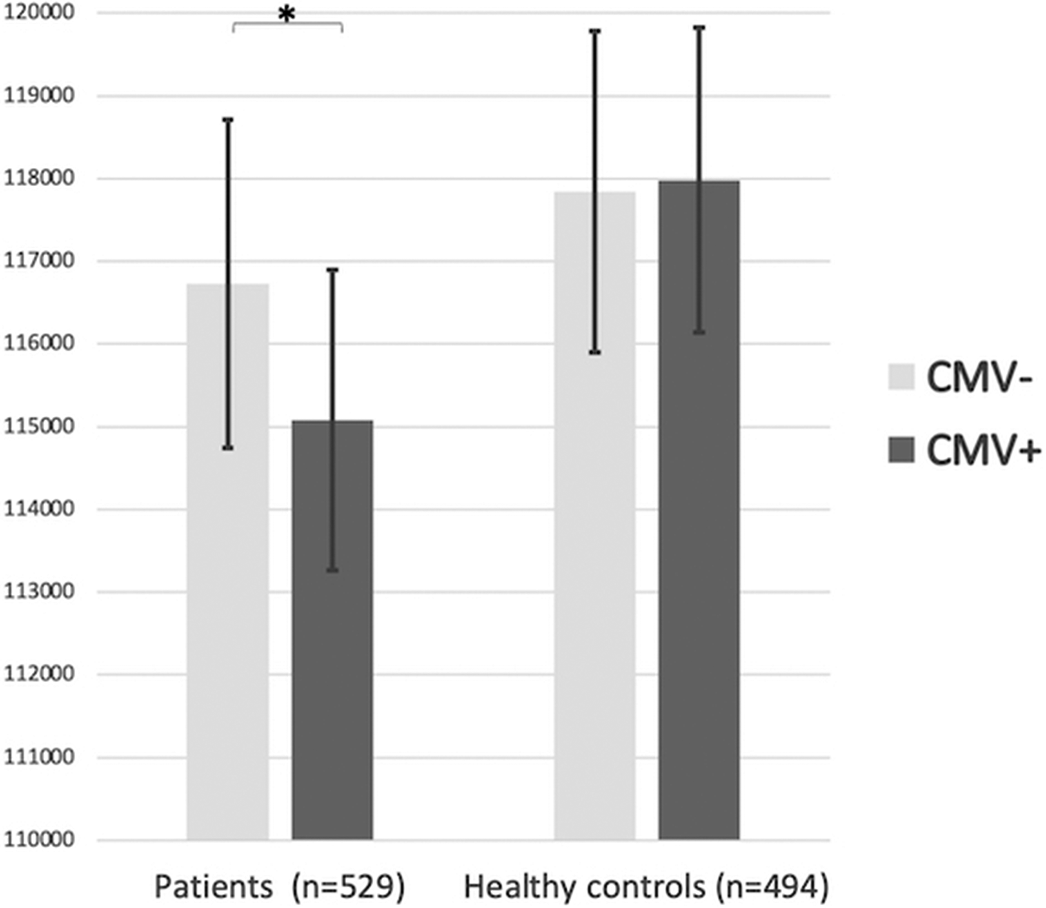
We evaluated whole cerebellar grey matter volumes (CGMV) in CMV immunoglobulin G (IgG) seropositive (CMV+) and seronegative (CMV-) patients with severe mental illness and healthy controls (HC). We hypothesized that CMV seropositivity, reflecting previous infection and current latency, is associated with smaller CGMV in patients but not in HC, and that such a putative association may be sex-dependent.
Methods
We included 529 adult patients with severe mental illness (CMV+ 57%, women 48%), i.e., 324 patients with schizophrenia spectrum disorders and 205 patients with bipolar spectrum disorders, and 494 HC (CMV+ 56%, women 45%). MRI scans were obtained with a 1.5T Siemens scanner (n=596) and two 3.0T General Electric scanners (n=427), and processed with FreeSurfer v6.0. Circulating CMV IgG concentrations were measured with immunoassays. In age-, scanner- and estimated total intracranial volume-adjusted analyses of covariance (ANCOVAs), we investigated main and interaction effects of CMV status and sex on CGMV in patients and HC.
Results
CMV+ patients had smaller CGMV than CMV- patients (p=0.042). There was no CGMV difference between CMV+ and CMV- HC (p=0.858). The adjusted CGMV means in CMV+ patients and CMV- patients were 115078 mm3 and 116725 mm3, respectively (p=0.042); the adjusted CGMV means in CMV+ and CMV- HC were 117980 mm3 and 117840 mm3, respectively (p=0.858) (Image). Among patients, a trend towards CMV-by-sex interaction (p=0.073) was found. Post-hoc analyses showed a significant CMV-CGMV association in the female patient group (p=0.005), with no association among male patients (p=0.840).
Image:
Conclusions
CMV IgG seropositivity is associated with smaller cerebellum in severe mental illness, an effect driven by the female patients, but not among HC. This may indicate a CMV-related deleterious impact on cerebellum restricted to patients.
Cannabis use disorder (CUD) is a complex issue, even more so when it is comorbid with a psychotic disorder or a mood disorder. Indeed, this population seems more vulnerable to this substance since the incidence of developing CUD is five to six times higher. Psychotherapies have only shown a modest short-term effect that is not maintained in the long term. The emergence of the use of virtual reality (VR) in psychiatry could be the tool that will make it possible to overcome this lack of efficiency. Indeed, VR has shown its considerable potential in a variety of psychiatric conditions. However, this modality has not been investigated for treatment for CUD. The Avatar intervention for substance use disorder allows the creation of an avatar and voice transformation that represents a significant person in relation to the patient’s substance use and is interpreted by the therapist. During the immersive sessions, patients are invited to work with their avatars on self-affirmation and refusal techniques, the management of negative emotions, stress and cravings, conflict resolution, self-esteem and motivation for change.
Objectives
The purpose of this pilot project is to collect preliminary data on a new intervention.
Methods
For the realization of this research project, we intend to recruit 40 participants, aged 18 and over, with a diagnosis of a CUD of at least moderate intensity, with a regular cannabis use and who also has a psychotic and/or mood disorder. The intervention consists of 8 weekly one-hour long sessions. Clinical research interviews were conducted and after therapy, and follow-ups occured at 3, 6 and 12 months. These evaluations will allow us to analyze the quantity of consumption, the severity of CUD measured with the cannabis use problem identification test (CUPIT), as well as objectively the concentration of THC thanks to samples. urinary tests which are carried out at the first and last intervention session as well as at the 3-month follow-up. Also, the psychotic symptoms and the quality of life will be evaluated.
Results
In November 2022, 32 participants had been recruited of which 17 participants had completed the Avatar intervention. Preliminary results from this sample show that a decrease of moderate effect size for amount of cannabis consumed was observed, as well as on severity of the cannabis use problem after the intervention. The quantity of cannabis consumed and the severity of the problem was also significantly reduced at follow-up Quality of life tends to increase and disease symptoms decreased significantly at 3 and 6 month follow-up.
Conclusions
To our knowledge, this intervention is a first in the world to target CUD in this particular population while using innovative technology The Avatar intervention under study in this project presents itself as a new avenue for cannabis use disorders.
What adolescents watch affects their body image. Smartphone is one of the most used tool in them today, allowing users to interact each other and share not only pictures but also sights.
Objectives
The aim of this study is to evaluate the relationship between time/purpose (i.e. social media or the others) of smartphone usage and body image distortion revealed by weight control behavior. Differences in the effect of smartphone usage according to gender was also evaluated.
Methods
The cross-sectional study obtained data from the 2017 Korea Youth Risk Behavior Web-based Survey, a nationally representative survey targeting middle and high school students (N=62,276). We categorized the time using a smartphone into 4 groups: less than 1 h, 1-2 h, 3-4 h, and 5 h or more a day. The students were divided into two groups according to whether their main purpose of using a smartphone is social media or not. We defined that adolescents have body image distortion when they attempted to lose weight in the last 30 days, even though they were not obese (BMI < 95th percentile). We classified inappropriate weight control behavior as using: fasting for at least 24 hours, taking over-the-counter diet pills, taking laxatives or diuretics, vomiting, and eating only one food. We performed logistic regression analysis to evaluate the association between time using a smartphone and body image distortion expressed as all kinds of weight control behavior, adjusting for age, gender, residential area, family economic status, hours of sleep, current alcohol consumption, smoking and day time activity. Furthermore, we repeated logistic regression analysis to evaluate the association between time using a smartphone and inappropriate weight control behavior. Analyses were also stratified according to gender and main purpose of using a smart phone.
Results
Smartphone usage time was significantly associated with body image distortion and inappropriate weight control behavior in total group and female adolescents (P <0.05). The association between inappropriate weight control behavior and smartphone usage time is significant even in male adolescent if they use a smartphone more than 5 hours a day. The association between inappropriate weight control and smartphone usage time is also significant when they are not obese. The odd ratio of inappropriate weight control behavior in not obesity group was higher when social media is the main purpose of using a smartphone than the others (OR 1.390 in total group, 1.491 in girls, P <0.001).
Conclusions
Using a smartphone and social media too much is associated with body image distortion and inappropriate weight control behavior in adolescents. It is necessary to reduce excessive smartphone use and educate media literacy for healthy body awareness.
Anxiety disorders are among the most prevalent mental disorders. However, only a minority of patients receives adequate psychotherapeutic treatment despite strong empirical evidence for the efficacy of CBT in anxiety disorders (Marcks et al. Psychiatr Serv 2009; 60 823-830). App-based psychotherapy can help to reduce this massive treatment gap.
Objectives
We aimed at evaluating the efficacy of an app-based treatment for anxiety disorders including exposure in virtual reality.
Methods
The randomized controlled trial was conducted in two university outpatient treatment centers in Northern Germany. Patients were diagnosed with agoraphobia (AP; with or without panic disorder; n=103), panic disorder (PD; n=84) or social anxiety disorder (SAD; n=110) and were randomly assigned to either the app-based intervention or treatment as usual (up to 6 sessions of supportive therapy). The app was developed based on evaluated CBT manuals and includes 14 hours of audio and video content and 15 disorder specific virtual reality exposure scenarios. Participants in the intervention groups also received two appointments with a therapist during the app-based treatment. Primary outcome was the change in Beck Anxiety Inventory (BAI) score pre to post (after 6 months). Mixed ANOVAs were conducted in intention to treat and completer analyses. Secondary outcomes were disorder specific questionnaires (Liebowitz Social Anxiety Scale LSAS for SAD and Panic and Agoraphobia Scale PAS for AP and PD) and health related quality of life measured with a single item (L-1).
Results
In the ITT analysis, the interaction effect between group and time was significant in patients with AP as well as in patients with PD (AP: p=.014, partial η²=.06; PD: p=.028, partial η²=.06). This indicates a stronger improvement of symptoms in the intervention group compared to the control group. In patients with SAD, there was no significant interaction effect (p=.101, partial η²=.03). The disorder specific measures LSAS and PAS showed a significantly stronger decrease in the intervention group than in the control group for each of the specific disorders. Concerning quality of life, a stronger improvement in the intervention group was only found in patients with PD.
Conclusions
A stronger symptom reduction in the app-based intervention group compared to the control group could be found in patients with AP (BAI/PAS), PD (BAI/PAS) and SAD (LSAS). This is particularly remarkable as the app was compared to an active control group with up to 6 sessions of psychotherapy. Effect sizes were comparable to those found in studies comparing face-to-face CBT to an active control group. The lack of an intervention-specific effect on BAI scores in patients with SAD might be due to the poor sensitivity of the BAI for the specific symptoms of SAD.
A significant proportion of people attending Primary Care (PC) have anxiety-depressive symptoms and work-related burnout and there is a lack of resources to attend them. The COVID-19 pandemic has worsened this problem, particularly affecting healthcare workers, and digital tools have been proposed as a workaround.
Objectives
We present the development, feasibility and effectiveness studies of chatbot (Vickybot) aimed at screening, monitoring, and reducing anxiety-depressive symptoms and work-related burnout in PC patients and healthcare workers.
Methods
User-centered development strategies were adopted. Main functions included self-assessments, psychological modules, and emergency alerts. (1) Simulation: HCs used Vickybot for 2 weeks to simulate different possible clinical situations and evaluated their experience. (3) Feasibility and effectiveness study: People consulting PC or healthcare workers with mental health problems were offered to use Vickybot for one month. Self-assessments for anxiety (GAD-7) and depression (PHQ-9) symptoms, and work-related burnout (based on the Maslach Burnout Inventory) were administered at baseline and every two weeks. Feasibility was determined based on the combination of both subjective and objective user-engagement Indicators (UEIs). Effectiveness was measured using paired t-tests as the change in self-assessment scores.
Results
(1) Simulation: 17 HCs (73% female; mean age=36.5±9.7) simulated different clinical situations. 98.8% of the expected modules were recommended according to each simulation. Suicidal alerts were correctly activated and received by the research team. (2) Feasibility and effectiveness study: 34 patients (15 from PC and 19 healthcare workers; 77% female; mean age=35.3±10.1) completed the first self-assessments, with 34 (100%) presenting anxiety symptoms, 32 (94%) depressive symptoms, and 22 (64.7%) work-related burnout. Nine (26.5%) patients completed the second self-assessments after 2-weeks of use. No significant differences were found for anxiety [t(8) = 1.000, p = 0.347] or depressive [t(8) = 0.400, p = 0.700] symptoms, but work-related burnout was significantly reduced [t(8) = 2.874, p = 0.021] between the means of the first and second self-assessments. Vickybot showed high subjective-UEIs, but low objective-UEIs (completion, adherence, compliance, and engagement).
Conclusions
The chatbot proved to be useful in screening the presence and severity of anxiety and depressive symptoms, in reducing work-related burnout, and in detecting suicidal risk. Subjective perceptions of use contrasted with low objective-use metrics. Our results are promising, but suggest the need to adapt and enhance the smartphone-based solution in order to improve engagement. Consensus on how to report UEIs and validate digital solutions, especially for chatbots, are required.
People living with obesity (PLWO) often experience ambivalence when starting their change process towards a healthier lifestyle. Psychological treatments for obesity should resolve this ambivalence and help PLWO to explore their own reasons for change in line with their needs and values, as well as promote self-efficacy. Following the Motivational Interviewing (MI) principles, the SOCRATES project proposes a “virtual self-conversation” to help PLWO to address some of the psychological aspects associated with obesity, such as the lack of awareness about their condition, the impact of the internalization of weight stigma, and the lack of self-efficacy.
Objectives
With the current longitudinal study, we aim to explore how the participants’ process of lifestyle change, and how their eating habits and dysfunctional eating patterns change before and after the virtual intervention.
Methods
Forty-eight patients with obesity from the Vall d’Hebron University Hospital (Mean age = 19.7 years) were assigned to 3 groups. The Experimental Group 1 (EG1) (N = 21), after completing an intensive training on MI, received a virtual intervention using the “motivational self-conversation” technique. The Experimental Group 2 (EG2) (N = 17) underwent a virtual intervention with a pre-registered psychoeducational dialogue, and the Control Group (CG) (N = 10) followed treatment-as-usual. All participants completed self-reported questionnaires on their motivation to change lifestyle [(Readiness Rulers (RR), Processes of Change questionnaire in weight management (P-W)], eating habits (Habits questionnaire) and dysfunctional eating patterns (Three Factor Eating Questionnaire-18) at baseline (T0), post-intervention (T1), and 4 weeks follow-up (T2). Repeated measures ANOVA was performed for all the questionnaires.
Results
Statistically significant results were shown regarding motivation to change through the RR and the “evaluation of the consequences of their weight” subscale of P-W across time for the EG1 (p < .05). These results suggest that participants’ motivation to eat healthier and do more exercise, as well as self-awareness about the negative consequences of their condition increased after the virtual intervention.
Conclusions
The present study showed that this novel virtual intervention might be an effective tool in helping PLWO resolve their ambivalence to change lifestyle and acquire self-awareness about their condition. However, the intervention did not lead to significant changes in other psychological variables, such as lifestyle habits or dysfunctional eating patterns; domains that may be less sensitive to changes over the time, and which may take place once motivation is well-established.
Insomnia is a robust risk factor for depression. Treating insomnia with digital CBT-I (dCBT-I) has been shown to prevent future episodes of depression; however, remission rate of insomnia following dCBT-I is lower compared to face-to-face CBT-I (fCBT-I), which may reduce the effect on depression prevention. A stepped-care model can optimize care by starting with a least resource intensive intervention (step 1: dCBT-I) and stepping-up non-remitters to specialized treatment (step 2: face-to-face CBT-I).
Objectives
This study examined the efficacy of a stepped-care approach to prevent depression.
Methods
1018 individuals with DSM-5 insomnia and no depression were randomized into two conditions at step 1: dCBT-I (n=613), or an online sleep education control (n=624). Participants in the dCBT-I condition who did not show remission for insomnia (ISI>9) were further randomized to either face-to-face CBT-I (n=103) or sleep education (n=104). Rates of clinically significant depression (moderate severity and above) was assessed at one-year follow-up.
Results
Insomnia remission rates were higher in the dCBT-I group (40%) compared to the control group (22%). Those who did not remit following step-1 dCBT-I showed step-2 insomnia remission rates of 75% following fCBT-I compared to 38% following the step 2 control.
At one year follow-up, the incident rate of clinically significant depression was 2.4 times higher in those who received control (13.2%) compared to fCBT-I (5.5%) at step 2. Depression rate was 10.1% in those who did not receive dCBT-I at step-1.
Conclusions
Preliminary evidence from this study provide supported that a stepped-care approach may produce greater protection against incident depression than dCBT-I alone.
The Jackson Hospital Crisis (Psychiatric ED) Center serves the entirety of Miami-Dade County in Florida and is considered one of the top three busiest and per capita of clinical staff likely the busiest nationally across the United States. Simultaneously, the management of mental health emergencies has ascended near the top of international priorities driven by multiple trends (e.g., growing social isolation associated with the pandemic, de-stigmatization). The crisis environment presents a uniquely difficult challenge in applying high quality medical care: frequent suicidal gestures, impulsive often intoxicated or psychotic patients, unprecedented demand, diminishing staff capacity, and requirements to consistently apply specific medical and psychiatric protocols. These challenges are specifically difficult for new trainees who are not yet accustoms to the high acuity situations found in psychiatry. Moreover, academic, institutional, and governmental policies change on a monthly, or even weekly basis, often with the objective of improving care. Nevertheless, such constant shifts in workflow result in opportunities for errors that impact patient trajectories.
Objectives
As such we endeavored to apply an evidence-based approach to improving the likelihood of success. One such vetted approach, the use of checklists, benefits from 10+ years of peer-reviewed research in “operational” medical specialties (e.g., surgery, ED, ICU) where work is segmented around interventions or time-shifts which share commonalities with the Psychiatric ED model. Yet the difficulty in implementing such models is typically not in the “hard” aspects of defining the checklist, but in the “soft” implementation dimensions of syndication, distribution, and enablement in the context of the individual unique settings.
Methods
We developed a checklist that will be implemented on the Jackson Crisis emergency department, with the aim of having first year trainees complete the check list on each individual patient. Surveys were administered before implementation of checklist and will be distributed on a quarterly basis to trainees to evaluate for changes in resident confidence and clinical care.
Results
Over six months, we launched this initiative with drivers of adoption focused on accelerating and easing new resident training, safety incident targeting, and in the balancing of “push” top/down and “pull” bottom/up dynamics. Initial learnings include rapidly improving resident satisfaction as well as various other impacts currently being observed throughout the institution.
Conclusions
Overall reception to the checklist has been positive from attendings and new trainees alike, further evidence will be analyzed and presented as the checklist is utilized throughout the psychiatric ED.
In the past years, recovery has become a central concept in psychiatric treatment (Sowers et al. Acad Psychiatry 2016; 40 461-467). However, in acute mental health care the concept of recovery is lacking attention (Rabenschlag et al. Psychiatry Q 2014; 85 225-239; Jaeger et al. Nord J Psychiatry 2015; 69 188-195; Luigi et al. Can. Med. Educ. J. 2010; 11 62-73). In 2021 a short version of Illness Management and Recovery (IMR) was implemented at the Psychiatric Emergency Service Amsterdam-Amstelland (SPAA). IMR is an evidence based group intervention for patients with severe mental illness, based on cognitive-behavioral, psychoeducational and motivational components. The aim of IMR is to support participants to manage their mental illness (Mueser et al. Schizophr Bull 2006; 32 32-43). To our knowledge this the first time that IMR is implemented within an acute mental health care setting Therefore the effects of IMR program on recovery in the acute phase of psychiatric illness are unknown.
Objectives
Insight in effects of IMR in acute mental health care.
Methods
We will carry out a mixed method study. In phase 1 the intervention will be carried out. 25 patients who are admitted to acute mental health care and diagnosed with a severe mental illness (SMI) will take part in the shortened version of IMR. Effects will be measured by the client version of the IMR-scale (Salyers et al. Community Ment. Health J. 2007; 43 459-480).Phase 2 includes qualitative interviews with a subsample from phase 1 (using maximum variety in diagnosis and demographic characteristics) to gain insight in the mechanisms and impact of the program.
Results
The proposed study will investigate the effects of an adjusted evidenced-based treatment within a population of people who receive treatment in a Psychiatric Emergency Service. The original intervention is shortened in time and topics, to match the needs of people in the acute phase of psychiatric illness. The question that arises is if an existing treatment can be translated to a different group of patients.
Conclusions
The proposed project has some important limitations that we feel deserve mentioning. It is questionable if a person can profit from a recovery program during a phase of acute crisis. Also, can we expect the same effects if the new program is a shortened version of the original evidence based intervention?