We partner with a secure submission system to handle manuscript submissions.
Please note:
You will need an account for the submission system, which is separate to your Cambridge Core account. For login and submission support, please visit the
submission and support pages.
Please review this journal's author instructions, particularly the
preparing your materials
page, before submitting your manuscript.
Click Proceed to submission system to continue to our partner's website.
To save this undefined to your undefined account, please select one or more formats and confirm that you agree to abide by our usage policies. If this is the first time you used this feature, you will be asked to authorise Cambridge Core to connect with your undefined account.
Find out more about saving content to .
To send this article to your Kindle, first ensure no-reply@cambridge.org is added to your Approved Personal Document E-mail List under your Personal Document Settings on the Manage Your Content and Devices page of your Amazon account. Then enter the ‘name’ part of your Kindle email address below. Find out more about sending to your Kindle.
Find out more about saving to your Kindle.
Note you can select to save to either the @free.kindle.com or @kindle.com variations. ‘@free.kindle.com’ emails are free but can only be saved to your device when it is connected to wi-fi. ‘@kindle.com’ emails can be delivered even when you are not connected to wi-fi, but note that service fees apply.
Individuals with schizophrenia exhibit severe speech and Theory of Mind (ToM) deficits creating substantial handicaps for them on the level of communication and interpersonal skills. Consequently, these individuals cannot adequately take part in social life, and are exposed to marginalization in all aspects of life. Hence, communication impairments associated with schizophrenia are a central issue to investigate in order to optimize their quality of life and functioning in society. The study being part of an interdisciplinary research is based on guided interviews related to a short story by Hemingway. The analysis of person deictic expressions related to social emotions and social interactions combined with the most frequently used mental state terms (e.g. ‘I don’t know’, ‘I think’) identified in the corpus may not only describe the severity of linguistic disturbances indicating ToM deficits but can also help understand patients’ social dysfunction and difficulties in the context of social cohesion.
Objectives
The primary task of the functional linguistic research is to identify and classify the occurrence of linguistic disturbances during mentalizing processes expressed via mental state terms. The study particularly focuses on interpersonal relations expressed with person deictic forms that may indicate the difficulties of this patient group with social cohesion.
Methods
The corpus involves 40 guided interviews including 20 individuals with schizophrenia treated at the Department of Psychiatry of the University of Pécs and 20 controls. The interviews were conducted by a PhD student of Psychology in Hungarian and centred around Hemingway’s short story entitled The End of Something. The interviews were digitally recorded and transcribed in Hungarian. The qualitative analysis was performed with Sketch Engine corpus analysis tool, which assisted in the identification and classification of collocations associated with the interviewees’ mental processes directed at interpersonal relations expressed by person deictic forms.
Results
Pragmatic processes including the communicative aspect showed severe deficiencies. The most commonly used mental state term ‘I don’t know’ combined with person deictic expressions revealed that individuals with schizophrenia have difficulty attributing mental states to a specific linguistic utterance during a social situation (e.g. ‘I don’t know why somebody said that’). These examples show that their communicative and interpersonal skills are substantially impaired.
Conclusions
The findings can offer some possible indications for psychotherapists how to detect pragmatic impairments in schizophrenic speech and interpret mental state terms with reference to social interaction, thereby contributing significantly to therapeutic success enhancing the social reintegration of individuals with schizophrenia.
Clozapine has been well established as the most efficacious medication for treatment refractory schizophrenia. Optimising the benefit during clozapine trial is an important clinical consideration. Therapeutic drug monitoring of clozapine plasma or serum levels has formed a critical part of this. Though there is no agreed standardised therapeutic range, advice traditionally recommends a clozapine level of >350ng/mL in order to effect best response. Most studies analysing the relationship between treatment response and clozapine level are older, have small sample sizes, and do not consider whether additional factors might assist in determining optimal clozapine level for response.
Objectives
We conducted a systematic review of PubMed, PsycInfo and Embase for studies that provided individual participant level data on clozapine levels and response.
Methods
This data was analysed using Receiver Operating Characteristic (ROC) curves to determine the prediction performance of serum clozapine levels for treatment response.
Results
We were able to include data on 294 individual participants. ROC analysis yielded an area under the curve (AUC) of 0.612. The clozapine level at the optimal Youden index was 372ng/mL, and at this level there was response sensitivity of 57.3%, and specificity of 65.7%. The interquartile range for treatment response was 223ng/mL – 558ng/mL. There was no improvement in ROC performance with mixed models including patient sex, age or length of trial.
Conclusions
Clozapine dose should be optimised based on clozapine therapeutic levels. We found that a range between 250 – 550ng/mL could be recommended, while noting that a level of >350ng/mL is most optimal for response.
Although the role of pituitary gland in schizophrenia and psychotic disorders has been studied for decades, evidence on anterior pituitary hormones in the early phases of psychoses – without the influence of chronicity, comorbidities, and pharmacological treatment – is mostly unclear and inconsistent.
Objectives
Our systematic review and meta-analysis was aimed at comparing the blood concentrations of adrenocorticotropic hormone (ACTH), follicle stimulating and luteinizing hormones (FSH and LH), growth hormone (GH), prolactin (PRL), and thyroid-stimulating hormone (TSH) between people with drug-naïve first-episode psychosis (FEP) and healthy controls.
Methods
We searched main electronic databases for articles indexed up to September 2022. We appraised the quality of data. We carried out random-effects meta-analyses, generating pooled standardized mean differences (SMDs) and estimating between-study heterogeneity. Moreover, we performed sensitivity and meta-regression analyses.
Results
Twenty-six studies were included. People with drug-naïve FEP had higher ACTH (p<0.001; moderate-to-high heterogeneity) and PRL (p<0.001; high heterogeneity) concentrations, as well as lower TSH concentrations (p=0.001; low heterogeneity), than healthy subjects. Sensitivity analyses confirmed these findings. Data were not sufficient to perform meta-analyses on other hormones (FSH, LH, and GH).
Conclusions
People with drug-naïve FEP have abnormal ACTH, PRL, and TSH blood concentrations, supporting the hypothesis that anterior pituitary hormone secretion is altered in the first stages of schizophrenia and psychoses. Additional research is needed to clarify the complex interconnections between vulnerability, environmental factors, and pituitary hormones in FEP.
Schizophrenia is associated with harmful health effects such as oxidative stress from heavy metal exposure. We considered the relationship between genes and heavy metals in association with oxidative stress and then investigated the association between serum α- klotho and copper and cadmium exposure among schizophrenia patients in western India.
Objectives
To investigated the association between serum α- klotho and copper and cadmium exposure among schizophrenia patients in western India.
Methods
100 individuals participated out of which 50 were diagnosed with schizophrenia, severity was assessed by using PANSS score and 50 were taken as controls using General health questionnaire. Serum Klotho levels were estimated using ELISA. Serum Cadmium (Cd) and Serum Copper (Cu) was estimated using Atomic Absorption Spectrophotometry.
Results
The mean ± SD levels of Serum Cd, Serum Cu and serum Klotho were 1.05 ± 0.55 μg/dl, 135.5 ± 51.25 μg/ml and 62.9 ± 35.1 ng/ml respectively in the patients and 0.23 ± 0.17 μg/dl, 147.9 ± 25.42 μg/ml and 78.6 ± 34.6 ng/ml respectively in controls. The differences in Serum Cd, Serum Cu levels and Klotho levels among the study group were highly significant (p <0.05).
Conclusions
Both Cu and Cd levels were significantly raised in schizophrenic patients compared with controls. Serum klotho levels showed a statistically significant decreasing trend with increasing cadmium levels. These results suggest that cadmium levels may be associated with the serum klotho levels which may be associated with decreased cognition in schizophrenia.
Schizophrenia is one of the major neuropsychiatric disorders affecting 1% of the population worldwide. Neuroinflammation, neurodevelopment, and oxidative stress are some of the crucial factors that can contribute to the pathogenesis of Schizophrenia. The Klotho gene is an antiaging gene whose dysregulated expression can lead to Schizophrenia and aging-like symptoms in patients. Klotho gene expression is regulated by miRNA- 339, which might lead to expression changes of the klotho gene in schizophrenia patients.
Objectives
This study aimed to determine the role of miRNA- 339-5p in the regulation of Klotho gene expression and its circulatory levels in Schizophrenia
Methods
A total of 60 diagnosed patients with Schizophrenia per ICD 10 study subjects and 30 healthy controls were recruited for this study from the outpatient department of psychiatry of All India Institute of Medical Sciences, Jodhpur. Written informed consent was taken from all the study participants. All participants were given the right to withdraw from the study at any point in time. The institutional ethics committee of AIIMS, Jodhpur, approved this study. The expression analysis of the klotho gene and miRNA – 339-5p was performed using a reverse transcription polymerase chain reaction. The relative fold change expression was calculated by Livaak’s method ( 2^-double delta ct).
Results
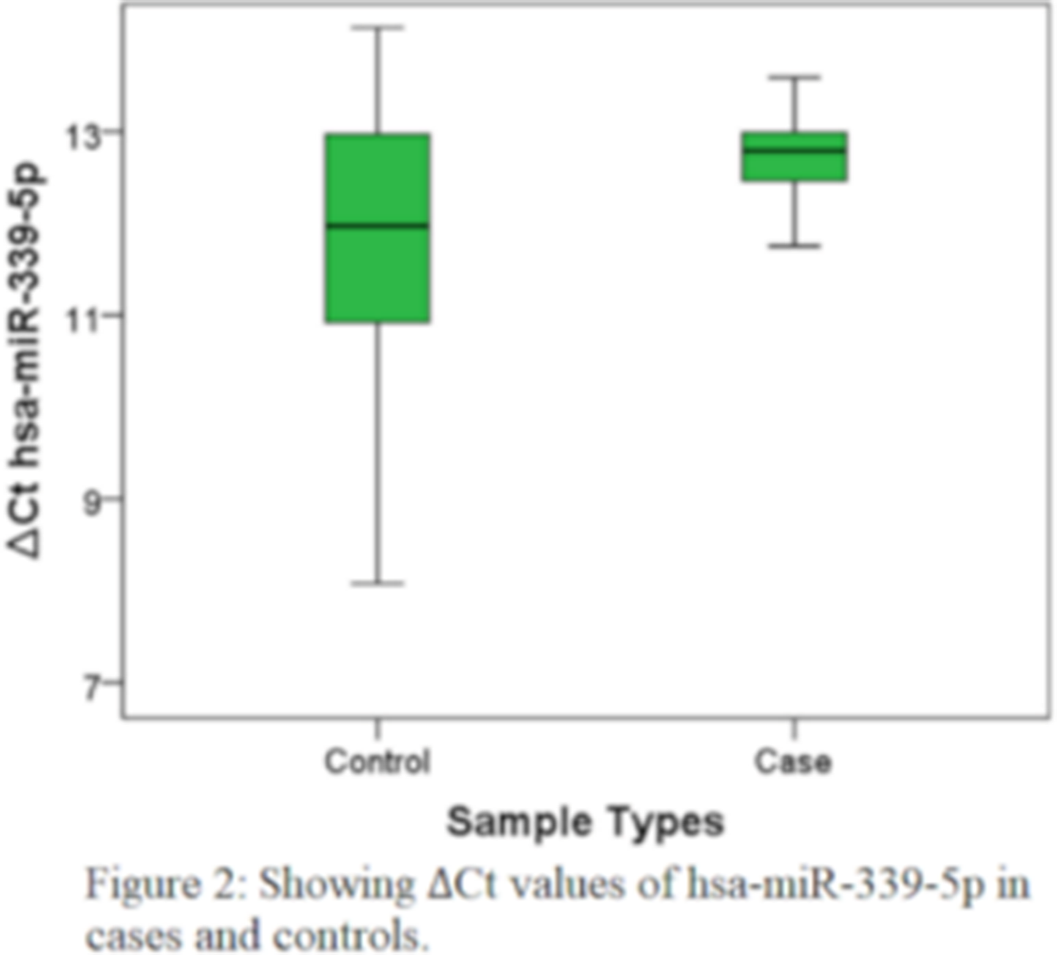
In Schizophrenia cases, serum Klotho protein levels were higher than healthy controls, though non-significant. We observed that the klotho gene was upregulated (figure 1), and miRNA- 339- 5p was downregulated (figure 2) compared to the healthy control.
Image:
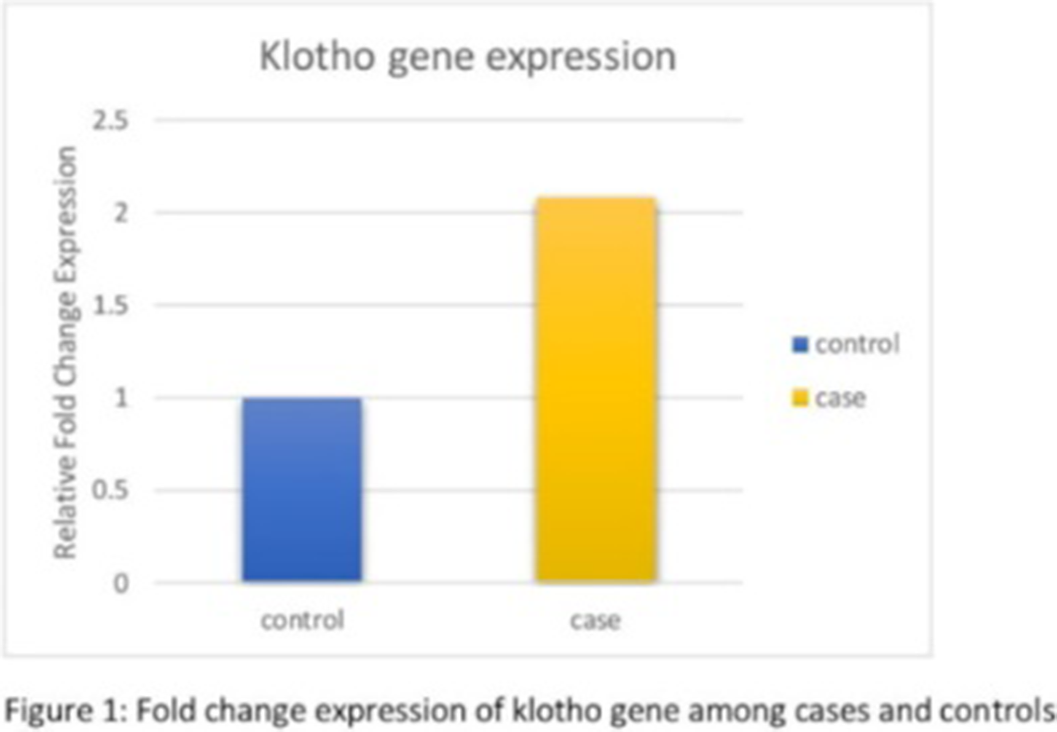
Image 2:
Conclusions
The present study is the first to evaluate the klotho gene expression and correlate it with miRNA- 339- 5p. Our study found increased expression of the klotho gene in Schizophrenia patients as compared to the controls. In this study, we also observed that miRNA- 339- 5p was downregulated, which correlates with the klotho gene expression inversely. However, these are the preliminary findings due to less sample size and need to be replicated in the large sample size for further confirmation.
Evidence suggests that the COVID-19 pandemic was accompanied by an increased exposure to risk factors for psychosis, such as psychological stress, substance use, social isolation and deprivation, as well as a potential direct biological impact of the COVID-19 infection on psychosis. However, the impact of the COVID-19 pandemic on the rates of first-episode psychosis (FEP) has not yet been examined.
Objectives
The aims of the current study were to 1) establish the FEP incidence between March 2019 and March 2021 in an inner London catchment area; 2) compare FEP incidence rates for the first year of the COVID-19 pandemic (March 2020 – February 2021), with those for the year prior (March 2019 – February 2020).
Methods
We screened the clinical records of all individuals living in the London boroughs of Southwark and Lambeth who were referred to the early intervention in psychosis services before (from 1 March 2019 to 28 February 2020) and during (from 1 March 2020 to 28 February 2021) the COVID-19 pandemic. We used Office for National Statistics (ONS) data to estimate the risk populations stratified by sex and age group. We computed crude and sex-age standardised FEP incidence per 100,000 persons-year. We used Poisson regression to calculate the incidence rate ratio (IRR) before and during the COVID-19 pandemic and to examine the incidence variation by sociodemographic factors.
Results
A total of 321 incident cases of FEP were identified during the COVID-19 pandemic accounting for a crude rate of 70.1 (95% CI 62.4 - 77.7) per 100,000 person-year. The crude rate for the year before was 47.5 (95% CI 41.2 - 53.8). The incidence variation between the two years accounted for an adjusted IRR of 1.46 (95% CI 1.23 – 1.76). The increased FEP rates were equally observed across the boroughs of Southwark and Lambeth and men and women. Individuals aged 20-24 (IRR 1.66; 95% CI 1.13 – 2.42) and those from the black ethnic group (IRR 1.61; 95% CI 1·24 – 2·09) showed the greatest incidence increases.
Conclusions
To the best of our knowledge, this is the first study establishing the variation in FEP incidence before and during the COVID-19 pandemic across all adult age groups. We provide the first evidence that the COVID-19 pandemic resulted in a 46% increase in the incidence of psychotic disorders in South London. The increase was higher for young individuals and ethnic minorities. This finding should inform public health research and demonstrates the need for adequate resources for mental health secondary services.
There has been a continuous effort to discover and specify the neural correlates of schizophrenia (SCZ) based on spontaneous electroencephalogram (EEG) records. Besides contributing to a more effective diagnosis, biomarkers can be crucial to SCZ to hope for therapeutic progress.
Objectives
a literature review was conducted to ascertain whether or not quantitative EEG spectral abnormalities are consistent enough to warrant additional effort towards developing them into a clinical diagnostic test for schizophrenia.
Methods
A systematic search of the databases , ScienceDirect, and PubMed was conducted using the following words : schizophrenia, electroencephalography, neurobiology. The Preferred Items Reporting for Systematic Reviews and Meta-Analyses (PRISMA) guidelines were followed in the construction of this literature review. Primary research articles that reported descriptive EEG results, included comparisons of subjects with and without antipsychotic therapy, and excluded patients with epilepsy were included in the analysis. We analyzed pooled data, where possible, from studies with a similar intervention and methodology.
Results
Our study included 11 articles on quantitative EEG changes in schizophrenic patients divided as follows: 2 articles on the genetics of SCZ and EEG data, 3 articles on the psychopathology of SCZ and EEG data, 2 articles on hemispheric coherence, and finally 4 articles on the effect of treatment on EEG.Increased beta activity can be considered as an inherited feature of SCZ. Elevated delta/theta and gamma activity may serve as a specific biomarker for this condition. The delta wave may be a neurophysiological tool to differentiate between negative and positive forms of SCZ.EEG tracings of schizophrenic patients showed increased intra- and inter-hemispheric coherence compared to healthy subjects. Treatment with an antipsychotic drug was associated with a more marked increase in frequency bands in patients receiving an atypical antipsychotic drug.
Conclusions
It is important to study the electroencephalographic changes not only to better understand the etiopathogenesis of SCZ, but also to search for specific physiological biomarkers.
Negative symptoms (NS) represent an unmet need of treatment in schizophrenia (SCZ). As a result, these symptoms pose a significant burden on patients, their families, and the health care system. In the last decade, the conceptualization model that has received the most support from the literature has described 2 domains of NS: the expressive deficit (EXP), which includes blunted affect and alogia, and the motivational deficit (MAP), which includes avolition, asociality, and anhedonia. However, different confirmatory factor-analytic studies suggest that the bi-dimensional model may not capture the complexity of this construct, which could be better defined by the 5-factor model. To date no study exploiting innovative tools and state of the art assessment instruments has yet been conducted to evaluate the NS structure stability over time.
Objectives
The aim of this study was to investigate the stability of the latent structure of NS in subjects with SCZ.
Methods
NS were assessed in 612 subjects with SCZ using the Brief Negative Symptom Scale (BNSS) at the baseline and after 4-year follow-up. A network invariance analysis was conducted for the data collected longitudinally.
Results
Results showed that the BNSS’ items aggregated to form 5 distinct domains (avolition, asociality, blunted affect, alogia and anhedonia). The result of the network invariance test indicated that the network structure remained unchanged over time (network invariance test = 0.13; p = 0.169) while its overall strength decreased significantly (6.28 baseline, 5.79 at follow-up; global strength invariance test = 0.48; p = 0.016).
Conclusions
The results of this study show how the construct of NS can be better explained by the 5 individual negative symptoms and that this model is almost stable over time. Therefore the 2-dimensional model may be insufficient to describe the characteristics of NS. This data is of important relevance with consequent implications in the study of pathophysiological mechanisms and the development of targeted treatments for NS.
Understanding the psychological meanings of a rigorous protocol for introducing a drug to patients is a challenge of emotional management for clinical professionals. Clozapine is an effective drug for patients with schizophrenia resistant to treatment with first and second-generation antipsychotics. This medication has agranulocytosis as an important side effect. The medication protocol requires frequent blood draws to monitor any effect on blood cells. Investigating patients’ emotional perceptions about the experience with this procedure was the triggering question of our study.
Objectives
To interpret emotional/symbolic meanings attributed by patients with schizophrenia to the protocol of introduction of clozapine in follow-up at a specialized university service.
Methods
Clinical-qualitative design of Turato. Semi-directed interviews with open-ended questions in-depth were conducted face-to-face with participants using clozapine. Closed sample by the theoretical information saturation criterion described by Fontanella. Data were treated by Faria-Schutzer’s Clinical-Qualitative Content Analysis, employing psychodynamic concepts of the theoretical framework of Medical Psychology.
Results
From the analysis of nine patients, three categories emerged: 1) “Anyway, I come here to stay alive”: frequent blood collections of the protocol seem to have a good impact on patient’s adherence to treatment; 2) To re-signify a psychiatric illness: the protocol reinforcing an embodiment of a medical diagnosis; 3) “It is a very big precaution”: the protocol as real and emotional support to deal with the possibility of serious side effects.
Conclusions
Although blood collection is a repetitive experience for patients, such a routine does not mean that the procedure brings symbolizations that are more charged than the disease itself. Patients can benefit from the commitment to attend blood collection frequently, as it removes them from possible social isolation, allowing social interaction; it brings the perception of emotional security due to the commitment to the clinical team. These benefits can lead the patient to develop new meanings for their life condition. Future qualitative research can be conducted to study the meanings of medical protocols in other diagnostic situations.
Recent studies report a prevalence of comorbid anxiety disorder of 38% and 80% of sleep disorders in schizophrenia. Insomnia has been associated with worsening of psychopathological symptoms and increased hospitalization rates.
Objectives
The aim of our work was to review mechanisms of action and the use of benzodiazepines, GABAergic drugs and melatonin for the treatment of anxiety and insomnia in schizophrenia.
Methods
We carried out a narrative review of studies focusing on the treatment of anxiety disorders and insomnia in schizophrenia through PubMed and Google Scholar (2002-September 2022). The use of benzodiazepines, GABAergic drugs and melatonin in schizophrenia are discussed, illustrating them with case reports.
Results
A total of 32 studies were included. (A)Benzodiazepines (BZD) work facilitating the inhibitory actions of gamma-aminobutyric acid (GABA) by binding GABA type A receptors. The beneficial effect of combined use of antipsychotics and BZD is controversial (cognitive complications, sedation, overdosing, substance use, etc). (B)GABAergic drugs: gabapentin (GP) and pregabalin (PG) (structurally related molecules), have no direct GABAergic action and act inhibiting voltage-gated calcium channels. The efficacy of GP and PG in the treatment of anxiety symptoms in schizophrenia is understudied. Positive effects of GP in schizophrenia suffering from restless legs syndrome receiving clozapine. (C )Melatonin, an hormone produced in the pineal gland has been used to treat insomnia. Positive effects on metabolic syndrome and cardiovascular risk factors have been reported. Several works considered it an alternative in schizophrenia.
Conclusions
Few evidence is available on the use of BZD, GP, and PG in schizophrenia. Melatonin is a promising compound to treat insomnia.
Impairments in executive functions are often observed in schizophrenia. However, previous studies using standard tests show inconclusive and conflicting findings.
The disruption of minimal Self is believed to be a core element of Schizophrenia and intimately connected to a disruption of bodily self, which in turn leads to impairments in intersubjectivity dimension. Motor abnormalities have been associated to Schizophrenia since the early conceptualization of the disorder, as well as inefficient body-related multisensory integration processes are considered nowadays a plausible origin of disembodied Self. In particular, there is evidence for significant abnormalities in Peripersonal Space (PPS) extension in Schizophrenia patients. PPS is the plastic sector of space immediately surrounding our body, whose coherent representation is based on efficient body-related multisensory integration processes. With a specific experimental task based on multisensory integration processing, we estimated PPS size and PPS boundary’s demarcation in 27 Schizophrenia patients, confirming a narrower PPS size and weaker bodily boundary in patients, thus paving the way for a deeper investigation of the mechanisms underlying the disruption of bodily self (Ferroni et al., Schziophr.Bull.2022, 5 1085-1093). We suggest that disembodiment might be responsible for the loss of the immediate linkage between Self and others (“intercorporeality”), so linking the disruption of the corporeal dimension to specific anomalies of intersubjectivity in Schizophrenia patients. Since language is one of the most important instrument through which intersubjectivity unfolds, it is intriguing to hypothesize a connection between language and multi-sensory processing.
Objectives
Therefore, the present study was aimed at investigating possible correlations between patients’ motor impairments in multi-sensory integration processes and their alterations in language and communicative interactions.
Methods
Twenty-five outpatients were recruited in an experimental task investigating PPS extension; they were administered the Scale for the Assessment of Thought, Language and Communication (TLC) and the Clinical Language Disorder Rating Scale (CLANG).
Results
Our data showed significant correlations between TLC and CLANG total scores and PPS size, with narrower PPS size for more severe formal thought disorders and higher language and communication impairments.
Conclusions
Our preliminary results seem to confirm the presence of a link between language impairment and multi-sensory processing, suggesting that bodily and linguistic disorganization may have a common origin which has yet to be explored in depth. Future research is needed to identify linguistic and motor endophenotypic patterns, potentially intertwined with each other, capable of early predicting Schizophrenia development and thus usable as early diagnostic tools.
Self Disorders (SDs) are regarded as the subjective phenotype of Schizophrenia vulnerability. The EASE (Examination of Anomalous Self-Experiences) scale is the most detailed and widely used instrument to investigate SDs, but it requires long administration times and specific training. The IPASE (Inventory of Psychotic-like Anomalous Self-Experiences) scale might be a self-administered instrument of widespread use for an easier SDs investigation.
Objectives
The present study was aimed at validating the Italian version of IPASE, testing its internal consistency and usability for a first level SDs survey. A secondary objective was to confirm the correlations between IPASE, EASE, main symptom dimensions, subjective bodily experiences, symptoms of schizophrenic autism as well as levels of global functioning.
Methods
Fifty patients with Schizophrenia were administered the IPASE scale in its Italian version, the Examination of Anomalous Self-Experiences scale (EASE), the Positive And Negative Symptoms Scale (PANSS), the Social and Occupational Functioning Assessment Scale (SOFAS) to assess global functioning, the Autism Rating Scale (ARS) and the Abnormal Bodily Phenomena questionnaire (ABPq). The internal consistency of IPASE in its Italian version was investigated and the correlations between IPASE, EASE, ABP, ARS, PANSS and SOFAS were explored.
Results
The internal consistency of the Italian version of IPASE was high (α 0.97). The IPASE and EASE total scores were positively correlated with each other, as were many of the conceptually related subdomains of both scales. The IPASE score was negatively correlated with global functioning (SOFAS) and positively correlated with total PANSS scores and with PANSS negative domain. Moreover, the IPASE total score was positively correlated with autism dimension (ARS), while anomalies in subjective experience of the lived body were coherently correlated with higher scores in IPASE “somatization” subdomain.
Conclusions
The IPASE may be an easy instrument with high internal consistency for an initial investigation of SDs. IPASE domains appear to be correlated with the SDs investigated through EASE and with the main symptomatologic dimensions of Schizophrenia, in particular with negative symptoms. IPASE might also be a useful instrument for a first level investigation of subjective experiences concerning intersubjectivity and bodily dimensions.
SDs are confirmed to be a core feature of the schizophrenia psychopathology, with a adverse impact on global functioning.
Network analysis has been used to explore the interplay between psychopathology and functioning in psychosis, but no study has used dedicated statistical techniques to focus on the bridge symptoms connecting these domains.
Objectives
The current study aims to estimate the network of depressive, negative, and positive symptoms, general psychopathology, and real-world functioning in people with first-episode schizophrenia or schizophreniform disorder, focusing on bridge nodes.
Methods
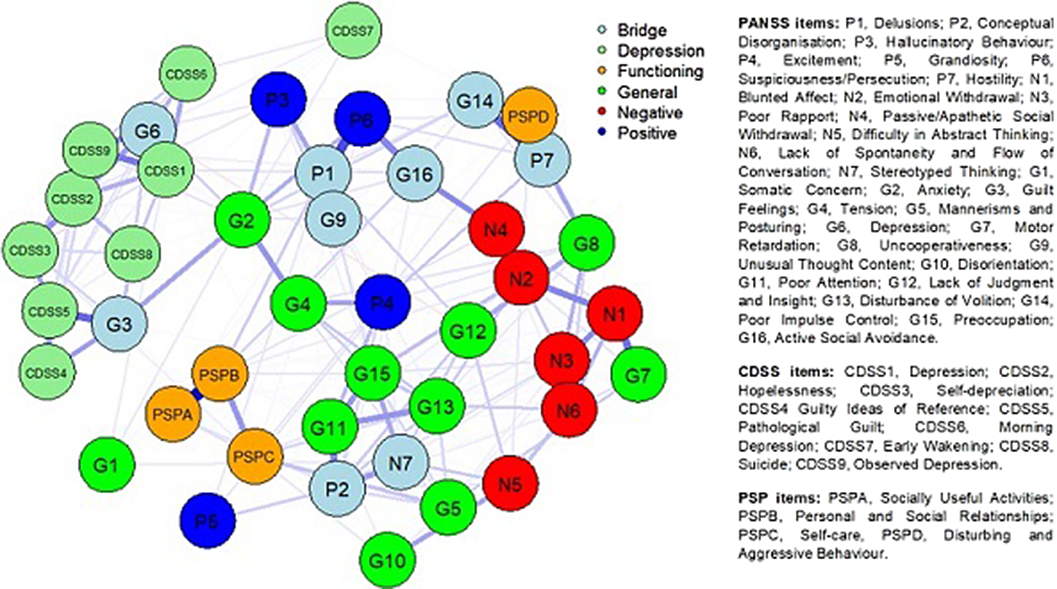
Baseline data from the OPTiMiSE trial were analysed. The sample included 446 participants (age 40.0±10.9 years, 70% males). The network was estimated with a Gaussian graphical model (GGM), using scores on individual items of the Positive and Negative Syndrome Scale (PANSS), the Calgary Depression Scale for Schizophrenia (CDSS), and the Personal and Social Performance (PSP) scale. Stability, strength centrality, expected influence (EI), predictability, and bridge centrality statistics were computed. The top 20% scoring nodes on bridge strength were selected as bridge nodes.
Results
Nodes from different rating scales assessing similar psychopathological and functioning constructs tended to cluster together in the estimated network (Fig. 1). The most central nodes (EI) were Delusions, Emotional Withdrawal, Depression, and Depressed Mood. Bridge nodes included Depression, Conceptual Disorganisation, Active Social Avoidance, Delusions, Stereotyped Thinking, Poor Impulse Control, Guilty Feelings, Unusual Thought Content, and Hostility. Most of the bridge nodes belonged to the general psychopathology subscale of the PANSS. Depression (G6) was the bridge node with the highest value.
Image:
Conclusions
The current study provides novel insights for understanding the complex phenotype of psychotic disorders and the mechanisms underlying the development and maintenance of comorbidity and functional impairment after psychosis onset.
Various comorbid conditions can worsen the morbidity and mortality of schizophrenia, and this is the case for depression, especially through suicidal behaviors and cardiometabolic impairments. There is a scarcity of summarizing data on depressive symptoms and disorders among schizophrenia patients living in Africa.
Objectives
The aim of this meta-analytic review was to estimate the prevalence of depression in people living with schizophrenia in Africa.
Methods
We systematically searched for relevant articles published from inception to July 05, 2022, in PubMed/MEDLINE, EMBASE, and African Journals Online. We appraised the risk of bias using the Joanna Briggs Institute (JBI) Critical Appraisal Checklist for studies reporting prevalence data, and estimated the pooled prevalence of depression among patients with schizophrenia using a random-effects meta-analytic model. We performed meta-regression and subgroup analyses to assess potential mediators of our estimates. We based the report of our findings on the Preferred Reporting Items for Systematic Reviews and Meta-analyses guidelines (2020). We registered our protocol in PROSPERO (CRD42022315717).
Results
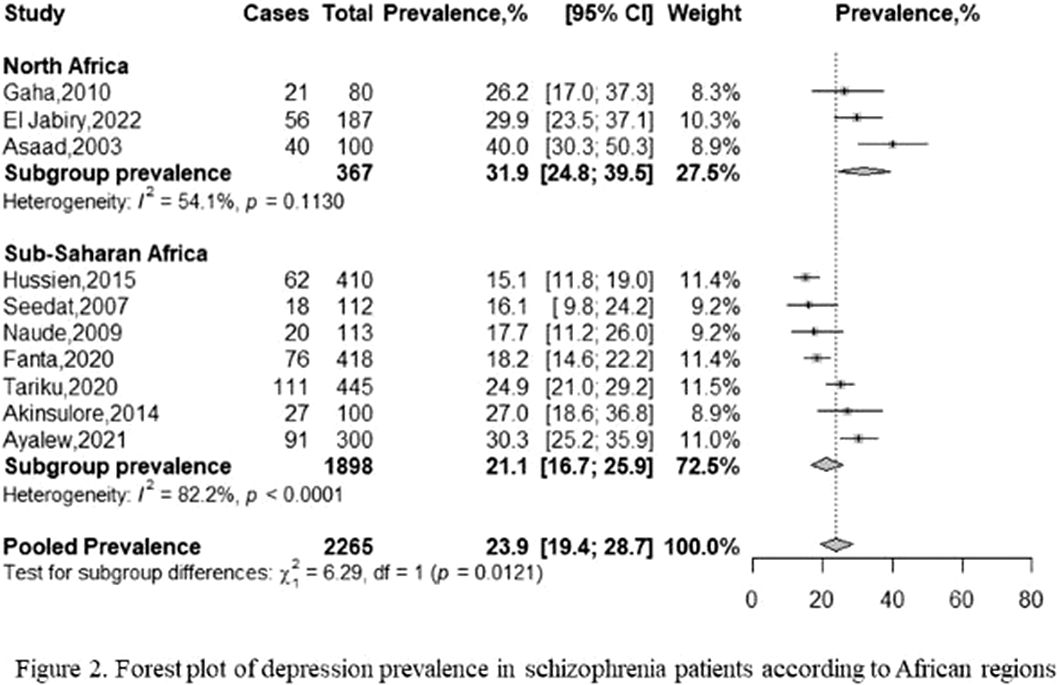
From 791 initial records, 10 studies were finally included in our qualitative and quantitative syntheses (Figure 1). These studies encompassed 2265 patients with schizophrenia (male-to-female ratio = 1.94), and were conducted between 2001 and 2019, in Egypt (n = 1/10), Ethiopia (n = 4/10), Morocco (n = 1/10), Nigeria (n = 1/10), South Africa (n = 2/10), and Tunisia (n = 1/10). The mean age of participants ranged from 33.8 to 49.2 years, and the most used tool was the Calgary Depression Scale for Schizophrenia (n = 4/10). The pooled prevalence rate of depression was 23.93% (95% CI: 19.43% – 28.73%), with substantial heterogeneity (I² = 84%). The prevalence of depression significantly varied according to screening tool used. The frequencies for Northern and Sub-Saharan Africa were respectively 31.9% (95% CI: 24.8% – 39.5%) and 21.1% (95% CI: 16.7% – 25.9%), with a significant difference between these subgroups (Figure 2). A higher prevalence of depression was associated with a lower percentage of schizophrenia patients with high education levels. Among schizophrenia people with depression (n = 250), 46.04% (95% CI: 30.07% – 62.42%) reported past or current suicide behaviors. The risk of bias was low for three studies, moderate for two studies, and high for five studies. The certainty was very low, and we found no publication bias.
Image:
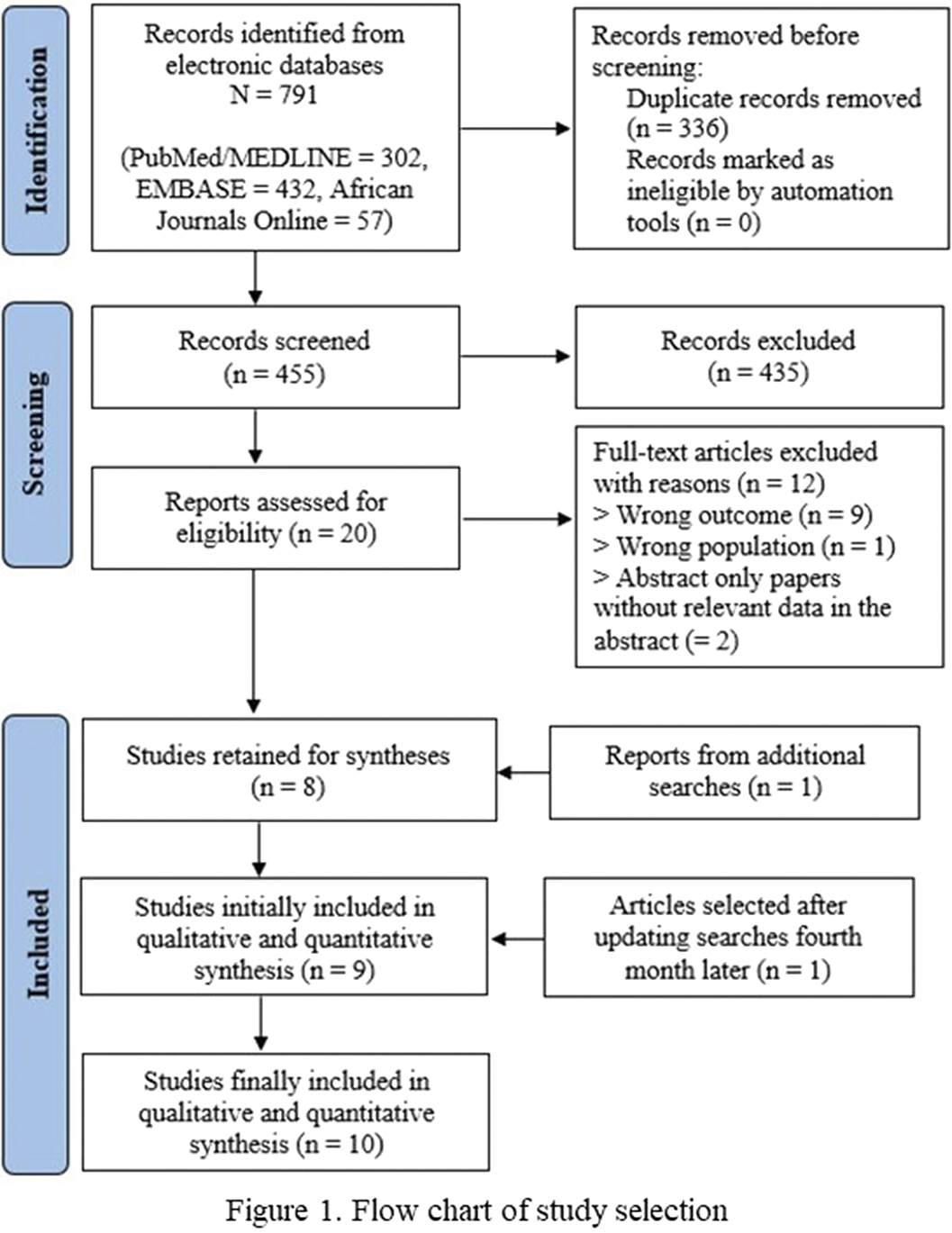
Image 2:
Conclusions
Approximately one in every four schizophrenia patients living in Africa was positively screened for depression. This review draws health professionals’ attention caring people with schizophrenia, and calls for further studies with a harmonization of screening tool, a better representativity of some subregions, and the assessment of key potential factors such as perceived stigma and self-stigma.
Exposome is all nongenetic exposures from the prenatal period to death. Exposome score for schizophrenia (ES-SCZ) is a cumulative measure of environmental liability for schizophrenia. Our previous studies showed that the ES-SCZ is associated with mental and physical health outcome.
Objectives
The aim of the study is to investigate the association of the ES-SCZ with metabolic parameters in individuals with schizophrenia and healthy controls.
Methods
This study obtained 124 individuals with schizophrenia and 440 healthy controls from the European Network of National Schizophrenia Networks Studying Gene-Environment Interactions, Work Package 6 (Vulnerability and Severity) Turkey dataset. The ES-SCZ was calculated by summing log-odds weighted environmental exposures (childhood adversities, winter birth, hearing impairment and cannabis use). Linear regression analysis was used to investigate the association between ES-SCZ and metabolic parameters. After that analysis age and sex were added as covariates.
Results
There was an association between ES-SCZ and diastolic blood pressure (B = -2.69 [95% CI -4.74; -.65], P-value = 0.010) in schizophrenia. ES-SCZ was associated with the fasting glucose level (B = -6.23 [95% CI -11.59; -.87], P-value = 0.023); high density lipid level (B = 1.77 [95% CI .27; 3.27], P-value = 0.021) in control and these results remained significant after adjusting for age and sex.
Conclusions
ES-SCZ was associated with important metabolic parameters. These findings show that ES-SCZ is not only related to increasing the risk for psychosis development but may also influence comorbidities. This result is important since it may increase our knowledge of ES-SCZ and contribute to the importance and framework of its clinical implementation.
Negative symptoms (NS) represent a heterogeneous construct of schizophrenia, whose conceptualization is still to be clarified. In the last decade, the conceptualization model that has received the most support from the literature has described 2 NS domains: the expressive deficit (EXP), which includes blunted affect and alogia, and the motivational deficit (MAP), which includes avolition, asociality, and anhedonia. However, different confirmatory factor-analytic studies suggest that the bi-dimensional model may not capture the complexity of this construct, which could be better defined by a 5-factor model (5 individual negative symptoms) or a hierarchical model (5 individual negative symptoms as first-order factors, and the 2 domains, MAP and EXP domains, as second-order factors). However, to our knowledge, no study has investigated associations between negative symptom models with social cognition and functional capacity, which are largely documented to correlate with negative symptoms, nor the associations with external validators over time, looking at the potential stability of negative symptom models validity through the course of the illness.
Objectives
In the light of this observations, we investigated, the external validity of the five-factor model and the hierarchical model of the BNSS in subjects with schizophrenia, looking at associations with cognition, social cognition, functioning and functional capacity at baseline and at four years follow-up.
Methods
NS were assessed in 612 subjects with schizophrenia using the Brief Negative Symptom Scale at the baseline and after 4-year follow-up. State of the art assessment instruments were used to assess cognitive and functioning related variables. Structural equation models (SEM) that included the NS models and 4 external variables were used to our aim.
Results
According to recent multicenter studies, our results confirmed the validity of the 5-factor- and the hierarchical-model of negative symptoms. In particular, these 2 models proved to be equivalent in terms of fit to the data at baseline and follow-up. As regard to the relationship of the two BNSS models with external variables, we found that there was a similar pattern of associations at the two time points despite minor variations.
Conclusions
The five factor and the hierarchical models provide an optimal conceptualization of negative symptoms in relation to external variables. The similar pattern of associations with external variables of the two models at the two time points despite minor variations, suggests that the simple and widely used 5-factor solution provides the best balance between parsimony and granularity to summarize BNSS structure. This data is of important relevance with consequent implications in the study of pathophysiological mechanisms and the development of targeted treatments for NS.
Since the appearance of long-acting antipsychotics (LAPAs) and given the high frequency of non-adherence to treatment in psychotic disorders, LAPAs have recognized a resurgence of interest in the psychiatric literature. These long-acting drugs may pose ethical issues (e.g. limitation of freedom).
Objectives
The present study aims to determine the representations of long-acting antipsychotics in patients followed at Arrazi Hospital in Salé.
Methods
Descriptive study carried out with patients hospitalized at the Arrazi hospital in Salé and those followed in consultation who are on APAP or who have already used it. The collection of information is done using an exploitation sheet
Results
APAPs have been used for less than 5 years by 53.8% of patients84.6% of participants do not use APAP bychoice, in 79.2% of cases it was the doctor’s decision and in 20.8% of cases it was the family’s choiceMonotherapytreatment was the most cited benefit by our patients (76.9%)The route of administration of APAP by intramuscular injection is the problem encountered in 57.7% of our patients, while11.5% of patients find no inconvenience for the use of these psychotropics.
Conclusions
Negative beliefs associated with the treatment contribute to a very large part to the lack of compliance, onthe contrary, long-acting antipsychotics may be better accepted by patients when taking into account the patients’ beliefsand preferences in the development of the treatment. therapeutic project
Obstructive sleep apnea (OSA) is characterized by recurrent pauses in breathing during sleep leading to sleep fragmentation and further excessive daytime sleepiness. Therefore, OSA patients are at high risk of suffering from complications from psychiatric disorders. Serotonin is a known neurotransmitter and together with serotonin transporter (SERT) is involved in the development of depression and insomnia.
Objectives
The study aimed to evaluate serotonin and SERT levels among OSA and healthy individuals and their association with insomnia and depression symptoms.
Methods
Forty individuals following polysomnography (PSG), based on the apnea-hypopnea index (AHI), were divided into 2 groups: the OSA group (AHI30; n=20) and the control group (AHI<5; n=20). Participants filled out questionnaires: Beck Depression Inventory (BDI) and Athens Insomnia Scale (AIS). Peripheral blood was collected in the morning after PSG. Protein concentrations were measured using ELISA. Further groups were divided into subgroups based on the standard cut-off points: without (AIS (-)) and with (AIS (+)) insomnia symptoms (AIS>5) and without (BDI (-)) and with (BDI (+)) depression symptoms BDI (BDI>19).
Results
No differences between the OSA and control groups in serotonin (128.8 (73.4 – 209.0) vs. 132.7 (69.9 – 214.6) ng/ml, p=0.805 and SERT (55.8 (39.7 – 64.80) vs. 576.4 (424.2 – 658.3) pg/ml, p=0.564) levels were observed. In OSA group SERT level correlated with AHI (r=0.409, p=0.043), desaturation index (r=0.504, p=0.024) and mean oxygen desaturation during night (r=-0.522, p=0.018), while serotonin level was associated with BMI (r=0.550, p=0.012), but not PSG parameters. Serotonin level was higher in the AIS (+) group but only in healthy individuals. Further, serotonin levels decreased in the BDI (+) group, yet this finding was observed only in the control group.
Conclusions
The results show that serotonin levels are associated with the presence of insomnia in depression, but quite interestingly only among healthy individuals. The association between oxygen desaturation and SERT levels suggests the involvement of hypoxia in the serotonin signaling pathway. Yet further studies on larger populations are needed to better understand the mechanisms responsible for the development of psychiatric complications in OSA patients.
There is evidence that anxiety and depressive symptoms may lead individuals to under-estimate their own sleep quality, particularly among younger subjects (aged <45 yrs).
Objectives
The aim of this study was to investigate the discrepancy between objective and subjective measurements of sleep quality in a sample of healthy control subjects (HCs) with no Axis I mental disorders, and the possible impact of panic-agoraphobic spectrum symptoms.
Methods
A total of 117 HCs (65 males and 97 females; Age: 35.3±14yrs) were evaluated by the: Panic Agoraphobic Spectrum-Self Report (PAS-SR), to investigate panic spectrum; the Pittsburgh Sleep Quality Index (PSQI) and actigraphy, respectively for the subjective and the objective sleep efficiency (SE) measures. Groups were divided according to the congruence between SE-actigraphic vs SE-PSQI (“Accurate”, “Underestimate”, “Overestimate”), establishing as a threshold an SE>85% as a measure of good SE. Regression analyses were conducted to assess the association between PAS-SR domains and the discrepancy between objective and subjective measurements, controlling confounding factors such as age, gender and BMI
Results
Since our data showed that a low sleep quality was associated with a greater age and that higher PAS-SR scores were associated with younger age, we used a sub-sample of 117 participants with age <45 years and comparing the 3 groups of subjects created on the basis of the discrepancy: Accurate, N = 74 (63.2 %), “Overestimate group”, N= 23 (19.7 %), “Underestimate group”: N=20 (17.1 %), we found a statistically significant difference among groups in the PAS.SR separation anxiety domain (p value=0.032), with a multinomial regression model confirming this domain contributed significantly to the differentiation between the three groups with higher symptoms being associated with a higher probability of belonging to the “underestimate” group.
Conclusions
Our results suggest that the discrepancy between objective and subjective sleep efficiency measurements in HCs could be affected by panic spectrum symptoms, particularly separation anxiety.