We partner with a secure submission system to handle manuscript submissions.
Please note:
You will need an account for the submission system, which is separate to your Cambridge Core account. For login and submission support, please visit the
submission and support pages.
Please review this journal's author instructions, particularly the
preparing your materials
page, before submitting your manuscript.
Click Proceed to submission system to continue to our partner's website.
To save this undefined to your undefined account, please select one or more formats and confirm that you agree to abide by our usage policies. If this is the first time you used this feature, you will be asked to authorise Cambridge Core to connect with your undefined account.
Find out more about saving content to .
To send this article to your Kindle, first ensure no-reply@cambridge.org is added to your Approved Personal Document E-mail List under your Personal Document Settings on the Manage Your Content and Devices page of your Amazon account. Then enter the ‘name’ part of your Kindle email address below. Find out more about sending to your Kindle.
Find out more about saving to your Kindle.
Note you can select to save to either the @free.kindle.com or @kindle.com variations. ‘@free.kindle.com’ emails are free but can only be saved to your device when it is connected to wi-fi. ‘@kindle.com’ emails can be delivered even when you are not connected to wi-fi, but note that service fees apply.
We present the case of a 43 year-old woman that, following the sudden death of his brother in 2015, begins with symptoms of anxiety, irritability and emotional instability, with a tendency to social isolation. Thereafter, she starts the development of persecutory delusions focused on the work and family environment that evolve into inappropriate behaviors to the point of abandoning her professional life.
Objectives
(1) We will carry out a complete review about persecutory delusions and its relationship with affective disorders, based on the severity of our patient’s case.
(2) We will study the different lines of treatment in delusional disorder (DD) and its course and prognosis in relation to the intervention performed.
Methods
A review of the patient’s history will be conducted, taking into account her biography, clinical evolution and response to the treatments received.
Likewise, a bibliographic review of the available scientific literature in relation to DD treatment strategies will be carried out.
Results
(1) DD is more common in middle-aged women. People who tend to be socially isolated are more likely to develop DD.
(2) Acute onset, in young women with identifiable precipitating factors, suggests a better prognosis.
(3) In the long term, 50% of patients recover and a further 20% experience some improvement.
(4) The combination of antipsychotic medications and psychological therapies such as cognitive behavioral therapy (CBT) is fundamental in the management of DD patients.
Conclusions
The prognosis for patients with DD varies depending on various factors, including the type and severity of the delusional ideas, and their own life circumstances. It is often possible to eliminate the behavioral alterations derived from the DD, allowing the patient to function normally. However, delusions often persist and become encapsulated.
Depression is twice as common in women as in men, especially in the young age group. Multiple factors may contribute to this gender difference. Growing attention is being focused on the role of sex hormones, including those of hormonal contraception (HC). Some recent studies have indicated a higher risk of depression among women using HC, although the results are inconclusive.
Objectives
The aim of this study is to examine the associations between the use of hormonal contraception and the risk of depression in childbearing age women.
Methods
The original cohorts for the study included all women aged 15-49 years with at least one redeemed prescriptions for HC in Finland in 2017 (n=294,356), and a 1:1 age-matched cohort of non-users. After exclusion of prevalent cases (n=35,102), all incident cases of depression (as recorded in the Care Register of Health Care and Register of Primary Health Care Visits) in 2018-2019 were identified (n=23,480), and a 4:1 age-matched control group (n=93,920) was selected from the above cohorts. Current use of HC in the 180 days before the event was compared in cases and controls, and associations with risk of depression were tested via conditional multivariate logistic regression models.
Results
During the follow-up, 23,480 incident cases of depression were identified. Current use (in the 180 days before the event) of HC (OR 0.82, 95% CI 0.79-0.85), in particular of estradiol- or ethinylestradiol-containing combined HC was associated with a lower risk of depression (OR 0.83, 95% CI 0.76–0.89; OR 0.74, 95% CI 0.71–0.78, respectively) compared to non-use of HC. The results remained significant (OR 0.87, 95% CI 0.81-0.95; and OR 0.77, 95% CI 0.73-0.81, respectively) after controlling for covariates (marital and socioeconomic status, education level, chronic diseases). Use of progestin-only contraception was not associated with altered risk of depression.
Conclusions
Use of HC in childbearing age women is not associated with increased risk of depression. Rather, the use of estradiol- or ethinylestradiol-containing HC is associated with a lower risk of depression.
Mental health in the workplace is a rapidly developing field of research, which involves the well-being of the individual on a psychological and social level. However, this balance can be suddenly disrupted and can have such a repercussion that the individual finds himself unable to do his job. In this case, he can benefit from a work stoppage called long term sick leave, governed for the public sector, by the decree number 59-239 of August 24, 1959.
Objectives
To study the socio-demographic and clinical profile of public sector employees who have been on long-term sick leave and examined as part of the assessment of their ability to work.
Methods
It is a retrospective study that focused on all public sector employees on long-term sick leave, examined as part of the evaluation of their ability to work in the psychiatric service CHU MAHDIA during the period from January 2013 to April 2014.
Results
We collected 73 patients. The mean age at the time of the examination was 51.1 years. There was a clear female predominance 67% and the sex ratio was 0.48. The vast majority were married (71%), of average socioeconomic status (52%) and high school level (43%). Most of the patients (67%) were from the Ministry of Public Health, followed by the Ministry of Education with 26% of the study population. The average length of service was 20.4 years with extremes between 3 and 36 years. The average length of leave was 13 months. The most frequent diagnosis of the prescribing physician was adaptation disorder (41%), major depressive disorder (27%). Somatic comorbidity was found in 38% of cases, dominated by hypertension, diabetes and cervicarthritis in 50%, 28% and 18% respectively. At the end of the leave, 82% of the patients were able to return to work. For the other patients, a professional reclassification was necessary.
Conclusions
Long-term sick leave has a heavy economic burden for society and serious socio-economic and psychological repercussions on the patient. Hence the interest in identifying vulnerable subjects and jobs at risk in order to prevent the occurrence of psychopathological disorders.
Forced medication is one of the most frequently used coercive measures in acute mental health units. It is a practice that can lead to physical, psychological and psychopathological consequences. Therefore, it is necessary to implement measures to reduce its use. In this sense, it is interesting to study the variables that can be associated with its use, and thus take measures accordingly.
Objectives
This study attempts to identify the number of forced medication episodes between July 2017 and December 2018 treated in the catchment area of the Mental Health Service at Jerez Hospital. As a secondary objective, it pursues to identify the factors that conducted to the use of forced medication with the intention of being able to reduce the use of these measures.
Methods
A descriptive and retrospective study has been developed reviewing the total number of episodes of forced medication. Patients admitted and discharged from hospital between July 2017 and December 2018 treated in the Mental Health Service at Jerez Hospital. Data were extracted from medical records.
Results
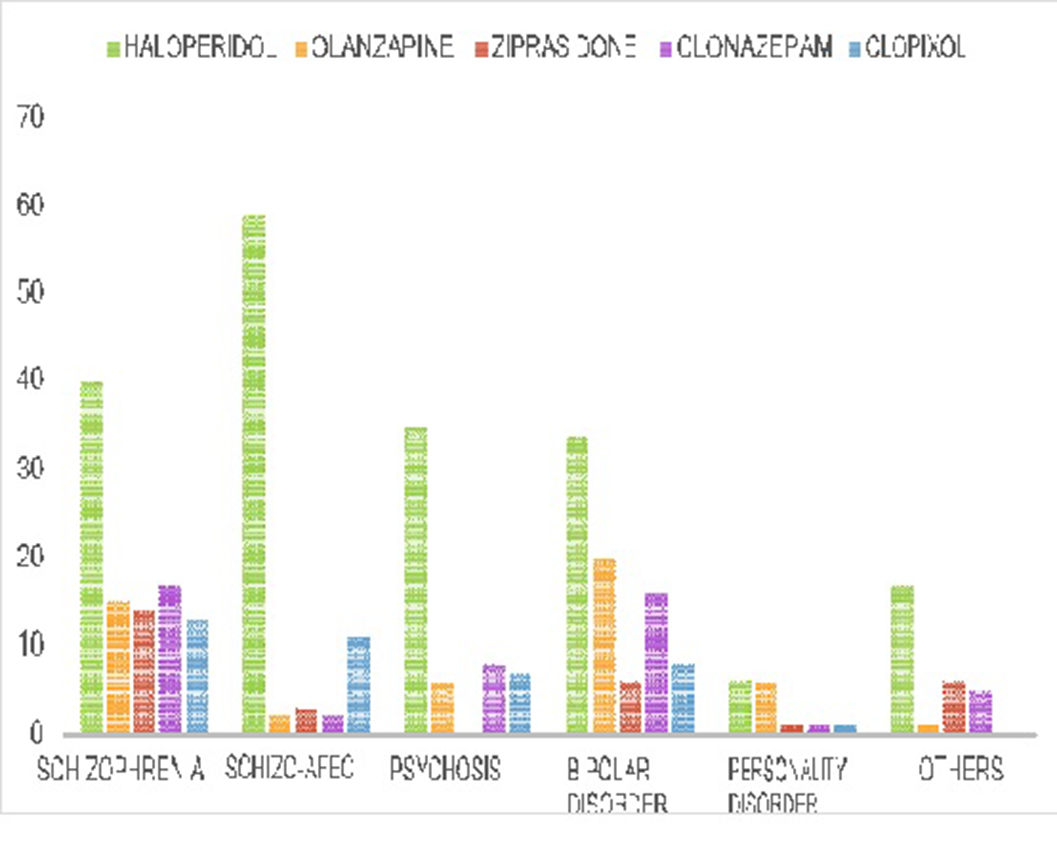
The total number of episodes of forced medication identified was 330. In these episodes, the average age was 41 years, with a predominance of 74% of the male gender. The most used route in the episodes was intramuscular (94.8%), in addition, more than 50% needed the association of two drugs, the most used were haloperidol and olanzapine. The 32.7% of the episodes also required the use of mechanical restraint and 44.2% required the presence of security service.
Image:
Conclusions
We present the descriptive analysis of a further study currently been conducted in hour hospital which means to stablish predictive factors for the use of forced medication. We therefore intend to create patient profile, as well as new measures specifically directed to these factors with which to diminish the use of forced medication.
Affective episodes often emerge in adolescence and young adulthood. Identification of factors subjectively associated with their onset may improve aetiological models and targeted intervention.
Objectives
To examine precipitating conditions of (hypo-)manic and depressive episodes in adolescents and young adults from the general population.
Methods
A random sample of 14-21 year-olds was drawn from the population registry of Dresden, Germany, and N=1180 were assessed in 2015/2016 (response rate: 21.7%). Lifetime depressive and (hypo-)manic symptoms as well as full-threshold depressive and (hypo-)manic episodes (DSM-5) were identified using standardized interview. Participants reporting depressive or (hypo-)manic symptoms were asked whether and which events or conditions they associate with episode onset. Besides responses on a list providing potential triggering conditions a free answer was possible. Qualitative content analysis preceded quantitative logistic regression analyses (significance level p<.05). Considered categories were: negative life events (further divided for depression into loss/danger events, burdensome life conditions, and interpersonal factors), events requiring adaptation, positive life events, internal factors, and other factors.
Results
The vast majority of participants reporting depressive (n=682) respectively (hypo-)manic (n=200) symptoms also reported a precipitating condition (94.7%, 83.1%). There was no significant association between any triggering condition and the occurrence of a full-threshold depressive (n=206) or (hypo-)manic (n=25) episode. However, the number of reported categories of precipitating conditions was associated with full-threshold depressive and (hypo-)manic episodes. Among those with depressive or (hypo-)manic symptoms and at least one reported precipitating condition, multiple regression models including all condition categories showed that in particular internal factors, interpersonal problems and other factors were associated with the occurrence of a full-threshold depressive episode (n=199) and positive life events as well as internal factors were associated with the occurrence of a full-threshold (hypo-)manic episode (n=21).
Conclusions
Adolescents and young adults from the general population usually associate the onset of phases with affective symptoms with precipitating conditions but these do not necessarily signal the emergence of a diagnostically relevant episode. Nevertheless, a greater number of and the presence of particular precipitating conditions may indicate the emergence of full-blown depressive or (hypo-)manic episodes. Thus, asking for subjective triggers appears relevant and may guide early identification and intervention.
Syndemics are synergistically interacting epidemics (for example, the epidemics of substance use disorders and forced displacement) in a particular context with shared drivers such as pre-existing political, structural, social and health conditions. Policymakers may ask what the risks of and needs are for forcibly displaced people with regards to substance use disorder (SUD). Working from a syndemics framework, we would argue that multiple risk and resiliency factors relating to both forced displacement and SUD work synergistically, and impact more significantly upon some populations than others. These risk factors include structural inequality and racism, social deprivation, violence, homelessness, trauma, childhood adversity, and co-morbid physical and mental health disorders. Individuals may become vulnerable while experiencing displacement, during transition, settlement or resettlement, and also through their life across and across generations. In this perspective, our answers to policymakers becomes more nuanced. We may argue for integrated, multi-modal interventions, cross-disciplinary collaborations, cross-pollination of ideas and knowledge and embedding lived experience to bridge gaps and make use of limited resources in sustainable ways. This presentation will detail aspects of the application of a syndemic lens to the evidence base on SUD among forcibly displaced people and generate discussion on what scientists, clinicians and policymakers can and may do with these insights.
Digital treatment for neurodevelopmental disorders is being developed in order to treat patients online when possible, to reduce waiting lists and to improve efficacy and efficiency of treatment. In this presentation, experiences with the so called Start Program of the Super Brains app for adults with ADHD are presented. The Super Brains app has been developed by Rutger den Hollander, who himself has ADHD and owns an ICT company, together with the speaker of this presentation and Parnassia Groep in the Netherlands.
The Start Program is part of the Super Brains app, and meant for patients referred for treatment, who have to wait on often long waiting lists. Now they have no longer to wait, but can start immediately by preparing for diagnostic assessment by filling in questionnaires, and with psycho-education, lifestyle tips and support by experience experts, who welcome them in the app and show them around.
First data on the use of different parts of the Start Program, the activity of the patients in the app and the satisfaction of patients will be presented. We also aim to study whether the Start Program is effective in reducing severity of ADHD symptoms during the waiting time. Super Brains can be adjusted for use in other (neurodevelopmental) disorders easily (https://www.superbrains.nl/?lang=en).
Lateralization is the functional dominance of one of the dual organs of the body: eyes, arms, legs and even ears, during their spontaneous or purposeful actions. The handedness is influenced by many factors like geographic region, genetic and cultural factors as well as sex. The most used assessment for functional lateralization is hand dominance. When assessing foot and eye dominance, however, we find significantly higher left foot dominance as well as very strong left eye dominance in schizophrenic patients versus controls. We consider the explanation of this results is because in Bulgaria, during the communist regime (before 1990) left hand writing was under cultural pressure. Also handedness itself is influenced by other cultural factors as mentioned already. All of the above made us conclude that foot and eye dominance may assess much better the lateralization than hand dominance.
Objectives
The aim of the study was to investigate the relaibility (internal consistency) of a combined Foot and Eye Dominance Scale in women- patients with schizophrenia and healthy subjects.
Methods
A sample of 94 women- scizophrenia patients and healthy controls were assessed with a Combined afaoot and Eye Dominance Scale. It consisted of two subscales Foot Dominance Subscale and Eye Dominance Subscale. The Foot Dominance Subscale included a modified Chapman & Chapman Foot Dominance Scale and a new Complex Task Scales with four foot tests, reflecting on complex tasks. The Eye Dominance Subscale included three eye tests. Scale reliability statistics (item-scale statistics, summary statistics for the items, Cronbach’s alpha), non-parametric Mann-Whitney test and Spearman’s rank correlation coefficient were used.
Results
Considerable differences were found in the contribution of the single items to the Combined Foot and Eye Dominance Scale. Some items show greater means than other items (from 0,14 to 0,80), which suggested greater phenogenetic component and consequently greater contribution of these items to the total scale mean. The mean correlation between the items of the Combined Foot and Eye Dominance Scale was positive (0,32), indicating good internal consistency of the scale.
Conclusions
The Combined Foot and Eye Dominance Scale more strongly and objectively reflect leftedness and could be a more useful tool for the assessment of lateralization irrespectively of culture and nation. The Combined Scale allows cross-cultural worldwide equivalence to the different studies in different neuroontogenetic diagnoses with presumed abnormal cerebral asymmetry.
Recent scientific evidence confirms that employability is extremely important in mental health care. Employment promotes a healthy lifestyle and unemployment leads to a global deterioration in health. This principle is transversal to all areas of health, applying equally to people with mental illness, including serious mental illness such as schizophrenia and bipolar affective disorder.
Objectives
Highlight the importance of employability in the treatment and rehabilitation process of people with mental illness.
Methods
PubMed database searched using the terms “supported employment” and “mental health” and “policies”.
Results
Parallel to conventional psychiatric treatments, employment generates self-confidence, promotes social responsibility, a sense of belonging and, consequently, integration in the community. From an economic point of view, it brings financial autonomy to the sick person, allowing the financing of their own accommodation, the payment of proposed treatments and the enjoyment of structures and leisure activities that until then would be impossible. It is also known that patients who are employed are less likely to resort to psychiatric emergency services and have a lower rate of readmissions to psychiatric hospitals, reflecting a better ability to manage the disease. Overall, employability increases the sick person’s quality of life, not only being an effective short-term treatment, but also one of the only interventions that reduce dependence on the health system in the long term.
Conclusions
The treatment plan should aim for more than the suppression of symptoms.
Knowing that employment generates positive outcomes, gets that as fundamental parameter for the treatment and for the rehabilitation of the person with mental illness, and it must therefore become essential that mental health services help patients to find satisfactory jobs and that protect your needs.
Thus, mental health policies should defend a new mental health treatment paradigm and emphasize employment as an imperative measure in the treatment and psychosocial rehabilitation of the sick person, including supported employment as an essential part of treatment.
Violence against women constitutes a social and health problem, exploring the impact that this can generate on mental health is an indispensable resource for the development of intervention and prevention strategies, primarily in one of the regions with the highest report of femicides in Colombia, such as Magdalena.
Objectives
To evaluate the association between violence and anxiety and depression problems in women living in the Magdalena region, Colombia.
Methods
The study was quantitative, exploratory and by convenience, with face-to-face application and by web platform. The sample consisted of 375 women residents (x̄=32; sd=13) in the Magdalena region -Colombia. Psychometric tests adapted and validated in Colombia and Mexico were applied, with Cronbach’s alpha values between .81 and .95, to evaluate anxiety (Self-Rating Anxiety Scale by Zung, 1971, adapted by Rodríguez et al, 2020), depression (Abbreviated Scale of the Center for Epidemiological Studies of Depression-10. by Radloff, 1977, abbreviated and validated by Rueda-Jaimes et al., 2009), and violence (Suffered and Exercised Partner Violence Questionnaire by De la Rubia and Sandra, 2015). In the data analysis, a nonparametric distribution was identified. Spearman was used to estimate correlations and the Kruskal-Wallis test was used to verify intergroup variance.
Results
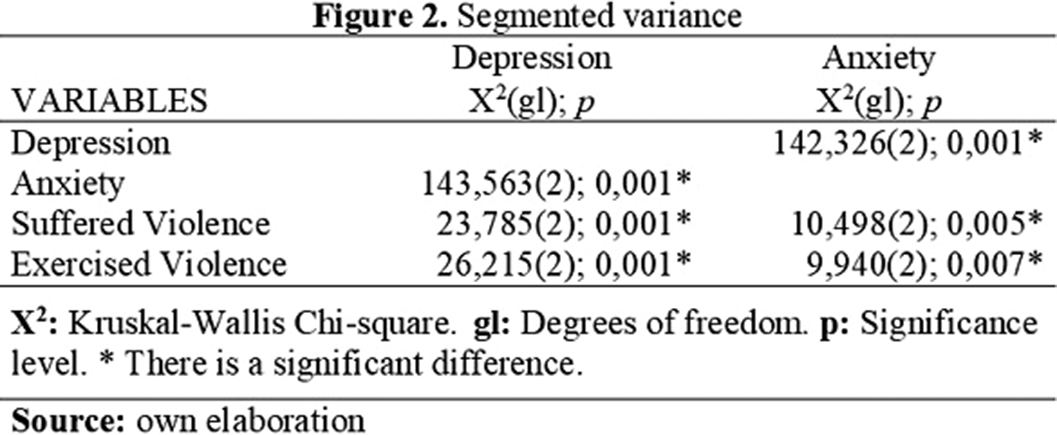
Of the total sample, 40.3% showed medium depression, 67.5% showed low anxiety, 3.2% showed a high degree of suffered violence and 2.9% showed a high degree of exercised violence.Significant positive correlations were found between violence, anxiety and depression, as well as between violence, anxiety and depression (see Figure 1). Significant differences were also found between the variables (see Figure 2).
Image:
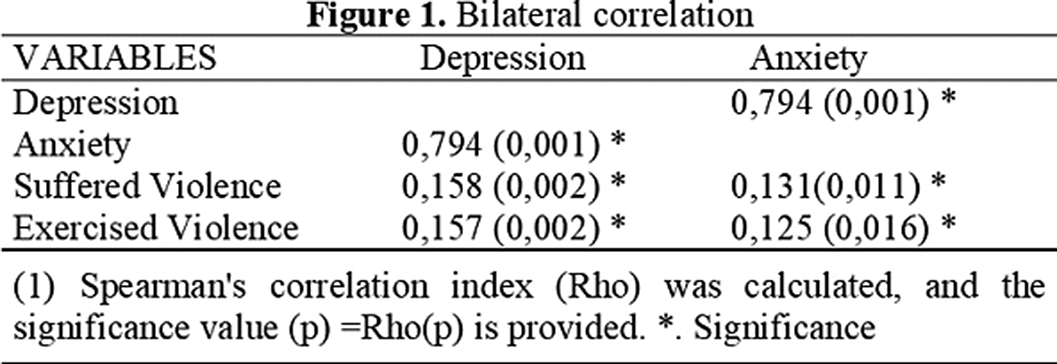
Image 2:
Conclusions
The results allow us to conclude that violence against women may be associated with anxiety and depression problems in this population, which allows us to explore this phenomenon from a public health perspective. This also allows us to contemplate the importance of devoting greater efforts to its prevention. Credit is given to project BPIN 2020000100758: Development of an Integrated Technological System for the promotion of mental health, psychosocial and socioemotional problems and prevention of gender violence caused by the COVID19 pandemic in the Magdalena region, and to Universidad del Magdalena for their support and funding.
Alexithymia is defined as a disorder involving difficulties in identifying, describing feelings and an outward-oriented way of thinking with restricted imaginary processes. Our objectives were to study the link between parents’ alexithymia and that of adolescents treated for psychiatric disorders on the one hand, and to study the relationship between alexithymia in adolescents and the parental link perceived by them, on the other hand.
Objectives
To study the relationship between the alexithymia of parents and that of adolescents followed for psychiatric disorders on the one hand, and to study the relationship between alexithymia in adolescents and the parental bond perceived by them on the other go.
Methods
A descriptive and analytical cross-sectional study was carried out at the pediatric psychiatry consultation at the Hédi Chaker University Hospital in Sfax during a period of one year from January 2019 to December 2019. We recruited 116 people: 53 adolescents, 44 mothers and 19 fathers. . We used an information sheet, the TAS-20 score (Toronto Alexithymia Scale) and the PBI (Parental Bonding Instrument)
Results
Two-thirds of the patients were alexithymic. A climate of domestic violence increased the adolescent’s emotional difficulties. Half of the mothers and one-third of the fathers were alexithymic. The total alexithymia score (TAS-20) in adolescents was positively correlated with the total alexithymia score (TAS-20) in the parents (p=0.03 for the mother and p = 0.02 for the father Adolescent difficulty in identifying emotions (DIE) was associated with difficulty describing emotions (DDE) in both parents (p=0.01 for mother and p<10-3 for father). The teenager had difficulty describing his own emotions when his mother was having the same difficulty. Outward thinking in adolescents were associated with more alexithymic traits in the mother. Maternal care scores were significantly and negatively correlated with adolescent TAS-20, DIE, and DDE scores (p=0.01, p=0.01, and p=0.04). Maternal protection score was positively and significantly correlated with TAS-20, DIE, and DDE scores (p=0.01, p=0.01 and p=0.02). The father’s protection score was positively and significantly correlated with TAS-20, DIE and DDE scores (p<10-3, p=0.04 and p=0.01). The overprotective attitude of parents perceived by the adolescent has therefore been associated with more alexithymia in adolescents.
Conclusions
Particular attention must therefore be paid to the emotional difficulties of adolescents followed in child psychiatry, as well as those present with their parents. These difficulties can create interpersonal difficulties and affect the parental bond perceived by the child.
According to the gender paradox,in suicidology an important sex difference has been reported with a preponderance of females in nonfatal suicidal behavior and a preponderance of males in completed suicide.The lethality of suicidal behavior in females is lower most likely because males choose more violent suicide methods.Furthermore,women more frequently present traditional risk factors for suicide than do men,including depression,childhood sexual abuse, and prior suicidal ideation and attempts.
Objectives
The purpose of this study was to explore possible clinical differences between male and female psychiatric inpatients who had recently attempted suicide.We hypothesized that clinical characteristics such as psychiatric diagnosis,the methods and lethality of the suicide attempt,the history of suicide attempts,age at onset of psychiatric illness,the presence of substance or alcohol use and the length of stay differ between male and female suicide attempters.
Methods
The study included 177 adult inpatients at the University Psychiatric Clinic, Sant’Andrea Hospital, Sapienza University of Rome hospitalized following a suicide attempt, between January 2018 and May 2022.Clinical features assessed included psychiatric diagnosis, method and lethality of suicide attempts using the Risk-Rescue Rating Scale, the history of suicide attempts, age at onset of psychiatric illness, the presence of substance or alcohol use, and the length of stay.All statistical analyses were performed with the Statistical Package for Social Sciences(SPSS 27.0).
Results
Males and females differed according to the method used for suicide attempt(x23=10.96,p<0.05),the scores for risk and rescue(t175=2.55,p<0.05;t146.6=-1.99,p<0.05,respectively),and the length of stay(U= 3084.5,p<0.05).Females were more likely to use drug/poisoning ingestion as method for suicide attempt than were males(72.8% vs.51.4%),whereas males were more likely to use hanging than were females(20.3% vs. 6.8%).The risk score was higher for males(3.76±0.68)than for females(3.49±0.72),and the rescue score was higher for females than for males(2.79±1.09 vs. 2.43±1.22).Finally,the length of stay was longer for males than for females(10.66±8.09 vs. 8.25±6.48).These results confirm the role of difference in suicide methods used by males and females for explaining the “gender paradox.”
Conclusions
The present study illustrates the usefulness of the Risk-Rescue Rating Scale which is a descriptive and quantitative method of assessing the lethality of suicide attempts.Identifying sex related characteristics of suicide risk in patients is important for implementing specific suicide prevention strategies to reduce suicidal intent, psychological pain and rehospitalization in patients with psychiatric disorders.Men and women may need different strategies for the prevention of future suicidal behavior.
The co-construction of conjugality is influenced by the interactions established in the family as a whole. It manifests itself, therefore, as a relational model in the expression of affectivity and the management of conflicts.
Objectives
In this clinical case report, the couple assumes relational difficulties focused on the significant reduction of time in individual leisure activities and, on the other hand, a 24-hour coexistence in the same space, in a period of compulsory confinement due to the COVID-19 pandemic.
Methods
This study is exploratory-descriptive, using the case study as an empirical approach.
Results
The case described, reports to Couples Therapy, with the sessions taking place in 2022, in a total of seven. The couple, N, male, and J, female, have been married since 2020, shortly before the first confinement because of the COVID-19 pandemic. Regarding their marital relationship, they reported that it deteriorated due to the difficulty in expressing an adaptive reaction to the stressor confinement and the opposite position regarding their desire to become parents.
Conclusions
Integrative strategies were developed, with different theoretical and operative references. The couple took control of their relationship due to a greater empathic awareness and the establishment of a healthy and balanced communication system.
Attention deficit/hyperactivity disorder (ADHD) often co-occurs with substance use disorders (SUD). Together, these disorders are associated with significantly more burden for patients and society, than each alone. Patients with SUD and underlying ADHD have more complex SUD and have more poly-substance use compared with SUD patients without ADHD. A correct identification of ADHD in adult and adolescent individuals with SUD remains important regarding treatment, treatment effectiveness, and treatment retention.
Several screening tools are available and have been validated in individuals with ADHD and comorbid SUD. It is highly recommended that these are used routinely, followed by an ADHD diagnostic process initiated as soon as possible. While several treatment options are accessible, randomized controlled trials show only limited effect sizes of standard pharmacotherapy in adult and adolescent ADHD patients with comorbid SUD. Simultaneous and integrated treatment, with a combination of pharmacotherapy and psychotherapy and for both ADHD and SUD, should preferably be initiated.
We present an overview of the current international guidelines on screening, diagnosis and treatment of ADHD adults and adolescents with comorbid substance use disorders.
Theory of Mind (ToM) is defined as the cognitive ability that infers other’s mental states (Premack & Woodruff. J Behav Brain Sci 1978; 1 515-526).The interest in the study of ToM distinguishing its affective and cognitive components has been growing. Its study in psychopathology has been evolved from its original studies in autism spectrum disorders (ASD), schizophrenia (SCZ) and, borderline personality disorder (BPD), to other mental disorders like major depressive disorder (MDD), bipolar disorder (BP), anorexia nervosa (AN) and social anxiety disorder (SAD).
Objectives
1) review the most commonly used instruments for ToM assessment; 2) to compile the evidence on ToM deficits across mental disorders. For both objectives, target disorders are previously mentioned.
Methods
The search was carried out on the PubMed, PsycInfo and Scopus databases, using the terms “Theory of mind”, “Mentalization” and the previously mentioned mental disorders and pertinent thesaurus. Articles in English, published since 2010 were considered. A 2-step strategy (first, article screening and full reading) was followed to select articles of interest.
Results
Reading the Mind in the Eyes (Baron-Cohen et al., J Child Psychol Psychiatry 2001; 42 241-251) and Movie for the Assessment of Social Cognition (Dziobeck et al. J Autism Dev Disord 2006; 36 623-636) were the most commonly used tasks to assess ToM. Regarding mental disorders, studies showed deficits in cognitive and affective ToM skills in ASD, SCZ, BPD, MDD and BP. Hypomentalization was mainly observed in ASD and MDD, while BPD and SCZ were featured by errors associated with hypermentalization. Studies in AN and SAD are scarce, but they mainly highlight a cognitive ToM deficit, with hypomentalization in AN and hypermentalization in ASD. In all of them, depressive symptomatology seems to be a critical moderator of ToM performance.
Conclusions
Although ToM impairments are well described for some mental disorders, more research is needed to reach solid conclusions for others. The use of different and heterogeneous ToM assessment instruments can strongly influence the results of studies. The study of ToM is essential to gain a better understanding of the diseases and to develop effective treatments targeting specific ToM deficits.
Although the rates of response to first-line pharmacological treatments (serotonin reuptake inhibitors – SRIs) are generally twice that of placebo, only 40-60% of patients respond sufficiently or are able to tolerate traditional first-line pharmacotherapy. Augmentation with dopamine antagonist medications is associated with the strongest evidence, yet dopamine antagonists benefit only a minority of those who try them and carry elevated risks of adverse effects. Based on evolving pathophysiologic models of OCD, a variety of agents targeting serotonin, dopamine, norepinephrine, glutamate, and anti-inflammatory pathways have been explored as alternative or adjunctive therapies for treatment-resistant OCD and have at least preliminary evidence of efficacy. Similarly, approximately 50% of patients do not respond optimally to first psychotherapeutic treatments including cognitive behavioural therapy (CBT) and exposure and response prevention (ERP), even when combined with pharmacotherapy. The psychotherapy outcome literature is heterogeneous and very few psychological strategies have been developed specifically to treat treatment resistant OCD. However, a recent systematic review concluded that CBT improved treatment response in individuals with pharmacotherapy resistance. This presentation will present an update on the pharmacological and psychotherapeutic treatment of refractory OCD including novel strategies such as the use of psychedelics.
Disclosure of Interest
M. Van Ameringen Grant / Research support from: Elvium, CIHR,Hamilton Academic Health Sciences Organization, Consultant of: Abbvie, Bausch Health, Boehringer Ingelheim, Elvium, Jazz, Vistagen, Speakers bureau of: Abbvie, Elvium (Purdue), Lundbeck, Otsuka, Sunovion, and Takeda
People with mental disorders may present impairments in cognitive and metacognitive functions. Self-reflection is the ability to reflect on oneself (specifically on one’s behavior, emotions, and thoughts) and insight is the awareness of one’s internal experience. Mindwandering (MW) is defined as the tendency to divert attention from current reality without a clearly defined intention. It can be spontaneous or deliberate. Several studies have investigated these alterations in patients with schizophrenia (SZ), while less is known for people with substance use disorder (SUD).
Objectives
The aim of the present study was to explore self-reflection, insight and MW in a group of patients with SZ and SUD.
Methods
The Self-reflection and Insight Scale (SRIS) and the spontaneous (MW-S) and deliberate (MW-D) mindwandering scales were administered to 25 patients with SZ, 21 patients with SUD, and 21 healthy controls (HC). Linear regressions were performed to evaluate the associations between the variables under study.
Results
Preliminary data showed that SZ and SUD patients presented lower SRIS and MW values than HC. Examining MW in detail, participants with SZ reported higher scores at than MW-D, while in people with SUD, MW-D scores were higher than MW-S scores. Linear regressions revealed that MW-D was negatively associated with self-reflection in SUD; moreover, insight scores were negatively associated with MW-S in SZ.
Conclusions
Our preliminary results confirm the importance of acting on the elements of metacognition in patients with mental disorders to improve the general outcome of the disease. A comprehensive therapeutic approach should include psychotherapeutic and social interventions aimed at increasing attention and introspection.
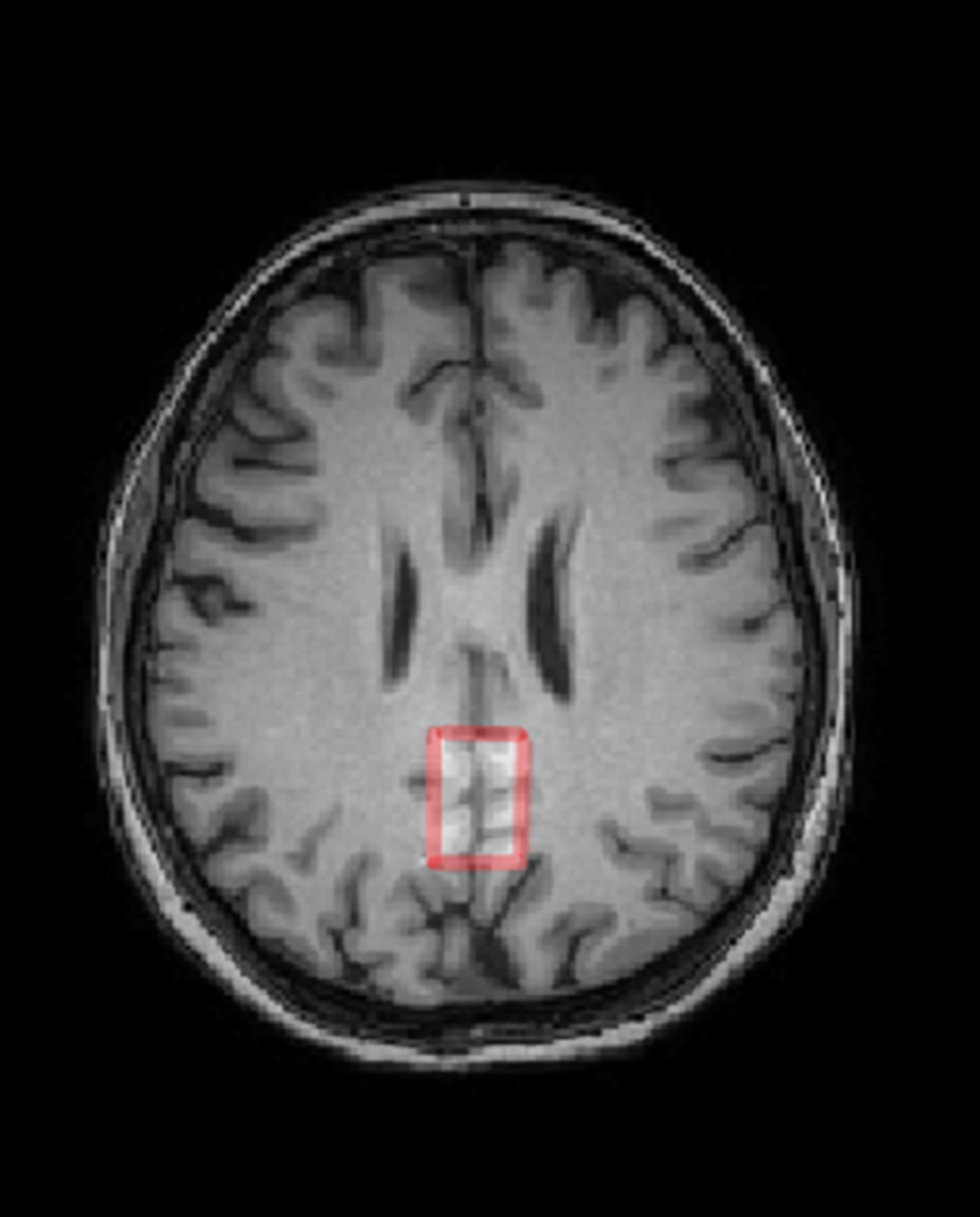
There is evidence that the concentrations of the main inhibitory neurotransmitter (GABA) may be altered in schizophrenia. The purpose of this study is to find the changes in the GABA concentration in the area of anterior and posterior cingulate cortex of patients with early-stage schizophrenia using the spectral-edited magnetic resonance spectroscopy.
Objectives
To measure the cerebral concentrations of the gamma-aminobutyric acid in schizophrenia patients at early stage.
Methods
Thirty-one subject, 18 controls (11m+7f, 29.6±5.7 y.o.) and 13 schizophrenia patients (F20.0, 8m+5f, 27.5±3.1 y.o.). Philips Achieva dStream 3T MRI scanner, standard head coil. The 3D T1w head images and MEGA-PRESS GABA spectra in ACC and PCC areas were acquired with the following parameters: 50x25x25 mm, TR = 2 s, TE = 64 ms, 180-editing pulses applied at 1.9 ppm and 7.6 ppm, NSA = 288 (acq.time ~10 min). GABA spectra were processed in Gannet program. The intensities of the GABA, Glutamate+glutamine (Glx), creatine (Cr) and unsuppressed water signals were acquired. T-test was used in search for between-group differences.
Results
In ACC region, significant reduction of the GABA/Water was observed (by ~15%, p=0.02) as well as a trend to a decrease in GABA/Cr (by ~10%, p=0.07) in schizophrenia. In PCC, no significant GABA/Water or GABA/Cr differences were observed. Glx/Water and Glx/Cr in both areas were also unchanged.
Image:
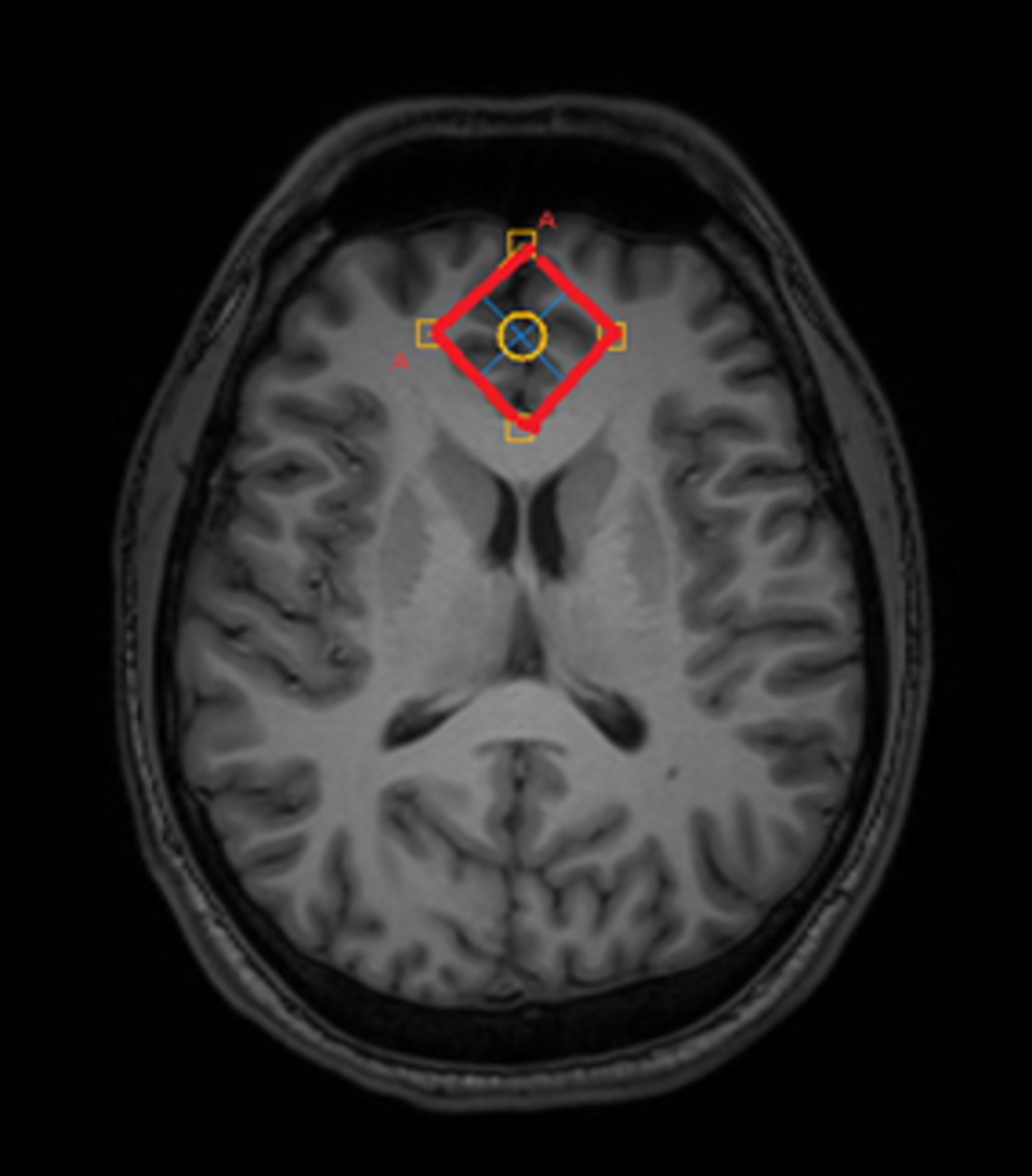
Image 2:
Conclusions
This study provides insight into neurotransmitter alterations at early-stage schizophrenia. The results demonstrate the region-specific changes in the balance of the main neurotransmitters. Since this balance is crucial for the normal cerebral functioning, the results may facilitate better understanding of the dynamics of the pathological process and provide additional information for understanding the biological mechanisms of the schizophrenia development.
The war in Ukraine caused many people to flee within Ukraine and across Europe. Trauma, separation from family and prolonged uncertainty increase the risk of posttraumatic stress disorder and depression among Ukrainians. The element of time is a critical aspect of intervention in stress-related disorders as an identical intervention may be beneficial or harmful if given at different times, focussing on primary, secondary or tertiary prevention. Recent studies showing the importance of timing of intervention in prevention of PTSD lend further support to the concept of the “golden hours” or “window of opportunity”. Dr. Iryna Frankova will present lessons learned from implementation of this psychological first aid digital intervention of low intensity during the ’golden hours’ following escalation of the war in Ukraine. During the talk she will provide guidance on what should and should not be done for the end users, as well as strengths and limitations of the chatbot intervention.
In schizophrenia, there is evidence for anomalies in the extension and plasticity of the peripersonal space (PPS), the portion of space surrounding our body, plastically shaped through motor experiences. An impaired multisensory integration at the PPS level would underpin the disembodiment, a core feature of the disorder linked to subjective perturbations of the sense of self (“Self-disorders”) and of the intersubjective dimension (“schizophrenic autism”).
Objectives
The present study was aimed at: 1) exploring possible associations between PPS data, psychopathological dimensions, and subjective experiences in schizophrenia; 2) identifying a specific PPS profile in patients with early-onset schizophrenia.
Methods
A motor training with a tool was used to assess the PPS size and boundaries demarcation in twenty-seven schizophrenia outpatients. Moreover, they underwent a thorough psychopathological evaluation with the Positive And Negative Syndrome Scale (PANSS), the Examination of Anomalous Self Experience scale (EASE) and the Autism Rating Scale (ARS). Subsequently, the sample was divided into early (EOS) and adult-onset (AOS) subgroups, that were compared with respect to their PPS and psychopathological profiles.
Results
PPS features (size and boundaries demarcation) were associated with PANSS negative score, subjective experiences of existential reorientation (EASE Domain 5 scores) and traits of schizophrenic autism (ARS scores; Fig. 1). PPS parameters (Fig. 2) and ARS scores, but not PANSS and EASE differentiated between early and adult-onset subgroups.
Image:
Image 2:
Conclusions
Our results suggest a link between PPS patterns, negative symptoms, and disturbances of the subjective experience, particularly in the intersubjective domain, in schizophrenia. Moreover, they candidate specific PPS profiles and schizophrenic autism traits as EOS markers.