We partner with a secure submission system to handle manuscript submissions.
Please note:
You will need an account for the submission system, which is separate to your Cambridge Core account. For login and submission support, please visit the
submission and support pages.
Please review this journal's author instructions, particularly the
preparing your materials
page, before submitting your manuscript.
Click Proceed to submission system to continue to our partner's website.
To save this undefined to your undefined account, please select one or more formats and confirm that you agree to abide by our usage policies. If this is the first time you used this feature, you will be asked to authorise Cambridge Core to connect with your undefined account.
Find out more about saving content to .
To send this article to your Kindle, first ensure no-reply@cambridge.org is added to your Approved Personal Document E-mail List under your Personal Document Settings on the Manage Your Content and Devices page of your Amazon account. Then enter the ‘name’ part of your Kindle email address below. Find out more about sending to your Kindle.
Find out more about saving to your Kindle.
Note you can select to save to either the @free.kindle.com or @kindle.com variations. ‘@free.kindle.com’ emails are free but can only be saved to your device when it is connected to wi-fi. ‘@kindle.com’ emails can be delivered even when you are not connected to wi-fi, but note that service fees apply.
ADHD is known to increase the risk of substance use, and is associated with lower degrees of education, criminal behavior and neuropsychic difficulties. Previous research is limited by small samples, variable findings, and short follow-up time. Earlier research tends to be limited to substance use above the threshold for abuse or dependency.
Objectives
This study aims at looking at the effects of cannabis use both over and under threshold for abuse or dependency in relations to clinical characteristics over a 3-year follow-up period.
Methods
At follow up a total of 203 patients were diagnosed with ADHD either as primary of as secondary diagnosis, of those 57 (28,1%) had lifetime use of cannabis (LUC), mean age at inclusion was 15 and half years old and 40% were of female sex. SPSS (v.29) were used to perform independent sample t-tests to test for effects and Hierarchical block-wise regressions were done to check for confounding variables.
Results
Lifetime cannabis use was associated with lower global functioning (p=0.000), increased risk of suicidal ideation (p=0.007), more suicide attempts (p=0.049), more self-reported symptoms (p=0.001), more school drop-out (p=0.000) and with psychotic features (p=0.024). Even after testing for know confounders such as female sex and age LUC explained significant variance.
Conclusions
LUC is associated with increased functional and clinical characteristics. The findings are discussed in relationship with clinical practice and limitations of the study.
Body image dissatisfaction as negative evaluation of personal physical characteristics is often associated with low self-esteem, eating and affective disorders. What body regulation practices can people resort to when they are dissatisfied with their body image?
Objectives
The goal is to determine body image practices that help people to reduce tension caused by dissatisfaction with their body image.
Methods
We obtained the data by using a focus group technique. The group comprised 43 healthy undergraduate university students of both genders. Afterwards, the data were subject to analysis and systematization.
Results
The findings revealed 11 variants that represent the spectrum of body regulation practices, which semantically can form three groups. The first group combines adaptive regulation practices that help people successfully adapt to actual life situation, develop their capabilities concerning their physiology, personality, intellectual interests, and image making. The second group combines compensatory regulation practices that mainly focus on one of the sides of body regulation, which bear a certain threat to their health (weight control, building up muscle bulk, medical cosmetology procedures, body modification). The third group includes non-adaptive body regulation practices associated with high risk to their health and personal wellbeing (auto-aggressive, hetero-aggressive, and psychopathological).
Conclusions
Information about preferable body regulation practices used by people who are dissatisfied with their body image can help predict health hazards and disorders, as well as work out targeted prevention programs.
Psychotic episodes characterized by sudden onset of polymorphous psychotic symptoms and fast resolution have been a subject of interest of many psychiatrists throughout the History. Controversies about the diagnostic criteria and nomenclature of cycloid psychoses persist nowadays, what has hampered its study. In last years, several reports associating this disease with autoimmune pathologies have been published, revealing a possible association between them.
Objectives
To contribute to the knowledge of cycloid psychoses, reporting a case of motility psychoses and exploring its possible association with autoimmune diseases.
Methods
Case report and literature review.
Results
A 48-years-old woman presents a history of eleven admissions at the Psychiatry nursery in the last nineteen years, due to psychotic episodes. Usually, these episodes follow a default in psychopharmacological therapeutic, and are characterized by rapid onset of psychomotor agitation, with prominent nonpurpuseful exuberant movements, incoherent speech, mood oscillations and polythematic delusion. Between these decompensations, she recover her normal functioning, being medicated with lithium and an antipsychotic. During one of her admissions, at 2015, she developed fever and a stuporous state. The magnetic resonance and lumbar puncture were normal, the electroencephalogram revealed generalized lentification. Autoimmunity investigation evidenced positive antithyroid antibodies (with normal thyroid function) and the echography validated the diagnosis of Hashimoto’s thyroiditis.
Conclusions
This case report reveals a possible relationship between cycloid psychoses and Hashimoto’s thyroiditis. We need to share more knowledge to understand if it represents a comorbidity or a pathogenic process with the same etiology, what will influence the treatment of these patients.
Important role of sociocultural mediation of human health is reflected in the regional specificity of subjective evaluation of factors determining human health.
Objectives
The research is focused on the opinion of respondents from different regions of Russia about the importance of various factors that determine health and subjective well-being.
Methods
210 men and 403 women aged 14 to 76 years (M=26.9; SD=13.7) from six regions of the Russia (Moscow, St. Petersburg, Udmurtia, Sakha, Sverdlovsk and Kemerovo) participated in the study. Respondents were asked to rank six factors (genetics, healthy lifestyle, good ecology, regular medical examination, absence of stress, financial well-being) in terms of their impact on health (1 is the most important, 6 is the least important).
Results
It was revealed significant differences among respondents from different regions of the Russia in evaluation of importance of health factors such as “genetics” (F=3.317; p=0.003) and “good ecology” (F=5.008; p<0.001). Respondents from the Sverdlovsk consider “genetics” significantly more important than participants from the Sakha (MD=-0.706; p=0.019) and Kemerovo (MD=-0.859; p=0.015). Respondents from St. Petersburg consider the ‘good ecology’ significantly less important than participants from Moscow (MD=0.791; p=0.046), Udmurtia (MD=0.867; p=0.035), Sakha (MD=1.168; p<0.001), and Kemerovo (MD=1.286; p<0.001).
Conclusions
Regional specificity was found in the subjective evaluation of the importance of factors that determine health and subjective well-being. The reported study was funded by the RFBR, project number 17-29-02506.
In response to COVID-19, paediatric providers have shifted to providing outpatient health care appointments through telehealth.
Objectives
While research has been published previously on this topic, we felt it important to add current Canadian youth perspectives to the mix, specifically on changes due to COVID-19.
Methods
Semi-structured discussions were held on virtual care in June and October 2020 with our youth members, who are patients with various health conditions, aged 13 to 19 years which allowed us to glean their unique opinions regarding virtual care in the midst of a pandemic.
Results
Youth who contributed to this commentary reported that major benefits of virtual care included time savings, ease of access, continuity of care, and ability to participate in health appointments from the comfort of one’s own home without a risk of COVID-19 exposure. These youth also recognized limitations to virtual care, including the inability to complete laboratory or imaging tests, and the lack of physical examination capabilities.
Conclusions
Additionally, they stressed the importance of visual components of virtual appointments and health care providers needing to consider privacy restrictions youth may have. Overall, our cohort of youth feel positive about virtual care and hope care providers can work with youth individually to determine the best solution for them.
Internet-addiction (IA) is one of the most common non-chemical (or behavioral) addictions with genetic impact and substantial effects of psychological and personality characteristics, taking into account the childhood traumatic experience. Gene-environment interactions (GxE) may substantially impact on the risk of Internet-addiction (IA).
Objectives
Aim: to test the associations between the functional polymorphism rs6265 (Val66Met) in brain-derived neurotrophic factor (BDNF) gene, affecting BDNF function, and childhood traumatic experience and their GxE interactions with IA risk.
Methods
In total 456 participants were screened with Chinese Internet Addiction Scale (CIAS) to cut a cohort on two groups: IA (CIAS total score ≥ 65, n=100) and controls (CIAS total score less 64, n=356). The Adverse Childhood Experiences International Questionnaire (ACE-IQ) was used to assess childhood traumatic experience using its main domains: parents (P), family (F), abuse (A) and violence (V). BDNF Val158Met polymorphism was detected by RT-PCR.
Results
Logistic regression revealed associations of P scores with increased IA risk only after adjustment for sex and age (p=0.01, OR=1.166, 95%CI[1.038-1.309]) and V scores with decreased IA risk (p=0.000, OR=0.799, 95%CI [0,233;0,744] only before adjustment. No associations of F and A with IA risk were found. BDNF Val158Met per se was not associated with IA risk, but significant effect of interaction V score*BDNF rs6265 CC on IA risk in “protective” manner was revealed (р=0.039, OR=0.873, 95%CI[0.768-0.993]) in a model adjusted for sex and age.
Conclusions
Childhood violence experience interacts with BDNF Val158Met polymorphism and CC (ValVal) genotype may be possibly protective factor decreasing the internet addiction risk
Disclosure
This work was carried out with the financial support of the Russian Foundation for Basic Research: RFBR grant # 18-29-22079
Schizophrenia is a mental disorder with a high risk of suicide, which is one of the leading causes of early death in schizophrenia patients.
Objectives
It was aimed to examine the relationship between the SIRT1 gene and suicidal behavior in patients with schizophrenia, to identify specific polymorphisms and to provide individual protective approaches by predicting suicidal behavior.
Methods
100 patients with schizophrenia were included in our study. The SIRT1 gene was analyzed using the whole exome sequencing method, and 22 SNPs were identified. In addition, participants’ socio-demographic, psychiatric history, and suicidal behavior evaluation form data were recorded. A comparison was made between the two groups according to suicidal behavior.
Results
When sociodemographic and psychiatric history of the participants were compared in terms of suicidal behavior, no significant difference was found. SIRT1 gene SNP; rs2236318; (TT genotype), rs10997870 (GG genotype) was associated about 4 times increased risk in suicidal behavior; rs41299232 (CC genotype) 3.7 times; rs7896005 (AA genotype) with 3.4 times also. Although rs201230502 (TC genotype) and rs36107781 (TC genotype) were more common in the group with suicidal behavior, they lost their significance in regression analysis due to the low number of cases.
Conclusions
Our study showed that schizophrenia has many risks that increase suicidal behavior , but clinical and sociodemographic data are insufficient to predict suicidal behavior. Considering the inheritability of the disease and the effect of genetics on behavior, SIRT1 gene SNP; (rs2236318, rs10997870, rs41299232, rs7896005, rs201230502 and rs36107781) genotypes were found to be associated with suicidal behavior in schizophrenia patients.
Ketamine, synthesized in 1962 as phencyclidine derivate, is denominated a “dissociative anesthetic” because of its side-effects, such as dissociative episodes and psychotic-like symptoms, which have limited its applicability on clinical practice. Otherwise, in the last decades the non-medical use of ketamine has been growing and today is one of the most popular illicit substances consumed between adolescents and young adults.
Objectives
Increasing the knowledge and understanding of the factors related to crescent use of ketamine and the experiences and consequences associated to its consumption.
Methods
Clinical interview with patients diagnosed with ketamine use disorder and bibliographic research in Pubmed database using the terms “Ketamine use” and “Ketamine addiction”.
Results
Pat et al. (2002) describes a clinical case of a young male, diagnosed with substance use disorders, specifically alcohol and cocaine use disorders, that started a treatment with ketamine. After the treatment, pleasant depersonalization experiences contributed to the development of patient’s ketamine dependence. Other patient’s reports confirm the association of ketamine use with psychedelic effects and dissociative episodes and pointed these effects as main reason for its consumption.
Conclusions
The adverse effects that limited the medical use of ketamine are the same that promote its utilization with recreational purposes by adolescents and young adults in parties and nightclubs. About the ketamine dependence, the literature is scarce and doesn´t clearly identify a physical withdrawal syndrome, pointing only to a serious psychological dependence. Thus, with the crescent non-medical use of ketamine, it’s urgent to develop an intervention plan directed to this problem.
Pseudobulbar affect (PBA) is an emotional disorder characterized by uncontrollable outbursts of laughing and/or crying. It is caused by lesions that damage pathways in the frontal lobe and descending to the brain stem, basis pontis and cerebellum. The main causes are neurodegenerative diseases.
Objectives
To present a case of PBA secondary to cerebral toxoplasmosis.
Methods
The present study is a case report of a patient admitted for HIV-related toxoplasmosis to our hospital. We also researched previous case reports of PBA secondary to CNS infection using a pubmed query.
Results
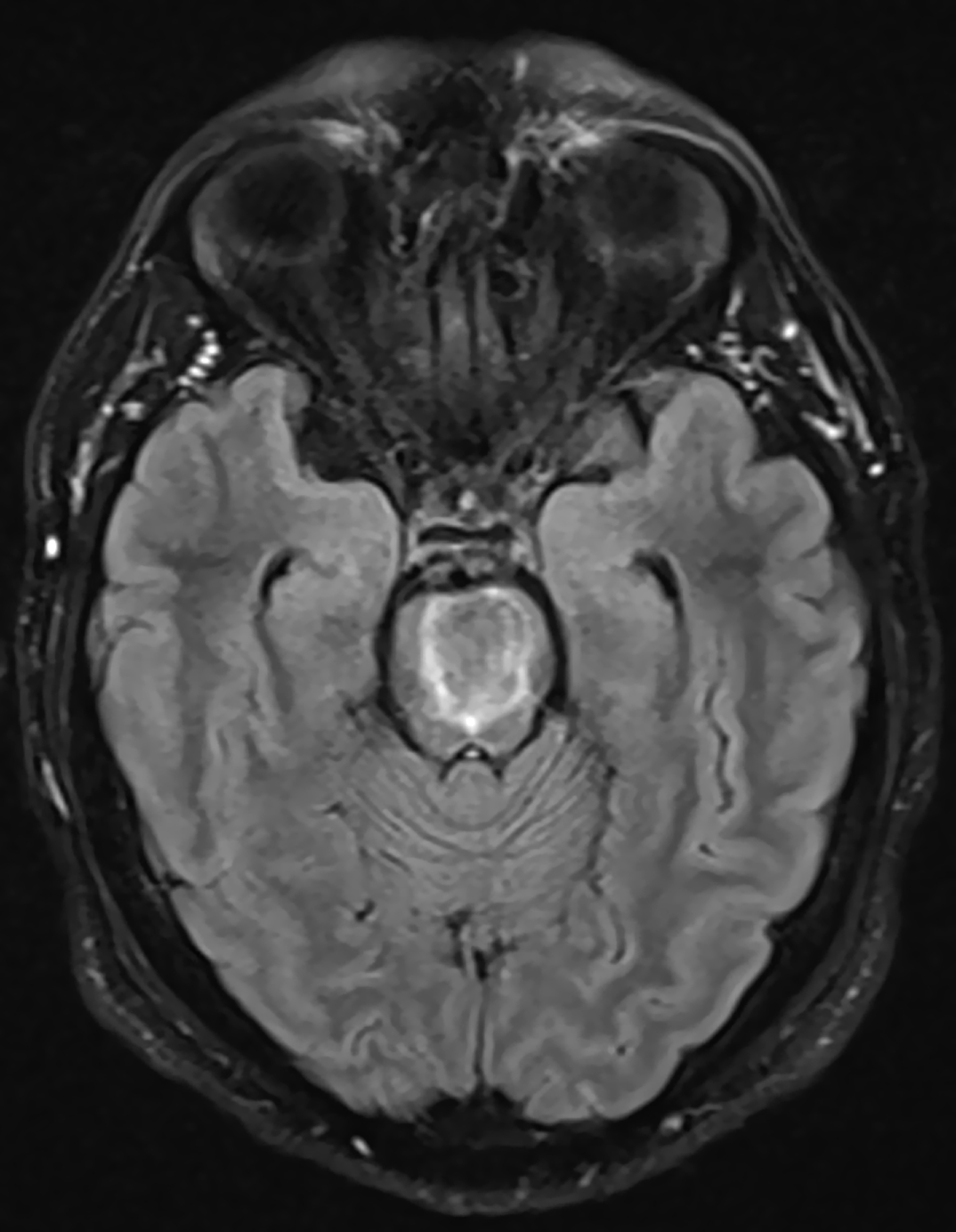
Mr. JA is a 38-year-old male, with no prior psychiatric or medical history. He reported having had same-sex sexual encounters previously. He was admitted for ataxia and dysarthria in a medical unit, and diagnosed of HIV infection, with a CD4 count of 19 cells/μL. The MRI showed a lesion of 22x19x18mm with ring enhancement predominantly in basis pontis, compatible with toxoplasmosis(Image1). Treatment with sulfadiazine, pyrimethamine and dexamethasone was initiated. After five days of hospitalization he was referred to Consultation-Liaison Psychiatry for involuntary and uncontrollable outbursts of laughing and crying, insomnia, but no other psychopathological symptoms. Therefore, citalopram 20mg per day was started, with reduction on the frequency of outbursts.
Conclusions
The clinical presentation suggested the diagnosis of PBA due to cerebral toxoplasmosis. Although we found no previous reports of PBA related to HIV infection or toxoplasmosis, the location of the toxoplasmosis lesion is congruent with the typical damaged pathways in PBA. To our knowledge, this is the first report about PBA secondary to HIV-related toxoplasmosis.
The Naimigen questionnaire (Van Dixhoorn, Duivenvoordent, 1985) was developed in the 1980s to assess the severity of hyperventilation syndrome, which causes respiratory alkalosis and, as a result, polysystemic functional symptoms. Later, this questionnaire was recommended for use in the diagnosis of dysfunctional breathing. The COVID-19 pandemic provokes anxiety as a stressful event and objectifies the respiratory function, which becomes a favorable ground for the growth of the prevalence of dysfunctional breathing in society.
Objectives
To validate the Naimigen questionnaire in the context of the COVID-19 pandemic among the Russian-speaking population.
Methods
The author’s socio-demographic questionnaire and the Naimigen Questionnaire (NQ) were used (Van Dixhoorn, Duivenvoordent, 1985). The study was conducted online from April 27 to December 28, 2020. It was attended by 1,362 people from all regions of Russia, including 1,153 women and 209 men aged 15 to 88 years (38.3 ±11.4).
Results
The stable reliability of the Alpha-Kronbach coefficients (> 0.877) was revealed for all NQ points. To check the factor structure of the Naimigen questionnaire, we conducted an exploratory factor analysis using the direct Oblimin criterion, which, when explaining 57.3% of the total variance, allowed us to identify 4 factors: respiratory symptoms, paresthesia and gastrointestinal symptoms, tension, derealization.
Conclusions
Checking the reliability and factor structure of the Naimigen questionnaire allows us to reasonably use this questionnaire on a Russian-language sample in the conditions of the COVID-19 pandemic. Disclosure: Research is supported by the Russian Science Foundation, project No. 21-18-00624.
Disclosure
Research is supported by the Russian Science Foundation, project No. 21-18-00624.
Mild cognitive impairment is one of the commonly reported disorders nowadays in old age individuals,it might represent the prodroma of definite dementia.There is a novel Arabic tool now which could help in the evaluation of cognitive functions in these patients.
Objectives
1-To study the cognitive functions in mild cognitive impairment by a novel Thinc-it tool (Arabic version) 2-To compare between Mini Mental Status Examination ( Standard test) and the novel Thinc-it battery ( Arabic version ) in detection of cognitive dysfunctions in these patients.
Methods
1-The Mini Mental State Examination (MMSE) is a tool that can be used to systematically and thoroughly assess mental status. It is an 11-question measure that tests five areas of cognitive function: orientation, registration, attention and calculation, recall, and language. The maximum score is 30. A score of 23 or lower is indicative of cognitive impairment. The MMSE takes only 5-10 minutes to administer and is therefore practical to use repeatedly and routinely 2-Thinc-it THINC-it® is a screening tool designed to measure cognition and provides important data for an overall evaluation of whether cognitive functioning is impaired,it includes the folloowing tests:
1. PDQ-5D Subjective Questionnaire
2. “Spotter” – CRT game
3. “Symbol Check” – Nback game
4. “CodeBreaker” – DSST game
5. Trails – TMT game
Results
The results of Thinc-it (Arabic version) is statistically correlated to the mean score of Mini Mental state Examination,this means this Arabic version is a valid novel tool for assessment of Cognitive dysfunctions .
Conclusions
Arabic version of Thinc-it can be used in cognitive evaluation
-Anxious Distress Specifier is one of the newly added specifier in diagnosis and managment of bipolar disorder.This unique item may paly a role in not only the symptoms severity but also the degree of adherence to the psychotropics. -DSM5 Anxious distress specifier is not well studied in the 1st manic episode of bipolar disorder.
Objectives
1-To study the role of DSM5 Anxious Distress Specifier in the symptoms severity of 1st diagnosed manic episode 2-To investigate its role in medication adherence in thses patients
Methods
1-DSM 5 Anxious distress specifier interview which includes 5 items : a- Keyed up or tense b-Restlessness c-Impaired concentration. d-Sense of foreboding e-Loss of control 2-The Young Mania Rating Scale (YMRS) is one of the most frequently utilized rating scales to assess manic symptoms. The scale has 11 items and is based on the patient’s subjective report of his or her clinical condition 3-Drug Attitude Inventory:consists of a questionnaire that is completed by the patient, pertaining to various aspects of the patient’s perceptions and experiences of treatment.
Results
1-There is a positive correlation between the mean score of Young mania Rating scale in 1st episode manic patients and the mean score of DSM5 Anxious Distress specifier Interview 2-The presence of high score of DSM5 Anxious Distress Specifier Interview is positively correlated to the mean score of Drug Attitude Inventory during the follow up visits after controlling the 1st episode mania
Conclusions
The presence of high levels of Anxious Distress in the 1st episde mania affected the symptoms severity and medication adherence
Non-suicidal self-injury (NSSI) is associated with emotional distress and mental disorders. In clinical samples NSSI is reported by 21% to 60% of all psychiatric patients. Developed NSSI instruments are not suitable for clinical settings because they are too time-consuming or lack validation across psychiatric diagnoses.
The Transdiagnostic Self-Injury Interview (TSI) is semi-structured interview that accesses onset, frequency, methods, and severity of NSSI. It is transdiagnostic and developed for clinical settings.
Objectives
The purpose of the study is to evaluate the feasibility of a TSI validation study. The study will also provide preliminary validation of the instrument.
Methods
The feasibility study will recruit participants at in- and outpatient units from a university hospital. Participants can be included in the study if they are 18 years old and admitted to a psychiatric in- or outpatient unit.
Instruments: The Deliberate Self-Harm Inventory will be used to test concurrent validity. Convergent validity will be tested with the Columbia Suicidality Severity Rating Scale, the Personal and Social Performance scale, the Affective Lability Scale-short, and the Brief Trauma Questionnaire. Interrater reliability will be evaluated in groups of medical doctors, psychologist, and other clinical professionals.
Feasibility are measured by inclusion of participants per week, the time each participant takes to complete the study instruments, and number of dropouts.
Results
Recruitment of participants will start in the fall of 2021. We aim to recruit 50 participants.
Conclusions
When TSI has been validated, it can be used to assess prevalence and severity of NSSI and clarify the need for treatment and supervision.
The integration of virtual reality into everyday life is changing sociocultural practices, including those related to cyberaggression, which causes negative consequences for mental health and well-being. Particular attention needs to be paid to the poorly researched but widespread roles of bystanders and defenders in cyberaggression (Machackova, 2020; Polanco-Levican, Salvo-Garrido, 2021).
Objectives
The aim is to study the behavioral witness strategies in cyberaggression in VR and their relation to personal and psychophysiological characteristics.
Methods
50 adolescents aged 14-18 years old (50% female) witnessed cyberaggression in an experimental situation in the virtual space of VR-chat. Participants also filled Ten-Item Personality Inventory (Gosling et al., 2003; Egorova, Parshikova, 2016), I7-Impulsiveness (Eysenck, Eysenck, 1985; Kornilova, Dolnikova, 2011), Prosocial Behaviour (Furmanov, Kuhtova, 1998). To determine the functional state Heart rate variability (UPTF 1/30 Psychophysiologist, Mediсom) was measured before and after the experiment.
Results
Behavioral strategies in VR-aggression were divided into uninvolved bystanders (58%) and defenders (42%). All participants experienced stress and functional state decline when faced with cyberaggression, but the defenders were more affected (U=207, p<0.043). Defenders were more likely to have higher social responsibility (U=207, p<0.056) and lower neuroticism (U=208, p<0.054). There were no significant differences in impulsiveness.
Conclusions
Cyberaggression in a virtual environment is stressful, especially for active defenders, who are more included in the situation compared to passive bystanders. The prosocial role of a defender rather than a passive bystander may be related to such characteristics as social responsibility and emotional stability, but not to impulsiveness. The research was supported by RSF (project No. 18-18-00365)
Disclosure
This work was supported by the Russian Science Foundation, project # 18-18-00365.
Burden among family caregivers of patients with mental illness can be mediated by resilience and perceived social support.
Objectives
The present study aimed to explore the relationship between perceived social support and resilience levels among caregivers of patients with mental illness and to identify its associated factors.
Methods
This was a cross-sectional, descriptive and analytical study conducted on caregivers of patients followed in the outpatient psychiatry department at the university hospital of Sfax (Tunisia), during septembre 2021. Resilience was assessed with the Connor–Davidson Resilience Scale and the social support with the social provisions scale. High scores indicate high resilience and support.
Results
We have involved 34 family caregivers with an average age of 47.47 years(SD=12.4 years). The mean resilience score of caregivers was 42.85 and the mean social support score was 28.09(SD=5.54). The score of resilience correlated positively with the score of social support among family caregivers of patients (r= 0.76 ; p=0.0001). Furthermore, resilience and social support were significantly lower among caregivers with a history of chronic illness (p=0.0001 and 0.002 respectively). Regarding clinical factors, the scores of social support and resilience decreased significantly with the duration of providing care to patients (r=-0.60; p=0.0001 and r=-0.75; p=0.0001 respectively). Similarly, they decreased significantly with the number of hospitalizations of patients (r=-0.53; p=0.001 and r=-0.62; p=0.0001 respectively).
Conclusions
The findings suggests that high social support promotes better resilience among family caregivers of patients with mental illness. So, a better adjustement to the role of caregiver can be effectively achieved by improving the perceived social support.
Postpartum and peripartum depression are debilitating disorders that impact the mother and their ability to care for their children’s emotional, social, and physical needs. Current treatments include psychotherapy, pharmacotherapy, and electroconvulsive therapy. These treatments are moderately effective or come with side effects that can negatively impact mother and child. As a result, many mothers view some treatments as unacceptable while pregnant or breastfeeding. Over the last decade, repetitive transcranial magnetic stimulation (rTMS) has shown promise as an effective and safe treatment option for postpartum and peripartum depression. However, little is known regarding people’s knowledge and attitudes towards this emerging technology, with no research assessing this in Canada.
Objectives
We aim to identify gaps in knowledge and to assess attitudes toward rTMS as a treatment for postpartum and peripartum depression in mental health professionals, patients, and the general public living in Canada.
Methods
A mixed methods study design will be employed. The qualitative portion will consist of individual semi-structured interviews. An inductive thematic analysis will be completed. The quantitative portion will consist of an anonymous, self-administered survey shared through REDCap. Focus groups with rTMS experts will be conducted to inform survey creation.
Results
No resulst at this time.
Conclusions
Understanding gaps in knowledge and attitudes toward rTMS is the first step toward ensuring that everyone is well informed and able to access safe and effective treatments. With limited treatment options available to a postpartum and/or peripartum depression patients being well informed on all treatments is crucial towards accessing treatments that best suit their needs.
Alcohol consumption is a risk factor for various comorbidities, such as cirrhosis, chronic sclerosing stomatitis, and neuropsychiatric disorders.
Objectives
Our study examined the associations between psychological factors and alcohol addiction of the individuals with alcohol use disorder (AUD) in Southern Taiwan.
Methods
Demographic information as well as suicidal history and sources of stress were collected from 177 participants. The extent of alcoholism was assessed by AUDIT questionnaire. Demographic and linear regression analyses were performed with the Statistical Software Stata version 12.0 (StataCorp LP, College Station, TX, USA).
Results
Demographic data, suicidal history and the causes of stress of patients divided by AUDIT scores are shown in Table 1. Among 177 participants, 17 (9.6%) had suicidal thoughts, 4 (2.3%) had suicide plan, 22 (12.5%) self-injured, and four-fifth of patients lived under pressure. Patients who self-harmed were with significant lower AUDIT scores of -7.24 (95% CI: -11.49 – -3.00) (Table. 2). The AUDIT scores of patients with physical stress, interpersonal difficulties and loneliness increased significantly by 6.71 (95% CI: 3.19 – 10.30), 6.14 (95% CI: 2.15 – 10.13) and 5.02 (95% CI: 0.93 – 9.11), respectively (Table. 3).
Conclusions
Our findings indicated negative correlation with alcohol use and auto-inflicted injury. However, previous study showed systematic assessment of the association between suicide and AUD, and considered alcohol an important risk factor for suicide, which is related to mental health and affected by different genders and drinking patterns. Our results may provide reference for estimation of the alcohol-related psychological effects in Taiwan.
Resilience has been described as an individual’s ability to adjust or adapt to significant adverse or traumatic circumstances.
Objectives
The aims of this study were to assess the resilience of caregivers of patients with mental disorders and to identify its associated factors.
Methods
We conducted a descriptive and analytical cross-sectional study among caregivers of patients followed in the outpatient psychiatry department at the university hospital of Sfax(Tunisia), during septembre 2021. Resilience was assessed using Connor–Davidson Resilience Scale(CD‑RISC).The total scores range from zero to 100. The cut-off scores for this questionnaire is 50, with higher score indicating higher resilience.
Results
Our sample included 34 family caregivers. The mean age was 47.47 years (SD=12.4 years)and the sex ratio (M/F) was 1.42. They were the parents of patients in 35.3% of cases. The mean duration of providing care to patients was 8.62 years. The mean resilience score of caregivers was 42.85 and 26.5% of them were resilients. The Caregivers with low socioeconomic level (p=0.004), a history of chronic illness (p=0.0001), a long duration of providing care (p=0.001), a stressful events (0.002) and those victims of agressive behaviors committed by patients (p=0.0001) were more likely to have a low resilience score.
Conclusions
Our results stated that three out four cargivers have low level of resilience. Interventions targeting stress related to social events and burden of care, and violence committed by patients in their family environment should be integrated to increase the caregivers’resilience.
The WHO would increase diagnosis and treatment of viral hepatitis in the world by 2030, based on the high efficacy of direct-acting-antivirals against HCV, extended vaccination programs in HBC, and epidemiological data. Diagnostic of HCV/HBV infection has been simplified by point-of-care (POC) devices (cheap/easy-to-use/interprete/qick-results), detecting anti-HCV-antibodies or HBV-antigen in capillary blood at the patients´site. The current seroprevalence of viral hepatitis B/C in general population in Spain is 0.5%/1% and would be higher (3-17%) in people with severe-mental-disorder due to risk factors and traditionally less access to health care.
Objectives
To design a screening protocol for HCV eradication and HBV-detection, and risk factors among severe-mental-disorder patients in a CommunityMentalHealthCenter. To guarantee equal access to viral hepatitis screening and therapy among this population.
Methods
Outpatients visited along one-year who accepts participate. Using POC-device for qualitative detection of anti-HCV-antibodies (Quickview-of-Lumiquick-Diagnostics®)/HBsAG (Abbott-Rapid-Diagnostics®). Socio-demographic data; mental disorder(ICD-10); HCV/HBV risk-factors; Neurotoxicity-scale (mood/cognition/sleep/gastrointestinal/sickness/motor); SF-12; Patient-satisfaction. Subjects with positive HCV/HBV POC-test will have a on-site venopuncture to assess hemograme/liver tests, and HCV-RNA (Cobas-TaqMan-RocheDiagnostics)/HBsAg-ELISA (Atellica-Siemens). In positive HCV-RNA (active infection) the psychiatric-team will inform the hepatology-team for non-invasive liver fibrosis assessment and DAA prescription. The patient will receive 8-12-weeks on-site treatment, and assessed (Neurotoxicity/SF-12).HCV cure will be confirmed by HCV-RNA in blood. Chronic-cases will be managed at Hepatology-Unit.
Results
We will present the results of the implementation of the programme and their ability to detect viral-hepatitis-positive cases among patients with severe-mental-disorders and to treat them effectively.
Conclusions
Our results may support the generalisation of the programme in among CMHC’s.
The number of children with developmental language delay is growing. But the isolated use of speech therapy doesn’t always help to improve the long-term prognosis. It was found that developmental language delay is almost never the only violation of a child.
Objectives
To develop the prevention program of emotional and behavioral disorders in children with developmental language delay.
Methods
100 children with developmental language delay (70 boys; Mage= 26.9 months, SD = 5.5) and 50 children with typical language development were studied by clinical follow-up method. The clinical method was supplemented by the Bayley Scale, the Language Development Survey and the Child Behavior Checklist 1½ -5.
Results
A comprehensive children examination revealed developmental language delay risk factors, the psychomotor profile of the children, and the types of emotional and behavioral impairments, which were determined by us as: emotionally labile, emotionally detached and oppositional. The presence of subclinical disorders symptoms in children makes it necessary to carry out preventive measures. The primary prevention consists of pregnancy planning, effective care in pregnancy and childbirth. The secondary prevention aims to early diagnosis of developmental language delay, risk factors assessment of emotional and behavioral disorders and effective methods application of language and psychomotor development correction. Tertiary prevention have to individualized solves the children problems in accordance with revealed types of emotional and behavioral impairments. But the most important part is psychoeducation (special courses for parents and children with developmental language delay).
Conclusions
The prevention program was developed to prevent numerous psychiatric problems in childhood and adolescence.