We partner with a secure submission system to handle manuscript submissions.
Please note:
You will need an account for the submission system, which is separate to your Cambridge Core account. For login and submission support, please visit the
submission and support pages.
Please review this journal's author instructions, particularly the
preparing your materials
page, before submitting your manuscript.
Click Proceed to submission system to continue to our partner's website.
To save this undefined to your undefined account, please select one or more formats and confirm that you agree to abide by our usage policies. If this is the first time you used this feature, you will be asked to authorise Cambridge Core to connect with your undefined account.
Find out more about saving content to .
To send this article to your Kindle, first ensure no-reply@cambridge.org is added to your Approved Personal Document E-mail List under your Personal Document Settings on the Manage Your Content and Devices page of your Amazon account. Then enter the ‘name’ part of your Kindle email address below. Find out more about sending to your Kindle.
Find out more about saving to your Kindle.
Note you can select to save to either the @free.kindle.com or @kindle.com variations. ‘@free.kindle.com’ emails are free but can only be saved to your device when it is connected to wi-fi. ‘@kindle.com’ emails can be delivered even when you are not connected to wi-fi, but note that service fees apply.
Teenagers’ Internet addiction can be supported by a wide variety of Internet content.
Objectives
To study the structure of the content consumed by Siberian adolescents with Internet addiction.
Methods
200 (69 boys and 131 girls) Internet addicted adolescents aged 11-18 years and living in the urban area of Central Siberia (Krasnoyarsk) were surveyed. Content consumption was studied using Game Addiction Scale for Adolescents and The Social Media Disorder Scale.
Results
19.0% of adolescents were addicted to Internet games, 22.5% of adolescents were addicted to social media. A combination of both types of addictions was found in 23.5% of adolescents. Other types of content addiction was found in 35% of adolescents. Boys prefer Internet games (62.3% of boys vs. 32.1% of girls), while girls prefer communication on social media (55.0% of girls vs. 29.0% of boys), p <0.001. Combined addiction is observed equally in both sexes (23.2% and 23.7% respectively). For older adolescents, there is observed a decrease in the interest to Internet games (from 48.4% at 11-14 y.o. to 37.6% at 15-18 y.o.) and to social media (from 49.5% to 43.1%). At the same time, interest to other types of content is growing (from 27.5% to 41.3%).
Conclusions
Boys with internet addiction are more likely to be addicted to internet games, while girls are more likely to get engaged in social media. Older adolescents show a decrease in the interest both to Internet games and social media, while their interest to other types of content increases. The study was funded by RFBR project № 18-29-2203218.
Conflict of interest
The study was funded by RFBR project № 18-29-2203218.
The virtual environment with realistically rendered fear-inducing stimuli is enough to conduct VR exposure therapy (VRE), although the total control over the virtual environment also enables presentation of stimuli, contexts, and tasks not possible in in vivo exposure therapy (i.e. flight etc.)30 randomized controlled trials revealing high efficacy and effect sizes comparable of VRE-CBT to in vivo exposure therapy. Aerophobia is a very frequent limitation and affect 25% of the population and 30% of the subjects who fly make habitual use of anxiolytics.
Objectives
The aims of this study is to show that conducting VR exposure in CBT for simple phobia (flight phobia) is effective and is an efficacious treatment for fear and anxiety,Vs other treatments.
Methods
Participants (n = 39; age between 19 and 60 years) in the active arms received individual CBT VR exposure for six sessions and outcome was assessed with questionnaires: MSPS;Rathus Assertiveness Scale (RAS); HAM-A; QMAV; QSAV – (Flying fear); QoL INDEX and a behaviour avoidance test (really take the plane). Wilcoxon tests was using for the statistical analysis.
Results
36 subjects managed to take the plane at the end of treatment and the results obtained showed a significant difference between “before treatment (T0) and after (T1)” with the exception of the Rathus test. All the SF-36 scales show a significant difference between “before-after”. 3 subjects was dropped out
Conclusions
Using VR can be advantageous over standard CBT as a potential solution for treatment avoidance and as an efficient, cost-effective and practical medium of exposure.
Indomethacin, a non-steroidal anti-inflammatory treatment used in various inflammatory diseases, is one of the drugs that has been related to the appearance of psychotic symptoms as a side effect.
Objectives
Point out the importance of knowing the possible psychiatric symptoms that some drugs can cause as a side effect.
Methods
Description of a clinical case and bibliography review.
Results
We present the case of a 71-year-old woman, with no previous mental health history, who is referred by her primary care physician due to the presence of auditory hallucinations and self-referential ideas. As a somatic history, the patient presented Rheumatoid Arthritis under control by rheumatology and acoustic neuroma, under control by neurosurgery. Treatment with Risperidone was started, up to 2 mg, which helped control her symptoms. After an exhaustive study of her situation, the possibility that her symptoms were a side effect of her usual treatment was raised. It was evidenced that the patient had taken a higher dose of Indomethacin than prescribed by the rheumatologist, reason why its daily intake was suspended, and subsequently an improvement and even suppression of symptoms was seen. Later, due to a misunderstanding, the drug was reintroduced, and symptoms appeared again.
Conclusions
The appearance of psychotic symptoms has been related to the intake of various drugs, including Indomethacin. It is essential to carry out a differential diagnosis if psychotic symptoms appear in the subject.
Recovery is much broader than experiencing remission of symptoms. It is understood as the experience of a subjectively significant and satisfying life, even if some symptoms of mental illness persist. The recovery process from borderline personality disorder (BPD) is complex and includes recognizing the need for change and developing greater self-acceptance.
Objectives
Provide an overview of personal recovery from BPD.
Methods
The authors did a non-systematic review in pubmed with the words: “borderline personality disorder” and “Recovery”.
Results
BPD is a serious mental disorder characterized by a pattern of instability in interpersonal relationships, self-image and affections, marked by impulsiveness and (para) suicidal behaviors. Unemployment and difficulties in obtaining and maintaining employment are highly prevalent on BPD and add social exclusion and deterioration of physical and mental health. Recent long-term follow-up studies offer a optimistic scenario, indicating high rates of clinical remission (not equivalent to full recovery). Most psychotherapies, such as dialectical behavioral therapy (DBT) or mentalization-based therapy, have proven their effectiveness in treating emotional dysregulation, impulsivity and interpersonal difficulties. Teams working with people with BPD should develop comprehensive multidisciplinary care plans. The care plan should identify long-term goals that should be realistic, and linked to the short-term treatment aims and develop a crisis plan that identifies potential triggers that could lead to a crisis.
Conclusions
Cognitive rehabilitation and psychoeducational interventions can be effective in individuals with BPD. These interventions can be easily implemented in mental health settings and offer benefits for improving overall functioning, which often remains affected after clinical remission in long-term follow-up.
Alzheimer’s disease is common among the modern population. Emotional support for caregivers and a stable social role contribute to the maintenance of cognitive resources in Alzheimer’s.
Objectives
To investigate the protective mechanisms that protect the brain from premature aging
Methods
Clinical, sociological
Results
Violations of the higher cerebral functions of speech, gnosis, praxis are the neuropsychological basis for the development of psychological symptoms of dementia. Speech disorders, gnosis disorders contribute to the formation of painful ideas, perception disorders, eating disorders and affective symptoms. The level of functional activity is low and does not depend on the state of severe microsocial dementia, total aphasia and apraxia. The social, work, family and marital status of caregivers for patients with moderate to severe dementia is declining. An increase in the degree of dementia can reduce the functional activity of the caregiver. Caregivers often suffer from neurotic, affective and other mental disorders. A person with dementia plays a subordinate role in the family. Changing roles in the family occurs when the patient has delusion, agitation / aggression, anxiety, unstable mood / irritability. In these cases, the interpersonal distance in the “care-patient” pair increases. Caregivers have a high level of emotional involvement in the care process. A change in the role of the family, a change in place of residence, and a high level of “expressive” emotions of the guardian negatively affect the formation of psychosis, anxiety and aberrant behavior in patients with dementia. Microsocial factors influence cognitive retention in dementia
Conclusions
Protective psychosocial factors strengthen the cognitive reserve
Binge-eating disorder (BED) is a difficult-to-manage clinical entity, that may associate both organic (e.g., obesity, metabolic syndrome) and psychiatric (e.g., anxiety, mood, or substance use disorders) co-morbidity. Psychotherapeutic and pharmacological approaches are usually combined in order to reach the best outcome for these patients, but the disorder seems to have prolonged evolution even under appropriate therapeutic managment.
Objectives
To evaluate the most evidence-based therapies focused on BED.
Methods
A literature review was conducted through main electronic databases, and papers published between January 2000 and August 2020 were included in the analysis.
Results
Cognitive-behavioral therapy (CBT) is supported by multiple trials, and it led to decreased number of binge episodes and increased rates of remission. Behavioral activation may improve certain symptoms of BED (depressive mood, anxiety), but not the binge episodes frequency. Interpersonal group therapy (IPT) may be helpful for BED patients with an external locus of control and significant interpersonal dificulties. Dialectical behavior therapy (DBT) has been applied in BED patients, but the results have been inconclusive. Lisdexamfetamine dimesylate is the only FDA approved drug for this indication, as dasotraline was rejected by FDA and its research discontinued by the manufacturer. Fluoxetine, sertraline, escitalopram, duloxetine, bupropion, atomoxetine, reboxetine, armodafinil, disulfiram, baclofen, zonisamide, lamotrigine, topiramate, samidorphan, liraglutid, and orlistat need more trials in order to validate their efficacy, especially on long term.
Conclusions
There is only one drug currently FDA approved for this indication, lisdexamfetamine, and a number of psychotherapies, with CBT and IPT being the most supported by evidence.
At Coombe Wood Mother and Baby unit (MBU) there are daily multi-disciplinary team (MDT) handover meetings and a weekly MDT ward round attended by 7-8 team members. There are concerns that the handover is too time consuming, utilising time which could be spent on other clinical duties, and concerns regarding the relevance of information that is handed over.
Objectives
To perform a service evaluation to determine the efficiency and quality of MDT handover meetings in an MBU setting.
Methods
Data was collected from September to October 2020. A checklist was designed listing information felt to be relevant to handover and contained the following data points – ‘current situation’, ‘mental health’, ‘level of observations’, ‘risk’, ‘physical health’, ‘baby care’, ‘baby supervision levels’ and ‘tasks and responsibilities’. The start and stop times of each MDT handover meeting were noted and a record was made as to whether these topics were discussed.
Results
Mean meeting duration was 32.2 minutes (range: 13 – 45 minutes) and amounted to 2.68 hours spent in MDT handover over a 5-day working week. This equates to 21.4 person-hours (based on 8 staff) a week. 928 data points were generated. 50.7% (468) data points were recorded and commonly omitted data points were – ‘tasks and responsibilities’, ‘risk’, ‘level of observations’ and ‘physical health’. On all occasions, ‘current situation’, ‘mental health’ and ‘baby care’ were handed over.
Conclusions
The results of this service evaluation provide compelling evidence for a wider improvement project. Involving MDT staff in designing interventions will make handover meetings more meaningful.
Available evidence shows that countries may shield their population’s exposure and vulnerability to mental health risks during and after an economic recession by strengthening their policies and reorienting their budgets. Populations’ mental health protection during economic crises can only be achieved by the policies of different sectors. Social protection, social programmes and social safety nets proved to be fundamental buffers against inequalities in mental health. Several actions have proven to be effective in this area, including measures to improve social protection, reduce income inequalities, and mitigate the impacts of unemployment. To address the negative consequences of unemployment, active labour market programmes, including special programmes for unemployed young people and families, programmes to promote the employment of people with disabilities, and debt relief programmes should be implemented. The response of the health system is critical. During and after economic recessions, it is fundamental to ensure the responsiveness and effectiveness of the mental health system. To attain this goal, mental health services that are closer to the populations and that facilitate the early identification of mental health problems and the implementation of integrated interventions should be strengthened. The latter is a crucial approach to tackle the mental health problems that more often worsen in periods of economic instability, such as depression, suicidal behaviour and heavy drinking. A special attention should also be dedicated to strengthening the network of community-based mental health services, promoting the integration of mental health in primary care, and enhancing the coordination between mental health services and social care.
Disgust is a basic emotion characterized by the feeling of revulsion and evoked by unpleasant stimuli such as contaminated food, poor hygiene and contact with sick or dead organisms. Disgust is a contributing factor to the development of several mental disorders including anxiety disorders (AD). Several studies have tried to explore the relationship between disgust and eating disorders (ED), with heterogeneous findings. Subjects with ED showed a heightened level of disgust sensitivity (DS) when compared with healthy controls (HC).
Objectives
Our study aims to evaluate levels of disgust and anxiety in ED, AD and HC in order to assess associations between these two emotions.
Methods
We enrolled 74 patients admitted to Psychiatric Unit of Careggi, 41 with diagnosis of Eating Disorder, 33 with Anxiety Disorders, and 40 healthy controls. We administered to all groups: Zung Anxiety Scale (ZSAS) and Disgust Propensity and Sensitivity Scale-revised (DPSS-r).
Results
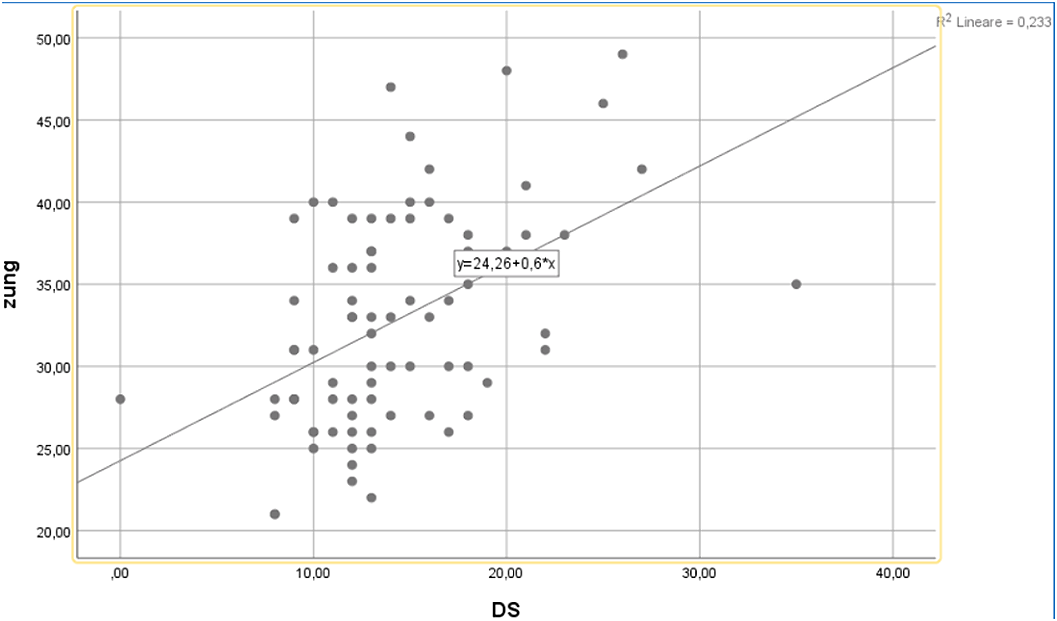
Both patients with anxiety disorders and eating disorders showed higher levels of disgust propensity and sensitivity than healthy controls. Moreover, there was no significant differences in anxiety, Disgust Propensity (DP) and Disgust Sensitivity levels between patients with eating disorders and anxiety disorders. Among healthy controls there was a significant association between DS and Anxiety levels (B: 0.579, T:3,416 p:0,001).
Conclusions
Anxiety and disgust are typical emotions of anxiety disorders and eating disorders. However, they are increased both in anxiety and eating disorders and they are associated in healthy controls. The nature of this association needs to be deeply investigated.
The Perinatal period is a time of vulnerability for developing psychiatric disorders of higher prevalence in the female gender - depression and anxiety1. Numerous authors have proposed that maternal psychological factors could influence pregnancy course and the well-being of mother and newborn2.
Objectives
To explore the relationship between perinatal psychological disorder and physiological parameters evaluated at birth, such as the Apgar Index (AI; 1, 5 and 10 minutes), head circumference, weight, length and age.
Methods
533 women answered, in the second trimester of pregnancy (16.98±4.83 weeks of gestation), several questions about psychosocial variables, the Perinatal Depression Screening Scale3 and the Perinatal Anxiety Screening Scale4. Of these, 208 (39.0%) women were interviewed with the Diagnostic Interview for Psychological Distress5. Newborn physiological parameters were obtained from electronic health records.
Results
AI was significantly (p<.01) and moderately (r≈.25) correlated with maternal anxious symptomatology, and with the experience of a stressful event in the last year (only AI 1 minute). Newborns of women with clinically relevant anxious symptomatology (>cutoff point, 14.6%) had significantly lower AI (p<.05), which was also observed in newborns of women who considered having had a stressful event (only AI 1 minute). Women’s newborns with maternal anxiety disorders during pregnancy (5.3%), had significantly lower values in AI, head circumference, weight and age of birth. Regression analyses showed that anxiety in pregnancy (symptoms and/or diagnoses) is a predictor of newborn physiological parameters, explaining significant percentages(r≈22%; p<.05) of its variability.
Conclusions
Early detection of psychological disorders in pregnancy, namely anxiety, is determinant to prevent adverse neonatal outcomes.
The development of complex human-machine systems has led to greater demands on operators’ skills, and has increased the importance of human error (Pribytkova et al, 2012; Vondráčková et al, 2017; Jian Ai Yeow, 2014). For this reason performance reliability, defined as operators’ capacity to conduct essential work processes in a high-quality and timely manner (Bodrov, Orlov, 1998) has become a topical subject.
Objectives
This study concerns an investigation of subjective predictors of operators’ reliability, namely personality risk factors (supported by the RFBR #19-013-00799).
Methods
Subjects: 67 operators and 69 engineers at a hydro-power station. Personality traits were assessed using Sobchik’s verbatim Russian translation of the MMPI (Sobchik, 1990). Performance reliability was assessed using simple and complex sensorimotor reaction tests as standard procedures for the pre-shift assessment of operators.
Results
In the operators’ group significant correlations (Spearman’s test) were found between the level of quality of complex sensorimotor reactions and the level of such personal traits as impulsiveness and individualism: a higher manifestation of these traits was associated with a higher level of mistakes in conducting the pre-shift psychophysiological test (p<0,05). With the engineers there was a significant link between the higher speed of simple sensorimotor reactions and higher optimism scores.
Conclusions
The results suggest that a tendency to behave spontaneously, and orientation to one’s own needs, could be risk factors in terms of operator reliability. They also reveal the specifics of reliability predictors in different professions at the power plant.
The field of psychiatry extends from diagnosis to treatment, including prevention and various cognitive behavioral and emotional disorders.
Objectives
To study the activity of Mahdia’s psychiatric department in order to improve its outcomes.
Methods
This study was retrospective based on reporting data of the inpatients during 3 years (2016-2018) and then analyzing them.
Results
This study involved 395 patients with an average age 36.6 years. The sex ratio M/F was 1.58. The prevalence of the disorders was more marked with the low socio-economic level, school failure and unemployment. 37% had a family psychiatry history and schizophrenia was the most common. 75.5% had a personal psychiatric history and 16.8% had a history of suicide attempt. Schizophrenia (28%), Bipolar Disorder (22.1%) and Depression (14.7%) were the main conditions. The majority 79.2% had irregular medical follow-up, 44% had poor therapeutic adherence. The majority 86.6% were hospitalized without consent. The most common reason was aggression and the average length of stay was 19.47 days. The mean duration of parenteral therapy was 4.38 days. Electro-convulsive therapy was indicated for only 16 patients. Typical antipsychotics were the most prescribed 37.4%. The exit treatment was monotherapy in 14.3% and polytherapy in 83.4%. The exit destination was home in 98% and the obligation follow-up was only indicated in 2.8% (11patients).
Conclusions
This study is at the heart of psychiatric news with many questions around these coercive practices at legal and ethical level, particularly respect for freedom, legitimacy of these measures, patients’ safety and the quality of the treatments.
COVID-19 is a very stressful experience for people with FEP and changed the work routine of the mental health services they have used.
Objectives
In this work, we aim to explore how the restrictions influenced the out-patient visits and rehospitalization rates.
Methods
The Latvian Early intervention programme (Berze et al.,2019) for patients with FEP had started on 1st January, 2019. The 1st group of patients (n=28) finished the programme on 31st December, 2019. The 2nd group of patients were enrolled in programme on 1st January, 2020 (n=12). When on 12th of March in Latvia health care restriction started due the COVID-19 situation, we were forced to change our structure of LAT-EIP.
Results
The average patient age of patients was 29.9 (SD±7.1) years in the 1st group, in 2nd group average age is 26.2 (SD±5.9) accordingly in years. In the 1st group 60.7% of patients visited the psychiatrist 6-10 times vs 8.33% in 2nd group, in the 1st group 32.1 % of patients had 2-5 visits with psychiatrist vs 75% in 2nd group. There were 72 family sessions in 1st group, whereas in 2nd group the family sessions were excluded. During the programme 7% (n=2) of patients in the 1st group were rehospitalized vs 25% (n=3).
Conclusions
The structure of LAT-EIP had change at the time of COVID-19 restrictions, unfortunately our work lack the statistical power. From the descriptive statistics, we can speculate that the rehospitalization rate is higher because of the lack of regular contact with psychiatrist and the lack of psychoeducation with families.
‘Health‐related stigma’ is typically known as social rejection or exclusion of individuals and populations suffering from specific health problems. Results on previous infectious diseases showed that stigma can be experienced by survivors but also by health‐care workers (HCW). Several factors contribute to stigma associated with infectious diseases, such as people’s knowledge, myths and stories transmitted by the mass and social media and psychosocial variables, such as risk perception and fear of being infected. COVID‐19 is a new disease with many unknown aspects and, naturally, people are afraid of the unknown.
Objectives
To reflect on infectious diseases and social stigma during covid-19 pandemics.
Methods
Pubmed and Google Scholar search.
Results
Stigmatization can considerably increase psychosomatic distress and disturbance and can negatively affect people with infection and those at risk of infection in seeking medical care. HCWs and volunteers working in the field may also become stigmatized, leading to higher rates of distress, stress, and burnout When people avoid groups or geographic areas related to infectious diseases, this can pose significant economic losses. Thus, stigma is more than a mere negative outcome of infectious diseases; it is both a factor that contributes to the epidemics and pandemics and a disease in itself.
Conclusions
Anticipating disease‐related stigma during the COVID‐19 pandemic enables policy‐makers to address it, restricting its adverse effects. The hidden burden caused by this stigma can cause severe consequences for patients, HCW, and public health measures, so, coordinated psychological interventions to overcome this crisis seems essential.
There is no much data on the psychological predictors of compliance with Covid-19 preventive measures (self-isolation, social distancing, etc.), that are one of the most effective ways to combat the spread of the disease
Objectives
This study is aimed to examine the role of personal traits in compliance with the Covid-19 preventive measures, and to identify the psychological features of those who are unmotivated to comply with quarantine.
Methods
The study involved 256 participants aged from 16 to 73 years from Russia, and was conducted in March-April 2020.The coping strategies questionnaire (COPE), Big five personality questionnaire were used.
Results
Compliance with the coronavirus preventive measures is positively associated with such personality traits as conscientiousness and friendliness, and productive coping strategies (active coping, planning, positive reformulation, acceptance). Another significant predictors of compliance with restrictive measures are explaining the reasons for the spread of coronavirus by lack of responsibility of people and violation of quarantine measures (positive predictor), as well as downplaying the risk of the disease (negative predictor).
Conclusions
Cluster analysis identified two most common motivational profiles: unmotivated and motivated.Unmotivated people are less willing to comply with Covid-19 preventive measures. Unmotivated people trust various sources of information less often, use unproductive coping strategies (denial), and are more likely to believe that the coronavirus is used to hide the presence of other problems in the society and to increase the control over citizens by the state.
Despite evidence for the prenatal onset of abnormal head growth in ASD children, studies on fetal ultrasound data in ASD are limited and controversial.
Objectives
To understand whether people with ASD have abnormal head growth during gestation
Methods
A longitudinal matched case-sibling-control study on prenatal ultrasound biometric measures of ASD children was conducted. Children with ASD were matched to two control groups: (1) typically developed sibling (TDS) and (2) typically developed population (TDP). The cohort comprised 528 children (72.7% males): 174 ASD, 178 TDS, and 176 TDP.
Results
Second-trimester ASD and TDS fetuses had significantly smaller biparietal diameter (BPD) than TDP fetuses (aORzBPD=0.685, 95%CI=0.527-0.890 and aORzBPD=0.587, 95%CI=0.459-0.751, respectively). However, these differences became statistically indistinguishable in the third trimester. Head biometric measures were associated with the sex of the fetus, with males having larger heads than females within and across groups. A linear mixed-effect model assessing the effects of sex and group assignment on fetal longitudinal head growth indicated faster BPD growth in TDS vs both ASD and TDP in males (β=0.084 and β=0.100 respectively; p<0.001) but not in females, suggesting an ASD–sex interaction in head growth during gestation. Fetal head shape showed sex-specific characteristics, and head growth was inversely correlated with ASD severity in males and females, thus further supporting the sex effect on the association between fetal head growth and ASD.
Conclusions
Our findings suggest that abnormal fetal head growth is a familial trait of ASD, which is modulated by sex and is associated with the severity of the disorder.
It remains difficult to predict which individuals will develop cognitive impairment and progress to major neurocognitive disorders. Prevention studies suffer from the long time frames and the manner in which this topic does not lend itself to randomized, double-blinded controlled trials.
Objectives
We aimed to construct a computer simulation model that would accurate portray the time course for a series of individuals to develop cognitive impairment and to progress to major neurocognitive disorder.
Methods
We built a computer simulation model that incorporated the role of exercise, genetic load, age, quality of diet, presence of diabetes and level of hemoglobin A1C, ongoing levels of cognitive stimulation, presence or absence of micronutrients, presence or absence of other co-morbidities, an overall general health index, levels of smoking and other substance use, and family history. We modeled the life course of 10 individuals, adjusting parameters to make correct predictions for all 10 people. Then we entered the data from another 10 people to determine how accurate the model would be with ten new individuals for whom it had not been developed.
Results
We defined success as a prediction of onset within 10% of the actual date and a prediction of the slope of the trend within 20%. We had 7 successes. We were able to engage 6 of the 10 in interacting with the model to change health behaviors.
Conclusions
Computer simulation modeling may provide an opportunity to study the long-term effects of health behaviors and to engage people in interacting with the program to change behavior.
Breast cancer is a severe pathology that once detected completely changes the patient’s perception of life.
Objectives
Evaluating the relationship that is established between the level of stress, the type of surgery applied and, the instructive level of women.
Methods
We selected 67 patients which were divided into 2 groups: group I(31) women who benefited from immediate reconstruction and group II(36) subjects who benefited from a late reconstruction. We split each group into two subgroups: women with secondary education and women with higher education. A socio-demographic questionnaire and the DASS-21 scale were applied.
Results
Comparing the two groups we noticed that stress level was more present in group I(38,7%) than in group II(25%). The differences were not statistically significant(p>0,05). In the subgroup of women with higher education in group I, high levels of stress were observed at 23,08% and, in the subgroup of patients with secondary education, 50% had high levels of stress. The differences were not statistically significant (p>0,05). We also analyzed the two subgroups of group II and we identified increased levels of stress in 20% of patients with higher education compared to those with secondary education where 26,93% had high levels of stress. Also, the differences were not statistically significant(p>0,05). A statistically significant difference(p<0,05) was found when we compared the level of stress between women with secondary education of group I and those of group II.
Conclusions
The study revealed that stress levels tend to be higher in women with immediate breast reconstruction and secondary education.
The COVID-19 pandemic has become a situation of increased concern due to health threats and increased uncertainty. The risk of infection with the respiratory system coronavirus attracts increased attention to respiratory sensations. These two aspects can be beneficial grounds for the dysfunctional breathing-changes emergence in the breathing pattern that does not correspond to physiological needs.
Objectives
To study the prevalence of dysfunctional breathing associated with anxiety during the COVID – 19 pandemic in Russia.
Methods
The author’s socio-demographic questionnaire, the Naimigen Questionnaire, The State-Trait Anxiety Inventory were used. The survey was conducted online in May 2020. There were 582 participants (496 women&86 men) between the ages of 18 and 64.
Results
The severity of dysfunctional breathing significantly correlated with the height of personal anxiety (r=0.488,p=0.000). Women are more likely than men to have dysfunctional breathing (18.1±9.6vs11.6 ±7.9;p=0.000) and have more expressed personal anxiety(26±10.5vs19.8 ±9.7; p=0.000). The age of respondents has an inverse correlation with personal anxiety (r=-0.147,p= 0.000), but not with dysfunctional breathing. Respondents who consider coronavirus to be a very dangerous trend to have dysfunctional breathing more than those who believe that the danger of coronavirus is exaggerated(18.1±10vs15.9 ±8.9;p=0.052).
Conclusions
During the COVID-19 pandemic, the risk of dysfunctional breathing increases in a wide range of the population, especially among women. Since one of the dysfunctional breathing symptoms is a feeling of “difficulty inhaling”, anxious people may interpret this as shortness of breath in COVID-19, which may motivate them to seek medical help, thereby artificially increasing the burden on the health system during the COVID-19 pandemic.
Ganser syndrome is a rare medical disorder situated between hysterical etiopathogenesis and psychosis, factitious disorders and organic lesions which results in a difficult diagnosis. It is listed in DSM VI as a dissociative disorder whose main symptom is approximate answers, other accompanying symptoms appearing in Ganser: clouding of consciousness, somatic conversion symptoms and hallucinations. Psychopathologically explains a mental state of escape from a situation difficult to being tolerated. Organically appears in pathologies involving the frontal lobes
Objectives
We present a case of a XX year old man who suddenly develops a depressive disorder with no apparent cause. Initially he was a professionally developed man. Famous archaeologist. University professor. Guitarist in a musical group. He deteriorated through the years, appearing dementia data with auditive hallucinations and resistant headache. He begins to have difficulty speaking correctly, with paraphasias and short answers, continually repeating “I don´t know”, Short-term amnesia and bed-chair life
Methods
It was impossible to perform both the Mini-Mental State Examination test and the fototest because the patient refused claiming to be very nervous. The CT and MRI showed a slight temporary atrophy and vascular age changes. Subsequently, PET was performed without notable findings. Antidepressant and anxiolytic treatment was introduced without success as well as treatment for dementia and antipsychotic treatment.
Results
The headache was improved. The rest of the symptoms did not disappear
Conclusions
Ganser syndrome is a psychiatric condition that is difficult to diagnose and treat.