We partner with a secure submission system to handle manuscript submissions.
Please note:
You will need an account for the submission system, which is separate to your Cambridge Core account. For login and submission support, please visit the
submission and support pages.
Please review this journal's author instructions, particularly the
preparing your materials
page, before submitting your manuscript.
Click Proceed to submission system to continue to our partner's website.
To save this undefined to your undefined account, please select one or more formats and confirm that you agree to abide by our usage policies. If this is the first time you used this feature, you will be asked to authorise Cambridge Core to connect with your undefined account.
Find out more about saving content to .
To send this article to your Kindle, first ensure no-reply@cambridge.org is added to your Approved Personal Document E-mail List under your Personal Document Settings on the Manage Your Content and Devices page of your Amazon account. Then enter the ‘name’ part of your Kindle email address below. Find out more about sending to your Kindle.
Find out more about saving to your Kindle.
Note you can select to save to either the @free.kindle.com or @kindle.com variations. ‘@free.kindle.com’ emails are free but can only be saved to your device when it is connected to wi-fi. ‘@kindle.com’ emails can be delivered even when you are not connected to wi-fi, but note that service fees apply.
Disulfiram is an alcohol detox drug that has been approved by the FDA for over 50 years. Among the various side effects that can cause there is encephalopathy. Its incidence is currently unknown, according to some authors it is estimated between 1 and 20%.
Objectives
In this article we report the case of a 48-year-old woman diagnosed with borderline personality disorder and alcohol use disorder, presenting with encephalopathy.
Methods
We discuss about our diagnostic and therapeutic approach.
Results
Fortunately, the rapid identification of this rare condition led to a favorable outcome in our patient.
Conclusions
Early detection of any acute change in mental state, especially in early stage of therapy, is important. Cessation of disulfiram is recommended in case of suspicion about disulfiram encephalopathy. This case underscores the importance of awareness of this serious complication during disulfiram treatment. If suspected early, appropriate diagnosis and treatment can prevent rapid progression.
Depressive disorders are common for cardiac patients; however, a surgical intervention enhances their distress. How typical is suicidal ideation for cardiac surgery patients and with what clinical and psychological signs does it correlate?
Objectives
To estimate the frequency of suicidal ideation and correlations between suicidal ideation, clinical and psychological manifestations in cardiac surgery patients.
Methods
We examined 60 cardiac surgery patients, aged 25 – 65, prior to their operation. The Pierson correlation between manifestation of suicidal ideation, clinical and psychological signs was calculated with p<0.05.
Results
We revealed suicidal ideation in 3.33% of cardiac surgery patients. Its intensity credibly correlated with the frequency of taking alcohol (r=.32), as well as with manifestation of dysorexia (r=.59), dissatisfaction with life (r=.53), general level of depression (r=.49), sleeping disorders (r=.44), sense of guilt (r=.43), asthenia (r=.31), self-abhorrence (r=.29), and irritability(r=.29). A higher level of suicidal ideation correlated with a lower index of Positive-Past in their personal time perspective (r=-.27), which revealed itself in a patient having lack of positive impressions and recollections of their past life, which reduced a person’s adaptability in the present.
Conclusions
The frequency of suicidal ideation in preoperative cardiac surgery patients is not high. Nevertheless, we should bear in mind that high suicidal risk is characteristic for patients with not only depression, but also alcohol problems, as well as for those who have manifestations of negative attitude to their past.
From 2014 on, the rate of persons with a migration background in Germany rose steadily, in forensic psychiatric hospitals even disproportionally. Although daily work is aggravated through language barriers and cultural differences, general therapy processes have not been appropriately adapted yet and extensive research is lacking.
Objectives
Therefore the aim was to get a picture of the current situation of patients with a migration background in 11 Bavarian forensic psychiatry.
Methods
237 Patients with a migration background (first or second generation) were asked about their sociocultural background, their acculturation tendency (by rating the Frankfurter Acculturation Scale), their German language ability and their estimation of the ward climate (by the Essen Climate Evaluation Schema).
Results
51.8% of the participants were able speak German on an A- level, 13.1% on a B- level and 35.1% on a C- level. Patients of our sample oriented themselves more towards Germany and less towards their country of origin, compared to the control sample. Further, they experienced safety significantly lower and patient cohesion and mutual support higher than the forensic reference sample.
Conclusions
One possible explanation for the patients’ orientation is the lack of possibilities to act out their cultural traditions. Because of the patients’ limited German knowledge and cultural misunderstandings, they could feel less safe. To conclude, the group of patients with a migration background is important not solely due to its size. But its heterogeneity makes universally applicable statements not easy. Migration backgrounds have to be considered within the psychiatric setting and individual therapy plans have to be made.
Patients with schizophrenia show severe difficulties in interpersonal communication, including impairments in conversation skills, like the turn-taking. To our knowledge, very few studies to date have taken into account conversation analysis in order to investigate turn-taking in schizophrenia patients.
Objectives
To investigate the conversational patterns in schizophrenia patients; to assess possible associations between dialogic features, abnormal subjective experiences and symptom dimensions.
Methods
Thirty-six patients with Schizophrenia underwent an interview, subsequently analyzed with an innovative semi-automatic analysis. Positive and Negative Syndrome Scale (PANSS) was adopted for the investigation of psychopathology and Examination of Anomalous Self Experience (EASE) for Self-Disorders.
Results
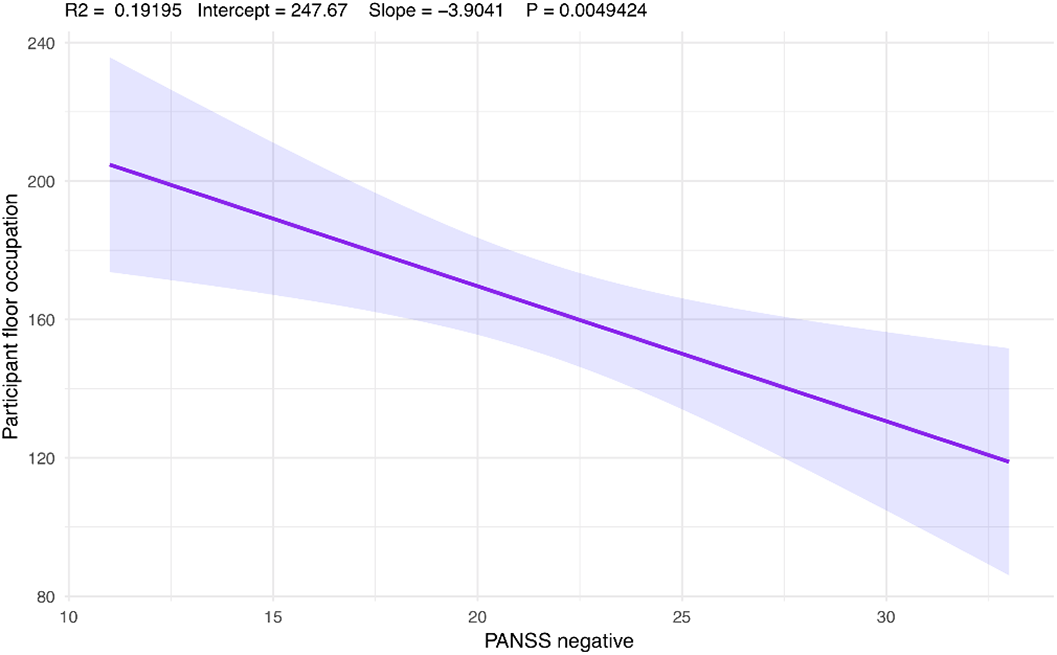
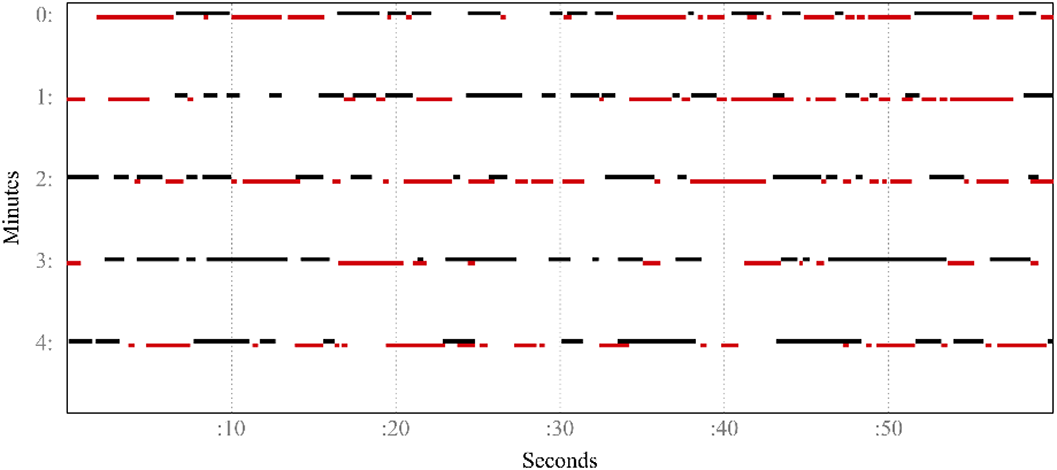
Dialogic exchanges are graphically represented in Figure 1. An inverse correlation was found between participant speaking time and PANSS negative symptoms score (r = -0.44, p value < 0.05; Figure 2), whereas no associations were found between conversational variables and PANSS positive or disorganization dimensions. Finally, a positive correlation was found between the EASE item “spazialization of thought” and average pause duration (r = 0.42, p value < 0.05).
Conclusions
The finding of a relationship between negative symptoms and conversational patterns suggest that conversational features in schizophrenia are expression of the “core” negative dimension of the disorder. The association with the phenomenon of thought spatialization seems to suggest that the disturbances of the stream of consciousness impact on natural dialogic interactions. Ultimately, conversation analysis seems a promising tool to study dialogic exchanges of patients with schizophrenia.
Developmental studies in infancy remain rare. Studies measuring depressive symptoms in gifted children are contradictory, considering more anxiety or depression than in non-gifted children. Furthermore, questionnaires or anxiety scales are used without taking into account all aspects of mood disorders and thus, rarely depression scales have been conducted.
Objectives
To refine the developmental trajectory of depression in a national sample of French gifted children by identification of the specific risk and protective factors.
Methods
A self-reported depression scale MDI-C (Multiscore-Depression-Inventory-for-Children) were sent to families to be administered to their gifted children from preschool to high school, aged from 4 to 20 years-old (IQ >125) looking for help from gifted associations. A larger wave of data collection on different aspects of child and family history was collected (pregnancy, term and delivery mode, neonatal period, psychomotor development, health, schooling, interpersonal relationships with family and friends, personality, parental socio-economic status).
Results
438 children (> 130) were eligible. Regarding anamnestic fields, Exploratory-Factor-Analysis highlighted six predictive factors of depression with eigenvalues from 1.09 to 3.17. Major factors explaining 62.96% of total variance are: Factor-1 “motor skills disorder” (14.53%). Factor-2 “positive family relationships” (14.04%). Factor-3 “positive social relationships with peers” (14.02%). Factor-4 “integration of social codes” (11.23%). Factor-6 “Learning disabilities and rehabilitation” (10.1%).
Conclusions
Our findings highlight specifics risk factors of depression in the field of learning disabilities or social cognition, while a good quality of social relationships since childhood seems to be a preventive factor.
Objectification theory argues that self-objectification confers risk for disordered eating (DE) both directly, and indirectly through a cascade of negative psychological consequences (e.g. low mood and self-conscious body monitoring). Robust cross-sectional evidence supports these relationships. However, these cross-sectional studies do not provide evidence for the complex intraindividual psychological processes outlined in objectification theory which purportedly contribute to DE.
Objectives
Using an ecological momentary assessment design, the current study investigated the direct within-person effect between state self-objectification and DE and examined the indirect within-person effect of negative mood and body comparisons, on the relationship between state self-objectification and DE.
Methods
Two-hundred female participants (M=20.43 years, SD=4.60) downloaded a smartphone app which assessed momentary experiences of self-objectification, mood, body comparisons, and DE six times per day at random intervals for seven days.
Results
Indicated that self-objectification significantly predicted DE behaviours [95% CI 0.01, 0.03] and body comparisons [95% CI 0.32, 0.41]. However, the indirect effect of body comparisons on the relationship between state self-objectification and DE was not significant [95% CI -0.01, 0.00]. In the second mediation model, self-objectification significantly predicted DE behaviours [95% CI 0.01, 0.03], but did not significantly predict mood [95% CI -0.06, 0.03]. Similarly, the indirect effect of mood on the relationship between state self-objectification and DE was not significant [95% CI -0.00, 0.00].
Conclusions
These results enhance our understanding of objectification theory and suggest that self-objectification confers risk to DE directly. However, our findings do not support the indirect effect of self-objectification on DE through low mood or body comparisons.
Assessment of neuropsychiatric sequelae of traumatic brain injury (TBI) brings about challenges in the forensic setting, comprising analysis of neurobiological variables, preinjury variables (personality/psychiatric disturbances), postinjury psychosocial, allowing the expert witness to provide clear and appropriate explanations, so the court can decide with justice, particularly in civil law cases.
Objectives
Discuss the main clinical and neuroimagiologic aspects to consider in civil litigation of TBI cases.
Methods
Comprehensive literature review.
Results
Although accurate predictions are difficult, some generalizations can be made. Recovery from hypoxic and diffuse axonal injury (DAI) takes longer and is less complete than focal contusions. Posttraumatic amnesia is the main predictor of long-term cognitive outcome. In moderate/severe TBI (m/sTBI) occurs chronic lesion expansion (axonal degeneration) and brain atrophy. DAI topography determinates the cognitive disfunction pattern yet underestimated in conventional neuroimaging. Diffusion-Tension-Imaging (DTI) may be valuable to outcome predictions in m/sTBI: structural disconnection within the Default Mode and the Salience Networks are linked to attention and executive impairments; hippocampus and fornix damage correlates with memory/learning impairments. Conversely, DTI findings can be misleading in mild TBI (mTBI), and case-by-case analysis seldomly prove its scientific validity.
Conclusions
To elaborate formulations within reasonable medical certainty, outcome predictions should not be made until at least six months following the TBI, considering that most mTBI symptoms resolve in few months, and up to 1-½ years, when m/sTBI neuropathologic changes stabilize. The neurobiological underpinnings are fundamental for causality formulations, however atypical outcomes in mTBI are frequently predicated upon non–brain-injury psychiatric conditions and psychosocial factors.
COVID-19 is a respiratory disease and its main symptoms are fever, dry cough and difficulty breathing. It spread to several countries, which led the World Health Organization to decree, on March 11, 2020, a pandemic state that deeply affected Brazil. Due to the impossibility of leaving the house, the routine of children with autism was changed. Children in Autism Spectrum Disorder (ASD) have a qualitative deficit in social interaction. Clinical and daily observations reinforce several scientific studies that defend the importance of maintaining a routine as stable as possible for people with ASD, without this stability they may become emotionally disorganized, feel discomfort or even irritability.
Objectives
Investigate the impact caused by social distancing on the development of children and adolescents with autism.
Methods
An online questionnaire based on the DIR/Floortime basic map of emotional functional capacity development was distributed in Brazil from April to May, 2020. The results were analyzed using SPSS software.
Results
Results obtained from 122 questionnaires showed that after 30 days of quarantine 20% of children no longer had the characteristic of being able to remain calm and organized for at least 2 minutes; 11% no longer initiates interactions with their parents; 27% demonstrated more protests and anger than before the social distancing; 18% demonstrated more emotions such as anger, fear and intimacy, 28% began to understand their limits and 12% of the children are using greater facial expression during the social distancing.
Conclusions
This study brings results that can help to understand the processes in a child with autism.
Collaboration between psychiatrists and psychologists (counsellors) is one of the key factors impacting efficiency of services in child and youth mental health. Despite the clear benefits, a teamwork approach is still limited and has some difficulties.
Objectives
The objective of the study was to explore potential barriers in the collaboration between professionals with different backgrounds.
Methods
Anonymous online survey for staff from various mental health clinics across Russia was completed by 142 psychologists and 70 psychiatrists (Σ =212).
Results
77.7% participants reported that collaboration is helpful in adult mental health services; 91.3% see partnership as an essential part of child and youth mental health. 61.6% specialists work together; 44.7% described it as a successful experience. At the same time 58.4% believe that pharmacological treatment should start first, and counselling may be postponed. 49.5% believe that doctors often diminish the importance of counselling. Fears and biases towards psychiatrists were reported by 28.9% of the sample. 25.4% participants reported lack of trust and limited understanding of counselling methods. Top barriers for collaboration that were reported: lack of opportunities on an organizational level (20% doctors and 45% psychologists), unclear professional boundaries and responsibilities (28.5% doctors and 15.4% psychologists), lack of motivation (20% doctors and 7% psychologists), lack of positive experience (11.2% psychologist and 0% doctors). The main reported benefit of collaboration by 39.6% was improved compliance and better treatment outcomes.
Conclusions
In order to make collaboration among mental health professional more efficient, there is a need to address the barriers listed above.
Adaptive thinking demands a balance between manifestations of intrapsychic activity and reliance on requirements of the outer reality. Features of responses to Rorschach’s III card could provide information about subject’s ability to preserve the dialectical tension between the two poles of external and internal realities during solving tasks related to interpersonal relationships.
Objectives
To compare reality-fantasy relations during Rorschach’s III card responding in patients with schizophrenia, neurocognitive impairment and normal subjects.
Methods
Participants were 12 young adult inpatients with schizophrenia, 14 students without mental disorders and 12 inpatients with neurodegenerative diseases of old age. Reality-Fantasy Scale (RFS) was applied to assess responses to Rorschach’s III card. RFS scale ranges from –5 (reality collapse into fantasy) to 5 (fantasy collapse into reality) (Tibon-Czopp et al., 2015).
Results
Patients with schizophrenia (M= –3,38, SD= 1,9) demonstrated tendency to fantasy domination (and reality collapse) if compared with the students (M= –1,47, SD= 2,0, p<0,05). Patients with neurodegenerative diseases (M= 0,75, SD= 2,1), conversely, had difficulties to apply fantasy during solving Rorschach task (p<0,01).
Conclusions
Express Rorschach testing using III card could be useful to provide screening data of thinking tendencies related to situations of social interaction. Also it provides a mental pabulum regarding role of cognitive impairment in schizophrenia in relation to significance of affective dependence of their thinking process.
Conflict of interest
The reported study was funded by RFBR, project number 20-013-00772
The evidence that supports an association between domestic violence and abuse (DVA) perpetration and mental disorders is increasing. Since 2011, authorities in England and Wales have been required to conduct Domestic Homicide Reviews (DHRs) into deaths caused by violence, abuse or neglect of individuals aged 16 or over, by a family member or a current or ex-partner.
Objectives
The aim of the study is to describe the characteristics of perpetrators of domestic homicide in a sample of DHR reports in which the perpetrator was known to mental health services in the 12 months before the offence. This sample will undergo qualitative framework analysis as part of another study conducted by the authors.
Methods
The researchers compiled a list of DHRs available online and randomly sampled 168 reports; in 20 of those reports, the perpetrators were under the care of mental health services in the 12 months prior to the offence. We have applied descriptive statistics to report on the sample characteristics.
Results
The common mental illnesses diagnosed amongst perpetrators were depression (20%), anxiety (15%) and schizophrenia (15%). 25% of the perpetrators didn’t have a psychiatric diagnosis and 70% had a history of self-harm and suicidal ideation. Substance use was prevalent (60%). Half of the homicides involved children.
Conclusions
This report describes the demographic and mental health characteristics of a sample of perpetrators of domestic homicides. Further research is needed into the patterns of mental health service use by DVA perpetrators in order to improve identification and risk management.
Individuals with severe mental disorder (SMD) have a higher risk of somatic comorbidity and mortality than the rest of the population.
Objectives
To assess whether individuals with SMD had a higher risk of death associated with a COVID-19 infection (COVID-19 associated death) than individuals without SMD.
Methods
Exploratory analysis with a cross-sectional design in the framework of a population-based register study covering the entire Swedish population. The Swedish Board for Health and Welfare (Socialstyrelsen) provided anonymised tabulated summary data for further analysis. We compared numbers of COVID-19 associated death in individuals with SMD (cases) and without SMD (controls). We calculated the odds ratio (OR) for the whole sample and by age group and four potential risk factors, namely diabetes, cardiovascular disease, hypertension, chronic lung disease.
Results
The sample comprised of 7,923,859 individuals, 103,999 with SMD and 7,819,860 controls. There were 130 (0.1%) COVID-19 associated deaths in the SMD group and 4945 (0.06%) in the control group, corresponding to an OR of 1.98 (CI 1.66-2.35; p < 0.001). The odds were fourfold in the age group between 60 and 79 years. Cardiovascular diseases increased the odds by 50%. Individuals with SMD without any of the risk factors under study had three-folds odds of COVID-19 associated death.
Conclusions
Our preliminary results suggest that individuals with SMD are a further group at increased risk of COVID-19 associated death. The factors contributing to this increased mortality risk require clarification.
Disclosure
Ursula Werneke has received funding for educational activities on behalf of Norrbotten Region (Masterclass Psychiatry Programme 2014-2018 and EAPM 2016, Luleå, Sweden): Astra Zeneca, Eli Lilly, Janssen, Novartis, Otsuka/Lundbeck, Servier, Shire and Sunovi
The presence of psychological impact on relatives of patients admitted for Covid-19 has been described. The effectiveness of psychological first aid in critical situations has also been described. The first psychological aid describes a human response supporting another person who is suffering. This intervention is indicated for those affected by a traumatic event.
Objectives
To present a theoretical review about psychological first aid and to describe data about it on relatives of patients admitted for Covid-19.
Methods
Literature review about psychological first aid and data description of telephone intervention carried out by mental health professionals on family members of patients admitted for Covid-19.
Results
From an initial pool of 77 Covid-19 patients, 50 were selected as telephone contact with relatives was possible. Mean age was 68.9 years, 13 were female and 37 male. 90% were admitted in internal medicine department and 10% in intensive care unit. First telephone intervention in all cases was to introduce the psychiatrist in charge of the follow-up and provide contact number of psychiatry department. In 13 relatives` support, emotional ventilation and active listening was provided and 2 of them also received therapeutic guidelines. Further phone contact was required in 12 relatives. In follow-up phone calls, all relatives received therapeutic guidelines and 3 was referred to our outpatient clinic.
Conclusions
Family members of patients admitted for covid-19 may present emotional symptoms, many of them normal reactions in context of a crisis situation. A large percentage do not require a structured psychotherapeutic intervention but can benefit from a first psychological help.
Schizophrenia is associated with lower life expectancy due to cardiovascular disease. Metabolic syndrome (MetS) occupies an important place among the main problems. Indicators of hormones regulating metabolism may be appealing candidates as biomarkers of metabolic side-effects. Certain role belongs to genetic factors that might be the basis of sensitivity to development of MetS.
Objectives
The aim is to study polymorphisms of leptin gene (LEP) and serum leptin concentration in schizophrenia patients with metabolic syndrome.
Methods
After obtaining informed consent, patients with schizophrenia (ICD-10: F20) were included: 91 patients for biochemical research and 463 patients for genotyping. Patients were divided into two groups: 46 (119) with MetS; 45 (344) without it. Concentration of leptin was measured on an analyzer MAGPIX (Luminex, USA). Determination of 4 polymorphisms (rs2167270, rs3828942, rs10954173, rs4731426) of LEP was performed by PCR. Differences were considered significant at p<0.05.
Results
The leptin concentration is significantly (p<0.001) higher in MetS (13511.5 [7392.5; 28278.75] pg/ml) compared to patients without MetS (6662 [2131.5; 11380] pg/ml). Significant differences were found in the distribution of rs3828942 (GG:GA:AA): 25.9%:44%:30.2% in MetS and 31.2%:52.6%:16.2% without MetS (χ2=10.545, p=0.005). The genotype AA and the allele A have a predisposing effect on the development of MetS (OR1=2.247, C.I:1.248-4.046; OR2=1.475, C.I:1.093-1.991, χ2=6.49, p=0.01).
Conclusions
A number of features are observed in patients with MetS, which impair the functioning of patients. These investigations should aim to optimize the approach to assess the risk of MetS. The study was supported by grants from the RSF 19-75-10012 (genetic research) and 18-15-00011 (determination of leptin concentration)
Disclosure
The study was supported by grants from the Russian Science Foundation №19-75-10012 (genetic research) and №18-15-00011 (determination of leptin concentration)
The covid-19 virus pandemic is another risk factor not only for the lives of older people, but also for their mental health, as the threat is immediate and intense.
Objectives
The aim of the study was to investigate depression during the pandemic in a population of elderly people over 65 years of age living in the Greek countryside.
Methods
The research was synchronous and was conducted in the autumn of 2020 in Crete. The sample of the study was random and consisted of 200 elderly users of services of the Health Center of the Municipality of Phaistos, Crete. The Geriatric Depression Scale (GDS-15) was used to conduct the study in combination with 24 questions related to pandemic perceptions.
Results
40.5% of the sample were men and 59.5% were women. The mean age was 75.70 years (SD ± 6.29). The mean value of GDS-15 was found to be 5.97 (SD, 3.07), while the comparison of depressive symptoms showed that women, lonely people and the elderly with chronic health problems are more vulnerable to the development of depressive symptoms. In relation to covid-19 and depressive symptoms, there was a positive correlation with twelve factors (p <, 05) with the most important being the fear for their family health, sleep disorder, loneliness and inability to deal with the virus.
Conclusions
The research showed moderate depressive symptoms, while a clear effect of the pandemic due to Covid-19 was found on the emotional mood of the elderly, a fact that makes their psychosocial support necessary.
Generalized problematic internet use/GPIU has recently been associated with the impulsive-compulsive spectrum/ICS, but its mapping onto these behaviour dimensions is relatively unexplored.
Objectives
To compare patterns of internet use and scores of BIG-5 personality traits, perfectionism and psychological distress between groups with low/high levels of GPIU.
Methods
475 university students (78.9% girls; mean age 20.22±1.695) answered the Portuguese versions of: GPIU Scale, Multidimensional Perfectionism Scale-13, NEO-FFI-20, Depression, Anxiety and Stress Scales and other questions about internet use. Chi-square and Mann-Whitney tests were performed using SPSS.
Results
Individuals with high levels of GPIU (median+2SD; n=18; 3.8%) spent significantly more time/day in online activities, exceeding what they have planned; had no other hobbies and used social networks to meet friends; reported that GPIU interfered with affective/work relationships and academic performance (all p<.05). There were no significant differences in the purposes of the internet use (e-mail, social networks, shopping, videogames, multimedia, sexual, work…), unless for general information searching and betting games (both p<.05). High-PGIU group also presented significant higher levels of neuroticism, negative (but not positive) perfectionism, depression, anxiety, and stress (all p<.001).
Conclusions
Our results indicate that unlike the purposes of internet use, personality, perceived interference and the associated cognitive-emotional processes and symptoms (psychological distress) may help distinguishing between functional vs. dysfunctional internet use. Considering the preponderance of processes over contents and the presence of certain dimensions, such as perception of uncontrollability, interference and social isolation we add more evidence to consider PGIU as falling within the spectrum of impulsive-compulsive disorders.
Faced with recent onset psychotic symptoms in patients over 60 years of age without a psychiatric history, it is important to carry out an adequate differential diagnosis.
Objectives
The objective is to carry out a review of Charles Bonnet syndrome through the presentation of a case
Methods
75-year-old patient who suddenly began to present auditory hallucinations. The patient had no relevant psychiatric history or medical history. She reported that suddenly, two months ago, she had begun to listen to his neighbor through the walls of his home. She heard him talk about her, threatening and insulting her. Later, as a result of these hallucinations, she began to believe that in the bathroom he was spying on her through a camera, forcing her to shower in the dark. Weeks later, she thought that he was also chasing her down the street through a chip that had implanted her. She was distressed and highly anxious. She had started not sleeping out of fear of this neighbor.
Results
In addition to the psychiatric evaluation, an MRI was requested to rule out incipient cognitive deterioration, as well as a hearing examination. It was found that he had severe hearing loss in the left ear. Given these findings, he was diagnosed with Charles Bonnet syndrome.
Conclusions
Charles Bonnet syndrome is normally associated with blindness, however, it is also described in deafness. It occurs with hallucinations of the lost sensory organ. It is a clinical picture that does not respond well to treatments.
Following the national lockdown in the UK in March 2020 in response to the COVID-19 pandemic, we instigated regular online tutorials for fourth year medical students undertaking their psychiatry placement.
Objectives
The aims of these tutorials were threefold: to ensure that students covered a range of key psychiatry topics, to enable them to have the opportunity for interactive tutorials with experienced psychiatrists and, not least, to create a sense of continuity and connection with their tutors and peers across the mental health block.
Methods
Each student was allocated to a tutorial group comprising 10 – 15 medical students and a psychiatrist facilitator. These groups met weekly for 7 consecutive weeks at an agreed time for 60 – 90 minutes via an online platform and all covered the same allocated topic each week. We evaluated these groups via an online survey sent to the students following the programme.
Results
The students rated the tutorials on average as 4.5/5 on whether they met the defined learning outcomes. On average the students did not consider that the virtual format made a significant difference to their learning, but this disguised a wide range of views that were expressed via a comment box.
Conclusions
The evaluation of this project supports the use of virtual tutorials as a valuable learning tool but educators need to be aware that student views’ on these can be varied and so, long-term, a blend of virtual and face to face learning is most likely to meet the needs of all students.
Suicide continues to be a significant cause of mortality in most countries worldwide, especially among youth. Documenting current trends and sources of variation in youth suicide rates is critical to inform prevention strategies.
Objectives
We aimed to 1. document suicide mortality trends among Italian youth from 1981 to 2016 2. describe age, sex, and urbanization specific suicide rates in this period, and 3. describe suicide methods and their change over time.
Methods
We relyed on official mortality data for the period 1981-2016 for adolescents and young adults (ages 10-25 years). We estimated standardized all-cause and suicide mortality rates per 100,000 individuals and used Joinpoint regression analysis to determine annual mortality trends and statistically significant changes in rate trends. Analyses were reported by sex, age group, urbanization level and suicide method.
Results
From 1981 to 2016, 1,752 suicides were identified among youth aged 10-17 (boys/girls ratio in 2016, 5.3) and 9,897 among youth aged 18-25 years (boys/girls ratio in 2016, 4.0). While the all-cause mortality rate decreased over time for both boys and girls, overall suicide rates remained stable for boys and showed a small decrease for girls. For boys, suicide was most common in rural than to metropolitan areas, while it was the opposite for girls. The most common method for boys was hanging, while for girls was fall.
Conclusions
Differently from other countries, youth suicides were stable (boys) or slightly declining (girls). We found differences according to the urban vs. rural areas. Factors influencing these trends and sex differences are crucial in delivering prevention strategies.
The course of the epidemics such as COVI9 -19 and SARS has taught us that the management of the epidemic depends primarily on people’s adherence to and implementation of the recommended measures.
Objectives
This study aimed to determine the knowledge and opinions of individuals about COVID-19 and transmission methods, sources of information, application status about protection measures and related factors.
Methods
1444 people participated into the digital survey between March 22-April 6, 2020 for this descriptive study. For data collection, a 12-questions questionnaire consisting of questions about the sociodemographic characteristics, information sources they used about the COVID-19, their thoughts the practices to prevent the transmission of COVID-19 was conducted. Using descriptive statistics and comparison tests, individuals’ perceptions about methods of protection from Covid-19 and related variables were investigated.
Results
The participants have had sufficient knowledge about Covid-19 and measures.They were using social media platforms, official web sites and TV news to get information about the COVID-19. The rates of believing and applying measures such as staying distant from people, washing hands, staying at home, avoiding from public transportation, using alcohol disinfectants were quite high. The women, people living in large cities, healthcare workers, regular commuters to work believed in measures more, however, their level of anxiety and seeing themselves and their environment at risk were higher.
Conclusions
Despite all the positive results regarding coronavirus infection and protection measures, the fact that the epidemic is spreading rapidly indicates the need for studies to continuously evaluate what has changed in the process and as time increases.