We partner with a secure submission system to handle manuscript submissions.
Please note:
You will need an account for the submission system, which is separate to your Cambridge Core account. For login and submission support, please visit the
submission and support pages.
Please review this journal's author instructions, particularly the
preparing your materials
page, before submitting your manuscript.
Click Proceed to submission system to continue to our partner's website.
To save this undefined to your undefined account, please select one or more formats and confirm that you agree to abide by our usage policies. If this is the first time you used this feature, you will be asked to authorise Cambridge Core to connect with your undefined account.
Find out more about saving content to .
To send this article to your Kindle, first ensure no-reply@cambridge.org is added to your Approved Personal Document E-mail List under your Personal Document Settings on the Manage Your Content and Devices page of your Amazon account. Then enter the ‘name’ part of your Kindle email address below. Find out more about sending to your Kindle.
Find out more about saving to your Kindle.
Note you can select to save to either the @free.kindle.com or @kindle.com variations. ‘@free.kindle.com’ emails are free but can only be saved to your device when it is connected to wi-fi. ‘@kindle.com’ emails can be delivered even when you are not connected to wi-fi, but note that service fees apply.
Type I bipolar disorder (BDI) is characterized by a chronic evolution, with recurrent mood episodes that severely disrupt the overall functionality and quality of patients’ life. An adequate maintenance treatment is necessary to prevent relapses and to improve the functional prognosis of these patients.
Objectives
To find data regarding the most evidence-based therapeutic strategies in the maintenance phase of BDI.
Methods
A literature review was performed through the main electronic databases (PubMed, CINAHL, SCOPUS, EMBASE) using the search paradigm “type I bipolar disorder” AND “mood stabilizers” AND “antipsychotics” AND “anticonvulsants”. All papers published between January 2000 and August 2021 were included.
Results
The main recommendation is to continue in the maintenance phase the same medication that has proven its efficacy and tolerability in the acute phase. In BDI the most evidence-supported pharmacological approaches for the maintenance phase were lithium, valproate, lamotrigine, and carbamazepine as anticonvulsants/mood stabilizers, as well as olanzapine, quetiapine, and aripiprazole as antipsychotics. Lithium and valproate have been associated with positive influence over neuroplasticity, while antipsychotics have considerably higher metabolic adverse events. Monotherapy is recommended, but drugs associations are frequently met in clinical practice. There are no consistent data about the superiority of one class over the other, but lithium has a proven effect of decreasing the suicide rate in this population.
Conclusions
Both anticonvulsants and antipsychotics are used in the maintenance phase of the BDI, without significant differences in the efficacy rates. However, benefits and risks should be weighted for each class and each individual agent recommended.
The lifetime prevalence of comorbid posttraumatic stress disorder (PTSD) in patients with bipolar disorder (BD) is approximately 20%. Guidelines for BD give adequate pharmacological treatment options when there is a ‘pure’ bipolar disorder but lack of treatment options when there is a comorbid disorder present.
Objectives
The present study aimed to review the pharmacological treatment options for comorbid PTSD in patients with BD.
Methods
Literature research was conducted via PubMed, Embase and the Cochrane Library. Search terms included ‘bipolar disorder’, ‘posttraumatic stress disorder’, ‘PTSD’, ‘pharmacotherapy’ and ‘treatment’. Relevant studies were reviewed.
Results
No randomized controlled trials have been conducted in patients with bipolar disorder and comorbid PTSD. Most studies included open-label studies and case-reports. No convincing scientific evidence for pharmacological treatment of comorbid PTSD in patients with BD was found. Selective serotonin reuptake inhibitors (SSRIs) are effective in the treatment of PTSD. However, SSRIs or other antidepressants are complicated due to potential induction of a manic episode or promote rapid cycling. Nevertheless, it is important to treat the bipolar patient with a mood stabilizer first before antidepressants are prescribed.
Conclusions
The findings of this study show that there is no convincing scientific evidence for the pharmacological treatment of comorbid PTSD in patients with bipolar disorder. Therefore, psychotherapy is preferable. When psychotherapy is not effective, pharmacotherapy can be considered. However, randomized controlled trials are needed to obtain scientific evidence for pharmacological treatment options.
Suicide risk is 20-30 fold higher in bipolar disorder(BD) than general population. A positive family history of suicide, early-onset bipolar disorder, rapid cycling, and drug/alcohol addiction have been identified as risk factors for non-fatal suicidal behavior. Lithium is the only mood stabilizer known to have a suicide-reducing effect in patients with BD. Less than half of the bipolar patients respond lithium well. Even though mechanism of action on suicide behavior is not clearly known, it is thought that lithium significantly reduces “impulsive-aggressive” behavior via serotonergic system which might also be related with treatment response in BD.
Objectives
The aim of this study is to evaluate the relationship between lithium response and history of suicide.
Methods
Those who scored 7 points or more from the Alda total score were considered good responders. Patients were divided into those who responded well to lithium treatment and those who did not. History of suicide attemptbetween these two groups was compared.
Results
65.3% of the patients were female (n:49). The mean age of the patients was 36.82±13.35 years. 25 patients responded well to lithium treatment. Among the good responders, 32% of the patients and 25% of the non-responders had a history of suicide attempts. This difference was not statistically significant. (p=0.46 x²=0.13)
Conclusions
The insufficient number of data in the study was considered as a limitation of this study. In addition, there is a need for more studies as there are many factors that cause suicide attempts.
Use of Monoamine Oxidase Inhibitors (MAOIs) has experimented an important reduction in recent years, being replaced by other antidepressant drugs (ADs) associated with a better safety profile. Its use has been restricted to instructed professionals treating resistant and atypical depression. Thus, treatment-emergent affective switch (TEAS) induced by MAOIs is a rare event nowadays.
Objectives
To describe a manic episode associated to a one-year-long treatment with phenelzine, a MAOI agent.
Methods
We present the case of a 47-year-old man hospitalized in our acute psychiatric unit after presenting compatible clinical symptoms with a manic episode. He showed severe irritability, decreased need for sleep, pressured speech, increased energy and goal-directed activities. The patient had started phenelzine a year ago for the treatment of major depressive episode resistant to previous pharmacological essayed treatments. No previous history of TEAS was reported, although he had already taken other ADs and mood-stabilizer treatments in the past.
Results
Several studies reported the effectiveness of MAOIs for the treatment of monopolar depressive episodes resistant to other ADs, especially when atypical symptoms were observed. Data on the use of MAOIs for the treatment of drug-resistant bipolar depressive episodes is scarce. Few studies have described a good response without showing and increased risk of TEAS.
Conclusions
As MAOIs have fallen out of favour with modern psychiatry, there is scarce evidence on the prevalence of TEAS in patients undergoing treatment with these drugs. Further research is needed in order to accurately define these complex relationships.
Cardiovascular disease (CVD) is the leading cause of morbidity and mortality in bipolar disorders(BD). The heart age of patients with BD was found to be 8.5 years higher than gender-age matched health controls. Metabolic side effects of antipsychotics, poor diet, insufficient physical activity, smoking and sedentary life style increase the risk of cardiovascular disease in bipolar patients. QRISK-3 is an approved risk classification that calculates the 10-year risk of developing a heart attack or stroke.
Objectives
This study aims to determine whether there is a difference between cardiovascular disease risk scores and clinical stages of bipolar disorder
Methods
35 outpatients that were followed up in Selcuk University Medical Faculty were evaluated. The clinical stages and qrisk3 scores were calculated.
Results
68.6% (n:24) of the patients were female. 42.9% of patients were in stage 3b (recurrent relapses, complete remission between episodes). The mean age was 36.94 ±10.46 years. The mean heart age was 50.54±17.35. The mean Q risk3 score was 5.59±8.18. There was no difference between bipolar patients at stage 2 and stage 3 in terms of age(p=0.36 and gender(p=0.73). When we compared the qrisk3 total socres and heart age of the patients in stage 2 and 3, we could not find any difference between groups (p=0.74, p=0.57 respectively).
Conclusions
Even though we could not find any difference of qrisk scores at different clinical stages of patients with BD, the CVD risk increases with the age. Prospective longitudinal follow-up studies are required to evaluate dual interaction of clinical stages and CVD risk in BD.
Age at onset of pediatric bipolar spectrum disorder (BSD) is an important marker of a more severe form and a highly heritable mood/mental disorder.
Objectives
Here, we report a familial Tunisian BSD follow-up study showing a very early onset of the BSD at the neonatal period.
Methods
A 28-year-old female and her 30-year old sister were referred for genetic and psychological assessments due to recurrent depressive episodes.
Results
Psychological assessment revealed a BSD type II with episodes of hypomania for both patients. The 30-year old sister presented a mixed form of BSD coupled with autistic traits, hyposomnia and obsessive-compulsive behaviors. Intellectual and cognitive abilities were without concerns. Familial history revealed BDS among paternal relatives including the brothers’ and sisters’ father as well as all their uncles offspring’s, and their grandparents, who were consanguineous. The depressive mood was a common sign in the three generations. Personal history revealed significant signs of a very early onset of the disorder since the neonatal period for the two sisters as well as for their four paternal cousins who also presented BSD features. Familial risk of BSD in this family correlates with a variably higher personal risk of other psychiatric disorders such as anxiety, drug abuse, personality disorders, and autism spectrum disorder.
Conclusions
Environmental conditions, familial care and educational level have a strong correlation with the severity and the efficiency of cognitive management of BSD and its psychiatric comorbidities. BSD is highly heterogeneous and polygenic and personalized management has considerable clinical repercussions benefits.
Circadian rhythm (CR) dysfunction is a prominent feature in bipolar disorder (BD) and sleep disturbances are characteristic, although not essential to the diagnosis.
Objectives
To review the literature regarding the CR dysfunction and its impact on the onset and clinical course of BD.
Methods
We conducted a MEDLINE search using bipolar disorder, circadian rhythm and sleep as keywords, selecting studies written in English.
Results
CR dysfunction is a trait marker of BD. It’s known that during depressive episodes insomnia is present, with difficulty falling asleep/ maintaining sleep and early awakening. Regarding mania, decreased need for sleep is a critical marker. During the euthymic period significant alterations in sleep pattern have been described. It’s also known that changes in the sleep pattern occur prior to those in mood patterns, indicating that sleep dysregulation may trigger the onset of mood episodes or relapses. Therefore, CR disruption may be associated with the pathophysiology of BD and some factors have already been identified: irregularity of the sleep-wake rhythm, eveningness chronotype, abnormality of melatonin secretion, vulnerability of clock genes and the irregularity of social zeitgeber.
Conclusions
Disturbances of sleep are pervasive, and an essential feature of BD, worse during mood episodes, but still present during euthymic periods. It remains to determine whether circadian rhythm dysfunction is a trait marker or mood state dependent. Further studies are warranted to clarify this association.
Sleep plays a key role in the pathogenesis and clinic of mood disorders. However, few studies have investigated electroencephalographic sleep parameters during the manic phases of Bipolar Disorder (BD).
Objectives
Sleep management is a priority objective in the treatment of the manic phases of BD and the polysomnographic investigation can be a valid tool both in the diagnostic phase and in monitoring clinical progress.
Methods
Twenty-one patients affected by BD, manic phase, were subjected to sleep monitoring via PSG in the acute phase (at the entrance to the ward) and in the resolution phase (near discharge). All participants were also clinically evaluated using Young Manic Rating Scale (YMRS) Pittsburgh Sleep Quality Index (PSQI), Morningness-eveningness Questionnaire (MEQ) at different timepoints.
Results
Over the hospitalization time frame there was an increase in quantity (Total Sleep Time) and an improvement in the quality and effectiveness of sleep (Sleep Efficiency). In addition, from the point of view of the EEG structure, clinical improvement was accompanied by an increase in the percentage of REM sleep.
Conclusions
Sleep monitoring by PSG can be a valuable tool in the clinical setting both in the diagnostic phase, “objectively” ascertaining the amount of sleep, and in the prognostic phase, identifying electroencephalographic characteristics that can predict the patient’s progress and response to drug therapy. The improvement in effectiveness and continuity of sleep and the change in its structure that accompanies the resolution of manic symptoms also testifies how the regularization of the sleep-wake rhythm is to be considered a priority in treating manic phases.
Since the beginning of the pandemic, 4,745,519 cases, 396,878 hospitalizations and 82,884 deaths with COVID-19 have been reported in Spain. As of August 24, 2021, 76.4% of Andalusians over 12 years of age have the complete vaccination regimen.
Objectives
Main: to calculate the prevalence of COVID 19 infection, clinical evolution, and vaccination rate in a population of patients diagnosed with dual bipolar disorder. Secondary: compare these data with those obtained inpatients diagnosed with non-dual bipolar disorder.
Methods
Retrospective descriptive study. The study population is made up of patients diagnosed with dual bipolar disorder and non-dual bipolar disorder (according to DSM 5 criteria). Infection, admission, death, and vaccination data were obtained from the patient’s medical history.
Results
Of the 7 patients diagnosed with dual bipolar disorder, the prevalence of COVID 19 infection, since the beginning of the pandemic is 0% and of the 21 patients diagnosed with non-dual bipolar disorder the prevalence is 9.51% (2/21). Of the patients with COVID 19 infection, none required hospital admission and no deaths occurred. The vaccination rate in the group of patients with dual bipolar disorder is 85,71% (6/7) and in the group of non-dual bipolar disorder is 61.91% (13/21), no finding statistically significant differences between both groups.
Conclusions
In our study the prevalence of COVID 19 infection inpatients diagnosed with dual bipolar disorder is 0% and the vaccination rate is 85.71%. While in patients with non-dual bipolar disorder the prevalence is 9.51%, there were no admissions, no deaths and the vaccination rate is 61.91%.
Hyperprolactinemia is a frequent medical condition in daily clinical practice. In most laboratories, normal prolactin (PRL) concentrations are less than 25ng / ml in women and less than 20ng / ml in men. The causes of hyperprolactinemia can be physiological or secondary, among which a differential diagnosis must be made.
Objectives
The causes of hyperprolactinemia are reviewed on the basis of a clinical case.
Methods
Bibliographic review and presentation of a clinical case.
Results
The case of a 17-year-old patient is presented, who comes to the Emergency Department due to a picture of agitation at home. Her relatives comment that two months ago, they began to notice her strange, very active and without the need to sleep. During the examination, the patient presents with verbiage, flight of ideas, and megalomanic thoughts. A manic episode was diagnosed and the patient was admitted to the psychiatric hospital. She was prescribed risperidone up to 4mg / day, carrying out prolactin determination after a few days. The baseline prolactin determination was 140 ng / ml and 130 ng/ml at twenty minutes. Due to the very high levels, the question arises as to whether the cause of hyperprolactinemia is due to treatment or hypothalamic damage. The MRI: “slight asymmetry in the pituitary gland, being discreetly more globular the adenohypophyseal LD, which could be in relation to underlying microadenoma”. As there were no previous data, the decision was made to withdraw risperidone with the introduction of aripiprazole and imaging tests periodically.
Conclusions
Differential diagnosis of the cause of hyperprolactinemia is important.
In Bipolar Disorder (BD), people report a lower quality of life and lower levels of well-being than the general population. Additionally, patients with bipolar disorder have unmet needs which are closely linked to elements of positive psychology.
Objectives
The current study aimed to gain insight from patients with BD and care professionals about their thoughts of online Positive Psychology Interventions (PPI) to develop an app containing PPI’s for people with BD.
Methods
The study is conducted in accordance with the CeHRes roadmap principles. Data were collected by focus groups, questionnaires, rapid prototyping and online feedback from the participants. Three focus groups meetings (FGM) were held with consumers (8) and professionals (5).
Results
The FGM reveals a need for positive psychology interventions to cover some of the unmet needs that can be applied in an app in addition to the guidelines-advised treatment. Patients and professionals expect that PPIs in the current treatment in BD can meet some of the needs that are currently still unmet, specifically offering hope, increasing self-esteem, expressing feelings, acceptation and preventing social isolation. The process of contextual inquiry and value specification is helpful to guide this process.
Conclusions
The consensus on the different topics about the use of positive psychology intervention shows that both consumers and professionals underline the importance of applying PPI’s in BD. The use during subsyndrome and mild depressive episodes seem the most beneficial periods for patients with BD. A more extended study has to be conducted to confirm if these findings are more generalizable
Rapid cycling Bipolar disorder and mixed affective states are treatment resistant conditions. Standard treatments are ineffective. Homozygous polymorphism of DIO2 gene is associated 3.75-fold risk of bipolar disorder.
Objectives
High Dose Levothyroxine combined with repetitive transcranial magnetic stimulation (rTMS) in Rapid cycling Bipolar disorder: Is it thyroid disease?
Methods
20 RCBPD with ICD-10criteria for bipolar disorder. All were severely symptomatic. TFTs and ECGs were monitored weekly with cardiology and endocrinology backup. Genetic testing was undertaken for DiO1/DiO2 status.
Results
17 were female, average age 32.4 yrs. 19/20 had Single nucleotide polymorphisms (SNP) of either DIO1, DIO2 or both. All but two patients were treated with rTMS to induce cerebral neuroplasticity. Average pre-treatment fT4 was 17.0 pmol/L , and fT3 4.5 pmol/L Average post-treatment, fT4 was 59.7 pmol/L and fT3 5.3 pmol/L. Average fT4:fT3 ratio pre-treatment was 4:1, and post-treatment was 5:1. HDL range was 200-800 mcg daily for remission. Average dose 472 mcg daily. Discontinuation rate was 0%. All patients had ECG and cardiac review One patient required a dose reduction because of minimal side effects 12 patients needed one mood stabiliser All were in remission for a minimum of 6 months.
Conclusions
We speculate that BPD may be a form of cerebral hypothyroidism and that HDL helps to overcome the deficit while robust inactivating deiodinases in the periphery protect from systemic thyrotoxicosis. This is evidenced by findings of normal clinical examination and elevated rT3. rTMS exercises its well established neuroplastic effect, helping to achieve and maintain remission as an adjunct to HDL.
Disclosure
The London Psychiatry Centre (TLPC) has pending patents for the combined protocol of rTMS and/or Thyroid hormones depending on the territory: - Pending US Patent application: (and/or) US20200384279 - Pending European patent appl
In a previous open-label study, we found that patients with bipolar disorder improved in symptom level when taking micronutrients and fish oil. We planned a randomized, double-blind, controlled trial to explore the feasibility and parameters needed for a larger clinical trial.
Objectives
We aimed to determine the parameters necessary to conduct a large-scale clinical trial through completing a feasibility study.
Methods
Patients were screened for having the diagnosis of bipolar disorder and being willing to take up to 16 micronutrient capsules and 3 fish oil capsules per day. Patients were randomized in a 3:2 ratio to micronutrients or placebo. Patients were seen monthly with assessment of the Clinical Global Impression Scale, the UKU Side Effects Scale, and a review of their medication doses. On a quarterly basis, patients completed the BASIS-24, the MYMOP-2, the Young Mania Scale, and the MADRS questionnaire
Results
The setting was a primary care clinic in Maine in the United States. The patient population was low-income and primarily rural. Disease severity was mild to moderate as only 2 patients were hospitalized during the study. All were symptomatic. One hundred twenty-five patients were screened and accepted randomization. The attrition rate was high and only 52 subjects completed 6 months of treatment. No differences were found between the two groups. We calculated that a minimum of 250 subjects would be needed to have 80% power to detect a difference. All patients improved dramatically in all measures.
Conclusions
Bipolar patients in primary care remain moderately symptomatic and will improve dramatically with monthly visits.
Acute mania can have behavioral effects such as agitation, being a frequent cause of presentation in the emergency department. Pharmacological treatments include mood stabilizers and atypical antipsychotics. Valproate is an effective drug. However, the intravenous formulation is relegated to other pathologies, such as epilepsy.
Objectives
The objective was to review the use of intravenous valproate in acute mania in the literature and present its use through a clinical case.
Methods
A clinical case using intravenous valproate to treat an episode of acute mania is described and the scientific literature of the last 5 years is reviewed.
Results
A 43-year-old patient attended the emergency department with a diagnosis of bipolar disorder type I in manic episode with agitation, rejection of oral medication, brought in by the police due to risk of aggression against family members, who reported that the patient had stopped taking her usual medication with valproate 500 mg / 24h and quetiapine 200 mg / 24h threemonths ago. Due to the possibility of having intravenous valproate, it was decided to administer 300 mg intravenously, as well as haloperidol 5 mg intravenously, and hospitalization was decided. The patient had a favorable evolution, with no side effects to the medication, and oral treatment was started after 8 hours, with a good response. In the literature there are few studies in this regard, although the most of them approved the use of valproate as a loading dose in acute mania.
Conclusions
Intravenous valproate is an effective, safe, and tolerated treatment in acute mania. More studies are needed to collect precise information.
Many studies have searched for an association between violence and psychiatric diagnoses, without providing a confirmative result.
Objectives
We have sought to deepen this topic, analysing different aspects of aggressivity, focusing on a specific diagnosis and its particular phases of illness, and looking for a correlation between psychiatric co-diagnoses and outpatients’ visits adherence.
Methods
We studied 151 bipolar type I inpatients presenting complaint, past medical and family history; we collected information about lifetime hetero/self-aggressive behaviours, irritability, agitation, suicide attempts, alcohol, or substance abuse.
Results
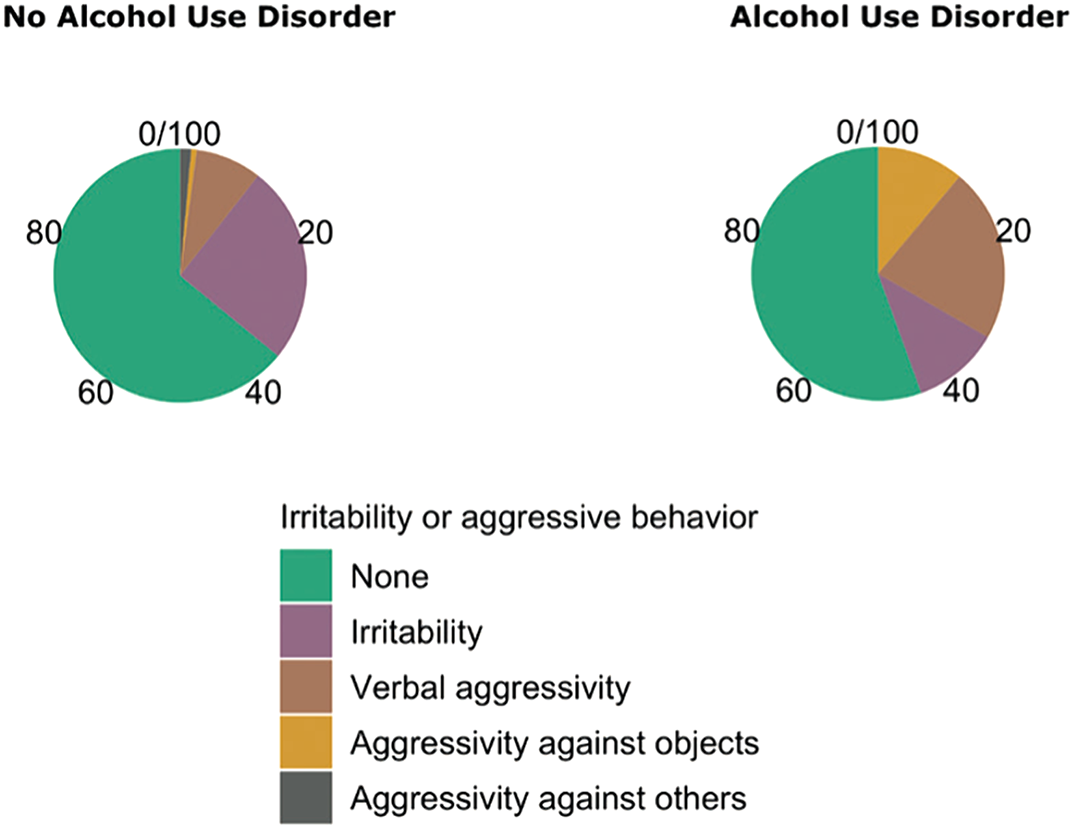
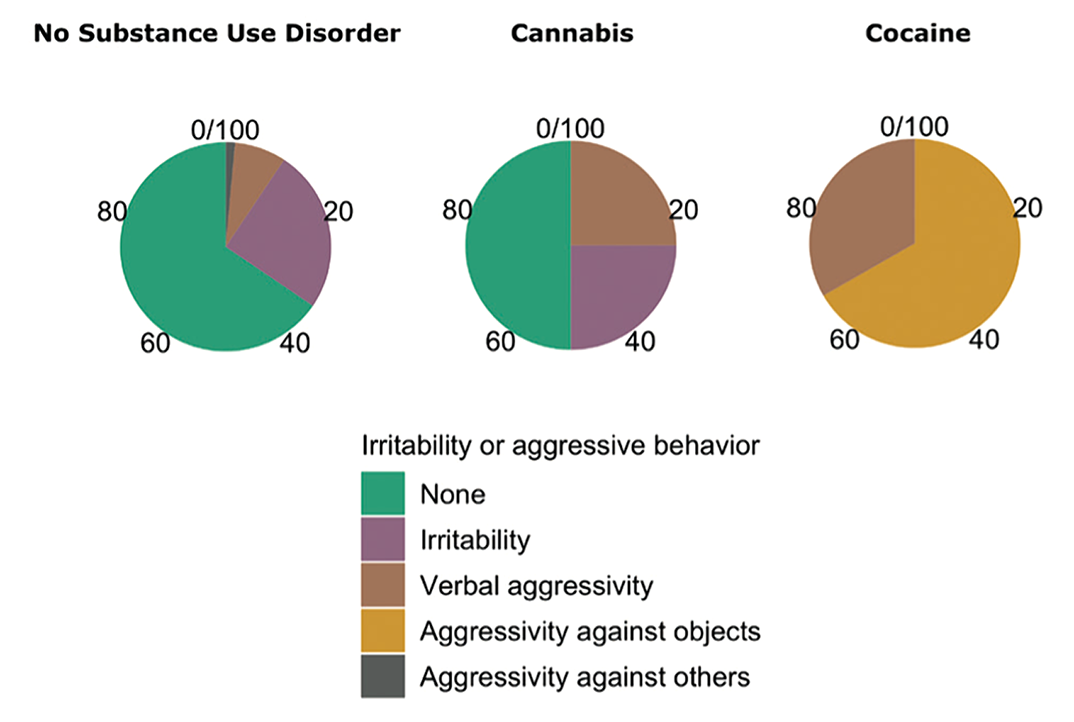
The overall aggressivity in our sample resulted in 11.92% of cases, while the number of aggressive episodes during euthymia decreased to 2.64%, close to the population without psychiatric disorders. Personality disorders and alcohol abuse appeared to be the main risk factors for irritability [Fig. 1]; substance abuse for both irritability and hetero-aggressive behaviour [Fig. 2]. We observed that subjects who displayed better compliance to follow-up visits exhibited a significant lower aggressive behaviour than less adherent subjects. Moreover, our data disconfirm the common conception that correlates the presence of psychotic features to violence.
Conclusions
Studying aggressive in a bipolar population, we observed that the rare episodes of aggressiveness were condensed in active phases of illness and mainly related to alcohol or substance abuse, while violent acts during long periods of wellbeing appear in line with those of the general population. We are confident our data might be helpful in deconstructing the stigma that a psychiatric diagnosis equals to violent behaviour.
Pramipexole is a dopaminergic agonist used in the treatment of Parkinson’s disease and restless leg syndrome. Although there is a lack of pharmacological options to treat drug-induced parkinsonism, not many studies have been made on the use of pramipexole in its management. There is also evidence on pramipexole effectiveness on major depressive episodes, particularly for bipolar and treatment-resistant depression.
Objectives
To describe a case of drug-induced parkinsonism treated with pramipexole in a complex patient with bipolar disorder type I and obsessive-compulsive disorder, long-term treated with antipsychotics and valproate.
Methods
We present the case of a 51-year-old woman admitted in our psychiatric inpatient unit mainly to treat a bipolar depression. She also presented a parkinsonian syndrome, and a neurological study was conducted. As a negative DaTSCAN concluded its cause to be pharmacological, we decided to stop lurasidone and initiated pramipexole.
Results
Guidelines suggest that drug-induced parkinsonism should be managed by discontinuing causative drugs or switching to another agent. However, we decided to use pramipexole with the aim of not only treating the parkinsonian syndrome but helping manage the depressive episode. We observed a remission of the depressive symptoms and an improvement in the parkinsonian symptoms.
Conclusions
Although the best way to treat drug-induced parkinsonism is to avoid its causative agents, in clinical practice it is not always possible as some patients have resistant and complex psychiatric syndromes. We suggest considering pramipexole in its management, especially when dealing with a patient with a comorbid unipolar or bipolar depression. Further research is necessary to clarify its utility.
Bipolar disorder is a recurrent chronic disorder characterised by fluctuation of mood state. Recent studies focused on the involvement of adenosine and the purinergic system in the pathophysiology of bipolar disorder.
Objectives
We aimed to investigate the difference in (SUA) levels between different phases of relapse and remission period.
Methods
For this aim a prospective study was conducted during six months at Razi psychiatric Hospital in Tunisia with patients diagnosed with BD The socio-demographic, clinical data were gathered from patient and a psychometric assessment using YMRS and Beck scale was employed. Uric acid level was studied during relapse and remission period.
Results
Among 30 consentent patients included in the study : 65.7% were women, The age of the participants varied between 22 and 65 years old. Uric acid level at the relapse varied between 328 and 499 mmol/L and level of controlled value at the remission period which is eight weeks under treatment varied between 137 and 307 mmol/L. Patients under antipsychotic treatment were 55.9% the other were under lithium or mood stabilizer. There is no significant difference between patients with bipolar disorder type I or II neither for the molecule chosen for treatment (p<0.05).
Conclusions
Bipolar disorder is a chronic psychiatric disease which needs to be regulary controlled. Uric acid levels were higher in manic or depressive phases as compared with euthymia phase. Uric acid could be used as a trait marker in bipolar disorder and help psychiatrist to monitor patients and to adjust treatment in order to avoid relapsing.
A 21-year-old woman diagnosed with bipolar disorder was hospitalized in the Mental Health Day Hospital of Salamanca during the Covid pandemic. The patient engaged with 4 different jobs and a master’s degree, beginning with verbose speech, dysphoria, global insomnia, grandiose delusions, extremely high energy and thinking she has the vaccine. She works the following objectives:illness insight, risk factors, psychopathological stabilization, social skills, slowing down of activities and taking responsibilities.
Objectives
The objective is do a follow-up of the patient during her hospitalization in the Mental Health Day Hospital and to carry out a structured search in PubMed and Up-to-Date about psychotherapy and bipolar disorder.
Methods
3-month follow-up of a 21-year-old woman diagnosed with bipolar disorder during her hospitalization in the Mental Health Day Hospital in Salamanca and a structured search in PubMed and Up-to-Date in April 2021 in English, French and Spanish, including the last 10 years with the keywords “psychotherapy”, “psychotherapies” and “bipolar disorder “.77 studies were analyzed: 12 included, 65 excluded.
Results
Several randomized trials highlight the efficacy of group psychoeducation and cognitive-behavioural therapy in relapse prevention, improving illness insight, medical adherence and less hospitalizations. Therapeutic alliance plays a significant role in the process. Our patient improved her knowledge of her illness and treatment, her social skills and reconnected with her relatives and slowed down her activity. She then was referred to her community mental heath center psychiatrist.
Conclusions
The insight in bipolar disorder plays an important role in medical adherence and prevention of relapses. Therapeutic alliance improves their insight, their functionality in their daily life and enables close monitoring. Medical treatment should be accompanied by psychotherapy for a complete approach of the treatment.
Bipolar disorder (BD) is a psychiatric disorder characterized by alternating episodes of high mood and low mood similar to depression. To differentiate BD patients from unipolar (UN) depressed patients remains a challenge and the clinical scales available failed to distinguish these 2 populations. ALCEDIAG developed EDIT-B, the first blood test able to make a differential diagnosis of BD. Based on RNA editing modifications measurement and AI, the test requires a simple blood draw and equipment available in most central laboratories. A first study on 160 UN and 95 BD patients allowed a differential diagnosis with an AUC of 0.935 and high specificity (Sp=84.6%) and sensitivity (Se=90.9%). A multicentric clinical study has been set up to validate these performances.
Objectives
The objective of this project is to run a multicentric clinical study in Europe and assess the performances of the test.
Methods
The EDIT-B project, led by Alcediag, is supported by EIT-Health grant (European institute of Innovation and Technology) and gathers 4 clinical centers in 3 countries (France, Spain, Danemark), a CRO for the clinical study management (Aixial), a CRO for the development of a diagnostic kit (Veracyte), a diagnostic lab for molecular biology analyses (Synlab), and a regulatory company (PLG).
Results
At the end of the study, the EDIT-B performance will be confirmed and the test will be CE-marked.
Conclusions
This test will address the needs of millions of patients suffering from misdiagnosis and therefore allow them to receive the correct treatment.
Bipolar disorder (BD) is a chronic and recurrent illness frequently associated with functional deterioration and treatment challenges. High rates of thyroid dysfunction have been found in patients with BD, compared to the general population.
Objectives
To illustrate through a case-report the therapeutic challenges of treatment-resistant bipolar disorder and its relationship with thyroid dysfunction.
Methods
Case report of a 41-year-old male patient with BD and comorbid anxiety disorders who has been diagnosed with thyroid cancer and underwent total thyroidectomy.
Results
Mr B is a 41 year old patient diagnosed with BD and comorbid anxiety disorders (panic disorder, social anxiety disorder and generalized anxiety disorder) at age 18. He has presented in total 17 relapses and was hospitalized 7 times between the ages of 18 and 24. He experienced predominantly major depressive episodes with mixed features and debilitating anxiety symptoms. He was put on several treatments including a combination of mood stabilizers, antidepressants and benzodiazepines. Due to unsatisfactory treatment response, he was put on clozapine 150mg to 175mg/d combined with valproic acid, clonazepam. In 2009, the patient developed a nodular goiter caused by papillary thyroid carcinoma and underwent total thyroidectomy and radioactive iodine therapy. Following the surgical operation and stabilization of thyroid functioning, a decrease in the number of relapses and the severity of mood and anxiety symptoms have been noted.
Conclusions
This case reports highlights the importance of thyroid function assessment in patients with bipolar disorder and the possible correlation to treatment resistance and symptom severity.