We partner with a secure submission system to handle manuscript submissions.
Please note:
You will need an account for the submission system, which is separate to your Cambridge Core account. For login and submission support, please visit the
submission and support pages.
Please review this journal's author instructions, particularly the
preparing your materials
page, before submitting your manuscript.
Click Proceed to submission system to continue to our partner's website.
To save this undefined to your undefined account, please select one or more formats and confirm that you agree to abide by our usage policies. If this is the first time you used this feature, you will be asked to authorise Cambridge Core to connect with your undefined account.
Find out more about saving content to .
To send this article to your Kindle, first ensure no-reply@cambridge.org is added to your Approved Personal Document E-mail List under your Personal Document Settings on the Manage Your Content and Devices page of your Amazon account. Then enter the ‘name’ part of your Kindle email address below. Find out more about sending to your Kindle.
Find out more about saving to your Kindle.
Note you can select to save to either the @free.kindle.com or @kindle.com variations. ‘@free.kindle.com’ emails are free but can only be saved to your device when it is connected to wi-fi. ‘@kindle.com’ emails can be delivered even when you are not connected to wi-fi, but note that service fees apply.
Even though cognitive behavior therapy is proven to be an effective treatment for panic disorder, the scarcity of psychiatrists cause many patients not to get a sufficient therapy. E-mental health applications are being developed to address this shortage, especially after the COVID-19 pandemic. However, none of the e-mental health applications developed so far has offered a structured cognitive behavioral therapy.
Objectives
We are developing a mobile application which will integrate with psychiatric interventions that aims to make cognitive behavioral therapy more accessible.
Methods
Our algorithm consists of multiple choice questions and answers to determine the progression of the algorithm. The first three sessions consist of psycho-education of the application and the cognitive therapy model of panic mostly. During the psycho-education sessions, patients’ symptoms during panic attacks and their catastrophic thoughts will be questioned to be used in following sessions. After the panic log has been introduced in the third session, patients will enter the details of their panic attacks right after they experience it and this information will be investigated in the following sessions. Progress for the cognitive restructuring will be monitored as the sessions proceed. Later session will also include in-session symptom induction exercises.
Results
We are still on the development phase of the mobile application. Hence we do not have any data to present at the moment.
Conclusions
Our main purpose is to develop a mobile application which will integrate with structured cognitive behavioral therapy process, reduce the workload of the therapist and is easily accessible through the smart phones.
A private university in Santos offers a free psychological service for assessing and intervening in chilhood psychological problems through a internship program which had to be delivered online due to the COVID-19 pandemic. The interns were only allowed to attend their parents online, instead of their children.
Objectives
Evaluating this new online service is the aim of this work.
Methods
24 parents of 34 children aged 4-10 years were attended by pairs or trios of 52 interns. The were modules made up of assessment, intervention and feedback, using different instruments such as interviews, screening questionnaires and the observation of 5-minute free play in domestic environment and of a family collage through a video recorded by parents. Feedback and intervention happened in various moments. The interns created a storybook using metaphoric narrative as a feedback tool in which a synthesis of the psychodiagnostic process and orientation was presented to the children.
Results
There was progress and decrease or elimination of symptons in 19 of the 34 children. Among the children who did not improve, one of them did not present any difficulties; 7 of them had many absences and the other 7 were referred to further assessment for reasons related to the complexity of their difficulties or a probable unsuitability of the online orientation.
Conclusions
The orientation was helpful for 55,89% of the children, showing to be a valid alternative for families who do not have financial resources for attending private clinics or fail to access public health services or even during social distance measures.
The General Secretariat of Mental Health and Addiction Treatment is a governmental body dedicated to the provision of mental health services in Ministry of Health in Egypt. Moreover, in response to the COVID-19 outbreak in Egypt, on line, advice tips, and counseling through the hotline services have became available through social media sites the past few months. Such digital remote MH services were very much welcomed by social media users. In the same time, for mental health professionals, the opportunity to provide help in this time of crisis – without an in-person consultation – was very desirable. In addition to the prevailing stigma of MH condition in the Egyptian culture, which this remote approach overcome it. Effective innovations in the field of mental health have the potential to change the face of mental health care, not only during pandemics but also in routine daily life.
Objectives
1. Develop a National strategy for E-Mental Health in Egypt. 2. Develop the National mental health platform as a universal implementation tool.
Methods
This project conducted in collaboration with WHO in Egypt, It run in 3 phases: Strategy, planning and infrastructure: include needs assessment and software development. Finalizing infrastructure, adaptation of the content Deployment: include training of the service providers on the usage of the adapted M.H platform, launching and advocacy.
Results
Development of E-Mental Health strategy, Development of National Mental Health Platform, Training of 50 therapists on digital mental health services.
Conclusions
National Mental Health Platform is the future road of mental health services in Egypt
Peripartum depression (PPD) impacts around 12% of women globally and is a leading cause of maternal mortality. However, there are currently no accurate methods in use to identify women at high risk for depressive symptoms on an individual level. An initial study was done to assess the value of deep learning models to predict perinatal depression from women at six weeks postpartum. Clinical, demographic, and psychometric questionnaire data was obtained from the “Biology, Affect, Stress, Imaging and Cognition during Pregnancy and the Puerperium” (BASIC) cohort, collected from 2009-2018 in Uppsala, Sweden. An ensemble of artificial neural networks and decision trees-based classifiers with majority voting gave the best and balanced results, with nearly 75% accuracy. Predictive variables identified in this study were used to inform the development of the ongoing Swedish Mom2B study.
Objectives
The aim of the Mom2be study is to use digital phenotyping data collected via the Mom2B mobile app to evaluate predictive models of the risk of perinatal depression.
Methods
In the Mom2B app, clinical, sociodemographic and psychometric information is collected through questionnaires, including the Edinburgh Postnatal Depression Scale (EPDS). Audio recordings are recurrently obtained upon prompts, and passive data from smartphone sensors and activity logs, reflecting social-media activity and mobility patterns. Subsequently, we will implement and evaluate advanced machine learning and deep learning models to predict the risk of PPD in the third pregnancy trimester, as well as during the early and late postpartum period, and identify variables with the strongest predictive value.
The integration of Motivational Interviewing (MI) with behavioural and psychological interventions for the treatment of obesity has the potential to improve health-related outcomes of patients in the long-term.
Objectives
Our objective is to examine the usability of a VR embodiment tool for treating obesity.
Methods
Fourteen participants (6 healthy and 8 with morbid obesity) with a desire to make lifestyle changes were randomly assigned to the experimental group (EG) and the control group (CG). Participants from the EG engaged in a virtual self-conversation aiming at understanding their own motivation to make lifestyle changes. Using the body swapping technique, participants were embodied alternately in their own virtual representation and in their counsellor’s body. To better guide this virtual self-conversation, participants were previously trained on MI skills. Participants from the CG were embodied in their own virtual bodies and participated in a “scripted dialogue” with a virtual counsellor who gave them practical recommendations about how to achieve lifestyle changes. A mixed-methods design was used, involving a semi-structured interview examining users´ satisfaction with the virtual experience, as well as self-report questionnaires, including readiness to change habits, body ownership, and system usability.
Results
Participants showed high usability of the platform with higher scores among participants from the EG compared to the CG. Levels of body ownership were satisfactory, with no differences between groups.
Conclusions
Through the integration of MI in the VR context with the patient being properly trained to carry out his/her own motivational self-conversation, we will provide an important advance in the psychological treatments of obesity.
Disclosure
This project has received funding from the European Union’s Horizon 2020 research and innovation programme under grant agreement No 951930
The COVID-19 pandemic has caused a significant impact on the mental health of health workers that has brought many hospitals to launch immediate preventive mental health programs.
Objectives
(1) To adapt and enhance a smartphone app (PRESTOapp) for health workers with mental health symptoms related to the COVID-19, and (2) to demonstrate its potential effectiveness in significantly reducing anxiety-depressive and PTSD symptoms in this population. We aim to incorporate Natural Language Processing (NLP)-based techniques in a chatbot user-interface that will enable a more personalized and accurate monitoring and intervention.
Methods
An 18-months study with a 6-months preliminary phase to adapt PRESTOapp to health workers, enhance it with NLP-based techniques and chatbot user-interface, and evaluate its feasibility, and effectiveness in 12-months.
Results
PRESTOapp has the potential to provide a prompt, personalized and integral response to the mental health demand due to the COVID-19. It will help by providing an innovative digital platform, that will allow remote monitoring of the symptoms course, provide brief psychotherapeutic interventions, and detect urgent situations. If the preliminary results of this study point to a potential effectiveness of the intervention, PRESTOapp may be easily adapted to the general population.
Conclusions
PRESTOapp may be one of the key digital platforms that may help preventing and treating potentially severe mental health consequences. Considering the unresolved problem of burnout in health workers even before the COVID-19, this project will develop the necessary technology for implementing cost-effective mental health solutions, not only during the pandemic.
The use of social networks is an integral part of our daily life as a means of communication. Scientific dissemination through these kind of platforms has expanded enormously in recent years, for example in networks such as Instagram, a free photo, text messaging and video sharing social media application. Instagram has been used extensively in different fields of medicine. Initially it was limited to visually rich fields but it has been extended to others such as mental health. This tool has enormous potential as a means of more effective communication and prevention.
Objectives
To analyze the role of Instagram as a tool of psychoeducation and prevention in mental health
Methods
An analysis of different mental health profiles was carried based on different items: publications, interactions, likes, commentaries, shares, accounts reached, accounts engaged and hashtags.
Results
Mental health has become one of the sanitary fields generating more traffic on social media reaching a great number of publications per day. Topics that generated more interaction were: depression, anxiety, trauma, sleep and emotion regulation difficulties among others. However most mental health information available in social media had not been provided by proffessinals of the mental health but by many others.
Conclusions
Instagram is presented as a valuable mental health prevention tool and professionals should engage and adapt to new scenarios of communication. In the era where information is easy to get but knowledge is difficult to find, experts of mental health should more involved.
Telepsychiatry was proved effective and satisfactory in settings like the emergency department and mental health services, but its use is historically restricted. Although there are several studies about telepsychiatry pros and cons, more is needed to know about its effect on patient’s follow-up and its influence on inpatient treatment rates, specifically during COVID-19 pandemic.
Objectives
The aim is to look for an eventual change on psychiatric inpatient admissions, during COVID-19 pandemic, when psychiatric patients are in follow-up through teleconsultation.
Methods
We compared the number of hospitalizations for 3 different 6 months periods of time: the 2nd semester of 2019 with no teleconsultations, March-August 2020 only with teleconsultations (except some few 1st consultations) and the 1st semester of 2021 with face-to-face and teleconsultations. A one-way repeated measures ANOVA was conducted on a 1050 patients sample.
Results
The statists showed that the type of approach in consultations didn’t lead to statistically significant differences in hospitalizations (F test-statistic = 0.33086, p = 0.718345).
Conclusions
There is a plethora of advantages about telepsychiatry and it was already shown to be as effective as in-person contact. Some articles show an association of telepsychiatry with a decrease in hospitalization rates, but mostly display similar clinical outcomes. In this study, the authors found that the results follow the latter tendency, although we must consider the COVID-19 pandemic as a possible decompensation and worsening clinical factor. More studies on this matter are important to better understand the potential benefits (and risks) of this treatment setting.
Life is a stage in which we are all actors and online we can choose who we want to be. Catfishing is a modern phenomenon in which individuals present themselves online as someone they are not as a means of engaging with others through an idealized avatar. This term has gained prominence since its portrayal in documentary and television series. With the emergence of catfishing, an expectation of betrayal in online relationships is anticipated with increasing caution being exercised by those that engage in online forums.
Objectives
The authors aim to explore this phenomenon and explore what personality traits might be associated with those who engage in catfishing others and in those that fall for the dupe.
Methods
A review of the recent literature on the topic with focus on that which is most relevant to the theme was included.
Results
The literature demonstrates that catfishing is an increasing trend as our online social interaction also increases. Catfishing appears to exist on a scale, where approximately 80% of the online population engage in some form, by means of amplifying their social status. Those with low self-esteem, poor self-worth with and a need to connect and to be validated were most susceptible.
Conclusions
The internet permits anonymity where trading “real world” skins with digital ones creating avatars in order to seek what is desired. Catfishing raises questions about the nature of the human self and the role it plays in deception. Understanding how patients use the internet may provide insight into how personality acts on a stage of total anonymity.
Grief is a normal and not necessarily pathological psychological process that occurs after the loss of a family member or loved one with its psycho-affective consequences, external manifestations and rituals. Although mourning processes can be associated with losses of different types (employment, housing, baseline situation, housing), we will refer to mourning for the loss of a loved one. For some people, social networks facilitate the expression of feelings and experiences of grief, connecting with the emotional support of other friends and loved ones. However, the presence of accounts belonging to these deceased persons, the persistence of photos and memories that periodically appear on the screen without the person being able to choose them, can make it difficult to process the mourning.
Objectives
The aim of this paper is to consider the beneficial and detrimental factors of social media during a grieving reaction after the loss of a loved one.
Methods
For the preparation of this work, a bibliographic review on the subject has been carried out. Likewise, the clinical information provided by patients during our evaluations has provided critical views on what has been published in this regard.
Results
Support through social networks can help to feel more affectionate, but there are other harmful factors that must be taken into account: permanence of photos, appearance of memories and reminder of the deceased person’s birthday.
Conclusions
Social networks can have favorable but also detrimental factors in the elaboration of a grief and should be considered in the psychiatric exploration and intervention.
Social anxiety disorder (SAD) can accompany emotional symptoms as well as physical reactions. The assessment and real-time measurement of SAD is difficult in real-world.
Objectives
This study aims to predict the severity of specific anxiety states and virtual reality (VR) sickness in SAD patients by a machine learning model based on only quantitative measuring of autonomic physiologic signals during VR therapy sessions.
Methods
In total, 32 individuals with SAD symptoms were enrolled in VR participatory sessions. We assessed patients’ specific anxiety symptoms through Internalized Shame Scale (ISS) and Post-Event Rumination Scale (PERS), and VR sickness through Simulator Sickness Questionnaire (SSQ). Specific anxiety symptoms and VR sickness were divided into severe and non-severe states based on the total score of each scale by K-means clustering. Logistic regression, Random Forest, Naïve Bayes classifier, and Support Vector Machine were used based on the physiological signal data to predict the severity group in subdomains of ISS, PERS, and SSQ.
Results
Prediction performance (F1 score) for the severity of the ISS mistake anxiety subdomain was higher than other scales with 0.8421. For VR sickness, prediction performance for the severity of the physical subdomain was higher than the non-physical subdomain with 0.7692.
Conclusions
The study findings present that mistake anxiety and physical sickness could be predicted more accurately by only autonomic physiological signals, suggesting these features are probably associated with autonomic responses. Based on the present study results, we could provide the evidence for predicting the severity of specific anxiety or VR adverse effects only based on in-situ physiological signals.
The current study tests the relationship between eating disorder (ED) symptoms and trauma exposure. The mechanisms via which trauma is related to ED symptoms have not been sufficiently examined. This study examines the complex role of dissociation and emotional dysregulation in the context of trauma, BMI, ED symptoms and body dissatisfaction (BD).
Objectives
We hypothesized that dissociation and emotional dysregulation would mediate the relationship between trauma exposure and ED symptoms / BD. We further hypothesized that BMI would play a moderating role in this association.
Methods
A community sample of 229 (16.2% male) participants, with a mean age of 29.08±10.68 reported online on traumatic events (Life Events Checklist), dissociation (Dissociative Experiences Scale – II), emotional dysregulation (Difficulties in Emotional Regulation Scale), ED symptoms (Eating Disorders Examination – Questionnaire) and BD (Figure Rating Scale).
Results
Participants reported experiencing a mean of 2.87±2.27 traumatic events, with a relatively high percentage (˜86%) reporting at least one. The most commonly reported traumatic events were transportation accidents and physical assault. Although frequency of traumatic events did not directly predict ED symptoms, BMI, dissociation, emotional dysregulation and BD did. An SEM model showed that traumatic events predicted ED symptoms indirectly through dissociation, emotional dysregulation and BMI. Dissociation and emotional dysregulation predicted ED symptoms directly. BMI also moderated the association between traumatic events and both ED symptoms and BD.
Conclusions
Therapists treating patients with high BMI or obesity should be aware of these relationships and investigate the possibility that trauma and/or PTSD may underlie the presenting disordered eating or eating disorder.
During the last 30 years, many studies have shown a high prevalence of substance use among patients diagnosed with an Eating Disorder (ED). Almost 50% of the patients with ED have a history of substance use, and 35% of the patients that seek help for an addiction disorder also meet criteria for ED. Nevertheless, both substance abuse specialists and pratictioners with expertise in ED have difficulties in treating these dually diagnosed patients.
Objectives
The aim of this study is to emphasize the importance of assessing substance use in patients with ED and disturbed eating behaviors in patients with Substance Use Disorders (SUD), as well as the need for evidence-based treatment guidelines for this comorbid condition.
Methods
A literature search of published articles on substance use patterns in ED and on the therapeutic approach for this comorbid condition was performed on PubMed database.
Results
A diagnosis of Bulimia Nervosa and the presence of binging/ purging behaviors are strongly associated with substance use. Most frequently used substances are represented by nicotine, caffeine and alcohol, followed by cannabis and amphetamines. Reasons why patients with ED use substances are emotional regulation and appetite suppression. Detailed and systematic evaluation of the substances used and for other psychiatric comorbidities is mandatory. Management plan involves simultaneously treating ED and SUD.
Conclusions
The comorbidity of Substance Use Disorders and Eating Disorders is a complex entity, but nonetheless treatable. Further studies are needed to specify the patterns of substance use in Eating Disorders and their implications for treatment.
Physical activity (PA) level has been found to be an important correlate of eating disorders (EDs). The literature is inconclusive to whether PA is related to symptoms of EDs in non-clinical sample.
Objectives
The first study aim was to assess the level of PA in non-clinical group of young adults with symptoms of EDs. The second aim was to evaluate the association between PA level and severity of EDs symptoms.
Methods
The sample consisted of 327 young adults (Mage = 21.72±2.00;MBMI = 23.20±7.43). All participants completed the Eating Attitudes Test (EAT-26) and the International Physical Activity Questionnaire(IPAQ). Finally, 32 individuals (9.79%) of the total sample scored above clinical cut-off on the EAT-26 (≥ 20) indicating a high level of symptoms and concerns characteristic of EDs.
Results
The non-clinical group differed significantly in PA level (low-intensity, moderate-intensity, vigorous-intensity levels of PA; H(2,32)=26.19,p<0.001). There was no difference in the severity of ED symptoms between the groups of PA level. Our findings demonstrated a positive relationship between PA (IPAQ total score) and bulimic behaviour and thoughts about food (rho-Spearman=0.31,p=0.04). The highest Bulimia and Preoccupation scale scores were observed in group with vigorous-intensity levels of PA (Me=8.5).
Conclusions
Our findings indicate that the severity of ED symptoms did not differ across the PA levels in a non-clinical sample of young adults. However, PA was positively associated with bulimia and food preoccupation. Since, excessive physical could be an important risk-factor of EDs, the recommended levels of PA for health in non-clinical sample should be enhanced in effective prevention programs.
Clients with Eating Disorders may be treated as inpatients (IP), day hospital (DH) or community patients (Ambu). The ITAMITED study is following to treatment termination (or end of October 2025) all new clients with EDs presenting between November 2017 and October 2020 to eight centres in Spain.
Objectives
To describe to what extent initial care levels (IP, DH, Ambu) are associated with gender, age, social relationships, ED diagnosis Body Mass Index (BMI) and baseline medication.
Methods
The study is exploratory/descriptive, practice-based evidence (PBE). Consecutive new clients were approached for participation. Inclusion criteria were a diagnosis of an ED and opting in to treatment.
Results
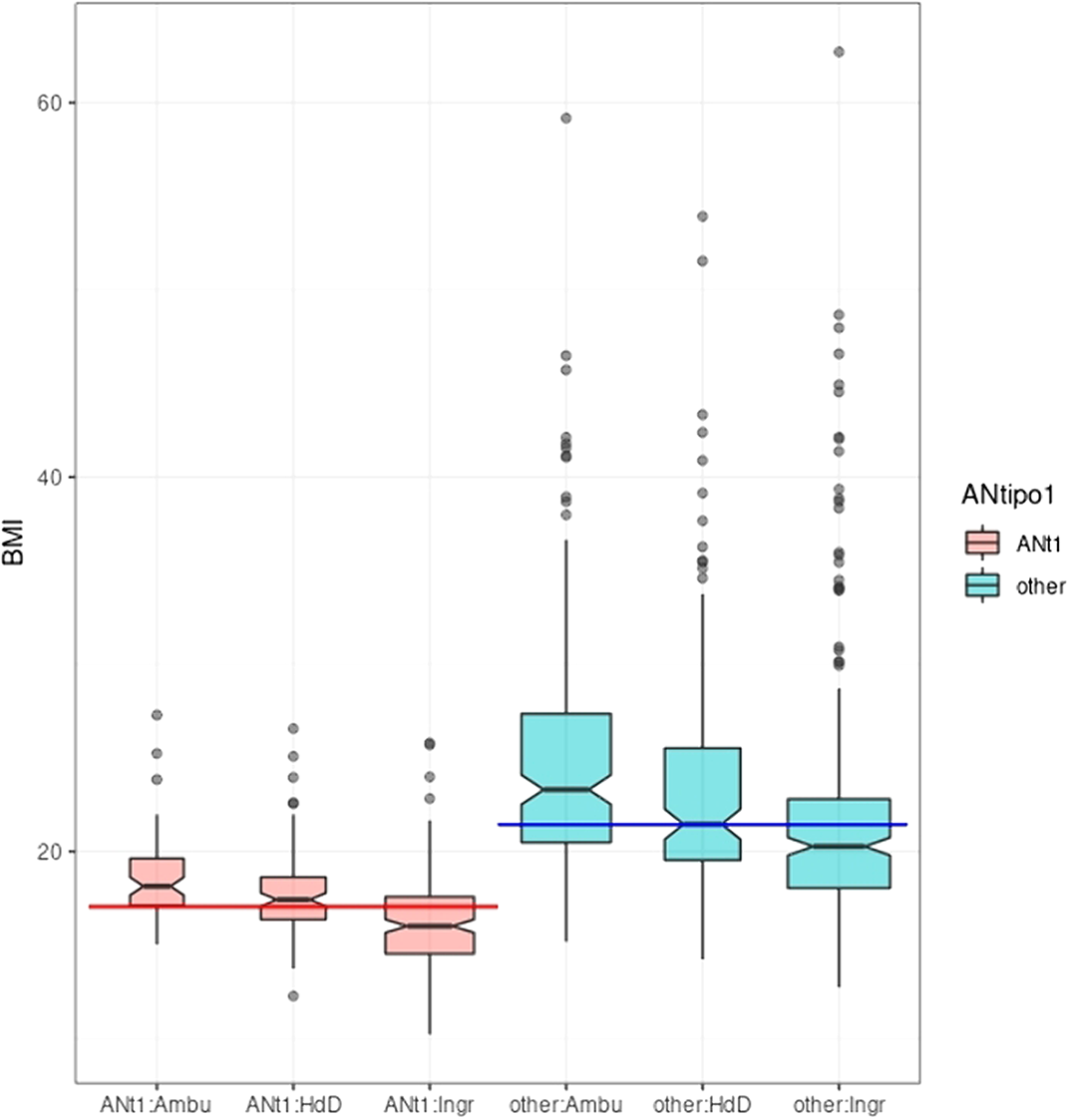
The only variables not showing a statistically significant relationship with level were gender (no relationship), diagnosis of bulimia and use of prescribed psychostimulant medication (which was rare). OP care was associated with older age which did not discriminate between DH and IP. Similarly, being in a relationship was associated with OP care but didn’t differentiate between DH and OP. Relationships with ED diagnosis other than AN type I were complex but significant. Relationships with AN type I, BMI and being on antipsychotics, antidepressants, anxiolytics, mood stabilisers and a catch-all category of all other medication all showed an ordered relationship IP > DH > Ambu. The most powerful relationships were with BMI and diagnosis of AN type I.
Conclusions
Initial level of care is associated with many factors and strongly with many of them. This will complicate the analyses of trajectories of change but reflects the heterogeneity of this client group.
Disclosure
I am Clinical Director of ITA but analyses are prespecified. Evans, Medina and Paz are not remunerated by ITA nor related to ITA or any of its employees they would counter any pressure on analyses or reporting that might arise from my position.
The links between body image disturbances and distorted relationships with parents were supposed since the early conceptualizations of AN by Hilde Bruch. The empirical studies however were concerned with perceptual aspects of body image and much less is known about how the attitudinal aspects and the body-related behaviors are affected.
Objectives
To study the attitudinal and behavioral aspects of body image in adolescents with AN in relation to perceived parental care and the attachments to close people.
Methods
The Body Investment Scale (BSI), Parental Bonding Instrument (PBI) and Attachment Style Questionnaire (ASQ) were used. 53 girls with Anorexia Nervosa were compared to 63 controls (adjusted by age).
Results
Girls with AN scored significantly higher on BIS Body attitude (p<.001) and Protection scales (p<.01), while displayed equal results on Body Care scale. They displayed lower Confidence in relationships (p<.01), higher Need for approval, Discomfort and preoccupation in close relationships (p<.05). No differences were found on PBI, excerpt for AN group perceiving less paternal control (p<.05). The correlation analysis, while showing a number of similar correlations within groups, suggests that in AN group positive Body image was more closely linked to perceived early care, especially from father (r=.6), in contrast with controls. In current relationships negative Body image for AN is stronger related to Discomfort and Need for approval (r>0.6), while Discomfort with Touch is less linked to problems in relationships than in controls.
Conclusions
Results suggest the importance of studying the father’s mediating role in the formation of body attitudes in AN.
Previous studies applying the Lausanne Trilogue Play (LTPc), a semi-structured method for observing family dynamics, highlighted dysfunctional interaction patterns in the families of individuals affected by restrictive eating disorders (REDs). Family-centered approaches are considered the first-line treatment for severe cases of REDs in adolescence.
Objectives
To investigate family functioning in the families of adolescents with severe REDs assessed before and 6 months after a multidisciplinary family treatment program that combined psychodynamic psychotherapy, parental role intervention and triadic or family-centered intervention.
Methods
Sixty-seven families of adolescent patients diagnosed with REDs were assessed for eligibility between July 2017 and October 2020. Family functioning was assessed using the clinical version of LTPc. Nutritional counseling and neuropsychiatric monitoring were also provided.
Results
We observed a significant change in the family functioning score for the LTPc phase 2, in which the father interacts with his daughter while the mother acts as a silent observer. This suggests that the fathers, when playing an active role, could improve dyadic family functioning. The treatment was not found to change triadic functioning: a 6-month treatment may not be long enough to modify interactions at the triadic level.
Conclusions
A brief multidisciplinary treatment program may significantly improve family functioning in the families of patients diagnosed with severe REDs. Although appropriate clinical trials are needed to further test the efficacy of this treatment, our study reinforce the concept that treatment programs targeting the individual patient and both the parents should be a first-line approach in adolescents with severe REDs.
Disclosure
The authors declare that they do not have a significant financial interest, consultancy or other relationship with products, manufacturer(s) of products or providers of services related to this abstrac.
A major revolution in psychiatry since the late 20th and early 21st Century has sought to put the individual client at the heart of intervention, promoting shared decision making. Increasing use of patient reported outcome measures (PROMs) to evaluate interventions and even steer therapies (“power assisted steering for psychotherapy”, Evans 2012) appears congruent with this. But is caution needed interpreting PROMS where self-perception distortions form a core part of the client’s problem? Eating disorders are a paradigmatic test.
Objectives
To see if PROM scores at initial presentation at services for ED seemed congruent with help-seeking. We report CORE-Outcome scores here.
Methods
Inclusion criteria were a diagnosis of an ED and opting in to treatment. Consecutive new clients at all the centres were approached for participation. Scores distributions were analysed to see if numbers of low scores, “non-clinical range” scores seemed congruent with help-seeking.
Results
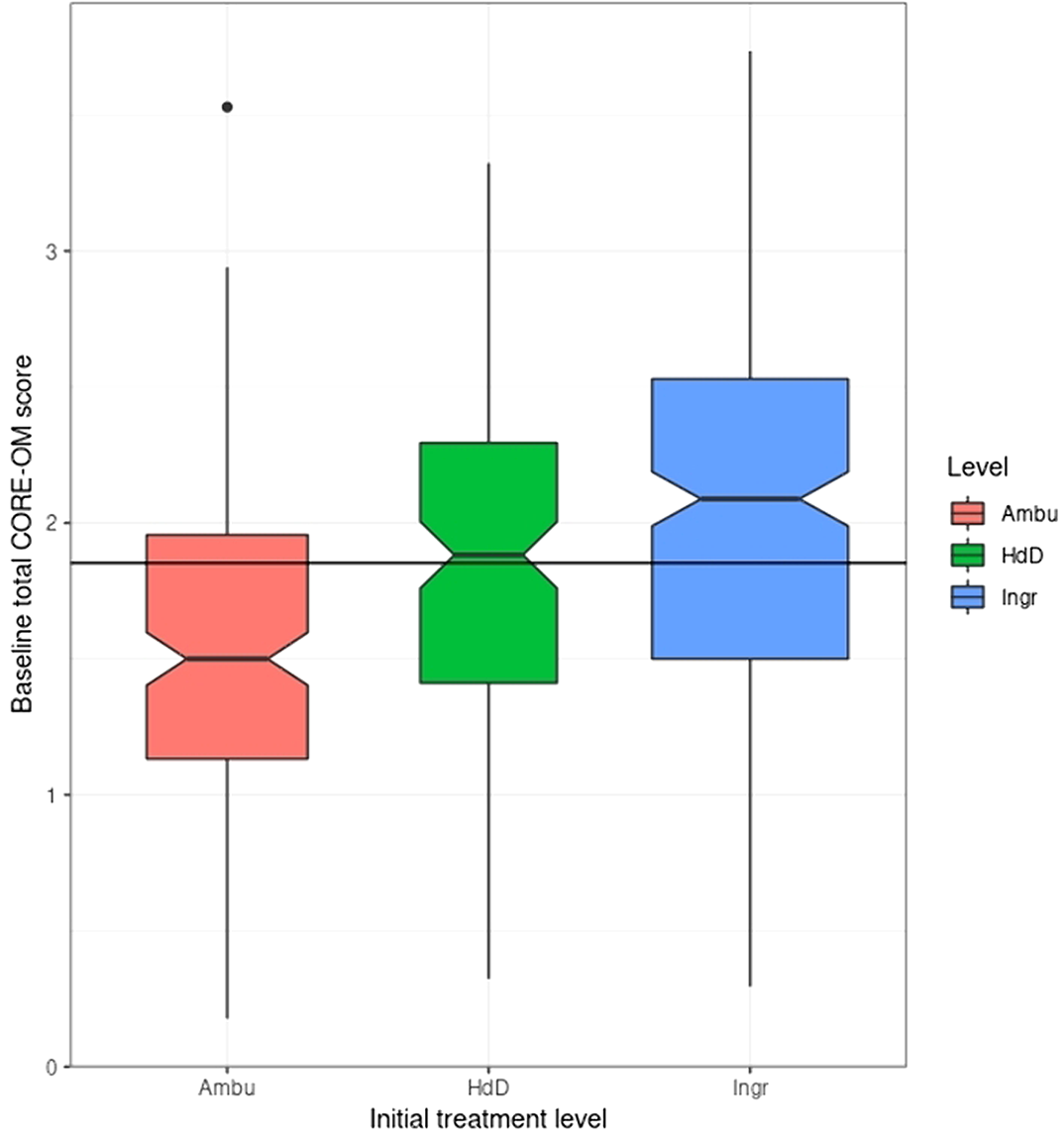
18% of the participants who completed the CORE-OM at baseline had a score below the Clinically Significant Change (CSC) cutting point. Though the rate was higher in participants with an Anorexia type I diagnosis (22.6%) than those with other ED diagnoses (15.8%): in the expected direction, the difference was narrowly non-significant (chi-squared = 3.5, d.f. = 1, p = .06). Scores did relate to treatment level.
Conclusions
The predicted elevated rate of non-clinical baseline scores in the AN1 group was narrowly non-significant but the rate of 18% non-clinical scores in a help-seeking population raises a cautionary message about interpretation of change from initially low scores.
Disclosure
I am one of the three trustees of CORE System Trust which holds the copyright on the CORE measures used in this study but the measures are all provided under a Creative Commons licence so I receive no remuneration from this.
Eating disorders (EDs) constitute serious mental illnesses with high morbidity, lifetime mortality and associated stigma due to the label of mental illness. The sparse research assessing adolescents’ knowledge of and attitudes towards EDs highlights their low understanding of these conditions.
Objectives
The proposed study aims to bridge this gap by investigating adolescents’ knowledge of and attitudes towards EDs as this will inform young people’s engagement with ED services.
Methods
Participants aged 12-18 will be randomly assigned a vignette depicting either a male or female 15-year-old displaying symptoms of anorexia nervosa (AN) or binge eating disorder (BED). They will be asked to select what they believe the condition described in the vignette is from a pre-determined list. They will then be informed of the correct diagnosis before completing a series of scales designed to assess their attitudes towards EDs. Participants’ own potentially disordered eating behaviours will be assessed using the ED risk composite (EDRC) subscale from the EDI-3.
Results
It is expected that BED will be less likely to be correctly identified compared to AN, eliciting more stigma and male vignette subjects will be seen more negatively than female vignette subjects. Also, it is expected that participants with higher EDRC scores will have more knowledge of and less negative attitudes towards EDs than those with lower EDRC scores.
Conclusions
This study will highlight the need for education around EDs targeted at adolescents to increase their knowledge and awareness, providing them with factual information ought to reduce stigma and negative attitudes and beliefs about EDs.
Adolescence, when physical body image changes occur, is highly vulnerable to the development of eating disorders. At this age, there is an acute task of accepting oneself as another - an adult who has changed.
Objectives
To study the features of the image of an adult in young people with eating disorders.
Methods
The study involved 58 girls (from 17 to 22 years old). The main group included 31 people with a high risk of eating disorders, the control group - 27 people with an average and low risk. Respondents filled in: Taylor Manifest Anxiety Scale, Eating behavior rating scale, projective drawing of an adult and child, association test about words «adult» and «child»
Results
1. A high level of personal anxiety was revealed in the main group; 2. The visualized image of an adult in the main group has more distortions and fewer signs of gender identification than in the normal group; 3. Semantic ideas about adulthood in the main group are negatively emotionally colored and include categories related to eating behavior; 4. Semantic ideas about childhood in the main group are more negatively emotionally colored, and ideas about the present are more connected with appearance than in the control group. Semantic ideas about the future in this group are often negatively colored.
Conclusions
Figurative and semantic ideas about childhood, adulthood and about oneself in the present and in the future in girls with eating disorders have qualitative characteristics in comparison with the control group.