We partner with a secure submission system to handle manuscript submissions.
Please note:
You will need an account for the submission system, which is separate to your Cambridge Core account. For login and submission support, please visit the
submission and support pages.
Please review this journal's author instructions, particularly the
preparing your materials
page, before submitting your manuscript.
Click Proceed to submission system to continue to our partner's website.
To save this undefined to your undefined account, please select one or more formats and confirm that you agree to abide by our usage policies. If this is the first time you used this feature, you will be asked to authorise Cambridge Core to connect with your undefined account.
Find out more about saving content to .
To send this article to your Kindle, first ensure no-reply@cambridge.org is added to your Approved Personal Document E-mail List under your Personal Document Settings on the Manage Your Content and Devices page of your Amazon account. Then enter the ‘name’ part of your Kindle email address below. Find out more about sending to your Kindle.
Find out more about saving to your Kindle.
Note you can select to save to either the @free.kindle.com or @kindle.com variations. ‘@free.kindle.com’ emails are free but can only be saved to your device when it is connected to wi-fi. ‘@kindle.com’ emails can be delivered even when you are not connected to wi-fi, but note that service fees apply.
Patients with high fraility indices experience poor mental health due to multiple co morbidity and social isolation.
Objectives
This was a retrospective observational analysis that studied the correlation of Electronic frailty indices and GAD scores with Depression scores in a rural population.
Methods
An annual frailty assessment is offered to elderly patients and we screen routinely for anxiety and depression using the PHQ-9 score and GAD score. This was an observational study examining the correlation of the Electronic Frailty Indices (EFI) depression and anxiety scores.
Results
Of the 118 patients ranging from mild to severe frailty we found a positive correlation of the EFI with the Depression and anxiety scores. Within the data set, the correlation coefficient of EFI scores and PHQ 9 scores was found to be 0.819. Similarly within the same data set we found a correlation coefficient of EFI and GDS scores of 0.651. The higher the EFI the greater was the scale of dependency and comorbidity and this correlation was consistent across the data set with depression and anxiety. We believe physical impairment, loss of independence and social isolation cognitive decline contribute to loss of self-esteem.
Conclusions
Our study found a positive correlation between frailty severity based on EFI scores and depression and anxiety severity. Early detection in deterioration of mental health will enable supportive measures and targeted treatment strategies. Our study shows the strong correlation of EFI severity scores with worse mental health.
Mild cognitive impairment is one of the commonly reported disorders nowadays in old age individuals,it might represent the prodroma of definite dementia.There is a novel Arabic tool now which could help in the evaluation of cognitive functions in these patients.
Objectives
1-To study the cognitive functions in mild cognitive impairment by a novel Thinc-it tool (Arabic version) 2-To compare between Mini Mental Status Examination ( Standard test) and the novel Thinc-it battery ( Arabic version ) in detection of cognitive dysfunctions in these patients.
Methods
1-The Mini Mental State Examination (MMSE) is a tool that can be used to systematically and thoroughly assess mental status. It is an 11-question measure that tests five areas of cognitive function: orientation, registration, attention and calculation, recall, and language. The maximum score is 30. A score of 23 or lower is indicative of cognitive impairment. The MMSE takes only 5-10 minutes to administer and is therefore practical to use repeatedly and routinely 2-Thinc-it THINC-it® is a screening tool designed to measure cognition and provides important data for an overall evaluation of whether cognitive functioning is impaired,it includes the folloowing tests:
1. PDQ-5D Subjective Questionnaire
2. “Spotter” – CRT game
3. “Symbol Check” – Nback game
4. “CodeBreaker” – DSST game
5. Trails – TMT game
Results
The results of Thinc-it (Arabic version) is statistically correlated to the mean score of Mini Mental state Examination,this means this Arabic version is a valid novel tool for assessment of Cognitive dysfunctions .
Conclusions
Arabic version of Thinc-it can be used in cognitive evaluation
Iatrogenic factors, such as polypharmacy and prescription cascade, are some of the main causes of delirium in the elderly. We present a case of delirium of months of evolution that improved after applying a pharmacological de-prescription strategy.
Objectives
To report a case and review the available literature on the concepts of prescription cascade and de-prescription in delirium in the elderly.
Methods
A 92-year-old woman with a history of cerebrovascular accidents and no psychiatric history or dementia was admitted to a psychogeriatric clinic due to disorientation, delusions of harm and gait apraxia. Several months earlier she had required admission to the general hospital for agitation. In view of the suspicion of delirium, an exhaustive examination and complementary tests were performed, including a neuropsychological assessment and a brain scan (Image 1).
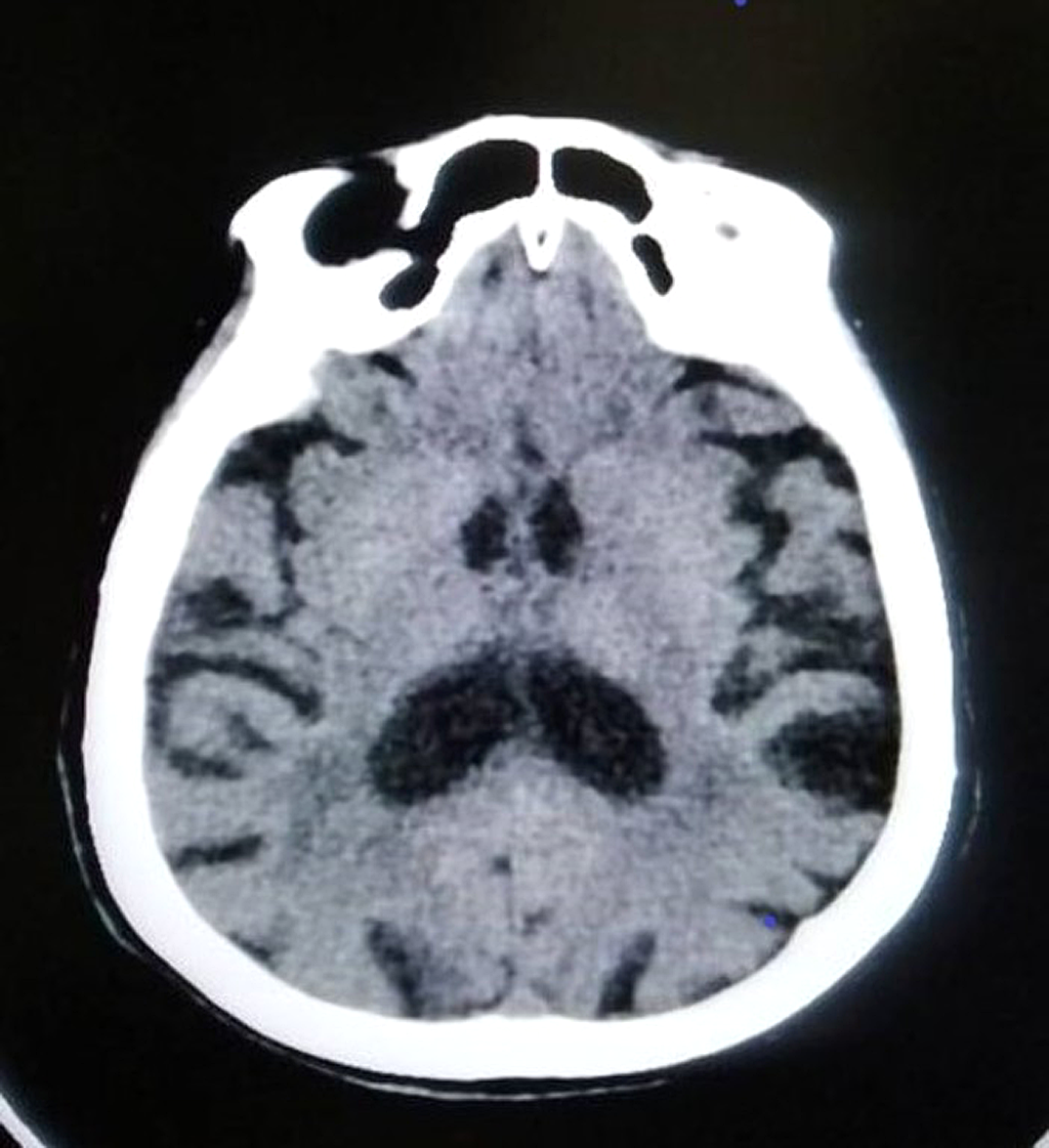
Results
The patient had previously received multiple high-dose psychotropic drugs (Gabapentin, trazodone, Zolpidem, Quetiapine), which had reduced the agitation but had not resolved the problem. Organic causes were treated in a multidisciplinary team (pressure ulcers), together with a gradual tapering of medication. Although underlying vascular dementia was diagnosed, the patient’s gait and cognitive status improved, with a significant impact on her autonomy and quality of life.
Conclusions
Despite an extensive literature on the subject, delirium in the elderly remains an under-diagnosed medical condition, especially the hypoactive subtype, just as cascade prescribing remains common. It is important to raise awareness among specialists in training to prevent and diagnose it.
The presentation considers the peculiarities of late adulthood, different views on the periodization of older ages (World health organization, I. Burnside, H.S. Pryazhnikov).
Objectives
The research is aimed at studying the peculiarities of late adulthood.
Methods
The method of work is a bibliographic analysis.
Results
Reveals the structure of psychological age (concept by L.S.Vygotsky), the specificity of the development in late adulthood and features of the social situation of development. Reveals modern ideas of ageing as a process not only of involution and loss, but also a process of continued development. The greatest attention is paid to the peculiarities of development tasks at older ages and the difficulties faced by older people trying to cope with them. There are the brief overview of the positions of C.G.Jung, A.Adler, E.Erikson, R.Peck, G.M.Bryugman, A.G.Liders, N.S.Pryazhnikov, E.E.Sapogova, I.V.Shapovalenko, V.I.Slobodchikov, G.A.Zuckerman, etc. regarding the development tasks in late adulthood. The comparison of the development tasks of early and late age periods by G.M. Bryugman, which shows that the tasks of aging worse defined, at least sequentially ordered, and the results of solution of development tasks is less predictable than in earlier ages.
Conclusions
We can say that in old age is important not only the task of adjusting to different changes of pace of life, quality of life, social circle, etc., and overcome the negative aspects of aging but also issues of self-development. As the primary development task in late adulthood is considered an achievement of his own integrity and finding the meaning of life.
Alzheimer’s disease (AD) is a neurodegenerative pathology that develops mainly in elderly and senile people. Disruption of BDNF transport or suppression of its production appears to be typical for people of old age. Objective: To investigate the influence of Alzheimer’s disease on the secretion of brain factors and correlate with neuropsychological profiles.
Objectives
12 men (2) and women (10) with Alzheimer’s disease were examined. The average age of the subjects was 76.25 + 4.89. Methods: MMSE, ADAS-COG, laboratory - BDNF was performed using the G7611 BDNF Emax (R) ImmunoAssaySystem 5 x 96 wells, BDNF Emax® Immunological test.
Methods
2 patients have mild dementia, 8 patients have moderate dementia, 2 patients have severe dementia. The average age of patients with mild dementia was 72.0 + 1.0. The average MMSE score is 16.7 + 3.4.
Results
Correlation analysis showed a close relationship between a pronounced decrease in memory in memory tests (ADAS-COG) and a pronounced decrease in blood BDNF content (r = 0.676). A close statistically significant relationship was found between a low result of the recognition test and a low blood BDNF content (r = 0.598).
Conclusions
We assume that blood BDNF is a marker of pathologically accelerated aging of the central nervous system, since low test results for mnestic function are an indicator of severe degeneration in Alzheimer’s disease.
Catatonia is a neuropsychiatric disorder characterized by motor, behavioral and autonomic changes. It is associated with several psychiatric disorders, including dementia. Catatonia is an underdiagnosed syndrome, so it is important to draw attention to it. Here, we review a case of a patient admitted to our psychiatric department with a clinical presentation compatible with catatonia. After proper treatment, further assessment revealed dementia.
Objectives
This work aims to describe a case of catatonia in a patient with dementia.
Methods
Bibliographic research using Pubmed®. Clinical file consultation and patient interviews.
Results
Catatonia is a disorder that was already been described as part of several types of dementia. We present a 69-year-old female patient, admitted to our psychiatric department with clinical presentation compatible with catatonia. To admission, she presented some typical complications resulting from long immobility such as pressure ulcers and nutritional deficiencies. During the hospitalization, she developed a urinary infection and there was the need to tube feeding. She was treated with benzodiazepines and improved. Further assessment revealed dementia.
Conclusions
Catatonia in dementia is not uncommon, although it is an underdiagnosed syndrome, and when treated early and properly it has a good prognosis.
Depression in the elderly is common and closely interrelated with the deterioration of the quality of life, especially in the institutionalized elderly.
Objectives
In this work, we propose to determine the prevalence of depression in the elderly in institution, to assess their quality of life and to evaluate the correlations between depression and the quality of life.
Methods
Our study concerned 30 elderly subjects institutionalized at the retirement home(Sousse, Tunisia). Three validated Arabic version scales were used: The 30-item GDS (Geriatric Depression Scale), the MMSE (Mini Mental State Examination) and the SF36 (assessing the quality of life).
Results
The mean age of our population was 75±7.3 years, the sex ratio was 1.73. The prevalence of depression was 37%. The elderly had a cognitive impairment in 16.7%. The mean global SF36 score were 11.2, attesting an altered quality of life in all our subjects: the mental component (9.43) were more altered than the physical one (13.03). No correlation between depression and quality of life was found. Depression was significantly correlated with the presence of a medical history (p=0.05). Depression had a negative and statistically significant correlation with the physical score of SF36 (r=-0.41, p=0.02) and tended towards significance for the “general health” dimension of SF36 (r=-0.32, p=0.08).
Conclusions
Our study shows a high frequency of depression in the institutionalized elderly as well as a deterioration in their quality of life. Depression is strongly linked to deterioration in physical condition.Our results underline the influence of somatic diseases as a major risk factor for depression in the elderly.
Othello syndrome (OS) is a psychiatric condition consisting of delusional jealousy, and irritability. It is often associated with psychiatric or neurological disorders. The most common are delusional disorder and dementia.
Objectives
The purpose of this poster is to examine the phenomenon of OS and its etiopathogenesis throughout a case report.
Methods
We present the case of a 78-year-old male patient who was treated in our department due to delusional jealousy and depressive symptoms. The patient has a medical history of cardiac events in the past, being stable at the current moment. We performed a detailed psychiatric and physical history paying special attention to personality traits in the past. The patient was administered Mini Mental State Examination and CamCog (subscale of Camdex).
Results
According to him and his family our patient had neither episodes of jealousy nor affective disorders. His results were: 18 in MMSE and 57 in CamCog. Both compatible with a dementia course.
Conclusions
Attending our results we inferred that the OS belongs to a dementia clinical picture instead of a psychotic disorder. Therefore we decided to treat the patient with neuroleptics, with partial improvement, and to start cognitive stimulation treatment in a day centre and a short term psychological family intervention to help the family to understand and cope with the course of dementia. Thus, clinicians should keep in mind the possible organic origin of OS, especially in elderly persons, to develop an appropriate individual and familiar case approach.
Dementia develops slowly and insidiously and causes cognitive impairment. The diagnosis is pivotal for relevant treatment and care. However, 50,000 people are estimated to have undiagnosed dementia in Denmark, while 36,000 are diagnosed.
The municipalities offers a home visit to the population at the ages of 75 and 80 years to assess the need of care and prevent sickness. These home visits are well established and might offer an unused opportunity to detect cognitive impairment and dementia.
Objectives
To assess impaired cognition at home visits in order to initiate clinical examination for dementia.
Methods
A feasibility study with the use of Brief Assessment of Impaired Cognition Questionnaire (BASIC-Q) (sensitivity 0.92, specificity 0.97) at home visits. It is expected to include 1000 participants without a dementia diagnosis at the ages of 75 and 80 years. Participants will be included in a period of 12 moths (in the year of 2022), in a number of municipalities.
If the screening for cognitive impairment is positive, the participant is motivated for clinical examination at the general practitioner. Follow-up through registers and general practitioners.
Results
Preliminary results will be presented at the conference.
Conclusions
Assessment of cognition might give an opportunity to start medication and social support early in the elderly with impaired cognition and undiagnosed dementia.
Preservation of health, increase in life expectancy determine the need to improve the effectiveness of medical recommendations, which, despite the success of pharmacology, are insufficient for reasons related to the low level of compliance with these recommendations by patients.
Objectives
Participants of the study-148 employees of medical institutions: 12 men, 136 women, their age ranged from 27 to 74 years.
Methods
Despite the absence of signs of decompensation of concomitant pathology, representatives of the subgroups took a different amount of concomitant therapy. Using the scale of assessment of drug compliance, it was found that compliance is most reduced in the subgroup of 41-50 years. In this subgroup, a comprehensive decrease in compliance across the “behavioral”, “emotional”, and “cognitive” domains was detected in 87.8% of cases, while in the younger subgroup partial non-compliance was 32.4%, in the older subgroup - 74.5%
Results
An analysis of the states of cognitive functions in 52 representatives of the middle age subgroup with low compliance rates showed that, unlike other representatives of the same subgroup, their indices for a number of neuropsychological tests are close to the results of more adult participants in the study.Individuals demonstrating low compliance with quite favorable CNS resources are at risk for the formation of pathological aging.
Conclusions
Compliance is considered as Compliance is considered as a control mechanism for preventing normal aging into pathological by regulating risk factors that are dangerous for the brain and associated with the formation of dementia
The COVID-19 pandemic caused significant disruptions in services and necessitated innovation to continue care provision to the vulnerable population of older adults with psychiatric needs.
Objectives
The objective of this study was to examine the experiences of staff and patients using a hands-free electronic smart-hub (eSMART hub) intervention to keep patients connected with psychiatry of old age following COVID-19 restrictions.
Methods
A risk stratification register was created of all patients known to the Psychiatry of Old Age service in the North-West of Ireland to identify those at highest risk of relapse. These patients were offered a smart-hub with remote communication and personal assistant technology to be installed into their homes. Smart-hubs were also installed in the team base to facilitate direct device to device communication. Semi-structured qualitative interviews were conducted with 10 staff members and 15 patients at 6-12 months following the installation of the smart-hubs.
Results
The smart-hubs were utilized by the POA team to offer remote interventions over video including clinician reviews, regular contact with key workers and day-hospital based therapeutic interventions such as anxiety management groups and OT led physical exercises. Patients also used the personal assistant aspect of the hub to attend to personal hobbies such as accessing music and radio. Positive feedback related to companionship during isolation and connectivity to services. Negative feedback was mainly related to technology, particularly internet access and narrow scope of communication abilities.
Conclusions
Electronic smart-hub devices may offer an acceptable avenue for remote intervention and communication for isolated high-risk older persons.
Disclosure
The smart hub devices used in this study were donated by Amazon. However, the company was not involved in any other aspect of the study and the researchers have no significant financial interest, consultancy or other relationship with products, manufactur
The older adults have been considered one of the groups at highest risk of SARS-CoV-2 infection and death due to COVID-19. Fear of SARS-CoV-2 infections has become widespread. It’s constantly being enhanced by the media reports and social distancing principle.
Objectives
The aim of the study was to assessment the occurrence of symptoms of fear of COVID-19 among participants of the Polish University of the Third Age (UTA).
Methods
The study included 296 participants of the UTA in Poland, including 258 women and 38 men. The study conducted with the use of the following validated psychometric scales: General Anxiety Disorder-7 (GAD-7), Short Health Anxiety Inventory (SHAI) and State-Trait Anxiety Inventory (STAI).
Results
The mean scores in STAI and SHAI demonstrated mild symptoms indicative of anxiety disorders in the older adults. Women and men did differ significantly in terms of the scores obtained in STAI(X-1) (p=0.002) and STAI(X-2) (p=0.020). There were no statistically significant differences between respondents with higher education and those with a different level of education. The single respondents differed significantly from divorced ones in terms of STAI(X-1) (p=0.046). Moreover, widows/widowers differed significantly from divorced ones in terms of STAI(X-2) (p=0.045) and GAD-7 (p=0.032).
Conclusions
The subjective experience of anxiety symptoms associated with fear of contracting COVID-19 was increased due to the ongoing pandemic, but was not significantly high in the analysed population of older people. COVID-19-related anxiety was significantly more common in lonely individuals. Women and men differed significantly in terms of perceived state anxiety and trait anxiety measured by STAI.
During the last decades, the incidence of syphilis is on the rising, particularly in the United States of America and Europe. Neurosyphilis is a disease that has a vast differential diagnostic. With that in mind, clinicians have some difficulties to identify it rapidly. A case of a 57-year-old man is presented, with a brutal change in his behavior, associated with a dementia-like syndrome. He is diagnosed with neurosyphilis.
Objectives
The main goal is to present his clinical psychiatric symptoms and diagnosis procedure, the treatment that he received and his clinical outcome in the psychogeriatric department.
Methods
The treatment was based in an integrated framework of pharmacology and psychotherapy.
Results
The patient was able to slowly recover and to get back home, we a solid structure to make the follow up.
Conclusions
This clinical vignette represents a growing number of adult patients that present themselves for the first time with dementia-like symptoms. It is important to remember, that many diseases are capable of mimicking dementia and their exclusion before admitting a diagnosis of dementia is mandatory.
Charles Bonnet syndrome (CBS) is defined like visual hallucinations found in individuals who are not necessarily mentally ill, who have visual impairment and no cognitive deficits. Although CBS make reference to visual hallucinations, in this case we are going to deal about Auditory Charles Bonnet Syndrome (aCBS), a very infrequent condition that consists in the presentation of musical hallucinations in patients with sensorineural hearing loss and which etiology is not clearly due to a psychiatric condition.
Objectives
Review the scientific literature available on aCBS to see how much we know about this syndrome.
Methods
Review of available literature sources were obtained through electronic search in PubMed database.
Results
Musical hallucination is a complex form of auditory hallucinations. The most common of these are idiopathic and they present in elderly patients with deafness or impaired audition, which suggests a deterioration of cerebral function. The pathophysiologic mechanism is not understood. These patients tend to have intact reality tests. The time course is variable. In those cases in which it is possible, treating the hearing loss can lead to a significant improvement of the symptom. However, when every this strategies are insufficient, pharmacological treatments can be considered.
Conclusions
- aCBS is an uncommon condition characterized by the presence of complex auditory hallucinations that mainly affect elderly patients with hearing loss. - In most cases there is no previous psychiatric history. - The etiology and pathophysioplogic are not well defined. - There is no etiological treatment. We can use pharmacological and no pharmacological methods of treatment.
Agitated behaviors is a common neuropsychiatric symptom (NPS) in dementia, defined as inappropriate verbal, vocal, or motor activity that is not thought to be caused by an unmet need. It is frequently reported as a major problem, that impairs the quality of life for the elderly themselves and for caregivers. There has been increasing interest in the use of sedative antidepressants to treat NPS due to concerns over the safety and efficacy of antipsychotics in this setting.
Objectives
We aim to review clinical evidence of alternatives to antipsychoticst to manage agitation in dementia.
Methods
We conduct a non-systematic review of recent evidence on dementia and agitation, using PubMed/Medline database.
Results
Although non-pharmacological interventions are the first-line treatment for agitation, it is a legitimate target for therapeutic intervention and according to previous guidelines, antipsychotic are among the most used drugs, albeit restricted because of side-effects. A substitution strategy to avoid antipsychotic prescription was highly considered, however there is limited evidence to support the use of antidepressants as a safe and effective alternative for agitation in dementia. Studies compare Mirtazapine, Selective serotonin reuptake inhibitors (SSRIs) and Trazodone and a reduced benefit in mortality is observed. However, citalopram was more effective were more likely outpatients for moderately agitation and Mirtazapine reveals being potentially harmful, in different studies.
Conclusions
Moving forward, a greater understanding of NPS neurobiology, will help to clarify the efficacy of Antedepressants for the treatment of agitation in dementia. Benefits an also the patient and caregiver preference should be kept in mind.
Syphilis is a sexually transmitted infection which in its late phase can cause all kinds of neuropsychiatric symptoms. A case report of a 79-year-old male with a manic episode probably due to lues is presented.
Objectives
A case of a patient with neurosyphilis is presented followed by a theoretical review on the topic.
Methods
A case is presented with a bibliographic review.
Results
A 79-year-old male was hospitalized with symptoms of disorientation, inattention, and difficulty for abstract thought. His speech was verbose, incoherent with megalomaniac ideas. He presented affective symptoms such as hyperthymia, emotional lability and intermittent crying. He also had nomination problems and recent memory mistakes. He also suffered from insomnia. He presented as his medical history HIV infection under control and syphilis treated in December 2020 with a negative RPR test in June 2021. During his hospitalization he was treated with increasing doses of olanzapine and valproic acid. Irritability improved with this treatment.
Conclusions
Neurosyphilis may be presented as any kind of neuropsychiatric disorder. Laboratory tests are required as there is no conclusive imaging test. Penicillin and symptomatic management are the proper treatment. Neuropsychiatric disorders in elderly population must consider infectious diseases and previous pathologies as differential diagnosis.
Patients with mild cognitive impairment may present deficits in naming, speech production, oral comprehension and written comprehension. In the differential diagnosis, cerebrovascular disease that can lead to cognitive impairment must also be differentiated from endogenous depressive disorder or language impairment.
Objectives
The aim is to highlight the importance of differential diagnosis in cognitive disorders in relation to a case.
Methods
A 68-year-old female patient attended a psychiatric consultation derived from neurology when presenting a language disorder. The husband who accompanies her and the patient indicate that she has problems finding words and substitutes other expressions for them or sometimes does not answer or does so with something different from the topic that is being asked. She refers that she presents repetitive language with memory problems, alteration in the evocation of memories. The patient reports mood swings and irritability and crying with a low tolerance for frustration since she cannot express herself. Cranial MRI: cortical and central involutional changes. Periventricular leukoaraiosis and ischemic gliosis-like lesions in the white matter of both hemispheres. Psychopathological exploration: Conscious, oriented. She smiles at the questions but doesn’t answer them. Repetitive language. Alteration in the articulation of language. Depressed mood reactive to current situation. Some irritability Alteration in recent memory and evocation.
Results
She was diagnosed with organic mental disorder compatible with mild cognitive impairment. Treatment with rehabilitation of the language disorder of vascular etiology is established.
Conclusions
Imaging and neuropsychological tests should always be performed in a patient with language, memory, and mood disorders to study its etiology.
Elderly people have always presented physiological changes and suffered from many diseases. There are few studies focused on this growing particular population, especially with mental pathologies. Thus, psychiatric hospitalization of the elderly population is more frequent nowadays.
Objectives
The aim of this study is to establish the socio-demographic characteristics of elderly patients hospitalized in psychiatry.
Methods
Retrospective and descriptive study over a period of 20 years and 6 months on patients aged over 65 years old hospitalized in the psychiatry “B” department of the Hedi Chaker University hospital in Sfax, Tunisia, for a psychiatric disorder, selected according to the DSM 5 diagnosis criteria.
Results
The number of records identified was 62, out of 4019 patients (15.4%). The mean age of patients was 71.1 years old and the sex ratio (Male / Female) = 0.67. Patients were originally from Sfax in 58.1% and from rural areas in 58.1% of cases. Most of patients (78.4%) were living at least with one member of their family. They were married in 53.2% of cases. The average number of children was 5.21. The majority of patients were illiterate (61.3%) and never had a professional activity in 45.2% of cases. Social coverage concerned 96.8% of our sample.
Conclusions
Elderly patients hospitalized in our department were mainly illiterate, females and living with their family. Despite everything, family involvement in care is still necessary for this category of patients.
Early diagnostics of neurodegenerative disease and their comorbidities is linked to better treatment outcome and improved quality of life. The first patient assessment should lay strong foundations for the direction of the upcoming diagnostic procedure. Clock Drawing Test (CDT) is often used as an early screening instrument in geriatric patients presenting with cognitive disorders.
Objectives
The goal of the present study was to evaluate diagnostic accuracy of the CDT in a geriatric cohort with mild cognitive difficulties.
Methods
Out of a pool of in- and outpatient data presenting with subjective cognitive difficulties three diagnostic groups were formed – mild cognitive impairment, depressive disorder and healthy controls. CDT was scored using a quantitative scoring system with each aspect of the clock evaluated separately. CDT data was analysed for its discriminative value in early diagnostics of AD and DD.
Results
Logistic regression produced a significant model with a low percentage of explained variance in both DD and AD groups. Same CDT items were significant predictors for DD and AD pathology. ROC curve inspection allowed only a poor discrimination capability for the significant predictors.
Conclusions
Despite being a popular screening test, CDT is a poor choice for individuals presenting with a mild cognitive impairment. Using CDT alone might result in initial stages of neurodegeneration going undetected, thus depriving patients of early treatment options. Same error types were significant predictors in DD and AD. This indicates that CDT can detect a general impairment; however, an in-depth neuropsychological assessment is needed for differential diagnostics.
Glycemic control for elderly diabetics is a challenge. Treatment satisfaction reflects this control.
Objectives
To determine the factors associated with insulin treatment satisfaction among type 2 diabetic elderly.
Methods
A cross-sectional study on 86 type 2 diabetic insulin dependent elderly recruited from the outpatient endocrinology consultation during June and July 2021. We applied the Diabetes Treatment Satisfaction Questionnaire (DTSQ) and geriatric assessment scores.
Results
Three quarters of the patients were satisfied with the insulin therapy. Satisfied patients had significantly less history of hospitalization and more regular follow-up. Diabetic neuropathy medications were significantly less taken by satisfied patients. The number of daily insulin injections was significantly higher in the unsatisfied patients. Diabetic foot was significantly more frequent in unsatisfied patients. Satisfied patients were significantly less depressed, more independent in both basic and instrumental activities of daily living, without memory impairment, in better nutritional status and not falling. Higher DTSQ scores were associated with regular follow up (β 7.92, 95% CI 1.83 to 34.3). Lower DTSQ scores were associated with the history of hospitalization (β 0.12, 95% CI 0.02 to 0.58), the taking of medications for diabetic neuropathy (β 0.07, 95% CI 0.09 to 0.51), the high number of insulin injections (β 0.43, 95% CI 0.19 to 0.97) and the presence of diabetic foot (β 0.17, 95% CI 0.01 to 0.38).
Conclusions
Risk factors for patients’ insulin dissatisfaction should be detected early and managed appropriately to improve patients’satisfaction and consequently their well-being.