We partner with a secure submission system to handle manuscript submissions.
Please note:
You will need an account for the submission system, which is separate to your Cambridge Core account. For login and submission support, please visit the
submission and support pages.
Please review this journal's author instructions, particularly the
preparing your materials
page, before submitting your manuscript.
Click Proceed to submission system to continue to our partner's website.
To save this undefined to your undefined account, please select one or more formats and confirm that you agree to abide by our usage policies. If this is the first time you used this feature, you will be asked to authorise Cambridge Core to connect with your undefined account.
Find out more about saving content to .
To send this article to your Kindle, first ensure no-reply@cambridge.org is added to your Approved Personal Document E-mail List under your Personal Document Settings on the Manage Your Content and Devices page of your Amazon account. Then enter the ‘name’ part of your Kindle email address below. Find out more about sending to your Kindle.
Find out more about saving to your Kindle.
Note you can select to save to either the @free.kindle.com or @kindle.com variations. ‘@free.kindle.com’ emails are free but can only be saved to your device when it is connected to wi-fi. ‘@kindle.com’ emails can be delivered even when you are not connected to wi-fi, but note that service fees apply.
Research shows that mental illnesses increase suicidal risk. Studies have found that suicidal risk is associated with impaired decision-making.
Objectives
To analyze decision making based on emotional learning in implicit suicidality.
Methods
56 male patients with schizophrenia spectrum disorder (F20) and denied presence of suicidal ideation were involved into the study (mean age 23±2.7),. Methods: Iowa gambling task (IGT) - integral indicators were used: the prevalence of “good” choices over “bad” ones, total score; and an indicator reflecting the ignorance of consequences of one’s choice - the subject remains on a “bad deck” after a loss. The Rorschach test (Rorschach Comprehensive system) was administered: Suicide Constellation «S-CON» and its components were used.
Results
According to the analysis, prevalence of “good” choices (IGT) negatively correlates with «S-CON» (Spearman’s correlation -0.328*, hereinafter significance level: ~ - p<0.1; * - p<0.05). A decrease in the total IGT score is associated with the following cognitive indicators: disregard for social conventions, non-conformism («P») (Spearman’s, 0.337*); a tendency to react defensively to a problem situation, blocking activity in terms of making decisions («R») (0.308*). Ignoring the consequences of one’s choice (IGT) correlates with such emotional factors as emotional incontinence, superficiality of emotions, emotional lability («FC:CF+C») (-.0382*), ambivalence of emotions («Blcol-shd») (statistical tendency, 0.277~), expressed dissatisfaction with the existing situation, internal tension and dysphoria («S») (0.291~).
Conclusions
The relationship of implicit suicidality with decision-making was found to be similar to the relationship of pronounced suicidality with decision-making. Suicidality is associated with impaired ability to make decisions based on emotional learning.
Yoga may pose a promising complementary therapy in the multimodal treatment of schizophrenia spectrum disorders (SSD). However, to date, no studies have qualitatively examined the patients’ experience of practising Yoga.
Objectives
This qualitative study aimed to assess the mechanisms and processes of Yoga-based group therapy (YBGT) for in-patients with SSD by exploring their subjective experiences.
Methods
Twenty-five semi-structured interviews were conducted with in-patients with SSD after they participated in a YBGT session. Interviews were transcribed, coded by two independent researchers, and analysed using an inductive thematic approach. The research team collaboratively discussed emerging categories to reduce redundancy and form meaningful themes and subthemes.
Results
The analysis revealed seven main themes. YBGT was perceived as feasible and focusing on individual adaptation, captured by the theme ‘inclusivity’. Nevertheless, participants encountered ‘challenges’; thus, physical limitations need to be considered. While practising together, participants experienced ‘interconnectedness’ and developed a ‘mindful stance’ as they accepted their limitations and adapted exercises with self-compassion. Following the flow of asanas required physical persistence, which ultimately led many participants to experience ‘confidence’ and ‘relaxation’. YBGT affected ‘symptom representation’ as heightened awareness led participants to notice impeding as well as improved symptoms.
Conclusions
YBGT seemed to have various promising effects on in-patients with SSD. Future research should examine to what extent these effects can be sustained and how the mindful approach during YBGT can be transferred to areas outside the Yoga class. Furthermore, a randomised-controlled trial could investigate the effectiveness of a manualised YBGT.
The usage of clozapine in patients with schizophrenia and epilepsy raises many challenges due to the epileptogenic effects of the drug. There is little data about using clozapine for treatment of treatment-resistant schizophrenia (TRS) accompanied by epilepsy.
Objectives
To present a case report illustrating a patient diagnosed with epilepsy and TRS, successfully treated with clozapine.
Methods
A literature review on “PubMed” database was conducted, using the keywords: clozapine, antipsychotics, epilepsy, seizures, psychoses. Information regarding the clinical case was obtained by consulting the patient’s file.
Results
We present a woman, 33 years old with mild intellectual disability and a 10-year history of schizophrenia. At the age of 24, the patient lost consciousness and experienced tonic – clonic seizure, but epilepsy was not diagnosed. The patient was hospitalized multiple times due to positive symptoms of schizophrenia and suicidal thoughts. Various combinations of neuroleptics and electroconvulsive therapy were used for treatment without therapeutic effect. At the age of 32, a diagnosis of TRS was established, leading to treatment with a moderate clozapine dose (400mg/day). At the fifth month of treatment with clozapine un episode of generalized seizures occurred, leading to a diagnosis of idiopathic generalized epilepsy. Since then, the patient was treated with levetiracetam and the dosage of clozapine was lowered to 275mg/d. The seizures did not re-occur and clinical response to the psychiatric treatment was positive.
Conclusions
This case report highlights how clozapine can be used safely and effectively for patients with TRS and epilepsy and how the epileptogenic effects can be moderated by using antiepileptics in the overall treatment scheme.
Impaired response to stress and a pathological activation of the hypothalamic-pituitary-adrenal axis have been implicated in the pathophysiology of schizophrenia
Objectives
To measure serum ACTH, cortisol and DEHA-S levels in drug-naïve, first-episode patients with psychosis.
Methods
Results are reported as mean (standard deviation, range). Paired t-test or Wilcoxon signed rank test were performed for group comparisons. The level of significance was set at p-value<0.05. Statistical analysis was performed with Stata 15.1.
Results
Data were included for 110 subjects (70 men, 40 women); 55 patients and 55 controls matched for age and sex. Mean age was 31.3 years (8.7, 18-48) in patients and 31.4 years (8.9, 17-49) in controls. Serum cortisol and Cortisol/DHEA-S ratio were statistically significantly lower in patients [12.6μg/dl (4.5, 3.5-24.5) and 5.3 (3.6, 1.3-19.5), respectively] compared to controls [15.5 μg/dl (4.9, 4.2-30.1) and 8 (4.7, 1.1-25.5), respectively] (p-value=0.0068 and 0.0005, respectively). Additionally, serum DHEA-S was statistically significantly higher in patients [306.5 μg/dl(165.4, 70-790)] compared to controls [240.1 μg/dl(113.5, 46-597)] (p-value=0.0114). ACTH was also higher in patients [28.5 pg/ml(15.7, 6.2-73.9)] than controls [26.5 pg/ml (15.3, 7-70.5)] but this difference wasn’t statistically significant (p-value=0.6359).
Conclusions
We report elevated DEHA-S, decreased cortisol levels and decreased cortisol/DEHA-S ratio in the patients’ compared to the controls’ group.
The prevalence of schizophrenia is close to 1 percent internationally. According to the 2019 census, the population in the province of León, our study population, is 460,001 inhabitants.
Objectives
To study the distribution of schizofrenia in the area covered by the Complejo Asistencial Universitario de León, Spain.
Methods
This is a retrospective and cross-sectional descriptive study. The data of the hospitalizations of the last 10 years (2009-2019) will be obtained in any service of the CAULE of the 28 basic health areas of the province of León, with a diagnosis of schizophrenia. Prevalence will be calculated. The rate of schizophrenia will be calculated for the decade per 1000 inhabitants.
Results
3133 admissions identified 1576 unique patients. It is the decade of 50-59 where the largest number of hospitalizations is concentrated. Most entered directly into the psychiatry hospital care. It is 2019 where the most income is produced and 2017 the one with the least. The rate of schizophrenia is 3,2 Per 1000 inhabitants.
Conclusions
Hospitalizations for schizophrenia is concentrated in the decade of the 40-49 years. The diagnosis of schizophrenia is frecuently delayed until negative symptoms appear. There is an upward trend in hospitalizations per year in the last decade. The rate of schizophrenia is higher in areas where consanguinity is present and where the prison is located.
Psychosis in Alzheimer’s disease has an incidence of ~ 10% per year. Recent work has focused on the presence of psychosis in people with mild cognitive impairment, as a risk factor for the development of Alzheimer’s disease.
Objectives
To study a case of Alzheimer’s disease presenting psychotic symptoms
Methods
Retrospective review of clinical records and complementary test, including psychiatry, electrophysiology and neurology.
Results
A 40-year-old goes to the emergency room due to hetero-aggression at home. He says that his father steals his money and prostitues have been hired in his house. The patient is oriented, partially collaborative and approachable. Psychomotor restlessness is observed. He has self-referral delusions, auditory hallucinations and insomnia. Provisional diagnosis of acute psychotic episode made and low dose risperidone was prescribed. During his stay on the hospital Ward, sedation, recent memory alterations, spatio-temporal disorientation lack of initiative and disorganized behaviors appear. Risperidone is withdrawn and complementary test are performed. Imaging tests show temporal and frontal atrophy. Increased TAU protein and low levels of amyloid in CSF are found. Brain biopsy is +. His mother died of Alzheimer’s disease with 36 years-old and another affected brother with 42 yeras-old. The definitive diagnosis is Alzheimer’s disease and genetic studies are currently being carried out.
Conclusions
Psychiatric symptoms may be present in Alzheimer’s desease. It is mandatory to carry out an adequate organic screening before a late first psychotic episode.
People with schizophrenia are considered to be within the most stigmatized social groups. Accurate and efficient detection of stigma and its correlates is essential in patients with psychosis.
Objectives
The purpose of this study was to assess illness insight, stigma, social anxiety and quality of life in patients with a first episode of psychosis and their possible correlations
Methods
The sample of this study consisted of 90 patients with a first episode of psychosis that fulfilled inclusion and exclusion criteria. Tools used for the purpose of this study were Schedule for the assessment of insight-Expanded version, Internalized Stigma for Mental Illness Scale, World Health Organization Quality of Life Assessment - Greek version, Liebowitz Social Anxiety Scale - Greek version. Data were collected and analyzed with SPSS v26.
Results
The study group had good insight (SAI-E score: 20.33±4.449), medium to high stigma values (ISMI score 50.93±7.854), a good enough quality of life (WHOQOL-BREF score: 86.08±10.010) and low levels of social anxiety (LSAS-Gr Fear score: 3.26±8.653; Anxiety score: 2,93±7,596). The results of this study show significant at the 0.01 level 2-tailed correlations as such: (i) a positive and significant relationship between ISMI and LSAS-Gr, (ii) a negative and significant relationship between ISMI and WHOQOL-BREF, and (iii) a negative and moderate relationship between WHOQOL-BREF and LSAS-Gr.
Conclusions
We report medium to high stigma levels, good insight and a good enough quality of life in a sample of first-episode patients with psychosis.
CADASIL (Cerebral Autosomal Dominant Arteriopathy with Subcortical Infarcts and Leukoencephalopathy) is an inherited disease caused by mutations in the Notch3 gene in chromosome 19.The clinical features are primarily neurological, which include recurrent transient ischaemic attacks, strokes, and migraines.However, psychiatric manifestations such as severe depression, psychosis, changes in behavior and personality have also been reported in CADASIL. Symptoms and disease onset vary widely, with signs typically appearing in the mid-30s.Some individuals may not show signs of the disease until later in life.
Objectives
In this case report, we present a possible case of CADASIL, a 67-year old female patient diagnosed with schizophrenia fifteen years ago to discuss the co-occurrence of these conditions in the light of the literature.
Methods
Hospitalization records of the patient viewed.
Results
Our patient suffered from sleep disturbances, hearing religious voices and in psychiatric examination resistant to treatment psychotic symptoms such as blunted affect, mystic, persecutory delusions, auditory hallucinations were present.Cranial magnetic resonance imaging scan was performed and revealed leukoencephalopathy, high-signal intensity lesions in the periventricular white matter consistent with a diagnosis of CADASIL.Atypical antipsychotics found to be effective in treating psychotic symptoms in our case.
Conclusions
Persistent psychotic symptoms despite adequate antipsychotic treatment in patients diagnosed with schizophrenia, also with pathological findings in MRI an organic cause such as CADASIL must be considered. Further studies are needed to better understand the exact impacts of cerebral tissue lesions and psychiatric symptoms in CADASIL patients.
One of the usual indications for Electroconvulsive Therapy (ECT) is Paranoid Schizophrenia (PS), being performed usually in cases resistant to antipsychotics.
Objectives
To present a clinical case of a patient with antipsychotic-resistant PS, including Clozapine, who received ECT.
Methods
We present the case of a 47-year-old patient with an 8-years diagnosis of PS. He presented visual, auditory, and kinesthetic hallucinations, delusions, and thought insertion and diffusion phenomena that impeded concentration. He had received treatment with different antipsychotics (including Clozapine), without achieving remission of symptoms. He also presented significant adverse effects such as hypersalivation and extrapyramidal symptoms. Due to the poor response and the adverse effects that limited the dose increase, it was decided to start ECT.
Results
The patient received a total of 9 sessions, presenting a significant reduction in symptoms since the 5th session (disappearance of the sensory-perceptual alterations and thought disturbances). As side effects, the patient presented amnesia of the moments prior to applying the therapy, which subsequently resolved. The patient continued to present concentration difficulties, although after ECT he denied the presence of thought insertion or diffusion phenomena to which he previously attributed the cause of these difficulties.
Conclusions
Although less responsive than in other indications, ECT combined with antipsychotic drugs has been proven to be more effective than monotherapy (regardless of whether it’s Clozapine or another). This lower response could be due to the use of ECT in the most resistant cases, since it has been demostrated that in more acute cases a faster improvement occurs when the two treatments are combined.
Schizophrenia spectrum disorders (SSD) are characterized by heterogeneity. Cognitive decline, due to recent research results, appears to be a core symptom of schizophrenia. Dimensional approach of SSDs allows the separate assessment of each psychotic symptom, as well as cognitive functioning. Thus, correlations among them and their alterations, between baseline and follow up examination, can be estimated.
Objectives
The objective of this study is to correlate observed alterations in cognitive performance in patients diagnosed with schizophrenia spectrum disorders, compared with baseline measurement, with alterations in severity of psychotic symptoms.
Methods
85 Patients diagnosed with schizophrenia spectrum disorders, attended in the Outpatient Department of Early Intervention in Psychosis of University of Thessaly, Greece and its affiliated psychiatric clinics, were evaluated the last 24 months, using the CRDPSS (Clinician-Rated Dimensions of Psychosis Symptoms Severity) measure and the validated greek version of the MoCA test. 37 of them had a follow up evaluation. The relationship between the two new categorical variables [dMoCA (positive- negative) and dmCRDPSS7 (positive-negative)] was assessed with x² test.
Results
Alterations in cognitive function, as assessed with MoCA scale and dMoCA variable, were inversely correlated with the alteration in mean severity of other dimensions of psychosis symptoms (dmCRDPSS7), x²(1, N = 37) = 9.4891, p = .0021.
Conclusions
Our data suggest that alterations in cognitive performance may predict an inverse effect in the severity of psychotic symptoms. Periodic follow up of cognitive functioning in patients diagnosed with schizophrenia spectrum disorders is suggested, since it can be interpreted in clinically useful information considering relapse.
Relapse prevention is a key objetive for patients with a First Episode Psychosis (FEP) and the low adherence to antipsychotic (AP) treatment is the main reason for relapse after a FEP.
Objectives
There are no clear recommendations about the early use of long-acting injectables (LAIs) in FEP. We review the impact on hospitalization rates of the early use (earlier than 1 year after the inclusion in our Early Intervention Service “Lehenak”) of LAI paliperidone in a FEP sample.
Methods
We evaluated in a naturalistic study a sample (N=384) of patients with a FEP. We carried out a mirror-design study to compare the numer of hospitalizations before and after the introduction of LAI paliperidone (1 and 3 monthly) in early users (<1 year) vs late users (>1 year).
Results
A total of 384 FEP patients with LAI paliperidone were assessed.
Early Paliperidone LAI (n=201)
Late Paliperidone LAI (n=173)
Within groups comparisons t (p)
Hospitalizations pre-LAI mirror period (media, standard deviation)
1.76 (1.97)
2.22 (2.60)
1,87 (0.06)
Days in hospital pre-LAI mirror period
21.42 (28.28)
28.02 (38.27)
1.87 (0.06)
Hospitalizations post-LAI mirror period
0.68 (1.61)
0.80 (1.74)
0.73 (0.46)
Days in hospital post-LAI mirror period
15.17 (40.58)
18.78 (45.24)
0.81 (0.42)
Conclusions
There was no difference between the early and late introduction of LAI Paliperidone in the number of hospitalizations after treatament. There was a trend to present more previous hospitalizations and days in hospital in late users. This could support an earlier use of paliperidone LAI to prevent an excess of hospitalizations due to late introduction.
Disclosure
The presenting author has received honouraria for lectures or advisory boards from Janssen, Otsuka, Lundbeck and Angelini in the last five years.
Acute Polymorphic Psychotic Disorder is a psychotic disorder with an acute onset, presenting thought and perception disorders variable into hours. Often, an emotional fluctuation is present and it may have a sudden onset and a rapid remission.
Objectives
The review’s objective is to manifest acute polymorhic psychotic disorders and possible effective medical interventions.
Methods
The current case concerns a 52-year old mother of 4 children with the manifestation of acute polymorphic psychotic disorder with a background of a stressful factor. The patient was involuntarily hospitalized in the Psychiatric Hospital of Thessaloniki from 04/01/ 2019 -21/ 01/2019 due to disorganization and acute confusing condition within the last 9 days. Delusional ideas of religious content were first observed, which alternated with ideas of greatness and then persecution, association and self-denial. She also presented auditory hallucinations while there was a fluctuation of emotion from excessive euphoria to depression. The patient had no previous hospitalization in a psychiatric clinic, however, 7 months ago she experienced another acute psychotic epeisode, while at the age of 17 and under the influence of intense stress, she described mood disorders.
Results
The current symptoms subsided after one week from the day of admission. During her hospitalization, a brain CT was performed without presence of pathological findings. Initially, her medication included i.m. haloperidol 15mg / ml daily, followed by a change to per os paliperidone 9mg daily.
Conclusions
Her mental status was improved, with no disturbances of consciousness noted and she was discharged on paliperidone as home medication.
Long-acting injectable antipsychotics (LAIs) can reduce relapse and hospitalization risk but they are not widely used in first psychotic episode (FEP) patientes.
Objectives
To examine the effcacy of two of the most used second generation LAI antipsychotics (paliperione 3 monthly and aripiprazol 1 monthly) to reduce hospitalization rates.
Methods
We evaluated in a naturalistic study a sample of patients (n=277) with a FEP. We carried out a mirror-design study to compare the number of hospitalizations and days in hospital before and after the introduction of LAI paliperidone (3 monthly) or LAI aripiprazol. In our Early Intervention Services (Lehenak) antipsychotic treatment is not protocolized and is established for each patient according to the psychiatrist criteria.
Results
We review the oucome of 277 FEP treated in our Early Intervention Service “Lehenak” with LAI paliperidone 3 monthly (n=156) or LAI Aripiprazol (n=121)
Pre LAI Mirror Period
Post LAI Mirror Period
Within group comparisons (paired t-test) t p
Aripiprazol LAI number of Hospitalizations (mean, standard deviation)
2.31 (1.72)
0.73 (1.23)
17.4 (<0.001)
Paliperidone LAI 3 monthly number of Hospitalizations number
0,68 (0.93)
0.15 (0.47)
4.62 (<0.001)
Aripiprazol LAI Days in Hospital
30.26 (33.52)
17.02 (38.19)
2.93 (0.004)
Paliperidone LAI 3 monthly Days in hospital
12.63 (24.23)
3.40 (14.18))
7.5 (<0.001)
Conclusions
Both LAI paliperidone 3 monthly and LAI aripiprazol had a postive impact on hospitalIzation rate, decreasing them significantly after their introduction. These data also support a more extensive use of LAI paliperidone 3 monthly in FEP.
Disclosure
Presenting author has received honouraria for lectures or advisory boards from Janssen, Otsuka, Lundbeck and Angelini in the last five years
Schizoaffective disorder remains relatively unknown today compared to other psychiatric disorders. This disorder is however recognized by the international medical classifications DSM 5 and mainly affects many people.
Objectives
Describe the socio-demographic and contextual clinical characteristics of patients with schizoaffective disorder
Methods
We conducted a descriptive retrospective study including patients with schizoaffective disorder (DSM 5) in the psychiatric department G at Razi hospital and who were hospitalized for a period of 1 year from 1 January to 21 December 2020. We collected 57 patients.
Results
The average age of our sample is 40.16 years. The majority of patients (75.4%) were single and the school level did not exceed secondary studies in 64.9% of cases. Most of these patients were unemployed previously working as a day laborer in 47.4%. In addition, the type of schizoaffective disorder was dominated by the bipolar type (94.7%). These patients had a personality disorder in 26.3% mainly schizoid. The psychiatric interview of these patients revealed irritable mood in 47.4%, inappropriate affects in 59.6%, speech of a maniac in 52.6%, delusions of persecution and grandeur in 70.2% with intuitive mechanism (47.4%) and hallucinatory (auditory 45.6%). Disorganized behavior in 50% and catatonic behavior in 5.3% Mental automatism and morbid rationalism in 29.8% Insomnia: 94.7% and concentration disorder: 56.1% Type of treatment was the combination of atypical antipsychotics, mood stabilizers and benzodiazepines 33.3% with regular follow-up in 49.1%
Conclusions
Schizoaffective disorder is one of the most misdiagnosed psychiatric disorders in clinical practice and the need to know its characteristics is a necessity.
Lyme disease (LD) is caused by the spirochete Borrelia burgdorferi (Bb) and has been reported to be associated with various psychiatric presentations.
Objectives
To report a case with LD and to highlight the importance of differential diagnosis in a first psychotic episode.
Methods
Case report and non-systematic review of the literature.
Results
A woman aged 31 was admitted to the psychiatric department, after a car accident with a mortal victim, due to a first psychotic episode with visual hallucinations, disorientation in time and space, persecutory and grandiosity delusions. She had a personal psychiatric history of obsessive-compulsive disorder and no previous admission to an inpatient Unit. On psychotropic drugs the condition failed to improve, and subsequently neurological symptoms developed. EEG abnormalities prompted a lumbar puncture. In the CSF a strong plasma cell reaction with atypical cells was observed. The enzyme immunoassay for Borrelia burgdorferi was positive and after treatment with penicillin the psychiatric and neurological signs and symptoms remitted. Screening assessment followed by a thorough history, comprehensive psychiatric clinical exam, review of systems, mental status exam, neurological exam and physical exam relevant to the patient’s complaints and findings with clinical judgment, pattern recognition and knowledgeable interpretation of laboratory findings facilitates diagnosis. Psychotropics and antibiotics may help improve functioning and prevent further disease progression.
Conclusions
LD is relatively rare, but awareness of the association between LD and neuropsychiatric presentations can improve understanding of the causes of mental illness and result in more effective prevention, diagnosis and treatment.
Background In individuals with schizophrenia, long-acting injectable antipsychotics (LAIs) have been shown to be beneficial in preventing relapse. An important issue in these individuals is poor medication adherence, which can negatively affect outcomes. Although currently underutilized in comparison with oral antipsychotics, LAIs can be an important treatment option for addressing the high rates of poor adherence to medication in individuals with schizophrenia. There is a lack of published evidence and treatment guidelines on optimal strategies for the initiation of treatment with LAIs, which would at least partly explain why LAIs remain underutilized.
Objectives
Aims The aim of this report is to present an index for initiation of LAI in schizophrenia.
Methods
A restrospective chart review of a cohort of 1000 consecutive patients hospitalized with schizophrenia in Clinical Hospital of Psychiatry and Neurology Brasov, Romania, between 2011 and 2019. The number and reasons of LAIs initiation were evaluated.
Results
Rezults The results shows a reduced number of LAIs initiation and led to the realization of an index entitled Schizophrenia long-acting antipsychotics initiation index (SLAAII) with 6 domains (age, duration of illness, number of relapses, response to oral treatment and antipsychotic available formulation), each with 3 response variants rated with 5 points, 3 points and 1 point. The maximum posible score is 30 points and minimum 6 points. A score above 20 points is a strong indication for LAI initiation.
Conclusions
Schizophrenia long-acting antipsychotics initiation index (SLAAII) could be a very useful tool to facilitate the initiation of LAI treatment in patients with schizophrenia.
The role of cannabis on cognitive impairment in first-episode psychosis (FEP) is becoming more important, with multiple investigations on this regard, with heterogeneous results due to different methodologies.
Objectives
To evaluate the cognitive profile in patients who suffer a FEP, analyzing the potential effect of cannabis.
Methods
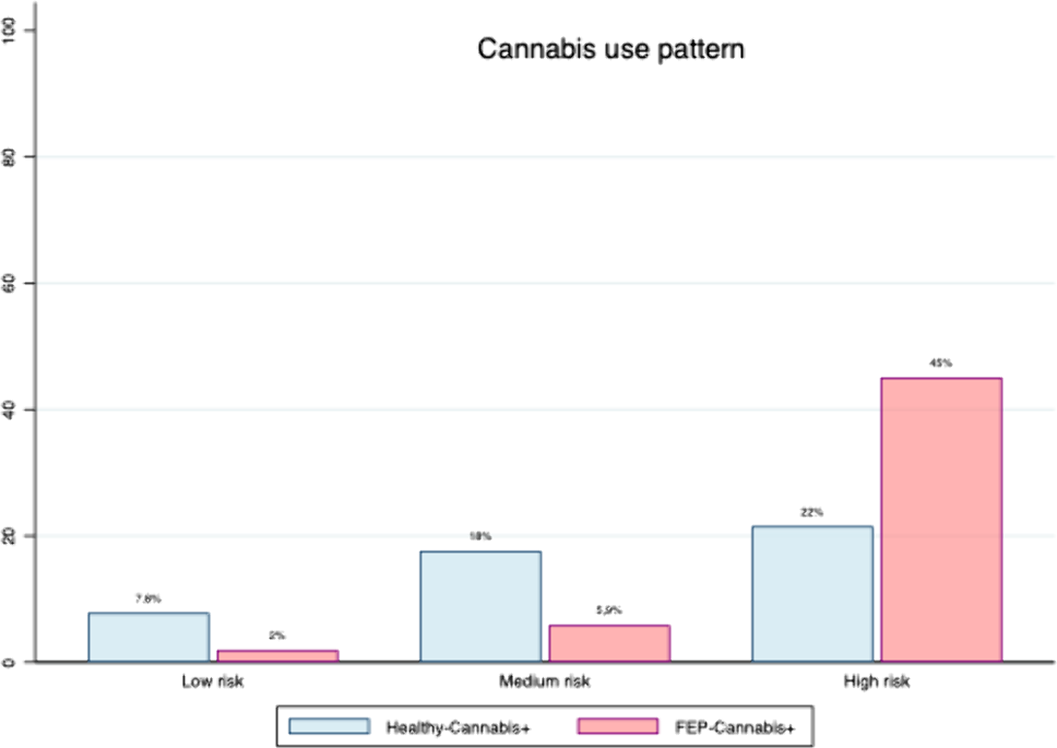
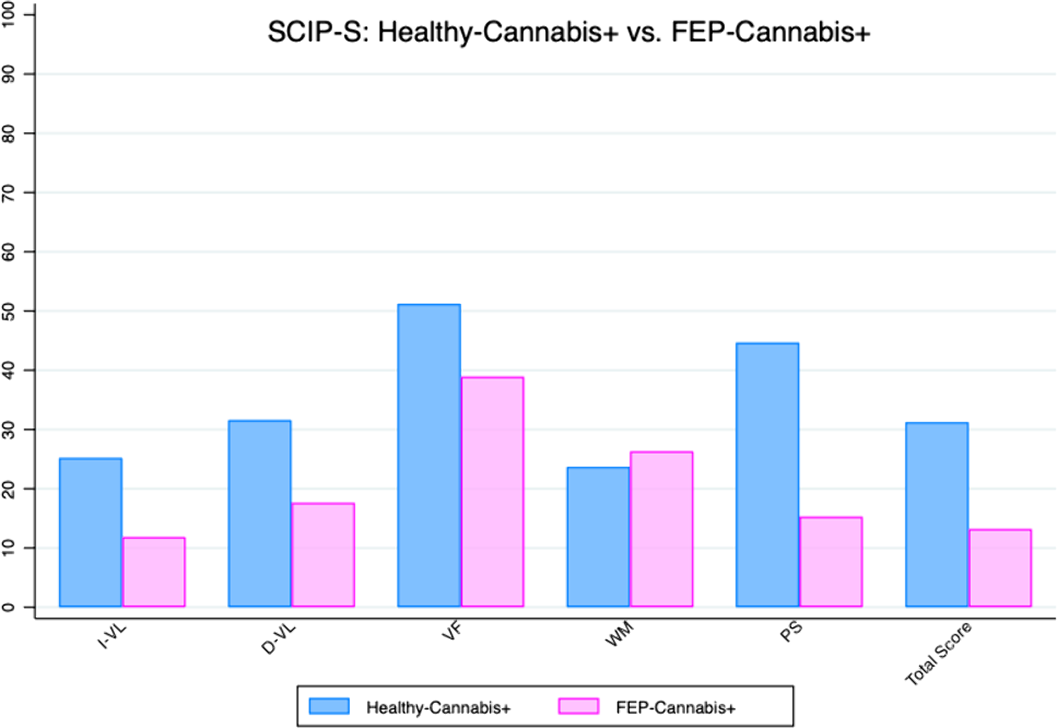
We present the preliminar results of a cross-sectional case-control study about the effect of cannabis on cognition, in patients suffering a FEP. We recruited a total of 41 FEP during the last two years. We investigated the theorical differences between those who were cannabis users (FEP-Cannabis+)(n=28) and not cannabis users (FEP-Cannabis-)(n=13). We included a control group with healthy subjects who were cannabis users (Healthy-Cannabis+)(n=24).Sociodemographic and clinical questionnaire was completed. The Screening Scale to evaluate Cognitive Impairment in Psychiatry(SCIP-S) and the Cannabis Abuse Screening Test (CAST) were used. The consumption pattern was also evaluated.
Results
In this study, cognitive impairment was found in FEP-Cannabis+,when compared with Healthy-Cannabis+.The most affected areas were immediate verbal learning (I-VL), delayed verbal learning (D-VL), processing speed (PS), and total score (TS). Significant differences were also observed in the cognitive profile of patients suffering FEP depending on their use of cannabis. FEP-Cannabis+) showed lower scores in PS, I-VL and TS.
Conclusions
Although several prognostic factors have been identified in FEP, to date there are no reliable markers for predicting the possible evolution of high-risk mental states to a FEP. More investigations are necessary in order to elucidate the role of cannabis in the cognitive impairment.
Antipsychotic drugs are the cornerstone of the pharmacological treatment of psychotic disorders; however, even with Second-generation antipsychotics (SGA), adverse effects continue to be extremely accentuated and the treatment effectiveness is compromised by low adherence of the patient.
Objectives
Taking into consideration the importance of adverse effects for psychotic therapeutics, this study aims to analyze the adverse effect of the Neuroleptic Malignant Syndrome (NMS) reported in EudraVigilance Database, associated with 3 widely used SGA, Risperidone, Quetiapine, and Clozapine.
Methods
The EudraVigilance Database was analyzed from 09/01/2017 to 31/10/2020 about NMS, associated with Risperidone, Quetiapine, and Clozapine. NMS is the second most reported adverse effect inside the Nervous System Disorders SOC (System Organ Class). There were just considered NMS as suspected adverse effect.
Results
It was observed a general tendency of reduction of NMS reports from 2017 to 2020 (most of them performed by healthcare professionals). Risperidone presented the highest level of reports during this period (more than 350), followed by Quetiapine and Clozapine. The NMS reports were predominantly referred to the male sex, from 18 to 64 years old. Risperidone presented the lowest number of fatal cases of NMS (1), in contrast with 3 reported with Quetiapine and Clozapine. A significant number of patients with Schizophrenia recovered from NMS.
Conclusions
It is important to do clinical monitoring of the NMS, because it is rare, although it has life-threatening consequences. Pharmacovigilance databases are important tools to evaluate the safety of drugs and it must be more widely and efficiently promoted for healthcare and patients use.
We present the case of a 56 year old woman with a diagnose of Complex Partial Seizures since her teenage years, with a history of multiple hospitalizations in the psychiatric ward of our hospital and a challenging clinical evolution.
Objectives
To review the different kinds of psychotic disorders that may arise in relation to epilepsia.
Methods
Literature review of scientific papers and classic textbooks on the issue, including references in both Spanish and English languages.
Results
From 2008 to 2011 our patient was hospitalized with episodes of different clinical features leading to different diagnoses (in 2008 the episode was compatible with a maniac phase and led to a diagnosis of possible Bipolar Disorder, in 2010 dissociative-like symptoms became more prominent and led to a diagnose of Dissociative Identity Disorder and in 2011 the symptoms pointed to an interictal depression), and a subsequent symptomatology that made clinicians consider a diagnose of unspecified schizophrenia. From 2015 to 2020 our patient suffered multiple decompensations resulting in up to six new hospitalizations, with psychotic symptoms in the shape of auditive hallucinations being consistent and affective symptoms varying widely. This evolution suggests a plausible diagnose of interictal chronic psychosis with bipolar-like affective episodes.
Conclusions
An extensive review of the available scientific literature shows, as so does this case, that along the course of an epileptic disease both schizophrenia-like psychosis and affective psychosis may arise, and that those might be divided along the categories of peri ictal and inter ictal disorders.
Patients with schizophrenia have a reduced life expectancy compared to the general population, and cardiovascular diseases contribute to this. Peripheral arterial disease (PAD) is associated with excess all-cause mortality and specifically with cardiovascular morbidity and mortality. The risk factors for PAD, such as diabetes, smoking, hypertension, dyslipidaemia and obesity, are more common among patients with schizophrenia which could contribute to a possibly higher prevalence of PAD among patients with schizophrenia.
Objectives
To investigate PAD utilizing toe brachial index (TBI) in a population of patients diagnosed with schizophrenia with the purpose of establishing prevalence rates amongst newly diagnosed as well as more chronic patients.
Methods
A cross-sectional study of patients with schizophrenia (ICD10-diagnosis F20 or F25) with a study population of 57 patients diagnosed with schizophrenia within the last 2 years, psychiatric healthy controls matched by age, sex and smoking status and 142 patients with a schizophrenia diagnosis more than 10 years ago. The primary outcome is TBI in patients with schizophrenia stratified to the two subpopulations. The TBI will be calculated from the arm and toe systolic pressures. The toe pressures were measured using photoplethysmography (SysToe®, Atys Medical).
Results
No results are available yet. The cohort will be described by age, sex, smoking status, body fat percentage and physical comorbidities. The TBI of the two subpopulations will be compared with psychiatrically healthy controls using paired t-tests if data is normally distributed. If transformation is unsuitable, Wilcoxon test will be carried out instead.
Conclusions
No results are available yet. Results will be presented at the EPA’s congress 2021.