2024 Most Downloaded Articles
Contents
Discrete Mathematics
Research Article
A FORMAL PROOF OF THE KEPLER CONJECTURE
- Part of:
-
- Journal:
- Forum of Mathematics, Pi / Volume 5 / 2017
- Published online by Cambridge University Press:
- 29 May 2017, e2
-
- Article
-
- You have access
- Open access
- Export citation
Analysis
Sharp smoothing properties of averages over curves
- Part of:
-
- Journal:
- Forum of Mathematics, Pi / Volume 11 / 2023
- Published online by Cambridge University Press:
- 10 February 2023, e4
-
- Article
-
- You have access
- Open access
- HTML
- Export citation
-
We prove sharp smoothing properties of the averaging operator defined by convolution with a measure on a smooth nondegenerate curve
 $\gamma $ in
 $\mathbb R^d$,
 $d\ge 3$. Despite the simple geometric structure of such curves, the sharp smoothing estimates have remained largely unknown except for those in low dimensions. Devising a novel inductive strategy, we obtain the optimal
 $L^p$ Sobolev regularity estimates, which settle the conjecture raised by Beltran–Guo–Hickman–Seeger [1]. Besides, we show the sharp local smoothing estimates on a range of p for every
 $d\ge 3$. As a result, we establish, for the first time, nontrivial
 $L^p$ boundedness of the maximal average over dilations of
 $\gamma $ for
 $d\ge 4$.


Differential Equations
Smooth imploding solutions for 3D compressible fluids
- Part of:
-
- Journal:
- Forum of Mathematics, Pi / Volume 13 / 2025
- Published online by Cambridge University Press:
- 12 February 2025, e6
-
- Article
-
- You have access
- Open access
- HTML
- Export citation
-
Building upon the pioneering work of Merle, Raphaël, Rodnianski and Szeftel [67, 68, 69], we construct exact, smooth self-similar imploding solutions to the 3D isentropic compressible Euler equations for ideal gases for all adiabatic exponents
 $\gamma>1$. For the particular case
 $\gamma =\frac 75$ (corresponding to a diatomic gas – for example, oxygen, hydrogen, nitrogen), akin to the result [68], we show the existence of a sequence of smooth, self-similar imploding solutions. In addition, we provide simplified proofs of linear stability [67] and nonlinear stability [69], which allow us to construct asymptotically self-similar imploding solutions to the compressible Navier-Stokes equations with density independent viscosity for the case
 $\gamma =\frac 75$. Moreover, unlike [69], the solutions constructed have density bounded away from zero and converge to a constant at infinity, representing the first example of singularity formation in such a setting.


Number Theory
On locally analytic vectors of the completed cohomology of modular curves
-
- Journal:
- Forum of Mathematics, Pi / Volume 10 / 2022
- Published online by Cambridge University Press:
- 07 March 2022, e7
-
- Article
-
- You have access
- Open access
- HTML
- Export citation
-
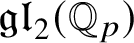
We study the locally analytic vectors in the completed cohomology of modular curves and determine the eigenvectors of a rational Borel subalgebra of
 $\mathfrak {gl}_2(\mathbb {Q}_p)$. As applications, we prove a classicality result for overconvergent eigenforms of weight 1 and give a new proof of the Fontaine–Mazur conjecture in the irregular case under some mild hypotheses. For an overconvergent eigenform of weight k, we show its corresponding Galois representation has Hodge–Tate–Sen weights
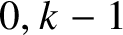 $0,k-1$ and prove a converse result.
Algebra
BRANCH GROUPS, ORBIT GROWTH, AND SUBGROUP GROWTH TYPES FOR PRO-
 $p$ GROUPS
- Part of:
-
- Journal:
- Forum of Mathematics, Pi / Volume 8 / 2020
- Published online by Cambridge University Press:
- 26 May 2020, e10
-
- Article
-
- You have access
- Open access
- Export citation
-
In their book Subgroup Growth, Lubotzky and Segal asked: What are the possible types of subgroup growth of the pro-
 $p$ group? In this paper, we construct certain extensions of the Grigorchuk group and the Gupta–Sidki groups, which have all possible types of subgroup growth between
 $n^{(\log n)^{2}}$ and
 $e^{n}$. Thus, we give an almost complete answer to Lubotzky and Segal’s question. In addition, we show that a class of pro-
 $p$ branch groups, including the Grigorchuk group and the Gupta–Sidki groups, all have subgroup growth type
 $n^{\log n}$.


Number Theory
Theta functions, fourth moments of eigenforms and the sup-norm problem II
- Part of:
-
- Journal:
- Forum of Mathematics, Pi / Volume 12 / 2024
- Published online by Cambridge University Press:
- 30 May 2024, e11
-
- Article
-
- You have access
- Open access
- HTML
- Export citation
-
Let f be an
 $L^2$-normalized holomorphic newform of weight k on
 $\Gamma _0(N) \backslash \mathbb {H}$ with N squarefree or, more generally, on any hyperbolic surface
 $\Gamma \backslash \mathbb {H}$ attached to an Eichler order of squarefree level in an indefinite quaternion algebra over
 $\mathbb {Q}$. Denote by V the hyperbolic volume of said surface. We prove the sup-norm estimate
 $$\begin{align*}\| \Im(\cdot)^{\frac{k}{2}} f \|_{\infty} \ll_{\varepsilon} (k V)^{\frac{1}{4}+\varepsilon} \end{align*}$$
with absolute implied constant. For a cuspidal Maaß newform
 $\varphi $ of eigenvalue
 $\lambda $ on such a surface, we prove that
 $$\begin{align*}\|\varphi \|_{\infty} \ll_{\lambda,\varepsilon} V^{\frac{1}{4}+\varepsilon}. \end{align*}$$
We establish analogous estimates in the setting of definite quaternion algebras.


Almost all orbits of the Collatz map attain almost bounded values
- Part of:
-
- Journal:
- Forum of Mathematics, Pi / Volume 10 / 2022
- Published online by Cambridge University Press:
- 20 May 2022, e12
-
- Article
-
- You have access
- Open access
- HTML
- Export citation
-
Define the Collatz map
 ${\operatorname {Col}} \colon \mathbb {N}+1 \to \mathbb {N}+1$ on the positive integers
 $\mathbb {N}+1 = \{1,2,3,\dots \}$ by setting
 ${\operatorname {Col}}(N)$ equal to
 $3N+1$ when N is odd and
 $N/2$ when N is even, and let
 ${\operatorname {Col}}_{\min }(N) := \inf _{n \in \mathbb {N}} {\operatorname {Col}}^n(N)$ denote the minimal element of the Collatz orbit
 $N, {\operatorname {Col}}(N), {\operatorname {Col}}^2(N), \dots $. The infamous Collatz conjecture asserts that
 ${\operatorname {Col}}_{\min }(N)=1$ for all
 $N \in \mathbb {N}+1$. Previously, it was shown by Korec that for any
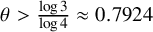 $\theta> \frac {\log 3}{\log 4} \approx 0.7924$, one has
 ${\operatorname {Col}}_{\min }(N) \leq N^\theta $ for almost all
 $N \in \mathbb {N}+1$ (in the sense of natural density). In this paper, we show that for any function
 $f \colon \mathbb {N}+1 \to \mathbb {R}$ with
 $\lim _{N \to \infty } f(N)=+\infty $, one has
 ${\operatorname {Col}}_{\min }(N) \leq f(N)$ for almost all
 $N \in \mathbb {N}+1$ (in the sense of logarithmic density). Our proof proceeds by establishing a stabilisation property for a certain first passage random variable associated with the Collatz iteration (or more precisely, the closely related Syracuse iteration), which in turn follows from estimation of the characteristic function of a certain skew random walk on a
 $3$-adic cyclic group
 $\mathbb {Z}/3^n\mathbb {Z}$ at high frequencies. This estimation is achieved by studying how a certain two-dimensional renewal process interacts with a union of triangles associated to a given frequency.


Differential Equations
On blow-up for the supercritical defocusing nonlinear wave equation
- Part of:
-
- Journal:
- Forum of Mathematics, Pi / Volume 13 / 2025
- Published online by Cambridge University Press:
- 31 March 2025, e15
-
- Article
-
- You have access
- Open access
- HTML
- Export citation
-
In this paper, we consider the defocusing nonlinear wave equation
 $-\partial _t^2u+\Delta u=|u|^{p-1}u$ in
 $\mathbb {R}\times \mathbb {R}^d$. Building on our companion work (Self-similar imploding solutions of the relativistic Euler equations, arXiv:2403.11471), we prove that for
 $d=4, p\geq 29$ and
 $d\geq 5, p\geq 17$, there exists a smooth complex-valued solution that blows up in finite time.


Number Theory
Squarefree values of polynomial discriminants II
- Part of:
-
- Journal:
- Forum of Mathematics, Pi / Volume 13 / 2025
- Published online by Cambridge University Press:
- 13 May 2025, e17
-
- Article
-
- You have access
- Open access
- HTML
- Export citation
-
We determine the density of integral binary forms of given degree that have squarefree discriminant, proving for the first time that the lower density is positive. Furthermore, we determine the density of integral binary forms that cut out maximal orders in number fields. The latter proves, in particular, an ‘arithmetic Bertini theorem’ conjectured by Poonen for
 ${\mathbb {P}}^1_{\mathbb {Z}}$.
Our methods also allow us to prove that there are
 $\gg X^{1/2+1/(n-1)}$ number fields of degree n having associated Galois group
 $S_n$ and absolute discriminant less than X, improving the best previously known lower bound of
 $\gg X^{1/2+1/n}$.
Finally, our methods correct an error in and thus resurrect earlier (retracted) results of Nakagawa on lower bounds for the number of totally unramified
 $A_n$-extensions of quadratic number fields of bounded discriminant.


Zagier–Hoffman’s Conjectures in Positive Characteristic
- Part of:
-
- Journal:
- Forum of Mathematics, Pi / Volume 12 / 2024
- Published online by Cambridge University Press:
- 22 October 2024, e18
-
- Article
-
- You have access
- Open access
- HTML
- Export citation