







Hostname: page-component-7b7567c8c-2rsb6 Total loading time: 0 Render date: 2026-11-12T18:36:25.874Z Has data issue: false hasContentIssue false

THE RELATION BETWEEN TWO DIMINISHED CHOICE PRINCIPLES

Part of:Set theory

Published online by Cambridge University Press:  15 February 2021

SALOME SCHUMACHER*
Affiliation:
DEPARTMENT OF MATHEMATICS, ETH ZÜRICH RÄMISTRASSE, 101, 8092 ZÜRICH, SWITZERLAND E-mail: salome.schumacher@math.ethz.ch
Rights & Permissions [Opens in a new window]

Abstract

Core share and HTML view are not available for this content. However, as you have access to this content, a full PDF is available via the 'Save PDF' action button.

For every $n\in \omega \setminus \{0,1\}$ we introduce the following weak choice principle:

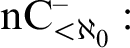
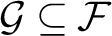
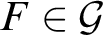
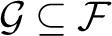
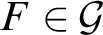
$\operatorname {nC}_{<\aleph _0}^-:$ For every infinite family $\mathcal {F}$ of finite sets of size at least n there is an infinite subfamily $\mathcal {G}\subseteq \mathcal {F}$ with a selection function $f:\mathcal {G}\to \left [\bigcup \mathcal {G}\right ]^n$ such that $f(F)\in [F]^n$ for all $F\in \mathcal {G}$.

Moreover, we consider the following choice principle:

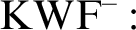
$\operatorname {KWF}^-:$ For every infinite family $\mathcal {F}$ of finite sets of size at least $2$ there is an infinite subfamily $\mathcal {G}\subseteq \mathcal {F}$ with a Kinna–Wagner selection function. That is, there is a function $g\colon \mathcal {G}\to \mathcal {P}\left (\bigcup \mathcal {G}\right )$ with $\emptyset \not =f(F)\subsetneq F$ for every $F\in \mathcal {G}$.

We will discuss the relations between these two choice principles and their relations to other well-known weak choice principles. Moreover, we will discuss what happens when we replace $\mathcal {F}$ by a linearly ordered or a well-ordered family.

Information

Type
Article
Copyright
© The Association for Symbolic Logic 2021