


Hostname: page-component-7b7567c8c-2rsb6 Total loading time: 0 Render date: 2026-11-12T09:53:11.555Z Has data issue: false hasContentIssue false

Defining trigonometric functions via complex sequences

Published online by Cambridge University Press:  14 March 2016

Jan Gustavsson
Affiliation:
Lund University, Department of Mathematical Sciences, Box 118, 221 00 Lund, Swedene-mail:jang@maths.lth.se; mickep@maths.lth.se
Mikael P. Sundqvist
Affiliation:
Lund University, Department of Mathematical Sciences, Box 118, 221 00 Lund, Swedene-mail:jang@maths.lth.se; mickep@maths.lth.se

Extract

Core share and HTML view are not available for this content. However, as you have access to this content, a full PDF is available via the 'Save PDF' action button.

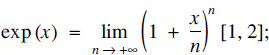
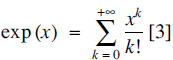
In the literature we find several different ways of introducing elementary functions. For the exponential function, we mention the following ways of characterising the exponential function:

(a)

(b) , also for complex values of x;

(c) x → exp (x) is the unique solution to the initial value problem [4]

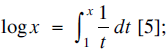
(d) x → exp (x) is the inverse of

(e)x → exp (x) is the unique continuous function satisfying the

functional equation f (x + y) = f (x) f (y) and f(0) = 1 [6]; the corresponding definition is done for the logarithm in [7];

(f) Define dr for rational r, and then use a continuity/density argument [8].

All of them have their advantages and disadvantages. We like (a) and (c), mostly because they have natural interpretations, (a) in the setting of compound interest and (c) being a simple model of many processes in physics and other sciences, but also because they are related to methods and ideas that are (usually) introduced rather early to the students.

Information

Type
Research Article
Copyright
Copyright © Mathematical Association 2016