Contents
Research Article
Meromorphic or Holomorphic Completion of a Reinhardt Domain
-
- Published online by Cambridge University Press:
- 22 January 2016, pp. 1-12
-
- Article
-
- You have access
- Export citation
Note on the Infinite Dimensional Laplacian Operator
-
- Published online by Cambridge University Press:
- 22 January 2016, pp. 13-19
-
- Article
-
- You have access
- Export citation
On a Class of Metrical Automorphisms on Gaussian Measure Space
-
- Published online by Cambridge University Press:
- 22 January 2016, pp. 21-25
-
- Article
-
- You have access
- Export citation
-
Let E be an infinite dimensional real nuclear space and H be its completion by a continuous Hilbertian norm ║ ║ of E. Then we have the relation

where E* is the conjugate space of E. Consider a function C(ξ) on E defined by the formula
(1)


A Characterization of the Simple Group U 3(5)
-
- Published online by Cambridge University Press:
- 22 January 2016, pp. 27-40
-
- Article
-
- You have access
- Export citation
Stochastic Integrals Based on Martingales Taking Values in Hilbert Space
-
- Published online by Cambridge University Press:
- 22 January 2016, pp. 41-52
-
- Article
-
- You have access
- Export citation
-
Let H be a separable Hilbert space with inner product (,) and norm ║ ║. We denote by K the set of all linear operators on H. Let
 be a probability space and suppose we are given a family of σ-fields
 t≥O such that
 for O ≤ s ≤ t and
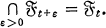 .
 be a probability space and suppose we are given a family of σ-fields
 t≥O such that
 for O ≤ s ≤ t and
 .
On a Homology Theory Associated to Foliations
-
- Published online by Cambridge University Press:
- 22 January 2016, pp. 53-61
-
- Article
-
- You have access
- Export citation
Some Remarks on Evaluations of the Primitive Logic
-
- Published online by Cambridge University Press:
- 22 January 2016, pp. 63-69
-
- Article
-
- You have access
- Export citation
Sur Le Schéma de la Séparation*
-
- Published online by Cambridge University Press:
- 22 January 2016, pp. 71-84
-
- Article
-
- You have access
- Export citation
On Principal Function Problem
-
- Published online by Cambridge University Press:
- 22 January 2016, pp. 85-90
-
- Article
-
- You have access
- Export citation
A Remark on the Moyal’s Construction of Markov Processes
-
- Published online by Cambridge University Press:
- 22 January 2016, pp. 91-101
-
- Article
-
- You have access
- Export citation
On a Necessary Condition for the Sample Path Continuity of Weakly Stationary Processes
-
- Published online by Cambridge University Press:
- 22 January 2016, pp. 103-111
-
- Article
-
- You have access
- Export citation
A Determinate Logic
-
- Published online by Cambridge University Press:
- 22 January 2016, pp. 113-138
-
- Article
-
- You have access
- Export citation
-
Let L be a fixed language and K be a set of structures related to L. A sentence
 in L is said to be K-valid if and only if for every structure
 in K,

 in L is said to be K-valid if and only if for every structure
 in K,

On a Π0 1 Set of Positive Measure
-
- Published online by Cambridge University Press:
- 22 January 2016, pp. 139-144
-
- Article
-
- You have access
- Export citation
-
Some basis results for arithmetic, hyperarithmetic (HA) or
 sets which have positive measure (or which are not meager, i.e., of the second Baire category) have been obtained by several authors. For example, every non-meager
 set must have a recursive element (Shoenfield-Hinman, Hinman [2]) but there exists a non-meager
 set (as well as of measure 1) that contains no recursive element (Shoenfield [7]), and every
 set (i.e., arithmetic set) of positive measure contains an arithmetic element (Sacks [5], and Tanaka [12]).
On a Propositional Calculus Whose Decision Problem is Recursively Unsolvable1)
-
- Published online by Cambridge University Press:
- 22 January 2016, pp. 145-152
-
- Article
-
- You have access
- Export citation
Prolongations of G-Structures to Tangent Bundles of Higher Order
-
- Published online by Cambridge University Press:
- 22 January 2016, pp. 153-179
-
- Article
-
- You have access
- Export citation
The Topological Support of Gauss Measure on Hilbert Space
-
- Published online by Cambridge University Press:
- 22 January 2016, pp. 181-183
-
- Article
-
- You have access
- Export citation
Introduction of a Basic Theory of Objects
-
- Published online by Cambridge University Press:
- 22 January 2016, pp. 185-225
-
- Article
-
- You have access
- Export citation
Front Matter
NMJ volume 38 Cover and Front matter
-
- Published online by Cambridge University Press:
- 22 January 2016, pp. f1-f4
-
- Article
-
- You have access
- Export citation
Back Matter
NMJ volume 38 Cover and Back matter
-
- Published online by Cambridge University Press:
- 22 January 2016, pp. b1-b2
-
- Article
-
- You have access
- Export citation