We partner with a secure submission system to handle manuscript submissions.
Please note:
You will need an account for the submission system, which is separate to your Cambridge Core account. For login and submission support, please visit the
submission and support pages.
Please review this journal's author instructions, particularly the
preparing your materials
page, before submitting your manuscript.
Click Proceed to submission system to continue to our partner's website.
To save this undefined to your undefined account, please select one or more formats and confirm that you agree to abide by our usage policies. If this is the first time you used this feature, you will be asked to authorise Cambridge Core to connect with your undefined account.
Find out more about saving content to .
To send this article to your Kindle, first ensure no-reply@cambridge.org is added to your Approved Personal Document E-mail List under your Personal Document Settings on the Manage Your Content and Devices page of your Amazon account. Then enter the ‘name’ part of your Kindle email address below. Find out more about sending to your Kindle.
Find out more about saving to your Kindle.
Note you can select to save to either the @free.kindle.com or @kindle.com variations. ‘@free.kindle.com’ emails are free but can only be saved to your device when it is connected to wi-fi. ‘@kindle.com’ emails can be delivered even when you are not connected to wi-fi, but note that service fees apply.
Evaluation of the Emergency Unit resilience during COVID-19 outbreak is important. In this study, we discuss steps to develop a valid and reliable national Iranian toolkit to assess the EU resilience.
Objectives:
To develop a toolkit to evaluate the EU resilience during COVID-19 pandemic.
Method/Description:
Comprehensive literature reviews, experts panel discussion, focus group discussion, semi-structured interviews, and two-round Delphi surveys were used to develop a questionnaire. Then the items reviewed for their readability, feasibility, clarity of wording, layout, and style. A web-based form was designed to evaluate their face and content validity by a separate panel of experts. The final draft was tested on 30 voluntary EU managers two times (14 days apart). The gathered data were analyzed by SPSS software.
Results/Outcomes:
Descriptive statistics used to examine the floor and ceiling effects. The short answer comments were analyzed using meaning condensation developed by Svend Brinkmann & Steinar Kvale. Spearman correlation coefficients was used to examine test-retest reliability for agreement with the level of significance set at P<.05.
Cronbach alpha was used to evaluate the internal consistency reliability and Cohen’s kappa scores was used to measure reliability.
Finally, a 47-item questionnaire was developed and sent to the MOH to be used for evaluating EUs resilience.
Conclusion:
A valid and reliable national toolkit is essential to evaluate EU resilience to deliver a high-quality emergency care and all the emergency managers should be familiar with the process of developing a valid and reliable toolkit.
During COVID-19 pandemic, the EMS of the city of Madrid decided to make available its human and material resources to the Government. Despite its vast experience in disaster care and management, this mission was challenging. EMT1 SAMUR-PC was deployed, fully trained and self-sufficient inside and outside the city.
Objectives:
To review EMT1 activities during coronavirus disease, checking its adaptation to unusual circumstances.
Method/Description:
Description of settings where our teams (physicians, nurses, emergency care assistants, and logisticians) were deployed.
Results/Outcomes:
As elderly people were highly affected, EMT1 offered assessment and advise at nursing homes in Madrid and other cities. Personalized visits were planned and performed addressing personnel and material needs and processed to authorities in daily meetings.
Logisticians advised about how to control clean and dirty zones, isolating positive cases. Meanwhile, doctors and nurses wearing PPE provided health care and referred severe patients. Quality of care in elderly was measured, improvement areas were notified directly to heads.
We were deployed to some hospitals in the country, reinforcing medical and nursing staff at wards, observation areas, and intensive care units. It was also necessary to transfer critical patients between hospitals.
Decontamination lines were set up by CBN experts. Rapid response teams were ready to provide care to colleagues.
Conclusion:
During COVID-19 pandemic, Spanish EMT1 was able to adapt its normal way of working at different settings, supporting and re-establishing essential health services. It required flexibility, taking advantage of existing structures, and focusing on vulnerable populations. Its role was important for saving lives, preserving health, and alleviating suffering.
A roundtable was hosted by the World Association for Disaster and Emergency Medicine (WADEM) World Congress to explore prehospital spinal immobilization (SI). The participants queried prehospital SI in resource-scarce environments (RSE), whether the disaster or humanitarian setting was applicable to the then recently released ILCOR statement, and identified challenges in maintaining appropriate application of SI in the prehospital RSE. A specific call was requested as an output of the roundtable for WADEM to provide guidance in this area of practice.
Objectives:
This systematic review informed a subsequent Delphi study to develop prehospital guidelines for SI in disaster and humanitarian settings.
Method/Description:
A systematic review was conducted according to the Preferred Reporting Items for Systematic Reviews and Meta-Analyses (PRISMA) checklist. The review included English language papers published from January 2000 through July 2019.
Results/Outcomes:
The search strategy yielded a total of 1,029 references. After exclusion of duplicates, 919 titles were identified for further screening. After applying exclusion criteria, a total of 14 references underwent evaluation. The reviewed articles comprised six types of studies and represented research from institutions in ten different countries.
Conclusion:
There is a lack of high-level evidence on the utility or effect of spinal motion restriction or immobilization on patient outcomes in disasters. There is a need for robust research to determine the clinical benefit of spinal restriction or immobilization in disasters and across disaster types. This systematic review informed a subsequent Delphi study to develop recommendations and guidance for practice related to prehospital SI in disaster and humanitarian settings.
Standardization of data collection and reporting within EMTs is challenging. In past deployments, the Red Cross Red Crescent Type 1 and Type 2 facilities have collected data by hand using paper-based form and Excel spreadsheets. This process can be laborious, time-consuming, and often inaccurate.
Objectives:
To combat this issue with reporting, RCHIS (Red Cross Red Crescent Health Information System) has been designed to ensure that reporting is accurate and also very easy to complete, increasing compliance with the EMT-MDS reporting.
Method/Description:
RCHIS is both an electronic medical record (EMR) and health information system (HIS). RCHIS has been designed to produce pre-made reports including the MDS in seconds, extracting data from the patient records. Through significant testing and pilot deployments in a domestic Type 1 fixed clinic, the rapid production of reports such as the MDS has increased compliance and accuracy with reporting.
Results/Outcomes:
Overall, the utilization of an electronic medical system for increasing compliance and accuracy with the MDS has been hugely successful. An in-depth analysis of the export data was done to confirm the 100% accuracy within the MDS report.
Conclusion:
The utilization of RCHIS within a domestic ERU (equivalent to an EMT Type 1 or Type 2) has been hugely successful. The next steps will involve the deployment of RCHIS within an international deployment.
RCHIS is an Electronic Medical Record (EMR) and Health Information System (HIS) that has been purpose built for use by Red Cross Red Crescent (RCRC) Emergency Response Units (ERUs), which are the equivalent of Type 1 (fixed and mobile) and Type 2 facilities in the Emergency Medical Teams (EMT) classification.
Objectives:
To share the main lessons learned from the pilot to inform development and implementation of similar systems in other EMTs.
Method/Description:
A three-day, in-person super user training was held with 13 participants: nine first aid volunteers, two nurses, and two medical doctors; seven delegates had experience using an EMR. These super users served as trainers for staff at the pilot.
The pilot occurred with the Portuguese Red Cross (PRC) for the Peregrinação de Fátima, where 200,000 people were in attendance. The PRC was part of a wider coordination cell with the civil defense authority, who required live reporting from the three clinics PRC had set up.
Results/Outcomes:
77 user accounts and 243 patient files were created during the four-day pilot.
The delegates shared feedback directly and through a survey. 88% stated that RCHIS was very easy to use with the majority of delegates requiring less than 30 minutes of training. 95% of delegates stated that they had sufficient training to use RCHIS to its full extent.
The civil defense authority was able to utilize the real-time reporting to assist in their operational response.
Conclusion:
The first RCHIS pilot was very successful from both a technical and organizational perspective.
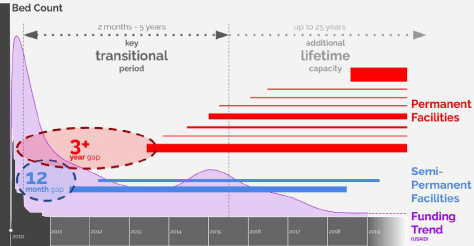
Field hospitals present an attractive solution for Emergency Medical Teams due to their portability and ease of assembly, yet are generally designed to be temporary, often leading to a gap until permanent facilities are restored after a sudden-onset disaster.
Objectives:
The objective of this paper is to understand the duration of field hospitals deployed to the 2010 Haiti Earthquake, identify the time taken to re-open permanent facilities, and propose approaches to better address this gap.
Method/Description:
Following a review of field hospital typologies and standards, a comparative study was conducted of five key field hospitals deployed to Haiti. Quantitative data from in-house reports, limited available studies, and mapping exercises were complemented with qualitative findings through interviews with key personnel. Additional data were collected for another 21 field hospitals, confirming the rough duration of 26 of the total 44 field hospitals deployed for Haiti. This was compared against information available on the re-opening of major permanent health care facilities.
Results/Outcomes:
The results indicated most field hospitals were decommissioned after two-to-six months. Some semi-permanent facilities opened in their wake, but not until 18-24 months. Permanent facilities started re-opening after approximately four years, however the main 500 bed hospital did not fully re-open until almost 10 years after the disaster.
Conclusion:
Provision of more durable, semi-permanent structures during early relief stages could better capture the initial funding impulse as well as reduce the gap of bed numbers as field hospitals reach the limit of their viable lifespan, lasting until more permanent facilities are re-opened often many years later.
Among all health care workers, EMTs have played a notable role during COVID-19; working as a frontline, they faced many challenges, including working overload and an extremely cautious environment that requires a rapid and precise response, which led to experiencing higher severity of mental health symptoms.
Objectives:
To explore the association between stress and burnout among EMTs while working during the COVID-19 pandemic.
Method/Description:
A cross-sectional quantitative study with a descriptive design. It was conducted from March-April 2021 on 280 Spanish EMTs, using an online survey of 42 items about workload and working conditions during COVID-19 and other variables specific to COVID-19. The Perceived Stress Scale (PSS), Maslach Burnout Inventory (MBI), and Pearson’s correlation coefficient were used to determine the relationships between the variables.
Results/Outcomes:
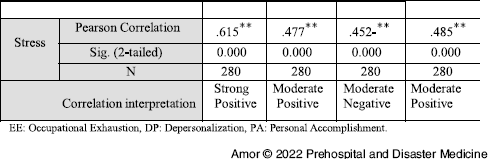
The study revealed a moderate positive correlation between the perceived level of stress and burnout among the EMTs. Specifically, findings showed a strong positive correlation between stress and EE (0.62) and a moderate positive correlation with DP (0.48). However, it found a moderate negative correlation between the level of stress and the third subdimension of burnout, PA (0.45), where the increase in the stress level correlated with a decrease in PA of the EMTs.
Conclusion:
Burnout might be related to the persistent stress of the EMTs working during the COVID-19 pandemic, considering their work conditions and the socio-demographic variables. The mental health of the first responders is crucial, as it influences their achievement and works satisfaction, and it might affect the quality of the service they provide.
Tables and Figures (optional)
Table 1.
Pearson Correlation: Correlation between the Stress and Burnout among the Emergency Medical Technicians (n = 280)
Disaster responders operate in situations that are cognitively, emotionally, and morally distressing. The prevalence of mental health sequelae amongst disaster responders is well-documented. The World Health Organization (WHO) has published minimum standards for Emergency Medical Teams (EMTs), which requires them to assess the mental health and psychosocial support needs of their patients and staff, provide first aid, and ensure referral pathways for follow-up care are available. Specific to EMT staff and volunteers, the standards require that support services are always accessible. However, there is no requirement for EMTs to have their own mental health specialists, nor is having a mental health specialist assigned to each team and mission necessarily practical.
Objectives:
This study will assess the existing mental health resources of WHO EMTs and their use of telemedicine in mental health care.
Method/Description:
A survey will be distributed to the leadership of all WHO EMTs that are currently credentialed to capture descriptive statistics.
Results/Outcomes:
Data expected to be collected and analyzed by October 1, 2022.
Conclusion:
The absence of a mental health specialist significantly limits the availability of support services for EMT personnel. Given that the use of telemedicine in both disaster response and mental health services has been well-documented, telemedicine could be a low-resource method to link WHO EMT staff and volunteers with mental health specialists throughout the deployment cycle.
Civil-military collaboration in response to an epidemic or health crisis could strengthen countries’ capacities to provide adequate medical care and limit casualties. Many countries have received the support of military medical services during an emergency,1 guided by their multi-disciplinary human resources, with a strong background in rapid deployment, logistics and trauma management, and the civilian teams with a good capacity in epidemic management.1,2
Objectives:
This study analyzes the determinants of a good civil-military partnership for rapid management of health emergencies on the African continent.
Method/Description:
We conducted a systematic review of literature from published (PUBMED, Hinari, and Google Scholar) and grey databases guided by the PRISMA guideline.
Results/Outcomes:
A good collaboration requires a formal agreement with a defined institutional anchor structure between the two institutions.1,3 The coordination should remain flexible with the co-leadership of each institution.1,3,4 The roles of all participating teams should be defined at the onset,1-5 and plans instituted based on the type of emergency to enhance cooperation. Both civilian and military teams need to know and understand the approved management protocols. Military health services are better experienced in trauma management, while civilians are more equipped to manage epidemics.1,4 Besides, there is a need for periodic evaluation of patient outcomes, resource management, challenges, and lessons learned after the response.
Conclusion:
Civil-military teams jointly responding to emergencies can be challenging but should be built around four defined pillars: collaboration, coordination, capacity building, and evaluation to capitalize on the teams’ strengths.
The Tonga Emergency Medical Assistance Team (TEMAT) responded to the Hunga Tonga-Hunga Ha’apai (HTHH) volcano and tsunami in early 2022. The HTHH volcano erupted violently on January 15, 2022 triggering a tsunami that struck many of Tonga’s 169 islands.1 84% of the country’s population was affected.2 Tonga’s undersea internet cable was cut, stopping most communication. At the time of the eruption/tsunami, Tonga was COVID-19-free with its borders effectively closed, forcing reliance on national emergency resources, including TEMAT.
Objectives:
Describe TEMAT’s response to the 2022 HTHH volcano eruption and tsunami.
Method/Description:
TEMAT deployed four rotations of clinical and public health teams in response to the eruption/tsunami. Team members included clinicians from the Ministry of Health, with logistics support from His Majesty’s Armed Forces. TEMAT carried out emergency assessments, facilitated medical evacuations, aided in the evacuation of an entire island’s population, and provided essential health services.
Results/Outcomes:
From January 17 through March 4, 2022, TEMAT cared for 381 patients including patients with non-communicable diseases (>50), psychosocial complaints (39), communicable diseases (27), and traumatic injuries (13). The team supported five referrals to higher level care, conducted patients home visits, aided in health center repairs, and responded to a boat sinking during their deployment.
Conclusion:
TEMAT’s deployment demonstrates that deployment-ready and self-sufficient national EMTs are essential for response to sudden-onset disasters in vulnerable countries. A trained and well-prepared national EMT can respond independently, quickly, and effectively to emergencies, despite limited resources and high-impact events.
Japan is a country with many disasters. Japan’s disaster medical system has improved significantly over the past 30 years by gaining experience in various disasters. Japan is implementing one of the unique disaster medical teams raised from experience and needs.
Objectives:
Introducing the Japan Disaster Medical Assistance Team (DMAT) system and discussing how the domestic disaster medical team should be.
Method/Description:
Referring to the actual response to domestic disasters and the development of disaster medical teams in Japan.
Results/Outcomes:
The National Emergency Medical Teams (National-EMT), Japan DMAT, was established in 2005. Currently, DMAT is 1,754 teams and over 15,862 members were registered. The team usually consists of five to six personnel, including two doctors, two nurses, and two logisticians. Each team carries standardized equipment. Japan DMAT will not set up a field hospital in the disaster area. Japan DMAT will bring a team to the Disaster Base Hospitals (DBHs) and start supporting the affected hospital operation first. Then, if there are other affected patients within DBH’s medical jurisdiction, then the team will mobile and support each hospital and clinic for further medical assistance.
Conclusion:
Having National-EMT in your own country is necessary for disaster-prone countries. Still, it is also required to consider what type of EMT needs to be established, referring already existing emergency medical system of your country.
In the aftermath of disasters, Emergency Medical Teams (EMTs) are dispatched to help local rescue efforts. Although EMTs are recognized to be a critical component of the global health workforce, concerns have emerged over their functioning and effectiveness.1 For example, lack of cooperation and coordination between different EMTs has been a longstanding issue, resulting in fragmented disaster management.2 To enhance the provision of EMT’s field teamwork, the Training for Emergency Medical Teams and European Medical Corps (TEAMS) project was established,3 and later further updated with novel scenarios and exercises (ie, adapting EMT operations to a sudden disaster; becoming a modular team; reflecting on ethical dilemmas) in the complementary “TEAMS 3.0” project where a more comprehensive training package was developed.
Objectives:
The aim of this study was to assess the effectiveness and quality of the TEAMS 3.0 training package in four training programs in Portugal, Germany, Norway, and Turkey.
Method/Description:
Participants completed a set of questionnaires designed to assess self-efficacy, teamwork, and quality of training.
Results/Outcomes:
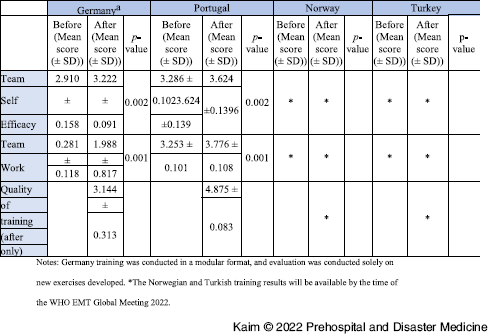
The results from the Portugal and German training suggest an improvement for both teams’ self-efficacy and teamwork. The quality of training is regarded as high and deemed as an appropriate tool package for addressing the objectives of the project and the perceived needs of EMT disaster deployment.
Conclusion:
Thus far, the TEAMS 3.0 project has demonstrated to be effective in promoting EMT teamwork capacities. The Norwegian and Turkish training results are expected to be available by the time of the WHO EMT Global Meeting 2022.
Tables and Figures (optional)
Table 1.
Comparison of Means Before and After the TEAMS 3.0 Training, per Country, for the Team Self-Efficacy Scale, Teamwork Scale, and Quality of Training Scale
The WHO has recommended the inclusion of rehabilitation capabilities in EMTs responding to disasters and health emergencies since 2013. Likewise, the importance of rehabilitation input across the continuum of care for patients experiencing COVID-19 illness has been highlighted since the onset of the global COVID-19 pandemic. Despite recognition of the role and value of rehabilitation, both in EMTs and the management of COVID-19, evidence that EMTs activated in response to COVID-19 have deployed rehabilitation professionals remains limited.
Objectives:
This paper will describe the experiences of the Australian Medical Assistance Team (AUSMAT) in deploying rehabilitation professionals as an integrated capability of multi-disciplinary EMTs responding to COVID-19 health emergencies.
Method/Description:
In response to COVID-19 emergencies in Papua New Guinea, Fiji, Timor-Leste, and the Solomon Islands, AUSMAT deployed rehabilitation professionals alongside multi-disciplinary EMTs on four occasions in 2021-2022. The rehabilitation professionals engaged in direct clinical care and capacity-building activities.
Results/Outcomes:
The work of the deployed AUSMAT rehabilitation professionals facilitated important capacity building and support for local rehabilitation staff and services, enhanced the time critical multi-disciplinary training of local nursing and medical staff, and improved the quality of clinical care of COVID-19 patients.
Conclusion:
AUSMAT’s experience has demonstrated that the deployment of rehabilitation professionals as part of a multi-disciplinary team adds significant value to the work of EMTs responding to COVID-19 health emergencies. Nursing and medical staff cannot readily replicate the knowledge, skills, and perspectives of rehabilitation professionals. Appropriately skilled rehabilitation professionals should be deployed to support national rehabilitation staff when EMTs respond to health emergencies.
In November 2021, a tanker exploded in Freetown, injuring and killing people. The WHO facilitated a seven-week first deployment of the Senegalese military to support the Ministry of Health (MOH) in providing care to the wounded in three referral hospitals.
Objectives:
Review the deployed team’s processes and outputs of medical care provided to burns patients.
Method/Description:
This is a cross-sectional After-Action Review (AAR) debrief of the deployment, including the WHO and MOH staff (n =14) in a virtual workshop. Six thematic areas: mobilization, deployment, coordination, case management activities, national capacity, and community acceptance were analyzed.
Results/Outcomes:
The WHO facilitated the team’s deployment and mobilized medical supplies and equipment whilst the MOH provided accommodation and logistics through collaboration. The team dispensed their functions with professionalism, adapted to the environment and available resources, and augmented the care provided by the available health workers. They offered additional care: reconstructive surgery, pain management, palliative and wound care, rehabilitation, physiotherapy, and psychosocial counselling, which were initially inadequate. 87 out of 155 patients were discharged home at the end, the national clinicians acquired additional skills, and the community appreciated the team. Despite being perceived as a weakness, the language barrier did not hinder the patient-doctor/nurse relationship or the provision of clinical care.
Conclusion:
This sub-regional response had significant benefits, including speed, political acceptability, and health context experience to support rapid and safe deployment. Mechanisms to facilitate rapid and quality-assured deployment of EMTs at regional and sub-regional levels in collaboration with WHO should be strengthened in region to support future responses.
Palau is a small island/large ocean nation in the Pacific with a population of approximately 18,000 and a high level of vulnerability to natural or climate-related disasters. In June 2022, Palau became the smallest nation in the world by population to establish a national Emergency Medical Team (EMT). The team is named “Klemat,” after the rope that holds the sails of Palau’s traditional canoes.
Objectives:
To establish a national EMT capable of self-sufficient, high-quality clinical response to disasters and outbreaks that may occur locally or in neighboring jurisdictions.
Method/Description:
The development of Klemat required a multi-step process with support from technical and funding partners. Online orientation webinars and meetings were held in 2019 and 2020, and a national Technical Working Group (TWG) was formed in 2022. A national EMT coordinator was jointly hired by the WHO and the Ministry of Health and Human Services of Palau in 2022, and EMT Standard Operating Procedures were drafted.
Results/Outcomes:
Klemat is the nation’s deployable clinical response capacity, capable of fully self-sufficient tented out-patient and emergency care in the most austere disaster or outbreak circumstances. There are now 18 fully trained clinical and support team members. Klemat is working with relevant stakeholders to be codified in the national disaster risk management framework of Palau.
Conclusion:
Palau’s development of a national EMT demonstrates that even the smallest of countries can establish self-sufficient EMTs capable of national or regional response.
The Induction Team Member (ITM) course is compulsory training for teams setting up an EMT. It encapsulates elements around safety and security, protocols and procedures, and familiarization with equipment and should happen in countries that have undergone the awareness session.1 Tailoring the ITM course to fit different countries settings and professional backgrounds is imperative, particularly in Africa, because countries have heterogeneous characteristics.
Objectives:
To describe the changes to the ITM Course curriculum adapted to the different professional backgrounds and technical scopes of potential team members (TM) and African countries.
Method/Description:
This is an After-Action Review (AAR) of in-depth feedback (n = 10) received from participants in the five trainings that have been conducted at the WHO African Regional EMT Training Center (TC) since 2021 to date. All analyses were done thematically.
Results/Outcomes:
The training experiences in the region have shown the need for three imperative modifications to the ITM course based on the type of EMTs and the background of the participants. These include ITM courses focusing on health workers (Doctors and Nurses); team leads, security, and logistics officials; and support staff that can work during deployment and pre-deployment tasks. An interactive ten steps to building an operational national EMTs initiative developed to fit the context has been shown as significant.
Conclusion:
Conceptualizing ITM course training for EMTs based on teams’ backgrounds, cultural circumstances, and political will is imperative for enhancing the capacity of regional countries’ EMTs. A pragmatic modification to the training to fit the context that captures the countries’ needs is key.
As disasters disrupt health systems and create additional health needs, Mobile Health Units (MHU) are deployed to help cover primary health care (PHC) needs. However, MHUs have been critiqued for being logistically burdensome and poorly adapted to dominating health needs. Guidelines exist, including WHO Classification for Emergency Medical Teams (EMT) Type 1 mobile, but the usefulness of MHUs in disasters has been poorly studied.
Objectives:
To explore the use of MHUs for PHC in disasters and identify key characteristics as described in the literature.
Method/Description:
A scoping review was conducted following framework by Arksey and O’Malley using thematic content analysis. Twenty-six bibliographic databases and websites were screened for white and grey literature on the use of MHUs in disasters published from 2000-2021.
Results/Outcomes:
The search resulted in 24 reviews and operational reports, highlighting nine themes. While MHUs were reported to improve health service delivery, 16 documents highlighted challenges related to logistics, organization, and coordination. Seven publications described cooperation with local authorities and stakeholders to help improve relevancy of care by adapting service provision to health needs. Several studies highlighted the need for a functioning referral system and inclusion of local and culturally sensitive staff.
Conclusion:
Findings of this study highlight the added value and areas of improvement of MHUs for PHC in disasters. Recommendations of best practices were proposed based on the literature and may guide future deployments. However, there is a paucity of publications, and further data on EMT Type 1 mobile are needed to evaluate MHUs in disasters and improve guidelines.
As natural disasters continue to cause human suffering and contribute to health inequalities, Mobile Health Units (MHU) provide medical aid to people deprived of health care. However, the service modality has received criticism related to logistical difficulties, irregular service provision, and adaptability. Although MHUs may be of value, there is a significant knowledge gap regarding their usefulness on addressing health needs in natural disasters.
Objectives:
To elucidate the use of MHUs in natural disasters in adherence to WHO Classification for Emergency Medical Teams.
Method/Description:
A scoping review was conducted following the framework by Arksey and O’Malley. Twenty-six bibliographic databases and websites were screened for white and grey literature published from 2000-2021 reporting on the use of MHUs in natural disasters.
Results/Outcomes:
Thirteen publications were included in the final analysis, highlighting seven themes: key characteristics, services, staff, benchmark indicator, operational availability, self-sufficiency, and pre-deployment preparedness. All documents described the mobile approach to increase access to health services in the absence of regular health care. MHUs were mostly reported to provide out-patient care with medical needs primarily related to non-communicable diseases. Basic trauma care was less reported on. The main challenges concerned transportation, coordination, and communication.
Conclusion:
Data on the use of MHUs in natural disasters are scarce with inconsistent reporting of key aspects. The literature adhered to previous research and WHO guidelines to some extent. Further research is deemed necessary to evaluate the interventions and outcomes of MHUs following natural disasters.
Pacific Island Countries and Areas (PICs) represent some of the most logistically challenging locations, covering vast ocean territory and remote islands. Light, mobile clinical response capability is critical in the disaster-prone Pacific. Beginning in January 2021, WHO researched, tailored, and procured EMT cache “kits” specifically for Pacific Island contexts, based on the core standards of the global EMT initiative.
Objectives:
To research, tailor, and procure cache “kits” to ensure self-sufficiency and high-quality out-patient mobile medical care for national EMTs in PICs.
Method/Description:
WHO facilitated the development of national cache kits for 10 PICs EMTs. A need for specialized equipment and supplies or “cache” for team self-reliance is critical. Through a consultative process, including Pacific EMT leadership and team members, EMT mentors, and regional partners, WHO curated and procured cache kits for 10 PICs EMTs.
Results/Outcomes:
The Pacific EMT cache kit is designed for four-to-six-person teams with the capacity to deploy for a minimum of three days, with full self-sufficiency. Because of the complex and remote access to many Pacific Islands, EMT cache must be practical for transport on small aircrafts and maritime vessels. A consultative process resulted in a curated cache list for Pacific national EMTs of over 125 items, estimated to weigh approximately 440 kilograms per kit. By the end of 2022, a total 31 kits will be delivered to EMTs in ten countries.
Conclusion:
The design, development, and procurement of Pacific EMT cache for national response operations will allow for increased speed and agility for response to disasters and public health emergencies.
Many Pacific governments have committed to establishing deployable, self-sufficient national EMTs following recent tropical cyclones, measles outbreaks, and the COVID-19 pandemic. However, for much of the COVD-19 pandemic, PICs have closed international borders limiting in-person team member training.
Objectives:
To develop a remote, interactive EMT training series to engage current and prospective EMT team members in the PICs during the COVID-19 pandemic.
Method/Description:
From July through September 2021, WHO hosted a weekly webinar series to introduce the concepts of the EMT Initiative to current and prospective EMT team members in the PICs. The sessions utilized Pacific deployment experience using faculty from EMTs in Australia, Fiji, New Zealand, Papua New Guinea, Solomon Islands, Tonga, and Vanuatu.
Results/Outcomes:
Attendees from over 23 countries from across the Pacific and other areas of the world participated in the 11 sessions, with a total of over 300 individual participants. The average number of participants per sessions was 85. Feedback was sought after every session. The most significant adaptation of the sessions from the feedback was incorporating the Pacific tradition of talanoa, or storytelling, into the sessions.
Conclusion:
Adapting the session plans to incorporate the talanoa style of communication in the Pacific created an environment of learning from colleagues throughout the Pacific and increased participant engagement in the virtual setting. The webinar series provided knowledge of EMT basics and increased engagement and excitement in the establishment and continued growth of EMTs in the Pacific.