We partner with a secure submission system to handle manuscript submissions.
Please note:
You will need an account for the submission system, which is separate to your Cambridge Core account. For login and submission support, please visit the
submission and support pages.
Please review this journal's author instructions, particularly the
preparing your materials
page, before submitting your manuscript.
Click Proceed to submission system to continue to our partner's website.
To save this undefined to your undefined account, please select one or more formats and confirm that you agree to abide by our usage policies. If this is the first time you used this feature, you will be asked to authorise Cambridge Core to connect with your undefined account.
Find out more about saving content to .
To send this article to your Kindle, first ensure no-reply@cambridge.org is added to your Approved Personal Document E-mail List under your Personal Document Settings on the Manage Your Content and Devices page of your Amazon account. Then enter the ‘name’ part of your Kindle email address below. Find out more about sending to your Kindle.
Find out more about saving to your Kindle.
Note you can select to save to either the @free.kindle.com or @kindle.com variations. ‘@free.kindle.com’ emails are free but can only be saved to your device when it is connected to wi-fi. ‘@kindle.com’ emails can be delivered even when you are not connected to wi-fi, but note that service fees apply.
The study sought to explore nutrition graduates’ employability and role of employability capitals in supporting nutrition science graduate outcomes.
Design:
In-depth semi-structured, audio-recorded interviews were conducted with nutrition graduates who had completed a nutrition science degree between 2015 and 2021. Interpretivism guided this study, which endeavoured to co-construct meaning with participants. Transcribed interviews were thematically analysed, whereby data were coded, themes identified and discussed by all authors. The data were further mapped against the graduate capital model (GCM) by deductively coding against the five graduate capitals (human, identity, social, psychological and cultural).
Setting:
Ireland and Australia.
Participants:
Forty-two nutrition graduates from across nine universities in Ireland and twenty-two from a single university programme in Australia.
Results:
All elements of the GCM were identified with human, social and identity capital most dominant and identified as significantly influential on employability. Presence or absence of these capitals could be clearly identified within each graduates’ experience. Formation of professional identity and connection to the profession was strongest amongst Irish graduates. However, more than half of the Australian cohort perceived barriers to professional identity formation, including lack of regulation, imposter syndrome, presence of non-qualified individuals and comparison to dietetics. Both psychological and cultural capitals were rarely spoken about.
Conclusion:
The development of human, social and identity capital is observed among nutrition science graduates. Further investigation is required to enhance the process of identity development and ascertain potential remedies for obstacles. The absence of psychological and cultural capital, therefore, poses a significant issue for the resilience and comprehension of prospective graduates.
Postprandial hyperinsulinaemia plays a key role in the development of non-alcoholic fatty liver disease (NAFLD). Diet is a potential factor affecting serum insulin levels. This study aimed to examine the relations of dietary insulin index (DII) and dietary insulin load (DIL) to the risk of NAFLD.
Design:
This study was a cross-sectional study. DII and DIL were calculated using the dietary data obtained from the FFQ. Fatty liver index ≥ 60 and the confirmation of a gastroenterologist were required to diagnose NAFLD.
Setting:
Community-based study.
Participants:
A total of 3158 people (46·7 % male), aged 40·57 ± 8·25 years, participated in this study in Tehran, Iran from April 2016 to December 2019.
Results:
The prevalence of NAFLD was 29·9 % (21·59 % in males and 33·74 % in females). In the fully adjusted model controlled for sex, age, energy intake, BMI, smoking, physical activity and education, DII was significantly associated with the increased risk of NAFLD in males (OR: 2·74, 95 % CI = 1·75, 4·31; P-trend = ≤0·001) and females (OR: 2·26, 95 % CI = 1·39, 3·69; P-trend = 0·005). A significant relationship was also detected between DIL and NAFLD in females (OR: 2·90, 95 % CI = 1·70, 4·93; P-trend ≤0·001) but not in males (OR: 1·33, 95 % CI = 0·84, 2·10; P-trend = 0·13).
Conclusions:
Adherence to a diet with a high DII and DIL may be related to the increased risk of NAFLD. These results may be useful for healthcare providers to design appropriate preventive measures for people at risk of NAFLD.
To evaluate the association between ultra-processed food consumption and adherence to the EAT-Lancet diet in a representative sample of the Brazilian population.
Design:
The study used data from the Brazilian National Dietary Survey 2017–2018 and employed linear regression models to evaluate the association between ultra-processed food consumption and adherence to the EAT-Lancet diet, as measured by the Nova food system and Planetary Health Diet Index (PHDI), respectively.
Setting:
Nationally representative sample of the Brazilian population.
Participants:
The study included 46 164 Brazilians ≥ 10 years old.
Results:
The average PHDI total score was 45·9 points (95 % CI 45·6, 46·1). The ultra-processed food consumption was, with dose-response, inversely associated with the adherence to the EAT-Lancet diet. The PHDI total score was 5·38 points lower (95 % CI –6·01, –4·75) in individuals in the highest quintile of consumption of ultra-processed foods, as compared to those in the first quintile. The PHDI score was also inversely associated with the share of processed culinary ingredients and processed foods and positively associated with the share of unprocessed or minimally processed foods.
Conclusions:
Our study showed an inverse relationship between the consumption of ultra-processed foods and the adherence to a healthy and sustainable diet.
Studies using the dietary inflammatory index often perform complete case analyses (CCA) to handle missing data, which may reduce the sample size and increase the risk of bias. Furthermore, population-level socio-economic differences in the energy-adjusted dietary inflammatory index (E-DII) have not been recently studied. Therefore, we aimed to describe socio-demographic differences in E-DII scores among American adults and compare the results using two statistical approaches for handling missing data, i.e. CCA and multiple imputation (MI).
Design:
Cross-sectional analysis. E-DII scores were computed using a 24-hour dietary recall. Linear regression was used to compare the E-DII scores by age, sex, race/ethnicity, education and income using both CCA and MI.
Setting:
USA.
Participants:
This study included 34 547 non-Hispanic White, non-Hispanic Black and Hispanic adults aged ≥ 20 years from the 2005–2018 National Health and Nutrition Examination Survey.
Results:
The MI and CCA subpopulations comprised 34 547 and 23 955 participants, respectively. Overall, 57 % of the American adults reported 24-hour dietary intakes associated with inflammation. Both methods showed similar patterns wherein 24-hour dietary intakes associated with high inflammation were commonly reported among males, younger adults, non-Hispanic Black adults and those with lower education or income. Differences in point estimates between CCA and MI were mostly modest at ≤ 20 %.
Conclusions:
The two approaches for handling missing data produced comparable point estimates and 95 % CI. Differences in the E-DII scores by age, sex, race/ethnicity, education and income suggest that socio-economic disparities in health may be partially explained by the inflammatory potential of diet.
Vitamin D deficiency (VDD) is common among young women and causes various health problems, including those that occur during pregnancy and childbirth. Thus, we investigated the risk factors for VDD in young Japanese women and developed a simple risk scoring system called Vitamin D Deficiency Predicting Scoring (ViDDPreS).
Design:
A cross-sectional study, using the following factors for multivariate logistic regression analysis to create the ViDDPreS score: residential area, season, cumulative ambient ultraviolet-B irradiation, BMI, vitamin D supplement use, sun exposure habits, frequency of habitual food intake and eating habits. The subjects were randomly divided into development and test sets for analysis. Serum 25-hydroxivitamin D concentration of less than 20 ng/ml was defined as VDD.
Setting:
Four regions (Hokkaido/Tohoku, Kanto, Chubu/Kinki/Shikoku and Kyushu/Okinawa) in Japan.
Participants:
Five hundred and eighty-three healthy women aged 18–40 years.
Results:
In the development set, the VDD group (68·4 %) had higher proportions of the following variables than the non-VDD group: residential area outside the Kanto region; blood samples obtained in winter; low BMI (<18·5 kg/m2); vitamin D supplement non-users; short time regularly spent outside on weekdays; intake of fish, vitamin D-abundant fish, dried fish and redfish less than once a week. VDD risk was classified as low, medium or high according to the ViDDPreS scores including these contributing factors, with a test set C-index of 0·671.
Conclusion:
We identified the risk factors for VDD in young Japanese women and developed a simple risk scoring system that enables us to assess VDD risk and aid in the development of appropriate prevention and treatment strategies for this population.
The COVID-19 pandemic and subsequent policy response to mitigate disease spread had far-reaching impacts on health and social well-being. In response, the Supplemental Nutrition Assistance Program (SNAP) underwent several pandemic-era modifications, including a 15 % monthly benefit increase on January 1, 2021. Research documenting the health effects of these SNAP modifications among low-income households and minoritized groups who were most impacted by the economic fallout during the first years of the pandemic is lacking. We aimed to estimate the health effects of the 15 % SNAP benefit increase in January 2021, among SNAP-eligible US households.
Design:
We estimated the effects of the SNAP increase on food insufficiency, mental health, and financial well-being using a rigorous quasi-experimental difference-in-differences (DID) analysis.
Setting:
August 19, 2020, to March 29, 2021.
Participants:
Participants were drawn from the national US Census Bureau Household Pulse Survey waves 13–27 (n 44 477).
Results:
Compared with SNAP-eligible non-recipients, SNAP-eligible recipients experienced decreased food insufficiency (–1·9 percentage points (pp); 95 % CI –3·7, –0·1) and anxiety symptoms (–0·09; 95 % CI –0·17, –0·01), and less difficulty paying for other household expenses (–3·2 pp; 95 % CI –4·9, –1·5) after the SNAP benefit increase. Results were robust to alternative specifications.
Conclusions:
Expansions of federal nutrition programmes have the potential to improve health and financial well-being. This study provides timely evidence to inform comprehensive safety net nutrition policies during future economic crises and public health preparedness response plans.
Evaluate the 5-year changes in the consumers’ food environment in the area of a health promotion service in Brazilian primary health care. Our hypothesis is that the consumers’ food environment in the areas with primary healthcare services has changes that may favour healthy eating habits over time.
Design:
Longitudinal study.
Setting:
The territory around the primary healthcare services in Belo Horizonte, Minas Gerais, Brazil.
Participants:
All food stores and open-air food markets that sell fruits and vegetables around the primary healthcare services in 2013 (n 272) and in 2018 (n 265).
Results:
Fruit diversity increased by 13·4 % (P < 0·001) and vegetables variety and quality by 16·1 % (P = 0·003) and 12·5 % (P < 0·001), respectively. Corn snacks showed an increase in availability (13·5 %; P = 0·002). The increase in advertising was observed for fruits and vegetables (34·6 %; P < 0·001) and ultra-processed foods (47·6 %; P < 0·001). Supermarkets showed an increase in the Healthy Food Store Index (three points; P < 0·001), while fruits and vegetables stores showed a decrease of one point in the index (P < 0·001).
Conclusions:
The unequal changes in the consumers’ food environment according to the food stores types demonstrate the importance of food supply policies that promote a healthy environment and favour the maintenance of traditional healthy food retailers.
Healthy food retail programmes (HFRP) in the USA generally aim to increase healthy foods access to improve diet quality and health, yet the impact is mixed. These programmes primarily target adults, even though adolescents frequently and independently visit stores to purchase snacks. This study’s aims are to explore successes and challenges of implementing HFRP (Aim 1) and examine how HFRP can be tailored to adolescents (Aim 2).
Design:
One-time, virtual, semi-structured interviews with individuals who were involved in a HFRP, followed by a socio-demographic characteristics survey. Interviews were designed based on the RE-AIM framework and the Hexagon Tool and analysed using Braun and Clark’s (2006) thematic analysis approach. Descriptive statistics were used to summarise participants’ socio-demographic characteristics.
Setting:
New York City (NYC).
Participants:
Adults (18 years or older) who have designed, implemented and/or evaluated an HFRP in NYC and speak/understand English (n 21).
Results:
Aim 1: For successes, strategies to build relationships with the community were most discussed. Regarding challenges, securing reliable funding was the hardest to overcome. Suggested solutions included designing profitable HFRP, targeting shortcomings in food distribution systems and increasing consumer demand. Aim 2: Most participants had not considered adolescents in previous HFRP but suggested involving youth in developing HFRP to encourage youth-driven solutions and promote youth advocacy.
Conclusions:
Future HFRP should focus on activities that help store owners purchase affordable healthy foods from distributors, which translates to affordability for customers. Federal and local policies can assist by funding complementary programmes. Additionally, adolescents should be considered in these efforts.
To analyse the feasibility and acceptability of a culinary nutritional intervention aimed at increasing plant-based foods consumption in the context of the Mediterranean diet in parent–child dyads.
Design:
The Nutritional and Culinary Habits to Empower Families (n-CHEF) is a 9-month feasibility study that included four culinary nutritional workshops (two face to face, two online) led by a chef and a dietitian-nutritionist. These workshops combined cooking with plant-based foods, with nutritional advice and experimental activities. The main outcomes were retention, quality of the intervention (monitoring workshops, acceptability and perceived impact) and changes in dietary and cooking habits.
Setting:
Parent–child dyads, Spain.
Participants:
Parent–child (aged 10–14 years) dyads.
Results:
Fifteen parent–child dyads were recruited, of which thirteen were retained during the 6-month follow-up. All but one parent–child dyads attended the four workshops. The overall assessment of the workshops was positive, although the online workshops were rated lower than the face to face. In general, parent–child dyads reported benefits in terms of nutrition and cooking aspects. Parents significantly increased their adherence to the Mediterranean diet, but non-significant changes were observed in children. However, children increased their consumption of vegetables and legumes and reduced snacks and ready meals. Parents also changed some of their culinary habits and increased their confidence in cooking at home.
Conclusions:
The n-CHEF showed that the culinary nutritional intervention had good levels of recruitment, retention and acceptability among parent–child dyads. In addition, dietary and culinary knowledge and habits can be improved, although further studies are needed to know the long-term effects in larger populations.
Local governments have an important role to play in creating healthy, equitable and environmentally sustainable food systems. This study aimed to develop and pilot a tool and process for local governments in Australia to benchmark their policies for creating healthy, equitable and environmentally sustainable food systems.
Design:
The Healthy Food Environment Policy Index (Food-EPI), developed in 2013 for national governments, was tailored to develop the Local Food Systems Policy Index (Local Food-EPI+) tool for local governments. To incorporate environmental sustainability and the local government context, this process involved a literature review and collaboration with an international and domestic expert advisory committee (n 35) and local government officials.
Setting:
Local governments.
Results:
The tool consists of sixty-one indicators across ten food policy domains (weighted based on relative importance): leadership; governance; funding and resources; monitoring and intelligence; food production and supply chain; food promotion; food provision and retail in public facilities and spaces; supermarkets and food sources in the community; food waste reuse, redistribution and reduction; and support for communities. Pilot implementation of the tool in one local government demonstrated that the assessment process was feasible and likely to be helpful in guiding policy implementation.
Conclusion:
The Local Food-EPI+ tool and assessment process offer a comprehensive mechanism to assist local governments in benchmarking their actions to improve the healthiness, equity and environmental sustainability of food systems and prioritise action areas. Broad use of this tool will identify and promote leading practices, increase accountability for action and build capacity and collaborations.
To assess the effect of different front-of-package labelling (FOPL) schemes on the objective understanding of the nutritional content and intention to purchase products, in Panama.
Supermarkets across Panama. Participants were exposed to two-dimensional images of fifteen mock-up products presented at random and balanced orders. Participants assigned to the intervention groups were exposed to mock-ups featuring one FOPL scheme: black octagonal warning labels (OWL), traffic-light labelling (TFL) or guideline daily amounts (GDA). The control group was not exposed to any FOPL scheme.
Participants:
Adult supermarket shoppers (n 1200). Participants were blinded to group assignment.
Results:
A similar number of participants were randomised and analysed in each group: OWL (n 300), TFL (n 300), GDA (n 300) and control (n 300). The odds of choosing to purchase the least harmful or none of the options more often was the highest in the OWL group. Compared with the control group, these odds were two times higher in the OWL group (OR 2·13, 95 % CI 1·60, 2·84) and 57 % higher in the TFL (1·57, 1·40–2·56), with no changes in the GDA (0·97, 0·73–1·29). OWL also resulted in the highest odds for correctly identifying the least harmful option and for correctly identifying a product with excessive amounts of sugars, sodium and/or saturated fats.
Conclusions:
OWL performed best in helping shoppers to correctly identify when a product contained excessive amounts of nutrients of concern, to correctly identify the least harmful option and to decide to purchase the least harmful or none of the options, more often.
To assess the current Na levels in a variety of processed food groups and categories available in the Argentinean market to monitor compliance with the National Law and to compare the current Na content levels with the updated Pan American Health Organisation (PAHO) regional targets.
Design:
Observational cross-sectional study.
Setting and Participants:
Argentina. Data were collected during March 2022 in the city of Buenos Aires in two of the main supermarket chains. We carried out a systematic survey of pre-packaged food products available in the food supply assessing Na content as reported in nutrition information panels.
Results:
We surveyed 3997 food products, and the Na content of 760 and 2511 of them was compared with the maximum levels according to the Argentinean law and the regional targets, respectively. All food categories presented high variability of Na content. More than 90 % of the products included in the National Sodium Reduction Law were found to be compliant. Food groups with high median Na, such as meat and fish condiments, leavening flour and appetisers are not included in the National Law. In turn, comparisons with PAHO regional targets indicated that more than 50 % of the products were found to exceed the regional targets for Na.
Conclusions:
This evidence suggests that it is imperative to update the National Sodium Reduction Law based on regional public health standards, adding new food groups and setting more stringent legal targets.
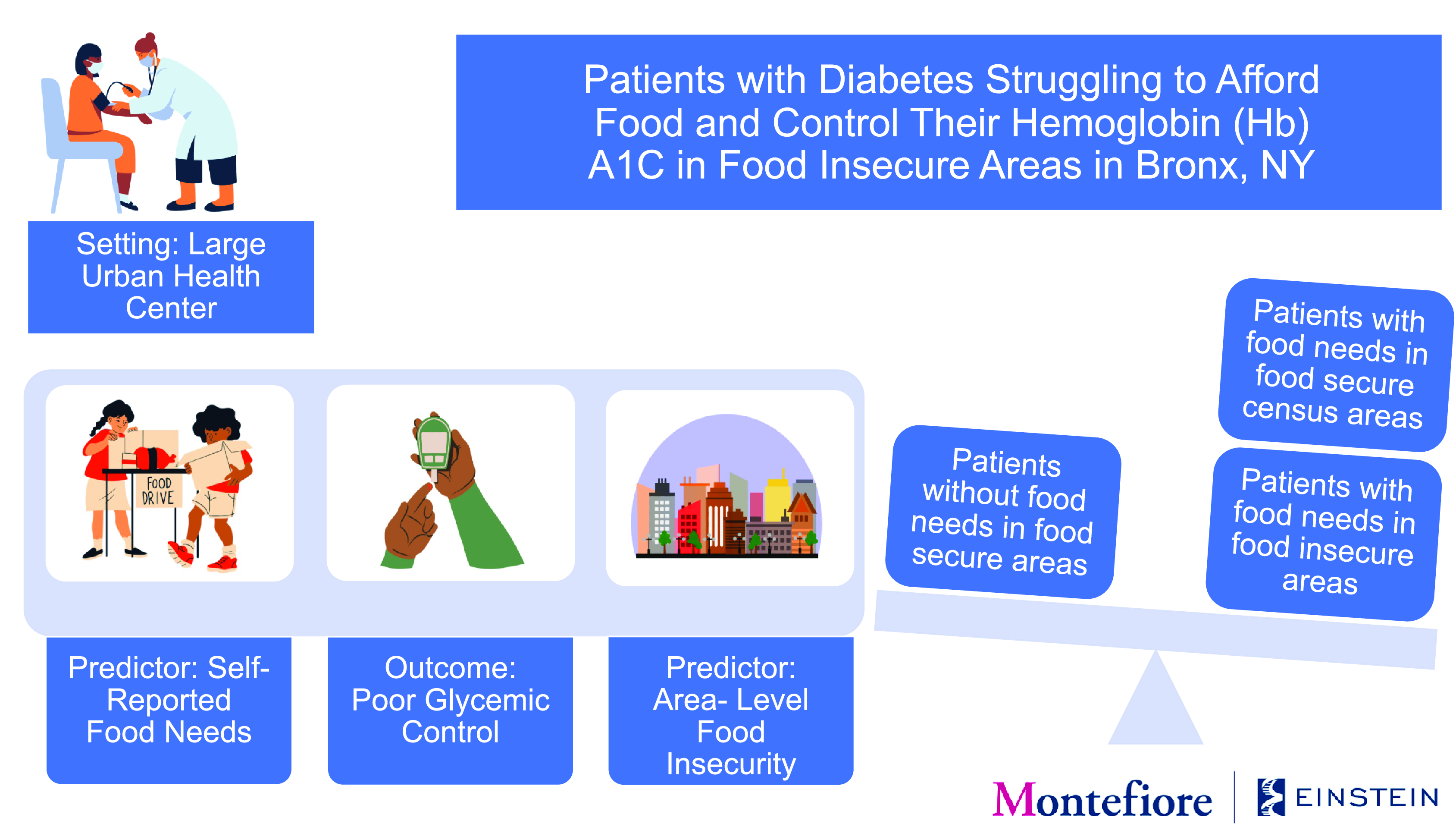
To characterise the association between risk of poor glycaemic control and self-reported and area-level food insecurity among adult patients with type 2 diabetes.
Design:
We performed a retrospective, observational analysis of cross-sectional data routinely collected within a health system. Logistic regressions estimated the association between glycaemic control and the dual effect of self-reported and area-level measures of food insecurity.
Setting:
The health system included a network of ambulatory primary and speciality care sites and hospitals in Bronx County, NY.
Participants:
Patients diagnosed with type 2 diabetes who completed a health-related social need (HRSN) assessment between April 2018 and December 2019.
Results:
5500 patients with type 2 diabetes were assessed for HRSN with 7·1 % reporting an unmet food need. Patients with self-reported food needs demonstrated higher odds of having poor glycaemic control compared with those without food needs (adjusted OR (aOR): 1·59, 95 % CI: 1·26, 2·00). However, there was no conclusive evidence that area-level food insecurity alone was a significant predictor of glycaemic control (aOR: 1·15, 95 % CI: 0·96, 1·39). Patients with self-reported food needs residing in food-secure (aOR: 1·83, 95 % CI: 1·22, 2·74) and food-insecure (aOR: 1·72, 95 % CI: 1·25, 2·37) areas showed higher odds of poor glycaemic control than those without self-reported food needs residing in food-secure areas.
Conclusions:
These findings highlight the importance of utilising patient- and area-level social needs data to identify individuals for targeted interventions with increased risk of adverse health outcomes.
Households with children accessing food aid in high-income countries are often food insecure. We aimed to review the evidence on food aid interventions in households with children and impact on food insecurity, diet quality and mental health.
Design:
A systematic search was conducted using Web of Science, MEDLINE, CINAHL and PsycINFO. Articles published from January 2008 to July 2022 including cross-sectional, cohort and interventional studies in high-income countries were eligible.
Setting:
Food aid is defined as the use of interventions providing free food items by community and/or charitable organisations.
Participants:
Two-parent, lone parent or households with a primary caregiver with at least one child ≤ 18 years.
Results:
From a total of 10 394 articles, nine were included. Food banks, mobile pantry combined with a free meal for children, backpack provision during school term and food parcel home delivery interventions were evaluated. Food bank models offering additional support such as community programmes, health and social services, cooking classes and free meals for children, client-choice-based models and programmes providing convenient access were associated with improved food security and diet quality (increased intake of wholegrains, fruit and vegetables). One study reported an improvement in mental health and food bank access at the end of 18 months but not at earlier timepoints and one study reported no change in parents’ mental health.
Conclusions:
Accessing food aid was linked to improved diet quality and reduced food insecurity in some studies. Allowing clients to choose food items and providing support services were most effective.
To gain insight into the experiences and perspectives of registered dietitians (RD) in Canada regarding their interactions with commercial actors and actions undertaken to manage these interactions.
Design:
Qualitative study using semi-structured interviews combined with a document analysis.
Setting:
Quebec, Canada
Participants:
RD aged ≥ 18 years (n 18)
Results:
All participants reported interacting with commercial actors during their careers, such as receiving continuing education provided or sponsored by food companies. RD in Quebec perceive these interactions as either trivial or acceptable, depending on the commercial actor or interaction type. Participants discussed how certain interactions could represent a threat to the credibility and public trust in dietitians, among other risks. They also discussed the benefits of these interactions, such as the possibility for professionals to improve the food supply and public health by sharing their knowledge and expertise. Participants reported ten mechanisms used to manage interactions with commercial actors, such as following a code of ethics (individual level) and policies such as partnerships policy (institutional level). Finally, RD also stressed the need for training and more explicit and specific tools for managing interactions with commercial actors.
Conclusions:
RD in Quebec, Canada, may engage with commercial actors in their profession and hold nuanced perspectives on this matter. While some measures are in place to regulate these interactions, they are neither standardised nor evaluated for their effectiveness. To maintain the public’s trust in RD, promoting awareness and developing training on this issue is essential.
Previous studies suggest a link between vitamin D status and COVID-19 susceptibility in hospitalised patients. This study aimed to investigate whether vitamin D concentrations in elderly individuals were associated with their susceptibility to Omicron COVID-19 incidence, the severity of the disease and the likelihood of reoccurrence during the era of the post-‘zero-COVID-19’ policies in China.
Design:
In this retrospective study, participants were categorised into three groups based on their 25(OH)D concentrations: deficiency (< 20 ng/ml), insufficiency (20 to < 30 ng/ml) and sufficiency (≥ 30 ng/ml). The demographic and clinical characteristics, comorbidities and the incidence rate, reoccurrence rate and severity of Omicron COVID-19 were retrospectively recorded and analysed by using hospital information system data and an online questionnaire survey.
Setting:
China.
Participants:
222 participants aged 60 years or older from a health management centre.
Results:
Our findings revealed significant differences in the incidence (P = 0·03) and recurrent rate (P = 0·02) of Omicron COVID-19 among the three groups. Participants with lower 25(OH)D concentrations (< 20 ng/ml) exhibited higher rates of initial incidence and reoccurrence and a greater percentage of severe and critical cases. Conversely, individuals with 25(OH)D concentrations ≥ 30 ng/ml had a higher percentage of mild cases (P = 0·003). Binary and ordinal logistic regression models indicated that vitamin D supplementation was not a significant risk factor for COVID-19 outcomes.
Conclusions:
In the elderly population, pre-infection vitamin D deficiency was associated with increased susceptibility to incidence, severity of illness and reoccurrence rates of Omicron COVID-19.
To understand the relationship between adolescents’ unhealthy snacking behaviour during their school journey and their perceived and objective measures of food outlet availability in the school neighbourhood.
Design:
A cross-sectional survey enquired about socio-demographic information, school transport modes, perceived presence of food outlets in the school neighbourhood and unhealthy food purchase and consumption on the school journey. A geographical information system analysis of the food outlets within 500 m and 1000 m school buffers was undertaken. Data were analysed using generalised linear mixed modelling.
Setting:
All twelve secondary schools in Dunedin, Aotearoa New Zealand, March 2020–June 2022.
Participants:
Adolescents aged 13–18 years (n 725) who reported being familiar with their school neighbourhood.
Results:
Perceived availability of food outlets in the school neighbourhood was inversely correlated with distance to the closest food outlet from school and positively correlated with food outlet density within 500 m and 1000 m school buffers. Adolescents’ purchase and consumption of unhealthy snacks and drinks during the school journey were associated with perceived availability of food outlets and with shorter distance to the closest food outlet from school. Mixed transport users, girls and those living in high-deprivation neighbourhoods had higher odds of purchasing and consuming unhealthy snacks and drinks during the school journey than active transport users, boys and those living in low-deprivation neighbourhoods, respectively.
Conclusions:
Adolescents perceptions of the food environment and close access to food outlets in the school neighbourhood may influence adolescents’ food purchase and consumption behaviours during the school journey.
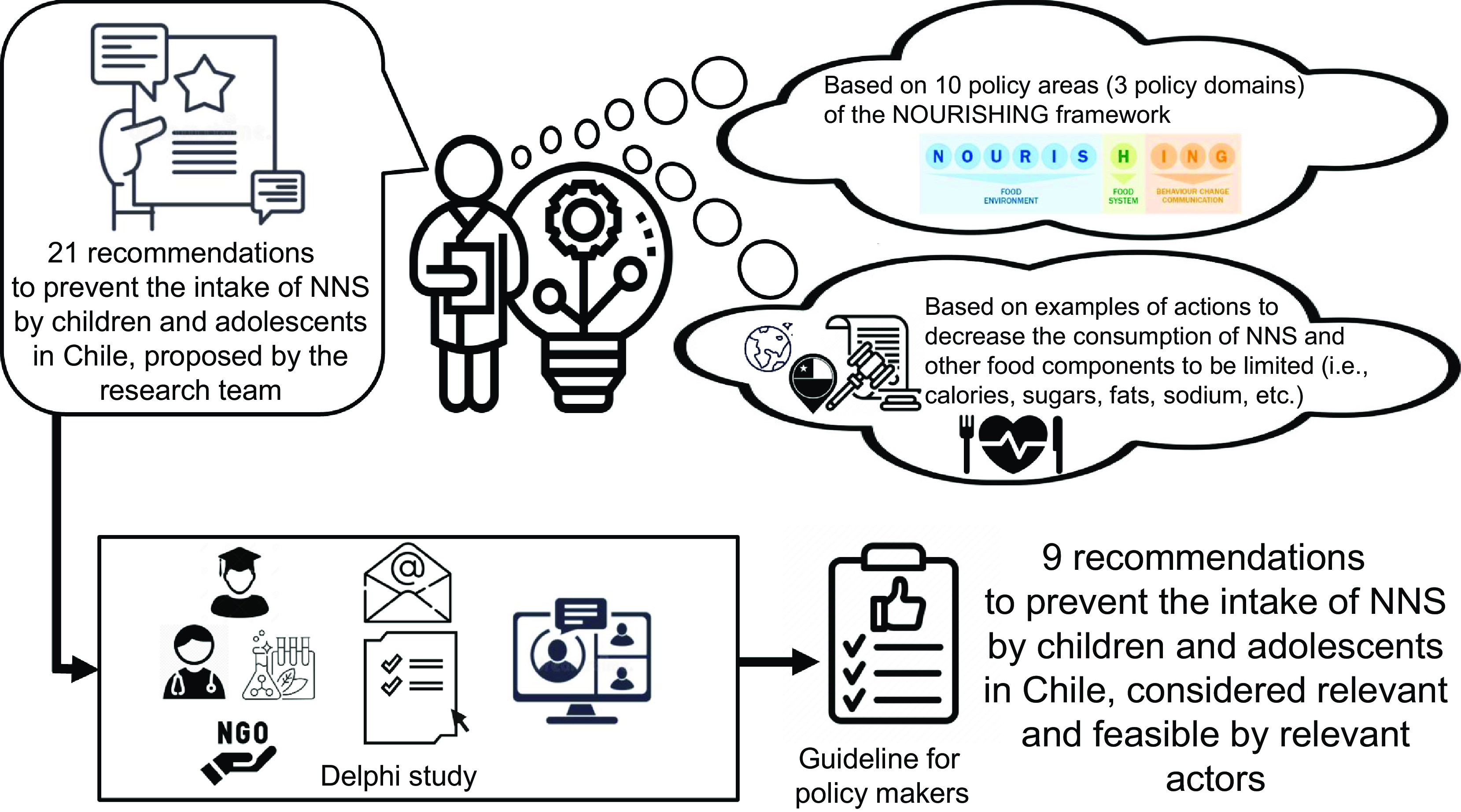
To provide local policymakers with a guideline of potential actions to prevent the high consumption of Non-Nutritive Sweeteners (NNS) among children and adolescents observed in Chile, given the potential health problems related to NNS intake.
Design:
The Delphi method was used for the evaluation of twenty-one recommendations to decrease the intake of NNS in paediatric population, with the participation of a panel of relevant actors.
Setting:
The proposed recommendations were developed by the research team using the NOURISHING framework; potential actions were based on the increase in the use and intake of NNS by Chilean children, current local food regulations, recommendations of health organisations and foreign policy experiences.
Participants:
Twenty-five relevant actors related to NNS, nutrition, food technology and paediatrics (out of thirty-nine invitations made to scholars, professional institutions and civil society’s organisations) participated in the Delphi study.
Results:
A consensus was reached on nine recommendations regarding relevance and feasibility to be part of the guideline. Recommendations involved measures mostly related to improving the delivery of information (food content and potential health effects of NNS), supporting the generation of more evidence of NNS health effects and substitutes, and marketing restrictions when targeted to children.
Conclusions:
The process produced a nine-action guideline to reduce the excessive NNS consumption among Chilean children and adolescents. Developed through a consensus-driven approach among key stakeholders, this guideline provides policymakers with a framework to adopt a precautionary stance, particularly concerning vulnerable populations, given the currently inconclusive evidence on the long-term health effects of NNS consumption.
Early learning and childcare (ELCC) programmes play an important role in shaping children’s eating behaviours and long-term health by establishing a responsive feeding environment that encompasses not only mealtime behaviours but also extends to play activities and language used throughout the day. Despite their potential benefits, many ELCC centres do not consistently implement responsive feeding behaviours, facing challenges with organisational and behavioural changes within these environments. This study aims to identify influences on responsive feeding behaviours among early childhood educators prior to an intervention.
Design:
A qualitative study guided by the Behaviour Change Wheel framework and Capability Opportunity Motivation – Behaviour (COM-B) model. Semi-structured interviews and focus groups were conducted, recorded and transcribed verbatim. Thematic analysis was employed to identify themes, categorising them within the corresponding COM-B domains.
Setting:
Canada.
Participants:
Forty-one ELCC staff in various roles across eight centres from two provinces in eastern Canada.
Results:
Fifteen influences, spanning across all six domains of the COM-B model, were identified, highlighting gaps in educators’ knowledge and skills, varied approaches to food and feeding, and the interactions with children, parents, and co-workers on mealtimes dynamics. Additionally, costs, centre location and other physical resources emerged as enabling opportunities for responsive feeding behaviours.
Conclusions:
These findings offer a comprehensive exploration of the diverse factors influencing responsive feeding behaviours among educators, each varying in its potential for future behaviour change intervention.