


R1. Introduction
We greatly appreciate the collegial interest, time, and effort that all the commentators directed toward improving the research we reported in our target article (T.A.). The commentaries were wide-ranging; we try to address in this response article the major themes of the commentaries. Some commentators identified areas of the T.A. in need of clarification. Others disagreed with our ideas, proposed alternatives, or proposed new applications of the parasite-stress theory of sociality/values. We provide suggestions for further testing of the parasite-stress theory.
R2. The evolution of condition-dependence and culture-gene coevolution
Blute commented on our treatment of (1) condition-dependent enculturation resulting from psychological adaptation designed for culture-acquisition to meet local ecological problems, particularly variation in parasite-stress, and (2) a possible role for culture-gene coevolution. With regard to (1), she points out that we did not discuss one of the conditions necessary for Darwinian selection to favor conditional phenotypic expression: that change or uncertainty in an ecological condition affecting relevant variation in reproductive success of individuals must happen within the lifetime of individuals. We certainly had this in mind, as it is required for favorable selection of the plasticity. Our attention to this requirement is seen in our emphasis that psychological adaptation for culture is the ultimate product of selection at the individual level for inclusive fitness maximization. Also, we mentioned in the target article that parasite adversity faced by people could quickly change as a result of changing host-parasite contact. This applies on the short time-scale of an individual's life. The number of kinds and virulence of parasites and the number of infectious-disease vectors can change over a short time-frame.
Hence, collectively, the conditions necessary for the evolution by Darwinian selection of adaptive phenotypic plasticity are as Blute succinctly puts it: environmental uncertainty on the right small time-scale within a generation, accompanied by cues that reliably allow individuals to adjust to a better local adaptive optimum. These conditions are required for the evolution of any condition-dependent adaptation, including human cultural capacity, the set of psychological adaptations by which humans obtain and use their cultural behaviors.
With regard to (2), Blute criticizes our claim that certain earlier ideas (Boyd & Richerson Reference Boyd and Richerson1985; Cavalli-Sforza & Feldman Reference Cavalli-Sforza and Feldman1981; Lumsden & Wilson Reference Lumsden and Wilson1981) have overlap with our hypothesis for the coevolution of culture and parasites. Certainly, in the details of the comparison, her criticism is warranted, because in large part, the early ideas mentioned are different than our own, as she discusses in her commentary. We agree too that our perspective on culture-gene coevolution comes closer to certain ideas provided by Durham (Reference Durham1991) than to those in the studies we cite in the target article.
In hope of making our views on enculturation and culture-gene coevolution clear, we summarize them. In regard to enculturation, we propose that people have psychological adaptations that are functionally designed for choosing cultural items that reflect features that would have maximized inclusive fitness in human evolutionary history. Consider the adoption of a new religious belief – for example, drinking strychnine as a good way to properly worship God, a practice of a contemporary fundamentalist Christian group in the southern United States (Hood & Williamson Reference Hood and Williamson2008). Commercially available strychnine is an evolutionarily novel substance, so its adoption is a by-product; specifically, we argue, one arising from a psychological adaptation designed to locate and use cultural items that (a) produce an in-group cultural border and (b) honestly signal commitment to fellow group members. According to the parasite-stress theory, (a) and (b) have utility in defense against parasite adversity. Under high parasite-stress the hypothetical psychological adaptation adopts values for assortative sociality, including philopatry, which reduce contact with new infectious diseases and manage those present. Whereas, as parasite adversity declines, people adopt values of personal independence and self-efficacy, interest in contact and alliance with out-group people, openness to new experiences, and interest in dispersal; these values, often referred to as individualism or liberalism, allowed ancestral individuals to reap reproductive benefits of out-group interactions when infectious disease adversity was reduced. This phenotypic plasticity was favored by Darwinian selection because the conditions necessary (as discussed above) for the evolution of this plasticity were met in human evolutionary history. The plasticity is species-typical because the conditions favoring it continued. Even in high parasite regions, the relative impact of parasites within an individual's lifetime changes and phenotypic shifts in values allow more adaptive social navigation. Agreeing with Beit-Hallahmi, we suggest that humans are designed to detect pathogen-risk indirectly, and not directly, using cues (visual, olfactory, social, etc.) that were probabilistically associated with pathogen risk in human evolutionary history.
This species-typicality does not preclude culture-gene coevolution that may produce region-specific adaptation that varies from one region to another due to genetic differences. This process involves local parasite level, high or low, favoring alleles that promote ease of adoption and effective use of locally adaptive preferences/values. In this case, the cultural values that are optimal for the local parasite level are the source of natural selection causing genetic evolution. Hence, this process begins with a given parasite level, which favors adoption of cultural items that are most suited for the local parasite level. This in turn gives rise to selection for alleles that promote adoption and use of locally optimal cultural behaviors. This then increases the frequency of these alleles and their associated behaviors. This requires, of course, heritability in the preferences involved. In our perspective, high phenotypic plasticity is maintained in individuals even if they possess region-specific genetic adaptation to the cultural ecology.
R3. Out-group and in-group parasites are important
Commentators de Barra & Curtis question an assumption that they perceive is part of the parasite-stress theory of sociality: “A critical assumption of F&T's thesis is that pathogens carried by out-groups (neighbouring families or communities) will be more dangerous than those of one's own family and community.” Actually, we do not make this assumption. In the T.A., we discussed that behavioral immunity has two design features as a result of direct Darwinian selection for them: (1) protection against novel parasites harbored in out-groups to which individuals in the in-group are not adapted, and (2) managing the negative effects of parasites within the in-group. Accordingly, xenophobia and limited dispersal are the adaptations for out-group contagion avoidance. In-group embeddedness, including family ties and religiosity, functions for managing present parasites within groups. If out-group contagion were “more dangerous” than in-group contagion, one would expect out-group psychological and behavioral defenses to be better or only designed for defense than in-group defenses. This is not an empirically apparent pattern as seen in the T.A. For example, in the case of religiosity, our results in the target article suggest that it is functional for in-group embeddedness and out-group boundary formation. Both in-group and out-group parasites can present the host with novelty to which it is not immune. In-group parasites do so during the co-evolutionary races with a host – new features arise in the parasite that circumvent evolved host defense. Out-group parasites can be as dangerous as in-group parasites because the spatially localized host-parasite races may not equip the host with immunity to new out-group parasites.
In their commentary, de Barra and Curtis discuss some examples of parasites that have more success in out-groups of hosts than in in-groups. This is an interesting scenario because when a parasite can achieve high reproductive success by invading individuals across a cultural boundary, selection is strong on the parasite to invade the adjacent group. This in turn will promote the adoption of cultural behaviors of xenophobia and more restricted dispersal in the culture being invaded by the parasite.
Grotuss mentions that the research so far inspired by the parasite-stress theory has not addressed the matter of psychological and behavioral components to reduce contact with parasites present within the in-group. We agree with Freeland (Reference Freeland1976) and Kurzban and Leary (Reference Kurzban and Leary2001) in predicting that stigmatization and prejudice resulting in marginalization and isolation, or ostracism and periods of quarantining, are adaptations for this purpose. If this is true, these adaptations are components of the behavioral immune system.
R4. The components of in-group assortativeness
Commentators Figueredo, Gladden, & Black [Figueredo et al.] question the combination of philopatry, ethnocentrism, and xenophobia into the variable we refer to as in-group assortative sociality. They point out that ethnocentrism and xenophobia in some research studies show a range of positive, negative, or no correlations, depending upon the society or sample investigated. We recognized this in the T.A. and proposed circumstances under which xenophobia and ethnocentrism would not be positively correlated, and by extension might even show negative or no correlation in a region (sect. 6.4, para. 6).
Cashdan questions our combination of values as well. Cashdan's commentary presents a summary of unpublished results found by her and M. Steele based on data from the Standard Cross-Cultural Sample of traditional human societies (Cashdan & Steele Reference Cashdan and Steele2010). They found that parasite-stress significantly predicts negatively the peoples' “mobility among communities,” a measure of restriction of movement and related philopatry, and positively predicts degree of xenophobia. Cashdan concludes that these two findings support the parasite-stress theory's prediction that philopatry and xenophobia are features of assortative sociality that reduce contact with other groups and their habitats in high parasite stress situations. Cashdan and Steele (Reference Cashdan and Steele2010), however, found no evidence that “ethnic loyalty” across the societies corresponded to infectious disease stress. Cashdan suggests that ethnic loyalty may defend against ecological stresses in addition to parasite stress.
An empirical question then is whether people have adaptation that functions to promote in-group ties and support under the threat or presence of infectious agents per se. The parasite-stress theory implies that people will have such adaptation, and to both nonzoonotic and zoonotic disease cues, because the adversity of either category of diseases can make local in-group embeddedness adaptive. The experimental paradigm of Mortensen et al. (Reference Mortensen, Becker, Ackerman, Neuberg and Kenrick2010) involving presentation of parasite-salient cues to research participants could test this and simultaneously include cues of ecological stressors other than parasite stress.
Figueredo et al. question our interpretation of our findings about human philopatry (limited dispersal away from the natal region). We argue that philopatry is part of the behavioral immune system/assortative sociality and functions to reduce contact with out-groups and their habitats. We reported for traditional human societies that the societies in high parasite regions have smaller range sizes (lower dispersal) than societies in low parasite regions (Fincher & Thornhill Reference Fincher and Thornhill2008b). Figueredo et al. argue that this reduced movement is the result of debilitation by parasites rather than a functional defense against parasites. Their alternative is refuted by our published work as described in the T.A. (sect. 2.2, para. 2).
Vigil & Coulombe mention that disgust sensitivity to pathogens is not higher in conservatives than in liberals, citing Tybur et al. (Reference Tybur, Merriman, Caldwell Hooper, McDonald and Navarrete2010). Results are mixed on this, actually; Inbar et al. (Reference Inbar, Pizarro and Bloom2009) found that conservatives have greater disgust. When the Inbar et al. study is combined with the general literature on the functional design of disgust for pathogen avoidance (Curtis et al. Reference Curtis, de Barra and Aunger2011; Oaten et al. Reference Oaten, Stevenson and Case2009), the hypothesis that disgust will be greater in conservatives (collectivists) than in liberals (individualists) remains viable.
R5. A role for mutualistic microbes
Grotuss raises the salient issue of the role of mutualistic microbes of humans in shaping assortative sociality. We treated this topic in our earlier paper on parasite-stress in relation to the large variation in number of religions across countries of the world (Fincher & Thornhill Reference Fincher and Thornhill2008b). In that paper we proposed that assortative interactions and philopatry increase inclusive fitness in two ways: (a) avoiding and managing parasites, and (b) acquisition and maintenance of an individual host's mutualistic (and commensalistic) microbial community.
Humans begin acquiring their microbial community at birth, but the development and maintenance of this community occurs over the lifetime. Benefits provided by symbionts include provision of metabolic by-products that can be used as fuels (e.g., butyrate), with such microbes acting as a defense system through competition with pathogens preventing the pathogen's colonization and infectivity (reviewed in Dethlefsen et al. Reference Dethlefsen, McFall-Ngai and Relman2007). Owing to the localized coevolutionary races between hosts and parasites, and because in high parasite regions these races occur in smaller areas within relatively behaviorally isolated populations, it is probable that humans living in high parasite areas will experience greater specificity and local adaptation in their mutualistic communities. Interacting with out-group members has the potential to disrupt these communities as well as lead to the acquisition of novel pathogens. Hence, we hypothesized that both parasitic and mutualistic interactions may be driving the assortative social life and limited dispersal that operate in the variation in human social behavior (Fincher & Thornhill Reference Fincher and Thornhill2008b). Beneficent symbionts may similarly play a major role in creating the sociality of species other than humans.
Grotuss points out the elegant design of the behavioral immune system implied by the combination of findings reported in the target article that nonzoonotic human parasites impact human values and behavior more than zoonotics and the separate findings on the important role of mutualistic and commensalistic microbes in human health and fitness. The most general implications are that the human psychological adaptations proposed by the parasite-stress theory are not only responsible for a person's ontogenetic acquisition of values, based on experiences with infectious-disease cues; they are also functionally designed to identify and differentially respond to parasite-presence versus parasite-absence in one's environment and/or self, the nature of a present parasite (nonzoonotic vs. zoonotic), and the presence of local beneficial microbes in one's social environment and/or self. This implies, too, that the classical immune system is more sophisticated than traditionally thought. Recognizing self versus non-self is not enough, as many immunologists now recognize. Non-self can include beneficial microbes, which should not be destroyed. Similarly, regarding the behavioral immune system, the beneficial microbes should not be avoided. The parasite-stress theory of sociality and the recent discovery of a very broad range of psychological features and behaviors that may function in dealing with parasites (and beneficial microbes) should greatly enrich immunology, and serve to unify classical immunology with the study of sociality. This suggests also that there should be consideration of an “enrichment system” in addition to the immune system that focuses on the acquisition and management/maintenance of beneficial microbes.
R6. Bidirectional causation
Grotuss raises the question of how parasite-stress may impact social structure indirectly, a topic we did not discuss in the T.A. In an earlier paper on parasite-stress and governmental systems, however, we proposed that there is a bidirectional, proximate causal feedback between parasite stress, economic factors, and liberalization of values (Thornhill et al. Reference Thornhill, Fincher and Aran2009). As parasite-stress declines in a region and peoples' values shift to affect widespread economic and other well-being in the region, the changes will further reduce parasite-stress through increases in widespread nutrition, sanitation and improved general living conditions, and access to medical care and educational information. These humanitarian advances cycle back to reduce mortality and morbidity from parasites. Thus, as parasite-stress declines, democratization factors increase, which, in turn, further reduce parasitic disease. The opposite also holds: As parasite-stress increases or maintains high levels, the values of prejudice, inequality and authoritarianism that arise further magnify the morbidity and mortality from infectious disease. Hence, a society's general level of ethnic discrimination and poverty arise from parasite-stress and then feed back and affect parasite-stress.
R7. Proselytizing and related costly commitment devices
Grotuss as well as Swartwout, Purzycki, & Sosis (Swartwout et al.) point out that some religious and other cultural practices such as scarification and proselytizing increase the spread of disease or likelihood of infection. The T.A. argues that religiosity functions to create (a) a cultural boundary between in-group and out-group that reduces contact with novel out-group parasites, and (b) a reliable, embedded social network that defends against parasites within the group. Hence, religious practices that increase exposure to contagion are interesting cases. As Swartwout et al. emphasize, the most honest signals of commitment and embeddedness – those that cannot be faked by low-commitment individuals – sometimes involve compromising the signaler's immune system. They mention scarification and other bloody rituals, extreme physical exertion, and ingesting poisons. We hypothesize that proselytizing may be another example of this and serves as an unfakable signal of commitment to in-group values, given its high costs in terms of contagion risk. We agree with Swartwout et al. that such extreme displays of commitment are best framed in the context of trade-offs, where benefits from social embeddedness exceed high costs from contagion and other personal risks.
We stress that proselytizing is a potentially important area for future research into the validity of the parasite-stress theory of sociality applied to religiosity. We understand honest-signal theory to imply that there will be competition among signalers to use those signals that most honestly define the communicated information (in-group commitment and boundary, in the case of religiosity). Optimal signals of in-group commitment in high parasite-stress regions sometimes may be those that confront the most feared ecological feature – infectious disease.
In regard to the proselytizing hypothesis just mentioned, Swartwout et al. hypothesize that phenotypic and genetic quality pertaining to immunocompetence will influence the degree of signaling of in-group commitment and willingness to interact with out-groups and thereby achieve the benefits of accessing out-group resources. We briefly touched on this in the target article (sect. 6.4, para. 5) when we suggested that age and individual quality may affect the costs and benefits of out-group contact. We agree with these commentators that this is an intriguing avenue for future empirical and theoretical study.
In a comment related to proselytizing, Atran states that “the most expansive and successful religions aimed to include as many genetic strangers as possible,” as a counter-argument to our claim that religious groups use their unique supernatural belief systems in order to heighten costs of participation and distance themselves from out-groups. This is considered a “most problematic” feature of our arguments regarding religion. It may be that the most successful religions that Atran is referring to (presumably, measured by the number of adherents) are also the most expansive, and that they may be both successful and expansive because of their origin in regions with moderate parasite-stress. These so-called successful, expansive religions are infrequent. There are thousands of other religions. Perhaps there are many smaller religions (judged by number of adherents) that could be considered successful by other measures such as longevity or isolation ability. For those religions in high parasite-stress regions a long period without introduction of an infectious disease epidemic could be a resounding success. By this reckoning, the presence of large, expansive religions is not contrary to our hypothesis regarding parasite-stress and religiosity. In fact, the parasite-stress model could be used to explore why some religions are expansive and others are not. The assumption that all religions should be expansive and, therefore, that a religion's success should be measured through historical expansion is inaccurate.
R8. Parasites and network size
Vigil & Coulombe see an inconsistency with the parasite-stress model from literature indicating that, in Western samples, people of high religiosity and conservatism have larger social networks than less religious, more liberal people. Certainly, the evidence is mixed on this pattern, as Gelfand et al. (Reference Gelfand, Bhawuk, Nishii, Bechtold, House, Hanges, Javidan, Dorfman and Gupta2004) conclude the opposite, at least with regard to collectivists versus individualists: Collectivists have smaller groups and more intimate and durable relations with members than individualists. The pattern may be sample-dependent.
However, the prediction from the parasite-stress theory is more about the nature of social relations between the two types of ideologues rather than social network size. The hypothesis that collectivism compared to individualism is characterized by tight social networks, more cohesive and cooperative friendship groups, in- versus out-group distinctiveness, more permanence of group membership, and more intensity or intimacy of social interactions is supported by a range of studies reviewed and discussed by Gelfand et al. (Reference Gelfand, Bhawuk, Nishii, Bechtold, House, Hanges, Javidan, Dorfman and Gupta2004). Hence, it does appear that individualists have more superficial and less durable relationships and with a wider variety of people than collectivists. This pattern is as predicted by the parasite-stress theory of values in light of the established positive covariation between collectivism and parasite-stress (Fincher et al. Reference Fincher, Thornhill, Murray and Schaller2008; Thornhill et al. Reference Thornhill, Fincher, Murray and Schaller2010).
R9. Sex differences
Vigil & Coulombe raise the interesting issue of sex differences in values. There is some evidence that females may allocate more effort to classical immune function than males (see references in Vigil & Coulombe's commentary). Also, there is considerable evidence that women are more disgust sensitive than men (see review in Curtis et al. Reference Curtis, de Barra and Aunger2011). We returned to the data in the target article for the cross-national variables Strength of Family Ties and Religious Participation and Value and computed sex-specific values. The Cronbach's α for the Strength of Family Ties for males was .87 and .83 for females; the Cronbach's α for Religious Participation and Value for males was .95 and .91 for females. For both variables, the correlation between the sex-specific value score and Combined Parasite-Stress was identical: Strength of Family Ties: male r=.63, female r=.63; n=69 for both correlations; Religious Participation and Value: male r=.70, female r=.70; n=89 for both correlations. Thus, we found no sex differences in the relationship between these values' dimensions and parasite-stress.
Furthermore, Vigil & Coulombe suggest that known sex differences in values can be explained by an evolutionary history of, among other factors, male-biased philopatry, and conversely, female-biased dispersal from the natal locale. We explored this in contemporary countries by focusing on the question of whether a respondent lived at home with his or her parents (a component of the variable Strength of Family Ties). For this one question, we found a significant male-bias in philopatry. A greater proportion of males reported living at home with parents (male M=.32; female M=.25; t 93 = −10.5, p<.0001). However, the positive association between the proportion of those that lived at home with their parents and Combined Parasite-Stress for both sexes was not significantly different (male r=.46; female r=.52; n=90 for both; z=−.52, p=.6031). Thus, while there is a significant male-biased philopatry, it does not necessarily lead to a sex-difference in the relationships between parasite-stress and values such as Strength of Family Ties or Religious Participation and Value.
R10. Methodology
Uskul mentions several strengths of the cross-regional (countries and US states) data we use for testing hypotheses. An additional strength of the majority of the data we analyzed was that they are blind to the parasite-stress theory and hence could not be affected by any data-collection biases in favor of the theory.
We agree with Uskul, and point out in the T.A. that additional experimental testing of the parasite-stress theory is important. We also suggest some experiments that would complement the recent experimental research done by Schaller et al. (Reference Schaller, Miller, Gervais, Yager and Chen2010) and Mortensen et al. (Reference Mortensen, Becker, Ackerman, Neuberg and Kenrick2010) that used infectious-disease salient stimuli. The experimental suggestions we make in the target article are field experiments, which have the advantage of more inherent ecological validity compared to lab experiments. A combination of lab and field experiments and naturalistic observations can potentially best address the specific nature of mediating psychological processes of enculturation that result in the relationship between parasite-stress and cultural patterns. We emphasize though that such research is only one test-ground for the parasite theory of sociality; comparative research is equally important.
Regarding Uskul's comment about causation, given that a hypothesis is by definition a statement about possible or presumed causation, evidence supporting a hypothesis simultaneously supports the cause(s) on which the hypothesis is based. This is the case regardless of testing method. Our conclusions in the target article were meant to reflect this only and do not preclude the need for additional research to establish causation, a need we emphasize in the T.A.
Currie & Mace state their view that countries are not statistically independent because of shared cultural history. They fail to mention, however, the alternative view that countries and other regions, and cultures themselves, are independent, even in the case of recently shared cultural history. We discuss in the target article our view of enculturation, which implies cultural independence: Humans are designed by a history of evolution by selection to acquire contingently the cultural items that provide solutions to local ecological, including social, problems. Also, we cite various researchers who view enculturation in ways similar to our view, based on various findings. To claim cultural non-independence (Mace & Pagel Reference Mace and Pagel1994) is inconsistent with the evolution of human cultural capacity – the set of psychological adaptations that are functionally designed for adaptive (ancestrally) enculturation of individuals. This capacity was favored by selection because it promoted inclusive fitness of individuals by discriminative adoption of cultural items; arbitrarily or maladaptively learning cultural elements was always selected against. Hence, the values that people adopt during ontogeny in one region are independent of the values adopted in another region, even adjacent regions (cultures), and regardless of the degree of cultural item flow between the regions or the historical connections between cultures involved.
Our analyses in the target article within world area regions and United States census regions, in fact, are not for dealing with issues on non-independence of countries or US states. We do mention that the independence of countries or US states “may be questioned” (see sect. 4.6, para. 1). We, however, are not among the questioners. Our use of subregions is an exercise that can identify whether any particular subregion does not fit the general global analysis. The value of this was found with family ties and parasite-stress in Africa. The relationship of these two variables was negative in Africa, whereas it was positive in other world regions. This supported our hypothesis that high extrinsic mortality, as from the high parasite stress in Africa, leads to reduced collectivism, as predicted by life history theory (see sects. 6.3.1, para. 4 in the T.A. and R12 here.).
Currie & Mace, then, do their own regional subdivision of the globe. The world regions identified by Murdock (Reference Murdock1949) and used by us reflect a legacy of research validating the subdivision. At least Currie & Mace should validate their novel subdivision. In the absence of such validation it is difficult to interpret their regional analyses.
R11. Alternative models
A number of commentators have offered alternative models to explain our findings which we address here.
Van de Vliert & Postmes argue that climatic stress is a causal feature for the development of cultural differences, especially when accounting for the wealth of a country. Van de Vliert's earlier work (2009) presented a model showing that climatic stress is met by a compensating cultural response tempered by the average wealth of citizens within a country (i.e., under harsh climatic conditions, citizens from wealthy countries have different options than those from poor countries). Van de Vliert (Reference Van de Vliert2009) presented a measure of climatic harshness that indexes the sum of absolute temperature deviations from 22°C for the average lowest and highest temperatures in the hottest and coldest months for a country (called the Total Index). The Total Index is used in the analyses that Van de Vliert & Postmes present in their commentary. They suggest that harsh climates are more demanding of resources and that people in richer or poorer countries will meet the demands differently: People from poor countries will rely on their in-group affiliates, while people from rich countries will see the demands as challenges and this will enhance individualism. We examined the association between Van de Vliert & Postmes' measure of climatic stress (data collected from Van de Vliert Reference Van de Vliert2009) and two life history measures that reflect reproductive success and found their measure to be lacking in ecological validity. We correlated their Total Index of climate harshness with Under 5 Mortality (variable was logged; variable represents average for data from the years 1990, 1995, 2000, and 2005 collected from data.worldbank.org) and found the correlation was −.40 (n=188 countries, p<.0001). We correlated their Total Index with the Life Expectancy at birth for both sexes (variable was logged; variable represents average for data from the years 1960 to 2008 collected from data.worldbank.org) and found the correlation was .39 (n=186, p<.0001). Thus, Van de Vliert & Postmes' measure of climatic harshness actually corresponds to increased life span and reduced mortality of young children, just the opposite of what is expected if their index measures ecological harshness. In contrast, one of the focal measures of parasite-stress used in our target article, Nonzoonotic Parasite Prevalence, correlated .75 (n=191, p<.0001) with Under 5 Mortality and −.76 with Life Expectancy (n=198, p<.0001). Given these findings, we consider Van de Vliert & Postmes' analyses involving the Total Index and our analyses involving measures of parasite-stress, as incomparable.
In their commentary, Van de Vliert & Postmes use climate-stress and average wealth to predict a measure of in-group favoritism, Societal Collectivism, developed by Van de Vliert (Reference Van de Vliert2011b). In their analysis, they show that parasite-stress dropped out of the analysis as a significant factor. Given the problem with their measure of climate harshness, we used the same approach as in the target article for exploring non-parasite-stress causation. We used the residuals from regressing life span expectancy on Nonzoonotic Parasite Prevalence as we did in the target article (sect. 4.5.1, para. 2; and sect. 5.1.7, para. 2) and correlated these residuals with Van de Vliert's measure of Societal Collectivism. We found a non-significant negative correlation (r=−.13, n=119, p=.1754) suggesting the variation in life span independent of the effects of parasite-stress was not associated reliably with Societal Collectivism.
Van de Vliert & Postmes' model is also weakened because they don't explain why a person seeks the assistance of in-group members versus out-group members under times of stress. Why is it that when poor and under stress, an individual turns to in-group members instead of to out-group ones who may offer assistance not attainable within the in-group? The parasite-stress theory offers an explanation for this. As stressed in the T.A., out-group interactions can provide many benefits to individuals but such benefits do not exceed costs of infectious-disease encounters under high parasite stress.
Van de Vliert & Postmes consider wealth variation as a given aspect of the ecological setting, but they do not attempt to explain wealth variation itself. Wealth variation arises through the different actions of humans. The parasite-stress model has an inherent economic theory. Accordingly, wealth variation arises in large part due to parasite stress. Economic productivity is impacted negatively through parasite-mediated reductions in intelligence (Eppig et al. Reference Eppig, Fincher and Thornhill2010; Reference Eppig, Fincher and Thornhill2011) and in health (Price-Smith Reference Price-Smith2002; Sachs & Malaney Reference Sachs and Malaney2002). Moreover, the various values that differ along the collectivism-individualism dimension affect economic productivity. Collectivism retards economic development because it is associated with parochial economic activity – sometimes even restricted to the extended family – and with objection to new technologies and other innovations. Individualism, in contrast, has positive effects on economic productivity by increasing democracy and thereby reducing wealth and educational disparity and enhancing economic opportunity and networking across a region (Thornhill et al. Reference Thornhill, Fincher and Aran2009).
Van de Vliert & Postmes discuss some research of ours on governmental systems not presented in the target article. We have argued that cross-national variation in democracy versus autocracy arises from parasite-stress-mediated variation in value systems. We presented in separate papers evidence to support this, based on several measures of democratization (Thornhill et al. Reference Thornhill, Fincher and Aran2009; Reference Thornhill, Fincher, Murray and Schaller2010) (see also Murray & Schaller Reference Murray and Schaller2010). Taking the cross-national Unified Democracy Scores (Pemstein et al. Reference Pemstein, Meserve and Melton2010) for 2008 discussed and analyzed by Van de Vliert & Postmes, we found, as predicted by the parasite-stress theory, that these scores were correlated −.49 (n=189, p<.0001) with Combined Parasite-Stress. Van de Vliert & Postmes analyzed the ability of their climatic-harshness measure, average wealth, and their interaction to predict democracy versus autocracy. in comparison to our measures of parasite-stress, Nonzoonotic Parasite Prevalence, Zoonotic Parasite Prevalence, and their interaction. Using a hierarchical regression in which they entered climatic harshness and average wealth prior to parasite-stress, Van de Vliert & Postmes reported that parasite-stress was relatively inconsequential for the explanation of cross-national democracy variation. We repeated the analysis they present in their commentary using our primary pathogen measure, Combined Parasite-Stress. We also used multiple regression, rather than hierarchical regression, and found that parasite-stress was the largest contributor in terms of standardized beta to the cross-national variation in democracy. The regression results are reported in Electronic Supplement 7.A. (ES 7.A., which can be viewed at http://www.journals.cambridge.org/bbs2012007).
Despite our criticisms of certain comments by Van de Vliert & Postmes, we appreciate their basic hypothesis that individuals existing in harsh conditions but with access to wealth will behave differently (and produce different culture) than individuals without access to wealth. Therefore, we tested this idea using an ecologically valid measure of ecological harshness, parasite-stress. We conducted a new series of multiple regressions using Combined Parasite-Stress, GDP per capita (average from 1960–2008, logged), and the interaction between the two for predicting a selection of our dependent variables as well as the variable, Societal Collectivism, presented and analyzed in the commentary by Van de Vliert & Postmes. (In the target article, we presented multiple regression analyses of the independent effects of Combined Parasite-Stress and GDP per capita and found that parasite-stress remained a significant predictor of our dependent variables even when controlling the effects of average wealth.) The model of Van de Vliert & Postmes predicts a significant interaction between wealth and ecological harshness. Specifically their model predicts that in conditions of ecological harshness and increased wealth there will be increased individualism, and in conditions of ecological harshness and low wealth there will be increased in-group assortativeness.
The results are tabulated in ES 7.B. For the variables In-Group Assortativeness, Proportion of Believers, Strength of Family Ties, and Societal Collectivism (but not Religious Participation and Value) we found a significant interaction between average wealth and ecological harshness but not the interaction predicted by the model of Van de Vliert & Postmes. The interaction plots (not included) show that for the countries with high average wealth, as parasite-stress increases so does the Strength of Family Ties, Proportion of Believers, In-Group Assortativeness, and Societal Collectivism. Hence, the interaction is not consistent with that expected by Van de Vliert & Postmes. For the countries with low average wealth, the change due to increasing parasite-stress is minimal (slightly negative or slightly positive) for the Strength of Family Ties, Proportion of Believers, and In-Group Assortativeness, but strongly negative for Societal Collectivism. Hence, the patterns found are not what is expected or are in the wrong direction. Overall, these findings don't seem to support the model presented by Van de Vliert & Postmes. Moreover, Combined Parasite-Stress had the largest effect for all dependent variables except for Societal Collectivism. In the case of predicting Societal Collectivism, the effect of Combined Parasite-Stress was small and non-significant. However, there was a significant interaction between Combined Parasite-Stress and GDP per capita, suggesting an important role for the variation due to parasite-stress for explaining this measure of collectivism. We expected greater concordance between the findings of the analyses involving our measure of In-Group Assortativeness and Societal Collectivism, considering they are supposed to be measuring the same cultural features. The two measures Societal Collectivism and In-Group Assortativeness were positively correlated (r=.54, n=65, p<.0001) but not as highly as we expected.
Paul suggests our theory is a subhypothesis of the larger socioeconomic dysfunctionality model, which explains the negative correlation between religiosity and wealth on the premise that, as conditions become more benign, then people need the benefits of religion less and thus religiosity declines (atheism increases, for example). We discussed this model in the T.A., calling it the “conditions-of-living” model (sect. 3.2.1). The hypothesis is reasonable and supported by the data (including Paul's research: Paul Reference Paul2009). However, the “conditions-of-living” model (also called “the socioeconomic dysfunctionality model” [Paul 2009], the “uncertainty hypothesis” [e.g., Barber 2011], and the deprivation theory [Solt et al. 2011]) is incomplete because it doesn't offer explanation for why people don't turn to out-groups under severe settings. The parasite-stress theory explains this in the following way: Under poor conditions (which are those where parasite-stress is high) the cost of out-group contact (because of the potential for contacting new infectious diseases) can be relatively high, meaning the benefits of wide-spread out-group contact may not outweigh the costs of such contact. The outcome is functional avoidance of out-group members under high parasite-stress conditions. Nevertheless, the empirical reality is that we and the researchers who favor the “conditions-of-living” model can use the same correlations to support our respective models. Herein lies one of the merits of determining the proximate mechanisms whereby parasite-stress is evoked into values (see also the commentary by Schaller & Murray). Describing the design features of these proximate mechanisms can inform researchers of the selection responsible and thus the ecological setting that created the mechanisms ultimately.
We were aware of the intense interest that many researchers maintain in the effects of wealth dynamics for the explanation of all-things-cultural. Therefore, in the analyses included in the target article, we demonstrated that all of the dependent variables for both the cross-national and inter-state comparisons were explained by parasite-stress significantly and positively even when removing the effects of wealth resources and resource inequality (reported in sect. 5.1.7, para. 1; and sect. 5.2.6, para. 1 and in ES 6, which can be viewed at http://www.journals.cambridge.org/bbs2012006). In many cases, parasite-stress was the only significant predictor; in others, parasite-stress had the largest effect. In 4 of 16 regressions, wealth had a larger effect size than parasite-stress, but not by much (e.g., −.41 vs. .34). And in these cases, parasite-stress was still a significant causal factor in the predicted direction. Nevertheless, we report here different analyses of wealth resources and the independent effects of parasite-stress for a representative selection of our dependent variables.
For these new analyses, we compared the relative effects of wealth inequality (measured with the Gini index in net household income from the Standardized World Income Inequality Database [SWIID]; Solt Reference Solt2009; higher values indicate greater inequality) and Combined Parasite-Stress for explaining our dependent variables through multiple-regression analysis. Our prediction is that parasite-stress will have a unique predictive effect in spite of any predictive effects attributable to wealth inequality. We tested two models: one that considered wealth inequality (Gini index) and parasite-stress (Combined Parasite-Stress) as independent predictors (Model 1) and a second model that included additionally the interaction between these two variables (Model 2). The results of the analyses are presented in ES 7.C. For all dependent variables, using Model 1 parasite-stress was a significant, positive predictor, whereas wealth inequality was a significant predictor in only one case, the Proportion of Believers. Using Model 2, parasite-stress was a significant positive predictor for all dependent variables. Wealth inequality was a positive predictor for the Proportion of Believers and Strength of Family Ties. The interaction between wealth inequality and parasite-stress was a significant predictor for three of the four dependent variables, In-Group Assortativeness, Proportion of Believers, and Strength of Family Ties. In all regressions, whether Model 1 or 2, parasite-stress had the largest effect size. Taken together, this suggests that although wealth inequality is a significant contributor to the variation in religious affiliation and strength of family ties, parasite-stress is a more general contributor to the variation in religiosity and strength of family ties.
Barber (Reference Barber2011) published an analysis of religiosity testing the uncertainty hypothesis, using a different measure of Gini, a measure of parasite prevalence from one of our previous reports (Fincher & Thornhill Reference Fincher and Thornhill2008b) that didn't separate nonzoonotic from zoonotic parasites, and a few other factors, such as living in a Communist society, as predictors of the variable we called Proportion of Believers. Barber's conclusion was support for the uncertainty hypothesis. However, as we have stated in the T.A. and in this response article, the uncertainty hypothesis (also known as the “conditions-of-living model”, deprivation theory, and socioeconomic dysfunctionality hypothesis) is incomplete because of the lack of consideration of non-contact with out-groups under poor, uncertain conditions. Both Rees (Reference Rees2009) and Solt et al. (Reference Solt, Habel and Grant2011) have also recently examined the influence of wealth inequality for explaining different aspects of religiosity. We suggest that the best model will include wealth inequality variation itself arising from the causal effects of parasite-stress variation.
Currie & Mace also claim we need to think more about additional alternative hypotheses for religiosity. They seem to favor Gross Domestic Product or latitude, but do not state a hypothesis. Economic indicators and latitude are not variables that are independent of parasite stress and hence any analysis that includes these two variables and parasite-stress will be difficult to interpret. We discuss why economic indicators and climate variables are part of the parasite-stress theory, not alternatives to it, in section 6.2, para. 2, Fincher & Thornhill (Reference Fincher and Thornhill2008a), Thornhill et al. (Reference Thornhill, Fincher and Aran2009), and Thornhill et al. (Reference Thornhill, Fincher, Murray and Schaller2010). A theory determines what variables to control and what variables are simply effects of a theory's causal variable(s). Currie & Mace fail to provide a theory for why their suggested alternatives are actually alternatives to the parasite-stress theory. Admittedly, we control for some variables in our analyses that are not independent of the parasite-stress variables. We do, however, qualify our relevant control analyses by emphasizing that results should be viewed in light of the causal covariation between parasite-stress, economics, and climatic factors.
Vigil & Coulombe argue that within-region assortative social behavior is best explained by Vigil's (Reference Vigil2009) socio-relational model than by the parasite-stress theory of sociality. Vigil's model addresses variation in people's emotional expression of cues of social interest/disinterest for functioning in different kinds of social networks. These commentators, however, emphasize also the complementarity of the two theories for certain well-established research areas. We focus our response on the commentators' perceived contradictions with the parasite-stress model. First, the socio-relational model, it is claimed, is consistent with the finding that happiness is higher at low latitudes (high parasite-stress) than at high latitudes. But this, Vigil & Coulombe argue, is the opposite of prediction from the parasite-stress theory because happiness solicits new social partners and therefore carries risk of out-group contact and associated contagion. Sadness, on the other hand, they argue is for obtaining in-group support, and hence should be, according to the parasite-stress model, greatest at low latitudes, not high latitudes. We suggest the following approach to better study variation in happiness or worry across regions and among individuals within regions. The psychometric procedures should be modified to ask about what makes one happy or not worry. The parasite-stress theory predicts that collectivists will reply that the harmony of their connections with extended family and other long-term in-group members will be paramount – the more in-group harmony, the more happiness and less worry. And, the theory predicts that individualists will respond positively based on harmony and success in a network of people who are outside the extended family and ideologically close in-group members. Similarly, it is expected that collectivists will tie self-esteem less to personal success and more to in-group success than will individualists; Gelfand et al. (Reference Gelfand, Bhawuk, Nishii, Bechtold, House, Hanges, Javidan, Dorfman and Gupta2004) provide evidence from research that supports this prediction.
Atran suggests that our view that religiosity involves “an underlying mental mechanism” is misleading if it implies there is psychological adaptation for religion itself. Our view does not imply this. There is “an underlying mental mechanism” for typing or doing arithmetic. We are agnostic about whether religiosity reflects special-purpose adaptation for religiosity or is a by-product of adaptations for other purposes. We do propose in the target article the existence of species-typical psychological adaptation that is functionally designed for the adoption and use of values – which include religious values – that solve problems in the local ecology. We believe the research we present can be informative for the question of whether there is a special-purpose adaptation for religiosity, but answering that question was not a goal of our investigation.
In light of the various bodies of evidence – comparative, experimental, observational, and across traditional socities – we are puzzled somewhat by the position taken by Currie & Mace. They claim that the evidence we discuss in the target article, as well as in our other articles on the parasite-stress theory, is problematic or even fundamentally flawed. The background literature they refer to, much of which is summarized briefly in the target article, has been produced by a multitude of research labs, not just ours, and using a variety of methods.
Atran claims that the history of values and social structures accounts best for the secularism and democracy in the West. History is never an alternative to ecological and ultimate causal frameworks. Separately, based on the parasite-stress theory, we have proposed a hypothesis for the earliest democracies as well as the related liberal value system encompassed in the Enlightenment (Thornhill et al. Reference Thornhill, Fincher and Aran2009). The explanatory potential of this hypothesis is its consistency with a range of evidence supporting the parasite-stress theory.
Atran points out that political scientists have documented that democratization reliably corresponds to an expansion of the middle class. Certainly this is the case. This is a definition or description of democratization, not an explanation. Our research with colleagues has attempted to explain the proximate and ultimate causal bases of democratic and autocratic values (Thornhill et al. Reference Thornhill, Fincher and Aran2009; Reference Thornhill, Fincher, Murray and Schaller2010).
Figueredo et al. suggest that xenophobia and ethnocentrism may be by-products of adaptation but are not adaptations that function in defense against parasites, as we argue. They propose that these components of in-group assortativeness are the result of reduced impulse control associated with the adaptation for energetic trade-off between allocation of effort to cognitive ability (IQ) and allocation to immune defense. With Christopher Eppig we have published findings showing strong negative correlations between IQ and parasite-stress across nations and the US states supportive of this trade-off (Eppig et al. Reference Eppig, Fincher and Thornhill2010; Reference Eppig, Fincher and Thornhill2011). Hence, Figueredo et al. conjecture that high parasite-stress reduces allocation to cognitive development and thereby reduces impulse control; and lower impulse control in turn manifests as certain collectivist values.
We maintain that important aspects of xenophobia and ethnocentrism are adaptations that function in defense against parasites. First, increasing evidence indicates that these two cultural features are allocations to immunity due to design – that is, they are aspects of the behavioral immune system (evidence discussed in the target article). Second, these cultural features have high costs and therefore are expected to have been eliminated by selection unless they were adaptive (ancestrally). Hence, it is unlikely that these features are incidental effects. The two features also occur widely in nonhuman vertebrates (e.g., Freeland Reference Freeland1976; see also the discussion of cooperative breeding in the T.A.), which implies that the incidental-effect hypothesis would need to account for the comparative evidence.
We hypothesize that reduced impulse control is actually best framed as an adaptive component of fast life history – a life history strategy that includes early onset of reproduction in the life course. Accordingly, low impulse control is an adaptation that motivates high-risk acceptance for acquisition of immediately available resources under extrinsic mortality (Thornhill & Palmer Reference Thornhill, Palmer, Crawford and Salmon2004).
R12. Life history
Figueredo et al. argue that factors other than parasites may generate extrinsic mortality and lead to the fast life history strategy of early reproduction. We agree. Our effort in the T.A. was to suggest that parasite-stress may be a source of extrinsic mortality that has not been fully appreciated by life-history researchers (but see Quinlan Reference Quinlan2007). If extremely high parasite-stress yields extrinsic mortality in humans, then the in-group investment and embeddedness of assortative sociality is not defensive against it and should decline. Hence, this hypothesis predicts that the relationship between parasite-stress and collectivism will be curvilinear, such that at extreme stress collectivism declines. Our initial test of this in section 6.3.1. of the T.A. is quite preliminary but does suggest support of the predicted curvilinear pattern.
We add here the additional test that Figueredo et al. requested. The cross-national relationship between Strength of Family Ties and Combined Parasite-Stress is improved by the quadratic model with an r 2 of .40 for the linear (β=.63; t=6.68, p<.0001) and .47 for the quadratic (β 1=.87; t=7.37, p<.0001; β 2=– .36; t=– 3.07, p=.0031; n=69 countries). Thus, the improved model fit is supportive of the hypothesis that high levels of parasite-stress can become an extrinsic mortality factor and reduce nepotistic and other in-group social investment.
R13. Collectivism and conservatism: similarity
Figueredo et al. ask about the magnitude of the correlation between collectivism and conservatism and individualism and liberalism. We emphasized in the T.A. that these pairs of values overlap considerably. This is supported by a long history of research. Political and cultural psychologists identify several categories of values that differ between conservatives and liberals – conservatives are high on each of the following and liberals are low: conformity, uncertainty avoidance, maintenance of status quo, order and tradition, closedness about new ideas and ways, inequality of people (both social inequality and economic inequality), authoritarianism, dogmatism and rigidity in moral judgment, stereotyping, prejudice, intolerance, hostility toward out-groups, and in-group embeddedness (see reviews by Jost et al. Reference Jost, Federico and Napier2009; Schwartz Reference Schwartz1992; Reference Schwartz, Vinkin, Soeters and Ester2004). Both collectivism-individualism and conservatism-liberalism are unidimensional variables (Gelfand et al. Reference Gelfand, Bhawuk, Nishii, Bechtold, House, Hanges, Javidan, Dorfman and Gupta2004; Jost et al. Reference Jost, Federico and Napier2009). All the above-mentioned differences between conservatives and liberals are mirrored in the differences of collectivists and individualists (Gelfand et al. Reference Gelfand, Bhawuk, Nishii, Bechtold, House, Hanges, Javidan, Dorfman and Gupta2004). Correlations per se for those values that can be matched closely between the dimensions range from 0.45 to 0.80. (See Gelfand et al.'s [2004] correlation results between Schwartz's conservatism components and Gelfand et al.'s “in-group collectivism practices,” and Gelfand et al.'s results on the high correlations between in-group collectivism and various other measures of collectivism [and hence individualism].) Researchers also often add gender inequality-equality as a core value difference between conservatives and liberals (see Archer Reference Archer2006; Thornhill et al. Reference Thornhill, Fincher and Aran2009). Gender inequality, too, shows robust positive correlation with collectivism (negative with individualism) (Gelfand et al. Reference Gelfand, Bhawuk, Nishii, Bechtold, House, Hanges, Javidan, Dorfman and Gupta2004; Thornhill et al. Reference Thornhill, Fincher and Aran2009; Reference Thornhill, Fincher, Murray and Schaller2010). Hence, conservatism and liberalism correspond with collectivism and individualism, respectively.
R14. Proximate mechanisms
The “how” Schaller & Murray refer to in their commentary is in regard to the proximate mechanisms involved in the acquisition of culture which cause the range of values from high collectivism to high individualism across individuals and regions. Beit-Hallahmi and other commentators also mention the need for more research on these proximate mechanisms. We agree completely but emphasize that this aspect of the parasite-stress theory's foundation is not a total black box. In the target article, we briefly summarized a range of research studies that confirm predictions from the parasite-stress theory about perceptual, affective, cognitive, and behavioral processes that defend against the negative fitness effects of infectious diseases (see sect. 2.1. in the T.A.).
Currie & Mace criticize the target article because its analyses do not provide evidence for “a cognitive mechanism that is sensitive to parasite stress and causes people to exhibit more in-group favouritism” Certainly they are correct. Our analyses assumed such mechanisms (and other mechanisms focused on perception, affect, and motivation). This assumption is reasonable, given the research on such mechanisms discussed in the T.A. (and mentioned above). Also, the cross-regional patterns we document in the target article are consistent with such mechanisms in people's heads. These patterns must arise from information processing and deduction by individuals' brains, as Schaller & Murray point out.
R15. Application to other established research areas
Uskul asks how the parasite-stress theory might apply to certain well-established social and behavior science research programs other than the focal areas treated in the target article (collectivism-individualism, family life, and religiosity). Uskul mentions, in particular, the rugged individualism that underlies the “frontier spirit,” residential mobility patterns, the creation and diffusion of innovations, cognitive or reasoning styles, and the nature of units of economic productivity.
The frontier spirit, so important in the immigration history of the United States and Hokkaido, Japan, we suggest is caused by various psychological traits enculturated by low parasite-stress and characterizing individualism: independent self, self-efficacy, dispersal proneness, openness to new experiences and associated willingness to engage the adventure of the frontier. Hence, the frontier spirit is the antithesis of high philopatry or remaining in or near the natal region throughout life.
The connection that Oishi's (Reference Oishi2010) research has found between residential movement patterns of people in modern societies and the people's values of self-identity (independent vs. interdependent) and group affiliation, we hypothesize arises from variation in valuing philopatry versus dispersal. Dispersal patterns in turn, we argue, arise from different ontogenetic experiences with infectious disease and from associated evoked values of collectivism or individualism. As we argue in the T.A., dispersal has benefits, but also costs in terms of exposure to novel parasites, and is expected therefore to be characteristic of individualistic people. To test our hypothesis for the residential movement behavior of people, one might measure perceived vulnerability to disease in relation to history of movement and distance moved. We predict that people who have a high perceived vulnerability to disease will be more philopatric than those scoring low. The component of the parasite-stress theory pertaining to the psychology and behavior of dispersal could be examined experimentally by giving people parasite-salient pictures and measuring their value changes pertaining to dispersal.
The two cognitive styles, holistic and analytical reasoning, have been tied to collectivism-individualism by prior researchers (e.g., Nisbett et al. Reference Nisbett, Peng, Choi and Norenzayan2001; Uskul et al. Reference Uskul, Kitayama and Nisbett2008). Holistic reasoning is the interdependent thinking that prioritizes the in-group's well-being, harmony, and goals. According to the parasite-stress theory, holistic reasoning is part of in-group embeddedness, and hence is predicted to be characteristic of relatively high parasite-stress regions and individual ontogenies. In contrast, analytical cognition is the personal intellectual autonomy that prioritizes personal achievement rather than the achievement of in-group goals. Analytical reasoning is described also as a thinking mode that dissects the whole into causal parts that then give a comprehensive explanatory picture of the whole. According to the parasite-stress theory, analytical cognition is optimal when parasite stress is reduced and therefore there is less need to construct and maintain strong and permanent in-group affiliations that function to offset the negative reproductive consequences from parasites. We propose that the experimental exposure of individuals to parasite-salient cues will shift their cognition to more holistic styles of reasoning. Also, we predict that individuals with high perceived vulnerability to diseases or conservatism will exhibit more holistic reasoning.
Uskul et al. (Reference Uskul, Kitayama and Nisbett2008) proposed that certain subsistence ecologies such as farming promote interdependent cognitive styles. We suggest that the parasite adversity associated with different subsistence ecologies will explain the cognitive styles involved.
Some economists are interested in why the unit of economic productivity varies across the world. Regions vary in the degree to which economic units are in-groups – in extreme, just the extended family, versus large social networks or markets. Alesina and Giuliano (Reference Alesina and Giuliano2007) have provided evidence that collectivism correlates positively (individualism negatively) with the degree to which economic productivity derives from in-group production. According to the parasite-stress theory, this variation arises from variable parasite-stress across regions as well as the values that are known to covary with it. Hence, Uskul et al.'s (2008) proposal, and the evidence they present for it across subsistence types, may be part of the more general patterns of parasite-influenced economic patterns.
Regarding the question raised by Uskul of the origin and dissemination of innovations, we have proposed the following connection with variable parasite-stress and corresponding evoked values: Individualistic values promote and reward intellectual independence, and therefore novel thinking and doing, as well as openness to new ideas and experiences. Collectivist values promote and reward adherence to traditional norms and ways of thinking, as well as closedness to the new and different. Thornhill et al. (Reference Thornhill, Fincher and Aran2009) emphasize that these value differences are proximately caused by differences in parasite threat (also see Murray et al. [Reference Durham2011] on conformity adherence and parasite stress). We have initiated research in this area by looking at the diffusion of cultural innovations in the states of the USA (Thornhill & Fincher, in preparation). Here we present one representative analysis.
The adoption and use of evidence-based medical technologies varies greatly across US states, which is a major concern among health care workers (Berwick Reference Berwick2003; Jencks et al. Reference Jencks, Huff and Cuerdon2003). Based on large samples of Medicare beneficiaries involving 22 evidence-based medical treatments (e.g., for breast cancer, stroke, diabetes), Jencks et al. (Reference Jencks, Huff and Cuerdon2003) provide a rank for each of the 50 states (highest rank is lowest use of the 22 treatments). The relationship between Vandello and Cohen's collectivism measure (Vandello & Cohen 1999) and state ranks is r=.44 (p=.002, n=50 states). Hence, the more collectivist the state, the less medical practitioners know about and/or value the medical interventions. The relationship of the ranks with parasite-stress across states is even stronger, r=.66. Thus, we find that the greater the parasite-stress in a state, the lower the use of modern medical technology, despite the higher level of morbidity and mortality from infectious diseases in the state. The pattern of collectivism's negative association and parasite stress's negative association with the diffusion of innovation is also seen in agricultural products and thus is not limited to medical innovations (Thornhill & Fincher, in preparation). In addition, a study underway of international trade relations and exchange, pertaining to culture items (music, books, etc.) as well as economic trade in general, indicates that parasite-stress and collectivism predict (negatively) international trade (Fincher Reference Fincher2011).
Navarrete suggests some interesting extensions of the parasite-stress theory of sociality. He notes that the T.A. emphasizes a theoretically important role for assortative sociality in reducing morbidity and mortality of in-group members afflicted with parasites. From this, he hypothesizes that there will be more norms and values specifically focused on in-group health care (extended family and local religious in-group) in high parasite regions than in low parasite regions. This might be tested using data from traditional as well as contemporary societies. Navarrete also proposes that the behavioral immune system may contain psychological adaptation that functions to promote healing behaviors during infection and while mending the bodily damage caused by parasites. Related to this, he also suggests that individual variation in perceived vulnerability to infectious disease might show a link by functional design to cognition that attends to and strengthens in-group relations. An interesting study would be to determine whether people overall, but especially high scorers on perceived vulnerability to disease, when confronted with cues of parasite salience, shift toward greater attractivity and allegiance to extended family and like-minded people in general. The experimental paradigm that Mortensen et al. (Reference Mortensen, Becker, Ackerman, Neuberg and Kenrick2010) have used would be adaptable for such a study.
R16. Religiosity
Chang, Lu, & Wu (Chang et al.) point out that Christianity and Islam are the most popular religions in terms of number of adherents, and that these religions, after arising in the Middle East, spread throughout many high parasite regions. They offer various hypotheses for the successful spread of these religions, such as coercion by colonial powers and the introduction of new medical treatments that reduced parasite-stress. Also, they hypothesize that the spread of these religions was promoted by the high conformity to local norms that has been documented as characteristic of high parasite-stress regions (on this pattern, see their cited references). In our view, the problem with this hypothesis is that conformity involves going along with the majority and with tradition, which retards the likelihood of adoption of new ideas and ways (see our response earlier about diffusion of innovations). Hence, the colonial-coercion hypothesis seems necessary as a first step to get the new religion at a high enough frequency so that conformity could play a significant role in further spreading the religion. If imperialists can force a majority, or just the leaders, of a conquered group to adopt a new ideology, then conformity should come into play to enhance spread. In the case of the adoption by the socially influential members of a conquered people, the authoritarianism of people in high parasite-stress regions is also expected to play a role in widespread adoption across the populace.
Chang et al. suggest that Islam and Christianity did not arise in extremely high parasite-stress areas. This is true, and it deserves more research because of the strong positive relationship that we have documented between parasite-stress and number of religions across the countries of the world. We have argued that the high in-group assortative sociality, specifically its components of ethnocentrism, xenophobia, and philopatry, in high parasite-stress areas fractionate an original culture's range and thereby give rise to new religions. This is supported not only by the positive relationship between parasite-stress and number of religions across countries, but also by the cross-national positive relationship between parasite-stress and number of languages (Fincher & Thornhill Reference Fincher and Thornhill2008a; Reference Fincher and Thornhill2008b). Cashdan's (Reference Cashdan2001a) finding that parasite-stress predicts positively the number of ethnic groups, is also supportive of the parasite-stress theory's application to causes of ethnogenesis. Perhaps, the fact that Islam and Christianity arose in areas that are moderate in parasite-stress contributed to their spread through the ability to amass resources (also see our comments on expansive religions in sect. R7, para. 4) and with members more apt to disperse than members of religions that arose from high parasite-stress regions.
Waynforth presents the results of an analysis of 56 Mayan men in Belize, for which he obtained data on serious acute and chronic illnesses in the past year. He found that the eight officials in the local religious communities had significantly more illnesses than a group of men who observed a local religion but were not officials and a group of men who did not observe the religion. He suggests that the pattern arises because religious officials are more likely to contract contagion via their increased activity in the community. In a follow-up study, it would be important to actually measure social contacts or network size, because there are many factors other than being a church official that affect social contact. It would also be useful to measure religiosity, rather than assuming church officials are the most religious. Waynforth also reports in his commentary that the religiously observant men versus the religiously non-observant men showed an insignificant difference in time spent with “biological relatives other than immediate family.” Clarification of these categories of relatives is needed. Waynforth proposes that his finding may mean that religiosity in these Mayans does not promote isolation of people or promote family ties. We are skeptical, given our comments.
R17. The USA as a special case
Wall & Shackelford propose that the USA is more religious than can be accounted for by measures of infectious diseases. This, they suggest, is the result of high immigration rates that create a hyperactivation of assortative sociality, including religiosity, to the point that the extraordinarily high assortative sociality mismatches the actual parasite-stress.
Evidence does not support the claim that the USA is an outlier in the relationship between religiosity and parasite-stress across nations. Figure R1 is a cross-national plot of Religious Participation and Value regressed on Combined Parasite-Stress. The USA datum is a positive residual but not as great as Malta and Jordan, which are the two largest positive residuals. Figure R2 shows the Proportion of Believers regressed on Combined Parasite-Stress. Both linear and quadratic relationships are shown. The USA datum is nearly on the line in this case.
Religious Participation and Value regressed on Combined Parasite-Stress. The big dot is the USA datum.

Proportion of Believers regressed on Combined Parasite-Stress. The big dot is the USA datum.

Paul (Reference Paul2009) suggested in his study of religiosity and dysfunctional societies that the best cross-national sample for examining religiosity is the “prosperous democracies” because it avoids confounding factors like “former communist country” or poor data quality for less-developed countries. We explored further the question of the uniqueness of USA's religiosity by focusing on the 17 prosperous democracies included in Paul's sample. They are primarily Western (e.g., Norway, Spain) but also include Japan. ES 7.D. shows a plot of Religious Participation and Value regressed on Combined Parasite-Stress. The USA is a positive residual but Ireland is even further from the line. And, lastly we plotted the Proportion of Believers on Combined Parasite-Stress for the 17 prosperous democracies (ES 7.E.). In this case, the USA datum is on the line. The USA does appear to stand out amongst the prosperous democracies. The evidence we provide indicates that this is because of its high level of parasite-stress in comparison to the other prosperous democracies, not because of its religiosity.
There is much evidence for the hyperactivity feature that Wall & Shackelford emphasize. It is likely that hypervigilant parasite detection and avoidance is an adaptation. The penalty for error in detecting parasite presence can be literally grave. Selection has therefore favored the hypersensitivity of this detection and deduction of threat. Said differently, humans are designed to adaptively accept many false positives when it comes to cues of potential infectious disease presence in the environment. Hyperactivity in activation of xenophobia is apparently responsible for human prejudice against people who deviate from the typical range of phenotypes in weight (i.e., over- or underweight) or behavior (e.g., the physically or mentally challenged); this may also explain prejudice against the elderly. Most of these prejudices have been tied empirically to the parasite-stress theory by showing their positive relationship to perceived vulnerability to disease and their increased activation by parasite-relevant cues (Duncan & Schaller Reference Duncan and Schaller2009; Park et al. Reference Park, Faulkner and Schaller2003; Reference Park, Schaller and Crandall2007; Schaller & Park Reference Schaller and Park2011).
R18. Mate preferences and mating systems
DeBruine, Little, & Jones (DeBruine et al.) discuss published studies showing that higher value is placed on physical attractiveness and associated health in long-term mate choice by men and women in countries of high parasite-stress than in countries of low parasite-stress (Gangestad & Buss Reference Gangestad and Buss1993; Gangestad et al. Reference Gangestad, Haselton and Buss2006a). This research was inspired by the parasite-stress theory of sexual selection provided by Hamilton and Zuk (Reference Hamilton and Zuk1982). This theory of sexual selection argues that sexually selected ornamentation (e.g., bright feathers and elaborate courtship displays) functions as an honest signal of high genetic quality pertaining to immunity and this is why mate choosers assess them and prefer their exaggerated expressions – to place immunity-based alleles in offspring. Low (Reference Low, Betzig, Mulder and Turke1988; Reference Low1990) examined this theory as it pertains to marriage systems in traditional human societies and found that, as she predicted, harem polygyny is associated with high parasite-stress and monogamy with low parasite-stress. Low reasoned that this was expected because high parasite adversity creates the variation in phenotypic and genetic quality of men that makes it adaptive for women to marry a man of high quality who already has a wife (wives).
DeBruine et al. (with J. R. Crawford and L. L. M. Welling) have recently extended these earlier studies by examining regional differences in women's preferences for masculine features in men's faces. Men's facial masculinity appears to be sexually selected ornamentation that honestly signals genetic and phenotypic quality, in part related to immunocompetence (Thornhill & Gangestad Reference Thornhill and Gangestad2006; Reference Thornhill and Gangestad2008). Both across countries and across US states, evidence indicates that women in regions of low overall health exhibit stronger sexual attractiveness preferences for male facial masculinity than do women in regions of greater composite health (DeBruine et al. Reference DeBruine, Jones, Crawford, Welling and Little2010; Reference DeBruine, Jones, Little, Crawford and Welling2011). DeBruine et al. extend this work in their commentary by using the data on parasite-stress we provided in the T.A., and hence conduct a more direct test of the parasite-stress theory as applied to mate preference than those based on overall composite health in a region. Their earlier research based on the health composite is repeated with actual parasite-stress, and across both countries and US states. Linking these findings to the individual level and to experimental manipulation of parasite-stress per se, Little et al. (Reference Little, DeBruine and Jones2011) have reported that viewing pictures of high parasite salience evokes increased mate preferences for facial markers of health (both facial hormone markers and symmetry).
Chang et al. argue that in traditional societies, matrilocal residence, compared to patrilocal residence, provides strong family ties and extended family support; and hence, according to the parasite-stress theory of sociality, matrilocal residence is expected to be more typical in high parasite-stress regions than in low parasite-stress regions. Also, the reduction of male parental involvement under high parasite-stress, as a result of the associated harem polygyny based on good genes mate choice, provides in part, according to these commentators, the context for the adaptive value of the cultural pattern of matrilocal residence. Consistent with these ideas, Chang et al. provide evidence that matrilocal residence is more frequent in world regions of high than low parasite-stress, using data from the Ethnographic Atlas. They also suggest that the cultural practice of matrilocality disfavors individualism and modernity in general. The interplay between parasite-stress, residence pattern, and collectivism-individualism is a likely fruitful direction for further research.
Vandello & Hettinger provide a novel perspective on the connection between the parasite-stress theory of sociality and an aspect of the culture of honor, specifically the role of female purity (religious, sexual, moral, and hygienic) as a female marriage strategy. They document in their commentary a strong cross-national positive relationship between their new variable, emphasis on female purity (relative to male purity), and parasite stress. Hence, the ideology of female purity and its associated signaled conformity with traditional and conservative feminine roles becomes increasingly salient as parasite-stress increases across regions. Vandello & Hettinger interpret this pattern as follows: Marriage of women can involve marrying-up the social ladder, and such marriages can be highly valued by and beneficial to both the bride and her family in cultures of honor because of such cultures' stratification of resources and social influence. The ideology of female purity increases the likelihood that a female can marry-up, because the purity signals the female's freedom from contamination by parasites as well as contamination from the ideologies of out-groups that can involve exposure to novel parasites. This increases her marketability, especially in regions of high parasite-stress.
We suggest a complementary hypothesis for the female purity relationship with parasite-stress. Parasite-stress is correlated positively across regions with the importance of good looks in mate selection. The earlier published evidence for this pattern as well as new findings are presented in the commentary by DeBruine et al. Good looks are signals of phenotypic and genetic quality (Thornhill & Gangestad Reference Thornhill and Gangestad2008). Because many women may marry men who provide non-genetic material benefits but who lack high genetic quality, female extra-pair mating may occur. The threat of extra-pair copulation to male paternity may be greater in high parasite regions because of the value women put on good-genes (good looks) in such areas. Accordingly, female purity may be a competitive female signal of her probable faithfulness to a particular partner and is especially valued by desirable long-term male partners in high parasite regions.
Vandello & Hettinger suggest that the parasite-stress theory may be useful for understanding additional features of the culture of honor, such as the ideological importance of family embeddedness and reputation and interfamily boundaries and conflict. Indicating a broad relevance of the parasite-stress theory to the ideology of honor, our findings across the US states show strong positive relationships between parasite-stress and each of the two variables, honor-related homicides and collectivism (Thornhill & Fincher Reference Thornhill and Fincher2011).
R19. Humanitarian implications
Uskul briefly mentions the implication of the parasite-stress theory for a reduction of the negative consequences of ethnocentrism and xenophobia (e.g., holocausts and civil conflict). Commentators Powell, Clarke, & Savulescu (Powell et al.) have addressed in some detail humanitarian implications as well as economic benefits of the theory. Powell et al. point out that if the parasite-stress theory continues to receive empirical support, it could be the basis of policies to reduce civil wars and other civil conflicts and social and economic inequality and promote politically stable, democratic governments. We and coauthors have discussed these topics also in recent papers, pointing to the increasing evidence that widespread reduction in parasite-stress through sanitation and healthcare improvements will not only offset morbidity and mortality, but will also evoke widespread liberal or egalitarian values. Hence, parasite-stress reduction may promote all aspects of democracy in a region, ranging from improved sanitation and health care, to civil rights and liberties, social and educational opportunities, private property rights, and gender equality (Letendre et al. Reference Letendre, Fincher and Thornhill2010; in press; Thornhill et al. Reference Thornhill, Fincher and Aran2009; Reference Thornhill, Fincher, Murray and Schaller2010).
The evidence that the parasite-stress theory has generated does not in itself identify liberalism as morally superior to conservatism – the view that scientific evidence identifies moral correctness is the well-known naturalistic fallacy. Hence, the evidence can only serve as a tool for achieving moral goals of people and not for identifying the goals. We assume that the majority of people would agree that a reduction of civil conflicts and failed governments would create a better world. We assume too that most would agree, on moral grounds, that adult-on-adult interpersonal violence and child maltreatment are behaviors that should be reduced. There is evidence that these behaviors are caused by high parasite-stress, and in the case of adult-on-adult interpersonal violence, by collectivism (Thornhill & Fincher Reference Thornhill and Fincher2011). Hence, the breadth of implications from the parasite-stress theory for increasing humanitarianism around the world is huge.
Certainly, as Schaller & Murray point out, more research is needed, especially for understanding the causes acting during the ontogeny of values and associated enculturation processes of humans. But we agree with Schaller & Murray when they say that, “Increasingly, the question is not whether parasite prevalence has cultural consequences, but how: exactly what mediating mechanisms…” account for this.
SUPPLEMENTARY MATERIALS
Electronic Supplement 7: http://www.journals.cambridge.org/bbs2012007
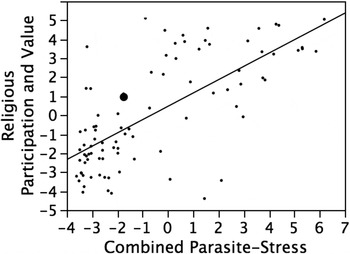
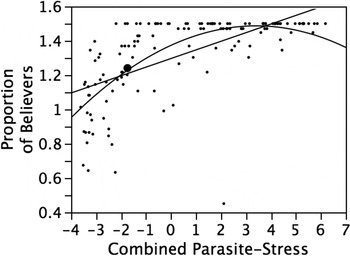




Target article
Parasite-stress promotes in-group assortative sociality: The cases of strong family ties and heightened religiosity
Author response
The parasite-stress theory may be a general theory of culture and sociality