



R1. Introduction
In our target article (TA), we argued that, despite recent revisionist critiques, the term “egalitarian societies” describes a genuine albeit often misunderstood phenomenon. However, we also argued that society-level typologies, especially those focussing on equality-of-outcome, have the capacity to obscure both the degree of inequality in nominally egalitarian societies, and the motives which structure equality. In reviewing eight domains of inequality, we showed that no human societies are perfectly equal in all areas of life. Instead, we argued, egalitarianism is better understood by moving beyond outcome-oriented society-level definitions, and concentrating on the distinct processes – demand sharing, risk-pooling, reputation-building, status-levelling, consensus decision-making, and residential mobility – that produce more or less equality given particular ecological and economic circumstances. We argued that these processes, and the individual motives underlying them, are not limited to nominally egalitarian societies, and that to better understand the patterning of equality and inequality worldwide, we should (1) better operationalise the processes which structure them; (2) conduct more quantitative cross-cultural work on the topic; and (3) focus on the complex interplay between motive, process and socio-ecology across diverse contexts, e.g., by leveraging natural experiments in societies undergoing subsistence transition.
Of thirty commentaries, a majority endorse aspects of our theses, and/or offer useful extensions, suggestions or corrections. Kohler and Codding situate our framework within archaeology and human behavioural ecology. Szocik; Hames; Power et al.; Calluso & Iacopino; Meliou & Ramoglou; Huang et al.; and Elahi focus on the capacity of processes identified in our model to reduce or, alternatively, obscure or create structural inequalities, especially in gender relations and/or at the intersections of gender, age, socio-economic status, and ethnic/group identity. Khalil and Cao discuss the relevance of our framework to situations in which people lose or forfeit personal autonomy. Sueur et al. and van der Does connect egalitarianism to decision-making in group-living non-human animals and to conventions of interpersonal deliberation, respectively. Scott-Phillips; Rivero & Amir; Schakowski & Ciranka; Niazi; Huang et al.; Sheskin & Johnson; and Zhu et al. extend or improve our theses via synthesis with the psychological literature on (1) the social functions of the mind; (2) child development; (3) status-structured psychological variation; (4) hierarchy regulation; (5) equality versus equity; (6) meritocracy; and (7) advantageous inequality aversion. Borgerhoff Mulder; Deb; Merker; and Boyette, via discussions of (1) “false consciousness”; (2) norm enforcement; (3) social learning; and (4) childhood enculturation, each emphasise the fundamental role of culture.
A subset of commentaries are framed as disagreements but extend or synergise with our thesis. These include Garfield’s call to move beyond society-level typologies using cutting-edge cross-cultural research methods; Smith’s consideration of the utility of outcome-level measures; Widerquist & McCall’s argument that perfectionist not outcome-oriented definitions should be our target of critique; and Toutee et al.’s exploration of redistributive processes in stratified societies.
Three commentaries represent areas of genuine disagreement: Hanson, in considering recent history, argues that egalitarian motives are not universal and have dwindling relevance to contemporary life. Buckner & Glowacki argue that, given the prevalence of sex-biased inequality and violence, the “egalitarian societies” concept is erroneous. Venkataraman & Kraft argue that our emphasis on individual-level processes is misplaced, the inequalities we describe are superficial, and that theorists should instead focus on the group-level benefits of egalitarian norms.
We divide our reply into four principal sections, addressing different themes linking these commentaries: (1) gender inequalities; (2) the benefits of prioritising process over outcome in studies of (in)equality across the broad range of human societies; (3) the role of cultural norms; and (4) the psychology underpinning egalitarian processes. We finish by discussing the broader relevance of the motives and processes identified in the target article, beyond egalitarian societies.
R2. Egalitarianism at the intersections: structural and gender inequality
Six commentaries – Szocik; Hames; Power et al.; Calluso & Iacopino; Meliou & Ramoglou; Buckner & Glowacki – take structural, especially gendered inequalities, as their central theme. Szocik argues that the key question is not how social processes limit hierarchy, but for whom; and that process-first models risk ignoring threats to female autonomy. Buckner & Glowacki contend that threats against female autonomy (including bodily autonomy) are so severe that nominally egalitarian societies cannot, rightly, be viewed as egalitarian. Calluso & Iacopino argue that, even given equal opportunities, process models may silently legitimise gender inequalities when implicit biases go unnoticed or unchallenged. Similarly, Meliou & Ramoglou describe how combinations of different categories – including gender, age, and knowledge-access – curtail people’s ability to realise autonomy, status, and resource access. Hames agrees that political participation structures gender inequalities, though argues, like Venkataraman & Kraft, that gendered labour divisions do not obviously foster inequality. Power et al., in contrast to Szocik, see assertions of female autonomy – through, for example, institutions like bride service, partner choice, and female residential movement decisions – as integral to every process we identified.
While the TA highlights multiple instances of gender-structured inequality, Buckner & Glowacki go further, contending that gender inegalitarianism is so severe that the “egalitarian societies” concept is a misnomer. For instance, they provide a vivid example of punitive rape for violating Hadza epeme rules. But this is a second-hand account from an unnamed informant. There are no direct reports in the 100-year history of Hadza ethnography where this punishment has been administered for any crime. Likewise, Buckner & Glowacki revisit our discussion of arranged marriage (TA S3.7), contending that marriage practices often involve female coercion, backed by threats of corporal punishment. But they ignore accounts (Marlowe, Reference Marlowe2010) that the Hadza are afforded nearly complete marital autonomy. Nor do they mention numerous reports that corporal punishment is relatively uncommon among mobile hunter-gatherers (Roman, Reference Roman2023) or that third-party punishment is rarer in contexts with less social differentiation (Fitouchi & Singh, Reference Fitouchi and Singh2023; Garfield et al., Reference Garfield, Fiorio, Ebert, Iben El Rhazi, De Petrillo and Molho2026). In our view, this commentary exemplifies what Widerquist & McCall term “perfectionism”: “either a society is equal in every way, or it is… ‘unequal’ and therefore ‘inegalitarian’.” Perfectionism is used to “discredit egalitarianism” but “no serious writer uses similarly perfectionist definitions of hierarchy, stratification, or elitism.”
Hames argues that our review “may lead one to conclude that… sexually egalitarian societies… may never have existed.” Indeed, we know of no completely gender equal societies. With this said, unlike Buckner & Glowacki, we believe many of those nominally egalitarian societies we discussed truly are characterised by comparatively pronounced female autonomy. As Power et al. highlight, women play leading roles in institutions of ridicule and status-levelling, including moadjo (Lewis, Reference Lewis and Hewlett2014) and “talk” (Wiessner, Reference Wiessner2005); while female autonomy is frequently asserted during formalised rituals (e.g., Turnbull, Reference Turnbull, Leacock and Lee1982; Power et al.). Accounts of female autonomy more generally are abundant in the ethnography of egalitarian societies (Endicott, Reference Endicott1981). Turnbull writes “A[n Mbuti] woman is in no way the social inferior of a man” (Turnbull, Reference Turnbull1965), and Draper (Reference Draper1975) that “!Kung society may be the least sexist of any we have experienced.” Leacock (Reference Leacock1978) emphasised that among these societies women held “decision-making power over their own lives and activities to the same extent that men did” (p.247). Jang et al. (Reference Jang, Kandza, Ntamboudila and Boyette2025) show that BaYaka women report much greater autonomy than the neighbouring Bandongo. Famously, the Batek have few proscriptions against female leadership, and women are often “headman” (Endicott & Endicott, Reference Endicott and Endicott2008).
As Power et al. further highlight, women in egalitarian societies leverage reproductive autonomy to control and incentivise male provisioning, and for example, Ache women strategically exploit male-male competition dynamics by selecting co-fathers to maximise male investment (Ellsworth et al., Reference Ellsworth, Bailey, Hill, Hurtado and Walker2014; and, for theory, see Scelza, Reference Scelza2013). Likewise, though women’s engagement in childcare is universally higher than men’s, in comparative frame, societies like the Mbuti, BaYaka and Agta have among the highest paternal childcare engagement recorded among small-scale societies (Konner, Reference Konner, Hewlett and Lamb2017). Moreover, the institutions of bride service and/or bridewealth among the Ache, Hadza, Mbuti, !Kung, and other foragers (Buckner, Reference Buckner2023; Marlowe, Reference Marlowe2003; Walker et al., Reference Walker, Hill, Flinn and Ellsworth2011), though inegalitarian, differentially advantage women and their kin over men.
Nevertheless, we argued that the degree of female autonomy and equality is sometimes overstated (TA S3.4): Batek women serve as “headmen” only in a minority of cases, and are disproportionately older women, without family responsibilities (Endicott & Endicott, Reference Endicott and Endicott2008). BaYaka women contribute less to long-term family decision-making than their husbands (Jang et al. Reference Jang, Kandza, Ntamboudila and Boyette2025). Among the Andamanese, !Kung San, and BaYaka, men more frequently coordinated meetings and community-wide activities (von Rueden, Reference von Rueden, Koster, Scelza and Shenk2024). Relatedly, though women in those pastoral or agricultural societies with matrilineal descent tend to have more household bargaining power (Lowes, Reference Lowes2022; Mattison, Quinlan, & Hare, Reference Mattison, Quinlan and Hare2019) and more often hold formal leadership positions (Low, Reference Low1992; Hames), these societies are not clearly matriarchal, and men generally retain greater political authority.
Hames also states it is unclear “why the classic sexual division of labour… is considered a domain of inequality.” Likewise, Venkataraman & Kraft emphasise that “to frame the gendered division of labour as an inequality is superficial” because “difference does not necessarily equate to inequality.” And, indeed, we agree with Leacock (Reference Leacock1978), that sovereignty over food production is a key source of female autonomy in many hunter-gatherer groups. We also agree that gathering is not intrinsically less valuable than hunting (see Venkataraman et al. Reference Venkataraman, Hoffman, Farquharson, Davis, Hagen, Hames, Hewlett, Glowacki, Jang, Kelly, Kramer, Starkweather, Syme and Stibbard-Hawkes2024, Reference Venkataraman, Hagen, Stibbard-Hawkes, Hames, Lew-Levy, Jang, Glowacki, Hoffman, Kramer, Davis, Starkweather, Hewlett, Garfield and Kelly2026), and, famously, among many warm-climate foragers like the Hadza and Ju/’hoansi, women make greater caloric contributions than men (Lee & DeVore, Reference Lee, DeVore, Lee and DeVore1968). Yet, as Venkataraman & Kraft also acknowledge, “differences in skill, knowledge, and resources… have the potential to lead to inequalities (e.g., via trade-offs in childcare and politicking).”
Here Calluso & Iacopino, Huang et al., and Meliou & Ramoglou warn that differential ability, encouragement, or desire to participate in politics may structure inequality despite egalitarian processes. We agree and argued that “autonomy does not necessarily result in equality where values, ambitions, or incentives differ” (TA S3.4). Greater likelihood of overt male leadership need not result from female leadership proscriptions, but from gender differences in politicking and labour participation. Such differences result from interactions between sex-specific social strategies and culturally transmitted expectations, particularly those related to gendered divisions of labour (Smith et al., Reference Smith, von Rueden, van Vugt, Fichtel and Kappeler2021). This frequently underwrites gendered inequality, and most contemporary democratic states remain characterised by childcare- and domestic-labour-inequalities, with demonstrable consequences for career advancement (Cukrowska-Torzewska & Matysiak, Reference Cukrowska-Torzewska and Matysiak2020). This also happens in nominally egalitarian societies, and, for instance, Tsimane women are less prominent in community meetings than men; a consequence of women’s smaller social networks, lower cooperation with non-relatives, and lower time allocations to extra-household labour (von Rueden et al., Reference von Rueden, Alami, Kaplan and Gurven2018). The latter, especially, may introduce opportunity costs that, in addition to differences in preferred political strategies, create inequalities in leadership.
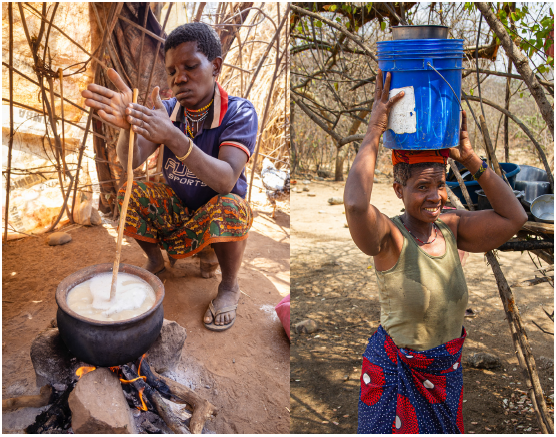
Beyond the opportunity costs, gendered labour divisions can directly influence health and status. High engagement in hunting and honey-collecting, for instance, gives men first access to preferred foods (Berbesque & Marlowe, Reference Berbesque and Marlowe2009), sometimes resulting in thousands of additional calories for men (Berbesque et al., Reference Berbesque, Wood, Crittenden, Mabulla and Marlowe2016), and perhaps higher female anaemia rates (Stibbard-Hawkes et al., Reference Stibbard-Hawkes, Attenborough, Mabulla and Marlowe2020)Footnote 1. Although activities like hunting and honey extraction often entail incident and injury – e.g., from falls or hunting weapons; Bennett et al., Reference Bennett, Barnicot, Woodburn, Pereira and Henderson1973; Stibbard-Hawkes, Reference Stibbard-Hawkes2020 – gathering activities, including tuber-digging and palm-pith processing (Blurton Jones & Marlowe, Reference Blurton Jones and Marlowe2002), are regularly more monotonous and energetically demanding (Gallois & Henry, Reference Gallois and Henry2021). Less often discussed, women’s labour not only includes gathering but, as among the Hadza, often also water-fetching, food preparation, and cooking (Figure 1). Sex differences in woodsmoke exposure may structure sex differences in ocular pathology (Marlowe, Reference Marlowe2010; Stibbard-Hawkes & Apicella, Reference Stibbard-Hawkes and Apicella2022). Noteworthy also, as Hames highlights, is that men differentially target large, divisible resources (Codding, Bliege Bird, & Bird, Reference Codding, Bliege Bird and Bird2011) and, whether more a politicking or provisioning strategy (Gurven & Hill, Reference Gurven and Hill2009; Wood & Marlowe, Reference Wood and Marlowe2013), food sharing differentially allows men to build reputations for magnanimity (Hawkes, Reference Hawkes1992).
(Left) A Hadza woman cooking ugali. (Right) A Hadza woman demonstrating how to carry water. Hadza women disproportionately contribute to both activities, yet these additional responsibilities are often absent in discussions of the gendered division of labour.engaged
Thus, the overall picture is complex. Ethnographic accounts of the Batek, Hadza, Mbuti, BaYaka, Mbendjele, and even Ju/’hoansi and Agta reveal relatively pronounced female autonomy, and, following Widerquist & McCall, we do not think that Buckner & Glowacki’s selective evidence seriously challenges the “egalitarian societies” concept. Like Power et al., we agree that our six processes are regularly used by women to pursue autonomy, resource access, and status. Yet like Calluso & Iacopino, Meliou & Ramoglo, Huang et al., and Szocik, we agree that differential ability, encouragement, and desire to pursue autonomy or to politick – influenced by age-/sex-structured differences in labour participation – still yields inequalities. Gendered labour specialisation does not equate to inequality a priori (Hames and Venkataraman & Kraft) but a posteriori.
Readers will note that every commentary, most cited literature, and the TA itself rely heavily on qualitative, often anecdotal evidence. Though there have been good attempts to quantify gender differences in parenting (Konner, Reference Konner, Hewlett and Lamb2017), autonomy (Jang et al., Reference Jang, Kandza, Ntamboudila and Boyette2025), and hunting engagement (Koster et al., Reference Koster, McElreath, Hill, Yu, Shepard, Van Vliet and Ross2020; Venkataraman et al., Reference Venkataraman, Hoffman, Farquharson, Davis, Hagen, Hames, Hewlett, Glowacki, Jang, Kelly, Kramer, Starkweather, Syme and Stibbard-Hawkes2024), quantitative comparative data, particularly on political engagement, are lacking. This facilitates selective reporting and may explain why the degree of gender inequality in nominally egalitarian societies has been a topic of debate for over sixty years (Endicott, Reference Endicott1981; Flanagan, Reference Flanagan1989; Leacock, Reference Leacock1978; Buckner & Glowacki; Power et al.). There is clear need for more research, leveraging quantitative methods including structured observation, cultural consensus analysis, and normative vignettes, to quantify and compare gender-specific equality and autonomy motives and the degree of gendered inequality in decision-making at the household, community, and society levels (TA S6.1, Table 2).
R3. Outcomes are important, processes are primary
The overarching thesis of the TA is that, while archaeology and anthropology have provided rich empirical evidence concerning the processes underlying egalitarianism, beyond this specialist literature, a focus on equality-of-outcome has fostered misconceptions about the nature of egalitarian societies. Several commentaries welcome our reemphasis on data that have been “forgotten or omitted in recent syntheses” (Codding). Other commentaries query this thesis, especially our calls to move away from outcomes. Smith argues that “a focus on outcomes is equally important,” and Borgerhoff Mulder that “definitions based on outcomes should not be abandoned.” Widerquist & McCall argue that outcome-oriented definitions are a misidentified target and that the problem is perfectionist definitions. Toutee et al. argue that outcomes remain necessary because the processes we have identified occur even within highly stratified societies; while Calluso & Iacopino and Huang et al. show how process-based definitions of egalitarianism can obscure significant inequalities, including the co-existence of meritocracy with unequal access to capital or opportunities. Here, we agree with Smith and Kohler that outcome-level measures of inequality remain vitally important. However, a reemphasis on process is yet still critical to move the study of comparative human political organisation forward.
Smith highlights that focussing on outcome is important when we “want to know how unequal” some population or society is. Smith reminds us that the entirety of the TA Section R3 concerns inequality of outcomes and emphasises the analytic utility of clearly operationalised, outcome-level measures like reproductive skew (Ross et al., Reference Ross, Hooper, Smith, Jaeggi, Smith, Gavrilets, Zohora, Ziker, Xygalatas, Wroblewski, Wood, Winterhalder, Willführ, Willard, Walker, von Rueden, Voland, Valeggia, Beheim, Beckerman, Atkinson, Apicella and Borgerhoff Mulder2023) and household size-variation (Bogaard et al., Reference Bogaard, Ortman, Birch, Quequezana, Chirikure, Crema, Cruz, Feinman, Fochesato and Kohler2024). The latter is a focus of the GINI Project (see Kohler), which assesses global change in wealth inequality over millennia. Certainly, equifinality can mean that similar Gini coefficients, or reproductive skews, are obtained via different combinations of mechanisms – but it is imperative to measure and understand both outcomes and the processes that create them. Importantly, our model recognises that outcomes feed back on individual incentives (TA Figure 1), and, per Huang et al., measuring outcomes is often necessary to assess whether processes are truly egalitarian.
Although the TA can be read as a repudiation of outcome-oriented measures, this was not our intent. Instead, we argued that overemphasis on outcome has created misconceptions about the processes which drive equality, shaping revisionist arguments that egalitarian societies “are either mythical or were uncommon in the Palaeolithic and absent in modern times.” Outcomes are important, and their measurement has also contributed to the demystification of egalitarian societies, e.g., Borgerhoff Mulder & Bowles’ wealth inheritance project finding that foragers exhibit “Ginis of material wealth parallel to those of disposable income for Denmark, Norway and Finland (Mulder et al., Reference Mulder, Bowles, Hertz, Bell, Beise, Clark, Fazzio, Gurven, Hill, Smith, von Rueden and Wiessne2009).” We do not want to “abandon outcomes as a metric” or “replace outcome-based views of (in)equality with process-based ones” (Toutee et al.; Smith, our emphases) but rather to reemphasise process as the primary focal point for understanding inequality.
Here, Widerquist & McCall argue that we misidentified our target. They suggest the key issue is, instead, perfectionist-versus-substantivist definitions. They show how egalitarian societies are held to higher definitional purity standards than stratified societies and that “serious researchers will wrongly apologise for failing to find genuine egalitarianism” just because “pockets of inequality exist.” We agree that perfectionism has distorted this literature and is a worthy target for critique. Yet we would also emphasise that perfectionist definitional purity tests almost always orient around outcome-level evidence. Though outcomes are important, a renewed focus on the processes underlying egalitarianism will allow us to conduct better cross-cultural research comparing analogous wealth redistribution or collective decision-making processes across societies which, at the outcome level, appear very different.
R3.1 Reemphasising process helps us move beyond society-level dichotomies
We argue that outcome-oriented, society-level taxonomies provide only “coarse categories, which allow for neither continuous variation nor for inequality across different domains” (TA S6) and “do not deftly account for diversity.” Nevertheless, like Widerquist & McCall, we do not think society-level characterisations should be jettisoned completely; though coarse, they can be useful. Garfield questions our defence of the “egalitarian societies” concept: “as presented, [the TA] risks pulling in two directions at once: dissolving “egalitarian societies” into modular processes while still treating “egalitarian” as a useful society-level classification.” However, we do not believe our support of the “egalitarian societies” concept is contradictory with our call to “move away from society-level taxonomies.” The context of our concept-defence is that several scholars have characterised egalitarian societies as an “analytically sterile” (Graeber & Wengrow, Reference Graeber and Wengrow2021), “putative” (Buckner & Glowacki), utopian myth (Singh, Reference Singh2022). Yet society-level descriptors have utility and, for instance, enable Garfield to distinguish between the egalitarian Chabu and the stratified Hamar. But despite their higher-order accuracy, they can be limiting. This is why we concluded the TA with multiple calls to move beyond low-fidelity society-level dichotomies.
Garfield presses the logical extension of our argument: “just as no society achieves total equality, no society lacks egalitarianism entirely.” He shows that the processes we describe also function in societies classified as hierarchical. The TA explicitly advances this same conclusion, though with only brief and limited reference to these processes at work among kibbutzim, cooperative farmers, and pastoralists, e.g., Maasai osotua partnerships (Cronk & Aktipis, Reference Cronk and Aktipis2021). Garfield provides detailed examples from socially stratified (farmer-) pastoralists, supporting our conclusion that “focussing on the processes underlying egalitarianism finally decouples them from their hitherto concrete associations with particular subsistence types.” He shows how risk-pooling relations (TA S5.2) operate within but not between Maasai and Hamar age-grade cohorts (Legesse, Reference Legesse1973); and how the Hamar maintain standing via consensus-brokering, albeit only among a subset of high-status men. A similar pattern is seen in several hunter-gatherer societies, including the Yup’ik (Reedy et al., Reference Reedy, Orr, Spicer, Blanchard, Hiratsuka, Ketchum, Saunkeah, Wark and Woodbury2020) and the Comanche (Hoebel, Reference Hoebel1954).
Though Garfield frames this as a critique, we see it as an extension. We discussed how socio-ecological factors may delimit the way egalitarian processes translate into outcomes. With respect to resource distribution, for example, we argue that status-based homophily influences how sharing networks pattern equality (TA S5.3; S5.5): In the Tsimane, low status-based homophily causes cooperative relationships to diffuse status throughout the community (von Rueden et al., Reference von Rueden, Redhead, O’Gorman, Kaplan and Gurven2019), whereas the (institutionalised) status-based homophily Garfield describes in pastoralists curtails the equalising effects of resource transfers and consensus-building. Similar network effects operate in contemporary post-industrial societies: friendship between people of different socio-economic statuses is one of the strongest predictors of upward social mobility (Chetty et al., Reference Chetty, Jackson, Kuchler, Stroebel, Hendren, Fluegge, Gong, Gonzalez, Grondin, Jacob, Johnston, Koenen, Laguna-Muggenburg, Mudekereza, Rutter, Thor, Townsend, Zhang, Bailey, Barberá, Bhole and Wernerfelt2022).
Kohler, Smith, and Toutee et al. discuss those societies of the Pacific Northwest coast (e.g., the Tlingit, Kwakiutl and Chinook) characterised as “complex hunter-gatherers,” defined by pronounced inequality, slavery and hereditary nobility (Ames, Reference Ames1994). Although these societies are, at the outcome level, entirely distinct from foragers like the Batek and BaYaka, if we, like Toutee et al., go beyond outcomes we see that autonomy, wealth-access and status are negotiated by elaborations of similar processes identified in the TA. For instance, many Pacific Northwest societies were highly reliant on salmon, dried and stored. Salmon migrate inland to breed in great numbers, where they may be harvested by building fishing weirs at natural bottlenecks. Chieftains who control weirs can convert food surplus into status through feasting and potlatching – much like food sharing in more egalitarian contexts (e.g., see Hawkes, Reference Hawkes and Diehl2000; von Rueden et al. Reference von Rueden, Redhead, O’Gorman, Kaplan and Gurven2019) but at a grander and more competitive scale (Ames, Reference Ames1994; Testart, Reference Testart1982). Thus, as we argued (TA S5.3), “Status-seeking and reputation maintenance are universal elements of the human condition…even though they yield different outcomes under a range of ecological (and cultural) circumstances.”
Here, Khalil asks “If people care about process-egalitarianism, how come they are ready to surrender autonomy?” Numerous process models within archaeology and behavioural ecology address this question. When resource ecology favours local population growth and settlement density, surrendering autonomy to authoritative leadership can be individually beneficial in resolving novel coordination and collective action problems (TA S5.5). When resource ecology enables elite resource monopolisation, disenfranchised individuals may find it more profitable to enter dependence relationships with wealthy patrons than to emigrate, particularly where geographic constraints or inter-group threats circumscribe movement (TA S5.6). We tied the latter model, especially, to the “development of social stratification in Pacific Northwest foragers (Smith & Codding, Reference Smith and Codding2021), variation in gerontocratic authority… across Australian foragers (Keen, Reference Keen2006; Tonkinson, Reference Tonkinson, Ingold, Riches and Woodburn1988), and greater political inequalities in land-limited vs. labour-limited horticulturalists (Kaplan et al., Reference Kaplan, Hooper and Gurven2009).” Cao extends this argument, making the case that serfdom and non-chattel slavery can often also be understood as a consequence of “self-interested motives” within particular socio-ecological contexts.
In general, socio-ecologically grounded process models help us understand why societies vary in the extent to which some individuals are successful in the status quest, while others are reliant on patrons for basic subsistence – even where all individuals have similar basic motivations or desires. Thus, in response to Toutee et al., we argue that redistributive institutions like the potlatch cannot be considered in isolation; while we must recognise that analogous processes are at work in stratified and non-stratified societies, we must also attend to limitations placed on the status quest for the majority of individuals in stratified societies. If we looked at outcomes alone, we would see large Gini coefficients and stark class/caste stratification, rather than process-level strategy diversity.
Discussions like those in Garfield and Toutee et al. are exactly what we envisaged when we called for more “cross-cultural comparative research exploring autonomy, status, and distributive preferences as well as their relationship to social processes and resulting (in)equality in different domains” (TA S6.2). As we argued, “those same mechanisms associated with hierarchical stratification in other contexts are often engines of egalitarianism.” Toutee et al. show the obverse is also true: those mechanisms of redistribution associated with egalitarianism can legitimise hierarchical stratification and, e.g., in state-level societies, institutions like the European concept of noblesse oblige, or the Confucian ideal of ren may, in tandem with elite monopolisation of resources and military force, be used to limit political mobilisation and redistributive demands. Per TA Figure 1, we must look at how socio-ecological variables interact with a universal human psychology to forge and delimit analogous processes in extremely different contexts. Outcomes are important; processes are primary.
R3.2 Leveraging within-society variation to test how processes pattern (in)equality
Outcome-oriented, society-level taxonomies also falter when considering how individual incentives and egalitarian processes vary within societies, in response to geographic or temporal/seasonal (see Padilla-Iglesias, Reference Padilla-Iglesias2026) ecological variation. For example, large gatherings of otherwise decentralised forager bands can be accompanied by emergence of transitory authoritative leadership. During annual Cheyenne buffalo hunts, tribal councils would assemble, with authority over conflict-resolution and punishment (Lowie, Reference Lowie1948).
Studies that evaluate intra-societal variation offer invaluable tests of the origins of (institutionalised) inequality. Existing studies often rely on proxies rather than direct measurement (e.g., group size as proxy for coordination or social conflict). This is unavoidable when using large cross-cultural ethnographic datasets (e.g., Haynie et al., Reference Haynie, Kavanagh, Jordan, Ember, Gray, Greenhill, Kirby, Kushnick, Low, Tuff, Vilela, Botero and Gavin2021; Smith & Codding, Reference Smith and Codding2026; Wilson & Codding, Reference Wilson and Codding2020). Complementary to cross-cultural comparison are archaeological or historical studies describing change in inequality over time (e.g., New Guinea Enga: Wiessner, Reference Wiessner2002; Channel Island Chumash: Kennett et al., Reference Kennett, Winterhalder, Bartruff, Erlandson and Shennan2009; Pueblo of American Southwest: Kohler et al., Reference Kohler, Cockburn, Hooper, Bocinsky and Kobti2012; Kohler’s global GINI project: Kohler, Bogaard, & Ortman, Reference Kohler, Bogaard and Ortman2025). While these studies are rich in detail, they can lack individual-level data on changes in interpersonal relationships central to the models in question.
Another option is ethnographic observation of contemporary smaller-scale societies experiencing subsistence transitions (TA S6.2), particularly increased market participation, which can generate intra-societal variation in the socio-ecological conditions upon which models of (in)equality depend. As we argued, “Often such changes are geographically mosaic within societies… which present valuable natural experiments.” For example, studies of the Ache and Agta link greater sedentism to declines in demand sharing and greater contingency in giving (Gurven et al., Reference Gurven, Allen-Arave, Hill and Hurtado2001; Smith et al., Reference Smith, Dyble, Thompson, Major, Page, Chaudhary, Salali, Vinicius, Migliano and Mace2016), while more market-integrated Hadza may have greater tolerance of disadvantageous inequality (Smith et al., Reference Smith, Stibbard-Hawkes, Diamant, Mabulla, Bicchieri and Apicella2026).
More natural-experiment studies of status-levelling and collective decision-making would be especially valuable. With greater market integration, does political influence become more unequally distributed, and can we tie such change to individual-level incentives like leadership-demand or wealth-patronage? A Tsimane study tested associations between marketisation and changing politics within and across Tsimane villages, finding greater individual specialisation in conflict-mediation and increased inequality in informal political influence, consistent with increased leadership opportunity and, less conclusively, deference to labour patrons (von Rueden, Reference von Rueden2023). More broadly, we need more data on continuous changes in political inequality that, historically, may have presaged permanent, qualitative shifts in political order, including emergence of hereditary chiefs. Smith argues that egalitarian societies are defined by “primarily achieved status differences (rather than inherited or otherwise ascribed).” Understanding shifts from achieved to ascribed status hierarchy will benefit from nuanced studies of motivation and behaviour among smaller-scale societies in transition (TA S6.2, Table 2).
R4. The role and riddle of culture
Many commentaries emphasise the role of culture and enculturation in promoting egalitarian ideals. Deb argues that norms, especially, are missing in our discussion, while Boyette stresses the primacy of developmental enculturation. Merker highlights cultural learning as a mediator between ecology and behaviour, and Codding situates our commentary within the Human Behavioural Ecology literature. Borgerhoff Mulder discusses Marx’s theory of false consciousness, and the promotion of egalitarian narratives by societal elites as tools of exploitation. Elahi discusses how (1) cross-societal variation in cultural orientation and (2) identity-structured inter-group hierarchy can limit or circumscribe egalitarian processes. Cao and Khalil both consider how cultural processes like schismogenesis promote (in)equality variation across groups. Venkataraman & Kraft discuss how egalitarian cultural norms foster group-beneficial cooperation and collective intelligence. With the exception of Venkataraman & Kraft, these commentaries provide corrections, extensions, or context that can be integrated with our thesis. Venkataraman & Kraft offer an alternative explanatory framework, predicated on different assumptions. We address each of these in turn.
First, Deb and Boyette. Deb rightly highlights that though our explanatory framework is thorough, our discussion misses norms, i.e., shared, culturally transmitted expectations of how people should act. Though we do not explicitly theorise norms, she argues, we rely on them throughout, as the moral mandate for demand sharing; as the moral condemnation for stinginess; and as the moral substrate for collective decision-making. Boyette also argues that we ignore culture, especially childhood enculturation. Citing evidence from the BaYaka, Mbendjele and Mbuti, he argues that adults in egalitarian societies defend personal autonomy because their right to autonomy is enacted and legitimised throughout their childhood. Boyette cautions that we shouldn’t over-attribute causation to socio-ecology alone, while Deb asks “why do such norms emerge in the first place?”
Both commentaries are correct that culture is under-theorised in our framework. We agree with Deb that egalitarian norms provide a cultural substrate which allows status-levelling, collective decision-making and demand sharing (see Smith et al., Reference Smith, Stibbard-Hawkes, Diamant, Mabulla, Bicchieri and Apicella2026) to flourish. We agree with Boyette that these norms are promoted during childhood. So why have we deemphasised culture?
Borgerhoff Mulder, like Smith and Codding, highlights that our thesis ties “egalitarian social systems… to a theoretically defined set of assumptions from [human] behavioural ecology.” Buckner & Glowacki suggest these processes were selected arbitrarily, but as Kohler and Codding both highlight, they are drawn from a well-developed research tradition (Codding, Bliege Bird, & Bird, Reference Codding, Bliege Bird and Bird2011; Gurven & Hill, Reference Gurven and Hill2009; Hawkes, Reference Hawkes1992; Smith & Codding, Reference Smith and Codding2021; Testart, Reference Testart1982; Winterhalder, Reference Winterhalder1996). Human behavioural ecology [HBE], as a central disciplinary tenet, is agnostic towards the genetic, psychological, and cultural processes that generate behaviour (Blurton Jones, Reference Blurton Jones1982; Brown & Lala, Reference Brown and Lala2024; Smith, Borgerhoff Mulder, & Hill, Reference Smith, Borgerhoff Mulder and Hill2001; Stibbard-Hawkes, Reference Stibbard-Hawkes, Gallup, Sethu and Geher in press). This agnosticism is equivalent to the “phenotypic gambit” from animal behavioural science, which generates predictions as if evolution acted on behaviour directly. Reductionism of this type is useful and, as Merker argues, allows us to trace “motivations that we all recognise” under “constraints which ultimately derive from ecological circumstances” to explain “a wide range of societal patterns.” Yet these reductionistic assumptions have also proven divisive (e.g., Graeber & Wengrow, Reference Graeber and Wengrow2021).
Boyette argues that we over-focus on ecology. Here we respond with a question. If culture is the driving force, independent of socio-ecological predictors, why do the same patterns of enculturation and the same egalitarian norms (and ontogenetic environments) routinely reoccur in societies including the Hadza, Aka, Batek, Mbuti, Agta, Mbendjele, and Ju/’hoansi who have no recent cultural ties, only similar ecologies and subsistence economies? Echoing Deb, where do ecologically regular patterns of norms come from? Why do institutions of extravagant feasting so often occur in stratified societies who possess large surpluses but who lack cash stores of value (Ames, Reference Ames1994; Hayden, Reference Hayden, Price and Feinman1995; Roscoe, Reference Roscoe2009; Toutee et al.)? Beyond foragers, why do complex inegalitarian inheritance norms or – strong anti-cuckoldry institutions – appear disproportionately in societies where patrilineal resource transfer (of land or cattle) determines reproductive success (Hrdy & Judge, Reference Hrdy and Judge1993; Stibbard-Hawkes, Reference Stibbard-Hawkesaccepted; Strassmann, Reference Strassmann1996)? Why are particular cultural orientations like collectivism and individualism (Elahi) reliably linked to subsistence practices like rice- and wheat-farming (Talhelm, Reference Talhelm2020)? Why are human norms and cultural institutions so often structured by subsistence?
If anthropology had its own “Hilbert Problems” (see Shaver et al., Reference Shaver, Sosis, Ross, Watts, Price, Wildman, Hoogeveen, McKay and Cristofori2025), this question would certainly be among them. We can point to other researchers who have made progress integrating ecology- and culture-first perspectives (Baumard & Andre, Reference Baumard and André2025; Brown, Reference Brown2004; Cronk, Reference Cronk1995; Mace, Reference Mace2014). “Subjective selection” (Singh, Reference Singh2026) has promise in explaining the emergence and propagation of group-varying normative behaviour, bridging universal human psychology with the inter-individual differences in bargaining power that emerge within particular socio-ecological settings. According to this theory, humans are non-neutral partisans in selecting which norms they promote to their peers and teach their children. The theory may also partially address Borgerhoff Mulder’s “false consciousness problem” and explain how cultural elites in stratified societies promote norms, narratives, and institutions which run contrary to majority interests (Singh, Wrangham, & Glowacki, Reference Singh, Wrangham and Glowacki2017; Stibbard-Hawkes, Reference Stibbard-Hawkesaccepted). For instance, Borgerhoff Mulder calls attention to risk-pooling institutions in pastoralists, which may divert the attention of those experiencing hardship from persistent wealth inequalities. As we argued (TA S6.2), “It would be especially pertinent to know whether those who have more to gain from private property, patronage, or deference to leadership also endorse less egalitarian ideals – perhaps an important catalyst in the cultural evolution of inequality.”
Yet we accept and agree that cultural processes are also often causal, independent of ecology. Boyette, Cao, and Khalil, echoing Wengrow and Graeber (Reference Wengrow and Graeber2018), argue that social groups tend to define themselves in opposition to neighbouring groups (i.e., “schismogenesis”; Bateson, Reference Bateson1935). As Cao and Khalil both relate, opposition to slave-holding societies on the Pacific Northwest coast may have reinforced values of autonomy and personal piety in non-slave-taking societies further south (see Wengrow & Graeber, Reference Wengrow and Graeber2018). Boyette relates how egalitarian identities are defined in opposition to neighbouring groups; and DSH has anecdotally seen oppositional identity among the Hadza. However, why and when neighbouring societies engage in more or less cultural differentiation requires theoretical development (see Bunce & McElreath, Reference Bunce and McElreath2017; Moya & Boyd, Reference Moya and Boyd2015).
Cultural transmission and norm enforcement can also forestall normative change following socio-ecological change. For example, we discussed in the TA (S6.2) that “accounts of the Baka, Batek, and Ju/’hoansi describe stability of autonomy and equality preferences even with increases in access to cash and market goods (Endicott, Reference Endicott, Widlok and Tadesse2005; Kohler, Reference Kohler, Widlok and Tadesse2005; Wiessner & Huang, Reference Wiessner and Huang2022).” Furthermore, “anecdotes from the Agta (Headland, Reference Headland1986) and Hadza (Woodburn, Reference Woodburn1982) describe how antipathy towards those perceived as trying to enrich themselves prevented adoption of agriculture and associated wealth accumulation.” However, more recent research indicates that Hadza communities with more market integration may have greater tolerance of accumulation (Smith et al., Reference Smith, Stibbard-Hawkes, Diamant, Mabulla, Bicchieri and Apicella2026).
A common critique of an ecology-first model of egalitarianism is that it cannot account for the “Australian paradox” – the preponderance of mobile foragers from Australia who had gerontocratic institutions. Variation in gerontocratic authority and polygyny across Australian foragers does have some relationship with resource ecology (Keen, Reference Keen2006; Tonkinson, Reference Tonkinson, Ingold, Riches and Woodburn1988). Further, Hawkes (Reference Hawkes and Diehl2000) has suggested an absence of large game on the continent – which limited younger men’s ability to accrue status – might explain the paradox (though also see Sterelny, Reference Sterelny2026). Yet, Australian foragers do present a challenge to our process model. Here control of ritual knowledge by older men is key. Although we agree with Power et al. that ritual may be used for asserting autonomy, we believe ritual secret lore also frequently promotes inegalitarian political structures (TA S3.4), even where ecological conditions are otherwise conducive to greater egalitarianism (Keen, Reference Keen2006). Culture has explanatory value and, by deemphasising it, we miss much. Deb and Boyette provide a welcome corrective.
One final commentary promotes a very different explanatory model of culture. Venkataraman & Kraft argue that our framework is incomplete without attention to the group-level functions of egalitarianism. Unlike our framework, they contend levelling-mechanisms are not extensions of self-interest, but pivotal for maintaining social environments where cooperation and coordination flourish. Collective decision-making fosters information flow, improving group decisions. Together, they argue, our six egalitarian processes are not primarily individually expedient, but “help groups function as coherent, adaptive units.”
Venkataraman & Kraft emphasise (without support) that their thesis does not necessitate a return to “romantic notions of collective virtue” which characterised the group-selectionist debates of the 1960s. Though they do not explicitly position their commentary within any theoretical paradigm, given their framing of groups as adaptive units and their references to, e.g., coordination payoffs and moral norms, their arguments bear similarity to Cultural Group Selection (Richerson et al., Reference Richerson, Baldini, Bell, Demps, Frost, Hillis, Mathew, Newton, Naar and Zefferman2016). Although the group-level processes they describe are not mutually exclusive with the individual-level mechanisms we identify, cultural group selection has been framed as theoretically antagonistic to our behavioural ecology approach (Mace & Silva, Reference Mace and Silva2016; Smith, Reference Smith2020).
To support their thesis, Venkataraman & Kraft must first demonstrate that egalitarian norms actually do yield the group-level benefits described. This is at least plausible (see Venkataraman et al., 2025; also see Mercier & Sperber, Reference Mercier and Sperber2019, on role of group debate in improving reasoning). Second, they must demonstrate that such norms have culturally evolved because they provide these group-level benefits. They do not do so. Further, Venkataraman & Kraft do not explain why, despite the purported benefits of egalitarian norms, self-interested individuals readily monopolise both resources and status whenever economic conditions allow (Ames, Reference Ames1994; Toutee et al.). Nor why people often sacrifice autonomy in exchange for leadership (von Rueden, Reference von Rueden, Koster, Scelza and Shenk2024; Khalil). Nor why stratified societies have no apparent deficits in collective intelligence. Indeed, increasing sedentarism and stratification have been repeatedly linked with an increased rate of technological evolution (Kline & Boyd, Reference Kline and Boyd2010; Powell, Shennan, & Thomas, Reference Powell, Shennan and Thomas2009; Stibbard-Hawkes & Mabulla, Reference Stibbard-Hawkes and Mabulla2025; Stibbard-Hawkes, Reference Stibbard-Hawkes2025). Although we find our individually oriented explanatory framework more parsimonious, opinion-diversity is essential to science and Venkataraman & Kraft provide a plausible if not easily testable alternative.
R5. The egalitarian mind: uniting the Anthropology of egalitarianism with the broader Behavioural and Brain Sciences
Several commenters extend our TA through synthesis with other areas of the behavioural and brain sciences including developmental psychology (Rivero & Amir; Schakowski & Ciranka), evolutionary psychology (Scott-Phillips), the psychology of equality, equity and fairness (Niazi; Huang et al.; Sheskin & Johnson; Zhu et al.), the political science of deliberation (van der Does), and the animal collective decision-making literature (Sueur et al.). We agree that certain motivations and processes underlying egalitarianism are present in other species far from the Homo clade. However, in synthesising these insights, it is also clear that humans possess specialised cognitive architecture to level inequalities. These require special explanation. We contend that, although they must sometimes accept trade-offs, humans are, from a young age, predisposed to enforce fairness for themselves and, contextually, often for others. We explore each of these commentaries in turn, which together, trace a universal but context-sensitive egalitarian psychology, with deep evolutionary roots.
R5.1 Consensus-based collective decision-making across species
Sueur et al. describe egalitarian processes in non-human animals, particularly consensus-based group movement. They emphasise need-based leadership, whereby individuals with situationally greater energy or safety needs more often initiate movement. Others follow out of self-interest in retaining group coordination. Sueur et al. highlight that egalitarianism in group movement can occur even amidst coerciveness in other domains (e.g., reproductive access), so long as individuals’ influence in collective decision-making is regulated by their own need and others’ tolerance. The latter depends upon group members’ exit options – their ability to disperse – which has been central to reproductive skew models of inequality (Ross et al., Reference Ross, Hooper, Smith, Jaeggi, Smith, Gavrilets, Zohora, Ziker, Xygalatas, Wroblewski, Wood, Winterhalder, Willführ, Willard, Walker, von Rueden, Voland, Valeggia, Beheim, Beckerman, Atkinson, Apicella and Borgerhoff Mulder2023; Vehrencamp, Reference Vehrencamp1983). Beyond exit options, non-humans have other tools that more directly level inequalities, including withdrawing grooming from dominant individuals and building coalitions to challenge or eject them (Papageorgiou et al., Reference Papageorgiou, Borgerhoff Mulder, Brosnan and Strauss2026).
Sueur et al.’s arguments parallel our discussion of leadership in even the most egalitarian societies (TA S3.3; S5.5) and the socio-ecological conditions like social network structure (TA S5.3) and circumscription (TA S5.6) that limit or exacerbate coercive influence. However, humans are exceptional amongst group-living mammals, particularly in the degree to which dominance-based status-accrual and reproductive monopolies can, situationally, be curtailed (Boehm, Reference Boehm1999; von Rueden & Jaeggi, Reference von Rueden and Jaeggi2016). In the TA, we argued that human levelling coalitions can be larger, more durable, and more proactive (Gavrilets, Reference Gavrilets2012; Wrangham, Reference Wrangham2021), due to cognitive abilities like joint-attention, language, and free-rider detection (Tomasello et al., Reference Tomasello, Carpenter, Call, Behne and Moll2005; Tooby, Cosmides, & Price, Reference Tooby, Cosmides and Price2006). Humans are also frequently more interdependent in resource-production and reproduction (Hooper, Kaplan, & Jaeggi, Reference Hooper, Kaplan and Jaeggi2021; von Rueden, Reference von Rueden, Koster, Scelza and Shenk2024), including parental-investment complementarities that contribute to a high prevalence of monogamy in our species (Dyble, Reference Dyble2025; Ross et al., Reference Ross, Hooper, Smith, Jaeggi, Smith, Gavrilets, Zohora, Ziker, Xygalatas, Wroblewski, Wood, Winterhalder, Willführ, Willard, Walker, von Rueden, Voland, Valeggia, Beheim, Beckerman, Atkinson, Apicella and Borgerhoff Mulder2023).
van der Does argues that our discussion of consensus-based collective decision-making is operationally imprecise, because outcome-level consensus is distinct from consensus-seeking. Sueur et al. raise a similar concern, contrasting shared (multiple individuals contribute) and unshared consensus (one individual determines the outcome) in animal decision-making. Additionally, consensus-building may conceal non-egalitarian motives for suppressing dissent. van der Does asks why not focus explicitly on deliberation, defined as interpersonal verbal communication involving mutual respect and reasoning. Venkataraman & Kraft also emphasise deliberative conventions. Though we do consider deliberation and the conventions that make it effective (TA, S5.5), we agree with van der Does that questions for future studies should be more specific than those outlined in TA Table 2. For example, “do discussions prior to political decisions (always) show signs of reasoning and mutual respect?” Per van der Does’ own work, descriptions of foragers in the ethnographic record suggest that these conditions are sometimes met, and sometimes not.
As van der Does highlights, consensus-based decision-making, and deliberative conventions in particular, have not received the same degree of (evolutionary) modelling as the other processes identified in the TA. Models should delineate different motives that may underlie deliberation: “are such conventions sustained by third-party equality preferences or first-party efforts to ensure personal input and to defend one’s relative status?” (TA, S6.1). Models should also test the effectiveness of deliberative conventions under varying social structures, including differences in gender- and kin-based social organisation (Vadavalli, Garfield, & Glowacki, Reference Vadavalli, Garfield and Glowacki2026). To test models with data, van der Does suggests delving into anthropologists’ field notes. Here, work by Wiessner with the Ju/’hoansi (Reference Wiessner2005, Reference Wiessner2014) provides a benchmark for how conversation-analysis can reveal deliberative conventions. As we concluded (TA, S7), this kind of work could be expanded into a cross-cultural research programme, in which observational measures of verbal exchange and non-verbal behaviour during collective decision-making are systematised. Vignette studies may also help elucidate cross-cultural variation in deliberative conventions (e.g., see Mathew et al., Reference Mathew, Hadfield, Mwangi and Reynolds2025 on Turkana dispute resolution).
R5.2 Egalitarianism and developmental psychology
Rivero & Amir note overlaps between our process model and universal features of children’s social interactions. They describe how children care about outcomes, but may care even more about the processes that produce them. These conclusions underscore our emphasis on moving beyond society-level differences towards granular explorations of processes operating within societies – and, indeed, age cohorts. Rivero & Amir demonstrate that egalitarian processes are observed in schoolchildren even in very inegalitarian contexts and are “not reducible to particular social structures and ecologies.”
Our model emphasises how shifting socio-ecological conditions can prevent or delimit egalitarian processes. For example, people may defer to authority in the context of pronounced coordination and collective action problems, and the relevant follower psychology is apparent early in development (Margoni & Thomsen, Reference Margoni and Thomsen2024; Wang, Chen, & Li, Reference Wang, Chen and Li2024). While our framework emphasised universal psychological motives, we agree with Boyette that individual psychological differences are strongly shaped by ontogeny. As Schakowski & Ciranka argue, lower socio-economic status during childhood increases risk-sensitivity and future discounting (de Courson, Frankenhuis, & Nettle, Reference de Courson, Frankenhuis and Nettle2026), which can lower investment in education (even where participation is incentivised) and limit career opportunities. Effectively, individuals “satisfice,” adjusting aspirations based on socio-economic conditions over their development. There is a clear need for continuing research into the ways that developmental environments and child psychology interact with redistributive policies (e.g., need-based scholarships) to perpetuate inequality in industrialised countries. Ontogeny may also influence other-regarding fairness preferences: Amir et al.’s (Reference Amir, Ahl, Jordan, Bolotin, Bogese, González, Callaghan, Sugiyama, Otali, Tusiime, Bangayan, Snodgrass and McAuliffe2026) recent work shows that, cross-culturally, young children rarely reject inequality that is advantageous to them, and that age-related increases in rejection of advantageous inequality are lowest in Shuar horticulturalists – the least market-integrated of their study populations.
R5.3 Egalitarianism and the psychology of fairness
We argue that, in general, humans care more about fairness than strict equality (see also Starmans, Sheskin, & Bloom, Reference Starmans, Sheskin and Bloom2017), motivated by individual self-interest in securing resource access, autonomy, and status (TA, S4; S6.1). Rivero & Amir and Zhu et al. argue that egalitarian processes “are not driven by self-interest alone, but also by a disposition to treat others’ interests as equally deserving of consideration.” We do not claim that humans lack other-regarding, altruistic preferences; but that the egalitarian processes we describe are not reliant on them. For example, giving to needy others may be an acquiescence to demands (Blurton Jones, Reference Blurton Jones1984). Giving may also often be a function of deservingness judgements or reputational concerns, consistent with a psychology of reciprocity (Petersen, Reference Petersen2012) and indirect reciprocity/partner choice (Roberts et al., Reference Roberts, Raihani, Bshary, Manrique, Farina, Samu and Barclay2021), respectively. Third-party status-levelling may be motivated by defence of kin or reciprocity partners, or in anticipation of future autonomy-threats (Krasnow et al., Reference Krasnow, Delton, Cosmides and Tooby2016). And what is perceived as a “fair” contribution of labour or division of resources in collective actions can be understood as reputation maintenance to facilitate ego-beneficial partner choice (Baumard, Andre, & Sperber, Reference Baumard, Andre and Sperber2013).
In general agreement, Scott-Phillips links these motives to the fundamentally social nature of the human mind, and Niazi discusses these and other cognitive mechanisms underpinning egalitarian processes as forms of “predictive processing,” designed to undercut ego-nonbeneficial hierarchies before they occur. In line with our contention that “equality often emerges not in spite of but because of status motivations” (TA S2), Huang et al. describe how preferring equality- over equity (i.e., merit)-based resource allocations can function as a reputation maintenance strategy signalling group commitment. While Huang et al. frame this as a limitation to our process-based approach, it aligns well with our thesis. We ask whether “equal distributions of collective production may be more broadly favoured in more egalitarian societies, including by high contributors.” We cite some experimental evidence in favour, and suggest that leaders within egalitarian societies may often reject a greater share of collective production due to reputational concerns (TA S6.1). Inter-group and cross-cultural variation in fairness judgements, including the weight given to equality vs. merit, may be a function of the relative bargaining power of the individuals involved (Binmore, Reference Binmore2005; Deb, Walker, & Heintz, Reference Deb, Walker and Heintz2024; Le Pargneux et al., Reference Le Pargneux, Roberts-Gaal, Woodley, Greene and Cushman2025).
Sheskin & Johnson discuss how allocation decisions often combine both equality- and merit-based considerations. This parallels an ongoing debate over Hadza food redistribution. Measurements from Hawkes, O’Connell, and Blurton Jones (Reference Hawkes, O’Connell and Blurton Jones2014) show that Hadza hunters get no more of the food they produce than campmates – total redistributive equality. Wood and Marlowe (Reference Wood and Marlowe2013) find that a hunter’s household retains approximately 50% of the meat he brings back – a mixed compromise between meritocracy and total redistributive equality. As Wood and Marlowe (Reference Wood and Marlowe2013) show, under the mixed model, hunting effort is strongly incentivised even given extreme “egalitarian” demand sharing. This is complicated somewhat by the repeated absence of hunter reputation effects on measures of household nutrition (Blurton Jones, Reference Blurton Jones2016; Stibbard-Hawkes et al., Reference Stibbard-Hawkes, Attenborough, Mabulla and Marlowe2020) yet, given the sample sizes, there remains considerable indetermination. Broadly, we endorse the idea that mixed egalitarian/meritocratic preferences may motivate individual production effort even where there is endemic demand sharing.
Zhu et al. contest our thesis, citing evidence that advantageous inequality aversion is often observed in human populations and even non-human primates, and arguing that redistributive preferences are not purely self-interested. Inequality aversion in other species remains debated (Ritov et al., Reference Ritov, Völter, Raihani and Engelmann2024), but disadvantageous inequality aversion, at least, is sometimes reported (Papageorgiou et al., Reference Papageorgiou, Borgerhoff Mulder, Brosnan and Strauss2026). Advantageous inequality aversion is clearly present in humans, though more variable cross-culturally and over development than disadvantageous inequality aversion (Amir et al., Reference Amir, Ahl, Jordan, Bolotin, Bogese, González, Callaghan, Sugiyama, Otali, Tusiime, Bangayan, Snodgrass and McAuliffe2026; Blake et al., Reference Blake, McAuliffe, Corbit, Callaghan, Barry, Bowie, Kleutsch, Kramer, Ross, Vongsachang, Wrangham and Warneken2015). As we discussed (TA, S4), advantageous inequality aversion in giving experiments appears lowest in smaller-scale, more egalitarian societies (Henrich et al., Reference Henrich, Ensminger, McElreath, Barr, Barrett, Bolyanatz, Cardenas, Gurven, Gwako, Henrich, Lesorogol, Marlowe, Tracer and Ziker2010), perhaps due to a relative lack of universalist market norms (Enke, Reference Enke2023; Henrich et al., Reference Henrich, Ensminger, McElreath, Barr, Barrett, Bolyanatz, Cardenas, Gurven, Gwako, Henrich, Lesorogol, Marlowe, Tracer and Ziker2010; Stagnaro, Stibbard-Hawkes, & Apicella, Reference Stagnaro, Stibbard-Hawkes and Apicella2022). In give-or-take games, most Hadza individuals were motivated by disadvantageous inequality aversion and some even increased their advantage, though a substantial minority showed advantageous inequality aversion (Smith et al., Reference Smith, Stibbard-Hawkes, Diamant, Mabulla, Bicchieri and Apicella2026). Experiments measuring distributions from collective production suggest the opposite trend: individuals in more egalitarian populations are more likely to privilege equality over merit even when advantaged by the latter (TA, S6.1).
Whatever the extent of human advantageous inequality aversion, the question remains whether it is actually altruistic (per Fehr, Reference Fehr2002; Zhu et al.). We argue that reputation/status concerns may explain much advantageous inequality aversion, and in a face-to-face collective action experiment with the Tsimane, leaders explicitly emphasised self-image as a motive for equal redistribution (von Rueden et al., Reference von Rueden, Gurven, Kaplan and Stieglitz2014; Figure 2). Zhu et al. argue that observability increases fair behaviour but that, even in anonymous contexts, individuals engage in advantageous inequality aversion. They also report a study of second-party victim compensation in which “excluding self-interested motivations provided a better account” of the results, though the study identifies guilt and shame as key explanations (Zhu et al., Reference Zhu, Wang, Feng, Yin, Zhang and Liu2025) – emotions which function broadly to self-beneficially regulate social reputation maintenance (Sznycer, Sell, & Lieberman, Reference Sznycer, Sell and Lieberman2021).
Tsimane men engaged in collective fishing. In the Tsimane, informal leaders during both experimental and observed collective action tended to take no more of the spoils (and often less) than others (von Rueden et al., Reference von Rueden, Gurven, Kaplan and Stieglitz2014).

Zhu et al. suggest “future research would benefit from experimentally manipulating anonymity versus identifiability… and combining such designs with computational modelling approaches to disentangle these motivations across a broad range of social contexts and populations.” We wholeheartedly agree. As we argued, “An overarching question to answer… is whether individuals in nominally egalitarian societies actually exhibit equality preferences, particularly when equality is forced to trade-off with other preferences.” This is a key outstanding question (TA, S6.1, Table 2).
R6. Beyond egalitarian societies: egalitarian motives and processes as universals
We concluded our Target Article with a call for more research “to systematically compare egalitarianism in cross-cultural context.” As Smith; Codding; and Borgerhoff Mulder have all identified, our framework is grounded in anthropology (specifically human behavioural ecology); and, when we asked what egalitarianism “means in comparative context,” we envisioned an extension of our process model to other traditional subsistence societies. Garfield, for instance, shows us what can be achieved by exploring egalitarian processes among stratified pastoralists. But the lesson from these commentaries is that elements of our framework can be more broadly applied both across the contemporary world and across the behavioural and brain sciences.
Hanson argues that because “our more recent ancestors have tended to drop” egalitarian processes “humans have no general egalitarian moral norms.” Likewise, Elahi argues that “egalitarian processes do not scale easily,” because societies become more internally diverse in which group identities (e.g., age, gender, race, religion) are associated with differences in bargaining power and competence expectations (Huang et al.; Ridgeway, Reference Ridgeway2019). We, of course, agree with Hanson, Elahi, and Huang et al. that egalitarian processes become curtailed and bounded in large, complex nation-states. Yet here, again, we see that outcomes can be obscuring. Just as no societies are completely equal, Widerquist & McCall and Garfield tell us, none are wholly stratified: a range of commentaries show that both egalitarian motives and processes are at work universally in human psychology and ontogeny, in recent history and including (post-)industrialised societies, even though their expression may be diminished, restricted or, as Toutee et al. and Borgerhoff Mulder identify, co-opted to justify stratification.
As both Boyette and Rivero & Amir argue, children exhibit a strong desire to preserve their autonomy, status and resource access via egalitarian processes; and though these intrinsic desires may be promoted (Boyette), moderated (Schakowski & Ciranka), or curtailed (Cao; Khalil), their appearance cross-culturally in early development suggests that they are innate aspects of human psychology. As Niazi reminds us, the cognitive architecture of reputation maintenance (including shame, guilt, and pride) regulates prestige-seeking; the psychology of memory, debt, and obligation underwrites risk-pooling; and fairness-monitoring and entitlement-detection underlie demand sharing, status-levelling, and consensus-based decision-making. When resources become monopolisable, when population density increases, and when environments become circumscribed, this psychological toolkit operates differently, yet it does not disappear. Indeed, our process-first framework can be extended to understand how changing socio-ecology affects the psychology of egalitarianism, based on behavioural ecological modelling of the emergence of patron-client and other hierarchical relationships (Codding; Kohler; Smith; von Rueden, Reference von Rueden2023).
Huang et al. and Calluso & Iacopino show how policies of meritocracy and equity can function to obscure or legitimise inequality. Borgerhoff Mulder and Toutee et al. show how the language of equality alongside redistributive processes (panem et circenses) may serve to limit political mobilisation. Smith highlights how progressive taxation can coexist with tax avoidance schemes by the wealthy. Key also is the extent to which social networks decrease the visibility of inequality and thus demands for redistribution (Tsvetkova, Olsson, & Galesic, Reference Tsvetkova, Olsson and Galesic2025). This all ties to a large literature showing how elites leverage rhetoric (Mercier & Sperber, Reference Mercier and Sperber2019; Singh, Wrangham, & Glowacki, Reference Singh, Wrangham and Glowacki2017; Stibbard-Hawkes, Reference Stibbard-Hawkesaccepted) and even shift epistemology (Foucault, Reference Foucault and Calhoun2007; Borgerhoff Mulder) to legitimise systemic inequalities. And autocratic governments often invest substantial resources into censoring or curtailing those exact forms of gossip and ridicule so effectively used by the Ju/’hoansi or BaYaka to call out self-enrichment and cut down braggarts. Contra Hanson, the effort that must be expended to limit and curtail such resistance in recent history indicates that egalitarian motives are universal.
Even in highly stratified, unequal state societies, where dispersal opportunities are limited and where elites monopolise violence and information flow, individuals may leverage subtle forms of resistance (e.g., feigned ignorance, sabotage, foot-dragging) if not overt demand sharing, mockery, and counter-dominance to enforce equity and retain autonomy (Scott, Reference Scott1985). This may presage civil unrest, e.g., the 1766 British or 1977 Egyptian Bread Riots, or attempted or successful regime change, e.g., the Taiping Rebellion or 1917 Russian and 1789 French revolutions (Bartusevicius, Reference Bartusevičius2014; Koubi & Bohmelt, Reference Koubi and Böhmelt2014). Slave owners from 5th-century BCE Sparta to 19th-century Americas lived in constant fear of revolt (Sharples, Reference Sharples2020). The cost-benefit logic of these historical events mirrors Winterhalder’s (Reference Winterhalder1996) hunter-gatherer “tolerated theft” model, with the scales drastically rebalanced by the ability to inflict extreme costs through monopolised lethal force (Stibbard-Hawkes, Reference Stibbard-Hawkes2020).
Humans have achieved greater resource inequality and more variation in political structure than any other species that has existed. Thus, the chosen subtitle to our reply, “Egalitarianism as a Human Universal,” may appear provocative. Yet outcomes are obfuscatory, and if we look closer, we see that egalitarian motives and processes are ubiquitous in both small-scale (Garfield) and large-scale (Toutee et al.) societies. Consumers, employees, and citizens can draw on their “voice” if not their ability to “exit” unfavourable relationships with firms or states (Hirschman, Reference Hirschman1970). Demands, complaints, mockery, and ridicule are part-and-parcel of political discourse, from web forums to newspapers. Collective bargaining, strike action, and employment mobility are ubiquitous tools to negotiate autonomy and resources in the modern workplace, and companies take large legal risks, via noncompete clauses and union-busting, to mitigate these strategies. The 1215 Meeting at Runnymede, the 1776 Declaration of Independence, and the 1886 General Strike are each complex elaborations of those same processes used by individuals in small-scale societies to negotiate autonomy, status and resource access. Furthermore, consensus-based decision-making defines many peace and civil rights movements, particularly those with ties to the Quakers (Blunden, Reference Blunden2016). In general, commitment to deliberative processes in governance is central to the concept of “open societies” (Scott-Phillips), and experiments in deliberative democracy are revealing how they can be better integrated into the politics of large-scale societies (Guerrero, Reference Guerrero2024; Scott-Phillips, Reference Scott-Phillips, Royer and Matei2023). We hope this discussion will not only provide a resource for understanding the making and unmaking of egalitarianism in smaller-scale societies but can be used to better appreciate egalitarian motives, strategies, and processes as universal elements of the human condition.





Target article
Egalitarianism is not equality: Moving from outcome to process in the study of human political organisation
Related commentaries (30)
A problem facing process-egalitarianism: Why do individuals surrender autonomy to political community?
Advantageous inequality aversion as a motivational component in egalitarian processes
Archaeology supports proposed redefinition of egalitarianism
Deliberation and egalitarianism
Egalitarian decision-making without equality: Lessons from need-based leadership and consensus in animal societies
Egalitarian for whom? Gender, dependency, and process-first egalitarianism
Egalitarian mechanisms without egalitarian societies
Egalitarianism and the social mind
Egalitarianism and women
Egalitarianism as hierarchy control: Predictive social minds and the evolution of anti-dominance institutions
Egalitarianism boosts collective intelligence
Egalitarianism is not equality: Extending process-based approaches through culture, identity, and power
Egalitarianism is not uniform: Integrating intersectionality into process-based accounts of human political organisation
Equity, equality, and egalitarianism: A context-dependent framework for resource allocation
Gender is critical to understanding how egalitarianism works
Harnessing the potential of egalitarian processes requires a psychology of inequality
Humans are not naturally egalitarian
One species, one nature, many niches
Outcomes remain crucial for identifying egalitarian systems
Patriarchy in hunter-gatherer societies
Processes versus outcomes in explaining (in)equality
Selfish reasons to be a meritocrat
Slavery as a process of maintaining extreme inequality
So there is no false consciousness in egalitarian societies?
The cultural transmission and evolution of egalitarianism
The developmental origins of egalitarianism
The problem is perfectionism: Egalitarianism is equality but not perfect equality
Understanding “societies of near-equals”
What holds the egalitarian processes together? The case for norms
When egalitarianism legitimizes inequality: Implications for gender disparities in organizations
Author response
Beyond egalitarian societies: Egalitarianism as a human universal