



1. Introduction
This paper is a sequel to our earlier work [Reference Gross and PrasadGP92, Reference Gross and PrasadGP94, Reference Gan, Gross and PrasadGGP12a, Reference Gan, Gross and PrasadGGP12b], which discussed several restriction (or branching) problems in the representation theory of classical groups. In the local case, the conjectural answer was given in terms of symplectic root numbers associated to the Langlands parameters (L-parameters). In the global case, for cuspidal automorphic representations, the conjectural answer was given in terms of the central value of automorphic L-functions. However, all of these predictions were for representations lying in local L-packets whose L-parameters are generic (in particular, for tempered representations). In this paper, we attempt to generalize these conjectures to certain non-generic L-packets.
We consider only those representations of a classical group  $G$ over a local field
 $k$ that arise as local components of automorphic representations in the automorphic dual (a class of representations which was singled out by Arthur). They have Arthur parameters (A-parameters) of the form
 \[ \phi_{\rm A}\,{:}\,\textit{WD}(k) \times {{\rm SL}}_2(\mathbb{C}) \rightarrow {{}^\textrm{L}}G \]
where the restriction of  $\phi _{\rm A}$ to the Weil–Deligne group
 $\textit {WD}(k)$ of
 $k$ is an admissible homomorphism with bounded image and the restriction to
 ${{\rm SL}}_2$ is algebraic. By the Jacobson–Morozov theorem, the conjugacy class of
 ${{\rm SL}}_2(\mathbb {C})$ in the dual group
 ${{\widehat G}}(\mathbb {C})$ corresponds to a unipotent conjugacy class in
 ${{\widehat G}}(\mathbb {C})$.
One can obtain an L-parameter from an A-parameter as follows. The abelianization of the Weil group is isomorphic to the multiplicative group  $k^{*}$, by local class field theory. Let
 $|- |$ be the canonical absolute value on
 $k^{*}$ and map the Weil–Deligne group to
 $\textit {WD}(k) \times {{\rm SL}}_2(\mathbb {C})$ by
 \[ w \rightarrow (w, {\textrm{diag}}(|w|^{1/2}, |w|^{-1/2})). \]
Composing  $\phi _{\rm A}$ with this homomorphism gives an L-parameter
 $\phi$. The map
 \[ \phi_{\rm A} \mapsto \phi \]
is an injection from the set of A-parameters to the set of L-parameters. We call L-parameters arising in this way the L-parameters of Arthur type. A particular example is when the restriction of  $\phi _{\rm A}$ to
 ${{\rm SL}}_2(\mathbb {C})$ is trivial, in which case
 $\phi$ is a tempered L-parameter. Hence, we have the containments
 \[ \{ \text{tempered L-parameters} \} \subset \{\text{L-parameters of Arthur type} \} \subset \{ \text{L-parameters} \}. \]
We consider the restriction problem only for those representations that are contained in an A-packet, to be called representations of Arthur type. Much of the paper, in fact, deals with a sub-class of representations of Arthur type, contained in the L-packet associated to the L-parameter  $\phi$ that is contained in the A-packet of
 $\phi _{\rm A}$.
When the L-parameter  $\phi$ is tempered, the associated L-packet is generic (i.e. contains a generic member), so are covered by our original conjectures in [Reference Gan, Gross and PrasadGGP12a]. In this case, the sum over the L-packet of a pair of classical groups of the multiplicity of restriction is always equal to one, and the adjoint L-function of
 $\phi$ is regular and non-zero at the point
 $s = 1$. On the other hand, when the restriction of
 $\phi _{\rm A}$ to
 ${{\rm SL}}_2(\mathbb {C})$ is non-trivial, the L-parameter
 $\phi$ is neither tempered nor generic. In particular, the adjoint L-function of the parameter
 $\phi$ is not regular at the point
 $s = 1$. Indeed, the Lie algebra of the dual group contains the representation
 $\mathbb {C} \otimes \frak {sl}_2(\mathbb {C})$ of
 $\textit {WD}(k) \times {{\rm SL}}_2(\mathbb {C})$, which contributes a simple pole to the adjoint L-function of
 $\phi$ at
 $s = 1$. For the general L-parameters of Arthur type, we conjecture that the sum of multiplicities of the restriction over an L-packet of Arthur type for a pair of classical groups is either zero or one. We give a precise conjectural criterion for which L-packets (of Arthur type) is the sum of the multiplicities equal to one. In this case, we further conjecture that the distinguished representation will be selected by the character of the component group of the L-parameter obtained from symplectic root numbers by the same recipe as in the tempered case.
One can consider the analogous restriction problem in the setting of unitary representations, where one works with the direct integral decomposition of a restriction. The work of Clozel [Reference ClozelClo04] in this direction suggests that an irreducible unitary representation of a reductive group with a specific unipotent conjugacy class in its A-parameter can weakly contain only those representations of a subgroup with a specific closely related unipotent class in their A-parameters. The work of Venkatesh [Reference VenkateshVen05] makes this precise for the restriction of unitary representations of  ${{\rm GL}}_n(k)$ to
 ${{\rm GL}}_{n-1}(k)$ (indeed, to
 ${{\rm GL}}_m(k)$ for any
 $m < n$), by explicating the map from unipotent classes of
 ${{\rm GL}}_n(\mathbb {C})$ to those of
 ${{\rm GL}}_{n-1}(\mathbb {C})$.
More precisely, let  $\pi$ be a representation of
 ${{\rm GL}}_n(k)$ of Arthur type for
 $k$ a non-archimedean local field, for which the associated unipotent conjugacy class in
 ${{\rm GL}}_n(\mathbb {C})$ corresponds to the partition
 \[ n_1 \geq n_2 \geq \cdots \geq n_r \geq 1. \]
Then according to Venkatesh [Reference VenkateshVen05], the only unipotent conjugacy class of  ${{\rm GL}}_{n-1}(\mathbb {C})$ involved in the restriction problem
 $\pi |_{{{\rm GL}}_{n-1}(k)}$ from
 ${{\rm GL}}_n(k)$ to
 ${{\rm GL}}_{n-1}(k)$, is that given by
 \[ n_1-1 \geq n_2-1 \geq \cdots \geq n_r-1 \geq 0, \]
omitting those  $n_i$ which are one, and adding a few ones at the end if necessary. We should add that the work of Clozel and Venkatesh deals only with a crude question: that of determining the possible ‘types’ (i.e. the unipotent conjugacy class associated to the A-parameter) of representations of
 $H$ which appear in the spectral decomposition of
 $\pi |_{H}$, and not the precise spectral decomposition or which representations of the correct type actually do appear in the spectral decomposition of
 $\pi |_H$. The extension of Venkatesh's results to the setting of classical groups has been carried out in the PhD thesis [Reference HendricksonHen20] of Hendrickson (a student of the first author).
The work of Clozel and Venkatesh is, of course, in the context of unitary representations. In this paper, on the other hand, we work in the setting of smooth representation theory and formulate a conjecture for the restriction of irreducible smooth representations of classical groups in terms of the notion of a relevant pair of A-parameters. We find, in particular, that many more unipotent conjugacy classes of  ${{\rm GL}}_{n-1}(\mathbb {C})$ are involved in the restriction problem from
 ${{\rm GL}}_n(k)$ to
 ${{\rm GL}}_{n-1}(k)$: these are, so to say, of distance one apart from the unipotent conjugacy class of the representation of
 ${{\rm GL}}_n(k)$ we are starting with.
The definition of a relevant pair of A-parameters is not too complicated but we defer its precise definition to § 3. An elegant reformulation of this notion was given by Zhiwei Yun and discussed in § 4; there, we also give a geometric interpretation in terms of a moment map (in the sense of symplectic geometry) arising in the theory of reductive dual pairs. In the rest of this introduction, we take this notion as a black box.
We first consider the restriction problem for  ${{\rm GL}}_n$ in § 5. The case of
 ${{\rm GL}}_n(k)$ is simpler than the case of classical groups as A-packets and L-packets for
 ${{\rm GL}}_n(k)$ are singleton sets. Let
 $\pi _M$ be an irreducible representation of
 ${{\rm GL}}_n(k)$ with A-parameter
 $M_{\rm A}$ and associated L-parameter
 $M$ and let
 $\pi _N$ be an irreducible representation of
 ${{\rm GL}}_{n-1}(k)$ with A-parameter
 $N_{\rm A}$ and associated L-parameter
 $N$. We conjecture that
 $\pi _N$ appears as a quotient of the restriction of
 $\pi _M$ to
 ${{\rm GL}}_{n-1}(k)$ if and only if
 $(M_{\rm A},N_{\rm A})$ is a relevant pair of A-parameters. We prove this in a number of cases for
 $p$-adic groups (such as when the Deligne
 ${{\rm SL}}_2(\mathbb {C})$ in
 $\textit {WD}(k)$ acts trivially) using the theory of derivatives of Bernstein and Zelevinsky [Reference Bernstein and ZelevinskyBZ77]. Recently, Gurevich [Reference GurevichGur18] has extended this work to prove one direction of the conjecture in all cases. Namely, he showed that
 \[ {{\rm Hom}}_{{\textrm{GL}}_{n-1}(k)}(\pi_M, \pi_N) \ne 0 \Longrightarrow \text{$(M_{\rm A},N_{\rm A})$ is a relevant pair of A-parameters.} \]
Gurevich also showed the converse in some cases, such as when at least one of  $M_{\rm A}$ or
 $N_{\rm A}$ is tempered.Footnote 1
We also show that when the pair  $(M_{\rm A},N_{\rm A})$ is relevant, the ratio of the local L-functions
 \begin{equation} L(M,N, s) = \frac{L(M \otimes N^{\vee}, s + 1/2) \cdot L(M^{\vee} \otimes N, s + 1/2)}{ L(M \otimes M^{\vee}, s + 1)\cdot L(N \otimes N^{\vee}, s + 1)} \end{equation}
does not vanish at the point  $s = 0$ (but may have a pole). Note that the L-functions in the denominator are the adjoint L-functions for
 ${{\rm GL}}_n$ and
 ${{\rm GL}}_{n-1}$, respectively. At least one of these L-functions has a pole at
 $s = 0$ in the non-tempered case, so the non-vanishing of
 $L(M,N, s)$ at
 $s = 0$ means that at least one of the L-functions in the numerator has a pole at
 $s = 0$. It is not clear to us whether this observation about the analytic behavior of
 $L(M,N,s)$ at
 $s=0$ plays a role in the local restriction problem.
We now consider the problem of restriction from the split group  $G = {{\rm SO}}(V) = {{\rm SO}}_{2n+1}(k)$ to the subgroup
 $H = {{\rm SO}}(W) = {{\rm SO}}_{2n}(k)$ fixing a non-isotropic line in the representation
 $V$ (and acting on the orthogonal complement
 $W$). The representation
 \[ M_{\rm A} = \sum_{i = 0}^{d} M_i \otimes {{\rm Sym}}^{i}(\mathbb{C}^{2}) \]
of dimension  $2n$ gives an A-parameter for
 $G = {{\rm SO}}_{2n+1}$ if and only if the
 $M_i$ are bounded selfdual representations of
 $\textit {WD}(k)$ with
 $M_i$ symplectic for
 $i$ even and
 $M_i$ orthogonal for
 $i$ odd. Indeed, when these conditions are satisfied,
 $M_{\rm A}$ is a symplectic representation of
 $\textit {WD}(k) \times {{\rm SL}}_2(\mathbb {C})$ of dimension
 $2n$. Note that the action of
 $\textit {WD}(k) \times {{\rm SL}}_2(\mathbb {C})$ on the Lie algebra of
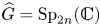 ${{\widehat G}} = {{\rm Sp}}_{2n}(\mathbb {C})$ is the representation
 ${{\rm Sym}}^{2} M_{\rm A}$. Similarly, the representation
 \[ N_{\rm A} = \sum_{i = 0}^{d} N_i \otimes {{\rm Sym}}^{i}(\mathbb{C}^{2}) \]
of dimension  $2n$ is an A-parameter for
 $H = {{\rm SO}}_{2n}$ if and only if the
 $N_i$ are bounded selfdual representations of
 $\textit {WD}(k)$, with
 $N_i$ orthogonal for
 $i$ even,
 $N_i$ symplectic for
 $i$ odd and the quadratic character
 $\det N_{\rm A}$ is given by the discriminant of the even orthogonal space
 $W$. Indeed, in this case
 $N_{\rm A}$ is an orthogonal representation of the right dimension and determinant. Note that the action of
 $\textit {WD}(k) \times {{\rm SL}}_2(\mathbb {C})$ on the Lie algebra of
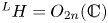 $^{L} H = O_{2n}(\mathbb {C})$ is the representation
 $\wedge ^{2} N_{\rm A}$.
We conjecture in § 6 that there is a representation  $\pi _G \otimes \pi _H$ in the L-packet associated to
 $M$ and
 $N$ with
 \[ \dim {{\rm Hom}}_H(\pi_G \otimes \pi_H, \mathbb{C}) = 1 \]
if and only if the A-parameters  $(M_{\rm A},N_{\rm A})$ form a relevant pair, and then the representation
 $\pi _G \otimes \pi _H$ in the L-packet associated to
 $M$ and
 $N$ with
 $\dim {\textrm {Hom}}_H(\pi _G \otimes \pi _H, \mathbb {C}) = 1$ is unique. Furthermore, this representation is determined by the character of the component group of the L-parameter, which is given by the root numbers associated to the symplectic representation
 $M \otimes N$ using the recipe of [Reference Gan, Gross and PrasadGGP12a]. When
 $(M_{\rm A},N_{\rm A})$ form a relevant pair, we also show that the ratio of L-functions
 \begin{equation} L(M,N, s) = \frac{L(M \otimes N, s + 1/2)}{L({{\rm Sym}}^{2} M \oplus \wedge^{2}N, s + 1)} \end{equation}
does not vanish at the point  $s = 0$, but may have a pole.
In § 7, we offer a conjecture (Conjecture 7.1) on which Arthur packets could have representations with  ${\textrm {Hom}}_H(\pi _G \otimes \pi _H, \mathbb {C}) \not = 0$, though the conjecture here is not as precise as that in the previous section for L-packets of Arthur type. The point here is that we consider all representations in the A-packet and not just those in the associated L-packet. The less definitive nature of the conjecture is due to the fact that A-packets for classical groups are not disjoint. Thus, for example, Conjecture 7.1 predicts that if
 $\pi _G \times \pi _H$ is a representation belonging to an A-packet (say for a pair of A-parameters
 $(M_{\rm A},N_{\rm A})$) and satisfies
 ${\textrm {Hom}}_H(\pi _G \otimes \pi _H, \mathbb {C}) \not = 0$, then
 $\pi _G \times \pi _H$ belongs to some A-packet for a relevant pair
 $(M'_{\rm A}, N'_{\rm A})$ of A-parameters. We prove certain theorems in § 7 to support this conjecture and give a general construction of Arthur packets where multiplicity greater than one is achieved. We also construct a counterexample to the naive expectation that if
 $\pi _G \times \pi _H$ is of Arthur type with A-parameter
 $(M_{\rm A} , N_{\rm A})$ and
 ${\textrm {Hom}}_H(\pi _G \otimes \pi _H, \mathbb {C}) \not = 0$, then
 $(M_{\rm A}, N_{\rm A})$ must be relevant.
We note that the notion of a relevant pair  $(M_{\rm A},N_{\rm A})$ of symplectic and orthogonal representations makes sense in general, and we use this to extend the conjecture on Bessel models for
 ${{\rm SO}}_{2n+1} \times {{\rm SO}}_{2m}$ in [Reference Gan, Gross and PrasadGGP12a] to the non-tempered case. It also works well for conjugate symplectic and conjugate orthogonal representations, which allows us to extend the conjectures on Bessel models for
 $U_{2n+1} \times U_{2m}$ in [Reference Gan, Gross and PrasadGGP12a] to the non-tempered case. One can likewise formulate the analogous local conjecture in the setting of Fourier–Jacobi models for the symplectic/metaplectic groups and the unitary groups, following the procedure in [Reference Gan, Gross and PrasadGGP12a]. We omit the details in this paper and leave the precise formulation to the reader, using [Reference Gan, Gross and PrasadGGP12a] as a guide.
In § 9, we consider the global setting over a number field. Here, one is considering the automorphic period integral of the automorphic forms belonging to the global L-parameters of Arthur type. In the non-tempered setting, these automorphic forms are not necessarily cuspidal and so some regularization may be needed to make sense of the period integrals. A systematic equivariant regularization procedure for reductive periods has been developed in a recent paper of Zydor [Reference ZydorZyd19], following earlier works of others. Our local conjecture implies that there is at most one representation in the global L-packet (of Arthur type), which can have a non-vanishing period integral. Whether this distinguished global representation is automorphic or not is governed by Arthur's multiplicity formula in which a certain quadratic character of the global component group (of the A-parameter) plays a prominent role. In the tempered case, this character is trivial, but in general it is given in terms of certain symplectic global root numbers built out of the adjoint representation. The interaction of Arthur's character with the distinguished character arising from the restriction problem is quite interesting and will be discussed in § 10. In any case, we show that the global analog of the ratio of L-functions in (1.1) or (1.2) is holomorphic at  $s=0$ when
 $(M_{\rm A}, N_{\rm A})$ is a relevant pair of global A-parameters and its corresponding global root number is
 $1$ when the distinguished representation in the global L-packet associated to
 $(M,N)$ is automorphic. We then conjecture that its non-vanishing is equivalent to the non-vanishing of the (regularized) period integral.
In § 11, we discuss several families of examples in low-rank classical groups where the restriction problem has been addressed for non-tempered A-packets; these provide some additional support for our local conjecture.
It is interesting to note that in the ongoing work of Chaudouard and Zydor on the Jacquet–Rallis relative trace formula (which has been used to settle special cases of the global Gan–Gross–Prasad (GGP) conjectures for unitary groups), the notion of relevant pair of A-parameters seems to show up in the continuous spectrum on the spectral side. In another direction, we explain in § 12 how the automorphic descent method discovered by Ginzburg, Rallis and Soudry [Reference Ginzburg, Rallis and SoudryGRS99a, Reference Ginzburg, Rallis and SoudryGRS99b, Reference Ginzburg, Rallis and SoudryGRS02, Reference Ginzburg, Rallis and SoudryGRS11] and further extended in a recent work of Jiang and Zhang [Reference Jiang and ZhangJZ20] can be predicted using our global conjecture.
Thus, the main innovation of this paper is the introduction of the notion of a relevant pair of A-parameters, which governs the branching laws of all classical groups, at least for representations belonging to L-packets of Arthur type. It is meaningful for all local fields, and global fields, and makes sense for  ${{\rm GL}}_n(k)$ as well as all classical groups, and plays a role for all the branching problems studied in [Reference Gan, Gross and PrasadGGP12a] including Bessel models and Fourier–Jacobi models.
The notion of relevant pair of A-parameters appears in this paper from three relatively independent points of views.
(i) The condition was discovered in the course of studying branching laws from
 ${{\rm GL}}_{n+1}(k)$ to ${{\rm GL}}_n(k)$ via the Bernstein–Zelevinsky filtration of a representation of ${{\rm GL}}_{n+1}(k)$ restricted to its mirabolic subgroup.
(ii) After the work of Ichino and Ikeda, cf. [Reference Ichino and IkedaII10], it is natural to consider the ratio of L-functions
$L(M,N, s)$ given in (1.2). From this L-function theoretic point of view, we prove in Theorem 14.1 that under some extra hypothesis, $L(M,N, s)$ has no zeros or poles at $s=0$ if and only if $(M, N)$ is a relevant pair of A-parameters.(iii) From the point of view of epsilon factors and tempered GGP, it is Theorem 7.7 due to Waldspurger that brings out the notion of relevant pairs of A-parameters for those A-packets that contain a cuspidal representation.


Finally, from the global point of view, our local conjectures are still incomplete, as Conjecture 6.1 only deals with an L-packet of Arthur type that is a subset of the corresponding A-packet, and Conjecture 7.1 is not as precise as it could be. It would have been ideal to have a precise conjecture for the entire A-packet, because any representation in the A-packet could have been the local component of an automorphic representation and, thus, would intervene in the global period integral problem. It will thus be very interesting to have a precise prediction for the sum of multiplicities over the entire A-packet (over relevant pure inner forms) and a conjectural determination of the representations which have non-zero contribution. Unfortunately, despite trying for a few years, such a precise prediction continues to elude us.
We end the introduction with a general comment on the strategy of the proof of tempered GGP, where one exploits the transfer of the stable distribution on a classical group associated to a tempered L-packet to an invariant distribution on  ${{\rm GL}}_n(k)$. The proof of tempered GGP uses such transfer to move the branching problem for classical groups to one on
 ${{\rm GL}}_n(k)$. For non-tempered A-packets, one still has such a transfer, but the stable distribution associated to an A-packet is not simply the sum of irreducible characters. Instead, it is a linear combination of such with coefficients
 $\eta (z)$, where
 $z$ is the center of the Arthur
 ${{\rm SL}}_2$, so that there are
 $\pm 1$ in the coefficients. Thus one is led to wonder whether there is a nicer expression if, instead of summing over all multiplicities in the A-packet, one considers the signed sum of these multiplicities reflecting the signs in the stable characters.
As an example, one may consider a non-tempered A-packet of  $U_3$ of the form
 $\{\pi _c,\pi _n\}$, with
 $\pi _c$ cuspidal and
 $\pi _n$ non-tempered. The cuspidal representation
 $\pi _c$ belongs to a discrete L-packet
 $\{\pi _c,\pi _d\}$, where
 $\pi _d$ is a non-cuspidal discrete series representation. There is a exact sequence arising from a principal series representation:
 \[ 0\rightarrow \pi_d \rightarrow {{\textrm{Ind}\,}} \rightarrow \pi_n \rightarrow 0, \]
so that
 \[ \pi_c-\pi_n = (\pi_c+\pi_d)-(\pi_d+\pi_n) = (\pi_c+\pi_d) - {\textrm{Ind}\,} \]
is stable. This lends some support to the expectation that for a tempered representation  $\pi$ of
 $U(2)$,
 \[ \dim {{\rm Hom}}_{U(2)}[\pi_c,\pi] - \dim {{\rm Hom}}_{U(2)} [\pi_n,\pi], \]
may have a nicer expression than
 \[ \dim {{\rm Hom}}_{U(2)}[\pi_c,\pi] + \dim {{\rm Hom}}_{U(2)} [\pi_n,\pi]. \]
2. Notation and preliminaries
In this paper, unless otherwise specified, we use  $k$ to denote a local field. All the conjectures in this paper are formulated for all local fields, archimedean and non-archimedean, but no proofs are given for archimedean local fields. It is hoped that in due course, not only the few proofs we give in this paper, but also the conjectures that we formulate, will be considered by others for archimedean fields.
For a local field  $k$, we let
 $W(k)$ be the Weil group of
 $k$ and
 $\textit {WD}(k)$ the Weil–Deligne group of
 $k$. Thus,
 \[ \textit{WD}(k) = \begin{cases} W(k) & \text{if $k$ is archimedean;} \\ W(k) \times {{\rm SL}}_2(\mathbb{C}), & \text{if $k$ is non-archimedean.} \end{cases} \]
In the non-archimedean case, the  ${{\rm SL}}_2(\mathbb {C})$ which arises here is called the Deligne
 ${{\rm SL}}_2$.
For a reductive algebraic group  $G$ over
 $k$, let
 ${}^\textrm {L}G = {{\widehat G}}(\mathbb {C}) \rtimes W(k)$ be the L-group of
 $G$ with
 ${{\widehat G}}(\mathbb {C})$ the dual group over
 $\mathbb {C}$. L-parameters for
 $G$ are admissible homomorphisms
 \[ \phi: \textit{WD}(k) \rightarrow {{}^\textrm{L}}G, \]
up to conjugacy by  ${{\widehat G}}(\mathbb {C})$. A-parameters for
 $G$ are admissible homomorphisms
 \[ \phi_{\rm A}: \textit{WD}(k) \times {{\rm SL}}_2(\mathbb{C}) \rightarrow {{}^\textrm{L}}G \]
up to conjugacy by  ${{\widehat G}}(\mathbb {C})$, where the restriction of
 $\phi _{\rm A}$ to the Weil–Deligne group
 $\textit {WD}(k)$ is an admissible homomorphism with bounded image for
 $W(k)$ and the restriction to
 ${{\rm SL}}_2(\mathbb {C})$ is algebraic. The extra
 ${{\rm SL}}_2(\mathbb {C})$ that enters here will be called the Arthur
 ${{\rm SL}}_2(\mathbb {C})$.
One can obtain an L-parameter from an A-parameter as discussed in the introduction, using the map  $\textit {WD}(k) \rightarrow \textit {WD}(k) \times {{\rm SL}}_2(\mathbb {C})$ given by
 \[ w \rightarrow (w, {\textrm{diag}}(|w|^{1/2}, |w|^{-1/2})). \]
Composing  $\phi _{\rm A}$ with this homomorphism gives an L-parameter
 $\phi$. The association
 \[ \phi_{\rm A} \mapsto \phi \]
is an injective map from the set of A-parameters to the set of L-parameters, and we call its image the set of L-parameters of Arthur type.
In the case of classical groups as discussed in [Reference Gan, Gross and PrasadGGP12a], A-parameters are representations of  $\textit {WD}(k) \times {{\rm SL}}_2(\mathbb {C})$ on finite-dimensional complex vector spaces that may come equipped with a symmetric or skew-symmetric bilinear form. For an A-parameter
 $M_{\rm A}$, with associated L-parameter
 $M$, we often denote the associated complex vector space (the representation space of
 $M_{\rm A}$ or
 $M$) as
 $M$; sometimes, for sake of clarity, we may use a different symbol
 $V$ or
 $W$ for the representation space of
 $M_{\rm A}$ or
 $M$.
By the work of Harris and Taylor [Reference Harris and TaylorHT01] for  ${{\rm GL}}_n(k)$, Arthur [Reference ArthurArt13] for orthogonal and symplectic groups and Mok [Reference MokMok15] for unitary groups, the local Langlands conjecture for these quasi-split classical groups over local fields is now known. The extended version due to Vogan [Reference VoganVog93], involving pure inner forms of these groups, is also known thanks to the work of Kaletha et al. [Reference Kaletha, Minguez, Shin and WhiteKMSW14] and Mœglin [Reference MœglinMœg07]. We assume this throughout the work, referring to [Reference Gan, Gross and PrasadGGP12a] for precise assertions. For the notion of A-packets, and their relationship to A-parameters, we refer to [Reference ArthurArt89, Reference ArthurArt13], as well as to many works of Mœglin [Reference MœglinMœg06, Reference MœglinMœg09, Reference MœglinMœg11]. Both for L-packet and A-packet, we simultaneously consider all relevant pure inner forms of the pair of groups involved, and use what may be called Vogan L-packet and Vogan A-packet. We do not dwell further on these matters, as they are totally analogous to [Reference Gan, Gross and PrasadGGP12a].
As is well-known,  ${{\rm Sym}}^{a}(\mathbb {C}^{2})$ is the unique
 $(a+1)$-dimensional irreducible representation of
 ${{\rm SL}}_2(\mathbb {C})$. We often denote this
 $(a+1)$-dimensional irreducible representation of
 ${{\rm SL}}_2(\mathbb {C})$ as
 $[a+1]$. If we regard
 $[a+1]$ as a representation of the Arthur
 ${{\rm SL}}_2(\mathbb {C})$, then
 $[a+1]$ is an A-parameter for
 ${{\rm GL}}_{a+1}(k)$ whose corresponding A-packet is the singleton set containing only the trivial representation. Hence, by abuse of notation, we also denote by
 $[a+1]$ the trivial representation of
 ${{\rm GL}}_{a+1}(k)$. The context will make it clear whether
 $[a+1]$ denotes an A-parameter or the trivial representation of
 ${{\rm GL}}_{a+1}(k)$.
If  $\pi _1$ is a representation of
 ${{\rm GL}}_m(k)$ and
 $\pi _2$ of
 ${{\rm GL}}_n(k)$, we let
 $\pi _1 \times \pi _2$ be the representation of
 ${{\rm GL}}_{m+n}(k)$ parabolically induced from the representation
 $\pi _1 \boxtimes \pi _2$ of the Levi subgroup
 ${{\rm GL}}_m(k) \times {{\rm GL}}_n(k)$ of
 ${{\rm GL}}_{m+n}(k)$. In particular,
 $[a] \times [b]$ denotes an irreducible (unitary) representation of
 ${{\rm GL}}_{a+b}(k)$ that has A-parameter
 $[a] \oplus [b]$. In § 5, we give a more precise description of the A-packets for
 ${{\rm GL}}_n(k)$.
For any integer  $n\geq 1$, we set
 \[ \nu := |{\det}|: {{\rm GL}}_n(k) \rightarrow \mathbb{C}^{\times}. \]
When  $n=1$ so that
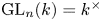 ${{\rm GL}}_n(k)=k^{\times }$, we also view
 $\nu$ as the absolute value map on
 $\textit {WD}(k)$.
An L-parameter for a classical group  $G$ (not
 ${{\rm GL}}_n(k)$)
 \[ \phi: \textit{WD}(k) \rightarrow {\textrm{GL}}(V), \]
is called a discrete L-parameter if it does not factor through a proper Levi subgroup of the dual group  $\hat {G}$; equivalently, if it is a multiplicity free sum of selfdual or conjugate-selfdual irreducible representations of
 $\textit {WD}(k)$ of the correct parity. This terminology originates from the fact that an L-parameter of
 $G$ is discrete if and only if the associated representations of
 $G(k)$ are discrete series representations. Similarly, an A-parameter for a classical group (not
 ${{\rm GL}}_n(k)$)
 \[ \phi_{\rm A}: \textit{WD}(k)\times {{\rm SL}}_2(\mathbb{C}) \rightarrow {\textrm{GL}}(V), \]
is called a discrete A-parameter if it is a multiplicity free sum of selfdual or conjugate-selfdual irreducible representations of  $\textit {WD}(k) \times {{\rm SL}}_2(\mathbb {C})$.
For all the number theoretic background on  $L$ and
 $\epsilon$ factors, we refer to the article [Reference TateTat79], usually without explicit mention. All our global
 $L$-functions will be completed
 $L$-functions
 $L(s, \Pi )$ for an automorphic representation
 $\Pi$ on
 ${{\rm GL}}_n(\mathbb {A}_F)$ for
 $F$ a global field, or an automorphic representation on a classical group treated as an automorphic representation
 $\Pi$ on
 ${{\rm GL}}_n(\mathbb {A}_F)$ after transfer.
3. Relevant pair of A-parameters
In this section, we formulate the notion of a relevant pair of A-parameters  $(M_{\rm A}, N_{\rm A})$ in the context of classical groups (including the case of
 ${{\rm GL}}$). This notion plays a pivotal role in this paper. We also discuss some basic properties of this notion.
With  $k$ a local field, recall that a finite-dimensional complex representation
 $M_{\rm A}$ of
 $\textit {WD}(k) \times {{\rm SL}}_2(\mathbb {C})$ which arises from an A-parameter (of a classical group) has a canonical decomposition of the form
 \[ M_{\rm A} = \sum_{i = 0}^{d} M_i \otimes {{\rm Sym}}^{i}(\mathbb{C}^{2}), \]
where the  $M_i$ are bounded admissible representations of
 $\textit {WD}(k)$. We say that two representations
 $M_{\rm A}$ and
 $N_{\rm A}$ form a relevant pair of A-parameters if we have a decomposition of the respective representations of
 $\textit {WD}(k)$ as
 \[ M_i = M_i^{+} + M_i^{-} \quad \text{and} \quad N_i = N_i^{+} + N_i^{-}, \]
with the property that
 \[ M_i^{+} = N_{i+1}^{-}\quad \text{for}\ i \geq 0 \quad \text{and} \quad M_i^{-} = N_{i-1}^{+}\quad \text{for}\ i \geq 1. \]
Therefore, if we write the decomposition of  $M_{\rm A}$ as
 \[ M_{\rm A} = M_0^{+} + M_0^{-} + \sum_{i = 1}^{d} (M_i^{+} + M_i^{-}) \otimes {{\rm Sym}}^{i} (\mathbb{C}^{2}), \]
we have the following decomposition of  $N_{\rm A}$:
 \[ N_{\rm A} = N_0^{-} + \sum_{i = 0}^{d} M_i^{+} \otimes {{\rm Sym}}^{i+1} (\mathbb{C}^{2}) + \sum_{i = 1}^{d} M_i^{-} \otimes {{\rm Sym}}^{i-1}(\mathbb{C}^{2}). \]
The notion of a relevant pair  $(M_{\rm A},N_{\rm A})$ is symmetric, as we can also write the conditions on the summands as
 \[ N_i^{+} = M_{i+1}^{-} \quad \text{for}\ i \geq 0 \quad \text{and} \quad N_i^{-} = M_{i-1}^{+} \quad \text{for}\ i \geq 1. \]
Therefore, if we write the decomposition of  $N_{\rm A}$ as
 \[ N_{\rm A} = N_0^{+} + N_0^{-} + \sum_{i = 1}^{d} (N_i^{+} + N_i^{-}) \otimes {{\rm Sym}}^{i} (\mathbb{C}^{2}), \]
we have the following decomposition of  $M_{\rm A}$:
 \[ M_{\rm A} = M_0^{-} + \sum_{i = 0}^{d} N_i^{+} \otimes {{\rm Sym}}^{i+1} (\mathbb{C}^{2}) + \sum_{i = 1}^{d} N_i^{-} \otimes {{\rm Sym}}^{i-1}(\mathbb{C}^{2}). \]
Note that the two summands  $M_0^{-}$ and
 $N_0^{-}$ in a relevant pair are not constrained by the other parameter. In particular, any two bounded representations
 $(M_0,N_0)$ of
 $\textit {WD}(k)$ with the trivial action of
 ${{\rm SL}}_2(\mathbb {C})$ form a relevant pair of A-parameters.
The decomposition of the representations  $M_i$ and
 $N_i$ of
 $\textit {WD}(k)$ in a relevant pair into components
 $M_i^{\pm }$ and
 $N_i^{\pm }$ is unique. Indeed, suppose that the highest (non-zero) summand in the decomposition of
 $M_{\rm A}$ is
 $M_d$. Then the highest summand in the decomposition of
 $N_{\rm A}$ is either
 $N_{d-1}, N_d$ or
 $N_{d+1}$. We now consider the three cases separately.
(i) Suppose first that it is
$N_d$. Then we conclude that $M_d = M_d^{-}$ and $N_d = N_d^{-}$. This implies that $N_{d-1}^{+} = M_d^{-}$, which determines $N_{d-1}^{-}$. Similarly, $M_{d-1}^{+} = N_d^{-}$, which determines $M_{d-1}^{-}$. Continuing to descend in this manner determines all of the decompositions.(ii) Next assume that the highest summand in the decomposition of
$N_{\rm A}$ is $N_{d-1}$. Again we conclude that $M_d = M_d^{-}$, but now we also have $M_{d-1} = M_{d-1}^{-}$ as $N_d = 0$. Then $N_{d-1}^{+} = M_d^{-}$, which determines $N_{d-1}^{-}$ and $N_{d-2}^{+} = M_{d-1}^{-}$, which determines $N_{d-2}^{-}$. Continuing to descend in this manner gives the full decomposition.(iii) Finally, if the highest summand in the decomposition of
$N_{\rm A}$ is $N_{d+1}$, then one can switch the roles of $M_{\rm A}$ and $N_{\rm A}$ and use the previous argument.





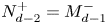


We have occasion to use the following lemma about relevant pair of A-parameters whose simple proof is omitted.
Lemma 3.1 Let
 \begin{align*} M_{\rm A} &= M_0^{+} + M_0^{-} + \sum_{i = 1}^{d} M_i \otimes {{\rm Sym}}^{i} (\mathbb{C}^{2}),\\ N_{\rm A} &= N_0^{+} +N_0^{-} + \sum_{i = 1}^{d} N_i \otimes {{\rm Sym}}^{i} (\mathbb{C}^{2}), \end{align*}
be a relevant pair of A-parameters. Then we have the relations
 \begin{align*} \sum_{2i-1 \geq 1}M_{2i-1} &= \sum_{2i \geq 0} N_{2i} - N^{-}_0,\\ \sum_{2i-1 \geq 1} N_{2i-1} &= \sum_{2i\geq 0}M_{2i} - M^{-}_{0}. \end{align*}
Suppose now that  $(M_{\rm A}, N_{\rm A})$ is a pair of representations with
 $M_{\rm A}$ symplectic and
 $N_{\rm A}$ even orthogonal. Then
 $M_{\rm A}$ is the A-parameter of an odd special orthogonal group whereas
 $N_{\rm A}$ is that of an even special orthogonal group. If
 $(M_{\rm A}, N_{\rm A})$ is relevant, the argument we gave for the unicity of the decomposition of
 $M_i$ and
 $N_i$ shows that the summands
 $M_i^{\pm }$ are each symplectic for
 $i$ even and orthogonal for
 $i$ odd, and the summands
 $N_i^{\pm }$ are each orthogonal for
 $i$ even and symplectic for
 $i$ odd.
Likewise, suppose that  $k/k_0$ is a separable quadratic extension and
 $(M_{\rm A}, N_{\rm A})$ is a pair of representations of
 $\textit {WD}(k) \times {{\rm SL}}_2(\mathbb {C})$ with
 $M_{\rm A}$ conjugate symplectic and
 $N_{\rm A}$ conjugate orthogonal, then
 $M_{\rm A}$ is an A-parameter for an even unitary group whereas
 $N_{\rm A}$ is an A-parameter of an odd unitary group. When
 $(M_{\rm A}, N_{\rm A})$ is relevant, one sees that the summands
 $M_i^{\pm }$ and
 $N_i^{\pm }$ are conjugate symplectic and conjugate orthogonal, respectively.
On the other hand, suppose that  $F$ is a global field with conjectural Langlands group
 $L(F)$, so that global A-parameters of classical groups can be thought of as finite-dimensional complex representations of
 $L(F) \times {{\rm SL}}_2(\mathbb {C})$. Of course, because the existence of
 $L(F)$ is not known, one needs to interpret an irreducible
 $n$-dimensional representation of
 $L(F)$ as a cuspidal automorphic representation of
 ${{\rm GL}}_n(\mathbb {A}_F)$. In the context of classical groups, one needs to interpret an irreducible
 $n$-dimensional symplectic (respectively orthogonal) representation of
 $L(F)$ as a cuspidal automorphic representation of
 ${{\rm GL}}_n(\mathbb {A}_F)$ for which the exterior square (respectively symmetric square L-function) has a pole at
 $s=1$. With this caveat, one can similarly define the notion of a relevant pair of global A-parameters.
Since the work of Ichino and Ikeda, cf. [Reference Ichino and IkedaII10], it is natural to consider in the global setting the ratio of L-functions:
 \[ L(M,N, s) = \frac{L(M \otimes N^{\vee}, s + 1/2) \cdot L(M^{\vee} \otimes N, s + 1/2)}{ L(M \otimes M^{\vee}, s + 1)\cdot L(N \otimes N^{\vee}, s + 1)} \]
if  $M \times N$ is an L-parameter for
 ${{\rm GL}}_m \times {{\rm GL}}_n$, or the ratio
 \[ L(M,N, s) = \frac{L(M \otimes N, s + ~1/2)}{L({{\rm Sym}}^{2} M \oplus \wedge^{2}N, s + 1)} \]
if  $M \times N$ is an L-parameter for
 ${{\rm SO}}_{2m+1} \times {{\rm SO}}_{2n}$. One may of course consider
 $L(M,N, s)$ in the local context as well. We conclude this section by highlighting some results about the analytic properties of
 $L(M,N, s)$ at
 $s=0$. The proofs of these results, which proceed by explicit computation, will be given in §§ 13 and 14 at the end of the paper.
Theorem 3.2 Let  $k$ be a non-archimedean local field and let
 $(M_{\rm A}, N_{\rm A})$ be a relevant pair of A-parameters for
 ${{\rm GL}}_m(k) \times {{\rm GL}}_n(k)$ with associated pair of L-parameters
 $(M,N)$. Then the order of pole at
 $s=0$ of
 \[ L(M,N, s) = \frac{L(M \otimes N^{\vee}, s + 1/2) \cdot L(M^{\vee} \otimes N, s + 1/2)}{ L(M \otimes M^{\vee}, s + 1)\cdot L(N \otimes N^{\vee}, s + 1)} \]
is greater than or equal to zero.
Theorem 3.3 Let  $k$ be a non-archimedean local field and let
 $(M_{\rm A}, N_{\rm A})$ be a pair of A-parameters for
 ${{\rm SO}}_{2m+1}(k) \times {{\rm SO}}_{2n}(k)$ with associated pair of L-parameters
 $(M,N)$.
(i) If
$(M_{\rm A}, N_{\rm A})$ is a relevant pair of A-parameters, then the order of pole at $s=0$ of the function
is greater than or equal to zero.\[ L(M,N, s) = \frac{L(M \otimes N, s + ~1/2)}{L({{\rm Sym}}^{2} M \oplus \wedge^{2}N, s + 1)} \](ii) Suppose that
$M_{\rm A}$ and $N_{\rm A}$ are multiplicity-free representations of $\textit {WD}(k) \times {{\rm SL}}_2(\mathbb {C})$ on which the Deligne ${{\rm SL}}_2(\mathbb {C})$ acts trivially. Then, at $s = 0$, the function $L(M,N, s)$ has a zero of order at least zero. It has neither a zero nor a pole at $s=0$ if and only if $(M_{\rm A}, N_{\rm A})$ is a relevant pair of A-parameters.





4. Correlator
In this section, we describe an elegant formulation of the notion of a relevant pair of A-parameters which is due to Zhiwei Yun (personal correspondence).
Consider a pair  $(M_{\rm A}, N_{\rm A})$ of selfdual finite-dimensional representations of
 $\textit {WD}(k) \times {{\rm SL}}_2(\mathbb {C})$ with
 $M_{\rm A}$ symplectic and
 $N_{\rm A}$ orthogonal, realized on vector spaces
 $V$ and
 $W$, respectively. The action of the diagonal torus of
 ${{\rm SL}}_2(\mathbb {C})$ induces a
 $\mathbb {Z}$-grading on
 $V$ and
 $W$. More precisely, if we identify
 $\mathbb {G}_m$ with the diagonal torus, taking
 $t \in \mathbb {G}_m$ to the diagonal matrix
 $(t, t^{-1})$, then the degree
 $n$ part of
 $V$ is the eigenspace for the character
 $t \mapsto t^{n}$.
Let  $e$ (respectively,
 $e'$) be the nilpotent endomorphism of
 $V$ (respectively,
 $W$) given by the image of the usual upper triangular element in the Lie algebra
 $\mathfrak {sl}_2$ of
 ${{\rm SL}}_2(\mathbb {C})$. Then the action of
 $e$ and
 $e'$ shifts degree by
 $2$ on
 $V$ and
 $W$. In other words,
 $e$ and
 $e'$ are degree
 $2$ elements in
 ${\textrm {End}\,}(V)$ and
 ${\textrm {End}\,}(W)$ (equipped with the induced grading).
The key definition of Zhiwei Yun is as follows.
Definition 4.1 For a pair  $(M_{\rm A}, N_{\rm A})$ of finite-dimensional representations of
 $\textit {WD}(k) \times {{\rm SL}}_2(\mathbb {C})$ realized on vector spaces
 $(V,W)$, together with invariant non-degenerate bilinear forms, a correlator for
 $(M_{\rm A}, N_{\rm A})$ is a
 $\textit {WD}(k)$-equivariant linear map
 \[ T: V \rightarrow W, \]
such that:
(i)
$T$ shifts degree by 1, that is, $T$ is an element of degree $1$ in ${\textrm {Hom}}(V, W)$;(ii)
$T^{*}T=e$ and $TT^{*}=e'$, where $T^{*}:W \rightarrow V$ is the adjoint of $T$.


Remark 4.2 Observe that condition (ii) forces the parity of the forms on  $V$ and
 $W$ to be opposite, unless
 $e$ and
 $e'$ are zero.
Now we have the main observation.
Lemma 4.3 The pair  $(M_{\rm A},N_{\rm A})$ of local A-parameters is relevant if and only if there exists a correlator
 $T: V \rightarrow W$.
Proof. Given a relevant pair of A-parameters  $(M_{\rm A},N_{\rm A})$, we construct a correlator as follows. Writing
 \[ V = \bigoplus_n V_n \otimes {{\rm Sym}}^{n}(\mathbb{C}^{2}), \]
the action of the diagonal torus of  ${{\rm SL}}_2(\mathbb {C})$ gives a further decomposition of the form
 \[ V = \sum_n \sum_a V_n \otimes t_n^{a}, \]
where the inner sum is taken over integers  $|a| \leq n$ with
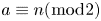 $a \equiv n (\bmod 2)$. Moreover, we have written
 $t_n^{a}$ for a non-zero eigenvector in
 ${{\rm Sym}}^{n}(\mathbb {C}^{2})$ for the character
 $t \mapsto t^{a}$. We normalize the choice of
 $t_n^{a}$ so that the nilpotent element
 $e$ maps
 $V_n \otimes t_n^{a}$ to
 $V_n \otimes t_n^{a+2}$. In particular, the kernel of
 $e$ on
 $V$ is
 $\sum _n V_n \otimes t_n^{n}$.
Now we define a correlator  $T$ by giving
 $\textit {WD}(k)$-equivariant surjective maps
 \[ \begin{cases} V_n^{+} \otimes t_n^{a} \longrightarrow W_{n+1}^{-} \otimes t_{n+1}^{a+1}\\ V_n^{-} \otimes t_n^{a} \longrightarrow W_{n-1}^{+} \otimes t_{n-1}^{a+1} \end{cases} \]
for each  $n$. In particular,
 \[ \textrm{Ker}(T) = \bigoplus_n V_n^{-} \otimes t_n^{n}, \]
and one can easily check that  $T$ is a correlator.
Conversely, one argues that a correlator  $T$ must send
 $V_n \otimes t_n^{a}$ to
 $W_{n+1}^{-} \otimes t_{n+1}^{a+1} \oplus W_{n-1}^{+} \otimes t_{n-1}^{a+1}$ for any
 $|a| \leq n$. Then
 $\textrm {Ker}(T)$ determines
 $V_n^{-}$ for each
 $n$ and, hence, the representation
 $V_n^{+}$ (because
 $V_n$ is semisimple). Hence, the existence of
 $T$ implies that the pair
 $(M_{\rm A}, N_{\rm A})$ is relevant.
Remark 4.4 In the trivial case, when  $e=0$ and
 $e'=0$, one can take
 $T=0$ and
 $(M_{\rm A},N_{\rm A})$ is indeed always relevant in this case.
For  $(M_{\rm A},N_{\rm A})$ a pair of local A-parameters for
 ${{\rm GL}}_n \times {{\rm GL}}_m$, we can apply the same reformulation above to the selfdual A-parameters
 $M_{\rm A}+M_{\rm A}^{\vee }$ and
 $N_{\rm A}+N_{\rm A}^{\vee }$ (on vector spaces
 $V,W$ of dimensions
 $2n,2m$). A correlator in this situation becomes a pair of maps of
 $\textit {WD}(k)$-representations
 $T:V +V^{\vee } \rightarrow W+W^{\vee }$ and
 $T^{*}: W+W^{\vee } \rightarrow V+V^{\vee }$, each of degree 1, such that
 $T^{*}T=e$ and
 $TT^{*}=e'$. One can then check by a similar argument as given previously that the existence of such a correlator is equivalent to the relevance of
 $(M_{\rm A},N_{\rm A})$.
The notion of a correlator  $T$ defined above should remind the reader familiar with the theory of reductive dual pairs (in the sense of Howe) of the moment map that arises there. Let us explicate this connection here. Given a pair
 $(M_{\rm A}, N_{\rm A})$ of A-parameters where
 $M_{\rm A}$ (respectively,
 $N_{\rm A})$ is a symplectic (respectively, orthogonal) representation of
 $\textit {WD}(k)$ on a vector space
 $V$ (respectively,
 $W$), one has a symplectic representation
 $V \otimes W$ of
 $\textit {WD}(k)$:
 \[ \textit{WD}(k) \longrightarrow {\textrm{Sp}}(V) \times O(W) \longrightarrow {\textrm{Sp}}(V \otimes W). \]
The  ${{\rm Sp}}(V) \times O(W)$-symplectic variety
 $V \otimes W$ is Hamiltonian and possesses a
 $\textit {WD}(k)$-equivariant moment map
 \[ \mu = \mu_V \times \mu_W: V \otimes W \longrightarrow \mathfrak{sp}(V) \times \mathfrak{so}(W), \]
where  $\mathfrak {sp}(V)$ (respectively,
 $\mathfrak {so}(W)$) is the Lie algebra of
 ${{\rm Sp}}(V)$ (respectively,
 ${{\rm SO}}(W)$), which we prefer to write as a double fibration:

As  $V$ and
 $W$ are equipped with non-degenerate bilinear forms, we have isomorphisms
 \[ V \otimes W \cong {{\rm Hom}}(V,W) \cong {{\rm Hom}}(W,V). \]
The maps  $\mu _V$ and
 $\mu _W$ are then given by
 \[ \mu_V(T) = T^{*} T \quad \text{and} \quad \mu_W(T) = T T^{*} \quad \text{for $T \in {{\rm Hom}}(V,W)$.} \]
The double fibration diagram gives one a correspondence between the set of  ${{\rm Sp}}(V)$-adjoint orbits and
 $O(W)$-adjoint orbits: say that a
 ${{\rm Sp}}(V)$-adjoint orbit
 $\mathcal {O}_V$ and an
 $O(W)$-adjoint orbit
 $\mathcal {O}_W$ correspond if there exists
 $T \in V \otimes W$ such that
 \[ \mu_V(T) \in \mathcal{O}_W \quad \text{and} \quad \mu_W(T) \in \mathcal{O}_W. \]
Now we may reformulate the notion of a correlator in terms of this moment map. Given a pair of A-parameters  $(M_{\rm A}, N_{\rm A})$, recall that one has a pair of nilpotent elements
 \[ e \in \mathfrak{sp}(V) \quad \text{and} \quad e' \in \mathfrak{so}(W) \]
which are fixed by  $\textit {WD}(k)$. Recalling that
 $V \otimes W \cong {\textrm {Hom}}(V,W)$ has a
 $\mathbb {Z}$-grading, we see that a correlator for
 $(M_{\rm A}, N_{\rm A})$ is a degree
 $1$ element
 $T \in {\textrm {Hom}}(V,W)$ that is fixed by
 $\textit {WD}(k)$ and such that
 \[ \mu_V(T) = e \quad \text{and} \quad \mu_W(T) = e'. \]
Hence, we have a nice geometric formulation of the notion of relevance:  $(M_{\rm A}, N_{\rm A})$ is relevant if and only if the nilpotent orbits of
 $e$ and
 $e'$ are in the moment map correspondence via a
 $\textit {WD}(k)$-fixed degree
 $1$ element
 $T$.
We note that such correlator maps  $T$ have also appeared in the work of Gomez and Zhu [Reference ZhuZhu19] where they studied the transfer of generalized Gelfand–Graev models (attached to nilpotent orbits) under the local theta correspondence. In their work, the correlator maps were considered on the side of representation theory of the real or
 $p$-adic groups, whereas in our work, they appeared on the side of the Langlands dual groups.
5. Local conjecture for ${{\rm GL}}_{n}$

Having introduced the key notion of relevant pairs of A-parameters, we can begin the consideration of restriction problems. In this section, we discuss the restriction problem for  ${{\rm GL}}_n(k) \subset {{\rm GL}}_{n+1}(k)$ in the context of L-parameters of Arthur type. We first explicate the representations of
 ${{\rm GL}}_n(k)$ which belong to such L-packets.
An A-parameter of  ${{\rm GL}}_n(k)$ is an
 $n$-dimensional representation of
 $\textit {WD}(k) \times {{\rm SL}}_2(\mathbb {C})$ of the form
 \[ M_{\rm A} = \bigoplus_{i=1}^{r} M_i \boxtimes {{\rm Sym}}^{d_i}(\mathbb{C}^{2}), \]
where  $M_i$ is an irreducible
 $m_i$-dimensional representation of
 $\textit {WD}(k)$. As discussed in the introduction,
 $M_{\rm A}$ gives rise to an L-parameter
 $M$. Moreover, the local A-packet associated to
 $M_{\rm A}$ is equal to the local L-packet associated to
 $M$ that is a singleton set. We can describe this unique representation
 $\pi _M$ as follows. By the local Langlands correspondence, each
 $M_i$ corresponds to a discrete series representation
 $\pi _{M_i}$ of
 ${{\rm GL}}_{m_i}(k)$. The representation in the A-packet associated to the A-parameter
 $M_i \otimes {{\rm Sym}}^{d_i}(\mathbb {C}^{2})$ is a Speh representation
 $\textrm {Speh}(M_i, d_i)$, which is the unique irreducible quotient of the standard module
 \[ \pi_{M_i} |{\det}|^{d_i/2} \times \pi_{M_i} |{\det}|^{d_i/2 -1} \times\cdots\times \pi_{M_i} |{\det}|^{-d_i/2}, \]
where we have used the standard notation for parabolic induction. Then the representation  $\pi _M$ is given by the irreducible parabolic induction
 \[ \pi_M = \textrm{Speh}(M_1, d_1) \times \textrm{Speh}(M_2, d_2) \times\cdots\times \textrm{Speh}(M_r, d_r). \]
As an example, when  $M = \chi \boxtimes {{\rm Sym}}^{n-1}(\mathbb {C}^{2})$ with
 $\chi$ a one-dimensional character of
 $\textit {WD}(k)$, the associated representation
 $\pi _M$ is the character
 $\chi \circ \det$ of
 ${{\rm GL}}_n(k)$.
We can now consider the restriction problem. Suppose that  $M_{\rm A}$ is an A-parameter of
 ${{\rm GL}}_{n+1}(k)$ and
 $N_{\rm A}$ one for
 ${{\rm GL}}_n(k)$. Let
 $\pi _M$ and
 $\pi _N$ be the irreducible representations in the respective L-packets (of Arthur type), which we have described previously. By [Reference Aizenbud, Gourevitch, Rallis and SchiffmannAGRS10], it is known that
 \[ \dim {{\rm Hom}}_{{{\rm GL}}_n(k)}( \pi_M, \pi_N) \leq 1. \]
When  $M_{\rm A}$ and
 $N_{\rm A}$ are tempered A-parameters, so that
 $\pi _M$ and
 $\pi _N$ are both tempered (and generic), it is well-known that the Hom space given in this equation is one-dimensional. In general, we make the following conjecture.
Conjecture 5.1 In the context given here ( $k$ any local field, archimedean or non-archimedean),
 \[ {{\rm Hom}}_{{{\rm GL}}_n(k)}(\pi_M, \pi_N) \ne 0 \Longleftrightarrow \text{the pair $(M_{\rm A}, N_{\rm A})$ of A-parameters is relevant.} \]
Of course, one could have formulated a restriction problem for an arbitrary  ${{\rm GL}}_n \times {{\rm GL}}_m$, that is, including the case of Bessel models and Fourier–Jacobi models. We highlight this particular case here because of its intrinsic simplicity, and defer the general case to the next section where we deal with classical groups.
Before proceeding further, it is good to do a reality check. Suppose that
 \[ M_{\rm A} = {{\rm Sym}}^{n}(\mathbb{C}^{2}) \]
is the A-parameter of the trivial representation of  ${{\rm GL}}_{n+1}(k)$, so that
 $\pi _M$ is the trivial representation
 ${{\rm GL}}_{n+1}(k)$. Then its restriction to
 ${{\rm GL}}_n(k)$ is certainly the trivial representation, that is, the only A-parameter
 $N_{\rm A}$ of
 ${{\rm GL}}_n(k)$ for which
 ${\textrm {Hom}}_{{{\rm GL}}_n(k)}(\pi _M, \pi _N) \ne 0$ is
 \[ N_{\rm A} = {{\rm Sym}}^{n-1}(\mathbb{C}^{2}). \]
The reader can easily verify that the only  $N_{\rm A}$ (of dimension
 $n$) such that
 $({{\rm Sym}}^{n}(\mathbb {C}^{2}), N_{\rm A})$ is relevant is
 $N_{\rm A} = {{\rm Sym}}^{n-1}(\mathbb {C}^{2})$.
On the other hand, if we start with  $N_{\rm A} = {{\rm Sym}}^{n-1}(\mathbb {C}^{2})$, then the A-parameters
 $M_{\rm A}$ (of dimension
 $(n+1)$) of
 ${{\rm GL}}_{n+1}(k)$ such that
 $(M_{\rm A}, N_{\rm A})$ is relevant are:
(i)
$M_{\rm A} = {{\rm Sym}}^{n}(\mathbb {C}^{2})$; or(ii)
$M_{\rm A} = {{\rm Sym}}^{n-2}(\mathbb {C}^{2}) \oplus M_0$ where $M_0$ is a bounded two-dimensional representation of $\textit {WD}(k)$.




This reflects the known fact that the irreducible admissible representations of  ${{\rm GL}}_{n+1}(k)$ which are of Arthur type and which are
 ${{\rm GL}}_{n}(k)$-distinguished are either trivial or theta lifts of tempered representations of
 ${{\rm GL}}_2(k)$ (see [Reference VenketasubramanianVen13] for the precise results for all irreducible representations of
 ${{\rm GL}}_{n+1}(k)$ for
 $k$ a non-archimedean local field).
The rest of this section is devoted to proving a special case of Conjecture 5.1.
Theorem 5.2 Let  $k$ be a non-archimedean local field. Consider a pair of local A-parameters
 $(M_{\rm A}, N_{\rm A})$ for
 ${{\rm GL}}_{n+1}(k) \times {{\rm GL}}_n(k)$ satisfying the following extra properties:
(a) on every irreducible summand of
$M_{\rm A}$ or $N_{\rm A}$, at least one of the two ${{\rm SL}}_2(\mathbb {C})$ in
acts trivially;\[ \textit{WD}(k) \times {{\rm SL}}_2(\mathbb{C}) = W(k)\times {{\rm SL}}_2(\mathbb{C}) \times {{\rm SL}}_2(\mathbb{C}) \](b) for any irreducible representation
$\rho$ of $W(k)$ and $a \geq 1$ an integer,
and likewise for\[ \rho \otimes \mathbb{C} \otimes {{\rm Sym}}^{a}(\mathbb{C}^{2}) \oplus \rho \otimes {{\rm Sym}}^{a}(\mathbb{C}^{2}) \otimes \mathbb{C} \nsubseteq M_{\rm A}, \]$N_{\rm A}$.


Then
 \[ {\rm Hom}_{{{\rm GL}}_n(k)}(\pi_M,\pi_N) \not = 0 \Longleftrightarrow \text{$(M_{\rm A}, N_{\rm A})$ is relevant.} \]
In particular, the two properties are satisfied and, hence, the result holds in the case when the Deligne  ${{\rm SL}}_2(\mathbb {C})$ (i.e. the
 ${{\rm SL}}_2(\mathbb {C})$ in
 $\textit {WD}(k)$) acts trivially on both
 $M_{\rm A}$ and
 $N_{\rm A}$.
Proof. The proof proceeds by analyzing the restriction of the irreducible representation  $\pi _M$ of
 ${{\rm GL}}_{n+1}(k)$ to its mirabolic subgroup. This restriction was described in a classic theorem of Bernstein and Zelevinsky in [Reference Bernstein and ZelevinskyBZ77], in terms of certain induced representations arising from the Bernstein–Zelevinsky derivatives
 $\pi _M^{i}$ of the representation
 $\pi _M$. As the mirabolic subgroup contains
 ${{\rm GL}}_n(k)$, this gives one a way to understand the restriction of
 $\pi _M$ to
 ${{\rm GL}}_n(k)$.
By this theorem of Bernstein and Zelevinsky, if  $\textrm {Hom}_{{{\rm GL}}_n(k)}(\pi _M,\pi _N) \not = 0$, then for some
 $i \geq 0$, there exists:
(i) an irreducible composition factor
$A$ of $\nu ^{1/2} (\pi _M)^{i+1}$;(ii) an irreducible composition factor
$B$ of $((\pi _N^{\vee })^{i})^{\vee }$;


such that
 \[ {\rm Hom}_{{{\rm GL}}_{n-i}(k)} (A, B) \not = 0. \]
For the converse, given some  $(i, A, B)$ as described previously, suppose that we are lucky enough to have the further property:
(i) for any
$j\leq i$ and any $(C,D) \not = (A,B)$, where $C$ is an irreducible composition factor of $\nu ^{1/2} (\pi _M)^{j+1}$ and $D$ is an irreducible composition factor of $((\pi _N^{\vee })^{j})^{\vee }$,
\[ \textrm{Ext}^{1}_{{\textrm{GL}}_{n-j}(k)}[ C, D] = 0. \]




Then the non-zero homomorphism from a certain submodule of  $\pi _M$ to
 $\pi _N$ represented by a homomorphism in
 $\textrm {Hom}_{{{\rm GL}}_{n-i}(k)}[ A, B] \not = 0,$ extends to all of
 $\pi _M$.
To have this vanishing of  ${\textrm {Ext}}^{1}[C,D]$, the simplest reason would be when the cuspidal support of any irreducible composition factor of
 $\nu ^{1/2} (\pi _N^{\vee })^{j}$ and of
 $(\pi _M^{j+1})^{\vee }$ are different (except for a unique choice
 $(A,B)$ among all pairs
 $(C,D)$). The conditions (a) and (b) in the theorem are imposed to ensure this.
Denote by  $[d]$ the trivial representation of
 ${{\rm GL}}_d(k)$, and by
 $[d]^{\times m}$ the irreducible admissible representation of
 ${{\rm GL}}_{d\cdot m}(k)$, which is
 $[d] \times \cdots \times [d]$. If
 $\sigma$ is a cuspidal representation of
 ${{\rm GL}}_r(k)$, let
 $\sigma [d]$ be the Speh representation of
 ${{\rm GL}}_{r\cdot d}(k)$ constructed from
 $\sigma$, that is, in the Zelevinsky notation
 $\sigma [d]= Z[\sigma \nu ^{-(d-1)/2},\ldots , \sigma \nu ^{(d-1)/2} ]$. It is known that the only non-zero derivative of
 $\sigma [d]$ is
 $\sigma [d]^{i}$ for
 $i=0, r$, and
 $\sigma [d]^{r} = \nu ^{-1/2}\sigma [d-1]= Z[\sigma \nu ^{-(d-1)/2},\ldots , \sigma \nu ^{(d-3)/2}]$.
Denote by  ${\textrm {St}}_d[\rho ]$, the generalized Steinberg representation of
 ${{\rm GL}}_{dd'}(k)$ where
 $\rho$ is a cuspidal unitary representation of the general linear group
 ${{\rm GL}}_{d'}(k)$. The derivatives of
 ${\textrm {St}}_d[\rho ]^{i}$ are known to be non-zero only for
 $i = jd'$ for some
 $0\leq j \leq d$ with
 ${\textrm {St}}_d[\rho ]^{jd'} = \nu ^{j/2} {\textrm {St}}_{d-j}[\rho ]$. A tempered representation of
 ${{\rm GL}}_m(k)$ is built as a product of the generalized Steinberg representations
 ${\textrm {St}}_d[\rho ]$.
For a cuspidal representation  $\rho$ of
 ${{\rm GL}}_m(k)$ (or the corresponding irreducible representation of
 $W(k)$), we call the set of representations
 $\{\rho \nu ^{i} \mid i \in \mathbb {Z}\}$, the cuspidal line passing through
 $\rho$. By Leibnitz rule, if a representation has cuspidal support contained in the cuspidal line passing through
 $\rho$, all its derivatives have the same property. Therefore, the following analysis which mostly involves dealing with the non-tempered parts of
 $\pi _M$ and
 $\pi _N$, to find an irreducible composition factor
 $A$ of
 $\nu ^{1/2} (\pi _M)^{i+1}$, and an irreducible composition factor
 $B$ of
 $((\pi _N^{\vee })^{i})^{\vee }$, such that
 $\textrm {Hom}_{{{\rm GL}}_{n-i}(k)}[ A, B] \not = 0,$ we can focus attention on a cuspidal line passing through a fixed cuspidal representation
 $\rho$, that is, we can assume that the non-tempered parts of
 $M_{\rm A}$ and
 $N_{\rm A}$ when restricted to
 $W(k)$ are multiples of
 $\rho$, without any constraint on the tempered parts of
 $M_{\rm A}$ and
 $N_{\rm A}$. Replacing
 $\rho$ (an irreducible bounded representation of
 $W(k)$) by the trivial representation of
 $W(k)$ has no effect on the following analysis, and this is what we assume in the rest of the proof, that is, we assume in the rest of the proof that the non-tempered parts of
 $M_{\rm A}$ and
 $N_{\rm A}$ when restricted to
 $W(k)$ are multiples of the trivial representation.
Let
 \begin{align*} \pi_M &= [a_1] \times \cdots \times [a_r] \times [b_1] \times \cdots \times [b_s] \times {\textrm{St}}[c_1] \times \cdots \times {\textrm{St}}[c_t]\times {\textrm{St}}[d_1] \times \cdots \times {\textrm{St}}[d_u], \\ \pi_N &= [a'_1] \times \cdots \times [a'_{r'}] \times [b'_1] \times \cdots \times[b'_{s'}] \times {\textrm{St}}[c'_1] \times \cdots \times {\textrm{St}}[c'_{t'}] \times {\textrm{St}}[d'_1] \times \cdots \times {\textrm{St}}[d'_{u'}], \end{align*}
where  ${\textrm {St}}[a]$ denotes the Steinberg representation of
 ${{\rm GL}}_a(k)$. There could be a further non-Steinberg tempered part in
 $\pi _M$, and in
 $\pi _N$, which we do not write here out for brevity of notation and which will not play any role in the arguments given in the following. Note also that
 ${\textrm {St}}[1]=[1]$, the trivial representation of
 ${{\rm GL}}_1(k)$; in fact, we use the notation
 ${\textrm {St}}[a]$ in the expressions given previously for
 $\pi _M,\pi _N$ only for
 $a>1$.
This notation is so made that for calculating  $(j+1)$th derivative of
 $\pi _M$, and
 $j$th derivative of
 $\pi _N$, we differentiate all the terms
 $[a_i], [a'_i], {\textrm {St}}[d_i], {\textrm {St}}[d'_i]$ at least once, and no more for
 $[a_i], [a'_i]$; whereas none of the terms involving
 $[b_i], [b'_i], {\textrm {St}}[c_i], {\textrm {St}}[c'_i]$ are to be differentiated. If the cuspidal support of an irreducible composition factor
 $C$ of
 $\nu ^{1/2}\pi _M^{j+1}$ and
 $D$ of
 $(\pi _N^{\vee }){{}^{j}}^{\vee }$ are to be the same, we must have equality of cuspidal supports of
 $\tilde {C}$, and
 $\tilde {D}$ defined as follows:
 \begin{align*} \tilde{C} &= \nu^{1/2} \{ \nu^{-1/2}[a_1-1] \times \cdots \times \nu^{-1/2}[a_r-1] \times [b_1] \times \cdots \times [b_s]\\ &\quad \times {\textrm{St}}[c_1] \times \cdots \times {\textrm{St}}[c_t] \times \nu^{e_1/2}{\textrm{St}}[d_1-e_1] \times \cdots \times \nu^{e_u/2}{\textrm{St}}[d_u-e_u]\}, \\ \tilde{D} &= \nu^{1/2}[a'_1-1] \times \cdots \times \nu^{1/2}[a'_{r'}-1] \times [b'_1] \times \cdots \times[b'_{s'}] \times \\ &\quad \times {\textrm{St}}[c'_1] \times \cdots \times {\textrm{St}}[c'_{t'}] \times \nu^{-f_1/2}{\textrm{St}}[d'_1-f_1] \times \cdots \times \nu^{-f_{u'}/2}{\textrm{St}}[d'_{u'}-f_{u'}]. \end{align*}
If the cuspidal supports of the representations  $\tilde {C}$ and
 $\tilde {D}$ are to be the same, we draw the following conclusions from Lemma 5.3. Let us recall that the cuspidal support of
 ${\textrm {St}}[a]$ and
 $[a]$ is the same, so when using Lemma 5.3, we replace all
 ${\textrm {St}}[a]$ in the previous expressions for
 $\tilde {C}$ and
 $\tilde {D}$ by the corresponding
 $[a]$. Further, the hypothesis in Lemma 5.3 is easily seen to be the same as the hypothesis in the Theorem 5.2 that for any integer
 $a \geq 1$, the representation
 $\mathbb {C} \otimes {{\rm Sym}}^{a}(\mathbb {C}^{2}) \oplus {{\rm Sym}}^{a}(\mathbb {C}^{2}) \otimes \mathbb {C}$ does not appear in
 $M_{\rm A}$ or in
 $N_{\rm A}$.
(i) There is no differentiation for
${\textrm {St}}[d_i]$ and ${\textrm {St}}[d'_i]$.(ii) For each
$[a_i]$ in $\pi _M$ (which get differentiated once), there is exactly one of $[a_i-1]$ or ${\textrm {St}}[a_i-1]$ amongst $[b'_i]$ or ${\textrm {St}}[c'_i]$ for $\pi _N$ (these are not differentiated in achieving $\pi _N^{j}$).(iii) For each
$[a'_i]$ in $\pi _N$ (which get differentiated once), there is exactly one of $[a'_i-1]$ or ${\textrm {St}}[a'_i-1]$ amongst $[b_i]$ or ${\textrm {St}}[c_i]$ for $\pi _M$ (these are not differentiated in achieving $\pi _M^{j+1}$).(iv) Each of the terms in
$\tilde {C}$ and $\tilde {D}$ (in expressing these representations as a sum, in the Grothendieck group of representations, of products of representations of the form $[a]$ and ${\textrm {St}}[b]$) is matched through conclusions (i), (ii), and (iii).


It follows that if the cuspidal supports of  $\tilde {C}$ and
 $\tilde {D}$ are to be the same, we must have the following structure for
 $\pi _M$ and
 $\pi _N$ (up to multiplication by a tempered representation
 $\pi _M^{t}$ in
 $\pi _M$ and up to multiplication by a tempered representation
 $\pi _N^{t}$ in
 $\pi _N$; in using the Leibnitz rule to calculate
 $\pi _M^{j+1}$ and
 $\pi _N^{j}$, one takes the highest possible derivatives for
 $\pi _M^{t}$ and
 $\pi _N^{t}$, which has the effect that the terms
 $\pi _M^{t}$ and
 $\pi _N^{t}$ do not show up in
 $\pi _M^{j+1}$ and
 $\pi _N^{j}$):
 \begin{align*} \pi_M &\stackrel{({\rm i})}= [b'_1+1] \times \cdots \times[b'_{s'}+1] \times [c'_1+1] \times \cdots \times [c'_{t'}+1] \times [b_1] \times \cdots \times [b_s] \\ &\quad \times {\textrm{St}}[c_1] \times \cdots \times {\textrm{St}}[c_t], \\ \pi_N &\stackrel{({\rm ii})} = [b_1+1] \times \cdots \times [b_{s}+1] \times [c_1+1] \times \cdots \times[c_{t}+1] \times [b'_1] \times \cdots \times[b'_{s'}] \\ &\quad \times {\textrm{St}}[c'_1] \times \cdots \times {\textrm{St}}[c'_{t'}]. \end{align*}
For these representations  $\pi _M,\pi _N$, if there is a composition factor
 $C$ of
 $\nu ^{1/2} \pi _M^{j+1}$, and
 $D$ of
 ${(\pi _N^{\vee })^{j}}^{\vee },$ for which
 $C,D$ have the same cuspidal support as representations of
 ${{\rm GL}}_{n-j}(k)$, the representations
 $\tilde {C}$ and
 $\tilde {D}$ must be
 \begin{align*} \tilde{C} &\stackrel{({\rm iii})}= [b'_1] \times \cdots \times[b'_{s'}] \times [c'_1] \times \cdots \times [c'_{t'}] \times \nu^{1/2} \{ [b_1] \times \cdots \times [b_s] \times {\textrm{St}}[c_1] \times \cdots \times {\textrm{St}}[c_t]\}, \\ \tilde{D} &\stackrel{({\rm iv})}= \nu^{1/2}\{ [b_1] \times \cdots \times [b_{s}] \times [c_1] \times \cdots \times[c_{t}] \} \times [b'_1] \times \cdots \times[b'_{s'}] \times {\textrm{St}}[c'_1] \times \cdots \times {\textrm{St}}[c'_{t'}]. \end{align*}
By Lemma 5.5, such representations  $\tilde {C}, \tilde {D}$ are irreducible, and for
 $\textrm {Hom}_{{{\rm GL}}_{n-j}(k)}[ \tilde {C}, \tilde {D}]$ to be non-zero, we must have
 \begin{align*} c_i &= 1 \quad \text{for all}\ i,\\ c'_i &= 1 \quad \text{for all}\ i. \end{align*}
Thus, as a consequence, we find that if any of the spaces  $\textrm {Hom}_{{{\rm GL}}_{n-j}(k)}[ C, D]$ is non-zero, then
 $M_{\rm A},N_{\rm A}$ are a relevant pair of A-parameters.
Next, we prove that  ${\textrm {Hom}}_{{{\rm GL}}_n(k)}[\pi _M,\pi _N] \not = 0$ when the A-parameter
 $M_{\rm A}$ for an irreducible representation
 $\pi _M$ of
 ${{\rm GL}}_{n+1}(k)$ and
 $N_{\rm A}$ for an irreducible representation
 $\pi _N$ of
 ${{\rm GL}}_n(k)$ satisfies all conditions in the statement of this theorem with
 $M_{\rm A},N_{\rm A}$, a relevant pair of A-parameters. With the structure of
 $\pi _M,\pi _N$ given in conclusions (i) and (ii), the only way to obtain an irreducible composition factor
 $\tilde {C}$ of
 $\nu ^{1/2}\pi _M^{j+1}$ and
 $\tilde {D}$ of
 $(\pi _N^{\vee }){{}^{j}}^{\vee }$ to have same cuspidal supports is that none of the terms
 ${\textrm {St}}(c_i), {\textrm {St}}(c'_i)$ should be present in the expressions for
 $\pi _M$ and
 $\pi _N$ given in conclusions (i) and (ii), and also in
 $\tilde {C},\tilde {D}$ given in conclusions (iii) and (iv), that is, we must take full derivative of all tempered factors of
 $\pi _M$ that do not match-up with presence of a
 $[2]$ in
 $\pi _N$ and we must take full derivative on all tempered factors of
 $\pi _N$ which do not match-up with presence of a
 $[2]$ in
 $\pi _M$.
Thus, the strategy outlined in the beginning of the proof of the theorem that there is a unique  $j$, and a unique irreducible composition factor
 $C$ of
 $\nu ^{1/2}\pi _M^{j+1}$ and
 $D$ of
 $(\pi _N^{\vee }){{}^{j}}^{\vee }$ with the same cuspidal supports holds; we elaborate more on this now.
Write
 \begin{align*} \pi_M &= [b'_1+1] \times \cdots \times[b'_{s'}+1] \times [b_1] \times \cdots \times [b_s] \times \tau_1, \\ \pi_N &= [b_1+1] \times \cdots \times [b_{s}+1] \times [b'_1] \times \cdots \times[b'_{s'}] \times \tau_2, \end{align*}
where  $\tau _1,\tau _2$ are tempered representations, not generalized Steinberg, of
 ${{\rm GL}}_{d_1}(k)$ and
 ${{\rm GL}}_{d_2}(k)$, for certain integers
 $d_1,d_2$ with
 \begin{align*} s'+d_1 + \sum_{i=1}^{s} b_i + \sum_{i=1}^{s'} b'_i &= n+1, \\ s+d_2 + \sum_{i=1}^{s} b_i + \sum_{i=1}^{s'} b'_i &= n. \end{align*}
We see that there is exactly one integer  $j$, which, by the previous equations, has the property that
 \begin{align*} j+1 &= s'+ d_1,\\ j &= s+d_2, \end{align*}
and for this integer  $j$, there is only one composition factor, say
 $A$, of
 $\nu ^{1/2} \pi _M^{j+1}$ and one of
 ${(\pi _N^{\vee })^{j}}^{\vee }$, say
 $B$, for which
 $\textrm {Hom}_{{{\rm GL}}_{n-j}(k)}[A, B]$ is non-zero, and all the other composition factors of
 $\nu ^{1/2} \pi _M^{j+1}$ and of
 ${(\pi _N^{\vee })^{j}}^{\vee }$ have different cuspidal supports, and this is also the case for any composition factors of
 $\nu ^{1/2} \pi _M^{i+1}$ and of
 ${(\pi _N^{\vee })^{i}}^{\vee }$ for
 $i \not = j$. (A subtlety in this argument may be pointed out, which is that a particular composition factor may appear with higher (Jordan–Hölder) multiplicity, for example, the first derivative of the representation
 $1 \times 1$ of
 ${{\rm GL}}_2(k)$ is the trivial representation of
 ${{\rm GL}}_1(k)$ with multiplicity two, one which appears as a submodule, and the other which appears as a quotient. This subtlety will show up as soon as
 $b_i=b_j'+1$ for some
 $i,j$. As we are not trying to prove multiplicity one theorem for
 ${\textrm {Hom}}(\pi _M,\pi _N)$, but rather only the existence of a non-zero homomorphism, this subtlety does not create a problem for us.)
Therefore,
 \[ \textrm{Ext}^{\ell}_{{\textrm{GL}}_{n-i}(k)}[ C, D] = 0,\quad \text{for}\ (A,B) \not = (C,D),\quad \text{and for all}\ \ell \geq 0, \]
completing the proof of the ‘existence’ part of the theorem, that is, when the parameters  $M_{\rm A},N_{\rm A}$ are a relevant pair of A-parameters, and are representations of
 $\textit {WD}(k) \times {{\rm SL}}_2(\mathbb {C})$ as in the statement of the theorem,
 ${\textrm {Hom}}_{{{\rm GL}}_{n}(k)}[ \pi _M, \pi _N] \not = 0$. The other part of the theorem was already proved earlier, thus the proof of the theorem is complete.
Lemma 5.3 Suppose that the cuspidal supports of
 \begin{align*} V &= [a_1] \times \cdots \times [a_r] \times \nu^{e_1/2}[b_1] \times \cdots \times \nu^{e_s/2}[b_s] , \\ W &= [c_1] \times \cdots \times[c_{t}] \times \nu^{1/2}\{ [d_1] \times \cdots \times [d_{u}] \} \times \nu^{-f_1/2}[g_1] \times \cdots \times \nu^{-f_{v}/2}[g_{v}], \end{align*}
are the same (where  $e_i > 0$,
 $f_i> 0$ are integers). Assume that the following two conditions
 $(V)$,
 $(W)$ are satisfied:
(V)
$a_i +1 \not = b_j+e_j-1$ for any pair $(i,j)$ with $e_j>1$;(W)
$d_i+1 \not = g_j+f_j$ for any pair $(i,j)$.





Then:
(i)
$e_i =1$ for all $i$;(ii)
$f_j=0$ for all $j$;(iii) the set of irreducible representations appearing in writing
$V$ as a product and $W$ as a product is unique up to permutation of the representations involved.


Proof. We prove the lemma by choosing a component  $[a_i]$ or
 $\nu ^{e_j/2}[b_j]$ from
 $V$ with the property that
 $V$ contains
 $\nu ^{x}$, with
 $x$ the maximum half integer such that
 $\nu ^{x}$ is contained in the cuspidal support of
 $V$, and proving that this component (
 $[a_i]$ or
 $\nu ^{e_j/2}[b_j]$) lies in
 $W$ too. Removing this common component from
 $V$ and
 $W$ proves the lemma by an inductive process. (Recall that the cuspidal support of
 $V$ is the union with multiplicities of the support of individual factors in it, and that the cuspidal support of
 $[a]$ is
 $\{\nu ^{-(a-1)/2}, \ldots , \nu ^{(a-1)/2} \}$.
The proof of the lemma will be carried out in the following two cases.
Case 1. Suppose  $V$ contains
 $\nu ^{x}$, with
 $x$ the maximum half integer such that
 $\nu ^{x}$ is contained in the cuspidal support of
 $V$, and that
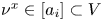 $\nu ^{x} \in [a_i] \subset V$.
In this case,  $\nu ^{-x}$ also belongs to the support of
 $V$,
 $\{-x,x \}$ are the extreme points of the support of
 $[a_i]$ as well as
 $V$ (because
 $e_i>0$). We would like to prove that
 $[a_i] = [c_j]$ for some
 $[c_j] \subset W$. Assume the contrary, that is,
 $x \not = c_j$ for any
 $[c_j] \subset W$.
As  $f_j>0$, if
 $\nu ^{x} \in \nu ^{-f_j/2}[g_j] \subset W$, then
 $\nu ^{-y} \in W$ for some
 $y>x$, a contradiction to the fact that
 $\nu ^{-y},\ y>x$ does not belong to the support of
 $V$.
If  $\nu ^{x} \in \nu ^{1/2} [d_j] \subset W$, then
 $x=d_j/2$. As
 $\nu ^{-x} \in V$,
 $\nu ^{-x}$ also belongs to
 $W$, but
 $\nu ^{-x}$ does not belong to terms of the form
 $[c_j], \nu ^{1/2} [d_j] \subset W$, so the only option is that
 $\nu ^{-x}$ belongs to
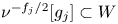 $\nu ^{-f_j/2}[g_j] \subset W$, that is,
 $2x = f_j+g_j-1$. On the other hand,
 $x=d_j/2$.
Thus,  $W$ contains both
 $\nu ^{1/2} [d_j]$ and
 $\nu ^{-f_j/2}[g_j]$ with
 \[ 2x = d_j = f_j+g_j-1, \]
which is not allowed by the condition ( $W$) in the statement of the lemma. Thus, the only option left is that
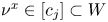 $\nu ^{x} \in [c_j] \subset W$.
Case 2. Suppose  $V$ contains
 $\nu ^{x}$, with
 $x$ the maximum half integer such that
 $\nu ^{x}$ is contained in the cuspidal support of
 $V$, and that
 $\nu ^{x} \in \nu ^{e_i/2} [b_i] \subset V$ with
 $e_i$ minimal positive integer, and with
 $\nu ^{x} \not \in [a_i]$ for any
 $[a_i] \subset V$.
In this case,  $\nu ^{-x}$ does not belong to the support of
 $V$, hence does not belong to the support of
 $W$ either. It follows that
 $\nu ^{x}$, which is supposed to belong to
 $W$, must belong to either
 $\nu ^{1/2}[d_j]$ or
 $\nu ^{-f_j/2}[g_j]$. Clearly,
 $\nu ^{x}$ cannot belong to
 $\nu ^{-f_j/2}[g_j]$ because otherwise
 $\nu ^{-x}$ will belong to the support of
 $W$.
If  $\nu ^{x}$ belongs to
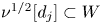 $\nu ^{1/2}[d_j] \subset W$,
 $x$ being the largest exponent in
 $W$,
 $x= d_j/2$ and
 $\nu ^{-x+1} \in \nu ^{1/2}[d_j]$, hence
 $\nu ^{-x+1} \in V$. If
 $e_i>1$, the only option is that
 $\nu ^{-x+1} \in [2x-1] \subset V$. However, we already have
 $\nu ^{x} \in \nu ^{e_i/2} [b_i] \subset V$, so
 $V$ contains
 $[2x-1]$ as well as
 $\nu ^{e_i/2} [b_i]$ with
 \[ 2x=e_i+b_i-1, \]
once again a contradiction to our condition ( $V$) in the statement of the lemma. Thus,
 $e_i=1$,
 $\nu ^{x} \in \nu ^{1/2}[b_i] \subset V$ and
 $\nu ^{x}\in \nu ^{1/2}[d_j] \subset W$, completing the proof of the lemma.
Example 5.4 We present two examples to show that the conditions in Lemma 5.3 are necessary:
(i)
$[a] \times \nu [a]$ and $\nu ^{1/2}[a+1] \times \nu ^{1/2}[a-1]$ have the same cuspidal support; said another way, $\nu ^{1/2}[a] \times \nu ^{-1/2} [a]$ and $[a+1] \times [a-1]$ have the same cuspidal support;(ii)
$\nu ^{1/2}[n-1] \times \nu ^{-(n-1)/2}$ and $[n]$ have the same cuspidal support.






We thank A. Minguez for the proof of the following lemma.
Lemma 5.5 The representations
 \begin{align*} V &= [a_1] \times \cdots \times [a_r] \times \nu^{1/2}\{[b_1] \times \cdots \times [b_s] \times {{\rm St}}[d_1] \times \cdots \times {{\rm St}}[d_u] \}, \\ W &= \nu^{1/2}\{ [a'_1] \times \cdots \times [a'_{r'}] \} \times [b'_1] \times \cdots \times[b'_{s'}] \times {{\rm St}}[d'_1] \times \cdots \times {{\rm St}}[d'_{u'}], \end{align*}
are irreducible, and are isomorphic if and only if the expressions for  $V, W$ as products are the same up to a permutation, in particular, if
 $V\cong W$, then
 $d_i,d'_i \leq 1$.
Proof. Irreducibility is part of Theorem 3.9 of the paper [Reference Badulescu, Lapid and MínguezBLM13] due to Badulescu et al., which gives a sufficient condition for a product 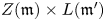 $Z({\frak m}) \times L( {\frak m} ')$ to be irreducible: when no segment of
 ${\frak m}$ is juxtaposed (in the obvious sense) to a segment in
 ${\frak m} '$.
To prove that  $V\cong W$ if and only if the expressions for
 $V, W$ as products are the same up to a permutation, define
 \[ R= \sum_{n \geq 0} R_n, \]
where  $R_0=\mathbb {Z}$, and
 $R_d$ is the Grothendieck group of finite length representations of
 ${{\rm GL}}_d(k)$. Then
 $R$ is a ring under the product
 $R_n \times R_m \rightarrow R_{n+m}$ given by parabolic induction.
The ring  $R$ is known to be a polynomial ring
 $\mathbb {Z}[S(C)]$ on indeterminates
 $S(C)$, where
 $S(C)$ is the set of all segments
 $\{\rho , \rho \nu ,\ldots , \rho \nu ^{n-1} \}$ where
 $\rho$ is a cuspidal representation of some
 ${{\rm GL}}_d(k)$. There is a natural map from the polynomial ring
 $\mathbb {Z}[S(C)]$ to
 $R$ taking
 $S(C)$ to the unique irreducible submodule of the full parabolic induction:
 $\rho \times \rho \nu \times \cdots \times \rho \nu ^{n-1}$, which is an isomorphism of rings. In particular,
 $R$ is a unique factorization domain (UFD). Further, it is known (by Tadic [Reference TadićTad86, Section 3]) that the representations
 $[a]$ and
 ${\textrm {St}}[a]$ are prime elements of the ring
 $R$, proving the second part of the lemma.
Remark 5.6 An explicit example of a representation  $\pi _M$ of
 ${{\rm GL}}_5(k)$ and
 $\pi _N$ of
 ${{\rm GL}}_4(k)$ was provided by Chan [Reference ChanCha19] where the previous proof cannot be carried out to prove that
 ${\textrm {Hom}}_{{{\rm GL}}_4(k)}(\pi _M,\pi _N) \not = 0$. For this, take the representation
 $\pi _M$ of
 ${{\rm GL}}_5(k)$ and
 $\pi _N$ of
 ${{\rm GL}}_4(k)$ which in the previous notation are
 \begin{align*} \pi_M &= [3] \times [1] \times [1], \\ \pi_N &= {\textrm{St}} [2] \times [2]. \end{align*}
In this case, it is easy to see  $\nu ^{1/2} (\pi _M)^{i+1}$, and
 $((\pi _N^{\vee })^{i})^{\vee }$ have the same cuspidal support for
 $i = 1, 2$, and the strategy of the proof of the theorem to conclude
 ${\textrm {Hom}}_{{{\rm GL}}_4(k)}(\pi _M,\pi _N) \not = 0$ fails. In fact, we do not know at this point whether
 ${\textrm {Hom}}_{{{\rm GL}}_4(k)}(\pi _M,\pi _N) = 0$ or is non-zero although the representations have a pair of relevant A-parameters.
The proof of the following proposition follows from the proof of Theorem 5.2.
Proposition 5.7 Let  $\pi _M$ be an irreducible admissible representation of
 ${{\rm GL}}_{n+1}(k)$ with A-parameter
 $M_{\rm A}$ of dimension
 $(n+1)$, and
 $\pi _N$ be an irreducible admissible representation of
 ${{\rm GL}}_{n}(k)$ with A-parameter
 $N_{\rm A}$ of dimension
 $n$. Assume that the representations
 $M_{\rm A}, N_{\rm A}$ of
 $\textit {WD}(k) \times {{\rm SL}}_2(\mathbb {C})$ are, in fact, representations of
 $W(k) \times {{\rm SL}}_2(\mathbb {C})$. Then, if
 \[ {\rm Ext}^{i}_{{{\rm GL}}_n(k)}(\pi_M,\pi_N)\not = 0,\quad \text{for some}\ i \geq 0, \]
 $M_{\rm A},N_{\rm A}$ are a relevant pair of A-parameters.
Remark 5.8 It appears to be an interesting problem to understand when  $\textrm {Ext}^{i}_{{{\rm GL}}_n(k)}(\pi _M,\pi _N)$ is non-zero for some
 $i \geq 0,$ and then to calculate them, among irreducible representations
 $\pi _M,\pi _N$ of
 ${{\rm GL}}_n(k)$ with A-parameters
 $M_{\rm A},N_{\rm A}$ (where there is the necessary condition that
 $M_{\rm A}, N_{\rm A}$ restricted to
 $W(k) \times \Delta {{\rm SL}}_2(\mathbb {C}) \subset \textit {WD}(k) \times {{\rm SL}}_2(\mathbb {C})$ are isomorphic), and also for the restriction problem when
 $\pi _M$ is an irreducible representation of
 ${{\rm GL}}_{n+1}(k)$ and
 $\pi _N$ of
 ${{\rm GL}}_n(k)$, both with an A-parameter, where the previous proposition provides the answer in the first non-trivial case. See a recent work of Chan [Reference ChanCha19] for some results in both the cases.
6. Local conjecture for classical groups
In this section, we consider the restriction problem for classical groups. Hence, we shall work in the context of [Reference Gan, Gross and PrasadGGP12a]. More precisely, we fix local fields  $k_0 \subset k$ with
 $[k:k_0] \leq 2$. Then, with
 $\epsilon = \pm$, we consider a pair of non-degenerate
 $\epsilon$-Hermitian spaces
 $W \subset V$ over
 $k$ such that:
(i)
$\epsilon \cdot (-1)^{\dim W^{\perp }} = -1$;(ii)
$W^{\perp }$ is a split space.


Setting  $G(V)$ to be the identity component of the automorphism group of the space
 $V$, we assume further that
 $G(V)$ is quasi-split. We thus have a diagonal embedding
 \[ G(W)^{\Delta} \hookrightarrow G(V) \times G(W). \]
Indeed, as was explained in [Reference Gan, Gross and PrasadGGP12a], one has a subgroup
 \[ G(W)^{\Delta} \subset H = G(W)^{\Delta} \cdot N \subset G(V) \times G(W) \]
where  $N$ is a certain unipotent subgroup of
 $G(V)$ normalized by
 $G(W)^{\Delta }$. Moreover, a certain representation
 $\nu$ of
 $H(k)$ was defined in [Reference Gan, Gross and PrasadGGP12a, § 14]: it is a one-dimensional character if
 $\dim W^{\perp }$ is odd and is essentially a Weil representation when
 $\dim W^{\perp }$ is even. When
 $\dim W^{\perp } =1$, for example,
 $\nu$ is simply the trivial representation.
Given an irreducible representation  $\pi _V \otimes \pi _W$ of
 $G(V) \times G(W)$, we defined in [Reference Gan, Gross and PrasadGGP12a, § 14] a multiplicity
 $d(\pi _V, \pi _W)$, given by
 \[ d(\pi_V, \pi_W) = \dim {{\rm Hom}}_{G(W)} (\pi_V \otimes \pi_W, \nu). \]
It is known that
 \[ d(\pi_V, \pi_W) \leq 1. \]
We have also introduced in [Reference Gan, Gross and PrasadGGP12a] a notion of relevant pure inner forms  $G(V') \times G(W')$ of
 $G(V) \times G(W)$, and one can likewise consider the multiplicity
 $d(\pi _{V'}, \pi _{W'})$ for representations of the pure inner form. Our goal is to determine the multiplicity
 $d(\pi _V, \pi _W)$ when
 $\pi _V \otimes \pi _W$ belongs to local L-packets of Arthur type. Before formulating the conjecture, we recall some basic facts about A-packets of classical groups.
Suppose that  $M_{\rm A}$ is a local A-parameter for
 $G(V)$, with associated L-parameter
 $M$. By the local Langlands correspondence,
 $M$ gives rise to a Vogan L-packet
 $\Pi _M$ consisting of irreducible representations of pure inner forms
 $G(V')$ of
 $G(V)$. Moreover, fixing generic data as in [Reference Gan, Gross and PrasadGGP12a], there is a bijection
 \[ \Pi_M \longleftrightarrow \textrm{Irr}(A_M), \]
where  $A_M$ is the component group of the L-parameter
 $M$ and is an elementary abelian 2-group with a canonical basis. Hence,
 \[ \Pi_M = \{\pi_{\eta} \in \textrm{Irr}(G(V')): \eta \in \textrm{Irr}(A_M)\}. \]
On the other hand, the A-parameter  $M_{\rm A}$ gives rise to a local A-packet
 $\Pi _{M_{\rm A}}$, which is a priori a multi-set of unitary representations of the pure inner forms of
 $G(V)$ in correspondence with the irreducible characters of the component group
 $A_{M_{\rm A}}$ (which is also an elementary abelian 2-group with a canonical basis). In other words, one has
 \[ \Pi_{M_{\rm A}} = \{ \pi_{\eta} : \eta \in \textrm{Irr}(A_{M_{\rm A}}) \} \]
where now  $\pi _{\eta }$ is a (possibly zero and possibly reducible) finite length unitary representation of some pure inner form
 $G(V')$ of
 $G(V)$. The work of Mœglin [Reference MœglinMœg06, Reference MœglinMœg09, Reference MœglinMœg11] and Mœglin and Renard [Reference Mœglin and RenardMR18] has shown that (except possibly over
 $\mathbb {R}$) the local A-packets
 $\Pi _{M_{\rm A}}$ are sets rather than multi-sets. This means that the representations
 $\pi _{\eta }$ are multiplicity-free and
 $\pi _{\eta }$ and
 $\pi _{\eta '}$ have no common constituents if
 $\eta \ne \eta '$. One expects similar results over
 $\mathbb {R}$ for which special cases have been shown by Mœglin and Renard [Reference Mœglin and RenardMR17, Reference Mœglin and RenardMR19].
Regarding  $\Pi _{M_{\rm A}}$ as a set of irreducible representations (by considering the irreducible summands of
 $\pi _{\eta }$), one thus has a map
 \[ \Pi_{M_{\rm A}} \longrightarrow \textrm{Irr}(A_{M_{\rm A}}), \]
which is neither surjective nor injective in general. There is a natural surjective map
 \[ A_{M_{\rm A}} \longrightarrow A_M, \]
giving rise to a natural injective map
 \[ \textrm{Irr}(A_M) \hookrightarrow \textrm{Irr}(A_{M_{\rm A}}), \]
and a commutative diagram

In other words,  $\Pi _M$ is a subset of
 $\Pi _{M_{\rm A}}$ (this is actually part of the defining property of an A-packet) and the labelling of its elements by characters of the component groups
 $A_M$ or
 $A_{M_{\rm A}}$ is consistent, cf. Conjecture 6.1(iv) of [Reference ArthurArt89].
After this short preparation, we can now formulate the conjecture.
Conjecture 6.1 Let  $M_{\rm A}$ and
 $N_{\rm A}$ be local A-parameters for
 $G(V)$ and
 $G(W)$, respectively, with associated A-packets
 $\Pi _{M_{\rm A}}$ and
 $\Pi _{N_{\rm A}}$. Let
 $M$ and
 $N$ be the L-parameters associated to
 $M_{\rm A}$ and
 $N_{\rm A}$ with corresponding L-packets
 $\Pi _M$ and
 $\Pi _N$.
(a) If
$(M_{\rm A}, N_{\rm A})$ is not relevant, then
Here,\[ d(M,N) := \sum_{(\pi, \pi') \in (\Pi_{M} \times \Pi_{N})^\textrm{rel}} d(\pi, \pi') = 0. \]$(\Pi _{M} \times \Pi _{N})^\textrm {rel}$ denotes the subset of representations of relevant pure inner forms of $G(V) \times G(W)$.(b) If
$(M_{\rm A}, N_{\rm A})$ is relevant, then there is a unique relevant pair of representations $(\pi _M, \pi _N) \in \Pi _M \times \Pi _N$ such that the multiplicity $d(\pi _M, \pi _N) =1$. In other words,
\[ d(M,N) = \sum_{(\pi, \pi') \in (\Pi_{M} \times \Pi_{N})^\textrm{rel}} d(\pi, \pi') = 1. \](c) In the setting of part (b), the distinguished representation
$\pi _M \boxtimes \pi _N$ corresponds to the distinguished character $\chi$ of the component group $A_M \times A_N$ given by the same recipe as in [Reference Gan, Gross and PrasadGGP12a].


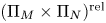






The recipe for  $\chi$ is sufficiently intricate that we have no desire to repeat it here; we refer the reader to [Reference Gan, Gross and PrasadGGP12a] for its precise definition. Let us make a few remarks concerning this conjecture.
Remark 6.2 (i) Modulo the notion of ‘relevant A-parameters’, the previous conjecture is a direct generalization of our original conjectures for tempered L-packets in [Reference Gan, Gross and PrasadGGP12a] to the setting of L-packets of Arthur type.
(ii) Unlike the case of  $G={{\rm GL}}_n$, we cannot treat the special case of this conjecture for those A-parameters
 $(M_{\rm A},N_{\rm A})$ whose associated L-parameters
 $(M,N)$ are unramified (in particular, trivial on the Deligne
 ${{\rm SL}}_2(\mathbb {C})$ in
 $\textit {WD}(k)$). The work of Hendrickson [Reference HendricksonHen20] offers a possible strategy for establishing this unramified case, using a combination of Mackey theory and theta correspondence.
7. A conjecture for A-packets
In the previous section, Conjecture 6.1 addressed the restriction problem for the local L-packet  $\Pi _M \times \Pi _N$ contained in a local A-packet
 $\Pi _{M_{\rm A}} \times \Pi _{N_{\rm A}}$. In this section, we attempt to address the restriction problem for all members of A-packets, but our conjecture in this section is not as precise. Ideally, one would like to know the multiplicities for all relevant pairs of representations in the A-packet. Namely, one would like to have a prediction for the sum
 \[ d(M_{\rm A}, N_{\rm A}):= \sum_{ (\pi, \pi') \in (\Pi_{M_{\rm A}} \times \Pi_{N_{\rm A}})^\textrm{rel}} d(\pi, \pi') \]
and a prediction of which relevant pairs  $(\pi , \pi ')$ give non-zero contribution. Examples of restriction problems for low-rank groups (some of which we discuss later) indicate that the sum can be greater than one; see Remark 7.8.
Recall that unlike the case of  ${{\rm GL}}_n$ where
 $\Pi _{M_{\rm A}} = \Pi _M$ (i.e. an A-packet is equal to its associated L-packet) are singletons and where A-packets corresponding to distinct A-parameters are disjoint, the A-packets of classical groups are more complicated and more interesting.
(i) First, it is rarely the case that the containment
$\Pi _M \subset \Pi _{M_{\rm A}}$ is an equality.(ii) Second, the sets
$\Pi _M$ and $\Pi _{M_{\rm A}}$ are typically not singletons.(iii) Third, A-packets are not necessarily disjoint.


These complications make the problem of predicting the multiplicities in an A-packet rather tricky. At this moment, we can only offer the following (optimistic) conjecture, which may be treated more as a question.
Conjecture 7.1
(i) If
$(M_{\rm A}, N_{\rm A})$ is a pair of A-parameters (for a pair of classical groups $G(V) \times G(W)$) such that the Deligne ${{\rm SL}}_2(\mathbb {C})$ acts trivially, then
\[ d(M_{\rm A}, N_{\rm A}) \ne 0 \Longleftrightarrow \text{$(M_{\rm A}, N_{\rm A})$ is relevant.} \](ii) For a representation
$\pi _1 \times \pi _2$, an irreducible representation of $G(V) \times G(W)$, and belonging to an Arthur packet,
\[ d(\pi_1,\pi_2) \neq 0 \Longrightarrow \pi_1 \times \pi_2 \in \Pi_{M_{\rm A}} \times \Pi_{N_{\rm A}}\ \text{for some relevant pair } (M_{\rm A}, N_{\rm A}). \]






We make a few remarks about this conjecture.
Remark 7.2 We outline a heuristic global justification, without in the least pretending to be complete, of part (ii) of Conjecture 7.1. Assume that 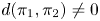 $d(\pi _1,\pi _2) \neq 0$. Since
 $\pi _1$ and
 $\pi _2$ are of Arthur type, we have automorphic representations
 $\Pi _1 = \otimes \Pi _{1,v}$, and
 $\Pi _2 = \otimes \Pi _{2,v}$ with
 $\pi _1=\Pi _{1,v_0}$ and
 $\pi _2=\Pi _{2,v_0}$ for some place
 $v_0$ of a global field
 $F$. Now we can assume by a form of the Burger–Sarnak principle that
 $\Pi _1$ and
 $\Pi _2$ are so chosen that
 $\Pi _1 \otimes \Pi _2$ has a non-zero global period integral. By Arthur,
 $\Pi _1 \otimes \Pi _2$ has a (uniquely determined) global A-parameter, such that all the local components of
 $\Pi _1 \otimes \Pi _2$ (in particular,
 $\pi _1 \times \pi _2$) have the corresponding local A-parameter. As the period integral on
 $\Pi _1 \otimes \Pi _2$ is non-zero, it follows from the global Conjecture 9.1 (see later) that the global A-parameter of
 $(\Pi _1, \Pi _2)$ is relevant. Hence,
 $(\pi _1,\pi _2)$ has a relevant pair of local A-parameters.
Remark 7.3 It appears to us that higher multiplicities in a given A-packet is the result of other A-packets (with relevant A-parameters) intersecting this A-packet. To be more precise, we feel that for  $(M_{\rm A}, N_{\rm A})$, a pair of A-parameter for
 $G(V) \times G(W)$,
 \[ d(M_{\rm A}, N_{\rm A}) \leq |X|, \]
where  $X$ is a set of maximal cardinality, consisting of pairs
 $(\pi _1' \times \pi _2', M_{\rm A}' \times N_{\rm A}')$ such that:
(i)
$M_{\rm A}' \times N_{\rm A}'$ is any relevant pair of A-parameter for $G(V) \times G(W)$;(ii)
$\pi _1' \times \pi _2'$ is a representation belonging to both the A-packets $\Pi _{M_{\rm A}} \times \Pi _{N_{\rm A}}$ and $\Pi _{M'_{\rm A}} \times \Pi _{N'_{\rm A}}$(iii) the projections from
$X$ to both the first and the second factor are injective.




We now offer some evidence for Conjecture 7.1, but before doing so, we need to recall some results of Mœglin. Given a discrete L-parameter  $M$ of a classical group, Mœglin determined precisely which elements of its L-packet
 $\Pi _M$ can be a supercuspidal representation. To formulate the result, we introduce the following two notions.
(i) Say that a discrete L-parameter
$M$ is without gaps (or holes) if the following holds: for any selfdual irreducible representation $\rho$ of $W(k)$ and $a \geq 1$,
Equivalently, let\[ \rho \boxtimes [a+2] \subset M \Longrightarrow \rho \boxtimes [a] \subset M. \]be a maximal chain appearing as a direct summand in\[ \rho \boxtimes [1] + \rho \boxtimes [3] +\cdots \quad \text{or} \quad \rho \boxtimes [2] + \rho \boxtimes [4] +\cdots \]$M$. Then $M$ is without gaps if these chains (as $\rho$ varies) span $M$.(ii) Let
$M$ be a discrete L-parameter without gaps and let $A_M$ be its component group, so that $\Pi _M$ is in bijection with $\textrm {Irr}(A_M)$. Recall that $A_M$ is a vector space over $\mathbb {Z}/2\mathbb {Z}$ with a canonical basis indexed by the irreducible summands of $M$. Say that $\alpha \in \textrm {Irr}(A_M)$ is alternating if the following holds: for any $\rho \boxtimes [a] + \rho \boxtimes [a+2] \subset M$,
with the convention that if\[ \alpha(\rho \boxtimes [a]) = -\alpha (\rho \boxtimes [a+2]), \]$a=0$, then $\rho \boxtimes [a]=0$, and $\alpha (\rho \boxtimes [ 0])=1$, so that we must have $\alpha (\rho \boxtimes [2])=-1$.







Here then is Mœglin's first result [Reference MœglinMœg09] that we use.
Theorem 7.4 Let  $M$ be a discrete L-parameter for a classical group over a
 $p$-adic field and let
 $\alpha \in \textrm {Irr}(A_M)$ be a character of its component group. Then the corresponding representation
 $\pi (M, \alpha ) \in \Pi _M$ is supercuspidal if and only if
 $M$ is without gaps and
 $\alpha$ is alternating.
The second result of Mœglin [Reference MœglinMœg06, Reference MœglinMœg09] we need concerns the possible overlaps of different local A-packets. If  $M_{\rm A}$ is the local A-parameter of a (classical) group
 $G$ over a non-archimedean local field
 $k$, let
 $M_{\rm A}^{\Delta }$ be the tempered L-parameter defined by

where  $\Delta$ is the diagonal embedding of
 ${{\rm SL}}_2(\mathbb {C})$.
Theorem 7.5 Let  $M_{\rm A}$ and
 $M'_{\rm A}$ be two local A-parameters for a classical group over a
 $p$-adic field with associated A-packets
 $\Pi _{M_{\rm A}}$ and
 $\Pi _{M'_{\rm A}}$. Then
 \[ \Pi_{M_{\rm A}} \cap \Pi_{M'_{\rm A}} \ne \emptyset \Longrightarrow M_{\rm A} ^{\Delta} \cong M_{\rm A}'^{\Delta}. \]
Further, if  $\,\Pi _{M_{\rm A}^{\Delta }}^{\rm sc}$ denotes the set of supercuspidal representations in
 $\Pi _{M_{\rm A}^{\Delta }}$, then
 \[ \Pi_{M_{\rm A} ^{\Delta}}^{\rm sc} \subset \Pi_{M_{\rm A}}. \]
The first part of this theorem of Mœglin is eventually related to the observation that two A-parameters  $M_{\rm A}$ and
 $M'_{\rm A}$ of
 ${{\rm GL}}_n(k)$ have the same cuspidal support if and only if
 $M_{\rm A}^{\Delta }$ and
 ${M'_{\rm A}}^{\Delta }$ are equivalent.
At this point, let us take note of the following consequence of tempered GGP, which was pointed out to us by Waldspurger.
Proposition 7.6 Let  $M_0 \times N_0$ be a tempered L-parameter for
 ${{\rm SO}}_{2n+1} \times {{\rm SO}}_{2m}$ over a non-archimedean local field
 $k$ with associated L-packets
 $\Pi _{M_0} \times \Pi _{N_0}$. Let
 $(\pi , \sigma )$ be the unique member of
 $\Pi _{M_0} \times \Pi _{N_0}$ such that
 $d(\pi , \sigma ) \ne 0$, so that
 $(\pi , \sigma )$ corresponds to the distinguished character
 $\chi := \chi _{M_0, N_0}$ of the component group by [Reference Gan, Gross and PrasadGGP12a].
(i) Suppose that  $\rho$ is an irreducible selfdual parameter for
 ${{\rm GL}}_d(k)$ such that for some
 $a \geq 3$, both the representations
 $\rho \otimes [a]$ and
 $\rho \otimes [a-2]$ of
 $\textit {WD}(k)=W(k) \times {{\rm SL}}_2(\mathbb {C})$ appear with multiplicity 1 in
 $M_0$. In this case, these two summands give rise to two basis elements of the component group associated to
 $M_0$. Let
 \[ \chi(\rho,a), \chi(\rho,a-2) \in \{\pm 1\} \]
be the value of the distinguished character  $\chi$ on these two elements respectively. Then
 \[ \chi(\rho,a) = - \chi(\rho,a-2) \]
if and only if the parameter  $N_0$ contains
 $\rho \otimes [a-1]$ with odd multiplicity.
(ii) Further, if  $\rho \otimes [2]$ appears with multiplicity 1 in
 $M_0$, then
 \[ \chi(\rho,2) = - 1 \]
if and only if the parameter  $N_0$ contains
 $\rho$ with odd multiplicity.
Furthermore, there are similar assertions when both the representations  $\rho \otimes [a]$ and
 $\rho \otimes [a-2]$ of
 $\textit {WD}(k)=W(k) \times {{\rm SL}}_2(\mathbb {C})$ appear with multiplicity 1 in
 $N_0$.
Proof. Let us begin by recalling Conjecture 20.1 of [Reference Gan, Gross and PrasadGGP12a], giving a recipe for  $\chi (\rho ,a)$:
 \[ \chi(\rho,a) = \epsilon(\rho \otimes [a] \otimes N_0)\cdot (\det \rho)(-1)^{(a\dim N_0)/2}\cdot (\det N_0)(-1)^{(a\dim \rho)/2}. \]
Define more generally for any selfdual representation  $\mu$ of
 $W(k) \times {{\rm SL}}_2(\mathbb {C})$ with even parity (i.e. the same as that of
 $N_0$),
 \[ \chi_{\mu}(\rho, a)= \epsilon(\rho \otimes [a] \otimes \mu) \cdot (\det \rho)(-1)^{(a\dim N_0)/2} \cdot (\det \mu)(-1)^{(a\dim \rho)/2}, \]
so that if  $N_0 = \oplus _i \mu _i$, a sum of irreducible selfdual representations
 $\mu _i$ of
 $W(k) \times {{\rm SL}}_2(\mathbb {C})$ with even parity (i.e. the same as that of
 $N_0$), then
 \[ \chi(\rho, a)= \prod_i \chi_{\mu_i}(\rho, a). \]
Thus, we need to compare  $\chi _{\mu _i}(\rho , a)$ and
 $\chi _{\mu _i}(\rho , a-2)$ for any
 $\mu _i$ as before.
Recall from [Reference TateTat79] that for an irreducible representation  $\lambda \otimes [n]$ of
 $\textit {WD}(k)=W(k) \times {{\rm SL}}_2(\mathbb {C})$, one has
 \[ \epsilon( \lambda \otimes [n]) = \epsilon(\lambda)^{n} \cdot \det (-F, \lambda^{I})^{n-1}, \]
where  $\lambda ^{I}$ denotes the subspace of
 $\lambda$ fixed by the inertia group
 $I$ and
 $F$ denotes the Frobenius element of
 $W(k)/I$. In particular, if
 $\lambda$ is an irreducible selfdual representation of
 $W(k)$, then
 \[ \epsilon( \lambda \otimes [n]) = \begin{cases} \epsilon(\lambda)^{n} & \textrm{if } \lambda \not =1; \\ (-1)^{n-1} & \textrm{if } \lambda =1 . \end{cases} \]
Using the Clebsch–Gordon theorem,
 \[ [a] \otimes [b] = [a+b-1] \oplus [a+b-3] \oplus \cdots \oplus [|a-b|+1], \]
it follows that if  $\rho , \tau$ are irreducible selfdual representations of
 $W(k)$, then
 \[ \epsilon( \rho \otimes [a] \otimes \tau \otimes [b]) = \begin{cases} \epsilon(\rho \otimes \tau )^{ab} & \text{ if $\rho \not \cong \tau$,} \\ \epsilon(\rho \otimes \tau )^{ab} (-1)^{n(a,b)} & \text{ if $\rho \cong \tau$,} \end{cases} \]
where  $n(a,b) = \textrm {min}\{a,b\} \cdot [ \textrm {max}\{a, b\} -1]$. In particular, observe that for
 $a,b$ positive integers of different parity,
 \[ \epsilon( [a] \otimes [b]) \cdot \epsilon( [a-2] \otimes [b])= \begin{cases} 1 & \text{ if $b \not = a-1$,} \\ -1 & \text{ if $b = a-1$.} \end{cases} \]
More generally, it is easily seen that for any irreducible representation  $\mu$ of
 $W(k) \times {{\rm SL}}_2(\mathbb {C})$ as previously and
 $a \geq 3$,
 \[ \chi_{\mu}(\rho, a) = \begin{cases} \chi_{\mu}(\rho, a-2), & \text{ if $\mu \ne \rho \otimes [a-1]$,} \\ - \chi_{\mu}(\rho, a-2), & \text{ if $\mu = \rho \otimes [a-1]$.} \end{cases} \]
It follows that  $\chi (\rho , a) = - \chi (\rho , a-2)$ if and only if
 $\rho \otimes [a-1]$ occurs in
 $N_0$ with odd multiplicity, thus completing the proof of part (i). The proof of part (ii), where
 $a=2$, follows along the same lines; we omit the details.
After this preparation, we can prove the following theorem. Part (b) of the theorem is a contribution to Conjecture 7.1(i) and (ii).
Theorem 7.7 (a) Let  $M_0 \times N_0$ be a discrete L-parameter for
 ${{\rm SO}}_{2n+1} \times {{\rm SO}}_{2n}$ without gaps with associated L-packet
 $\Pi _{M_0} \times \Pi _{N_0}$. Let
 $(\pi , \sigma )$ be the unique member of
 $\Pi _{M_0} \times \Pi _{N_0}$ such that
 $d(\pi , \sigma ) \ne 0$. Let
 $D(M_0) \times D(N_0)$ be the A-parameter obtained from the L-parameter
 $M_0 \times N_0$ by interchanging the Deligne
 ${{\rm SL}}_2(\mathbb {C})$ by Arthur
 ${{\rm SL}}_2(\mathbb {C})$.
Then  $(\pi , \sigma )$ is supercuspidal if and only if
 $(D(M_0), D(N_0))$ is relevant.
(b) Let  $M_{\rm A} \times N_{\rm A}$ be a discrete A-parameter for
 ${{\rm SO}}_{2n+1} \times {{\rm SO}}_{2n}$ over a non-archimedean local field
 $k$, on which the Deligne
 ${{\rm SL}}_2(\mathbb {C})$ acts trivially, with associated A-packet
 $\Pi _{M_{\rm A}} \times \Pi _{N_{\rm A}}$. Assume that the A-parameter
 $M_{\rm A} \times N_{\rm A}$ has no gaps (relative to the Arthur
 ${{\rm SL}}_2(\mathbb {C})$). Then there exists supercuspidal
 $(\pi , \sigma ) \in \Pi _{M_{\rm A}} \times \Pi _{N_{\rm A}}$ such that
 $d(\pi ,\sigma ) \ne 0$ if and only if
 $M_{\rm A}\times N_{\rm A}$ is relevant.
Proof. (a) This is a consequence of the tempered GGP [Reference WaldspurgerWal12], Theorems 7.4 and 7.5, and Proposition 7.6.
(b) This follows from part (a) on noting that the Aubert–Zelevinsky involution
 \[ \pi \rightarrow D(\pi) \]
on the category of admissible representations of a group  $G(k)$ takes the tempered L-packet
 $\Pi _{M_0} \times \Pi _{N_0}$ to
 $D(\Pi _{M_0}) \times D(\Pi _{N_0})$, which is the A-packet associated to the A-parameter
 $D(M_0) \times D(N_0)$. Now
 $\pi = D(\pi )$ (up to a sign) for supercuspidal representations
 $\pi$. Hence, if
 $(\pi , \sigma )$ is a supercuspidal member of
 $\Pi _{M_0} \times \Pi _{N_0}$ such that
 $d(\pi , \sigma ) \ne 0$, then
 $(\pi , \sigma )$ is also a member of the A-packet
 $D(\Pi _{M_0}) \times D(\Pi _{N_0})$ with
 $d(\pi , \sigma ) \ne 0$.
Remark 7.8 In Theorem 7.7(b), the representation  $\pi \times \sigma$ we produced in the A-packet
 $\Pi _{M_{\rm A}} \times \Pi _{N_{\rm A}}\,$with
 $d(\pi , \sigma ) \ne 0$ is supercuspidal and, hence, lies outside of the associated L-packet
 $\Pi _M \times \Pi _N$ (because the L-packet underlying an A-parameter with non-trivial restriction to the Arthur
 ${{\rm SL}}_2(\mathbb {C})$ consists only of non-tempered representations). Thus, by Conjecture 6.1, the sum of multiplicities in such A-packets is at least two. This remark could be considered to be a contribution to Remark 7.3.
In the rest of this section, we construct examples of non-relevant A-parameters  $(M_{\rm A}, N_{\rm A})$ for which
 $d(M_{\rm A},N_{\rm A}) > 0$, a subtlety that Conjecture 7.1(ii) takes into account.
For any subset  $J \subset \{1,2,\ldots ,n\}$ (for
 $n$ fixed), consider the representation of
 ${{\rm SL}}_2(\mathbb {C}) \times {{\rm SL}}_2(\mathbb {C})$ given by
 \[ M_{{\rm A},J} = \bigoplus_{i \notin J} [2i] \otimes [1] \oplus \bigoplus_{j \in J} [1] \otimes [2j]. \]
Then  $M_{{\rm A},J}$ is a multiplicity-free sum of symplectic representation of
 $\textit {WD}(k) \times {{\rm SL}}_2(\mathbb {C})$ with
 $W(k)$ acting trivially. Hence,
 $M_{{\rm A},J}$ is a discrete A-parameter for an odd special orthogonal group of the appropriate size.
Now observe that  $M_{{\rm A},J}^{\Delta }$ is independent of
 $J$ and is a discrete L-parameter without gaps:
 \[ M_{{\rm A},J}^{\Delta} = M_{A, \emptyset} = \bigoplus_{j=1}^{n} 1_{W(k)} \otimes [2j]. \]
By Theorem 7.4, the L-packet of  $M_{{\rm A},J}^{\Delta }$ contains a unique supercuspidal representation
 $\pi _{\rm sc}$ for an odd special orthogonal group of the appropriate size, attached to the unique alternating character
 $\alpha _{\rm sc}$ of the component group:
 \[ \alpha_{\rm sc}([2j]) = (-1)^{j}. \]
By Theorem 7.5, we see that
 \[ \pi_{\rm sc} \in \Pi_{M_{{\rm A},J}} \quad \text{for any $J$.} \]
We now consider the restriction problem for the pair  $(M_{{\rm A},J}, N)$ where
 $M_{{\rm A},J}$ is as previously and
 $N$ is the discrete L-parameter
 \[ N := [1] \oplus [3] \oplus \cdots \oplus [2n-1] \]
on which  $W(k)$ acts trivially. One may apply Proposition 7.6 (together with Theorem 7.4) to deduce that
 \[ d(\pi_{\rm sc}, N) =1, \]
where we recall that  $\pi _{\rm sc}$ is the unique supercuspidal representation with L-parameter
 $M_{A,\emptyset }$. Since
 $\pi _{\rm sc} \in \Pi _{M_{{\rm A},J}}$ for any
 $J$, we thus conclude that
 \[ d(M_{{\rm A},J}, N) \ne 0 \quad \text{for any $J$.} \]
It is easy to see that
 \[ (M_{{\rm A},J}, N)\ \text{is relevant} \Longleftrightarrow J = \emptyset,\ \text{or}\ J = \{1 \}. \]
Hence, if  $n > 1$, we have produced non-relevant pairs
 $(M_{{\rm A},J}, N)$ such that
 $d(M_{{\rm A},J}, N) > 0$. In other words, ‘relevance’ is not a necessary condition for branching in A-packets.
The simplest example one can take is  $n=2$. In this case, we have the A-parameters
 \[ M_{\rm A} = [1] \boxtimes [4] + [2] \boxtimes [1] \quad \text{or} \quad [1] \boxtimes [4] + [1] \boxtimes [2], \]
and
 \[ N = [3] \boxtimes [1] + [1] \boxtimes [1]. \]
The pair  $(M_{\rm A},N)$ is not relevant, yet
 $d(M_{\rm A}, N) > 0$. (We note that the A-packets of
 ${{\rm SO}}_7$ corresponding to the two choices of
 $M_{\rm A}$ given previously can be constructed by theta lifting from an appropriate L-packet and an A-packet on
 ${\rm Mp}_2$, respectively, and the unique supercuspidal representation in them is simply the theta lift (with respect to
 $\psi$) of the odd Weil representation
 $\omega _{\psi }$).
8. A special case of the conjecture
The results of Mœglin and Waldspurger that were used in the previous section to provide a counterexample to the necessity of relevance for the restriction problem for A-packets can be used in other circumstances to verify special cases of our Conjecture 6.1. In this section, we consider one such special case of Conjecture 6.1, the verification of which is due to Mœglin. As a general reference for A-packets on not necessarily quasi-split classical groups, we refer to [Reference Mœglin and RenardMR18]. In what follows, we use  ${{\rm SO}}(V)^{+}$ or
 ${{\rm SO}}_{2\ell +1}^{+}$ (respectively,
 ${{\rm SO}}(V)^{-},$ or
 ${{\rm SO}}_{2\ell +1}^{-}$) to denote the split (respectively, non-split) orthogonal group in odd number of variables of discriminant 1; the superscript
 $\pm$ will be omitted when we consider either of the two possibilities.
To describe the special case, we introduce the following notation. Let  $\rho$ be an irreducible
 $d$-dimensional representation of
 $W(k)$ and write
 $[b]$ for the
 $b$-dimensional irreducible representation of
 ${{\rm SL}}_2(\mathbb {C})$. Then an irreducible representation of
 $\textit {WD}(k) = W(k) \times {{\rm SL}}_2(\mathbb {C}) \times {{\rm SL}}_2(\mathbb {C})$ has the form
 $\rho \otimes [a] \otimes [b]$ for integers
 $a,b >0$.
Assume now that  $\rho$ is an irreducible
 $d$-dimensional orthogonal representation of
 $W(k)$. We consider the following A-parameters
 \[ M_{\rm A} = \rho \otimes [2] \otimes [1] + \rho \otimes [1] \otimes [2], \]
and
 \[ N_{\rm A} = \rho \otimes [1] \otimes [3] + N_0, \]
where  $N_0$ is a
 $d$-dimensional tempered orthogonal L-parameter. Then
 $M_{\rm A}$ is an A-parameter for
 ${{\rm SO}}_{4d+1}$ whereas
 $N_{\rm A}$ is an A-parameter for
 ${{\rm SO}}_{4d}$ (orthogonal group of a quadratic space whose discriminant is dictated by the A-parameter
 $N_{\rm A}$). Observe that the pair
 $(M_{\rm A}, N_{\rm A})$ is relevant. Thus, according to our conjecture, we expect that there should be a pair of representations
 $(\pi , \sigma )$ in the L-packet
 $\Pi _M \times \Pi _N$ associated to
 $M_{\rm A}$ and
 $N_{\rm A}$ such that
 ${\textrm {Hom}}_{{{\rm SO}}_{4d}}(\pi , \sigma ) \ne 0$. To verify this, we first describe the elements in these L-packets more concretely.
The L-parameter associated to  $M_{\rm A}$ is given by
 \[ M = \rho \otimes [2] + \rho \nu^{1/2} + \rho \nu^{-1/2}, \]
where  $\nu$ is the character of
 $W(k)$ corresponding to the absolute value of
 $k^{\times }$ under the local class field theory. The associated L-packet
 $\Pi _M$ consists of various Langlands quotients of the split group
 ${{\rm SO}}^{+}_{4d+1}$ and the non-split
 ${{\rm SO}}_{4d+1}^{-}$ defined as follows.
Let  $P_d$ be the maximal parabolic subgroup of
 ${{\rm SO}}_{4d+1}$ stabilizing a
 $d$-dimensional isotropic space, so that its Levi factor is isomorphic to
 ${{\rm GL}}_d \times {{\rm SO}}_{2d+1}$. Then
 $\Pi _M$ consists of the unique irreducible quotients of the standard modules
 \[ \textrm{Ind}_{P_d}^{{\textrm{SO}}_{4d+1}} \pi_{\rho} |{\det}|^{1/2} \otimes \tau \twoheadrightarrow J(\rho, \tau), \]
where  $\pi _{\rho }$ is the irreducible cuspidal representation of
 ${{\rm GL}}_d$ with L-parameter
 $\rho$ and
 $\tau$ runs over the Vogan L-packet of
 ${{\rm SO}}_{2d+1}$ associated to the L-parameter
 $\rho \otimes [2]$.
To further explicate the L-packet  $\Pi _M$, we need to describe the L-packet of
 ${{\rm SO}}_{2d+1}$ with L-parameter
 $\rho \otimes [2]$. The component group of the discrete L-parameter
 $\rho \otimes [2]$ is
 $\mathbb {Z}/2\mathbb {Z}$. Hence, its associated L-packet has the form
 \[ \Pi_{\rho \otimes [2]} = \{ \tau^{+}, \tau^{-}\}, \]
with  $\tau ^{+}$ a discrete series representation of the split group
 ${{\rm SO}}^{+}_{2d+1}$ and
 $\tau ^{-}$ that of the non-split inner form
 ${{\rm SO}}^{-}_{2d+1}$. More precisely,
 $\tau ^{+}$ is the unique irreducible submodule of the induced representation
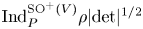 $\textrm {Ind}_{P}^{{{\rm SO}}^{+}(V)} \rho |{\det }|^{1/2}$, where
 $P$ has Levi factor
 ${{\rm GL}}_d$, and
 $\tau ^{-}$ is a supercuspidal representation of
 ${{\rm SO}}_{2d+1}^{-}$.
To summarize, we have
 \[\Pi_M =\big\{\pi_L^{+},\pi_L^{-}\big\},\]
where
 \[ \pi_L^{+} = J(\rho, \tau^{+}) \in \textrm{Irr}\big({\textrm{SO}}^{+}_{4d+1}\big) \quad \text{and} \quad \pi_L^{-} = J(\rho, \tau^{-}) \in \textrm{Irr}\big({\textrm{SO}}^{-}_{4d+1}\big). \]
In fact, we can explicate not just the L-packet  $\Pi _M$ but also the entire A-packet
 $\Pi _{M_{\rm A}}$. For the split group
 ${{\rm SO}}^{+}_{4d+1}$, the A-packet
 $\Pi ^{+}_{M_{\rm A}}$ has two elements:
 \[\Pi^{+}_{M_{\rm A}}= \big\{\pi^{+}_L, \pi^{+}_T\big\},\]
where  $\pi ^{+}_L$ lies in the L-packet
 $\Pi _M$ as described before, and
 $\pi ^{+}_T$ is a tempered representation. The standard module with
 $\pi ^{+}_L$ as its Langlands quotient has composition series given by
 \[ 0 \rightarrow \pi^{+}_g \rightarrow {\textrm{Ind}\,}^{{\textrm{SO}}^{+}_{4d+1}}_{P_d} (\rho \nu^{1/2} \otimes \tau^{+}) \rightarrow \pi^{+}_L \rightarrow 0, \]
with  $\pi ^{+}_g$ an irreducible generic tempered representation of
 ${{\rm SO}}^{+}_{4d+1}$. The representation
 $\pi ^{+}_T$, on the other hand, is the non-generic component of the following induced representation whose other irreducible constituent is
 $\pi ^{+}_g$,
 \[ \pi^{+}_T + \pi^{+}_g = {\textrm{Ind}\,}^{{\textrm{SO}}^{+}_{4d+1}}_{P_{2d} } {\textrm{St}}(\rho,2). \]
Here  ${\textrm {St}}(\rho ,2)$ is the generalized Steinberg representation of
 ${{\rm GL}}_{2d}$ (the Levi factor of
 $P_{2d}$). Observe that the character of
 $\pi ^{+}_L-\pi ^{+}_T$ is a stable distribution, because
 $$\pi^{+}_L-\pi^{+}_T = {\textrm{Ind}\,}^{{\textrm{SO}}^{+}_{4d+1}}_{P_d} (\rho \nu^{1/2} \otimes \tau^{+}) - {\textrm{Ind}\,}^{{\textrm{SO}}^{+}_{4d+1}}_{P_{2d}} {\textrm{St}}(\rho,2).$$
From (A), we obtain the packet  $\Pi ^{-}_{M_{\rm A}}$ on the non-split orthogonal group
 ${{\rm SO}}^{-}_{4d+1}$ by transfer of the stable distribution (A). As the second induced representation on the right-hand side of (A) does not transfer to
 ${{\rm SO}}^{-}_{4d+1}$ (as the parabolic subgroup
 $P_{2d}$ is irrelevant for
 ${{\rm SO}}^{-}_{4d+1}$), this gives
 $$\Pi^{-}_{M_{\rm A}} = \big\{ \pi_L^{-} \big\} = \Big\{ {\textrm{Ind}\,}^{{\textrm{SO}}^{-}_{4d+1}}_{P_d^{-}} (\rho \nu^{1/2} \otimes \tau^{-} )\Big\}. $$
The standard module 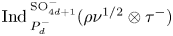 ${\textrm {Ind}\,}^{{{\rm SO}}^{-}_{4d+1}}_{P_d^{-}} (\rho \nu ^{1/2} \otimes \tau ^{-} )$ is known to be irreducible, thus is equal to its Langlands quotient
 $\pi _L^{-}$. This fact is crucially used in the restriction problem considered later.
Now we consider the orthogonal A-parameter
 \[ N_{\rm A} = \rho \otimes [1] \otimes [3] + N_0. \]
Its associated L-parameter is
 \[ N = (N_0 + \rho) + \rho \nu + \rho \nu^{-1}. \]
If  $Q_d$ denotes the maximal parabolic subgroup of
 ${{\rm SO}}_{4d}$ with Levi factor
 ${{\rm GL}}_d \times {{\rm SO}}_{2d}$, the elements of the L-packet
 $\Pi _N$ consists of Langlands quotient of the standard modules
 \[ \textrm{Ind}_{Q_d}^{{\textrm{SO}}_{4d}} \pi_{\rho} |{\det}| \otimes \tau' \twoheadrightarrow J(\rho, \tau'), \]
as  $\tau '$ runs over the Vogan L-packet associated to the L-parameter
 $N_0 + \rho$.
To understand the restriction problem for the pair  $(M_{\rm A}, N_{\rm A})$ on
 ${{\rm SO}}_{4d+1} \times {{\rm SO}}_{4d}$, we first need to understand the restriction problem for the tempered pair
 $( \rho \otimes [2], \rho + N_0)$ of
 ${{\rm SO}}_{2d+1} \times {{\rm SO}}_{2d}$. This latter problem has been understood because Waldspurger has proven the tempered GGP conjecture.
More precisely, for any tempered L-parameter  $\Sigma$ of
 ${{\rm SO}}_{2d}$, with associated L-packet
 $\Pi _{\Sigma }$, let us set
 \[ d(\tau^{\pm}, \Sigma) = \sum_{\sigma \in \Pi_{\Sigma}} d(\tau^{\pm}, \sigma), \]
where we recall that
 \[ \Pi_{\rho \otimes [2]} = \{ \tau^{+}, \tau^{-}\}. \]
Then one knows by tempered GGP that
 \[ d(\tau^{+}, \Sigma) + d(\tau^{-}, \Sigma) = 1. \]
One may ask: for which  $\Sigma$ is
 $d(\tau ^{-}, \Sigma ) = 1$? Applying Proposition 7.6, we deduce the following.
Corollary 8.1 Let  $\rho$ be an irreducible orthogonal representation of
 $W(k)$ of dimension
 $d$. Let
 $\{ \tau ^{+}, \tau ^{-}\}$ be the L-packet of
 ${{\rm SO}}_{2d+1}$ associated to the discrete L-parameter
 $\rho \otimes [2]$ and let
 $\Sigma$ be a tempered L-parameter of
 ${{\rm SO}}_{2d}$. Then
 \[ d(\tau^{-}, \Sigma) = 1 \Longleftrightarrow \Sigma = \rho + N_0 \quad \text{for some tempered $N_0$.} \]
The following proposition, which is the main result of this section, lends some support to Conjecture 6.1.
Proposition 8.2 Let
 \begin{align*} M_{\rm A} &= \rho \boxtimes [2] \boxtimes [1] + \rho \boxtimes [1] \boxtimes [2], \\ N_{\rm A} &= \rho \boxtimes [1] \boxtimes [3] + N_0, \end{align*}
be a relevant pair of A-parameters for  ${{\rm SO}}_{4d+1} \times {{\rm SO}}_{4d}$ where
 $\rho$ is an irreducible orthogonal representation of
 $W(k)$ of dimension
 $d$. Let
 \[ (\pi, \sigma) \in \Pi_M \times \Pi_N \]
be the representations in the associated L-packets indexed by the distinguished character of the relevant component group as given in Conjecture 6.1(c). Then
 \[ d(\pi, \sigma) \ne 0. \]
Proof. In the context of Corollary 8.1, let
 \[ (\tau, \tau') \in \Pi^{-}_{\rho \boxtimes [2]} \times \Pi^{-}_{\rho + N_0} \]
be such that
 \[ {{\rm Hom}}_{{\textrm{SO}}^{-}_{2d}}(\tau, \tau') \ne 0, \]
so that the pair  $(\tau , \tau ')$ corresponds to the distinguished character of the component group for
 $(\rho \boxtimes [2]) \times (\rho + N_0)$
Let  $P^{-}_d$ be a parabolic subgroup in
 $G={{\rm SO}}^{-}_{4d+1}$ stabilizing an isotropic subspace of dimension
 $d$. The subgroup
 ${{\rm SO}}^{-}_{4d} \subset {{\rm SO}}^{-}_{4d+1}$ operates on the corresponding flag variety
 ${{\rm SO}}^{-}_{4d+1}/P^{-}_d$ with two orbits: an open dense orbit and a closed orbit that is given by
 ${{\rm SO}}^{-}_{4d}/Q^{-}_d$ where
 $Q^{-}_d$ is the parabolic in
 ${{\rm SO}}^{-}_{4d}$ with Levi subgroup
 ${{\rm GL}}_d \times {{\rm SO}}^{-}_{2d}$.
Via restriction to the closed orbit  ${{\rm SO}}^{-}_{4d}/Q_d$, one has a surjective
 ${{\rm SO}}^{-}_{4d}$-equivariant homomorphism
 \[ \pi_L^{-} = {\textrm{Ind}\,}^{{\textrm{SO}}^{-}_{4d+1}}_{P_d^{-}} \rho \nu^{1/2} \otimes \tau \rightarrow {\textrm{Ind}\,}^{{\textrm{SO}}^{-}_{4d}}_{Q_d^{-}} \rho \nu \otimes \tau|_{{\textrm{SO}}^{-}_{2d}} \rightarrow {\textrm{Ind}\,}^{{\textrm{SO}}^{-}_{4d}}_{Q^{-}_d} \rho \nu \otimes \tau'. \]
Composing this map with the projection from the last standard module to its Langlands quotient  $\sigma ^{-}$ (which is an element of
 $\Pi ^{-}_N$), we have thus shown that
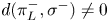 $d(\pi ^{-}_L, \sigma ^{-}) \ne 0$. Moreover, by the properties of the local Langlands correspondence, the characters of component groups associated to the representations
 $\pi _L^{-}$ and
 $\sigma ^{-}$ are inherited from those of
 $\tau$ and
 $\tau '$ and is equal to the distinguished character for
 $(M, N)$. This completes the proof of the proposition.
9. Global conjecture
In this section, we formulate a conjecture for the global analog of the restriction problem, which concerns the non-vanishing of automorphic period integrals. Thus, let  $F$ be a global field with ring of adeles
 $\mathbb {A}$ and
 $F/F_0$ a separable extension with
 $[F:F_0] \leq 2$.
For a connected reductive group  $G$ over
 $F$, let
 $\mathcal {A}(G)$ denote the space of automorphic forms on
 $G$ (with a fixed unitary central character if
 $G$ is not semisimple), which is a
 $G(\mathbb {A})$-module; thus,
 $\mathcal {A}(G)$ is the space of smooth functions on
 $G(F) \backslash G(\mathbb {A})$ with a fixed unitary central character that are
 $Z(U(\mathfrak {g}))$-finite under the center of the enveloping algebra of
 $G(F \otimes \mathbb {R})$, and are of uniform moderate growth. Any irreducible subquotient of
 $\mathcal {A}(G)$ is called an automorphic representation of
 $G$. One has the following natural submodules
 \[ \mathcal{A}_\textrm{cusp}(G) \subset \mathcal{A}_\textrm{disc}(G) \subset \mathcal{A}(G) \]
consisting of the cusp forms and the square-integrable (modulo center) automorphic forms, respectively. The submodules  $\mathcal {A}_\textrm {cusp}(G)$ and
 $\mathcal {A}_\textrm {disc}(G)$ are semisimple and any irreducible summand of
 $\mathcal {A}_\textrm {cusp}(G)$ (respectively,
 $\mathcal {A}_\textrm {disc}(G)$) is called a cuspidal automorphic representation (respectively, a discrete automorphic representation). For quasi-split classical groups
 $G$, the discrete automorphic representations are classified by Arthur [Reference ArthurArt13] (for symplectic and orthogonal groups) and Mok [Reference MokMok15] (for unitary groups) in terms of discrete global A-parameters. In particular, the local components of discrete automorphic representations are among those considered by our local conjectures in §§ 5 and 6.
One may also consider the unitary representation of  $G(\mathbb {A})$ on
 $L^{2}(G(F) \backslash G(\mathbb {A}))$ (with a fixed central character), which possesses a direct integral decomposition. The isomorphism classes of irreducible representations which are weakly contained in this direct integral decomposition give a subset of the unitary dual of
 $G(\mathbb {A})$, the closure of which (with respect to the Fell topology) is called the automorphic dual
 $\widehat {G(\mathbb {A})}_\textrm {aut}$. The spectral decomposition theorem of Langlands describes the elements of
 $\widehat {G(\mathbb {A})}_\textrm {aut}$ as unitary principal series representations induced from the discrete automorphic representations (twisted by unitary automorphic characters) of Levi subgroups of
 $G$ (including
 $G$ itself). Moreover, the theory of Eisenstein series provides concrete equivariant embeddings of the elements of the automorphic dual
 $\widehat {G(\mathbb {A})}_\textrm {aut}$ into
 $\mathcal {A}(G)$. Via the theory of Eisenstein series, one can thus consider elements of
 $\widehat {G(\mathbb {A})}_\textrm {aut}$ as irreducible submodules of
 $\mathcal {A}(G)$, and let
 $\mathcal {A}_\textrm {aut}(G)$ denote the submodule generated by these realizations of the elements of
 $\widehat {G(\mathbb {A})}_\textrm {aut}$. In particular, one has
 \[ \mathcal{A}_\textrm{cusp}(G) \subset \mathcal{A}_\textrm{disc}(G) \subset \mathcal{A}_\textrm{aut}(G) \subset \mathcal{A}(G). \]
For classical groups, the results of Arthur [Reference ArthurArt13] and Mok [Reference MokMok15] alluded to previously allow one to assign (not-necessarily discrete) global A-parameters to the elements of the automorphic dual  $\widehat {G(\mathbb {A})}_\textrm {aut}$. In other words, the local components of the constituents of
 $\mathcal {A}_\textrm {aut}(G)$ are precisely the representations considered in our local conjecture, so that
 $\mathcal {A}_\textrm {aut}(G)$ is the natural setting on which to consider the global branching problem and to formulate the global version of our conjectures.
Now we place ourselves in the global setting of [Reference Gan, Gross and PrasadGGP12a], so that we have a pair  $W \subset V$ of non-degenerate
 $\epsilon$-Hermitian spaces over
 $F$ satisfying the conditions highlighted in § 6. As in the local case, we have a pair of groups
 \[ H = G(W) \cdot N \hookrightarrow G = G(V) \times G(W). \]
As explained in [Reference Gan, Gross and PrasadGGP12a, § 23], there is a automorphic representation  $\nu$ of
 $H(\mathbb {A})$ which is a character when
 $\epsilon = +$ and is essentially a Weil representation when
 $\epsilon = -$. Thus, one may consider the global period integral
 \[ F(\nu): \mathcal{A}_\textrm{cusp}(G) \longrightarrow \mathbb{C} \]
defined by an absolutely convergent integral
 \[ F(\nu) (f) = \int_{H(\mathbb{A}) \backslash H(\mathbb{A})} f(h) \cdot \overline{\nu(h)}\,dh \]
when  $\epsilon = +$ and by an analogous integral involving theta functions when
 $\epsilon = -$.
The above definition of  $F(\nu )$ on the cuspidal spectrum is sufficient for the restriction problem considered in [Reference Gan, Gross and PrasadGGP12a] because we only dealt with tempered global A-packets (or, equivalently, tempered L-packets) there: the automorphic representations in these tempered L-packets are necessarily cuspidal. In this paper, we are dealing with possibly non-tempered A-parameters. The automorphic representations in global A-packets are no longer necessarily cuspidal. This means that, for a meaningful consideration of the global period problem, one needs to extend the definition of
 $F(\nu )$ to the larger space
 $\mathcal {A}_\textrm {disc}(G)$ or even the still larger space
 $\mathcal {A}_\textrm {aut}(G)$.
The definition of a regularized period integral on the non-cuspidal part of the spectrum is a basic problem in the analysis of the spectral side of the relative trace formula. Recently, a general definition of such a regularized period integral over reductive subgroups of  $G$ was given by Zydor [Reference ZydorZyd19], following earlier work of Jacquet et al. [Reference Jacquet, Lapid and RogawskiJLR99] and Ichino and Yamana [Reference Ichino and YamanaIY15]. In particular, the work of Ichino and Yamana [Reference Ichino and YamanaIY15] provides a regularized period integral on the space of automorphic forms on
 ${{\rm GL}}_n \times {{\rm GL}}_{n+1}$ and
 $U_n \times U_{n+1}$.
For the purpose of this section, we assume the working hypothesis that one has a canonical equivariant extension of  $F(\nu )$ to
 $\mathcal {A}_\textrm {aut}(G)$.
With this background and caveat, we can now formulate our global conjecture.
Conjecture 9.1 Let  $\pi \otimes \pi '$ be an irreducible representation of
 $G(\mathbb {A}) = {{G}}(V)(\mathbb {A}) \times {{G}}(W)(\mathbb {A})$ which occurs as a sub-representation of
 $\mathcal {A}_\textrm {aut}(G)$. Then the restriction of the regularized period integral
 $F(\nu )$ to
 $\pi \otimes \pi '$ is non-zero if and only if the following conditions hold:
(i) the pair of global A-parameters
$(M_{\rm A}, N_{\rm A})$ associated to $\pi \otimes \pi '$ is relevant;(ii) the local multiplicity
$d(\pi _v, \pi '_v)$ is non-zero for all places $v$ of $F$;(iii) the ratio of L-functions
$L(M,N, s)$ defined by (1.1) in the case of ${{\rm GL}}_n$ and (1.2) in the case of classical groups is non-zero at $s=0$.


Further, if conditions (i) and (iii) hold, then there exists a globally relevant pure inner form  $G' = {{G}}(V') \times {{G}}(W')$ of
 $G$ and an automorphic representation
 $\tilde {\pi } \otimes \tilde {\pi }'$ of
 $G'$ with the same A-parameter
 $(M_{\rm A}, N_{\rm A})$ such that
 $F(\nu )$ is non-zero on
 $\tilde {\pi } \otimes \tilde {\pi }'$.
Let us make a few remarks about this global conjecture.
 $\bullet$ As we noted in [Reference Gan, Gross and PrasadGGP12a, Pg. 88], the formulation of the previous conjecture essentially decouples the global restriction problem from the local ones. Unfortunately, as we noted before, our local conjecture is somewhat deficient, and does not allow one to completely address the condition (ii). In the next section, we shall consider the global restriction problem starting from our local conjecture and examine its interaction with the Arthur multiplicity formula analogous to what we did in [Reference Gan, Gross and PrasadGGP12a, § 26].
 $\bullet$ It is reasonable to ask what one knows a priori about the analytic behavior of the function
 $L(M,N,s)$ in condition (iii) at
 $s = 0$. Condition (iii) seems only reasonable if one knows a priori that
 $L(M,N, s)$ is holomorphic at
 $s= 0$. If
 $M_{\rm A}$ and
 $N_{\rm A}$ are tempered, this is automatic because the adjoint L-functions in the denominator of
 $L(M,N, s)$ do not vanish at
 $s=0$. We show later that when
 $(M_{\rm A}, N_{\rm A})$ is a relevant pair, then
 $L(M,N,s)$ is holomorphic at
 $s= 0$. Moreover, the function
 $L(M,N, s)$ decomposes into a product of various automorphic L-functions and the curious reader will wonder which factors in
 $L(M,N, s)$ have the potential to contribute a zero at
 $s = 0$. We address this question at the end of this section when we compute the function
 $L(M,N,s)$ more explicitly.
 $\bullet$ As mentioned earlier, Ichino and Yamana have defined a regularized global period integral in [Reference Ichino and YamanaIY15] on automorphic forms of
 $G = {{\rm GL}}_{n} \times {{\rm GL}}_{n+1}$. On the cuspidal spectrum, the global period integral is known to be non-zero on any irreducible cuspidal
 $\pi \otimes \pi '$ if and only if
 \[ L\big(\tfrac{1}{2}, \pi \otimes \pi'\big) \not = 0. \]
Ichino and Yamana showed further that when  $\pi \otimes \pi '$ is in the part of the discrete spectrum orthogonal to the cuspidal spectrum and the one-dimensional summands, their regularized period integral
 $F(\nu )$ vanishes on
 $\pi \otimes \pi '$. As we now explain, this is consistent with the previous conjecture and, in fact, follows from our local Theorem 5.2.
Indeed, by a result of Mœglin and Waldspurger, a representation  $\pi \subset \mathcal {A}_\textrm {disc}({{\rm GL}}_n)$ has an irreducible A-parameter, that is, one of the form
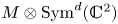 $M \otimes {{\rm Sym}}^{d}(\mathbb {C}^{2})$ where
 $M$ is a cuspidal representation of
 ${{\rm GL}}_r$ with
 $r \cdot (d+1) =n$. Moreover,
 $\pi$ is cuspidal if and only if
 $d=0$. Now given
 $\pi \otimes \pi '$ in the discrete spectrum of
 ${{\rm GL}}_n \times {{\rm GL}}_{n+1}$, we have a pair of A-parameters
 \[ M \otimes {{\rm Sym}}^{d}(\mathbb{C}^{2}) \quad \text{and} \quad N \otimes {{\rm Sym}}^{e}(\mathbb{C}^{2}). \]
It is easy to see that for this pair of A-parameters to be relevant, we must have either:
(i)
$d = e = 0$, so that $\pi \otimes \pi '$ is cuspidal; or(ii)
$d +1= n = e$ and $M = N$ is a one-dimensional character $\chi$ of ${{\rm GL}}_1$, in which case $\pi = \chi \circ \det$ and $\pi ' = \chi \circ \det$.





As at all but finitely many places of  $F$, the local representations
 $\pi _v$ and
 $\pi '_v$ are unramified (hence, parametrized by representations of
 $\textit {WD}(F_v) \times {{\rm SL}}_2(\mathbb {C})$ on which
 $\textit {WD}(F_v)$ acts through
 $W(F_v)$), Theorem 5.2 can be applied to give a local proof of the theorem of Ichino and Yamana from [Reference Ichino and YamanaIY15] about the vanishing of the regularized period integral on the (non-one-dimensional and non-cuspidal part of) the discrete spectrum of
 ${{\rm GL}}_n(\mathbb {A}) \times {{\rm GL}}_{n+1}(\mathbb {A})$.
 $\bullet$ On the other hand, still in the setting of
 $G= {{\rm GL}}_n \times {{\rm GL}}_{n+1}$, an ongoing work of Chaudouard and Zydor on the spectral side of the Jacquet–Rallis relative trace formula indicates that the regularized periods of some representations in the automorphic dual do intervene in the analysis. Moreover, only relevant pairs of A-parameters can contribute in this analysis. These results, together with those of Ichino and Yamana recalled previously, indicate that in the global setting, it is natural to consider the restriction problem for
 $\mathcal {A}_\textrm {aut}(G)$ and not just for the discrete spectrum
 $\mathcal {A}_\textrm {disc}(G)$. However, for classical groups, where discrete A-parameters are simply multiplicity-free sum of selfdual representations of the appropriate sign and are not necessarily irreducible, the consideration of the discrete spectrum should already provide many interesting examples and checks on our global conjecture.
Remark 9.2 It can happen that two global A-parameters are not relevant but they are locally relevant at all places. For example, for a non-CM automorphic representation  $\Pi$ on
 ${{\rm PGL}}_2(\mathbb {A}_F)$, which is a principal series at all places
 $v$ of
 $F$, then at each local place
 $v$, the L-parameter of
 ${{\rm Sym}}^{2}(\Pi _v)$ will contain the trivial representation of
 $\textit {WD}(F_v)$. Hence, the A-parameter
 ${{\rm Sym}}^{1}(\mathbb {C}^{2})$ of
 $L(F) \times {{\rm SL}}_2(\mathbb {C})$ on which
 $L(F)$ acts trivially, and the L-parameter of
 ${{\rm Sym}}^{2}(\Pi )$ are locally relevant at all places of
 $F$, but not globally relevant. Thus, the local–global principle does not hold for relevance in general. However, in many practical situations, it poses no problem to conclude the relevance of global parameters by local arguments (if one knew local relevance at unramified places for example) as we saw above for the local proof of the result of Ichino and Yamana in the case of
 $({{\rm GL}}_n(\mathbb {A}_F),{{\rm GL}}_{n-1}(\mathbb {A}_F))$.
Remark 9.3 Just as understanding multiplicities in a local A-packet is of interest (see Remark 7.3), so is a global analog of it: for a given group  $G(\mathbb {A}) = G(V)(\mathbb {A}) \times G(W)(\mathbb {A})$ and a global A-packet of automorphic representations on
 $G(\mathbb {A})$ (thus, a collection of nearly equivalent automorphic representations on
 $G(\mathbb {A})$), one may ask how many representations in this global A-packet support a non-vanishing global period integral. In the case of tempered A-parameters, the answer is at most one. For general A-parameters, considering the restriction problem for the trivial representation of
 ${\textrm {PGL}}(2) \times {\textrm {PGL}}(2)$ to
 ${\textrm {PGL}}(2)$ (respectively, the trivial representation of
 ${\textrm {PD}}^{\times } \times {\textrm {PD}}^{\times }$ to
 ${\textrm {PD}}^{\times }$ where
 $D$ is any quaternion division algebra over the global field
 $F$), we find that global period integral is non-zero on
 ${\textrm {PGL}}(2)$ as well as
 ${\textrm {PD}}^{\times }$ for any
 $D$, so global multiplicity 1 for non-vanishing of period integrals fails, at least when we allow the group
 $G(\mathbb {A}) = G(V)(\mathbb {A}) \times G(W)(\mathbb {A})$ to vary. Can one formulate a reasonable answer to this question?
We conclude this section with a result about the function  $L(M,N, s)$ for a relevant pair
 $(M_{\rm A}, N_{\rm A})$ of discrete A-parameters. To describe it, we need to introduce some more notation. Assume for simplicity that we are dealing with the Bessel case, so that
 $M_{\rm A}$ and
 $N_{\rm A}$ are selfdual or conjugate-selfdual representations of opposite sign; the Fourier–Jacobi case can be similarly treated. To fix ideas, we assume that the sign of
 $M_{\rm A}$ is
 $b(M_{\rm A}) = -1$ whereas the sign of
 $N_{\rm A}$ is
 $b(N_{\rm A}) = +1$. In the following, we use the symbol
 $M_i$ to denote a selfdual (or conjugate-selfdual) representation of sign
 $-1$ whereas
 $N_j$ denotes one with sign
 $+1$. With this convention and understanding, one can decompose the relevant pair
 $(M_{\rm A}, N_{\rm A})$ of discrete A-parameters as follows:
 \begin{equation} M_{\rm A} = \bigoplus_{i \in I} M_i \boxtimes {{\rm Sym}}^{m_i-1}(\mathbb{C}^{2}) \oplus \bigoplus_{j \in J} N_j \boxtimes {{\rm Sym}}^{n_j-1}(\mathbb{C}^{2}), \end{equation}
and
 \begin{equation} N_{\rm A} = \bigoplus_{i \in I} M_i \boxtimes {{\rm Sym}}^{m'_i -1}(\mathbb{C}^{2}) \oplus \bigoplus_{j \in J} N_j \boxtimes {{\rm Sym}}^{n_j'-1}(\mathbb{C}^{2}), \end{equation}
where the numbers  $m_i$,
 $n_j$,
 $m_i'$, and
 $n'_j$ are positive integers satisfying
 \[ m_i-1 \equiv n_j \equiv 0 \mod 2, \]
and
 \[ |m_i - m_i' | = 1 = |n_j - n_j'|. \]
Here, we understand  ${{\rm Sym}}^{-1}(\mathbb {C}^{2})$ to be
 $0$. Moreover, we assume that
 $M_i$ (for
 $i \in I$) and
 $N_j$ (for
 $j \in J$) are irreducible. In other words, each irreducible summand in
 $M_{\rm A}$ has a partner in
 $N_{\rm A}$ and vice versa. As
 $M_{\rm A}$ and
 $N_{\rm A}$ are discrete A-parameters, these are multiplicity-free decompositions.
Now consider a pair of indices 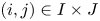 $(i,j) \in I \times J$. Assume without loss of generality that
 $m_i > n_j$ (recalling that they are of different parity). As
 $m_i' = m_i \pm 1$ and
 $n_j' = n_j \pm 1$, we see that, typically, one would expect
 $m_i' > n_j'$. This is the case, for example, if
 $m_i - n_j > 2$. We now make the following definition.
Definition 9.6 (Special pairs) Let  $M_{\rm A},N_{\rm A}$ be a pair of relevant discrete global A-parameters, which are a sum of distinct irreducible representations as in (9.4) and (9.5). We call a pair
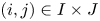 $(i,j) \in I \times J$ special if
 $m_i - n_j$ and
 $m'_i - n'_j$ are of opposite sign and denote the subset of special
 $(i,j)$ by
 $(I \times J)^{\heartsuit }$, thus
 \[ (I \times J)^{\heartsuit} = \{(i,j) \in (I \times J)\,|\, (m_i,m'_i)= (n'_j,n_j)\}. \]
Equivalently, special pairs are direct summands in  $M_{\rm A}$ and
 $N_{\rm A}$ of the form
 \begin{align*} & V \boxtimes {{\rm Sym}}^{i-1}(\mathbb{C}^{2}) \oplus W \boxtimes {{\rm Sym}}^{i}(\mathbb{C}^{2}) \subset M_{\rm A},\\ & V \boxtimes {{\rm Sym}}^{i}(\mathbb{C}^{2}) \oplus W \boxtimes {{\rm Sym}}^{i-1} (\mathbb{C}^{2}) \subset N_{\rm A}, \end{align*}
for some  $i \geq 0$, with
 $V,W$ irreducible, one orthogonal and the other symplectic.
We now state the main result of this section.
Theorem 9.7 Let  $M_{\rm A},N_{\rm A}$ be a pair of relevant discrete global A-parameters, which are a sum of distinct irreducible representations as in (9.4) and (9.5), with
 $M_{\rm A}$ symplectic and
 $N_{\rm A}$ orthogonal. Then the function
 \[ L(M,N, s) = \frac{L(M \otimes N, s + 1/2)}{L({{\rm Sym}}^{2} M \oplus \wedge^{2} N, s + 1)} \]
is holomorphic at  $s=0$. Moreover, with the notation as given previously, and with
 $(I \times J)^{\heartsuit }$ the set of special pairs, one has
 \[ L(M,N, 0) = C \cdot \prod_{(i,j) \in (I \times J)^{\heartsuit}} L( M_i \otimes N_j, 1/2) \]
for some  $C \in \mathbb {C}^{\times }$; more precisely, the order of zero at
 $s=0$ of the L-function on the left-hand side is the same as that of the L-function on the right-hand side.
Proof. To simplify notation, for any global L-parameter  $\Pi$, let us set
 \[ L(\Pi \boxtimes {{\rm Sym}}^{d-1}(\mathbb{C}^{2}), s) := \prod_{i=0}^{d-1} L\Big(\Pi, s + \frac{d-1-2i}{2}\Big). \]
Before we begin the proof of the theorem, let us observe that for any irreducible cuspidal automorphic representation  $\Pi _1$ of
 ${{\rm GL}}_m(\mathbb {A})$, and
 $\Pi _2$ of
 ${{\rm GL}}_n(\mathbb {A})$, we have the following assertions due to Jacquet et al. [Reference Jacquet, Piatetskii-Shapiro and ShalikaJPS83] for the completed, that is, including the factors at infinity, Rankin product L-function
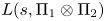 $L(s, \Pi _1 \otimes \Pi _2)$:
(a)
$L( (\Pi _1 \otimes \Pi _2) \boxtimes {{\rm Sym}}^{d-1}(\mathbb {C}^{2}), s+ \frac {1}{2})$ has a zero at $s=0$ if and only if $d$ is odd and $L( \Pi _1 \otimes \Pi _2, \frac {1}{2}) = 0$;(b)
$L( (\Pi _1 \otimes \Pi _2) \boxtimes {{\rm Sym}}^{d-1}(\mathbb {C}^{2}), s+ \frac {1}{2})$ has a pole at $s=0$ if and only if $d \ne 0$ is even, $m=n$, and $\Pi _1 \cong \Pi _2^{\vee }$, in which case there is a double pole at $s=0$ arising from poles of $L( \Pi _1 \otimes \Pi _2, s)$ at both $s=0,1$;(c)
$L( (\Pi _1 \otimes \Pi _2) \boxtimes {{\rm Sym}}^{d-1}(\mathbb {C}^{2}), s+ 1)$ has a zero at $s=0$ if and only if $d\ne 0$ is even, and $L(\Pi _1 \otimes \Pi _2, \frac {1}{2}) = 0$;(d)
$L( (\Pi _1 \otimes \Pi _2) \boxtimes {{\rm Sym}}^{d-1}(\mathbb {C}^{2}), s+ 1)$ has a pole at $s=0$ if and only if $d$ is odd, $m=n$, and $\Pi _1 \cong \Pi _2^{\vee }$, in which case there is a simple pole at $s=0$ if $d=1$, and a double pole at $s=0$ if $d$ is odd and $d>1$.







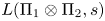








We first prove the theorem in the case when  $M_{\rm A},N_{\rm A}$ are the global A-parameters,
 \begin{align} M_{\rm A} &= M_1 \boxtimes {{\rm Sym}}^{i-1}(\mathbb{C}^{2}) \oplus N_1 \boxtimes {{\rm Sym}}^{j-1}(\mathbb{C}^{2}), \end{align}
 \begin{align} N_{\rm A} &= M_1 \boxtimes {{\rm Sym}}^{i-2}(\mathbb{C}^{2}) \oplus N_1 \boxtimes {{\rm Sym}}^{j-1 +\epsilon} (\mathbb{C}^{2}), \end{align}
where  $\epsilon = \pm 1$,
 $M_1$ is symplectic and
 $N_1$ is orthogonal. It follows that
 \[ M_{\rm A} \otimes N_{\rm A} = C +D, \]
where
 \begin{align*} C &= (M_1\otimes M_1) \boxtimes ({{\rm Sym}}^{i-1}(\mathbb{C}^{2}) \otimes {{\rm Sym}}^{i-2}(\mathbb{C}^{2})) + (N_1\otimes N_1) \boxtimes ({{\rm Sym}}^{j-1}(\mathbb{C}^{2}) \otimes {{\rm Sym}}^{j-1 + \epsilon }(\mathbb{C}^{2})),\\ D &= (M_1 \otimes N_1) \boxtimes [{{\rm Sym}}^{i-1}(\mathbb{C}^{2})\otimes {{\rm Sym}}^{j-1 + \epsilon}(\mathbb{C}^{2}) + {{\rm Sym}}^{i-2}(\mathbb{C}^{2}) \otimes {{\rm Sym}}^{j-1}(\mathbb{C}^{2})]. \end{align*}
Similarly, we write
 \[ {{\rm Sym}}^{2}(M_{\rm A}) \oplus \Lambda^{2}(N_{\rm A}) = C' +D', \]
where
 \begin{align*} C' &= {{\rm Sym}}^{2}(M_1) \boxtimes [{{\rm Sym}}^{2}({{\rm Sym}}^{i-1}(\mathbb{C}^{2})) + \Lambda^{2}({{\rm Sym}}^{i-2}(\mathbb{C}^{2}))] \\ &\quad + \Lambda^{2}(M_1) \boxtimes [\Lambda^{2}({{\rm Sym}}^{i-1}(\mathbb{C}^{2})) +{{\rm Sym}}^{2}({{\rm Sym}}^{i-2}(\mathbb{C}^{2}))] \\ &\quad + {{\rm Sym}}^{2}(N_1) \boxtimes [{{\rm Sym}}^{2}({{\rm Sym}}^{j-1}(\mathbb{C}^{2})) + \Lambda^{2}({{\rm Sym}}^{j-1 + \epsilon}(\mathbb{C}^{2}))] \\ &\quad + \Lambda^{2}(N_1) \boxtimes [\Lambda^{2}({{\rm Sym}}^{j-1}(\mathbb{C}^{2})) + {{\rm Sym}}^{2}({{\rm Sym}}^{j-1 + \epsilon}(\mathbb{C}^{2}))], \\ D' &= (M_1 \otimes N_1) \boxtimes [{{\rm Sym}}^{i-1}(\mathbb{C}^{2}) \otimes {{\rm Sym}}^{j-1}(\mathbb{C}^{2}) \oplus {{\rm Sym}}^{i-2}(\mathbb{C}^{2})\otimes {{\rm Sym}}^{j-1 + \epsilon}(\mathbb{C}^{2})] . \end{align*}
With this notation, we have
 \[ L(M,N, s) = \frac{L(C, s + ~1/2)}{L(C', s + 1)} \cdot \frac{L(D, s + 1/2)}{L(D', s + 1)}. \]
Note that the representations of  ${{\rm SL}}_2(\mathbb {C})$ appearing in the definition of
 $C$ given previously have non-trivial central characters, and therefore only irreducible non-trivial representations of
 ${{\rm SL}}_2(\mathbb {C})$ appear in
 $C$. Similarly, we analyze the terms in
 $C'$ that contribute a pole to
 $L(C',s)$ at
 $s=1$. As we are assuming that
 $M_1$ is symplectic and
 $N_1$ orthogonal, these are
 \begin{align*} & \Lambda^{2}(M_1) \boxtimes [\Lambda^{2}({{\rm Sym}}^{i-1}(\mathbb{C}^{2})) +{{\rm Sym}}^{2}({{\rm Sym}}^{i-2}(\mathbb{C}^{2}))] \\ &\quad +{{\rm Sym}}^{2}(N_1) \boxtimes [{{\rm Sym}}^{2}({{\rm Sym}}^{j-1}(\mathbb{C}^{2})) +\Lambda^{2}({{\rm Sym}}^{j-1 + \epsilon}(\mathbb{C}^{2}))]. \end{align*}
However, the representation
 \[ \Lambda^{2}({{\rm Sym}}^{i-1}(\mathbb{C}^{2})) +{{\rm Sym}}^{2}({{\rm Sym}}^{i-2}(\mathbb{C}^{2})) + {{\rm Sym}}^{2}({{\rm Sym}}^{j-1}(\mathbb{C}^{2})) + \Lambda^{2}({{\rm Sym}}^{j-1 + \epsilon}(\mathbb{C}^{2})) \]
of  ${{\rm SL}}_2(\mathbb {C})$ does not contain the trivial representation as we are assuming
 $M_{\rm A}, M_1$ are symplectic and
 $N_{\rm A}, N_1$ are orthogonal, therefore
 $i$ is odd, and
 $j$ even.
From the assertions (a)–(d) at the beginning of the proof, we therefore find that:
(i) the terms in
$C$ can only give rise to a (double) pole at $s=0$ for $L(C,s+\frac {1}{2})$;(ii) the terms in
$C'$ can only give rise to a (double) pole at $s=0$ for $L(C',s+1)$;(iii) the terms in
$D$ can only give rise to a zero at $s=0$ for $L(D,s+\frac {1}{2})$;(iv) the terms in
$D'$ can only give rise to a zero at $s=0$ for $L(D',s+1)$.


Thus,
 \begin{align*} \textrm{ord}_{s=0}\frac{L\big(C, s + \frac{1}{2}\big)}{L(C', s + 1)} &= \textrm{ord}_{s=0} L\Big(C, s+ \frac{1}{2}\Big) - \textrm{ord}_{s=0} L(C', s+1) \\ &= -2[ i-1 + \min \{j,j+\epsilon \} ] + [ (i-1) + j +(i-1) + (j+\epsilon -1) ] \\ &= 0 \quad \text{for either choice of}\ \epsilon = \pm 1. \end{align*}
Hence,  $L(C, s + \frac {1}{2})/L(C', s + 1)$ has neither a zero nor a pole at
 $s=0$.
Similarly, we have
 \[ \textrm{ord}_{s=0}\frac{L(D, s + ~1/2)}{L(D', s + 1)} = \textrm{ord}_{s=0} L(M_1 \otimes N_1, s +1/2)^{ \min \{i, j + \epsilon\} + \min\{i-1,j\} -\min \{i-1, j + \epsilon\} - \min \{i,j\} } . \]
It can be easily checked that for  $i$ and
 $j$ of different parity, the exponent is zero in all cases, except when
 \begin{align*} M_{\rm A} &= M_1 \boxtimes {{\rm Sym}}^{i-1}(\mathbb{C}^{2}) \oplus N_1 \boxtimes {{\rm Sym}}^{i-2}(\mathbb{C}^{2}), \\ N_{\rm A} &= M_1 \boxtimes {{\rm Sym}}^{i-2}(\mathbb{C}^{2}) \oplus N_1 \boxtimes {{\rm Sym}}^{i-1} (\mathbb{C}^{2}), \end{align*}
in which case
 \[ \textrm{ord}_{s=0}\frac{L(D, s + ~1/2)}{L(D', s + 1)} = \textrm{ord}_{s=0} L(M_1 \otimes N_1, s +1/2). \]
Thus, the theorem is proved in the case when  $(M_{\rm A},N_{\rm A})$ are given by (9.8) and (9.9).
There is the analogous case when
 \begin{align*} M_{\rm A} &= M_2 \boxtimes {{\rm Sym}}^{i-1}(\mathbb{C}^{2}) \oplus N_2 \boxtimes {{\rm Sym}}^{j-1}(\mathbb{C}^{2}),\\ N_{\rm A} &= M_2 \boxtimes {{\rm Sym}}^{i}(\mathbb{C}^{2}) \oplus N_2 \boxtimes {{\rm Sym}}^{j-1 +\epsilon} (\mathbb{C}^{2}), \end{align*}
where  $\epsilon = \pm 1$,
 $M_2$ is symplectic, and
 $N_2$ is orthogonal. This can be analyzed in the same way, and we find that if for some
 $i \geq 0$,
 \begin{align*} M_{\rm A} &= M_2 \boxtimes {{\rm Sym}}^{i-1}(\mathbb{C}^{2}) \oplus N_2 \boxtimes {{\rm Sym}}^{i}(\mathbb{C}^{2}),\\ N_{\rm A} &= M_2 \boxtimes {{\rm Sym}}^{i}(\mathbb{C}^{2}) \oplus N_2 \boxtimes {{\rm Sym}}^{i-1} (\mathbb{C}^{2}), \end{align*}
we have
 \[ \textrm{ord}_{s=0} L(M,N, s) = \textrm{ord}_{s=0} L( M_2 \otimes N_2, s+1/2), \]
and in all other cases (with  $M_{\rm A},N_{\rm A}$ as here)
 \[ \textrm{ord}_{s=0} L(M,N, s) = 0. \]
Finally, there is the case when
 \begin{align*} M_{\rm A} &= M_3 \boxtimes {{\rm Sym}}^{i-1}(\mathbb{C}^{2}) \oplus N_3 \boxtimes {{\rm Sym}}^{j-1}(\mathbb{C}^{2}),\\ N_{\rm A} &= M_3 \boxtimes {{\rm Sym}}^{i}(\mathbb{C}^{2}) \oplus N_3 \boxtimes {{\rm Sym}}^{j-1 +\epsilon} (\mathbb{C}^{2}), \end{align*}
where  $\epsilon = \pm 1$,
 $M_3, N_3$ are either both symplectic or both orthogonal. This can be analyzed in the same way, and we find that
 \[ \textrm{ord}_{s=0} L(M,N, s) = 0. \]
Now we prove the theorem in the general case. Assume that
 \begin{align*} M_{\rm A} &= \bigoplus_{\alpha} V_\alpha, \\ N_{\rm A} &= \bigoplus_{\alpha} W_\alpha, \end{align*}
is a relevant pair of discrete global A-parameters with  $M_{\rm A}$ symplectic and
 $N_{\rm A}$ orthogonal and where
 $(V_\alpha , W_\alpha )$ are relevant pairs of irreducible global A-parameters.
Then
 \begin{align} \begin{aligned}M_{\rm A} \otimes N_{\rm A} &= \sum_{\alpha} V_\alpha \otimes W_\alpha + \sum_{\alpha \not = \beta} (V_\alpha \otimes W_\beta + V_{\beta} \otimes W_{\alpha}),\\ {{\rm Sym}}^{2} M_{\rm A} + \Lambda^{2} N_{\rm A} &= \sum_{\alpha} ({{\rm Sym}}^{2} V_\alpha + \Lambda^{2} W_\alpha) + \sum_{\alpha \not = \beta} (V_\alpha \otimes V_\beta + W_\alpha \otimes W_\beta),\end{aligned} \end{align}
where in both of the sums, the sum  $\sum _{\alpha \not = \beta }$ is over unordered distinct pair of indices
 $\alpha , \beta$.
We now analyze  $L(M, N, s)$ in two steps.
Step 1. We prove that the diagonal terms
 \[ L(V_\alpha, W_\alpha,s)= \frac{L(V_\alpha \otimes W_\alpha, s + 1/2)}{L({{\rm Sym}}^{2} V_\alpha \oplus \wedge^{2} W_\alpha, s + 1)}, \]
have neither a zero nor a pole at  $s=0$.
Let
 \[ V_\alpha= V \boxtimes {{\rm Sym}}^{i}(\mathbb{C}^{2}) \quad \text{and} \quad W_\alpha= V \boxtimes {{\rm Sym}}^{i+ \epsilon}(\mathbb{C}^{2}), \]
with  $V$ irreducible and
 $\epsilon = \pm 1$. In this case it is easy to see that the numerator and denominators of
 $L(s,V_\alpha , W_\alpha )$ can only have poles at
 $s=0$. Assume first that
 $V$ is symplectic so that
 $i$ is even (because
 $V_{\alpha }$ is symplectic). Then we have
 \[ -\textrm{ord}_{s=0}L\big(V_\alpha \otimes W_\alpha, s + \tfrac{1}{2}\big) = \min\{i+1, i+1+ \epsilon\} \]
and
 \[ - \textrm{ord}_{s=0}L({{\rm Sym}}^{2} V_\alpha \oplus \wedge^{2} W_\alpha, s + 1) = \begin{cases} i, & \text{if $\epsilon =-1$,} \\ i+1, & \text{if $\epsilon = 1$.} \end{cases} \]
Therefore, we find that  $L(V_\alpha , W_\alpha , s)$ has neither a zero nor a pole at
 $s=0$. An analogous argument works in the case when
 $V$ is orthogonal.
Step 2. Observe that
 \begin{align*} L(V_\alpha+ V_\beta, W_\alpha+W_\beta, s) &= \frac{L([V_\alpha + V_\beta]\otimes [W_\alpha +W_\beta], s + 1/2)}{L({{\rm Sym}}^{2} [V_\alpha+V_\beta] \oplus \wedge^{2} [W_\alpha+ W_\beta], s + 1)}, \\ &= L(V_\alpha, W_\alpha, s) L( V_\beta, W_\beta,s) \frac{L( V_\alpha \otimes W_\beta + V_\beta \otimes W_\alpha, s + 1/2)}{L( V_\alpha \otimes V_\beta + W_\alpha \otimes W_\beta, s + 1)}. \end{align*}
As, by step 1,  $L(V_\alpha , W_\alpha ,s)$ and
 $L( V_\beta , W_\beta ,s)$ have neither a zero nor a pole at
 $s=0$, the order of zero or pole at
 $s=0$ of
 $L(V_\alpha + V_\beta , W_\alpha +W_\beta ,s)$ is the same as that of
 \[ \frac{L( V_\alpha \otimes W_\beta + V_\beta \otimes W_\alpha, s + 1/2)}{L( V_\alpha \otimes V_\beta + W_\alpha \otimes W_\beta, s + 1)}. \]
Now, by the special case of the theorem treated previously, we understand the order of zero or pole at  $s=0$ of
 $L(V_\alpha + V_\beta , W_\alpha +W_\beta ,s)$ (in terms of special pairs), and therefore by the two equalities in (9.10), the proof of the theorem is complete.
Using Theorem 9.7, we can reformulate Conjecture 9.1 for the discrete spectrum as follows.
Conjecture 9.11 Let  $M_{\rm A} \times N_{\rm A}$ be a discrete A-parameter of the quasi-split group
 $G(\mathbb {A}) = {{G}}(V)(\mathbb {A}) \times {{G}}(W)(\mathbb {A})$ with endoscopic decomposition as given in (9.4) and (9.5):
 \[ M_{\rm A} = \bigoplus_{i \in I} M_i \boxtimes {{\rm Sym}}^{m_i-1}(\mathbb{C}^{2}) \oplus \bigoplus_{j \in J} N_j \boxtimes {{\rm Sym}}^{n_j-1}(\mathbb{C}^{2}), \]
and
 \[ N_{\rm A} = \bigoplus_{i \in I} M_i \boxtimes {{\rm Sym}}^{m'_i -1}(\mathbb{C}^{2}) \oplus \bigoplus_{j \in J} N_j \boxtimes {{\rm Sym}}^{n_j'-1}(\mathbb{C}^{2}). \]
Then the regularized period integral is non-zero on the submodule of the automorphic discrete spectrum associated to  $M_{\rm A} \times N_{\rm A}$ on some relevant pure inner form
 $G'(\mathbb {A}) = {{G}}(V')(\mathbb {A}) \times {{G}}(W')(\mathbb {A})$ of
 $G(\mathbb {A}) = {{G}}(V)(\mathbb {A}) \times {{G}}(W)(\mathbb {A})$ if and only if
 $L(1/2, M_i \otimes N_j)$ is non-zero for all special pairs
 $(i,j) \in (I \times J)^{\heartsuit }$ (as in Definition 9.6).
Finally, it is natural to ask whether the refined conjecture of Ichino and Ikeda [Reference Ichino and IkedaII10], which gives a precise formula relating the period integral and the relevant L-value in the case of tempered L-parameters, can be formulated in the non-tempered setting. An important issue in the formulation of the Ichino–Ikeda conjecture is the definition of the local period functionals that intervene in their conjectural formula. In the tempered case, these local functionals are given by (absolutely convergent) integrals of matrix coefficients and can be characterized using the spectral decomposition in the  $L^{2}$-theory. We do not know how to formulate an extension to the non-tempered case, but hope that this paper will stimulate some work in this direction.
10. Revisiting the global conjecture
We now revisit the global Conjecture 9.1 from the viewpoint of the local Conjecture 6.1.
Fix a pair of spaces  $W_0 \subset V_0$ and a pair of global A-parameters
 $(M_{\rm A}, N_{\rm A})$ for
 $G(V_0) \times G(W_0)$. This gives rise to local A-parameters
 $(M_{A,v}, N_{A,v})$ at all places
 $v$ and their associated local A-packets. Because our local conjecture does not address the restriction problem for the whole A-packet, we restrict our attention only to the associated Vogan L-packet
 $\Pi _{M_v} \times \Pi _{N_v}$ contained in the A-packet. Based on this, we can draw the following conclusions from our local conjecture.
(i) The pair
$(M_{A,v}, N_{A,v})$ of local A-parameters should be relevant if we want a non-zero local multiplicity in $\Pi _{M_v} \times \Pi _{N_v}$. This is implied by the relevance of the pair of global A-parameters $(M_{\rm A}, N_{\rm A})$. Hence, we assume that $(M_{\rm A}, N_{\rm A})$ is relevant in the ensuing discussion.(ii) When
$(M_{\rm A}, N_{\rm A})$ is relevant, there is a unique representation in $\Pi _{M_v} \times \Pi _{N_v}$ with non-zero multiplicity. This unique representation is indexed by a character $\chi _v$ of the local component group $A_{M,v} \times A_{N,v}$ and is a representation of a pure inner form of $G_v := G(V)(F_v) \times G(W)(F_v)$. We denote it by $\pi _{\chi _v}$.(iii) For almost all
$v$, $\chi _v$ is trivial and the representation $\pi _{\chi _v}$ is an unramified representation of $G_{0,v} = G(V_0)(F_v) \times G(W_0)(F_v)$.






In view of this, we can form the restricted direct product groups
 \[ G_{\mathbb{A}} = \prod_v' G_v \supset H_{\mathbb{A}} = \prod'_v H_v \]
and the abstract representations
 \[ \pi_{\chi} := \otimes'_v \pi_{\chi_v}\ \text{of}\ G_{\mathbb{A}}\quad \text{and}\quad \nu = \otimes_v \nu_v\ \text{of}\ H_{\mathbb{A}}. \]
The abstract representation  $\pi _{\chi }$ is the only one in the global L-packet
 $\Pi _M \times \Pi _N$ that could possibly have a non-zero global period integral. However, before considering the global restriction problem, we need to ensure that it is actually an automorphic representation. For this, we need to address the following questions in turn.
(i) Is
$H_{\mathbb {A}} \hookrightarrow G_{\mathbb {A}}$ the group of adelic points of algebraic groups
associated to a relevant pair of spaces\[ H = G(W) \cdot N \hookrightarrow G = G(V) \times G(W) \]$W \subset V$?


This question can be answered by the same consideration as in [Reference Gan, Gross and PrasadGGP12a, Pg 99]. We see that the answer is Yes if and only if
 \[ \epsilon(1/2, M \otimes N) = 1. \]
Assuming this, we are led to the next questions.
(ii) Is the abstract representation
$\pi _{\chi }$ of $G_{\mathbb {A}} = G(V)(\mathbb {A})\times G(W)(\mathbb {A})$ automorphic?


Finally, if the answer to question (ii) is affirmative, one can consider the restriction of the regularized period integral  $F(\nu )$ to
 $\pi _{\chi }$ and ask the last question.
(iii) Is this restriction non-zero?
We now consider question (ii) in some detail. To address this question, we can reduce to the case of discrete A-parameters, so we assume that  $M_{\rm A}$ and
 $N_{\rm A}$ are discrete. Then the automorphy of
 $\pi _{\chi }$ is determined by the Arthur multiplicity formula, where a certain quadratic character
 $\epsilon _{\rm Art}$ of the global component group of the A-parameter intervenes. More precisely, given the global A-parameter
 $M_{\rm A} \times N_{\rm A}$ with associated L-parameter
 $M \times N$, one has the following commutative diagram of component groups.

The representation  $\pi _{\chi } = \otimes '_v \pi _{\chi _v}$ corresponds to a character
 $\otimes _v \chi _v$ of the group
 $\prod _v (A_{M_v} \times A_{N_v} )$. Pulling back by the previous diagram, one obtains a character
 $\chi$ of
 $A_{M_{\rm A}} \times A_{N_{\rm A}}$. Now
 \[ \pi_{\chi}\ \text{is automorphic if and only if}\ \chi = \epsilon_{\rm Art}. \]
The difference between [Reference Gan, Gross and PrasadGGP12a] and the situation here is that for tempered A-parameters considered in [Reference Gan, Gross and PrasadGGP12a], this quadratic character  $\epsilon _{\rm Art}$ is trivial, whereas here it is not necessarily trivial.
To explicate the condition  $\chi = \epsilon _{\rm Art}$, we need to determine
 $\epsilon _{\rm Art}$. For this, let us return to the decomposition of
 $M_{\rm A}$ and
 $N_{\rm A}$ given in (9.4) and (9.5). Then we may write
 \[ A_{M_{\rm A}} = \prod_{i \in I, m_i >0} \mathbb{Z}/2\mathbb{Z} \cdot a_i \times \prod_{j \in J, n_j >0} \mathbb{Z}/2\mathbb{Z} \cdot b_j \]
and
 \[ A_{N_{\rm A}} = \prod_{i \in I: m_i' >0} \mathbb{Z}/2\mathbb{Z} \cdot a_i' \times \prod_{j\in J: n'_j >0} \mathbb{Z}/2\mathbb{Z} \cdot b_j'. \]
In other words, these component groups are vector spaces over  $\mathbb {Z}/2\mathbb {Z}$ equipped with canonical bases. To specify
 $\epsilon _{\rm Art}$, it suffices to evaluate the signs
 $\epsilon _{\rm Art}(a_i)$,
 $\epsilon _{\rm Art}(b_j)$,
 $\epsilon _{\rm Art}(a'_i)$, and
 $\epsilon _{\rm Art}(b_i')$.
Lemma 10.1 With the above notation, one has
 \begin{align*} \epsilon_{\rm Art}(a_i) &= \prod_{j \in J} \epsilon(1/2, M_i \otimes N_j)^{\min(m_i, n_j)} = \prod_{j \in J: m_i < n_j} \epsilon(1/2, M_i \otimes N_j),\\ \epsilon_{\rm Art}(b_j) &= \prod_{i \in I} \epsilon(1/2, M_i \otimes N_j)^{\min(m_i, n_j)} = \prod_{i\in I: m_i < n_j} \epsilon(1/2, M_i \otimes N_j),\\ \epsilon_{\rm Art}(a_i') &= \prod_{j \in J} \epsilon(1/2, M_i \otimes N_j)^{\min(m'_i, n'_j)} = \prod_{j \in J: m'_i > n'_j} \epsilon(1/2, M_i \otimes N_j),\\ \epsilon_{\rm Art}(b_j') &= \prod_{i\in I} \epsilon(1/2, M_i \otimes N_j)^{\min(m'_i, n'_j)} = \prod_{i\in I: m'_i > n'_j} \epsilon(1/2, M_i \otimes N_j). \end{align*}
On the other hand, we have the following result.
Lemma 10.2 The character  $\chi$ is given by
 \[ \chi(a_i) = \epsilon(1/2, M_i \otimes N) = \prod_{j \in J} \epsilon(1/2, M_i \otimes N_j), \]
and
 \[ \chi(b'_j) = \epsilon(1/2, M \otimes N_j) = \prod_{i\in I} \epsilon(1/2, M_i \otimes N_j). \]
Moreover,  $\chi (b_j) =1 = \chi (a_i')$.
As a consequence of Lemmas 10.1 and 10.2, we deduce the following.
Corollary 10.3 The representation  $\pi _{\chi }$ in the L-packet associated to
 $M \times N$ is automorphic if and only if the following hold:
 \begin{align*} & \prod_{j \in J: m_i > n_j} \epsilon(1/2, M_i \otimes N_j) =1 \quad \text{for all}\ i \in I\ \text{with}\ m_i >0,\\ & \prod_{j \in J: m'_i > n'_j} \epsilon(1/2, M_i \otimes N_j) =1 \quad \text{for all}\ i \in I\ \text{with}\ m'_i >0,\\ & \prod_{i\in I: m_i < n_j} \epsilon(1/2, M_i \otimes N_j) =1 \quad \text{for all}\ j \in J\ \text{with}\ n_j > 0,\\ & \prod_{i\in I: m'_i < n'_j} \epsilon(1/2, M_i \otimes N_j) =1 \quad \text{for all}\ j \in J\ \text{with}\ n'_j > 0. \end{align*}
In particular, when these conditions hold, one has
 \begin{equation} \prod_{j: (i,j) \in (I \times J)^{\heartsuit}} \epsilon(1/2, M_i \otimes N_j) =1 \quad \text{for any fixed}\ i \in I. \end{equation}
Likewise,
 \begin{equation} \prod_{i: (i,j) \in (I \times J)^{\heartsuit}} \epsilon(1/2, M_i \otimes N_j) =1 \quad \text{for any fixed}\ j\in J. \end{equation}
Proof. The first four identities simply follow by equating  $\chi$ with
 $\epsilon _{\rm Art}$. Equation (10.4) follows by dividing the first and second identities, whereas (10.5) follows by dividing the third and fourth identities.
At this point, we have explicated the answer to question (ii), and it is instructive to recall Theorem 9.7, which states that
 \[ L(M,N, 0) = C \cdot \prod_{(i,j) \in (I \times J)^{\heartsuit}} L( M_i \times N_j, 1/2)\quad \text{for some}\ C \in \mathbb{C}^{\times}. \]
One can rewrite
 \begin{equation} L(M,N,0) = C \cdot \prod_{i \in I} \bigg(\prod_{j: (i,j) \in (I \times J)^{\heartsuit}} L(M_i \otimes N_j, 1/2)\bigg) \end{equation}
or
 \begin{equation} L(M,N,0) = C \cdot \prod_{j \in J} \bigg(\prod_{i: (i,j) \in (I \times J)^{\heartsuit}} L(M_i \otimes N_j, 1/2)\bigg). \end{equation}
Now observe that (10.4) is saying that the global root number of the interior product of L-functions in (10.6) is  $+$1. Likewise, (10.5) is saying that the global root number of the interior product of L-functions in (10.7) is
 $+$1.
Given this, it is not unreasonable to conjecture that, under the hypothesis that  $(M_{\rm A}, N_{\rm A})$ is relevant and in the context of question (iii), the regularized period integral
 $F(\nu )$ is non-zero on
 $\pi _{\chi }$ if and only if
 $L(M,N, 0) \ne 0$, given that the conditions of automorphy of
 $\pi _{\chi }$ expressed in Corollary 10.3 hold.
11. Low-rank examples
In this section, we consider a few examples of our conjectures in low-rank groups. The restriction problem considered in this paper has been studied in several low-rank examples by various people and we examine their results in light of our conjectures.
Example 11.1:  ${{\rm SO}}_2 \times {{\rm SO}}_3$. We begin with this simple example where
 $G = {{\rm SO}}_3(k) = {{\rm PGL}}_2(k)$ and
 ${{\widehat G}} = {{\rm SL}}_2(\mathbb {C})$. Consider the A-parameter
 \[ M_{\rm A} = M_{\alpha} \otimes {{\rm Sym}}^{1}(\mathbb{C}^{2}) \]
where  $M_{\alpha }$ is a one-dimensional orthogonal representation given by a quadratic character
 \[ \alpha: k^{*}/k^{*2} \rightarrow \langle \pm 1 \rangle. \]
The L-packet of the corresponding L-parameter  $M$ contains a single representation
 $\pi (\alpha )$ of dimension one, where the group
 $G$ acts through a composition of
 $\alpha$ with the determinant character
 \[ \det: {\textrm{PGL}}_2(k) \rightarrow k^{*}/k^{*2}. \]
Let  $H ={{\rm SO}}_2$ be the subgroup of
 $G$ fixing a non-isotropic line in the standard three dimensional representation of
 $G$. Then there is an étale quadratic algebra
 $K$ over
 $k$ such that
 $H = K^{*}/k^{*}$ and the irreducible representations
 $\chi$ of
 $H$ all have dimension one. In this case, the A-parameters and L-parameters of
 $H$ are both equal to the two-dimensional orthogonal representation
 \[ N = {\textrm{Ind}\,}(\chi) \]
of  $W(k)$. When
 $K = k + k$,
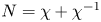 $N = \chi + \chi ^{-1}$. When
 $K$ is a field corresponding to a non-trivial quadratic character
 $\beta$ of
 $k^{*}$, one has
 $\det (N) = \beta$. In this case, the representation
 $N$ is irreducible unless
 $\chi$ is the composition of a quadratic character
 $\chi _k$ of
 $k^{*}$ with the norm, when
 $N = \chi _k + \chi _k \beta$. There are two representations in the Vogan L-packet, for the groups of the two orthogonal spaces of dimension
 $2$ with the correct discriminant, but only one of these spaces is relevant.
The restriction of the one-dimensional representation  $\pi (\alpha )$ of
 $G = {{\rm SO}}_3$ to the subgroup
 $H = {{\rm SO}}_2$ is the character
 $\chi _{\alpha }$ given by the composition of the quadratic character
 $\alpha$ of
 $k^{*}$ with the norm from
 $K^{*}$ to
 $k^{*}$. (As the norms from
 $K^{*}$ form a subgroup of index two in
 $k^{*}$ when
 $K$ is a field, this character is also the composition of the quadratic character
 $\alpha .\beta$ with the norm.) As
 $\chi _{\alpha } = \chi _{\alpha }^{-1}$, we have
 \[ {{\rm Hom}}_H(\pi(\alpha) \otimes \chi_{\alpha}, \mathbb{C}) = \mathbb{C}. \]
In this case, the A-parameters  $(M,N)$ form a relevant pair:
 $N = \alpha .\beta + \alpha = N_0 + M_{\alpha }$. This is the only possible
 $N$ of dimension
 $2$ and the correct determinant that combines with
 $M$ to give a relevant pair. For characters
 $\chi$ of
 $H$ that are not equal to
 $\chi _{\alpha }$, we have
 \[ {{\rm Hom}}_H(\pi(\alpha) \otimes \chi, \mathbb{C}) = 0. \]
In particular, the results of this elementary example is in accordance with our local Conjecture 6.1.
The L-function of the tensor product representation is given by
 \[ L(M \otimes N, s) = L(\alpha \otimes {\textrm{Ind}\,}(\chi), s + 1/2) \cdot L(\alpha \otimes {\textrm{Ind}\,}(\chi), s - 1/2). \]
This has a pole at  $s = 1/2$ if and only if the quadratic character
 $\alpha$ appears in the representation
 ${\textrm {Ind}\,}(\chi )$, in which case the order of the pole is the multiplicity of the character
 $\alpha$ in this induced representation. The L-function of the adjoint representation is given by
 \[ L({{\rm Sym}}^{2} M, s) \cdot L(\wedge^{2}, s) = L(\mathbb{C}, s + 1)\cdot L(\mathbb{C}, s) \cdot L(\mathbb{C}, s - 1) \cdot L(\beta, s). \]
This has a simple pole at  $s = 1$. We conclude that the ratio
 \[ L(M,N, s) = L(M \otimes N, s + ~1/2)\big /L({{\rm Sym}}^{2} M \oplus \wedge^{2}N, s + 1) \]
has order less than or equal to zero at  $s = 0$ if and only if
 $\alpha$ appears in
 ${\textrm {Ind}\,}(\chi )$ or, equivalently, if and only if
 \[ {{\rm Hom}}_H(\pi(\alpha) \otimes \chi, \mathbb{C}) = \mathbb{C}. \]
When  $K$ is a field, the parameter is discrete, and we see that
 $L(M,N,s)$ is regular and non-zero at
 $s = 0$, When
 $K = k + k$, the parameter for
 $\chi _{\alpha }$ is not discrete, and the character
 $\alpha$ appears with multiplicity
 $2$ in the induced representation. In this case, the ratio
 $L(M,N,s)$ has a simple pole at
 $s = 0$.
Example 11.2: restriction of one-dimensional characters. One can easily extend the previous example to cover the restriction of one-dimensional representations of the split group  ${{\rm SO}}_{2n+1} = {{\rm SO}}(V)$ to the special orthogonal group
 ${{\rm SO}}_{2n}= {{\rm SO}}(W)$ of a codimension-one subspace
 $W$. The one-dimensional representations of
 ${{\rm SO}}_{2n+1}$ have symplectic A-parameters
 \[ M = M_{\alpha} \otimes {{\rm Sym}}^{2n-1}(\mathbb{C}^{2}), \]
where  $M_{\alpha }$ is a one-dimensional orthogonal representation given by a quadratic character
 \[ \alpha: k^{*}/k^{*2} \rightarrow \langle \pm 1 \rangle. \]
The associated representation of  ${{\rm SO}}(V)$ is the composition of
 $\alpha$ with the spinor norm
 $:{{\rm SO}}(V) \rightarrow \langle \pm 1 \rangle$. Let
 $\beta$ be the quadratic character
 $\beta : k^{*}/k^{*2} \rightarrow \langle \pm 1 \rangle ,$ given by
 $\beta (x) = (x,d)$ where
 $d$ is the (normalized) discriminant of the even-dimensional subspace
 $W$, and
 $(-,-)$ is the Hilbert symbol of
 $k$. Then the only A-parameter for the subgroup
 ${{\rm SO}}_{2n} = {{\rm SO}}(W)$ that gives a relevant pair
 $(M,N)$ is
 \[ N = N_0^{-} + N_{2n-2}^{+} \otimes {{\rm Sym}}^{2n-2}(\mathbb{C}^{2}) \]
with  $N_0^{-} = \alpha .\beta$ and
 $N_{2n-2}^{+} = \alpha$. This is indeed the A-parameter for the restricted one-dimensional representation of
 ${{\rm SO}}_{2n}$.
We can easily calculate the order of  $L(M,N,s)$ at
 $s = 0$ in this case. A short computation gives
 \begin{align*} {{\rm Sym}}^{2}(M) &= {{\rm Sym}}^{4n-2}(\mathbb{C}^{2}) + {{\rm Sym}}^{4n-6}(\mathbb{C}^{2}) + \cdots + {{\rm Sym}}^{2}(\mathbb{C}^{2}), \\ \wedge^{2}(N) &= {{\rm Sym}}^{4n-6}(\mathbb{C}^{2}) + {{\rm Sym}}^{4n-10}(\mathbb{C}^{2}) + \cdots + {{\rm Sym}}^{2}(\mathbb{C}^{2}) + {{\rm Sym}}^{2n-2}(\mathbb{C}^{2}) \otimes \beta, \\ M \otimes N &= {{\rm Sym}}^{4n-3}(\mathbb{C}^{2}) + {{\rm Sym}}^{4n-7}(\mathbb{C}^{2}) + \cdots + {{\rm Sym}}^{1}(\mathbb{C}^{2}) + {{\rm Sym}}^{2n-1}(\mathbb{C}^{2}) \otimes \beta. \end{align*}
Therefore, the L-function of the numerator  $L(M \otimes N, s + 1/2)$ has a pole of order
 $2n-1$ at
 $s = 0$ if
 $\beta \neq 1$, and a pole of order
 $2n$ at
 $s = 0$ if
 $\beta = 1$. The same is true for the L-function of the denominator
 $L({{\rm Sym}}^{2} M, s + 1) \cdot L(\wedge ^{2} N, s+1)$, provided that
 $n > 1$. Hence, when
 $n > 1$, the ratio
 $L(M,N,s)$ is regular and non-zero at the point
 $s = 0$. In the special case where
 $n = 1$ and
 $\beta = 1$ (so
 ${{\rm SO}}(W) \cong \mathbb {G}_m$), this ratio has a simple pole at
 $s = 0$ as we noted already at the end of the previous example.
Example 11.3:  ${{\rm SO}}_3 \subset {{\rm SO}}_4$. We consider the case of
 ${{\rm SO}}_3 \subset {{\rm SO}}_4$ with
 ${{\rm SO}}_4$ quasi-split. This corresponds to
 \[ {\textrm{PGL}}_2(k) \longrightarrow {\textrm{GL}}_2^{+}(K) /k^{\times}, \]
where  $K$ is a quadratic algebra over a
 $p$-adic field
 $k$ and
 ${{\rm GL}}_2^{+}(K)$ is the subgroup of
 ${{\rm GL}}_2(K)$ with determinant in
 $k^{\times }$. We can, in fact, consider slightly more generally the embedding
 ${{\rm GL}}_2(k) \hookrightarrow {{\rm GL}}_2^{+}(K)$. Thus, for irreducible representations
 $\pi _1$ of
 ${{\rm GL}}_2^{+}(K)$ and
 $\pi _2$ of
 ${{\rm GL}}_2(k)$, we would like to compute
 $d(\pi _1, \pi _2) = \dim {\textrm {Hom}}_{{{\rm GL}}_2(k)}(\pi _1, \pi _2)$.
We consider the case when  $\pi _1$ is a generic (thus, infinite-dimensional) representation. In this case, the four-dimensional L-parameter associated to
 $\pi _1$ is more usually called the Asai representation, or tensor induction, denoted as
 $As(\pi _1)$. This notion is typically defined for representations of
 ${{\rm GL}}_2(K)$, but one can also define it for representations
 $\pi _1$ of
 ${{\rm GL}}_2^{+}(K)$ by choosing an arbitrary irreducible representation of
 ${{\rm GL}}_2(K)$ containing
 $\pi _1$ and doing the Asai construction for this. The result is independent of the choice of the representation of
 ${{\rm GL}}_2(K)$, so it is legitimate to call it
 $As(\pi _1)$ for
 $\pi _1$ on
 ${{\rm GL}}_2^{+}(K)$.
If the representation  $\pi _2$ of
 ${{\rm GL}}_2(k)$ is infinite dimensional, this amounts to questions already considered in [Reference PrasadPra92], which is in the setting of tempered GGP. So we only analyze the situation when the representation
 $\pi _2$ of
 ${{\rm GL}}_2(k)$ is one dimensional, which to simplify notation, we take to be the trivial representation.
Thus, we want to understand which generic representations  $\pi _1$ of
 ${{\rm GL}}_2^{+}(K)$ have an invariant form for
 ${{\rm GL}}_2(k)$. By our conjecture, one would therefore expect that a representation of
 ${{\rm GL}}_2^{+}(K)$ has a
 ${{\rm GL}}_2(k)$ invariant form if and only if the four-dimensional representation of
 $W'_k$ contains the trivial representation, or equivalently the Asai L-function has a pole at 0.
This is exactly what was proved globally by Harder et al. [Reference Harder, Langlands and RapoportHLR86], and later also locally by others, see [Reference FlickerFli91, Reference KableKab04] for results for  ${{\rm GL}}_2$, and Lemma 4.1 of [Reference Anandavardhanan and PrasadAP18] for
 ${{\rm SL}}_2$. The nice fact is that this criterion, which is usually stated for discrete series representations, is valid for all generic representations
 $\pi _1$ of
 ${{\rm GL}}_2^{+}(K)$.
Theorem 11.4 For  $K$ a quadratic extension of a
 $p$-adic field
 $k$, an infinite-dimensional irreducible representation
 $\pi$ of
 ${{\rm GL}}_2(K)$ whose central character is trivial when restricted to
 $k^{\times }$ has a non-zero
 ${{\rm GL}}_2(k)$ invariant linear form if and only if its Asai L-function has a pole at
 $s=0$.
Assuming that the representation  $\pi$ of
 ${{\rm GL}}_2(K)$ has a
 ${{\rm GL}}_2(k)$ invariant form, an irreducible sub-representation
 $\pi '$ of
 $\pi$ restricted to
 ${{\rm GL}}^{+}_2(K)$ has a
 ${{\rm GL}}_2(k)$ invariant linear form if and only if
 $\pi '$ is generic for a character
 $\psi : K \rightarrow \mathbb {C}^{\times }$ that is trivial on
 $k$.
In this case, where the A-parameter of  $\pi _2$ is
 $[2]$, the distinguished character predicted by our local conjecture is the trivial character, which indexes the representation of
 ${{\rm GL}}_2^{+}(K)$ in the L-packet with Whittaker model with respect to a character of
 $K/k$. This is indeed what the previous theorem proves. Our may also consider the case when
 ${{\rm GL}}_2(k)$ is replaced by
 $D^{\times }$, where
 $D$ is the unique quaternion
 $k$-algebra. In this case, the restriction problem is addressed by the tempered GGP.
Example 11.5:  $U_2 \subset U_3$. For a quadratic extension
 $K/k$ of local fields, we consider a pair of unitary group
 $U_2 \subset U_3$ and the restriction of representations from
 $U_3$ to
 $U_2$. In what follows, we are interested in understanding which representations of
 $U_3$ contain the trivial character of
 $U_2$ as a quotient; such representations of
 $U_3$ are said to be
 $U_2$-distinguished. This has been considered by Gelbart et al., culminating in their work [Reference Gelbart, Rogawski and SoudryGRS97]. We recall their results briefly, casting them in the language of our local and global conjectures.
Theorem 11.6 Let  $U_2 \subset U_3$ be a pair of quasi-split unitary groups defined for a quadratic extension
 $K/k$ of non-archimedean local fields. Suppose that
 $M_{\rm A}$ is an A-parameter for
 $U_3$ (regarded as a conjugate orthogonal representation of
 $W(K)$) with associated A-packet
 $\Pi _{M_{\rm A}}$. A representation
 $\pi \in \Pi _{M_{\rm A}}$ is
 $U_2$-distinguished if and only if one of the following holds:
(i)
$\pi$ is the trivial representation of $U_3$, i.e. $M_{\rm A} = [3]$;(ii)
$\pi$ is a tempered generic representation such that $L(s,BC(\pi ))$ has a pole at $s=0$ (where $BC(\pi )$ is the base change of $\pi$ to $K$); in this case, $M_{\rm A} = 1+M_0$ with $M_0$ tempered.




In particular, the pair  $(M_{\rm A}, [2])$ is relevant and the unique representation
 $\pi$ which is
 $U_2$-distinguished lies in
 $\Pi _M$ and corresponds to the distinguished character of Conjecture 6.1(c).
We now state the corresponding global theorem from [Reference Gelbart, Rogawski and SoudryGRS97].
Theorem 11.7 Let  $E/F$ be a quadratic extension of number fields with corresponding adele rings
 $\mathbb {A}_E$ and
 $\mathbb {A}_F$ and consider a pair
 $U_2 \subset U_3$ of unitary groups over
 $F$. Let
 $\pi = \otimes \pi _{v}$ be an irreducible infinite-dimensional cuspidal automorphic representation of
 $U_3(\mathbb {A}_F)$ with base change
 $BC(\pi )$ on
 ${{\rm GL}}_3(E)$. Then the period integral over
 $U_2$ is non-zero on
 $\pi$ if and only if:
(i) for each place
$v$ of $F$, $\pi _v$ is $U_2(F_v)$-distinguished;(ii)
$L(s,BC(\pi ))$ has a pole at $s=1$.


In particular,  $\pi$ belongs to a tempered L-packet with L-parameter
 $M = 1 + M_0$, so that
 $(M, N_{\rm A})$ is relevant (with
 $N_{\rm A} = [2]$). Moreover, the L-function
 \[ L(M, N, s) = \frac{L_E(M, s) \cdot L_E(M,s+1)}{\zeta_F(s) \cdot \zeta_F(s+1) \cdot \zeta_F(s+2) \cdot L(\omega_{E/F}, s+1) \cdot L(M, Ad, s+1)} \]
is finite non-zero at  $s=0$.
One may also start with a non-tempered A-parameter  $M_{\rm A}$ of
 $U_3$ and consider the restriction of the representations in the associated A-packets to
 $U_2$. Disregarding one-dimensional representations of
 $U_3$, these A-parameters are of the form
 $M_{\rm A} = \mu + \nu \boxtimes [2]$, with
 $\mu$,
 $\nu$ one-dimensional characters that are conjugate dual of appropriate sign. This restriction problem has been studied in two papers [Reference HaanHaa16, Reference HaanHaa17] of Haan. His results are in accordance with the expectations of Conjecture 6.1. We refer the reader to his papers for the precise results.
Example 11.8:  ${{\rm SO}}_4 \subset {{\rm SO}}_5$. We now consider the restriction problem for some non-tempered A-packets of
 ${{\rm SO}}_5 = {\textrm {PGSp}}_4$, namely the Saito–Kurokawa packets and the A-packets of Soudry type. The restriction of representations in these packets to
 ${{\rm SO}}_4$ has been determined in [Reference Gan and GurevichGG09, Reference Gurevich and SzpruchGS15].
Consider first the Saito–Kurokawa case over a non-archimedean local field  $k$. Here the A-parameter
 $M_{\rm A}$ of
 ${{\rm SO}}_5$ is of the form
 \[ M_{\rm A} = M_0 + [2], \]
where  $M_0$ is a tempered L-parameter of
 ${{\rm SO}}_3$. The A-packet of
 $M_{\rm A}$ can be explicated as follows. The component group of
 $M_{\rm A}$ is
 \[ A_{M_{\rm A}} = \begin{cases} \mathbb{Z}/2\mathbb{Z} \times \mathbb{Z}/2\mathbb{Z} & \text{if $M_0$ irreducible;} \\ \{1 \} \times \mathbb{Z}/2\mathbb{Z} & \text{if $M_0$ reducible.} \end{cases} \]
Here, we think of the first component in the direct product as associated to  $M_0$, whereas the second
 $\mathbb {Z}/2\mathbb {Z}$ is associated to
 $[2]$. The A-packet
 $\Pi _{M_{\rm A}}$ thus consists of four or two representations in the respective cases and we may label them by the irreducible characters of
 $A_{M_{\rm A}}$ as
 \[ \Pi_{M_{\rm A}} = \{ \pi^{\epsilon_1, \epsilon_2}: \epsilon_1, \epsilon_2 = \pm \} \]
where we understand that when  $M_0$ is reducible,
 $\pi ^{-, \epsilon } = 0$. Moreover, a representation
 $\pi ^{\epsilon _1, \epsilon _2}$ is a representation of the split group
 ${{\rm SO}}_5^{+}$ if and only if
 $\epsilon _1 = \epsilon _2$; otherwise, it is a representation of the non-split inner form
 ${{\rm SO}}_5^{-}$. The associated L-packet
 $\Pi _M$ is the subset
 \[ \Pi_M = \{ \pi^{\epsilon_1, +}: \epsilon_1 = \pm \} \subset \Pi_{M_{\rm A}}. \]
The A-parameters  $N_{\rm A}$ of
 ${{\rm SO}}_4$ for which
 $(M_{\rm A}, N_{\rm A})$ is relevant are those of the form:
(a)
$N_{\rm A} = N_0 + 1$, where $N_0$ is a three-dimensional orthogonal L-parameter;(b)
$N_{\rm A} = \chi _0 + [3]$, where $\chi _0$ is a one-dimensional character.




For simplicity, we assume that the  ${{\rm SO}}_4$ in question has trivial discriminant, in which case
 $N_0$ and
 $\chi _0$ have trivial determinant. Thus, in part (b),
 $N_{\rm A}$ is the A-parameter of the trivial representation. As this case is treated in some generality in the last example, we focus on part (a) here.
In this case, the results of [Reference Gan and GurevichGG09] can be summarized as follows.
Theorem 11.9 Fix a Saito–Kurokawa A-parameter  $M_{\rm A} = M_0 + [2]$ of
 ${{\rm SO}}_5$ and let
 $N_{\rm A}$ be a tempered A-parameter of
 ${{\rm SO}}_4$ with
 $\det (N_{\rm A})$ trivial. For
 $\pi ^{\epsilon _1, \epsilon _2} \in \Pi _{M_{\rm A}}$, set
 \[ d(\pi^{\epsilon_1, \epsilon_2}, N_{\rm A}) = \sum_{\sigma \in \Pi_{N_{\rm A}}} d(\pi^{\epsilon_1, \epsilon_2}, \sigma). \]
In addition, set
 \[ d(M_{\rm A}, N_{\rm A}) = \sum_{\epsilon_1, \epsilon_2} d(\pi^{\epsilon_1, \epsilon_2}, N_{\rm A}). \]
Then
 \[ d(M_{\rm A}, N_{\rm A}) \ne 0 \Longleftrightarrow (M_{\rm A}, N_{\rm A})\ \text{is relevant}. \]
When  $(M_{\rm A}, N_{\rm A})$ is relevant, with
 $N_{\rm A} = N_0 +1$ tempered, we have
 \[ d(\pi^{\epsilon_1, \epsilon_2}, N_{\rm A}) \ne 0 \Longleftrightarrow \epsilon_1 = \epsilon(1/2, M_0 \otimes N_{\rm A}) = \epsilon(1/2, M_0) \cdot \epsilon(1/2, M_0 \otimes N_0). \]
Further, if  $d( \pi ^{\epsilon _1, \epsilon _2}, N_{\rm A}) \ne 0$, then
 $d(\pi ^{\epsilon _1, \epsilon _2}, N_{\rm A}) =1$.
Corollary 11.10 In the context of the previous theorem, if one considers the L-packet  $\Pi _M$, then we have
 \[ d(M,N) = \begin{cases} 0, & \text{if $(M_{\rm A}, N_{\rm A})$ is not relevant;} \\ 1, & \text{if $(M_{\rm A},N_{\rm A})$ is relevant.} \end{cases} \]
When  $(M_{\rm A},N_{\rm A})$ is relevant, the unique representation
 $\pi ^{\epsilon _1, +} \in \Pi _M$ for which
 $d(\pi ^{\epsilon _1, +} \, N) \ne 0$ is given by
 \[ \epsilon_1 = \epsilon(1/2, M_0 \otimes N_{\rm A}). \]
This is the distinguished character predicted by Conjecture 6.1.
Observe that the above theorem goes beyond our local Conjecture 6.1 as it addresses the restriction problem for the whole A-packet  $\Pi _{M_{\rm A}}$ and not just the L-packet
 $\Pi _M$. Note also that when
 $M_0$ is irreducible, one has
 $d(M_{\rm A}, N_{\rm A}) = 2$.
There is also an analogous global theorem, which we state here.
Theorem 11.11 Consider the non-tempered global A-parameter  $M_{\rm A} = M_0 \oplus [2]$ over a number field
 $F$, where
 $M_0$ corresponds to a cuspidal representation of
 ${{\rm PGL}}_2(\mathbb {A}_F)$. Consider an element of the global A-packet
 $\Pi _{M_{\rm A}}$ for
 $G(\mathbb {A}_F)={{\rm SO}}_5(\mathbb {A}_F)$:
 \[ \pi^{\underline{\epsilon}_1, \underline{\epsilon}_2} = \otimes_v \pi^{\epsilon_{1,v}, \epsilon_{2,v}}. \]
(i) This representation occurs in the automorphic discrete spectrum if and only if
\[ \prod_v \epsilon_{1,v} = \epsilon(1/2, M_0) = \prod_v \epsilon_{2,v}. \](ii) When condition (i) holds, the global period integral of
$\pi ^{\underline {\epsilon }_1, \underline {\epsilon }_2}$ against the cuspidal representations with tempered L-parameter $N_{\rm A}$ is zero unless $(M_{\rm A}, N_{\rm A})$ is relevant, that is, when $N_{\rm A} = N_0 + 1$.(iii) When condition (i) holds and
$(M_{\rm A}, N_{\rm A})$ is relevant, the period integral in condition (ii) is non-zero if and only if
\[ L(1/2, M_0 \otimes N_0) \ne 0. \]





Noting that
 \[ L(s, M_{\rm A} , N_{\rm A}) = \frac{L(s+ 1/2, M_0 \otimes N_0)}{\zeta_F(s+ 2) \cdot L(s +3/2, M_0) \cdot L(s+1, M_0, Ad)}, \]
we see that condition (iii) is equivalent to saying that  $L(0, M_{\rm A}, N_{\rm A}) \ne 0$.
Now we consider the case of A-packets of Soudry type, that is, an A-parameter of  ${{\rm SO}}_5$ of the form
 \[ M_{\rm A} = M_0 \otimes [2] \]
where  $M_0$ is an orthogonal L-parameter. Over a local field
 $k$, we enumerate the possible component group
 $A_{M_{\rm A}}$ according to the following four disjoint scenarios:
(a) if
$M_0 = \chi + \chi ^{-1}$ with $\chi$ unitary but non-quadratic, then $\det (M_0)$ is trivial and $A_{M_{\rm A}}$ is trivial;(b) if
$M_0 =\chi + \chi$, with $\chi$ quadratic, then $\det (M_0)$ is trivial and $A_{M_{\rm A}} = \mathbb {Z}/2\mathbb {Z}$;(c) if
$M_0$ is irreducible, then $\det (M_0)$ is non-trivial and $A_{M_{\rm A}} = \mathbb {Z}/2\mathbb {Z}$;(d) if
$M_0 = \chi _1 + \chi _2$ with $\chi _1 \ne \chi _2$ quadratic, then $\det(M_0)$ is non-trivial and $A_{M_{\rm A}} = \mathbb{Z}/2\mathbb{Z} \times \mathbb{Z}/2\mathbb{Z}$.
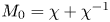


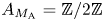


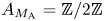




Accordingly, the local A-packet  $\Pi _{M_{\rm A}}$ has one, two, two, or four representations in the respective cases. We may denote the A-packet by
 \[ \Pi_{M_{\rm A}} = \{ \pi^{\epsilon_1, \epsilon_2}: \epsilon_1, \epsilon_2 = \pm \} \]
with the understanding that:
• in case (a), all representations are
$0$ except for $\pi ^{++}$;• in case (b), the representations
$\pi ^{+,-}$ and $\pi ^{-,+}$ are zero;• in case (c), the representations
$\pi ^{-,-}$ and $\pi ^{+, -}$ are zero.


Moreover, the representation  $\pi ^{\epsilon _1, \epsilon _2}$ is a representation of the split
 ${{\rm SO}}^{+}_5$ if and only if
 $\epsilon _1 = \epsilon _2$. Thus, the A-packet
 $\Pi _{M_{\rm A}}$ contains some representations of the non-split
 ${{\rm SO}}^{-}_5$ only in cases (c) and (d) (that is, when
 $\det (M_0)$ is non-trivial). The associated L-packet
 $\Pi _M$ is the subset
 \[ \Pi_M = \{ \pi^{+,+} \} \subset \Pi_{M_{\rm A}}. \]
The A-parameters  $N_{\rm A}$ of
 ${{\rm SO}}_4$ for which the pair
 $(M_{\rm A}, N_{\rm A})$ is relevant are those of the form:
(a)
$N_{\rm A} = M_0 + N_0$ with $N_0$ tempered orthogonal of dimension $2$;(b)
$N_{\rm A} = \chi _1 \otimes [3] + \chi _2$, if $M_0 = \chi _1 + \chi _2$ ($\chi _1$, $\chi _2$ not necessarily distinct).







Here is a sample of the local results of [Reference Gurevich and SzpruchGS15].
Theorem 11.12 Consider the non-tempered local A-parameter  $M_{\rm A} = M_0 \boxtimes [2]$ for
 ${{\rm SO}}_5$ and let
 $N_{\rm A}$ be a tempered A-parameter for
 ${{\rm SO}}_4$. Assume for simplicity that
 $\det (N_{\rm A})$ is trivial.
(i) If
$d(M_{\rm A}, N_{\rm A}) \ne 0 \Longrightarrow (M_{\rm A},N_{\rm A})$ is relevant.(ii) Suppose that
$(M_{\rm A},N_{\rm A})$ is relevant and $\det (M_0)$ is trivial (i.e. in cases (a) and (b)). Then $d(\pi , N_{\rm A}) =1$ for any $\pi \in \Pi _{M_{\rm A}}$. Thus,
\[ d(M_{\rm A}, N_{\rm A}) = \begin{cases} 1, & \text{if}\ M_0 = \chi + \chi^{-1},\ \chi\ \text{non-quadratic}; \\ 2, & \text{if}\ M_0 = \chi + \chi^{-1},\ \text{with}\ \chi\ \text{quadratic}. \end{cases} \](iii) Suppose that
$(M_{\rm A},N_{\rm A})$ is relevant and $\det (M_0)$ is non-trivial (i.e. in cases (c) and (d)). Then we have:• in case (c), where
$M_0$ is irreducible, we have $d(\pi , N_{\rm A}) =1$ for any $\pi \in \Pi _{M_{\rm A}}$, so that $d(M_{\rm A}, N_{\rm A}) =2$;• in case (d), where
$M_0$ is reducible, we have $d(\pi , N_{\rm A}) =1$ for any $\pi \in \Pi _{M_{\rm A}}$, so that $d(M_{\rm A}, N_{\rm A}) =4$, unless $N_{\rm A} = M_0 + N_0$ with $N_0$ reducible; in this latter case, we have
so that\[ d(\pi^{\epsilon_1, \epsilon_2}, N_{\rm A}) = 1 \Longleftrightarrow \epsilon_1 = +, \]$d(M_{\rm A}, N_{\rm A}) =2$.
(iv) In all cases where
$(M_{\rm A}, N_{\rm A})$ is relevant, we have
\[ d(\pi^{++}, N) = 1. \]













This theorem verifies Conjecture 6.1 in this particular case; indeed it goes further by determining  $d(\pi , N_{\rm A})$ for all
 $\pi \in \Pi _{M_{\rm A}}$. There is also a companion global theorem for which we refer the reader to [Reference Gurevich and SzpruchGS15].
Example 11.13:  ${{\rm Sp}}_4(k) \subset {{\rm GL}}_4(k)$. Representations of
 ${{\rm GL}}_{2n}(k)$ distinguished by
 ${{\rm Sp}}_{2n}(k)$ are classified by the work of Offen and Sayag, cf. [Reference Offen and SayagOS07]. A low-rank case of their work,
 ${{\rm Sp}}_4(k) \subset {{\rm GL}}_4(k)$, is closely related to the pair
 ${{\rm SO}}_5(k) \subset {{\rm SO}}_6(k)$ and can be used to verify our conjectures, which we do now.
In the relationship of  ${{\rm GL}}_4(k)$ with
 ${{\rm SO}}_6(k)$, if the L-parameter of a representation
 $\pi$ of
 ${{\rm GL}}_4(k)$ is
 $\phi$, then the corresponding parameter of the representation of
 ${{\rm SO}}_6(k)$ with values in
 ${{\rm SO}}_6(\mathbb {C})$ is
 $M = \det ^{-1/2}(\phi ) \Lambda ^{2}(\phi )$ where
 $\det ^{1/2} (\phi )$ is a square root of
 $\det (\phi )$ (which must exist for a representation
 $\pi$ of
 ${{\rm GL}}_4(k)$ to be related to a representation of
 ${{\rm SO}}_6(k)$).
As the A-parameter of the trivial representation of  ${{\rm SO}}_5(k)$ is
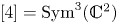 $[4] = {{\rm Sym}}^{3}(\mathbb {C}^{2})$, it follows by our conjecture that the only option for the six-dimensional orthogonal representation
 $M= \det ^{-1/2} (\phi ) \Lambda ^{2}(\phi )$ are:
(i)
$[5] + [1]$;(ii)
$[3] + M_0$ with $M_0$ tempered and three dimensional.


Here, case (i) corresponds to characters of  ${{\rm GL}}_4(k)$, whereas in case (ii), the
 $M_0$ must be orthogonal. It can be seen that
 $M = \det ^{-1/2}(\phi ) \Lambda ^{2}(\phi )$ has this shape for a four-dimensional L-parameter
 $\phi$ of Arthur type with A-parameter
 $\phi _{\rm A}$ if and only if
 $\phi _{\rm A}$ is of the form
 $\tau \otimes [2]$, where
 $\tau$ is a two-dimensional tempered parameter. Thus,
 $M$ is of Arthur type with associated A-parameter
 \[ M_{\rm A} = \Lambda^{2}(\tau \otimes [2]) = {\rm Sym}^{2}(\tau) \oplus \Lambda^{2}(\tau) [3]. \]
Thus, our conjecture is in conformity with the results of Offen and Sayag that the only representations of  ${{\rm GL}}_4(k)$ which are distinguished by
 ${{\rm Sp}}_4(k)$ are either one dimensional, or have A-parameter of the form
 $\tau \otimes [2]$.
Example 11.14: distinction of  ${{\rm SO}}_n$ by
 ${{\rm SO}}_{n-1}$. We have considered several low-rank instances of the problem of determining the representations (of Arthur type) of
 ${{\rm SO}}_n$ (respectively
 $U_n$) distinguished by
 ${{\rm SO}}_{n-1}$ (respectively
 $U_{n-1}$). This problem can be studied in general using the theory of theta correspondence. More precisely, one can show the following.
Proposition 11.15 Let  $k$ be a non-archimedean local field and consider a non-degenerate quadratic space
 $V$ over
 $k$. For
 $a \in k$, set
 $V_a = \{ x \in V: q(x) =a \}$. Let
 \[ G = \begin{cases} {{\rm SL}}_2(k) & \text{if}\ \dim V\ \text{is even}; \\ {\rm Mp}_2(k), & \text{(the two fold metaplectic cover of}\ {{\rm SL}}_2(k)),\ \text{if}\ \dim V\ \text{is odd}. \end{cases} \]
For a fixed non-trivial additive character  $\psi$ of
 $k$, one may consider the
 $\psi$-theta correspondence for
 $G \times O(V)$. Given an irreducible representation
 $\pi$ of
 $O(V)$, let
 $\Theta _{\psi }(\pi )$ be the big theta lift of
 $\pi$ to
 $G(k)$. Then, for
 $a \in k^{\times }$,
 \[ \Theta_{\psi}(\pi)_{N,\psi_a} \cong \begin{cases} 0, & \text{if}\ V_a(k)\ \text{is empty}; \\ {{\rm Hom}}_{O(U_a)} (\pi, \mathbb{C}), & \text{if}\ V_a(k)\ \text{is non-empty}; \end{cases} \]
where in the latter case,  $U_a = x_a^{\perp }$ for some
 $x_a \in V_a(k)$. Here,
 $N$ is a maximal unipotent subgroup of
 $G$ and
 $\psi _a(x) = \psi (ax)$ is regarded as a generic character of
 $N(k) = k$.
Corollary 11.16 Let  $\pi$ be an irreducible admissible representation of
 $O(V)$. Then
 $\pi$ is distinguished by
 $O(W)$ with
 $V/W = \langle a \rangle$ if and only if the big
 $\psi$-theta lift of
 $\pi$ to
 $G$ is
 $\psi _a$-generic. In particular, one has the following.
(i) If
$\pi$ is distinguished by $O(W)$ where $W$ is a codimension-one non-degenerate subspace of $V\!$, then $\pi$ has a non-zero theta lift to $G$.(ii) If
$\pi$ is the $\psi$-theta lift of a $\psi _a$-generic representation of $G$, then $\pi$ is distinguished by $O(W)$ for a codimension-one non-degenerate subspace $W$ of $V$ with $V/W = \langle a\rangle$.


When  $\dim V \geq 3$, as is well-known, the theta correspondence for
 $G \times O(V)$ reduces to one for
 $G \times {{\rm SO}}(V)$. If
 $\sigma \in \textrm {Irr}(G)$ has tempered A-parameter
 $M_0$, one knows precisely how to describe its small theta lift
 $\theta _{\psi }(\sigma )$ to
 ${{\rm SO}}(V)$ in terms of the local Langlands correspondence (see [Reference MuićMui04, Reference MuićMui08a, Reference MuićMui08b, Reference Atobe and GanAG17]). From this description, one sees that
 $\theta _{\psi }(\sigma )$ is of Arthur type with A-parameter of the form
 \[ \begin{cases} M_0 + [2n-3], & \text{if}\ \dim V = 2n; \\ M_0+ [2n-2], & \text{if}\ \dim V = 2n+1. \end{cases} \]
Moreover, one knows from results of Mœglin [Reference MœglinMœg11, Reference Gan and IchinoGI18] that all representations with such an A-parameter are obtained as theta lifts from the L-packet of  $G$ with L-parameter
 $M_0$. From this and Corollary 11.16, we see that the following holds.
Theorem 11.17 Let  $\pi$ be an irreducible admissible representation of
 ${{\rm SO}}(V)$ of Arthur type with A-parameter
 $M_{\rm A}$ and suppose that
 $\pi$ is distinguished by
 ${{\rm SO}}(W)$ for some codimension-one non-degenerate subspace
 $W$ of
 $V$. Then
 $M_{\rm A}$ must have one of the following forms:
• if
$\dim V = 2n+1$ is odd, then $M_{\rm A} = [2n]$ (which corresponds to the trivial representation) or $M_{\rm A} = [2n-2] + M_0$, with $M_0$ tempered two dimensional (which corresponds to theta lifts of tempered representations of ${\rm Mp}_2(k)$);• if
$\dim V = 2n$ is even, then $M_{\rm A} = [2n-1] + \chi$ (which corresponds to the trivial representation) or $M_{\rm A} = [2n-3] + M_0$ with $M_0$ tempered three dimensional (which corresponds to theta lifts of tempered representations of ${{\rm SL}}_2(k)$).









Conversely, if  $M_{\rm A}$ is an A-parameter of
 ${{\rm SO}}(V)$ of the form described previously, then any representation of
 ${{\rm SO}}(V)$ in the associated A-packet
 $\Pi _{M_{\rm A}}$ is distinguished by
 ${{\rm SO}}(W)$ for some codimension-one non-degenerate subspace
 $W \subset V$.
This theorem is in accordance with Conjecture 6.1. There is of course an entirely analogous theorem (and proof) in the unitary case, with the quasi-split  $U_2$ playing the role of
 $G$.
12. Automorphic descent
In a series of papers [Reference Ginzburg, Rallis and SoudryGRS99a, Reference Ginzburg, Rallis and SoudryGRS99b, Reference Ginzburg, Rallis and SoudryGRS02, Reference Ginzburg, Rallis and SoudryGRS11], Ginzburg et al. pioneered the automorphic descent or backward lifting technique, which allowed them to construct the backward functorial lifting from general linear groups to classical groups. The input of their construction is an discrete tempered global L-parameter  $M$ for the classical group in question, thought of as an isobaric automorphic representation of the appropriate
 ${{\rm GL}}_N$, and the output is the unique globally generic cuspidal representation in global L-packet determined by
 $M$.
In a recent paper [Reference Jiang and ZhangJZ20], Jiang and Zhang extended this construction so that it has the potential to construct all the automorphic members of the global L-packet associated to  $M$. By their very construction, the automorphic descent method is closely connected to the conjectures of [Reference Gan, Gross and PrasadGGP12a] because it involves the consideration of Bessel and Fourier–Jacobi models. In this section, we explain how these automorphic descent constructions fit with our conjectures.
Let us consider the example of  ${{\rm SO}}_{2n+1}$ and give a brief description of the descent construction. Suppose we are given a tempered L-parameter
 $M = M_1 \oplus \cdots \oplus M_r$ of
 ${{\rm SO}}_{2n+1}$, with
 $M_i$ distinct cuspidal representations of some
 ${{\rm GL}}$ of symplectic type. We may regard
 $M$ as an L-parameter of
 ${{\rm GL}}_{2n}$, giving rise to an automorphic representation
 \[ \pi_M = \pi_{M_1} \times \cdots\times \pi_{M_r} \]
of  ${{\rm GL}}_{2n}$. Now consider the non-tempered A-parameter
 \[ \tilde{M}_{\rm A} = M \boxtimes [2]. \]
It is an A-parameter of  ${{\rm SO}}_{4n}$ whose associated L-parameter is
 \[ \tilde{M} = M \cdot |-|^{1/2} \oplus M \cdot |-|^{-1/2}. \]
One sees that the local and global component groups of  $\tilde {M}$ are trivial, so that the local L-packets and global L-packet of
 ${{\rm SO}}_{4n}$ associated to the L-parameter
 $\tilde {M}$ are singleton sets. This unique global representation is the Langlands quotient
 $J(\pi _M, 1/2)$ of the standard module induced from the representation
 $\pi _M |-|^{1/2}$ on the Siegel parabolic subgroup of
 ${{\rm SO}}_{4n}$. The embedding of
 $J(\pi _M, 1/2)$ into the automorphic discrete spectrum can be constructed as an iterated residue of the corresponding Eisenstein series.
Consider now the Bessel coefficient of  $J(\pi _M, 1/2)$ with respect to
 ${{\rm SO}}_{2n+1}$. This gives rise to an automorphic representation of
 ${{\rm SO}}_{2n+1}$ that Ginzburg et al. showed to be an irreducible globally generic cuspidal representation belonging to the L-packet of
 $M$. In fact, because it is globally generic, it is the cuspidal representation
 $\sigma _M$ whose local components correspond to the trivial character of the local component group at each place.
To explain this construction from the viewpoint of our conjectures in this paper, observe that we are considering the pair  ${{\rm SO}}_{4n} \times {{\rm SO}}_{2n+1}$ and we have a non-tempered A-parameter
 $\tilde {M}_{\rm A}$ of
 ${{\rm SO}}_{4n}$. One now reasons as follows.
• For which A-parameter
$N_{\rm A}$ of ${{\rm SO}}_{2n+1}$ can the pair $(\tilde {M}_{\rm A}, N_{\rm A})$ be relevant? It is clear that the only possibility is $N_{\rm A} = M$. Hence, by our global Conjecture 9.1(i), the Bessel descent of $J(\pi _M, 1/2)$ down to ${{\rm SO}}_{2n+1}$ (which can be shown to be cuspidal) can only contain representations in the L-packet of $M$. At this point, however, it is still possible that this Bessel descent is $0$.• Is there any reason to hope that the Bessel descent is non-zero? To address this, we first consider the local setting. As
$J(\pi _M,1/2)$ belongs to the L-packet $\Pi _{\tilde {M}}$, which is a singleton (both locally and globally), our local Conjecture 6.1 can be applied. One can compute the distinguished character of the local component group $A_{\tilde {M}_v} \times A_M$ given by Conjecture 6.1(c); in this case, it turns out to be the trivial character. Hence, our local Conjecture 6.1(c) implies that at each place $v$, the multiplicity
Because of the uniqueness part in Conjecture 6.1(b), we see that\[ d(J(\pi_{M,v}, 1/2), \sigma_{M_v}) =1. \]$\sigma _M$ is the only element $\sigma$ in the global L-packet of $M$ such that $J(\pi _M, 1/2) \otimes \sigma$ supports an abstract Bessel period.• Finally, is the global Bessel period integral non-zero on the automorphic representation
$J(\pi _M, 1/2) \otimes \sigma _M$? We can appeal to our global Conjecture 9.1. We have shown that conditions (i) and (ii) in Conjecture 9.1 already hold, so it remains to verify condition (iii). The function $L(\tilde {M}, M, s)$ is given by
At\[ \frac{L(s+1, M \times M) \cdot L(s, M \times M)}{L(s+1, {{\rm Sym}}^{2} M) \cdot L(s+1, {{\rm Sym}}^{2} M) \cdot L(s, \wedge^{2} M) \cdot L(s+1, \wedge^{2} M) \cdot L(s+2, \wedge^{2} M)}. \]$s= 0$, this is holomorphic and non-zero (alternatively, one can appeal directly to Theorem 9.7). Hence, our global conjecture implies that the global Bessel period integral is non-zero on $J(\pi _M, 1/2) \times \sigma _M$. In particular, the Bessel descent of $J(\pi _M, 1/2)$ to ${{\rm SO}}_{2n+1}$ is non-zero and equal to $\sigma _M$.









We mention that there is a local analog of the construction: the local descent map. This was considered in, for example, [Reference Ginzburg, Rallis and SoudryGRS99a, Reference Ginzburg, Rallis and SoudryGRS02, Reference Ginzburg, Rallis and SoudryGRS11, Reference Soudry and TanayST15]. While the local descent can be defined starting from any L-parameter of a classical group, the results obtained in these works are most complete in the following two situations.
(a) When the L-parameter is supercuspidal, that is, a multiplicity-free sum of selfdual representations of the Weil group (instead of the Weil–Deligne group) of the relevant sign. In this case, it was shown that the local descent is an irreducible generic supercuspidal representation of the classical group with the initially given L-parameter.
(b) When the L-parameter involved is unramified. In this case, it was shown that the only unramified representation which could occur as a quotient in the local descent is that with the given L-parameter. Such results in the unramified case is necessary for the proof of the global results described previously.
Thus, situation (a) is in complete accordance with our local Conjecture 6.1 whereas situation (b) provides supporting evidence for the same conjecture.
The twisted automorphic descent of Jiang and Zhang offers the possibility of constructing the other members of the global L-packet  $M$ of
 ${{\rm SO}}_{2n+1}$ beyond the representation
 $\sigma _M$. In the above construction, Ginzburg et al. showed that the automorphic descent of
 $J(\pi _M, 1/2)$ is equal to
 $\sigma _M$ by showing that this descent is cuspidal and all of its irreducible summands are globally generic. Suppose that
 $\sigma _{\eta } = \otimes '_v \sigma _{\eta _v}$ is a cuspidal representation of the global L-packet of
 $M$. How can one construct
 $\sigma _{\eta }$ by an analogous process as given previously?
The idea of Jiang and Zhang is as follows. The cuspidal representation  $\sigma _{\eta }$ must possess some non-zero Bessel coefficient with respect to a smaller even orthogonal group
 ${{\rm SO}}_{2m}$. Suppose that the Bessel coefficient of
 $\sigma _{\eta }$ down to
 ${{\rm SO}}_{2m}$ contains a cuspidal representation
 $\tau _{\chi } = \otimes _v \tau _{\chi _v}$ belonging to a tempered A-parameter
 $N$ of
 ${{\rm SO}}_{2m}$. By the uniqueness part of the global conjecture in [Reference Gan, Gross and PrasadGGP12a] (in the tempered case), one knows that
 $\sigma _{\eta }$ is characterized as the unique representation in the L-packet of
 $M$ such that
 $\sigma _{\eta } \otimes \tau _{\chi }$ supports the relevant global Bessel period for some
 $\tau _{\chi }$ in the L-packet of
 $N$. This means that we have a way of distinguishing the representation
 $\sigma _{\eta }$ from the other members of the L-packet of
 $M$ (just as one uses the Whittaker–Fourier coefficient to detect the representation
 $\sigma _M$). If this is how one is hoping to detect the representation
 $\sigma _{\eta }$, then it is only reasonable that one should somehow involve the auxiliary
 $\tau _{\chi }$ in the descent construction of
 $\sigma _{\eta }$.
Here then is the construction of Jiang and Zhang. We first pick a tempered L-parameter  $N$ of a smaller group
 ${{\rm SO}}_{2m}$ such that the global Bessel period of
 $\sigma _{\eta } \otimes \tau _{\chi }$ is non-zero for some
 $\tau _{\chi }$ with L-parameter
 $N$. The existence of the data
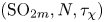 $({{\rm SO}}_{2m}, N, \tau _{\chi })$ is not obvious, especially with the condition that
 $N$ is tempered. This is, in fact, taken as a hypothesis in [Reference Jiang and ZhangJZ20]. Hence, the construction in [Reference Jiang and ZhangJZ20] is so far conditional, though one would like to think that this hypothesis is not unreasonable. In any case, under this hypothesis, one considers the standard module
 \[ I(\pi_M \otimes \tau, 1/2) = \pi_M \cdot |-|^{1/2} \rtimes \tau_{\chi} \]
of  ${{\rm SO}}_{4n+2m}$ defined by induction from the parabolic subgroup with Levi factor
 ${{\rm GL}}_{2n} \times {{\rm SO}}_{2m}$. Let
 $J(\pi _M \otimes \tau _{\chi }, 1/2)$ be the Langlands quotient of this standard module. It can be embedded into the automorphic discrete spectrum as an iterated residue of the corresponding Eisenstein series and one can then consider the Bessel descent of
 $J(\pi _M \otimes \tau _{\chi }, 1/2)$ down to
 ${{\rm SO}}_{2n+1}$. Jiang and Zhang verified that one obtains a cuspidal automorphic representation of
 ${{\rm SO}}_{2n+1}$ all of whose irreducible components
 $\sigma '$ belong to the global L-packet of
 $M$. They then computed the Bessel period of
 $\sigma ' \otimes \tau _{\chi }$ and showed that it is non-zero, thus showing that
 $\sigma ' \cong \sigma _{\eta }$.
Again, we can understand this construction of Jiang and Zhang from the viewpoint of the conjectures of this paper.
• The choice of
$({{\rm SO}}_{2m}, N, \tau _{\chi })$ so that $\sigma _{\eta } \otimes \tau _{\chi }$ has non-zero global Bessel period implies that for each place $v$, the local character $\eta _v \times \chi _v$ is the distinguished character of the local component group $A_{M_v} \times A_{N_v}$ from the local conjecture of [Reference Gan, Gross and PrasadGGP12a] for the pair ${{\rm SO}}_{2n+1} \times {{\rm SO}}_{2m}$.• The discrete automorphic representation
$J(\pi _M \otimes \tau _{\chi }, 1/2)$ belongs to the A-packet of ${{\rm SO}}_{4n+2m}$ with non-tempered A-parameter
Indeed, it lies in the L-packet associated to the corresponding L-parameter\[ \tilde{M}_{\rm A} = M \boxtimes [2] \oplus N. \]One has a natural identification of the local component group\[ \tilde{M} = M \cdot |-|^{1/2} \oplus M \cdot |-|^{-1/2} \oplus N. \]for each place\[ A_{\tilde{M}_v} \cong A_{N_v} \]$v$. Under this identification, the character of $A_{\tilde {M}_v}$ that corresponds to the representation $J(\pi _M \otimes \tau _{\chi }, 1/2)$ is the character $\chi _v$ (which indexes the representation $\tau _{\chi _v}$ of ${{\rm SO}}_{2m}$).• Now if one considers the Bessel period in the context of
${{\rm SO}}_{4n+2m} \times {{\rm SO}}_{2n+1}$, one sees that the pair of A-parameters $(\tilde {M}_{\rm A}, M)$ is relevant. Indeed, $M$ is the only A-parameter of ${{\rm SO}}_{2n+1}$ that can form a relevant pair with $\tilde {M}_{\rm A}$. Hence, by our global Conjecture 9.1, the only cuspidal representations of ${{\rm SO}}_{2n+1}$ that can potentially be contained in the Bessel descent of $J(\pi _M \otimes \tau _{\chi }, 1/2)$ are those with L-parameter $M$.• To determine which cuspidal representations in the L-packet of
$M$ are contained in the Bessel descent, we appeal to our local Conjecture 6.1 for the relevant pair $(\tilde {M}_{\rm A}, M)$ on ${{\rm SO}}_{4n+2m} \times {{\rm SO}}_{2n+1}$. The conjectures gives a distinguished representation with non-zero multiplicity in the local L-packet of $\tilde {M}_v \times M_v$ corresponding to a distinguished character on the local component group
A short computation shows that this distinguished character of\[ A_{\tilde{M}_v} \times A_{M_v} \cong A_{N_v} \times A_{M_v}. \]$A_{\tilde {M}_v} \times A_{M_v}$ is equal to the distinguished character of $A_{N_v} \times A_{M_v}$ under the natural identification of component groups given previously, and thus is none other than $\chi _v \times \eta _v$. Hence, the global representation $J(\pi _M \otimes \tau _{\chi }, 1/2) \otimes \sigma _{\eta }$ is the unique representation in the global L-packet of $\tilde {M} \times M$ that supports a non-zero abstract Bessel period. This implies that the only cuspidal representation that could be contained in the Bessel descent of $J(\pi _M \otimes \tau _{\chi }, 1/2)$ to ${{\rm SO}}_{2n+1}$ is $\sigma _{\eta }$.• It remains to show that the Bessel descent is non-zero or, equivalently, that the global Bessel period of
$J(\pi _M \otimes \tau _{\chi }, 1/2) \otimes \sigma _{\eta }$ is non-zero. For this, our global Conjecture 9.1 implies that it suffices to check the non-vanishing of $L(\tilde {M}, M, s)$ at $s=0$. However, Theorem 9.7 implies that the desired non-vanishing. This shows that the cuspidal part of the Bessel descent is precisely $\sigma _{\eta }$, as desired.
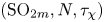


























This concludes our explanation of the automorphic descent method from the viewpoint of our conjectures.
13. L-functions: ${{\rm GL}}$ case

The purpose of this section is to give the proof of Theorem 3.2. For the convenience of the reader, we restate Theorem 3.2 here.
Theorem 13.1 Let  $k$ be a non-archimedean local field and let
 $(M_{\rm A}, N_{\rm A})$ be a relevant pair of A-parameters for
 ${{\rm GL}}_m(k) \times {{\rm GL}}_n(k)$ with associated pair of L-parameters
 $(M,N)$. Then the order of pole at
 $s=0$ of
 \[ L(M,N, s) = \frac{L(M \otimes N^{\vee}, s + 1/2) \cdot L(M^{\vee} \otimes N, s + 1/2)}{L(M \otimes M^{\vee}, s + 1)\cdot L(N \otimes N^{\vee}, s + 1)} \]
is greater than or equal to zero.
Before we start making the calculations on the order of the pole of  $L(s, M, N)$, we need to recall some generalities on L-functions, referring the reader to [Reference TateTat79] for
 $L$-functions
 $L(s,V_{\rm A}) := L(s,V)$ attached to A-parameters
 $V_{\rm A}$ of
 $\textit {WD}(k) \times {{\rm SL}}_2(\mathbb {C})$ with associated L-parameter
 $V$ of
 $\textit {WD}(k)$.
For any irreducible representation  $V\otimes {{\rm Sym}}^{i}(\mathbb {C}^{2}) \otimes {{\rm Sym}}^{j}(\mathbb {C}^{2})$ of
 $\textit {WD}(k) \times {{\rm SL}}_2(\mathbb {C}) = W(k) \times {{\rm SL}}_2(\mathbb {C}) \times {{\rm SL}}_2(\mathbb {C})$, the L-function
 $L(s,V\otimes {{\rm Sym}}^{i}(\mathbb {C}^{2}) \otimes {{\rm Sym}}^{j}(\mathbb {C}^{2}))$ has a pole at
 $s=1/2$ if and only if:
(i)
$V$ is the trivial representation of $W(k)$;(ii)
$j>i$, $j\equiv (i+1) \bmod 2$.



Similarly, the L-function  $L(s,V\otimes {{\rm Sym}}^{i}(\mathbb {C}^{2}) \otimes {{\rm Sym}}^{j}(\mathbb {C}^{2}))$ has a pole at
 $s=1$ if and only if
(i)
$V$ is the trivial representation of $W(k)$;(ii)
$j>i$, $j\equiv i \bmod 2$.


In either of the two cases, the pole is simple if it exists. As a consequence, we note the following lemma.
Lemma 13.2 For any representation  $M$ of
 $\textit {WD}(k) = W(k) \times {{\rm SL}}_2(\mathbb {C})$, the order of the pole of
 $L(s, M \otimes {{\rm Sym}}^{j}(\mathbb {C}^{2}))$ at
 $s=1/2$ is the same as the order of pole of
 $L(s,M \otimes {{\rm Sym}}^{j+1}(\mathbb {C}^{2}))$ at
 $s=1$, and these are the same as the corresponding orders of pole for
 $M$ replaced by
 $M^{\vee }$.
This lemma suggests the introduction of a map on the set of representations of  $\textit {WD}(k) \times {{\rm SL}}_2(\mathbb {C})$ to itself, which we denote by
 $M \rightarrow M^{+}$, and defined as follows. For
 $M_{\rm A}$ a representation of
 $\textit {WD}(k) \times {{\rm SL}}_2(\mathbb {C})$ of the form
 \[ M_{\rm A} = \sum _{i\geq 0} M_i \otimes {{\rm Sym}}^{i}(\mathbb{C}^{2}), \]
define
 \[ M_{\rm A}^{+} = \sum _{i\geq 0} M_i \otimes {{\rm Sym}}^{i+1}(\mathbb{C}^{2}). \]
From Lemma 13.2, the order of pole of  $M_{\rm A}$ at
 $s = 1/2$ is the same as the order of pole of
 $M_{\rm A}^{+}$ at
 $s=1$.
We are now ready to begin the proof of Theorem 13.1. We write the parameters  $M_{\rm A}$ and
 $N_{\rm A}$ as
 \begin{align*} M_{\rm A} &= A_1 + A_2 + \cdots + A_n + A_0, \\ N_{\rm A} &= B_1 + B_2 + \cdots + B_n + B_0 , \end{align*}
where, for  $i \geq 1$,
 $A_i$ and
 $B_i$ are irreducible representations of
 $\textit {WD}(k) \times {{\rm SL}}_2(\mathbb {C})$ of the form,
 \begin{align*} A_i &= M_i \boxtimes {{\rm Sym}}^{a_i-1}(\mathbb{C}^{2}), \\ B_i &= M_i \boxtimes {{\rm Sym}}^{b_i-1}(\mathbb{C}^{2}), \end{align*}
with
 \[ a_i-b_i = \pm 1, \]
and with  $A_0,B_0$ tempered representations of
 $\textit {WD}(k)$. Clearly, the following proposition proves the theorem.
Proposition 13.3 Let  $C_1, C_2,D_1,D_2$ be irreducible representations of
 $\textit {WD}(k) \times {{\rm SL}}_2(\mathbb {C})$ of the form:
 \begin{align*} C_i &= M_i \boxtimes {{\rm Sym}}^{a_i-1}(\mathbb{C}^{2}), \\ D_i &= M_i \boxtimes {{\rm Sym}}^{b_i-1}(\mathbb{C}^{2}), \end{align*}
for irreducible representations  $\sigma _i$ of
 $\textit {WD}(k)$ with
 $a_i-b_i = \pm 1$ for
 $i=1,2$. Then,
 $$ L(s,C_1,C_2,D_1,D_2)= \frac{L(s+1/2, C_1\otimes D_2 + C_2 \otimes D_1)} {L(s+1, C_1\otimes C_2) L(s+1, D_1\otimes D_2)}, $$
has a pole of order at least zero at  $s=0$.
Further,
 $$ L(s,C_1,D_1)= \frac{L(s+1/2, C_1 \otimes D_1 )^{2}}{L(s+1, C_1\otimes C_1) L(s+1, D_1\otimes D_1)}, $$
has a pole of order at least zero at  $s=0$.
Finally, for any tempered representation  $A_0$ of
 $\textit {WD}(k)$,
 $$ L(s,C_1,D_1, A_0)= \frac{L(s+1/2, C_1 \otimes A_0)}{L(s+1, D_1\otimes A_0)}, $$
has a pole of order at least zero at  $s=0$.
Proof. We only prove part (a) of the proposition, the other parts are proved analogously. It suffices to prove part (a) of the proposition in the following two cases:
(i)
$b_1 = a_1+1$, $b_2=a_2+1$;(ii)
$b_1 = a_1-1$, $b_2=a_2+1.$


We deal with these two cases separately by a direct calculation, starting with case (i).
Let
 \[ \begin{array}{ll} \,C_1 = M_1 \boxtimes {{\rm Sym}}^{i}(\mathbb{C}^{2}), & \,C_2 = M_2 \boxtimes {{\rm Sym}}^{j}(\mathbb{C}^{2}), \\ D_1 = M_1 \boxtimes {{\rm Sym}}^{i+1}(\mathbb{C}^{2}), & D_2 = M_2 \boxtimes {{\rm Sym}}^{j+1}(\mathbb{C}^{2}), \end{array} \]
be irreducible representations of  $\textit {WD}(k) \times {{\rm SL}}_2(\mathbb {C})$ for irreducible representations
 $M_1,M_2$ of
 $\textit {WD}(k)$ where we assume without loss of generality that
 $i\geq j$. It follows that
 \begin{align*} C_1\otimes D_2 + C_2 \otimes D_1 &= (M_1 \otimes M_2) \boxtimes [{{\rm Sym}}^{i}(\mathbb{C}^{2}) \otimes {{\rm Sym}}^{j+1}(\mathbb{C}^{2}) + {{\rm Sym}}^{j}(\mathbb{C}^{2}) \otimes {{\rm Sym}}^{i+1}(\mathbb{C}^{2})],\\ C_1\otimes C_2 + D_1 \otimes D_2 &= (M_1 \otimes M_2) \boxtimes [{{\rm Sym}}^{i}(\mathbb{C}^{2}) \otimes {{\rm Sym}}^{j}(\mathbb{C}^{2}) + {{\rm Sym}}^{i+1}(\mathbb{C}^{2}) \otimes {{\rm Sym}}^{j+1}(\mathbb{C}^{2})]. \end{align*}
Hence,  $C_1\otimes D_2 + C_2 \otimes D_1$ is equal to (assuming
 $i > j$),
 \[ (M_1 \otimes M_2) \boxtimes [{{\rm Sym}}^{i+j+1}(\mathbb{C}^{2}) + \cdots + {{\rm Sym}}^{i-(j+1)}(\mathbb{C}^{2}) + {{\rm Sym}}^{j+i+1}(\mathbb{C}^{2}) + \cdots + {{\rm Sym}}^{i+1-j}(\mathbb{C}^{2})] \]
and  $C_1\otimes C_2 + D_1 \otimes D_2$ is equal to
 \[ (M_1 \otimes M_2) \boxtimes [{{\rm Sym}}^{i+j}(\mathbb{C}^{2}) + \cdots + {{\rm Sym}}^{i-j}(\mathbb{C}^{2}) + {{\rm Sym}}^{i+j+2}(\mathbb{C}^{2}) + \cdots + {{\rm Sym}}^{i-j}(\mathbb{C}^{2})]. \]
For any representation  $M_{\rm A}$ of
 $\textit {WD}(k) \times {{\rm SL}}_2(\mathbb {C})$, we have defined the representation
 $M_{\rm A}^{+}$ earlier. With this notation, we have
 \begin{align*} & (C_1\otimes D_2 + C_2 \otimes D_1)^{+} - (C_1\otimes C_2 + D_1 \otimes D_2)\\ &\quad =(M_1 \otimes M_2) \boxtimes [{{\rm Sym}}^{i+j+2}(\mathbb{C}^{2}) - {{\rm Sym}}^{i- j}(\mathbb{C}^{2})]. \end{align*}
By Lemma 13.2, the order of pole of
 \[ \frac{L(s+1/2, C_1\otimes D_2 + C_2 \otimes D_1)}{L(s+1, C_1\otimes C_2) L(s+1, D_1\otimes D_2)}, \]
at  $s=0$ is the same as the order of pole of the virtual representation
 \[ (C_1\otimes D_2 + C_2 \otimes D_1)^{+} - (C_1\otimes C_2 + D_1 \otimes D_2), \]
of  $\textit {WD}(k) \times {{\rm SL}}_2(\mathbb {C})$ at
 $s = 1$.
On the other hand, for any irreducible representation  $M$ of
 $\textit {WD}(k)$, the order of pole at
 $s=1$ of the virtual representation
 \[ M \boxtimes [{{\rm Sym}}^{i+j+2}(\mathbb{C}^{2}) - {{\rm Sym}}^{i- j}(\mathbb{C}^{2})] \]
is at least zero, because the order of pole at  $s=1$ of the representation
 $M \boxtimes {{\rm Sym}}^{a}(\mathbb {C}^{2})$ is always greater than or equal to the order of pole at
 $s=1$ of the representation
 $M \boxtimes {{\rm Sym}}^{a-2b}(\mathbb {C}^{2})$ for any integer
 $b \geq 0$. Hence, so
 $L(s,C_1,C_2,D_1,D_2)$ has a pole of order at least zero at
 $s=0$, proving the proposition in this case (assuming
 $i>j$ here).
If  $i=j$, it can be seen that
 \begin{align*} & (C_1\otimes D_2 + C_2 \otimes D_1)^{+} - ( C_1\otimes C_2 + D_1 \otimes D_2)\\ &\quad = (M_1 \otimes M_2) \boxtimes [{{\rm Sym}}^{2i+2}(\mathbb{C}^{2}) - 2\mathbb{C}]. \end{align*}
As tempered representations have no poles in the region  $Re(s)>0$, the term
 $2\mathbb {C}$ contributes to no poles for the virtual representation
 $M_1 \otimes M_2 \boxtimes [{{\rm Sym}}^{2i+2}(\mathbb {C}^{2}) - 2\mathbb {C}],$ leaving us with the true representation
 $M_1 \otimes M_2 \boxtimes {{\rm Sym}}^{2i+2}(\mathbb {C}^{2})$, which can only contribute a non-negative number of poles at
 $s=1$, completing the proof of the proposition for
 $i=j$ case of case (i).
Next we consider case (ii), where
 \[ \begin{array}{ll} \kern0.05em C_1 = M_1 \boxtimes {{\rm Sym}}^{i}(\mathbb{C}^{2}), & C_2 = M_2 \boxtimes {{\rm Sym}}^{j}(\mathbb{C}^{2}), \\ D_1 = M_1 \boxtimes {{\rm Sym}}^{i-1}(\mathbb{C}^{2}), & D_2 = M_2 \boxtimes {{\rm Sym}}^{j+1}(\mathbb{C}^{2}), \end{array} \]
for irreducible representations  $M_1,M_2$ of
 $\textit {WD}(k)$, and assume that
 $i \geq j$. It follows that
 \begin{align*} C_1\otimes D_2 + C_2 \otimes D_1 & = (M_1 \otimes M_2) \otimes [{{\rm Sym}}^{i}(\mathbb{C}^{2}) \otimes {{\rm Sym}}^{j+1}(\mathbb{C}^{2}) + {{\rm Sym}}^{j}(\mathbb{C}^{2}) \otimes {{\rm Sym}}^{i-1}(\mathbb{C}^{2})],\\ C_1\otimes C_2 + D_1 \otimes D_2 & = (M_1 \otimes M_2) \otimes [{{\rm Sym}}^{i}(\mathbb{C}^{2}) \otimes {{\rm Sym}}^{j}(\mathbb{C}^{2}) + {{\rm Sym}}^{i-1}(\mathbb{C}^{2}) \otimes {{\rm Sym}}^{j+1}(\mathbb{C}^{2})]. \end{align*}
Assuming  $i >j+1$, we deduce that
 $C_1\otimes D_2 + C_2 \otimes D_1$ is equal to
 \[ (M_1 \otimes M_2) \boxtimes [{{\rm Sym}}^{i+j+1}(\mathbb{C}^{2}) + \cdots + {{\rm Sym}}^{i-(j+1)}(\mathbb{C}^{2}) + {{\rm Sym}}^{j+i-1}(\mathbb{C}^{2}) + \cdots + {{\rm Sym}}^{i-1-j}(\mathbb{C}^{2})], \]
and  $C_1\otimes C_2 + D_1 \otimes D_2$ is equal to
 \[ (M_1 \otimes M_2) \boxtimes [{{\rm Sym}}^{i+j}(\mathbb{C}^{2}) + \cdots + {{\rm Sym}}^{i-j}(\mathbb{C}^{2}) + {{\rm Sym}}^{i+j}(\mathbb{C}^{2}) + \cdots + {{\rm Sym}}^{i-j-2}(\mathbb{C}^{2})]. \]
Therefore,
 \begin{align*} & (C_1\otimes D_2 + C_2 \otimes D_1)^{+} - ( C_1\otimes C_2 + D_1 \otimes D_2)\\ &\quad = (M_1 \otimes M_2) \boxtimes [{{\rm Sym}}^{i+j+2}(\mathbb{C}^{2}) - {{\rm Sym}}^{i- j-2}(\mathbb{C}^{2})]. \end{align*}
As in case (i), the order of pole of
 \[ \frac{L(s+1/2, C_1\otimes D_2 + C_2 \otimes D_1)}{L(s+1, C_1\otimes C_2) L(s+1, D_1\otimes D_2)}, \]
at  $s=0$ is the same as the order of pole for the L-function of the virtual representation
 \begin{align*} & (C_1\otimes D_2 + C_2 \otimes D_1)^{+} - (C_1\otimes C_2 + D_1 \otimes D_2)\\ &\quad = (M_1 \otimes M_2) \boxtimes [{{\rm Sym}}^{i+j+2}(\mathbb{C}^{2}) - {{\rm Sym}}^{i- j-2}(\mathbb{C}^{2})] \end{align*}
at  $s=1$ which is at least zero.
If  $i=j+1$, then
 \[ (C_1\otimes D_2 + C_2 \otimes D_1)^{+} - ( C_1\otimes C_2 + D_1 \otimes D_2) = (M_1 \otimes M_2) \boxtimes [{{\rm Sym}}^{2i+1}(\mathbb{C}^{2})], \]
and we find that the order of pole of
 \[ \frac{L(s+1/2, C_1\otimes D_2 + C_2 \otimes D_1 )}{L(s+1, C_1\otimes C_2) L(s+1, D_1\otimes D_2)}, \]
at  $s=0$ is at least zero.
If  $i=j$, then
 \[ (C_1\otimes D_2 + C_2 \otimes D_1)^{+} - ( C_1\otimes C_2 + D_1 \otimes D_2) =(M_1 \otimes M_2) \boxtimes [{{\rm Sym}}^{2i+2}(\mathbb{C}^{2}) - \mathbb{C}], \]
and, once again, we find that the order of pole of
 \[ \frac{L(s+1/2, C_1\otimes D_2 + C_2 \otimes D_1 )}{L(s+1, C_1\otimes C_2) L(s+1, D_1\otimes D_2)}, \]
at  $s=0$ is at least zero.
We have thus completed the proof of Theorem 13.1 (i.e.Theorem 3.2). In fact, the order of pole in Theorem 13.1 can be explicitly determined if the action of the Deligne  ${{\rm SL}}_2(\mathbb {C})$ is trivial on the representations
 $M_{\rm A}$ and
 $N_{\rm A}$. More precisely, we have the following result.
Proposition 13.4 Let  $(M_{\rm A}, N_{\rm A})$ be a pair of relevant A-parameters for
 $({{\rm GL}}_m(k),{{\rm GL}}_n(k))$ on which the Deligne
 ${{\rm SL}}_2(\mathbb {C})$ acts trivially. Write
 \begin{align*} M_{\rm A} &= \sum_{i \geq 1} M_i \boxtimes {{\rm Sym}}^{i-1}(\mathbb{C}^{2}) = \sum_{i \geq 1} (M_i^{+} + M_i^{-})\boxtimes {{\rm Sym}}^{i-1}(\mathbb{C}^{2}), \\ N_{\rm A} &= \sum_{i \geq 1} W_i\boxtimes {{\rm Sym}}^{i-1}(\mathbb{C}^{2}) = \sum_{i\geq 1} (N_i^{+} + N_i^{-}) \boxtimes {{\rm Sym}}^{i-1}(\mathbb{C}^{2}), \end{align*}
with  $M_i, N_i$ representations of
 $W(k)$, such that
 $M_i^{+} = N_{i+1}^{-}$ for
 $i \geq 1$, and
 $M_i^{-} = N_{i-1}^{+}$ for
 $i \geq 2$.
Then the order of pole at  $s=0$ of
 $L(s,M, N)$ is given by the dimension of
 $W(k)$-invariants in
 \[ \sum_{i \geq 1} \big\{{{\rm Hom}}[M_i, N_{i-1} ] + {{\rm Hom}}[M_i, N_{i+1}] -{{\rm Hom}}[M^{+}_i, N_{i-1}^{-}] -{{\rm Hom}}[M_i^{-}, N_{i+1}^{+}]\big\}, \]
with the understanding that  $N_0=N^{-}_0=0$.
Proof. The proof follows by examining the arguments made in Proposition 13.3 carefully, a task which we leave to the reader. We only point out here that in the course of the proof of this proposition, say in case 1 of case (a), we had to deal with L-function of the virtual representation:
 \[ M \boxtimes [{{\rm Sym}}^{i+j+2}(\mathbb{C}^{2}) - {{\rm Sym}}^{i- j}(\mathbb{C}^{2})], \]
at the point  $s=1$. Clearly, if
 $M$ is a representation of
 $\textit {WD}(k)$ which factors through
 $W(k)$, such a virtual representation has neither a zero nor a pole at
 $s=1$ for
 $i>j$, allowing us to calculate all the poles appearing in Proposition 13.3.
14. L-functions: classical groups
The goal of this section is to give the proof of Theorem 3.3. For the convenience of the reader, we restate the theorem here.
Theorem 14.1 Let  $k$ be a non-archimedean local field and let
 $(M_{\rm A}, N_{\rm A})$ be a pair of A-parameters for
 ${{\rm SO}}_{2m+1}(k) \times {{\rm SO}}_{2n}(k)$ with associated pair of L-parameters
 $(M,N)$.
(i) If
$(M_{\rm A}, N_{\rm A})$ is a relevant pair of A-parameters, then the order of pole at $s=0$ of the function
is greater than or equal to zero.\[ L(M,N, s) = \frac{L(M \otimes N, s + 1/2)}{L({{\rm Sym}}^{2} M \oplus \wedge^{2}N, s + 1)} \](ii) Suppose that
$M_{\rm A}$ and $N_{\rm A}$ are multiplicity-free representations of $\textit {WD}(k) \times {{\rm SL}}_2(\mathbb {C})$ on which the Deligne ${{\rm SL}}_2(\mathbb {C})$ acts trivially. Then, at $s = 0$, the function $L(M,N, s)$ has a zero of order at least zero. It has neither a zero nor a pole at $s=0$ if and only if $(M_{\rm A}, N_{\rm A})$ is a relevant pair of A-parameters.





We begin with the proof of part (i), which is analogous to that of Theorem 13.1. Write the parameters  $M_{\rm A}$ and
 $N_{\rm A}$ as
 \begin{align*} M_{\rm A} &= A_1 + A_2 + \cdots + A_n + A_0, \\ N_{\rm A} &= B_1 + B_2 + \cdots + B_n + B_0, \end{align*}
where for  $i \geq 1$,
 $A_i$ and
 $B_i$ are irreducible representations of
 $\textit {WD}(k) \times {{\rm SL}}_2(\mathbb {C})$ of the form,
 \begin{align*} A_i &= M_i \otimes {{\rm Sym}}^{a_i}(\mathbb{C}^{2}), \\ B_i &= M_i \otimes {{\rm Sym}}^{b_i}(\mathbb{C}^{2}), \end{align*}
with
 \[ a_i-b_i = \pm 1, \]
and with  $A_0,B_0$ tempered parameters of
 $\textit {WD}(k)$.
Observe that
 \[ {{\rm Sym}}^{2} M_{\rm A} = \sum_{i > j} A_i \otimes A_j + \sum_i {{\rm Sym}}^{2}(A_i) \]
and, similarly,
 \[ \Lambda^{2} N_{\rm A} = \sum_{i > j} B_i \otimes B_j + \sum_i \Lambda^{2}(B_i). \]
Therefore, the non-diagonal contributions to the order of pole at  $s=1$ of the L-function
 $L({{\rm Sym}}^{2} M_{\rm A},s) L(\Lambda ^{2} N_{\rm A},s)$ is as in cases (a) and (c) in the statement of Proposition 13.3.
It suffices to prove the following analog of case (b) in the statement of Proposition 13.3, asserting that
 \[ L(C,D, s)= \frac{L( C \otimes D, s+1/2 )} {L( {{\rm Sym}}^{2}(C), s+1) L( \Lambda^{2}(D), s+1) } \]
has a pole of order at least zero at  $s=0$ whenever
 \begin{align*} C &= M \otimes {{\rm Sym}}^{a}(\mathbb{C}^{2}), \\ D &= M \otimes {{\rm Sym}}^{b}(\mathbb{C}^{2}), \end{align*}
for  $M$ an irreducible tempered representation of
 $\textit {WD}(k)$ with
 \[ a-b = \pm 1. \]
To calculate symmetric and exterior square of representations  $C$ and
 $D$ of
 $\textit {WD}(k) \times {{\rm SL}}_2(\mathbb {C})$, note that for any two representations
 $V,W$ of any group
 $G$, we have the identity of representations
 \[ {{\rm Sym}}^{2}(V \otimes W) = {{\rm Sym}}^{2}(V) \otimes {{\rm Sym}}^{2}(W) \oplus \Lambda^{2}(V) \otimes \Lambda^{2}(W) \]
and
 \[ \Lambda^{2}(V \otimes W) = {{\rm Sym}}^{2}(V) \otimes \Lambda^{2}(W) \oplus \Lambda^{2}(V) \otimes {{\rm Sym}}^{2}(W). \]
Using the well-known structure of  ${{\rm Sym}}^{2}({{\rm Sym}}^{i}(\mathbb {C}^{2}))$ and
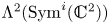 $\Lambda ^{2}({{\rm Sym}}^{i}(\mathbb {C}^{2}))$ given by
 \[ {{\rm Sym}}^{2}({{\rm Sym}}^{i}(\mathbb{C}^{2})) = {{\rm Sym}}^{2i}(\mathbb{C}^{2}) + {{\rm Sym}}^{2i-4}(\mathbb{C}^{2}) + \cdots \]
and
 \[ \Lambda^{2}({{\rm Sym}}^{i}(\mathbb{C}^{2})) = {{\rm Sym}}^{2i-2}(\mathbb{C}^{2}) + {{\rm Sym}}^{2i-6}(\mathbb{C}^{2}) + \cdots, \]
one easily concludes that  $L(s,C,D)$ has a pole of order at least zero at
 $s=1$, concluding the proof of part (i) of Theorem 14.1.
We come now to the proof of part (ii). Thus, let  $M_{\rm A}$ and
 $N_{\rm A}$ be A-parameters for which the Deligne
 ${{\rm SL}}_2(\mathbb {C})$ acts trivially.
For any irreducible representation  $\rho$ of
 $W(k)$, let
 $M_{\rm A}[\rho ], N_{\rm A}[\rho ]$ be the
 $\rho$-isotypic part of
 $M_{\rm A}, N_{\rm A}$ (as a
 $W(k)$-module). As the representations
 $M_{\rm A}, N_{\rm A}$ of
 $W(k) \times {{\rm SL}}_2(\mathbb {C})$ are multiplicity free and are selfdual, if
 $M_{\rm A}[\rho ] \not = 0$, or
 $N_a[\rho ] \not = 0$,
 $\rho$ must be a selfdual representation of
 $W(k)$.
It is easy to see that the order of zero of  $L(M,N,s)$ at
 $s=0$ is the sum of the order of zeros of
 $L(M_{\rm A}[\rho ], N_{\rm A}[\rho ],s)$ at
 $s=0$ for various distinct irreducible representations
 $\rho$ of
 $W(k)$. For
 $\rho$, an irreducible selfdual representation of
 $W(k)$, let us write
 \[ M_{\rm A}[\rho] = \rho \boxtimes V \quad \text{and} \quad N_{\rm A}[\rho] = \rho \boxtimes W \]
for representations  $V$ and
 $W$ of (the Arthur)
 ${{\rm SL}}_2(\mathbb {C})$. As
 $M_{\rm A}$ is supposed to be a symplectic representation and
 $N_{\rm A}$ an orthogonal representation, if
 $\rho$ is orthogonal,
 $V$ will be a symplectic representation of (the Arthur)
 ${{\rm SL}}_2(\mathbb {C})$, and
 $W$ will be an orthogonal representation of (the Arthur)
 ${{\rm SL}}_2(\mathbb {C})$. Now using the identities
 \begin{align*} {{\rm Sym}}^{2}( \rho \boxtimes V ) &= {{\rm Sym}}^{2}(\rho) \boxtimes {{\rm Sym}}^{2}(V) + \Lambda^{2}(\rho) \boxtimes \Lambda^{2}(V), \\ \Lambda^{2}( \rho \boxtimes V ) &= {{\rm Sym}}^{2}(\rho) \boxtimes \Lambda^{2}(V) + \Lambda^{2}(\rho) \boxtimes {{\rm Sym}}^{2}(V), \end{align*}
we find that if  $\rho$ is irreducible and orthogonal representation of
 $W(k)$,
 \[ \textrm{ord}_{s=0} \big( L(M_{\rm A}[\rho], N_{\rm A}[\rho],s) \big)= \textrm{ord}_{s=0} \big( L(V ,W,s) \big). \]
On the other hand, if  $\rho$ is an irreducible symplectic representation of
 $W(k)$,
 $W$ will be a symplectic representation of (the Arthur)
 ${{\rm SL}}_2(\mathbb {C})$,
 $V$ will be an orthogonal representation of (the Arthur)
 ${{\rm SL}}_2(\mathbb {C})$, and
 \[ \textrm{ord}_{s=0} \big( L( M_{\rm A}[\rho], N_{\rm A}[\rho],s) \big)= \textrm{ord}_{s=0} \big( L(W ,V,s) \big). \]
Thus, it suffices to prove the theorem assuming that  $\textit {WD}(k)$ acts trivially on
 $M_{\rm A}$ and
 $N_{\rm A}$. In other words, we have multiplicity-free representations
 \begin{align*} M_{\rm A} &= V = {{\rm Sym}}^{a_1-1}(\mathbb{C}^{2}) + {{\rm Sym}}^{a_2-1}(\mathbb{C}^{2}) + \cdots + {{\rm Sym}}^{a_r-1}(\mathbb{C}^{2}), \\ N_{\rm A} &= W = {{\rm Sym}}^{b_1-1}(\mathbb{C}^{2}) + {{\rm Sym}}^{b_2-1}(\mathbb{C}^{2}) + \cdots + {{\rm Sym}}^{b_s-1}(\mathbb{C}^{2}), \end{align*}
with  $V$ symplectic and
 $W$ orthogonal, thus with all
 $a_i$ even, and
 $b_i$ odd.
We prove the theorem using an inductive argument from the ‘top’. Suppose  $d$ is the largest integer
 $a$ such that
 ${{\rm Sym}}^{a-1}(\mathbb {C}^{2})$ is contained in either
 $V$ or
 $W$. We assume that
 ${{\rm Sym}}^{d-1}(\mathbb {C}^{2})$ appears in
 $V$, a similar argument can be given if
 ${{\rm Sym}}^{d-1}(\mathbb {C}^{2})$ appears in
 $W$. Suppose
 $e$ is the largest integer such that
 ${{\rm Sym}}^{e-1}(\mathbb {C}^{2})$ appears in
 $W$. By hypothesis, all the integers
 $a_i$ for which
 ${{\rm Sym}}^{a_i-1}(\mathbb {C}^{2}) \subset V$ is even, and all the integers
 $b_i$ for which
 ${{\rm Sym}}^{b_i-1}(\mathbb {C}^{2}) \subset W$ is odd, in particular,
 $d$ is even,
 $e$ is odd, and
 $d>e$.
Define
 \begin{align*} V' &= V - {{\rm Sym}}^{d-1}(\mathbb{C}^{2}), \\ W' &= W - {{\rm Sym}}^{e-1}(\mathbb{C}^{2}). \end{align*}
We prove the following proposition, which then allows us to complete the proof of Theorem 14.1(ii) by an inductive argument.
Proposition 14.2 With the notation and assumptions given previously, in particular  $V$ symplectic and
 $W$ orthogonal multiplicity-free representation of the Arthur
 ${{\rm SL}}_2(\mathbb {C})$, the order of pole at
 $s=0$ of
 $L(V,W,s)$ defined by
 \[ L(V,W, s) = \frac{L(V \otimes W, s + 1/2)}{L({{\rm Sym}}^{2} V \oplus \wedge^{2}W, s + 1)}, \]
is less than or equal to that of  $L(V',W',s)$. Equality holds if and only if
 $d = (e+1)$.
Proof. Clearly,
 \begin{align*} V \otimes W &= V' \otimes W' + W' \otimes {{\rm Sym}}^{d-1}(\mathbb{C}^{2}) + V' \otimes {{\rm Sym}}^{e-1}(\mathbb{C}^{2})+ {{\rm Sym}}^{d-1}(\mathbb{C}^{2})\otimes {{\rm Sym}}^{e-1}(\mathbb{C}^{2}) , \\ {{\rm Sym}}^{2}(V) &= {{\rm Sym}}^{2}(V') + {{\rm Sym}}^{2} ({{\rm Sym}}^{d-1}(\mathbb{C}^{2})) + V' \otimes {{\rm Sym}}^{d-1}(\mathbb{C}^{2}) , \\ \Lambda^{2}(W) &= \Lambda^{2}(W') + \Lambda^{2} ( {{\rm Sym}}^{e-1}(\mathbb{C}^{2})) + W' \otimes {{\rm Sym}}^{e-1}(\mathbb{C}^{2}). \end{align*}
Therefore,
 \begin{align*} &\frac{L(V,W,s)}{ L(V',W',s)}\\ &\quad =\frac{ L\big( W'\otimes {{\rm Sym}}^{d-1}(\mathbb{C}^{2}) + V' \otimes {{\rm Sym}}^{e-1}(\mathbb{C}^{2}) + {{\rm Sym}}^{d-1}(\mathbb{C}^{2})\otimes {{\rm Sym}}^{e-1}(\mathbb{C}^{2}), s+\frac{1}{2},\big)}{L( W' \otimes {{\rm Sym}}^{e-1}(\mathbb{C}^{2}) + V' \otimes {{\rm Sym}}^{d-1}(\mathbb{C}^{2}) + {{\rm Sym}}^{2} {{\rm Sym}}^{d-1}(\mathbb{C}^{2}) + \Lambda^{2} {{\rm Sym}}^{e-1}(\mathbb{C}^{2}), s+1)}. \end{align*}
We analyze the order of pole at  $s=0$ of the following L-functions,
 \begin{align*} A(s) &= \frac{ L\big( {{\rm Sym}}^{d-1}(\mathbb{C}^{2})\otimes {{\rm Sym}}^{e-1}(\mathbb{C}^{2}),s+\frac{1}{2}\big)} {L({{\rm Sym}}^{2} {{\rm Sym}}^{d-1}( \mathbb{C}^{2}) + \Lambda^{2} {{\rm Sym}}^{e-1}(\mathbb{C}^{2}), s+1)}, \\ B(s) &= \frac{ L\big( W'\otimes {{\rm Sym}}^{d-1}(\mathbb{C}^{2}), s+\frac{1}{2}\big)}{L( W'\otimes {{\rm Sym}}^{e-1}(\mathbb{C}^{2}), s+1)}, \\ C(s) &= \frac{ L\big( V' \otimes {{\rm Sym}}^{e-1}(\mathbb{C}^{2}), s+\frac{1}{2}\big)}{L( V' \otimes {{\rm Sym}}^{d-1}(\mathbb{C}^{2}), s+1)}. \end{align*}
• Analyzing
$A(s)$. As $d$ is even, $e$ is odd, and $d>e$, $A(s)$ has a zero at $s=0$ of order
\[ a = -e+ (d+e-1)/2 = (d-e-1)/2. \]• Analyzing
$B(s)$. Again, as $d$ is even, $e$ is odd, and $d>e$, and $e$ is bigger than all integers $b$ for which ${{\rm Sym}}^{b-1}(\mathbb {C}^{2})$ is contained in $W'$, it follows that, in writing $W'$ as a sum of irreducible pieces ${{\rm Sym}}^{b-1}(\mathbb {C}^{2})$'s, the ${{\rm Sym}}^{b-1}(\mathbb {C}^{2})$'s contribute the same number of poles in the denominator as in the numerator of $B(s)$. Therefore, $B(s)$ has neither a zero nor a pole at $s=0$.• Analyzing
$C(s)$. Again, as $d$ is even, $e$ is odd, and $d>e$, the number poles at $s=0$ in the denominator of $C(s)$ is greater than or equal to the number of poles at $s=0$ in the numerator of $C(s)$, the difference is contributed by those ${{\rm Sym}}^{t-1}(\mathbb {C}^{2})$, with $d> t >e$ and $t$ even, which may belong to $V'$. Thus, we obtain
for the number of zeros for the factor\[ 0 \leq c \leq (d-e-1)/2, \]$C(s)$ at $s=0$.


In conclusion, we find that
 \[ \textrm{ord}_{s=0} \big( A(s)B(s)C(s) \big) \geq 0. \]
Moreover, if  $A(s)B(s)C(s)$ has no zero at
 $s=0$, then we must have
 $d= e+1$. Conversely, if
 $d=e+1$, then there are no zeros or poles for
 $A(s)B(s)C(s)$ at
 $s=0$, completing the proof of the proposition.
There seems no simple generalization of Theorem 14.1 to all discrete A-parameters of classical groups, although it would be highly desirable. We give two examples of its failure, beginning with one in which we allow general tempered parts for  $M_{\rm A}$ and
 $N_{\rm A}$, keeping other conditions in Theorem 14.1 intact. Let
 \begin{align*} M_{\rm A} &= [10] \times [1], \\ N_{\rm A} &= [5]\times [1] + [1] \times [7] + [1] \times [9]. \end{align*}
It can be seen that
 \[ L(M,N,s)= \frac{L( M\otimes N,s+1/2)}{ L({{\rm Sym}}^{2} M, s+1) L( \Lambda^{2} N, s+1) }, \]
has neither a zero nor a pole at  $s=0$, even though the pair
 $(M_{\rm A}, N_{\rm A})$ is irrelevant.
As second example, consider the relevant pair of A-parameters
 \begin{align*} M_{\rm A} &= [3] \times [4] + [5] \times [4], \\ N_{\rm A} &= [3] \times [3] + [5] \times [5]. \end{align*}
These satisfy all the conditions in Theorem 14.1 except that the Deligne  ${{\rm SL}}_2(\mathbb {C})$ does not act trivially. It can be seen that in this case,
 $L(M \otimes N, s+1/2)$ has a pole of order 25, whereas
 $L({{\rm Sym}}^{2} M,s+1) L( \Lambda ^{2} N,s+1)$ has a pole of order 20, so in this case
 $L( M,N,s)$ has a pole at
 $s=0$ of order 5.
Acknowledgements
Much of this paper was written when the first and third authors were at MSRI in the Fall of 2014, where we discovered the condition – the relevant pair of A-parameters – appearing in Conjecture 5.1, about branching laws from  ${{\rm GL}}_{n+1}(k)$ to
 ${{\rm GL}}_n(k)$, and then the analogous conjectures for classical groups. The first and third authors thank MSRI for a very stimulating semester. We thank Zhiwei Yun for § 4 where he defined correlators, a concept equivalent to our relevant pair of A-parameters. We thank C. Moeglin for the contents of § 8, and J.-L. Waldspurger for Proposition 7.6. Section 5 has benefited greatly from the incisive comments of K. Y. Chan. The authors thank the referee for a careful reading of the manuscript and useful comments.



