

Introduction
In the colonial era, much of international student mobility was determined by the power relations between the colonial centres and their peripheries. All of the main destinations for international students were located in countries with a European, Christian-majority population. This lead to a structural imbalance in the production of knowledge about the non-European and non-Christian majority of the global population. Discourses on Orientalism, both in European and non-European languages, can be seen therefore as part of the decolonization process.Footnote 1
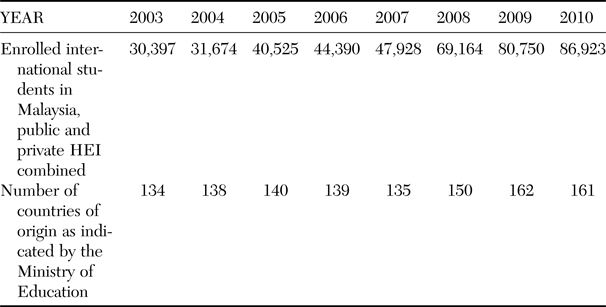
More than 60 years after the end of World War II, global power relations have changed considerably, including in higher education (Chen and Barnett Reference Chen and Barnet2000; Mazzarol and Soutar Reference Mazzarol and Soutar2012). Several countries outside the established European-North American-Australian cultural contexts have become major players in international higher education, including Singapore, Japan, Korea, China, and Malaysia. Among the formerly colonised countries, the performance of Malaysia is particular interesting since it is the first Muslim-majority country to attract increasingly large numbers of international students, against competition with the other destinations (Abd. Aziz and Abdullah 2013). The number of international students in Malaysia increased from 30,397 in 2003 to 86,923 in 2010, while the Malaysian government is aiming for 200,000 international students by the year 2020.Footnote 2
The key question of this article is who exactly are these numerous students who have already enrolled in Malaysia? Do they share a specific demographic profile, which then could be related to Malaysia's particular niche in global higher education? Is there a direct connection to one or more of Malaysia's unique historical trajectories, e.g. as a multi-ethnic, Muslim-majority, Commonwealth country with a particular emphasis on education since the 1970s? And does the specific composition of the international student population in Malaysia provide an unprecedented ground for new kind of encounters, e.g. of international Muslim students of various backgrounds and orientations?
Initial evidence from a recently published article with interview excerpts of Chinese students in Malaysia (Wong and Ooi Reference Wong and Ooi2013: 66) suggests that Malaysia's distinct image as a modern, pluralist Muslim-majority country with its “mix of the secular and the religious” is an important factor for Muslim students from the People's Republic of China (PRC) in their choice of Malaysia as their destination country. In their non-representative study of 888 Chinese students in Malaysia, Wong and Ooi (Reference Wong and Ooi2013: 65) found “disproportionate numbers of Chinese Muslims”, namely 14.3 per cent.Footnote 3
Since the “Islam factor”, as Wong and Ooi (2013: 65) call it, appears to be rather relevant for the case of Chinese students in Malaysia, the question arises whether there is a general pattern that Malaysia is particularly attractive for internationally mobile Muslim students, particularly after the terrorist attacks of September 11, 2001 when more established Anglophone destinations introduced restrictive visa policies (Sirat Reference Sirat2008). In this article I depart from the implicit basis for Wong and Ooi's quoted perception of those “disproportionate numbers”, namely the statistical account of the religious composition of China. Rather, my approach consists of looking not only at one country (China), but at all countries of origin of the international student population in Malaysia. By dis-aggregating the related numbers per country, and then re-aggregating them according to general demographic categories, this article will produce a statistical model of the overall composition of the international student population in Malaysia. This model then can serve as a hypothesis for future analysis, including more systematic inquiries into “disproportionate” empirical evidence of particular student numbers.
Institutional Background
The rise of Malaysia as an important destination for international students was inconceivable at the time Malaya obtained its independence from the United Kingdom in 1957. The first decade of the newly independent country was marked by drastic territorial changes, especially the formation of Malaysia in 1963, through the joining of Malaya, Sarawak, Sabah, and Singapore, followed in 1965 by Singapore's departure as an independent country. Until 1969, the only university of the young nation was the University of Malaya (Universiti Malaya), established in 1949 (Khoo Reference Khoo2005: 44) by Ordinances of both the Federation of Malaya (27 April) and the Colony of Singapore (31 March).Footnote 4 In 1969, Universiti Sains Malaysia in Penang was established (Ujang Reference Ujang2011: 47), followed in 1970 by Universiti Kebangsaan Malaysia (Ujang Reference Ujang2011: 54).Footnote 5
The first great transformation of Malaysia's education system, including higher education, began after the riots of 1969 between ethnic Chinese and ethnic Malays. In response to that national catastrophe, the government of Malaysia embarked on a long-term policy to address the issue of poverty, which was particularly widespread among the ethnic Malays, through a range of measures. Probably the deepest impact for the eventual position of Malaysia as a future hub for international education has been the strong emphasis placed on education in the policies of most Malaysian governments since the 1970s. Numerous new universities were established throughout the country. Eventually, every state in the country had at least one federally funded university, while private universities have been allowed to operate since the 1980s. At the same time, the government has provided ample scholarship opportunities for young graduate students to study abroad, most notably in the United Kingdom, Australia, America, New Zealand, and Japan.
In the late 1990s, the second great transformation of Malaysia's system of higher education was triggered by the financial implications of the “Asian Crisis” (Healey Reference Healey2008: 346). As an emergency measure, the government put a temporary hold on the expensive scholarship programme for Malaysian students abroad. In its wake, a substitution policy was implemented in which local universities were given the task to provide education to Malaysian graduate students instead of sending them abroad. Concurrently, a balancing strategy was started with the purpose to attract increasing numbers of international, tuition-paying students to Malaysia (Tham Reference Tham2013). The Malaysian External Trade Development Corporation (MATRADE) was given the task to promote Malaysia as an attractive destination for international students, including in trade fairs and the like (Abd. Aziz and Abdullah Reference Abd. Aziz, Abdullah and Knight2014: 16). The income generated from this strategy of internationalising higher education was to be used to balance, at least in part, the expenses for educating Malaysian students abroad.
These reforms of Malaysia's higher education system were already in place when certain restrictions after the terrorist attacks of September 11, 2001, began affecting the flow of Muslim students to a number of Western destinations, including most notably to America (Sirat Reference Sirat2008). Suddenly, Muslim-majority Malaysia, which offered various education programs in English, became a viable alternative for internationally mobile Muslim students.
The latest important factor affecting the system of higher education in Malaysia is the effect of global university ranking which have been published annually since 2003, notably the Times Higher Education Ranking (THE Ranking)Footnote 6 and the Shanghai Ranking (ARWU Ranking)Footnote 7 . In these rankings, Malaysian universities have not always been listed to the satisfaction of the Malaysian public and politicians, which has led to increasing pressure on the government to bring at least some Malaysian universities into the world's recognised top 100 universities.Footnote 8 The designation by the Malaysian government in 2006 of four ‘research universities’ and the subsequent selection of one of these, namely Universiti Sains Malaysia (USM), as the country's APEX university in 2008, mark important milestones in the country's effort to improve international recognition of Malaysia's higher education system (Abd. Aziz and Abdullah Reference Abd. Aziz, Abdullah and Knight2014: 108).Footnote 9
In this context, it is important to analyse the current composition of international students in Malaysia according to their most common denominators since this will allow a clearer picture of Malaysia's current market share in global higher education. Since the demographics of the international student population in Malaysia are so far mostly unknown beyond the sheer statistics of countries of origin, a closer analysis is required to uncover possible correlations between the composition of the international student body in Malaysia, their origins, religion, and the historical contexts of their home countries. Only then can the social implications of these changing trends be addressed.
General Trends
The Malaysian Ministry of Higher Education (MOHE) has been publishing various statistics on the international student population in the country, including detailed accounts of student numbers per country of origin from 2003 through 2010Footnote 10 . Accordingly, the total number of international students increased from 30,397 (2003) to 86,923 (2010), while the total number of countries of origin rose during the same period from 134 to 161 (Table 1).
Growth in international student numbers in Malaysia, 2003–2010. (Source: Malaysian Ministry of Higher Education, various statistics, own calculations).

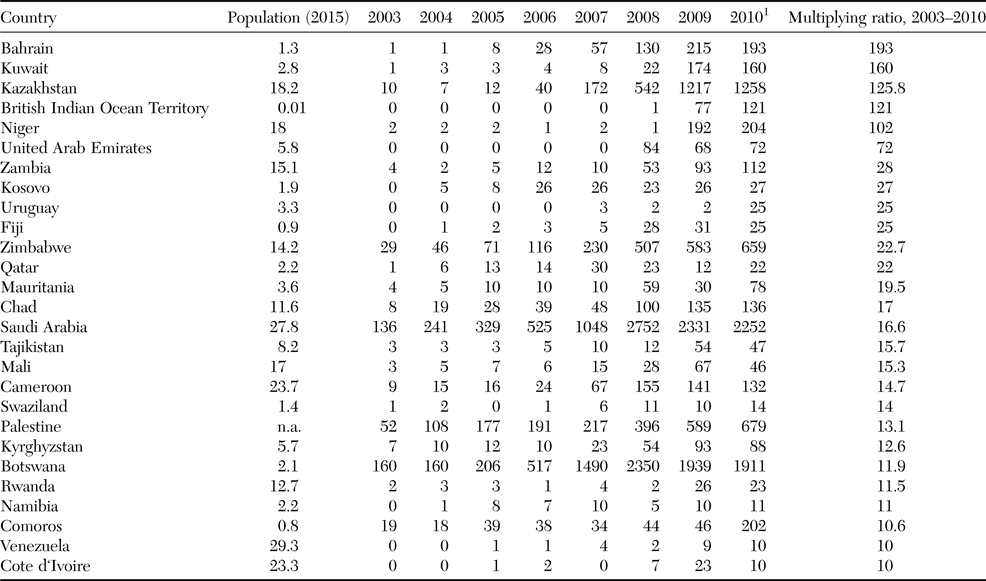
The detailed analysis of the entire sample reveals that Malaysia has been attracting increasing numbers of students particularly from countries with a smaller population than Malaysia's, which is estimated to reach 30.5 million by July 2015 (CIA World Fact Book 2015). Examples include Bahrain, Kuwait, Fiji, Tajikistan, the Comoros, etc. (Table 2)Footnote 11 ; countries where local Higher Education Institutions are not as numerous or as well-developed as in Malaysia. Hence, an initial conclusion could be that the Malaysian education system has a special attractiveness for the internationally mobile students of smaller countries due to the comparatively differentiated choices between the home countries and Malaysia.
‘Small’ countries of origin with high increase in student numbers in Malaysia, 2003–2010. (Source: Malaysian Ministry of Higher Education, various statistics, own calculations. The threshold was a multiplying ratio of 10).

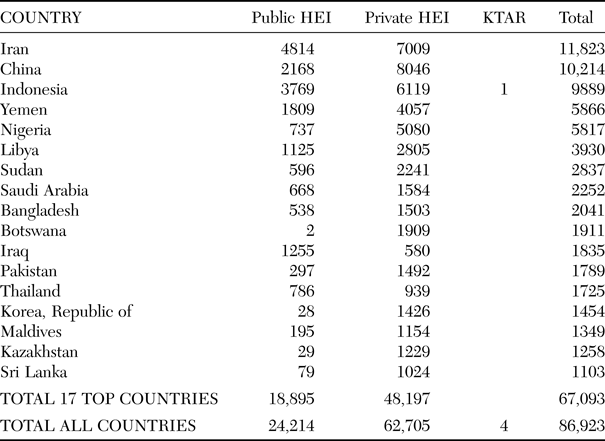
In 2010, the top 17 countries of origin with more than 1000 students in Malaysia accounted for 67,093 out of 86,923 students (Table 3), which is approximately 77.2 per cent of the total. Most students studied at private Higher Education Institutions. The “business of higher education in Malaysia” (Chai Reference Chai2007), following the Private Higher Educational Institutions Act of 1996Footnote 12 , was thus the main driver of the expansion of the international student population in the country in the 2000s. This seems to be in contrast to the situation in Singapore, where the government has been to a greater extent the driving force behind the internationalisation of the student population (Ho Reference Ho2014).
Most important countries of origin of international students in Malaysia, 2010. (Source: Ministry of Higher Education (2011), own calculations. The threshold for this table was 1000 students).

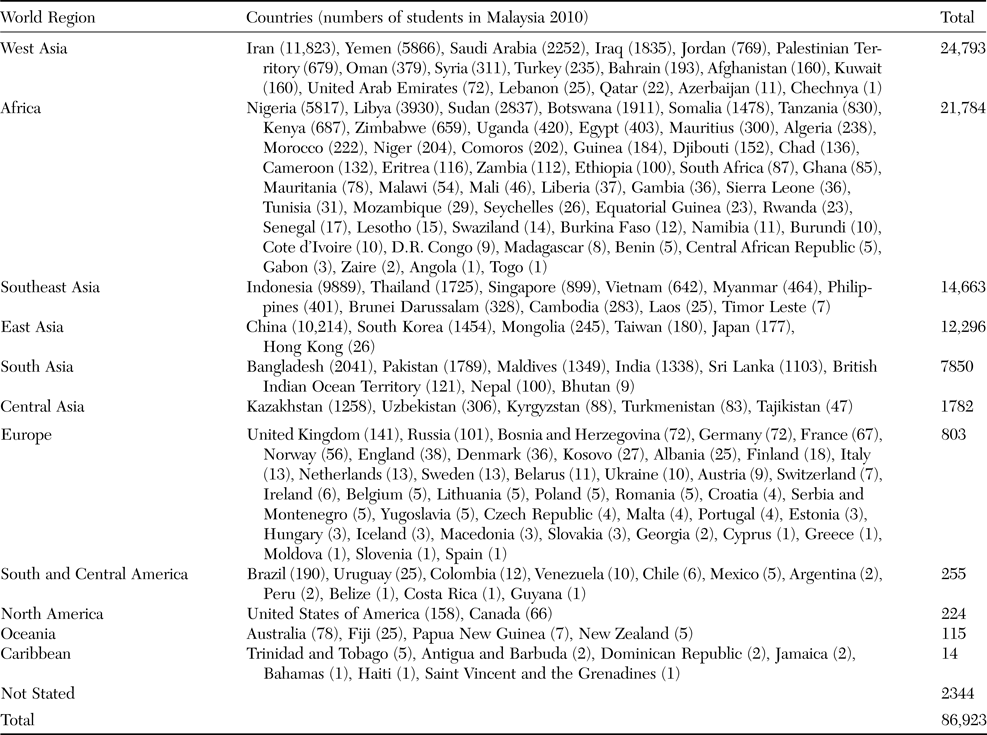
The countries (and territories) listed by the Ministry can be rearranged according to world regions. As Table 4 Footnote 13 shows, the most important world regions with more than 1000 students each are: West Asia (24,793 students), Africa (21,784), Southeast Asia (14,663), East Asia (12,296), South Asia (7850), and Central Asia (1782). Together, these non-European and non-American students account for 83,168 students or 95.7 per cent of Malaysia's international student population. This demonstrates that Malaysia is not only a main destination for its immediate neighbours in Southeast Asia. Rather, the implication for Malaysia's role within the ASEAN region is its increasingly global position in higher education, reaching beyond a merely national or regional horizon. In this regard, Malaysia can be better compared to Singapore than to most other countries in Southeast Asia.
Regional origin of international students in Malaysia, 2010. (Source: Ministry of Higher Education (2011), own calculations).

In fact, Malaysia has become a major player far beyond its regional cultural sphere, including for students from Africa and the Central Asian successor countries of the Soviet Union. Particularly striking is the high number of students from Iran and the Arabic countries, which historically have been considered the cultural and intellectual centres of the Muslim world. Now, it seems that Malaysia has gained a central role in higher education for these countries, re-centring to a certain degree the historical distribution of roles in the Muslim world.
In terms of theoretical perspective, the question is whether the unprecedented encounter of so many international students of various national, regional, and also religious backgrounds in Malaysia is leading to new trans-national, trans-regional, or even trans-religious phenomena, including new discourses on Islam. For that purpose, I conduct a number of dis-aggregation and re-aggregation calculations for the overall religious composition of the international student population in Malaysia; specifying it further, not only will the Sunni/Shi'ite distinction in international student numbers be examined, but also according to the respective madhhab (schools of Islamic law, commonly spelled mazhab in Malaysia). This allows us to investigate whether the international Muslim students coming to Malaysia are from the same sub-group of Sunni Islam as most Malaysian Muslims, namely the Shafi'i madhhab.
Religious Composition
In order to analyse the international student population in Malaysia further, I employed a method that I have developed elsewhere (Graf Reference Graf2011). The main idea is to dis-aggregate the total number of students per country of origin by the demographic composition of that country, and to re-aggregate the statistical sub-totals of the individual countries to a general aggregate. For the general information on the religious composition of the countries represented among the international students in Malaysia, I use the percentage information provided for every country by the CIA World Fact Book as a standard source, assuming that this institution has a strong interest in having the most up-to-date data availableFootnote 14 .
The International Muslim Student Population in Malaysia
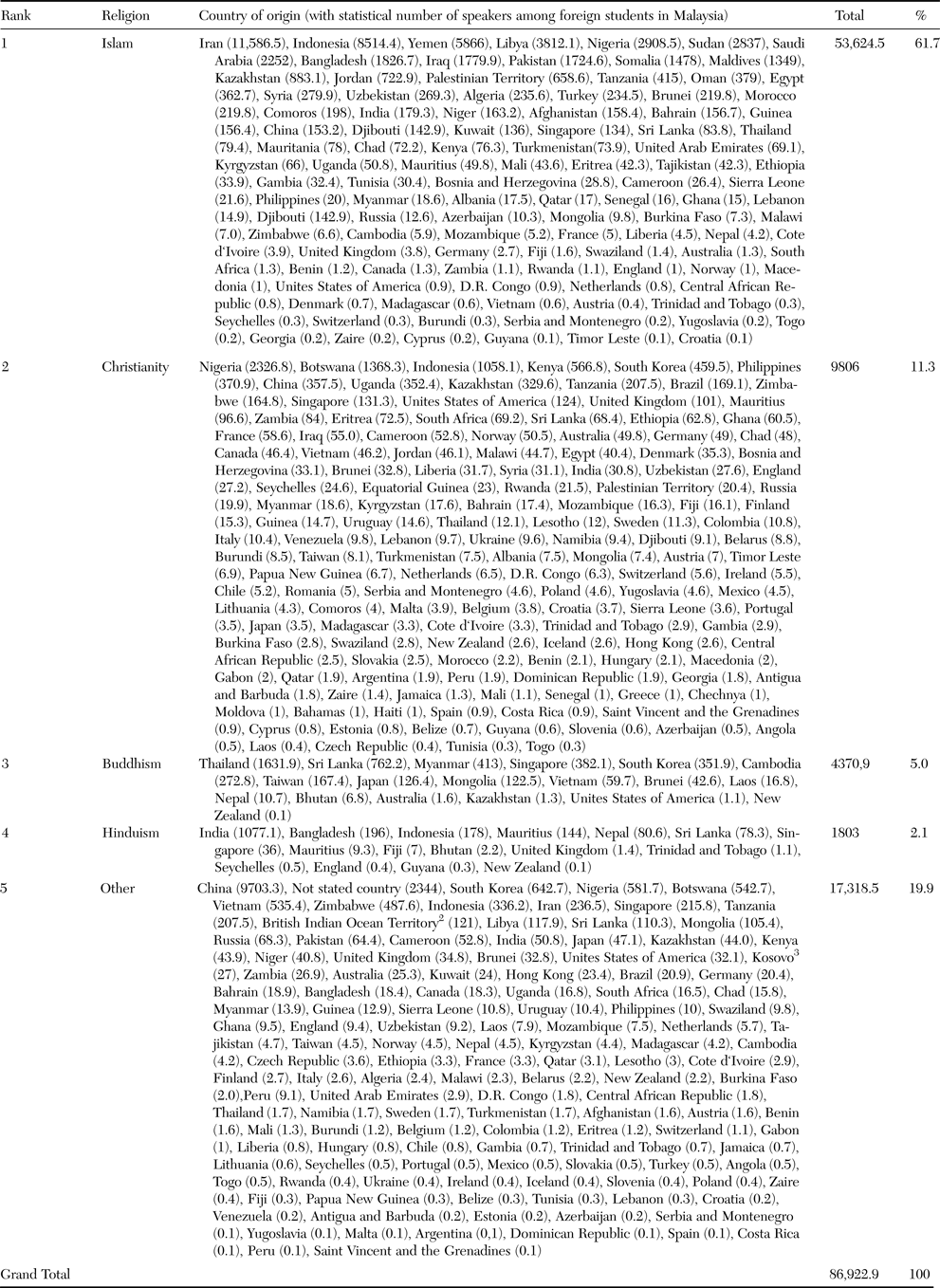
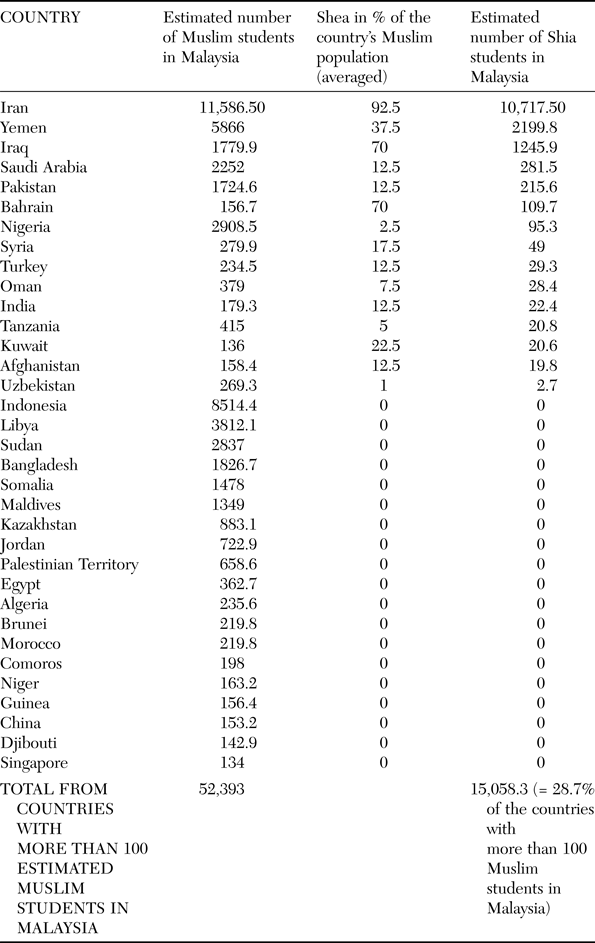
Table 5 demonstrates that statistically, 61.7 per cent of the international student population in Malaysia in 2010 was Muslim. The first question then is what the rough proportion of Shia and Sunni students was among this group. Table 6 is calculated based upon estimates published by the Pew Research Center (2009) on the Shia population of the world's countries.
Religious composition of the international student population in Malaysia, 2010.

Shia students in Malaysia, 2010. (Source: Ministry of Higher Education (Reference Pearson, Levtzion and Pouwels2011), Pew Research Center (2009), own calculations. When the Shia population is less than one per cent, a numerical value of zero is used).

In Table 6, I depart from those countries of origin with more than 100 Muslim students in Malaysia. These countries comprise 52,393 out of 53,624.5 (or about 97.7 per cent of the total foreign Muslim student population). Apparently, the most prominent countries of origin for the Shia students in Malaysia are Iran (with 10,717.5 students), Yemen (2,199.8), and Iraq (1,245.9). There are also Shia students from Saudi Arabia (281.5), Pakistan (215.6), and Bahrain (109.7), to name just those countries with more than 100 estimated Shia students. Of those countries listed in Table 6, the total estimated number of Shia students in Malaysia is 15,058.3 (or 28.1 per cent of the foreign Muslim students). This percentage is considerably higher than the approximate global Muslim population that is Shia, which is 10-13 per cent (Pew Research Center 2009: 39). For Malaysia, which officially only recognises the Sunni version of Islam, this high influx of Shiites might constitute an interesting phenomenon in terms of theological discussions and practices, and possibly also a source of misunderstanding or conflict.
It can also be assumed that among the more than 50,000 international Muslim students in Malaysia, as well as with the local Muslim population, there are ongoing discussions about the various schools of Islamic jurisprudence (madhhab).Footnote 15 In insular Southeast Asia, including Malaysia, the Shafi'i school of Islamic law is the most widespread, while students from the Arabic peninsula, Central and South Asia or African countries generally bring other versions of Islam with them to Malaysia. Historically, these madhhab were highly relevant as authoritative schools of Islamic law, and at the same time the adherence to the same madhhab had implications on the social level. Communities which adhered to the same school of law had a shared basis of trust and mutual understanding, which was important for trade and other economic and social activities. As followers of the various madhhab are now encountering each other in greater numbers in Malaysia, the theological implications will certainly be interesting. A question could be whether the intensive social interactions between followers of different madhhab (inter-madhab interactions), as they currently take place in Malaysian universities, will lead to theological innovations, including in a trans-religious or at least a trans-madhhab sense.
To investigate this further, in the following I not only to follow the differentiation between Sunni and Shia as suggested by the Pew Research Center in its research design, but to try to generate an impression of the composition of the international Muslim student community in Malaysia by madhhab. For the purposes of this study, the publication on Islamic Family Law in a Changing World by An-Na'im (Reference An-Na'im2002) as well as the related websiteFootnote 16 are employed as main sources for the distribution of the various madhhab in the countries of origin of the students.
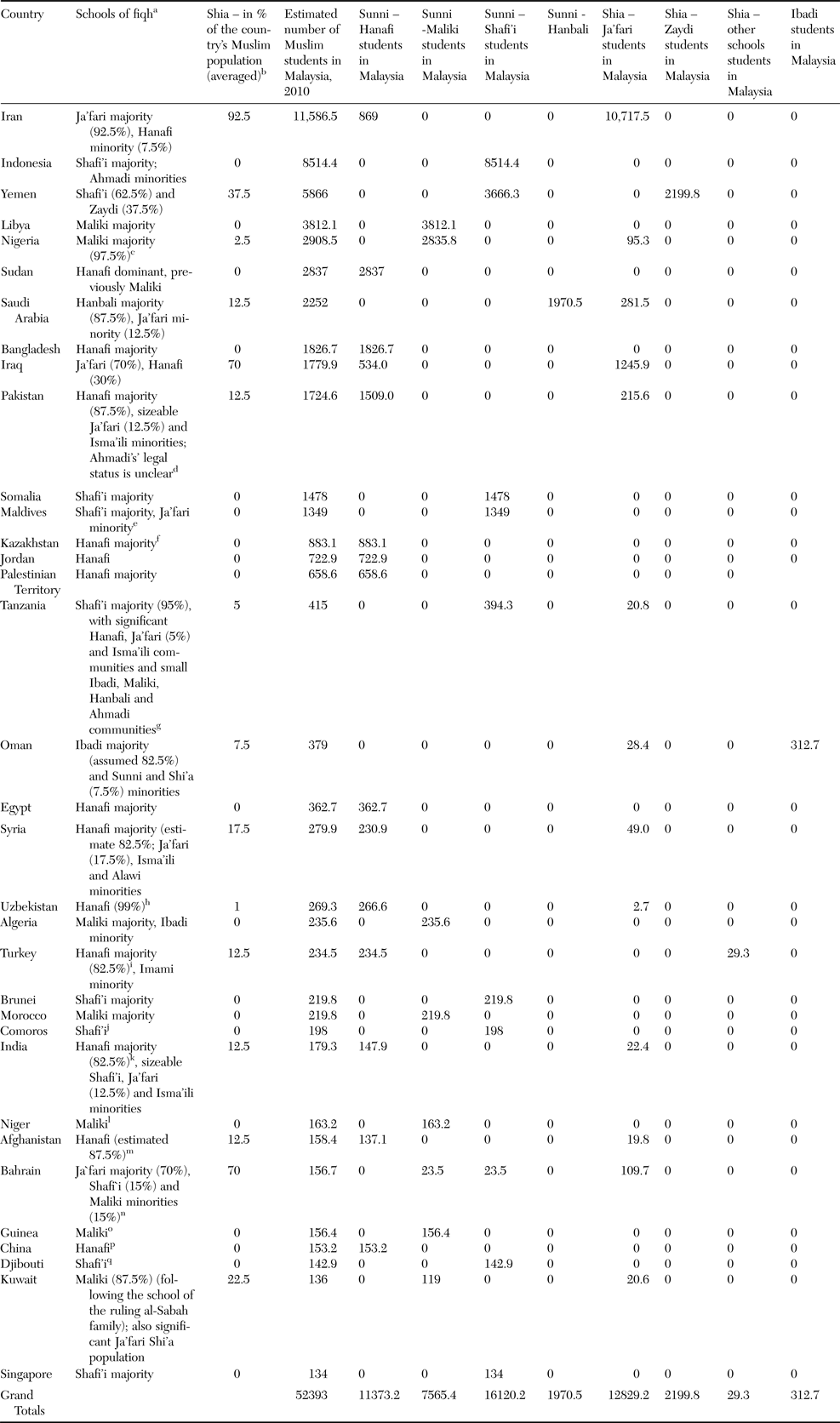
In Table 7, I conduct a statistical disaggregation of the general student numbers by the percentage of the madhhab in each country of origin. This approach allows further differentiating of not only the composition of the ‘Sunni’ group, but also that of the ‘Shia’ population, which is only represented in the Pew Research Center report (2009) as a homogeneous group. The purpose of the detailed analysis here is to generate a basis for an overall picture and general trends, which are presented in Table 8.
Muslim students in Malaysia by country and schools of fiqh (madhhab), 2010. (Source: various, see table footnotes; author's calculations).

a Unless otherwise stated: http://aannaim.law.emory.edu/ifl/legal/ (accessed on 3 Sept. 2010); Pew Research Center (2009) for estimates of numerical proportion of Shia of the country's Muslim population.
b According to Pew Research Center (2009). If the Shia population is less than 1%, in this table I use a numerical value of 0.
c As there are no clear numbers on the Shafi'i minority in Nigeria, I operate in this table with the assumption that 100% of the non-Shia Muslims in Nigeria follow the Maliki school.
d No clear statistics on the distribution of madhhab in Pakistan are available; hence I depart from the Pew Research Center's (2009) number for Shia in Pakistan in order to calculate the number for the majority.
e The Pew Research Center (2009) does not give a number for the Ja'fari minority in the Maldives.
f (Yemelianova Reference Yemelianova and Yemelianova2009: 12).
g As there is no exact statistical evidence available about the numerical distributions of the various schools of fiqh in Tanzania, I assume in this article that the non-Shia Muslims adhere to the dominant school, which is in this case Shafi'i.
h (Rasanayagam Reference Rasanayagam2010: 125).
i For further details see Hekimoglu (Reference Hekimoglu2010: 6). There is also a Shafi'i minority in Turkey, however, exact statistics about the number of its followers are not available.
j Cf. Pearson (Reference Pearson, Levtzion and Pouwels2000: 48).
k As there are no precise statistics available regarding the percentages of the Sunni madhhab in India, this number is calculated via the Pew Research Center's (2009) number of Shia followers in India.
l Cf. Hunwick (Reference Hunwick, Clarke, Hardy, Houlden and Sutherland2004).
m Cf. Malikyar (Reference Malikyar1997).
n The Pew Research Center (2009) gives a number of 70% Shia for Bahrain; the remaining 30% are divided evenly for the purpose of this table.
o Cf. Hunwick (Reference Hunwick, Clarke, Hardy, Houlden and Sutherland2004).
p Cf Israeli (Reference Israeli2002).
q Cf. Abu Umar Faruq Ahmad (2010).
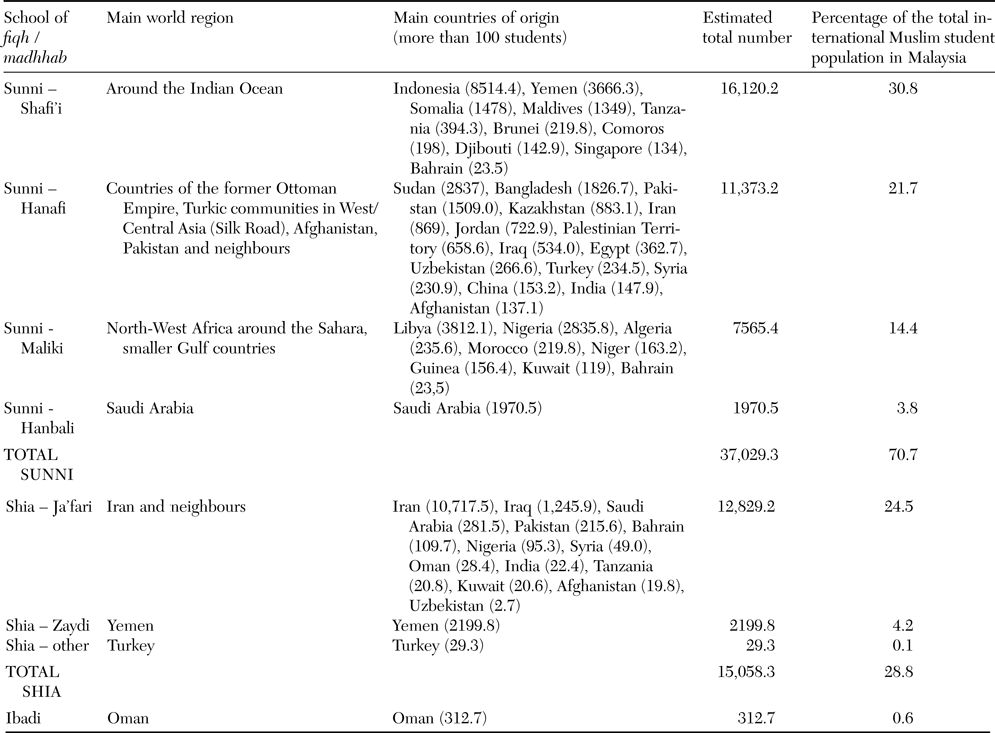
General composition of the international Muslim student community in Malaysia by madhhab and world region, 2010. (Source: Table 7, own calculations)

It is of course understood that Tables 7 and 8 overstate the majority and understate the minority madhhab of the individual countries, as often only approximate data are available on the ‘main’ madhhab. Nevertheless, these two tables provide the following insights:
1. The Shafi'i Indian Ocean connection: Malaysia as a Shafi'i-majority country seems to be the major education hub for the Shafi'i communities around the Indian Ocean. This ranges from Somalia, Tanzania, Djibouti, and Yemen, and the Muslim-majority islands of the Comoros and the Maldives in the Western Indian Ocean, to Southeast Asia, with Indonesia, Brunei and Singapore as the major countries of origin. Students from this Shafi'i Indian Ocean area account for more than 30 per cent of the international Muslim student population in Malaysia. This new central role of Malaysia builds on traditional trading connections and networks that far predate the colonial era. The old Indian Ocean ‘Shafi'i sphere’ is apparently resurfacing in the currents of international student mobility, and it is likely that its influence on followers of the other madhhab among the international students in Malaysia is one side-effect of Malaysia's new role as hub for internationally mobile Muslim students. Further research should inquire as to whether this new relevance can be seen as a ‘Shafi'isation’ process of Islamic discourses among the international Muslim students in Malaysia, or whether mainstream Shafi'i discourses in Malaysia are being influenced by elements of other madhhab.
2. Over-representation of Shia Muslims: The percentage of international Shia students in Malaysia is much higher than the global average. Worldwide, about 10-13 per cent of all Muslims are Shia; in the Malaysian sample of 2010 the percentage among international Muslim students is 28.8 per cent. The provenance of these students is mostly Iran, which could be explained as a side-effect of Western sanctions barring Iranian students from studying in more established education hubs. However, as also Yemen and Iraq are strongly represented in the sample of 2010, there might be additional factors of attraction, e.g. the old networks around the Indian Ocean (cf. above), or Malaysia's highly innovative economy and education system (cf. below).
3. Malaysia as new education hub for the former Ottoman Empire and West Asia (Hanafi madhhab): For historical reasons, the Hanafi madhhab is mainly followed in the countries that once belonged to the core lands of the Ottoman Empire (from Egypt to Palestine, Syria, Lebanon, and Turkey), as well as among the Turkic communities of the Silk Road in West and Central Asia (Kazakhstan, Uzbekistan, and China), plus Afghanistan, Pakistan and Bangladesh. Students of this Hanafi madhhab constitute about 20.8 per cent of international Muslim students in the sample of 2010. This signifies an unprecedented centrality of Malaysia as an education centre for these countries and communities. As evidence from Wong and Ooi (Reference Wong and Ooi2013) suggests, there are a number of former “Chinese Muslim” students from China have permanently settled in Malaysia. This could mean that a Hanafi madhhab in Malaysia is being established or, building on previous historical migrations, increasing. As Hanafi Muslims from China encounter in Malaysia Hanafi Muslims from Palestine, Afghanistan and Pakistan, the question is whether, within that particular Hanafi madhhab, theological innovation is taking place, in terms of discourses and other practices.
4. Malaysia as new education hub for North-West African countries (Maliki madhhab). Statistically, about 14.4 per cent of the international Muslim students in Malaysia belong to the Maliki madhhab. My approach, based on madhhab rather than on linguistic or ethnic criteria, also brings into question the frequent conceptual usage of the Sahara as separating borderland between ‘North Africa’ and ‘Sub-Saharan Africa’. Rather, in this view, the Sahara with its pathways and travel routes can be seen as a connecting region between two parts of the same religious community that follows the same school of religious law. Hence, further empirical research could include a more in-depth look at the linkages and connections between students from Libya, Morocco, Algeria on the one side and Nigeria, Niger, and Guinea on the other, particularly in the Malaysian context.
5. Isolated position of students from Saudi Arabia (Hanbali madhhab): Different from all other madhhab groups of international Muslim students in Malaysia are the students from Saudi Arabia, as they are the only significantly numerous adherents of the Hanbali madhhab in the sample. Empirical research on this group could therefore concentrate on whether this religiously isolated role is also mirrored in the social relations of the Saudi Arabian students in Malaysia.
The Christian Sub-sample
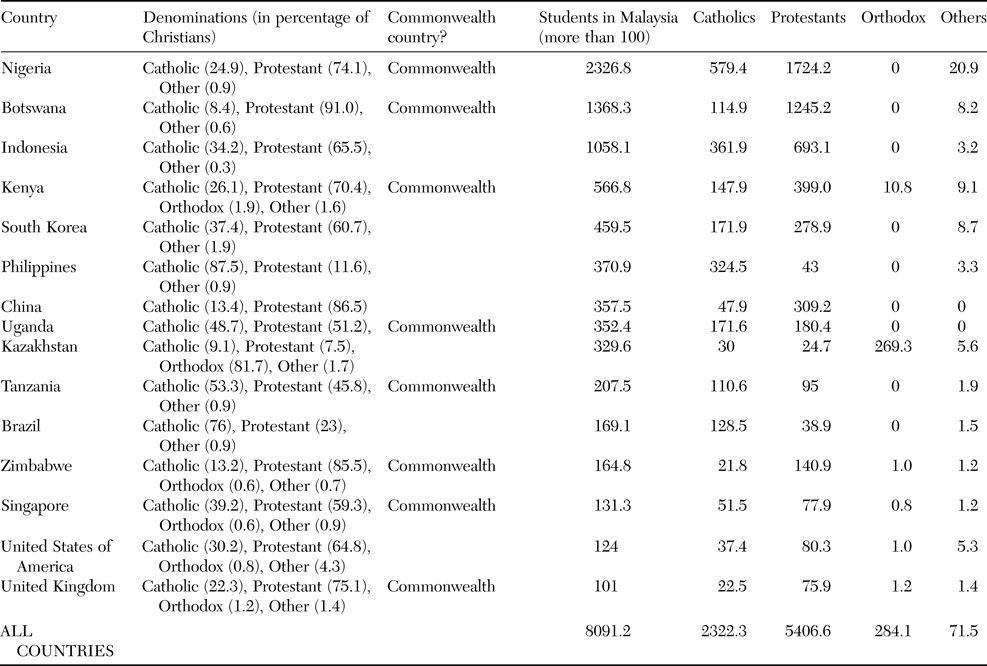
As Table 5 shows, an estimated 11 per cent of the international students in Malaysia in 2010 are Christians. According to the statistical analysis of the data, the foreign Christian students in Malaysia are almost exclusively from non-Western countries, with a strong cohort from African countries. The countries with more than 100 international Christian students in Malaysia listed in Table 9 constitute together 8091.2 students, which represents 83.5 per cent of the entire Christian sub-sample.
International Christian students in Malaysia, 2010. (Source: Pew Research Center (2011), own calculations)

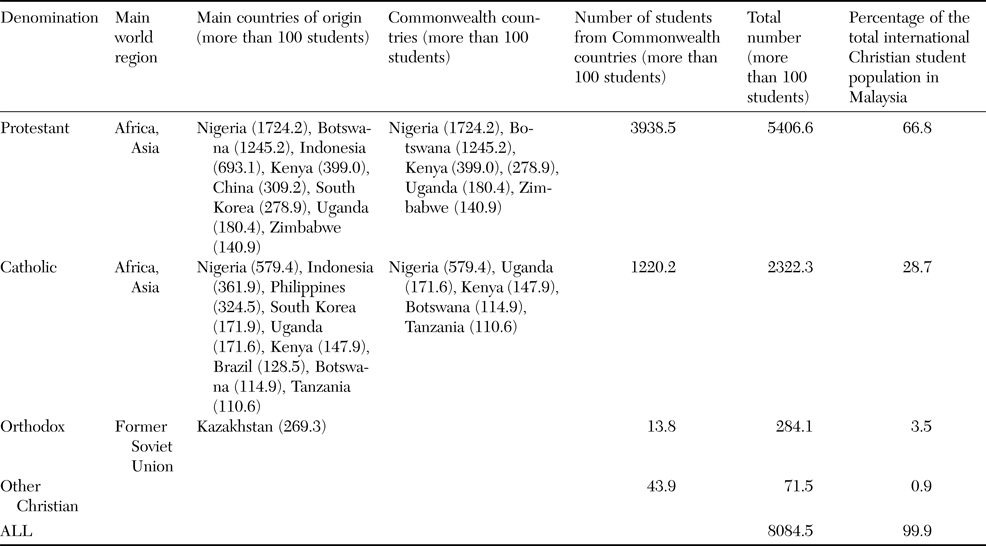
Tables 9 and 10 give an impression of the composition of the international Christian student population in Malaysia in the sample of 2010. There seems to be an overrepresentation of Protestants (66.8%) in relation to Catholics (28.7%) if compared with the global ratio (Catholics: 50.1%, Protestant: 36.7%, Orthodox: 11.9%, Other Christian: 1.3%) (Pew Research Center 2011). The reason might be that Malaysia is particularly popular as an education destination among citizens of Commonwealth countries, particularly in Africa, where Protestantism is more widespread than Catholicism. It appears that Malaysia does not attract sizeable numbers of Christian students from the Americas, Europe, or Australia. This absence might be partly due to the higher development status of these world regions in comparison to the Commonwealth countries of Africa. In addition, it can be assumed that there is a language barrier for students from Catholic-majority Francophone or Lusophone Africa, as well as from Latin America, as these countries are nearly absent in the sub-sample above (which only considers countries with more than 100 Christian students in 2010). The result is a special composition of the international Christian student population in Malaysia comprised mainly of Anglophone Protestants from Africa. In terms of theological frameworks and discourses, for instance on gender roles, sexuality etc., this would suggest a number of distinct positions among the international Christian students in Malaysia, that are popular in Protestant-majority African countries, but not in, for instance, the United Kingdom, North America or Australia. An interesting question for future research therefore is how these international Christian students engage in or have conflict with the Protestant theological discourses in Malaysia.
International Christian students in Malaysia by world region, 2010. (Source: Own calculations)

The Buddhist and Hindu Sub-samples
The estimate for the Buddhist sub-sample represented in Table 5 suffers in particular from a methodological problem in that the number of Buddhists from Thailand is most likely an overestimate since the calculation of this number is based solely on the general distribution of religions in Thailand. However, my field work in Malaysia suggests that the majority of students from Thailand who choose to study in Malaysia mainly derive from Muslim and/or Malay communities in Southern Thailand, with few of their Buddhist compatriots from Central and Northern Thailand. The same assumption may be applied to the statistical ‘Hindu’ students from India, Bangladesh, Indonesia, and Mauritius since all of these countries have sizeable Muslim communities for whom studying in Muslim-majority Malaysia might be particularly attractive. However, even if the estimated numbers for these countries might be distorted, this nevertheless leaves us with a viable number for the other Asian countries of origin. Apparently, among the international students in Malaysia there are relevant sub-groups of Buddhist and Hindu students originating from various countries. In other words, Malaysia not only has become a meeting place for internationally mobile Muslim and Christian students, but also for those of the Buddhist and Hindu faiths. Hence, future research could address the Buddhist and Hindu discourses taking place among the new plural student communities of these faiths in Malaysia.
Linguistic Composition
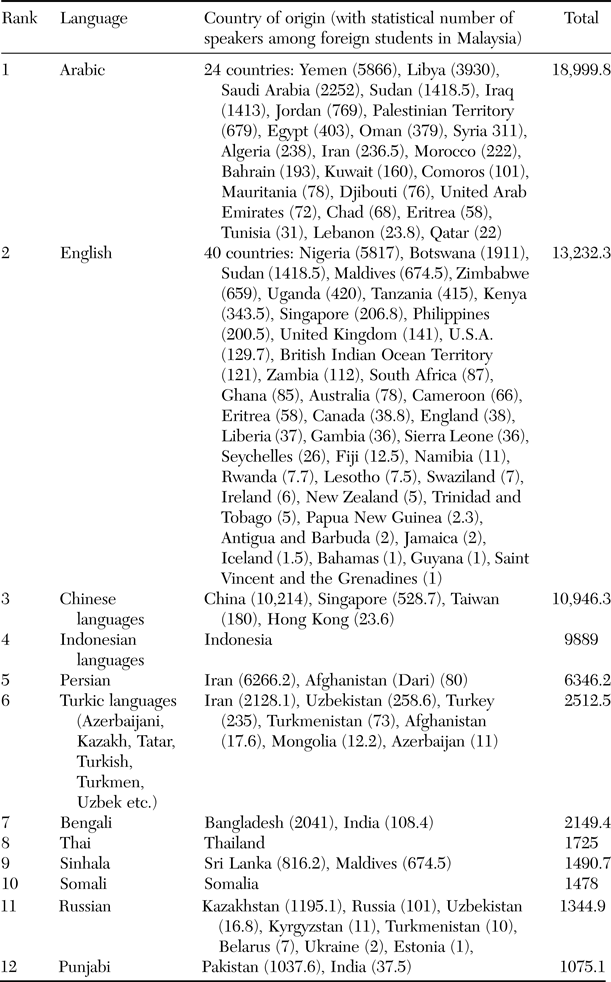
In order to further analyse the international student population in Malaysia in terms of its linguistic composition, I employ a similar method as applied to its religious makeup above. Table 11 demonstrates that, statistically, Arabic is the most widely spoken language among the international students in Malaysia. Almost 19,000 students from 24 countries are native speakers of Arabic. In fact, anecdotal evidence from several departments of Malaysian universities, especially Islamic Studies, suggests that increasingly, Malaysian lecturers are supervising their Arabic students in Arabic, and that Arabic is being admitted as an official language for Master and PhD theses at Malaysian universities.Footnote 17 This influences both the position of English and Malay as academic languages in Malaysia, as well as the international position of Arabic.
Major languages of international students in Malaysia (2010). Note: The CIA World Fact Book gives no indication of the use of Kazakh or other Turkic languages in Kazakhstan. (Source: Ministry of Higher Education (2009), CIA World Fact Book 2014, own calculations).

English seems to be only a second language among the international students in Malaysia. Statistically, only approximately 13,000 out of the roughly 87,000 foreign students speak English as their mother tongue. Most of these native speakers of English originate from African countries, which could constitute an interesting phenomenon for further research on the linguistic contact between Malaysian and African versions of English.
Another interesting observation that becomes apparent through this method of statistical analysis is that a sizeable community of more than 2,500 speakers of Turkic languages from Iran, Uzbekistan, Turkey, Turkmenistan, Afghanistan, Mongolia, Azerbaijan, etc. is studying in Malaysia. More research is necessary to assess the extent of communication between these students. It is imaginable that some of them are discovering commonalities among each other, and that discourses on Turkic cultural identity are enabled through the newly emerging role of Malaysia as a hub for international education. This is of course also the case for students from the other linguistic groups.
Innovation Gap
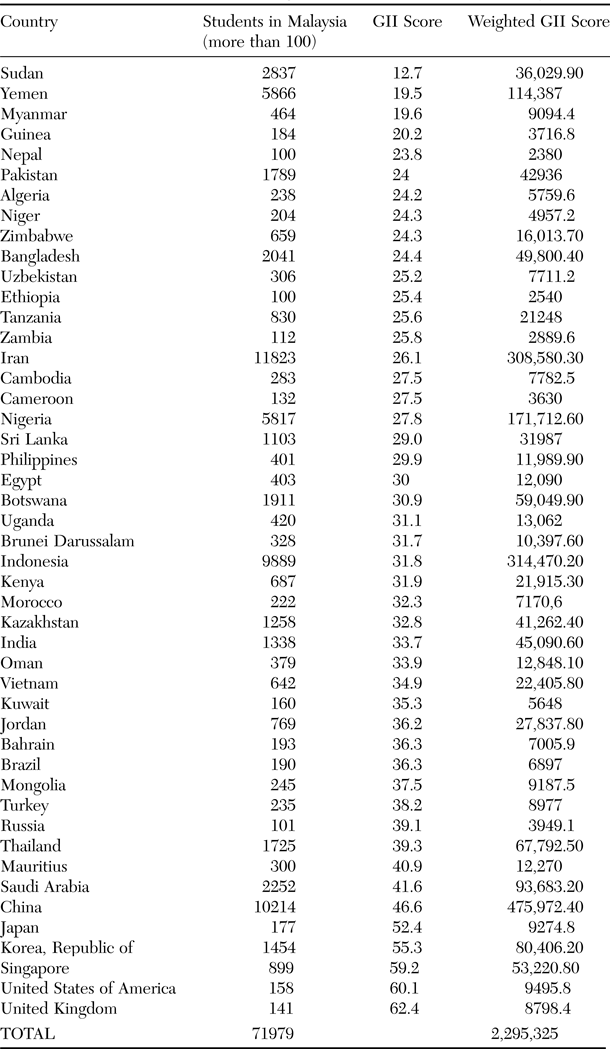
Summing up the discussion so far, Malaysia is particularly attractive for Muslim students, Iranian, Arab and African students, as well as Anglophone students from the Commonwealth. The question is what other characteristics might these students share. In this regard it is perhaps useful to consider Malaysia's relatively high position in the Human Development Index (HDI) of the United Nations Development Programme (UNDP). For many years, Malaysia has been the only Southeast Asian country ranked as a “High Human Development” country, with a HDI of 62 out of the 140 of the world's nations included in the report (as of 2014).Footnote 18 HDI rankings are based on a number of parameters and criteria, including health, education, income, inequality, poverty, etc. Therefore, Malaysia's high position reflects generally good living conditions in the country. This might be interesting for a number of internationally mobile students, especially for those from countries with much lower development status. However, since the internationally mobile group consists in this case of students seeking a good place for higher education, the HDI rankings might be not the most useful tool in assessing Malaysia's attractiveness. Rather, in the following analysis I employ the Global Innovation Index (GII), jointly published by Cornell University, the European Institute for Business Administration (INSEAD), and the World Intellectual Property Organisation (WIPO). The GII is designed to identify the relative innovation scores of the included countries. Like the HDI of UNDP, the GII rankings are based on a number of relevant criteria.Footnote 19
GII scores of countries of origin of international students in Malaysia.

In order to find out the average GII score of the countries represented among the foreign students in Malaysia, the following formula was applied: ‘GII score of country of origin’ multiplied by ‘number of students from that country’ to obtain ‘the total GII score per country’. These ‘total GII scores per country’ are added up to form the ‘grand total GII score’ (2,295,325), which I then divide by the grand total of student numbers (71,979). The result is an average GII score of 31.9. For comparison: Malaysia's own GII score is 45.6. This suggests that the average incoming student originates from a country ranked 13.7 points lower. For illustration, examples of countries with such a GII score of c.31.9 are Uganda, Bhutan, Indonesia, and Kenya. For students from countries such as these, the difference in innovation status between their home country and Malaysia seems to be motivation enough to decide to study in Malaysia and not in their home country.
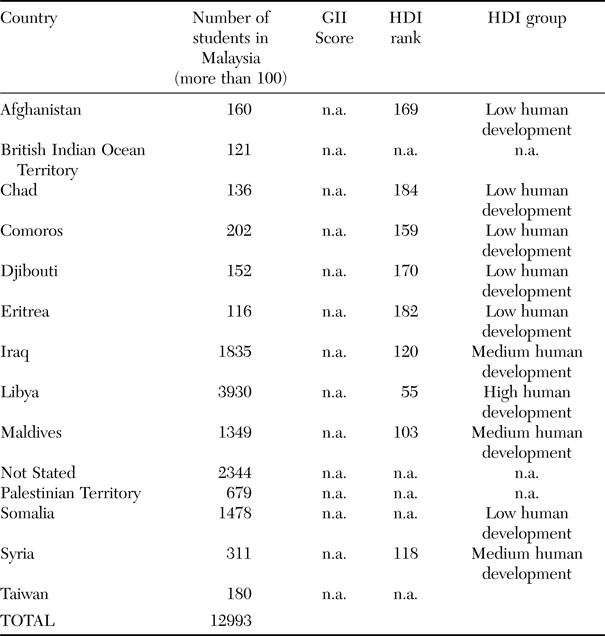
Furthermore, the average GII score of the countries of origin of the inbound students seems to be in reality much lower than the mentioned 31.9, since the GII index does not cover the countries listed in Table 13. Together, these are the countries of origin of 12,993 students, which is equivalent to 14.9 per cent of the total foreign student population in Malaysia. Among them are a number of failing or failed states such as Afghanistan, Chad, Djibouti, Eritrea, Iraq, Libya, Somalia, or Syria. For students from these countries, Malaysia with its functioning public service and good public universities apparently serves as a substitute for failing institutions at home.
Countries of origin of international students in Malaysia not included in the GII. (Source: UNDP 2014, GII 2014, own calculations). Note: The UNDP Report Reference Wong and Ooi2014 is based on data prior to the heavy civil wars in Libya and Syria.

Conclusion: Malaysia's Niche
This paper has analysed in depth the demographic composition of the international students in Malaysia. Departing from the numbers of students by country of origin in 2010, as published by the Malaysian Ministry of Higher Education, the first question was that of the regional composition of that group. The first finding is that in 2010, most international students in Malaysia did not come from the neighbouring countries, but from West Asia and Africa. Malaysia is hence not merely a regional, but a global player in international student mobility; a proposition supported by the calculation of the linguistic composition of the student population. The largest groups were Arabic speakers from 24 countries and native speakers of English from 40 countries, mostly from Africa, followed by Chinese, Indonesian, Persian, and Turkic speakers. As a Commonwealth country with a prominent role of English in higher education, particularly in the sciences, Malaysia seemingly has an advantage in attracting a larger cohort of English-speaking international students.
In terms of the religious composition, it is estimated that about 61.7 per cent of the international students in the sample were Muslim. Among them, the Shia sub-group constituted about 28.7 per cent, which is far greater than the portion of the Shia population among the global Muslim community. Apparently, Malaysia is particularly attractive for Shia students not only from Iran, but also from Yemen, Iraq, and other countries. Among the Sunni students, a detailed analysis according to school of Islamic law (madhhab) revealed that all four major Sunni madhhab are represented in great numbers. As these madhhab were historically very important for the constitution of spaces of trade and communication, it is thus found that Malaysia has successfully tapped into (1) the Indian Ocean sphere of the Shafi'i school of law, (2) the Hanafi school, which was relevant in the former Ottoman Empire and the Silk Road, (3) the Maliki school of the countries north and south the Sahara with its interconnected trading networks, and (4) the Hanbali school from Saudi Arabia. One can therefore assume that interesting discussions on theology and Islamic law are currently taking place among the international Muslim students in Malaysia. As no other Muslim-majority country has developed such attractiveness for international students, Malaysia performs therefore a pioneering role in these discourses of a globalising Muslim community and its various madhhab.
The analysis of the Christian sub-sample shows that Protestant students are by far the most represented among the international Christian students in Malaysia. The reason is the high number of students from Commonwealth countries, mostly from Africa, where apparently British versions of Protestantism were more widespread than Catholicism. It can be assumed that there are various social, cultural, and religious encounters and discussions between Muslims, Buddhists, Hindus, as well as Christians from all over Asia and beyond happening in Malaysia.
A last factor considered in this study is the development status and the innovation status (Global Innovation Index score) of the respective countries of origin of the students in Malaysia. It was found that the average international student in Malaysia comes from countries with much lower innovation status than Malaysia. Since more than 10,000 international students in the sample originated from failing or failed states not included in the GII study, the difference is even more pronounced. As a highly developed, Muslim-majority country with English as medium of instruction for its international students, Malaysia seems to have found a niche in the horizons of mobile international students. For Muslim, English or Arabic-speaking students from much less developed countries, particularly in western Asia and Africa, Malaysia is certainly proving to be a very attractive destination.
Acknowledgements
Research for this article was facilitated by funds of the research project “Africa's Asian Options (AFRASO)” at Goethe-University of Frankfurt, financed by the German Federal Ministry for Education and Research (BMBF). The author would also like to thank Amanda K. Rath for helping with the English of this paper. All remaining errors are of course the sole responsibility of the author.