


Introduction
Bespectacled, mild-mannered Seung Wha Chang seems an unlikely figure to trigger a fractious diplomatic standoff. A former District Court judge in South Korea and law professor at Seoul National University, Chang joined the World Trade Organization's Appellate Body on June 1, 2012. He brought impressive credentials to the position: Chang had published widely on international trade; taught trade law at Harvard, Yale, and other leading universities; and capably served on several high-profile World Trade Organization (WTO) panels. The United States thus stunned the international trade community when it declared, in May 2016, that it would block the consensus necessary for Chang's reappointment to the Appellate Body (AB). The shocking decision, revealed just weeks before Chang's four-year term was up, sparked vociferous and widespread criticism, including claims that it posed an existential threat to the WTO's dispute settlement system and the global trading system writ large.Footnote 1
The understandable focus on the immediate consequences of this episode for the Appellate Body, however, elides a fundamental set of tradeoffs inherent in the design and working, not just of the Appellate Body, but of all international courts and tribunals. Drawing on original primary source research, including interviews with current and former judges and court officials at four international courts, we argue that international tribunals face what we call the Judicial Trilemma. Specifically, the states that design, and the judges that serve on, international courts confront an interlocking set of potential tradeoffs among pursuit of three core values: (1) judicial independence, the freedom of judges to decide disputes upon the facts and the law, free of outside influences such as the preferences of powerful states; (2) judicial accountability, structural checks on the exercise of individual judicial authority manifested most prominently in international courts via reappointment processes; and (3) judicial transparency, specifically mechanisms that permit the identification of individual judicial positions, primarily through the publication of separate votes or opinions. Many international judges believe that it is possible to maximize, at most, any two, but not all three, of these values. Our goals in this article are to make explicit the logic of the Judicial Trilemma, and to trace its varied manifestations in the design and operation of prominent international tribunals.
As we shall see, the Trilemma plays out in iterative interactions involving states and judges: states are the initial and primary movers when they draft a court's statute; judges thereafter engage in constrained but strategic choices in light of states' design decisions; states, in turn, then respond to judicial behavior, including through reappointment processes; judges respond to state actions, and so on. As a result of these iterative choices, many international courts can and do approximate one of three ideal types. First, a tribunal can have high levels of judicial independence and judicial accountability (i.e., through short, renewable terms), but at the “cost” of suppressing judicial transparency—a pattern found at the Court of Justice of the European Union, where judgments are always issued per curiam (“by the court”) and never include separate concurring or dissenting opinions. Alternatively, an international court can exhibit high levels of judicial independence and judicial transparency (i.e., through open voting and/or individual opinions), but only if individual judicial accountability is low (such as by making judicial terms non-renewable)—a pattern found at the International Criminal Court and at the European Court of Human Rights since reforms in 2010. Finally, a court can combine high levels of judicial transparency (allowing individual judges' positions to be ascertained) with high levels of judicial accountability (allowing for reappointment or non-reappointment)—a pattern found at the International Court of Justice and International Tribunal for the Law of the Sea (ITLOS)—but the Trilemma's logic suggests that doing so creates substantial risks of compromising judicial independence.Footnote 2
Viewing Chang's failed reappointment through the prism of the Judicial Trilemma introduces an alternative conceptualization of this controversy. As we shall see, the WTO Appellate Body is a particularly high-accountability court, whose members are appointed for short, renewable four-year terms. In terms of judicial transparency, however, it occupies an intermediate position: the votes of Appellate Body members are not made public, yet the possibility of issuing “anonymous” dissents provides the member states a window into judicial decision-making which they can use—and have used—to discipline Appellate Body members whose decisions they object to. The members of the Appellate Body, for their part, understanding their vulnerability under this system, formulated early on an informal rule of consensus decision-making, avoiding dissents in nearly all cases and limiting the identifiability of individual judges. Nevertheless, as Chang's case reveals, member states may be starting to use other indicators in efforts to identify judges' positions and punish those with unwelcome views. In short, the framework of the judicial trilemma helps us conceptualize and identify both the constraints on Appellate Body members and the pressures on their judicial independence.
Our analysis draws upon two distinct literatures, relating to the “rational design” of international institutions and the “judicial politics” of both domestic and international courts. The rational design framework has been productively used to analyze many aspects of treaty design, including variation in the depth and precision of legal obligations, monitoring provisions, and dispute resolution mechanisms.Footnote 3 We extend the logic of rational design analysis, exploring state choices in the design of international courts—yet we also go beyond rational design, to consider the subsequent strategic interactions between the states that create international tribunals and the judges who serve on them. To understand the relationships between these two sets of actors, we draw upon a rich literature in judicial politics, which seeks to measure and explain the behavior of judges within their political context, including fundamental questions about judicial independence and judicial accountability.
As a result, our analysis offers a new way of theorizing important aspects of international court design and judicial behavior, specifically judicial independence, judicial appointment practices, and judicial decision-making. While each feature has been addressed in previous scholarship,Footnote 4 most research to date has focused on one of these elements in isolation, and as a result has not addressed the potential for interaction among these three features of judicial institutions. Our identification and analysis of the interactions and tradeoffs that constitute the Judicial Trilemma thus offers a more robust, theoretically informed, and empirically supported conceptualization of judicial behavior, including particularly opinion writing, than that found in previous scholarship.
Finally, our analysis is primarily conceptual and empirical, focused on state choices and judicial behavior, yet our findings have important normative implications for the design of international courts, and especially for the selection and retention of their judges. Analysis in this area has traditionally focused on how best to structure selection processes to ensure that only well-qualified candidates are put forward for election or appointment.Footnote 5 We suggest, in contrast, that more attention should be devoted to the length of judicial terms and to judicial reappointment procedures. If, as many judges believe, the combination of high judicial transparency (through open voting and dissent) and high judicial accountability (through renewable terms) poses a threat to judicial independence, then we would argue that the creators of international courts—and in particular those international courts which practice open voting and dissent—should follow the lead of the European Court of Human Rights and the International Criminal Court, rejecting renewable judicial terms in favor of longer, non-renewable terms that will better protect judicial independence.
The remainder of this article proceeds in four parts. Part I provides the theoretical framework for the analysis that follows. To do so, it briefly reviews the relevant literature, describes the three features of international tribunals most relevant to our analysis, and explicates the logic behind the Judicial Trilemma. Part II reviews how different international courts have addressed the Trilemma, with particular focus on the Court of Justice of the European Union (CJEU), the European Court of Human Rights (ECtHR), and the International Court of Justice (ICJ). In their diverse institutional structures, and in the behavior of their judges, these prominent tribunals closely approximate three “ideal type” strategies for addressing the tradeoffs associated with the Trilemma.
Part III addresses the more complex manifestation of the Trilemma found at the WTO's Appellate Body. The controversy over Seung Wha Chang's reappointment is commonly, and understandably, seen as a threat to the WTO dispute settlement system. We are sympathetic to this view, but draw upon the Trilemma to place the Chang episode in a broader context. Doing so permits a better understanding of the precise tradeoffs made by the Appellate Body's designers and members, and the resulting dangers that the system poses to the independence of AB members.
In a short conclusion, we summarize our argument and provide a brief normative analysis, arguing in favor of one politically feasible and normatively attractive way to address—although not escape—the Trilemma. Specifically, we detail strategies for revising reappointment processes at international tribunals in ways intended to promote judicial independence at an acceptable cost in judicial accountability.
I. Introducing the Judicial Trilemma
A. Conceptualizing International Courts
Recent years have witnessed a dramatic judicialization of international relations. In 2016 alone, international courts and arbitral panels issued judgments and awards convicting Radovan Karadžić, wartime leader of the Bosnian Serbs, for genocide;Footnote 6 rejecting Philip Morris's claim that a Uruguayan law governing the packaging of cigarettes, designed to promote public health, violated a bilateral investment treaty;Footnote 7 dismissing the Marshall Islands' claim that India, Pakistan, and the United Kingdom violated their obligations concerning negotiations over nuclear disarmament;Footnote 8 and determining that China had violated the Philippines' rights to an exclusive economic zone in parts of the South China Sea.Footnote 9 As these cases illustrate, international courts have rapidly evolved from sleepy bodies hearing the occasional low-level dispute to prominent international actors that increasingly render decisions of immense political, diplomatic, economic, and security importance.Footnote 10 This development, in turn, has attracted scholars from a wide variety of academic disciplines eager to conceptualize international courts' influence on international politics.
In describing and analyzing the Judicial Trilemma, we draw primarily upon insights from two research traditions that are typically neither juxtaposed nor applied to the study of international courts, rational design (RD) and judicial politics. To help orient the reader to the analysis that follows, we provide a very brief and necessarily selective introduction to these schools of thought.
Rational design builds directly upon rationalist and institutionalist writings within the field of international relations that understand international institutions as resulting from states' rational pursuit of their own self-interests. Early writings in this vein explored the conditions under which self-interested states would cooperate, and, drawing upon game theoretic insights, conceptualized international institutions as arrangements that render international cooperation more feasible and more durable.Footnote 11 RD scholars extended this analysis, shifting the focus from identifying the conditions under which cooperation is possible to understanding the design of international institutions. The key analytic move in the rational design literature is to explain institutional design choices by reference to the underlying cooperation problems that states seek to solve.
To this end, early rational design writings linked several key features of institutional design, such as membership rules, the scope of issues covered, and the rules for controlling the institution, with the presence of one or more recurrent cooperation problems, such as distribution problems, enforcement problems, and information asymmetries.Footnote 12 Much subsequent work in this tradition focuses on specific types of treaty clauses. Thus, for example, RD scholars have demonstrated that the presence of “flexibility clauses” in treaties, such as safeguard, exit, or reservation clauses, vary according to the relevance to the treaty of uncertainty about the future state of the world, such as the susceptibility of an issue area to new technological developments or scientific knowledge.Footnote 13
Among the treaty clauses examined by RD scholars, substantial attention has been devoted to exploring the presence (or absence) of dispute resolution clauses. In a series of pioneering studies, Barbara Koremenos has shown that the presence of dispute clauses varies systematically by issue area; specifically, nearly three-quarters of human rights treaties, roughly half of economic agreements, one-third of security treaties, and less than one-quarter of environmental treaties contain dispute clauses.Footnote 14 Koremenos also claims that the inclusion of dispute clauses responds in systematic ways to underlying enforcement, commitment, and uncertainty problems.Footnote 15
RD scholars have less frequently turned their attention to the design features of international courts. To the extent that scholars writing in this vein focus on tribunals, they typically examine individual elements of a court's institutional characteristics, often in isolation from other features. Thus, by way of example, a strand of writings identifies and describes a variety of ex ante and ex post mechanisms that states might use to influence judicial behavior, ranging from the careful delimitation of a court's jurisdictional reach to threats to ignore a court's judgment.Footnote 16 However, while specific individual features of international courts have been studied, substantially less attention has been devoted to explaining broad patterns of institutional design across tribunals.
We seek to build upon and extend this existing scholarship, in particular by emphasizing that the characteristics of international tribunals do not exist in isolation, but are interrelated. In this regard, two core points deserve emphasis. First, while the RD approach generally seeks to explain the presence or absence of individual design features, we argue that design features cannot be understood in isolation, because individual design features, such as renewable terms of office and open voting and dissent, can interact in important and sometimes unexpected ways. It is that interaction, more than the choice of any individual design feature in isolation, that interests us here. The second point concerns the identity of the actors who appropriately fall within the scope of inquiry. RD focuses exclusively on states as the rational designers of international institutions. To be sure, states design international courts, and we seek to understand and recreate their design choices along multiple dimensions. Understanding the founding moments of design, however, tells only part of the story, because the actual workings of international courts, and the interactions among those dimensions, depend in large part on the actions of the judges who subsequently hear disputes, interpret the law, and issue rulings. For insights on how to conceptualize and understand international judicial behavior, we look beyond the scholarship on institutional design, and draw inspiration from the rich interdisciplinary writings on judicial politics.
The judicial politics literature theorizes and empirically studies the relationships between judges and their political environments and interlocutors.Footnote 17 Greatly simplifying a diverse body of work, judicial politics scholars typically focus on explaining measurable judicial behavior. In doing so they theorize judges as utility-maximizing rational actors, seeking to realize their goals within the variable constraints imposed by institutions and constitutional structures. In scholarship on U.S. courts, in particular, there is a growing consensus on conceiving of judges as policy-seekers, interpreting the law in light of their ideology and policy preferences.Footnote 18 Judicial politics scholars differ, however, on the question whether judges are able to follow their sincere preferences freely or whether they are constrained in doing so by other actors, including the political (legislative and executive) branches of government. The “attitudinalist” school argues that U.S. federal judges, granted lifetime tenure, are free to vote and rule in line with their individual ideological or policy views, and that these attitudes are in fact the best predictors of judicial votes. By contrast, the “separation of powers” school argues that judges act strategically, and pursue policy goals within constraints imposed by the legislative and executive branches (which can, at least with respect to statutory interpretation, overturn unwelcome decisions) or broader public opinion (on which courts depend for legitimacy).Footnote 19
This ongoing debate is, to a significant extent, a dispute over the independence of the judiciary from the other branches of government. And indeed, judicial politics scholars have extensively theorized and empirically studied the question of judicial independence, broadly defined as the ability of judges to decide cases free of extralegal pressures from outside actors.Footnote 20 They have, for example, theorized a number of motives that political actors might have for delegating substantial independence to judges, including the need to prevent a tyranny of the majority, or abuse of power by the executive or legislative branches, or to make legislative agreements lasting and credible.Footnote 21 Simply declaring judges to be independent, however, is likely to be insufficient insofar as one or more other actors have the ability and incentive to undermine that independence, and so scholars have identified institutional or constitutional protections, such as non-renewable terms of judicial office or fixed salaries, which reduce the ability of the political branches to manipulate the incentives of judges and undermine their independence.Footnote 22 There is a relatively broad consensus among judicial politics scholars that U.S. Supreme Court justices, who benefit from these and other protections, enjoy substantial independence from the executive and legislative branches, but there is greater controversy over the independence of judges in other systems, including those who serve on courts in the various U.S. states, many of whom are elected for fixed terms and subject to periodic reelection or retention elections, rendering them potentially subject to positive or negative sanctions for individual decisions.Footnote 23 This question of renewable terms is closely linked to another core theme in the judicial politics literature, that of judicial accountability (either to political branches of government or to some other stakeholders), which is frequently depicted as being in tension with (or indeed the flip side of) judicial independence.Footnote 24 These twin themes, of judicial independence and judicial accountability, and the potential tradeoff between them, are central to our argument in this article, and we shall return to them below.
The judicial politics literature originated in the study of American courts, yet has recently expanded to encompass the comparative study of constitutional courts in advanced democracies,Footnote 25 and more recently to the study of international courts.Footnote 26 Judicial politics students of international courts have, for example, studied the processes of judicial appointment to various international courts,Footnote 27 the use of precedent by international judges,Footnote 28 and the independence and accountability of the Court of Justice of the European Union.Footnote 29
For our purposes, the judicial politics literature is doubly valuable, both for situating the judiciary in its political context, and for its careful analyses of the independence and accountability of judges vis-à-vis political branches of government. Yet, in large part because of its roots in the study of American federal courts, the judicial politics literature has paid far less attention to several other important questions, including the impacts of limited and renewable terms of office; the significance of open voting and separate opinions, or what we shall call judicial transparency, which are universal in American courts but an important variable in foreign and international courts; and above all the complex interactions among judicial independence, judicial accountability, and judicial transparency. As we shall see, it is precisely these interactions that give rise to the Judicial Trilemma.
B. Tribunal Characteristics Relevant to the Judicial Trilemma
The Judicial Trilemma results from the interplay among three specific values that states might seek to embed in any international tribunal, and three specific associated characteristics that any court might possess. The first is judicial independence. In principle, we assume that when states create international courts, they seek to populate them with independent judges to conduct unbiased third-party dispute settlement.Footnote 30 They do so because states recognize that in an anarchic international setting lacking centralized oversight and enforcement mechanisms, independent courts permit states to enhance the credibility of the commitments they make to other states.Footnote 31 Since independent courts can detect, identify, and publicize violations, they tend to increase the cost of violations and therefore increase the probability that states will comply with their obligations. By incentivizing compliance with obligations, independent courts can increase the value of international cooperation.Footnote 32
Of course, to say that states value judicial independence is emphatically not to say that international judges should be entirely unconstrained. For example, it is not acceptable for judges to act in partisan or self-interested ways. Thus, while judicial independence is central to virtually all plausible theories of well-functioning courts, it is equally fundamental that robust checks on the exercise of power, including judicial power, are necessary.Footnote 33 For this reason, the second feature of interest is judicial accountability. In this context, accountability means that “some actors have the right to hold other actors to a set of standards, to judge whether they have fulfilled their responsibilities in light of those standards, and to impose sanctions if they determine that these responsibilities have not been met.”Footnote 34
The literature identifies numerous ways that courts as institutions can be held accountable to the states that create and use them. Tribunal accountability can come in many forms, including “financial accountability (to the budgetary authority), case-management accountability (for the efficient processing of cases), … process accountability (for procedures), and ‘content’ accountability (for individual judgments),” and many mechanisms can be used to promote these various forms of accountability.Footnote 35
Judicial accountability, in contrast, focuses on the individual judge, not the court as an institution. It is thus a substantially narrower category and primarily involves judicial terms of office and the possibility of reappointment. We foreground judicial reappointment processes for several reasons. First, unlike U.S federal judges who enjoy lifetime appointments, judges at virtually every international court serve for limited time periods, most with the possibility of renewal at the end of a term. Moreover, judges at most international courts cannot be removed during their terms of office, except by the unanimous vote of their fellow judges, and only when they are “unable to fulfill the required conditions,” such as being unable to perform the duties of the office. Thus, reappointment is the primary mechanism whereby member states can hold individual judges accountable for their behavior.Footnote 36 Second, judicial appointment provisions, including both length and renewability of terms, vary considerably across tribunals. For example, WTO AB members serve for four-year terms, and may be reappointed once, while CJEU judges serve six-year terms, and are eligible for reappointment. ICJ and ITLOS judges serve for nine-year terms, and may be reappointed, while ECtHR and International Criminal Court (ICC) judges also serve for nine-year terms, but are not eligible for reappointment.
For purposes of explicating the Trilemma, we focus on whether judicial terms are renewable as a threshold and defining dimension of judicial accountability.Footnote 37 This conceptualization is not, however, intended to suggest that judicial accountability can or should only be thought of as a dichotomous variable. To the contrary, variation in institutional design features at different courts can determine how often, and to whom, judges are accountable. By way of example, we highlight two such features, the length of judicial terms and the rules governing renomination and reelection to the bench.
First, and most obviously, different term lengths create different degrees of judicial accountability. Among international courts that permit reelection, states have provided for substantially different lengths of term. Assuming that the desire to remain in office might influence judicial behavior, institutional variation in term lengths creates different incentives for judicial behavior on different courts, and correspondingly different levels of judicial accountability to member states.
Second, the court-specific provisions for judicial appointment and reappointment determine to whom judges are accountable. As a general rule, appointment to an international court is a two-stage process, in which one set of actors (typically individual member governments) first nominate judges, and then a broader electorate or selectorate (typically a plenary assembly of the member states) makes the final selection. Within this general framework, however, the statutes of different international courts vary substantially, which in turn determines which actors have the ability to approve, or veto, the reappointment of individual judges.
The bench of the CJEU, for example, consists of one judge from each member state. A potential candidate for the CJEU must obtain the support of his or her home government to be nominated (or renominated). Once the government forwards an individual as a candidate for the bench, however, the long-established practice is for other states to acquiesce in this choice. Thus, the nominee (and potential renominee) is de facto accountable to only one state, which is effectively responsible for deciding whether the individual will be nominated or renominated. In this case, we might say that there is strong and direct accountability to the home state, but only very limited accountability to other states.
At the ICJ, in contrast, only a fraction of states will have a judge of their own nationality on the bench, and the election and reelection process has a different dynamic. As a practical matter, an individual must obtain the support of her home government to be nominated or renominated.Footnote 38 Typically, more individuals are nominated than can serve, and to be elected or reelected, a candidate must receive a majority of the votes of the United Nations General Assembly and the Security Council. Hence, a judge with an eye to renomination would consider the preferences of his or her own state, but would in addition be cognizant of the preferences of the broader UN membership. In this case, we might say there is strong and direct accountability to the judge's nominating state, and diffuse accountability to the electorate as a whole.
At the WTO, an AB member needs the support of his/her own state at the nomination stage; once nominated, however, the WTO's consensus rule means that a single WTO member state can block a judge's appointment. Much the same process is followed for reappointments, including the ability of any state to block a reappointment under the WTO's consensus rule. In this context, therefore, there is strong and direct accountability to the home state, and strong accountability to each and every one of the voting states.
Hence, even within the category of high accountability courts, different structural features, prominently including length of term and voting rules for election to the bench, can interact to generate a continuum of judicial accountability. In graphic form, this variation can be presented as follows:
Variation in Judicial Accountability at Selected International Courts

The third feature of interest is judicial transparency. The term “transparency” has many meanings in international legal discourse,Footnote 39 and even in the context of international adjudication, transparency can refer to who can submit written pleadings, whether oral proceedings are broadcast or otherwise accessible to the public, the nature of the judges' deliberative processes, and the means used to disseminate the court's judgments, among other topics. In highlighting judicial transparency, we focus on a more limited and precise aspect of transparency, namely the ability to identify a particular judge's position or vote on a particular issue before the court, which might be called judicial identifiability. The most visible and common mechanisms related to identifiability are found in the format and content of a court's judgments, in particular the public reporting of judicial voting and the use of separate concurring or dissenting opinions.
Here again, international courts display enormous variation. At some courts, such as the ICJ and the International Tribunal for the Law of the Sea, judgments explicitly state the number and the names of the judges constituting the majority and the minority on each operative provision of the judgment. Moreover, virtually every judgment at both of these courts is accompanied by one or more separate opinions. In these instances, every judge's position on virtually every important issue in a case is publicized, and judicial identifiability is extremely high. In stark contrast, at other courts, such as the CJEU, judgments are always issued in the name of the court, no indication of the judges' votes on any issue appears, and separate concurring or dissenting opinions are never issued. In these courts, judicial identifiability is extremely low. Still other courts occupy intermediate positions. For example, ECtHR rules require that a judgment state “the number of judges constituting the majority,” but not their names, and both the court's Statute and the judge-made Rules of Court explicitly allow for separate concurring or dissenting opinions, which are commonplace. At the WTO's AB, identifiability is lower, as separate opinions are issued in fewer than 10 percent of the reports issued by the Appellate Body and, when issued, are anonymous.
In practice, the two aspects of judicial transparency—open voting and the possibility of issuing separate opinions—although in principle separable, tend to co-vary among the courts we studied, such that high-transparency courts (such as the ICJ) feature both open voting and the possibility of writing separately, while low-transparency courts neither publicize judicial votes nor issue separate opinions with their judgments. We focus in this article primarily on the issue of separate opinions, which reveal the legal reasoning as well as the votes of judges who disagree with a majority opinion.
A large debate surrounds the normative desirability of judicial transparency, and in particular the desirability of separate concurring or dissenting opinions.Footnote 40 Advocates of dissent claim that they improve the quality of a court's reasoning, as well-reasoned dissents force the majority to grapple with the strongest arguments posed by the losing side.Footnote 41 Moreover, dissents can provide practical guidance to litigants and other courts, identifying potential lines of argument to pursue in future cases. Finally, dissents can influence the development of legal doctrine. The most enduring dissents serve as “appeal[s] to the brooding spirit of the law, to the intelligence of a future day,” when the arguments presented in a dissent may one day persuade a future majority, and become the law.Footnote 42
Against this catalogue of asserted advantages, other judges and scholars offer a list of objections to dissent. First, a fractured court can damage a court's legitimacy, particularly early in a court's history, before it has created a legacy; “disunity cancels the impact of monolithic solidarity on which the authority of a bench of judges so largely depends.”Footnote 43 Moreover, dissents can sow confusion among bench and bar, as a splintered set of opinions can leave the precise state of the law unclear. Dissents can also undermine judicial collegiality, as judges rarely appreciate having their errors pointed out in a highly public fashion, and frequent dissents can contribute to divisiveness and ill feelings on a court.
More importantly for current purposes, judicial identifiability also provides a pathway into understanding the logic that drives the Judicial Trilemma. For judges who enjoy life tenure, issuing individually signed, public, and potentially unpopular opinions—whether majority, concurring, or dissenting—is unlikely to pose any significant threat to judicial independence, since the judge is insulated from retaliation or reward by the political branches or citizenry. By contrast, individually signed public opinions may substantially threaten the reappointment prospects of judges who lack life tenure. For example, state courts in the United States provide many examples of judges who were not reelected following the issuance of unpopular opinions.Footnote 44
Many judicial systems have struggled to strike the appropriate balance between permitting the issuance of separate, potentially unpopular opinions, on the one hand, and the nature and structure of judicial terms and appointment procedures, on the other. For example, for many years, judges at the German Constitutional Court were statutorily prohibited from issuing separate opinions. In 1970, the German legislature enacted a reform that allowed the Court to publish concurring and dissenting opinions. At the same time, “[r]esponding to the concern that reappointment considerations might influence a judge's votes … ,”Footnote 45 the political branches altered the appointment process for those judges, moving from a system of short, renewable terms to a new system of non-renewable, twelve-year terms. The same dynamic is seen at international courts, where states may retaliate against decisions they do not like by opposing a judge's reappointment—as the case of Seung Wha Chang vividly illustrates.
C. The Logic of the Judicial Trilemma
Building on the three core concepts above, and drawing inductively on interviews with current and former international court judges and court officials, we may theorize more generally about the interrelationship between judicial appointment, judicial independence, and judicial transparency. More specifically, we hypothesize that with respect to these three characteristics, judicial systems face potential tradeoffs, such that any given court can maximize two, but not all three, of these features (see Figure 1).
The Judicial Trilemma: “Pick two, any two”

In principle, we can imagine that states designing international courts might wish to create courts that exhibit high levels of judicial accountability, judicial transparency, and judicial independence. But the logic of the Trilemma suggests that it is not possible to maximize all three of these values at once. By way of example, imagine that states design a court with high judicial accountability, by making the judges subject to periodic assessment and reappointment by the members after a fixed term of office, and with high judicial transparency, by requiring publication of the judges' individual votes and by compelling or allowing the publication of individual dissenting or concurring opinions. By maximizing these two features, however, the member states render the judges vulnerable to individual assessment by member states, which may then opt to block the reappointment of individual judges in response to unwelcome rulings. Put simply, assuming that judges are at least partially motivated by a desire to retain their positions (an assumption to which we return below), efforts to maximize both judicial accountability and judicial transparency inherently place pressures on judicial independence. If this logic is correct—as many of the judges we have interviewed believe—then states that design international courts, and the judges that serve on those courts, can choose to maximize two important values, but only at the cost of some sacrifice to a third important value. And if this characterization of the strategic environment in which states and judges find themselves is accurate, then most international courts (and indeed domestic courts) can approximate one of three ideal types:
First, if states most highly value independence and accountability, they can design a court whose judges have limited, renewable terms of office (hence maximizing accountability), and can protect those judges' independence by minimizing judicial transparency or identifiability. In these cases, states can design court statutes that either compel, or at least allow, judges to issue per curiam decisions, such that neither the vote nor the opinions of individual judges can be identified. For their part, judges with limited, renewable terms of office can choose to reduce their vulnerability to retaliation for unwelcome rulings by reducing (insofar as they are able) the transparency of their court's decision-making, by issuing per curiam rulings and suppressing any sign of individual votes or positions, even where their statutes explicitly allow for open voting and/or separate opinions. This is the choice made by the designers, or the judges, of traditional, Continental European civil law courts (including the pre-1970 German Constitutional Court), all of which opted deliberately to reduce judicial identifiability by suppressing public dissent. Among international courts, as we shall see, the CJEU exemplifies this ideal type, suppressing for over seven decades the individual votes and views of the judges and issuing per curiam rulings in an effort to protect the independence of judges with renewable six-year terms.
Second, if states most highly value independence and transparency, they may design courts whose statutes compel or allow judges to vote openly and to issue individual concurring or dissenting opinions, thereby allowing the judges to be individually identified. In these cases, states that value an independent judiciary will be forced to sacrifice judicial accountability, for the simple reason that individually identifiable judges with renewable terms will face incentives to issue votes and rulings that conform to the interests of the states responsible for renomination and reelection. In these cases, we should expect judges to have non-renewable terms, which may be either for life or for a fixed term of office. Among domestic courts, the United States Supreme Court, whose judges enjoy life tenure (except for impeachable offenses) and the post-1970 German Constitutional Court, whose judges have non-renewable twelve-year terms, both fit this model, voting and dissenting openly and without fear of retribution due to their non-renewable terms. Among international courts, both the post-2010 European Court of Human Rights, which we will examine in detail below, and the International Criminal Court fit this pattern. Judges at both courts serve for non-renewable nine-year terms, and frequently issue judgments that are accompanied by one or more dissenting or concurring opinions.
Third and finally, states may choose to maximize both judicial accountability and judicial transparency, by designing courts whose judges have both renewable terms of office and a statute featuring the requirement or possibility of open voting and separate opinions. The choice to maximize accountability and transparency comes at a potential cost, however, leaving judges vulnerable to member state retaliation for identifiable, individual votes or opinions. In domestic jurisdictions, one approximation of this ideal type is found in the courts of those individual U.S. states where judges vote openly and write separately (hence, high transparency) and serve fixed, renewable terms of office before facing reelection or reappointment by executives, legislatures, or electorates (hence, high accountability). While this design choice has its defenders, critics point out that this combination of design features imperils the independence of judges, by placing them under pressure to offer judicial rulings that will be acceptable to whichever electorate or selectorate is entrusted with their reappointment.Footnote 46 This ideal type also comes close to identifying an important and large group of international courts, whose judges are required or allowed to vote and write individually and openly, but who are subject to renomination (typically by their home governments) and reelection (typically by a general assembly of the members). To be clear, we do not mean to suggest that judges on these courts, which include the ICJ and ITLOS among others, should be understood as obedient servants of their political masters, but rather that the design of their courts to maximize judicial accountability and transparency creates a structural context that poses certain risks to judicial independence by exposing individual judges to retaliation for unwelcome rulings.
In tabular form, the logic of the Trilemma suggests three ideal-type courts, each of which achieves high values for two of the three features, at the expense of low values for the third (see Table 2).
The Judicial Trilemma: Three Ideal-Type Courts, with Examples

As formulated here, the Judicial Trilemma is a heuristic device that illuminates both the design choices available to states creating international courts and the choices of international judges seeking to carry out their mandates within the limits of their respective statutes. We ground this heuristic both in the logical argument spelled out above, and in the testimony and lived experiences of the international court judges who have confided in us about the tensions they encounter in their day-to-day judicial practices among judicial accountability, judicial transparency, and judicial independence.Footnote 47 Significantly, unlike the trilemma models found in economic theory,Footnote 48 our Judicial Trilemma heuristic does not rely on highly restrictive assumptions about the preferences of either states or judges. Instead, we argue, the basic logic of the Trilemma is consistent with minimal assumptions about the motivations of both judges and states.
With respect to judges, our analysis does not rely on narrow or controversial assumptions about judges being either pure policy-seekers or Posnerian careerists.Footnote 49 Indeed, we believe that international judges have quite heterogeneous motivations, and that even for any specific judge, preferences may change over the course of a career, or in response to changing circumstances. Hence, we are largely agnostic about judicial preferences, and our analysis rests on the very minimal assumption that, whatever their intrinsic motivations (ideology, policy-seeking, reputation, remuneration, etc.), judges value continuing in their positions as a necessary condition to achieving many, if not all, of these goals. Hence, while individual judges will vary in their specific preferences, we join the majority of judicial politics scholars in assuming that the median judge is likely to be influenced, at least to some degree, by the prospect of reappointment at the end of a fixed, renewable term of office.Footnote 50
Turning from judges to states, we similarly make no strong assumptions about the preferences of states for any of our three values, or about states operating with perfect information when designing courts or appointing judges. Indeed, individual states may well have different preferences as among judicial independence, accountability and transparency, as a function of their regime type, legal tradition, etc.Footnote 51 Our argument is simply that states need to choose as among our three values, not that they will always and everywhere make a single, predictable choice.Footnote 52
Finally, our analysis does not posit or require normative commensurability among the three values; that is, we do not wish to claim that the three values are of equal importance to us, to states, or to judges. Nor would we claim that judicial accountability, transparency and independence are the only values that international courts might embody. Once again, our central claim is simply that it is not possible simultaneously to maximize these three values, that they coexist in an uneasy tension, and that states and judges necessarily need to make choices among them.
II. How do International Courts Address the Judicial Trilemma? Three Ideal Type Responses
Having examined the logic behind the Judicial Trilemma, and argued that its dynamics push courts toward one of three ideal type responses to the Trilemma, we turn from theory to empirics. In this section, we examine institutional design and judicial practice at three important international tribunals: the Court of Justice of the European Union, the European Court of Human Rights, and the International Court of Justice. We choose these tribunals, in part, because they are among the most visible and influential international courts, and in part because they illustrate three different ideal-typical approaches to the Trilemma. Put simply, the choices taken by the member states and the judges of the CJEU demonstrate a choice to maximize accountability and independence at the expense of transparency; while the choices at the ECtHR (particularly since 2010) prioritize transparency and independence over accountability; and the choices at the ICJ prioritize both accountability and transparency, but at the potential expense of independence.
A. The Court of Justice of the European Union
The Court of Justice of the European Union (formerly called the European Court of Justice (ECJ)) is the judicial organ of the European Union.Footnote 53 Its primary task is to examine the legality of European Union (EU) measures and to ensure the uniform interpretation and application of EU law. The Court consists of twenty-eight Judges, one from each EU member state. It is assisted by eleven Advocates General, who present the Court with impartial and independent “opinions” in the cases assigned to them.
The Court was created, and its original statute was drafted, in the early 1950s, as part of the 1951 Treaty of Paris which created the European Coal and Steel Community (ECSC) and its first supranational High Authority. The founders of this first Community envisaged a court whose primary role would be administrative, ruling on the legality of the decisions of the High Authority, rather than interstate dispute settlement. Accordingly, they designed the first Court's statute on the model of the French Conseil d’État, and many of the member states' original design choices—which have for the most part carried forward into the much larger and busier Court of today—bear the imprint of the French civil law model.Footnote 54
The CJEU has been enormously influential. Numerous scholars have detailed the Court's leading role in the gradual “transformation” of Europe, including through the Court's development of the doctrines of direct effect and supremacy.Footnote 55 Political scientists have detailed how the Court's decisions helped push European political and economic integration further and faster than member states had been prepared to go on their own.Footnote 56 A broad scholarly consensus concludes that
the Court's case law has shaped … the balance of power among the EU's organs of government, the “constitutional” boundaries between international, supranational, and national authority, and literally thousands of policy outcomes great and small. Comparatively, the significance of the ECJ's impact on its legal and political environment rivals that of the world's most powerful national supreme, or constitutional, courts.Footnote 57
The CJEU exhibits one of the three “ideal” type responses to the Trilemma, combining high levels of judicial independence and judicial accountability with low levels of judicial transparency. With respect to judicial independence, the drafters of the Paris Treaty, and those of the Court's subsequent statutes which have largely hewn to those original provisions, adopted a text that emphasized and sought institutional protections for judges' individual and collective independence. Thus, Article 19 of today's Treaty on the European Union and Article 253 of the Treaty on the Functioning of the European Union provide that CJEU judges “shall be chosen from persons whose independence is beyond doubt,” and this theme is reinforced in the Court's Statute, which provides that before taking up his duties, a judge shall, in open court, take an oath to perform his duties impartially and conscientiously, and which prohibits a judge from exercising any political or administrative function, or from engaging in any occupation (absent a specific exemption granted by the Council). The judges themselves have evidenced their commitment to judicial independence by adopting a Code of Conduct which includes several obligations with a view to guaranteeing independence and impartiality, including the filing of a declaration of financial interest, and limitations on the type of activities that current and former judges can engage in.
Other provisions enhance this commitment to judicial independence. For example, CJEU judges enjoy immunity from legal proceedings while in office, and after leaving office they “continue to enjoy immunity in respect of acts performed by them in their official capacity, including words spoken or written.”Footnote 58 Moreover, judges enjoy protections from removal during their terms of office. A judge may be removed “only if, in the unanimous opinion of the Judges and Advocates-General of the Court of Justice, he no longer fulfills the requisite conditions or meets the obligations arising from his office.”Footnote 59
In terms of judicial accountability, the Court's Statute provides that judges serve for relatively short six-year terms, which are renewable.Footnote 60 Each government has the de facto ability to appoint a national judge to the court. Although appointments are formally by common accord of all governments, traditionally national candidates are rarely, if ever, second-guessed by other states.
The Lisbon Treaty modified this system somewhat by introducing the so-called Article 255 panel procedure. Under this procedure, operational since 2010, a seven-member panel, consisting of former national supreme and constitutional court judges and former ECJ judges, interviews candidates for appointment or reappointment and delivers a reasoned opinion on the candidate's suitability. Several candidates have received negative opinions, and these individuals were replaced by their national governments.Footnote 61 While the panel provides a “quality check” on the process, governments still retain the ability to nominate and renominate national judges, including the unfettered discretion not to reappoint a judge should the government disagree with that judge's rulings in particular cases.
As the Trilemma would suggest, given the Court's high independence/high accountability structure, the CJEU is a “low transparency” court. The Court's Statute provides that judgments “shall contain the names of the Judges who took part in the deliberations.” Unlike the statutes of some other international courts, however, it does not provide that the judgment shall identify who was in the majority on any particular issue. Just as importantly, the Court's original 1951 Statute, and all of those that have followed, make no reference at all to the possibility of judges issuing separate concurring or dissenting opinions. To some extent, this omission can be attributed to the Court's origins as an administrative court modeled on the French Conseil d’État: the common-law tradition of separate opinions was alien to the French and other Continental European legal systems of the original six member states in the early 1950s, and in this sense it is unsurprising that the original member states made no mention of separate opinions in the CJEU Statute.Footnote 62
All CJEU judgments, from its inception to the present day, have been issued in the name of the Court, and not a single judgment has included a separate concurring or dissenting opinion. Some CJEU judges we interviewed claimed that the Court's Statute precludes the writing of separate opinions, citing a provision stating that “[t]he deliberations of the Court of Justice shall be and shall remain secret.”Footnote 63 These judges argue that publication of separate opinions would necessarily reveal, at least to some extent, elements of the court's deliberations, in particular the identity and arguments of those who depart from the majority of the court on specific issues.Footnote 64 While this is surely a plausible reading of the Statute, the relevant language hardly compels this conclusion. In fact, the statutes and rules of other international courts contain similar language regarding the secrecy of deliberations,Footnote 65 yet judges on these courts routinely issue separate opinions without triggering claims that doing so violates the secrecy of deliberations.
Our interviews with CJEU judges, reinforced by a large body of scholarly writings,Footnote 66 suggest a different motivation. Specifically, the judges recognized the logic of the Trilemma and, given their desire for independence and their relatively short terms of office, decided on their own not to issue separate decisions. Indeed, many former judges have candidly suggested as much in writings that address the interplay of short, renewable terms, the issuing of per curiam rulings, and the fragility of judicial independence.Footnote 67 Consider, for example, Judge Azizi, who suggests that “the very fact that judges may be reappointed could be seen as putting at risk their independence,” and that
Seen from this angle, the obligation to keep the secrecy of deliberations is simply an appropriate means to guarantee judicial independence. … [T]he possibility of making known the position of a judge … could put him or her under pressure to change his or her attitude in order to be in line with his or her Member State or with the public opinion prevailing in his or her Member State. In this respect, the relevant question is not so much … whether or not a judge would be strong enough to resist such potential pressures which might possibly lead him or her to anticipate the desired attitude; relevant is only that the mere taint of the external appearance or even likelihood to meet such expectations could not be ruled out. … Consequently, reasons justifying the secrecy of deliberations and thus excluding dissenting opinions … would prevail for as long as the but limited legal term of office confronts judges with the need for future professional perspectives.Footnote 68
Substantially similar sentiments were expressed by nearly all of the CJEU judges we interviewed. Several suggested that, if dissents were allowed, judges might feel pressure to write separately on cases of importance to their home states, particularly as they approach the end of their terms.Footnote 69 Avoiding such a conflict was, accordingly, the main, although not the only, reason the judges cited for avoiding public dissent.Footnote 70
The argument that renewable terms represent both the primary threat to judicial independence and the primary impediment to the introduction of dissents appears in much of the scholarship on the Court as well. Writing in 2001, for example, Joseph Weiler argued for the introduction of dissenting opinions to improve the clarity of the Court's famously brief and sometimes cryptic legal reasoning,Footnote 71 but noted that a “precondition” to any such reform would be the elimination of renewable judicial terms, which he called “a continuous affront to the integrity of the European legal system.”Footnote 72 Writing more than a decade later, Weiler repeated his call for the introduction of separate and dissenting opinions, but here again concluded that, “So long … as the judges may be reappointed the possibility of dissenting opinions would be inimical.”Footnote 73
Thus, the CJEU—both in its original design, and in the subsequent behavior of the judges—represents one response to the Trilemma, associated with high accountability, high independence, and low transparency. The original 1951 Statute of the Court, unchanged in its fundamentals today, created a Court with high accountability of judges to their home member states, and an aspiration of high independence, combined with language that allowed for low transparency, given the absence of open voting and the silence on the possibility of separate opinions. In the subsequent decades, moreover, the judges, profoundly aware of the vulnerability attached to six-year renewable terms, took a deliberate decision to pursue a “low transparency” strategy of suppressing all records of judicial votes, and all signs of internal dissent on the bench, issuing all judgments in the name of the Court. Reappointing states, in turn, lack the ability to “retaliate” against a national judge due to his or her positions, and judicial independence is maintained. Graphically, this approach can be represented as follows:
The Judicial Trilemma at the Court of Justice of the European Union

Significantly, both judges and scholars have argued for a change to the judges' six-year renewable terms in favor of longer, non-renewable terms of nine or (preferably) twelve years that would reduce their accountability to their home states.Footnote 74 In its report to the 1996 Intergovernmental Conference that culminated in the Treaty of Amsterdam, for example, the Court expressed an interest in moving toward longer, non-renewable judicial terms of office, a reform that it justified explicitly in terms of judicial independence.Footnote 75 The European Parliament, several member governments, and a number of nonstate actors offered similar proposals,Footnote 76 but the member states made no changes in this regard—a failure for which they have been excoriated by Weiler.Footnote 77 However we normatively interpret member states' refusal to move toward non-renewable terms of office, it is clear that in the absence of such a change, the de facto ban on dissents represents a robust equilibrium, broadly supported by judges and scholars alike. As we shall see, however, other international courts have adopted different approaches.
B. The European Court of Human Rights
The European Court of Human Rights hears cases alleging violations of the European Convention on Human Rights (ECHR), a treaty whereby the (now) forty-seven member states of the Council of Europe are obliged to uphold fundamental civil and political rights of individuals under their jurisdiction. Since the Court began operations in 1959, the Convention has been amended several times, and its supervisory and enforcement mechanisms have likewise undergone a considerable evolution. Below, we discuss some of the key moments in this evolution, and explore their implications for the Trilemma.
During negotiations over the original Convention in 1949–1950, the initial members of the Council of Europe were deeply divided, with certain “maximalist” members seeking the creation of a strong human rights court with compulsory jurisdiction and a right of individual initiative, while other states opposed the creation of any court at all. In the compromise that followed, a Court was created, but both compulsory jurisdiction and individual access to the Court were made the subject of optional protocols. Furthermore, access to the Court would be mediated by a quasi-judicial European Commission on Human Rights, which would screen cases and, if its members considered a case to be well-founded, would forward that case to the Court on the individual's behalf. From the 1950s to the early 1970s, few governments accepted the ECtHR's compulsory jurisdiction, the Commission dealt with most cases on its own, leaving the Court substantially underutilized.
Over the next decade, the pace of activity increased, and by the late 1970s the Court had found violations of the Convention in a number of high-profile cases. Moreover, as more states accepted the ECtHR's compulsory jurisdiction, and the number of cases increased, the system began to clog, and the two-tier process was seen as overburdened and unacceptably slow. Substantial debate led a majority of European states to accept Protocol 11 to the European Convention, which eliminated the Commission, required all member states to accept the ECtHR's compulsory jurisdiction, authorized individuals to file cases directly with the Court, and transformed the ECtHR into a full-time body.Footnote 78
Russia and a number of Central and Eastern European states ratified the Convention in the 1990s, extending the Court's reach far beyond Western Europe. The combination of an expanded number of member states and the right of individual petition, however, generated an enormous backlog of cases, and by 2000, there was general agreement that the Court confronted “a major crisis.” As a result, in May 2004 the Council of Europe Committee of Ministers adopted Protocol 14 to the European Convention.Footnote 79 Its aim was to improve the Court's efficiency, in part by strengthening the Court's ability to quickly dispose of applications that are clearly inadmissible.
Over nearly six decades, the ECtHR has been widely acclaimed, and often characterized as “the world's most effective international human rights tribunal”Footnote 80 and as a quasi-constitutional court for Europe. During that period, the Court has taken an expansive (some would say activist) approach to the treaty, gradually expanding the meaning of the core rights contained in the Convention's list of fundamental human rights.Footnote 81
For current purposes, the ECtHR represents a second approach to the Judicial Trilemma, combining high levels of judicial independence and judicial transparency with levels of judicial accountability that have varied over time (see below), but are today far lower than those at the CJEU. Let us consider each, briefly, in turn.
With respect to judicial independence, the European Convention does not explicitly mention judicial independence, providing only that judges “shall be of high moral character and must either possess the qualifications required for appointment to high judicial office or be jurisconsults of recognized competence.”Footnote 82 Upon taking office in 1959, the judges adopted their own Rules of Court, which require each judge, before taking his duties, to take an oath or solemn declaration to “exercise [her] functions as a judge honourably, independently and impartially,” language that remains essentially unchanged today.Footnote 83 Later rules provided that judges shall serve in their individual capacity and that they should not “engage in any political or administrative activity or any professional activity which is incompatible with their independence or impartiality. …”Footnote 84 Protocol 11 strengthened the commitment to judicial independence by providing that judges shall sit in their individual capacity, and “shall not engage in any activity which is incompatible with their independence, impartiality or with the demands of a fulltime office.”Footnote 85
A number of other structural features are intended to buttress judicial independence. First, ECtHR judges enjoy privileges and immunities in the exercise of their official functions. They enjoy immunity from legal process for official statements, and are exempt from taxation and immigration restrictions. Even after they leave office, they continue to enjoy immunity for “words spoken or written and all acts done by them in discharging their duties.” Second, they enjoy protections from removal from office. The Convention provides that no judge may be dismissed from office unless a supermajority of two-thirds of the other judges decide that the judge has ceased to fulfill the required conditions. To date, no judge has been dismissed under this provision.
In fact, from the Court's earliest days, there was little doubt regarding judicial independence. A bold series of early decisions against member states firmly established that judges were willing to rule against member governments, and by the 1970s commentators were already declaring that the Court had established “a reputation for quality and independence.”Footnote 86
The ECtHR is also a high transparency court. The original Convention said little about the form of judgments. Specifically, it did not direct that judgments list the judges who participated, or how they voted. However, the Court's Statute, modeled explicitly on the Statute of the ICJ,Footnote 87 did provide that “[i]f a judgment does not represent in whole or in part the unanimous opinion of the judges, any judge shall be entitled to deliver a separate opinion.”Footnote 88
The initial Rules of Court, adopted in 1959, tilted further in the direction of transparency by providing that judgments should include the names of the judges constituting the Chamber and the number of judges constituting the majority, thus revealing whether a decision had been unanimous, although not the names of the judges in the majority or the minority. The rules also allowed for judges to issue separate concurring or dissenting opinions or a “bare statement of dissent.” This language, which remains essentially unchanged in Article 74 of the current Rules of Court, did not explicitly require judges in the minority to publicly declare themselves as dissenters (although some current judges interpret the rule in precisely that way), but neither did it discourage dissent.
From the earliest days, ECtHR decisions were commonly accompanied by separate dissenting and concurring opinions. Between 1959 and April 2001, the Court issued just over 2,000 judgments, of which 602, or nearly one third, had one or more separate, dissenting, or concurring opinions.Footnote 89 Interestingly, these patterns did not significantly change in the aftermath of Protocol 11. Of the cases decided between November 1, 1998 and October 31 2001, 70 percent were unanimous, and 30 percent had dissenting or concurring opinions.Footnote 90 Interviews with judges on the contemporary Court similarly reveal a highly permissive attitude toward dissent, with many judges indicating to us that they feel no reticence about issuing dissenting or concurring opinions, subject only to informal norms about the length and respectful tenor of such opinions, or indeed that they feel obligated, if they vote against the majority, to issue at least a brief separate opinion explaining why.Footnote 91
Given both high judicial independence and high judicial transparency, the logic of the Judicial Trilemma would predict low judicial accountability. However, the states that negotiated the ECHR in 1950 created a high-accountability court. The original Convention provided that ECtHR judges would serve for renewable nine-year terms.Footnote 92 In Protocol 11, moreover, the member states opted to increase the accountability of the judges, by changing the term of office to a six-year renewable term.Footnote 93 It is understandable that at the very time that states were substantially strengthening the Court, they would seek a corresponding increase in judicial accountability, yet the change was criticized at the time for potentially diminishing the independence of judges vis-à-vis their home states.Footnote 94
Thus, the early experience of the ECtHR seems to confound the Trilemma, as member states chose, and the Court seemed to enjoy, high levels of independence, accountability, and transparency. But this constellation of features was not sustainable. Specifically, by the late 1990s and early 2000s, Court-watchers began to voice concerns that ECHR member states were using the reappointment power to retaliate against national judges whose opinions they found objectionable. As Erik Voeten reported:
There are some examples of judges who were not renewed and where this decision was publicly linked to the judge's decisions. According to some observers, the Bulgarian authorities “settled scores” with judge Dimitar Gotchev after his vote in the Loukanov case. The Moldovan judge Tudor Pantiru was ousted by the newly elected Communist government, which vowed to only “send real patriots” to Moldova's diplomatic missions after Pantiru's failure to dissent in Metropolitan Church of Bessarabia and Others. The Slovakian judge Viera Stráznická, who had voted against her country on several occasions, was not selected as a candidate for reelection in 2004, a decision she appealed.Footnote 95
Faced with evidence of national governments seemingly punishing judges for unwelcome decisions, the Court's allies grew alarmed, and in 2001 the three-member Evaluation Group, appointed by the Council of Europe to study the Court's workings and recommend amendments to the Convention, proposed a change to the terms of the judges from a renewable six-year term to a non-renewable nine-year term, justifying the change explicitly in the interest of ensuring the independence of the judges:
In its own case-law, the Court requires of national courts a high standard of objective independence and impartiality, extending also to appearances. … The Evaluation Group considers that the Convention should be amended so as to lay down that judges of the Court are elected for a single, fixed term, without possibility of re-election. This term should not be less than nine years. The effect of these changes would be to ensure continuity within the Court and, moreover, to offer a further guarantee of the Court's independence.Footnote 96
This proposal was championed in turn by the Council of Europe's Parliamentary Assembly,Footnote 97 which advocated nine-year non-renewable terms for the judges to be able to act “without fear or favour,” and finally endorsed by the ECHR member states, which included the reform as part of Protocol 14 in 2004. In place of six-year, renewable terms, the Protocol provides for a single non-renewable term of nine years. The explicit rationale for this change—the first such reform in the history of the international judiciary—was a concern about judicial independence.Footnote 98 As one set of commentators diplomatically put it, the change from renewable to non-renewable terms “ha[d] its origins in concerns at the Court, the Parliamentary Assembly and the Committee of Ministers about a few instances where there seemed to be abuse of the current provisions in that sitting judges of recognized competence and effectiveness had not been included on the list of candidates for judge for their country on expiry of their term, apparently for purely political reasons.”Footnote 99 Others have more straightforwardly noted that the change was intended to “offer more guarantees for the Court's independence,”Footnote 100 and “to reinforce the independence and impartiality of the judges [as] the situation in which judges had to resubmit their candidatures to the government was perceived as awkward and undignified.”Footnote 101
Thus, the post-Protocol 14 ECtHR represents a second “ideal” type response to the Trilemma. Initial design choices in the 1950s, which combined high levels of accountability and judicial transparency, eventually produced an unintended but significant threat to a third value, judicial independence. Judges, parliamentarians, and a large majority of member governments, pushed back against this pressure. In response, states agreed to change judicial terms of office, making them longer and non-renewable. These changes, in turn, have alleviated, although not entirely eliminated, political pressures on judicial independence.Footnote 102 Graphically, we can represent the ECtHR's contemporary (post-2010) response to the Trilemma as in Figure 3:
The Judicial Trilemma at the European Court of Human Rights

Comparing the ECJ and ECtHR cases, we see that both member states and judges of each Court came to recognize, more or less explicitly, the stark tradeoffs of the judicial trilemma, although the two courts responded to this trilemma in strikingly different ways. At the Luxembourg court, judges appointed for short, renewable terms have taken a conscious decision to remain (as they have always been) a low-transparency court, interpreting the secrecy of deliberations to prohibit any public sign of dissent or disagreement within the court, and in the process protecting individual judges from retaliation for unwelcome rulings. In Strasbourg, by contrast, the spate of non-renewals after 1998 forced member states as well as judges to confront the nature of the trilemma, to which they responded with an unprecedented decision to shift to non-renewable judicial terms of office, effectively accepting less judicial accountability in return for high judicial transparency and independence. We now examine a court that represents a third response to the Trilemma.
C. The International Court of Justice
The International Court of Justice is “the principal judicial organ of the United Nations.”Footnote 103 The Court's Statute draws heavily upon the Statute of the Permanent Court of International Justice (PCIJ),Footnote 104 a tribunal that was associated with the League of Nations and served as the first standing international court with general jurisdiction. The ICJ Statute was adopted at the San Francisco Conference that established the United Nations. The Statute “forms an integral part of the [UN] Charter.”Footnote 105
The Statute authorizes the ICJ to exercise two primary forms of jurisdiction: it hears legal disputes submitted to it by states (contentious cases) and issues advisory opinions (advisory proceedings) on legal questions referred to it by duly authorized UN organs and specialized agencies. The Court does not exercise compulsory jurisdiction over contentious cases. Rather, the Court is competent to entertain a dispute only if the states concerned have accepted its jurisdiction.Footnote 106 The Court's decisions in contentious cases are final and binding, and the Charter provides that UN Members “undertake[] to comply” with ICJ decisions “in any case to which it is a party.”Footnote 107
The Court consists of fifteen judges, and normally hears cases en banc. However, a state party to a case which does not have a judge of its own nationality on the bench may choose a person to sit as a judge ad hoc in that specific case,Footnote 108 meaning that in any particular dispute the court can consist of up to seventeen judges. The bench may not include more than one national of the same state, and “the [Court] as a whole [should] represent[] … the main forms of civilization and of the principal legal systems of the world … .”Footnote 109 In practice this principle has led to a distribution of membership of the Court among the principal regions of the globe. In recent years, this distribution has consisted of three individuals from Africa, two from Latin America and the Caribbean, three from Asia, five from Western Europe and other states, and two from Eastern Europe, a distribution which corresponds to that of membership of the Security Council. Moreover, as a matter of practice, the Court has always included judges of the nationality of the permanent members of the Security Council.Footnote 110
How has the ICJ addressed the Judicial Trilemma? As with our analysis of the two European courts, we will begin with discussions of the features that the Court's designers and judges have attempted to maximize, and then turn to the third element associated with the Trilemma.
The ICJ, like the CJEU, and unlike the ECtHR, has always been a high accountability court. Candidates for the bench are not directly nominated by states, but rather through a group consisting of the members of the Permanent Court of Arbitration (PCA) designated by that state. Having nominations flow through the PCA, rather than directly from states, was intended to add an independent, professional dimension to the process, and to reduce the political element. This effort, however, has met with only partial success. As one former ICJ judge remarked, “The process is heavily political. Nomination by national groups has not worked; it is meant to be insulated from governments. But governments do make nominations. The national group system is largely ineffective.”Footnote 111
Candidate names are submitted to both the UN General Assembly and the Security Council. To obtain a seat on the Court, candidates must receive an absolute majority of the votes in both bodies, which cast their votes simultaneously but separately.Footnote 112 Successful candidates are elected to nine-year terms of office, and are eligible for reappointment.Footnote 113
The reappointment process is similar to the appointment process; potential candidates must receive the support of their home state, and the candidate is then considered by both the General Assembly and the Security Council. There is no limit on the number of times that incumbent judges can be reelected. Thus, like judges at other international courts, ICJ judges are de facto dependent upon their home state for renomination. Their path to reelection, however, is more difficult than that of CJEU judges (as other EU members typically approve of other state's judicial nominees) but easier than that of WTO AB members (who, as discussed below, must be approved by consensus).
The ICJ has been a high transparency court, although the issue has given rise to controversy from time to time. The ICJ Statute provides that the judgment “shall contain the names of the judges who have taken part in the decision,” echoing language found in the PCIJ Statute. A 1926 revision of the PCIJ's Rules of Court elaborated on this language by providing that the judgment specify the number (but not the names) of the judges in the majority. During debates over rule reforms in 1926 and 1936, the judges considered requiring that the judgment list the names of the judges in the majority, but in both instances a majority of judges rejected the call for greater transparency.Footnote 114
The initial ICJ Rules of Court followed the PCIJ Rules. In practice, the absence of a rule requiring disclosure of how each judge voted, coupled with a rule permitting but not requiring dissents (discussed below), meant that in some cases it was not possible to determine how particular judges voted.Footnote 115 In 1978, however, the judges adopted a significant change to the Rules of Court, providing the judgment contain not only “the names of the judges participating … ,” but also “the number and names of the judges constituting the majority.”Footnote 116 By implication, of course, this rule identifies the number and names of the judges who are not in the majority. Moreover, in 1980, the Court adopted the practice of voting paragraph by paragraph on the dispositif and listing the names of the judges who voted for and against each paragraph, producing even greater transparency.
The PCIJ and ICJ have also witnessed longstanding debates over the desirability of permitting separate opinions, including dissents.Footnote 117 The issue had been highly controversial during the drafting of the PCIJ Statute. In a compromise proposal, an Advisory Committee of Jurists recommended allowing the publication of dissenting votes, but not of dissenting opinions. Thereafter, the League's Council amended the draft PCIJ Statute to permit judges to append a statement of their individual opinions to the Court's judgment. As finally adopted, Article 57 of the PCIJ Statute provided that “[i]f the judgment does not represent in whole or in part the unanimous opinion of the judges, dissenting judges are entitled to deliver a separate opinion.”
The Court's rules went even further, authorizing judges to issue dissenting opinions in advisory proceedings, even though this was not expressly provided for in the court's Statute. Moreover, although the Statute did not provide for concurring opinions, these were introduced as a matter of judicial practice in 1923.
In 1926, during deliberations over revisions to the rules of court, Judges Loder and Weiss proposed to eliminate the rule permitting dissents in advisory proceedings, but the proposal was not accepted.Footnote 118 Another proposal, endorsed by Judges Anzilotti, Finlay, and Moore, pushed in the other direction. It would have provided that the names of all judges who dissented, as well as any opinions they might write, be published. The proposal was addressed, in part, to a judicial practice that had developed whereby “certain judges did not dissent publicly, but filed secret dissenting opinions with the minutes of the Court's deliberations without attaching them to the judgment or the opinion.”Footnote 119 While the court did not make the mention of the dissenting judges' names mandatory, the judges did decide to end the practice of attaching secret dissents to the minutes of the Court.Footnote 120
In 1929, another process for revising PCIJ rules was undertaken, and Judge Fromageot proposed to eliminate the ability to dissent in advisory jurisdiction cases. This proposal triggered strong opposition. Judge Hurst replied that the proposal would “destroy the Court;” Judge Root argued that “the suppression of dissentient opinions would … be disastrous;” and Judge Politis noted that, although he originally opposed the idea of dissenting opinions, he had come to see them as being of “immense advantage to international law.”Footnote 121 Judge Fromageot then withdrew his proposal, and the issue was not formally considered again at the PCIJ.
In the run-up to the San Francisco conference, an informal Inter-Allied Committee proposed that “it should be obligatory on any judge who dissents from the majority to state his reasons for so doing.”Footnote 122 However, the proposal was not adopted, and the ICJ Statute echoes the PCIJ Statute in providing that judges may, but are not required to, dissent publicly when voting against the majority decision. The Court's Rules provide that “any judge may … attach his individual opinion to the judgment, whether he dissents from the majority vote or not, or a bare statement of his dissent.”
From the start, PCIJ and ICJ judges have frequently exercised their right to write separately, and it is extremely rare for the Court to release a judgment without separate opinions. For example, in its first 243 decisions (90 judgments, 25 advisory opinions, 128 orders), the Court also released 1,017 individual opinions, including 349 dissenting opinions, 406 separate opinions, and 262 declarations.Footnote 123 The practice of frequent dissent continues. By way of example, the Court's last five judgments in contentious cases have been accompanied by eight,Footnote 124 three,Footnote 125 ten,Footnote 126 four,Footnote 127 and twelveFootnote 128 separate opinions, respectively.
What implications does high accountability and high transparency have for judicial independence at the ICJ? The Court's Statute provides that “[t]he Court shall be composed of a body of independent judges, … who possess the qualifications required in their respective countries for appointment to the highest judicial offices, or are jurisconsults of recognized competence in international law.” Significantly, the Statute also provides that “[j]udges of the nationality of each of the parties shall retain their right to sit in the case before the Court.” This clause suggests that judges serve in their individual capacity, and it is not unknown for a national judge to vote against his or her own state's legal position.Footnote 129
These provisions are reinforced by several structural features designed to enhance independence. For example, ICJ judges “enjoy diplomatic privileges and immunities” when engaged on the business of the Court.Footnote 130 And once they assume their positions on the bench, judges are protected from removal. No member of the Court can be dismissed unless, in the unanimous opinion of the other members, she or he no longer fulfills the required conditions.Footnote 131 In fact, a removal under these circumstances has never occurred.
Are these provisions sufficient to ensure judicial independence—or does the combination of high accountability and high transparency inescapably pose a structural threat to judicial independence? The answer to this question turns, in part, on judicial motivations. On the basis of our interviews with international judges, we believe that, at least some of the time, at least some judges are more interested in discharging their judicial duties and deciding cases as best they can, than they are in securing an additional term on the bench. Moreover, many international judges, particularly those near the end of their careers or with other career options, may care more about their reputation among their peers and the invisible college of international lawyers than they do about reappointment. As Alvarez correctly notes, “[t]here is considerable evidence that those who serve on [international] tribunals, including its judges, see themselves as [Hersch] Lauterpacht would have described them as agents of the ‘international community’ bent on the pursuit of ‘justice’ broadly understood.”Footnote 132
Nonetheless, we assume, as many international judges and scholars of international courts maintain, that nearly every international judge is motivated, at least in part, by a desire to keep his or her position (i.e., to be reappointed at the end of a term), whether as an end in itself or as a means to other ends (i.e., to produce changes in legal doctrine, or to obtain influence or power, or simply to serve). Thus, even if a desire for reappointment is only a secondary or tertiary consideration, the need to stand for reappointment creates pressures, particularly near the end of a judge's term, which can threaten judicial independence. A distinguished scholar who appeared before the Court and served as a judge ad hoc summarized the critique of reelection as follows:
subjecting the composition of the Court, however partly, to the political control (and possible censure) of the Security Council and the General Assembly every three years reduces the margin of autonomy of the judges, particularly those seeking re-election; or at least, it may be occasionally interpreted to have had this effect.Footnote 133
The concerns over the pressures on independence caused by electoral processes are heightened by the fact that successful candidates (and their nominating states) typically undertake lengthy “campaigns,” involving visits to UN delegations by candidates and substantial lobbying by diplomats. For example, in his pursuit of a position on the ICJ, Judge Keith's electoral “campaign … lasted for over two years and involved visits to more than 30 capitals as well as [three trips] to New York. …”Footnote 134 The trend toward increasingly lengthy and elaborate campaigning has only intensified in recent years. Mackenzie and Sands note that “[e]lections involving judges standing for reelection can focus on cases decided by the judge,”Footnote 135 and diplomatically conclude that “[t]his practice raises many eyebrows.”Footnote 136
Court insiders have been considerably less circumspect in describing the structural pressures that can arise from the ICJ's reelection system. One former president judge of the Court complained that “[t]he three-yearly elections often involve a good deal of horsetrading at the best of times; henceforth, this has become accentuated, leading to a situation in which candidates have been and will in future be likely to be elected more on a consideration as to how they might vote on certain delicate issues coming before the Court than on whether they would or could render objectively valid judicial opinions in all cases and at all times.”Footnote 137 And drawing on his two terms of service on the Court, Sir Gerald Fitzmaurice observed that:
frequent elections afford occasions on which various political and psychological pressures can be brought to bear on the Court and its members and, what is still worse, may enable it to be constituted—or reconstituted—with a direct view to a particular case then before, or about to be submitted to it, or some phase of which still has to be adjudicated upon. These are very far from being merely theoretical or hypothetical possibilities. They have caused uneasiness for many years—an uneasiness which time and intimate experience has only served to confirm.Footnote 138
We read these and other comments from distinguished judges and Court insiders as confirming the underlying logic of the Judicial Trilemma.Footnote 139 Of course, recognizing that the Trilemma is keenly felt in the lived experience of those who serve on the Court is not equivalent to stating that ICJ judges will necessarily change their votes or even shade their opinions to curry favor with those who control their renomination and reelection. Nor does describing these pressures impugn the personal integrity of judges, many of whom have demonstrated over the course of their careers that they are prepared to sacrifice personal and professional gain to advance rule of law values. Rather, recognizing and acknowledging the Trilemma reveals that the Court's particular structural features require judges who are committed to judicial independence to resist pressures in ways that are not required of judges at courts with non-renewable terms—and, as we shall see below, that this outcome can be avoided by changing other structural features of the environment in which they operate.
Thus, the ICJ reveals an ambiguous portrait of a third position vis-à-vis the Trilemma. Unlike the CJEU and the ECtHR, the ICJ is a high accountability, high transparency court. Some observers argue that, as the Trilemma would suggest, this combination of structural features produces a Court that is low on judicial independence. This position can be graphically illustrated as follows:
The Judicial Trilemma at the International Court of Justice

We hasten to underscore that claims regarding the level of judicial independence at the ICJ are highly contested,Footnote 140 with many respected observers concluding that judicial independence at the ICJ is high. But whatever judgment one ultimately makes about the degree of independence of ICJ judges, there should be little doubt that the structural environment in which they find themselves places pressures on judicial independence that judges at the CJEU and ECtHR do not experience.
III. Tougher than the Rest? The Judicial Trilemma at the WTO
The WTO's dispute settlement system has as its foundation the rules and procedures set out in the WTO's Dispute Settlement Understanding (DSU), which is administered by the Dispute Settlement Body (DSB), consisting of representatives of all WTO members.Footnote 141 Disputes between WTO members over alleged breaches of WTO obligations are heard, in the first instance, by a group of three panelists from states not party to the dispute, who are specially selected for the particular dispute. Panels have compulsory jurisdiction and issue reports containing factual and legal findings. Issues of law and legal interpretation by panels can be appealed to the WTO's Appellate Body, which consists of seven members, three of whom are randomly selected to sit as a “division” to hear any particular dispute. Panel and Appellate Body findings and recommendations become effective when they are adopted by the DSB, which happens automatically unless WTO members agree unanimously not to adopt the report, the so-called “reverse consensus” procedure.Footnote 142 Where violations are found, the offending state is expected to bring its laws into conformity with its WTO obligations. In cases of noncompliance, the DSB can authorize the prevailing party to impose economic countermeasures against the noncomplying party.
The WTO dispute system has been remarkably busy. As of December 31, 2015, over 500 matters had been brought to the WTO's dispute system, and 214 panel reports had been adopted,Footnote 143 or an average of about twenty-five disputes and about ten panel reports per year. Between 1995 and 2015, 144 panel reports, or 67 percent, were appealed.Footnote 144 As of the end of 2015, the AB had circulated a total of 138 reports.Footnote 145 In contrast, over nearly fifty years, the General Agreement on Tariffs and Trade (GATT) system processed an average of just over two disputes per year.Footnote 146 This substantial increase in activity can be attributed to the expanding reach of trade rules, the significant increase in membership (twenty-three at the GATT's founding, and 164 WTO members today), and the greatly increased judicialization of the system, which lessens the impact of power asymmetries between disputing parties.
The WTO dispute system has also been, by most accounts, remarkably successful.Footnote 147 The widespread participation in the system is as impressive as the sheer number of disputes considered. As of November 2015, roughly two-thirds of WTO members had participated in dispute settlement proceedings, either as parties or third parties, including many developing states. Moreover, panels and the AB regularly address issues involving substantial economic stakes and enormous political sensitivity, and for the most part their rulings have been broadly accepted. Notably, compliance rates are high; some 90 percent of the disputes brought to adjudication were resolved by the removal of measures found to be WTO-inconsistent.Footnote 148 As one leading commentator summarizes,
[w]hatever its flaws, the [WTO dispute system] is the envy of international lawyers who are more familiar with less efficient and more compliance resistant legal regimes, including those within the International Labour Organization (ILO), United Nations (UN) human rights bodies, and other adjudicative arrangements such as the World Court or the ad hoc war crimes tribunals.Footnote 149
The success of WTO dispute settlement is particularly notable as it occurs in a context “of intense diplomatic and political divisiveness and prevailing perception[s] of impasse and malaise” in the WTO.Footnote 150
As the Chang episode illustrates, however, not all of the news from Geneva related to dispute settlement is positive. The Judicial Trilemma helps us understand why. Thus, we turn in the rest of this section to analysis of how the DSU and AB address the complex interdependence among judicial independence, judicial accountability, and judicial transparency. As we shall see, the AB features rules and practices that differ, sometimes markedly, from arrangements at other leading international tribunals.
For example, with respect to judicial independence, the DSU does not directly or explicitly state that AB members shall be independent;Footnote 151 instead it provides that the AB “shall comprise persons of recognized authority, with demonstrated expertise in law, international trade and the subject matter of the [WTO] agreements generally.”Footnote 152 The DSU also provides that AB members “shall be unaffiliated with any government” and they “shall not participate in the consideration of any disputes that would create a direct or indirect conflict of interest.”Footnote 153 Independence is explicitly mentioned in the 1995 DSB Decision on the Establishment of the Appellate Body, which states that AB members “should not … have any attachment to a government that would compromise their independence of judgment.”Footnote 154
Notably, the DSU does not contain several structural provisions intended to reinforce judicial independence commonly found in the statutes of other international tribunals. For example, the DSU is silent concerning the circumstances in which an AB member can be removed from the bench. In contrast, the statutes creating other international tribunals typically provide for removal only upon the unanimous vote of the other judges.Footnote 155
Moreover, unlike their brethren who serve on the ICJ, ECtHR, and CJEU, AB members do not receive salaries set at a level intended to promote independence. Instead, the DSU provides for payment of “the expenses of persons serving on the [AB], including travel and subsistence allowance … .”Footnote 156 This arrangement no doubt reflects early expectations that the number of appeals would be low, and that service as an AB member would be part-time. In fact, the AB's workload has proven to be surprisingly large and highly demanding. Nonetheless, instead of receiving a salary, AB members enter into a contractual arrangement whereby they receive a monthly retainer, travel costs, and a per diem for days served in furtherance of their duties as an AB member.Footnote 157
Finally, in terms of independence, it is worth noting that, at least as a rhetorical matter, the DSU refers to individuals on the AB as “members,” not “judges;” that the AB is called a “body,” rather than a “court;” that the AB makes “recommendations,” not “rulings;” and that the AB issues “reports” not “judgments,” that WTO members, acting collectively as the DSB, are then empowered to accept or reject.
Rules drafted by AB members, on the other hand, strongly and explicitly emphasize judicial independence. The Working Procedures for Appellate Review, drawn up by the AB in consultation with the WTO director-general and chair of the DSB, provide that an AB member “shall not accept any employment nor pursue any professional activity that is inconsistent with his/her duties and responsibilities,” and shall not accept or seek instructions from any source.Footnote 158 Rules of Conduct, adopted by the AB itself, provide that members shall be “independent and impartial,” and shall, in each case, “disclose any information” that “is likely to affect or give rise to justifiable doubt as to their independence or impartiality.”
Despite textual provisions and structural elements that might suggest a lower commitment to judicial independence than that found at other tribunals, most assessments have found that the dispute system is highly independent from the litigants and member states.Footnote 159 Observers note that the practical impossibility of using WTO legislative mechanisms to override AB rulings widens the space of judicial discretion and heightens AB independence.Footnote 160 Moreover, the system of compulsory jurisdiction combined with the high cost of exiting the WTO render it difficult for dissatisfied parties to threaten to “exit” the dispute process.Footnote 161 For these reasons, to the extent there is a debate over independence, the question is not whether the AB lacks independence, but rather whether it is too independent of the WTO's membership.Footnote 162
The AB is a high accountability body. AB members serve for four-year terms and are eligible for reappointment once. Thus, AB members have terms that are substantially shorter than those found at other tribunals (six years at the CJEU, and nine years at the ECtHR, ICJ, ITLOS, and ICC). Moreover, they face a nomination and election system that substantially heightens accountability to the nominating state and to the entire membership. First, prospective AB members must secure the support of their home state, which forwards their name for consideration. Thereafter, prospective members undergo an intensive vetting process. For example, they meet for several hours with a six-member Selection Committee, consisting of the WTO's director-general, and the chairs of the most important WTO Councils.Footnote 163 At this time, candidates are “quizzed on their knowledge of WTO law, their positions on controversial legal questions, and their approach to trade litigation,” among other matters.Footnote 164 Candidates also call upon national delegations and WTO Ambassadors in Geneva for substantive discussions of trade law and policy; candidates are occasionally even interviewed in important capitals.Footnote 165 Mindful of the WTO's consensus rule, after all interviews are complete, the Selection Committee engages in numerous “private confessional sessions with WTO members”Footnote 166 to gauge levels of support for various candidates. The Selection Committee is expected to bring forward candidates who will be approved by a consensus of the WTO membership.
The WTO's consensus decision-making process enables any WTO member to veto the election, or reelection, of any particular candidate. States have not been reluctant to exercise this power. As a result, at times it has not proven possible to achieve consensus around any individual or slate of candidates. In such cases the Selection Committee will not forward any names, and instead propose that a new selection process be undertaken.Footnote 167 Scholarly research demonstrates that the level of scrutiny given to candidates—and the associated politicization of the nomination and election process—has substantially increased over time.Footnote 168
Upon renomination for a second four-year term, much the same process is followed: the incumbent AB member must first be renominated by his or her member state (which may decline to do so), and any renominated individual must then be approved by consensus of WTO members (granting each WTO member a de facto veto over reappointment). Over time, many AB members have sought second terms,Footnote 169 and reappointment has, with a few notable exceptions discussed below, been virtually automatic. This apparent automaticity, however, should not distract us from the structural fact that first-term AB members are subject to a reappointment procedure that holds them accountable, after only four years, to both their home state and subsequently to a consensus vote of the entire WTO membership.
The DSU and Working Procedures also differ in certain respects from other instruments with respect to judicial transparency or identifiability, including provisions that render WTO dispute settlement considerably less transparent in general than most other international courts. At the first level, or panel, stage of proceedings, the DSU provides that “[p]anel deliberations shall be confidential.”Footnote 170 Panels often adopt Working Procedures that go further, providing that panels shall “meet in closed session,” and that “[t]he deliberations of the Panel and the documents submitted to it shall be kept confidential.”Footnote 171 The DSU likewise provides that AB proceedings “shall be confidential.”Footnote 172
Notably, the DSU has an approach to separate opinions not found at any other international court. It explicitly authorizes the use of separate opinions in either panel or AB reports. However, it attempts to shield the identity of the author of a separate opinion, providing that opinions expressed by individuals in panel or AB reports “shall be anonymous.”Footnote 173 To our knowledge, no other instrument creating an international court imposes an anonymity requirement on separate opinions.
While the DSU uses language that neither encourages nor discourages the use of separate opinions, the initial AB members drafted Working Procedures that are markedly less neutral. Specifically, the Working Procedures for Appellate Review provide that “[t]he Appellate Body and its divisions shall make every effort to take their decisions by consensus. Where, nevertheless, a decision cannot be arrived at by consensus, the matter at issue shall be decided by a majority vote.”Footnote 174 By directing AB divisions to “make every effort” to reach consensus, the language expresses a strong preference to avoid the issuance of separate opinions.
In practice, the use of separate opinions has been extremely rare. In the first eighteen years of WTO dispute settlement, fewer than 8 percent of the panel reports, and fewer than 5 percent of AB reports, contained dissents or separate opinions. In contrast, during the GATT era, roughly 2 percent of panel reports had dissents or separate opinions. Thus, while dissents are still far from the norm, and are filed much less frequently than at tribunals such as the ICJ, ITLOS, or the ECtHR, they occur at a notably higher rate than was the case during the GATT era.
At first glance, the low dissent rate is puzzling. Nothing in the DSU precludes or discourages dissent. The panels and Appellate Body are asked to interpret a series of highly complex and interrelated legal texts that are frequently, and sometimes deliberately, unclear. Moreover, over more than two decades, panelists and AB members have adjudicated hundreds of disputes raising thousands of contentious issues, many of which involve highly disputed issues of trade law and policy. And, particularly during the first years of the system, practically every dispute raised issues of “first impression.” Given these realities, how is it that virtually all of the panels and AB divisions were virtually always able to reach agreement on the resolution of virtually all issues raised in virtually all disputes?Footnote 175
Several former AB members have discussed the motivations that prompted “the Appellate Body [to come] down to this formula of consensus.”Footnote 176 Many have emphasized that the decision to “speak with one voice” was motivated by a desire to build the legitimacy and credibility of the new system. For example, former AB Chair A.V. Ganesan notes that the early AB members periodically discussed the possibility of dissenting opinions. He writes that members shared “a sense that, at least until the appellate system was more firmly established, the expression of . . . dissenting or concurring opinions might diminish the credibility and reliability of the appellate review process.”Footnote 177
From this perspective, the first AB members, acutely conscious that they were “present at the creation” of a new system,Footnote 178 committed to each other not to exercise the right granted them in the DSU to issue separate, anonymous opinions. Notwithstanding treaty text explicitly authorizing dissent, they reached an agreement among themselves “not to render any separate opinion” and instead to speak with only one voice in AB reports, so as to build the new system's reliability and legitimacy.Footnote 179
The Trilemma suggests an alternative reason why the original AB members decided to forego dissent: given a high accountability appointment and reappointment system, high judicial transparency would potentially threaten judicial independence. In extrajudicial writings, former AB members make clear that they recognized this threat. As former AB Chair Ehlermann writes:
From the very beginning, every one of the seven Appellate Body members was determined to contribute to the building of a new institution. Every one of us wanted to contribute to its strength and authority. We were of course aware that we had to build up the reputation, acceptability and ultimately the legitimacy of the Appellate Body from scratch. We were convinced that ultimate legitimacy could derive only from our behavior both as individuals and as a group, and from the quality of the work that we were charged to accomplish … . The determination to gain credibility, acceptability, and legitimacy, combined with the paramount concern for independence, explains the Appellate Body's attitude towards consensus, as opposed to voting and individual opinions, be they dissenting or concurring.”Footnote 180
To be sure, the requirement that dissents be anonymous can be understood as designed to protect judicial independence in light of the tensions associated with the Judicial Trilemma. But the initial AB members recognized that anonymity is hard to maintain. As the first AB Chair recalls:
To a greater or lesser degree, all the members of the Appellate Body were accustomed to the notion of separate opinions and could have had recourse to them. Yet, while such opinions were to remain anonymous, it was conceivable that if they become frequent they might eventually provide clues as to their authors. If that were to happen, governments could begin to try and identify them and reach whatever conclusions they wished. For these reasons, from the very beginning, I felt strongly that we should avoid minority opinions at all costs.Footnote 181
In short, for at least some AB members, the strategy of only issuing unanimous reports was in large part designed to ensure judicial independence.
Conventional wisdom suggests that this strategy has been effective, and that the AB is a high independence, high accountability, low transparency court, which can be graphically represented as follows:
The Judicial Trilemma at the WTO's Appellate Body

Upon closer analysis, however, the AB presents a substantially more complex and potentially far more troubling picture. In fact, judicial transparency is not as “low” as the above analysis would suggest, as states originally intended, or as the first AB members expected. Specifically, in a relatively small tribunal, such as a three-person division hearing a dispute, states may believe that they can discern a judge's position on a particular issue, especially where the option to dissent exists. More specifically, if a given report features a dissent, the member states can easily speculate as to the identity of its author. Just as significantly, if the report features no dissent, then member states can reasonably conclude that that all three of the members supported the decision. Either way, the de facto level of judicial transparency or identifiability is higher than might have originally been anticipated. The combination of a high accountability appointment system with what has turned out to be a high transparency system threatens to create pressures on judicial independence at the AB that could be even more acute than those experienced by their colleagues on the ICJ.
Three examples illustrate the point. In 2003, the second term of James Bacchus (United States), an original AB member, was about to expire. By informal understanding, the replacement would be a U.S. citizen, and the United States submitted the names of two potential replacements. Of the two, Columbia University professor Merit Janow was approved. During Janow's first term, she sat on an AB division that found U.S. subsidy programs for cotton farmers to be WTO-inconsistent.Footnote 182 The report in that dispute included a rare separate opinion, which departed from the majority's reasoning and argued that certain export subsidy programs did not violate WTO rules on subsidies.Footnote 183 The separate opinion was anonymous—but trade insiders openly speculated that Janow was the author.Footnote 184 Perhaps more importantly, Janow also served on the division that considered a challenge to a controversial and politically contentious U.S practice called “zeroing.” The AB upheld the challenge and found against the United States.Footnote 185 The report in this dispute was unanimous.
Near the end of Janow's first term, the DSB Chair announced that Janow would not seek reappointment. The WTO official “gave no reason why Janow declined to seek what was widely considered an automatic reappointment to the WTO's highest juridical body.”Footnote 186 Reports indicate that the U.S. failed to support Janow's renomination because she declined to dissent in disputes she sat on involving the United States:
Some evidence from interviews suggests that USTR was concerned about cases where [Janow] was part of the three persons hearing the appeals in which the AB ruled against the US. In the reports, she did not use the option of sharing an individual (usually dissenting) view. Most importantly, she was involved in an AB recommendation that disagreed with a panel that found US antidumping practices (so-called zeroing methodology) to be permissible. A former USTR put it more generally: “We were not happy with US AB members who bend over backwards to show their independence by ruling against the US.”Footnote 187
With Janow's seat about to become vacant, the United States once again forwarded two names for consideration, and WTO members eventually chose Jennifer Hillman, a former official from the Office of the U.S. Trade Representative (USTR). As an AB member, Hillman sat on a proceeding involving a challenge to the U.S. practice of zeroing. In this dispute, after the Appellate Body found the U.S. practice to be impermissible, the EC subsequently challenged whether the United States was in compliance with the AB report.Footnote 188 The AB report in the compliance proceeding included a lengthy separate opinion, which described in considerable detail the administrative procedures regarding U.S. zeroing practices and sought to limit the reach of the AB's ruling in this matter,Footnote 189 in a way that arguably departed from previous AB jurisprudence.Footnote 190 While the separate opinion was anonymous, many observers agree that “[i]t seems reasonable to assume that Hillman drafted this [separate opinion].”Footnote 191
Near the end of Hillman's first term, she expressed an interest in pursuing a second term. However, the U.S. government reportedly did not support Hillman's bid for renomination, and she withdrew her name from consideration.Footnote 192 While the United States never provided a public account of why it did not support Hillman's bid for a second term, “according to observers, USTR perceived [her] as not being sufficiently aggressive in issuing dissenting opinions on trade remedy cases.”Footnote 193
These examples suggest the difficulties in maintaining the confidentiality of separate opinions in AB reports; or, at a minimum, that at least some states believe that they can identify the authors of separate opinions and are willing to act on those beliefs. Moreover, they demonstrate that even the possibility of issuing a dissent can be understood as revealing a judge's position on issues litigated before him or her. Given a treaty-based entitlement to dissent, an AB member's lack of dissent can be interpreted as an agreement with the result and the reasoning of an AB report. Moreover, these examples show that nominating states—or at least the United States in its role as renominating state—are willing to retaliate against AB members who they deem to be insufficiently supportive of their interests in WTO disputes.
From the perspective of judicial independence, the failed reappointment of Seung Wha Chang is even more troubling. Near the end of his first term, Chang expressed an interest in serving a second term. Thereafter, the DSB Chair hosted a meeting for states to pose questions to Chang. Some twenty-six delegations participated in the meeting. The following day, the U.S Ambassador to the WTO advised the WTO's director-general and the chair of the Dispute Settlement Body that the United States would not support an additional term for Chang.
At a May 23, 2016 DSB meeting, the United States defended its position, arguing that Chang's “performance does not reflect the role assigned to the Appellate Body by [WTO] Members … .”Footnote 194 The United States referred to four recent AB reports in which Chang had participated, and highlighted what it considered to be inappropriate action by the AB, including: (1) devoting two-thirds of a report to analysis of issues that were not necessary to the result because resolution of a preliminary issue rendered the remaining issues moot, (2) addressing issues that were not part of the appeal, (3) deciding disputes on the basis of arguments not made by any party, and (4) deciding what is lawful under a member's domestic law.Footnote 195 Because reappointment requires a consensus of the WTO membership, the U.S. objection was fatal to Chang's bid for reappointment.
The trade community's reaction was swift and severe. South Korea claimed the U.S. action meant that, “if appellate body members make decisions that do not conform to U.S. perspectives, they are not going to be reappointed.”Footnote 196 Brazil, China, Egypt, the EU, Honduras, India, Indonesia, Iceland, Oman, Mexico, Switzerland, Taiwan, Thailand, and Vietnam likewise expressed concern that the U.S. action could undermine confidence in the system.Footnote 197 The EU characterized the U.S. position as “a very serious threat to the independence and impartiality of current and future appellate body members.”Footnote 198 Egypt, Nigeria, Paraguay, Russia, Taiwan, and Thailand similarly emphasized the potentially negative impact on the AB's independence and impartiality.Footnote 199 Apart from the U.S. representative, no representative from any delegation spoke in support of the U.S. position.
Moreover, in an unprecedented development, all of the living former AB members cosigned a letter critical of the U.S. position. They stated that reappointment decisions “must never be made in such a way that could threaten to politicize WTO dispute settlement and imperil the impartial independence of every Member of the Appellate Body.” The authors warned that
if, now, the fact that a Member of the Appellate Body joined in the consensus on the outcome on a particular legal issue or on a particular dispute becomes for the first time a factor in a decision on that Member's reappointment, all of the accomplishments of the past generation in establishing the credibility of the WTO dispute settlement system can be put in jeopardy. … There must be no opening whatsoever to the prospect of political interference in what must remain impartial legal judgments in the WTO's rule-based system of adjudication.
The unquestioned impartiality and independence of the Members of the Appellate Body has been central to the success of the WTO dispute settlement system, which has in turn been central to the overall success of the WTO. Undermining the impartial independence of the Appellate Body now would not only call into question for the first time the integrity of the Appellate Body; it would also put the very future of the entire WTO trading system at risk.Footnote 200
Nonetheless, the United States did not withdraw its objection, and Chang's term as an AB Member expired on May 31, 2016.
One other aspect of this incident deserves mention. After the United States announced its opposition to Chang, the other incumbent AB members—including some who may in the future seek a second term—sent a letter to the DSB chair noting that “no case is the result of a decision by one Appellate Body Member, nor should interpretations or outcomes be attributed to a single Member.”Footnote 201 In response, the United States asserted that “it is not difficult to ascertain from the questions posed by a member … at an oral hearing that the member is associated with the views expressed in an [AB] report related to those questions.”Footnote 202
The U.S. response introduced a new and unexpected element to the concept of judicial identifiability. Typically, states and other interested actors identified a judge's position on legal issues primarily if not exclusively through published votes and written opinions. Under this traditional approach, the strategy of releasing unanimous opinions provided no basis for states to infer a judge's position on any particular issue, and could be used as a means of limiting judicial identifiability. By demonstrating a willingness to rely on questions posed during oral proceedings, however, the United States dramatically expanded the domain of judicial behavior used to discern a judge's position on a particular issue.
The U.S. approach to judicial identifiability raises many interesting and difficult questions, most of which are beyond the scope of this article. For example, whether questions posed during oral arguments provide a reliable evidentiary basis for reaching a conclusion about a judge's position on legal issues is a question that is even more complex at the WTO than elsewhere, given that oral proceedings are typically closed.Footnote 203 For our purposes, the more relevant inquiry is what implications the U.S. position has with respect to the Judicial Trilemma and judicial behavior. One immediate implication is that, if other states follow the U.S. lead and infer judicial positions from questions at oral hearings, judicial transparency will be understood as higher at all international courts. If a court is not already a high transparency court, the logic of the Trilemma suggests that an increase in transparency will likely create downward pressure on either judicial independence or judicial accountability. Alternatively, inferring judicial positions from questions at oral hearings could trigger adaptive responses by international judges, who will face incentives to change patterns of judicial questioning during oral proceedings. Specifically, judges might become less willing to pose questions in oral proceedings for fear of having those questions held against them should they one day decide to seek reappointment.
We derive three important lessons from this incident, two about the WTO and the other about international courts in general. First, this incident is often understood as demonstrating that the WTO's reappointment process threatens the independence of AB members. But the suggestion that judicial independence and judicial accountability are necessarily locked into an inverse relationship, where “more” of one inevitably comes at the expense of “less” of the other, is incomplete and misleading. In fact, these two features are not necessarily in opposition, and it is entirely possible to have high levels of judicial independence and high levels of accountability—as the CJEU amply demonstrates. The Trilemma teaches us that the Chang incident involves the interaction of three court features—independence, accountability, and transparency—rather than two, and thus points toward alternative ways of addressing the problems this episode highlights. Specifically, it is possible to preserve and enhance AB independence by either (1) changing the reappointment system, or (2) designing structural features that could, in fact, limit or eliminate judicial identifiability. The standard analysis overlooks the third element of the underlying dynamic, thus not only misdiagnoses its cause, but also misleadingly limits the list of potential cures.
Second, while the WTO dispute system has been enormously successful and often serves as a “poster child” for the positive role that international adjudication can play in furthering international cooperation, the Trilemma suggests that the WTO system faces unique pressures and may be substantially more fragile than commonly assumed.Footnote 204 In particular, AB members have significantly shorter terms than their counterparts at other courts. Moreover, as they can be appointed or reappointed only by consensus, they face an electoral system that is substantially less forgiving than at other international courts. Indeed, given that they must obtain the support of every WTO member, Appellate Body members are perhaps the most accountable of all international judges. At the same time, they inhabit a system that is more transparent than originally anticipated and commonly understood. The DSU's directive that separate opinions be anonymous was likely designed to enhance judicial independence. However, the combination of a small bench and a highly informed community of trade insiders renders anonymity virtually impossible to maintain, and produces a system of de facto high judicial identifiability. Given this structural combination of extremely high judicial accountability and higher judicial transparency than is generally acknowledged, the Trilemma suggests that, contrary to conventional wisdom, judicial independence at the AB is fragile and at risk.
Finally, it is natural to interpret Chang's failed reappointment in terms of its implications for the future of WTO dispute settlement. Once again, however, we think the standard analysis is too narrow. Seung Wha Chang's failed reappointment surely has implications for the WTO; but its larger significance rests on the light it sheds on structural dynamics that are common to all international courts. At each international tribunal, states and judges confront a series of difficult tradeoffs. States may believe that judicial independence, judicial accountability, and judicial transparency are all desirable features for international courts to have. The Judicial Trilemma reveals, however, that it is not possible to maximize all of these values at the same time. Understanding the Trilemma's logic can help ensure that these inevitable tradeoffs are made deliberately and intelligently.
Conclusion
In “Two Concepts of Liberty,” Isaiah Berlin famously asked whether the fundamental values of human existence, such as liberty and equality, were compatible with one another. On the one hand, Berlin noted a long-standing and commonplace “conviction that all the positive values in which men have believed must, in the end, be compatible, and perhaps even entail one another.” It was this view that Berlin referred to as “the total harmony of true values.” On the other hand, however, Berlin argued that it was clear that “not all good things are compatible, still less all the ideals of mankind.” One could not, for example, simultaneously maximize both liberty and equality, since liberty of the individual must include the liberty to establish inequalities, while the achievement of equality must necessarily imply some limits on individual liberty. Generalizing from this example, Berlin argued that:
The world that we encounter in ordinary experience is one in which we are faced with choices between ends equally ultimate, and claims equally absolute, the realisation of some of which must inevitably involve the sacrifice of others. … If, as I believe, the ends of men are many, and not all of them are in principle compatible with each other, then the possibility of conflict—and of tragedy—can never wholly be eliminated from human life, either personal or social. The necessity of choosing between absolute claims is then an inescapable characteristic of the human condition.Footnote 205
Our core argument accepts Berlin's fundamental insight that not all desirable values can be maximized at once, and that the need to choose among positive values is an inescapable characteristic of the human condition. More specifically, we argue that it is not possible, either in principle or in practice, to maximize simultaneously the three fundamental values of judicial accountability, judicial transparency, and judicial independence. Empirically, we have demonstrated that the state designers of international courts, and the judges who carry out their mandates within their respective statutes, all confront this fundamental trilemma, but have made strikingly different tradeoffs among these three values.
We do not, of course, claim that either member states, when drawing up the statutes of various tribunals, or judges, when drawing up rules of court or making case-by-case decisions, consciously invoke what we have called the Judicial Trilemma. In some cases member states have designed courts without much explicit thought about the inevitable tradeoffs among judicial accountability, transparency, and independence, falling back instead on off-the-shelf templates from existing domestic or international courts.Footnote 206 Nevertheless, whether intended or not, the fundamental choices made by states at these foundational moments embodied different tradeoffs among these three values—and the judges, for their parts, have by and large responded with remarkably clear and self-conscious strategies designed primarily to maximize their own independence within the constraints of their respective statutes. In at least one case, moreover, both the judges and the member states of the European Court of Human Rights have made an explicit and self-conscious choice to change their original tradeoffs, first increasing judicial accountability in Protocol 11 by shortening renewable terms from nine to six years, and then, when this posed unacceptable risks to judicial independence, decreasing judicial accountability in Protocol 14 by granting the judges nine-year, non-renewable terms, with the explicit aim of increasing the judges' independence. The term “Judicial Trilemma” is our own, as is our effort to make explicit its fundamental logic; yet the underlying tradeoffs are widely understood, and acted upon, by both states and judges, who increasingly recognize the need to choose among competing, and inherently incompatible, values.
Nothing in the structure or logic of the Trilemma suggests which values should be maximized. To make this choice, it is necessary to look beyond the Trilemma itself. In doing so, we are sympathetic to the notion that there is no single, universally valid “best” approach to the Trilemma that is appropriate for all courts at all times. As a pragmatic matter, the distinctive sociopolitical features of particular international courts and legal regimes will dictate which specific design choices are normatively attractive and politically feasible. At the same time, as a normative matter, we do not view each of the “ideal type” responses to the Trilemma adopted by different international courts as equally satisfactory.
Like virtually all of the current and former international judges we interviewed and scholars who have considered the issue, we start with the proposition that judicial independence is fundamental to any well-functioning judicial system.Footnote 207 This is so for at least two different, if closely related, reasons. First, many argue that independence is valuable in itself, that judicial independence has an internal or normative dimension.Footnote 208 From this perspective, judicial independence guarantees that “judges [can] be autonomous moral agents, who can be relied upon to carry out their public duties independent of venal or ideological considerations.”Footnote 209
At the same time, judicial independence can be seen as a vital means to the achievement of other normatively desirable ends, and scholars have identified several distinct values furthered by judicial independence.Footnote 210 For our purposes, two stand out as being of particular importance. The first, and most general, of these values is the rule of law itself. As Ferejohn notes, “a high degree of judicial independence seems a necessary condition for the maintenance of the rule of law—ensuring that everyone is subject to the same publicly communicated general legal rules.”Footnote 211 Judicial independence serves to ensure that powerful actors cannot manipulate legal processes to their advantage in ways that others cannot, and thus helps to maintain procedural and substantive fairness among diverse sets of legal actors. Judicial independence likewise stands as a check against the sacrifice of basic legal protections and values to the political passions of the moment.
A second value that judicial independence can advance is of particular importance in the international domain. In a highly interdependent world, states face a myriad of issues that require multilateral responses. In a relatively anarchic international environment, however, states encounter a legal system that lacks the coercive enforcement mechanisms generally found in well-functioning domestic legal systems. Thus, it is often difficult for states to make “credible commitments” to each other, and as a result states may forego mutually beneficial bargains. Independent international courts help states solve these “credible commitment” problems by raising the probability that courts will accurately detect violations of those commitments and label these acts as noncompliance.Footnote 212 These legal judgments, in turn, create and heighten the material and reputational costs associated with breach. Raising the cost of breach encourages future compliance—which increases the value of international agreements to all parties.
Hence, we consider judicial independence to be fundamental, both for its own sake and as a necessary (if not sufficient) condition for enhancing the prospects for the international rule of law, substantive fairness, and mutually beneficial international cooperation. Yet to outline a case in favor of judicial independence is not to endorse a particular approach to the Trilemma, for it leaves open the question of whether it is more desirable to pair a commitment to judicial independence with efforts to maximize judicial accountability or judicial transparency.
Judicial transparency, primarily through open voting and the possibility of issuing separate opinions, is controversial, yet we are persuaded that judicial transparency, particularly in the form of separate concurring and dissenting opinions, can have significant systemic benefits. Numerous domestic and international judges have emphasized that separate opinions help to hone and refine majority opinions, resulting in better-reasoned judgments.Footnote 213 Relatedly, separate opinions also help litigants and others to understand the scope and limits of a court's judgment, and to identify alternative lines of argument to pursue. Finally, if rarely, dissents can substantially influence the future development of the law. In many legal systems, prophetic dissents have, over time, reshaped the law and some have even come to be embraced by the majority of a future court.
We acknowledge the concern that dissents can potentially undermine a court's authority and legitimacy, particularly in a tribunal's early days, before it has had a chance to establish a legacy.Footnote 214 However, we think that in most instances this concern is exaggerated. Courts earn respect and authority by producing well-reasoned opinions, and we are persuaded that dissents substantially assist this process by contributing to the integrity and quality of the opinion-writing process—provided that judges need not fear retaliation for unwelcome rulings.
Is the interest in enhanced judicial transparency greater than the interest in our third value, judicial accountability? We accept the premise that accountability should attach to any exercise of public authority. Nonetheless, we believe that of the three relevant values, judicial accountability, in the form of granting judges renewable terms, need not and should not be maximized. One need not go as far as Joseph Weiler, who characterized short, renewable judicial terms as a “continuous affront” to the rule of law, to conclude that they create an environment where judges are, or are perceived to be, potentially vulnerable to extralegal pressures.Footnote 215 Moreover, we believe that non-renewable terms, although necessarily entailing a lower degree of accountability, are tolerable and not likely to produce judges who act in entirely unrestrained ways, for at least three reasons. First, states can still carefully screen potential judicial nominees, and experience demonstrates that states are likely to select individuals who have been well socialized into an appreciation of the importance of constraint in the exercise of judicial power. Second, even assuming that a particular judge acts in unacceptable ways, other mechanisms are available. For example, if a judge violates fundamental ethical rules or is unable to fulfill her assigned duties, nearly all international courts provide for the possibility of removal by the other judges. Third, and perhaps most importantly, states have numerous mechanisms other than renewable terms to promote accountability of courts as a whole, without insisting on the accountability of individual judges for their judicial votes and opinions. Some of these mechanisms are ex ante, such as taking reservations to a tribunal's jurisdiction and promulgating rules to regulate access and procedure; others are ex post, such as renegotiating substantive or jurisdictional rules, adjusting rules of court, cutting budgets, delaying the implementation of decisions, or creating competing courts.Footnote 216 In the aggregate, these mechanisms provide ample means for states and other actors to promote the accountability of international courts, but they do so without subjecting individual judges to extralegal pressures in response to their individual votes and opinions.
For these reasons, we endorse the approach taken by the ECtHR and the ICC, which combines the high transparency of open dissent and the high independence of secure judges with the acceptable decrease in judicial accountability associated with non-renewable terms. The case of the ECtHR, where member states made an explicit choice to give up renewable terms to promote independence, as well as the case of the ICC, where member states learned the lessons of the Yugoslav and Rwandan tribunals with their four-year renewable terms, show that both states and judges are able to learn from past experience, and make different choices.
We appreciate that our normative preference for high-independence, high-transparency courts position rests on contestable normative premises that are not intrinsic to the Trilemma itself. Hence, Journal readers can accept the Trilemma's underlying logic while rejecting our normative preferences. Indeed, while we have outlined our normative position, the central argument of this article is not normative, but rather structural. For those who design or serve on international courts, the Judicial Trilemma does not identify the “ideal” court design. Nor does it offer the false hope that all values can be maximized simultaneously. Instead, the Judicial Trilemma teaches that a choice is necessary, and indeed inescapable. Understanding the Trilemma's logic has the virtue of helping to ensure that these inevitable tradeoffs are made deliberately and with a richer appreciation for their implications.
For those who study courts, we hope that our analysis of the Trilemma has an additional virtue. While the empirical cases examined in this article focus on four international courts, nothing in the nature of the Trilemma suggests that its inevitable tradeoffs are limited to international tribunals. Indeed, the rich literatures on American federal and state courts, the German Constitutional Court, and other constitutional courts, all tentatively suggest that the fundamental Trilemma identified in this article applies with respect domestic as well as international tribunals, and perhaps to all forms of triadic dispute resolution.Footnote 217
Thus, while our primary goal in this article is to enrich our understanding of international courts, an important secondary goal is to contribute to a reorientation of scholarship in this area. Specifically, we join with those scholars who argue that, in many respects, international and domestic judges face substantially similar problems, and that scholars should seek to develop general theories that apply to both domestic and international courts.Footnote 218 We hope that a generalization of the Trilemma beyond the courts highlighted in this article can help to break down the artificial walls that divide international and domestic courts scholars, contribute to a meaningful theoretical cross-fertilization among these subfields, and thereby help establish a richer and more coherent literature on courts and judicial politics.
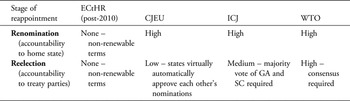
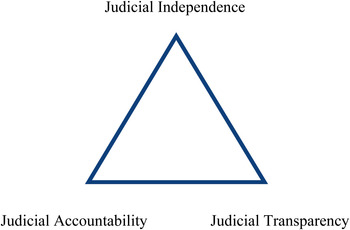

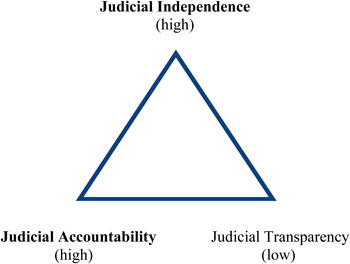
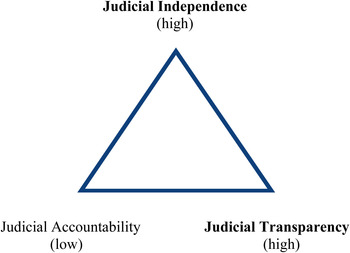
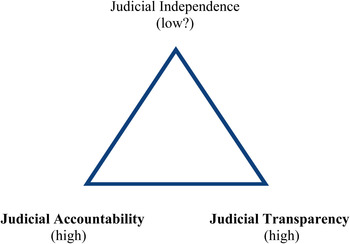
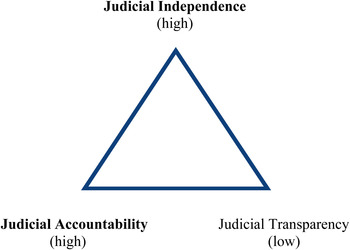



Target article
The Judicial Trilemma
Related commentaries (6)
Independence and Impartiality in The Judicial Trilemma
Independence at the Top of the Triangle: Best Resolution of the Judicial Trilemma?
Introduction to Symposium on Jeffrey L. Dunoff and Mark A. Pollack, “The Judicial Trilemma”
Systemic Judicial Authority: The “Fourth Corner” of “The Judicial Trilemma”?
The Application of “The Judicial Trilemma” to the WTO Dispute Settlement System
The Judicial Trilemma visits Latin American Judicial Politics