







1. Introduction
Let  $(R,\mathfrak{m})$ be a commutative Noetherian local ring of Krull dimension d, and let I be an
 $\mathfrak{m}$-primary ideal of R with its integral closure denoted by
 $\overline{I}$. The classical result known as the Hilbert-Samuel theorem says that for sufficiently large integer n, the length of
 $R/I^n$ is a polynomial in variable n of degree d. This polynomial is well known as the Hilbert-Samuel polynomial of I and can be expressed as:
 \begin{equation*}
\sum^{d}_{i=0}(-1)^i{\rm e}_i(I)\left(
\begin{array}{c}
{n+d-i-1}\cr d-i
\end{array}
\right),
\end{equation*}
where  ${\rm e}_i(I)$ is called the ith Hilbert-Samuel coefficient of I for
 $i=1,\ldots,d$ and
 ${\rm e}_0(I)$ is the Hilbert-Samuel multiplicity of I. In this context, we have the following classical result known as Rees multiplicity theorem (see [Reference Northcott and Rees20] and Kirby-Rees [Reference Rees22]): If R is formally equidimensional, then the integral closure
 $\overline{I}$ of I can be characterized as the unique largest ideal of R containing I and having the same Hilbert-Samuel multiplicity as I, i.e.,
 ${\rm e}_0(I)={\rm e}_0(\overline{I})$. It should be noted that this result is extensively used in Algebraic Geometry, Singularity Theory and Commutative Algebra (see [Reference Kleiman and Thorup18]). Given the importance of this result, it is natural to ask the following question:
Question 1.1. Let  $(R,\mathfrak{m})$ be a Noetherian formally equidimensional local ring. Is there a chain of ideals between I and
 $\overline{I}$ with a property similar to Rees multiplicity theorem? If so, does there exist a colon structure for these ideals?
Motivated by this question or Rees’ theorem, Shah establishes in [Reference Shah27] the existence of a chain of unique largest ideals Ik, with  $0\leq k\leq d$, between the ideals I and
 $\overline{I}$. Each Ik ideal, called the coefficient ideal, has the property of preserving the first k + 1 Hilbert-Samuel coefficients of I. In other words, there exist ideals Ik satisfying the following inclusions:
 $I \subset I_d \subset \cdots \subset I_1 \subset I_0 = \overline{I}$ with
 ${\rm e}_i(I)={\rm e}_i(I_{k})$, for
 $i=0,\ldots,k$. The kth coefficient ideal Ik represents the kth step in this chain. Moreover, Shah determined a specific colon ideal structure for each coefficient ideal Ik of I. He showed that, for
 $k=1,\ldots,d$, the ideal Ik is determined by
 $I_k = (I^{n_0+1}:x_1,\ldots,x_k)$, where
 $n_0\geqslant1$ is a fixed integer and
 $(x_1,\ldots,x_d)$ is a fixed minimal reduction of I n 0, for some integer n 0. Additionally, Shah proved that the Ratliff-Rush closure of this same ideal, denoted as
 $\widetilde{I}:=\cup_{n\geqslant1}(I^{n+1}:I^n)$, coincides with the dth coefficient ideal, i.e.,
 $I_d = \widetilde{I}$.
The importance of the Ratliff-Rush closure and coefficient ideals cannot be underestimated. For instance, the Ratliff-Rush filtration  $\{(\widetilde{I})^n\}_{n\in\mathbb{N}}$ has proven to be a very useful tool for studying numerical invariants of the associated graded ring
 $G_I(R)=\oplus_{n\geqslant0}I^n/I^{n+1}$ (see Rossi-Valla, [Reference Rossi and Valla26], and the references therein). Rossi-Valla used the Ratliff-Rush closure of an ideal crucially in their proof of the Sally conjecture. Blancafort also employed the Ratliff-Rush closure of an ideal and the Hilbert-Samuel function of a good filtration to generalize the works of Huckaba-Marley in [Reference Huckaba and Marley11] and Rossi-Valla in [Reference Rossi and Valla25].
On the other hand, coefficient ideals also hold their importance. For instance, Ciupercă described the S 2-ification of the extended Rees algebra of an  $\mathfrak{m}$-primary ideal I through the first coefficient ideal of all powers of I in [Reference Ciupercă5]. Furthermore, assuming that I is a 0-dimensional monomial ideal in characteristic zero, Polini-Ulrich-Vitulli used the fact that the kernel of an ideal can be related to components of the graded canonical module of the extended Rees algebra to prove that the kernel of I coincides with the kernel of any ideal between I and the first coefficient ideal
 $I_{1}^R$ of I in [Reference Polini, Ulrich and Virtulli21]. Moreover, the properties of the first coefficient ideals were extensively described by Heinzer-Johnston-Lantz, Heinzer-Johnston-Lantz-Shah, Heinzer-Lantz, and Shah in [Reference Heinzer, Johnston and Lantz7–Reference Heinzer and Lantz9, Reference Shah27], respectively.
We can observe that the above results were obtained for  $\mathfrak{m}$-primary ideals, but Question 1 was also answered for arbitrary ideals: Let
 $J\subset I$ be ideals of R with
 $\ell_R(I/J) \lt \infty$. Amao in [Reference Amao1] and Rees in [Reference Rees23] show that the numerical function
 $h_{I/J}(n):=\ell_R(I^n/J^n)$ is a polynomial function
 $P_{I/J}(n)$ of degree at most d. We refer to
 $h_{I/J}(n)$ and
 $P_{I/J}(n)$ as the Rees-Amao function and the Rees-Amao polynomial of the pair (J, I), respectively. The Rees multiplicity theorem has been generalized for ideals that are not
 $\mathfrak{m}$-primary by several authors. For instance, Rees showed in [Reference Rees23] that if
 $(R,\mathfrak{m})$ is formally equidimensional, then J is a reduction of I if and only if
 $\deg(P_{I/J}(n)) \lt d$.
Analogously to the results obtained by Shah in [Reference Shah27] for the case of  $\mathfrak{m}$-primary ideals, Herzog-Puthenpurakal-Verma proved in [Reference Herzog, Puthenpurakal and Verma10, Theorem 4.4] that coefficient ideals always exist for arbitrary ideals. More specifically, if
 $(R,\mathfrak{m})$ is a formally equidimensional local ring and I is an ideal of R, then for each
 $k=1,\ldots,s$, there exists a unique largest ideal Ik with
 $\ell_R(I_{k}/I) \lt \infty$, and
 \begin{equation*}
I\subseteq I_{s}\subseteq I_{s-1}\subseteq\cdots\subseteq I_{1}\subseteq q(I), \mbox{such that } \deg\left(P_{I_{k}/I}(n)\right) \lt s-k
\end{equation*}
where q(I) is the relative integral closure of I, and  $s := \dim F(I)=\dim(\oplus_{n\geqslant 0}I^n/\mathfrak{m}I^n)$ is the analytic spread of I, where F(I) is the fiber cone of I,
It should be noted that Herzog-Puthenpurakal-Verma showed the existence of coefficient ideal for arbitrary ideals, but they did not demonstrated the colon structure of these ideals. However, in [Reference Callejas-Bedregal, Pérez and Ferrari4], the authors determined the colon structure of each coefficient ideal found by Herzog-Puthenpurakal-Verma.
Finally, as we can see, the coefficient ideals have been extensively explored by many researchers. Therefore, it is natural to wonder if these results can be extended to modules. To introduce this context, we recall some well-known facts.
Let M be a finitely generated R-module contained in a free R-module F of positive rank p > 0 with finite colength, denoted as  $\ell_{R}(F/M) \lt \infty$. Using the notation described in Section 2.1, Buchsbaum-Rim showed that for sufficiently large values of n, the length
 $\ell_R(F^n/M^n)$ can be expressed as a polynomial in n of degree
 $d+p-1$, given by
 \begin{equation*}P_M^F(n)=\sum\limits_{i=0}^{d+p-1}{(-1)}^i{\rm e}_i^F(M)\left(\begin{array}{c}n+d+p-i-2\cr d+p-i-1\end{array}\right),\end{equation*}
where  ${\rm e}_i^F(M)$ represents the ith Buchsbaum-Rim coefficient of M in F for
 $i=0,\dots,d+p-1$. In particular,
 ${\rm e}_0^F(M)$ is called the Buchsbaum-Rim multiplicity of M in F (for more detailed see [Reference Buchsbaum and Rim3]).
Similar to the case of ideals, there is also the Rees’ multiplicity theorem for modules. If R is formally equidimensional, then the integral closure  $\overline{M}$ of M in F can be characterized as the largest submodule of R that contains M and has the same Buchsbaum-Rim multiplicity as M, i.e.,
 ${\rm e}_0^F(M)={\rm e}_0^F(\overline{M})$ [Reference Rees22]. The Buchsbaum-Rim multiplicity has been extensively studied by numerous authors in the fields of Commutative Algebra, Algebraic Geometry, and Singularity Theory (e.g., [Reference Buchsbaum and Rim3, Reference Katz16, Reference Kleiman and Thorup18, Reference Rees22], [Reference Huneke and Swanson12, p. 317] and [Reference Simis, Ulrich and Vasconcelos28, p. 418, Remark 8.9]). Given the importance of this result, it is natural to ask the following:
Question 1.2. Let  $(R,\mathfrak{m})$ be a Noetherian formally equidimensional ring, and let M be an R-submodule of F. Is there a chain of modules between M and
 $\overline{M}$ with a property similar to Rees’s multiplicity theorem? If so, does there exist a colon structure for these modules?
We can observe that this question is less explored compared to the ideal case, but there have already been some partial answers. For instance, Liu [Reference Jung15] provides the following result: If R is a domain formally equidimensional ring, and M is a finitely generated R-module such that  $F/M$ has finite length, then there exists a unique chain
 \begin{equation*}M \subseteq M^F_{\{d+p-1\}} \subseteq \cdots \subseteq M^F_{\{1\}} \subseteq M^F_{\{0\}} \subseteq \overline{M},\end{equation*}
such that  ${\rm e}_i^F(M) = {\rm e}_i^F(M^F_{\lbrace k\rbrace})$, for all
 $i = 0,\ldots,k$. The module
 $M^F_{\lbrace k\rbrace}$ is called the Coefficient Module of M. On the other hand, in [Reference Jorge-Pérez and Ferrari14], the Pérez and Ferrari showed the same result as Liu, but without assuming that R is a domain. Furthermore, they provided the colon structure of these modules, which constitutes a generalization of one of the main results given by Shah ([Reference Shah27, Theorem 2 and 3]).
The main aim of this paper is to establish a generalization of a result originally presented by Herzog-Puthenpurakal-Verma in [Reference Herzog, Puthenpurakal and Verma10, Theorem 4.4]. Precisely, we show that there exists a unique largest module Mk with  $\ell_R(M_{k}/M) \lt \infty$ and
 $M\subseteq M_{s}\subseteq\cdots\subseteq M_{1}\subseteq
M_{0}\subseteq q(M),$ such that
 $\deg(P_{M_{k}/M}(n)) \lt s-k,$ where q(M) is the relative integral closure of
 $M,$ defined by
 $q(M):=\overline{M}\cap M^{sat},$ where
 $M^{sat}=\cup_{n\geqslant
1}(M:_F\mathfrak{m}^n)$ is the saturation of M and s is the analytic spread of M (see Theorem 3.1). Additionally, we also provide the colon structure of these coefficient modules (see Theorems 3.3, 3.4). Furthermore, our results also generalizes the results given by Liu in [Reference Jung15] and Perez-Ferrari in [Reference Jorge-Pérez and Ferrari14].
Now let I(M) denote the 0th Fitting ideal  $\text{Fitt}_0(F/M)$ of
 $F/M$. In [Reference Katz and Kodiyalam17], Katz and Kodiyalam defined the associated graded ring with respect to the module M to be the
 $R/I(M)$-algebra
 \begin{equation*}G_{I(M)}(\mathscr{R}(M)):=\frac{\mathscr{R}(M)}{I(M)\mathscr{R}(M)} = \frac{R}{I(M)} \oplus \frac{M}{I(M)M} \oplus \frac{M^2}{I(M)M^2} \oplus \cdots.\end{equation*}
In the case p = 1, that is, if F = R is a ring and M = I is an ideal of R, then  $I(M)=I$ and
 $G_{I(M)}(\mathscr{R}(M))=G_I(R)$, the associated graded ring of the ideal I of R. Another aim of this paper is to give a new result that shows a way to control the height of the associated prime ideals of
 $G_{I(M)}(\mathscr{R}(M))$ (see Theorem 5.8), providing a generalization of one of the main results of Shah [Reference Shah27, Theorem 4]. To do that, we establish the existence of another coefficient module between the R-modules
 $I(M)M$ and M, denoted by
 $M_{[k]}$ and which we call the coefficient module of the associated graded ring
 $G_{I(M)}(\mathscr{R}(M))$ (see Section 4). Additionally, we give a colon structure of these coefficient modules in Theorem 4.5.
The organization of this paper is as follows: In section 2, we introduce the notation, definitions, and some necessary known results that will be used.
In Sections 3 and 4, we show the main results of this work. In Section 3, we start by proving the existence of coefficient modules between M and q(M). Additionally, we provide an algebraic characterization of the coefficient modules in terms of colon modules. In section 4, we show the existence of coefficient modules between  $I(M)M$ and M, and give structural properties for them.
In the last section, we provide some applications and properties by making use of the results presented in Sections 3 and 4.
2. Setup and background
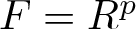
Let  $(R,\mathfrak{m})$ be a Noetherian local ring, M a finitely generated R-module which is contained in a free R-module F of positive rank. The embedding
 $M\subseteq F$ induces the graded R-algebra homomorphism between the symmetric algebras
 \begin{equation*}{\rm Sym}(i):{\rm Sym}_R(M)\longrightarrow {\rm Sym}_R(F)\end{equation*}
of M and F. As F is a free R-module, the symmetric algebra  $S(F):={\rm Sym}_R(F)$ of F concides with the polynomial ring
 $S=R[t_1,t_2,\dots,t_p]$ over R, where
 $p={\rm rank}_R(F) \gt 0$. The authors Simis-Ulrich-Vasconcelos in [Reference Simis, Ulrich and Vasconcelos28], defined the Rees algebra
 $\mathscr{R}(M)$ of the module M as the image of the induced homomorphism:
 \begin{equation*}\mathscr{R}(M) = {\rm Im}\left({\rm Sym}(i)\right) = \bigoplus_{n\geqslant0} M^n \subseteq S(F)= R[t_1,t_2,\ldots,t_p],\end{equation*}
where  $M^n:=[\mathscr{R}(M)]_n$ stands for the homogeneous component of
 $\mathscr{R}(M)$ of degree n, i.e., is the nth power of the image of M in
 $\mathscr{R}(M)$. In particular,
 $M=[\mathscr{R}(M)]_1$ is an R-submodule of
 $\mathscr{R}(M)$. We denote IM the ideal of S generated by
 $[\mathscr{R}(M)]_1$. So the fiber cone of ideal
 ${I_M}$ is defined to be
 $\mathscr{F}({I_M}):=\oplus_{n\geqslant 0} I_M^n/\mathscr{M} I_M^n$, where
 $ \mathscr{M}=\mathfrak{m}\oplus \bigoplus_{n \gt 0}F^n$ is the only maximal homogeneous ideal of
 $S.$
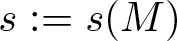
As in the ideal case, we may define the fibre cone (or special fibre) of an R-module M as following  $\mathscr{F}(M):={\mathscr{R}(M)}/\mathfrak{m}{\mathscr{R}(M)}.$ The analytic spread of M is defined by
 $s:=s(M)=\dim(\mathscr{F}(M))$.
Throughout the paper the R-modules will be contained in a free R-module F of finite rank p > 0.
The next result gives a characterization for a sequence to be a minimal reduction of powers of a module.
2.1. Some properties of reduction
An R-submodule N of M is called a reduction of M if there exists an  $n_0 \gt 0$ such that
 $M^{n+1}=NM^n \mbox{for all } n\geqslant n_0.$ A reduction
 $N\subseteq M$ is said to be a minimal reduction of M if N properly contains no further reductions of M. If the R-submodule N is a reduction of the R-submodule M, then there exists at least one R-submodule L in N such that L is a minimal reduction of M. This last statement follows exactly from the same deduction as the proof of Huneke-Swanson in [Reference Huneke and Swanson12, Theorem 8.3.5].
Let us recall the definition of the integral closure of modules. For every integer  $n\geqslant0$, we define the integral closure
 \begin{equation*}\overline{M^n}=\left[\overline{\mathscr{R}(M)}^{{\rm Sym}(F)}\right]_n\subseteq S_n(F)=F^n,\end{equation*}
of Mn to be the nth homogeneous component of the integral closure  $\overline{\mathscr{R}(M)}^{{\rm Sym}(F)}$ of
 $\mathscr{R}(M)$ in
 ${\rm Sym}(F)$. In other words,
 $\overline{M^n}$ is the integral closure of the ideal
 $(M{\rm Sym}(F))^n$ of degree
 $n.$ In particular,
 $\overline{M}=(\overline{M{\rm Sym}(F)})_1\subseteq F.$ Hence
 $\overline{M}$ consists of the element
 $x\in F$ which satisfies the integral equation
 $x^n+c_1x^{n-1}+\cdots+c_{n-1}x+c_n=0$ in
 ${\rm Sym}(F)$ where n > 0 and
 $c_i \in M^i$ for every
 $1\leq i\leq n.$
Saturation and reduction: Let  $(R,\mathfrak{m})$ be a Noetherian local ring, M a finitely generated R-submodule of F. The saturation M sat of M with respect to
 $\mathfrak{m}$ is the R-submodule of F defined by
 \begin{equation*}
M^{sat}=\bigcup_{n\in \mathbb{N}}\left(M:_F\mathfrak{m}^{n}\right)
=\left\{x\in F\ |\ x\mathfrak{m}^n\subseteq M \textrm{for some }\
n\in \mathbb{N} \right\}
\end{equation*}
and the relative integral closure q(M) of M is defined by  $q(M):=\overline{M} \cap M^{{sat}}$.
The saturation and the relative integral closure are R-modules which contains M.
Since  $M\subseteq (M:_F\mathfrak{m}) \subseteq (M:_F\mathfrak{m}^{2}) \subseteq (M:_F\mathfrak{m}^{3})\subseteq \cdots $ and since F is a Noetherian R-module, there exists an integer k such that
 $(M:_F\mathfrak{m}^{k+1})=(M:_F\mathfrak{m}^{k})$. This implies that
 $\ell_R(M^{{sat}}/M) \lt \infty$.
Lemma 2.1. Let  $(R,\mathfrak{m})$ be a Noetherian local ring, M a finitely generated R-module which is contained in F. Then, the relative integral closure q(M) of M satisfies the following properties:
(i) M is a reduction of q(M) and
 $\ell_R(q(M)/M) \lt \infty$.
(ii) If M is a reduction of N with
$\ell_R(N/M) \lt \infty$ then
$N\subseteq q(M)$.(iii) If
$N\subseteq M$ then
$q(N)\subseteq q(M)$.(iv)
$q(q(M))=q(M)$.


Proof. (i) Since  $M\subseteq q(M)\subseteq \overline{M}$, we get M is a reduction of q(M). Also, we have
 $\ell_R(q(M)/M) \lt \ell_R(M^{sat}/M) \lt \infty.$
(ii) Since M is a reduction of N we get  $q(N)=\overline{N}\cap N^{sat}=\overline{M}\cap N^{sat}$. As
 $\ell_R(N/M) \lt \infty$, there is
 $k\in \mathbb{N}$ such that
 $\mathfrak{m}^kN\subseteq M$. Therefore
 $N^{sat}\subseteq M^{sat}$ and
 $N\subseteq q(N)\subseteq \overline{M}\cap M^{sat}=q(M)$.
(iii) Clear.
(iv) If q(M) is a reduction of K with  $\ell_R(K/q(M)) \lt \infty$ then M is also a reduction of K and
 $\ell_R(K/M) \lt \infty$. So by (ii) we have
 $K\subseteq q(M)$. By taking
 $K=q(q(M))$ we get the desired result.
Lemma 2.2. [Reference Jorge-Pérez and Ferrari14, Lemma 2.3]
Let M be an R-module and let  $a_1,\ldots,a_s$ be elements of M n 0 for some fixed
 $n_0 \gt 0$. We denote by
 $\overline{a_i}:=a_i+\mathfrak{m}M^{n_0}$, for
 $i=1,\ldots,s$. Then
 \begin{equation*}\ell_{\frac{R}{\mathfrak{m}}}\left(\frac{\mathscr{F}(M)}{\left(\overline{a}_1,\ldots,\overline{a}_s\right)}\right) \lt \infty
\Longleftrightarrow\
\left(a_1,\ldots,a_s\right)\ \mbox{is a reduction of}\ M^{n_0}.\end{equation*}
The next theorem, when the residue field is infinite, shows the existence of minimal reductions whose minimal generating sets have cardinality equal to the analytic spread of the R-module M. As a consequence, the following corollary shows a condition, using minimal reduction, to an element belongs to the integral closure.
Theorem 2.3 [Reference Huneke and Swanson12, Corollary 16.4.7]
Let  $(R,\mathfrak{m})$ be a Noetherian local ring with infinite residue field. Then all R-module M with analytic spread s(M) admits a reduction generated by s(M) elements. Furthermore, this reduction is minimal.
Corollary 2.4. [Reference Jorge-Pérez and Ferrari14, Corollary 2.6]
Let R be formally equidimensional Noetherian ring, M an R-module and  $s:=s(M)$. Let
 $x_1,\ldots,x_s$ form a minimal reduction of M n 0 for some
 $n_0\geqslant 1$. Suppose
 $yx_i\in M^{n_0+1}$ for some
 $y\in S(F)$ and some
 $i\in \{1,\ldots,s\}.$ Then
 $y\in\overline{M}$.
Some general references on the subjects of this Section 2 are authored by Simis-Ulrich-Vasconcelos in [Reference Simis, Ulrich and Vasconcelos28] and some of these results were proved in Huneke-Swanson in [Reference Huneke and Swanson12].
3. The coefficient modules between M and
$\overline{M}$

In this section, we show the main results of this work. We begin by showing the existence of coefficient modules between M and q(M). Additionally, we provide an algebraic characterization of the coefficient modules in terms of colon modules. The results obtained in this section generalize the findings of Herzog-Puthenpurakal-Verma ([Reference Herzog, Puthenpurakal and Verma10, Theorem 4.4]), Liu ([Reference Jung15]), and Perez-Ferrari ([Reference Jorge-Pérez and Ferrari14]).
Theorem 3.1 Theorem of Existence for Arbitrary Modules
Let  $(R,\mathfrak{m})$ be a formally equidimensional and d-dimensional local ring with infinite residue field. Let M be a finitely generated R-submodule of F with analytic spread
 $s:=s(M)\geqslant 1$ and let
 $k \in \{1,\ldots,s\}$. Then there exist unique largest R-submodules Mk of F with
 $\ell_R(M_{k}/M) \lt \infty$ and
 \begin{equation*}M\subseteq M_{s}\subseteq\cdots\subseteq M_{1}\subseteq
M_{0}=q(M)\end{equation*}
such that  ${\rm deg} (P_{M_{k}/M}(n)) \lt s-k$ for
 $k=1,\ldots,s$.
Proof. Fix  $0\leq k\leq s$. Consider the sets
 \begin{equation*}V_{k}=\left\{L\subseteq F \ | \ \ M\subseteq L,\
\ell_R\left(\frac{L}{M}\right) \lt \infty,\ \mbox{deg}\left(P_{\frac{L}{M}}(n)\right) \lt s-k\right\}\end{equation*}
If  $L\in V_{k}$, then
 $\mbox{deg}(P_{L/M}) \lt s-1$ and
 $\ell_R(L/M) \lt \infty$. Hence, by Huneke-Swanson’s theorem [Reference Huneke and Swanson12, Theorem 6.5.6 (3)], M is a reduction of L and by Lemma 2.1 (ii),
 $L\subseteq q(M)$. Since
 $M\in V_{k}$ and F is a Noetherian R-module, Vk has a maximal element, say N.
We show that N is unique. Let  $L\in V_{k}$ and
 $x\in L$. Since
 $M\subseteq (M,x)\subseteq L$,
 \begin{equation*}\ell_R\left(\frac{{(M,x)}^n}{M^n}\right)\leq \ell_R\left(\frac{L^n}{M^n}\right) \lt \infty,\end{equation*}
for all large n. Hence
 \begin{equation*}\mbox{deg}\left(P_{\frac{(M,x)}{M}}\right)\leq \mbox{deg}\left(P_{\frac{L}{M}}\right) \lt s-k.\end{equation*}
By [Reference Huneke and Swanson12, Theorem 6.5.6], M is a reduction of (M, x), i.e.,  $M{(M,x)}^r={(M,x)}^{r+1}$ for some r. Then
 $x^{r+1}\in M{(M,x)}^{r}\subseteq N{(N,x)}^r$. Hence
 $N{(N,x)}^r={(N,x)}^{r+1}$. It follows that, for all
 $n\geqslant r$,
 $N^{n-r}{(N,x)}^r={(N,x)}^n$.
Because  $\ell_R((M,x)/M) \lt \infty$, there exists some t > 0 such that
 $\left(x,M\right){\mathfrak{m}}^t\subseteq M\subseteq N$. Then
 $x{\mathfrak{m}}^t\subseteq M\subseteq N$ and
 ${\mathfrak{m}}^tM\subseteq M\subseteq N$. Hence
 ${\mathfrak{m}}^tM\subseteq M\subseteq\left(N,x\right)$, so that
 $\ell_R\left((N,x)/M\right) \lt \infty$. We have
 \begin{equation*}
\begin{array}{lll}
\displaystyle\ell_R\left(\frac{{\left(N,x\right)}^n}{M^n}\right) & = & \displaystyle\ell_R\left(\frac{{(N,x)}^tN^{n-t}}{M^n}\right) \\
& = & \displaystyle\ell_R\left(\frac{\left(N^n,N^{n-1}x,\dots,N^{n-t}x^t\right)}{M^n}\right)\\
& \leq & \displaystyle\sum^t_{i=1}\ell_R\left(\frac{N^{n-i}x^i+N^n}{M^n}\right) \\
\\
& \leq & \displaystyle\sum^t_{i=1}\left[\ell_R\left(\frac{N^{n-i}x^i+M^n}{M^n}\right)+\ell_R\left(\frac{N^n}{M^n}\right)\right] \\
\\
& \leq & \displaystyle\sum^t_{i=1}\left[\ell_R\left(\frac{M^{n-i}x^i+M^n}{M^n}\right)+\ell_R\left(\frac{N^n}{M^n}\right)+\ell_R\left(\frac{N^{n-i}x^i+M^n}{M^{n-i}x^i+M^n}\right)\right] \\
& \leq & \displaystyle\sum^t_{i=1}\left[\ell_R\left(\frac{{\left(M,x\right)}^n}{M^n}\right)+\ell_R\left(\frac{N^n}{M^n}\right)+\ell_R\left(\frac{N^{n-i}}{M^{n-i}}\right)\right].
\end{array}
\end{equation*}
Hence  $\mbox{deg}(P_{(N,x)/M}) \lt s-k.$ Therefore
 $(N,x)\subseteq V_{k}$. By maximality of N, we conclude that
 $x\in N$. Hence
 $L\subseteq N$ and therefore N is unique and it will be denoted by
 $M^F_{k}$.
Definition 3.2. The R-submodules  $M^F_{k}$ of F, for
 $k=1,\ldots, s$, which appear in the Theorem 3.1, are called the kth Coefficient Modules of M in F.
Theorem 3.3 Structure Theorem for Coefficient Modules
Let  $(R,\mathfrak{m})$ be a formally equidimensional and d-dimensional local ring with infinite residue field. Let M be a finitely generated R-submodule of F with analytic spread
 $s:=s(M)\geqslant 1$. Let
 $k\in \{1,\dots,s\}$. Then
 \begin{equation*}
M^F_{k}=\bigcup_{n_0, \ \underline{x}}\left(M^{n_0+1}:_Fx_1,\ldots,x_k\right)\cap M^{sat},\end{equation*}
where  $n_0\geqslant 1$ and
 $\underline{x}=( x_1,\ldots,x_k,\dots,x_s)$ is a minimal reduction of M n 0.
Proof. Fix  $1\leq k\leq s$ and let
 $y\in M^F_{k}$. Then
 $M\subseteq(M,y)\subseteq M^F_{k}$, and hence
 \begin{equation*}
\ell_R\left(\frac{{\left(M,y\right)}^n}{M^n}\right)\leq P_{\frac{M^F_{k}}{M}}(n),
\end{equation*}
where, by definition of coefficient module we have  $\deg(P_{M^F_{k}/M}(n)) \lt s-k.$
In particular, since  $(M,y)M^{n-1}\subseteq{(M,y)}^n$,
 \begin{equation}
\ell_R\left(\frac{{\left(M,y\right)}M^{n-1}}{M^n}\right)
\leq\ell_R\left(\frac{{\left(M,y\right)}^n}{M^n}\right)\leq
P_{\frac{M^F_{k}}{M}}(n).
\end{equation}
Set
 \begin{equation*}
L=\bigoplus_{n\geqslant0}L_n,\quad\textrm{where }\quad L_n:=\frac{\left(M,y\right)M^n}{M^{n+1}}.
\end{equation*}
Clearly L has the structure of an  $\mathscr{R}(M)$-module. By equation (3.1) we have that
 $\dim(L)\leq s-k,$ that is,
 \begin{equation}\dim(L)=\dim\left(\frac{\mathscr{R}(M)}{\left(0:_{\mathscr{R}(M)}L\right)}\right)\leq s-k.
\end{equation}
We can easily prove that
 \begin{equation*}\left(0:_{\mathscr{R}(M)}L\right)=\bigoplus_{n\geqslant0}\left(M^{n+1}:_{\mathscr{R}(M)}y\right)\cap M^n.\end{equation*}
Consider the natural projection π from  $\mathscr{R}(M)$ to
 $\mathscr{F}(M)$. Then
 \begin{equation}\pi\left(\oplus_{n\geqslant0}\left(M^{n+1}:_{\mathscr{R}(M)}y\right)\cap M^n\right)=
\bigoplus_{n\geqslant0} \frac{\left(M^{n+1}:_{\mathscr{R}(M)}y\right)\cap
M^n+\mathfrak{m}M^n}{\mathfrak{m}M^n}=:H_k.
\end{equation}
Then Hk is an R-module and we have a surjective R-homomorphism
 \begin{equation*}
\begin{array}{rcl}\displaystyle\frac{\mathscr{R}(M)}{(0:_{\mathscr{R}(M)}L)} & \longrightarrow &
\displaystyle\frac{\mathscr{F}(M)}{H_k}\end{array},
\end{equation*}
and hence, by equation (3.2)
 \begin{equation}\dim\left(\frac{\mathscr{F}(M)}{H_k}\right)\leq s-k.
\end{equation}
By assumption, we have  $\dim(\mathscr{F}(M))=s$, that is,
 $s=s(M)$. By equation (3.4) and by [Reference Shah27, Lemma 2(E)], we can obtain elements
 ${\overline{x}}_1,\ldots,{\overline{x}}_s$ in the fiber cone
 $\mathscr{F}(M)$ such that
(1)
${\overline{x}}_1,\ldots,{\overline{x}}_s$ are homogeneous of the same degree
$n_0\geqslant 1$;(2)
$\ell_R\left(\frac{\mathscr{F}(M)}{\left({\overline{x}}_1,\ldots,{\overline{x}}_s\right)}\right) \lt \infty$;(3) We have
$\dim\left(\frac{\mathscr{F}(M)}{\left({\overline{x}}_1,\ldots,{\overline{x}}_k\right)}\right)=s-k$;(4)
${\overline{x}}_1,\ldots,{\overline{x}}_k$ are in Hk.


Let  ${{x}}_1,\ldots,{{x}}_s$ be any preimages of
 ${\overline{x}}_1,\ldots,{\overline{x}}_s$ in
 $M^{n_0}.$ By Lemma 2.2 and (2) just above, the elements
 ${{x}}_1,\ldots,{{x}}_s$ form a minimal reduction of M n 0. Since
 ${\overline{x}}_1,\ldots,{\overline{x}}_k$ are in Hk we obtain by equation (3.3) that y is in the projection
 $(M^{n_0+1}:_{\mathscr{R}(M)}x_1,\ldots,x_k)$. Therefore
 $M_{k}^F\subseteq\bigcup_{n_0, \underline{x}}(M^{n_0+1}:_{\mathscr{R}(M)}(x_1,\ldots,x_k))$ and hence
 $M_{k}^F\subseteq\bigcup_{n_0, \underline{x}}(M^{n_0+1}:_F(x_1,\ldots,x_k))\cap M^{sat}.$
Conversely, take  $y\in(M^{n_0}:_Fx_1,\ldots,x_k)\cap
M^{sat}.$ In particular
 $yx_i\in M^{n_0}$. Thus, by Lemma 2.4,
 $y\in\overline{M}$. Therefore M is a reduction of (M, y), i.e.,
 ${(M,y)}^{s+n}={\left(M,y\right)}^sM^n$ for some
 $s\geqslant0$ and all
 $n\geqslant0$. Then
 \begin{equation*}
\begin{array}{lll}
\ell_R\left(\frac{{\left(M,y\right)}^{s+n}}{M^{n+s}}\right) & =
& \ell_R\left(\frac{{\left(M,y\right)}^sM^n}{M^{n+s}}\right) \\
& =
& \displaystyle\sum^s_{i=1}\ell_R\left(\frac{{\left(M,y\right)}^iM^{n+s-i}}{{\left(M,y\right)}^{i-1}M^{n+s-i-1}}\right) \\
& = &
\displaystyle\sum^s_{i=1}\ell_R\left(\frac{{\left(M,y\right)}^{i-1}M^{s-i}{\left(M,y\right)}M^n}
{{\left(M,y\right)}^{i-1}M^{s-i}M^{n+1}}\right) \\
& \leq &
\displaystyle\sum^s_{i=1}c_i\ell_R\left(\frac{\left(M,y\right)M^n}{M^{n+1}}\right)
\end{array}
\end{equation*}
for some positive constant integers ci. The last inequality can be seen by canonically mapping for each i:
 \begin{equation*}
\bigoplus^{c_i}_{n=1}L_n\longrightarrow\frac{{(M,y)}^{i-1}M^{s-i}{(M,y)}M^n}{{(M,y)}^{i-1}M^{s-i}M^{n+1}}
\longrightarrow 0,
\end{equation*}
where  $L_n=(M,y)M^n/M^{n+1}$. Choose ci as the minimal number of generators of
 ${(M,y)}^{i-1}M^{s-i}$. Set
 $c=\sum c_i$. Thus
 \begin{equation} \ell_R\left(\frac{{\left(M,y\right)}^{s+n}}{M^{n+s}}\right)\leq
c\cdot\ell_R(L_n).
\end{equation}
Since  $y\in M^{sat}$ there exists a positive integer p such that
 $y{\mathfrak m}^p\subseteq M.$ Set
 $L=\bigoplus_{n\geqslant0}L_n$ and
 $G=\mathscr{R}(M)/{\mathfrak m}^p\mathscr{R}(M)=\bigoplus_{n\geqslant0} M^n/{\mathfrak m}^pM^n.$ Then, since
 $y{\mathfrak m}^p\subseteq M,$ we have
 ${\mathfrak m}^p\mathscr{R}(M)\subseteq \mbox{Ann}_{\mathscr{R}(M)}(L).$ Hence L, which is an
 $\mathscr{R}(M)$-module, has a natural structure of an G-graded module. Thus
 $\ell_R(L_n)$ is, for large n, a polynomial in n of degree at most
 $\dim(L)-1.$ But
 $\dim(L)=\dim(G/\mbox{Ann}_G(L)).$ Notice that
 \begin{equation*}
\mbox{Ann}_G(L)=\left(0:_{\frac{\mathscr{R}(M)}{{\mathfrak m}^p\mathscr{R}(M)}}\oplus_{n\geqslant0}\frac{\left(M,y\right)M^n}{M^{n+1}}\right)=\bigoplus_{n\geqslant0}
\frac{\left(M^{n+1}:_{\mathscr{R}(M)}y\right)\cap M^n}{\mathfrak{m}^pM^n}=:A_k.
\end{equation*}
Since  $y\in(M^{n_0}:_Fx_1,\ldots,x_k)$ it follows that
 $x'_1,\ldots,x'_k\in A_k,$ where
 $x'_i$ is the image of xi in G. Thus, since
 $\dim(G)=\dim\left(\mathscr{F}(M)\right)=s$, one concludes that
 \begin{equation*}
\dim\left(\frac{G}{\mbox{Ann}_G(L)}\right)\leq \dim\left(\frac{G}{\left(x'_1,\ldots,x'_k\right)}\right)=s-k.
\end{equation*}
Therefore, by the inequality (3.5),  $\ell_R({(M,y)}^{s+n}/M^{s+n})$ is bounded by a polynomial in n of degree
 $s-(k+1)$ for all large n. Thus
 \begin{equation*}
\deg\left(P_{\frac{(M,y)}{M}}(n)\right) \lt s-k,
\end{equation*}
which implies that  $M\subset\left(M,y\right)\subset M^F_{k}$. Therefore
 $y\in M^F_{k}$.
Theorem 3.4 Finer Structure Theorem for Coefficient Modules
Let  $(R,\mathfrak{m})$ be a formally equidimensional and d-dimensional local ring with infinite residue field. Let M be a finitely generated R-submodule of F with analytic spread
 $s:=s(M)\geqslant 1$. Then there exists
 $n_0\geqslant1$ and a minimal reduction
 $x_1,\ldots,x_s$ of M n 0 such that
 \begin{equation*}
M^F_{k}=\left(M^{n_0+1}:_F\left(x_1,\ldots,x_k\right)\right)\cap M^{sat}, \text{for all } k=1,\dots,s.
\end{equation*}
Proof: We know, by definition of  $M^F_{k}$ and for all large n, that
 \begin{equation*}
\ell_R\left(\frac{(M_{k}^F)^{n}}{M^n}\right)=P_{\frac{M_{k}^F}{M}}(n)\;\mbox{and
that } \;\deg\left(P_{\frac{M_{k}^F}{M}}(n)\right) \lt s-k.
\end{equation*}
In particular, since  $M\subseteq M^F_{k}$, we also have
 \begin{equation}\ell_R\left(\frac{M^F_{k}M^{n-1}}{M^n}\right)\leq
P_{\frac{M_{k}^F}{M}}(n).
\end{equation}
Set  $L^{(k)}:=\bigoplus_{n\geqslant 0}(M^F_{k}M^{n})/M^{n+1}.$ Clearly
 $L^{(k)}$ has the structure of an
 $\mathscr{R}(M)$-module and, by (3.6), we have
 \begin{equation}\dim\left(L^{(k)}\right)=\dim\left(\frac{\mathscr{R}(M)}{\left(0:_{\mathscr{R}(M)}L^{(k)}\right)}\right)\leq
s-k.
\end{equation}
We can easily prove that
 \begin{equation*}
\left(0:_{\mathscr{R}(M)}L^{(k)}\right)=\bigoplus_{n\geqslant0}\left(M^{n+1}:M^F_{k}\right)\cap M^n.
\end{equation*}
Consider the natural projection π from  $\mathscr{R}(M)$ to
 $\mathscr{F}(M)$. Then
 \begin{equation*}\pi\left(\oplus_{n\geqslant 0}\left(M^{n+1}:M_{k}^F\right)\cap
M^n\right)= \bigoplus_{n\geqslant1} \frac{\left(M^{n+1}:M^F_{k}\right)\cap
M^n+\mathfrak{m}M^n}{\mathfrak{m}M^n}=:H_k.\end{equation*}
We have a surjective R-homomorphism
 \begin{equation*}\begin{array}{rcl}\displaystyle\frac{\mathscr{R}(M)}{\left(0:_{\mathscr{R}(M)}L^{(k)}\right)} & \longrightarrow &
\displaystyle\frac{\mathscr{F}(M)}{H_k}\end{array},\end{equation*}
and hence, by equation (3.7),  $\dim(
\mathscr{F}(M)/H_k)\leq s-k,$ for all
 $k=1,\dots, s.$ Further,
 $H_1\subseteq \cdots\subseteq H_s$ and each Hk is a homogeneous ideal of
 $\mathscr{F}(M).$ Thus, by [Reference Shah27, Lemma 2(F)], we can choose homogeneous elements
 ${\overline{x}}_1,\ldots,{\overline{x}}_s$ in
 $\mathscr{F}(M)$ of some fixed degree
 $n_0\geqslant1$ such that
 \begin{align*}
\ell_R\left(\frac{\mathscr{F}(M)}{\left({\overline{x}}_1,\ldots,{\overline{x}}_s\right)}\right) \lt \infty
\end{align*}
and  ${\overline{x}}_1,\ldots,{\overline{x}}_k$ are in Hk, for all
 $1\leq k\leq s$. Let
 $x_1,\ldots,x_s$ be any preimages of
 ${\overline{x}}_1,\ldots,{\overline{x}}_s$ in M n 0. Then, by Lemma 2.2,
 $x_1,\ldots,x_s$ form a minimal reduction of M n 0. Now, since
 ${\overline{x}}_1,\ldots,{\overline{x}}_k$ are in Hk we have that
 $M^F_{k}\subseteq (M^{n_0+1}:_Fx_1,\ldots,x_k)$. Therefore
 $M^F_{k}\subseteq\left(M^{n_0+1}:_Fx_1,\ldots,x_k\right)\cap M^{sat}$ for
 $1\leq k\leq s$.
The inclusion  $(M^{n_0+1}:_Fx_1,\ldots,x_k)\cap M^{sat}\subseteq M^F_{k}$ follows straight from Theorem 3.3.
4. The coefficient modules between I(M)M and M
In this section, our main focus is on demonstrating the existence of coefficient modules between  $I(M)M$ and M. We also give the structural properties of these coefficient modules. To this end, we begin by presenting some preliminary facts and concepts. In [Reference Katz and Kodiyalam17], Katz and Kodiyalam investigate the generalization for the associated graded ring
 $G_{I(M)}(\mathscr{R}(M))$.
Next lemma is a generalization of [Reference Shah27, Lemma 2(A)].
Lemma 4.1. Let M be a finitely generated R-submodule of F with  $\ell_R(F/M) \lt \infty$ and let
 $a_1,\ldots,a_s$ be elements of M n 0 for some fixed
 $n_0 \gt 0$. We denote
 $a_i':=a_i+I(M)M^{n_0}$ for
 $i=1,\ldots,s$ and some
 $s\geqslant 1$. Then
 \begin{equation*}\ell_{R}\left(\frac{G_{I(M)}(\mathscr{R}(M))}{\left(a_1',\ldots,a_s'\right)}\right) \lt \infty
\Longleftrightarrow\
(a_1,\ldots,a_s)\ \mbox{is a reduction of}\ M^{n_0}.\end{equation*}
Proof. A well-known property of Fitting ideals says that  $\sqrt{I(M)}=\sqrt{\mbox{Ann}_R(F/M)}$, so I(M) is an
 $\mathfrak{m}$-primary ideal. Firstly, observe that
 \begin{equation}
\ell_{R}\left(\frac{G_{I(M)}(\mathscr{R}(M))}{\left(a_1',\ldots,a_s'\right)}\right) \lt \infty
\Leftrightarrow\
(x_1',\dots,x_s')\frac{M^{n_0n}}{I(M)M^{n_0 n}}=\frac{M^{n_0+n_0n}}{I(M)M^{n_0+n_0 n}},
\end{equation}
for  $n\gg0$.
 $(\Rightarrow)$ Since for
 $n\gg0$,
 \begin{equation*}(x_1',\dots,x_s')\frac{M^{n_0n}}{I(M)M^{n_0 n}}=\frac{M^{n_0+n_0n}}{I(M)M^{n_0+n_0 n}},\end{equation*}
we get  $(x_1,\dots,x_s)M^{n_0n}+I(M)M^{n_0 +n_0n}=M^{n_0+n_0n}.$ And then, by Nakayama’s Lemma one concludes that
 $(x_1,\dots,x_s)M^{n_0n}=M^{n_0+n_0n}$, which means
 $(x_1,\dots,x_s)$ is a reduction of M n 0.
 $(\Leftarrow)$ If
 $(x_1,\dots,x_s)(M^{n_0})^n=(M^{n_0})^{n+1}$ for some
 $n\geqslant 1$ then
 $(x_1,\dots,x_s)M^{n_0n}=M^{n_0+n_0n}$ for
 $n\gg0$, in a way that
 $(x_1,\dots,x_s)M^{n_0n}+I(M)M^{n_0 +n_0n}=M^{n_0+n_0n}.$ The result follows by Equation (4.1).
Let M be a finitely generated R-submodule of F with  $\ell_R(F/M) \lt \infty$. Then
 $\sqrt{I(M)}=\mathfrak{m}$, which implies
 \begin{equation*}\dim\left(G_{I(M)}\left(\mathscr{R}(M)\right)\right)= \dim \left(\frac{\mathscr{R}(M)}{I(M)\mathscr{R}(M)}\right)= \dim \left(\frac{\mathscr{R}(M)}{\mathfrak{m}\mathscr{R}(M)}\right)=\dim\left(\mathscr{F}(M)\right)=s.\end{equation*}
Consider an R-submodule L of M such that  $I(M)M \subseteq L \subseteq M$, and let
 $\mathscr{P}=\bigoplus_{n\geqslant 1}\mathscr{P}_n$ with
 $\mathscr{P}_n=\frac{LM^{n-1}}{I(M)M^n}$ be a
 $G_{I(M)}(\mathscr{R}(M))$-submodule.
According to [Reference Bruns and Herzog2, Theorem 4.1.3], the numerical function  $n \mapsto \ell_R(\mathscr{P}_n)$ becomes a polynomial of degree
 $\dim \mathscr{P} - 1$, for sufficiently large n. In other words, it is a polynomial of degree less than or equal to s − 1.
Lemma 4.2. [Reference Lima and Pérez19, Lemma 2.1]
Let R be a Noetherian ring and M be an R-module, and let I, J, and L be three R-submodules of M such that  $L \subseteq I$,
 $L \subseteq J$,
 $\ell_R(I/L) \lt \infty$ and
 $\ell_R(J/L) \lt \infty$. Then
 \begin{equation*}
\ell_R\left(\frac{I+J}{L}\right) \leq \ell_R\left(\frac{I}{L}\right) + \ell_R\left(\frac{J}{L}\right).
\end{equation*}
By convention, a polynomial of degree less than −1 is the zero polynomial.
Theorem 4.3 Let  $(R,\mathfrak{m})$ be a d-dimensional Noetherian local ring with infinite residue field and let M be a finitely generated R-submodule of F with
 $\ell_R(F/M) \lt \infty$ and analytic spread
 $s=s(M)\geqslant 1$. Then, for each
 $k=1,\dots,s$, there exists a unique largest module
 $I(M)M \subseteq M_{[k]}\subseteq M$ such that
 \begin{equation*}{\rm deg }\left[\ell_R\left(\frac{M_{[k]}M^{n-1}}{I(M)M^n}\right)\right]\leq s-(k+1),
\end{equation*}
for  $n\gg 0$. Moreover, we have
 \begin{equation*}
I(M)M \subseteq M_{[s]} \subseteq M_{[s-1]} \subseteq \cdots \subseteq M_{[1]} \subseteq M.
\end{equation*}
Proof. Fixed  $k\in \{1,\dots,s\}$, write the set Vk in the following form:
 \begin{equation*}
\begin{array}{lll}
\displaystyle V_{k} & = & \displaystyle \{L \subset F \ | \ L \text{is an $R$-submodule of } F , \ M \supseteq L \supseteq I(M)M
\text{and } \\
\\
& & \displaystyle \deg\left[\ell_R\left(\frac{LM^{n-1}}{I(M)M^n} \right)\right]\leq s-(k+1) \text{for } n\gg0 .
\end{array}
\end{equation*}
The set Vk is not empty because  $I(M)M\in V_k$. As F is a Noetherian R-module, Vk contains a maximal element, say J. Let
 $L\in V_k$. In order to prove that J is the unique maximal element in Vk, we shall prove that
 $L\subseteq J$. Let
 $x\in L$. Then
 $(I(M)M,x)\subseteq L$ so that,
 \begin{equation*}
\begin{array}{lll}
\displaystyle \ell_R\left(\frac{xM^{n-1}+I(M)M^n}{I(M)M^n}\right) & = & \displaystyle \ell_R\left(\frac{\left(I(M)M,x\right)M^{n-1}}{I(M)M^n}\right) \\
\\
& \leq & \displaystyle \ell_R\left(\frac{LM^{n-1}}{I(M)M^n}\right).
\end{array}
\end{equation*}
Then, by [Reference Bruns and Herzog2, Theorem 4.1.3] and for  $n\gg 0$, we get
 \begin{equation*}\deg\left[\ell_R\left(\frac{xM^{n-1}+I(M)M^n}{I(M)M^n}\right)\right]\leq s-(k+1).\end{equation*}
By Lemma 4.2, we obtain the inequality
 \begin{equation*}
\begin{array}{lll}
\displaystyle \ell_R\left(\frac{\left(J,x\right)M^{n-1}}{I(M)M^n}\right)
& = & \displaystyle \ell_R\left(\frac{(J,x)M^{n-1}+I(M)M^n}{I(M)M^n}\right) \\
\\
& = & \displaystyle \ell_R\left(\frac{JM^{n-1}+xM^{n-1}+I(M)M^n}{I(M)M^n}\right) \\
\\
&\leq &
\displaystyle \ell_R
\left(\frac{JM^{n-1}}{I(M)M^n}\right)+\ell_R\left(\frac{xM^{n-1}+I(M)M^n}{I(M)M^n}\right).
\end{array}
\end{equation*}
By [Reference Bruns and Herzog2, Theorem 4.1.3], we conclude that  $\deg[\ell_R((J,x)M^{n-1}/I(M)M^n)]\leq d-(k+1)$, so that
 $(J,x)\in V_k$. Since J is maximal in Vk, it follows that
 $x\in J$. We denote this unique maximal element J by
 $M_{[k]}$. Moreover, for
 $k=1,\dots,s-1$, since
 \begin{equation*}\deg\left[\ell_R\left(\frac{M_{[k+1]}M^{n-1}}{I(M)M^n}\right)\right]\leq s-(k+2) \lt s-(k+1),
\end{equation*}
for sufficiently large n > 0 and by maximality of  $M_{[k]}$, one has
 $M_{[k+1]}\subseteq M_{[k]}$.
Definition 4.4. The module  $M_{[k]}$, for each
 $k=1,\dots, s$, obtained in the previous result will be called the kth Coefficient Module of the Associated Graded Ring
 $G_{I(M)}(\mathscr{R}(M))$.
Theorem 4.5 Let  $(R,\mathfrak{m})$ be d-dimensional Noetherian local ring with infinite residue field and let M be a finitely generated R-submodule of F with
 $\ell_R(F/M) \lt \infty$ and analytic spread
 $s=s(M)\geqslant 1$. Let
 $k\in\{1,\dots,s\}$. Then
 \begin{equation*}
M_{[k]}= \bigcup_{n_0 , \ \underline{x} } M \cap \left(I(M)M^{n_0+1}:_Fx_1,\dots,x_k\right),
\end{equation*}
where  $n_0\geqslant 1$ and
 $\underline{x}=(x_1,\dots,x_k, \dots, x_s)$ is a minimal reduction of M n 0.
Proof. Let  $y\in M_{[k]}\subseteq M$. We will prove that
 $y\in M \cap \left(I(M)M^{n_0+1}:_Fx_1,\dots,x_k\right)$ for some
 $n_0\geqslant 1$ and some minimal reduction
 $(x_1,\dots,x_k, \dots, x_s)$ of M n 0, which proves one inclusion. From the inequality
 \begin{equation*}
\ell_R\left(\frac{yM^{n-1}+I(M)M^n}{I(M)M^n} \right)= \ell_R\left(\frac{(I(M)M,y)M^{n-1}}{I(M)M^n} \right)\leq \ell_R\left(\frac{M_{[k]}M^{n-1}}{I(M)M^n} \right),
\end{equation*}
we obtain by [Reference Bruns and Herzog2, Theorem 4.1.3] that
 \begin{equation*}
\deg\left[\ell_R\left(\frac{yM^{n-1}+I(M)M^n}{I(M)M^n} \right)\right] \leq \deg\left[\ell_R\left(\frac{M_{[k]}M^{n-1}}{I(M)M^n} \right)\right] \leq s-(k+1),
\end{equation*}
for  $n\gg 0$. Now, define a graded
 $G_{I(M)}(\mathscr{R}(M))$-submodule
 \begin{equation*}E=\frac{\left(I(M)M,y\right)}{I(M)M}G_{I(M)}(\mathscr{R}(M))=\bigoplus_{n\geqslant 1}\frac{\left(I(M)M,y\right)M^{n-1}}{I(M)M^n}=\bigoplus_{n\geqslant 1}\frac{yM^{n-1}+I(M)M^n}{I(M)M^n}\end{equation*}
of  $G_{I(M)}(\mathscr{R}(M))$. Set
 $A=\text{Ann}_R(E)$. It follows by [Reference Bruns and Herzog2, Theorem 4.1.3] that
 \begin{equation*}\deg\left[\ell_R\left(\frac{yM^{n-1}+I(M)M^n}{I(M)M^n} \right)\right]=\dim(E)-1.\end{equation*}
Thus  $\dim E - 1\leq s-(k+1)$, that is,
 $\dim E=\dim G_{I(M)}(\mathscr{R}(M))/A\leq s-k$. Note that A is a homogeneous ideal in
 $G_{I(M)}(\mathscr{R}(M))$, so by [Reference Shah27, Lemma 2(E)] we get homogeneous elements
 $x_1',\dots,x_s'$ in
 $G_{I(M)}(\mathscr{R}(M))$ of the same degree, say
 $n_0\geqslant 1$, such that
 \begin{equation*}\ell_R\left(\frac{G_{I(M)}(\mathscr{R}(M))}{\left(x_1',\dots,x_s'\right)} \right) \lt \infty \text{and } x_1',\dots,x_k'\in A.\end{equation*}
Let xi denote a preimage of  $x_i'$ in M n 0, for
 $1\leq i\leq d$. Then, by Lemma 4.1 the ideal
 $(x_1,\dots,x_s)$ is a minimal reduction of M n 0. Also,
 $x_1'E=\cdots =x_k'E=0$, and since
 $y+I(M)M\in E$ we obtain
 $0=x_i'(y+I(M)M)=x_iy+I(M)M^{n_0+1}$ for each
 $i=1,\dots,k$, that is,
 $y\in M\cap (I(M)M^{n_0+1}:x_1,\dots,x_k)$.
For the reverse inclusion, suppose  $y\in M\cap (I(M)M^{n_0+1}:x_1,\dots,x_k)$, where
 $(x_1,\dots,x_k,\dots,x_s)$ is a minimal reduction of M n 0. By Lemma 4.1, the canonical images
 $x_1',\dots,x_s'$ in
 $G_{I(M)}(\mathscr{R}(M))$ form a system of parameters of
 $G_{I(M)}(\mathscr{R}(M))$. Now, we prove that
 \begin{equation*}
\deg\left[\ell_R\left(\frac{\left(I(M)M,y\right)M^{n-1}}{I(M)M^n} \right)\right]\leq s-(k+1), \text{for }n\gg 0.
\end{equation*}
Consider the graded  $G_{I(M)}(\mathscr{R}(M))$-submodule
 \begin{equation*}E=\frac{\left(I(M)M,y\right)}{I(M)M}G_{I(M)}(\mathscr{R}(M))=\bigoplus_{n\geqslant 1}\frac{\left(I(M)M,y\right)M^{n-1}}{I(M)M^n}\end{equation*}
of  $G_{I(M)}(\mathscr{R}(M))$. By [Reference Bruns and Herzog2, Theorem 4.1.3], for n large, we have
 \begin{equation*}\deg\left[\ell_R\left(\frac{(I(M)M,y)M^{n-1}}{I(M)I^n} \right)\right] = \dim(E) -1=\dim\left(\frac{\mathscr{F}(I)}{\text{Ann}_R(E)}\right)-1.\end{equation*}
As  $y\in M\cap (I(M)M^{n_0+1}:x_1,\dots,x_k)$, we obtain that
 $x_{i}'y'=0$ in
 $G
_{I(M)}(\mathscr{R}(M))$, where
 $y'=y+I(M)M$, for each
 $i\in \{1,\dots,k\}$. Since
 $E=y'G_{I(M)}(\mathscr{R}(M))$, it follows that
 $x_1',\dots,x_k'\in \text{Ann}_R(E)=A$. Then
 $\dim(E)=\dim(G_{I(M)}(\mathscr{R}(M))/A)\leq \dim(G_{I(M)}(\mathscr{R}(M))/(x_1',\dots,x_k'))=s-k$, as
 $x_1',\dots,x_s'$ is a system of parameters of
 $G_{I(M)}(\mathscr{R}(M))$. Therefore we get that
 $\deg[\ell_R((I(M)M,y)M^{n-1}/I(M)M^n)] \leq s-(k+1)$. From this, by maximality of
 $M_{[k]}$, we get
 $(I(M)M,y) \subseteq M_{[k]}$ which proves that
 $M\cap (I(M)M^{n_0+1}:x_1,\dots,x_k)\subseteq M_{[k]}$.
Theorem 4.6 Let  $(R,\mathfrak{m})$ be a formally equidimensional Noetherian and d-dimensional local ring with infinite residue field and
 $d\geqslant 1$. Let M be a finitely generated R-submodule of F such that
 $\ell_R(F/M) \lt \infty$ and assume that
 $s(M)=d+p-1$. Then
 $G_{I(M)}(\mathscr{R}(M))$ is equidimensional.
Proof. We have  $\dim(G_{I(M)}(\mathscr{R}(M)))=\dim(\mathscr{R}(M)/I(M)\mathscr{R}(M))=s(M)=d+p-1$. Let
 $Q+I(M)\mathscr{R}(M)$ be a minimal prime ideal of
 $\mathscr{R}(M)/I(M)\mathscr{R}(M)=G_{I(M)}(\mathscr{R}(M))$. We need to prove that
 $\dim(\mathscr{R}(M)/Q)=\dim(G_{I(M)}(\mathscr{R}(M)))=d+p-1$. Assuming R is a domain by [Reference Huneke and Swanson12, Lemma 16.2.2 (2)(4)], and since R is formally equidimensional, it follows that R is universally catenary, and thus
 $\mathscr{R}(M)$ is catenary. Consequently, we have
 $\text{ht}(I(M)\mathscr{R}(M))+\dim(\mathscr{R}(M)/I(M)\mathscr{R}(M))=\dim(\mathscr{R}(M))=d+p$ (see [Reference Huneke and Swanson12, Lemma 16.2.2 (4)]).
Since  $\dim(G_{I(M)}(\mathscr{R}(M)))=d+p-1$, we obtain
 $\text{ht}(I(M)\mathscr{R}(M))=1$. Let Qʹ be a minimal prime over
 $I(M)\mathscr{R}(M)$ such that
 $\text{ht}(I(M)\mathscr{R}(M))=\text{ht}(Q')$. For an arbitrary prime ideal
 $Q+I(M)\mathscr{R}(M)$ of
 $\mathscr{R}(M)/I(M)\mathscr{R}(M)$, we have
 $\text{ht}(Q+I(M)\mathscr{R}(M))\geqslant \text{ht}(Q/Q')=\text{ht}(Q)-\text{ht}(Q')$. Thus,
 $\text{ht}(Q+I(M)\mathscr{R}(M)) = \text{ht}(Q)-1$. In particular, if
 $Q+I(M)\mathscr{R}(M)$ is minimal, then
 $\text{ht}(Q)=1$. Since
 $\text{ht}(Q)+\dim(\mathscr{R}(M)/Q)=\dim(\mathscr{R}(M))=d+p$, we conclude that
 $\dim(\mathscr{R}(M)/Q)=d+p-1$, as desired.
5. Applications
The purpose of this section is to provide some applications or properties of the coefficient modules, obtained in Sections 3 and 4, in relation to the Ratliff-Rush module and the relative Buchsbaum-Rim coefficient. Furthermore, we also present a generalization of a result obtained by Shah in [Reference Shah27, Theorem 4].
5.1. Applications of coefficient modules between M and
$\overline{M}$

We recall the definition of Ratliff-Rush closure modules given in [Reference Jung15, Definition 2.2] or [Reference Endo6, Definition 1.1].
Definition 5.1. [Reference Endo6, Definition 1.1]
Let R be a Noetherian ring, M a finitely generated R-submodule of F. We define the Ratliff-Rush Closure Module  $\widetilde{M}$ of M as the following R-submodule of F
 \begin{equation*}\widetilde{M}:=\bigcup_{n\geqslant0}\left(M^{n+1}:_{F}M^n\right).\end{equation*}
The next result relates the coefficient module Ms of M with its Ratliff-Rush closure  $\widetilde{M},$ extending to arbitrary ideals a similar result proved by Shah in [Reference Shah27, Corollary 1(E)] for
 ${\mathfrak m}$-primary ideals.
Here, we consider the Ratliff-Rush closure module of M to be the module  $\widetilde{M}$ such that
 $({\widetilde{M}})^n=M^n$ for all large n, maximal in F with this property.
Proposition 5.2. Let  $(R,\mathfrak{m})$ be a formally equidimensional Noetherian and d-dimensional local ring with infinite residue field. Let M be a finitely generated R-submodule of F and with analytic spread
 $s:=s(M)\geqslant 1$. Then
 \begin{equation*}
M^F_{s}=\widetilde{M}\cap M^{sat}.
\end{equation*}
Proof. Set  $N=\widetilde{M}\cap M^{sat}.$ Since
 $M\subseteq N\subseteq \widetilde{M}$ and
 $({\widetilde{M}})^n=M^n$ for all large n, we have
 $N^n=M^n$, for all large
 $n.$ Clearly
 $N\subseteq q(M)$ and, since
 $\ell_R(N^n/M^n)=0$ for all large n, we get
 $N\subseteq M_{s}^F.$
Conversely, since  $\deg(P_{M_{s}^F/M}(n)) \lt 0$ we have that
 $\ell_R((M^F_{s})^n/M^n)=0$ for all large n. Thus,
 $M^F_{s}\subseteq \widetilde{M}$ and therefore
 $M^F_{s}\subseteq \widetilde{M}\cap M^{sat}.$
Corollary 5.3. Let  $(R,\mathfrak{m})$ be a formally equidimensional and d-dimensional local domain with infinite residue field. Let M be a finitely generated R-submodule of F with analytic spread
 $s:=s(M)$. Then
 \begin{equation*}(M_{s}^F)^n=M^n\cap M^{sat},\end{equation*}
for all large n and  $M^F_{s}$ is maximal in F with respect to this property.
Proof. Since  $M\subseteq M^F_{s}$, we have
 $M^n\subseteq \left(M^F_{s}\right)^n$. Since
 $M_{s}^F=\widetilde{M}\cap M^{sat}$, observe that
 \begin{equation*}\left(M_{s}^F\right)^n=\left(\widetilde{M}\cap M^{sat}\right)^n\subseteq \left(\widetilde{M}\right)^n\cap \left( M^{sat}\right)^n\subseteq \left(\widetilde{M}\right)^n\cap M^{sat}=M^n\cap M^{sat}.\end{equation*}
Now maximality follows from Theorem 3.1.
For  $0 \leq k \leq s$, we set
 \begin{equation*}
V_{k}(M)=\left\{L\subset F|\ M\subseteq L,\
\ell_R\left(\frac{L}{M}\right) \lt \infty,\ \mbox{deg}\left(P_{\frac{L}{M}}(n)\right) \lt s-k\right\}.
\end{equation*}
By Theorem 3.1, we establish the existence of a unique maximal element Mk in each  $V_k(M)$, which is referred to as the kth coefficient module of M. In the following, we give a result that generalizes [Reference Endo6, Proposition 3.16]. Endo shows that
 $\widetilde{M}$ is the largest R-submodule L that satisfies the properties
 $\ell_R(L/M) \lt \infty$ and
 $\mbox{deg}(P_{L/M}(n)) \lt 0.$ Note that if
 $\ell_R(F/M) \lt \infty$ then there exists k such that
 $\mathfrak{m}^{k}F\subseteq M$, so that
 $M^{sat}=F$ and
 $\widetilde{M}\cap M^{sat}=\widetilde{M}$.
Proposition 5.4. Suppose that M is a faithful R-module. Then  $\widetilde{M}\cap M^{sat}\in V_{s}(M)$ and
 $L\subseteq \widetilde{M}\cap M^{sat}$ for every
 $L\in V_{s}(M)$.
Proof. Set  $N=\widetilde{M}\cap M^{sat}.$ By [Reference Endo6, Proposition 3.13 (1)], we have
 $(\widetilde{M})^n=M^n$ for every
 $n\gg 0$. Since
 $M\subseteq N\subseteq \widetilde{M}$ we get
 $N^n=M^n$ for all large
 $n.$ Note that
 $\widetilde{M}\neq F$ by [Reference Endo6, Lemma 3.15], so N ≠ F. Because
 $\ell_R(M^{sat}/M) \lt \infty$, also one has
 $\ell_R(N/M) \lt \infty$.
In conclusion, if  $L\in V_s(M)$ then
 $\ell_R(L/N)\leq \ell_R(L/M) \lt \infty$ and
 $\text{deg}(P_{L/\widetilde{M} }(n))=\text{deg}(P_{L/M }(n)) \lt 0$.
Let L and M be two R-submodules of F such that  $L\subset M$, Set
 \begin{equation*}W(L): = \frac{\mathscr{R}(L)}{\mathscr{R}(M)}=\bigoplus_{n\geqslant 0}\frac{L^n}{M^n}.\end{equation*}
Next, we give a result that provides an estimation of the Krull dimension of the R-algebra W(L)
Proposition 5.5. Let  $(R,\mathfrak{m})$ be a d-dimensional Noetherian local ring. Let M and L be two R-submodules of F such that M is a reduction of L and
 $\ell_R(L/M) \lt \infty$. Then
 $\dim(W(L))\leq d+p-1$.
Proof. Set  $W = W(L)$. Since
 $L\subseteq \overline{M}$, one concludes that
 $\mathscr{R}(L)$ and W are finitely generated
 $\mathscr{R}(M)$-module ([Reference Huneke and Swanson12, Theorem 16.2.3]). Furthermore, Wn has finite length for all n. Then, by [Reference Roberts24, Theorem 2.1.5] or [Reference Huneke and Swanson12, Theorem 16.5.6(3)], for sufficiently large n,
 $\ell_R(W_n)$ is a polynomial function of degree at most
 $d+p-2.,$ so that
 $\dim(W)\leq d+p-1$, by [Reference Herzog, Puthenpurakal and Verma10, Proposition 4.6].
Next, we provide a result similar to Proposition 5.5 but in the case where M has finite colength and a maximal analytic spread of  $d+p-1$. For
 $0 \leq k \leq d+p-1$, we define
 \begin{equation*}B_{k}(M):=\left\{L\subseteq F \ |\ \ M\subseteq L, \
{\rm e}_i^F(M)={\rm e}_i^F(L), \ 0\leq i\leq k\right\}.\end{equation*}
It is worth recalling that in [Reference Jorge-Pérez and Ferrari13], it was showed that each  $B_{k}(M)$ contains a unique maximal element
 $M_{\{k\}}^F$, which is also called the kth Coefficient Module of M.
Proposition 5.6. Let  $(R,\mathfrak{m})$ be a d-dimensional Noetherian local ring. Let
 $k \in \{0,\dots, d+p-1\}$ and
 $L\in V_{k}(M)$. Then
 $\dim(W(L))\leq d+p-1-k$.
Proof. Set  $W = W(L)$. From the short exact sequence
 \begin{equation*}
0 \longrightarrow W(+1)\longrightarrow \bigoplus_{n\geqslant 0}\frac{F^{n+1}}{M^{n+1}}\longrightarrow\bigoplus_{n\geqslant 0}\frac{F^{n+1}}{L^{n+1}}
\longrightarrow 0,
\end{equation*}
for  $n\gg 0$ we get
 \begin{equation*}
\begin{array}{lll}
\ell_R(W_{n+1}) & = & \ell_R\left(\frac{F^{n+1}}{M^{n+1}}\right)-\ell_R\left(\frac{F^{n+1}}{L^{n+1}}\right) \\
\\
&=&\sum\limits_{i=0}^{d+p-1}{(-1)}^i{\rm e}_i^F(M)\left(\begin{array}{c}n+d+p-i-2\cr d+p-i-1\end{array}\right)\\
\\
& &-\sum\limits_{i=0}^{d+p-1}{(-1)}^i{\rm e}_i^F(L)\left(\begin{array}{c}n+d+p-i-2\cr d+p-i-1\end{array}\right)\\
\\
&=& \sum\limits_{i=0}^{d+p-1}{(-1)}^i\left[{\rm e}_i^F(M)-{\rm e}_i^F(L)\right]\left(\begin{array}{c}n+d+p-i-2\cr d+p-i-1\end{array}\right).
\end{array}
\end{equation*}
As  ${\rm e}_i^F(M)={\rm e}_i^F(L)$, for all
 $0\leq i\leq k$, we obtain, for
 $n\gg 0$, that
 $\ell_R(W_{n+1})$ is a polynomial of degree at most
 $d+p-2-k$. Hence, [Reference Herzog, Puthenpurakal and Verma10, Proposition 4.6],
 $\dim(W(L)) \leq d+p-1-k.$
Before presenting the next corollary, let’s review the following facts: Let  $N \subseteq M \subseteq F$ be two R-modules such that
 $\ell_R(M/N) \lt \infty$. According to [Reference Huneke and Swanson12, Theorem 16.5.6], for sufficiently large
 $n \in \mathbb{N}$, the numerical function
 $\ell_R(M^n/N^n)$ is a polynomial function denoted as
 $P_{M/N}(n)$ of degree at most s − 1, where
 $s := d + \max\{{\rm rank}(M \otimes_R k(\mathfrak{p})):\ \mathfrak{p} \in {\rm Min}(R)\}$. This polynomial
 $P_{M/N}(n)$ can be expressed in the form:
 \begin{equation*}P_{M/N}(n) = \sum_{i=0}^{s-1} (-1)^i {\rm e}_i^F(M,N)\binom{n+s-i-2}{s-i-1},\end{equation*}
where  ${\rm e}_i^F(M,N)$ is referred to as the ith relative Buchsbaum-Rim coefficient of (M, N).
Assuming  $(R,\mathfrak{m})$ is a formally equidimensional ring and
 $N \subseteq M \subseteq F$ are two R-modules with
 $\ell_R(M/N) \lt \infty$, such that
 ${\rm ht}({\rm Ann}_R(F/M)) \gt 0$, the equivalence established by [Reference Huneke and Swanson12, Theorem 16.5.6(3), Corollary 16.5.7] states the following: N is a reduction of M if and only if
 $\mbox{deg}(P_{M/N}(n)) \lt d+p-1$ if and only if
 ${\rm e}_0^F(M,N) = 0$. Therefore, utilizing this equivalence, we can readily deduce that
 $\mbox{deg}(P_{M/N}(n)) \lt d+p-1-k$ if and only if
 ${\rm e}_i^F(M,N) = 0$ for
 $i = 0, 1, \dots , k$, for all
 $k = 0, 1, \dots, d+p-1$.
Now, in particular, we have  ${\rm e}_i^F(M_{\{k\}}^F,M) = 0$ for
 $i = 0, \ldots, k$ if and only if
 $\mbox{deg}(P_{M_{\{k\}}^F/M}(n)) \lt d+p-1-k$. Thus, we obtain the following corollary of Theorem 4.5.
Corollary 5.7. Let  $(R,\mathfrak{m})$ be a formally equidimensional d-dimensional local ring with infinite residue field. Let M be a finitely generated R-submodule of F with
 $\ell_R(F/M) \lt \infty$. Then, for each
 $k=0,\ldots,d+p-1$, there exists a unique maximal R-submodule
 $M^F_{\lbrace k\rbrace}$ of F containing M such that
(1)
${\rm e}_i^F(M)={\rm e}_i^F(M^F_{\lbrace k\rbrace})$ for
$i=0,\ldots,k$;(2)
$M\subseteq M^F_{\lbrace d+p-1\rbrace}\subseteq\cdots\subseteq M^F_{\lbrace 1\rbrace}\subseteq M^F_{\lbrace 0\rbrace}=\overline{M}$.


5.2. The generalized associated graded ring
As an application of Section 4, we give a new result that shows a way to control the height of the associated prime ideals of  $G_{I(M)}(\mathscr{R}(M))$, similar to the control established in [Reference Shah27, Theorem 4].
Theorem 5.8 Let  $(R,\mathfrak{m})$ be a formally equidimensional d-dimensional local ring with infinite residue field. Let M be a finitely generated R-submodule of F such that
 $\ell_R(F/M) \lt \infty$ and assume that
 $s(M)=d+p-1$. Let
 $k\in\{1,\dots,d+p-1\}$. Then
 $I(M)M^n = (M^n)_{[k]}$ for every
 $n\geqslant 1$ if and only if
 ${\rm ht}(P) \lt k$ for every
 $P\in {\rm Ass}(G_{I(M)}(\mathscr{R}(M)))$.
Proof. Assume that  $I(M)M^n = (M^n)_{[k]}$ for every
 $n\geqslant 1$ and take
 $P \in \text{Ass}(G_{I(M)}(\mathscr{R}(M)))$. Because P is a graded ideal, we may write
 $P=(0':b')$ with
 $b \in M^{n} \backslash I(M)M^{n}$. Now suppose that
 $\text{ht}(P)\geqslant k$; then
 $\dim(G_{I(M)}(\mathscr{R}(M))/P)\leq (d+p-1) - k$. By [Reference Shah27, Lemma 2(E)] there exist
 $z_1',\dots,z_{d+p-1}'\in G_{I(M)}(\mathscr{R}(M))$, with
 $z_i':=z_i+I(M)M^{n_0}$ for some
 $n_0\geqslant 1$ and every
 $i\in \{1,\dots,d+p-1\}$, such that
 \begin{equation*}
\ell_{R}\left(\frac{G_{I(M)}(\mathscr{R}(M))}{\left(z_1',\ldots,z_{d+p-1}'\right)}\right) \lt \infty \text{and } z_1',\ldots,z_k'\in P.
\end{equation*}
Define  $x_i=z_i^n$ for each i. So
 \begin{equation*}
\ell_{R}\left(\frac{G_{I(M)}(\mathscr{R}(M))}{\left(x_1',\ldots,x_{d+p-1}'\right)}\right) \lt \infty \text{and } x_1',\ldots,x_k'\in P,
\end{equation*}
where  $x_i':=x_i+I(M)M^{nn_0}$. One concludes that
 $b(x_1,\dots,x_k)\subset I(M)M^{n+nn_0}=I(M)(M^n)^{n_0+1}.$ By Theorem 4.5 we obtain
 \begin{equation*}
b\in M^n \cap (I(M)(M^n)^{n_0+1}:x_1,\dots,x_k)\subseteq (M^n)_{[k]},
\end{equation*}
which is a contradiction.
Now, assume that  $\text{ht}(P) \lt k$ for every
 $P\in \text{Ass}(G_{I(M)}(\mathscr{R}(M)))$ and fix
 $k\in \{1,\dots,d+p-1\}$. Let
 $n,n_0$ be positive integers and let
 $x_1,\dots,x_{d+p-1}$ be any minimal reduction of M n 0. We must show that
 $I(M)M^n = (M^n)_{[k]}$. To do so, by Theorem 4.5, it suffices to show that
 \begin{equation}
I(M)M^n = M^n \cap (I(M)(M^n)^{n_0+1}:x_1,\dots,x_k).
\end{equation}
In fact, letting  $x_i':=x_i+I(M)M^{nn_0}$, note that
 $\text{ht}(x_1',\dots,x_k')=k$ since
 $G_{I(M)}(\mathscr{R}(M))$ is equidimensional (by Theorem 4.6). In this way, the ideal
 $(x_1',\dots,x_k')$ must contain a nonzero divisor. Take
 $y\in M^n \cap (I(M)(M^n)^{n_0+1}:x_1,\dots,x_k)$; then
 $y'x_i'=0'$ for each
 $i\in \{1,\dots,k\}$, where
 $y':=y+I(M)M^{n}$ and
 $x_i':=x_i+I(M)M^{nn_0}$. From this we derive 5.1, as wished.
Next corollary improves [Reference Shah27, Theorem 4].
Corollary 5.9. Let  $(R,\mathfrak{m})$ be a formally equidimensional d-dimensional local ring with infinite residue field and
 $d\geqslant 1$, let I be an
 $\mathfrak{m}$-primary ideal of R and let
 $k\in \{1,\dots,d\}$. Then the following are equivalents:
(1)
$I^{n+1} = (I^n)_{[k]}$ for every
$n\geqslant 1$;(2)
$I^{n} = (I^n)_{k}$ for every
$n\geqslant 1$;(3)
${\rm ht}(P) \lt k$ for every
$P\in {\rm Ass}(G_I(R)).$


Proof. It follows from Theorem 5.8 and [Reference Shah27, Theorem 4].
Acknowledgements
The authors thank the referee for his/her useful suggestions and comments.
Data availability statement
Data sharing not applicable to this article as no datasets were generated or analysed during the current study.
Competing interests
Authors declare no competing interest.


