



1 Introduction
1.1 The dynamical Teichmüller space and moduli space of a rational map
Let
 ${f\in \mathrm {Rat}_d}$
be a rational map of degree
 $d\geq 2$
on the Riemann sphere
 ${\mathbb P}^1({\mathbb C})$
. McMullen and Sullivan introduced the Teichmüller space and moduli space for a rational map f [Reference McMullen and SullivanMS98]. These two spaces are important in complex dynamics. For example, the hyperbolic conjecture claims that hyperbolic rational maps are dense in
 $\mathrm {Rat}_d$
. Using these two spaces and the Teichmüller theory they developed in [Reference McMullen and SullivanMS98], McMullen and Sullivan showed that the hyperbolic conjecture is equivalent to the fact that a non-Lattès rational map carries no invariant line field on its Julia set. Roughly speaking, the moduli space
 ${\mathcal M}_f$
is a complex analytic space containing all quasiconformal conjugacy classes of f, and the Teichmüller space
 ${\mathcal T}_f$
is the ‘universal cover’ of
 ${\mathcal M}_f$
.
Let us make a precise definition. Let
 $\mathrm {Bel}(f)$
be the set of
 $L^\infty $
Beltrami differentials
 $\mu $
invariant under f such that
 $\|\mu \|_\infty <1$
. Let
 $\mathrm {QC}(f)$
be the group of quasiconformal homeomorphisms commuting with f and let
 $\mathrm {QC}_0(f)$
be the normal subgroup of the elements in
 $\mathrm {QC}(f)$
that are isotopic to identity. The modular group of f is defined by the quotient
 $$ \begin{align*}\mathrm{Mod}(f):=\mathrm{QC}(f)/\mathrm{QC}_0(f).\end{align*} $$
The Teichmüller space
 ${\mathcal T}_f$
is defined by
 $\mathrm {Bel}(f)$
quotiented by the right action of
 $\mathrm {QC}_0(f)$
by precomposition. McMullen and Sullivan [Reference McMullen and SullivanMS98] showed that the Teichmüller space
 ${\mathcal T}_f$
is a complex manifold biholomorphic to a contractable bounded domain in
 ${\mathbb C}^N$
, the modular group
 $\mathrm {Mod}(f)$
acts properly discontinuously on
 ${\mathcal T}_f$
, and the moduli space
 ${\mathcal M}_f$
is defined as the complex analytic space
 $$ \begin{align*}{\mathcal M}_f:={\mathcal T}_f/\mathrm{Mod}(f),\end{align*} $$
and hence
 ${\mathcal T}_f$
serves as the ‘universal cover’ of
 ${\mathcal M}_f$
.
Let
 $[\mu ]\in {\mathcal M}_f$
, where
 $\mu $
is a Beltrami differentials invariant under f such that
 $\|\mu \|_\infty <1$
. By the measurable Riemann mapping theorem, there is a quasiconformal homeomorphism
 $\phi $
solving the Beltrami equation
 $$ \begin{align*} \frac{\partial \phi}{\partial \overline{z}}=\mu \frac{\partial \phi}{\partial z}. \end{align*} $$
The map
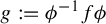 $g:=\phi ^{-1}f\phi $
is a rational map of degree d. Let
 $[g]$
be the
 $\mathrm { PGL}\,_2({\mathbb C})$
conjugacy class of g in the moduli space
 ${\mathcal M}_d$
of all degree d rational maps. The map
 $$ \begin{align} \Psi: {\mathcal M}_f&\to {\mathcal M}_d,\\ [\mu]&\mapsto[g], \nonumber \end{align} $$
is well defined and is a holomorphic injection [Reference McMullen and SullivanMS98], moreover,
 $\Psi ({\mathcal M}_f)$
is the set of all
 $\mathrm {PGL}\,_2({\mathbb C})$
conjugacy classes that are quasiconformally conjugate to f. We refer the readers to [Reference AstorgAst17] for more details.
Unlike the Teichmüller space
 ${\mathcal T}_f$
, not much of the complex structure of the moduli space
 ${\mathcal M}_f$
is known. A complex analytic space X is called Carathéodory hyperbolic if bounded holomorphic functions separate points in X, that is, for every
 $x\neq y$
in X, there is a bounded holomorphic function
 $\phi :X\to {\mathbb C}$
such that
 $\phi (x)\neq \phi (y)$
. Carathéodory hyperbolicity is a strong hyperbolicity condition which implies Kobayashi hyperbolicity [Reference KobayashiKob98, Proposition 3.1.7(1)]. As examples, bounded domains in
 ${\mathbb C}^N$
are Carathéodory hyperbolic.
McMullen [Reference McMullenMcM87, p. 473] made the following conjecture in 1987.
Conjecture 1.1. (McMullen)
Let f be a rational map of degree
 $d\geq 2$
which is not flexible Lattès, then
 $\mathcal {M}_f$
is Carathéodory hyperbolic.
Here, a rational map of degree
 $d\geq 2$
is called Lattès if it is semi-conjugate to an endomorphism on an elliptic curve. A Lattès map f is called flexible Lattès if one can continuously vary the complex structure of the elliptic curve to get a family of Lattès maps passing through f. The structure of flexible Lattès maps is well understood [Reference MilnorMil06, §5], and the flexible Lattès locus in
 ${\mathcal M}_d$
is either empty (when d is not a square) or is an algebraic curve with at most two connected components (when d is a square). When f is flexible Lattès, then
 $V:=\Psi ({\mathcal M}_f)$
contains the connected component of
 $\mathrm {FL}_d$
containing
 $[f]$
(actually, V is equal to this connected component, see Lemma 3.1). Since V is quasi-projective, by Riemann’s extension theorem, bounded holomorphic functions on V are constant, and hence
 ${\mathcal M}_f$
is not Carathéodory hyperbolic, so that the condition that f is not flexible Lattès in Conjecture 1.1 cannot be dropped.
1.2 Main results
The purpose of this paper is to solve McMullen’s conjecture. In fact, we shall prove a stronger statement. We first recall the notion of structural stability. Let
 $(f_t)_{t\in X}$
be a holomorphic family of degree d rational maps parameterized by a complex analytic space X. The family is called structurally stable if periodic points do not change their types (attracting, repelling, or indifferent) in this family, which is equivalent to that
 $f_t$
are all quasiconformally conjugate on their Julia sets [Reference McMullenMcM16, Theorem 4.2]. Note that structural stability is a local property.
Let X be a complex analytic space and let
 $\Phi :X\to {\mathcal M}_d$
be a holomorphic map. It is not always possible to lift
 $\Phi $
to a map taking image in
 $\mathrm {Rat}_d$
(the space of degree d rational maps). However, we can always lift
 $\Phi $
locally.
We define the map
 $\Phi :X\to {\mathcal M}_d$
to be structurally stable if every local lift
 $\tilde {\Phi }$
defines a structurally stable family of rational maps. By definition, the map
 $\Psi $
in (1.1) is structurally stable. We show the following result which implies Conjecture 1.1.
Theorem 1.2. Let
 $d\geq 2$
. Let X be a connected complex analytic space and let
 ${\Phi :X\to {\mathcal M}_d}$
be a holomorphic injective map that is structurally stable. Assume that there exists
 $t\in X$
such that
 $\Phi (t)\notin \mathrm {FL}_d$
. Then, there is a normal affine variety Y of dimension
 $2d-2$
and a holomorphic injection
 $i:X\to Y$
such that
 $i(X)$
is precompact in Y. In particular, X is Carathéodory hyperbolic.
We now explain the construction of the space Y and the map i in Theorem 1.2, and hence give a sketch of the proof of Theorem 1.2. We will use the reciprocal multiplier spectrum morphism. The precise definition is given in §2. Basically, for fixed integers
 $m\geq n\geq 1$
and
 $f\in \mathrm {Rat}_d$
, we collect all periodic points of f with exact periods j,
 $n\leq j\leq m$
. Assume that f has no super-attracting cycle with exact periods j,
 $n\leq j\leq m$
. Using elementary symmetric polynomials, the reciprocal of the multipliers of these periodic points determine a point in
 ${\mathbb C}^{N_{n,m}}$
, where
 $N_{n,m}$
is the number of periodic points with exact periods j,
 $n\leq j\leq m$
, counted with multiplicity. Hence, we can define the reciprocal multiplier spectrum morphism
 $\tau _{n,m}:{\mathcal M}_d\setminus Z_{n,m}\to {\mathbb C}^{N_{n,m}}$
, where
 $Z_{n,m}$
is the locus of f having a super-attracting cycle with exact periods j,
 $n\leq j\leq m$
.
In the setting of Theorem 1.2, we can choose n large enough such that
 $\Phi (X)$
is contained in
 ${\mathcal M}_d\setminus Z_{n,m}$
; moreover,
 $\tau _{n,m}(\Phi (X))$
is contained in a bounded domain in
 ${\mathbb C}^{N_{n,m}}$
by the structural stability. Let
 $\mathrm {FL}_d$
be the flexible Lattès locus. By a theorem of McMullen [Reference McMullenMcM87], for fixed n, the morphism
 $\tau _{n,m}:{\mathcal M}_d\setminus (Z_{n,m}\cup \mathrm {FL}_d)\to {\mathbb C}^{N_{n,m}}$
is quasi-finite (which means that every fiber of
 $\tau _{n,m}$
is a finite set) for m large enough. By a generalized Zariski’s main theorem [Reference GrothendieckGro66, Théorème 8.12.6], there exists a normal affine variety Y, an open immersion
 $\eta : {\mathcal M}_d\setminus (Z_{n,m}\cup \mathrm {FL}_d)\to Y$
, and a finite morphism (which means quasi-finite and proper)
 $\tilde {\tau }_{n,m}:Y\to {\mathbb C}^{N_{n,m}}$
, such that
 $\tau _{n,m}=\tilde {\tau }_{n,m}\circ \eta $
. The map i in Theorem 1.2 is given by
 $i:=\eta \circ \Phi $
. We get that
 $i(X)$
is precompact in Y by the finiteness of
 $\tilde {\tau }_{n,m}$
.
When
 $d\geq 4$
, using a recent result of the authors about the generic injectivity of a multiplier spectrum morphism [Reference Ji and XieJX25], we can concretely construct the space Y in Theorem 1.2.
Theorem 1.3. Let
 $d\geq 4$
. Then, the complex analytic space Y in Theorem 1.2 can be chosen to be the normalization of the Zariski closure of the image of the reciprocal multiplier spectrum morphism
 $\tau _{n,m}$
for some
 $m\geq n\geq 1$
.
We believe that the restriction
 $d\geq 4$
in Theorem 1.3 is unnecessary.
2 The reciprocal multiplier spectrum morphism
In this section, we will define the reciprocal multiplier spectrum morphism
 $\tau _{n}$
and we will show that
 $\tau _{n}$
are quasi-finite by using McMullen’s rigidity theorem [Reference McMullenMcM87, Theorem 2.2].
Definition 2.1. Let f be a rational map of degree d and let x be a periodic point of f. We say an integer
 $n\geq 1$
is a formal exact period of x if one of the following holds:
-
(i) n is the minimal integer such that
 $f^n(x)=x$
;
-
(ii)
$n=mr$
and
$df^m(x)$
is a primitive rth root of unity, where m is the minimal integer such that
$f^m(x)=x$
.


By definition, for every periodic point x of f, it has at most two formal exact periods.
Let
 $\{x_1,\ldots , x_{N_n}\}$
be the multiset of periodic points of f with formal exact periods n, counted with multiplicity. The multipliers
 $df^n(x_i)$
of these points determine an element
 $s_n(f)\in {\mathbb C}^{N_n}/ S_{N_n}$
, where
 $S_{N_n}$
is the symmetric group that acts on
 ${\mathbb C}^{N_n}$
by permuting the coordinates. It was shown in [Reference SilvermanSil07, Theorem 4.50] that
 $$ \begin{align*} [f]\mapsto s_n(f) \end{align*} $$
defines a morphism on
 ${\mathcal M}_d$
.
Let
 $m\geq n\geq 1$
be two integers. Let
 $\rho _{n,m}:{\mathcal M}_d\to {\mathbb C}^{N_n}/ S_{N_n}\times \cdots \times {\mathbb C}^{N_m}/ S_{N_m}$
be the morphism
 $$ \begin{align*} [f]\mapsto (s_n(f),\ldots, s_m(f)). \end{align*} $$
Let
 $W_{n,m}$
be the Zariski closed set
 $\{(f,g): \rho _{n,m}(f)=\rho _{n.m}(g)\}\subset {\mathcal M}_d\times {\mathcal M}_d$
. Then, for fixed n,
 $W_{n,m}$
is a decreasing sequence with respect to m. By Noetheriality, there exists a minimal
 $N=N(d,n)\geq n$
such that
 $$ \begin{align*}\bigcap_{m\geq n}W_{n,m}=W_{n,N}.\end{align*} $$
The following is a consequence of McMullen’s rigidity theorem [Reference McMullenMcM87, Theorem 2.2].
Theorem 2.2. For every
 $d\geq 2$
and
 $n\geq 1$
, we set
 $\rho _{n}:=\rho _{n,N}$
. Then,
 $\rho _{n}$
is quasi-finite on
 ${\mathcal M}_d\setminus \mathrm {FL}_d$
.
Proof. Assume by contradiction that
 $\rho _{n}$
is not quasi-finite on
 ${\mathcal M}_d\setminus \mathrm {FL}_d$
. Then, there exists an algebraic family of rational maps
 $\phi :V\to \mathrm {Rat}_d$
,
 $t\mapsto f_t$
, parameterized by the algebraic curve V such that
 $\rho _n(f_t)$
is constant,
 $\pi \circ \phi :V\to {\mathcal M}_d$
is non-constant with
 $\pi \circ \phi (V)\cap \mathrm {FL}_d=\emptyset $
, where
 $\pi :\mathrm { Rat}_d\to {\mathcal M}_d$
is the canonical projection.
By the definition of
 $\rho _n$
,
 $\rho _{n,m}(f_t)$
is constant for every
 $m\geq n$
. This implies the multipliers of periodic points with large exact periods are constant in this family. In particular, the number of attracting periodic points is bounded in this family. This implies
 $\phi :V\to \mathrm {Rat}_d$
is a structurally stable algebraic family [Reference McMullenMcM16, Theorem 4.2]. By [Reference McMullenMcM87, Theorem 2.2],
 $\phi :V\to \mathrm {Rat}_d$
is a flexible Lattès family, which is a contradiction.
We now define the reciprocal multiplier spectrum morphism. Let
 $n\geq 1$
be an integer. Let
 $Z_n\subset {\mathcal M}_d$
be the subvariety containing rational map with a super-attracting periodic point with exact periods n. We let
 $\delta _n:{\mathcal M}_d\setminus Z_n\to {\mathbb C}^{N_n}$
be the morphism
 $$ \begin{align*} [f]\to( \sigma_1(\alpha_1,\ldots, \alpha_n),\ldots, \sigma_{N_n}(\alpha_1,\ldots, \alpha_n)), \end{align*} $$
where
 $\alpha _i:=df^n(x_i)^{-1}$
and
 $\sigma _i$
is the ith elementary symmetric polynomial of
 $N_n$
variables.
Let
 $m\geq n\geq 1$
be two integers. Let
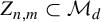 $Z_{n,m}\subset {\mathcal M}_d$
be the subvariety containing rational map with a super-attracting periodic point with exact periods j such that
 $n\leq j\leq m$
. We let
 $\tau _{n,m}: {\mathcal M}_d\setminus Z_{n,m}\to {\mathbb C}^{N_n}\times \cdots \times {\mathbb C}^{N_m}$
be the morphism given by
 $$ \begin{align*} [f]\mapsto (\delta_n(f),\ldots,\delta_m(f)). \end{align*} $$
Definition 2.3. The nth reciprocal multiplier spectrum morphism is defined as
 $\tau _{n}:=\tau _{n,N}$
, where
 $N=N(d,n)$
is the same as in Theorem 2.2.
Corollary 2.4. For every
 $d\geq 2$
and
 $n\geq 1$
,
 $\tau _{n}$
is quasi-finite on
 ${\mathcal M}_d\setminus (Z_{n,N}\cup \mathrm {FL}_d)$
.
Proof. This a corollary of Theorem 2.2, since elementary symmetric polynomials give an isomorphism between
 ${\mathbb C}^N/S_N$
and
 ${\mathbb C}^{N}$
.
3 Proof of Theorem 1.2 and Conjecture 1.1
We begin with a lemma.
Lemma 3.1. Let
 $d\geq 2$
. Let X be a connected complex analytic space and let
 ${\Phi :X\to {\mathcal M}_d}$
be a holomorphic map that is structurally stable, such that
 ${\Phi (X)\cap \mathrm {FL}_d\neq \emptyset }$
. Then,
 $\Phi (X)\subset \mathrm {FL}_d$
.
Proof. Pick
 $t_0\in \Phi (X)\cap \mathrm {FL}_d$
. Since
 $\Phi $
is structurally stable, by [Reference McMullenMcM16, Theorem 4.2], for every
 $t\in X$
,
 $\Phi (t)$
and
 $\Phi (t_0)$
are quasiconformally conjugate on their Julia sets (which is equal to
 ${\mathbb P}^1({\mathbb C}))$
). In particular, all
 $\Phi (t)$
are postcritically finite (PCF), which means that the critical orbits are finite) with the same critical orbits relation as
 $\Phi (t_0)$
. Hence,
 ${\Phi :X\to {\mathcal M}_d}$
is a holomorphic family of PCF maps. By Thurston’s rigidity theorem [Reference McMullenMcM87, Theorem 6.2], either
 $\Phi (X)$
is a single point or
 $\Phi (X)\subset \mathrm {FL}_d$
. In these two cases, we have
 $\Phi (X)\subset \mathrm {FL}_d$
.
Proof of Theorem 1.2
Since
 $\Phi $
is structurally stable, by [Reference McMullenMcM16, Theorem 4.2], we can choose n large enough such that all attracting periodic points have exact periods less than n along the family
 $\Phi :X\to {\mathcal M}_d$
. Let
 $\tau _n$
be the reciprocal multiplier spectrum morphism given in Definition 2.3. By Lemma 3.1,
 $\Phi (X)\subset {\mathcal M}_d\setminus (Z_{n,N} \cup \mathrm {FL}_d) $
, where
 $N=N(d,n)$
is given in Theorem 2.2. By Corollary 2.4,
 $\tau _n: {\mathcal M}_d\setminus (Z_{n,N}\cup \mathrm {FL}_d) \to {\mathbb C}^l$
is quasi-finite,
 $l\geq 1$
. By our construction,
 $\tau _n\circ \Phi (X)$
is contained in a bounded domain in
 ${\mathbb C}^l$
.
By a generalized version of Zariski’s main theorem [Reference GrothendieckGro66, Théorème 8.12.6], there is a normal affine variety Y, an open immersion
 $\eta : {\mathcal M}_d\setminus (Z_{n,N}\cup \mathrm {FL}_d)\to Y$
, and a finite morphism
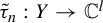 $\tilde {\tau }_{n}:Y\to {\mathbb C}^{l}$
, such that
 $\tau _{n}=\tilde {\tau }_{n}\circ \eta $
. A morphism
 $\eta : Z\to X$
is called an open immersion if there exists a Zariski open subset
 $X'\subset X$
and an isomorphism
 ${\eta ':Z\to X'}$
such that
 $\eta =\iota \circ \eta '$
, where
 $\iota :X'\to X$
is the inclusion map. So, in particular,
 $\eta $
is injective. We define
 $i:=\eta \circ \Phi : X\to Y$
. Then, i is a holomorphic injection. We need to show that
 $i(X)$
is precompact in Y. We have
 $\tilde {\tau }_{n}(i(X))=\tilde {\tau }_{n}\circ \eta \circ \Phi (X)=\tau _n\circ \Phi (X)$
, which is precompact in
 ${\mathbb C}^l$
. Since
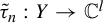 $\tilde {\tau }_{n}:Y\to {\mathbb C}^l$
is finite (hence, proper), we know that
 $i(X)$
is precompact in Y, as
 $i(X)\subset \tilde {\tau }_{n}^{-1}(\tau _n\circ \Phi (X))$
.
Since Y is normal and affine, Y can be embedded in
 ${\mathbb C}^q$
as a Zariski closed subset for some
 $q\geq 1$
. The coordinates functions
 $z_1,\ldots , z_q$
define bounded holomorphic injective functions on
 $i(X)$
. Since
 $i:X\to i(X)$
is biholomorphic, for
 $1\leq j\leq q$
,
 $z_j\circ i$
are bounded holomorphic injective functions on X, which clearly separate points in X. This implies that X is Carathéodory hyperbolic. This finishes the proof.
Proof of Conjecture 1.1
Let
 $\Psi $
be the holomorphic injection given in (1.1), then
 $\Psi :{\mathcal M}_f\to {\mathcal M}_d$
is structurally stable since elements in
 $\Psi ({\mathcal M}_f)$
are quasiconformally conjugate. Since
 $f\notin \mathrm {FL}_d$
, by Theorem 1.2,
 ${\mathcal M}_f$
is Carathéodory hyperbolic.
4 Proof of Theorem 1.3
We first show the following result, which is a generalization of [Reference Ji and XieJX25, Theorem 1.3]. Here, [Reference Ji and XieJX25, Theorem 1.3] corresponds to the case
 $n=1$
in the following result. The proof follows the same line as in the proof in [Reference Ji and XieJX25]. Recall that we have shown that for every
 $d\geq 2$
and
 $n\geq 1$
, the two morphisms
 $\rho _n$
and
 $\tau _n$
are quasi-finite (after excluding
 $\mathrm {FL}_d$
), see Theorem 2.2 and Corollary 2.4.
Theorem 4.1. For every
 $d\geq 4$
and
 $n\geq 1$
,
 $\rho _n$
and
 $\tau _n$
are generically injective, that is, they are injective morphisms when restricted on a non-empty Zariski open subset.
Proof. Since elementary symmetric polynomials give an isomorphism between
 ${\mathbb C}^N/S_N$
and
 ${\mathbb C}^{N}$
, it suffices to show that
 $\rho _n$
is generically injective.
Two rational maps f and g are called intertwined if there is an irreducible algebraic curve
 $Z\subset {\mathbb P}^1({\mathbb C})\times {\mathbb P}^1({\mathbb C})$
whose projections to both coordinates are onto, such that Z is preperiodic by the map
 $f\times g$
. By [Reference Ji and XieJX25, Theorem 3.3] (building on Pakovich’s result [Reference PakovichPak25a]), there is a non-empty Zariski open subset U of
 ${\mathcal M}_d$
such that for every
 ${f,g\in \mathrm { Rat}_d({\mathbb C})}$
with
 $[f], [g]\in U$
, if f and g are intertwined, then
 $[f]=[g]$
. This is the only step that we need the condition
 $d\geq 4$
.
Assume by contradiction that
 $\rho _n$
is not generically injective. Similar to the construction in the third paragraph in the proof of [Reference Ji and XieJX25, Theorem 1.3], after shrinking U, we can construct two algebraic families
 $f_V,g_V$
of degree d rational maps parameterized by the same irreducible algebraic curve V such that the following holds. There exists
 $\underline {n}:=\{n_1,\ldots ,n_{2d-3}\}\in ({\mathbb N}^*)^{2d-3}$
(
 ${\mathbb N}^*$
stands for the set of positive integers) such that
 $n_i\geq n$
, and we have
 $$ \begin{align} \Psi_f(V)\subset Y_{\underline{n}}\cap U\quad\text{and} \quad\Psi_g(V)\subset U, \end{align} $$
where
 $Y_{\underline {n}}\subset {\mathcal M}_d$
is the algebraic curve containing all conjugacy classes having
 ${2d-3}$
super-attracting cycles with exact periods
 $n_1,\ldots , n_{2d-3}$
. The map
 $\Psi _f:V\to {\mathcal M}_d$
(similarly for
 $\Psi _g$
) is defined by
 $t\mapsto [f_t]$
. Moreover, we have
 $$ \begin{align} \rho_n\circ \Psi_f=\rho_n\circ \Psi_g, \end{align} $$
finally, for every
 $t\in V$
, we have
 $$ \begin{align} \Psi_f(t)\neq \Psi_g(t). \end{align} $$
By [Reference Ji and XieJX25, Lemma 2.4], there are infinitely many
 $t\in V$
such that
 $f_t$
is a PCF map with
 $2d-2$
distinct super-attracting cycles. We claim that we can further ask that these
 $f_t$
have no super-attracting cycles with exact periods less than n. Assume by contradiction that this claim is not true. Then, there exists an infinite set
 $X\subset {\mathcal M}_d$
such that every
 $g\in X$
has
 $2d-2$
distinct super-attracting cycles; moreover, the exact periods of these super-attracting cycles are uniformly bounded. Let
 $\overline {X}$
be the Zariski closure of X. Then,
 $\dim _{\mathbb C}(\overline {X})\geq 1$
. Pick an irreducible component Y of
 $\overline {X}$
with
 $\dim _{\mathbb C}(Y)\geq 1$
. Then, Y is a positive dimensional family of PCF maps. By Thurston’s rigidity theorem [Reference McMullenMcM87, Theorem 6.2],
 $Y\subset \mathrm { FL}_d$
, which is a contradiction, since flexible Lattès maps have no super-attracting cycle.
By (4.2),
 $\rho _n(f_t)=\rho _n(g_t)$
, and hence by [Reference Ji and XieJX25, Lemma 3.5], for such t,
 $g_t$
is also a PCF map. By [Reference Ji and XieJX25, Theorem 3.4], after shrinking V,
 $f_t$
and
 $g_t$
are intertwined for every
 $t\in V$
. By the definition of U and by (4.1),
 $\Psi _f(t)=\Psi _g(t)$
for every
 $t\in V$
. This contradicts (4.3). We then conclude the proof.
Proof of Theorem 1.3
In the proof of Theorem 1.2, we have constructed an affine and normal variety Y, an open immersion
 $\eta : {\mathcal M}_d\setminus (Z_{n,N}\cup \mathrm {FL}_d)\to Y$
, and a finite morphism
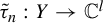 $\tilde {\tau }_{n}:Y\to {\mathbb C}^{l}$
such that
 $\tau _{n}=\tilde {\tau }_{n}\circ \eta $
. Let
 $d\geq 4$
. By Theorem 4.1,
 $\tau _n$
is generically injective on
 $ {\mathcal M}_d\setminus Z_{n,N}$
. This implies that
 $\tilde {\tau }_{n}$
is generically injective on Y. Since Y is normal,
 $\tilde {\tau }_{n}:Y\to \tilde {\tau }_{n}(Y)$
is a normalization. It remains to show that
 $\tilde {\tau }_{n}(Y)$
is the Zariski closure of
 $\tau _n({\mathcal M}_d\setminus Z_{n,N})$
. Let Z be the Zariski closure of
 $\tau _n({\mathcal M}_d\setminus Z_{n,N})$
, which is also the Zariski closure of
 $\tau _n({\mathcal M}_d\setminus (Z_{n,N}\cup \mathrm {FL}_d))$
. Since
 $\tilde {\tau }_{n}(Y)$
is closed and
 $\tau _{n}=\tilde {\tau }_{n}\circ \eta $
, we have
 $\tau _n({\mathcal M}_d\setminus Z_{n,N})\subset \tilde {\tau }_{n}(Y)$
. Since
 $\tilde {\tau }_{n}(Y)$
is closed, we have
 $Z\subset \tilde {\tau }_{n}(Y)$
. However, since
 $\eta ( {\mathcal M}_d\setminus (Z_{n,N}\cup \mathrm {FL}_d))$
is dense in Y, then
 $Z=\tilde {\tau }_{n}\circ \eta ({\mathcal M}_d\setminus (Z_{n,N}\cup \mathrm {FL}_d))$
is dense in
 $\tilde {\tau }_{n}(Y)$
. This implies
 $Z=\tilde {\tau }_{n}(Y)$
. The proof is finished.
Added in the final version. After our paper was submitted, Pakovich [Reference PakovichPak25b, Theorem 1.2] proved that when
 $d\geq 2$
, there is a non-empty Zariski open subset U of
 ${\mathcal M}_d$
such that for every
 $f,g\in \mathrm {Rat}_d({\mathbb C})$
with
 $[f], [g]\in U$
, if f and g are intertwined, then
 $[f]=[g]$
. By using this result, we can remove the additional condition
 $d\geq 4$
in Theorems 1.3 and 4.1. Actually, in the proof of Theorems 1.3 and 4.1, we use this result only for
 $d\geq 4$
, and this is the only step where we use the condition
 $d\geq 4$
.
Acknowledgements
Z.J. would like to thank Beijing International Center for Mathematical Research in Peking University for the invitation. Z.J. is supported by National Key R&D Program of China (No. 2025YFA1018300), ZPNSF Grant (No. XHD24A0201), and NSFC Grant (No. 12401106). J.X. is supported by NSFC Grant (No. 12271007).



