






1 Introduction
In this paper, we study the actions of real reductive groups on real submanifolds of Kähler manifolds.
Let U be a compact connected Lie group with Lie algebra
 $\mathfrak {u}$
, and let
 $U^{\mathbb {C}}$
be its complexification. We say that a subgroup G of
 $U^{\mathbb {C}}$
is compatible if G is closed and the map
 $K\times \mathfrak {p} \to G, (k,\beta ) \mapsto k\text {exp}(\beta )$
is a diffeomorphism where
 $K := G\cap U$
and
 $\mathfrak {p} := \mathfrak {g}\cap \text {i}\mathfrak {u}; \mathfrak {g}$
is the Lie algebra of
 $G.$
The Lie algebra
 $\mathfrak {u}^{\mathbb {C}}$
of
 $U^{\mathbb {C}}$
is the direct sum
 $\mathfrak {u}\oplus i\mathfrak {u}.$
It follows that G is compatible with the Cartan decomposition
 $U^{\mathbb {C}} = U\text {exp}(\text {i}\mathfrak {u})$
, K is a maximal compact subgroup of G with Lie algebra
 $\mathfrak {k}$
, and that
 $\mathfrak {g} = \mathfrak {k}\oplus \mathfrak {p}.$
Note that G has finitely number of connected components. In the sequel, we always assume that G is connected.
Let
 $(Z,\omega )$
be a Kähler manifold with a holomorphic action of the complex reductive group
 $U^{\mathbb {C}}$
. We also assume
 $\omega $
is U-invariant, and that there is a U-equivariant momentum map
 $\mu : Z \to \mathfrak {u}^*.$
By definition, for any
 $\xi \in \mathfrak {u}$
and
 $z\in Z, d\mu ^\xi = i_{\xi _Z}\omega ,$
where
 $\mu ^\xi (z) := \langle \mu (z), \xi \rangle $
, and
 $\xi _Z$
denotes the fundamental vector field induced on Z by the action of
 $U,$
 $$ \begin{align*}\xi_Z(z) := \frac{d}{dt}|_{t=0}\text{exp}(t\xi)\cdot z. \end{align*} $$
The inclusion i
 $\mathfrak {p}\hookrightarrow \mathfrak {u}$
induces, by restriction, a K-equivariant map
 $\mu _{\text {i}\mathfrak {p}} : Z \to (\text {i}\mathfrak {p})^*.$
Using an
 $\mathrm {Ad}(U)$
-invariant inner product on u to identify
 $(\text {i}\mathfrak {p})^*$
and
 $\mathfrak {p}, \mu _{\text {i}\mathfrak {p}}$
can be viewed as a map
 $\mu _{\mathfrak {p}} : Z \to \mathfrak {p}.$
For
 $\beta \in \mathfrak {p}$
, let
 $\mu _{\mathfrak {p}}^\beta $
denote
 $\mu ^{-\text {i}\beta }$
, that is,
 $\mu _{\mathfrak {p}}^\beta (z) := -\langle \mu (z), i\beta \rangle .$
Then, the grad
 $\mu _{\mathfrak {p}}^\beta = \beta _Z$
where grad is computed with respect to the Riemannian metric induced by the Kähler structure. The map
 $\mu _{\mathfrak {p}}$
is called the gradient map associated with
 $\mu $
. For a G-stable locally closed real submanifold X of
 $Z,$
we consider
 $\mu _{\mathfrak {p}}$
as a mapping
 $\mu _{\mathfrak {p}} : X\to \mathfrak {p}$
(see [Reference Heinzner, Schwarz and Stötzel9] for more details).
Let
 $\mathfrak {a} \subset \mathfrak {p}$
be an abelian subalgebra, and let
 $\pi :\mathfrak {p} \longrightarrow \mathfrak {a}$
be the orthogonal projection onto
 $\mathfrak {a}$
. Then,
 $\mu _{\mathfrak a}=\pi _{\mathfrak {a}} \circ \mu _{\mathfrak p}$
is the gradient map associated with
 $A=\exp (\mathfrak {a})$
.
If
 $\beta \in \mathfrak {p}$
, set
 $$ \begin{gather*} \begin{gathered} G^{\beta+} :=\{g \in G : \lim_{t\to - \infty} \text{exp} ({t\beta}) g \text{exp} ({-t\beta}) \text { exists} \},\\ R^{\beta+} :=\{g \in G : \lim_{t\to - \infty} \text{exp} ({t\beta}) g \text{exp} ({-t\beta}) =e \},\\ G^\beta=\{g\in G:\, \mathrm{Ad}(g)(\beta)=\beta\}. \end{gathered} \qquad \mathfrak{r}^{\beta+}: = \bigoplus_{\lambda> 0} V_\lambda ({\operatorname{ad}} \beta), \end{gather*} $$
Note that
 $ \mathfrak {g}^{\beta +}= \mathfrak {g}^\beta \oplus \mathfrak {r}^{\beta +}$
. It is well known that
 $G^{\beta +} $
is a parabolic subgroup of G with Lie algebra
 $\mathfrak {g}^{\beta +}$
, and every parabolic subgroup of G arises as
 $G^{\beta +}$
for some
 $\beta \in \mathfrak {p}$
.
 $R^{\beta +}$
is connected, and it is the unipotent radical of
 $G^{\beta +}$
.
 $G^\beta $
is a Levi factor of
 $G^{\beta +}$
(see [Reference Biliotti, Ghigi and Heinzner5, Lem. 9], [Reference Borel and Ji6] and [Reference Helgason11] for more details). Our first main result is the following.
Theorem 1. Let
 $\beta \in \mathfrak {p}.$
Then:
-
• If
 $G^{\beta +}\cdot x$
is compact, then
$\mathcal {O} = G\cdot x$
is compact and
$G^{\beta +}\cdot x$
is a finite union of connected components of
$\mathrm {max}_{\mathcal {O}}(\beta )=\left \{p\in \mathcal {O}:\, \mathrm {max}_{z\in \mathcal {O}} \, \mu _{\mathfrak p}^\beta =\mu _{\mathfrak p}^\beta (p)\right \}$
.
-
• If
$\mathcal {O}$
is a compact G-orbit, then
$\mathrm {max}_{\mathcal {O}}(\beta )$
is a finite union of compact
$G^{\beta +}$
-orbits.


In particular, the number of compact
 $G^{\beta +}$
-orbits is equal or bigger than the number of compact G-orbits.
Observe that
 $\mu _{\mathfrak p} (\mathcal {O})$
is a K-orbit, but it is not true, in general, that
 $\mu _{\mathfrak p}$
defines a diffeomporhism between
 $\mathcal {O}$
and
 $\mu _{\mathfrak {p}}(\mathcal {O})$
, without the assumption that G is a complex reductive group. Therefore, Theorem
 $1.2$
in [Reference Biliotti, Ghigi and Heinzner5, p. 582] does not apply in our context.
Let
 $\xi \in \mathfrak u$
. The standard notation for parabolic subgroups of complex reductive groups (see, e.g., [Reference Kirwan12]) is given by
 $$ \begin{align*} U^{\mathbb{C}}(\xi)=\{g\in U^{\mathbb{C}}:\, \lim_{t\to -\infty} \exp(it\xi)g\exp(-it\xi)\, \mathrm{exists}\, \}. \end{align*} $$
It is well known that
 $U^{\mathbb {C}}(\xi )$
is connected, and it contains a Borel subgroup, that is, a maximal solvable subgroup of
 $U^{\mathbb {C}}$
(see [Reference Akhiezer1]). Hence, if
 $\beta \in i {\mathfrak u}$
, then
 $U^{\mathbb {C}}(-i\beta )$
corresponds to
 $(U^{\mathbb {C}})^{\beta +}$
in our notation. If
 $\tilde {\mathcal {O}}$
is a compact orbit of
 $U^{\mathbb {C}}$
, then it is a complex U-orbit (see [Reference Heinzner, Schwarz and Stötzel9]), and so it is a flag manifold (see [Reference Guillemim and Sternberg8]). Since
 $$ \begin{align*} \mathrm{max}_{\tilde {\mathcal{O}}}(\beta)=\left\{p\in \tilde {\mathcal{O}}:\, {\mathrm{max}}_{z\in \tilde {\mathcal{O}}} \mu^{-i\beta} =\mu^{-i\beta} (p) \right\}, \end{align*} $$
it follows that
 $\mathrm {max}_{\tilde {\mathcal {O}}}(\beta )$
is connected (see [Reference Atiyah2], [Reference Guillemin and Sternberg7]). Hence, the following result (see also [Reference Biliotti5]) holds.
Corollary 1.0.1. The number of compact
 $(U^{\mathbb {C}})^{\beta +}$
-orbits is equal to the number of compact
 $U^{\mathbb {C}}$
-orbits. Moreover, any closed
 $(U^{\mathbb {C}})^{\beta +}$
-orbit arises as
 $\mathrm {max}_{\tilde {\mathcal {O}}}(\beta )$
, where
 $\tilde {\mathcal {O}}$
is a compact
 $U^{\mathbb {C}}$
-orbit.
Assume that G is a real form of
 $U^{\mathbb {C}}$
. Assume there exists
 $p\in Z$
such that
 $X=U^{\mathbb {C}}\cdot p$
is compact. If Z is compact, then the
 $U^{\mathbb {C}}$
-orbit throughout the maximum of the norm square function
 $\parallel \mu \parallel ^2$
is a compact orbit, and so it is a flag manifold (see [Reference Heinzner, Schwarz and Stötzel9]). It is well known that G has a unique closed orbit
 $\mathcal {O}$
in X. This is an old result of Wolf [Reference Wolf16] (see also [Reference Heinzner, Schwarz and Stötzel9]). In this setting, we prove the following result.
Theorem 2. The set
 $\mathrm {max}_{\mathcal {O}}(\beta )$
is the unique closed orbit of
 $G^{\beta +}$
acting on X. This orbit is connected, and it is a
 $(K^{\beta })^o$
-orbit.
As a consequence of the proof, we obtain the following result.
Proposition 1.1. Let
 $\mathfrak a \subset \mathfrak {p}$
be an abelian subalgebra. Let
 $\mu _{\mathfrak a} :X \longrightarrow \mathfrak a$
be the corresponding
 $A=\exp (\mathfrak a)$
-gradient map. Then,
 $\mu _{\mathfrak a}(X)=\mu _{\mathfrak a}(\mathcal {O})$
.
It is well known that both
 $\mu _{\mathfrak a}(X)$
and
 $\mu _{\mathfrak a}(\mathcal {O})$
are polytopes (see [Reference Heinzner, Schwarz and Stötzel9]). The above result tells us that
 $\mathcal {O}$
captures much of the information of
 $\mu _{\mathfrak a}$
. Note that if
 $\mathfrak {a} \subset \mathfrak {p}$
is a maximal abelian subalgebra, then by a beautiful theorem of Kostant [Reference Kostant14], keeping in mind that
 $\mu _{\mathfrak a}=\pi _{\mathfrak {a}} \circ \mu _{\mathfrak p}$
and
 $\mu _{\mathfrak {p}}(\mathcal {O})$
is a K-orbit in
 $\mathfrak {p}$
, the set
 $\mu _{\mathfrak a}(X)$
is the convex hull of an orbit of the Weyl group
 $W(\mathfrak {g},\mathfrak {a})=\{\mathrm {Ad}(k):\, k\in K,\, \mathrm {Ad}(k)(\mathfrak {a})=\mathfrak {a}\}$
(see [Reference Knapp13] for more details on the Weyl group).
2 Preliminaries
2.1 Convex geometry
In this section, some definitions and results in convex geometry are recalled. The reader can see, for example, [Reference Biliotti5], [Reference Schneider15] for further details on the topic.
Let V be a real vector space with a scalar product
 $\langle \, , \, \rangle $
, and let
 $E\subset V$
be a compact convex subset. The relative interior of E, denoted by
 $\operatorname {relint} E$
, is the interior of E in its affine hull. For
 $a,b\in E,$
denote the close segment joining a and b by
 $[a,b]$
. Then, a face of E is a convex subset F of E such that if
 $a,b\in E$
and
 $\operatorname {relint}[a,b]\cap F\neq \emptyset $
, then
 $[a,b]\subset F$
. The extreme points of E, denoted by
 $\operatorname {ext} E$
, are the points
 $a\in E$
such that
 $\{a\}$
is a face. Since E is compact, the faces are closed (see [Reference Schneider15, p. 62]). The empty set and E are faces of E: the other faces are called proper.
Definition 2.1. The support function of E is defined by the function
 $ h_E : V \rightarrow \mathbb {R}$
,
 $ h_E(u) = \max \{\langle x, u \rangle : x\in E\}$
. If
 $ u\neq 0$
, the hyperplane
 $H(E, u) : = \{ x\in E : \langle x, u \rangle = h_E(u)\}$
is called the supporting hyperplane of E for u. The set
 $$ \begin{align} F_u (E) : = E \cap H(E,u) \end{align} $$
is a face, and it is called the exposed face of E defined by u.
In general, not all faces of a convex subset are exposed. For instance, consider the convex hull of a closed disc and a point outside the disc: the resulting convex set is the union of the disc and a triangle. The two vertices of the triangle that lie on the boundary of the disc are nonexposed 0-faces.
The following result is probably well known. A proof is given in [Reference Biliotti, Ghigi and Heinzner4]. For the sake of completeness, we give a proof.
Proposition 2.1. Let
 $C_1 \subseteq C_2$
be two compact convex set of V. Assume that for any
 $\beta \in V$
, we have
 $$ \begin{align*} \mathrm{max}_{y\in C_1} \langle y , \beta \rangle=\mathrm{max}_{y\in C_2} \langle y , \beta \rangle. \end{align*} $$
Then,
 $C_1=C_2$
.
Proof. We may assume without loss of generality that the affine hull of
 $C_2$
is V. Assume by contradiction that
 $C_1 \subsetneq C_2$
. Since
 $C_1$
and
 $C_2$
are both compact, it follows that there exists
 $p\in \partial C_1$
such that
 $p\in \stackrel {o}{C_2}$
. Since every face of a convex compact set is contained in an exposed face (see [Reference Schneider15]), there exists
 $\beta \in V$
such that
 $$ \begin{align*} \mathrm{max}_{y\in C_1} \langle y , \beta \rangle=\langle p, \beta \rangle. \end{align*} $$
This means the linear function
 $x\mapsto \langle x, \beta \rangle $
restricted on
 $C_2$
achieves its maximum at an interior point which is a contradiction.
2.2 Gradient map
Let
 $(Z, \omega )$
be a Kähler manifold. Let
 $U^{\mathbb {C}}$
acts holomorphically on Z, that is, the action
 $U^{\mathbb {C}} \times Z \to Z$
is holomorphic. Assume that U preserves
 $\omega $
and that there is a U-equivariant momentum map
 $\mu : Z \rightarrow \mathfrak {u}$
. If
 $\xi \in \mathfrak {u}$
, we denote by
 $\xi _Z$
the induced vector field on Z, and we let
 $\mu ^\xi \in C^\infty (Z)$
be the function
 $\mu ^\xi (z) := \langle \mu (z),\xi \rangle $
. By definition, we have
 $$ \begin{align*}d\mu^\xi = i_{\xi_Z} \omega. \end{align*} $$
Let
 $G \subset U^{\mathbb {C}}$
be a compatible subgroup of
 $U^{\mathbb {C}}$
. For
 $x\in Z$
, let
 $\mu _{\mathfrak {p}}^\beta (x)$
denote
 $-i$
times the component of
 $\mu (x)$
along
 $\beta $
in the direction of
 $i\mathfrak {p},$
that is,
 $$ \begin{align} \mu_{\mathfrak{p}}^\beta(x) := \langle \mu_{\mathfrak{p}}(x), \beta \rangle = -\langle \mu(x), i\beta \rangle = \mu^{-i\beta}, \end{align} $$
for any
 $\beta \in \mathfrak {p}.$
Here,
 $\langle \cdot , \cdot \rangle $
denotes K-invariant inner product on
 $\mathfrak {p} \subset i\mathfrak {u}.$
Then, the map defined by
 $\mu _{\mathfrak {p}} : Z \rightarrow \mathfrak {p}$
is called the gradient map. Let
 $\mu _{\mathfrak {p}}^\beta \in C^\infty (Z)$
be the function
 $ \mu _{\mathfrak {p}}^\beta (z) = \langle \mu _{\mathfrak {p}}(z) , \beta \rangle = \mu ^{-i\beta }(z)$
. Let
 $(\, , \, )$
be the Kähler metric associated with
 $\omega $
, that is,
 $(v, w) = \omega (v, Jw),$
for all
 $z\in Z$
and
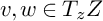 $v,w\in T_zZ$
, where J denotes the complex structure on
 $TZ$
. Then,
 $\beta _Z$
is the gradient of
 $\mu _{\mathfrak {p}}^\beta $
.
For the rest of this paper, we assume that G is connected, and we fix a G-invariant locally closed submanifold X of
 $Z.$
From now on, we denote the restriction of
 $\mu _{\mathfrak {p}}$
to X by
 $\mu _{\mathfrak {p}}.$
Then,
 $$ \begin{align*}\text{grad}\mu_{\mathfrak{p}}^\beta = \beta_X, \end{align*} $$
where grad is computed with respect to the induced Riemannian metric on
 $X.$
Let
 $\beta \in \mathfrak {p}$
. It is well known that
 $G^\beta $
is compatible and
 $$ \begin{align*} G^\beta=K^\beta \text{exp} (\mathfrak{p}^\beta), \end{align*} $$
where
 $K^\beta =K\cap G^\beta =\{g\in K:\, \mathrm {Ad}(g)(\beta )=\beta \}$
and
 $\mathfrak {p}^\beta =\{v\in \mathfrak {p}:\, [v,\beta ]=0\}$
(see [Reference Knapp13]).
Corollary 2.1.1. If
 $x \in X$
and
 $\mu _{\mathfrak {p}}(x) = \beta $
, there are a
 $G^\beta $
-invariant decomposition
 $T_xX = \mathfrak {g}^\beta \cdot x \, \oplus W$
, open
 $G^\beta $
-invariant subsets
 $S \subset W$
,
 $\Omega \subset X$
, and a
 $G^\beta $
-equivariant diffeomorphism
 $\Psi : G^\beta \times ^{G_x}S \rightarrow \Omega $
, such that
 $0\in S, x\in \Omega $
, and
 $\Psi ([e, 0]) =x$
.
Proof. See [Reference Heinzner, Schwarz and Stötzel9, p. 169].
 $\beta _X$
is a vector field on X, that is, a section of
 $TX$
. For
 $x\in X$
, the differential is a map
 $T_x X \rightarrow T_{\beta _X(x)}(TX)$
. If
 $\beta _X(x) =0$
, there is a canonical splitting
 $T_{\beta _X(x)}(TX) = T_x X \oplus T_x X$
. Accordingly,
 $d\beta _X(x)$
splits into a horizontal part and a vertical part. The horizontal part is the identity map. We denote the vertical part by
 $d\beta _X(x)$
. It belongs to
 $\operatorname {End}(T_xX)$
. Let
 $\{\varphi _t=\text {exp} (t\beta )\} $
be the flow of
 $\beta _X$
. There is a corresponding flow on
 $TX$
. Since
 $\varphi _t(x)=x$
, the flow on
 $TX$
preserves
 $T_xX$
, and there it is given by
 $d\varphi _t(x) \in \operatorname {Gl}(T_xX)$
. Thus, we get a linear
 $\mathbb {R}$
-action on
 $T_x X$
with infinitesimal generator
 $d\beta _X(x) $
.
Corollary 2.1.2. If
 $\beta \in \mathfrak {p} $
and
 $x \in X$
is a critical point of
 $\mu _{\mathfrak {p}}^\beta $
, then there are open invariant neighbourhoods
 $S \subset T_x X$
and
 $\Omega \subset X$
and an
 $\mathbb {R}$
-equivariant diffeomorphism
 $\Psi : S \rightarrow \Omega $
, such that
 $0\in S, x\in \Omega $
, and
 $\Psi ( 0) =x$
. (Here,
 $t\in \mathbb {R}$
acts as
 $d\varphi _t(x)$
on S and as
 $\varphi _t$
on
 $\Omega $
.)
Proof. See [Reference Heinzner, Schwarz and Stötzel9].
Let
 $x \in \operatorname {Crit}(\mu ^\beta _{\mathfrak {p}})$
. Let
 $D^2\mu _{\mathfrak {p}}^\beta (x) $
denote the Hessian, which is a symmetric operator on
 $T_xX$
such that
 $$ \begin{gather*} ( D^2 \mu_{\mathfrak{p}}^\beta(x) v, v) = \frac{\mathrm d^2}{\mathrm dt^2} (\mu_{\mathfrak{p}}^\beta\circ \gamma)(0), \end{gather*} $$
where
 $\gamma $
is a smooth curve,
 $\gamma (0) = x$
, and
 $ \dot {\gamma }(0)=v$
. Denote by
 $V_-$
(resp.
 $V_+$
) the sum of the eigenspaces of the Hessian of
 $\mu _{\mathfrak {p}}^\beta $
corresponding to negative (resp. positive) eigenvalues. Denote by
 $V_0$
the kernel. Since the Hessian is symmetric, we get an orthogonal decomposition
 $$ \begin{align} T_xX = V_- \oplus V_0 \oplus V_+. \end{align} $$
Let
 $\alpha : G \rightarrow X$
be the orbit map:
 $\alpha (g) :=gx$
. The differential
 $d\alpha _e$
is the map
 $\xi \mapsto \xi _X(x)$
.
Proposition 2.2. If
 $\beta \in \mathfrak {p}$
and
 $x \in \operatorname {Crit}(\mu ^\beta _{\mathfrak {p}})$
, then
 $$ \begin{gather*} D^2\mu_{\mathfrak{p}}^\beta(x) = d \beta_X(x). \end{gather*} $$
Moreover,
 $d\alpha _e (\mathfrak {r}^{\beta \pm } ) \subset V_\pm $
and
 $d\alpha _e( \mathfrak {g}^\beta ) \subset V_0$
. If X is G-homogeneous, these are equalities.
Proof. See [Reference Biliotti, Ghigi and Heinzner5], [Reference Heinzner, Schwarz and Stötzel9, Prop. 2.5].
Corollary 2.2.1. For every
 $\beta \in \mathfrak {p}$
,
 $\mu _{\mathfrak {p}}^\beta $
is a Morse–Bott function.
Using an
 $\mathrm {Ad}(K)$
-invariant inner product of
 $\mathfrak {p}$
, we define
 $\nu _{\mathfrak {p}} (z):=\frac {1}{2}\parallel \mu _{\mathfrak {p}}(z)\parallel ^2$
. The function
 $\nu _{\mathfrak {p}}$
is K-invariant, and it is called the norm square function. The following result is proved in [Reference Heinzner, Schwarz and Stötzel9, Corollaries 6.11 and 6.12, p. 21].
Proposition 2.3. Let
 $x\in M$
. Then:
-
• If
$\nu _{\mathfrak {p}}$
restricted to
$G\cdot x$
has a local maximum at x, then
$G\cdot x=K\cdot x$
. -
• If
$G\cdot x$
is compact, then
$G\cdot x =K\cdot x$
.


A strategy to analyzing the G action on M is to view
 $\nu _{\mathfrak {p}}$
as a generalized Morse function. In [Reference Heinzner, Schwarz and Stötzel9], the authors proved the existence of a smooth G-invariant stratification of M, and they studied its properties.
3 Closed orbit of parabolic subgroups
Let
 $(Z,\omega )$
be a Kähler manifold, and
 $U^{\mathbb {C}}$
acts holomorphically on Z with a momentum map
 $\mu : Z \to \mathfrak {u}.$
Let
 $G\subset U^{\mathbb {C}}$
be a closed and compatible subgroup. Hence,
 $G = K\text {exp}(\mathfrak {p}),$
where
 $K := G\cap U$
is a maximal compact subgroup of G and
 $\mathfrak {p} := \mathfrak {g}\cap \text {i}\mathfrak {u}; \mathfrak {g}$
is the Lie algebra of
 $G.$
Let X be a connected G-stable submanifold of Z, and let
 $\mu _{\mathfrak {p}}:X \longrightarrow \mathfrak {p}$
the corresponding G-gradient map.
Remarks. Let
 $Q \subset G$
be a parabolic subgroup. The following facts are easy to check:
-
a) If
$Q\cdot p$
is compact, then
$G\cdot p$
is closed since
$G = KQ.$
-
b) Let
$\mathcal {O}$
be a compact G-orbit. By Proposition 2.3, it follows that
$\mathcal {O} = G\cdot p = K\cdot p$
. Since
$\mu _{\mathfrak {p}}$
is K-equivariant, the restricted gradient map
$\mu _{\mathfrak {p}} : K\cdot p \to K\cdot \mu _{\mathfrak {p}}(x)$
is a smooth K-equivariant submersion.


Let
 $\beta \in \mathfrak {p}$
, and let
 $$ \begin{align*}Y = \{z\in X : \mathrm{max}_{x\in X}\mu_{\mathfrak{p}}^\beta(x) = \mu_{\mathfrak{p}}^\beta(z)\}.\end{align*} $$
Assume that Y is not empty. By Corollary 2.1.2, Y is a smooth, possibly disconnected, submanifold of X.
Lemma 3.1.
Y is
 $G^{\beta +}$
invariant.
Proof. Let
 $g\in G$
, and let
 $\xi \in \mathfrak {p}$
. It is easy to check that
 $$ \begin{align*} (\mathrm{d} g)_p (\xi_X)=(\mathrm{Ad}(g)(\xi) )_X (gp ), \end{align*} $$
and so
 $G^\beta $
preserves
 $X^\beta $
. We claim that Y is
 $G^\beta $
-stable. In fact,
 $G^\beta = K^\beta \text {exp}(\mathfrak {p}^\beta )$
, and Y is
 $K^\beta $
-invariant by K-invariant property of the gradient map. For each
 $y\in Y,$
let
 $\xi \in \mathfrak {p}^\beta $
, and let
 $\gamma (t)= \text {exp}(t\xi )\cdot y.$
Since
 $\beta _X (\gamma (t))=0$
, it follows that
 $\mu _{\mathfrak {p}}^\beta (\gamma (t) )$
is constant, and so
 $\text {exp} (t\xi )\cdot y\in Y.$
Now,
 $G^{\beta +} = G^\beta R^{\beta +}$
where
 $R^{\beta +}$
is connected and the unipotent radical of
 $G^{\beta +}$
. By Proposition 2.2,
 $\mathfrak {r}^{\beta +} \subset V_+$
, and so
 $\mathfrak {r}^{\beta +}\cdot z \subset G_z$
, for all
 $z\in Y.$
Since
 $R^{\beta +}$
is connected, this implies
 $R^{\beta +}$
does not act on Y, and the result follows.
Lemma 3.2. Let
 $\mathcal {O}$
be a compact G-orbit. Let
 $\beta \in \mathfrak {p}.$
If
 $x\in {\mathcal {O}}$
is a local maximum of
 $\mu _{\mathfrak {p}}^\beta : {\mathcal {O}} \to \mathbb {R},$
then x is a global maximum of
 $\mu _{\mathfrak {p}}^\beta : {\mathcal {O}} \to \mathbb {R}.$
Proof. If
 $x\in {\mathcal {O}}$
is a local maximum of
 $\mu _{\mathfrak {p}}^\beta ,$
then
 $\mu _{\mathfrak {p}}(x)$
is a local maximum of the height function
 $$ \begin{align*}K \cdot \mu_{\mathfrak{p}}(x) \to \mathbb{R}, \quad z \mapsto \langle z, \beta \rangle. \end{align*} $$
But it was noted in the proof of Proposition 3.9 in [Reference Biliotti5] that
 $\langle \cdot , \beta \rangle $
has only global maximum when restricted to
 $K \cdot \mu _{\mathfrak {p}}(x)$
. Then, a local maximum is a global maximum, and this implies that
 $\mu _{\mathfrak {p}}(x)$
is a global maximum of the height function
 $\langle \cdot , \beta \rangle .$
Since
 $$ \begin{align*}\mathrm{max}_{\mathcal{O}} (\beta)= \mathrm{max} \{\langle z, \beta \rangle,\, z\in K\cdot \mu_{\mathfrak{p}}(x)\}, \end{align*} $$
x is a global maximum of
 $\mu _{\mathfrak {p}}^\beta .$
Proposition 3.3. Let
 $p\in {\mathcal {O}}$
be such that
 $G^{\beta +}\cdot p$
is closed. Then,
 $G^{\beta +}\cdot p$
is a finite union of connected components of
 $ \mathrm {max}_{\mathcal {O}}(\beta ). $
Proof. Since
 $G^{\beta +} \cdot p$
is compact,
 $\mu _{\mathfrak {p}}^\beta |_{G^{\beta +}\cdot p}$
has a maximum. Let
 $q\in G^{\beta +}\cdot p$
denote a maximum of
 $\mu _{\mathfrak {p}}^\beta |_{G^{\beta +}\cdot p}$
. By Proposition 2.2, q is a
 $R^{\beta +}$
fixed point. Applying again, Proposition 2.2, keeping in mind that
 $\mathcal {O}$
is G homogeneous, q is a local maximum of
 $\mu _{\mathfrak {p}}^\beta : {\mathcal {O}} \to \mathbb {R}$
. By Lemma 3.2, q is a global maximum of
 $\mu _{\mathfrak {p}}^\beta .$
By Lemma 3.1, the unipotent group
 $R^{\beta +}$
acts trivially on
 $\mathrm {max}_{\mathcal {O}}(\beta )$
, and
 $G^{\beta +}\cdot p \subset \mathrm {max}_{\mathcal {O}}(\beta ).$
Let
 $x \in \mathrm {max}_{\mathcal {O}}(\beta )$
. By Proposition 2.2 and Corollary 2.2.1, keeping in mind that
 $\mathcal {O}$
is G homogeneous and
 $R^{\beta +}$
acts trivially on
 $\mathrm {max}_{\mathcal {O}}(\beta )$
, it follows that
 $T_x\mathrm {max}_{\mathcal {O}}(\beta ) = T_x G^\beta \cdot x.$
By Lemma 3.1,
 $(G^\beta )^o$
preserves any connected component of
 $\mathrm {max}_{\mathcal {O}}(\beta ).$
Moreover, the restriction of
 $\mu _{\mathfrak {p}}$
to any connected component of
 $\mathrm {max}_{\mathcal {O}}(\beta )$
defines the gradient map of
 $(G^\beta )^o$
(see [Reference Heinzner, Schwarz and Stötzel9]). By Proposition 2.3, it follows that
 $(G^\beta )^o$
has a closed orbit on any connected component of
 $\mathrm {max}_{\mathcal {O}}(\beta ).$
Since any
 $(G^{\beta })^o$
orbit is open in
 $\mathrm {max}_{\mathcal {O}}(\beta ),$
it follows that the connected component of
 $\mathrm {max}_{\mathcal {O}}(\beta )$
containing x is
 $(G^\beta )^o$
homogeneous. The connected components of
 $G^\beta $
are finite and intersect the connected components of
 $K^\beta $
. Therefore, keeping in mind that
 $R^{\beta +}$
acts trivially on
 $\mathrm {max}_{\mathcal {O}}(\beta )$
,
 $G^{\beta +}\cdot x$
is a finite union of connected components of
 $\mathrm {max}_{\mathcal {O}}(\beta ).$
The same result holds for
 $G^{\beta +}\cdot p$
, concluding the proof.
Corollary 3.3.1. Let
 $x\in \mathrm {max}_{\mathcal {O}}(\beta ).$
Then,
 $G^{\beta +} \cdot x$
is closed and is a finite union of connected components of
 $\mathrm {max}_{\mathcal {O}}(\beta ).$
Summing up, we have proved our first main result.
Theorem 3.4. Let
 $\beta \in \mathfrak {p}.$
Then:
-
• If
$G^{\beta +}\cdot x$
is compact, then
$\mathcal {O} = G\cdot x$
is compact, and
$G^{\beta +}\cdot x$
is a finite union of connected components of
$\mathrm {max}_{\mathcal {O}}(\beta )$
. -
• If
$\mathcal {O}$
is a compact G-orbit, then
$\mathrm {max}_{\mathcal {O}}(\beta )$
is a finite union of compact
$G^{\beta +}$
-orbits.


In particular, the number of compact
 $G^{\beta +}$
-orbits is equal or bigger than the number of compact G-orbits.
Let
 $Q\subset U^{\mathbb {C}}$
be a parabolic subgroup. There exists
 $\beta \in i \mathfrak {u}$
such that
 $ Q = (U^{\mathbb {C}})^{\beta +}. $
If
 $\tilde {\mathcal {O}}$
is a compact
 $U^{\mathbb {C}}$
-orbit, then it is a complex U-orbit, and so it is a flag manifold (see [Reference Guillemim and Sternberg8]). By definition of the gradient map,
 $$ \begin{align*} \mathrm{max}_{\tilde {\mathcal{O}}}(\beta)=\mathrm{max}\{p\in \tilde {\mathcal{O}}:\, \langle \mu(p), -i\beta\rangle=\mathrm{max}_{p\in \tilde {\mathcal{O}}} \mu^{-i\beta} \}, \end{align*} $$
and so it is connected (see [Reference Atiyah2], [Reference Guillemin and Sternberg7]). This means that
 $(U^{\mathbb {C}})^{\beta +}$
has a unique closed orbit in
 $\tilde {\mathcal {O}}.$
Corollary 3.4.1. The number of compact
 $(U^{\mathbb {C}})^{-i\beta +}$
-orbits is equal to the number of compact
 $U^{\mathbb {C}}$
-orbits. Any closed
 $(U^{\mathbb {C}})^{-i\beta +}$
-orbit arises as
 $\mathrm {max}_{\mathcal {O}}(\beta )$
, where
 $\tilde {\mathcal {O}}$
is a compact
 $U^{\mathbb {C}}$
-orbit.
Assume that G is a real form of
 $U^{\mathbb {C}}.$
Then,
 $\mathfrak {g} = \mathfrak {k}\oplus \mathfrak {p}$
,
 $\mathfrak {u} = \mathfrak {k}\oplus i\mathfrak {p}$
, and so
 $\mathfrak {g}^{\mathbb {C}} = \mathfrak {u}^{\mathbb {C}}$
(see [Reference Heinzner and Stötzel10], [Reference Knapp13]).
Assume that there exists
 $x\in Z$
such that
 $U^{\mathbb {C}} \cdot x$
is compact. Then,
 $U^{\mathbb {C}} \cdot x =U\cdot x$
and so a flag manifold. The following result is essentially an old theorem of Wolf [Reference Wolf16] (see also [Reference Heinzner, Schwarz and Stötzel9]).
Theorem 3.5 (Wolf)
There exists a unique closed G-orbit in
 $U^{\mathbb {C}} \cdot x.$
Proof. Let
 $G_{ss}$
denote the connected subgroup of G with Lie algebra
 $[\mathfrak g,\mathfrak g]$
. Then,
 $G_{ss}$
is closed and compatible, and
 $G = Z(G)^o \cdot G_{ss},$
where
 $Z(G)^o$
is the connected component of the center (see [Reference Knapp13, p. 442]). By Proposition 2.3, G has a closed orbit in
 $U^{\mathbb {C}}\cdot x.$
The center of U does not act on
 $U\cdot x$
, and
 $G_{ss}$
is a real form of
 $(U^{\mathbb {C}})_{ss} = (U_{ss})^{\mathbb {C}}$
. By a theorem of Wolf [Reference Wolf16],
 $G_{ss}$
has a unique closed orbit in
 $U^{\mathbb {C}}\cdot x.$
On the other hand, by Proposition 2.3, it follows that
 $G_{ss}$
has a closed orbit on any closed orbit of G. Therefore, G has a unique closed orbit in
 $U^{\mathbb {C}}\cdot x.$
Let
 $\mathcal {O}$
denote the unique compact G-orbit in
 $U^{\mathbb {C}} \cdot x.$
Let
 $\beta \in \mathfrak {p}$
. We denote by
 $$ \begin{align*} \mathrm{max}_{U^{\mathbb{C}} \cdot x} (\beta)=\left\{p\in U^{\mathbb{C}} \cdot x:\, \mu_{\mathfrak p}^{\beta}(p)=\mathrm{max}_{p\in U^{\mathbb{C}} \cdot x} \mu_{\mathfrak p}^\beta \right\}. \end{align*} $$
Lemma 3.6. For any
 $\beta \in \mathfrak {p}, \mathrm {max}_{U^{\mathbb {C}} \cdot x} (\beta ) \cap {\mathcal {O}} \neq \emptyset $
. Hence,
 $$ \begin{align*}\mathrm{max}_{U^{\mathbb{C}}\cdot x } (\beta) \cap {\mathcal{O}} =\mathrm{max}_{\mathcal{O}} (\beta). \end{align*} $$
Proof. Since
 $$ \begin{align*}\mathrm{max}_{U^{\mathbb{C}}\cdot x} (\beta ) = \mathrm{max}\left\{p\in U^{\mathbb{C}} \cdot x:\, \langle \mu(p), -i\beta\rangle=\mathrm{max}_{p\in U^{\mathbb{C}} \cdot x} \mu^{-i\beta}\right\}, \end{align*} $$
by Corollary 3.4.1, it follows that
 $\mathrm {max}_{U^{\mathbb {C}} \cdot x} (\beta )$
is the unique closed orbit of
 $(U^{\mathbb {C}})^{\beta +}.$
Since
 $$ \begin{align*}G^{\beta+} = G\cap(U^{\mathbb{C}})^{\beta+}, \end{align*} $$
we get
 $R^{\beta +}\subset R((U^{\mathbb {C}})^{-i\beta +})$
, and so
 $R^{\beta +}$
acts trivially on
 $\mathrm {max}_{U^{\mathbb {C}}\cdot x}\mu _{\mathfrak {p}}^\beta $
. Applying the same arguments of Proposition 3.3, it follows that
 $G^{\beta +}$
has a closed orbit in
 $\mathrm {max}_{U^{\mathbb {C}}\cdot x}\mu _{\mathfrak {p}}^\beta $
. By Theorem 3.5, we get
 $\mathrm {max}_{U^{\mathbb {C}}\cdot x} (\beta ) \cap {\mathcal {O}} \neq \emptyset $
, and the result follows.
As a consequence, we obtain the following result.
Proposition 3.7. Let
 $\mathfrak {a}\subset \mathfrak {p}$
be an abelian subalgebra. Then,
 $$ \begin{align*}\mu_{\mathfrak{a}}(U^{\mathbb{C}}\cdot x) = \mu_{\mathfrak{a}}(\mathcal{O}). \end{align*} $$
Proof. It is well known that both
 $\mu _{\mathfrak {a}}(U^{\mathbb {C}}\cdot x)$
and
 $\mu _{\mathfrak {a}}(\mathcal {O})$
are polytopes (see [Reference Heinzner, Schwarz and Stötzel9], [Reference Kostant14]). Applying the above lemma and Proposition 2.1, we get
 $\mu _{\mathfrak {a}}(U^{\mathbb {C}}\cdot x) = \mu _{\mathfrak {a}}(\mathcal {O}).$
Now, we are ready to prove our second main result.
Theorem 3.8. The set
 $\mathrm {max}_{\mathcal {O}} (\beta )$
is the unique closed orbit of
 $G^{\beta +}$
in
 $\mathcal {O}$
. Moreover, it is connected and is a
 $(K^\beta )^o$
-orbit.
Proof. Let
 $(G^\beta )^o_{ss}$
denote the connected subgroup whose Lie algebra is
 $[\mathfrak g^{\beta },\mathfrak g^{\beta }]$
. It is closed, semisimple, and compatible (see [Reference Knapp13]). By Lemma 3.1, it preserves any connected components of
 $\mathrm {max}_{\mathcal {O}}(\beta )$
. By Proposition 2.3,
 $(G^\beta )^o_{ss}$
has a closed orbit on any connected component
 $\mathrm {max}_{\mathcal {O}} (\beta )$
. On the other hand,
 $\mathrm {max}_{U^{\mathbb {C}} \cdot x} (\beta )$
is connected and, by Proposition 2.2, is a closed orbit of
 $(U^{\mathbb {C}})^{\beta }$
. Note that
 $(G^\beta )^o_{ss}$
is a real form of
 $(U^{\beta })_{ss}$
, and
 $\mathrm {max}_{U^{\mathbb {C}} \cdot x} (\beta )$
, keeping in mind that it is a flag manifold and the center of
 $(U^{\mathbb {C}} )^\beta $
does not act on it, is a compact
 $(U^{\beta })_{ss}$
orbit. Applying a theorem of Wolf [Reference Wolf16], it follows that
 $(G^\beta )^o_{ss}$
has a unique closed orbit in
 $\mathrm {max}_{U^{\mathbb {C}} \cdot x} (\beta )$
. Since both
 $(G^{\beta })^o$
act trivially on
 $\mathrm {max}_{U^{\mathbb {C}} \cdot x} (\beta )$
, the unique closed orbit of
 $(G^\beta )^o_{ss}$
is contained in a closed
 $(G^\beta )^o_{ss}$
is contained in a closed orbit of
 $G^{\beta +}$
, and so it is contained in
 $\mathcal {O}$
. By Theorem 3.4, this orbit is contained in
 $\mathrm {max}_{\mathcal {O}}(\beta )$
. Since
 $(G^\beta )^o_{ss}$
preserves
 $\mathrm {max}_{\mathcal {O}} (\beta )$
and it has a closed orbit on any connected component of
 $\mathrm {max}_{\mathcal {O}} (\beta )$
, it follows that
 $\mathrm {max}_{\mathcal {O}} (\beta )$
is connected. This means
 $\mathrm {max}_{\mathcal {O}} (\beta )$
is the unique closed orbit of
 $G^{\beta +}$
. In particular, keeping in mind
 $\mathrm {max}_{\mathcal {O}} (\beta )$
is
 $(G^\beta )^o$
homogeneous, applying Proposition 2.3, we get
 $\mathrm {max}_{\mathcal {O}} (\beta )$
is a
 $(K^\beta )^o$
-orbit, concluding the proof.


