










1 Introduction
Let
$q=3^m$
 with
$m\ge 1$
 odd and let
$s\ge 1$
 . We study the equation

over
$\mathbb {F}_q$
 .
The motivation comes from the theory of optimal ternary cyclic codes. Ding and Helleseth [Reference Ding and Helleseth1] formulated several open problems concerning ternary cyclic codes with minimum distance four. In this line of work, one often has to check that certain explicit equations over finite fields have no solutions. This idea has been used in, for example, [Reference Han and Yan2, Reference Wang and Wu4–Reference Zhao, Luo and Sun7].
In particular, Zhao et al. [Reference Zhao, Luo and Sun7] reduce one part of their analysis to the solvability of (1.1) (see [Reference Zhao, Luo and Sun7, Proposition 9 and Theorem 5]). In their conclusion, they formulate the following conjectural no-root statement:

Thus, (1.1) is a concrete finite-field question arising from the cyclic-code problem.
The purpose of this note is to determine the root count exactly. We prove that the number of roots of (1.1) in
$\mathbb {F}_{3^m}$
 is

This gives a simple greatest-common-divisor test for the no-root condition. In particular, the hypotheses
$\gcd \, (m,3)=1$
 and
$\gcd \, (m,s)=1$
 do not decide the question. We also give an infinite family of pairs
$(m,s)$
 satisfying these two hypotheses for which (1.1) has many roots. In this sense, the conjectural statement quoted above is settled in the negative.
The proof uses a Cayley transform. Since
$m$
 is odd,
$-1$
 is not a square in
$\mathbb {F}_q$
 . Choosing
$\beta \in \mathbb {F}_{q^2}$
 with
$\beta ^2=-1$
 , the map
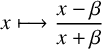
identifies
$\mathbb {F}_q$
 with the norm-one subgroup of
$\mathbb {F}_{q^2}^{\times }$
 after removing one point. Under this change of variable, (1.1) becomes a power equation in a cyclic group.
The main result is as follows.
Theorem 1.1. Let
$q=3^m$
 with
$m\ge 1$
 odd and let
$s\ge 1$
 . Denote by
$N_{m,s}$
 the number of roots of (1.1) in
$\mathbb {F}_q$
 . Then,

Equivalently,

In particular, (1.1) has a root in
$\mathbb {F}_q$
 if and only if
$ \gcd \, (q+1,\,3^s+2(-1)^s)>1. $

2 The Cayley transform
Throughout this section, let
$q=3^m$
 with
$m\ge 1$
 odd. Since
$q\equiv 3 \pmod 4$
 , the polynomial
$T^2+1$
 is irreducible over
$\mathbb {F}_q$
 . Choose
$\beta \in \mathbb {F}_{q^2}$
 such that

Then,
$\beta \notin \mathbb {F}_q$
 and the Frobenius automorphism satisfies

Let

be the norm-one subgroup of
$\mathbb {F}_{q^2}^{\times }$
 . This group is cyclic of order
$q+1$
 [Reference Lidl and Niederreiter3, Ch. 2].
Proposition 2.1. The map

is a bijection. Its inverse is

Proof. Let
$x\in \mathbb {F}_q$
 . Since
$\beta \notin \mathbb {F}_q$
 , the denominator
$x+\beta $
 is nonzero. Moreover,

Hence,
$\phi (x)^{q+1}=1$
 , so
$\phi (x)\in \mu _{q+1}$
 . In addition,
$\phi (x)=1$
 would imply
$\beta =0$
 , which is impossible. Therefore,

Conversely, let
$u\in \mu _{q+1}\setminus \{1\}$
 . Since
$u^q=u^{-1}$
 and
$\beta ^q=-\beta $
 ,

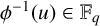
Thus,
$\phi ^{-1}(u)\in \mathbb {F}_q$
 . A direct computation gives

This proves the proposition.
3 The root count
The next proposition is the key step.
Proposition 3.1. Let
$q=3^m$
 with
$m\ge 1$
 odd, let
$s\ge 1$
 and let
$x\in \mathbb {F}_q^\times $
 . Put

Then, (1.1) is equivalent to

Equivalently,

Proof. Since
$x\neq 0$
 , (1.1) is equivalent to

By Proposition 2.1,

Since
$\phi (0)=-1$
 , the condition
$x\neq 0$
 implies
$u\neq -1$
 . We also have
$u\neq 1$
 . Hence,
${1-u^2\neq 0}$
 .
Now,

and, therefore,

In characteristic
$3$
 , we have
$2=-1$
 and so

Thus,

Since
$\beta ^3=-\beta $
 , iteration gives

Hence,

The denominator in (3.3) is nonzero. Indeed, if
$u^{3^s}=1$
 , then the order of
$u$
 divides both
$3^s$
 and
$q+1$
 . Since
$\gcd \, (3^s,q+1)=1$
 , this forces
$u=1$
 , contrary to
$u\in \mu _{q+1}\setminus \{1\}$
 .
Substituting (3.2) and (3.3) into (3.1) yields

All denominators in the preceding identity are nonzero, so the following cross-multiplications are reversible.
If
$s$
 is odd, the previous equation becomes

and cross-multiplication yields
$u^{3^s}=u^2$
 .
If
$s$
 is even, it becomes

Cross-multiplication gives

Equivalently, in characteristic
$3$
 ,

or
$u^{3^s}=u^{-2}$
 . This gives the asserted equivalence.
Proof of Theorem 1.1.
Since the constant term in (1.1) is
$1$
 , every root of (1.1) lies in
$\mathbb {F}_q^\times $
 . By Propositions 3.1 and 2.1, the roots of (1.1) in
$\mathbb {F}_q$
 are in bijection with the elements

such that

Put

Since
$\mu _{q+1}$
 is cyclic of order
$q+1$
 , the equation
$u^M=1$
 has exactly

solutions in
$\mu _{q+1}$
 .
The integer
$M$
 is odd. Hence,
$u=-1$
 does not satisfy
$u^M=1$
 . Thus, among the solutions in
$\mu _{q+1}$
 , the only element excluded by passing to
$\mu _{q+1}\setminus \{1,-1\}$
 is
$u=1$
 . It follows that

This proves the theorem.
4 Application to the conjectural no-root condition
We now give the consequence in the form in which (1.1) is used in the cyclic-code setting. Whenever the nonexistence of roots of (1.1) over
$\mathbb {F}_{3^m}$
 is required, the obstruction is completely determined by the following greatest common divisor.
Corollary 4.1. Let
$m\ge 1$
 be odd and let
$s\ge 1$
 . Then, (1.1) has no root in
$\mathbb {F}_{3^m}$
 if and only if

If this greatest common divisor is greater than
$1$
 , then (1.1) has exactly

roots in
$\mathbb {F}_{3^m}$
 .
Proof. This follows at once from Theorem 1.1 with
$q=3^m$
 .
Remark 4.2. The precise cyclic code depends on the exponent family under consideration. However, whenever the analysis reduces to the no-root condition for (1.1), Corollary 4.1 gives the exact answer. The Cayley transform therefore changes the finite-field solvability question appearing in the coding-theoretic argument into an elementary calculation in a cyclic group.
The following consequence strengthens the single counterexample obtained by taking
$(m,s)=(83,11)$
 .
Corollary 4.3. Let
$s=11$
 and put
$ m=83+166t$
 with
$t\ge 0. $
 If

then
$m$
 is odd and

Equation (1.1) has at least
$498$
 roots in
$\mathbb {F}_{3^m}$
 . Consequently, the conjectural no-root statement from the conclusion of [Reference Zhao, Luo and Sun7] fails for infinitely many pairs
$(m,s)$
 satisfying its hypotheses.
Proof. A direct computation gives

Squaring the second congruence gives

Hence, for every
$m$
 of the form
$m=83+166t$
 ,

Therefore,

Since
$s=11$
 is odd, Theorem 1.1 gives

It remains to check the hypotheses in the conjectural statement. Since
$83$
 is odd and
$166$
 is even, every integer
$m=83+166t$
 is odd. In addition,

so
$\gcd \, (m,3)=1$
 precisely when
$t\not \equiv 1\pmod 3$
 . Similarly,

so
$\gcd \, (m,11)=1$
 precisely when
$t\not \equiv 5\pmod {11}$
 . For example, all integers
$t=33r$
 with
$r\ge 0$
 satisfy both restrictions. This gives infinitely many admissible pairs and the assertion follows.
Corollary 4.4. Let
$m\ge 1$
 be odd. Then, the equation

has no root in
$\mathbb {F}_{3^m}$
 .
Proof. Take
$s=1$
 in Theorem 1.1. Then,

This gives the claim.
Remark 4.5. Theorem 1.1 shows that the root count depends only on

Thus, the condition
$\gcd \, (m,s)=1$
 alone does not control the root count. Together with Corollary 4.3, this gives a negative answer to the conjectural no-root statement in [Reference Zhao, Luo and Sun7].

 Open access

