





1. Introduction and main results
The purpose of this article is to investigate nonlinear elliptic problems driven by nonlinear superposition operators of mixed fractional order. In recent years, considerable attention has been devoted to the existence theory for elliptic equations involving such operators. These superposition operators unify and generalize several fundamental cases, including the  $p$-Laplacian, the fractional
 $p$-Laplacian, their combinations (i.e., mixed local and nonlocal operators), as well as their differences [Reference Dipierro, Perera, Sportelli and Valdinoci11]. From a purely mathematical perspective, the interplay of these operators gives rise to a loss of scale invariance, which in turn may introduce unexpected difficulties. The situation becomes particularly delicate since these operators are no longer positive definite. Consequently, the bilinear form naturally associated with them does not yield a scalar product or a norm, the variational spectrum may contain negative eigenvalues, and even maximum principles can fail [Reference Dipierro, Lippi, Sportelli and Valdinoci10].
At the same time, superposition operators of mixed fractional type are not only of theoretical interest but also appear in several applied contexts. They play an important role in the modelling of anomalous diffusion, population dynamics, and various problems in mathematical biology, including those related to Gaussian processes and Lévy flights. For further discussions and related developments, we refer the reader to [Reference Dipierro, Lippi, Sportelli and Valdinoci8, Reference Dipierro, Lippi, Sportelli and Valdinoci10, Reference Dipierro and Valdinoci13]. To be precise, we study the following superlinear problem involving the superposition nonlinear operator of mixed fractional order:
 \begin{align}
A_{\mu, p} u &= f(x,u) ~\text{in}~\Omega \nonumber\\
u & =0 ~\text{in}~ \mathbb{R}^N \setminus \Omega,\end{align}
where  $\Omega$ is a bounded open subset of
 $\mathbb{R}^{N}$,
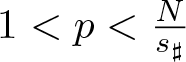 $ 1 \lt p \lt \frac{N}{s_\sharp}$ and
 $1 \lt p \lt q \lt p^*_{s_\sharp}:=\frac{Np}{N-ps_\sharp}$ with
 $s_\sharp$ defined by (1.7) below. The (nonlinear) superposition operator (of fractional order)
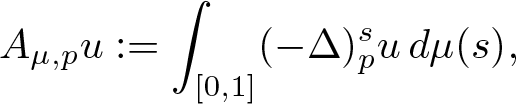
 $A_{\mu, p}$ is defined as follows:
 \begin{equation}
A_{\mu, p} u:=\int_{[0,1]}(-\Delta_p)^{s} u \:\! \mathrm{d} \mu(s),
\end{equation}
where  $\mu$ is a signed measure given by
 \begin{equation}
\mu:=\mu^{+}-\mu^{-}.
\end{equation}
Consider two nonnegative finite Borel measures  $\mu^{+}$ and
 $\mu^{-}$ on
 $[0,1]$, which are assumed to satisfy the following conditions:
 \begin{equation}
\mu^{+}([\bar{s}, 1]) \gt 0,
\end{equation}
 \begin{equation}
\mu^{-}|_{[\bar{s}, 1]}=0,
\end{equation}
and
 \begin{equation}
\mu^{-}([0, \bar{s}]) \leq \kappa \mu^{+}([\bar{s}, 1]) ,
\end{equation}
for some 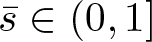 $\bar{s} \in(0,1]$ and
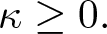 $\kappa \geq 0.$ In fact, from (1.4), there exists another (fractional) exponent
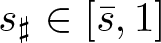 $s_{\sharp} \in[\bar{s}, 1]$ such that
 \begin{equation}
\mu^{+}\left(\left[s_{\sharp}, 1\right]\right) \gt 0.
\end{equation}
The superposition operator defined in (1.2) exhibits remarkable versatility. It can represent the negative  $p$-Laplacian
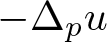 $-\Delta_{p} u$ when
 $\mu$ is the Dirac measure concentrated at 1, the fractional
 $p$-Laplacian
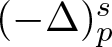 $(-\Delta)_p^{s}$ when
 $\mu$ is concentrated at a fractional power
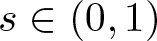 $s \in (0, 1)$, and even a ‘mixed-order’ operator of the form
 $-\Delta_p + \epsilon (-\Delta)_p^{s}$, with
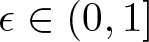 $\epsilon \in (0,1]$, when
 $\mu$ is the sum of two Dirac measures,
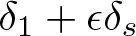 $\delta_1 + \epsilon \delta_s$,
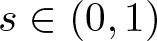 $s \in (0,1)$, among other possibilities. Interestingly, some components of these operators may contribute with the ‘wrong sign’; however, as long as a dominant term, typically corresponding to a higher-order fractional operator, provides sufficient control, the overall behaviour remains well-posed.
Problem (1.1) admits a natural variational structure, with its solutions corresponding to the critical points of the associated Euler–Lagrange functional. This naturally leads to the question of whether the well-established topological and variational methods, originally developed in the classical setting, can be effectively extended to this unified nonlinear and nonlocal framework. We now define the notion of a weak solution to the problem (1.1).
Definition 1.1. We say 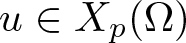 $u \in X_{p}(\Omega)$ is a weak solution to the problem (1.1), if
 \begin{align*}
& \int_{[0,1]}\left(\iint_{\mathbb{R}^{2 N}} \frac{C_{N, s, p}|u(x)-u(y)|^{p-2}(u(x)-u(y))(v(x)-v(y))}{|x-y|^{N+s p}} \:\! \mathrm{d} x \:\! \mathrm{d} y\right) \:\! \mathrm{d} \mu^{+}(s) \\
& -\int_{[0, \bar{s}]}\left(\iint_{\mathbb{R}^{2 N}} \frac{C_{N, s, p}|u(x)-u(y)|^{p-2}(u(x)-u(y))(v(x)-v(y))}{|x-y|^{N+s p}} \:\! \mathrm{d} x \:\! \mathrm{d} y\right) \:\! \mathrm{d} \mu^{-}(s) \\
& =\int_\Omega f(x,u)v \:\! \mathrm{d} x, \text{for all } v \in X_{p}(\Omega).
\end{align*}
The weak solutions to the problem (1.1) are the critical points of the energy functional  $\mathcal{I}: X_{p}(\Omega) \rightarrow \mathbb{R}$, which is defined as
 \begin{equation}
\mathcal{I}(u):=\frac{1}{p}\left[\rho_{p}(u)\right] ^{p}-\frac{1}{p} \int_{[0, \bar{s}]}[u]_{s, p}^{p} \:\! \mathrm{d} \mu ^{-}(s)-\int_\Omega\int_0^uf(x,\tau)\:\! \mathrm{d} \tau \:\! \mathrm{d} x.
\end{equation}
Furthermore, we have
 \begin{align*}
\langle \mathcal{I}^{\prime}(u), v\rangle&= \int_{[0,1]}\left(\iint_{\mathbb{R}^{2 N}} \frac{C_{N, s, p}|u(x)-u(y)|^{p-2}(u(x)-u(y))(v(x)-v(y))}{|x-y|^{N+s p}} \:\! \mathrm{d} x \:\! \mathrm{d} y\right) \:\! \mathrm{d} \mu^{+}(s) \\
& -\int_{[0, \bar{s}]}\left(\iint_{\mathbb{R}^{2 N}} \frac{C_{N, s, p}|u(x)-u(y)|^{p-2}(u(x)-u(y))(v(x)-v(y))}{|x-y|^{N+s p}} \:\! \mathrm{d} x \:\! \mathrm{d} y\right) \:\! \mathrm{d} \mu^{-}(s) \\
& -\int_{\Omega}f(x,u) v \:\! \mathrm{d} x, \text{for all } u, v \in X_{p}(\Omega).
\end{align*}
Remark 1.2. We mention here that the first term of the integral on the LHS in Definition 1.1 has the following explicit form:
 \begin{align*}
&\int_{[0,1]}\left(\iint_{\mathbb{R}^{2 N}} \frac{C_{N, s, p}|u(x)-u(y)|^{p-2}(u(x)-u(y))(v(x)-v(y))}{|x-y|^{N+s p}} \:\! \mathrm{d} x \:\! \mathrm{d} y\right) \:\! \mathrm{d} \mu^{+}(s)\\
&=\int_{(0,1)}\left(\iint_{\mathbb{R}^{2 N}} \frac{C_{N, s, p}|u(x)-u(y)|^{p-2}(u(x)-u(y))(v(x)-v(y))}{|x-y|^{N+s p}} \:\! \mathrm{d} x \:\! \mathrm{d} y\right) \:\! \mathrm{d} \mu^{+}(s)\\
&+\mu^+(\{0\}) \int_\Omega {|u(x)|^{p-2}}u(x)v(x) \:\! \mathrm{d} x + \mu^+(\{1\}) \int_\Omega |\nabla u(x)|^{p-2}\nabla u(x) \cdot \nabla v(x) \:\! \mathrm{d} x. \end{align*}
Similarly, the second term of the integral on the LHS is defined, but for simplicity, we will continue to misuse the expression as mentioned in Definition 1.1.
Finally, we assume that the nonlinearity  $f:\bar{\Omega}\times\mathbb{R}\rightarrow\mathbb{R}$ satisfies the following conditions:
 \begin{equation}
\hspace{-250pt}\text{(i)}~~f\in C(\bar{\Omega}\times\mathbb{R}),
\end{equation}
 \begin{equation}
\text{(ii)}~~|f(x,t)|\leq a_1+a_2|t|^{q-1}, \text{for some } a_1,a_2 \gt 0\ \text{with } p \lt q \lt p^*_{s_\sharp}:=\frac{Np}{N-ps_\sharp},
\end{equation}
 \begin{equation}
\hspace{-150pt}\text{(iii)}~~ f(x,-t)=-f(x,t), \text{for all } x\in\Omega, t\in\mathbb{R}.
\end{equation}
Condition (ii) reflects the assumption of subcritical growth. On the other hand, Condition (iii) is essential for establishing the existence of infinitely many solutions, as it requires a certain symmetry of  $f$. It is also immediate to observe that this condition implies
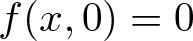 $f(x,0)=0$, which ensures that
 $u=0$ is always a trivial solution of (1.1). Our objective, therefore, is to establish the existence of nontrivial solutions to (1.1).
Additionally, we assume that  $f$ verifies the famous Ambrosetti–Rabinowitz (AR) condition; that is, there exist constants
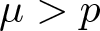 $\mu \gt p$ and
 $r \gt 0$ such that, for all
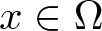 $x \in \Omega$ and
 $t \in \mathbb{R}$ with
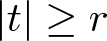 $|t| \geq r$, we have
 \begin{equation}
0 \lt \mu F(x,t)\leq tf(x,t),
\end{equation}
where  $F$ is the primitive of
 $f$ with respect to the second variable, that means,
 \begin{equation*}F(x, t)= \int_0^t f(x, \tau) \,d\tau.\end{equation*}
The AR condition, introduced in the seminal work of Ambrosetti and Rabinowitz [Reference Ambrosetti and Rabinowitz3], plays a central role in guaranteeing the boundedness of Palais–Smale (PS) sequences associated with the energy functional of the problem under consideration. In that work, by applying the celebrated Mountain Pass Theorem, the authors proved the existence of nontrivial solutions to problem (1.1) in the case 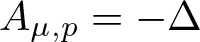 $A_{\mu, p} = -\Delta$, assuming that the nonlinearity satisfies superlinear growth while remaining subcritical.
This result was later extended to the nonlocal framework of the fractional Laplacian,  $A_{\mu, p} = (-\Delta)^s$, by Servadei and Vandinoci [Reference Servadei and Valdinoci21]. Subsequently, Binlin et al. [Reference Binlin, Bisci and Servadei6] investigated the existence of infinitely many solutions to problem (1.1) for the case
 $A_{\mu, p} = (-\Delta)^s$. Furthermore, in [Reference Mingqi, Molica Bisci, Tian and Zhang19], the authors established the existence of a sequence of nontrivial solutions for Kirchhoff-type problems driven by the fractional
 $p$-Laplacian, which in particular includes problem (1.1) with
 $A_{\mu, p} = (-\Delta)_p^s$. In this paper, our goal is to generalize and unify the aforementioned results by studying problem (1.1) under the assumption that
 $f$ satisfies subcritical and superlinear growth conditions together with the AR condition. As an example can take
 $f(x, t):=a(x) |t|^{q-2}t$ with
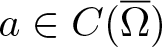 $a \in C(\overline{\Omega})$ and
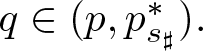 $q \in (p, p^*_{s_\sharp}).$ Our framework is sufficiently flexible to encompass both local and nonlocal operators, thereby extending classical variational results to a wider class of mixed and fractional problems. Now, we state one of our main results as follows.
Theorem 1.3. Let 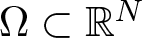 $\Omega \subset \mathbb{R}^N$ be a bounded open subset. Let
 $\mu = \mu^{+} - \mu^{-}$, where
 $\mu^{+}$ and
 $\mu^{-}$ satisfy conditions (1.4), (1.5), and (1.6). Assume that
 $s_{\sharp}$ is given as in (1.7), and suppose that
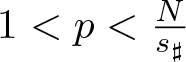 $1 \lt p \lt \frac{N}{s_\sharp}$ and
 $1 \lt p \lt q \lt p^*_{s_\sharp} := \frac{Np}{N - ps_\sharp}$. Suppose further that
 $f$ satisfies (1.9), (1.10), (1.11), and (1.12). Then, there exists
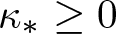 $\kappa_* \geq 0$ such that, for all
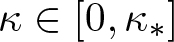 $\kappa \in [0, \kappa_*]$, the problem (1.1) admits an infinite sequence of large-energy solutions in
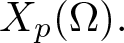 $X_p(\Omega).$
We recall that by an infinite sequence of large-energy (or high-energy) solutions we mean a sequence  $(u_j)_{j \in \mathbb{N}} \subset X_p(\Omega)$ of weak solutions to problem (1.1) such that
 $\mathcal{I}(u_j) \to +\infty$ as
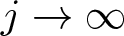 $j \to \infty$. Moreover, under the symmetry assumption (1.11), if
 $u$ is a weak solution, then so is
 $-u$. Consequently, this result (and other results of this paper) guarantee the existence of infinitely many symmetric pairs of high-energy weak solutions
 $\{u_j, -u_j\}_{j \in \mathbb{N}}$.
To put things in context, let us briefly describe the literature for the existence of solutions to the elliptic problem involving  $A_{\mu, p}.$ Consider the following critical problem
 \begin{align}
A_{\mu,p} u &= \lambda |u|^{q-2}u+|u|^{p^*_{s_\sharp}-2}u ~\text{in}~\Omega \nonumber\\
u & =0 ~\text{in}~ \mathbb{R}^N \setminus \Omega,\end{align}
where  $\Omega$ is a bounded open subset of
 $\mathbb{R}^{N}$,
 $0 \lt \lambda$,
 $0\leq s\leq 1 \lt p \lt \frac{N}{s_\sharp}.$ Dipierro et al. [Reference Dipierro, Perera, Sportelli and Valdinoci11] investigated the linear case of (1.13), corresponding to
 $q=p$, and proved the existence of
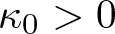 $\kappa_0 \gt 0$ such that, for every
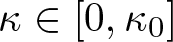 $\kappa \in [0,\kappa_0]$, problem (1.13) admits
 $m$ pairs of distinct nontrivial solutions. Subsequently, the last two authors, together with Aikyn and Ruzhansky [Reference Aikyn, Ghosh, Kumar and Ruzhansky2], studied the superlinear case
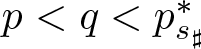 $p \lt q \lt p^*_{s_\sharp}$ and established the existence of a positive constant
 $\lambda^*$ with the property that, for any
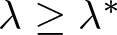 $\lambda \geq \lambda^*$, there exists a sufficiently small
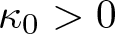 $\kappa_0 \gt 0$ such that, for all
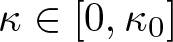 $\kappa \in [0,\kappa_0]$, problem (1.13) possesses at least one nontrivial solution. More recently, in [Reference Bhowmick, Ghosh and Kumar5], we analysed the sublinear case
 $1 \lt q \lt p \lt p^*_{s_\sharp}$ and demonstrated that problem (1.13) admits infinitely many nontrivial solutions in
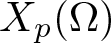 $X_p(\Omega)$ with negative energy. In addition, we mention [Reference Afonso, Bartolo and Bisci1], where the authors considered the linear case
 $p=2$ and established existence and multiplicity results by replacing the critical exponent term with a general nonlinearity satisfying subcritical growth and asymptotic linearity at infinity. In this context, Theorem 1.3 may be regarded as a natural continuation of this line of research.
The following easy consequence of Theorem 1.3 for the mixed local and nonlocal operator  $( -\Delta+(-\Delta)^s)$ and mixed local and nonlocal
 $p$-Laplace operator
 $( -\Delta_{p} +(-\Delta_{p})^s)$ also seems to be new in the literature. In this situation, we choose
 $\mu:=\delta_1+\delta_s,$ where
 $\delta_1$ and
 $\delta_s$ denote the Dirac measures centred at
 $1$ and
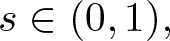 $s \in (0, 1),$ respectively. Consequently,
 $\mu$ satisfying all of the conditions (1.4)–(1.6) with
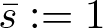 $\bar{s}:=1$ and
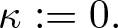 $\kappa:=0.$ We also take
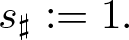 $s_\sharp:=1.$ The following corollary complements the findings of [Reference Maione, Mugnai and Vecchi18], where the existence of a weak solution was established for problems driven by mixed local and nonlocal operators.
Corollary 1.4. Let 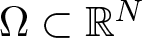 $\Omega \subset \mathbb{R}^N$ be a bounded open subset. Suppose that
 $1 \lt p \lt N$ and
 $1 \lt p \lt q \lt p^* := \frac{Np}{N - p}$. Suppose further that
 $f$ satisfies (1.9), (1.10), (1.11), and (1.12). Then, the problem
 \begin{align}
( -\Delta_{p} +(-\Delta_{p})^s) u &= f(x,u) ~\text{in}~\Omega \nonumber\\
u & =0 ~\text{in}~ \mathbb{R}^N \setminus \Omega,\end{align}
admits an infinite sequence of large-energy solutions.
Although the AR condition is widely regarded as natural, it is nevertheless restrictive, as it excludes a broad range of nonlinearities. From the AR condition (1.12), one can deduce the existence of constants 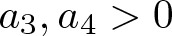 $a_3, a_4 \gt 0$ such that
 \begin{equation}
F(x,t) \geq a_3 |t|^\mu - a_4, \quad \text{for all } x \in \bar{\Omega}, \; t \in \mathbb{R}.
\end{equation}
However, a number of nonlinearities fail to satisfy the AR condition while still exhibiting superlinear growth at infinity. Indeed, combining (1.15) with the assumption 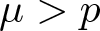 $\mu \gt p$ yields
 \begin{equation}
\lim_{|t| \to \infty} \frac{F(x,t)}{|t|^p} = \infty, \quad \text{uniformly for } x \in \bar{\Omega}.
\end{equation}
It is evident that condition (1.16) is weaker than (1.15). For example, the function
 \begin{equation}
f(x,t) = |t|^{p-2} t \, \log\!\left(1 + |t|^{p-1}\right)
\end{equation}
satisfies the superlinear growth condition (1.16), yet it does not fulfil (1.15). This illustrates that nonlinearities governed by (1.16) extend beyond those admissible under the AR condition (1.12).
This consideration provides a strong motivation to investigate the existence of solutions under weaker superlinearity assumptions, thereby enlarging the class of admissible nonlinearities while preserving the variational framework necessary for the analysis. To address the superlinear problem (1.1) in this more general framework, we impose the following assumption on  $f$ introduced by Jeanjean [Reference Jeanjean15]:
There exists  $\alpha\geq 1$ such that for any
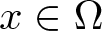 $x \in\Omega$, we have
 \begin{equation}
\mathcal{F}(x,t')\leq \alpha\mathcal{F}(x,t)~~\text{for any } t,t'\in\mathbb{R} ~~\text{with } 0 \lt t'\leq t,
\end{equation}
where
 \begin{equation*}\mathcal{F}(x,t)=\frac{1}{p}tf(x,t)-F(x,t).\end{equation*}
It is worth mentioning that problems whose nonlinearities satisfy condition (1.18) are commonly referred to in the literature as problems without the AR condition. We note that the function (1.17) also satisfies the condition (1.18). There are several results in the literature dealing with nonlinear nonlocal elliptic problems without the AR condition; we refer to [Reference Binlin, Bisci and Servadei6, Reference Fang and Liu14, Reference Jeanjean15, Reference Liu17, Reference Miyagaki and Souto20] and references therein.
Our second result is about the existence of the large-energy solution to the problem (1.1) without the AR condition.
Theorem 1.5. Let  $\Omega$ be a bounded open subset of
 $\mathbb{R}^{N}$. Let
 $\mu = \mu^{+} - \mu^{-}$, where
 $\mu^{+}$ and
 $\mu^{-}$ satisfy conditions (1.4)–(1.6). Assume that
 $s_{\sharp}$ is given as in (1.7), and that
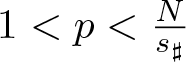 $1 \lt p \lt \tfrac{N}{s_\sharp}$ and
 $1 \lt p \lt q \lt p^*_{s_\sharp}:= \frac{Np}{N - ps_\sharp}$. Suppose that
 $f$ satisfies (1.9), (1.10), (1.11), (1.16), and (1.18). Then there exists
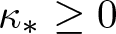 $\kappa_* \geq 0$ such that, for every
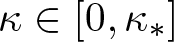 $\kappa \in [0,\kappa_*]$, the problem (1.1) admits an infinite sequence of large-energy solutions in
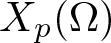 $X_p(\Omega)$.
Observe that the following condition is stronger than condition (1.16) but weaker than AR condition (1.12),
 \begin{equation}
\lim\limits_{|t|\rightarrow +\infty}\frac{f(x,t)}{|t|^{p-2}t}=+\infty,\text{ uniformly in } x\in\bar{\Omega}.
\end{equation}
This is commonly referred to as the superlinear growth condition of  $f$ at infinity, particularly in the case
 $p=2$. Thus, we have the following result.
Corollary 1.6. Let  $\Omega$ be a bounded open subset of
 $\mathbb{R}^{N}$. Consider the measure
 $\mu = \mu^{+} - \mu^{-}$, where
 $\mu^{+}$ and
 $\mu^{-}$ satisfy (1.4)–(1.6). Let
 $s_{\sharp}$ be given by (1.7), and suppose that
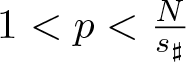 $1 \lt p \lt \tfrac{N}{s_\sharp}$ and
 $1 \lt p \lt q \lt p^*_{s_\sharp}$. Assume further that
 $f$ satisfies conditions (1.9), (1.10), (1.11), (1.18), and (1.19). Then there exists a constant
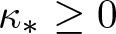 $\kappa_* \geq 0$ such that, for all
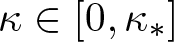 $\kappa \in [0,\kappa_*]$, the problem (1.1) has an infinite sequence of large-energy solutions in
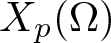 $X_p(\Omega)$.
Motivated by [Reference Liu and Li16], we now introduce the following global condition on  $f$: the function
 \begin{equation}
g(t)=\frac{f(x,t)}{|t|^{p-2}t}~~\text{is increasing in }t\geq 0 ~~\text{and is decreasing in }t\leq0.
\end{equation}
Observe that condition (1.18) is weaker than (1.20). Since we are dealing with the problem (1.1) in a bounded domain, we replace the global condition (1.20) by the following modified condition: there exists 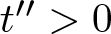 $t^{\prime\prime} \gt 0$ such that for any
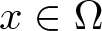 $x \in\Omega$, the function
 \begin{equation}
g(t)=\frac{f(x,t)}{|t|^{p-2}t}~~\text{is increasing in }t\geq t^{\prime\prime} ~~\text{and is decreasing in }t\leq -t^{\prime\prime}.
\end{equation}
The condition (1.21) was introduced in [Reference Liu17]. The following theorem is our last result of this paper.
Theorem 1.7. Let  $\Omega$ be a bounded open subset of
 $\mathbb{R}^{N}$. Let
 $\mu = \mu^{+} - \mu^{-}$, with
 $\mu^{+}$ and
 $\mu^{-}$ satisfying conditions (1.4)–(1.6). Assume that
 $s_{\sharp}$ is given as in (1.7), and that
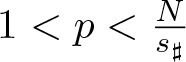 $1 \lt p \lt \frac{N}{s_\sharp}$ and
 $1 \lt p \lt q \lt p^*_{s_\sharp}$. Suppose
 $f$ satisfies (1.9), (1.10), (1.11), (1.16), and (1.21). Then, there exists
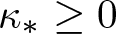 $\kappa_* \geq 0$ such that, for all
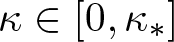 $\kappa \in [0, \kappa_*]$, the problem (1.1) possesses an infinite sequence of large-energy solutions in
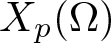 $X_p(\Omega)$.
We employ the fountain theorem introduced in Bartsch [Reference Bartsch4] (see Section 4 for more details) to establish the results of Theorems 1.3, 1.5, and 1.7. Specifically, we prove the compactness of the energy functional (1.8) by using the Palais–Smale condition  $\mathrm{(PS)_c}$ at the level
 $c\in\mathbb{R}$ or the Cerami condition
 $\mathrm{(Ce)_c}$ at the level
 $c\in\mathbb{R}$, depending on the growth conditions of the nonlinearity
 $f$. In particular, we prove that the functional satisfies the
 $\mathrm{(PS)_c}$ if
 $f$ satisfies the AR condition (1.12). Recall that the functional
 $\mathcal{I}$ given by (1.8) satisfies the
 $\mathrm{(PS)_c}$ at the level
 $c\in\mathbb{R}$ if every sequence
 $\{u_j\}_{j\in\mathbb{N}}\subset X_p(\Omega)$ such that
 \begin{equation}
\mathcal{I}(u_j)\to c
\quad\text{and}\quad
\mathcal{I}'(u_j) \to 0 \,\, \text{in}\,\,X_p(\Omega)^*
\quad\text{as } j\to+\infty,
\end{equation}
admits a subsequence which converges strongly in 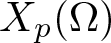 $X_p(\Omega)$.
On the other hand, when  $f$ satisfies superlinear growth conditions (i.e., (1.16), (1.18), (1.19), (1.21)), it remains nontrivial to prove the
 $\mathrm{(PS)_c}$ directly for the functional
 $\mathcal{I}$. In this case, we prove that
 $\mathcal{I}$ satisfies a weaker condition, known as the
 $\mathrm{(Ce)_c}$ (see Cerami [Reference Cerami7]). We say
 $\mathcal{I}$ satisfies
 $\mathrm{(Ce)_c}$ at the level
 $c\in\mathbb{R}$, if every sequence
 $\{u_j\}_{j\in\mathbb{N}}\subset X_p(\Omega)$ such that
 \begin{equation}
\mathcal{I}(u_j)\to c
\quad\text{and}\quad
\big(1+\|u_j\|_{X_p(\Omega)}\big)
\mathcal{I}'(u_j)\to 0\,\, \text{in}\,\,X_p(\Omega)^*
\quad\text{as } j\to+\infty,
\end{equation}
admits a subsequence which converges strongly in 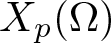 $X_p(\Omega)$. It is noteworthy to mention that the fountain theorem remains applicable if
 $\mathcal{I}$ satisfies the
 $\mathrm{(Ce)_c}$ as well as the
 $\mathrm{(PS)_c}$. In both cases of the growth conditions of
 $f$, the main difficulty lies in proving the boundedness of the PS or Cerami sequences for the functional
 $\mathcal{I}$ and in handling the superposition operator due to its general nature.
1.2 Applications and examples
Now, we apply the abstract results established in the previous sections to a number of illustrative examples, thereby deriving new existence results that depend on the specific choice of the measure  $\mu$. As a first step, we present particular instances of Theorem 1.7. Analogous applications of Theorems 1.3 and 1.5 can be discussed in the same framework. For convenience, we shall employ the unified notation
 $\mathbb{X}(\Omega)$ to denote the (fractional) Sobolev space associated with each example under consideration. It is important to note that the precise definition of
 $\mathbb{X}(\Omega)$ depends on the operator involved, and must be specified in terms of the underlying space
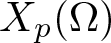 $X_p(\Omega)$ in each case.
Corollary 1.8. Let 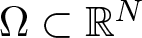 $\Omega \subset \mathbb{R}^N$ be a bounded open subset. Suppose that
 $1 \lt p \lt N$ and
 $1 \lt p \lt q \lt p^* := \frac{Np}{N - p}$. Suppose
 $f$ satisfies (1.9), (1.10), (1.11), (1.16), and (1.21). Then, the problem
 \begin{align}
( -\Delta_{p} +(-\Delta_{p})^s) u &= f(x,u) ~\text{in}~\Omega \nonumber\\
u & =0 ~\text{in}~ \mathbb{R}^N \setminus \Omega,\end{align}
admits an infinite sequence of large-energy solutions in  $\mathbb{X}(\Omega)$.
We show that we can also consider nonlocal operators associated with a convergent series of Dirac measures. For applying Theorem 1.7, we define
 \begin{equation*}\mu:= \sum_{k=0}^{+\infty} a_k \delta_{s_k},\end{equation*}
where  $\delta_{s_k}$ represents the Dirac measures at
 $s_k.$ Subsequently, we observe that
 $\mu$ fulfils all the conditions (1.4)–(1.6) by choosing
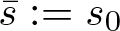 $\bar{s}:=s_0$,
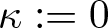 $\kappa:=0$ and
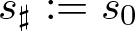 $s_\sharp := s_0$. Thus, we get the following result.
Corollary 1.9. Let  $ \Omega$ be a bounded subset of
 $\mathbb{R}^N$ and
 $1 \geq s_0 \gt s_1 \gt s_2 \gt \ldots \geq 0.$ Assume that the operator
 \begin{equation*}\sum_{k=0}^{+\infty} a_k (-\Delta_p)^{s_k}\quad \text{with} \quad \sum_{k=0}^{+\infty} a_k \in (0, +\infty),\end{equation*}
where 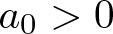 $a_0 \gt 0$ and
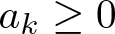 $a_k \geq 0$ for all
 $k \geq 1$ with
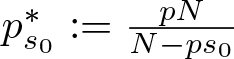 $p_{s_0}^*:= \frac{pN}{N-ps_{0}}$ be the fractional critical Sobolev exponent. Let
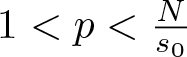 $1 \lt p \lt \frac{N}{s_0}$ and
 $1 \lt p \lt q \lt p^*_{s_0}.$ Suppose
 $f$ satisfies (1.9), (1.10), (1.11), (1.16), and (1.21). Then the problem
 \begin{align}
\sum_{k=0}^{+\infty} a_k (-\Delta_p)^{s_k} u &= f(x, u) ~\text{in}~\Omega \nonumber\\
u & =0 ~\text{in}~ \mathbb{R}^N \setminus \Omega,\end{align}
possesses an infinite sequence of large-energy solutions in  $\mathbb{X}(\Omega)$.
An attractive scenario arises when the measure  $\mu$ changes sign. This means, for example, that the operator could use a minor term with a ‘wrong’ sign. To our knowledge, no existing literature addresses a result of this nature, even for the situation
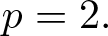 $p=2.$ For this, we take
 $\mu:=\delta_1-\alpha \delta_s,$ where
 $\delta_1$ and
 $\delta_s$ are two Dirac measures centered at
 $1$ and
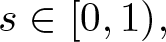 $s \in [0, 1),$ respectively. Now, we choose
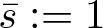 $\bar{s}:=1$ and
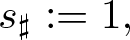 $s_\sharp:=1,$ so that the conditions (1.4) and (1.5) hold. Moreover, note that
 \begin{equation*}\mu^-([0, \bar{s}]) \leq \max \{0, \alpha\} = \max\{0, \alpha\} \mu^+([\bar{s}, 1]),\end{equation*}
which says that condition (1.6) holds by choosing  $\kappa:= \max\{0, \alpha\}.$ Hence, the following result follows as a direct application of Theorem 1.7.
Corollary 1.10. Let  $\Omega$ be a bounded open subset of
 $\mathbb{R}^{N}$. Let
 $\mu = \mu^{+} - \mu^{-}$, with
 $\mu^{+}$ and
 $\mu^{-}$ satisfying conditions (1.4)–(1.6). Assume that
 $1 \lt p \lt N$ and
 $1 \lt p \lt q \lt p^*:=\frac{Np}{N-p}$. Suppose
 $f$ satisfies (1.9), (1.10), (1.11), (1.16), and (1.21). Then, for all
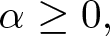 $\alpha \geq 0,$ there exists
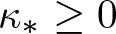 $\kappa_* \geq 0$ such that for all
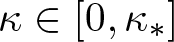 $\kappa \in [0, \kappa_*]$, the problem
 \begin{align}
-\Delta_{p}u -\alpha (-\Delta_{p})^s u &= f(x, u) ~\text{in}~\Omega \nonumber\\
u & =0 ~\text{in}~ \mathbb{R}^N \setminus \Omega,\end{align}
possesses an infinite sequence of large-energy solutions in  $\mathbb{X}(\Omega)$.
We highlight another intriguing result arising from the continuous superposition of fractional operators of the  $p$-Laplacian type. To the best of our knowledge, this result is also novel. In this case, we define
 $d\mu(s):=g(s) ds$ with
 $g$ as in the statement of the following corollary. Thus, the operator
 $A_{p, \mu}$ becomes
 \begin{equation*} \int_0^1 g(s) (-\Delta_p)^s u\, ds.\end{equation*}
Thanks to the conditions presented in (1.27), all the conditions (1.4)–(1.6) are satisfied by taking 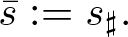 $\bar{s}:=s_\sharp.$ Thus, the following result is concluded from Theorem 1.7.
Corollary 1.11. Let  $ \Omega$ be a bounded subset of
 $\mathbb{R}^N.$ Let
 $s_\sharp \in (0, 1), \kappa \geq 0,$ and let
 $g \not\equiv 0 $ be a measurable function such that
 \begin{align}
&g \geq 0 \quad \text{in} \quad (s_\sharp, 1), \nonumber \\
&\int_{s_\sharp}^1 g(s)\, ds \gt 0, \nonumber\\
\text{and}\quad &\int_0^{s_\sharp} \max\{0, -g(s)\}\, ds \leq \kappa \int_{s_\sharp}^1 g(s)\, ds.
\end{align}
Suppose that 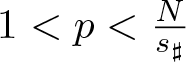 $1 \lt p \lt \frac{N}{s_{\sharp}}$ and
 $1 \lt p \lt q \lt p_{s_\sharp}^*$, where
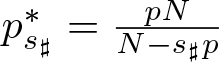 $p_{s_\sharp}^*=\frac{p N}{N-{s_\sharp}p}$ is the fractional critical Sobolev exponent. Then, there exists
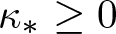 $\kappa_* \geq 0$ such that for all
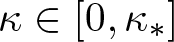 $\kappa \in [0, \kappa_*]$, the problem
 \begin{equation}
\begin{cases}
\int_{0}^{1} g(s) (-\Delta_p)^s u\, ds = f(x,u) \quad & \text {in } \Omega, \\ \quad
u = 0 &\text {in } \mathbb{R}^{N},\backslash \Omega
\end{cases}
\end{equation}
admits an infinite sequence of large-energy solutions in  $\mathbb{X}(\Omega)$.
We conclude this introduction by outlining the organization of the paper. In Section 2, we introduce the functional framework of the problem, recall several preliminary results, and establish a new norm equivalent to the standard one. Section 3 is devoted to analysing the compactness properties of the associated energy functional. In Section 4, we present the fountain theorem and derive a key auxiliary result. Finally, the last section, Section 5, contains the proofs of the main results.
2. Functional analytic setting for the superposition operator
This section is devoted to the construction of the appropriate fractional Sobolev spaces and the discussion of their fundamental properties, which are essential for the analysis of our problem. Similar treatments can be found in [Reference Aikyn, Ghosh, Kumar and Ruzhansky2, Reference Dipierro, Lippi, Sportelli and Valdinoci9, Reference Dipierro, Perera, Sportelli and Valdinoci11, Reference Dipierro, Perera, Sportelli and Valdinoci12]. To begin, for 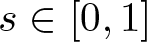 $s \in [0,1]$, we define
 \begin{equation*}
[u]_{s, p}:= \begin{cases}\|u\|_{L^{p}\left(\mathbb{R}^{N}\right)} & \text {if } s=0, \\ \left(C_{N, s, p} \iint_{\mathbb{R}^{2 N}} \frac{|u(x)-u(y)|^{p}}{|x-y|^{N+s p}} \:\! \mathrm{d} x \:\! \mathrm{d} y\right)^{1 / p} & \text {if } s \in(0,1), \\ \|\nabla u\|_{L^{p}\left(\mathbb{R}^{N}\right)} & \text {if } s=1,\end{cases}
\end{equation*}
where 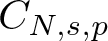 $C_{N,s,p}$ is the normalizing constant, and we have
 \begin{equation*}\lim _{s \searrow 0^+}[u]_{s, p}=[u]_{0, p} \quad \text {and } \quad \lim _{s \nearrow 1^-}[u]_{s, p}=[u]_{1, p}.\end{equation*}
We define the space 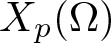 $X_{p}(\Omega)$ as the collection of all measurable functions
 $u: \mathbb{R}^{N} \rightarrow \mathbb{R}$ such that
 $u=0$ in
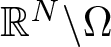 $\mathbb{R}^{N} \backslash \Omega$, for which the following norm is finite:
 \begin{equation} \|u\|_{X_p(\Omega)} = \rho_{p}(u):=\left(\int_{[0,1]}[u]_{s, p}^{p} \:\! \mathrm{d} \mu^{+}(s)\right)^{1 / p} \lt +\infty.
\end{equation}
The space 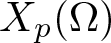 $X_p(\Omega)$ was initially introduced in [Reference Dipierro, Perera, Sportelli and Valdinoci12] for
 $p=2$ and subsequently generalized in [Reference Dipierro, Perera, Sportelli and Valdinoci11] for
 $1 \lt p \lt \infty$. We present the following results from [Reference Dipierro, Perera, Sportelli and Valdinoci11] (see also [Reference Aikyn, Ghosh, Kumar and Ruzhansky2]), which are necessary for our study.
Lemma 2.1. ([Reference Aikyn, Ghosh, Kumar and Ruzhansky2, Reference Dipierro, Perera, Sportelli and Valdinoci11])
The 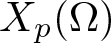 $X_{p}(\Omega)$ is a separable Banach space for
 $1 \leq p \lt \infty$ and is a uniformly convex Banach space for
 $1 \lt p \lt \infty$.
Lemma 2.2. ([Reference Dipierro, Perera, Sportelli and Valdinoci11, Proposition 4.1])
Let  $1 \lt p \lt N$ and (1.5) and (1.6) be true. Then, there exists
 $c_{0}=c_{0}(N, \Omega, p) \gt 0$ such that, for any
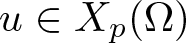 $u \in X_{p}(\Omega)$, we have
 \begin{equation*}
\int_{[0, \bar{s}]}[u]_{s, p}^{p} \:\! \mathrm{d} \mu^{-}(s) \leq c_{0} \kappa \int_{[\bar{s}, 1]}[u]_{s, p}^{p} \:\! \mathrm{d} \mu(s)=c_{0} \kappa \int_{[\bar{s}, 1]}[u]_{s, p}^{p} \:\! \mathrm{d} \mu^+(s).
\end{equation*}
Lemma 2.3. ([Reference Dipierro, Perera, Sportelli and Valdinoci11, Theorem 3.2])
Let  $\Omega$ be an open, bounded subset of
 $\mathbb{R}^{N}$ and
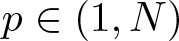 $p \in(1, N)$. Then, there exists
 $C=C(N, \Omega, p) \gt 0$ such that, for every
 $s_1, s_2 \in[0,1]$ with
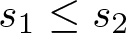 $s_1 \leq s_2$ and every measurable function
 $u: \mathbb{R}^{N} \rightarrow \mathbb{R}$ with
 $u=0$ a.e. in
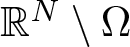 $\mathbb{R}^{N} \setminus \Omega$, we have
 \begin{equation*}
[u]_{s_1, p} \leq C[u]_{s_2, p}.
\end{equation*}
Proposition 2.4. ([Reference Aikyn, Ghosh, Kumar and Ruzhansky2, Proposition 2.5])
Assume that (1.4)–(1.7) hold. Then, there exists a positive constant  $\bar{c}=\bar{c}\left(N, \Omega, s_{\sharp}, p\right)$ such that, for any
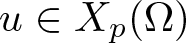 $u \in X_{p}(\Omega)$, we have
 \begin{equation}
[u]_{s_{\sharp},p} \leq \bar{c}\left(\int_{[0,1]}[u]_{s,p}^{p} \mathrm{~d} \mu^{+}(s)\right)^{\frac{1}{p}}.
\end{equation}
In particular, the embedding
 \begin{equation}
X_p(\Omega) \hookrightarrow L^{r}(\Omega)
\end{equation}
is continuous for all 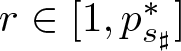 $r \in[1,p_{s_{\sharp}}^{*}]$ and compact for all
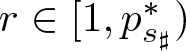 $r \in[1,p_{s_{\sharp}}^{*})$.
We now recall the following weak convergence results from [Reference Dipierro, Perera, Sportelli and Valdinoci11].
Lemma 2.5. ([Reference Dipierro, Perera, Sportelli and Valdinoci11, Lemma 5.8])
Let  $(u_{n})$ be a bounded sequence in
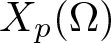 $X_{p}(\Omega)$. Then, there exists
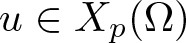 $u \in X_{p}(\Omega)$ such that for all
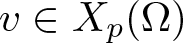 $v \in X_{p}(\Omega)$, we have
 \begin{align}\lim _{n \rightarrow\infty} &\int_{[0,1]}\left(\iint_{\mathbb{R}^{2 N}} \frac{\left|u_{n}(x)-u_{n}(y)\right|^{p-2}\left(u_{n}(x)-u_{n}(y)\right)(v(x)-v(y))}{|x-y|^{N+s p}} \:\! \mathrm{d} x \:\! \mathrm{d} y\right) \:\! \mathrm{d} \mu^{\pm}(s)\nonumber \\
&=\int_{[0,1]}\left(\iint_{\mathbb{R}^{2 N}} \frac{|u(x)-u(y)|^{p-2}(u(x)-u(y))(v(x)-v(y))}{|x-y|^{N+s p}} \:\! \mathrm{d} x \:\! \mathrm{d} y\right) \:\! \mathrm{d} \mu^{\pm}(s).\end{align}
We state the following Brezis–Lieb type lemma from [Reference Dipierro, Perera, Sportelli and Valdinoci11].
Lemma 2.6. ([Reference Dipierro, Perera, Sportelli and Valdinoci11, Lemma 5.9])
Let  $u_{n}$ be a bounded sequence in
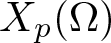 $X_{p}(\Omega)$. Suppose that
 $u_{n}$ converges to some
 $u$ a.e. in
 $\mathbb{R}^{N}$ as
 $n \rightarrow\infty$. Then we have
 \begin{equation}
\int_{[0,1]}[u]_{s, p}^{p} \:\! \mathrm{d} \mu^{\pm}(s)=\lim _{n \rightarrow\infty}\left(\int_{[0,1]}\left[u_{n}\right]_{s, p}^{p} \:\! \mathrm{d} \mu^{\pm}(s)-\int_{[0,1]}\left[u_{n}-u\right]_{s, p}^{p} \:\! \mathrm{d} \mu^{\pm}(s)\right).
\end{equation}
In [Reference Bhowmick, Ghosh and Kumar5], we establish a novel norm on 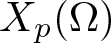 $X_p(\Omega)$ that is equivalent to the norm
 $\rho_p$ as defined in (2.1).
Lemma 2.7. ([Reference Bhowmick, Ghosh and Kumar5, Lemma 2.7])
Let  $\mu$ satisfies the assumptions (1.4)–(1.7). Then there exists a sufficiently small
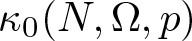 $\kappa_0(N,\Omega,p)$ such that for all
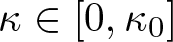 $\kappa\in [0,\kappa_0]$, we have a norm
 $\eta_p$ on
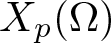 $X_p(\Omega)$, which is equivalent to the norm
 $\rho_p$ as in (2.1), where
 \begin{equation}
\eta_{p}(u):=\left[\mathcal{H}(u)\right]^\frac{1}{p}=\left(\int_{[0,1]}[u]_{s, p}^{p} \:\! \mathrm{d} \mu^{+}(s)-\int_{[0,\bar{s})}[u]_{s, p}^{p} \:\! \mathrm{d} \mu^{-}(s)\right)^{1 / p}.
\end{equation}
Remark 2.8. Note that for  $\kappa=0$, we have
 $[\rho_p(u)]=[\eta_p(u)]$ for any
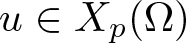 $u\in X_p(\Omega)$. Observe that, when
 $p=2$, we can define an inner product
 ${\langle u,v\rangle}:={\langle u,v\rangle}^+-{\langle u,v\rangle}^-$ on
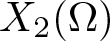 $X_2(\Omega)$, where
 \begin{equation*}{\langle u,v\rangle}^+:=\int_{[0,1]}\left(\iint_{\mathbb{R}^{2 N}} \frac{C_{N, s}(u(x)-u(y))(v(x)-v(y))}{|x-y|^{N+2s}} \:\! \mathrm{d} x \:\! \mathrm{d} y\right) \:\! \mathrm{d} \mu^{+}(s)\end{equation*}
 \begin{equation*}{\langle u,v\rangle}^-:=\int_{[0, \bar{s}]}\left(\iint_{\mathbb{R}^{2 N}} \frac{C_{N, s}(u(x)-u(y))(v(x)-v(y))}{|x-y|^{N+2s}} \:\! \mathrm{d} x \:\! \mathrm{d} y\right) \:\! \mathrm{d} \mu^{-}(s).\end{equation*}
With the norm 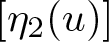 $[\eta_2(u)]$ generated by the inner product
 $[\eta_2(u)]:=\sqrt{\langle u,u \rangle}$, the space
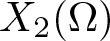 $X_2(\Omega)$ becomes a Hilbert space for any
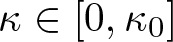 $\kappa \in [0,\kappa_0]$, where
 $\kappa_0$ is sufficiently small. For further properties of the space
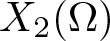 $X_2(\Omega)$, we refer to [Reference Afonso, Bartolo and Bisci1, Reference Aikyn, Ghosh, Kumar and Ruzhansky2, Reference Dipierro, Lippi, Sportelli and Valdinoci10].
3. Important results: compactness conditions
This section is devoted to verifying the compactness properties of the energy functional  $\mathcal{I}$ associated with problem (1.1), namely the
 $\mathrm{(PS)_c}$ and
 $\mathrm{(Ce)_c}$, which are essential to apply the fountain theorem.
We begin by considering the case in which the nonlinearity  $f$ satisfies the AR condition (1.12). In this setting, we demonstrate that the energy functional
 $\mathcal{I}$ satisfies the
 $\mathrm{(PS)_c}$.
Lemma 3.1. Suppose that  $f:\bar{\Omega}\times \mathbb{R}\rightarrow \mathbb{R}$ satisfies the conditions (1.9), (1.10), and (1.12). Then, the energy functional
 $\mathcal{I}$ verifies the
 $\mathrm{(PS)_c}$ at any level
 $c\in \mathbb{R}$.
Proof. Let  $(u_{n}) \subset X_{p}(\Omega)$ be a
 $\mathrm{(PS)}$ sequence at
 $c\in\mathbb{R}$ for the energy functional
 $\mathcal{I}$. Thus, we get
 \begin{equation}
\lim _{n \rightarrow\infty} \mathcal{I}\left(u_{n}\right) =\lim _{n \rightarrow\infty} \Bigg[\frac{1}{p}\left[\rho_{p}\left(u_{n}\right)\right]^{p}-\frac{1}{p} \int_{[0, \bar{s}]}\left[u_{n}\right]_{s, p}^{p} \:\! \mathrm{d} \mu^{-}(s) -\int_\Omega\int_0^{u_n}f(x,\tau)\:\! \mathrm{d} \tau \:\! \mathrm{d} x \Bigg]=c
\end{equation}
and
 \begin{align}
\lim _{n \rightarrow\infty}& \sup_{v \in X_p(\Omega)} \langle \mathcal{I}^{\prime}\left(u_{n}\right), v\rangle \nonumber \\
=& \lim _{n \rightarrow\infty} \sup_{v \in X_p(\Omega)} \Bigg[ \int_{[0,1]}\Bigg( \iint_{\mathbb{R}^{2 N}} \frac{C_{N, s, p}\left|u_{n}(x)-u_{n}(y)\right|^{p-2}\left(u_{n}(x)-u_{n}(y)\right) \times(v(x)-v(y))}{|x-y|^{N+s p}}\:\! \mathrm{d} x \:\! \mathrm{d} y\Bigg) \nonumber\\
&\qquad \times \mathrm{d} \mu^{+}(s) \nonumber\\
& -\int_{[0, \bar{s}]}\Bigg( \iint_{\mathbb{R}^{2 N}} \frac{C_{N, s, p}\left|u_{n}(x)-u_{n}(y)\right|^{p-2}\left(u_{n}(x)-u_{n}(y)\right) \times(v(x)-v(y))}{|x-y|^{N+s p}} \:\! \mathrm{d} x \:\! \mathrm{d} y\Bigg) \:\! \mathrm{d} \mu^{-}(s)\nonumber \\
& -\int_{\Omega}f(x,u_n) v \:\! \mathrm{d} x \Bigg]=0.\end{align}
We prove this lemma by establishing the following two claims.
The sequence  $(u_n)$ is bounded in
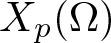 $X_p(\Omega)$.
For any 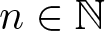 $n\in\mathbb{N}$, using (3.1) and (3.2) with the test function
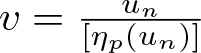 $v=\frac{u_n}{[\eta_p(u_n)]}$, there exists a constant
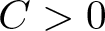 $C \gt 0$ such that
 \begin{equation}
|\mathcal{I}(u_n)|\leq C~\text{and} ~ \bigg|\langle \mathcal{I}'(u_n),\frac{u_n}{\eta_p(u_n)}\rangle \bigg|\leq C.
\end{equation}
From (3.3), we get
 \begin{equation}
\mathcal{I}(u_n)-\frac{1}{\mu}\langle \mathcal{I}^\prime(u_n),u_n\rangle\leq C\bigg(1+\frac{\eta_p(u_n)}{\mu}\bigg)\leq C\left(1+\eta_p(u_n)\right),
\end{equation}
where  $\mu$ is the constant as in (1.12). On integrating both sides of (1.10), we derive
 \begin{equation}
|F(x,t)|\leq a_1|t|+\frac{a_2}{q}|t|^q,~\forall\, x\in \bar{\Omega} ~\text{and}~\forall\,t\in\mathbb{R}.
\end{equation}
Using (1.10) and (3.5), we obtain
 \begin{align}
& \bigg| \int_{\Omega \cap \{|u_n|\leq r\}} \left(F(x,u_n(x))-\frac{1}{\mu}f(x,u_n(x))u_n\right) \:\! \mathrm{d} x \bigg|\nonumber\\
\leq & \int_{\Omega \cap \{|u_n|\leq r\}} \bigg( a_1 |u_n|+\frac{a_2}{q}|u_n|^q +\frac{a_1}{\mu}|u_n| +\frac{a_2}{\mu} |u_n|^{q}\bigg) \:\! \mathrm{d} x \nonumber\\
\leq & \bigg( a_1 r+\frac{a_2}{q}r^q +\frac{a_1}{\mu}r +\frac{a_2}{\mu} r^{q}\bigg)|\Omega|:=C_1,
\end{align}
where  $\mu$ is the constant in (1.12). Consequently, applying (1.12) and (3.6), we derive
 \begin{align}
&\mathcal{I}(u_n)-\frac{1}{\mu}\langle \mathcal{I}^\prime(u_n),u_n\rangle \nonumber\\
=& \left( \frac{1}{p}-\frac{1}{\mu}\right)[\eta_p(u_n)]^p-\int_\Omega \bigg( F(x,u_n(x))-\frac{1}{\mu}f(x,u_n(x))u_n\bigg) \:\! \mathrm{d} x \nonumber \\
\geq &\left( \frac{1}{p}-\frac{1}{\mu}\right)[\eta_p(u_n)]^p- \int_{\Omega \cap \{|u_n|\leq r\}} \left(F(x,u_n(x))-\frac{1}{\mu}f(x,u_n(x))u_n\right) \:\! \mathrm{d} x \nonumber \\
\geq & \left( \frac{1}{p}-\frac{1}{\mu}\right)[\eta_p(u_n)]^p-C_1.\end{align}
Therefore, using (3.4) and (3.7), we get
 \begin{equation}
\left( \frac{1}{p}-\frac{1}{\mu}\right)[\eta_p(u_n)]^p-C_1 \leq C\bigg(1+\frac{[\eta_p(u_n)]}{\mu}\bigg).
\end{equation}
Therefore, (3.8) and 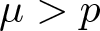 $\mu \gt p$ give that
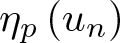 $\eta_{p}\left(u_{n}\right)$ is bounded for all
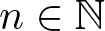 $n\in \mathbb{N}$. Therefore, the sequence
 $(u_n)$ is bounded in
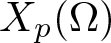 $X_p(\Omega)$.
Claim 2: We have 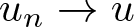 $u_{n} \rightarrow u$ strongly in
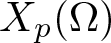 $X_{p}(\Omega)$ up to a subsequence.
Applying Lemma 2.1 and Proposition 2.4, there exist 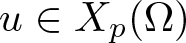 $u \in X_{p}(\Omega)$ and a subsequence of
 $(u_n)$, still denoted by
 $(u_n)$, such that
 \begin{equation}
\begin{split}
& u_{n} \rightharpoonup u \text {in } X_{p}(\Omega), \\
& u_{n} \rightarrow u \text {in } L^{r}(\Omega) \text {for any } r \in [1, p_{s_{\sharp}}^{*}), \\
& u_{n} \rightarrow u \text {a.e. in } \Omega,
\end{split}
\end{equation}
that is, for each 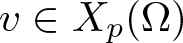 $v\in X_p(\Omega)$, we get
 \begin{align}
\lim _{n \rightarrow\infty} &\int_{[0,1]}\left(\iint_{\mathbb{R}^{2 N}} \frac{\left|u_{n}(x)-u_{n}(y)\right|^{p-2}\left(u_{n}(x)-u_{n}(y)\right)(v(x)-v(y))}{|x-y|^{N+s p}} \:\! \mathrm{d} x \:\! \mathrm{d} y\right) \:\! \mathrm{d} \mu^{\pm}(s)\nonumber \\
&=\int_{[0,1]}\left(\iint_{\mathbb{R}^{2 N}} \frac{|u(x)-u(y)|^{p-2}(u(x)-u(y))(v(x)-v(y))}{|x-y|^{N+s p}} \:\! \mathrm{d} x \:\! \mathrm{d} y\right) \:\! \mathrm{d} \mu^{\pm}(s).\end{align}
Moreover, using (3.9), there exists 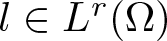 $ l \in L^r(\Omega) $ such that
 \begin{equation}
|u_n(x)| \leq l(x),~a.e~\text{in}~\Omega,~\forall\,n\in \mathbb{N}.
\end{equation}
Again, using (1.9), (1.10), (3.9), (3.10), (3.11), and the Lebesgue dominated convergence theorem, we obtain
 \begin{equation}
\lim_{n\rightarrow \infty}\int_\Omega f(x,u_n)u_n \:\! \mathrm{d} x = \int_\Omega f(x,u)u \:\! \mathrm{d} x
\end{equation}
and
 \begin{equation}
\lim_{n\rightarrow \infty}\int_\Omega f(x,u_n)u \:\! \mathrm{d} x = \int_\Omega f(x,u)u \:\! \mathrm{d} x.
\end{equation}
Now substituting 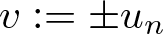 $v:= \pm u_{n}$ into (3.2), we get
 \begin{align}
\lim _{n \rightarrow\infty} &\langle \mathcal{I}^{\prime}\left(u_{n}\right), u_n\rangle\nonumber \\
&=\lim _{n \rightarrow\infty} \left(\left[\rho_{p}(u_n)\right]^{p}-\int_{[0, \bar{s}]}[u_n]_{s, p}^{p} \:\! \mathrm{d} \mu^{-}(s)-\int_\Omega f(x,u_n)u_n\right)=0.\end{align}
Consequently, from (3.12) and (3.14), we deduce
 \begin{equation}
\lim _{n \rightarrow\infty} \left(\left[\rho_{p}(u_n)\right]^{p}-\int_{[0, \bar{s}]}[u_n]_{s, p}^{p} \:\! \mathrm{d} \mu^{-}(s)\right)=\int_\Omega f(x,u)u.
\end{equation}
Again, substituting  $v:= \pm u$ into (3.2), we get
 \begin{align}
\lim _{n \rightarrow\infty} &\langle \mathcal{I}^{\prime}\left(u_{n}\right), u\rangle\nonumber \\
=& \lim_{n\rightarrow \infty}\int_{[0,1]}\left(\iint_{\mathbb{R}^{2 N}} \frac{C_{N, s, p}|u_n(x)-u_n(y)|^{p-2}(u_n(x)-u_n(y))(u(x)-u(y))}{|x-y|^{N+s p}} \:\! \mathrm{d} x \:\! \mathrm{d} y\right) \:\! \mathrm{d} \mu^{+}(s) \nonumber \\
& -\int_{[0, \bar{s}]}\left(\iint_{\mathbb{R}^{2 N}} \frac{C_{N, s, p}|u_n(x)-u_n(y)|^{p-2}(u_n(x)-u_n(y))(u(x)-u(y))}{|x-y|^{N+s p}} \:\! \mathrm{d} x \:\! \mathrm{d} y\right) \:\! \mathrm{d} \mu^{-}(s) \nonumber \\
& -\int_{\Omega}f(x,u_n) u \:\! \mathrm{d} x=0.\end{align}
Consequently, from (3.10) with  $v=u$ and using (3.13) in (3.16), we deduce
 \begin{equation}
\lim _{n \rightarrow\infty} \left(\left[\rho_{p}(u)\right]^{p}-\int_{[0, \bar{s}]}[u]_{s, p}^{p} \:\! \mathrm{d} \mu^{-}(s)\right)=\int_\Omega f(x,u)u.
\end{equation}
Therefore, using (3.15) and (3.17), we conclude
 \begin{equation}
\lim_{n\rightarrow \infty}[\eta_p(u_n)]=[\eta_p(u)].
\end{equation}
Thanks to Lemma 2.6 and (3.18), we obtain
 \begin{equation}
\int_{[0,1]}\left[\eta(u_{n}-u)\right]^{p} \:\! \mathrm{d} \mu^{+}(s)=0.
\end{equation}
This completes the proof.
Next, to deal with the superlinear nonlinearity satisfying (1.16) and (1.18) without the AR condition, we show that the energy functional  $\mathcal{I}$ satisfies the
 $\mathrm{(Ce)_c}$ (see (1.23) for definition). Note that, from (1.11) and (1.18), there exists a constant
 $\alpha \geq 1$ such that
 \begin{equation}
\mathcal{F}(x,t') \leq \alpha \mathcal{F}(x,t), \text{for all } x \in \Omega\ \text{and } t, t' \in \mathbb{R}\ \text{with } 0 \lt |t'| \leq |t|.
\end{equation}
Lemma 3.2. Assume that  $f:\bar{\Omega}\times \mathbb{R}\rightarrow \mathbb{R}$ satisfies the conditions (1.9), (1.10), (1.11), (1.16), and (1.18). Then
 $\mathcal{I}$ satisfies the
 $\mathrm{(Ce)_c}$ at any level
 $c\in \mathbb{R}$.
Proof. Let  $(u_{n}) \subset X_{p}(\Omega)$ be a Cerami sequence at
 $c\in\mathbb{R}$ for the energy functional
 $\mathcal{I}$, that is
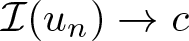 $\mathcal{I}(u_n)\to c$ and
 $\big(1+\|u_n\|_{X_p(\Omega)}\big)
\mathcal{I}'(u_n)\to 0$ in
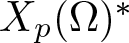 $X_p(\Omega)^*$ as
 $n\to+\infty$. Therefore, we have
 \begin{align}
\lim _{n \rightarrow\infty} \mathcal{I}\left(u_{n}\right) &=\lim _{n \rightarrow\infty} \Bigg[\frac{1}{p}\left[\rho_{p}\left(u_{n}\right)\right]^{p}-\frac{1}{p} \int_{[0, \bar{s}]}\left[u_{n}\right]_{s, p}^{p} \:\! \mathrm{d} \mu^{-}(s) \nonumber\\
&\quad -\int_\Omega\int_0^{u_n}f(x,\tau)\:\! \mathrm{d} \tau \:\! \mathrm{d} x \Bigg]=c
\end{align}
and
 \begin{align}
& \lim _{n \rightarrow\infty} \left(1+[\eta_p(u_n)]\right) \sup_{v \in X_p(\Omega)} \langle \mathcal{I}^{\prime}\left(u_{n}\right), v\rangle = \lim _{n \rightarrow\infty} \left(1+[\eta_p(u_n)]\right) \times \nonumber\\
& \sup_{v \in X_p(\Omega)} \Bigg[ \int_{[0,1]}\Bigg( \iint_{\mathbb{R}^{2 N}} \frac{C_{N, s, p}\left|u_{n}(x)-u_{n}(y)\right|^{p-2}\left(u_{n}(x)-u_{n}(y)\right) \times(v(x)-v(y))}{|x-y|^{N+s p}}\:\! \mathrm{d} x \:\! \mathrm{d} y\Bigg) \:\! \mathrm{d} \mu^{+}(s) \nonumber\\
& -\int_{[0, \bar{s}]}\Bigg( \iint_{\mathbb{R}^{2 N}} \frac{C_{N, s, p}\left|u_{n}(x)-u_{n}(y)\right|^{p-2}\left(u_{n}(x)-u_{n}(y)\right) \times(v(x)-v(y))}{|x-y|^{N+s p}} \:\! \mathrm{d} x \:\! \mathrm{d} y\Bigg) \:\! \mathrm{d} \mu^{-}(s)\nonumber \\
& -\int_{\Omega}f(x,u_n) v \:\! \mathrm{d} x \Bigg]=0.\end{align}
We prove the lemma in the following two steps.
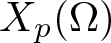
Step 1: First, we prove that  $(u_n)$ is bounded in
 $X_p(\Omega)$. We show it by the method of contradiction. Let
 $(u_n)$ be unbounded in
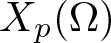 $X_p(\Omega)$. Then there exists a subsequence (also denoted by
 $u_n$) such that
 \begin{equation}
\lim_{n\rightarrow \infty} [\eta_p(u_n)] = \infty.
\end{equation}
Using (3.22) and (3.23), we obtain
 \begin{equation}
\lim _{n \rightarrow\infty} \sup_{v \in X_p(\Omega)} \langle \mathcal{I}^{\prime}\left(u_{n}\right), v\rangle=0.
\end{equation}
Now for each 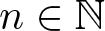 $n\in \mathbb{N}$, we define
 \begin{equation}
v_n=\frac{u_n}{[\eta_p(u_n)]}.
\end{equation}
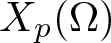
Clearly,  $(v_n)$ is bounded in
 $X_p(\Omega)$. Thus, using Lemma 2.1 and Proposition 2.4, there exist
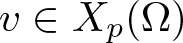 $v \in X_{p}(\Omega)$ and a subsequence of
 $(v_n)$, still denoted by
 $(v_n)$, such that
 \begin{equation}
\begin{split}
& v_{n} \rightharpoonup v \text {in } X_{p}(\Omega) \\
& v_{n} \rightarrow v \text {in } L^{r}(\Omega) \text {for any } r \in [1, p_{s_{\sharp}}^{*}), \\
& v_{n} \rightarrow v \text {a.e. in } \Omega.
\end{split}
\end{equation}
Moreover, using (3.26) there exists 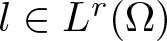 $l\in L^r(\Omega)$ such that
 \begin{equation}
|v_n(x)|\leq l(x)\text{a.e. in }~\Omega,~ \forall ~n\in \mathbb{N}.
\end{equation}
We split the next part into two cases:  $v = 0$ and
 $v \neq 0$. In both cases, we derive a contradiction. We begin with the following case, when
 $v=0$.
Case I (when  $v=0$): For any
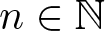 $n\in \mathbb{N}$, there exists
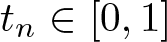 $t_n\in[0,1]$ such that
 \begin{equation}
\mathcal{I}(t_nu_n)=\max_{t\in[0,1]} \mathcal{I}(tu_n).
\end{equation}
For any 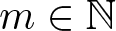 $m\in \mathbb{N}$, there exists
 $r_m$ (choose
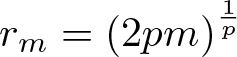 $r_m={(2pm)}^\frac{1}{p}$) such that
 \begin{equation}
\frac{r_m}{[\eta_p(u_n)]} \in (0,1),~\text{for large } n~ (\text{where } n \gt \bar{n}(p,m)).
\end{equation}
Again, for each 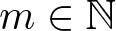 $ m \in \mathbb{N} $, using (3.26) and the continuity of
 $ F $, we derive
 \begin{equation}
\lim_{n\rightarrow \infty} F(x,r_mv_n(x))=F(x,r_mv(x))=0, \text{a.e. }x\in \Omega.
\end{equation}
Moreover, for every 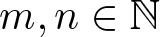 $ m, n \in \mathbb{N}$, integrating both sides of (1.10) and employing (3.27), we obtain
 \begin{align}
|F(x,r_mv_n(x))|\leq & a_1|r_mv_n(x)|+\frac{a_2}{q} |r_mv_n(x)|^q \nonumber \\
\leq & a_1r_ml(x)+\frac{a_2}{q} (r_ml(x))^q \in L^1(\Omega), \text{a.e. }x\in \Omega.\end{align}
Therefore, using (3.30), (3.31), and the Lebesgue dominated convergence theorem, we get
 \begin{equation}
\lim_{n\rightarrow \infty}\int_\Omega F(x,r_mv_n(x)) \:\! \mathrm{d} x =0, \text{for each } m\in \mathbb{N}.
\end{equation}
Thus, for each 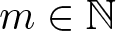 $m\in \mathbb{N}$, using (3.28), (3.29), and (3.32), we obtain
 \begin{align}
\mathcal{I}(t_nu_n)\geq & \mathcal{I}\bigg(\frac{r_m}{[\eta_p(u_n)]}u_n\bigg)=\mathcal{I}(r_mv_n)\nonumber \\
=& \frac{1}{p} [\eta_p(r_mv_n)]^p- \int_\Omega F(x,r_mv_n(x)) \:\! \mathrm{d} x \nonumber \\
= & 2m - \int_\Omega F(x,r_mv_n(x)) \:\! \mathrm{d} x \geq m, \text{for large } n.
\end{align}
Therefore, from (3.33), we get
 \begin{equation}
\lim_{n\rightarrow \infty}\mathcal{I}(t_nu_n)=\infty.
\end{equation}
Note that 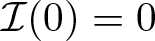 $\mathcal{I}(0)=0$ and
 $\lim_{n\rightarrow \infty}\mathcal{I}(u_n)=c$. Thus, from (3.28) and (3.34), we conclude that
 $t_n\in(0,1), \,\forall\, n\in \mathbb{N}$ and
 \begin{equation*}\frac{\:\! \mathrm{d}}{\:\! \mathrm{d} t}\bigg|_{t=t_n} \mathcal{I}(tu_n)=0, \text{for each } n\in \mathbb{N}.\end{equation*}
Moreover,
 \begin{equation}
\langle \mathcal{I}^\prime(t_nu_n),t_nu_n \rangle =t_n \frac{\:\! \mathrm{d}}{\:\! \mathrm{d} t}\bigg|_{t=t_n} \mathcal{I}(tu_n)=0.
\end{equation}
To arrive at a contradiction, we next show that, for a suitable constant 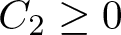 $C_2\geq 0$, we obtain
 \begin{equation}
\limsup_{n\rightarrow \infty} \mathcal{I}(t_nu_n)\leq C_2,
\end{equation}
which contradicts (3.34). Indeed, using (3.20), (3.21), (3.24), and (3.35), we derive
 \begin{align*}
\frac{1}{\alpha} \mathcal{I}(t_nu_n)=& \frac{1}{\alpha} \bigg( \mathcal{I}(t_nu_n)-\frac{1}{p} \langle \mathcal{I}^\prime(t_nu_n),t_nu_n \rangle \bigg)\nonumber \\
=& \frac{1}{\alpha} \bigg( -\int_\Omega F(x,t_n u_n(x)) \:\! \mathrm{d} x+\frac{1}{p}\int_\Omega f(x,t_n u_n(x))t_n u_n(x) \:\! \mathrm{d} x \bigg) \nonumber \\
= & \frac{1}{\alpha} \int_\Omega \mathcal{F}(x,t_nu_n(x))\:\! \mathrm{d} x \nonumber \\
\leq & \int_\Omega \mathcal{F}(x,u_n(x))\:\! \mathrm{d} x \nonumber \\
= & \int_\Omega \bigg\{\frac{1}{p} u_n(x) f(x, u_n(x)) -F(x,u_n(x)) \bigg\} \:\! \mathrm{d} x \nonumber \\
=& \mathcal{I}(u_n) -\frac{1}{p} \langle \mathcal{I}^\prime(u_n), u_n \rangle \rightarrow c, \text{as } n\rightarrow \infty. \nonumber
\end{align*}
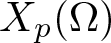
This implies (3.36). Thus, we get a contradiction to (3.34), implying that our assumption that  $(u_n)$ is unbounded in
 $X_p(\Omega)$ is false. Therefore,
 $(u_n)$ is bounded in
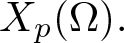 $X_p(\Omega).$
Case II (when  $v\neq 0$): In this case, we have
 \begin{equation*}m(\Omega_1):=m\{x\in \Omega: v(x)\neq 0\} \gt 0,\end{equation*}
where  $m$ denotes the Lebesgue measure and
 $\Omega_1:=\{x\in \Omega: v(x)\neq 0\}$. Using (3.25) and (3.26), we obtain
 \begin{equation}
\lim_{n\rightarrow \infty} |u_n(x)|= \infty, \text{a.e. } x\in \Omega_1.
\end{equation}
Applying (3.21) and (3.23), we get
 \begin{equation}
\lim_{n\rightarrow \infty} \frac{\mathcal{I}(u_n)}{[\eta_p(u_n)]^p}=\lim_{n\rightarrow \infty}\bigg[\frac{1}{p}-\int_{\Omega_1}\frac{F(x,u_n(x))}{[\eta_p(u_n)]^p}\:\! \mathrm{d} x- \int_{\Omega\setminus \Omega_1}\frac{F(x,u_n(x))}{[\eta_p(u_n)]^p}\:\! \mathrm{d} x\bigg]=0.
\end{equation}
Let us estimate (3.38) into two parts separately.
Part I (For the first integral of (3.38)): Using (1.16), (3.26), and (3.37), we derive
 \begin{align*}
\lim_{n\rightarrow \infty} \frac{F(x,u_n(x))}{[\eta_p(u_n)]^p}\:\! \mathrm{d} x=& \lim_{n\rightarrow \infty} \frac{F(x,u_n(x))}{|u_n|^p} \frac{|u_n|^p}{[\eta_p(u_n)]^p} \nonumber \\
=&\lim_{n\rightarrow \infty} \frac{F(x,u_n(x))}{|u_n|^p} |v_n(x)|^p=\infty, \text{a.e. for any } x\in \Omega_1. \nonumber
\end{align*}
Hence, by Fatou’s Lemma, we obtain
 \begin{equation}
\lim_{n\rightarrow \infty} \int_{\Omega_1}\frac{F(x,u_n(x))}{[\eta_p(u_n)]^p}\:\! \mathrm{d} x =\infty.
\end{equation}
Part II (For the second integral of (3.38)): We claim that there exists a positive constant, 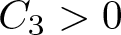 $C_3 \gt 0$, such that
 \begin{equation}
\int_{\Omega\setminus \Omega_1}\frac{F(x,u_n(x))} {[\eta_p(u_n)] ^p}\:\! \mathrm{d} x \geq -\frac{C_3}{[\eta_p(u_n)]^p}|\Omega\setminus \Omega_1|.
\end{equation}
Therefore, using (3.23), (3.38), (3.39), and (3.40), we obtain
 \begin{equation}
\lim_{n \rightarrow \infty} \int_{\Omega\setminus \Omega_1}\frac{F(x,u_n(x))}{[\eta_p(u_n)]^p}\:\! \mathrm{d} x \geq 0.
\end{equation}
By (1.16), we obtain
 \begin{equation}
\lim_{|t|\rightarrow \infty} F(x,t)=\infty, \text{uniformly for each } x\in \bar{\Omega}.
\end{equation}
From (3.42), there exist positive constants  $t_1$ and
 $C_4$ such that
 \begin{equation}
F(x,t)\geq C_4,~ \forall~x\in\bar{\Omega}\ \text{and } |t| \gt t_1.
\end{equation}
Since  $F$ is continuous in
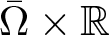 $\bar{\Omega}\times \mathbb{R}$, we have
 \begin{equation}
F(x,t) \geq \min_{(x,t)\in \bar{\Omega}\times [-t_1,t_1]} F(x,t),~ \forall~x\in\bar{\Omega}\ \text{and } |t|\leq t_1.
\end{equation}
Observe that  $\min_{(x,t)\in \bar{\Omega}\times [-t_1,t_1]} F(x,t)\leq 0$, since
 $F(x,0)=0, \forall\,x\in \bar{\Omega}$. Thus, using (3.43) and (3.44), there exists
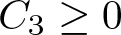 $C_3\geq 0$ such that
 \begin{equation}
F(x,t)\geq -C_3, \text{for each }(x,t)\in \bar{\Omega}\times \mathbb{R}.
\end{equation}
Thus, applying (3.45), we conclude that (3.40). Therefore, using (3.39) and (3.41) in (3.38), we get a contradiction. Hence, the sequence  $(u_n)$ is bounded in
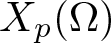 $X_p(\Omega)$.
Step 2: Employing a similar argument as in the proof of Claim 2 in Lemma 3.1, we deduce that 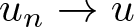 $u_{n} \rightarrow u$ strongly in
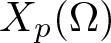 $X_{p}(\Omega)$, up to a subsequence. This completes the proof.
Remark 3.3. Note that the condition (1.18) is essential for establishing the inequality (3.36) in the proof of Lemma 3.2.
To show the  $\mathrm{(Ce)_c}$ for the energy functional
 $\mathcal{I}$ in the framework of Theorem 1.7, we recall the following significant result from [Reference Liu17].
Lemma 3.4. ([Reference Liu17, Lemma 2.3])
Assume that (1.21) holds. Then the function 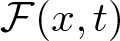 $\mathcal{F}(x,t)$ is increasing in
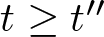 $t\geq t^{\prime\prime}$ and decreasing in
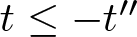 $t\leq -t^{\prime\prime}$ for all
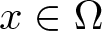 $x\in \Omega$, where
 $\mathcal{F}=\frac{1}{p}tf(x,t)-F(x,t)$. In particular, for any
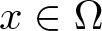 $x\in\Omega$, there exists
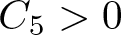 $C_5 \gt 0$ such that
 \begin{align*}
\nonumber
\mathcal{F}(x,s)\leq \mathcal{F}(x,t)+C_5, \text{if } ~0\leq s\leq t \text{or } t\leq s \leq 0.
\end{align*}
Lemma 3.5. Suppose that the function  $f:\bar{\Omega}\times \mathbb{R}\rightarrow \mathbb{R}$ satisfies the conditions (1.9), (1.10), (1.16), and (1.21). Then, the energy functional
 $\mathcal{I}$ satisfies the
 $\mathrm{(Ce)_c}$ at any level
 $c\in \mathbb{R}$.
Proof. This proof is also based on an argument similar to the ones used to prove Lemma 3.2, except for the proof of inequality (3.36). Here, the condition (1.18) is omitted, so we obtain the inequality (3.36) utilizing (1.21) and Lemma 3.4. With the same notation as in Lemma 3.2, we prove this lemma. Applying Lemma 3.4, we obtain
 \begin{align}
\lim_{n\rightarrow \infty} \mathcal{I}(t_nu_n)=& \lim_{n\rightarrow \infty} \bigg[ \mathcal{I}(t_nu_n)-\frac{1}{p} \langle \mathcal{I}^\prime(t_nu_n),t_nu_n \rangle \bigg]\nonumber \\
=& \lim_{n\rightarrow \infty} \bigg[-\int_\Omega F(x,t_n u_n(x)) \:\! \mathrm{d} x+\frac{1}{p}\int_\Omega f(x,t_n u_n(x))t_n u_n(x) \:\! \mathrm{d} x \bigg] \nonumber \\
= & \lim_{n\rightarrow \infty} \bigg[ \int_\Omega \mathcal{F}(x,t_nu_n(x))\:\! \mathrm{d} x \bigg] \nonumber \\
= & \lim_{n\rightarrow \infty} \bigg[ \int_{\{u_n\geq 0\}} \mathcal{F}(x,t_nu_n(x))\:\! \mathrm{d} x +\int_{\{u_n \lt 0\}} \mathcal{F}(x,t_nu_n(x))\:\! \mathrm{d} x \bigg] \nonumber \\
\leq & \lim_{n\rightarrow \infty} \bigg[ \int_{\{u_n\geq 0\}}\bigg( \mathcal{F}(x,u_n(x))+C_5\bigg) \:\! \mathrm{d} x +\int_{\{u_n \lt 0\}} \bigg( \mathcal{F}(x,t_nu_n(x))+C_5 \bigg) \:\! \mathrm{d} x \bigg] \nonumber \\
= & \lim_{n\rightarrow \infty} \bigg[\int_\Omega \mathcal{F}(x,u_n(x))\:\! \mathrm{d} x + C_5|\Omega| \bigg] \nonumber \\
= & \lim_{n\rightarrow \infty} \bigg[ \mathcal{I}(u_n)-\frac{1}{p} \langle \mathcal{I}^\prime(u_n),u_n \rangle + C_5|\Omega| \bigg]
= c+ C_5|\Omega| .\end{align}
Therefore, the inequality (3.46) implies the inequality (3.36). Hence,  $\mathcal{I}$ satisfies the
 $\mathrm{(Ce)_c}$. This completes the proof.
4. Fountain theorem and a significant result
In this section, we state the Fountain Theorem and establish an important lemma. We apply Bartsh’s Fountain Theorem [Reference Bartsch4] to the energy functional  $\mathcal{I}$. We adapt the notation from [Reference Bartsch4, Theorem 2.5] (see also [Reference Liu17, Theorem 2.9] and [Reference Willem22, Theorem 3.6]). Since
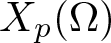 $X_p(\Omega)$ is a separable and reflexive Banach space, there exist sequences
 $(v_m)\subset X_p(\Omega)$ and
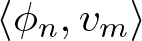
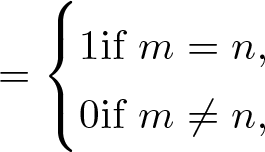
 $(\phi_n)\subset {X_p(\Omega)}^*$ such that
(1)
 $\langle \phi_n,v_m \rangle$
$=\begin{cases}
1 \text{if } m=n, \\
0 \text{if } m\neq n,
\end{cases}$
(2)
$\overline{\text{span}\{v_m:m\in\mathbb{N}\}}=X_p(\Omega)$ and
$\overline{\text{span}\{\phi_n:n\in\mathbb{N}\}}={X_p(\Omega)}^*$.


Let 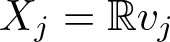 $X_j=\mathbb{R}v_j$. Then
 $X_p(\Omega)=\overline{\bigoplus_{j\geq 1}X_j}$. We now define the spaces
 \begin{equation}
A_k=\bigoplus_{j=1}^k X_j,\,\,\, \text{and}\,\,\,\quad B_k=\overline{\bigoplus_{j\geq k}X_j}.
\end{equation}
Since  $A_k$ is finite-dimensional, all norms on
 $A_k$ are equivalent. Therefore, for any
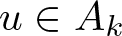 $u\in A_k$, there exist two positive constants
 $D_{k,q}$ and
 $D'_{k,q}$ such that
 \begin{equation}
D_{k,q} [\eta_p(u)]\leq ||u||_{L^q(\Omega)} \leq D'_{k,q} [\eta_p(u)].
\end{equation}
Next, we state the fountain theorem, which we use to prove our main results.
Theorem 4.1. (Fountain Theorem)
Let  $\mathcal{I}$ be a
 $C^1$ functional on an infinite-dimensional Banach space
 $X$, and
(i)
$\mathcal{I}$ holds
$\mathrm{(PS)_c}$,(ii)
$\mathcal{I}$ is even, and(iii)
$\mathcal{I}$ satisfies the geometric assumption, that is, for every
$k\in \mathbb{N}$,(a) there exists
$a'_k \gt 0$ such that
$y_k:=\max \left\{\mathcal{I}(u):u \in A_k, ~[\eta_n(u)] =a'_k\right\} \\ \leq 0,$(b) there exists
$b_k \gt 0$ such that
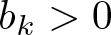
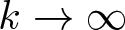
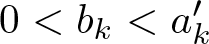
$z_k:=\inf\left\{\mathcal{I}(u):u \in B_k,~ [\eta_p(u)] =b_k\right\}\rightarrow \infty$ as
$k\rightarrow \infty$, with
$0 \lt b_k \lt a'_k$.


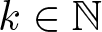
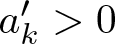


Then there exists an unbounded sequence of critical values  $u_k$ such that
 $\mathcal{I}(u_k)\rightarrow \infty$.
Before presenting the proof of the main results in the next section, we establish the following lemma.
Lemma 4.2. Let 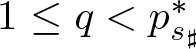 $1\leq q \lt p^*_{s_\sharp}$. Define,
 $\beta_k:=\sup \left\{||u||_{L^q(\Omega)}: u\in B_k,~ [\eta_p(u)]=1 \right\},$ for all
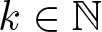 $k\in \mathbb{N}$. Then
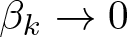 $\beta_k\rightarrow 0$ as
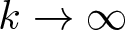 $k\rightarrow \infty$.
Proof. Recall the definition of  $B_k$ given in (4.1). Since
 $B_{k+1}\subset B_k$, we have
 $0 \lt \beta_{k+1}\leq \beta_k$ for all
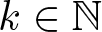 $k\in \mathbb{N}$, that is,
 $(\beta_k)$ is a decreasing sequence of nonnegative real numbers. Therefore, there exists
 $\beta\geq 0$ such that
 \begin{equation}
\beta_k \rightarrow \beta, \text{as } k\rightarrow \infty.
\end{equation}
Again, using the definition of  $\beta_k$, there exists
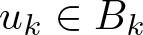 $u_k\in B_k$ such that
 \begin{equation}
[\eta_p(u_k)]=1\text{ and } ||u_k||_{L^q(\Omega)} \gt \frac{\beta_k}{2} ~\text{for all}~k\in \mathbb{N}.
\end{equation}
Since 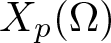 $X_p(\Omega)$ is a uniformly convex Banach space, it is reflexive. Thus, using (4.4) and Lemma 2.5, there exists a subsequence
 $(u_k)$ (still denoted by
 $u_k$) such that
 $u_k \rightharpoonup u \in X_p(\Omega)$ and for any
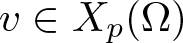 $v\in X_p(\Omega)$, we get
 \begin{align}
\lim _{k \rightarrow\infty} &\int_{[0,1]}\left(\iint_{\mathbb{R}^{2 N}} \frac{\left|u_{k}(x)-u_{k}(y)\right|^{p-2}\left(u_{k}(x)-u_{k}(y)\right)(v(x)-v(y))}{|x-y|^{N+s p}} \:\! \mathrm{d} x \:\! \mathrm{d} y\right) \:\! \mathrm{d} \mu^{\pm}(s)\nonumber \\
&=\int_{[0,1]}\left(\iint_{\mathbb{R}^{2 N}} \frac{|u(x)-u(y)|^{p-2}(u(x)-u(y))(v(x)-v(y))}{|x-y|^{N+s p}} \:\! \mathrm{d} x \:\! \mathrm{d} y\right) \:\! \mathrm{d} \mu^{\pm}(s).\end{align}
Since  $B_k$ is convex and closed, it is closed in the weak topology. Thus, we get
 \begin{equation*}u\in \cap_{k=1}^\infty B_k=\{0\}.\end{equation*}
From Proposition 2.4, we obtain
 \begin{equation}
u_k\rightarrow 0 \text{in } L^q(\Omega)~\text{as}~ k\rightarrow \infty.
\end{equation}
Using (4.3), (4.4), and (4.6), we conclude that 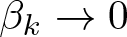 $\beta_k \rightarrow 0$ as
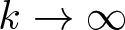 $k\rightarrow \infty$. This completes the proof.
5. Proof of main results
In this section, we present the proof of the main results. We begin with the proof of Theorem 1.3.
Proof of Theorem 1.3
We follow the proof given in [Reference Willem22, Theorem 3.7]. We have established in Lemma 3.1 that  $\mathcal{I}$ fulfils the
 $\mathrm{(PS)_c}$. Moreover, using (1.11), we obtain
 $\mathcal{I}(-u)=\mathcal{I}(u)$ for
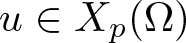 $u\in X_p(\Omega)$. To apply the fountain theorem, it remains to prove the geometric conditions for the energy functional
 $\mathcal{I}$ (see Theorem 4.1). We divide the proof into the following two claims.
Claim I: For each 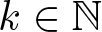 $k\in \mathbb{N}$, there exists
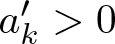 $a'_k \gt 0$ such that
 \begin{equation*} y_k=\max\left\{\mathcal{I}(u):u \in A_k, ~[\eta_p(u)]=a^{\prime}_k\right\} \leq 0.\end{equation*}
Let 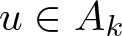 $u\in A_k$. Using (1.15) and (4.2), we obtain
 \begin{align}
\mathcal{I}(u)\leq & \frac{1}{p} [\eta_p(u)]^p -a_3||u||^\mu_{L^\mu(\Omega)}+a_4|\Omega| \nonumber \\
\leq & \frac{1}{p} [\eta_p(u)]^p - D^{\prime\prime}_{k,\mu}[\eta_p(u)]^\mu+a_4|\Omega|,\end{align}
for some suitable positive constant  $D^{\prime\prime}_{k,\mu}$. Since
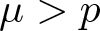 $\mu \gt p$, it follows from (5.1) that there exists
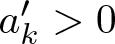 $a'_k \gt 0$ (sufficiently large) such that, for any
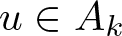 $u\in A_k$ with
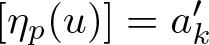 $[\eta_p(u)]=a'_k$, we have
 \begin{equation*}\mathcal{I}(u)\leq 0.\end{equation*}
Claim II: For each 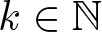 $k\in \mathbb{N}$, there exists
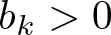 $b_k \gt 0$ such that
 \begin{equation*}{z_k=\inf\left\{\mathcal{I}(u):u \in B_k,~ [\eta_p(u)]=b_k\right\}\rightarrow \infty\ \text{as}\ k\rightarrow \infty.}\end{equation*}
Using the estimate (3.5), there exists a constant 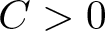 $C \gt 0$ such that
 \begin{equation}
|F(x,t)|\leq C(1+|t|^q),~\forall\, x\in \bar{\Omega} ~\text{and}~\forall \,t\in\mathbb{R}.
\end{equation}
Therefore, for any  $u\in B_k\setminus \{0\}$ and from (5.2), we get
 \begin{align}
\mathcal{I}(u)\geq & \frac{1}{p} [\eta_p(u)]^p -C||u||^q_{L^q(\Omega)}-C|\Omega| \nonumber \\
= & \frac{1}{p} [\eta_p(u)]^p -C\left|\left|\frac{u}{[\eta_p(u)]}\right|\right|^q_{L^q(\Omega)}[\eta_p(u)]^q-C|\Omega| \nonumber \\
\geq & \frac{1}{p} [\eta_p(u)]^p -C \beta_k^q[\eta_p(u)]^q-C|\Omega| \nonumber \\
= & [\eta_p(u)]^p \bigg( \frac{1}{p}- C \beta_k^q[\eta_p(u)]^{q-p} \bigg)-C|\Omega|,\end{align}
where  $\beta_k$ is defined in Lemma 4.2. Let us choose,
 $ b_k = (qC\beta^q_k)^{-\frac{1}{q-p}}$. Consequently, from Lemma 4.2 and the fact
 $ q \gt p $, we obtain
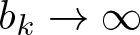 $b_k \rightarrow \infty $ as
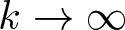 $ k \rightarrow \infty$. Therefore, (5.3) asserts that for each
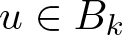 $u\in B_k$ with
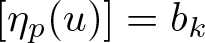 $[\eta_p(u)]=b_k$, we have
 \begin{align*}\nonumber
\mathcal{I}(u)\geq b_k^p\bigg( \frac{1}{p}-\frac{1}{q} \bigg) -C|\Omega|\rightarrow \infty \text{as } k\rightarrow \infty.
\end{align*}
This concludes the proof.
Remark 5.1. Observe that we have used only the AR condition (1.12) (particularly (1.15)), for proving Claim I. Moreover, the proof of Claim II for geometric conditions of the energy functional  $\mathcal{I}$ uses (1.10) and Proposition 2.4.
We now proceed to prove Theorem 1.5.
Proof of Theorem 1.5
From Lemma 3.2, we get  $\mathcal{I}$ satisfies the
 $\mathrm{(Ce)_c}$. Therefore,
 $\mathcal{I}$ also satisfies the
 $\mathrm{(PS)_c}$. Also from (1.11), we obtain
 $\mathcal{I}(-u)=\mathcal{I}(u)$ for
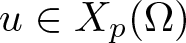 $u\in X_p(\Omega)$. The geometric condition of Theorem 4.1-(iii)-
 $(b)$ for the energy functional
 $\mathcal{I}$ follows from the proof of Claim II of Theorem 1.3. To apply the fountain theorem, we need to verify only the geometric condition of Theorem 4.1-(iii)-
 $(a)$ for the energy functional
 $\mathcal{I}$. To prove this, we utilize the linear subspace
 $A_k$ and (1.16). From (1.16), we conclude that for each
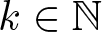 $k\in \mathbb{N}$, there exists
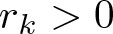 $r_k \gt 0$ such that
 \begin{equation}
F(x,t)\geq \frac{1}{D_{k,p}^p}|t|^p, ~\forall \,x\in\bar{\Omega}, ~\forall\,t\in \mathbb{R}\ \text{and } \forall\, |t| \gt r_k,
\end{equation}
where 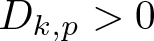 $D_{k,p} \gt 0$ is given in (4.2) under
 $q=p$. Moreover, by the continuity of
 $F$, we obtain
 \begin{equation}
F(x,t) \geq m_k:= \min_{x\in \bar{\Omega},|t|\leq r_k} F(x,t).
\end{equation}
Since 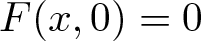 $F(x,0)=0$ for each
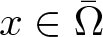 $x\in \bar{\Omega}$, we have
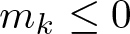 $m_k\leq 0$. Thus, using (5.4) and (5.5), we get
 \begin{equation}
F(x,t)\geq \frac{1}{D_{k,p}^p}|t|^p-Z_k, ~\forall \,x\in\bar{\Omega}, ~\forall\,t\in \mathbb{R},
\end{equation}
for some positive constant 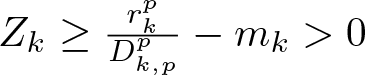 $Z_k \geq \frac{r_k^p}{D_{k,p}^p}-m_k \gt 0$. From (4.2) and (5.6), we conclude that for any
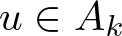 $u\in A_k$,
 \begin{align}
\mathcal{I}(u)\leq & \frac{1}{p} [\eta_p(u)]^p - \frac{1}{D_{k,p}^p}||u||_{L^p(\Omega)}^p+Z_k|\Omega| \nonumber \\
\leq & \frac{1}{p} [\eta_p(u)]^p - [\eta_p(u)]^p + Z_k|\Omega| \nonumber \\
= & -\frac{(p-1)}{p}[\eta_p(u)]^p+ Z_k|\Omega|.
\end{align}
Consequently, choosing a sufficiently large  $a_k$ with
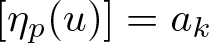 $[\eta_p(u)]=a_k$, in (5.7), we get
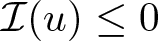 $\mathcal{I}(u)\leq 0$. This concludes the proof of the theorem.
Finally, we conclude with the proof of Theorem 1.7.
Proof of Theorem 1.7
By Lemma 3.5, the functional  $\mathcal{I}$ satisfies the
 $\mathrm{(Ce)_c}$, and consequently, it also satisfies the
 $\mathrm{(PS)_c}$. Moreover, for any
 $u \in X_p(\Omega)$, we have
 $\mathcal{I}(-u) = \mathcal{I}(u),$ as a direct consequence of the symmetry assumption (1.11). The geometric conditions of Theorem 4.1-(iii)-
 $(a)$ and
 $(b)$ for the energy functional
 $\mathcal{I}$ follow from the proof of Claim II in the proof of Theorem 1.3 and from the proof of Theorem 1.5. This completes the proof.
Acknowledgements
SB would like to thank the Council of Scientific and Industrial Research (CSIR), Govt. of India, for the financial assistance to carry out this research work [grant no. 09/0874(17164)/ 2023-EMR-I]. SG gratefully acknowledges the financial support for this research work under ARG-MATRICS, grant No: ANRF/ARGM/2025/001570/MTR, Anusandhan National Research Foundation (ANRF), Government of India. SG also acknowledges the research facilities available at the Department of Mathematics, NIT Calicut. VK is supported by the FWO Odysseus 1 grant G.0H94.18N: Analysis and Partial Differential Equations and the Methusalem programme of the Ghent University Special Research Fund (BOF) (Grant number 01M1021). VK is also supported by the FWO Senior Research Grant G011522N.






