



1 Introduction
The positive continuous additive functionals (PCAFs) play an important role in the study of Markov processes and the Dirichlet spaces, in particular, in the study of transformations of the Markov processes including time changes, Feynman-Kac and Girsanov transformations (see, e.g., [Reference Chen and Fukushima2, Reference Fukushima, Oshima and Takeda7, Reference Sharpe13]). There is a one-to-one correspondence between the class of PCAFs (
${\mathbf {A}}_c^+$
 in notation) and the class of nonnegative Borel measures charging no set of zero capacities, called the smooth measures (
${\mathcal {S}}$
 in notation). This correspondence is called the Revuz correspondence.
In the present article, we will focus on a convergence of PCAFs. In particular, we will study the locally uniform convergence of PCAFs in terms of some convergences of their smooth measures. Recently, in the case that the planar Brownian motion and the one-dimensional symmetric
$\alpha $
 -stable process, this type of the convergence has been studied in [Reference Andres and Kajino1, Reference Garban, Rhodes and Vargas8, Reference Ooi12] to construct the Liouville Brownian motion and the Liouville
$\alpha $
 -stable process. In [Reference Chen, Tomisaki and Uemura3], using smooth measures,
$L^2$
 -convergences of Feynman-Kac semigroups defined through the PCAFs are considered.
To explain a more specific situation, let E be a locally compact separable metric space and m a positive Radon measure on E with full support. We are given an m-symmetric Hunt process
${\mathbb {M}} = (X_t, {\mathbb {P}}_x)$
 on E and the associated Dirichlet form
$({\cal E}, {\cal F})$
 on
$L^2(E;m)$
 is assumed to be regular. Then the PCAFs and the smooth measures
${\cal S}$
 generated by
${\mathbb {M}}$
 or
$({\cal E}, {\cal F})$
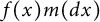
 are defined. For example, if f is a nonnegative bounded Borel function on E, then
$textsf{A}_t = \int _{0}^{t} f(X_s) ds$
 defines a PCAF and the corresponding smooth measure (called the Revuz measure of
$\{\textsf {A}_t\}$
 ) is
$f(x)m(dx)$
 . For the one-dimensional Brownian motion, the delta measure
$\delta _a(dx)$
 at a point
$a\in {\mathbb R}$
 is a smooth measure whose PCAF is nothing but the local time
$\{\ell (t,a)\}_{t\ge 0}$
 .
In the following, we will regard the Revuz correspondence as a map from the space
${\mathcal {S}}$
 to
${\mathbf {A}}_c^+$
 , call it Revuz map, and study the convergence of PCAFs via some convergences of their smooth measures from this point of view. To the best of our knowledge, there does not seem to be much research on such “topological properties of the mapping from
${\mathcal {S}}$
 to
${\mathbf {A}}_c^+$
 ”. Since
${\cal S}$
 is quite large (which is indeed larger than the class of positive Radon measures charging no set of zero capacities) and so is
${\mathbf {A}}_c^+$
 , it is harder to put a topological structure to this space
${\mathbf {A}}_c^+$
 through
${\cal S}$
 in general. We therefore turn our attention to some restricted classes of smooth measures first. One is the set of positive Radon measures which are of finite energy integrals (
${\mathcal {S}}_0$
 in notation). For any
$\mu \in {\cal S}_0$
 and
$\alpha>0$
 , there exists a unique element
$U_\alpha \mu \in {\cal F}$
 , called the
$\alpha $
 -potential of
$\mu $
 , such that

where
$C_0(E)$
 is the set of continuous functions on E with compact support and
$(\cdot , \cdot )$
 means the
$L^2$
 -inner product of
$L^2(E;m)$
 . Using the
$1$
 -potentials of measures
$\mu $
 and
$\nu $
 in
${\cal S}_0$
 , we can define a metric on
${\cal S}_0$
 as follows:

Then we show that the space
${\mathcal {S}}_0$
 is a Polish space with the metric
$\rho $
 (Proposition 3.6). This result itself is well-known in the classical potential theory for the cases of the Newton potential and the Riesz potential (see [Reference Landkof10]). Note that our result holds true for potential free situations as far as in a regular Dirichlet form setting. We then consider the locally uniform convergence of PCAFs for the
${\mathbb {P}}_x$
 -almost surely (for quasi everywhere
$x \in E$
 ) in terms of their smooth measures in
${\cal S}_0$
 through this metric
$\rho $
 . After establishing a convergence result of PCAFs via that of their smooth measures in
${\cal S}_0$
 (Theorem 4.1), we turn to consider the case when the measures are in
${\cal S}$
 . Since a measure in
${\cal S}$
 may not have the
$1$
 -potential in general, we can not directly apply the method for proving the convergence in the case of the measures of finite energy integrals. To overcome this difficulty, we take a proper increasing sequence of closed sets such that smooth measures restricted on each closed sets are of finite energy integrals. Then under some assumptions, we can obtain the convergence of PCAFs via the convergence of their smooth measures (Theorem 5.1).
We next introduce a class of smooth measures that are absolutely continuous with respect to the basic measure m. Then imposing some conditions on the Radon–Nikodým densities, we obtain a convergence of the PCAFs associated with such measures in
${\cal S}$
 (Theorem 6.4). In particular, the convergence of PCAFs holds when the sequence of the densities of smooth measures converges in
$L^p$
 for
$1\le p<\infty $
 (Proposition 6.5). We also stress that we can allow the exponents in the Lebesgue spaces for which the densities of smooth measures belong to may vary (Theorem 6.4).
The structure of this article is the following. In Section 2, we collect some basic notions and notations of the Dirichlet spaces and the Markov processes, especially, notions of capacity, smooth measures, measures of finite energy integrals, and additive functionals. After this, we show in Section 3 that the space
${\mathcal {S}}_0$
 is indeed a Polish space with the metric
$\rho $
 and the convergence of measures in
${\cal S}_0$
 implies that the measures converge vaguely. Conversely, if a sequence of measures in
${\cal S}_0$
 having the uniformly bounded
$1$
 -potentials converges vaguely, the measures converges “weakly in
${\cal S}_0$
 with respect to
$\rho $
 ” (Proposition 3.9). Some algebraic structures of
${\cal S}_0$
 are revealed in Proposition 3.10. In Section 4, we prove the convergence of PCAFs through the convergence of their measures in
${\mathcal {S}}_0$
 with respect to
$\rho $
 by using an idea in [Reference Fukushima, Oshima and Takeda7]. We proceed to consider the convergence of PCAFs through the convergence of their smooth measures in the class
${\mathcal {S}}$
 in Section 5. In Section 6, we assume that the measures have densities. We introduce an approximating method of the PCAF associated with
$fm$
 for a given density f. Even though the density function may not have
$L^p$
 -integrability for all
$p \in [1,\infty )$
 , if the density function is locally integrable and it can be approximated by a sequence
$f_n$
 in the meaning of Definition 6.2, then the PCAF of
$f m$
 is also approximated the PCAFs of
$f_n m$
 . This provides one perspective to observe the topological structure of the space of PCAFs from the corresponding measure space. In Section 7, we first show some examples of the density functions concerned in Section 6. Finally the cases of a skew product diffusion process and a one-dimensional diffusion process (ODDP) are discussed in which, according to the fact that the PCAFs are expressed as integrals of the local time with respect to the smooth measures, the convergences of PCAFs are directly derived from the vague convergence of the measures not necessarily using the results obtained the previous sections.
2 Preliminaries
Let E be a locally compact separable metric space and m a positive Radon measure on E with full topological support. Let
$E_{\partial } = E \cup \{\partial \}$
 be the one-point compactification of E. When E is already compact,
$\partial $
 is regarded as an isolated point. Let
${\mathbb {M}} = (\Omega , {\mathcal {F}}, {\mathcal {F}}_t, X_t, {\mathbb {P}}_x, \zeta )$
 be an m-symmetric Hunt process on E, where
$\{{\mathcal {F}}_t\}$
 is the minimum augmented filtration and
$\zeta $
 is the life time associated with
${\mathbb {M}}$
 , that is,
$\zeta (\omega ) := \inf \{t \ge 0 : X_t = \partial \}$
 .
Let
$\{p_t\}_{t \ge 0}$
 be the transition semigroup of
${\mathbb {M}}$
 , that is,
$p_t f(x) = {\mathbb {E}}_x[f(X_t)]$
 . By [Reference Fukushima, Oshima and Takeda7, Lemma 1.4.3], we know that
$\{p_t\}_{t \ge 0}$
 uniquely determines a strongly continuous Markovian semigroup
$\{T_t\}_{t \ge 0}$
 on
$L^2(E;m)$
 . Then the Dirichlet form on
$L^2(E;m)$
 of
${\mathbb {M}}$
 is defined by

where
$(f,g)$
 (resp.
$\|f\|_2$
 ) means the
$L^2$
 -inner product of
$f,g$
 (resp. the
$L^2$
 -norm of f). For
$\alpha> 0$
 and
$u,v\in {\cal F}$
 , denote by
${\cal E}_\alpha (u,v):= {\mathcal {E}}(u,v) + \alpha (u,v)$
 . Note that
${\mathcal {F}}$
 is a Hilbert space with inner product
${\mathcal {E}}_1$
 . Let
$\| \cdot \|_{{\mathcal {E}}_1}$
 be the norm of
${\mathcal {F}}$
 with respect to
${\mathcal {E}}_1$
 , that is,

Throughout this article, we assume that
$({\mathcal {E}},{\mathcal {F}})$
 is regular in the sense that
${\cal F}\cap C_0(E)$
 is dense in
${\cal F}$
 with respect to
$\sqrt {{\cal E}_1}$
 -norm and is also dense in
$C_0(E)$
 with respect to sup-norm
$\|\cdot \|_\infty $
 .
Now we define the (
$1$
 -)capacity associated with the Dirichlet form
$({\mathcal {E}},{\mathcal {F}})$
 . For an open set
$O\subset E$
 ,

where
${\mathcal {L}}_O := \{u \in {\mathcal {F}} : u \ge 1\ m\text {-a.e.} \ \text {on}\ O\}$
 , and for any set
$A \subset E$
 ,

Then it is known that
${\text {Cap}\,}$
 is a Choquet capacity (see [Reference Fukushima, Oshima and Takeda7]). We call a set
$A \subset E$
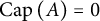
 exceptional if
${\text {Cap}\,}(A)=0$
 . A statement depending on
$x \in A$
 is said to hold q.e. on A if there exists an exceptional set
$N \subset A$
 such that the statement is true for every
$x \in A \setminus N$
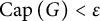
 . Let u be a numerical function defined q.e. on E. The function u is said to be quasi-continuous if for any
$\varepsilon> 0$
 , there exists an open set
$G \subset E$
 such that
${\text {Cap}\,}(G) < \varepsilon $
 and
$u|_{E \setminus G}$
 is finite and continuous. Here
$u|_{E \setminus G}$
 means the restriction of u to the set
$E \setminus G$
 . By [Reference Fukushima, Oshima and Takeda7, Theorem 2.1.3], we see that each
$u \in {\mathcal {F}}$
 admits a quasi continuous version. Denote by
$\widetilde {u}$
 the quasi continuous version of
$u \in {\mathcal {F}}$
 , that is,
$\tilde {u}$
 is quasi continuous and
$\tilde {u} = u,\ m$
 -a.e. We say an increasing sequence
$\{F_n\}$
 of closed sets is a nest if
${\text {Cap}\,}(E \setminus F_n)$
 decreases to
$0$
 as
$n \to \infty $
 .
We now give the definition of smooth measures which play an important role in this article. A positive Borel measure
$\mu $
 on E is called smooth if the following two conditions are satisfied:
-
(S.1) $\mu $
 charges no set of zero capacity,
-
(S.2) there exists an increasing sequence $\{F_n\}$
of closed sets such that $$\begin{align*}\mu(F_n) < \infty\ (n = 1,2, \cdots) \quad \text{and} \quad \lim_{n \to \infty} {\text{Cap}\,}(K \setminus F_n) = 0 \quad \text{for any compact set}\ K. \end{align*}$$


We denote the set of all smooth measures by
${\mathcal {S}}$
 . An increasing sequence
$\{F_n\}$
 of closed sets satisfying the condition of the last part in (S.2) is called a generalized nest. A positive Radon measure
$\mu $
 on E is said to be of finite energy integrals if there exists a positive constant
$C>0$
 such that

The set of all measures on E which are of finite energy integrals is denoted by
${\cal S}_0$
 . Then, according to the Riesz representation theorem, we find that
$\mu \in {\cal S}_0$
 if and only if there exists a unique element
$U_{\alpha } \mu \in {\mathcal {F}}$
 , called the
$\alpha $
 -potential of
$\mu $
 , for each
$\alpha> 0$
 such that

We now introduce two subclasses of
${\mathcal {S}}_0,\ {\mathcal {S}}_{c,00}^1$
 in addition to
${\mathcal {S}}_{00}$
 (see [Reference Fukushima, Oshima and Takeda7, eq. (2.2.10)] ), which are not just valuable in themselves but also useful to characterize the exceptional sets as follows:

where
$\| \cdot \|_{\infty }$
 is the
$L^{\infty }$
 -norm with respect to the measure m.
Theorem 2.1 (cf. [Reference Fukushima, Oshima and Takeda7, Theorem 2.2.3])
The following conditions are equivalent for a Borel set
$B \subset E:$

-
(i) ${\text {Cap}\,}(B) = 0$
, -
(ii) $\mu (B) = 0 $
, for any
$\mu \in {\mathcal {S}}_0$
, -
(iii) $\mu (B) = 0$
, for any
$\mu \in {\mathcal {S}}_{00}$
, -
(iv) $\mu (B) = 0$
, for any
$\mu \in {\mathcal {S}}_{c,00}^1$
.


Proof The equivalences among (i), (ii), and (iii) are given in [Reference Fukushima, Oshima and Takeda7, Theorem 2.2.3]. Now, the implication “(iii)
$\Rightarrow $
 (iv)” is obvious from the inclusion
${\mathcal {S}}_{c,00}^1 \subset {\mathcal {S}}_{00}$
 . Suppose that (iv) holds, namely
$\mu (B) = 0$
 for any
$\mu \in {\mathcal {S}}_{c,00}^1$
 . For any
$\mu \in {\mathcal {S}}_0$
 , there exists an increasing sequence
$\{F_n\}$
 of compact sets such that
-
(a) $1_{F_n} \mu \in {\mathcal {S}}_{00},\ n = 1,2,\ldots $
, -
(b) ${\text {Cap}\,}(K \setminus F_n) \to 0,\ n \to \infty $
for any compact set K,


by [Reference Fukushima, Oshima and Takeda7]. Put
$c_n := (\|U_1 (1_{F_n} \mu )\|_{\infty } + \mu (F_n) + 1)^{-1}> 0$
 . Since
$F_n$
 is compact for each n, we see from (a),

So it follows from the assumption,
$\mu (B \cap F_n) = 0,\ n = 1,2,\ldots $
 , hence it holds that

Noting that
$\mu $
 vanishes on
$E \setminus \bigcup _{n=1}^{\infty } F_n$
 , we find that

Hence
$\mu (B) = 0$
 for any
$\mu \in {\mathcal {S}}_0$
 and this implies (ii).
The following proposition holds.
Lemma 2.2 It holds that

Proof By [Reference Chen and Fukushima2, Exercise 2.3.8],

where
$R_{\alpha }$
 denotes the
$\alpha $
 -resolvent associated with
${\mathbb {M}}$
 :

Hence using the Markovian property of
$\alpha R_{\alpha }$
 ,

We obtain this lemma.
We now introduce the definition of a continuous additive functional (CAF).
Definition 2.3 An extended real valued (or numerical) function
$\textsf {A}_t(\omega ), \ t \ge 0, \omega \in \Omega $
 , is a CAF if the following conditions must hold:
-
(A.1) for each $t \ge 0$
,
$\textsf {A}_t(\cdot )$
is
${\mathcal {F}}_t$
-measurable, -
(A.2) there exist a set $\Lambda \in {\mathcal {F}}_{\infty }$
and an exceptional set
$N \subset E$
such that
${\mathbb {P}}_x(\Lambda ) = 1$
for any
$x \in E \setminus N$
and
$\theta _t \Lambda \subset \Lambda $
for any
$t> 0$
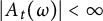
, and moreover, for each
$\omega \in \Lambda $
,
$A_0(\omega ) = 0$
,
$|A_t(\omega )| < \infty $
for any
$t < \zeta (\omega )$
,
$A_t(\omega ) = A_{\zeta (\omega )}(\omega )$
for any
$t \ge \zeta (\omega )$
and $$ \begin{align*} A_{t+s}(\omega) = A_s(\omega) + A_t(\theta_s \omega),\ \text{for any}\ t,s \ge 0, \end{align*} $$
-
(A.3) for each $\omega \in \Lambda $
, the map
$t\mapsto \textsf {A}_t(\omega )$
is continuous on
$[0, \infty )$
, where
$\Lambda $
is the set defined in (A.2).






When a CAF
$\textsf {A} = \{\textsf {A}_t\}$
 only takes values in
$[0,\infty ]$
 , we call
$\textsf {A}$
 a PCAF. The set of all CAFs (resp. PCAFs) is denoted by
${\mathbf {A}}_c$
 (resp.
${\mathbf {A}}_c^+$
 ).
Two CAFs
$\textsf {A}^{(1)}$
 and
$\textsf {A}^{(2)}$
 are said to be equivalent if for each
$t> 0$
 ,
${\mathbb {P}}_x(\textsf {A}_t^{(1)} = \textsf {A}_t^{(2)}) = 1\ \ \text {q.e.}\ x \in E$
 . If
$\textsf {A}^{(1)}$
 and
$\textsf {A}^{(2)}$
 are equivalent, we write
$\textsf {A}^{(1)} \sim \textsf {A}^{(2)}$
 . It is clear that this binomial relation “
$\sim $
 ” defines an equivalence relation on
${\mathbf {A}}_c$
 .
The next theorem characterizes a concrete relation between measures in
${\mathcal {S}}$
 and PCAFs (in
${\mathbf {A}}_c^+$
 under this equivalence).
Theorem 2.4 [Reference Fukushima, Oshima and Takeda7, Theorem 5.1.4]
The quotient space of
${\mathbf {A}}_c^+$
 under the equivalence relation “
$\sim $
 ” and the family
${\mathcal {S}}$
 are in one-to-one correspondence under the following relation: For
$\mu \in {\mathcal {S}}$
 and
$\textsf {A} \in {\mathbf {A}}_c^+$
 ,

where
$f \in {\mathcal {B}}_+(E)$
 and h is any
$\gamma $
 -excessive function
$(\gamma \ge 0)$
 , that is, h is nonnegative universally measurable and it satisfies
$e^{-\gamma t} p_t h(x) \uparrow h(x),\ t \downarrow 0,\ x \in E$
 .
The equation (2.1) is called the Revuz correspondence. In this article, we call it the Revuz map by viewing this correspondence from
${\mathcal {S}}$
 to
${\mathbf {A}}_c^+$
 .
3 Some properties of measures of finite energy integrals
In this section, we consider some topological and algebraic properties of the space of measures which are of finite energy integrals,
${\cal S}_0$
 . As is mentioned in the preceding section, any measure
$\mu $
 in
${\mathcal {S}}_0$
 has the
$1$
 -potential
$U_1 \mu \in {\cal F}$
 . Then we define a function
$\rho : {\mathcal {S}}_0 \times {\mathcal {S}}_0 \to [0,\infty )$
 by

We show that the function
$\rho $
 becomes a metric on
${\mathcal {S}}_0$
 and has nicer properties.
Lemma 3.1 The function
$\rho $
 defines a metric on
${\mathcal {S}}_0$
 .
Proof For
$\mu , \nu \in {\mathcal {S}}_0$
 , it is clear that
$\rho (\mu ,\nu ) \ge 0$
 and it holds that

For any
$\xi \in {\mathcal {S}}_0$
 ,

Hence, we obtain the triangle inequality with respect to
$\rho $
 . Finally, assume that
$\rho (\mu ,\nu ) = 0$
 . Then
$U_1 \mu = U_1\nu $
 . So it follows that

This implies that
$\mu = \nu $
 because
$\mu , \nu $
 are Radon measures and the Dirichlet form
$({\cal E}, {\cal F})$
 is regular. Therefore
$\rho $
 defines a metric on
${\mathcal {S}}_0$
 .
Remark 3.2 For
$\alpha> 0$
 , if we define a function
$\rho _\alpha $
 on
${\cal S}_0\times {\cal S}_0$
 by

we find that

holds. Then it follows that
$\rho _{\alpha }$
 is also a metric on
${\cal S}_0$
 and it is equivalent to
$\rho = \rho _1$
 for each
$\alpha>0$
 .
Put
$f = \widetilde {U_1 \mu }$
 for
$\mu \in {\mathcal {S}}_0$
 and define for
$n \in {\mathbb {N}}$
 ,

Since f is
$1$
 -excessive, we know that
$g_n \ge 0\ m\text {-a.e.}$
 by [Reference Fukushima, Oshima and Takeda7, Theorem 2.2.1].
Lemma 3.3 Let
$\mu $
 be a measure in
${\mathcal {S}}_0$
 and put
$f = \widetilde {U_1 \mu }$
 . Then
$R_1 g_n$
 converges to f in
${\mathcal {E}}_1$
 -strongly as
$n \to \infty $
 .
This proof is the same as the first half of the proof of [Reference Chen and Fukushima2, Proposition 4.1.6], so we omit it.
Lemma 3.4 The metric space
$({\mathcal {S}}_0,\rho )$
 is separable.
Proof Since E is a locally compact separable metric space and m is a Radon measure on E, we see that the space
$L^2(E;m)$
 is separable. Let
${\mathfrak{D}}$
 be a countable and dense subset of
$L^2(E;m)$
 . For a measure
$\mu \in {\mathcal {S}}_0$
 , let f be a quasi continuous version of the
$1$
 -potential of
$\mu $
 , that is,
$f = \widetilde {U_1 \mu }$
 . Let
$g_n$
 be the function defined in (3.2). Then we know that
$g_n \in {\mathcal {F}} \subset L^2(E;m)$
 with
$g_n\ge 0$
 for all
$n \in {\mathbb {N}}$
 . By Lemma 3.3, the following holds:

Hence, we know that for any
$\varepsilon> 0$
 , there exists a number
$N \in {\mathbb {N}}$
 such that
$\rho (g_n m, \mu ) < \varepsilon /2$
 for
$n \ge N$
 . Since
$g_n$
 is in
$L^2(E;m)$
 , there exists a function
$h_n \in {\mathfrak{D}}$
 with
$h_n\ge 0$
 such that
$\|g_n - h_n\|_2 < \varepsilon /2$
 . Then noting that

we obtain that
$\rho (g_n m, h_n m) < \varepsilon /2$
 . If
$n \ge N$
 , it holds that

If we put
${\mathcal {S}}_a$
 by the set
$\{\mu \in {\mathcal {S}}_0 : \mu = f m,\ f \in {\mathfrak{D}}_+\}$
 ,
${\mathcal {S}}_a$
 is countable and dense in
${\mathcal {S}}_0$
 . Therefore the separability of
$({\mathcal {S}}_0,\rho )$
 is proved.
Lemma 3.5 The metric space
$({\mathcal {S}}_0,\rho )$
 is complete.
Proof Let
$\{\mu _n\} \subset {\mathcal {S}}_0$
 be a
$\rho $
 -Cauchy sequence. Noting that

and
$({\mathcal {F}},{\mathcal {E}}_1)$
 is a Hilbert space, we know that there exists a function
$h \in {\mathcal {F}}$
 such that

Hence, we know that for any
$v \in {\mathcal {F}} \cap C_0(E)$
 with
$v \ge 0$
 ,

By [Reference Fukushima, Oshima and Takeda7, Theorem 2.2.1], the left-hand side of (3.3) is nonnegative, so is the right-hand side. Using [Reference Fukushima, Oshima and Takeda7, Theorem 2.2.1] again, we can see that h is a
$1$
 -potential, hence there exists
$\nu \in {\mathcal {S}}_0$
 such that
$h = U_1 \nu $
 . This implies that

This proof is completed.
By Lemmas 3.4 and 3.5, we obtain the following proposition.
Proposition 3.6 The space
${\mathcal {S}}_0$
 is a Polish space.
Example 3.7 Let
$\mu = f m$
 and
$\mu _n = f _n m$
 for
$n\in {{\mathbb {N}}}$
 , where
$f, \, f_n \in L^2(E;m)\cap {\cal B}_+(E)$
 and
$\| f- f_n \|_2 \to 0$
 as
$n \to \infty $
 . Then
$ \mu ,\ \mu _n \in {{\mathcal {S}}}_0$
 and
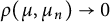
$\rho ( \mu , \mu _n) =\| R_1f -R_1 f_n \|_{{\mathcal {E}}_1} \leq \| f - f_n \|_2$
 . Hence
$ \rho ( \mu , \mu _n) \to 0$
 as
$ n \to \infty $
 .
Next we collect some convergence results of the measures of
${\mathcal {S}}_0$
 related to
$\rho $
 .
Proposition 3.8 Assume that
$\{\mu _n\}$
 are measures in
${\mathcal {S}}_0$
 which converges to some
$\mu \in {\mathcal {S}}_0$
 in
$\rho $
 . Then it follows that
$\{\mu _n\}$
 converges to
$\mu $
 vaguely, that is, for any
$\varphi \in C_0(E)$
 ,

Proof Suppose that
$\lim _{n \to \infty } \rho (\mu _n, \mu ) = \|U_1 \mu _n - U_1 \mu \|_{{\mathcal {E}}_1} = 0.$
 Then the sequence
$\big \{ \| U_1 \mu _n \|_{{\mathcal {E}}_1} \big \}_{n\ge 1}$
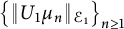 is bounded in
${\mathbb {R}}$
 . Moreover, for any
$\varphi \in {\mathcal {F}} \cap C_0(E)$
 ,

By the regularity of the Dirichlet form
$({\mathcal {E}}, {\mathcal {F}})$
 , we find that for any
$\varphi \in C_0(E)$
 , there exists a sequence
$\{\varphi _{\ell }\} \subset {\mathcal {F}} \cap C_0(E)$
 such that

For any compact set K and a relatively compact open set G with
$\textsf {supp}\,[\varphi ] \subset \overset {\circ }{K} \subset K \subset G$
 , we can take a function
$\eta \in {\mathcal {F}} \cap C_0(E)$
 such that

where
$\overset {\circ }{K}$
 means the interior of K. Note that
$\varphi _{\ell } \eta \in {\mathcal {F}} \cap C_0(E)$
 and
$\varphi = \varphi \eta $
 . Then we find that

By the definition of
$\{\varphi _{\ell }\}$
 ,

We see from (3.4) that for each
$\ell $
 ,

Finally, let us consider
$\text {(III)}$
 . By the Schwarz inequality,

Since
$\{ \| U_1 \mu _n \|_{{\mathcal {E}}_1} \}_{n=1}^{\infty }$
 is bounded, we know that (III) tends to
$0$
 as
$n \to \infty $
 and
$\ell \to \infty $
 . Therefore, taking the limit as
$n \to \infty $
 and
$\ell \to \infty $
 in (3.5), we obtain this proposition.
A sequence of measures
$\{\mu _n\}$
 in
${\mathcal {S}}_0$
 is said to converge to a measure
$\mu \in {\mathcal {S}}_0$
 weakly with respect to
$\rho $
 if

The next proposition is a general result from functional analysis.
Proposition 3.9 Let
$\{\mu _n\}$
 be a sequence in
${\mathcal {S}}_0$
 . Assume that
$\{\mu _n\}$
 is bounded with respect to
$\rho $
 , that is,
$\sup _{n} {\mathcal {E}}_1(U_1 \mu _n, U_1 \mu _n) < \infty $
 . If the measures
$\{\mu _n\}$
 converges to a measure
$\mu $
 vaguely, then
$\mu \in {\mathcal {S}}_0$
 and
$\{\mu _n\}$
 converges to
$\mu $
 weakly with respect to
$\rho $
 .
In the rest of this section, we show other simple but useful properties of
${\mathcal {S}}_0$
 .
Proposition 3.10 The following properties hold for
${\cal S}_0$
 :
-
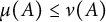
(1) (monotonicity) Let $\mu $
and
$\nu $
be Borel measures on
$(E,{\cal B}(E))$
. Assume that
$\mu \le \nu $
, that is,
$\mu (A)\le \nu (A)$
for
$A\in {\cal B}(E)$
. If
$\nu \in {\cal S}_0$
, then
$\mu \in {\cal S}_0$
and
$U_\alpha \mu \le U_\alpha \nu $
hold for
$\alpha>0.$
-
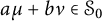
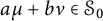
(2) (convex cone) If $\mu , \nu \in {\cal S}_0, \, a,b \ge 0$
and
$\alpha>0$
, then
$a \mu + b \nu \in {\cal S}_0$
and
$U_\alpha (a\mu +b\nu )=aU_\alpha \mu +bU_\alpha \nu .$
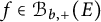
-
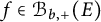
(3) (ideal) Let ${\cal B}_{b, +}(E)$
be the set of all nonnegative bounded measurable functions on E. Then
${\cal B}_{b, +}(E)$
is an ideal in
${\cal S}_0$
(i.e.,
${\cal B}_{b, +}(E) {\cal S}_0 \subset {\cal S}_0$
) in the sense that
$f\mu $
belongs to
${\cal S}_0$
whenever
$\mu \in {\cal S}_0$
and
$f\in {\cal B}_{b, +}(E)$
.












Proof
-
(1). Since $\nu \in {\cal S}_0$
, there exists a
$C>0$
such that $$ \begin{align*}\int_E |v| d\mu \le \int_E |v| d\nu \le C\sqrt{{\cal E}_1(v,v)}, \quad v\in {\cal F} \cap C_0(E). \end{align*} $$This implies that $\mu \in {\cal S}_0$
and then $$ \begin{align*}{\cal E}_\alpha(\varphi, U_\alpha\nu-U_\alpha\mu)&= {\cal E}_\alpha(\varphi, U_\alpha\nu)-{\cal E}_\alpha(\varphi, U_\alpha\mu) \\&=\int_E \varphi d\nu-\int_E \varphi d\mu =\int_E \varphi d(\nu-\mu) \ge 0 \end{align*} $$holds for any $\varphi \in {\cal F}\cap C_0(E)$
with
$\varphi \ge 0$
. This means that
$U_\alpha \nu -U_\alpha \mu $
is an
$\alpha $
-potential whose measure is nothing but
$\nu -\mu $
and
$0\le U_\alpha (\nu -\mu )=U_\alpha \nu -U_\alpha \mu $
.
-
(2). As in the proof of (1), we see that for any $\mu , \nu \in {\cal S}_0, \ a,b\ge 0, \, \alpha>0$
and
$\varphi \in {\cal F}\cap C_0(E)$
with
$\varphi \ge 0$
, $$ \begin{align*}{\cal E}_\alpha(\varphi, a U_\alpha\mu+b U_\alpha\nu) &= a{\cal E}_\alpha(\varphi, U_\alpha\mu) + b{\cal E}_\alpha(\varphi, U_\alpha\nu) \\&= a\int_E \varphi d\mu + b \int_E \varphi d \nu=\int_E \varphi d(a\mu+ b\nu)\ge 0. \end{align*} $$Then it follows that $a\mu +b \nu \in {\cal S}_0$
and
$U_\alpha (a\mu +b \nu )=aU_\alpha \mu +bU_\alpha \nu $
.
-
(3). Let $f\in {\cal B}_{b, +}(E)$
and
$\mu \in {\cal S}_0$
. Since
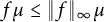
$f\mu \le \|f\|_\infty \mu $
, we can conclude that
$f\mu \in {\cal S}_0$
by (1).













Remark 3.11 In the introduction, we noted that Proposition 3.6 holds for the Newton potential or the Riesz potential in the classical potential theory. The results stated in this section moreover hold true to any potential kernels associated with regular Dirichlet forms, including, of course, the cases of the Newton potential (corresponding to the Brownian motion) or the Riesz potential (corresponding to the symmetric
$\alpha $
 -stable process). But, for the space of signed measures
${\mathcal {S}}_0 - {\mathcal {S}}_0$
 , it is not complete in general (see [Reference Landkof10, Theorem 1.19]).
4 Compactness of Revuz maps in
${\mathcal {S}}_0$

In this section, we show that the Revuz map is compact in the sense that, for any bounded sequence in
${\mathcal {S}}_0$
 with the metric
$\rho $
 , the corresponding sequence of
${\mathbf {A}}_c^+$
 by the Revuz map has a subsequence so that the subsequence converges locally uniformly (on
$[0,\infty )$
 ). Let
$\rho $
 be the metric on
${\mathcal {S}}_0$
 defined by (3.1).
Theorem 4.1 Let
$\textsf {A}^n, \, \textsf {A} \in {\mathbf {A}}_c^+$
 . Denote by
$\mu _n, \, \mu $
 their Revuz measures in
${\cal S}$
 for
$n\ge 1$
 . Assume that all
$\mu _n$
 and
$\mu $
 belong to
${\cal S}_0$
 . If
$\lim _{n \to \infty }\rho (\mu _n, \mu ) = 0$
 , then there exists a subsequence
$\{n_k\}$
 of
$\{n\}$
 such that

The proof of Theorem 4.1 is long. We divide the proof into Lemmas 4.2–4.6. The next lemma reveals a duality relation between the resolvent and the potential.
Proposition 4.2 Let
$\nu \in {\mathcal {S}}_0$
 and
$\alpha> 0$
 . If
$f \in L^p(E;m) \cap {\mathcal {B}}_+(E)$
 for some
$1 \le p < \infty $
 , then

Proof Let
$\{ K_n\}$
 be an increasing sequence of compact sets satisfying
$\cup _{n=1}^\infty K_n =E$
 and put
$ f_n(x) := (f(x)^p \land n) \cdot 1_{K_n}(x)$
 for each
$n \in {{\mathbb {N}}}$
 and
$x \in E$
 . Then it is easy to see that for any
$x \in E$
 ,

By the correspondence between the Dirichlet form and the
$\alpha $
 -potential function, we see that

hence,

Then, by making use of the monotone convergence theorem on the respective sides, we have (4.1) since
$R_{\alpha }f(x)$
 is written as an integral form:

Let
$f \in L^2(E;m)\cap {\cal B}_+(E)$
 and put

Note that the measure
$fm$
 belongs to
${\cal S}_0$
 and the
$1$
 -potential
$U_1(fm)$
 is equal to
$R_1f$
 , the
$1$
 -resolvent of f.
Lemma 4.3 It holds that

for any
$\nu \in {\mathcal {S}}_{c,00}^1$
 and
$f, g \in L^2(E;m) \cap {{\mathcal {B}}}_+(E)$
 .
Proof For any
$f, g \in L^2(E;m) \cap {{\mathcal {B}}}_+(E)$
 , put
$h := f - g$
 . By the Markov property,

Replacing f and
$\alpha $
 in Lemma 4.2(1) by
$h \cdot R_1 h \in L^1(E,m)$
 and
$2$
 respectively, then the above is continue to

Here, since
$ f \geq 0$
 and
$ U_2 \nu \geq 0$
 ,

where in the last inequality we use Lemma 2.2. Hence, we obtain

Lemma 4.4 Let
$ f \in L^2(E;m)\cap {\cal B}_+(E)$
 . Denote by
$\textsf {A}^{f}(t)$
 the CAF defined by (4.2) and put

Then
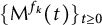
$ \{\textsf {M}^f(t)\}_{t \ge 0}$
 is an
$({\mathcal {F}}_t, {\mathbb {P}}_{\nu })$
 -martingale, where
$\nu \in {\mathcal {S}}_{c,00}^1$
 with
$\nu (E) = 1$
 .
Proof For
$t>s \ge 0$
 ,

By the Markov property,

Thus we know that
${\mathbb {E}}_{\nu }[\textsf {M}^f(t) \mid {\mathcal {F}}_s] = {\mathbb {E}}_{\nu }[\textsf {A}^f(\infty ) \mid {\mathcal {F}}_s]$
 . Then,

where by using the Markov property, the above second term is rewritten by

That is,
${\mathbb {E}}_{\nu }[\textsf {A}^f(\infty ) \mid {\mathcal {F}}_s] = \textsf {M}^f (s)$
 . Therefore, we can find that
$\{\textsf {M}^f(t)\}_{t \ge 0}$
 is an
$({\mathcal {F}}_t, {\mathbb {P}}_{\nu })$
 -martingale.
Lemma 4.5 Let
$\{f_k\}_{ k \in {\mathbb {N}}} \subset L^2(E;m) \cap {{\mathcal {B}}}_+(E)$
 and
$\textsf {M}^{f_k}(t)$
 be given by (4.4) with
$f_k$
 in place of f. If
$\{R_1 f_k\}_{k \in {\mathbb {N}}}$
 converges to a function in
${\mathcal {E}}_1$
 -strongly, then there exists a subsequence
$\{ k_j \}$
 of
$\{ k\}$
 such that

Proof Let
$\nu $
 be in
${\mathcal {S}}_{c,00}^1$
 with
$\nu (E) = 1$
 . Note here that
$\textsf {M}^{f_k}(\infty ) = \textsf {A}^{f_k}(\infty )$
 in
$L^2( {{\mathbb {P}}}_\nu )$
 and
$\{\textsf {M}^{f_k}(t)\}_{t \ge 0}$
 is an
$({\mathcal {F}}_t,{\mathbb {P}}_{\nu })$
 -martingale. By Doob’s inequality and Lemma 4.3,

where
$M=16 \sup _{k \in {\mathbb {N}}} \| R_1 f_k \|_{{\mathcal {E}}_1} \ (< \infty )$
 . Since
$\{R_1 f_k\}_{k \ge 1}$
 is an
${\mathcal {E}}_1$
 -Cauchy sequence, there exists a subsequence
$\{k_j\}$
 of
$\{k\}$
 such that

Now we set

and we know that
${\mathbb {P}}_{\nu }(\Lambda _j) \le M \cdot 2^{-j}$
 , hence,
$\sum _{j=1}^{\infty } {\mathbb {P}}_{\nu }(\Lambda _j) \le M < \infty $
 holds. Then the first Borel–Cantelli lemma provides us that

For any
$\mu \in {\mathcal {S}}_{c,00}^1$
 , by setting
$\nu (\cdot ) = \mu (\cdot )/\mu (E)$
 ,

In the following, we need to take subsequences repeatedly, so, in order to avoid confusion with notations, we introduce a space of functions which define subsequences. We denote by
$\Phi $
 all functions from
${\mathbb {N}}$
 to itself which are strictly increasing. Note that
$\{\phi (n)\}$
 is nothing more than a subsequence of the sequence
$\{n\}$
 for a
$\phi \in \Phi $
 .
Lemma 4.6 Let
$\textsf {A}^n, \, \textsf {A} \in {\mathbf {A}}_c^+$
 . Denote by
$\mu _n$
 and
$\mu $
 , their Revuz measures in
${\cal S}$
 for
$n\ge 1$
 . Assume that
$\mu _n=f_n m$
 and
$\mu =fm$
 for some
$f_n, \, f \in L^2(E;m) \cap {{\mathcal {B}}}_+(E)$
 . If
$\lim _{n \to \infty }\rho (\mu _n, \mu ) = 0$
 , then there exists a
$ \phi \in \Phi $
 such that

Proof We use an idea in the proof of [Reference Fukushima, Oshima and Takeda7, Theorem 5.1.1]. For each
$n \in {{\mathbb {N}}}$
 , we put

Since
$\lim _{n \to \infty }\| R_1 f_n -U_1 \mu \|_{{\mathcal {E}}_1}=0$
 , by Lemma 4.5, there is a
$\phi _1 \in \Phi $
 such that

Further, by means of [Reference Fukushima, Oshima and Takeda7, Lemma 5.1.2(i)], there is a
$\phi _2 \in \Phi $
 such that

where
$\psi _2=\phi _2 \circ \phi _1$
 . Since
$\textsf {M}_n(\infty )=\textsf {B}_n(\infty )$
 in
$L^2( {{\mathbb {P}}}_\nu )\ ( n\in {{\mathbb {N}}},\ \nu \in { {\mathcal {S}}_{c,00}^1} )$
 , there exists an exceptional set
${N} \subset E$
 such that
${\mathbb {P}}_x(\Lambda ) = 1$
 for any
$x \in E \setminus {N}$
 , where

Now we define
$ \textsf {B}(t,\omega )$
 and
$\tilde {\textsf {A}}(t,\omega )$
 by
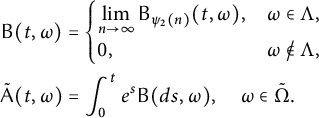
Noting

and
$\tilde {\textsf {A}}(t)=e^t\textsf {B}(t) - \int _0^t e^s \textsf {B}(s) ds$
 , we find

We claim the following:

Note that

which follows from

We next note that

and hence

Combining this with (4.5), we have

which implies (4.4). Since (4.4) implies
$\textsf {A} \sim \widetilde {\textsf {A}}$
 , we obtain the lemma.
Proof of Theorem 4.1
Since the
$1$
 -potential
$U_1 \mu _n$
 of
$\mu _n$
 is
$1$
 -excessive, we can find a Borel measurable and quasi continuous version
$u_n$
 of
$U_1 \mu _n$
 and properly exceptional set
$N_n$
 for each
$n\in {\mathbb N}$
 such that

Now we put

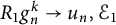
By Lemma 3.3, we know that
$R_1 g_n^k \to u_n, {\mathcal {E}}_1$
 -strongly as
$k \to \infty $
 . Now let

By means of Lemma 4.6, for each
$n \in {\mathbb {N}}$
 , there exist
$\psi ^n \in \Phi $
 such that

Let
$T>0$
 ,
$\varepsilon>0 $
 and
$\nu \in { {\mathcal {S}}_{c,00}^1} $
 . Then there are numbers
$k^n_o \in {{\mathbb {N}}}$
 such that

Now, since
$R_1 g_n^{ \psi ^n(k)}$
 converges to
$u_n$
 in
${\mathcal {E}}_1$
 -strongly as
$k \to \infty $
 for each
$n \in {{\mathbb {N}}}$
 , there is a
$k^n_* \geq k^n_o$
 such that

Let u be a quasi continuous version of
$U_1 \mu $
 . Putting
$h_n := g_n^{ \psi ^n(k^n_*)}$
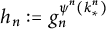 , we get

Hence we know that
$R_1 h_n$
 converges to u in
${\mathcal {E}}_1$
 -strongly as
$n \to \infty $
 , that is,
$\rho (h_n m, \mu ) \to 0$
 . By means of Lemma 4.6, there is a
$\phi _* \in \Phi $
 such that

where
$n_*=\phi _*(n)$
 . Therefore we obtain

Finally applying the first Borel–Cantelli lemma and Theorem 2.1, we arrive at the theorem.
Example 4.7 Let
$({\cal E}, {\cal F})$
 be the Dirichlet form
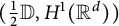
$(\frac 12 {\mathbb D}, H^1({\mathbb R}^d))$
 on
$L^2({\mathbb R}^d)$
 ,
$d\ge 2$
 . Let
$\mu $
 be the Lebesgue measure on a
$(d{-}1)$
 -dimensional hyperplane
$F\subset {\mathbb R}^d$
 . Let f be a nonnegative bounded measurable function on
${\mathbb R}^d$
 whose support, denoted by K, is a compact subset of F. By means of [Reference Fukushima, Oshima and Takeda7, Exercise 2.2.1],
$1_K \mu \in {\cal S}_0$
 .
Take a sequence of increasing sequence of measurable functions
$\{f_n\}$
 defined on F so that

Set
$\nu _n:=f_n \mu $
 for
$n\in {\mathbb N}$
 and
$\nu :=f \mu $
 . Then
$\nu _n$
 and
$\nu $
 are not absolutely continuous with respect to the Lebesgue measure
$dx$
 on
${\mathbb R}^d$
 . By noting the estimates
$f_n \mu \le f\mu \le \|f\|_\infty 1_K \mu $
 , it follows that
$\nu _n, \, \nu \in {\cal S}_0$
 for
$n\in {\mathbb N}$
 from Proposition 3.10. Moreover, we find that

In fact, since
$U_1(\nu _n) \le U_1(f\nu ) \le \|f\|_\infty U_1(1_K \mu )$
 from Proposition 3.10 (1) for any n, we see that for any n,

Then the right-hand side goes to
$0$
 as n tending to
$\infty $
 by the dominated convergence theorem.
5 Compactness of Revuz maps in
${\mathcal {S}}$

In this section, we discuss the convergence of PCAFs associated with general smooth measures.
Theorem 5.1 Let
$\textsf {A}^n, \, \textsf {A} \in {\mathbf {A}}_c^+$
 . Denote by
$\mu _n$
 and
$\mu $
 their Revuz measures in
${\cal S}$
 for
$n\ge 1$
 . Assume there exists an increasing sequence of closed sets
$\{F_k\}$
 such that

-
(Sa) for each $n, k \in {\mathbb {N}}$
,
$1_{F_k} \mu _n, 1_{F_k} \mu \in {\mathcal {S}}_0$
and, for each
$k\in {\mathbb {N}}$
,
$\displaystyle \lim _{n \to \infty } \rho (1_{F_k} \mu _n, 1_{F_k} \mu ) = 0;$
-
(Sa) $\displaystyle \lim _{k\to \infty } \sup _{\nu \in {\mathcal {S}}_{c,00}^1} \sup _{n \in {\mathbb {N}}} \int _{F_k^c} \widetilde {U_1 \nu } \, d\mu _n = 0;$
-
(Sa) $\displaystyle \lim _{k\to \infty } \sup _{\nu \in {\mathcal {S}}_{c,00}^1} \int _{F_k^c} \widetilde {U_1 \nu } \, d\mu = 0$
.




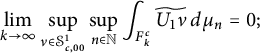
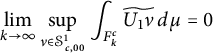
Then there exists a subsequence
$\{n_k\}$
 of
$\{n\}$
 such that

Proof Put
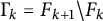
$\Gamma _{k} = F_{k + 1} \setminus F_{k}$
 ,
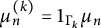
$\mu _n^{(k)} = 1_{\Gamma _k} \mu _n$
 and
$\mu ^{(k)} = 1_{\Gamma _k} \mu (k, n \in {{\mathbb {N}}})$
 . By means of (Sa),
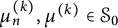
$\mu _n^{(k)}, \mu ^{(k)} \in {{\mathcal {S}}}_0$
 . Let
$\textsf {A}^{(k)}_n,\ \textsf {A}^{(k)}$
 be the PCAFs corresponding to
$\mu _n^{(k)}, \mu ^{(k)}$
 , respectively. By virtue of [Reference Fukushima, Oshima and Takeda7, Theorem 5.1.3],
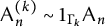
$\textsf {A}^{(k)}_n \sim 1_{\Gamma _k} \textsf {A}_n$
 and
$\textsf {A}^{(k)} \sim 1_{\Gamma _k} \textsf {A}$
 .
Let
$\varepsilon> 0,\ T > 0$
 and
$\nu \in {\mathcal {S}}_{00}$
 . We show that there exists a subsequence
$\{n_k\}$
 of
$\{n\}$
 such that

To prove this, divide the above into three terms for
$j, n$
 as follows:

By the Chebyshev inequality and the inequality,
$1\le e^{T-s}$
 for
$0\le s\le T$
 , the term
$\text {(III)}_j$
 is estimated as

Then the expectation part is rewritten as follows:

Thus, we have that

Let us fix an
$\varepsilon ^{\prime }>0$
 arbitrarily. Then, by means of (Sc), there is an
$j_1$
 such that
$\text {(III)}_j < \varepsilon ^{\prime }$
 for any
$j \geq j_1$
 . In the same way as above, we get the following:

By means of (Sb), there is an
$j_2\ ( \geq j_1)$
 such that
$\text {(I)}_{j,n} < \varepsilon ^{\prime }$
 for any
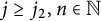
$j \geq j_2, n \in {{\mathbb {N}}}$
 . Finally we consider
$\text {(II)}_{j,n}$
 with
$j=j_2$
 . Noting (Sa) and using Theorem 4.1, we find a subsequence
$\{n_k\}$
 such that
$\lim _{n_k \to \infty } \text {(II)}_{j_2,n_k} =0$
 . Thus we obtain

Letting
$\varepsilon ^{\prime } \downarrow 0$
 leads us to (5.2). Applying the first Borel–Cantelli lemma and Theorem 2.1, we arrive at the theorem.
Remark 5.2
-
(i) If $\mu _n$
and
$\mu $
are absolutely continuous with respect to m, then the assumption (5.1) can be replaced by $$\begin{align*}m\left(E \setminus \bigcup_{k=1}^{\infty}F_k\right) = 0. \end{align*}$$
-
(ii) If $\mu _n, \mu \in {\mathcal {S}}_0$
satisfy the assumption of Theorem 4.1, that is,
$ \lim _{n \to \infty }\rho (\mu _n, \mu ) = 0$
, then the assumption of Theorem 5.1 is satisfied with
$F_k=E\ (k\in {{\mathbb {N}}})$
.




6 A class of absolutely continuous measures that are smooth
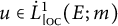
In this section, we define a class of smooth measures that are absolutely continuous with respect to the basic measure m. We say that a measurable function f on E is locally in
$L^1(E;m)$
 in the broad sense (
$u \in \dot {L}^1_{\textsf {loc}}(E;m)$
 in notation) if there exists an nest
$\{F_n\}$
 consisting of compact sets such that
$f \in L^1(F_n;m)$
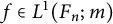 for any n. It is clear that
$L^p(E;m) \subset L^1_{\textsf {loc}}(E;m) \subset \dot {L}_{\textsf {loc}}^1(E;m)$
 for any
$p\in [1, \infty ]$
 .
Lemma 6.1 Assume that
$f \in \dot {L}_{\textsf {loc}}^1(E;m) \cap {\mathcal {B}}_+(E)$
 and put
$\mu := f m$
 . Then
$\mu $
 belongs to
${\mathcal {S}}$
 .
Proof Let
$ f \in \dot {L}_{\textsf {loc}}^1(E;m) \cap {\mathcal {B}}_+(E)$
 and
$\{ F_n \}$
 be an increasing sequence of compact sets satisfying the above condition. By the assumption of
$\{F_n\}$
 , it is obvious that
$\mu (F_n) < \infty $
 for any
$n \in {\mathbb {N}}$
 . Hence,
$\mu = f m$
 is a smooth measure.
Definition 6.2 Write
${\mathfrak{A}}$
 for the set of functions f satisfying that
$f \in \dot {L}_{\textsf {loc}}^{1}(E;m) \cap {\mathcal {B}} _+ (E)$
 and there exist a sequence of functions
$\{f_n\} \subset \dot {L}_{\textsf {loc}}^1(E;m) \cap {\mathcal {B}}_+(E)$
 , an increasing sequence of closed sets
$\{F_n\}$
 satisfying
$ m \left ( E \setminus \bigcup _{n=1}^\infty F_n \right )=0$
 , and sequences
$\{p_n\}, \{q_n\}, \{r_n\}$
 with
$1 \le p_n, q_n, r_n < \infty $
 such that
-
(Aa) $\displaystyle \lim _{n \to \infty } \|f_n - f\|_{L^{p_n}(F_n)} = 0;$
-
(Ab) one of the following conditions is satisfied;
-
(Ab1) $\displaystyle \lim _{n \to \infty } \sum _{k=n}^{\infty } \|f_n\|_{L^{q_k}(F_{k+1} \setminus F_k)} \cdot (1 \wedge m(F_{k+1} \setminus F_k)^{1/q_k^{\prime }}) = 0$
, -
(Ab2) $\displaystyle \lim _{n \to \infty } C^{q_n} \|f_n\|_{L^{q_n}(E \setminus F_n)}^{q_n} = 0$
for any
$C> 1$
,
-
-
(Ac) one of the following conditions is satisfied;
-
(Ac1) $\displaystyle \lim _{n \to \infty } \sum _{k=n}^{\infty } \|f\|_{L^{r_k}(F_{k+1} \setminus F_k)} \cdot (1 \wedge m(F_{k+1} \setminus F_k)^{1/r_k^{\prime }}) = 0$
, -
(Ac2) $\displaystyle \lim _{n \to \infty } C^{r_n} \|f\|_{L^{r_n}(E \setminus F_n)}^{r_n} = 0$
for any
$C> 1$
,
-







where
$q_k^{\prime }$
 (resp.
$r_k^{\prime }$
 ) satisfies that
$1/q_k + 1/q_k^{\prime } = 1$
 (resp.
$1/r_k + 1/r_k^{\prime } = 1$
 ). We call the sequence
$\{f_n\}$
 an
${\mathfrak{A}}$
 -approximating sequence of f.
Remark 6.3
-
(i) There exists an example such that the condition (Ab1) (resp. (Ab2)) is satisfied but (Ab2) (resp. (Ab1)) fails for some $\{q_n\}$
and
$\{F_n\}$
. Similarly, there exists an example so that the same conclusions go for (Ac1) and (Ac2) to some
$\{r_n\}$
and
$\{F_n\}$
(see Section 7.1). -
(ii) Let $ f_n,\, f \in L^p(E;m) \cap {\mathcal {B}} _+(E) \ ( n\in {{\mathbb {N}}}) $
such that
$ \| f_n - f \|_{L^p} \to 0$
as
$ n \to \infty $
, where
$ 1 \leq p <\infty $
. Then
$\{f_n\}$
is an
${\mathfrak{A}}$
-approximating sequence of f. Indeed, taking an increasing sequence
$\{ F_n \}$
of compact sets satisfying
$m\big (E \setminus \bigcup _{n=1}^\infty F_n\big )=0$
, it is easy to see that
$ f_n,\, f \in \dot {L}_{\textsf {loc}}^1(E;m) \cap {\mathcal {B}}_+(E)$
and the conditions (Aa), (Ab2), and (Ac2) are satisfied with
$p_n = q_n = r_n = p \, (n \in {{\mathbb {N}}})$
. So,
$L^p(E;m) \cap {\mathcal {B}} _+(E) \subset {\mathfrak{A}}$
holds for
$ 1 \leq p < \infty $
. -
(iii) We note that there is an $f \in {\mathfrak{A}}$
such that
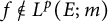
$ f \not \in L^p(E;m)$
for any
$p \in [1,\infty ]$
. We emphasize that the integrability exponents
$p_n, q_n, r_n$
are allowed to vary for functions of
${\mathfrak{A}}$
(see also Section 7.1).














Theorem 6.4 Let
$f \in {\mathfrak{A}}$
 and
$\{f_n\}$
 be an
${\mathfrak{A}}$
 -approximating sequence of f. Let
$\{\textsf {A}_t^n\}$
 and
$\{\textsf {A}_t\}$
 be PCAFs corresponding to
$f_n m$
 and
$f m$
 , respectively. Then there exists a subsequence
$\{f_{n_k}\}$
 of
$\{f_n\}$
 such that

Proof Take
$\varepsilon> 0$
 and
$T> 0$
 . For
$\nu \in { {\mathcal {S}}_{c,00}^1}$
 , we have

Here
$1_{F_n} \cdot \textsf {A}_t ^n = \int _0 ^t 1_{F_n} (X_s) f_n (X_s) d s$
 . We start with
$\text {(II)}$
 . By Chebyshev’s and Hölder’s inequalities,

By Lemma 4.2,

Hence
$\text {(II)}$
 tends to
$0$
 as
$n \to \infty $
 by the assumption (Aa) in Definition 6.2.
Next we consider
$\text {(I)}$
 . First we assume (Ab1). Put
$\Gamma _k = F_{k+1} \setminus F_k$
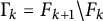 . Then, by the Chebyshev inequality,

We obtain by the Hölder inequality and Lemma 4.2,

where
$C_1 := { \sup _{k \in {{\mathbb {N}}}} e^{T/q_k} T^{1/q_k^{\prime }}} < \infty $
 by virtue of
$ 1/q_k,\ 1/q^{\prime }_k \in (0, 1]$
 . On the other hand, we can also estimate as follows:

Hence, by (Ab1) we can see the following:

We next assume (Ab2). By the Chebyshev inequality,

where we use the Jensen inequality for the last inequality on account that
$e^{-s} ds$
 is the probability measure on
$(0,\infty )$
 . Thus we can estimate (I) as follows:

For
$\text {(III)}$
 , using the similar arguments to
$\text {(II)}$
 with (Ac2), we can obtain that
$\text {(III)}$
 tends to
$0$
 as
$n \to \infty $
 .
Thus, we know that

Therefore, applying the first Borel–Cantelli lemma and Theorem 2.1, we obtain the theorem.
Note that, for a sequence of functions
$\{f_n\}$
 and f satisfying the conditions of Theorem 6.4, it is not clear in general whether the measures
$\{\mu _n\}:=\{f_nm\}$
 and
$\mu :=fm$
 satisfy the conditions of Theorem 5.1 or not.
We now consider the special case that, for a sequence of densities
$\{f_n\}$
 and f, the functions
$f_n$
 converges to f in
$L^p(E;m)$
 strongly for some
$p\ (1 \le p < \infty )$
 . In this case, we can directly prove the convergence of PCAFs, not using the class
${\mathfrak{A}}$
 and an increasing sequence of closed sets
$\{F_n\}$
 . Also we would like to emphasize that the convergence of PCAFs holds by Theorem 4.1.
Proposition 6.5 Let
$1 \le p < \infty $
 and
$f_n, f \in L^p(E;m) \cap {\mathcal {B}}_+(E)$
 for
$n \in {\mathbb {N}}$
 . Put
$\mu _n = f_n m$
 and
$\mu = f m$
 . Assume that
$f_n \to f$
 in
$L^p$
 . Then there exists a subsequence
$\{n_k\}$
 such that

Proof Assume that
$1 \le p < \infty $
 and take any
$\nu \in {\mathcal {S}}_{c,00}^1$
 .
Case I.
$2 < p < \infty $
 : For any
$\varepsilon> 0$
 and
$T> 0$
 , by making use of the Chebyshev inequality and then the Jensen inequality (since
$p/2> 1$
 ), we have

where
$C_2 := e^T T^{p/2 - 1}/\varepsilon ^{p/2}$
 . Note here that
$|f_n - f|^{p/2} \in L^2(E; m)$
 since
$f_n$
 and f belong to
$L^p(E;m)$
 . So, by the Schwarz inequality,

and the last term goes to
$0$
 as
$n \to \infty $
 (uniformly in
$\nu $
 ).
Case II.
$1 \le p \le 2$
 : For any
$\varepsilon> 0$
 and
$T> 0$
 , similar to the previous case, we see from the Chebyshev and Jensen inequality and (4.1),


7 Some examples and remarks
7.1 A class of absolutely continuous smooth measures
As mentioned in Remark 6.3, we can construct approximating sequences
$\{f_n\}$
 and
$\{F_n\}$
 for
$f\in L^p(E;m)\cap {\cal B}_+(E) \ (1\le p<\infty )$
 . This means that
$L^p(E;m)\cap {\cal B}_+(E) \subset {\mathfrak{A}}$
 for
$1\le p<\infty $
 . In this subsection, we introduce several examples of functions having some singularities so that they satisfy Definition 6.2. Hence for such examples we obtain the compactness of Revuz map by Theorem 6.4. To this end, let
$\textsf {M} = ({\mathbb P}_x,X_t)$
 be the Brownian motion on
${\mathbb R}^d$
 and
$m(dx)=dx$
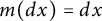 the Lebesgue measure on
${\mathbb R}^d \, (d\ge 2)$
 . We start with a simple example.
Example 7.1 Assume
$\beta \in {\mathbb R}$
 . Let

Put
$K_n=\{ x\in {\mathbb R}^d : 1/n \le |x| \le n\}$
 for
$n\in {\mathbb N}$
 . Then we see that
$\{K_n\}$
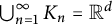
 is an increasing sequence of compact sets so that
$\bigcup _{n=1}^\infty K_n={\mathbb R}^d$
 q.e. and
$f\in L^1(K_n)$
 for
$n\ge 1$
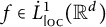
 . So
$f \in \dot {L}^1_{\textsf {loc}}({\mathbb R}^d)$
 , and
$f m =|x|^{-\beta }m \in {\mathcal S}$
 by Lemma 6.1 (see also [Reference Fukushima, Oshima and Takeda7, p. 239, Example 5.1.1]). Of course we know
$f\in L^1_{\textsf {loc}}({\mathbb R}^d)$
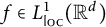 if
$\beta <d$
 .
On the other hand, assume
$0<\beta <d$
 . Then
$f\in L^1_{\textsf {loc}}({\mathbb R}^d)$
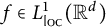 but
$ f \not \in L^p(\mathbb {R}^d)$
 for any
$p \in [1,\infty ]$
 . We now put
$F_n = \{ x \in {\mathbb {R}^d} : |x| \leq n \}$
 and set
$ f_n = 1_{F_n} f$
 for
$n \ge 1$
 . Noting that
$f,\ f_n \in L_{\textsf {loc}}^{1}({\mathbb {R}^d}) \cap {\mathcal {B}} _+ ({\mathbb {R}^d})$
 and
${\mathbb R}^d=\bigcup _{n=1}^\infty F_n$
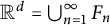 , we see that
$f\in {\mathfrak{A}}$
 and
$\{ f_n \}$
 is an
${\mathfrak{A}}$
 -approximating sequence of f with
$\{F_n\}$
 as an increasing sequence of closed sets. Indeed, (Aa) (resp. (Ab1) and (Ab2)) is satisfied for any
$p_n\in [1, \infty )$
 (resp. for any
$q_n \in [1,\infty )$
 and
$C>1$
 ) since
$f-f_n=0$
 on
$F_n$
 (resp.
$f_n=0$
 on
${\mathbb R}^d\setminus F_n$
 ) hold for all
$n\ge 1$
 . As for (Ac), set
$r_n = \frac {d+1}\beta \, (>1)$
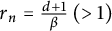 for
$n\ge 1$
 . Then it follows that

for any
$C>1$
 .
We introduce another example for which the approximating sequence of parameters varies (
$\{r_n\}$
 , in this case).
Example 7.2 We put

where
$K_n = \big \{ x\in {\mathbb R} : n \le |x| < n+1 \big \}$
 for
$n\ge 1$
 . Then
$f\not \in L^p({\mathbb R}^d)$
 for
$1\le p\le \infty $
 but
$f\in L^1_{\textsf {loc}}({\mathbb R}^d)\cap {\mathfrak{A}}$
 . We first show that
$f\not \in L^p({\mathbb R}^d)$
 for
$1\le p<\infty $
 . When
$p=1$
 ,

When
$1<p<\infty $
 ,

As for the locally integrability of f, it is enough to see the integrability around the origin:

We now show
$f\in {\mathfrak{A}}$
 . To this end, put
$F_n=\{ x\in {\mathbb R}^d : |x| \le n\}$
 ,
$p_n=q_n=1$
 ,
$r_n=\log (n+1)$
 and set
$f_n=f 1_{F_n}$
 for
$n \ge 1$
 . As in the previous examples, we see that
$\|f-f_n\|_{L^{p_n}(F_n)}=\|f_n\|_{L^{q_n}(F_n^c)}=0$
 for any
$n\ge 1$
 , hence (Aa) and (Ab2) hold. We finally show (Ac1). Let
$C>1$
 . Then for any
$n \ge 2$
 ,

because
$d\ge 2$
 .
We noted in Remark 6.3 that the condition (Ab1) (resp. (Ab2)) is not necessarily stronger than (Ab2) (resp. (Ab1)) and so are the conditions (Ac1) and (Ac2). The following example shows such a situation indeed happens for the conditions (Ac1) and (Ac2).
Example 7.3
-
(i) Set $f(x)=|x|^{-1} 1_{B(0,1)^c}(x), \ x\in {\mathbb R}^d$
. Then we find that the condition (Ac2) holds but not (Ac1) for
$r_n=d+1$
and
$F_n=\{|x|\le n\}$
. In fact, similar to (7.1), we see that, for any
$C>1$
and
$n\ge 1$
, $$ \begin{align*}C^{r_n} \|f\|_{L^{r_n}(F_n^c)}^{r_n} = C^{d+1} \int_{|x|\ge n} |x|^{-d-1}dx = c_d C^{d+1} \int_n^\infty u^{-2}du \to 0 \quad (n\to\infty) \end{align*} $$holds, and then (Ac2) is satisfied. As a result, it follows $f\in {\mathfrak A}$
. But we see (Ac1) fails since, for any
$n\ge 1$
, $$ \begin{align*} \sum_{k=n}^\infty \|f\|_{L^{r_k}(F_{k+1}\setminus F_k)} & = \sum_{k=n}^\infty \Big(\int_{k<|x|\le k+1} |x|^{-d-1}dx \Big)^{1/(d+1)} \\ & = \sum_{k=n}^\infty \Big(\frac{c_d}{k(k+1)}\Big)^{1/(d+1)} \ge c_d^{1/(d+1)} \sum_{k=n}^\infty (k+1)^{-2/(d+1)} =\infty \end{align*} $$and $m(F_{k+1}\setminus F_k)=\textsf {vol}(\{ k<|x|\le k+1\}) \ge c_d k^{d-1}>1$
for
$k\ge 1$
.
-
(ii) Put $\displaystyle f(x)=\sum _{k=1}^\infty |x|^d 1_{K_{2k-1}}(x) + \sum _{k=1}^\infty |x|^{-d} 1_{K_{2n}}(x), \ x\in {\mathbb R}^d$
, where $$ \begin{align*}\left\{ \begin{array}{rl} K_{2k-1} & := \Big\{x\in {\mathbb R}^d : \ (2k-1)^{1/d} < |x| \le \big(2k-1 +(2k-1)^{-3}\big)^{1/d} \Big\}, \\ & \\ K_{2k} & := \Big\{x\in {\mathbb R}^d : \ (2k)^{1/d} < |x| \le \big(2k +(2k)^{-\delta \log(2k+2)}\big)^{1/d} \Big\} \\ \end{array} \right. \end{align*} $$for $k\ge 1$
and for some
$\delta>1$
. Then, for
$F_n=\{|x|\le n^{1/d} \}$
and
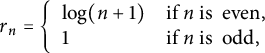
$r_n= \left \{ \begin {array}{ll} \log (n+1) & \text {if} \ n\ \text {is \ even}, \\ 1 & \text {if} \ n \ \text {is \ odd}, \\ \end {array} \right. $
we see that the condition (Ac1) holds but (Ac2) fails. Take any
$C>1$
and any even number
$n\ge 1$
, namely
$n=2m$
for any
$m \ge 1$
, then we see that $$ \begin{align*} C^{r_n} \|f\|_{L^{r_n}(F_n^c)}^{r_n} & =C^{\log (2m+1)} \int_{|x|>(2m)^{1/d}} |f(x)|^{\log(2m+2)}dx \\ & \ge C^{\log (2m+1)} \sum_{k\ge 2m \atop k=2\ell-1: \text{odd}} \ \ \int\limits_{ k^{1/d} < |x| \le (k+1/k^3)^{1/d}} |x|^{d\log(2m+2)}dx \\ & \ge c_d C^{\log (2m+1)} \sum_{\ell=m+1}^\infty (2\ell-1)^{\log(2m+2)-3} =\infty. \end{align*} $$Thus this means (Ac2) fails. On the other hand, for $n\ge 2$
, $$ \begin{align*} \sum_{k=n}^\infty \|f\|_{L^{r_k}(F_{k+1}\setminus F_k)} & =\sum_{k=n}^\infty \Big( \int\limits_{k^{1/d} < |x| \le (k+1)^{1/d}} |f(x)|^{r_k}dx \Big)^{1/r_k} \\ & = \sum_{k\ge n \atop k=2m}^\infty \Big( \int\limits_{(2m)^{1/d} < |x| \le (2m+1)^{1/d}} |f(x)|^{r_{2m}}dx \Big)^{1/r_{2m}} \\ & \qquad + \sum_{k\ge n \atop k=2m-1}^\infty \Big( \int\limits_{(2m-1)^{1/d} < |x| \le (2m)^{1/d}} |f(x)|^{r_{2m-1}}dx \Big)^{1/r_{2m-1}} \\ & = \sum_{k\ge n \atop k=2m}^\infty \Big( \int\limits_{K_{2m}} |x|^{-d\log(2m+2)}dx \Big)^{1/\log(2m+2)} + \sum_{k\ge n \atop k=2m-1}^\infty \Big(\int_{K_{2m-1}} |x|^d dx \Big) \\ & \le c_d \sum_{m=[n/2]}^\infty (2m)^{-\delta-1} + c_d \sum_{m=[(n+1)/2]}^\infty (2m+1) \cdot (2m-1)^{-3} \end{align*} $$goes to $0$
when
$n\to \infty $
, and hence, (Ac1) holds. We also see that f belongs to
${\mathfrak A}$
.













7.2 Remarks
In the following, we denote by
$\textsf {A}^{\mu }_t$
 the PCAF in the Revuz correspondence for
$\mu \in {{\mathcal {S}}}$
 . If
$\mu (dx)= f(x) m(dx)$
 for some
$f \in \dot {L}_{\textsf {loc}}^1(E;m) \cap {\mathcal {B}}_+(E)$
 , then
$\mu \in {{\mathcal {S}}} $
 and
$\textsf {A}^\mu _t = \int _0^t f(X_s)ds$
 by Lemma 6.1. In this subsection, we present two cases in which the corresponding PCAF
$\textsf {A}^{\mu }_t$
 can be concretely expressed when
$\mu \in {{\mathcal {S}}}$
 is not necessarily absolutely continuous with respect to m.
7.2.1 ODDP
Let
$\textsf {X} =[\Omega ^{\textsf {X}}, X_t, {\mathbb P}^{\textsf {X}}_x, \zeta ^{\textsf {X}}]$
 be an ODDP on an open interval
$I=(l_1,l_2)$
 with no killing inside I. It is well known that
$\textsf {X}$
 is characterized by a scale function
$s^{\textsf {X}}$
 and a speed measure
$m^{\textsf {X}}$
 , and a boundary condition (reflecting or absorbing) at
$l_i$
 if it is regular.
$s^{\textsf {X}}$
 is a strictly increasing continuous function on I and
$m^{\textsf {X}}$
 is a positive Radon measure on I with
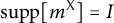
$\mbox {supp} [m^{\textsf {X}}]=I$
 .
$m^{\textsf {X}}$
 is identified with strictly increasing right continuous function induced by
$m^{\textsf {X}}$
 (cf. [Reference Itô and McKean9]).
We consider the following symmetric bilinear form
$({{\mathcal {E}}}^{\textsf {X}},{{\mathcal {F}}}^{\textsf {X}})$
 .

where
$I^*$
 is the interval extended by adding
$l_i$
 to I if
$l_i$
 is regular (i.e.,
$| s^{\textsf {X}}(l_i)| + | m^{\textsf {X}}(l_i)| < \infty $
 ) with reflecting boundary condition, and
$m^{\textsf {X}}$
 is extended to
$I^*$
 so that
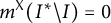
$m^{\textsf {X}}(I^* \setminus I)=0$
 :


Then
$({{\mathcal {E}}}^{\textsf {X}}, {{\mathcal {F}}}^{\textsf {X}})$
 is a regular, strongly local, irreducible Dirichlet form on
$L^2(I^*;m^{\textsf {X}})$
 corresponding to the ODDP
$\text {X}$
 , and each one point of
$I^*$
 has a positive capacity relative to
$({{\mathcal {E}}}^{\textsf {X}}, {{\mathcal {F}}}^{\textsf {X}})$
 ([Reference Chen and Fukushima2], [Reference Fukushima4], [Reference Fukushima5]). We denote the corresponding items for
$({{\mathcal {E}}}^{\textsf {X}}, {{\mathcal {F}}}^{\textsf {X}})$
 by
$\mbox {Cap}^{\textsf {X}}$
 ,
${{\mathcal {S}}}^{\textsf {X}}$
 ,
${{\mathcal {S}}}^{\textsf {X}}_0$
 ,
${{\mathcal {S}}}^{\textsf {X}}_{00}$
 , etc. In the same way as in [Reference Fukushima, Oshima and Takeda7, p. 75, Example 2.1.2], we obtain the following:

where
$g^{\textsf {X}}_1(x, y)$
 is the resolvent kernel corresponding to
$({{\mathcal {E}}}^{\textsf {X}}, {{\mathcal {F}}}^{\textsf {X}})$
 . We also note that the set
$\big \{ u(s^{\textsf {X}}(\cdot )): u \in C^1_c(J^*)\big \}$
 is a core of
$({{\mathcal {E}}}^{\textsf {X}},{{\mathcal {F}}}^{\textsf {X}})$
 , where
$J^*=s^{\textsf {X}}(I^*)$
 and
$C^1_c(A)$
 is the set of all
$C^1$
 -functions on A with compact support.
Let
$\mu $
 be a positive Borel measure on
$I^*$
 . Noting (7.4) and following the same argument as in [Reference Fukushima, Oshima and Takeda7, p. 75, Example 2.1.2], we see the following.

By virtue of [Reference Fukushima, Oshima and Takeda7, p. 166, Exercise 4.2.2], we see that

and, in this case,

is a quasi continuous and 1-excessive version of
$U^{\textsf {X}}_1 \mu $
 . By means of (7.5) and (7.6), we get
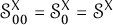
$ {{\mathcal {S}}}^{\textsf {X}}_{00}={{\mathcal {S}}}^{\textsf {X}}_0= {{\mathcal {S}}}^{\textsf {X}}$
 if
$|s^{\textsf {X}}(l_i)|+|m^{\textsf {X}}(l_i)|<\infty $
 and
$l_i$
 is reflecting for
$i=1$
 and 2.
We assume that X is conservative, that is,
$\zeta ^{\textsf {X}}=\infty $
 . Let
$\mu \in {{\mathcal {S}}}^{\text {X}}$
 . Employing [Reference Fukushima, Oshima and Takeda7, p. 230, Theorem 5.1.4], we have

where
$\ell ^{\textsf {X}}(t, x) $
 is the local time of X and it is continuous with respect to
$(t, x) \in [0,\infty ) \times I^*$
 and satisfies
$ \int _0^t 1_A(X_u)\, d u = \int _A \ell ^{\textsf {X}} (t , x)\,m^{\textsf {X}}(dx), \ t>0$
 , for every measurable set
$A \subset I$
 , where
$1_A$
 is the indicator for a set A ([Reference Itô and McKean9]). The relation (7.7) for one-dimensional Brownian motion is obtained in [Reference Fukushima, Oshima and Takeda7, p. 238, Example 5.1.1]. Let
$\mu _n,\ \mu \in {{\mathcal {S}}}^{\textsf {X}}$
 and assume
$\mu _n \to \mu $
 vaguely as
$n \to \infty $
 . By virtue of (7.7), we obtain the following.

7.2.2 Skew product diffusion processes
Let
$\textsf {X}=[\Omega ^{\textsf {X}}, X_t, {\mathbb P}^{\textsf {X}}_x, \zeta ^{\textsf {X}}]$
 be the ODDP as above, where
$ 0=l_1 <l_2 \leq \infty $
 and
$ l_1=0$
 is entrance in the sense of Feller, that is,
$\int _{(0, c)} m^{\textsf {X}} (dx) \int _{(x,c)} s^{\textsf {X}} (dy) <\infty $
 and
$\int _{(0, c)} s^{\textsf {X}} (dx) \int _{(x,c)} m^{\textsf {X}} (dy) =\infty $
 for
$ 0<c <l_2$
 . Let
$ \Theta =[\Omega ^\Theta , \Theta _t, {\mathbb P}^{\Theta }_\theta ]$
 be the spherical Brownian motion on
$ S^{d-1} \subset {{\mathbb {R}}}^d$
 with generator
$ \frac {1}{2} \Delta $
 ,
$\Delta $
 being the spherical Laplacian on
$ S^{d-1}$
 . The corresponding Dirichlet form
$({{\mathcal {E}}}^{\Theta },{{\mathcal {F}}}^{\Theta })$
 on
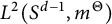
$L^2(S^{d-1}, m^{\Theta })$
 is obtained by Fukushima and Oshima [Reference Fukushima and Oshima6], where
$m^{\Theta }$
 is the spherical measure on
$S^{d-1}$
 . Let
$\nu $
 be a Radon measure on I and assume that
$\text {supp}[\nu ] = I := (l_1,l_2)$
 . Furthermore, we assume that
$\int _{(0,c)} | s^{\textsf {X}} (x)| \nu (dx)=\infty $
 , and
$ \int _{(c, l_2)} \nu (dx) <\infty $
 whenever
$s^{\textsf {X}}(l_2) + m^{\textsf {X}}(l_2)<\infty $
 . We set

Put
$ \Lambda := I^* \times S^{d-1}$
 and let
${\Xi } =[\Xi _t=(X_t, \Theta _{\textbf {f}(t)}), {\mathbb P}^{\Xi }_{\xi }= {\mathbb P}^{\textsf {X}}_x \otimes {\mathbb P}^{\Theta }_\theta ,\ \xi =(x,\theta ) \in \Lambda , \zeta ^\Xi ]$
 be the skew product of the ODDP X and the spherical Brownian motion
${\Theta }$
 with respect to the PCAF
$\{\textbf {f}(t)\}$
 . Let us consider the following bilinear form.

for
$f,g \in {{\mathcal {C}}}^{\Xi }$
 , where
${{\mathcal {C}}}^{\Xi }$
 is the set of all linear combinations of
$u^{(1)}(s^{\text {X}}(x)) u^{(2)}(\theta )$
 with
$u^{(1)} \in C_0^1(J^*)$
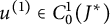 and
$u^{(2)} \in C^\infty (S^{d-1})$
 , where
$J^*=s^{\textsf {X}}(I^*)$
 . We put
$m^\Xi =m^{\textsf {X}} \otimes m^{\Theta }$
 . By using some results from [Reference Fukushima and Oshima6] and [Reference Okura11], we see that the form
$({{\mathcal {E}}}^{\Xi },{{\mathcal {C}}}^{\Xi })$
 is closable on
$ L^2( \Lambda ;m^\Xi )$
 , and the closure
$({{\mathcal {E}}}^{\Xi },{{\mathcal {F}}}^{\Xi })$
 is a regular irreducible Dirichlet form and it is corresponding to the skew product
${\Xi }$
 . We denote the corresponding items for
$({{\mathcal {E}}}^{\Xi }, {{\mathcal {F}}}^{\Xi })$
 by
${{\mathcal {S}}}^{\Xi }$
 ,
${{\mathcal {S}}}^{\Xi }_0$
 ,
${{\mathcal {S}}}^{\Xi }_{00}$
 , etc. We show the following.
Proposition 7.4 Let
$\mu ^{\textsf {X}}$
 be a positive Radon measure on
$I^*$
 . Put
$\mu ^\Xi (dx, d\theta ) =\mu ^{\textsf {X}} (dx) m_o(\theta ) m^{\Theta }(d\theta )$
 , where
$m_o$
 is a bounded measurable function on
$S^{d-1}$
 . Then the following hold
$:$

-
(1) $\mu ^\Xi \in {{\mathcal {S}}}^{\Xi }$
.In particular, if
$\textsf {X}$
is conservative and
$m_o=1$
, then (7.8) $$ \begin{align} \textsf{A}^{\mu^\Xi}_t= \int_{I^*} \ell^{\textsf{X}}(t, x) \mu^{\textsf{X}}( dx), \qquad {\mathbb P}^{\Xi}_{\xi} \text{-a.e.} \quad \xi \in \Lambda. \end{align} $$
-
(2) If $\mu ^{\textsf {X}} \in {{\mathcal {S}}}_0^{\textsf {X}}$
(resp.
${{\mathcal {S}}}_{00}^{\textsf {X}}$
), then
$\mu ^\Xi \in {{\mathcal {S}}}_0^{\Xi }$
(resp.
${{\mathcal {S}}}_{00}^{\Xi }$
).


We show this by means of the following lemma which can be easily shown from the fact that
${{\mathcal {C}}}^\Xi $
 is a core of
$({{\mathcal {E}}}^{\Xi }, {{\mathcal {F}}}^{\Xi })$
 , so we will omit its proof.
Lemma 7.5 Let V be a function on
$\Lambda $
 Put
$v(x)= \int _{S^{d-1}} V(x, \theta ) m_o(\theta ) m^{\Theta }(d \theta )$
 .
-
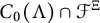
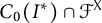
(1) If $V \in {{\mathcal {F}}}^\Xi $
(resp.
$ C_0(\Lambda ) \cap {{\mathcal {F}}}^\Xi $
), then
$ v \in {{\mathcal {F}}}^{\textsf {X}} $
(resp.
$ C_0( I^* ) \cap {{\mathcal {F}}}^{\textsf {X}}$
), and $$ \begin{align*} {{\mathcal{E}}}^{\textsf{X}}(v,v) \leq { c_d} \| m_o\|^2_{L^\infty(S^{d-1})} {{\mathcal{E}}}^\Xi(V,V),\qquad & \| v\|^2_{L^2(I^* , m^{\text{X}})}\leq { c_d} \| m_o\|^2_{L^\infty(S^{d-1})} \| V \|^2_{L^2(\Lambda, m^\Xi)}, \end{align*} $$where $c_d$
denotes the surface measure of
$S^{d-1}$
.
-
(2) Let $u \in {{\mathcal {F}}}^{\textsf {X}}$
. Then
$U(x, \theta ) :=u(x) \in {{\mathcal {F}}}^\Xi $
and
${{\mathcal {E}}}^\Xi _1 (U, U) =c_d {{\mathcal {E}}}_1^{\textsf {X}}(u, u)$
.In particular, if
$V \in {{\mathcal {F}}}^\Xi $
and
$m_o=1$
, then
$ {{\mathcal {E}}}^\Xi _1 (U, V) = {{\mathcal {E}}}_1^{\textsf {X}}(u,v)$
.









Proof of Proposition 7.4
(step 1) Let
$\mu ^{\textsf {X}} \in {{\mathcal {S}}}^{\textsf {X}}_0$
 and put
$\mu ^\Xi (dx, d\theta ) =\mu ^{\textsf {X}} (dx) m_o(\theta ) m^{\Theta }(d\theta )$
 . By means of Lemma 7.5, we get

for some positive constant C, which implies
$\mu ^\Xi \in {{\mathcal {S}}}_0^\Xi $
 . Assume that X is conservative and
$m_o=1$
 . We put
$C_t (\omega , \omega ^{\prime })= \int _{I^*} \ell ^{\textsf {X}}(t, x; \omega ) \mu ^{\textsf {X}}(dx)$
 for
$\omega \in \Omega ^{\text {X}},\ \omega ^{\prime } \in \Omega ^{\Theta }$
 . We show

Let
$\xi =(x,\theta ) \in \Lambda $
 . Noting [Reference Itô and McKean9, Section 5.4, (3)],

where the last equality follows from Lemma 7.5. Combining this with [Reference Fukushima, Oshima and Takeda7, p. 226, Theorem 5.1.2], we get (7.9).
(step 2) Let
$\mu ^{\textsf {X}} \in {{\mathcal {S}}}_{00}^{\textsf {X}}$
 . By means of (step 1),
$\mu ^\Xi \in {{\mathcal {S}}}^\Xi _0$
 . Then

Note
$U^\Xi _1 \mu ^\Xi \leq \| m_o \|_{L^\infty ( \Lambda; m^\Xi )} U^\Xi _1 \mu ^\Xi _o \ m^\Xi $
 -a.e., where
$\mu ^\Xi _o(dx d\theta ) = \mu ^{\textsf {X}} (dx) m^\Theta ( d \theta )$
 . As in (step 1),
$(U^{\textsf {X}}_1 \mu ^{\textsf {X}})(x) = (U^\Xi _1 \mu _o^\Xi )(x,\theta )$
 and hence
$ \| U^\Xi _1 \mu ^\Xi \|_{L^\infty (\Lambda ;m^\Xi )} \leq \| m_o \|_{L^\infty ( \Lambda ;m^\Xi )} \| U^{\textsf {X}}_1 \mu ^{\textsf {X}} \|_{ L^\infty ( I^*;m^{\textsf {X}})} < \infty $
 . Therefore
$ \mu ^\Xi \in {{\mathcal {S}}}^\Xi _{00} $
 .
(step 3) Let
$\mu ^{\textsf {X}} \in {{\mathcal {S}}}^{\textsf {X}}$
 . By means of [Reference Fukushima, Oshima and Takeda7, p. 85, Theorem 2.2.4], there exists a generalized compact nest
$ \{ F_n\}$
 satisfying
$ \mu ^{\textsf {X}}( I^* \setminus \bigcup _{n=1}^\infty F_n) =0$
 and
$\mu ^{\textsf {X}}_n := 1_{F_n} \mu ^{\textsf {X}} \in {{\mathcal {S}}}^{\textsf {X}}_{00}$
 for each n. Put
$F^\Xi _n = F_n \times S^{d-1}$
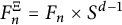 . Then
$\{ F^\Xi _n \}$
 is a generalized compact nest and
$ \mu ^\Xi ( \Lambda \setminus \bigcup _{n=1}^\infty F^\Xi _n )=0$
 . By (step 2),
$\mu ^\Xi _n (dx d \theta ) := 1_{F^\Xi _n}(x,\theta ) \mu ^\Xi (dx d\theta ) = 1_{F_n}(x)\mu ^{\textsf {X}}(dx) m_o(\theta ) \mu ^\Theta ( d \theta ) \in {{\mathcal {S}}}^\Xi _{00}$
 . Therefore
$\mu ^\Xi \in {{\mathcal {S}}}^\Xi $
 by means of [Reference Fukushima, Oshima and Takeda7, p. 85, Theorem 2.2.4].
Assume that X is conservative and
$m_0=1$
 . We show (7.8). We first note that, by (step 1) and (step 2),

uniformly in
$t \in [0, T]$
 ,
$T \in (0, \infty )$
 as
$n \to \infty \ {\mathbb P}^\Xi _\xi $
 -a.s.,
$\xi \in \Lambda $
 . Let f be a bounded continuous function on
$\Lambda $
 and
$ h \in {{\mathcal {B}}}^+(\Lambda )$
 .

This shows (7.8).
By means of (7.8), we get the following.
Proposition 7.6 Let
$\mu ^{\textsf {X}}_n,\ \mu ^{\textsf {X}} $
 be positive Radon measures on
$I^*$
 and put
$\mu ^\Xi _n(dx, d\theta ) =\mu ^{\textsf {X}}_n (dx) m^{\Theta }(d\theta )$
 ,
$\mu ^\Xi (dx, d\theta ) =\mu ^{\textsf {X}} (dx) m^{\Theta }(d\theta )$
 . Assume that
$\textsf {X}$
 is conservative and
$\mu ^{\textsf {X}}_n \to \mu ^{\textsf {X}} $
 vaguely as
$ n \to \infty $
 . Then

Remark 7.7 We stress here that, in cases of the ODDP and the skew product diffusion process, without taking a subsequence, the full sequence of PCAFs converge, on account of the fact that the PCAFs are expressed directly as the integrals of the local time with respect to their smooth measures.
Acknowledgements
We would like to thank Professor M. Takeda for the useful discussion and continuous encouragement. We also thank the anonymous referees for their helpful comments and suggestions, which improved the exposition of our article.


