



Major depressive disorder is the third largest source of disease burden worldwide and is projected to be the first largest by 2030, impairing productivity, social functioning and overall health, reducing life expectancy and burdening healthcare systems. Reference Malhi and Mann1,Reference Lundberg, Cars, Lööv, Söderling, Sundström and Tiihonen2 Treatment-resistant depression can be considered to be a subset of major depression disorder that does not respond to either traditional or first-line therapeutic options, although precise definitions of treatment-resistant depression may vary across different studies and countries. Reference Gaynes, Lux, Gartlehner, Asher, Forman-Hoffman and Green3 The most recent consensus definition of treatment-resistant depression is that patients receive at least two treatment courses using confirmed doses and durations (4–6 weeks) but do not show optimal response. Reference Gaynes, Lux, Gartlehner, Asher, Forman-Hoffman and Green3–Reference Sforzini, Worrell, Kose, Anderson, Aouizerate and Arolt5 Patients with treatment-resistant depression have elevated all-cause mortality, at 23%, and the main cause of death is suicidal behaviour. Reference Lundberg, Cars, Lööv, Söderling, Sundström and Tiihonen2
Treatment modalities for treatment-resistant depression usually require multidisciplinary coordination involving multiple treatment options. Reference Voineskos, Daskalakis and Blumberger6 However, there is limited evidence on available drugs for the treatment of patients with treatment-resistant depression. Augmentation with atypical antipsychotic medications has been reported to be a tolerable, safe and effective means of controlling treatment-resistant depression and reducing suicidal behaviour. Reference Voineskos, Daskalakis and Blumberger6,Reference Goodwin, Aaronson, Alvarez, Arden, Baker and Bennett7 However, evidence for this approach has been based on studies with relatively small cohort sizes and inconclusive results. Reference Nunez, Joseph, Pahwa, Kumar, Resendez and Prokop8 Therefore, in the present study, we used a nationwide population-based data source to assess the effectiveness of augmentation therapy with antipsychotics in patients with treatment-resistant depression by evaluating the risks of suicide attempt and suicide death. We used a target trial emulation framework to improve inference of causality. Conventional study designs, in which patients are followed starting from the drug initiation date, may be subject to treatment time-lag bias, Reference Dai, Ports, Corrada, Odegaard, O’Connell and Jiang9 particularly given that the interval from failure of second-line treatment to initiation of third-line treatment differs between those receiving antipsychotic augmentation and those receiving third-line antidepressants. Such differences may introduce bias, as the time before the follow-up period during which no event can occur is informative. To address these methodological issues, we implemented a clone-censor-weight approach in our target trial emulation.
Methods
Design
We used Taiwan’s National Health Insurance Research Database (NHIRD) for this study. The details of the NHIRD have been described elsewhere. Reference Hsieh, Su, Shao, Sung, Lin and Kao Yang10 Briefly, the database is derived from Taiwan’s national health insurance programme, which covers approximately 23 million individuals (nearly 100% of the population), and de-identified longitudinal medical and prescription information is made available for research purposes. Reference Hsieh, Su, Shao, Sung, Lin and Kao Yang10 The NHIRD completely captures all records of antipsychotic and antidepressant use, because these drugs are reimbursed by the insurance programme. Reference Man, Shao, Chaiyakunapruk, Dilokthornsakul, Kubota and Li11,Reference Tsai, Chang, Lin, Lin, Shao and Lai12 The death data used in our study were compiled from Taiwan’s National Cause-of-Death Card and Death Certificate registries. These sources serve as the primary repositories of information for statistics used for registration and administrative purposes in Taiwan. For our study, the integrity of the data linkage was considered to be high, as the data custodian could link to the National Cause of Death Registry using the patients’ original encrypted identifiers. Reference Huang, Yang, Tsai, Shao, Lin and Lai13
Patient population
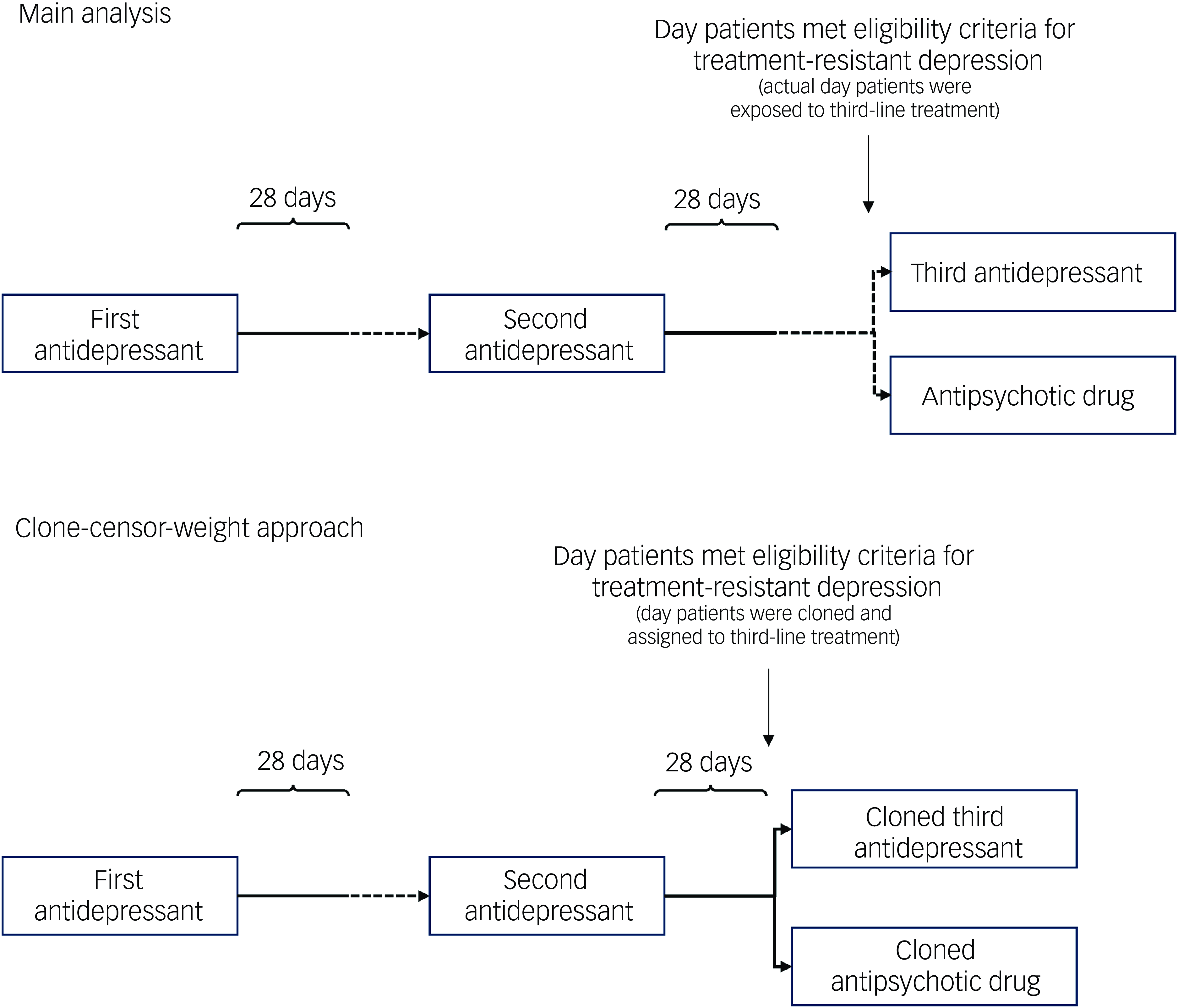
We emulated an open-label, pragmatic, randomised controlled trial. Reference Abrahami, Pradhan, Yin, Honig, Baumfeld Andre and Azoulay14,Reference Matthews, Danaei, Islam and Kurth15 The specifications of the trial emulation using the NHIRD are presented in Supplementary Table 1, available at https://doi.org/10.1192/bjp.2024.283. Specifically, we included patients with at least one diagnosis of depression during the period from 2009 to 2020, identifying the diagnosis using codes from the ICD, Clinical Modification, Ninth or Tenth Revision. Following a previous study, Reference Cepeda, Reps, Fife, Blacketer, Stang and Ryan16 we defined patients with treatment-resistant depression as those who had received at least two antidepressants plus antipsychotic augmentation or third-line antidepressants in the past 12 months. We only considered those who had received at least two different types of antidepressant for more than 28 days each to represent cases of treatment-resistant depression. The 28-day criterion was to ensure that the use of the antidepressant was for depression and not for other indications. In addition, to further ensure that antipsychotics were being prescribed for treatment-resistant depression, we excluded patients with competing diseases such as dementia, schizophrenia, bipolar disorder, and alcohol or drug misuse. We assigned participants to the antipsychotic or the antidepressant group on the basis of their first prescription for antipsychotic augmentation or third-line antidepressants and defined the index date as the first day on which they received antipsychotics or antidepressants. Figure 1 presents the timeline for participants first meeting the eligibility criteria for treatment-resistant depression.
Timeline for patients first meeting the eligibility criteria for treatment-resistant depression in clone-censor-weight approach.

Outcome events and patient follow-up
The primary outcomes were (a) suicide attempt and (b) suicide death. The secondary outcomes were (a) cardiovascular death and (b) all-cause mortality. As described above, the death data were comprehensive, and their validity has been confirmed with high accuracy in previous studies. Reference Huang, Chen, Chang, Kuo and Chen17 Suicide death was identified through death type classification within the death registry. Details of the diagnostic codes used are summarised in Supplementary Table 2. We followed the study populations from the index date until the occurrence of the study outcome, death of the participant or the end of the study period (31 December 2020). This as-started analysis could be considered to be analogous to an intention-to-treat analysis in a trial to strengthen causal inference between study exposures and outcomes. Reference Kutcher, Brophy, Banack, Kaufman and Samuel18
Covariates and confounders
We selected covariates on the basis of literature review and expert opinions. Reference Rybak, Lai, Ramasubbu, Vila-Rodriguez, Blumberger and Chan4 We captured the baseline covariates within a year before the index date, including participants’ age and sex, duration of depression, comorbidities and related co-medications. Complete code lists for depression, exclusion criteria, antipsychotics, antidepressants and covariates are provided in Supplementary Table 2.
Statistical analysis
We used propensity score matching to mimic randomisation between the antidepressant and antipsychotic users, Reference Austin19 so that participants in the two groups were assigned similar probabilities of treatment. The propensity score matching estimated the average treatment effect in the treated population. Reference Austin19 Differences in baseline characteristics were evaluated using the standardised mean difference, with a value of less than 0.1 indicating a negligible difference. To address the issue of competing events, we used both the Fine and Gray models and cause-specific Cox proportional hazards models, with deaths treated as censoring events, to estimate sub-distribution hazard ratios and cause-specific hazard ratios, Reference Austin, Lee and Fine20 respectively.
For the clone-censor-weight approach (Supplementary Fig. 1), we allowed a 6-month grace period during which treatment strategies were assigned. We then created a clone of the original cohort, with each clone assigned to one of the two treatment strategies. Participants were assigned to either an antipsychotic or a third-line antidepressant after their second antidepressant, the point at which their condition was defined as treatment-resistant depression. The 6-month period served as the grace period for the clone-censor-weight to minimise time-lag bias. We censored clones when the patient’s actual treatment was no longer consistent with the assigned strategy. To adjust for the selection bias induced by this artificial censoring, each individual received a time-varying inverse probability of censoring weight. Each weight was independently calculated as the inverse probability of not being censored, using regression models based on the variables specified in Table 1. The outcome model included treatment as the independent variable, together with follow-up time, its quadratic term, and an interaction term between exposure status and follow-up time, accounting for time-varying weights. The 95% confidence intervals for the approximate hazard ratios were obtained by weighted pooled logistic regression using non-parametric bootstrapping with 100 samples, each consisting of 40 000 individuals.
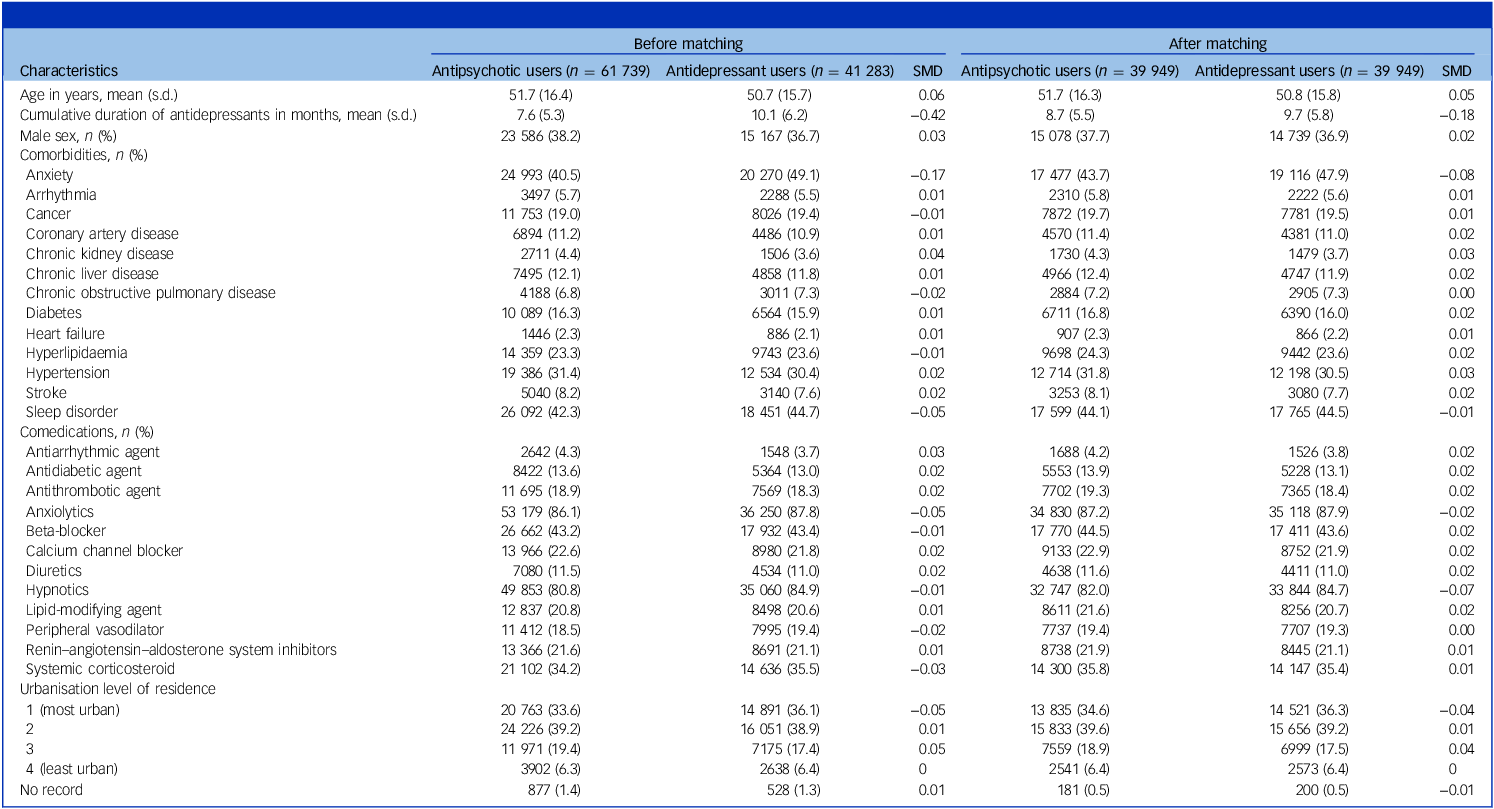
Baseline characteristics of the antipsychotic and antidepressant users after propensity score matching

SMD, standardised mean difference.
Sensitivity analyses
We used on-treatment analysis as an analogue of per protocol analysis in a trial to examine the possible effects of the treatment changes. The follow-up for the on-treatment analysis was similar to that of as-started analysis, but we also censored those who discontinued antipsychotic treatment or switched to another antipsychotic. We defined discontinuation as receiving no refill of antipsychotics for more than 90 days after the last day of the previous prescription. In the clone-censor-weight approach, we shortened the grace period from 6 months to 3 months; this reduced the number of antipsychotic initiators and also the patient-time overlaps between the two treatment groups. We conducted several subgroup analyses on the primary outcome, based on participants’ age, sex, previous admission for major depressive disorder within the past year, duration of previous two antidepressant courses, cardiovascular disease history, cardiovascular risk factors and prior suicide attempt history, to compare antipsychotic and antidepressant users. We also further restricted outcomes using in-patient or emergency records. Data management and statistical analyses were performed using SAS, version 9.4 (SAS Institute Inc., Cary, NC).
Ethics statement
The study protocol was approved by the Institutional Review Board of National Cheng Kung University (NCKU; protocol no. NCKU HREC-E-110-453-2). The authors attest that they have obtained appropriate permissions and paid any required fees for the use of copyright-protected materials.
The lead authors (the manuscript’s guarantor) affirm that the manuscript is an honest, accurate, and transparent account of the study being reported; that no important aspects of the study have been omitted; and that any divergences from the study as planned (and, if relevant, as registered) have been explained.
Dissemination to participants and related patient and public communities
The authors plan to submit the accepted manuscript to the NCKU Hospital, NCKU College of Medicine, and Taiwan Food and Drug Administration to apply for publication in their press releases. They will also write a post on the official website of NCKU School of Pharmacy, which will tag all members in the research groups on Facebook and X.
Results
Baseline characteristics
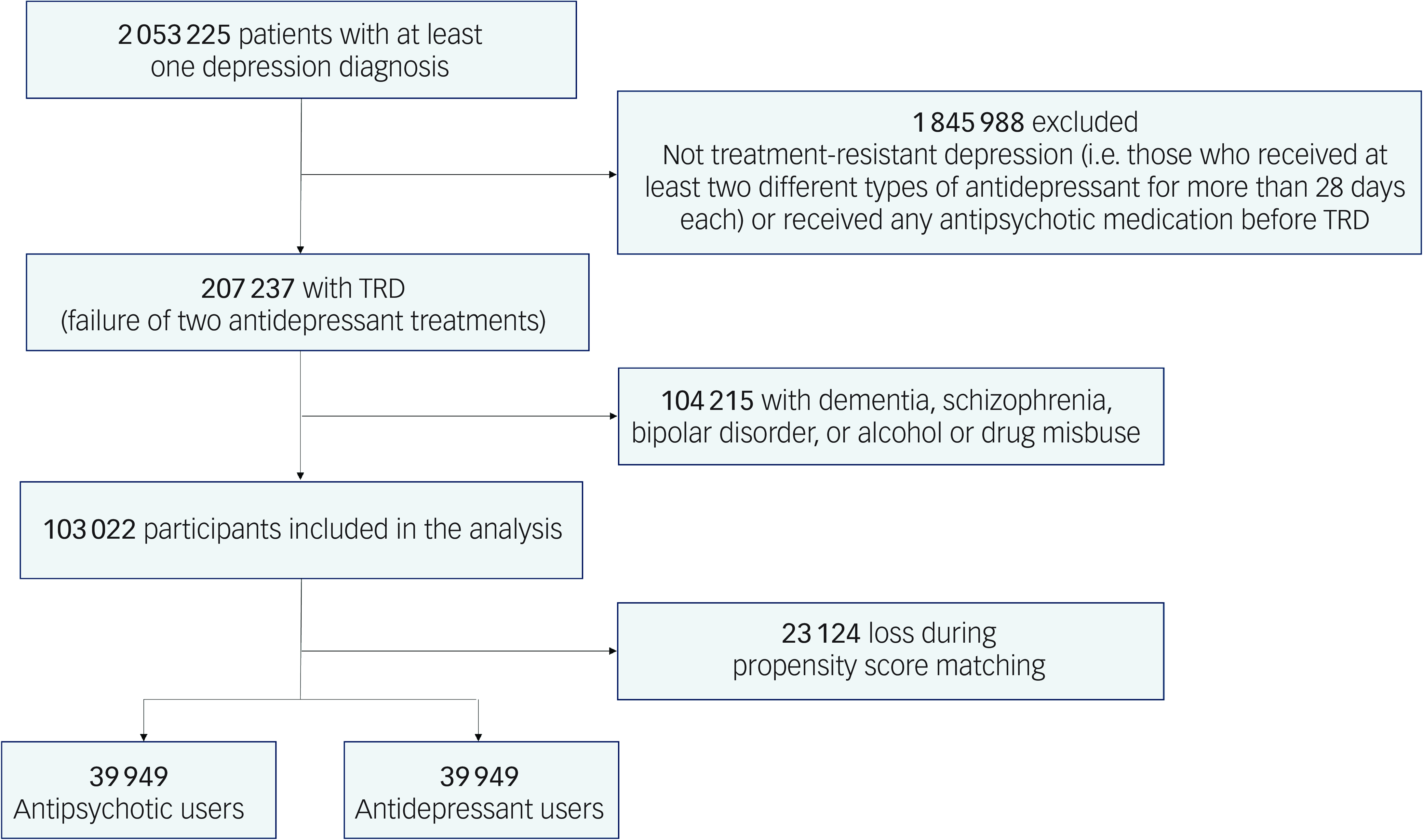
We included a total of 103 022 patients who had received at least two antidepressants in the past 12 months before receiving another antidepressant or antipsychotic. Of these, 61 739 patients had received augmentation with antipsychotics and 41 283 had received further antidepressants. From these initial totals, we matched 39 949 patients in each group using propensity scores (Figure 2). Table 1 presents the baseline characteristics of these antipsychotic and antidepressant users. The overall mean follow-up duration was 4.4 ± 3.5 years. The mean age of the patients was 51.2 ± 16.0 years, and slightly more than one-third were male (n = 37.3%). Most of the baseline characteristics were appropriately balanced between the treatment groups after propensity score matching. Specifically, the antipsychotic users had a shorter cumulative mean duration of their two previous antidepressant courses (8.7 ± 5.5 v. 9.7 ± 5.8 months). Supplementary Fig. 2 presents the propensity score matching distribution for the antipsychotic and antidepressant users.
Flowchart of study population selection. TRD, treatment-resistant depression.

Risk of suicide attempt and suicide death
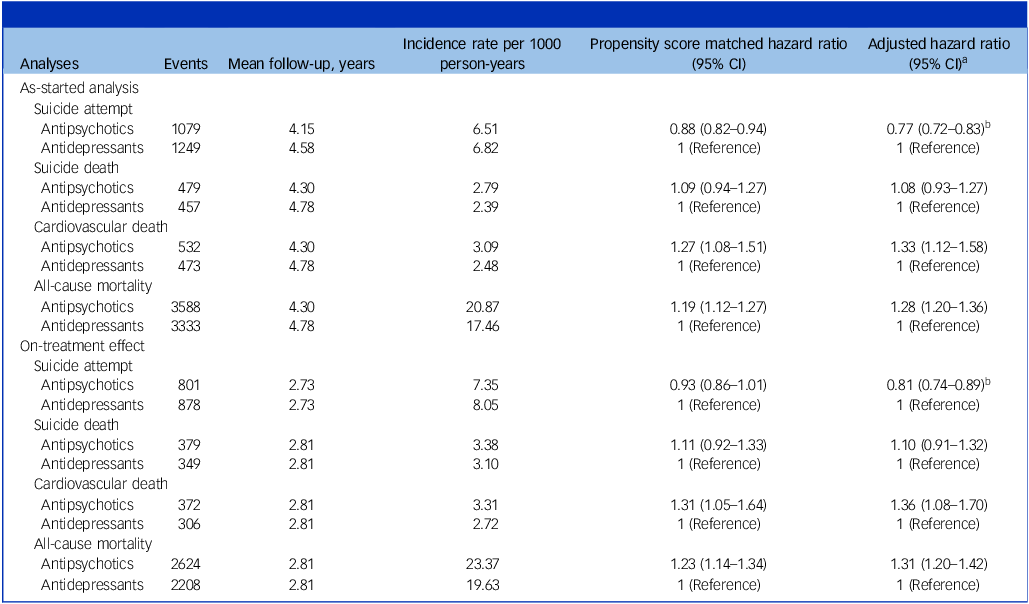
We found a lower cumulative incidence of suicide attempt in antipsychotic users than in antidepressant users after propensity score matching (Supplementary Fig. 3a). The overall incidence of suicide attempt was 6.51 per 1000 person-years for antipsychotic users and 6.82 per 1000 person-years for antidepressant users. Compared with antidepressants, antipsychotics were associated with a reduced risk of suicide attempt (sub-distribution hazard ratio 0.77, 95% CI 0.72–0.83; cause-specific hazard ratio 0.78, 95% CI 0.71–0.87). Under the clone-censor-weight approach, of 47 648 (46.3%) participants initiated antipsychotics, whereas 55 374 (53.7%) did not, over a 6-month grace period following the first and second antidepressant treatment. Supplementary Table 3 presents the pattern of antipsychotic initiation over the grace period. After time-lag bias had been addressed, the approximate hazard ratio was 1.06 (95% CI 0.89–1.29), compared with antidepressant users.
In the analyses with propensity score matching, we observed no increase in the risk of suicide death in antipsychotic users (adjusted hazard ratio 1.08; 95% CI 0.93–1.27); the cumulative incidence was 2.79 per 1000 person-years for antipsychotic users and 2.39 per 1000 person-years for antidepressant users (Supplementary Fig. 3b). Table 2 presents the cumulative incidences, propensity score matched hazard ratios and adjusted hazard ratios. Under the clone-censor-weight approach, a similar trend showed no decrease in the risk of suicide death in antipsychotic users (hazard ratio 1.22; 95% CI 0.91–1.71).
Results of the primary and on-treatment analyses for antipsychotic and antidepressant users

a. The cumulative duration of antidepressants was adjusted in the regression model.
b. Suicide attempt was estimated by Fine and Gray models, whereas suicide death, cardiovascular death and all-cause mortality were estimated by Cox proportional hazards model, for antipsychotic and antidepressant users after propensity score matching.
All-cause mortality and cardiovascular death
We found a higher cumulative incidence of cardiovascular death and all-cause mortality in antipsychotic users than in antidepressant users, after propensity score matching (Supplementary Figs 3c and d). The overall incidence of all-cause mortality was 20.87 per 1000 person-years for antipsychotic users and 17.46 per 1000 person-years for antidepressant users. Compared with antidepressants, antipsychotics were associated with a higher risk of all-cause mortality (adjusted hazard ratio 1.28; 95% CI 1.20–1.36). The trend for cardiovascular death was similar. Compared with antidepressant users, we observed an increased risk of cardiovascular death in antipsychotic users (adjusted hazard ratio 1.33; 95% CI 1.12–1.58); the cumulative incidence was 3.09 per 1000 person-years for antipsychotic users and 2.48 per 1000 person-years for antidepressant users.
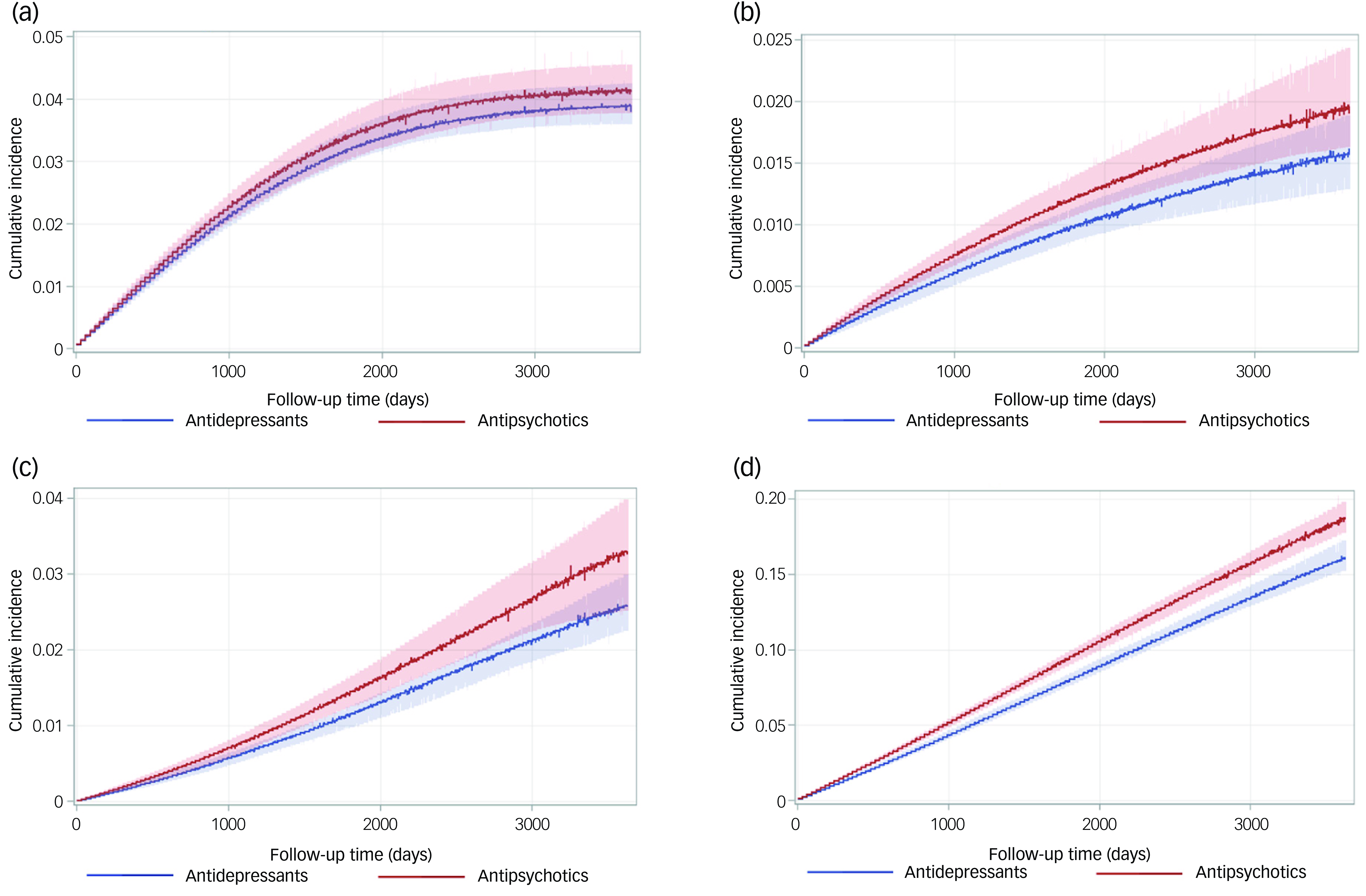
Using the clone-censor weight approach, we observed increased risks of all-cause mortality (hazard ratio 1.21; 95% CI 1.07–1.33) and cardiovascular death (hazard ratio 1.25; 95% CI 0.95–1.59) in antipsychotic users. Figure 3 presents the cumulative incidence curves for suicide attempt, suicide death, cardiovascular death and all-cause mortality using the clone-censor-weight approach.
Cumulative incidence curves for (a) suicide attempt, (b) suicide death, (c) cardiovascular death and (d) all-cause mortality, using the clone-censor-weight approach.

Results of subgroup analyses
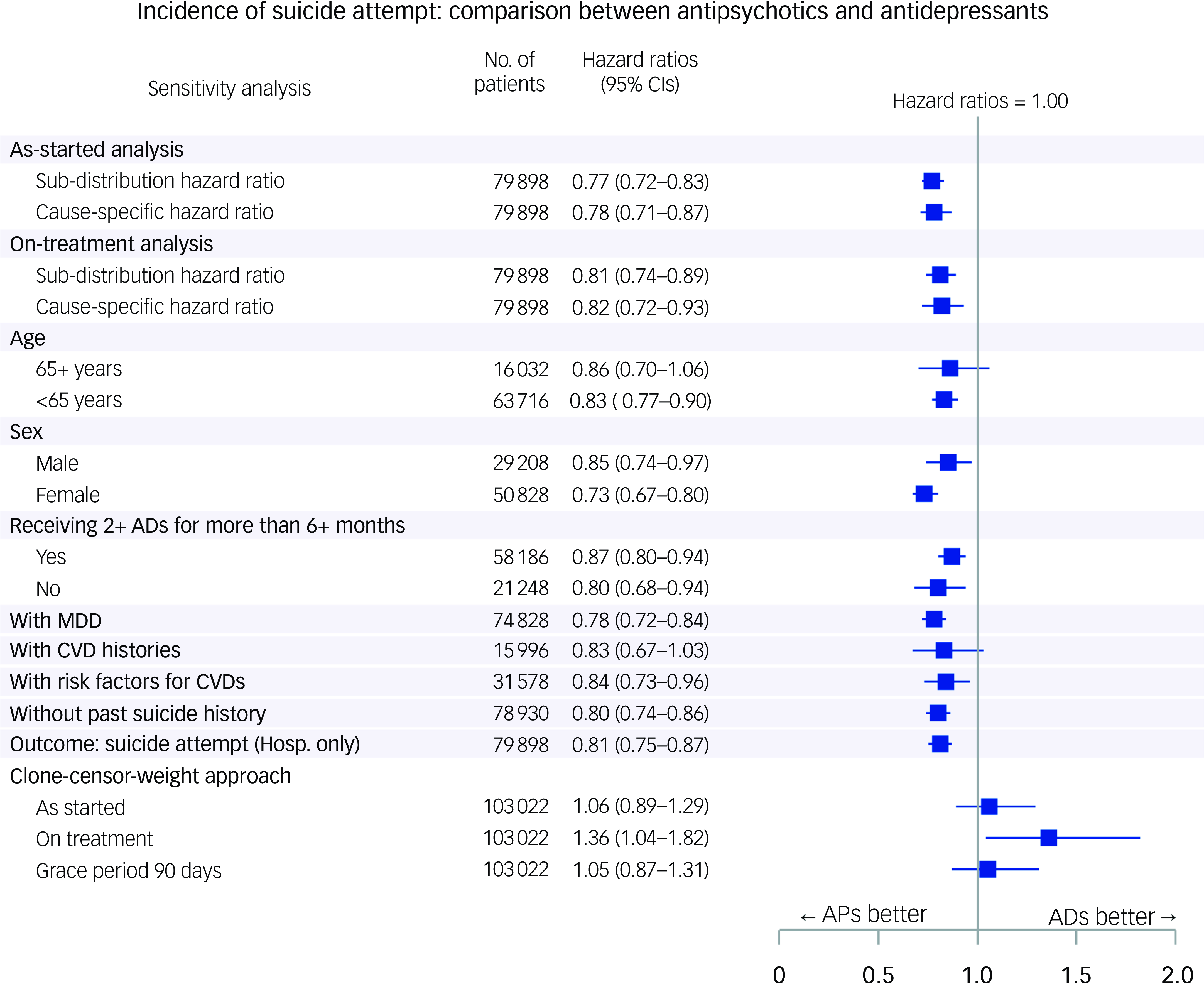
We observed a reduced risk of suicide attempt across various subgroups including age, sex, major depressive disorder, admission, duration of two prior antidepressant courses, cardiovascular disease history and cardiovascular risk factors, and even among those without previous suicide attempt history.
Results of sensitivity analyses
The reduction in risk was eliminated when we applied the clone-censor-weight approach. We did not observe any reduced risk of suicide attempt (hazard ratio 1.36; 95% CI 1.04–1.82) in antipsychotic users with the on-treatment design. When we changed the grace period from 6 months to 3 months, the results were similar, showing no reduced risk of suicide attempt in antipsychotic users (hazard ratio 1.05; 95% CI 0.87–1.31). Detailed results from the sensitivity analyses for antipsychotic and antidepressant users are presented in Fig. 4 and Supplementary Figs 4–6.
Analysis of the risk of suicide attempt in antipsychotic and antidepressant users. CVD, cardiovascular disease; hosp., hospital admission; MDD, major depressive disorder.

Discussion
This population-based cohort study using a target trial framework was conducted to provide more reliable evidence on antipsychotic augmentation therapy for patients with treatment-resistant depression. We found that antipsychotic augmentation was associated with a reduced incidence of suicide attempt, compared with use of third-line antidepressants. However, after using the clone-censor-weight approach to control for time-lag bias, we no longer found any association of antipsychotic augmentation with reduced risks of suicide attempt or suicide death. Given that the results indicated that antipsychotics may increase the risk of all-cause mortality in patients with treatment-resistant depression, healthcare providers should exercise caution in prescribing additional antipsychotics for patients with treatment-resistant depression.
Previous studies have suggested that antipsychotics can be effective in managing treatment-resistant depression and reducing suicidal ideation. Reference Nunez, Joseph, Pahwa, Kumar, Resendez and Prokop8 This indication has been approved by the U.S. Food and Drug Administration. Reference Ruberto, Jha and Murrough21,Reference Tundo, de Filippis and Proietti22 A network meta-analysis of randomised controlled trials showed that antipsychotic augmentation offered significant benefits, compared with placebo. Reference Nunez, Joseph, Pahwa, Kumar, Resendez and Prokop8 Aripiprazole and quetiapine have shown benefits with respect to drug response, remission rates and lower discontinuation rates, Reference Nunez, Joseph, Pahwa, Kumar, Resendez and Prokop8 and this is reflected in current clinical recommendations for augmentation therapies for major depressive disorder. Reference Kennedy, Lam, McIntyre, Tourjman, Bhat and Blier23 However, previous studies have predominantly focused on clinical trials with relatively small sample sizes and limited generalisability to real-world practice. Patients recruited in these clinical trials may have been selected and received more attention from clinicians. In addition, some trials assessed subjective outcomes of patients but not a hard outcome. Reference Nunez, Joseph, Pahwa, Kumar, Resendez and Prokop8,Reference Lenze, Mulsant, Roose, Lavretsky, Reynolds and Blumberger24 Our study extends the current evidence by providing assessments based on a hard outcome (i.e. suicide risk) in a real-life setting.
We found that those who received antipsychotics were at higher risk of all-cause mortality. Possible explanations for the increased mortality risk associated with the use of antipsychotics include metabolic alterations or side-effects of antipsychotics such as extrapyramidal symptoms, falls, pneumonia, QTc prolongation and sudden cardiac arrest. Reference Tsai, Chang, Lin, Lin, Shao and Lai12 Therefore, close assessment and better understanding of the underlying diseases of patients and adverse effects of antipsychotics are needed in clinical practice. However, because antipsychotic augmentation did not reduce the risk of suicide-related outcomes, we do not suggest the use of antipsychotic augmentation for those with treatment-resistant depression.
Using a conventional study design, we defined the first date of antipsychotic augmentation or initiation of third-line antidepressants as the index date. We found that individuals who initiated antipsychotics did so after a shorter time interval following second-line treatment, compared with those who initiated a third-line antidepressant. As patients were not at risk of suicide before treatment initiation, the informative time difference between the second and third treatment may have led to time-lag bias. To minimise this, we employed a clone-censor-weight approach to determine the true effects of antipsychotic augmentation in patients with treatment-resistant depression. Reference Maringe, Benitez Majano, Exarchakou, Smith, Rachet and Belot25,Reference Chen, Ju, Mackenzie, MacDonald, Struthers and Wei26 The reduction in risk of suicide associated with antipsychotic augmentation observed with the conventional design was no longer present when the clone-censor-weight approach was used; this implies that the observed reduction could be explained by time-lag bias. The 23% reduction in suicide risk we observed in the main analysis changed to null after application of the clone-censor-weight approach, indicating the magnitude of the time-lag bias. This highlights the need to consider such bias when emulating target trials, specifically when defining the start of follow-up (time zero).
The population-based cohort provided sufficient sample size to allow assessment of suicides or other death events, and death registry data enabled complete capture of all cases of suicide and death. Our study may serve as a foundation for subsequent research that assesses innovative therapies such as esketamine, particularly as neither antipsychotics nor antidepressants have demonstrated effectiveness in mitigating suicide risk. Reference Reif, Bitter, Buyze, Cebulla, Frey and Fu27 However, there were some limitations to this study. First, as in other claims database research, we did not have information about the severity of patients’ depressive symptoms and subtypes. However, our study considered about 30 covariates based on clinical knowledge and literature review. Moreover, our results suggested that antipsychotic treatment may have had a favourable effect on suicide risk across a series of analyses, indicating that the impact of depression severity in our study was probably minor (because antipsychotics were perceived to be prescribed for more severe cases). Second, as the definition of treatment-resistant depression varies across different studies, we took into consideration the patients’ history and duration of antidepressant use to support our diagnoses. We also excluded patients with dementia, schizophrenia, bipolar disorder, or alcohol or drug misuse to ensure that antipsychotics were used for depression and to minimise the variation between groups. Additional research using electronic health records with more clinical information should be considered to further validate these diagnoses. Reference Gaynes, Lux, Gartlehner, Asher, Forman-Hoffman and Green3,Reference Tsai, Bell, Abtahi, Baak, Bazelier and Brauer28
This study initially found an association between antipsychotic augmentation and a reduction in risk of suicide attempt, compared with third-line antidepressant use, in patients with treatment-resistant depression. However, when time-lag bias was controlled using the clone-censor-weight approach, the association between antipsychotic augmentation and reduced risk was no longer observed. Given the observed association between antipsychotic augmentation and an increased risk of all-cause mortality, our results do not support the use of antipsychotic augmentation for treatment-resistant depression, until further evidence suggests otherwise.
Supplementary material
Supplementary material is available online at https://doi.org/10.1192/bjp.2024.283.
Data availability
The authors remotely accessed the data from the data centre of the Ministry of Health and Welfare in Taiwan. Researchers interested in accessing this data-set should submit a formal application to the Taiwan Ministry of Health and Welfare requesting access (no. 488, sec. 6, Zhongxiao E. Rd., Nangang District, Taipei 115, Taiwan; https://dep.mohw.gov.tw/DOS/cp-2516-59203-113.html). No additional data are available.
Author contributions
D.H.-T.T. and E.C.-C.L. initiated the collaborative project, developed the research question, designed the study protocol and drafted the manuscript. D.H.-T.T. and E.C.-C.L. are the guarantors. D.H.-T.T., A.S.-H.Y., Z.-X.W., A.T.-M.C., M.C.-Y.C., C.-Y.S., S.-C.S. and E.C.-C.L. edited the study protocol, interpreted the results and reviewed the manuscript. A.S.-H.Y. wrote the statistical analysis plan and conducted the statistical analysis. The corresponding author attests that all listed authors meet the authorship criteria and that no others meeting the criteria have been omitted.
Funding
This study was supported in part by grants from the National Science and Technology Council of Taiwan (NSTC 112-2628-B-006-003-; NSTC 113-2628-B-006-009-) and the National Health Research Institutes of Taiwan (NHRI-11A1-CG-CO-04-2225-1; NHRI-12A1-CG-CO-04-2225-1; NHRI-13A1-CG-CO-04-2225-1) to E.C.-C.L. The funders had no role in the study design or in the collection, analysis interpretation of data, writing of the report, or decision to submit the article for publication.
Declaration of interest
None.




eLetters
No eLetters have been published for this article.